Can a teen today change the way the whole world sees this game? That question drives this quick guide!
If you love chess—or you cheer for a young fan— we promise to make the “who’s who” easy to follow. We use October 2025 FIDE youth lists and the April 1, 2024 youngest grandmasters list as reference points.
We’ll show current U18 rating leaders, top girls, and the youngest grandmasters who made history. You’ll see what “best” can mean: rating, titles, results, or fast improvement in real play.
Debsie is a friendly spot to learn and grow! Explore Debsie Courses later at Debsie Courses and find fun ways to improve.
Want context on national paths to success? Check national tournament highlights here for how countries build talent.
Key Takeaways
- We simplify youth rankings and records for quick reading.
- Young leaders often become future elite stars.
- “Best” includes rating, titles, and growth speed.
- Debsie offers friendly, gamified learning for kids.
- National events help launch international careers.
How we define “best” for juniors in chess (ratings, titles, and results)
Think like a coach: we look at rating, consistency, and visible growth over time!
Rating is the main scoreboard. A FIDE rating tracks results against other rated opponents. It updates after each event and gives quick, useful information for families choosing sections or goals. See official rules for rating lists at FIDE rating rules.
Top 100 Junior lists exist separately for Classical, Rapid, and Blitz. Each list updates over time and shows where a young competitor stands by time control. That helps spot strengths and gaps.
Classical vs rapid and blitz: what each format reveals
Classical games show deep thinking and stamina. Rapid and blitz test instincts and speed. A young player can be strong in one format and still learn the others. That’s normal!
Titles, age records, and what they signal
Grandmaster norms require repeated strong results against tough opposition. Age records add context: early GMs show fast progress, not just a hot streak.
- We value rating strength and steady results.
- We note growth over time, not single wins.
- We encourage a healthy mindset: ratings are helpful, not your identity!
| Format | Shows | What families should watch |
|---|---|---|
| Classical | Depth, endurance | Consistent tournament performance |
| Rapid | Practical play, tempo | Time management and tactics |
| Blitz | Instincts, speed | Pattern recognition under pressure |
“Use ratings and lists to set goals. Then play, learn, and improve one game at a time.”
Want quick ways to grow? Later we point you to Debsie learning paths and national tournament highlights like those at national tournament highlights to plan the next steps.
Best chess players under 18 right now (based on youth ratings)
Meet the young leaders who are topping youth rating lists and turning heads at big events. These names reflect October 2025 youth ratings, so think of this as a snapshot — not a lifetime resume.
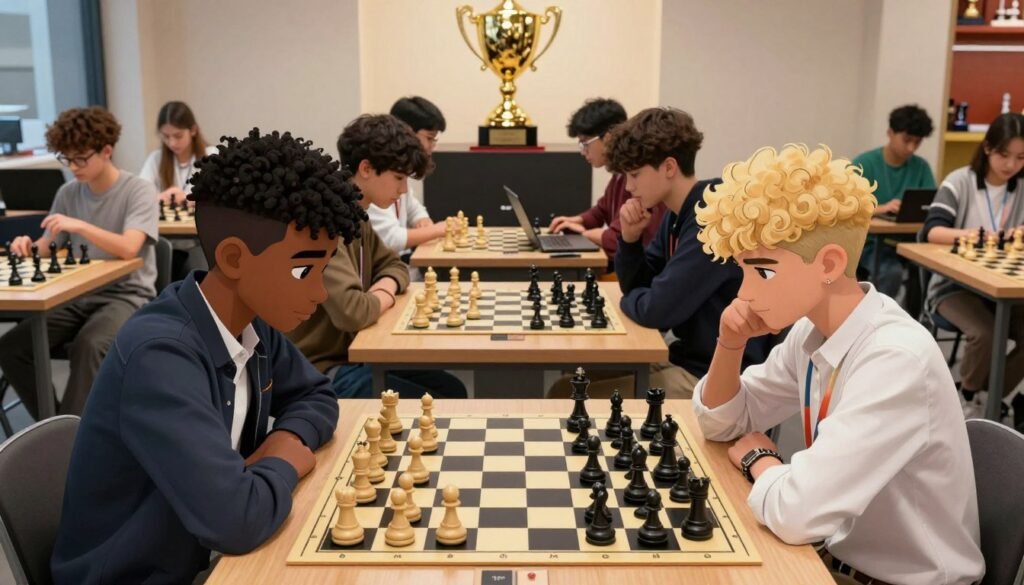
Under 18 leaders to know: Ediz Gurel and Marc’Andria Maurizzi
Ediz Gurel (Türkiye) — 2634 and Marc’Andria Maurizzi (France) — 2624 sit at the top. Breaking into the 2600s as a teen means repeated strong results against titled opponents and steady play at big tournaments.
Other standout U18 names from the current top group
Also watch these rising talents and their ratings:
- Bharath Subramaniyam (India) — 2573
- Haowen Xue (China) — 2553
- Leonardo Costa (Germany) — 2546
- Tong Xiao (China) — 2537
- Jan Klimkowski (Poland) — 2524
- Read Samadov (Azerbaijan) — 2523
- Jan Malek (Poland) — 2508
Rising American U18 talent to watch: Dimitar Mardov
Dimitar Mardov (United States) — 2504 rounds out the top ten. Being top-10 in the world at this age shows strong competitive results and rapid growth potential.
What to do with this list: pick one or two players to follow. Watch their games and borrow one idea per week. Small habits add up fast!
Follow prodigy match reports to see how these young players handle pressure and learn from their play.
Top girls under 18: future stars of women’s chess
Meet the rising girls who are shaping the future of women’s competition and inspiring young learners! We celebrate progress and pathways for every child who wants to grow.
Under 18 girls leaders: Zsoka Gaal and Zoey Tang
Zsoka Gaal (Hungary) — 2395 sits right near 2400. That rating shows steady wins against titled opposition and strong tournament play.
Zoey Tang (United States) — 2381 is close behind. US families can take pride in a local name rising on the world stage!
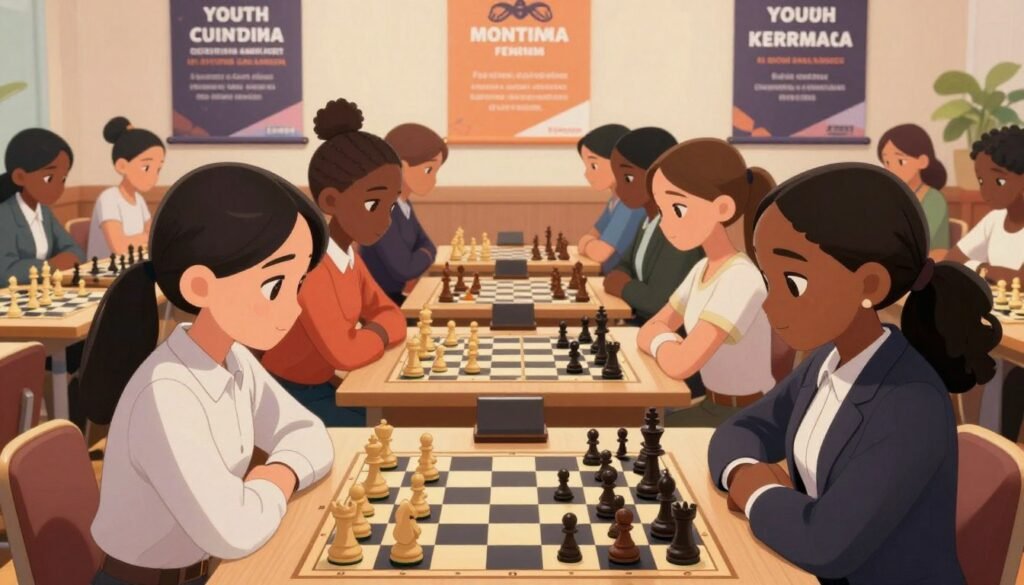
More U18 girls to track for upcoming tournaments and events
- Manon Schippke — 2359
- Alua Nurman — 2347
- Guldona Karimova — 2319
- Savitha Shri B — 2318
- Machteld Van Foreest — 2314
- Mariia Manko — 2298
- Olga Karmanova — 2297
- Yana Zhapova — 2292
Practical steps: Watch recaps, check who is playing which events, and learn from styles like solid defense or sharp tactics. Follow discussion of the pattern challenges girls face to stay informed and supportive!
“One good training week adds up fast.”
Youngest grandmasters who changed the game (why age records still matter)
Age records show a pattern: early title winners often learned how to train smart, compete often, and handle pressure young. That mix matters for you and your family!
Abhimanyu Mishra — youngest ever
Abhimanyu Mishra earned GM at 12 years, 4 months, 25 days. His story is a close-to-home example for many U.S. families. It proves that steady work and the right events can open big doors.
Sergey Karjakin — proven longevity
Sergey Karjakin became GM very young and later won world rapid (2012) and world blitz (2016). His path shows how early success can turn into a long, elite career and invites players to graduate to events like Tata Steel.
Gukesh and Praggnanandhaa — rising trajectories
Gukesh Dommaraju and Praggnanandhaa R. moved from youthful title wins to top-level results. Their rise reminds juniors that the GM step is the start, not the finish.
Nodirbek Abdusattorov — early breakthroughs
Nodirbek made headlines young by beating strong opponents early. Opportunity plus preparation made those moments possible.
“Consistent practice beats cramming. Tournaments teach faster than puzzles alone.”
What families should take away:
- Train regularly with goals. Short, focused sessions win over long, sporadic ones.
- Play events often. Real games build nerves and pattern sense.
- Keep balance. Healthy rest keeps the love of the game alive!
Want more inspiration? See related young talent stories in our young talents to watch guide!
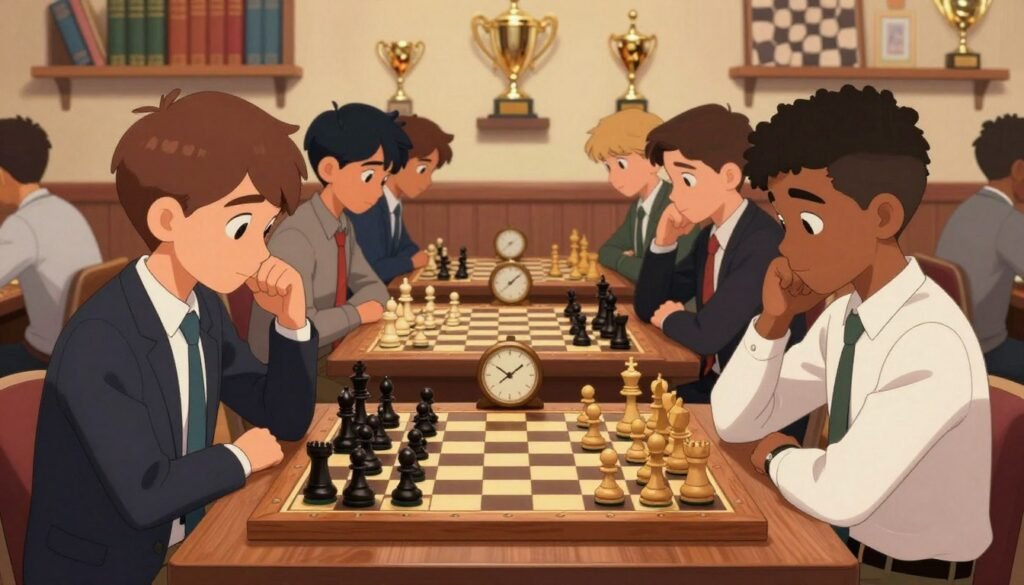
Rapid blitz prodigies: why fast chess is a big deal for under-18 players
Quick games are a playground where patterns, confidence, and timing meet. Rapid blitz pushes kids to trust instincts. It also shows which skills stick when the clock gets tight!
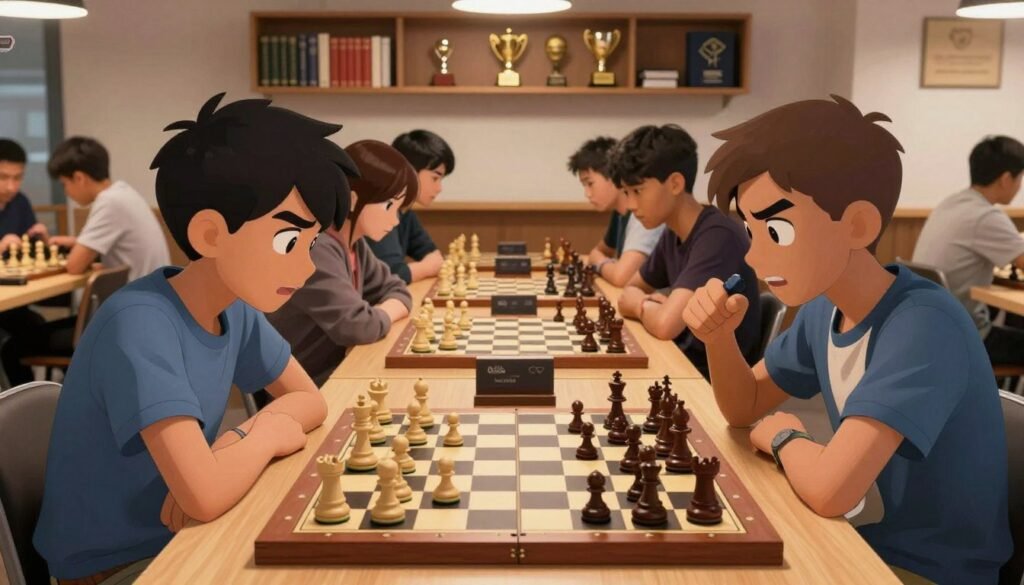
How world rapid and blitz skills turn into real tournament wins
World Rapid-level traits—fast calculation, calm nerves, smart time use—help in weekend Swiss events. Those skills cut blunders and win practical points. They also train a young player to finish strong when others falter.
What parents should watch in rapid blitz results
Look for steady patterns, not single flashy wins. A useful checklist:
- Fewer one-move blunders across rounds.
- Avoiding risky pre-moves and using the clock well.
- Strong finishes in rounds 4–6 when fatigue appears.
- Consistent decision-making over streaky ups and downs.
“Fast formats spotlight instincts. Use them to learn, not to replace slow study.”
Quick tip: Rapid and blitz do not replace classical training. They reveal different strengths and speed learning when used wisely. For more on young stars in fast events, see World Rapid coverage!
Where these juniors prove themselves: key tournaments and events to follow
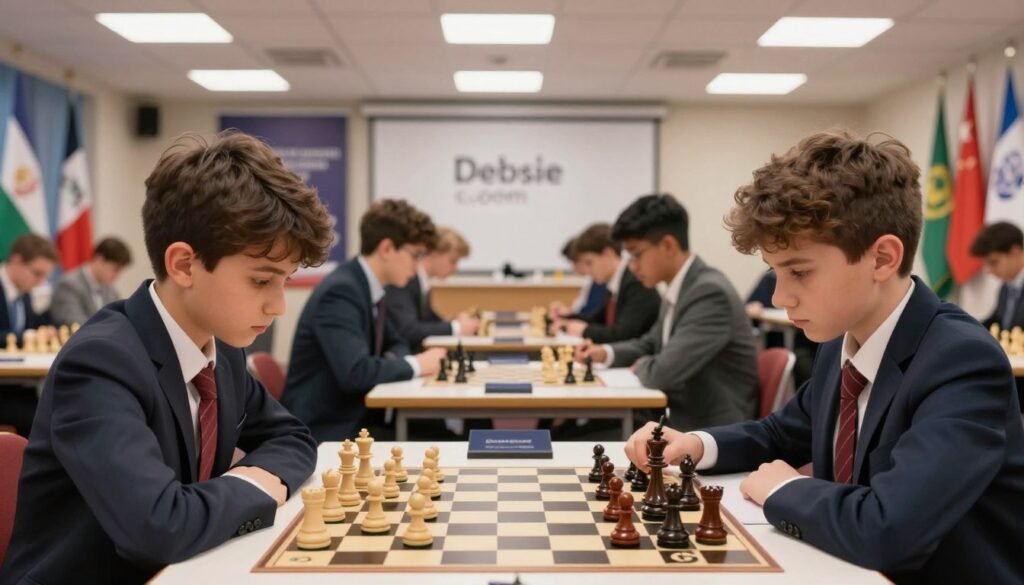
Major youth events are where rising talent meets real pressure — and where scouts take notes. Watch a few well-chosen stages and you’ll learn a lot without getting overwhelmed!
World Youth age groups (U8–U18)
The World Youth brings many age groups together. It covers U8 through U18 and concentrates talent in one place.
Why it matters: coaches and national teams scout here. A strong week at World Youth often signals steady growth.
World Junior (U20) — the next level
World Junior is for U20 players. It pushes teens into tougher, older opposition.
This event shows who can handle longer games and higher pressure. It’s a key stepping stone for any serious young player!
Elite invitations and big opens
Tata Steel and similar invitationals act like graduation tests. You face elite opponents and broad coverage. That exposure matters for reputation and learning.
- Follow pairings and final standings, not just headlines.
- Use top 100 snapshots to spot rising names.
- Watch multiple events to see consistent form.
“You don’t have to travel the globe to learn — watch, study, and bring ideas into training at home!”
For more event guides, see World Junior coverage and a regional view at Japan’s tournament guide to plan what to watch next!
How to improve like the top juniors (a simple training plan)
A clear, tiny plan helps busy families copy what rising juniors do—and keep it fun! Short sessions, steady games, and fast feedback build real growth.
Build your foundation with gamified lessons
Start playful: use Debsie Courses to learn openings basics, pattern-rich tactics, and practical endgames in a gamified way. Kids stay curious and return every day!
Get feedback fast with a trial class
Guessing is slow. A personalized tutor speeds progress. Try a free class and get a focused plan that fits school life: Take a Free Trial Class.
Weekly practice: simple, repeatable, doable
- Tactics: 15–25 min, 3–5 days.
- Endgames: 2 short sessions per week.
- Openings: 1–2 focused drills, not memorization.
- Slow games: at least one longer game per week, then review.
- Rapid blitz: one fun slot as a pattern booster.
“Consistent practice, lots of real games, and quick feedback create lasting improvement.”
Tournament habits: write moves clearly, manage the clock, do a blunder-check, and review one key moment after every game. Do this and your child will grow into a confident, curious player!
For a coach’s long-form guide to steady gains, see a proven approach here: A guide to steady improvement.
Track your progress: ratings, top 100 juniors, and friendly competition
Use public lists and friendly contests to turn practice into progress! Track growth with a clear eye. A rating is a tool. It shows recent performance and points to the next goal.
How junior lists and top 100 snapshots help you set realistic milestones
Top 100 snapshots give useful information about what is strong for each age group. Look at the zones where peers cluster. That helps a young player and their coach set a reachable target.
Use age-group tables and short-term targets. Aim for steady gains like fewer missed tactics or cleaner endgame technique. Those steps matter more than rapid point jumps!
Stay motivated with the Debsie Leaderboard and measurable goals
Friendly contests boost practice. Try club games, mini-matches, or online ladders. Celebrate small wins. Track time control habits, fewer blunders, and better time use.
Join the Debsie Leaderboard to compare progress with peers and enjoy community support: Debsie Leaderboard. It makes measurable goals fun and social!
| Tracking tool | What it shows | How to use it |
|---|---|---|
| Rating | Recent results vs rated opponents | Set short-term point goals; focus on steady play |
| Top 100 snapshots | Where peers stand by age and format | Pick realistic targets and study examples |
| Friendly contests & leaderboard | Motivation, routine, peer feedback | Use for habits: time management, tactics, endgames |
“Celebrate effort and routines — ratings usually follow.”
Small wins add up! Cheer the effort, keep practice playful, and use public lists as friendly maps to guide growth. For club and coaching options, see a nearby resource: local coaching guide.
Conclusion
Young talent on world lists is already shaping tomorrow’s tournament stories. Gurel, Maurizzi, Gaal, and Tang show how ratings and results point to promise. Names like Mishra, Karjakin, Gukesh, Praggnanandhaa, and Abdusattorov prove that structured training plus chances to play matter.
“Best” isn’t one thing: it means rating, titles, steady results, and speed of improvement. You don’t need to copy a star. Build a small routine, enjoy the process, and celebrate progress!
Ready to start? Try Debsie Courses, book a Free Trial Class, and join the Debsie Leaderboard. Watch one name each week, mix in some rapid blitz for fun, and play the game with curiosity!
For more rising-name coverage, see a quick roundup here.