Want one simple trick that builds confidence and wins more games? We focus on clean patterns your child can copy fast. No confusing “memorize forever” lines. Just clear ideas to play, learn, and grow!
In 2026 chess learning is more video, more play, and more quick practice. So we pick role models who fit short, modern lessons. Think classic champions and modern grandmaster guides who show repeatable moves.
On this page “chess players for kids” means three things: who to WATCH, who to COPY, and who to TALK about after a game. We preview categories like tactical attackers, endgame teachers, positional masters, and inspiring women champions.
Quick how-to: pick one player, do three mini-lessons, then play and review. Need help? Take a Free Trial Class and get a personalized tutor plan right away!
Key Takeaways
- We teach clean, copyable patterns that build confidence fast.
- Role models are chosen to match short, interactive 2026 study habits.
- Use one player, three mini-lessons, then play and review for quick gains.
- Focus is progress and fun, not perfection—mistakes are part of learning!
- Get support with a free trial if you want personalized guidance.
What Makes a Chess Player Great for Kids to Study in 2026
The best examples highlight simple patterns that make learning click. Kids spot checks, captures, and threats fast. That builds confidence and quick wins!
Clean patterns kids can spot fast
Define a clean pattern as one clear idea: check, capture, or threat. Teach the child to ask: “Which piece is in danger?” Then pick the simplest good move.
Short, repeatable plans
Short plans beat long theory. A repeatable plan builds real skills faster than memorizing lines. Practice a tiny routine for 10–20 minutes, then play a quick game!
Sportsmanship and quick review
Use a simple watching script: “What is the threat?” “What would you do?” “What changed?” These questions teach calm resets and better choices.
- Life skills: patience, focus, and managing mistakes.
- Levels: beginners need clarity; intermediate learners can try deeper plans.
Want a parent guide and pattern drills? Try our recommended resources like a parent’s guide and a practical piece on pattern recognition at Debsie!
How to Use This Service Directory for Learning, Classes, and Training
This directory makes it easy to match a short lesson plan to your family’s schedule. We keep things simple and flexible. Pick tools that fit ten minutes or an hour. Small wins add up fast!
Pick a role model by your child’s level and learning style
Match taste to style: tactical learners love fast, sharp ideas; calm converters like slow, steady plans; endgame fans benefit from simple technique. Try one role model for three lessons and see what clicks!
Match study time to your schedule: quick lessons vs weekly programs
Choose a 10-minute quick lesson when days are busy. Do a short clip or puzzle, then play one game and talk about two moments that mattered.
On steady weeks, join a longer program with tracked progress and coach feedback. Weekly classes build habit and depth.
- Learn, play flow: watch a short clip or puzzle set → play one game → review two key moments!
- Organize learning: Debsie Courses help by level with gamified lessons: Debsie Courses.
- Stay motivated: check the Debsie Leaderboard to track progress and keep practice fun: Debsie Leaderboard.
- Next step: take a Free Trial Class to find the right pace and tutor: Take a Free Trial Class.
| Option | Time | Best for | Key benefit |
|---|---|---|---|
| 10-minute quick lesson | 10 min | Busy days, warm-up | Fast practice and fun wins |
| Weekly class | 60 min/week | Steady growth | Coach feedback and routine |
| Structured program | Multiple weeks | Goal-driven learners | Levelled, gamified lessons |
| Private training | Flexible | Personalized pacing | Tailored plans and faster gains |
If you want a short read on coaching basics, see the chess coaching guide.
Classic World Champions with Clear, Teachable Ideas
Studying classic masters gives a simple way to learn. These champions show repeatable patterns that help a young learner win real games fast!
José Capablanca: clean piece placement and endgame basics
Pieces belong on good squares. Capablanca made simple plans look powerful. Teach basic endgames he used. They show up in nearly every game.
Emanuel Lasker: practical choices and fighting spirit
Lasker teaches when to trade and when to keep tension. He shows calm defense and how to fight without panic. That helps steady decision making.
Bobby Fischer: steady habits and tactical clarity
Fischer’s routine is easy to copy. Study tactics a little each day. Play serious games, review mistakes, and aim for steady progress.
“One famous game a week, then copy three key moments on a board!”
- Parent tip: Pick one game weekly and copy three moments.
- Safe method: Learn a way of thinking, not old theory.
- Mini-challenge: After watching, play one game and try ONE idea from the studied champion!
Modern Champions Kids Love Watching (Fast Progress, Big Motivation)
Modern champions make learning feel like play! Fresh streams and short clips let a child replay exact moments. That makes copying simple patterns easy and fun.
Magnus Carlsen: playable plans and grinding skills
Carlsen shows how to improve a position step by step. Teach a child to keep small edges and avoid risky moves. This helps with long games and endgame grit.
Hikaru Nakamura: pattern tactics and speed training
Nakamura offers clear tactical motifs and fast time‑control practice. Emphasize accuracy before speed. Practice puzzles, then try timed mini-games!
Ding Liren: calm defense and clean conversion
Ding models quiet defense and smart trades. Kids learn to absorb pressure, swap pieces correctly, and convert an advantage without fuss.
- Simple levels: beginners watch checks and captures; intermediate track plans and pawn structure.
- Parent tip: pause videos. Ask, “What would you play?” Then compare answers and try the move in a quick game.
Let motivation lead! Let the child pick the champion they love and turn watching into action. See our top champions list if you want quick picks and fresh content!
Best Tactical Attackers for Kids Who Learn by Doing
Attack-minded learners win by doing—short drills, sharp puzzles, and brave play! This short guide points to three exciting models to study and copy on the board.
Mikhail Tal: imagination with a safety rule
Tal sparks bold ideas and creative sacrifices. Celebrate that flair!
Safety rule: always check for simple refutations before committing a sacrifice. A quick double-check saves morale and time.
Garry Kasparov: train calculation and keep initiative
Use Kasparov’s games to practice calculation. Ask every move: “What is my threat?” Repeat this and you’ll spot winning continuations faster.
Judit Polgár: direct attack and fearless technique
Judit shows clear tactical themes like pins, forks, and discovered checks. Practice these patterns in puzzles, then try them in a friendly match.
- Who this helps: learners who prefer puzzles, attacking, and fast feedback.
- Weekly routine: one attacker game study + one puzzle set + one practice game each week.
Tournament readiness grows when tactical awareness is steady. We recommend a small team review with a coach or parent to ask: “Why it worked?” and “Why it didn’t?” That team approach builds confidence and sharpens skills fast.
“Check before you sacrifice!”
Endgame and Technique Teachers That Build Real Skills
Simple endgame habits help a beginner turn tiny edges into wins. They make play calmer and clearer. That builds real, lasting skills and steady progress!
Capablanca-style “trade into a win” technique
Teach when to trade pieces and simplify the position. Fewer pieces often mean clearer paths to a winning endgame.
Practical tip: set up a rook-and-pawn ending. Practice swapping into that endgame until the winning path feels automatic.
Anatoly Karpov: improving small advantages step by step
Karpov shows how tiny gains add up. Use kid language: better pawn, better square, safer king. Make one small improvement each move!
Do a weekly drill. One theme per week. Play short tests and track progress in a good program so kids don’t skip these “boring” winners.
- Big message: endgames make players calmer and harder to beat.
- Confidence tip: when endgames are known, rushing stops and plans start!
“One simple endgame theme per week beats long memorization.”
Positional Masters for Kids Ready to Level Up Their Planning
Think of positional play like stacking blocks: a strong base means safer attacks later. We teach planning as a steady habit. This helps students move from quick tricks to lasting wins!
Vladimir Kramnik: structure and safe king play
Simple rules: castle early, connect your rooks, and avoid making needless holes. Kramnik shows how small structure choices lead to fewer surprises.
Tigran Petrosian: defense, patience, and avoiding blunders
Petrosian teaches calm defense. Sometimes the best move is the one that stops the opponent’s plan. Patience wins many games!
Turn positional ideas into a simple move checklist
Repeat this each turn:
- Are there checks, captures, or threats?
- Can I improve my worst piece?
- Will my opponent have a strong reply?
Blunder-avoid rule: before you move, ask “what will my opponent do next?” This shows consequences early and cuts mistakes.
“Praise the process!” Say things like, “Great safe move!” even when the result is not perfect. That builds confidence and better choices over time.
Chess Players for Kids Who Want Inspiring Women Champions to Study
Seeing strong women win gives children repeatable skills and a boost of confidence. We highlight two role models who teach clear ideas and strong mindset habits!
GM Susan Polgar: champion mindset and coach-style explanations
Susan Polgar blends top-level insight with easy teaching. Her lessons explain why a move works, not just what move to make. That helps students learn thinking, not memorization.
Judit Polgár: elite attacking patterns kids can practice
Judit Polgár shows direct attacking motifs that translate into puzzles and training games. Practice simple forks, pins, and discovered checks from her games to build fearless technique!
Why representation boosts motivation in classes, camps, and tournaments
When children see champions who look like them, they stay longer and try harder. That matters in classes, camps, and during nerve-filled tournaments.
- Parent action: pick one woman champion game and ask your child to teach you one idea from it!
- Community: programs like Silver Knights highlight student spotlights and scholarships to support more students.
“Seeing yourself in a champion makes practice feel possible.”
| Role Model | What to Copy | Practice Drill |
|---|---|---|
| Susan Polgar (Grandmaster) | Explain the plan & mindset | Watch one short lesson; explain 1 idea aloud |
| Judit Polgár | Direct attacking motifs | 5 puzzles focusing on forks/pins per week |
| Community Programs | Scholarships & spotlights | Join a spotlight session or camp demo |
Want a short list of women champions to follow? See our curated list at 10 Inspiring Women Champions and pick one to study this week!
A Kid-Friendly Study Plan That Avoids Confusing Lines
We make weekly practice simple and joyful! Try a tiny routine that fits busy evenings and builds real progress. Short sessions beat long, frustrating drills.
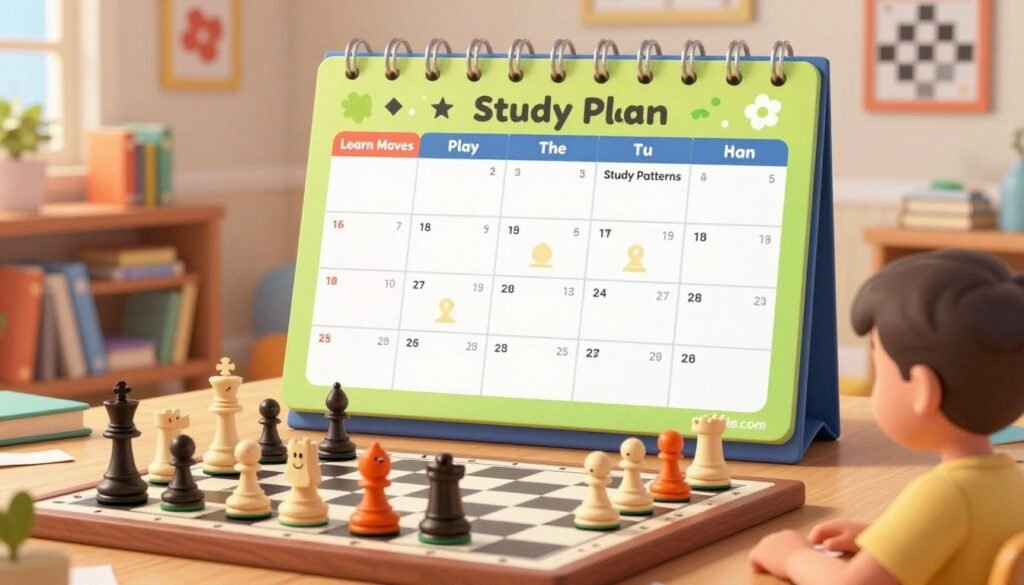
Weekly routine: learn, play, review, repeat
Pick one theme each week. Learn a short idea. Play one game that uses it. Review two moments and repeat next week!
Use “healthy habits” training to avoid bad patterns
Scan checks, captures, and threats. Check king safety. Don’t leave pieces hanging. These habits stop bad repeats from forming.
Set S.M.A.R.T. goals and track progress like a real program
Make goals simple and timed. Example: solve 20 puzzles this week. Write it down. Check it off. Celebrate effort!
How to review games with consequences and better choices next time
Ask: “If I move here, what happens?” Then ask: “What better choice could I make?” This builds planning, resilience, and life skills that help at school and sports.
| Step | What to do | Time |
|---|---|---|
| Learn | Watch one short lesson or read a mini-theme | 10–15 min |
| Play | Play one focused game and try the idea | 10–30 min |
| Review | Pick two moments; ask consequence questions | 5–10 min |
| Track | Record goal progress and celebrate effort | 2–5 min |
Want a ready-made routine? Try our study plan to get started quickly and keep it fun!
Where Kids Can Learn and Play: Classes, Camps, Tournaments, and Online Tools
Find a learning path that fits your week and your goals! You can mix short weekly classes, focused camps, live tournaments, and daily online practice.
Debsie Courses & Leaderboard
Debsie Courses are gamified, levelled lessons that show exactly what to do next. See the catalog at Debsie Courses.
Debsie Leaderboard keeps practice fun and consistent by tracking progress in a friendly way: Debsie Leaderboard.
Try a Free Trial
Not sure which tutor or pace fits? Take a Free Trial Class and match with a personalized coach fast: Take a Free Trial Class.
Local & Premium Options
Chess4Life-style programs mix life skills, improvement, and fun. Expect weekly camps at $425, premium classes at $159/month, and tournaments from $29 with coach analysis.
Clubs, Silver Knights, and Online Play
Silver Knights runs local clubs, scholarships, and student spotlights and won a 2025 scholastic award. Online tools like Chess.com offer kid-friendly lessons and tournaments for daily play.
| Option | Why choose it | Quick note |
|---|---|---|
| Weekly classes | Steady habit and coach feedback | Small groups, tracked progress |
| School-break camps | Deep practice and social play | Try a summer camps week! |
| Weekend tournaments | Real practice under pressure | Pairings by skill, live analysis |
How to Choose the Right Program in the United States (School Year and Summer)
Picking the right program should be simple and practical. During the school year, steady weekly classes build habit. In summer, an intense program can fast‑track progress and confidence!
Classes vs summer camp vs week-long camps: what to pick by goal
Want fundamentals and steady growth? Choose weekly classes. Short, 1‑hour lessons keep momentum during the school term.
Want a big boost? Pick a summer camp or a week‑long program with daily practice. A concentrated chess summer gives many reps and quick gains.
Want confidence under pressure? Add tournaments to the mix. They teach time control and calm thinking under stress.
Small groups, coach feedback, and tracked progress for faster improvement
Small groups matter. They increase attention and give each child more moves with a coach.
Look for active coach feedback and digital tracking. Chess4Life’s weekly 1‑hour classes include tournament practice and an Achievement Chart that shows progress.
What to look for in tournaments: paired opponents, analysis, and confidence-building
Choose tournaments that pair similar‑skill opponents. Post‑game analysis by a coach is priceless.
A welcoming vibe builds confidence. Avoid events that feel harsh. The goal is growth, not stress!
| When | Best option | Why it helps |
|---|---|---|
| School year | Weekly classes | Consistent habit, coach feedback, steady skill building |
| Summer | Summer camp / week-long camps | Daily reps, fast improvement, concentrated practice |
| Year-round | Mixed (classes + tournaments) | Skills + confidence under pressure; tracked progress |
Local or online? Families can pick in‑person spots (Chess4Life in WA or Silver Knights in the Baltimore‑Washington area) or online nationwide programs. Do what the child will actually attend—consistency wins!
Conclusion
A simple loop wins: watch, copy a clean idea, play, and celebrate the effort! ,
One-sentence summary: pick a role model, study one pattern, then play and review. Repeat daily and the progress adds up.
Your child doesn’t need long theory. They need repetition, good habits, and encouragement. Make practice regular and make it fun!
Try this 7-day plan: choose a guide today, do two mini-lessons midweek, play one focused game on the weekend, and review one school-night. Visit the program pages to compare options and join an academy mailing list or sign up to get camp and tournament dates by email. Learn more about benefits at chess benefits.
We believe your child can grow focus, planning, and sportsmanship—one day and one game at a time!