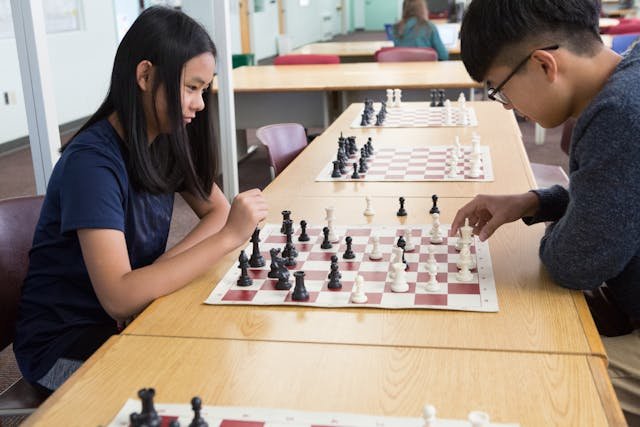
Want to know who’s ruling American chess right now? Let’s meet the modern titans!
How did we move from Fischer’s Cold War fire to today’s online stars? That question sparks a fun hunt through recent history and today’s top names. We’ll show who leads by rating, by titles, and by online fame.
This short, up-to-date listicle focuses on current top names and what makes each player special today. We explain that “best” can mean rating, championship wins, online dominance, or big-match grit.
American chess keeps growing. More events. More training. More young talent each year. Study great games and you can improve fast — we cheer you on, and Debsie will be your practice partner with courses, coaching, and a leaderboard.
Want to dive deeper into the history and the figures who shaped this path? Read about the evolution of american chess from Fischer to today!
Key Takeaways
- “Best” is more than ratings: it includes titles, online skill, and match play.
- Top names now include Hikaru Nakamura, Fabiano Caruana, and Wesley So.
- Studying past masters and modern games speeds learning — you can do it!
- American chess is booming with tournaments and young talent each year.
- Debsie offers courses, a free trial for tutoring, and a leaderboard to track growth.
What “Best” Means in American Chess Today
To pick who truly stands out, we watch ratings, match grit, and how someone performs under pressure! It’s not just one thing. Think of it like a report card: results, time control skill, and big-match calm all count.
Classical strength vs. rapid and blitz performance
Classical games test deep thinking. Rapid and blitz test speed and instincts. Some stars shine when the clock is flying. Others win with patient plans.
Titles that matter
Grandmaster is a top title earned by many strong adults and teens. A chess champion title shows tournament wins. A world champion contender fights on the biggest stage. Each title tells a different story about skill.
Official events and national ranks
Official world chess events differ from national contests. World events bring global rivals and huge pressure. National championships build reputation at home and help players prepare for larger fights.
| What it shows | Where to see it | Why it matters |
|---|---|---|
| Rating and trends | US Chess lookup | Sets clear practice goals |
| Fast-format skill | Rapid / Blitz standings | Shows quick decision quality |
| Match results | Championship records | Reveals true elite under pressure |
“Your rating is just a snapshot. Your next tournament can change the story!”
Use US Chess to check any member’s rating and performance. That is a handy way to set goals. Practice, study, and play more matches. We’ll cheer you on!
Best US chess players to watch right now
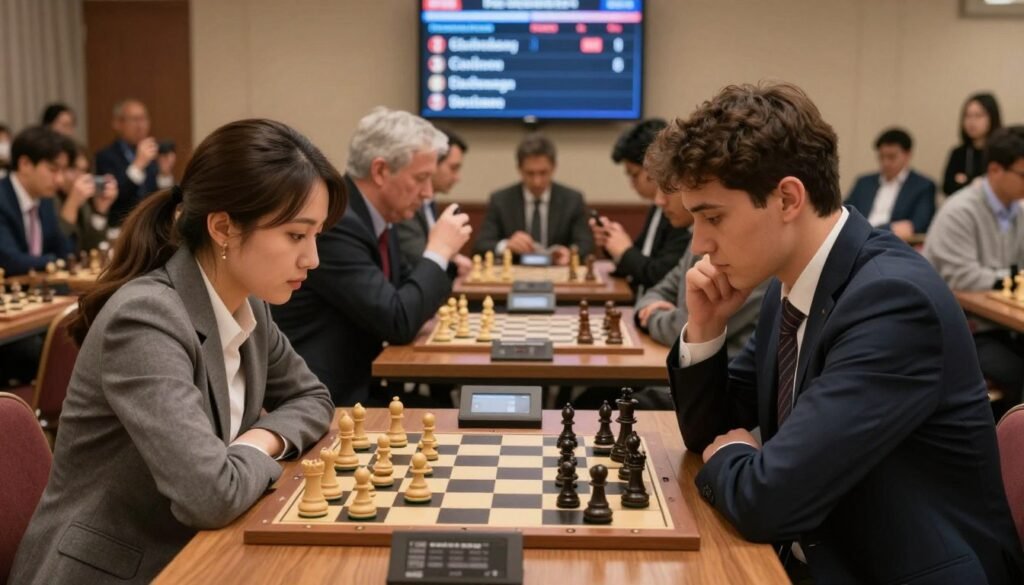
From schoolrooms to livestreams, a steady pipeline feeds new national stars. It starts with after-school clubs. Then comes online practice and stronger local events. Coaching and camps add polish!
Why the pipeline keeps producing elite talent
Simple steps grow great players. Schools spark interest. Local coaches guide basics. Tournaments and online arenas build experience.
Role models from each era keep kids excited. A living figure inspires the next generation to try hard and dream big!
What you learn from studying top games
Watch a single game slowly. Pause. Guess the next move. Repeat! That trains pattern sight and tactical speed.
“Small daily habits beat one big cram session.”
- Look for openings and plans.
- Notice time use and calm under pressure.
- Copy ideas, then make them your own.
| Stage | What it builds | How to practice |
|---|---|---|
| Clubs | Fundamentals and fun | Play 10–15 minutes daily |
| Online play | Speed and pattern recall | Replay strong games slowly |
| Tournaments | Match grit and strategy | Review one loss each week |
Quick how-to: pick one modern game, replay it move-by-move, pause to predict, then read expert notes. Do this three times a week!
Want event ideas? Check top national tournaments to watch and enter: top national tournaments. We’ll guide you from practice to progress with courses, tutoring, and tracking at Debsie. Get ready — the list of modern titans starts next!
Hikaru Nakamura: The Modern-Day Chess Superstar
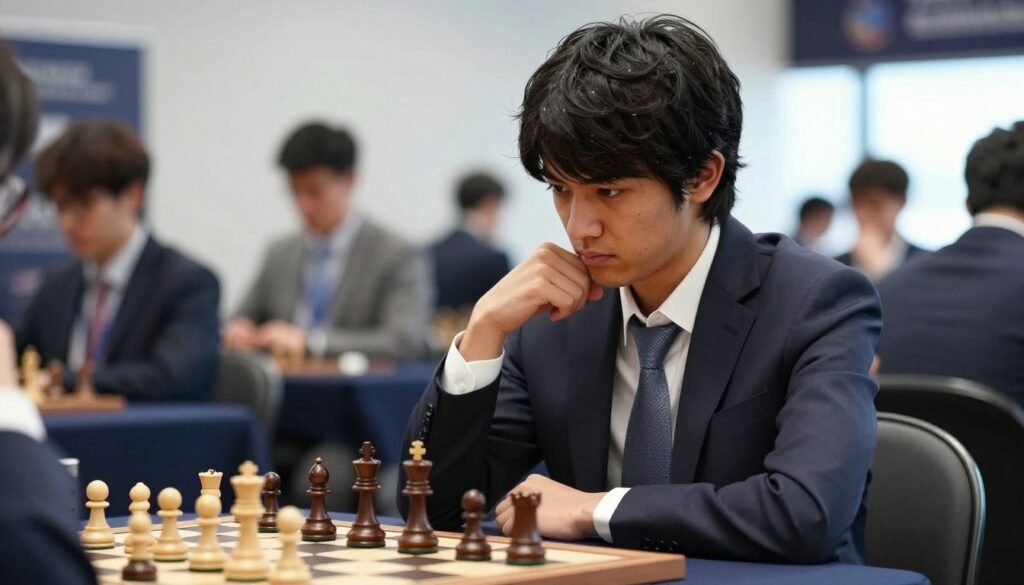
Few figures bridge online fame and over-the-board success like Hikaru Nakamura today. Kids spot him on streams. Adults know his tournament record. He changed how many people watch the game!
Record-setting rise
Early milestones: Nakamura became a National Master at age 10. In 2003, at age 15 he earned the grandmaster title and beat the prior American record. That rapid rise turned heads for years.
Signature edge in speed formats
His instincts shine when the clock runs low. Quick tactics, sharp calculation, and calm under pressure make him a force in rapid and blitz. These games train pattern sight and fast math—skills you can copy.
Championships and global impact
Five U.S. championship wins prove he’s more than a streamer. Big wins like Tata Steel Masters 2011 shaped the world chess conversation and inspired new fans worldwide.
- Tip: pick one Nakamura blitz game.
- Focus on “first threats first!” each move.
- Pause and rewind. Learn at your pace!
“You don’t have to play fast to learn from fast games — pause, rewind, and learn at your pace!”
Want a deeper look? Read inside the mind of Hikaru Nakamura or see how speed helped him rise at how speed chess made him a. We’ll help you turn fast ideas into steady growth!
Fabiano Caruana: America’s World Chess Championship Challenger
If you want a model of careful preparation and clear plans, look to Fabiano Caruana.
He earned the grandmaster title in 2007 at age 15. That fast rise made his name on the elite scene. In 2018 he played a full world championship match against Magnus Carlsen. That match showed how deep study and nerves meet at the top.

Why being a challenger matters
Being a world champion challenger means you beat the hardest paths to get there. It proves skill across many official world chess events and tough matches.
What families can copy
Keep it simple! Build a small opening toolkit. Learn a few endgame patterns. Practice ideas, not long memorized lines.
- Review one opening line weekly.
- Study one endgame pattern each week.
- 20 minutes, twice a week, helps a lot!
“Preparation is about ideas and plans, not memorizing every move.”
| Habit | What to copy | Weekly time |
|---|---|---|
| Opening focus | One reliable line | 40 minutes |
| Endgame practice | King and pawn basics | 30 minutes |
| Game review | One recent match | 40 minutes |
Learn more about Fabiano Caruana bio and see other inspiring names on our inspirational list! We cheer you on—small steps lead to big growth!
Wesley So: A U.S. Citizen Powerhouse with Global Results
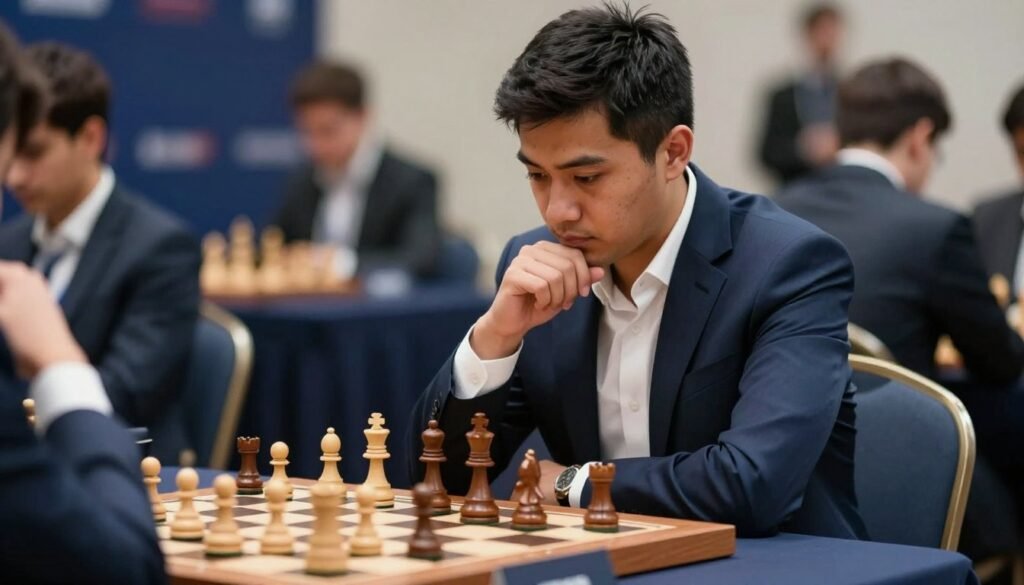
Wesley So has grown into a steady force, mixing calm nerves with global wins. He brings quiet intensity to every match and helps raise team spirits!
From teen grandmaster to a national mainstay
He earned the grandmaster title at 14. Over the years he moved through top events and later became a citizen in 2021. That shift made him a key team member for national events.
Key highlights across formats
So played on the 2016 Olympiad team that won gold. He also won huge individual events like the 2017 Tata Steel Masters. In 2020 his team claimed the online Nations Cup. These wins show his range on the world stage.
Fischer Random mastery — fun, creative, and bold
Fischer Random (Chess960) mixes the starting setup so memorized lines fade. Creativity and quick planning win. Wesley took the 2021 FIDE World Fischer Random Chess Championship and showed how flexible thinking beats rote memory.
- Quick timeline: teen GM at 14, team gold in 2016, citizen in 2021.
- Major wins show world-level talent across time controls and formats.
- Practice tip: ask “What’s my plan?” not only “What’s the book move?”
“Explore different formats — they sharpen your thinking and make the game more fun!”
Curious how he rose early in his career? Read the story “Wesley goes pro” Wesley goes pro and discover more about his path. Try new time controls and formats — they help you grow fast!
U.S. Women’s Chess Champions Changing the Game
Meet role models you can follow right now! These women built paths that kids and families can admire and copy.
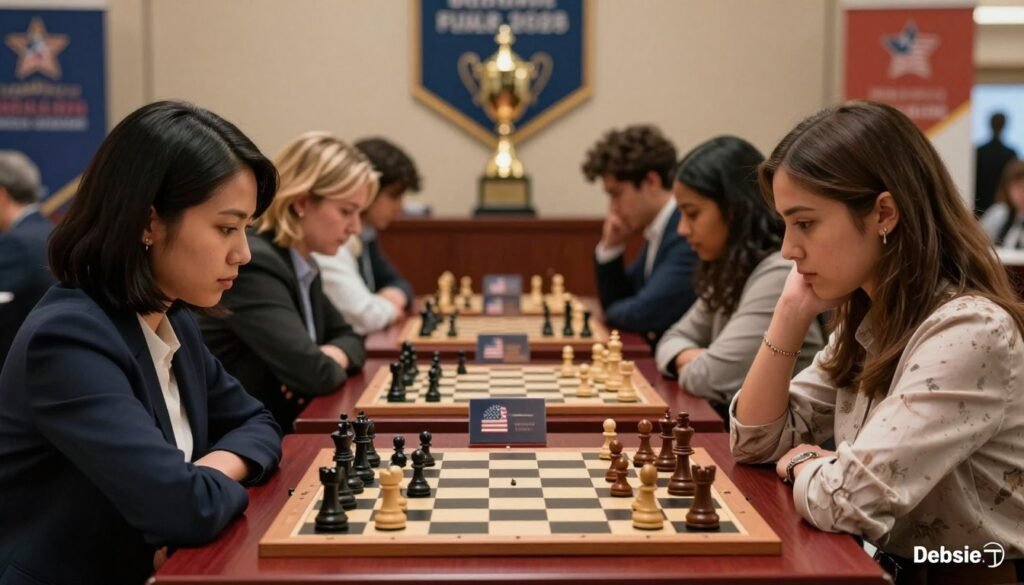
Trailblazers and record-holders: Gisela Gresser and Irina Krush
Gisela Gresser opened doors. She became the first American female International Master and won eight national titles. Her long run shows how patience and steady study pay off.
Irina Krush is a modern legend. A seven-time U.S. Women’s Chess Champion and an International Grandmaster, she teaches resilience. Watch her games to learn calm under pressure and smart recovery after mistakes.
Carissa Yip and the next wave of American chess excellence
Carissa Yip is part of the new wave. As the reigning U.S. Women’s Chess Champion, she proves fresh talent rises fast. Her games are great for young players to study tactics and daring ideas.
- What kids learn: courage in complex positions, a fighting spirit, and focus after errors.
- Parent tip: seeing diverse champions helps children imagine themselves on the board!
- Family idea: watch a few annotated games or highlights together on a weekend. Pause, ask “What would you play?”, and laugh when surprises happen.
“Role models make the game feel possible. Every child can find a move that fits them!”
| Champion | Key fact | Inspiring lesson |
|---|---|---|
| Gisela Gresser | First American female International Master; 8-time national champion | Persistence and opening doors for others |
| Irina Krush | 7-time national champion; International Grandmaster | Calm under pressure and recovery skills |
| Carissa Yip | Reigning national champion; rising talent | Bold play and modern preparation |
Start small. Study one annotated game a week. We’ll connect today’s champions to the larger legacy of american chess in the next section—so families can learn from legends and modern stars alike!
Discover how the national stage shapes champions: U.S. championship overview.
Learn from America’s Chess Legends with Debsie
History is full of lessons! Robert James Fischer shows how focus, study, and daring moves can change a game and a nation.
Legacy blueprint: Bobby Fischer, the eleventh World Chess Champion
Bobby Fischer became the 11th official world champion after winning the Reykjavík match. He hit world No. 1 by July 1971 and peaked at a 2785 rating in July 1972.
The Match of the Century: world championship 1972 vs. Boris Spassky
The 1972 match against Boris Spassky drew global attention during the Cold War. That world championship 1972 moment helped spark U.S. interest like never before.
“Study the ideas, not just the moves.”
Train with structured lessons on Learn Via Debsie Courses
Now it’s your turn to train like a champion! Try step-by-step lessons at Learn Via Debsie Courses and build the same habits Fischer used.
Get coached fast: Take a Free Trial Class With a Personalized Tutor
Want one-on-one help? Take a free trial class and get a coach who meets your child where they are.
Measure progress and compete: Debsie Leaderboard
Track wins, games, and growth on the Debsie Leaderboard. Friendly competition keeps practice fun and focused!
Some fans doubt Bobby Fischer when debating the “greatest chess player ever.” It’s not always quite cut dry—eras and formats differ. Still, his results, his book My 60 Memorable Games, and inventions like Fischer Random and time increment left lasting learning gold.
Learn more history and context on our deeper reads: historic guide or why Fischer is still a legend!
Conclusion
We close by tying the modern scene back to Fischer’s legacy and the habits that made champions.
Today’s top names show different paths: rapid and blitz stars, deep-prep challengers, and creative format masters. The idea of the best depends on performance, titles, and consistency across time controls.
Pick one player to study this week. Copy one habit: openings, an endgame pattern, or calmer thinking under time. Make chess a family routine: one short lesson, one puzzle set, one game review each week.
Take the next step with Learn Via Debsie Courses: Courses. Try a Free Trial Class With a Personalized Tutor: Free Trial. Track progress on the Debsie Leaderboard: Leaderboard.
Keep going, keep playing, and let’s grow your chess together!