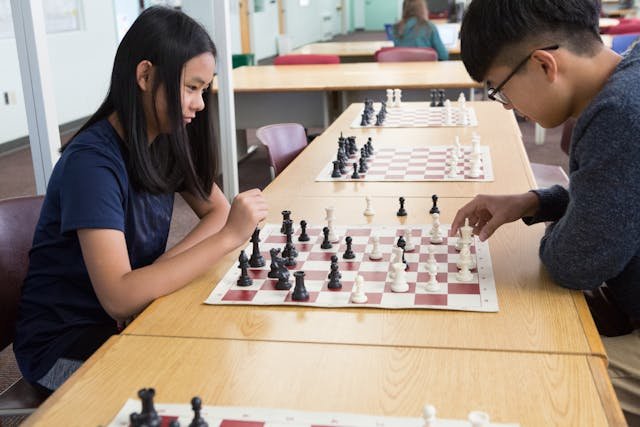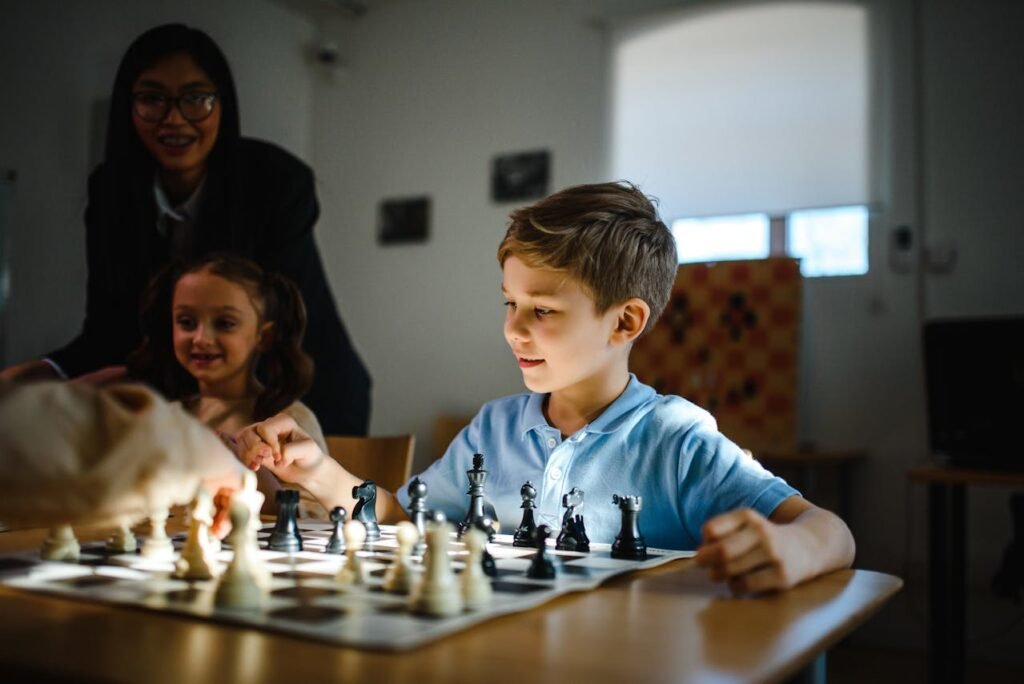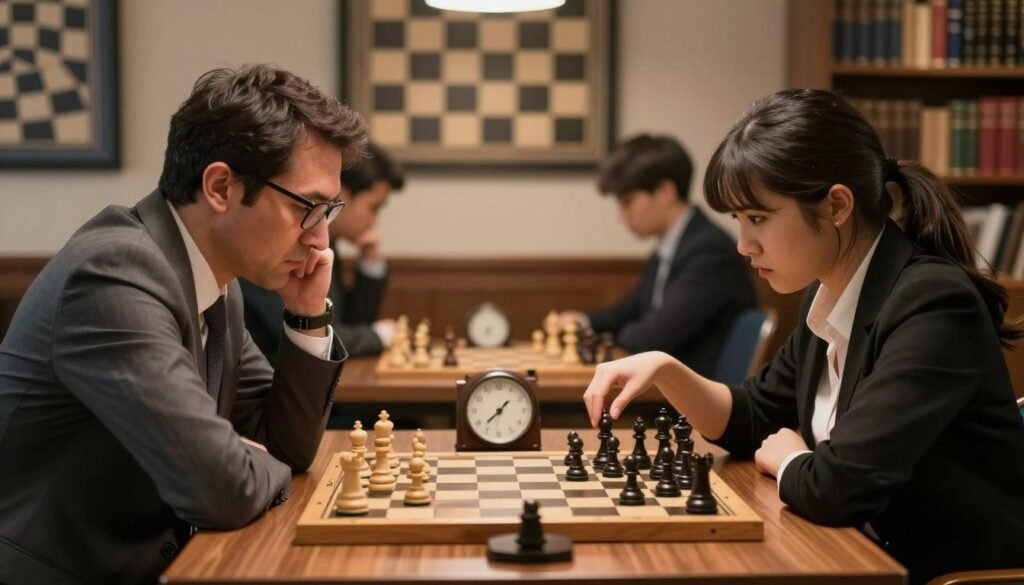
Can a single ticking clock change who wins? That quick question sums up why we love fast games! In a flash, plans vanish and instincts win.
Blitz play feels like a sprint. Moves are fast. Choices are raw. The clock never stops yelling at you!
We’ll use official criteria — including FIDE rankings as of January 22, 2025 — to set expectations. This list covers real top people in the world, not just online hype.
We’ll explain why top classical stars don’t always shine under short time. You’ll get a preview of big names and why they matter. And we’ll share clear patterns you can copy to grow your own game.
Key Takeaways
- Blitz tests speed, not just knowledge.
- Top names often differ from classical leaders.
- FIDE ratings (Jan 22, 2025) guide the ranking snapshot.
- You’ll learn common winning patterns for fast play.
- Fun, friendly tips make learning feel like play!
What “Best” Means in Blitz Chess Today
Time limits turn thoughtful plans into quick instincts — and that changes who shines. Quick clocks force speed. Choices become split-second. Tactics beat long manoeuvres!
Blitz format means short time controls, typically 3–5 minutes per player plus a few seconds of increment. Rapid chess gives more thinking time. Classical chess is the slowest format and rewards deep analysis.
FIDE uses an Elo-style system to produce official ratings. Each result—win, loss, or draw—nudges a player’s rating up or down. These numbers matter for invites, pairings, and titles in real-world events.
The snapshot we use is from January 22, 2025. In that data, the elite ceiling sits near a 2840 rating. That number helps show what “world-class” speed looks like today.
“Speed changes the math of decision-making — you trade depth for clarity.”
Note for parents: online blitz ratings can differ from over-the-board results. Different time controls, interfaces, and stress levels create rating gaps. See a detailed discussion on rating differences between rapid and blitz for more information.
- Quick takeaway: format changes who excels.
- Rating is a running score of performance.
- Snapshot date matters — this one is Jan 22, 2025.
Best blitz chess players to watch based on January 2025 rating data
When the clock ticks, certain stars turn instinct into points — the Jan 2025 ratings make that clear.
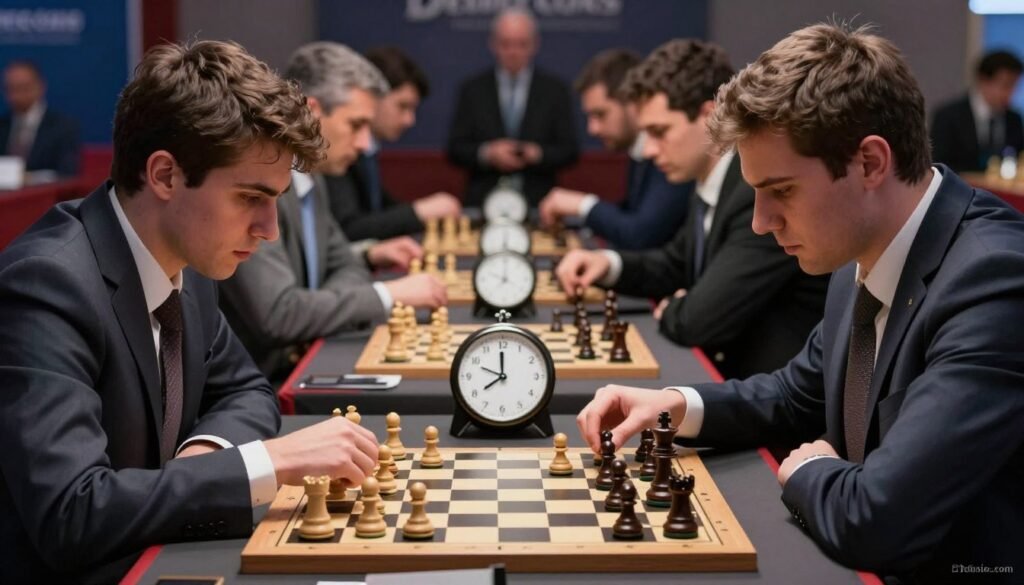
Magnus Carlsen — elite ceiling near 2840
Watch for instant pattern recall and endgame squeezes. He shows how calm focus wins when seconds vanish.
Hikaru Nakamura — online speed to OTB results
Practical moves and fast choices make him lethal. He treats the clock like a rival and beats it often.
Alireza Firouzja — new-gen calculation edge
Sharp tactics and bold play. Young talent who trusts chaos and computes quickly.
Fabiano Caruana — precision converts in little time
Deep prep becomes simple plans. Clean advantages turn into points even under time.
Other styles to watch
Ian Nepomniachtchi pushes initiative early. Wesley So uses low-risk conversion. Maxime Vachier-Lagrave gains from prepared openings. Ding Liren defends creatively. Anish Giri favors practical, playable moves. Many 2700-level names show depth beyond the top ten.
| Player | Style | Jan 2025 Rating | Lesson for kids |
|---|---|---|---|
| Magnus Carlsen | Endgame & pattern | 2840 | Practice endgame drills! |
| Hikaru Nakamura | Speed & pragmatism | ~2790 | Play fast online, then review! |
| Alireza Firouzja | Calculation & tactics | ~2775 | Train tactics daily! |
| Fabiano Caruana | Positional clarity | ~2760 | Learn simple plans! |
For the full ranking snapshot see the January 2025 ratings. Check the December 2025 update for later shifts. Want curated picks? See our Debsie shortlist for kids and parents!
How to get stronger at blitz with Debsie
Want clearer moves when time runs out? Build a routine that trains speed and calm. We switch from “who’s best” to “how you get better!”
Learn Via Debsie Courses to build a quick repertoire and fast tactics. Pick simple openings for kids. Fewer lines. Clear plans. Do short tactics drills to boost pattern recall.
Track progress with the Debsie Leaderboard
Use the Debsie Leaderboard to watch points and monthly performance. Seeing progress feels fun! Set goals and celebrate small wins.
Try a free personalized lesson
Take a Free Trial Class with a tutor. They spot time-wasters fast — missed checks, slow recaptures, endgame slips — and give clear fixes.
U.S. training plan — simple, daily, focused
- Daily drills: 10–20 minutes of rapid tactics.
- Quick review after each game for 5 minutes.
- Weekend prep: one practice match plus a short tutor check-in.
Set up an account on the website. Parents can help with accounts and scheduling via email. We’ll support your monthly goals and keep learning safe and fun!
Conclusion
When time shrinks, clear patterns and good habits decide the result. Keep calm. Move with purpose!
Ratings matter. The Jan 22, 2025 FIDE snapshot gives a fair, world-wide measure of who wins under pressure.
Copy what top names do: pick simple openings, drill tactics, and form time-saving habits to avoid late blunders. Study a favorite role model one game at a time — small steps add up.
Ready to turn every quick game into progress? Try Debsie Courses, track growth on the Leaderboard, or book a Free Trial today!
For match highlights and historic quick games, see the World Blitz report and a selection of classic rapid games.