Can one player’s appetite for attack change how we all play chess? This is the question we chase in this short journey.
Born in 1892 and later crowned the fourth world chess champion, Alekhine thrilled fans with bold sacrifices and fierce initiative. He hunted activity like a predator, always after the king and control of the board!
In this section we give a warm Debsie welcome and a clear roadmap. You’ll get a short biography, lively examples from famous games, and practical tactics you can try today.
We’ll cover his Moscow roots, his clashes for the title, and the famous comeback moments. Expect messy positions, surprising sacrifices, and the quieter endgame ideas that set up wins.
Parents: this story also teaches study habits, focused practice, and smart routines. Later, we’ll show how you can train Alekhine-style tactics with interactive courses, a learning leaderboard, and a free trial option!
For more on how great players reshaped the game, see our feature on chess players who changed the game.
Key Takeaways
- Alekhine played like a predator: activity, initiative, and king attacks.
- This section offers a clear bio plus practical lessons for your games.
- We use kid-friendly examples from classic tournaments and matches.
- Expect both wild sacrifices and quiet moves that build pressure.
- Debsie will later offer courses, leaderboard practice, and a free trial to train these tactics!
Why Alexander Alekhine Still Matters to Modern Chess Players
He held the world champion crown twice — from 1927–1935 and again from 1937–1946. That means he won the top spot, lost the title, and fought back to claim it again. It’s a story about grit!
The fourth world champion with two reigns
“Two reigns” is simple: win, lose, and return. Kids can learn that setbacks are part of growth. Keep going and you can come back stronger!
Tactics, imagination, and endgame skill
He loved wild attacks. He also squeezed wins in quiet endgames. That balance is why coaches still study his moves.
- Learn calculation: his games teach step-by-step tactics.
- Learn timing: know when to attack and when to improve pieces.
- Study patterns: openings to checkmates show up again in modern play.
“Study the games, copy what works, and leave the bad habits behind.”
| Feature | Why It Helps You | Where It Shows Up |
|---|---|---|
| Attack creativity | Builds bold planning and calculation | Middlegames and tactical puzzles |
| Endgame technique | Teaches patience and small advantages | Endgames and subtle squeezes |
| Match comeback | Shows resilience after losing a title | World championship matches and rematches |
By the end of this article, we promise you’ll know what to copy from his style and what to avoid! For deeper reading on great champions, see our feature on the greatest world chess champions.
Early Life in Moscow and First Steps in Chess
Moscow’s wide boulevards and lively salons set the stage for a curious boy who found chess at home. He grew up in a well-off family. His mother and siblings taught him the pieces and the rules. We love how simple moments can spark a lifelong passion!
By about age 10 he began correspondence games by mail. That slow pace taught planning, patience, and careful calculation. Playing by post meant thinking ahead. It built the skills that fuel later attacks and deep plans!
By 1907–1908 he was entering the local chess club and winning small events. People noticed the rapid rise. Step by step, stronger competition came into reach.
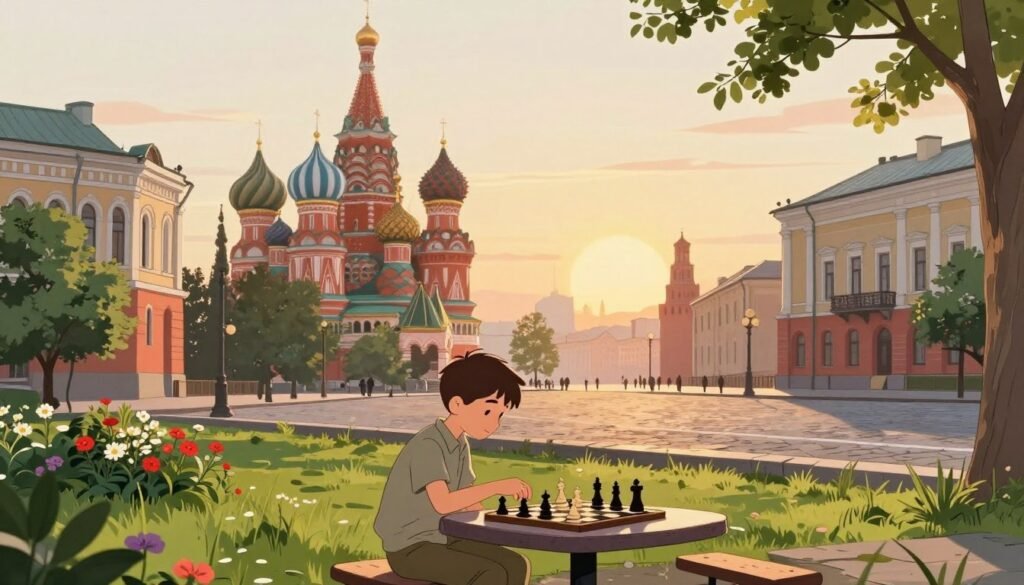
Key early milestones
| Year | Approx. Age | Event |
|---|---|---|
| 1902 | 10 | Started correspondence play |
| 1907 | 15 | Joined Moscow chess club tournaments |
| 1910 | ~18 | Winning local events and standing out |
Lesson for families: consistent practice and curious play make big gains. You don’t need fancy gear—just focus, review games, and enjoy learning together! Soon, he moved from local talent toward national events.
From Russian Prodigy to Elite Competitor in Europe
A string of strong finishes moved him from a promising youngster to a feared competitor in Europe!
Breakthrough results in Saint Petersburg and All‑Russian events
He won the 1909 All‑Russian Amateur in Saint Petersburg. That first big win showed he could take a whole tournament and finish with top points.
By 1914 he tied for first with Aron Nimzowitsch at the All‑Russian Masters. That result made people sit up and take notice. He had moved into events with tougher rivals and longer games.
St. Petersburg 1914 and the rise of a world title contender
At St. Petersburg 1914 he placed third behind Emanuel Lasker and José Capablanca. Those standings put him on the same stage as the very best!
What the results signaled: grandmaster‑level strength, real championship potential, and the skill to score against top opponents.
- Level‑up: tougher tournaments, stronger foes, and bigger learning leaps.
- Why St. Petersburg mattered: it was a boss level—same board as champions!
- Learning tip: play stronger opponents to spot what to improve next!
Next: just as his career took off, world events would soon crash in and change the path ahead.
World War I, Internment, and Chess Under Upheaval
Players packed scoresheets as the world outside a chess hall suddenly changed. The Mannheim 1914 event stopped mid-round when news of the world war broke. Panic and confusion followed!
Mannheim 1914 left many Russian players detained. They were held in Rastatt as foreign nationals. After tense weeks and diplomatic effort, most were allowed to travel home.
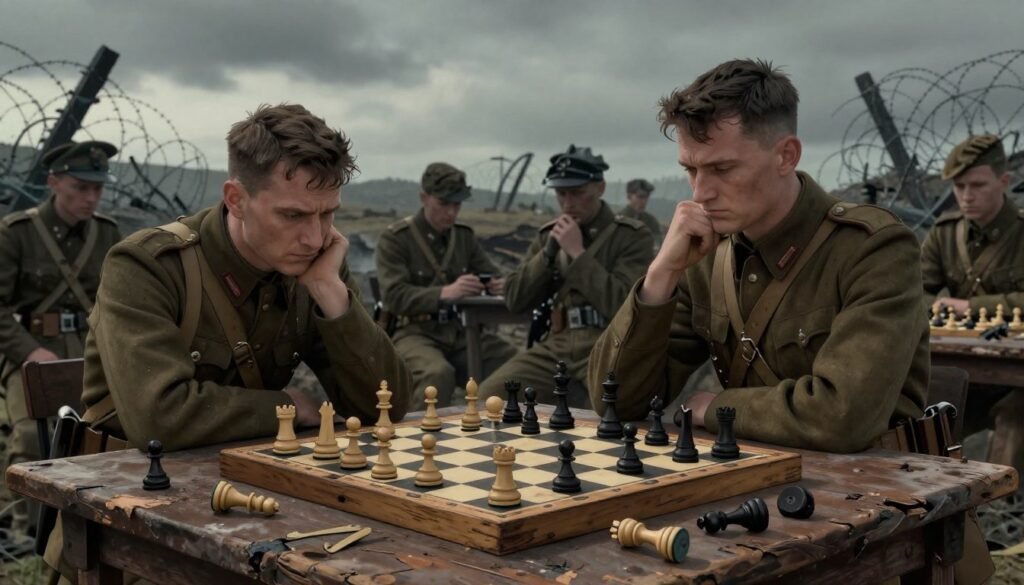
Mannheim interrupted and life in internment
The internment days were uncertain. Chess became a small refuge. Exhibitions and friendly games raised money and kept spirits up.
Service, survival, and keeping skills alive
During the chaotic years, he gave exhibitions and worked near the army and hospitals in medical roles. Chess paid bills and offered routine when other routines broke.
“Small daily practice kept his vision sharp through hard times.”
- Shock: tournaments halting overnight.
- Internment: held, then returned home.
- Survival: exhibitions and service roles sustained him.
| Event | Location | Outcome |
|---|---|---|
| Mannheim 1914 | Mannheim, Germany | Tournament stopped; players interned |
| Rastatt internment | Rastatt, Germany | Detained weeks; eventual release |
| War years work | Near army and hospitals | Exhibitions and medical service |
We learn a clear lesson: when your routine breaks, small steps win the long race. For a wider look at how conflicts paused chess events, see when the world wars interrupted major.
Rebuilding a Career After Revolution: Results, Matches, and Momentum
After chaos and travel, his chess life rebooted with a streak of calm, clinical wins. The comeback was steady. It proved mastery by results, not flash.
Big wins returned quickly: he swept a Moscow championship with 11/11 in 1920, though residency rules kept him from the official title. That same year he won the All‑Russian Chess Olympiad in October with +9−0=6. Later historians treat that event as the first USSR Championship.
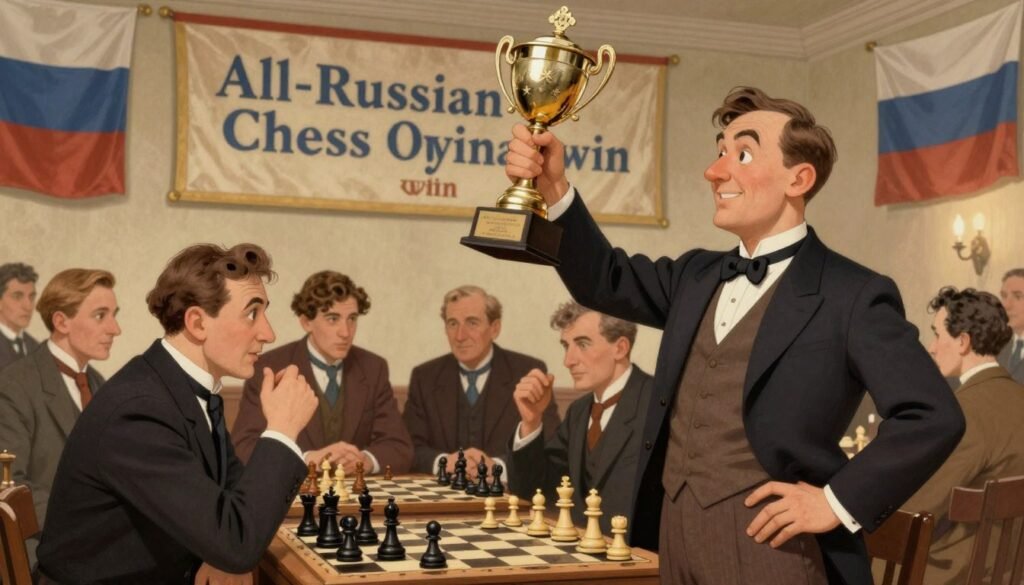
Mini‑matches and the pressure of short contests
From 1921–1923 he played many short mini‑matches across Europe. These tests sharpened openings and nerves. Each match forced quick adjustment after a loss.
- Comeback lesson: disciplined play stacks wins after disruption!
- Mini‑matches: short head‑to‑head battles that test prep and patience!
- Consistency: steady results beat one big game—place yourself to win often.
Practical tip: review your games like a master. Mistakes teach more than wins. Try one short match with a friend and focus on fixing one error each game!
“Small, steady wins build the momentum you need to chase a title.”
| Year | Event | Key outcome |
|---|---|---|
| 1920 | Moscow championship | 11/11 sweep (no official title due to residency) |
| Oct 1920 | All‑Russian Chess Olympiad | +9−0=6, later seen as USSR Championship |
| 1921–1923 | European mini‑matches | Practice in match play and opening tests |
Leaving Soviet Russia: Emigration, France, and a New Chess Identity
Leaving home in 1921, he set out for France and a life on the international chess circuit. The move was practical. Big European events were happening, and he wanted to be where the action was!
New country, new badge: by 1925 he began representing France in tournaments. A French nationality decree was signed on 5 Nov 1927 and published mid‑November 1927, right during a crucial world title period. This made his switch official.
The change was more than paperwork. Travel, visas, and constant tournaments made life demanding. He lived on trains, hotels, and game scoresheets. Still, new opponents and styles sharpened his play fast.
- Why he left: to be at the center of European chess life and opportunity.
- What changed: the same talented player, now fighting under a different flag.
- Lesson: bold goals often need bold changes and careful planning!
“Big moves bring new rivals — and faster growth.”
What comes next
To raise money and fame, he soon turned to spectacular blindfold exhibitions. Those events helped build a legend and sharpened his calculation skills for the world stage!
Blindfold Brilliance: The Simultaneous Exhibitions That Built a Legend
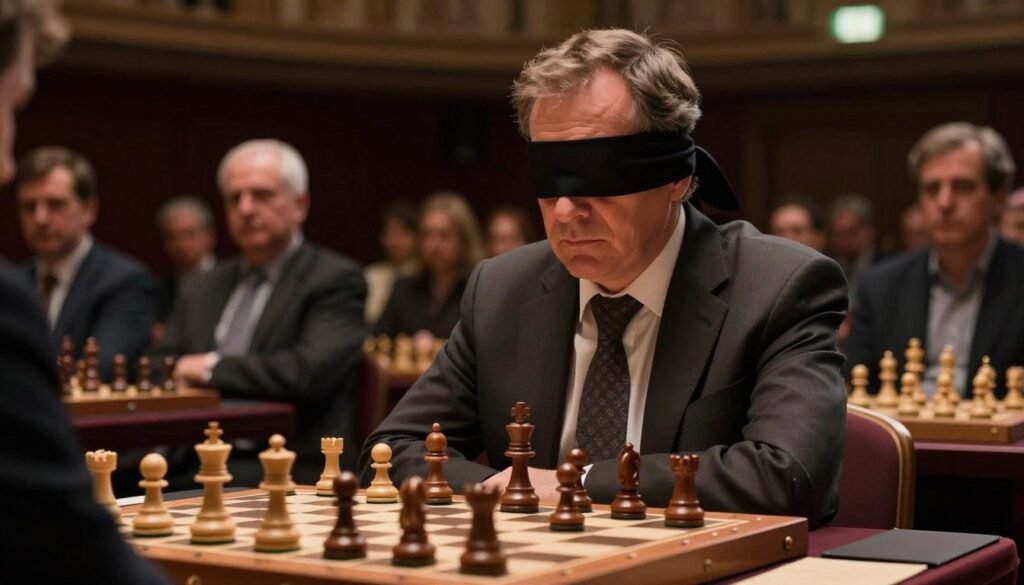
Imagine sitting across dozens of opponents while keeping every board in your head — that was blindfold magic! Crowds loved the drama. Teachers loved the lesson.
Breaking records in New York and Paris
Fact check: 26 opponents in New York on April 27, 1924 (about 12 hours), 28 in Paris on Feb 1, 1925, and later 32 blindfold in Chicago (July 1933).
Why this mattered for calculation and visualization
Blindfold play trains memory and calm thinking under pressure. Holding many positions in your head makes tactical patterns pop faster. It boosts the way you picture future moves and threats.
What today’s players can learn
- Try a small practice: close your eyes and play 3–5 moves blindfold, then check — a quick and safe example to start!
- It helps tournament focus, not just showmanship.
- Train in short bursts so it stays fun and not frustrating.
Playing blindfolded sharpens the mind and makes real games clearer.
Chasing the Crown: The London Rules and the Long Road to Capablanca
A long, costly barrier stood between challengers and the crown in the 1920s. The 1922 London rules asked a challenger to raise US$10,000. More than half went to the champion even if the challenger won!
The “golden wall” made the chance to play a match super expensive. Talks dragged for years because money, match conditions, and big egos slowed every step.
Preparation as a secret weapon
While negotiations stalled, our hero trained hard. He mixed physical fitness with deep study of Capablanca’s games. That homework found tiny inaccuracies others missed.
- Simple take: homework beats luck—do the study others skip!
- Kid plan: 10 minutes openings, 10 minutes tactics, 10 minutes endgames—every day!
- Stamina tip: long matches demand focus for many days, not one afternoon.
All that prep would pay off in a long, hungry match in Buenos Aires.
Buenos Aires 1927: The Match That Made Him World Champion
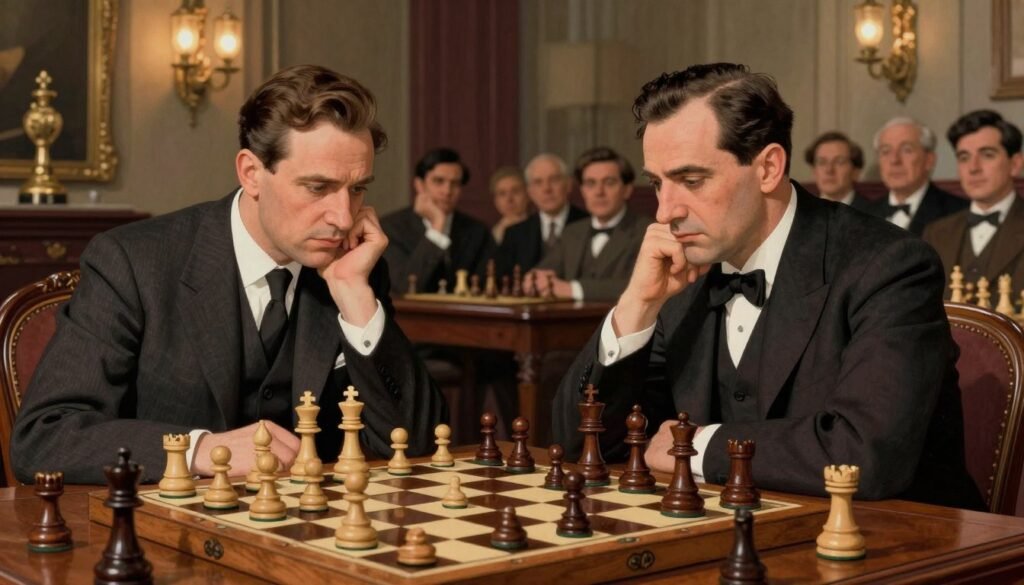
The 1927 match in Buenos Aires stunned the chess world and changed preparation forever. Few expected the upset. Capablanca was the heavy favorite. People thought he would keep the title easily!
Context and the shock of the result
Most fans thought Capablanca would win. He had been nearly unbeatable. Our challenger had never beaten him in serious play before.
How deep prep won a marathon match
Preparation made the difference. The match ran from Sept 16 to Nov 29, 1927. The final score was +6−3=25 in favor of the challenger. That is six wins, three losses, and twenty‑five draws!
The grind, endurance, and the new standard
This was a true marathon. Many games were long and tight. Small advantages added up over time.
Lesson for young players: steady training and good stamina beat last‑minute cramming. Think of it like studying for a big exam—daily work wins!
“Endurance and focus can beat natural talent when the contest is long.”
| Dates | Score | Notable |
|---|---|---|
| Sept 16–Nov 29, 1927 | +6 −3 =25 | Longest formal title match until 1984 |
| Location | Buenos Aires | Changed how champions prepared |
With the win, the predator sat on the throne, ready to defend the title in coming events and set a new bar for how to train for a big match!
Alexander Alekhine as World Champion: Dominance and Defenses
His reign saw both crushing tournament wins and fierce title defenses. He didn’t just hold the crown — he attacked with it! This era mixed big match grit with dazzling tournament play.
Title defenses vs. Efim Bogoljubov
He defended the title twice against Efim Bogoljubov. In 1929 the score was +11 −5 =9. In 1934 he won again with +8 −3 =15. Clear, decisive results. Those matches proved stamina and sharp preparation.
Board-one Olympiad success and brilliancy
Playing first board for France, he met the toughest opponents each round. He earned medals and a brilliancy prize for fearless attacks. Active pieces and bold sacrifices won fan votes and points!
Tournament dominance: San Remo and Bled
At San Remo 1930 and Bled 1931 he crushed the field by large margins. These tournament wins looked effortless. Opponents struggled to find counterplay against his initiative and precise tactics.
Why a Capablanca rematch never happened
Talks about a rematch with Capablanca dragged on. Hard financial terms and strict match demands blocked agreement. Money and conditions, not chess skill, kept the match from being finalized.
Champions protect their crown with preparation, smart scheduling, and confidence!
Takeaway: as champion he combined match craft and tournament firepower. That mix made him a model for modern title play and a big reason his games still teach us aggressive planning.
| Event | Year | Result / Note |
|---|---|---|
| Title defense vs. Bogoljubov | 1929 | +11 −5 =9 (decisive win) |
| Title defense vs. Bogoljubov | 1934 | +8 −3 =15 (successful defense) |
| San Remo tournament | 1930 | Dominant victory by large margin |
| Bled tournament | 1931 | Clear first place and top form |
For a quick bio and match list, see the world champion profile. Next, we zoom in on the attacking style that made these results possible!
The Predator’s Style: Attacks, Tactics, and Positional Backbone
His style mixed sudden strikes with quiet craft, so games often swung from calm to chaos fast. We study how attacks grow from small edges. Then pressure becomes decisive!
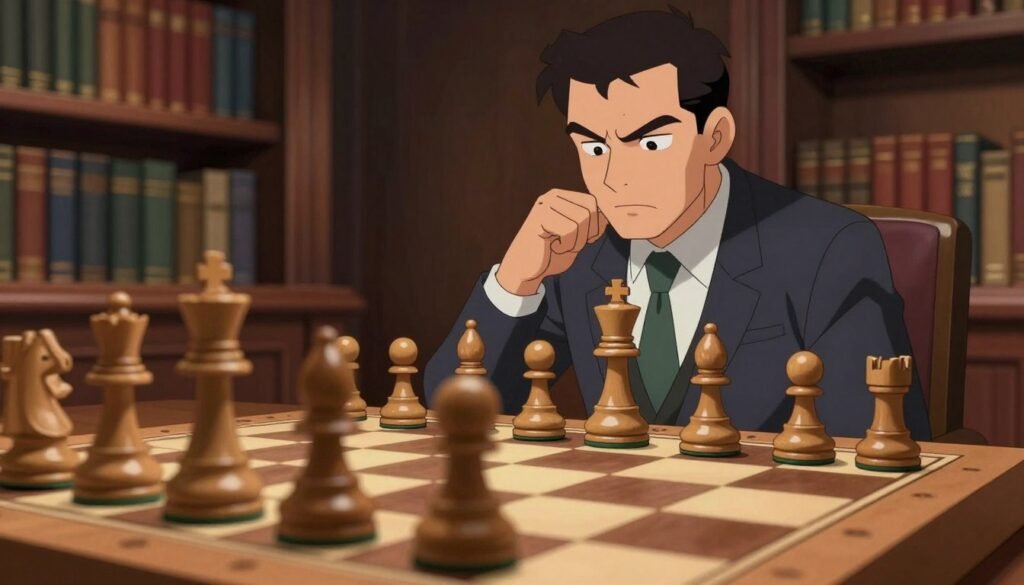
Creating complexity: initiative, king hunts, and piece activity
Predator chess means forcing choices. He made threats that left opponents with awkward replies.
Active pieces hit many squares. That creates tactical chances and better long-term plans.
Combination play and hallmark tactical patterns
Sacrifices to open lines. King hunts that follow one weak move. Combinations that punish slow replies.
Look for checks, captures, and threats first! That habit finds tactical motifs fast.
Quiet positions and endgames
He also won calm endings. The attack usually sat on a solid positional base. Endgame skill finished many fights.
Practical lessons to improve
- Replay his best games slowly and guess the next move.
- Prioritize active pieces over extra pawns when the position is messy.
- Practice short tactical drills to sharpen calculation and decision-making.
“Learn the patterns, not just the moves!”
| Focus | Why it helps | Practice tip |
|---|---|---|
| Initiative | Keeps opponent reacting | Play games aiming to move first in each plan |
| Piece activity | Creates tactics and threats | Exchange passive pieces for active ones |
| Endgame skill | Converts small edges into wins | Study simple pawn and rook endings |
Alekhine’s Defense and Opening Theory Innovations
A few opening ideas reflect a player’s personality — this one is pure provocation. It begins with the sequence 1. e4 Nf6. Black tempts White to push pawns, then attacks them later!
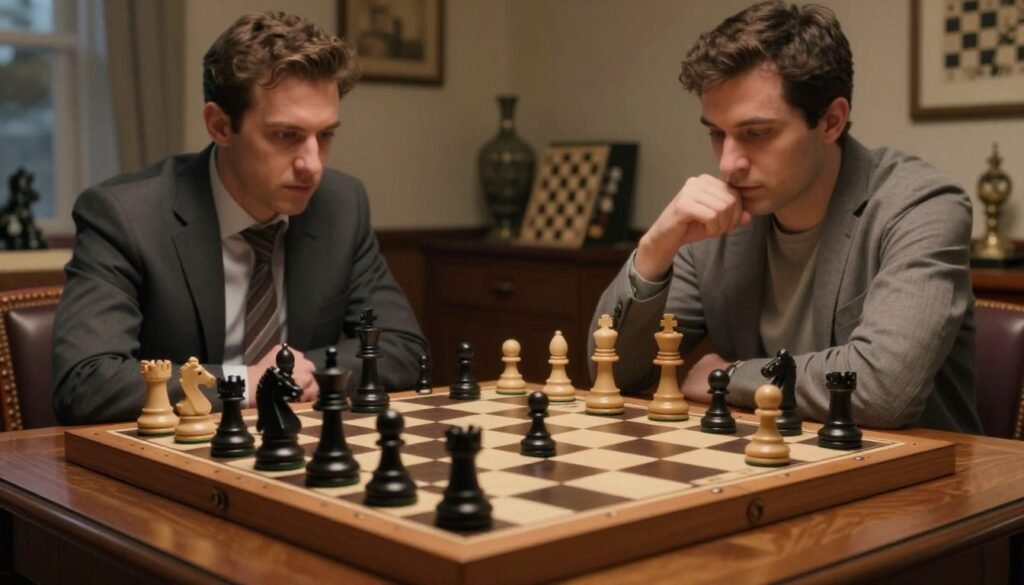
What the Defense is and why it fits his play
Alekhine’s Defense is a counterattacking opening. White often advances pawns early. Then Black strikes back with quick piece play and tactical pressure.
It shows a personality that invites forward play — then punishes it. Kids can try it to learn counterattacks, but keep king safety first!
Other variations and theory tied to his name
Many variations change pawn structure and ideas. Understanding plans beats memorizing exact moves. He also widened opening theory with fresh ideas across many lines.
- Fun for practice: use it to learn tactics and timing!
- Parent tip: focus on development and castling before risky lines.
- Big idea: openings open the door; middlegames and endgames win the game.
“Openings teach ideas more than exact sequences.”
For a practical guide, see a short Alekhine’s Defense guide to study key plans and common traps!
Losing the Title to Max Euwe and Winning It Back
A surprising upset in 1935 showed how quickly a world championship can swing. The favorite began with strength. Then momentum shifted and pressure built.
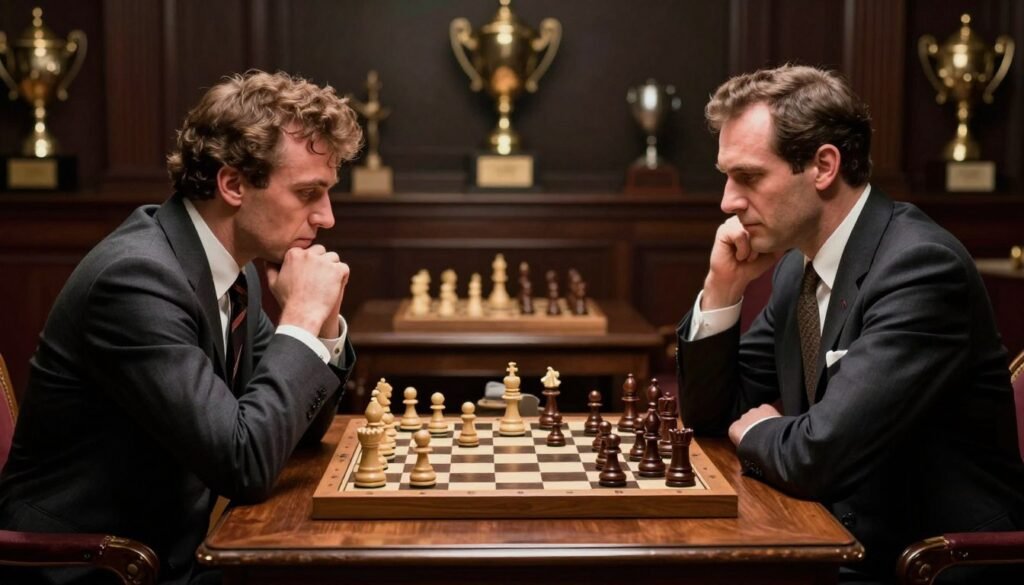
The 1935 world championship: turning points and why the upset happened
He started well but could not hold the edge. Euwe fought back and claimed the match by steady play and deep focus.
Final score (1935): Euwe +9 −8 =13. Small mistakes and lost chance after lost chance added up.
“One game can change everything — stay calm and learn from each move!”
The 1937 rematch and the return to the title
Two years later he came back sharper and more prepared. The rematch showed better focus, clearer plans, and improved stamina.
Final score (1937): +10 −4 =11 in favor of the challenger — a firm win that regained the title.
- Upset lesson: top players can suffer a sudden loss when focus slips.
- Comeback tip: review calmly, fix weak spots, and train a plan!
- For kids: losing helps you learn faster — it is part of growing!
| Year | Result | Key factor |
|---|---|---|
| 1935 | Euwe wins (9 W, 13 D, 8 L) | Momentum shift, steady defense |
| 1937 | Title regained (10 W, 11 D, 4 L) | Sharper preparation, better endurance |
| Lesson | Loss → Review → Plan | Turn setbacks into training |
Next: the late years bring tougher history. Politics and war would complicate life and chess alike.
World War II Years: Controversy, Constraints, and a Complicated Legacy
Europe’s darkening skies during the 1940s made choices small and dangerous for many chess players.
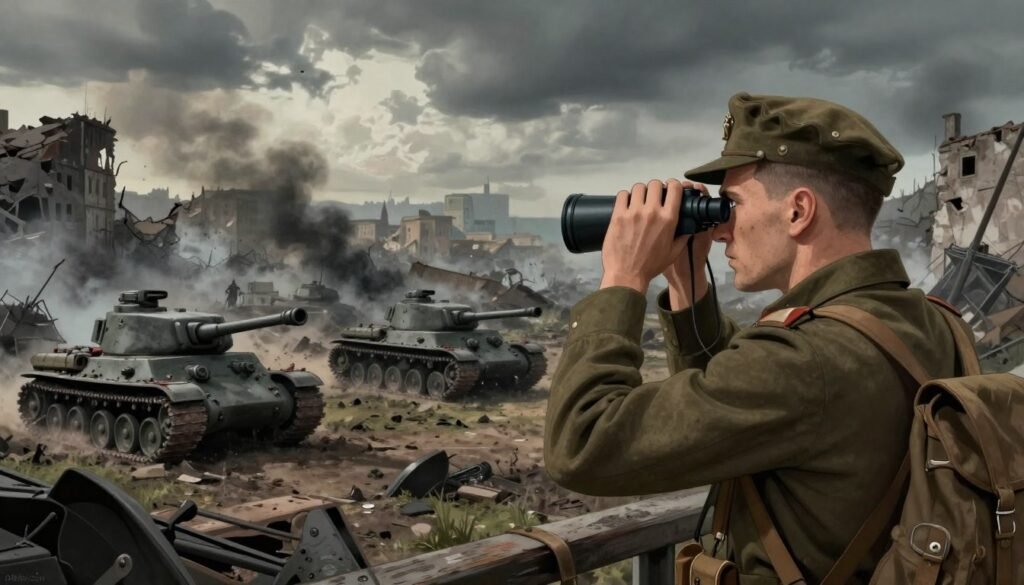
He continued to play in tournaments held in Nazi-occupied Europe. Results show he won events in those difficult years. Chess carried on even as the war reshaped life around every hall.
But the story is not simple. Accusations followed him after the conflict. Articles appeared under his name that many critics called anti‑Semitic. Those pages hurt his reputation and created lasting controversy.
History can be messy. Accounts differ across sources. Some records describe pressure and survival choices. Others stress personal responsibility. We stick to documented facts and note disagreements.
Aftermath and chess consequences
Postwar, he faced reputational damage in France and abroad. Planned title talks with new challengers were interrupted. The changing world and politics kept world title negotiations from moving forward for years.
“We must read the records carefully and weigh differing sources.”
| Topic | Fact | Impact |
|---|---|---|
| Play during war years | Active in occupied Europe | Kept competitive edge but raised questions |
| Controversy | Published articles and accusations | Reputational damage after the war |
| Title negotiations | Talks disrupted | Matches delayed into later years |
- We encourage critical reading of primary sources!
- Context matters: people lived inside the times they faced!
- After these years, his story ends abruptly and still prompts questions.
The Death of a Champion in 1946: What We Know and What’s Disputed
A quiet hotel room in Estoril became the scene of a sudden and disputed end to a champion’s life.
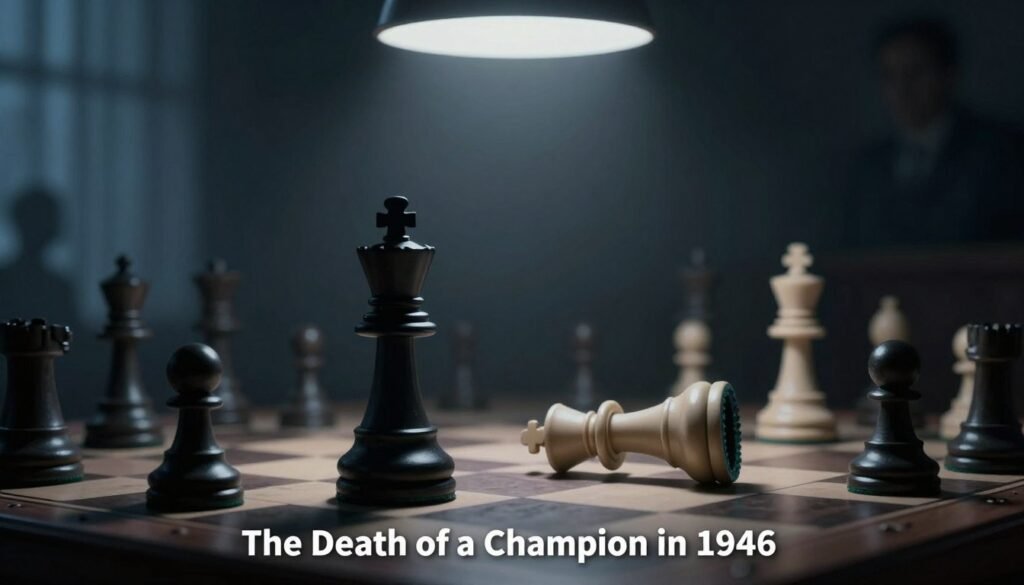
Core fact: he was found dead on the morning of March 24, 1946 in Estoril, Portugal, while still the world champion.
Conflicting reports and the medical questions
Reports differ. Some accounts said heart failure. Others claimed asphyxia from choking on meat. Autopsy notes and press stories offered varying versions across the next days.
The photo and the staged chessboard
Photographs circulated showing a chessboard beside the body. Careful research suggests at least some images were arranged for the camera. That detail created lasting questions about how scenes were presented to the public.
The hotel detail and why it matters
Documentary research identifies Hotel do Parque as the place of death. Older accounts named a different palace hotel. The exact room and setting shape how historians read the record.
We can honor his play while noting that several facts remain debated.
Why this matters: his death while holding the title changed how the chess world handled succession and championship plans after 1946.
Takeaway: facts may be disputed, but the games and lessons remain. Study the chess—learn the craft!
Study Alekhine’s Tactics Today with Debsie
Today we show how to practice classic attacking ideas in short, fun sessions! If those fierce combinations made you curious, let’s turn that excitement into real skill.
Learn via Debsie Courses
Try interactive lessons that break tactics into easy steps. Our Debsie Courses guide players through pattern drills, target sighting, and plan building. These sessions focus on core chess ideas and clear practice.
Test your progress on the Debsie Leaderboard
Track growth, compare with other players, and stay motivated! Join the community challenge on the Debsie Leaderboard and celebrate weekly wins.
Take a Free Trial Class with a Personalized Tutor
Book a Free Trial to get a custom plan that fits your level. A tutor helps kids spot threats, calculate 2–4 moves ahead, and keep pieces active at the board. Parents love that tutors set goals, explain mistakes kindly, and keep learning on track.
“Short, steady practice beats rare marathon study!”
Next step: sign up for a free session at Take a Free Trial Class With a Personalized Tutor and start to play with purpose. For context on great champions and training inspiration, see our feature on the greatest world chess champions and explore local coaching at top chess academies in Druid Hills!
Conclusion
From neighborhood chess matches to the highest world stages, his path proves training matters most.
We traced a player who rose from Moscow clubs to win a famous world championship match in Buenos Aires. That 1927 victory shows preparation can beat reputation!
His style teaches a clear lesson: active pieces, bold but calculated attacks, and steady endgame craft win games. Study patterns, do daily tactics, and replay one classic game each week.
We also hold a full‑human view: the later war years brought controversy and an unclear death. It’s okay to admire the chess while reading the facts honestly.
For kids: calculate first, then strike! For parents: growth comes in months and years—steady support counts.
Want guided practice? Join Debsie’s courses, track progress, and get a personal plan to turn study into real results!