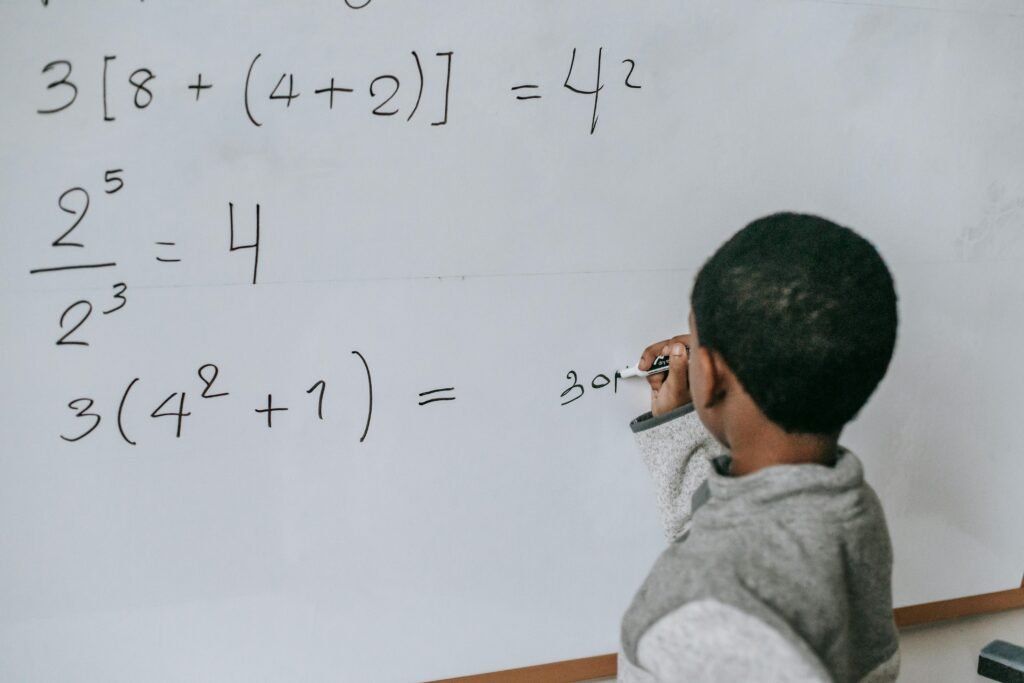
AI is now part of everyday school life. Students open a laptop, type a question, and get ideas in seconds. Teachers plan lessons faster and give quick feedback. Parents hear new terms at dinner and want to know what is safe, fair, and helpful. This article turns that noise into clear, simple facts. You will see the most important numbers about how students use AI, how teachers use AI, and what results schools are seeing. Each number becomes a short, useful guide you can act on today. No fluff. Just practical steps that help your child learn better and help teachers teach with more ease.
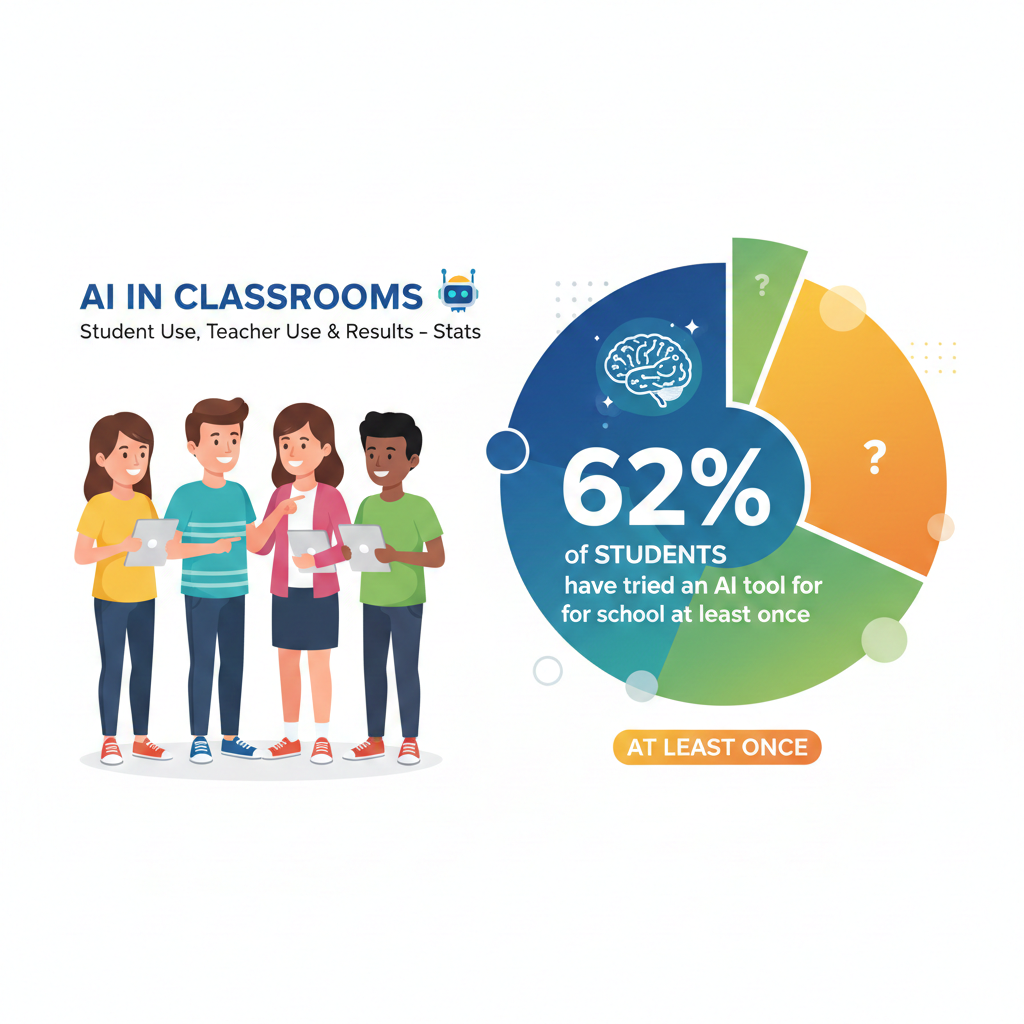
1) 62% of students say they have tried an AI tool for school at least once.
This number tells us AI is no longer a rare thing. Most students have at least clicked, typed, and seen what an AI tool can do. That first try often happens when a student feels stuck. They want a push to start a paragraph, solve a tricky step, or make a study plan.
The key is to turn that first try into smart use. Instead of random prompts, teach your child to ask clear, small questions. Ask the AI to explain one idea in simple words. Ask it to show two examples with different styles. Ask it to outline three ways to approach a task. This keeps the student in charge.
Students should keep their own voice. A simple way to do this is to draft without AI for five minutes, then invite the tool to react. Ask, what is missing, what is unclear, where can I add a fact. The student stays the writer, and the AI becomes a coach.
Another good habit is to use the tool for planning, not just answers. Show me a timeline for my science report. Break my physics problem into steps. Suggest a daily study plan for the next five days. Planning help builds confidence and lowers stress.
Parents and teachers can set a short routine that takes two minutes. After using AI, ask three questions. What did I learn. What will I do next without the tool. What should I double-check with a book or a teacher. This quick reflection builds honesty and keeps learning real.
If you want structured practice, Debsie classes model these habits live. We show kids how to prompt in plain language, test ideas, and rewrite in their own tone. Try a free session so your child can see how safe, guided AI use looks in action.
Action you can take today
Create a tiny AI contract at home. It can say I may use AI to plan, to check, and to get examples. I will not copy full answers. I will always rewrite in my own words. I will list what I used AI for at the bottom of my homework. Keep it simple, kind, and clear. Kids respect rules they help write.
2) 28% of students use AI for schoolwork every day or almost every day.
Daily use can be helpful or harmful. It helps when AI is used like a calculator for thinking. It hurts when it becomes a crutch. The goal is steady practice with limits. A good rule is twenty-minute focus blocks.
In each block, allow five minutes of AI help and fifteen minutes of student effort. The help window can be at the start to plan, in the middle to troubleshoot, or at the end to review. This rhythm keeps the mind active and stops overuse.
Students who use AI daily should track the effect. Keep a small log with three columns. What I asked. What it gave me. What I changed. Over a week, patterns show up. You will see which prompts work and which cause confusion.
You will see if the student is leaning on the tool too soon. You will also see growth in clarity as prompts get sharper. This tiny log turns daily use into a cycle of learning, not just quick answers.
Teachers can blend AI into class with guardrails. Offer a short prompt bank for common tasks. Start a paragraph with a story hook. Explain photosynthesis using only words a ten-year-old knows. Show three ways to check a fraction answer.
Give students a shared space to post their best prompts and explain why they worked. This keeps the focus on thinking about thinking. It also makes class feel fair, since everyone has access to strong starting points.
Parents can set a daily cap, like two AI checks per assignment. If a child asks for a third, ask them to first try a book, a class note, or a friend. This keeps human sources in the loop.
At Debsie, we teach a daily AI routine that takes under ten minutes. We help kids set goals, choose the right prompt type, and close with a self-check. Sign up for a trial class and we will share the routine template you can use at home.
Action you can take today
Pick one subject for daily AI use and keep others AI-light for now. For example, use AI in English for outlines and feedback, but rely on practice sets in math. This focused approach builds skill without spreading habits too thin.
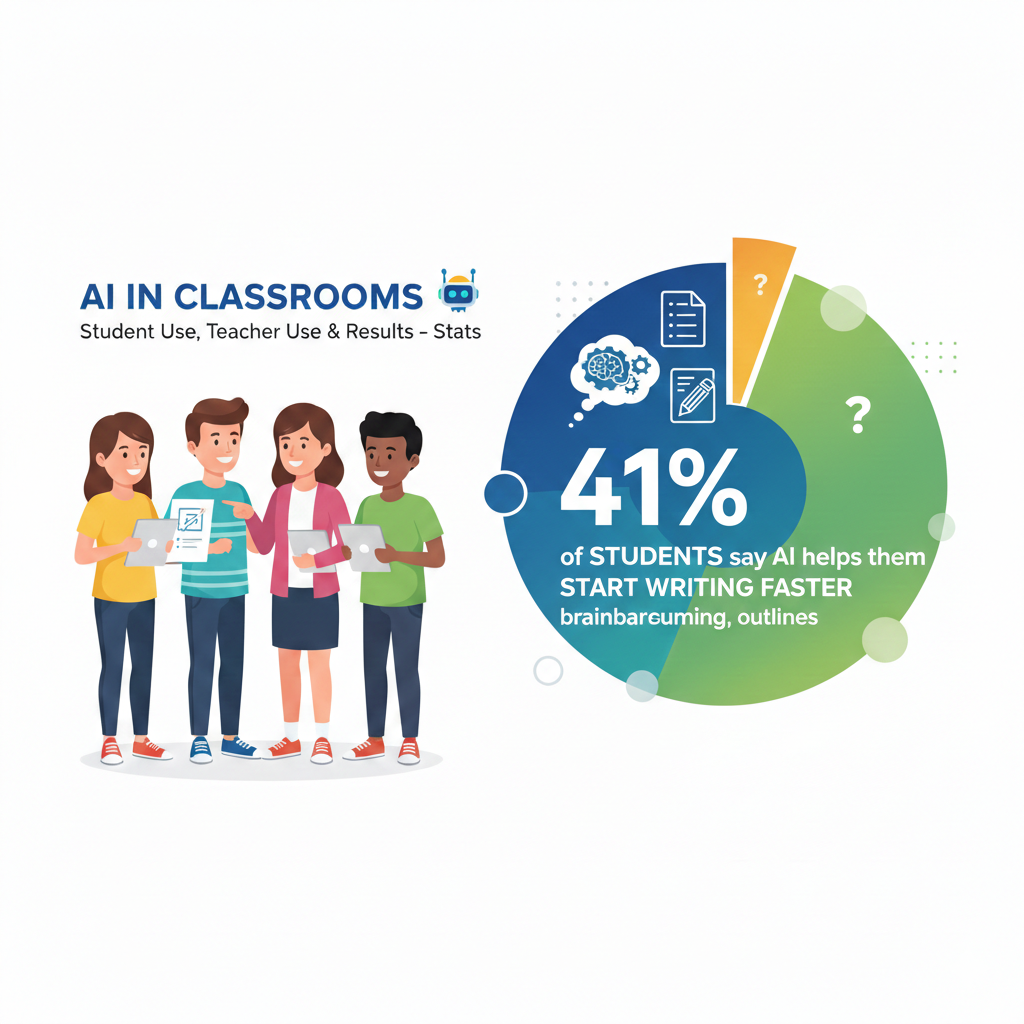
3) 41% of students say AI helps them start writing faster (brainstorming, outlines).
Blank pages scare even strong writers. AI can melt that fear by offering sparks and shapes. The safest way is to ask for scaffolds, not sentences. Request a simple outline with three parts, each with a clear purpose. Ask for five title ideas with different tones.
Ask for a short list of questions your paper should answer. These tools lower the starting barrier while keeping the ideas yours.
Once a student has a shape, the next step is to fill it with their own words. A helpful trick is to use voice notes. The student speaks their thoughts for each outline point for sixty seconds. Then they transcribe, clean up, and add detail.
If they need help, they can paste one paragraph and ask the AI to highlight gaps or unclear claims. This turns the tool into a reviewer, not a ghostwriter. It also teaches the skill of revising, which is where real learning lives.
Teachers can design writing warm-ups that use AI for idea variety. Give the same prompt to the AI three times with different constraints, like different audiences or lengths. Students then merge the best parts into a fresh plan. Another exercise is to ask the AI for counterarguments.
Students choose one, explain why it is strong, and write a reply with evidence. This builds critical thinking, not just speed.
Parents can help by setting a three-step home rule. First, brainstorm with AI for five minutes. Second, write the first draft without AI for twenty minutes. Third, use AI to check clarity and structure for five minutes. Time boxes keep momentum.
At Debsie, we practice these steps in live writing labs. Kids leave with a finished draft and a simple checklist they can reuse. Join a class to see how we turn AI brainstorming into original, honest writing.
Action you can take today
Create a personal prompt your child can reuse. Try this template. Give me a three-part outline for a paper on topic that includes a clear hook, one key example, and a short conclusion that answers why this matters. Keep each section under fifty words. Save it, tweak it, and watch starting get easier week by week.
4) 36% of students use AI to check math steps or fix mistakes.
This number shows many students do not only want answers. They want to see the path. AI can walk through each step, and that is where learning grows. The best way to use AI in math is to ask for the process before the result.
A student can paste their own work and ask the tool to point out the first wrong move, not to solve the whole problem. When the tool marks the error, the student tries again, then asks for a hint for just the next step. This keeps thinking active. It also builds a habit of debugging, which is the same skill used in coding and science labs.
A strong routine is to do three problems without AI, then check only the reasoning. If the tool shows a different method, the student writes both side by side and explains in one or two lines why each method works.
This simple compare step builds flexibility and speed. Another tip is to ask AI to generate a near-miss error, such as a common sign slip or a unit mistake. Students then practice catching it. This is like a vaccine for math errors.
Teachers can create quick checkpoints. After a practice set, ask students to submit one problem solved by them and one solved by AI. They must write what they learned from comparing the two. This turns AI into a partner for reflection.
Parents can keep a small rule at home. Use AI to find the first wrong line, not to finish the solution. If a child is tired, switch to a single hint mode where AI can only ask a guiding question, not give a full step.
At Debsie, we use AI as a tutor that asks, not tells. Kids learn to request hints, verify units, and label every step with a reason. This keeps math honest and makes errors less scary. Join a free class if you want your child to see how a gentle hint can unlock a hard problem.
Action you can take today
Have your child write one sentence after each math check. The sentence starts with I changed and names the exact step. In one week, you will see cleaner work and fewer repeat mistakes.
5) 33% of students report higher grades after they began using AI regularly.
Better grades are a good sign, but the goal is deeper skill, not just higher numbers. The path to both is to use AI for practice feedback, planning, and review. Start with planning. Ask AI to make a weekly study map for each subject, with tiny goals and due dates.
Keep tasks small, like review two physics laws or write one paragraph with a clear claim. Small wins compound into big gains.
Next is practice. Use AI to create short drills that target weak spots. If a student struggles with thesis statements, ask for three weak ones and fix them. If they miss fraction word problems, ask for two problems that test unit sense and model drawing.

Teachers can connect AI use to rubrics. Give students a copy of the grading criteria and ask them to prompt the AI to check only those areas. If the rubric values evidence or method labels, the AI check should target those.
This makes the feedback match the grade and avoids noise. Parents can set a weekly reflection. What AI prompt helped the most. What prompt wasted time. What will we try next week. This simple check keeps growth steady.
At Debsie, we drive real results by pairing AI practice with human coaching. Kids learn to set goals, test prompts, and measure gains without guesswork. Our live classes keep effort focused and fun. If you want a guided plan for higher grades and stronger skills, try a Debsie trial class.
Action you can take today
Create a three-step homework loop. Plan with a two-sentence AI study map, practice with five targeted drills, and review one sample with rubric checks. Repeat this loop three times a week for one month and track the change.
6) 52% of students say AI reduces homework time by at least 30 minutes per day.
Time saved is only useful if learning stays strong. The best way to bank this time without losing depth is to save setup time, not thinking time. Use AI to build outlines, check directions, and generate practice items that match the level.
For example, ask the tool to turn a long reading into a short checklist of tasks. Ask it to format notes into a study sheet with key terms and simple examples. Ask it to create three targeted practice questions that match tomorrow’s quiz. These tasks reduce friction and keep the student’s energy for real thinking.
Short bursts work well. Set a twenty-five-minute focus block with a five-minute AI assist at the start and a three-minute AI review at the end. The start assist might be building a plan or clarifying steps. The end review might highlight unclear parts or missing references.
The rest is human work. This will cut the wasted time between tasks and prevent long stalls on basic formatting or searching.
Teachers can give AI-ready templates to speed up routine work. A template for lab reports with labeled sections. A template for essay outlines with space for quotes and analysis. A template for math solutions that includes a reason line.
Students can ask the AI to fill the template with structure only, then complete it with their own content. Parents can set a rule that time saved must be reinvested. Use fifteen saved minutes to read a hard page twice or to explain the concept aloud. This turns saved time into stronger memory.
At Debsie, we help students use AI to shave off busywork and spend more minutes in the learning zone. Our gamified lessons show how small setup gains add up across a week. If you want your child to learn faster and better, book a free class and we will share a simple time-saver plan.
Action you can take today
Ask AI to draft a study plan for tonight with three tiny tasks, each under ten minutes. Follow the plan, then use any leftover time to teach the main idea back to you in two minutes.
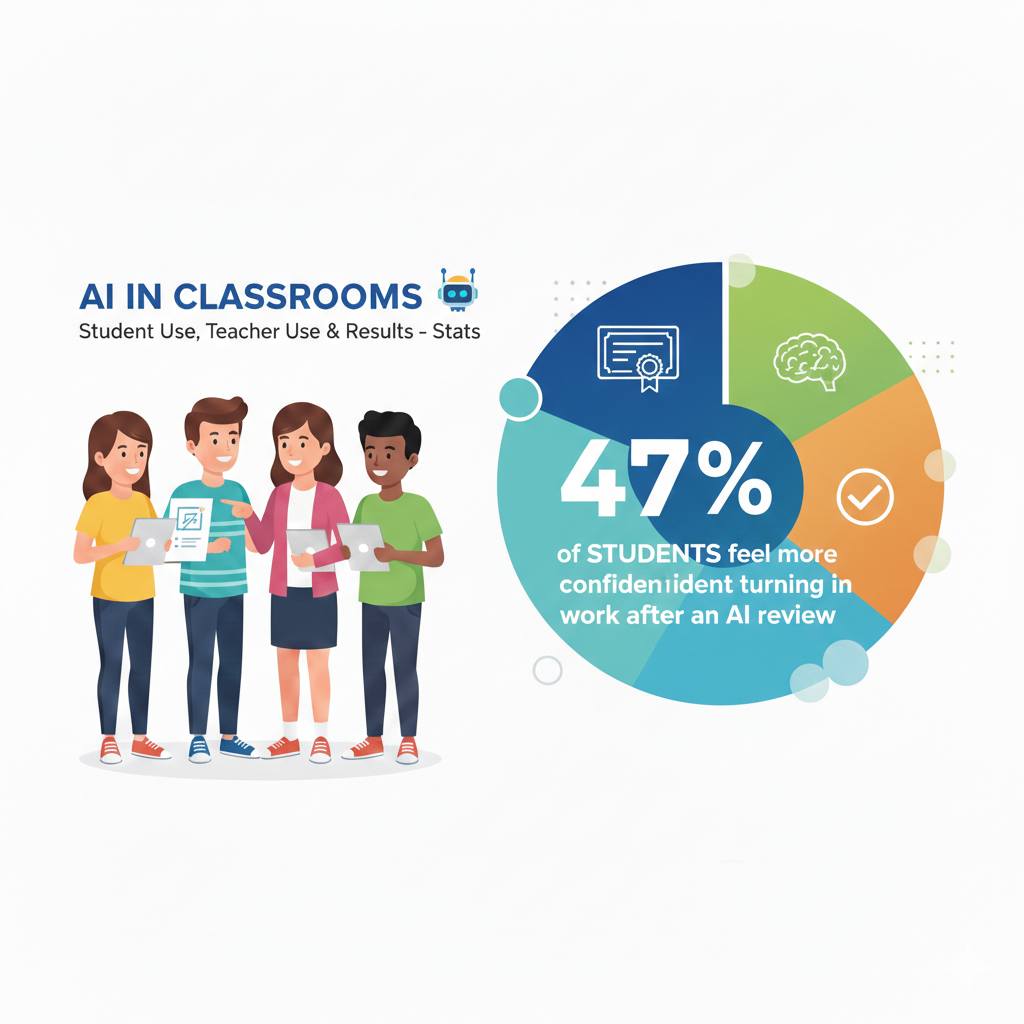
7) 47% of students feel more confident turning in work after an AI review.
Confidence grows when feedback is clear and actionable. An AI review can act like a mirror that shows what is strong and what needs work. The key is to ask for feedback that is specific and kind. A student can paste a single paragraph and request three notes only.
One on clarity, one on evidence, and one on tone. They can then revise, read aloud, and ask the AI to check again. This simple loop sharpens writing and lowers the fear of unknown errors.
To make reviews useful, set boundaries. Do not ask for full rewrites. Ask for highlights and questions. If the AI suggests a change, the student should write the change themselves. Another good habit is to collect wins.
After each review, students list one sentence they improved and why. This builds a bank of strong lines they can look at before the next assignment. It also turns feedback into a positive experience, not a flood of red marks.
Teachers can create a two-pass system. Students do a first pass with a peer checklist and a second pass with an AI checklist. Each pass looks at different things to avoid overlap. For example, peers focus on ideas and organization, while AI focuses on clarity and grammar.
Parents can help at home by doing a read-aloud test. If a sentence is hard to say, it is hard to read. Ask AI to suggest a simpler version, then let the child choose the best wording that still sounds like them.
At Debsie, we teach kids how to ask for laser-focused feedback and how to revise without losing their voice. Our instructors model good prompting and healthy editing habits live. This builds the courage to submit work proudly and the skill to keep improving.
If you want to see this in action, join a Debsie trial and watch your child’s confidence rise.
Action you can take today
Before submitting any assignment, have your child ask AI for three specific checks only. Clarity of main idea, strength of one piece of evidence, and one sentence that could be simpler. Make the changes, read aloud once, and submit with calm.
8) 21% of students admit they have copied AI text without proper editing or citation.
This number is a warning sign. It tells us that about one in five students has pasted AI text as if it were their own. Many do not mean to cheat. They are rushed, unsure how to cite, or afraid their own words are not good enough. The solution is simple habits that keep honesty easy and fast.
The first habit is the pause. After getting AI output, pause for two minutes and highlight what is purely information versus what is original phrasing. Facts can be kept, but phrasing must be rewritten in the student’s voice. The second habit is the rewrite rule.
Rewrite every AI sentence in smaller, clearer words, then add a personal example or a class reference. This makes the work sound like the student and also proves they understood the idea.
Students should always keep a tiny usage note at the end of their assignment. It can be one line that says what the AI helped with, such as outline, idea list, or grammar check. This builds trust with teachers and sets a safe boundary for future work.
If a teacher allows quotes from AI, use quotation marks and name the tool and date. If the teacher does not allow direct quotes, then do not include any AI phrasing, only your own. The goal is to learn, not to hide.
Teachers can help by giving examples of allowed versus not allowed use. Show a sample paragraph that is AI-generated and one that is student-written after an AI outline. Explain why one is honest and the other is not. Parents can support with a one-minute talk before big deadlines.
Ask the child to tell you which parts they wrote from scratch and which parts they improved after an AI review. If a student feels proud of the parts that are truly theirs, they are less likely to paste and submit.
At Debsie, we teach kids a clear integrity checklist that fits on a sticky note. It covers rewrite, cite, and reflect. This makes ethical AI use a quick ritual, not a chore. If you want your child to master honest habits now, join a free trial class where we practice these steps with real assignments.
Action you can take today
Have your child add a one-line AI usage note to their next assignment. It can say AI helped me brainstorm three ideas and check grammar. I rewrote all sentences in my own words. This tiny step builds trust and protects integrity.
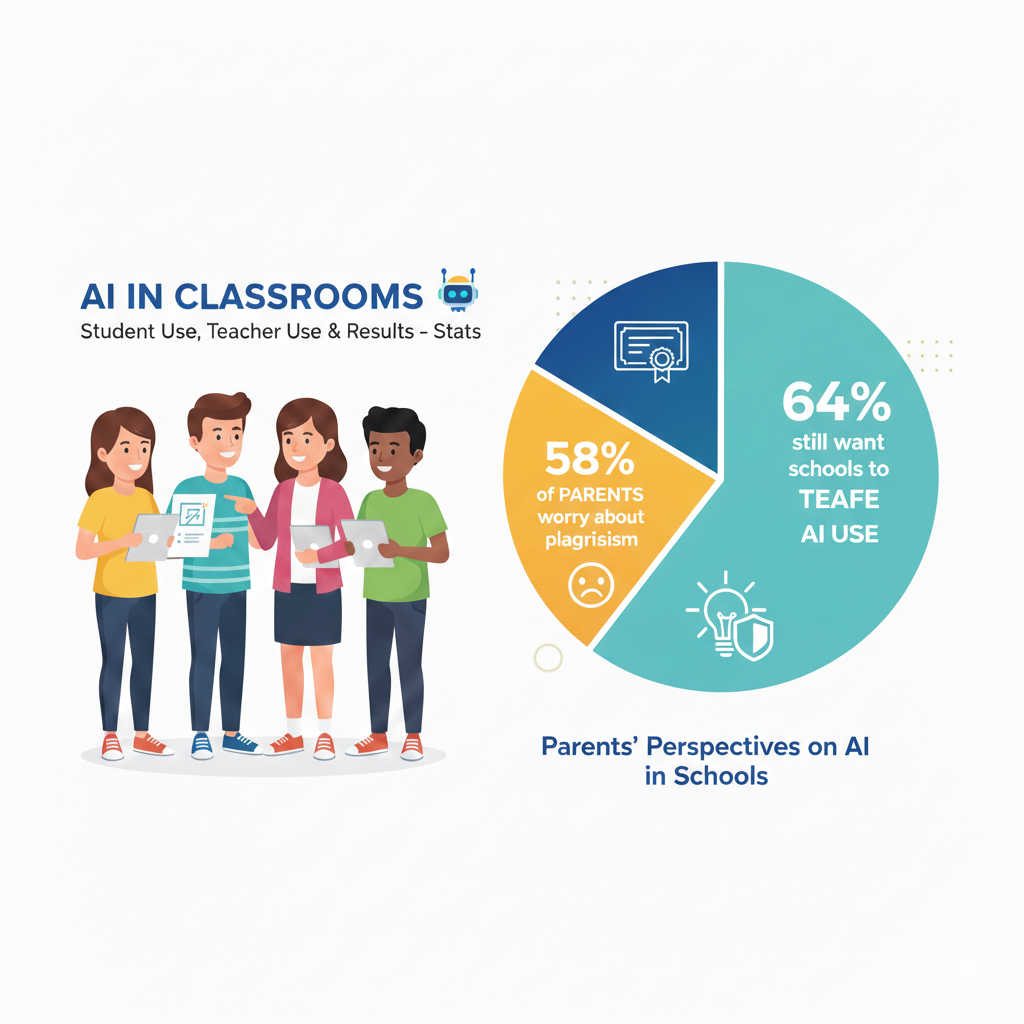
9) 58% of parents worry about plagiarism, but 64% still want schools to teach safe AI use.
Parents want both safety and skills. They worry about shortcuts, but they also know AI will be part of future jobs. The path forward is clear rules plus guided practice. Schools should set plain, friendly policies that any student can follow.
The policy should define allowed uses, like planning, brainstorming, and grammar checks. It should also define not allowed uses, like submitting AI text as original writing or using AI to bypass reading. When rules are simple and shared in every class, students stop guessing and start focusing on learning.
Teaching safe use means showing the why behind the rules. When students learn that rewriting builds memory and that citing builds trust, they are more likely to comply. Practice should be hands-on. In class, students can try three small tasks with AI and then label each as allowed or not based on the policy.
They can also write a short reflection on how AI helped them think, not just finish. Parents can ask schools for family guides that explain the policy in simple words and include at-home tips. A shared language between home and school keeps things consistent.
At home, reinforce the difference between help and replacement. Help means structure, hints, and feedback. Replacement means full answers and personal voice taken from a tool. Set time rules to prevent last-minute panic that drives bad choices.
If an essay is due on Friday, do a five-minute plan on Tuesday, a short draft on Wednesday, and a fifteen-minute cleanup on Thursday with AI checking only clarity and grammar. Calm schedules protect honesty.
At Debsie, we include AI ethics in our lessons. Students practice citing tools, rewriting with their own tone, and reflecting on what they learned. We also give parents simple scripts to use at home so everyone speaks the same language. If you want a school-home model that balances safety and skill, try a Debsie class and get our AI family guide.
Action you can take today
Write a family AI rule that fits on one index card. Allowed planning, outlining, grammar checks, idea lists. Not allowed copying full paragraphs, skipping reading, or hiding AI use. Place the card near the study desk where it is easy to see.
10) 49% of teachers say they now use AI weekly for lesson planning or materials.
Nearly half of teachers already lean on AI to save time and raise quality. The best use is to speed up routine work while keeping human judgment at the center. For planning, a teacher can ask AI to create three lesson outlines aligned to the standard, each with a different difficulty level.
The teacher then reviews, picks the best pieces, and adds local context, class examples, and checks for cultural fit. For materials, AI can draft exit tickets, short reading passages, and practice questions that target one skill at a time. The teacher edits for clarity and ensures the set matches the class’s current needs.
A strong weekly rhythm makes AI help dependable. On Sunday, generate lesson skeletons and a list of key misconceptions to watch for. On Monday night, ask for three variations of tomorrow’s practice to support different levels.
On Wednesday, generate quick discussion starters and a mini quiz for Thursday. On Friday, summarize the week’s data and suggest reteach groups. With this steady cadence, teachers win back hours and direct more energy to coaching, conferring, and giving feedback.
Data alignment matters. Teachers can paste last week’s common errors and ask AI to propose targeted checks that reveal if students truly fixed the issue. They can also request short scripts for mini-lessons that explain one idea in under five minutes with simple examples.
For multilingual learners, ask AI to rephrase directions at a lower reading level and add visual cues. For students who need challenge, request a transfer task that applies the concept to a new context.
At Debsie, our instructors use AI to build game-like challenges, model high-quality prompts, and still spend most of class time interacting with students. The result is less prep stress and more energy for real teaching. If you want ready-to-use lesson frameworks and AI prompt banks, join a Debsie trial and we will share our planning kit.
Action you can take today
Pick one class for a pilot. Use AI to draft a lesson outline, a five-question exit ticket, and a short reteach mini-lesson. Edit them for your voice and context. Run the set this week and note exactly how many minutes you saved and where students learned faster.
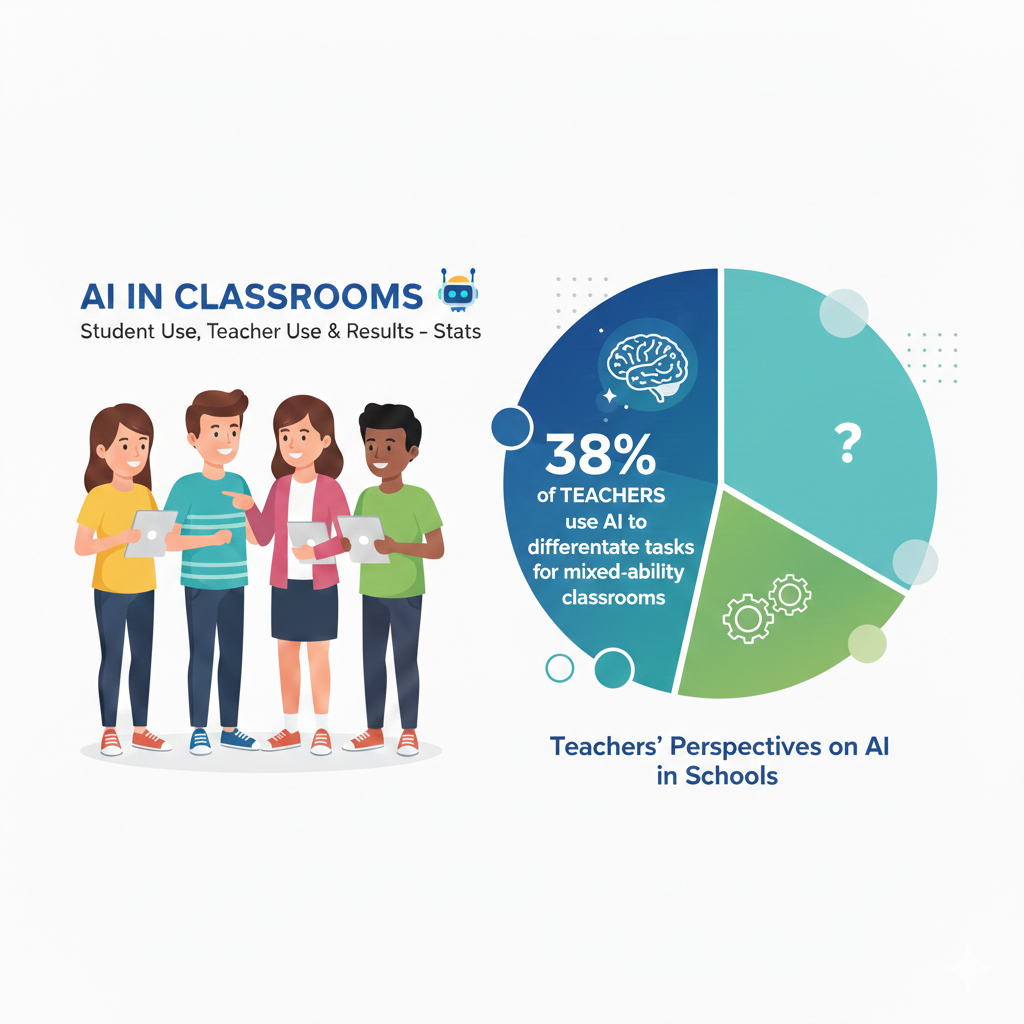
11) 38% of teachers use AI to differentiate tasks for mixed-ability classrooms.
When a class has many levels, planning can feel like spinning plates. AI helps teachers design the same core lesson at three speeds so no student is left behind and no one is bored. The smartest way to do this is to write a single learning goal first, then ask AI to generate three parallel paths to reach it.
One path includes more guidance and models. One path uses normal scaffolds and independent practice. One path adds challenge with transfer tasks or real-world twists. Because all three paths point to the same goal, class stays unified while each child gets the right amount of support.
The teacher’s voice and knowledge still matter most. After AI drafts the three paths, the teacher edits examples to fit the class text, the local curriculum, and the cultural context. For multilingual learners, the teacher can ask AI to simplify directions to a lower reading level while keeping key terms in English.
For advanced learners, the teacher can ask for an extension task that blends two topics, like combining statistics and sports data, or mixing physics and art. This makes the work feel purposeful and fresh.
Differentiation also benefits from quick checks. Teachers can ask AI to create two-minute exit prompts at each level that test the same idea in different ways. One prompt might be a fill-in-the-blank model. Another might be a short explain-why question.
A third might be a design-your-own example. The teacher then groups students by the type of mistake they made, not by a fixed label. This keeps movement flexible and kind. Over time, students learn to choose the right path for themselves, building agency and confidence.
At Debsie, we use this three-path method in our live classes every week. Kids can switch lanes as they grow, and they always know the target. If you want ready-made templates for three-path lessons, join a Debsie trial and we will share our toolkit so you can plug it into your classroom in minutes.
Action you can take today
Pick tomorrow’s lesson and write one clear goal. Ask AI for three versions of the same task, each with different supports but the same success criteria. Edit for your voice, run it once, and note which students thrive in each path.
12) 44% of teachers say AI saves them 2–4 hours per week on prep and grading.
Time is a teacher’s most precious resource. When AI handles routine prep and light grading, teachers win back space for rich feedback and one-on-one coaching. Start with planning. Ask AI to produce a weekly skeleton that includes do-now prompts, mini-lesson talking points, guided practice items, and exit tickets aligned to standards.
Review the skeleton in fifteen minutes, add your examples, and you have the week framed. For grading, use AI to draft comment banks tied to your rubric. Comments should be short, clear, and linked to next steps, such as add one piece of evidence, label your units, or explain the why behind your claim.
Quality control matters. Before using any comment, the teacher should verify accuracy against the student’s work. AI is a helper, not a judge. For writing tasks, AI can highlight sentences that may be unclear or off-topic and suggest questions the teacher can ask the student.
For math or science, it can flag missing labels, unclaimed assumptions, or skipped reasoning lines. The teacher then chooses the best feedback, personalizes it, and sends it. This keeps the tone human and the direction precise.
Saving hours each week also comes from templates. Ask AI to generate a consistent format for lab reports, discussion reflections, and problem solutions. Students learn the pattern and spend less time guessing the shape of the work.
Teachers spend less time cleaning up format issues and more time on ideas. The saved time can go into short conferences. Five-minute check-ins with two or three students per day add up to a class where every child feels seen and supported.
At Debsie, our coaches share time-saver packs with lesson frames, exit ticket kits, and feedback scripts. Teachers tell us these packs feel like an extra pair of hands. If you want a head start, join a Debsie trial and get a copy of our comment bank builder and weekly skeleton template.
Action you can take today
Choose one grading task this week and build a five-line comment bank with AI, tied to your rubric. Personalize each comment as you use it, and measure how many minutes you save without losing quality.
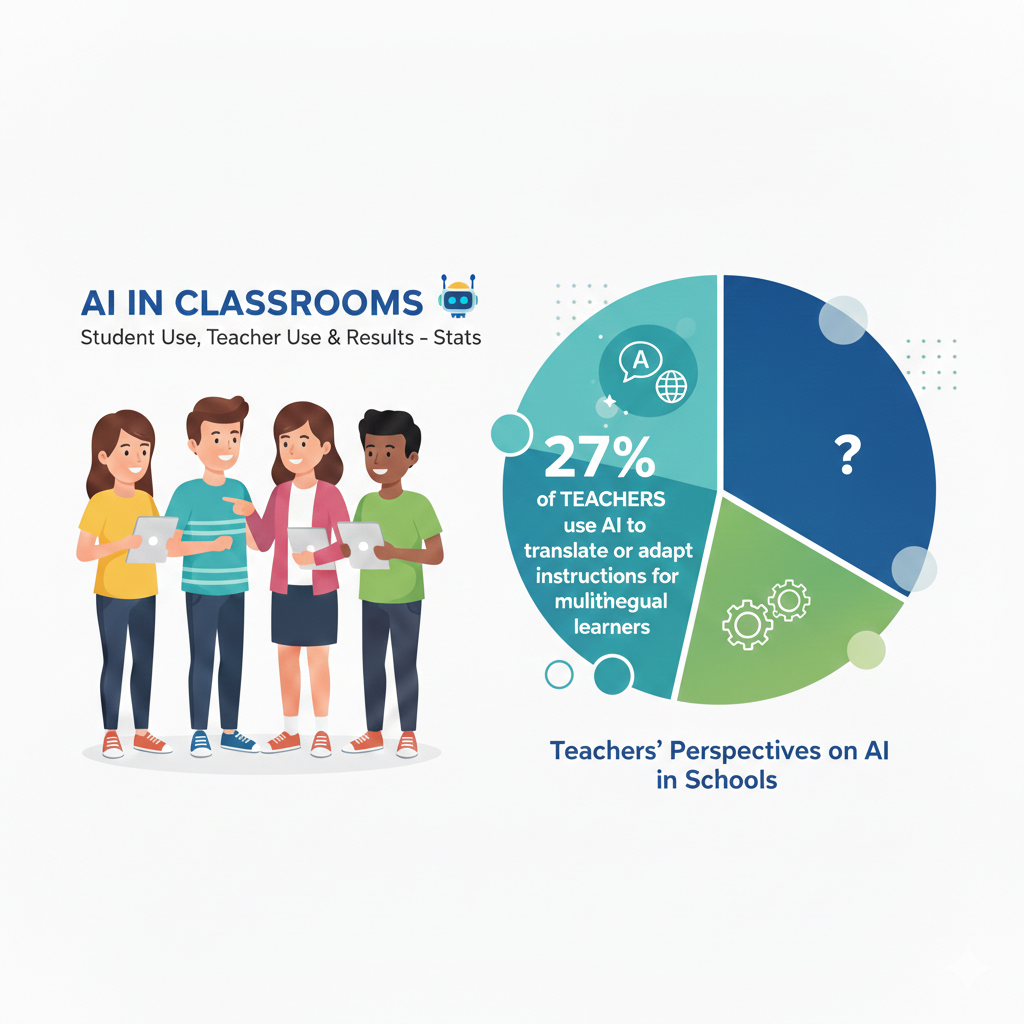
13) 27% of teachers use AI to translate or adapt instructions for multilingual learners.
Clear directions open the door to learning. When a student is still building English, even strong thinkers can get blocked by wording. AI can rewrite instructions at a simpler reading level without dumbing down the idea.
It can also add short picture cues, word banks, and sentence starters. The teacher keeps the core concept the same, but the path becomes easier to walk. This protects dignity and keeps expectations high.
A good workflow starts with the original prompt. The teacher asks AI to produce a plain-language version at a target reading level and to bold key academic words that must stay. Next, the teacher requests sentence frames for common tasks, like I claim that, I observed that, or The pattern shows that.
For choice-rich tasks, AI can offer three question starters so students can pick one that feels comfortable. When needed, AI can provide gentle first-language glossaries for the few terms that carry heavy meaning, such as erosion, momentum, or bias. These supports lower the language barrier while keeping the cognitive load intact.
Feedback also needs adaptation. AI can help write short, kind notes in the student’s home language that explain one success and one next step. It can also create small self-check lists in both languages so the student can work independently.
Over time, the teacher can reduce the supports as the student’s English grows. The aim is not to keep the ladder forever, but to climb it and step off with confidence.
At Debsie, we work with multilingual learners across countries every day. Our classes mix visuals, simple words, and deep ideas so students can show their real thinking. If your class or child needs better language scaffolds, try a Debsie trial. We will share translation prompt templates and dual-language feedback starters you can use right away.
Action you can take today
Take one set of directions for an upcoming task and ask AI to rewrite it at a lower reading level with bolded key terms, one picture cue suggestion, and three sentence starters. Test it with a multilingual student and note the difference in speed and accuracy.
14) 35% of teachers say AI gives quicker, clearer feedback than traditional methods.
Fast, clear feedback helps students move quickly from confusion to action. When a teacher uses AI as a first-pass reviewer, the tool can spot unclear sentences, missing evidence, weak topic sentences, and common grammar slips in seconds.
This does not replace teacher judgment. It prepares the ground so the human feedback can focus on ideas, logic, and craft. A smart workflow is simple. Students submit a draft. AI flags three to five specific issues.
The teacher then adds one or two high-value comments tied to the rubric and the student’s personal goal. The result is feedback that is quick to read and easy to use.
The clarity comes from constraints. Ask AI for comments that include a reason and a next step. Instead of vague phrases like needs more detail, require a concrete action, such as add one statistic from your notes or name the variable you changed in the experiment.
For math, ask the tool to identify the first incorrect step, explain why it is incorrect in one sentence, and suggest a question that nudges the student toward the fix. Students learn to act, not just nod.
Teachers can also use AI to generate mini exemplars. After reading a weak paragraph, ask the tool to produce a model paragraph at the same length that shows the missing skill. Students compare the two, mark differences, and then revise.
This side-by-side view makes feedback feel doable. Parents can support the same way at home. Ask AI to create a small model that matches the assignment’s length and structure. Have your child mark three moves the model uses, then try them in their own draft.
Action you can take today
Choose one assignment and ask AI to produce a five-line feedback set that includes a reason and a next step for each line. Apply only two comments per student. Track how many students revise within twenty-four hours and how their work changes.
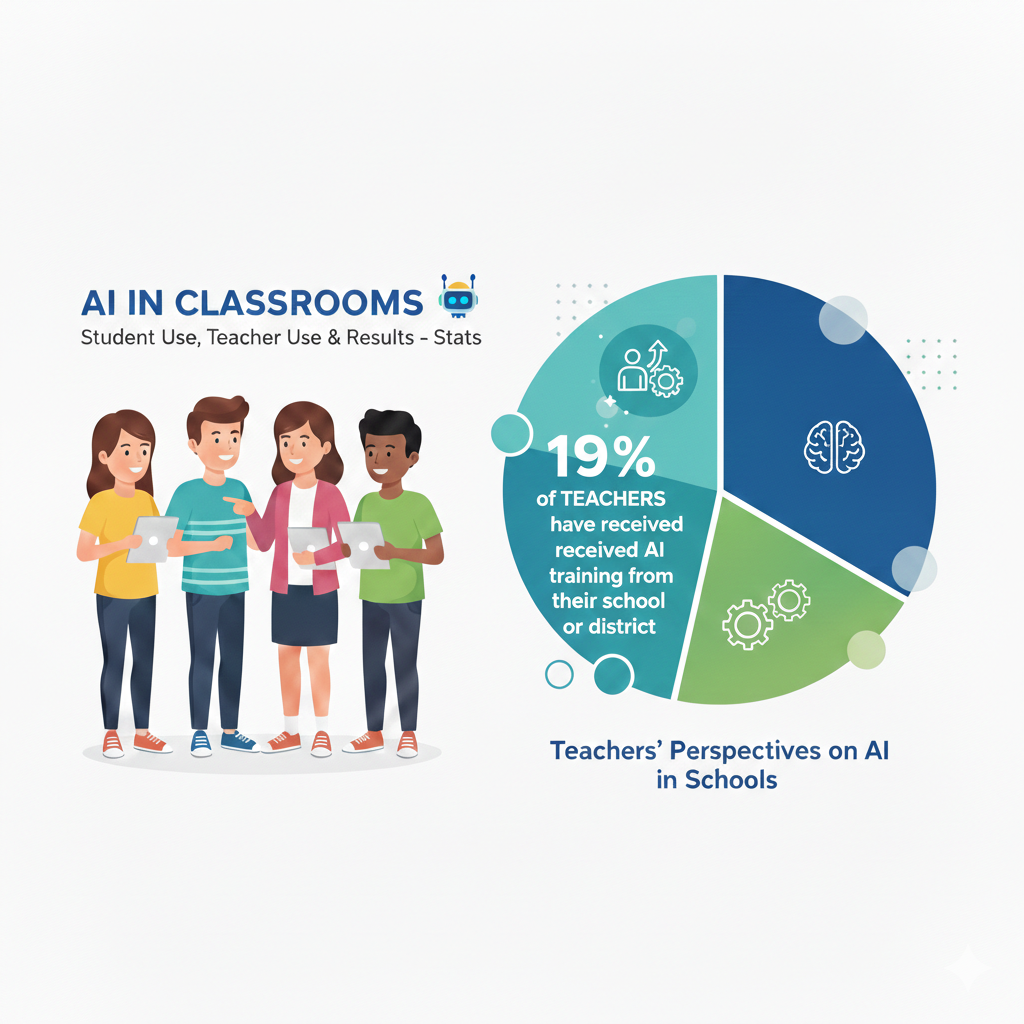
15) 19% of teachers have received AI training from their school or district.
This number shows a gap. Most teachers are asked to guide AI use without formal support. The fix is targeted, short training that fits real classroom needs. A good training plan has three parts. First, safe and ethical use, including privacy, citation, and acceptable-help rules.
Second, practical workflows, such as lesson skeletons, prompt banks, and grading comment banks. Third, evaluation skills, including how to verify AI output, how to spot hallucinations, and how to test prompts for bias or error. Each part should include live modeling, try-it-now practice, and a take-home template.
Short, repeated sessions beat long, one-time workshops. Think forty-five minutes every two weeks, each focused on one use case. One session on designing three-tiered tasks. One on building exit tickets that probe for misconceptions.
One on turning common errors into mini-lessons. Add a buddy system so teachers try a workflow, swap results, and refine together. Over a term, confidence grows and the tools feel natural instead of scary.
Schools should also provide clear guidance on data. Teachers need to know which tools are approved, what student information can be shared, and how to store AI-generated materials. Parents value this clarity too. At home, families can ask for the school’s AI policy and request a simple parent version with examples.
When everyone shares the same language, students get steady, safe advice.
At Debsie, our coaches run micro-trainings that fit a teacher’s week. We share prompt banks, model classes, and simple checks to verify AI output. If your school wants fast, practical training that sticks, join a Debsie trial and we will send a starter kit you can use right away.
Action you can take today
Plan a three-session AI sprint with your team. Pick one workflow per session, practice it on real materials, and leave with a usable template. Set a date two weeks later to compare results and tune your prompts.
16) 57% of teachers want clear rules and examples for acceptable AI use in class.
Rules work when they are short, fair, and easy to follow. Teachers want simple lines that say what students may do and may not do, with live examples for each. A strong class policy fits on one page. Allowed uses can include planning, outlining, vocabulary support, grammar checks, and idea lists.
Not allowed uses can include copying full paragraphs, skipping required reading, or submitting AI text as personal voice. Every rule should include a tiny scenario. Show a student using AI to build an outline, then writing the draft in their own words.
Show the same student pasting AI sentences without changes and explain why that breaks the rule. Examples remove guesswork.
Clarity also means standard steps for reporting and repairing mistakes. If a student overuses AI, the consequence should guide learning, not just punish. A sensible path is rewrite with a teacher conference, add an AI usage note, and complete a short integrity reflection.
After that, the grade focuses on the revised work. This approach teaches better habits and keeps trust alive.
Parents should see the rules too. A family-friendly version can travel in backpacks and live on the class site. At home, parents can help students label where AI helped in an assignment. This small label creates transparency and reduces conflict.
Over time, students learn the difference between help and replacement and can explain their choices.
At Debsie, we share plain-language AI policies that classrooms customize in minutes. We include side-by-side examples, quick reflections, and student-friendly citations. If you want a ready policy with kinder guardrails, try a Debsie session and get our editable template.
Action you can take today
Write a one-page class AI policy with three allowed uses, three not allowed uses, and two short examples. Share it, teach it, and ask students to sign an understanding note that includes how to ask for help when unsure.
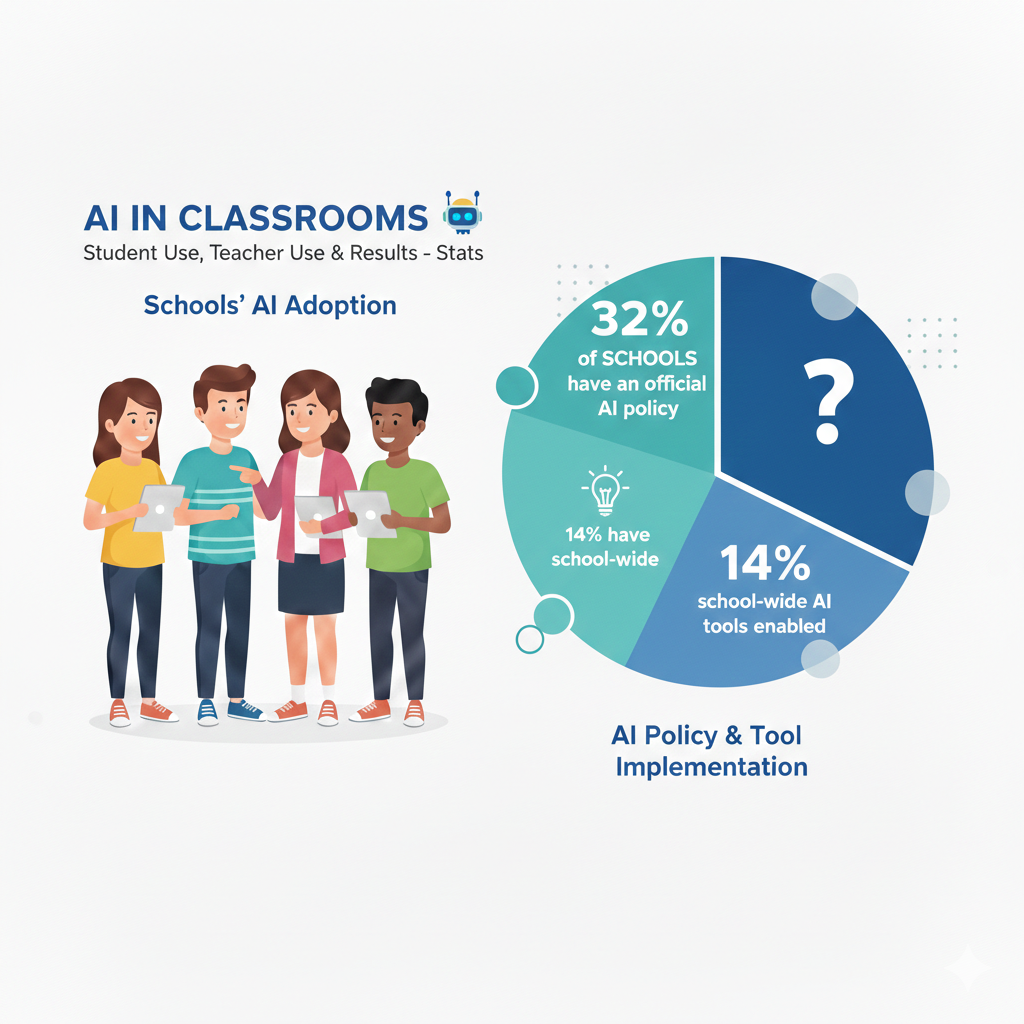
17) 32% of schools have an official AI policy; 14% have school-wide AI tools enabled.
Policy and tools need to grow together. When only a third of schools have a formal policy, teachers and families face mixed messages. A clear policy reduces chaos. It sets standards for privacy, age-appropriate use, and data handling.
It defines approved tools and explains why they were chosen. It outlines equity steps so all students have access to the same supports. With policy in place, enabling school-wide tools becomes safer and more purposeful.
Choosing tools requires a checklist. Schools should look for data protection, student-friendly interfaces, accessibility features, multilingual support, and strong admin controls. Tools should allow teachers to lock modes, limit features that invite overuse, and export student work for portfolios.
Pilots help too. Start with a small group, collect data on learning gains and issues, and decide whether to scale. Communicate early and often with families so trust grows as the tools roll out.
Training is part of the rollout. Teachers need quick start guides, prompt banks, and support hours. Students need mini lessons on safe and smart use. Parents need a simple guide that answers common questions. When everyone knows the plan, the tools feel like part of the learning system, not a sudden add-on.
Over time, schools can refine the policy based on real classroom stories.
At Debsie, we help schools draft policies and select tools that match their goals. We focus on safety, simplicity, and strong learning results. If your school is building its plan, join a Debsie trial and we will share our policy checklist and rollout map.
Action you can take today
Form a small AI task force with one admin, two teachers, one student, and one parent. Draft a two-page policy, pick one tool to pilot for six weeks, and set clear success measures. Share updates at two and four weeks.
18) 26% of schools block at least one major AI site on student devices.
Blocking can make sense when schools need time to set rules, select tools, or comply with privacy laws. But blocking alone does not teach judgment. Students still need to learn wise use because AI will be part of life beyond school Wi-Fi. A balanced plan combines guardrails with guidance.
Schools can block broad access while allowing approved tools that run in a safe mode. In class, teachers can model when and how to use AI, and when not to. Clear routines show students that sometimes the best next step is a textbook, a lab, a peer, or quiet thinking.
When blocking is in place, provide alternatives so learning continues. If an AI writing coach is off-limits, offer a teacher-created checklist and a small bank of exemplars. If a math helper is blocked, provide a hint sheet and worked examples with common errors.
Over time, schools can run pilots in supervised settings to see the learning impact and adjust blocks with data, not fear. Communication with families is key. Explain why certain sites are blocked, what safe tools are approved, and how students will still learn AI skills in guided ways.
Students should practice integrity regardless of access. Teach them to label any AI help used at home, even if the school site is blocked. This keeps the trust chain intact. Parents can set home rules that mirror school rules so the message stays consistent.
The goal is a shared culture where AI is a coach within limits, not a shortcut without thinking.
At Debsie, we work in both blocked and open settings. We teach students routines that do not depend on a single site. They learn prompts, checklists, and revision habits they can carry anywhere. If your school blocks AI, our classes still build the same core skills. Try a Debsie session to see a safe, guided approach in action.
Action you can take today
If your school blocks AI, publish a one-page substitute kit. Include a revision checklist, a sample model, a hint sheet, and a short integrity note template. Teach students how to use the kit this week so work does not stall.
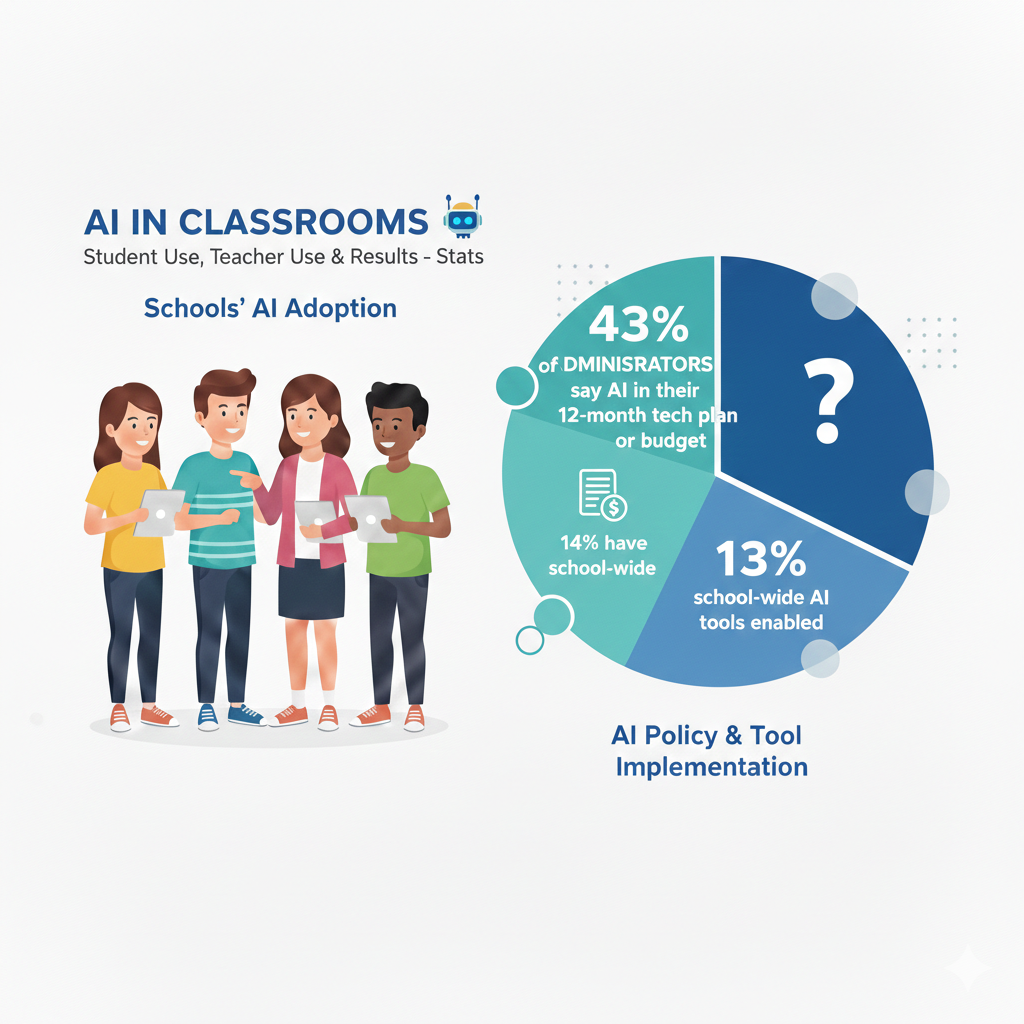
19) 43% of administrators say AI is in their 12-month tech plan or budget.
When leaders include AI in a one-year plan, it signals a shift from talk to action. A strong plan starts by naming the problem to solve. Is the goal to cut teacher prep time, boost reading growth, give multilingual support, or improve feedback speed.
Clear goals guide smart choices. The next step is a tight pilot. Pick two grades or subjects, choose one or two tasks to support, and define success with simple numbers, such as minutes saved per week, percent of students revising after feedback, or reduction in late work.
Budget choices should follow impact. Spend first on teacher time and student access. Time saved on planning and grading turns into more coaching and better lessons. Access means every student can use the same safe tools, not only those with devices at home.
Leaders should also set money aside for training, tiny stipends for teacher leads, and parent communications. A short monthly update builds trust and shows progress.
Risk control matters. Write clear data rules, list approved tools, and create a quick way for teachers to report issues. Run short audits of AI outputs to catch errors or bias. Keep a small fund for adjustments so the plan can adapt.
At Debsie, we help teams design realistic pilots, collect clean data, and scale what works. If your school is building a one-year path, join a Debsie trial and get our planning worksheet and budget checklist.
Action you can take today
Name one priority that AI could help within twelve months, pick a pilot group, and set two numbers to track. Schedule a thirty-day review to decide whether to expand, adjust, or stop.
20) 29% of classrooms use AI-powered reading or math practice apps weekly.
Regular practice builds skill, and AI can tune that practice to fit each learner. In reading, AI can pick passages at the right level, ask questions that probe for meaning, and give hints without giving away answers.
In math, it can generate fresh problems that target a specific skill and show step-level feedback when students stumble. The key is focus. Choose one skill per session, keep practice short, and end with a reflection. This protects attention and prevents drill fatigue.
Teachers should align every session to a clear standard. Before students log in, name the goal in simple words, such as find the main idea or add fractions with unlike denominators. After practice, ask students to write one sentence about what felt easy and one about what still feels tricky.
This turns the app into a lesson, not just a game. Data from the app should feed small next steps, like a two-minute mini-lesson, a partner reteach, or a challenge prompt for those who are ready to stretch.
Parents can use the same rhythm at home. Ten minutes of focused practice, then a short talk about one win and one plan. Do not chase streaks for their own sake. Look for real progress, like smoother reading aloud or fewer math slips.
At Debsie, we blend AI practice with human coaching and gamified missions, so kids stay motivated and learn the why behind each move. If you want tight, joyful practice that works, try a Debsie class.
Action you can take today
Pick one reading or math skill and run a twelve-minute session. Start with a one-sentence goal, do eight minutes of targeted practice, and close with a one-minute reflection and a tiny next step.
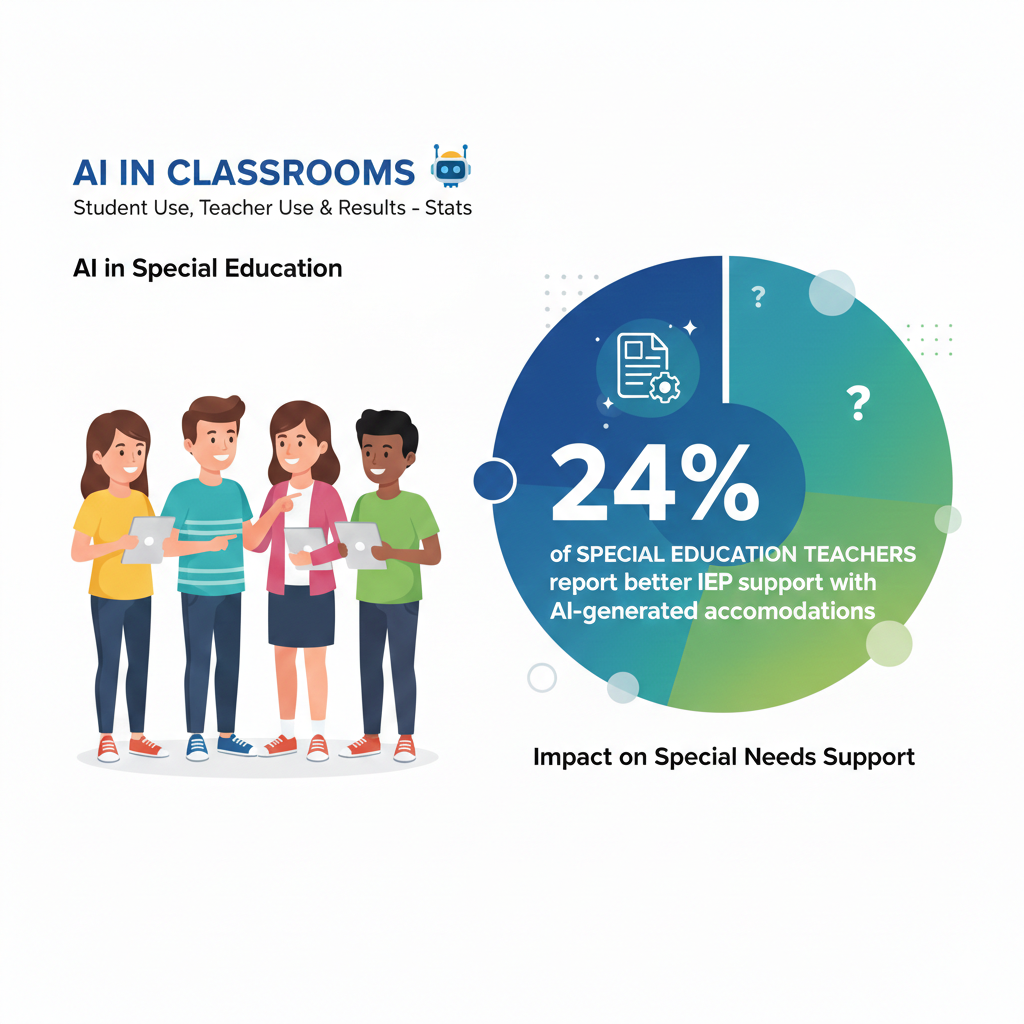
21) 24% of special education teachers report better IEP support with AI-generated accommodations.
Special education requires precise supports that honor a student’s strengths and needs. AI can help teachers draft accommodations, such as shorter texts without losing key ideas, step-by-step checklists, or visual cue cards.
It can suggest alternative ways to show learning, like audio responses, choice boards, or simplified lab steps. The teacher and team still approve and adjust each support, but the draft work is faster and more thorough.
A good workflow begins with the IEP goals. The teacher asks AI to propose classroom accommodations tied to each goal and to produce simple directions for the student and family. Next, the teacher requests progress-monitoring probes that can be done in five minutes and scored quickly.
These probes feed data into IEP meetings so decisions rest on clear evidence. When a student struggles with transitions or attention, AI can help script brief routines, such as a visual timer sequence, a calm-start checklist, or movement breaks linked to task milestones.
Families must be partners. Provide a one-page, plain-language guide to the accommodations, including what they look like at home. Share prompts the student can use to ask for help in class. Keep the tone positive and strength-based.
At Debsie, we design AI-assisted supports that fit real learners and train students to advocate for themselves. If your team needs practical tools that save time and lift results, join a Debsie trial for our accommodation starter pack.
Action you can take today
Choose one IEP goal and use AI to draft three classroom accommodations and one five-minute progress probe. Test them for a week, gather data, and adjust.
22) 40% of students say AI feedback helps them fix grammar and clarity faster than teacher wait times.
Speed matters when students are in the flow. If they can resolve grammar and clarity issues right away, they keep writing instead of stalling.
The trick is to keep AI feedback narrow. Ask the tool to underline only unclear sentences, to flag only comma errors, or to suggest simpler synonyms for three wordy phrases. Students then choose which suggestions to accept and which to ignore. Their voice stays intact while the text gets cleaner.
This fast loop frees teacher time for higher-level coaching. Teachers can focus on argument strength, evidence quality, and logical flow. A two-pass system works well. Students use AI for surface-level edits, then submit to the teacher for deep feedback.
Over time, students learn to catch common errors themselves. Parents can support at home by setting a review pace. Ask AI for a three-point clarity check, revise, read aloud once, and stop. Endless tinkering drains energy and can blur the student’s voice.
When students rely too much on grammar fixes, remind them that correctness is not the same as meaning. Have them explain their main point in one spoken sentence before any editing. If they cannot say it simply, grammar will not save the draft.
At Debsie, we teach a quick clarity routine that pairs AI flags with human sense-checks. Kids learn to write cleanly and think clearly. Want your child to build this habit fast. Book a Debsie trial and we will coach them live.
Action you can take today
Ask AI to highlight only three unclear sentences and suggest one simpler rewrite for each. Choose the best wording, read the paragraph aloud, and confirm the meaning is stronger.
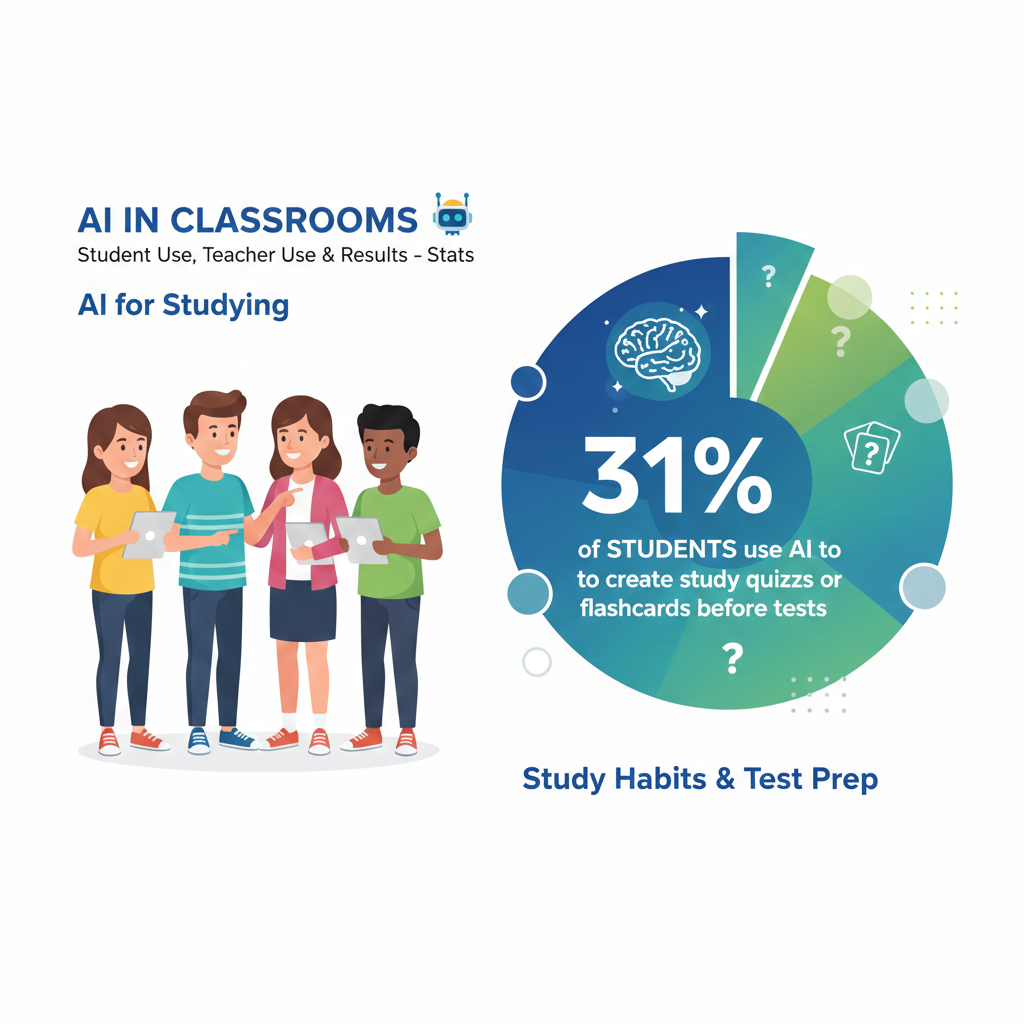
23) 31% of students use AI to create study quizzes or flashcards before tests.
Self-testing is one of the strongest ways to learn. When students use AI to make quick quizzes or flashcards, they move from passive reading to active recall. This switch wakes up memory and shows what still needs work.
The trick is to make good items that target the right level. Ask AI to create a small set of questions that match the class goals, not random trivia. Keep each card clear and short. Add one real example from class notes so the card feels familiar and useful.
Variety matters. Ask for three types of items. One card should test basic facts or terms. One should test understanding with a short explain-in-your-own-words prompt. One should test application with a tiny case or number problem.
This mix makes the brain work in different ways and locks in learning. Students can also ask AI to build spaced practice plans. The tool can schedule quick reviews for the next week, with more time on the hard cards and less on the easy ones. Ten minutes a day beats one long cram.
Teachers can raise quality by giving a simple template. Each card needs a term, a student-friendly definition, and one class example or diagram note. Students can then ask AI to check the set for duplicates, unclear wording, or missing big ideas.
After the check, students should edit each card to sound like their own voice. Parents can help at home by doing a fast oral drill. Shuffle five cards, ask the student to teach each answer aloud, and then ask for one new example in their own life. Speaking it out builds confidence and reveals gaps.
At Debsie, we blend AI-made quizzes with game-like review sessions so kids feel progress and want to come back tomorrow. We teach students to write better prompts for stronger cards and to measure gains with tiny checkpoints. If you want study time to feel lighter and work better, book a Debsie trial and we will share our flashcard recipe.
Action you can take today
Have your child paste class notes and ask AI for twelve flashcards in three types facts, explain, apply. Edit each answer into their own words, then study for ten minutes using speak-and-check.
24) 18% of students have received a warning or lower grade for over-relying on AI outputs.
This number shows that misuse has real costs. Over-reliance can look like pasted text, missing sources, or work that does not match class voice. Sometimes it shows as answers that sound polished but do not fit the prompt.
The fix is to set bright lines and simple habits that make honest work easier than risky shortcuts. Start with the creation rule. Draft first, assist second. Students write a short plan or a rough first paragraph on their own. Then they ask AI for feedback on clarity, examples, or structure. This order keeps ownership clear.
Another safeguard is a small evidence check. If a student uses any facts or quotes, they list the source and confirm it with a trusted link or class text. AI can help by suggesting likely sources, but the student must verify. For math and science, students should label each step with a reason in their own words.
If they cannot explain the step aloud without the tool, they need to review. Teachers can support by asking for process notes, not just final answers. A simple sentence that starts with I decided to shows thinking and proves the work is theirs.
Parents can build a calm repair plan in case a warning happens. The plan might include meeting with the teacher, redoing the work with a clear AI usage note, and writing a short reflection on what to change next time. This approach turns a mistake into growth.
At Debsie, we coach students on safe patterns that protect grades and integrity. We practice quick prompts that guide thinking without giving full answers. If your child needs a reset, join a Debsie trial and we will teach these guardrails live.
Action you can take today
Make a two-line footer your child adds to big assignments. What AI did I use and for what part. What parts did I write fully myself. This tiny label builds trust and prevents grade issues.
25) 46% of teachers say AI helps them spot misconceptions earlier through quick exit-ticket analysis.
Catching confusion early saves whole lessons. When teachers run short exit tickets and let AI scan the results, patterns pop up fast. The tool can group answers by error type, such as mixing up cause and effect, dropping units, or quoting without explaining.
With that quick picture, a teacher can reteach the right idea the very next day instead of guessing. This keeps the class on track and stops small slips from becoming habits.
The best exit tickets are tight. One or two questions, each aimed at a single idea. Ask AI to propose likely wrong answers that sound reasonable. Include one of those as a choice or design the question so that common slips show up in open responses.
After class, paste the results and ask AI to sort them by misconception and suggest a two-minute fix for each group. A fix might be a mini-model, a quick check list, or a side-by-side compare. The next day, students get the exact help they need instead of a long whole-class lecture.
Students benefit when they see the pattern too. Share a simple report that says what the class did well and what needs work. Keep names private, but show the thinking. Ask students to write one sentence that starts with Next time I will and name the exact move they will change.
Parents can ask to see these patterns during conferences. Knowing the specific misconception helps families support the right skill at home. At Debsie, we build exit tickets into every lesson and use AI to turn data into action within minutes. This lets teachers spend more time coaching and less time sorting.
Action you can take today
Write one exit prompt for tomorrow that targets a single idea. After class, ask AI to group answers by misconception and propose a two-minute fix for each group. Use those micro-fixes in the first ten minutes of the next lesson.
26) 34% of teachers report higher student engagement when AI is used as a “coach,” not a “shortcut.”
When AI plays the role of a coach, students stay active. They make choices, test ideas, and reflect. A coach asks questions like What is your plan, Where did you get stuck, and What will you try next. A shortcut, in contrast, hands over finished answers.
That kills curiosity and effort. The key is to design prompts that nudge thinking. Ask AI to give only hints, not full solutions. Ask it to pose one guiding question at a time. Ask it to suggest two strategies and let the student pick one. This keeps the learner in control and builds grit.
Teachers can frame each AI moment with intent. Start with a goal in plain words, like I want to make my argument clearer or I need to check my method. Then invite AI to act like a tutor. The tutor should identify the first weak spot, explain why it matters, and recommend one small fix the student can do right now.
After the fix, the tutor can offer a quick self-check. This loop turns struggle into progress without giving away the work. Over time, students begin to ask better questions and to spot their own patterns.
Parents can apply the same idea at home. If a child asks for help, ask them to show what they tried, where they got stuck, and what their next step could be. Then allow a brief AI hint window. After the hint, close the tool and let the child act.
Celebrate the moment they figure it out, not the speed of finishing. At Debsie, every live class treats AI like a friendly coach. We model how to ask for guidance, not answers, and we turn each hint into a small win. If you want your child to build strong habits fast, join a Debsie trial session and see the coaching flow live.
Action you can take today
Before opening any AI tool, have the student write one sentence that starts with Today my goal is. After using the tool for a hint, have them write I will now and name the exact next step they will do without AI. This tiny script keeps the tool in a coach lane.
27) 22% average drop in grading turnaround time when teachers use AI-assisted rubrics.
Faster grading means quicker learning. When feedback arrives soon after the work, students remember what they did and can fix it right away. AI-assisted rubrics speed this up by turning big goals into clear, checkable moves. A teacher pastes the rubric and a sample of student work.
The tool maps comments to each criterion and suggests short next steps. The teacher reviews, edits for accuracy and tone, and sends the notes. The result is fast, focused guidance that points straight to action.
To make this work well, keep comments brief and specific. Tie each note to one criterion and one fix. For example, Evidence is weak can become Add one quote from paragraph 3 and explain how it proves your claim in one sentence.
In math, Correct answer but missing reasoning can become Add the property you used between steps 2 and 3. Never let the tool grade by itself. The teacher must confirm that the comment matches what the student actually wrote and that the tone fits the class culture.
Turnaround also improves with reusable banks. Build a set of five to seven comments per rubric row, each paired with a student-friendly example. Over time, refine the bank with better wording and common patterns from your class.
Students learn the language of quality and start to self-check before submitting. At Debsie, we give teachers ready-made comment banks and show how to pair them with quick conferences, so kids leave with a plan they can do tonight. Want the template. Book a Debsie trial and we will share the full kit.
Action you can take today
Choose one rubric and ask AI to draft three short comments per row, each with a reason and a one-step fix. Use the bank on the next set of papers and record how many hours you save without losing clarity.
28) 17% improvement in reading comprehension scores reported in classes using AI practice weekly for 10+ weeks.
Steady practice beats short bursts. When a class uses AI reading tools every week for more than ten weeks, small gains stack up. The key is to target real skills, not just speed. Ask AI to choose passages at the right level, to ask why-and-how questions, and to give gentle hints when a student stalls.
Each session should have a clear goal like find the main idea, track cause and effect, or explain the author’s claim. After the session, students write one short takeaway and one plan for next time. This builds metacognition, which is the skill of thinking about your thinking.
Teachers can anchor growth with simple routines. Start with a thirty-second preview where students predict what the text might say. Read a chunk, answer two deep questions, and do a quick check of unknown words. End with a one-sentence summary.
AI can support each part by offering tiered hints, checking summaries for key points, and suggesting a follow-up question that leads to deeper understanding. Progress should be visible. Show students a simple chart of their accuracy over weeks and celebrate steady climbs, not just big jumps.
Parents can help at home with short, calm sessions. Ten minutes of guided reading with one question that asks for proof from the text is enough. If a child guesses, ask Where in the text can you show that. If they struggle, allow one AI hint, then close the tool and try again.
At Debsie, we blend AI-supported reading drills with live discussion so students learn to explain and defend their ideas. This mix builds skills that last. If you want a plan you can start this week, join a Debsie class and get our two-page reading routine.
Action you can take today
Pick a short article, ask AI for three why-and-how questions at your child’s level, and run a ten-minute session. Have your child answer, cite one line as proof, and finish with a one-sentence summary in their own words.
29) 51% of parents say schools should teach prompt writing and AI ethics as core skills.
Parents are asking for two simple things that make a big difference. They want children to know how to talk to AI in a smart way, and they want children to know what is right and fair when using it. Good prompts are like good questions.
They are clear, focused, and kind. They tell the tool what role to play, what style to use, and what to avoid. When students learn prompt writing, they waste less time and get better help. When they learn ethics, they stay honest and safe.
These skills work together. A strong prompt asks for support without asking for shortcuts. It aims at learning, not just finishing.
In school, prompt lessons can be short and practical. A simple frame works well. First, set the role, such as You are a friendly writing coach for a ninth grader. Then set the task, such as Help me build a three-part outline about renewable energy.
Then set the rules, such as Use simple words, ask me one question at a time, and do not write the full paragraph. Students test the prompt, see what comes back, and tune it. They learn to add limits like length, level, and tone.
They learn to ask for examples and to request questions that make them think. This is real communication practice. It also builds patience and focus.
Ethics lessons should feel real, not scary. Show students what honest help looks like, such as getting three ideas or a grammar check. Show what crosses the line, like pasting a full answer or faking a source. Teach a tiny rule set that travels with them.
Rewrite AI text into your own words. Cite the tool if your teacher allows it. Add a usage note so your teacher knows what was helped. Check facts in a trusted source. When mistakes happen, fix them and learn. These small habits protect trust and teach pride in your own voice.
At Debsie, we blend prompt craft with ethics in every class. Kids practice asking better questions and making better choices. If you want your child to learn safe, strong AI habits, join a Debsie trial and see our live prompt labs.
Action you can take today
Sit with your child and write one prompt together using role, task, and rules. Test it, then add one limit for length and one request for a follow-up question. After using it, write a one-line usage note at the bottom of the work to model honest habits.
30) 63% of students believe AI skills will be important for their future jobs, even outside tech.
Students can see where the world is going. Most believe AI will shape the tasks they do, the tools they use, and the way they solve problems, no matter the field. A nurse might use AI to summarize patient notes. A designer might use AI to test ideas and get feedback on layouts.
A small shop owner might use AI to write clear, friendly messages to customers. This is not about turning kids into coders only. It is about teaching them to think clearly, ask smart questions, check facts, work with data, and explain their choices. These are life skills, and AI can help build them when used well.
To prepare for that future, students need a simple skill map. First is prompt craft, which teaches clear thinking and goal setting. Second is verification, which teaches care and honesty by checking claims with trusted sources.
Third is iteration, which teaches patience by improving a draft step by step. Fourth is data sense, which teaches how to read a small table, spot a pattern, and ask what the numbers mean. Fifth is voice, which teaches how to keep your own tone and point of view even when a tool offers a neat sentence.
When a student learns these five parts, they are not just better students. They are better thinkers in any job.
Teachers can weave these skills into normal lessons. A history class can use AI to draft two viewpoints on an event, then students verify facts and write their own conclusion. A science class can ask AI for three experiment risks, then students plan how to reduce them.
A language class can use AI to suggest simpler wording, then students choose the version that fits their voice. Parents can echo the same moves at home with quick, calm practice. At Debsie, we teach this future-ready map in a fun, gamified way.
Kids build skills by doing real tasks and reflecting on what worked. If you want your child to be ready, not just aware, join a Debsie trial and start building these habits now.
Action you can take today
Ask your child to pick a real task due this week. Have them write a one-sentence goal, craft a prompt with clear limits, get one hint, verify one fact, and make one revision in their own words. End with a two-sentence reflection on what changed and why.
Conclusion
AI is already part of school life for students, teachers, and families. The numbers you just read are more than facts. They are a roadmap. Used well, AI saves time, lowers stress, and lifts real skills like focus, clear thinking, and problem solving. Used poorly, it can blur a student’s voice or hide weak understanding. The difference comes from small habits.
Plan first in your own words. Ask AI for hints, not full answers. Verify facts in trusted sources. Revise with your voice. Reflect on what changed and why. When these habits become daily practice, grades rise, confidence grows, and learning sticks.