
Gamified learning sounds like fun, but parents and students often ask one serious question: does it only make kids “busy,” or does it also help them score better in tests? The honest answer is this: gamification can boost both engagement and test results, but not always in the same size. Engagement usually rises fast and clearly. Test scores can improve too, but the change is often smaller and depends on how the platform is designed and how the child uses it.
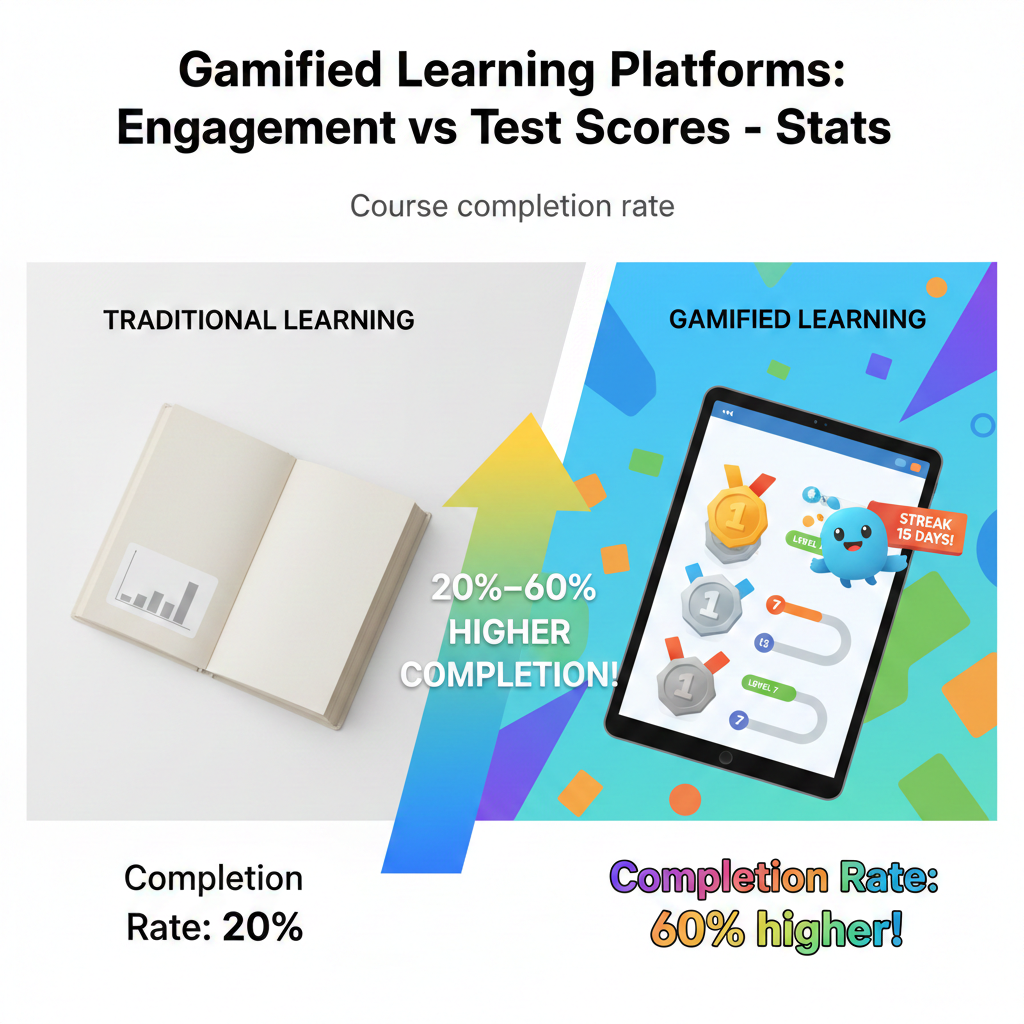
1) Course completion rate: Gamified learning platforms often report about 20%–60% higher completion rates than the same content delivered without game elements (badges, levels, streaks)
What this stat really means
Completion is the quiet hero of learning. A child can be “smart,” but if they stop in the middle, the skill stays broken. That is why this 20%–60% jump is a big deal. When a platform uses levels, badges, and streaks in a fair way, kids are more likely to return, keep moving, and actually finish what they started.
Finishing a course matters because most skills are stacked. If your child quits after the early lessons, they miss the later lessons that join everything together. That is also where many exam-style questions come from, because tests often check connected ideas, not single facts.
What to do at home to turn completion into real learning
Use completion as a habit tool, not a trophy. A simple rule helps: the course is “complete” only when your child can explain the key idea in plain words. After each session, ask for one short “teach-back.” If your child cannot teach it, the badge is not the goal yet.
Another powerful move is to set a tiny daily target that feels easy to start. Ten to fifteen minutes is enough if it happens most days. Consistency beats long study days followed by long gaps. Also watch the pace.
If your child is racing through levels, slow them down by adding one rule: they must redo one tricky question they got wrong and explain why it was wrong. That one small step turns the finish line into true mastery.
How Debsie helps
Debsie’s courses are built to pull kids forward with game loops, but the progress is tied to skills, not just clicks. If you want your child to finish courses with strong understanding, you can try a free trial class from debsie.com/courses and see how structured gamified learning can help them complete with confidence.
2) Weekly active use: Adding quests, streaks, and rewards commonly increases weekly active learners by ~15%–35% compared to a plain learning portal
What this stat really means
Weekly active use is a strong sign that learning has become part of a child’s life. A 15%–35% jump means more kids are not just “starting,” they are “staying.” This matters because brains learn through repeated contact.
A child who shows up four days a week will almost always grow faster than a child who shows up once a week, even if the once-a-week session is long. Weekly activity also reduces fear. When kids see the subject often, they stop treating it like a monster.
How to guide weekly activity without nagging
The best trick is to keep the streak safe. If the platform uses streaks, protect them with a simple plan. Choose fixed days and a fixed time window that feels calm, not rushed. A child who studies when they are tired will start to hate the habit.
If a day gets messy, allow a “mini-session” that still counts, like one short lesson or one quick practice set. The goal is not perfect work every day. The goal is to keep the door open and keep the mind connected to the skill.
Also make weekly activity meaningful. If a child logs in often but only does easy tasks, test scores may not move. So once a week, add one “hard day.” On that day, your child must attempt a slightly harder challenge, even if they make mistakes. Tell them this is normal. Hard work days are where growth happens.
How Debsie helps
Debsie uses missions and progress paths to make weekly learning feel natural. If your child struggles to return on their own, a structured gamified plan can build that weekly rhythm fast.
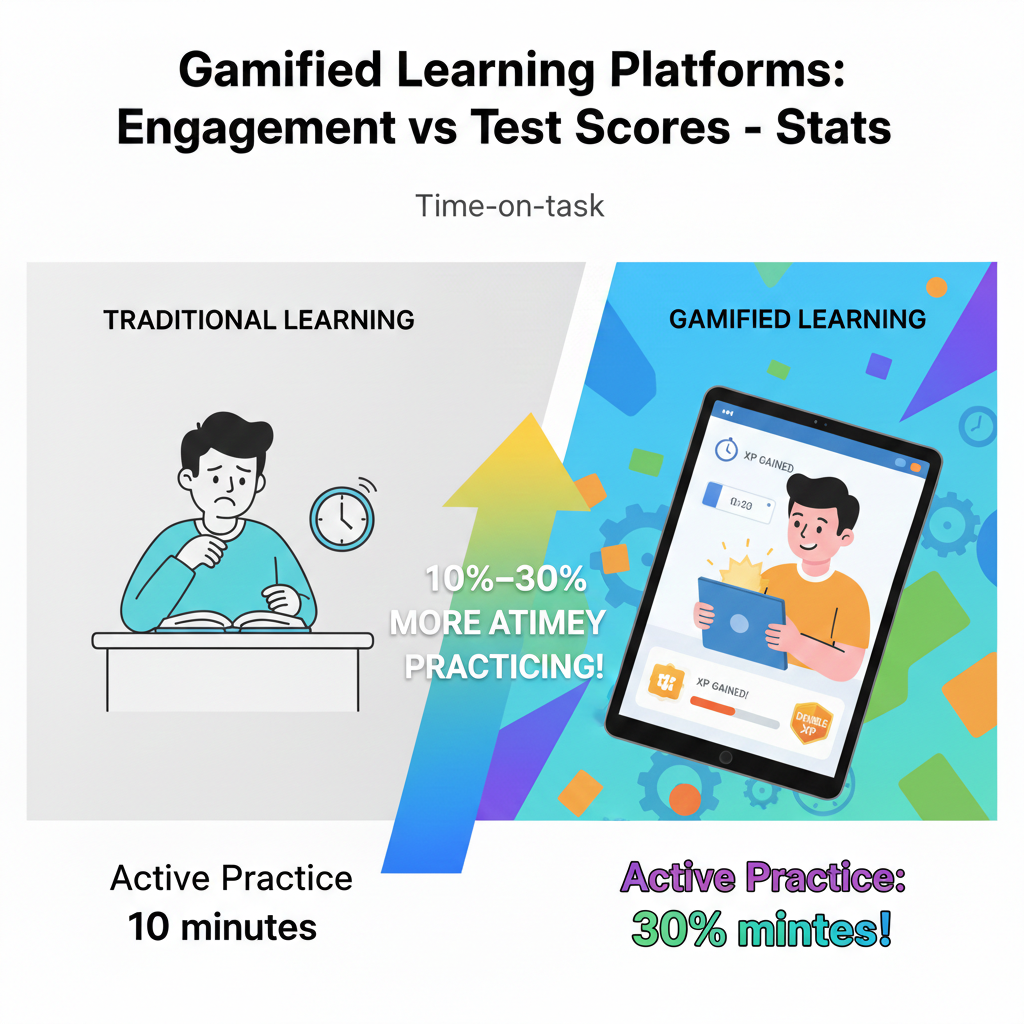
3) Time-on-task: Learners on gamified lessons often spend ~10%–30% more time actively practicing (not just watching) than learners on non-gamified lessons
What this stat really means
More time can help, but only if it is the right kind of time. This stat is about active practice, not passive watching. Active practice means your child answers, writes, codes, solves, and tries again.
A 10%–30% lift in active time is important because practice is what builds speed and accuracy in tests. Watching can create the feeling of learning, but practice creates real skill.
How to make sure “more time” becomes “better scores”
First, set a simple balance. For every short explanation video, your child should do practice right away. If the platform lets them watch five videos in a row, stop and switch to practice sooner. Second, use short focus blocks.
Many kids can do strong work in 15–20 minutes. After that, the brain drifts. So instead of forcing long sessions, create two short blocks, separated by a small break. Third, make mistakes useful. If your child gets an answer wrong, do not let them skip it.
The best move is to redo the same type of question within the same session, while the mind still remembers the error.
How Debsie helps
Debsie lessons are designed to push action, not just viewing. That is why kids often feel like they are “doing” the subject, not only “studying” it.
4) Return frequency: With streaks and daily challenges, learners often come back ~1–3 extra days per week versus a non-gamified system
What this stat really means
Coming back one to three extra days each week is huge over a month. It means more contact with the subject, more reminders, and more chances to fix weak spots. Tests reward this kind of steady exposure. Even when the child does not feel like they are improving, the repeated practice is quietly building skill.
How to use streaks without creating stress
Streaks can be helpful, but they can also become pressure. The key is to make the streak a friendly guide, not a threat. Tell your child the streak is there to support them, not judge them. If they miss a day, the goal is to restart calmly, not to feel guilty.
Another smart move is to link the streak to a real-world routine. For example, the learning session happens after a snack, or right after school, or before screen time. When learning is attached to a stable daily event, it becomes easier than “trying to remember.”
Also watch what the daily challenge is measuring. If the challenge rewards speed only, your child may rush. If it rewards accuracy and improvement, it supports test growth. Encourage your child to aim for clean work first, then faster work later.
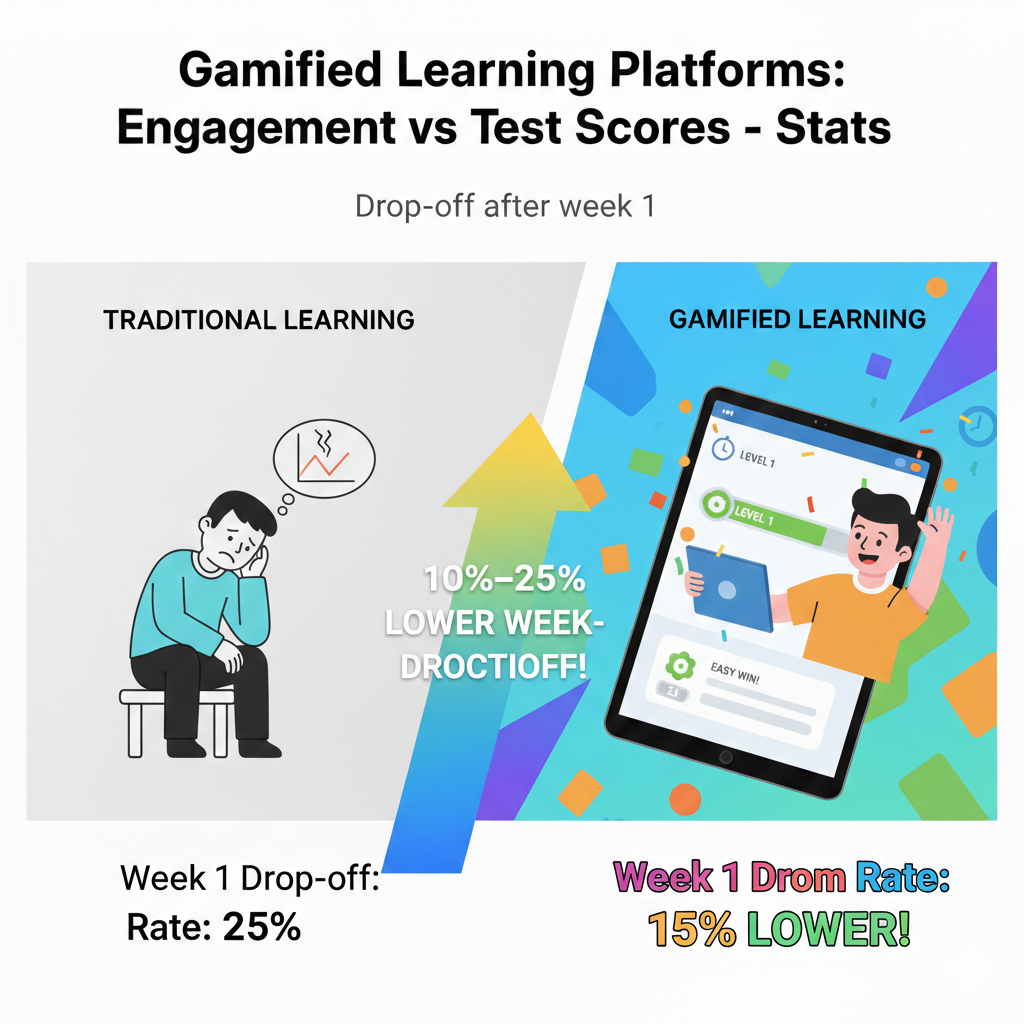
5) Drop-off after week 1: Gamified onboarding with easy wins and a clear progress bar is often linked with ~10%–25% lower week-1 drop-off
What this stat really means
The first week decides everything. Many children start with excitement, but if they feel confused or stuck in the first few days, they quietly stop. A 10%–25% lower drop-off means more kids survive that critical first week. Easy wins matter.
When a child finishes small tasks quickly at the start, the brain says, “I can do this.” A clear progress bar also removes fear. The child knows where they are and what comes next. That simple clarity builds trust.
If week one goes well, the child is more likely to form a habit. Habits drive test scores more than talent. The child who keeps showing up will almost always improve.
What you should do in the first week
Treat the first seven days like a launch phase. Do not overload your child. Let them win early. Choose sessions that feel achievable. Stay nearby if needed, not to control, but to support. Praise effort, not just right answers. Say, “I like how you kept trying,” instead of, “Good job getting it right.” That small shift builds a growth mindset.
Also make sure your child understands how the platform works. Confusion kills motivation. Spend ten minutes exploring the dashboard together. Show them how levels move, how points are earned, and how feedback works. When children feel in control, they stay longer.
How Debsie supports strong starts
Debsie designs early lessons to build confidence fast while still teaching real concepts. The goal is to make children feel capable from day one. If your child has a habit of quitting new programs quickly, try a free trial class and watch how a structured, supportive start can change that pattern.
6) Homework and assignment submission: Points and visible progress commonly raise submission rates by ~8%–25%
What this stat really means
Homework is where knowledge becomes strong. Many children understand a topic during class but forget it later because they do not practice. An 8%–25% rise in submission rates is powerful because submitted work means repeated exposure. Repeated exposure leads to better recall during exams.
When points and visible progress are attached to assignments, children feel their effort is seen. Visibility matters. If effort feels invisible, motivation drops. But when progress moves forward with each task, the brain connects work with reward.
How to use this insight wisely
Make homework part of the game, not a punishment. Instead of saying, “Finish your homework now,” try saying, “Let’s move your progress bar forward today.” That shift changes the emotional tone. You can also create a small family reward linked to consistency. For example, five completed assignments in a week unlocks a small treat or extra free time.
At the same time, focus on quality. A child rushing to earn points may not learn deeply. After submission, review one or two problems together. Ask why they chose that method. This short discussion builds thinking skills that show up in higher-level questions.
How Debsie turns homework into progress
Debsie connects practice tasks directly to skill levels, so children see how each assignment pushes them closer to mastery. If your child avoids homework, structured gamified learning can make practice feel purposeful.
7) Practice volume: When practice earns coins or experience points, learners often complete ~15%–40% more practice questions per week
What this stat really means
More practice usually means stronger performance. A 15%–40% increase in practice questions is not small. Over weeks and months, this adds up to hundreds of extra attempts. Every attempt is a chance to correct mistakes and sharpen speed.
But volume alone is not enough. If children repeat only easy problems, growth will slow. The type of practice matters just as much as the number.
How to turn higher practice into higher scores
Encourage balanced practice. After completing easy tasks, your child should attempt a few challenging ones. You can create a simple rule: for every five easy questions, attempt two moderate or hard ones. This keeps confidence high but still stretches the brain.

Also track accuracy. If practice volume goes up but accuracy stays low, slow down. Ask your child to explain the steps out loud. Speaking the steps builds clarity. When clarity increases, test performance improves naturally.
Most importantly, remind your child that mistakes are data. Each wrong answer shows exactly what needs work. When practice is seen as feedback instead of failure, children stop fearing errors.
How Debsie designs meaningful practice
Debsie builds practice into levels that rise in challenge. Coins and points are tied to effort and improvement, not random clicking. This helps children practice more while still growing smarter.
8) Accuracy vs speed: Gamified timers can increase speed by ~5%–20%, but accuracy can stay flat or drop slightly unless the game rewards careful thinking too
What this stat really means
Speed is useful in tests, but only if answers are correct. Timers can push children to work faster. A 5%–20% speed gain may help in timed exams. However, if the focus is only on being quick, accuracy can suffer. This is where design matters. If the system rewards speed without checking understanding, children may rush and build weak habits.
How to balance speed and accuracy at home
Create two modes of practice. In learning mode, remove time pressure. Let your child focus on getting each step right. In test mode, add gentle timing to simulate exam conditions. This separation teaches them when to be careful and when to be quick.
Another smart move is to reward clean work first. Tell your child accuracy is the priority. Once accuracy crosses a strong level, then work on speed. This builds a solid base. In exams, accuracy brings marks. Speed helps only after accuracy is secure.
Watch for careless mistakes. If they appear often, slow the pace. Ask your child to circle or highlight tricky parts of questions. This trains attention.
How Debsie approaches speed and mastery
Debsie ties rewards to correct reasoning, not just fast clicks. The aim is to grow thinkers, not guessers. If you want your child to become both quick and accurate, structured gamified training can build both step by step.
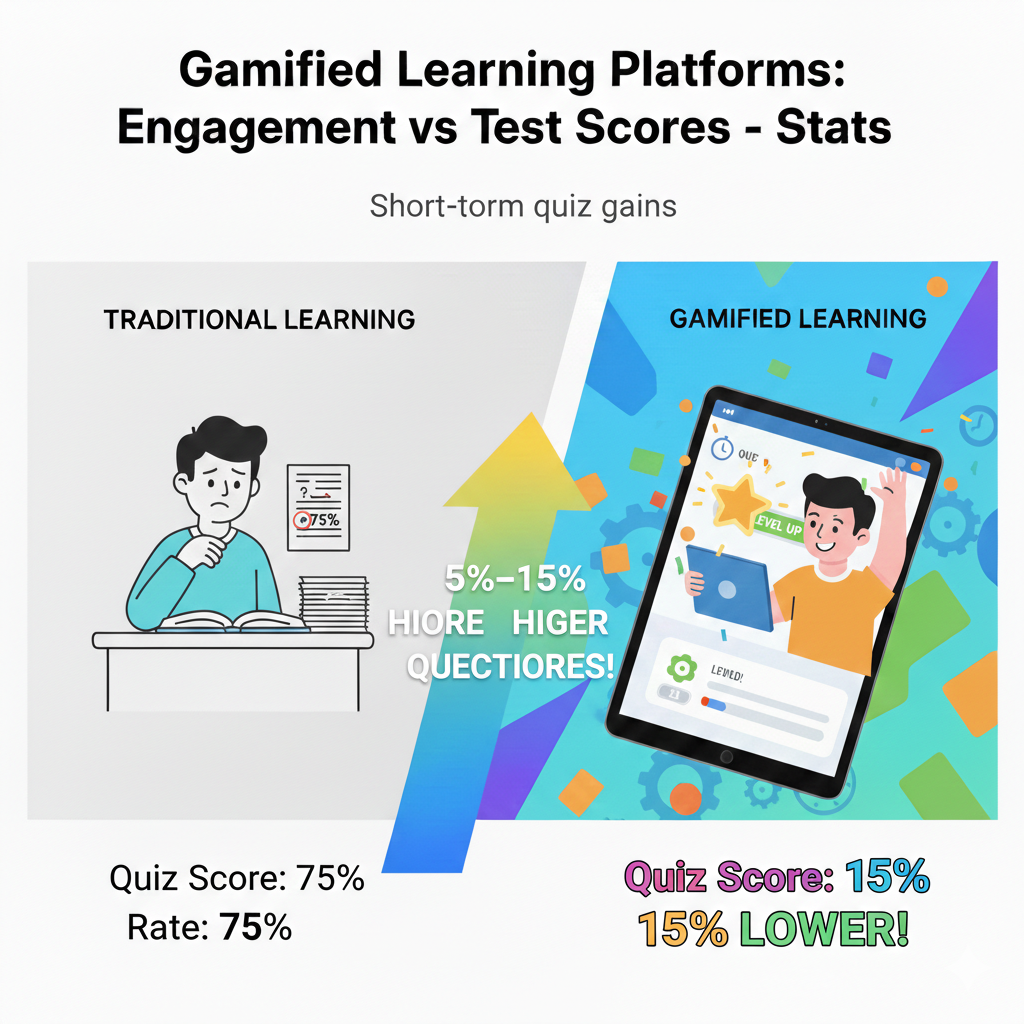
9) Short-term quiz gains: After a gamified unit, short quizzes often show ~5%–15% higher scores compared to non-gamified delivery of the same unit
What this stat really means
A 5%–15% rise in short quiz scores shows that gamified learning can improve immediate understanding. When lessons feel interactive and rewarding, students pay closer attention. They practice more. They try again after mistakes. All of this sharpens short-term recall. So when a quiz comes right after the lesson, scores often rise.
But short-term gain is only the first step. Many children score well on quick quizzes but struggle weeks later. That is because memory fades without revision. So this stat tells us that gamification helps learning stick in the moment, but we must design follow-up practice to make it last.
How to lock in those quiz gains
After every completed unit, schedule a small review session within the same week. It can be short, even ten minutes. Ask your child to redo two or three mixed questions from that topic without looking at notes. This forces recall. Recall builds long-term memory.
You can also ask your child to create one question of their own. When children design a question, they think deeper. This improves understanding and prepares them for tricky exam questions.
Another smart move is spaced review. Bring the same topic back after two weeks. Even if your child feels they remember it, a quick practice set will strengthen the memory trace.
How Debsie supports retention
Debsie designs lessons with practice loops and revision paths so children revisit key ideas. If you want quiz improvements that grow into exam confidence, try a free trial class and see how structured repetition makes a difference.
10) Standardized test impact: On bigger tests, reported gains tend to be smaller, often ~0%–8%, with many cases clustering around ~2%–5%
What this stat really means
Large standardized exams are harder. They test deeper thinking, mixed topics, and problem-solving under pressure. That is why gains here are smaller, usually around 2%–5%. Some parents may feel disappointed seeing smaller numbers. But even a 3% improvement in a major exam can shift a grade or ranking.
This stat shows that engagement alone is not enough. For strong exam gains, gamification must connect directly to skill-building. If the platform focuses only on rewards and fun, test results may not move much. But if it focuses on mastery, feedback, and challenge, scores can rise steadily.
How to use gamification for serious exam growth
First, match practice style with exam style. If the exam includes multi-step problems, ensure your child practices multi-step problems inside the platform. Second, use mock tests. Even in a gamified system, include full-length timed tests every few weeks. This trains stamina.
Also review mistakes deeply. After each mock test, spend time understanding patterns. Are errors due to weak concepts, careless reading, or time pressure? Fixing patterns gives bigger returns than random extra practice.
Encourage your child to treat big tests as missions. Break preparation into stages. Stage one builds concepts. Stage two builds speed. Stage three builds test strategy. This structured path reduces fear and improves performance.
How Debsie prepares for real exams
Debsie blends gamified engagement with structured exam-style practice. The focus is not just fun. It is steady, measurable growth.
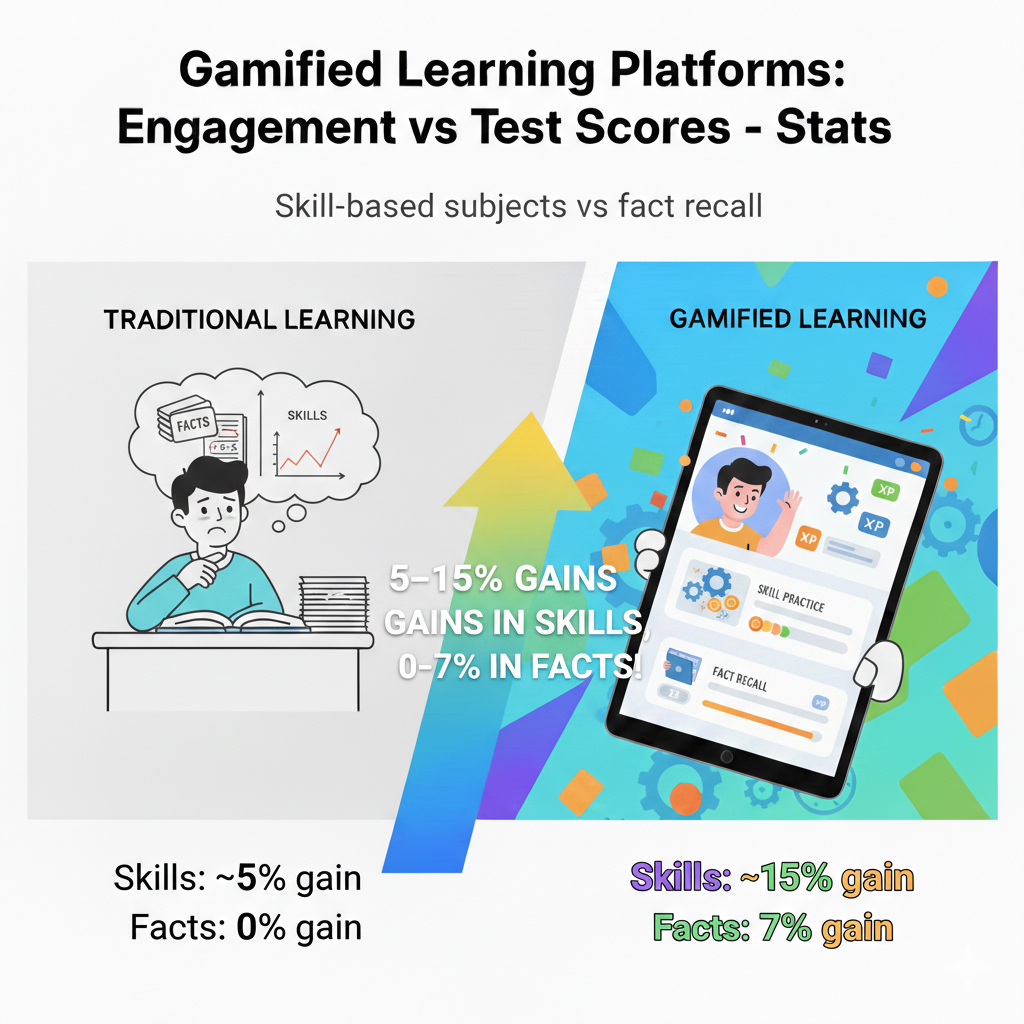
11) Skill-based subjects vs fact recall: Gamification tends to help more in skill practice with ~5%–15% gains than pure memorization where gains are often ~0%–7%
What this stat really means
Subjects like math and coding require step-by-step thinking. Gamification works very well here because practice builds skill. When children repeat problem types with feedback, their brain forms strong patterns. That is why gains in skill-based subjects can reach 5%–15%.
For pure memorization, like learning dates or definitions, gamification helps, but the gains are often smaller. Memory alone fades unless refreshed often.
How to adapt learning style by subject
For skill-based subjects, focus on repeated practice with rising difficulty. Encourage your child to solve similar problems until they feel smooth and confident. Then increase challenge slightly.
For memory-heavy subjects, use active recall tools. Flashcards, short quizzes, and quick oral questioning help more than just rereading notes. Space out review sessions. Review today, then after three days, then after one week.
Also mix memory with understanding. Instead of memorizing a science fact only, ask why it happens. When children understand the reason behind facts, recall becomes easier.
How Debsie balances skill and memory
Debsie’s gamified system is especially powerful for logic-based learning like math and coding. At the same time, it uses revision cycles to support memory subjects. This balanced design helps students grow in different areas.
12) Lowest performers benefit most: Struggling learners often show 1.3× to 2× larger improvement in scores than already-high performers when gamification is well-designed
What this stat really means
This is one of the most hopeful stats. Students who struggle often gain the most from gamified systems. Why? Because these platforms give clear steps, instant feedback, and small wins. Struggling learners usually need structure and encouragement. When they see progress, their belief grows.
High performers may already have good habits, so their score jump looks smaller. But struggling learners can show big leaps because they are moving from confusion to clarity.
How to support a struggling child
First, lower the fear. Tell your child that improvement is the goal, not perfection. Gamified systems work best when children feel safe to make mistakes.
Second, track growth, not comparison. Compare your child’s score today with their score last month, not with another student. Progress builds motivation.
Third, celebrate small wins. If your child moves from 50% to 60%, that is real growth. Recognize it.
Also make sure the platform adapts to level. If the content is too hard, frustration rises. If it is too easy, boredom appears. The right level creates steady improvement.
How Debsie supports every learner
Debsie designs learning paths that adjust to each child’s level. Struggling students receive guided practice and clear feedback. This builds skill and confidence step by step. If your child needs structured support, a free trial class can show how personalized gamified learning can spark real progress.
13) Top performers’ score change: High performers often show small score changes of around 0%–5%, but higher consistency in practice
What this stat really means
When a child is already scoring high, there is less room for big jumps. That is why score increases may look small, often between 0%–5%. But something else improves in a powerful way. Consistency.
High performers on gamified platforms often practice more regularly and with better structure. That consistency protects their scores. It reduces careless drops and keeps performance stable during exams.
For top students, the goal is not only higher marks. It is long-term excellence. Regular practice sharpens speed, strengthens accuracy, and builds deeper understanding. Even a small 2% improvement at a high level can mean moving from good to outstanding.

How to guide a high-performing child
Shift the focus from marks to mastery. Ask deeper questions. Instead of “Did you get it right?” ask “Can you solve it in a different way?” Encourage challenge mode tasks that stretch thinking. High performers need stretch goals to stay engaged.
Also work on speed without losing clarity. Timed drills once or twice a week help polish exam readiness. But keep untimed deep-thinking sessions too. Balance is key.
Track patterns. Even strong students have weak areas. Use data from practice sessions to find tiny gaps. Fixing small gaps creates strong foundations.
How Debsie supports advanced learners
Debsie offers rising difficulty paths so high performers never feel bored. The system keeps them sharp, steady, and ready for competitive challenges.
14) Engagement–score gap: It is common to see large engagement jumps of 15%–40% while test scores move only modestly at 0%–8%
What this stat really means
This is an important truth. Engagement can rise quickly. Test scores often rise slowly. A child may spend more time learning and feel excited, yet exam scores may move only a little at first. That does not mean the platform is failing. It means learning takes time to convert into measurable results.
Engagement is the engine. Scores are the outcome. If engagement stays high and practice is meaningful, scores usually follow. But if engagement is high without deep learning, the gap stays wide.
How to close the gap
First, check what is being rewarded. If points are given for speed only, adjust the focus toward accuracy and reasoning. Second, connect practice to exam format. If exams include word problems, make sure word problems are practiced often.
Third, add reflection time. After each session, ask your child what they learned and what confused them. Reflection strengthens understanding.
Patience is important. Track progress over months, not days. Improvement in thinking skills may not show in one small test but will show in larger assessments.
How Debsie narrows the gap
Debsie ties engagement directly to skill growth. Rewards are linked to mastery and feedback. This helps convert excitement into real academic progress.
15) Retention over time: When spaced practice is gamified, delayed-test performance often improves by ~5%–20% compared to one-time practice
What this stat really means
Learning once is not enough. The brain forgets quickly if information is not revisited. Spaced practice means reviewing topics at planned intervals. When this process is gamified, children are more willing to return. A 5%–20% boost in delayed tests shows that knowledge lasts longer.
Retention matters more than short bursts of high scores. Exams often test topics learned months earlier. Without review, confidence drops.
How to build strong retention habits
Schedule light review sessions even when there is no test coming. Ten minutes of mixed questions can protect memory. Use small quizzes that combine old and new topics. This strengthens recall pathways.

Encourage your child to keep a simple error notebook. When a mistake happens, write the correct method in one short sentence. Review this notebook weekly.
Also mix subjects. Switching between topics trains flexible thinking and strengthens long-term memory.
How Debsie supports spaced learning
Debsie uses progress loops and revision cycles so old topics return at the right time. This keeps knowledge fresh and builds lasting skill.
16) Confidence and self-belief: Learners often report ~10%–30% higher “I can do this” confidence after earning visible progress milestones
What this stat really means
Confidence is not just a feeling. It changes behavior. When children believe they can succeed, they attempt harder problems. They recover faster from mistakes. A 10%–30% rise in confidence can transform learning speed.
Visible milestones make growth clear. Instead of feeling lost, the child sees progress. That visual proof builds belief.
How to grow healthy confidence
Praise effort and strategy, not just outcomes. Say, “You tried a new method,” instead of “You are smart.” This builds internal strength.
Let your child set small goals each week. Achieving small goals builds momentum. Avoid comparing them to others. Comparison can damage belief.
Also allow productive struggle. Do not solve every hard problem for them. Guide gently, but let them think. Real confidence comes from solving something that once felt hard.
How Debsie builds strong learners
Debsie designs milestones that celebrate growth. Children see their journey clearly, which strengthens belief. Confident learners take bigger academic steps.
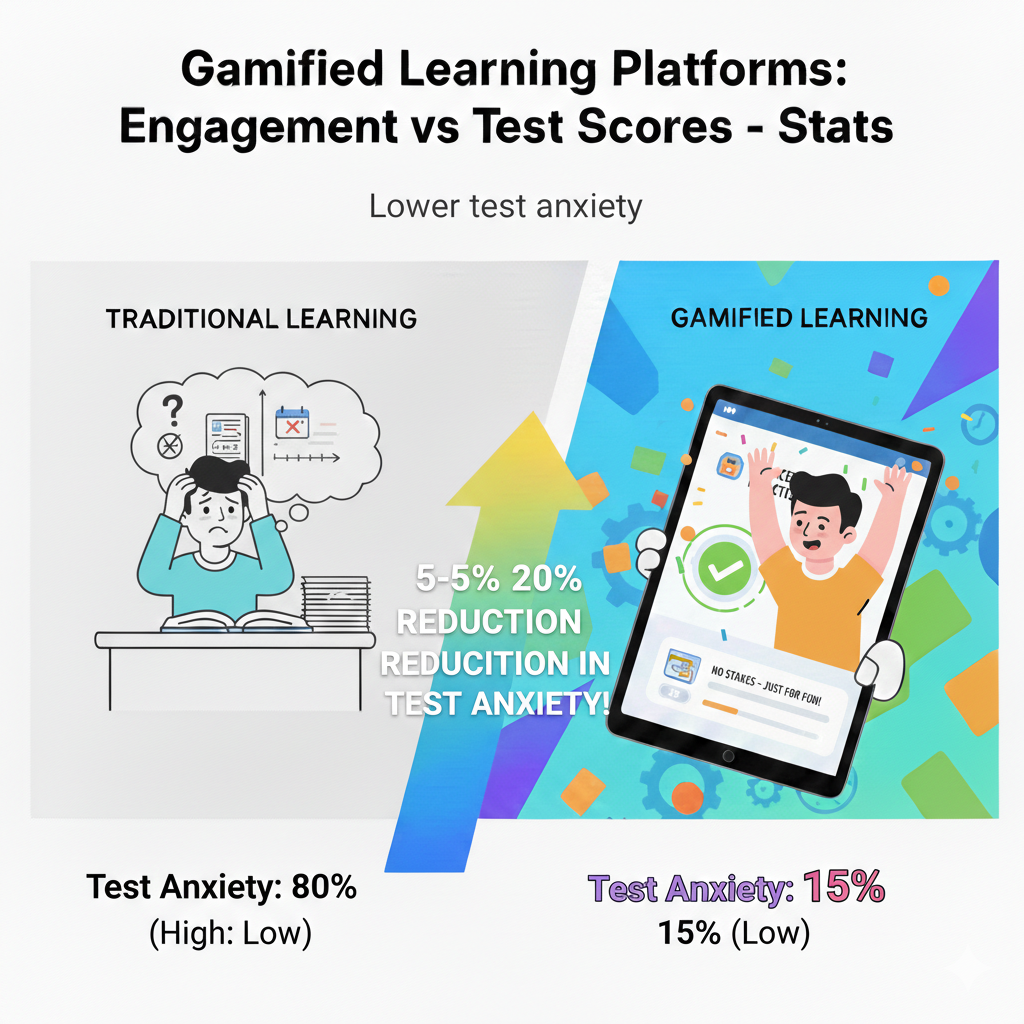
17) Lower test anxiety: Game-like low-stakes checks can reduce reported test anxiety by ~5%–20%, especially in younger learners
What this stat really means
Many children do not fail because they lack knowledge. They fail because they panic. When learning feels scary, the brain blocks recall. Game-like quizzes reduce fear because they feel safe. A 5%–20% drop in anxiety can change performance in a big way. When children treat tests like small missions instead of threats, their thinking becomes clearer.
Low-stakes checks also normalize mistakes. If children answer many small quizzes during practice, exams stop feeling new or shocking. Familiarity builds calmness.
How to reduce anxiety at home
Practice in short timed bursts so your child becomes used to pressure slowly. Do not start with full-length tests. Build stamina step by step.
Teach simple breathing before practice. A slow deep breath before answering can calm the body. Also change the language around tests. Instead of saying, “This is very important,” say, “This is a chance to show what you know.”
After a test, focus on learning, not blame. Review mistakes calmly. When children know mistakes will not lead to anger, fear drops naturally.
How Debsie builds calm performers
Debsie uses regular low-pressure quizzes inside lessons. Children get used to being tested in a friendly way. This makes formal exams feel less scary.
18) Focus and persistence: Missions broken into small levels often increase persistence by ~10%–25%
What this stat really means
Big tasks feel heavy. Small levels feel manageable. When lessons are broken into short missions, children are more willing to continue. A 10%–25% rise in persistence means fewer unfinished lessons and fewer abandoned problems.
Persistence is a life skill. Exams often include hard questions that require staying calm and thinking longer. Children who practice finishing small missions learn to push through difficulty.
How to build persistence daily
Break study time into clear chunks. Say, “Finish this level,” instead of “Study math.” Clear targets feel easier.
Encourage your child to sit with a hard problem for at least two minutes before asking for help. This builds mental strength. If they still struggle, guide with questions instead of answers.
Celebrate effort during hard tasks. When your child completes a tough challenge, acknowledge it. This reinforces grit.
Also remove distractions during missions. Even small distractions reduce persistence.
How Debsie strengthens focus
Debsie structures content into step-by-step missions. Children move forward gradually, which builds patience and problem-solving skills.
19) Hint usage: When hints cost points, hint usage often drops by ~10%–30%, which can reduce over-reliance but may increase struggle if not balanced
What this stat really means
Hints are helpful, but too many hints weaken thinking. When hints cost points, children think twice before using them. A 10%–30% drop in hint use can push students to try harder on their own.
However, balance matters. If children avoid hints completely and stay stuck too long, frustration rises. The goal is smart hint use, not zero hints.
How to manage hints wisely
Teach a simple rule. Try the problem seriously first. If stuck, review the question again. If still stuck, use a hint and learn from it. After using the hint, redo a similar problem without help.

Remind your child that hints are learning tools, not shortcuts. The purpose is understanding, not saving points.
Watch emotional signals. If your child becomes frustrated, encourage strategic help. Healthy struggle builds growth. Extreme frustration blocks learning.
How Debsie balances guidance and challenge
Debsie designs hints to guide thinking step by step instead of giving full answers immediately. This supports independence while preventing discouragement.
20) Mastery vs gaming the system: If rewards are based on speed or clicks, “gaming” behaviors can rise by ~5%–15%; if rewards are mastery-based, this can drop toward ~0%–5%
What this stat really means
Children are smart. If rewards focus only on speed or simple clicks, some will find shortcuts. They may guess quickly just to earn points. This behavior can rise by 5%–15% in poorly designed systems.
But when rewards are tied to mastery, meaning correct reasoning and consistent accuracy, shortcut behavior drops. The focus shifts from winning points to building skill.
How to prevent shallow learning
Check what the platform rewards. If it rewards only fast answers, slow your child down. Add a family rule: accuracy first, speed second.
Review performance data weekly. Look at accuracy rates, not just points earned. If accuracy drops while points rise, something is wrong.
Encourage reflection. Ask your child what they learned from each session. If they cannot answer clearly, they may be rushing.
Make learning about growth, not competition alone. Healthy competition motivates. Blind competition distracts.
How Debsie ensures true mastery
Debsie connects rewards to correct understanding and consistent progress. Points reflect skill growth, not random clicking. This keeps learning honest and effective.
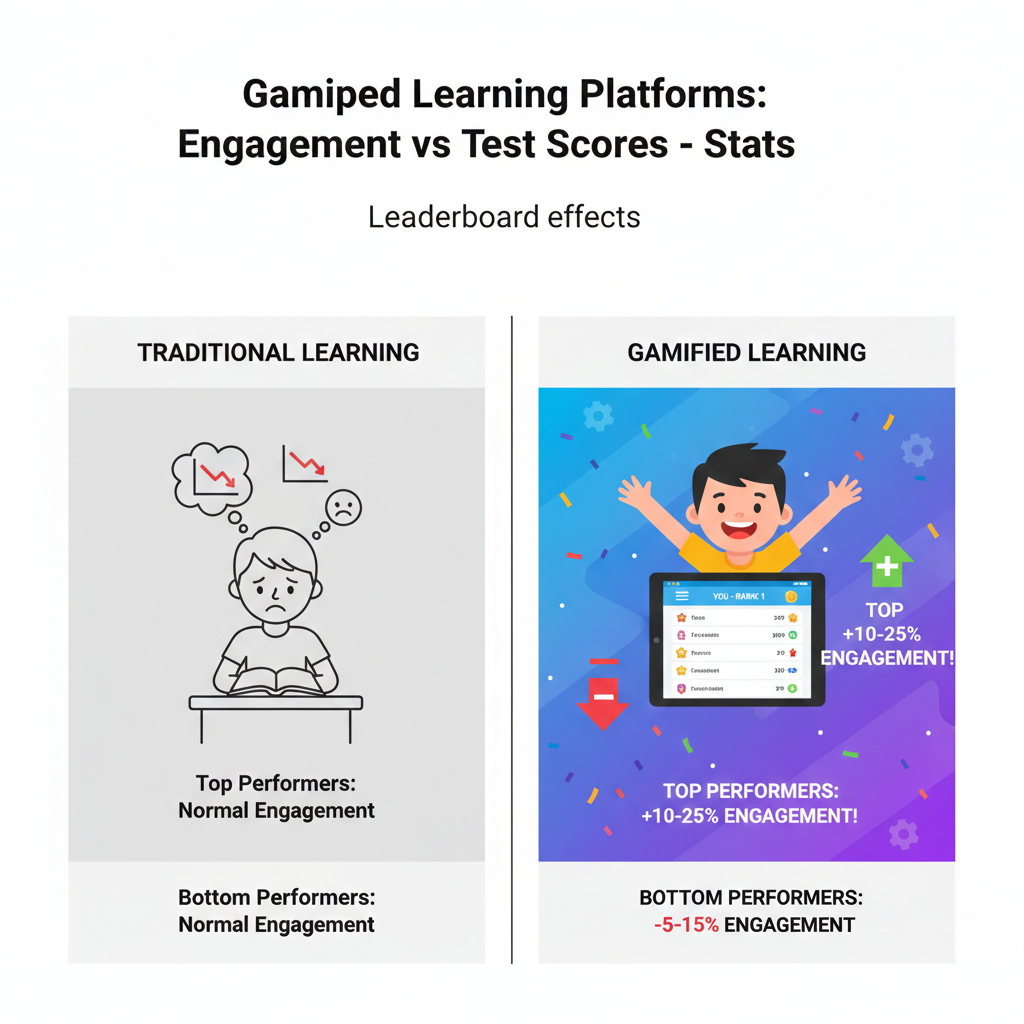
21) Leaderboard effects: Leaderboards can boost engagement for top-ranked learners by ~10%–25%, while reducing engagement for bottom-ranked learners by ~5%–15% unless grouped fairly by level
What this stat really means
Leaderboards can be exciting. For strong learners, seeing their name near the top can increase effort by 10%–25%. They feel proud and want to stay ahead. But for learners near the bottom, the effect can reverse. Engagement may drop by 5%–15% because they feel they can never catch up. This emotional gap matters.
Competition works best when it feels fair. If a beginner competes with an advanced learner, frustration grows. When children compete with others at a similar level, motivation rises for everyone.
What you should do
If your child enjoys competition, encourage healthy comparison with similar skill levels. Focus on personal best scores instead of only rank position. If your child feels discouraged, shift the focus to growth. Ask, “Did you improve from last week?” That question builds inner drive.
Remind your child that leaderboards show effort in one moment, not total ability. Confidence should not depend on rank.
How Debsie handles competition
Debsie uses level-based challenges so students compete fairly. The goal is to motivate, not discourage. Balanced competition builds energy while protecting self-belief.
22) Badges alone vs full design: Badges by themselves often produce small engagement lifts of ~0%–10%, while a full system with progress maps, feedback, and challenges shows ~15%–40% improvement
What this stat really means
A badge alone is not magic. If a child earns a badge but does not receive clear feedback or see a bigger path, motivation fades quickly. That is why simple badges may raise engagement only 0%–10%. But when badges are part of a full system that includes progress tracking, challenges, and feedback, engagement can jump 15%–40%.
Children need context. They want to know what the badge means and what comes next. A visible journey makes rewards meaningful.
What you should do
Look beyond surface rewards. Ask whether the platform explains mistakes clearly. Does it show long-term goals? Does it adjust difficulty? If not, badges may feel empty.
At home, connect badges to reflection. When your child earns one, ask what skill improved. Tie the reward to real growth.
Also avoid overpraising small rewards. Focus praise on effort and learning, not decoration.
How Debsie builds complete systems
Debsie combines badges with structured paths, feedback loops, and rising challenges. Rewards are connected to real progress. This keeps motivation strong over time.
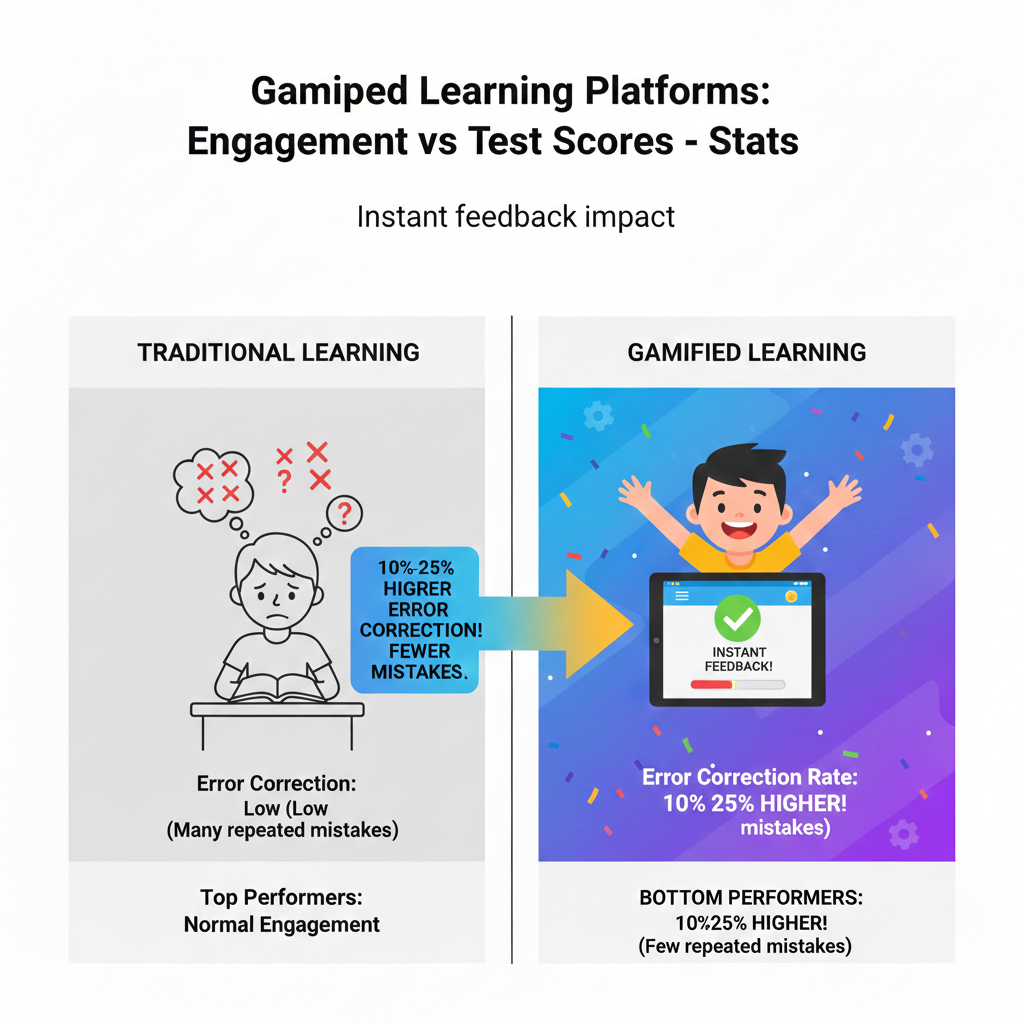
23) Instant feedback impact: When gamification includes instant feedback, error correction can improve by ~10%–25%, leading to fewer repeated mistakes
What this stat really means
Instant feedback changes learning speed. When a child sees a mistake immediately, they can fix it before the wrong method becomes a habit. A 10%–25% improvement in error correction means fewer repeated errors in exams.
Without quick feedback, children may practice wrong methods many times. That makes correction harder later.
What you should do
Encourage your child to read feedback carefully. Do not let them skip explanations. After seeing the correct answer, ask them to solve a similar problem right away. This locks in the correction.
Teach them to treat mistakes as signals. Each error shows exactly what needs practice.
Avoid waiting days to review wrong answers. Quick review strengthens memory.
How Debsie supports smart correction
Debsie provides immediate explanations and guided hints. Students correct errors in real time. This builds accuracy and confidence step by step.
24) Attendance in live classes: Adding game loops like team points and missions often increases attendance by ~5%–20% compared to the same class without them
What this stat really means
Attendance shapes learning results. A 5%–20% rise in attendance means more exposure to guided teaching. Live sessions allow children to ask questions, interact, and receive direction. When game loops are added, students feel excited to show up.
Regular attendance also creates routine. Routine reduces procrastination and builds discipline.
What you should do
Choose structured class times and protect them. Treat them as important appointments. If a child misses a class, review the recording quickly to avoid gaps.
Encourage participation during live sessions. Ask your child to write at least one question or answer during each class. Active engagement improves retention.
After class, spend five minutes reviewing key points. This reinforces learning.
How Debsie keeps learners present
Debsie integrates missions and interactive elements into live classes. Students attend not only to listen, but to participate. This active involvement strengthens both engagement and academic growth.
25) Parent-reported practice consistency: Families often report 1.2× to 1.5× more consistent practice routines when kids can clearly see their progress with levels and streaks
What this stat really means
Consistency is the hidden force behind strong academic results. When families report 1.2× to 1.5× more consistent routines, it means children are practicing more regularly each week, not just before exams. Clear levels and streaks make progress visible.
When children see a chain of completed days or a level almost finished, they feel a natural push to continue.
This matters because small daily practice builds strong neural pathways. A child who practices 20 minutes a day for five days learns more deeply than a child who studies two hours in one sitting and then stops for a week. Consistency reduces stress because learning becomes normal, not urgent.
What you should do at home
Create a fixed learning window. It does not need to be long. Even 15–25 minutes daily is powerful if done regularly. Tie practice to an existing routine, like after a snack or before free time. This reduces resistance.
Use visible tracking. If the platform shows progress bars, review them weekly with your child. Celebrate streaks calmly. If a streak breaks, restart without blame. The goal is rhythm, not perfection.
Also keep distractions low during practice time. Short, focused sessions build stronger habits than long, distracted ones.
How Debsie supports consistency
Debsie’s gamified levels and streak systems help children build steady routines. Progress is clear, which motivates daily action. Over time, this steady practice turns into stronger academic performance and better focus skills.
26) “Fun” rating: Learner satisfaction or “fun” ratings frequently rise by ~15%–35% when challenges and rewards feel fair and achievable
What this stat really means
When students describe learning as fun, something important is happening. A 15%–35% rise in satisfaction means children enjoy the process more. Enjoyment reduces resistance. When resistance drops, effort increases naturally.
Fun does not mean easy. It means balanced. If challenges feel too hard, children feel stress. If they feel too easy, children feel bored. Fair and achievable challenges create positive tension. That tension keeps the brain alert and engaged.
Enjoyment also improves memory. When emotions are positive, retention improves. Children remember lessons linked to good feelings.
What you should do
Check your child’s emotional response after sessions. Ask simple questions like, “Did that feel too easy, too hard, or just right?” Adjust difficulty if needed.
Avoid overloading rewards. Too many prizes reduce meaning. Keep rewards connected to progress.
Encourage reflection. When your child says learning felt fun, ask why. Understanding the reason helps repeat that positive experience.
Also remember that short sessions often feel more enjoyable than long forced ones.
How Debsie keeps learning enjoyable
Debsie designs balanced challenges with clear rewards. The system adapts to each learner’s level. When learning feels fair and achievable, children stay motivated and confident.
27) Learning efficiency: With well-paced levels, learners can reach the same skill target in ~5%–20% less total time due to better focus and fewer abandoned sessions
What this stat really means
Efficiency means reaching a goal faster without losing understanding. A 5%–20% time saving may not sound huge at first, but over months it becomes significant. Well-paced levels prevent overload. Children move step by step instead of feeling lost.
When sessions are clear and structured, fewer lessons are abandoned halfway. Focus improves because tasks feel defined and manageable. Clear structure reduces wasted time.
Efficiency also protects energy. Children who learn in a focused way feel less mental exhaustion. This leaves space for other subjects and activities.
What you should do
Encourage focused sessions. Remove phones and distractions during study time. Use a simple timer if needed.
Set clear session goals before starting. For example, complete one level or master one concept. Clear goals improve concentration.
If your child seems tired or distracted, shorten the session instead of forcing more time. Quality beats quantity.
Review progress weekly. If learning feels slow, check for gaps. Sometimes revisiting basics improves efficiency later.
How Debsie supports smart pacing
Debsie structures courses into progressive levels. Each level builds on the previous one. This organized flow reduces confusion and supports steady growth.
28) Impact fades without refresh: If game elements never change, engagement gains can shrink by ~20%–50% after 6–12 weeks unless new quests or events are introduced
What this stat really means
Excitement fades when everything feels the same. Even strong gamified systems can lose 20%–50% of engagement if nothing new appears over time. The brain enjoys novelty. New quests, events, or challenges refresh motivation.
Children often start with high energy. After several weeks, routine sets in. Without variation, attention drops. This does not mean gamification fails. It means refresh cycles are necessary.
What you should do
Add small changes every few weeks. Introduce new goals or mini-challenges. Encourage your child to attempt a new topic or harder level.
If motivation drops, talk openly. Ask what feels repetitive. Adjust pace or mix subjects.
Short breaks can also help. A planned one-day pause can restore focus without breaking the habit completely.
Keep learning dynamic. Growth feels exciting when there is forward movement.
How Debsie keeps engagement alive
Debsie updates challenges and offers progressive missions to keep interest strong. Fresh experiences help maintain long-term motivation.
29) Most predictive engagement metric: Number of practice attempts predicts score gains better than total time; learners doing ~20%–40% more attempts often show ~3%–10% higher test scores
What this stat really means
Many parents believe that more study time automatically leads to better marks. This stat shows something more precise. The number of actual practice attempts matters more than total time spent logged in.
A student may sit with a lesson open for one hour but only attempt a few questions. Another student may spend 30 focused minutes solving many problems. The second student is more likely to improve.
When learners complete 20%–40% more practice attempts, score gains of 3%–10% often follow. This happens because each attempt strengthens understanding. Practice builds accuracy, speed, and pattern recognition. Exams reward familiarity with question types, and familiarity comes from repeated exposure.
Time without action does not build skill. Attempts do.
What you should do
Shift the focus from “How long did you study?” to “How many meaningful problems did you solve?” Ask your child to set a target number of quality attempts per session. For example, complete ten focused questions with full attention.
Encourage correction after each wrong answer. A corrected attempt counts more than a rushed correct guess. Keep sessions distraction-free so each attempt is strong.
Track weekly attempts instead of daily hours. Improvement becomes measurable and motivating. If attempts increase but accuracy drops, slow down and focus on understanding.
Teach your child that effort is measured in action, not just presence.
How Debsie strengthens real practice
Debsie tracks meaningful attempts and connects them to skill progress. Students see how active problem-solving directly moves them forward. This builds a strong link between effort and results.
30) Best-case vs worst-case outcomes: Strong designs that include mastery, feedback, and spaced practice often show engagement up ~20%–45% and scores up ~3%–12%; weak designs focused only on points may show engagement up ~5%–15% with scores flat at ~0%–3% or slightly down
What this stat really means
Not all gamified platforms are equal. In the best cases, engagement rises sharply, sometimes 20%–45%, and test scores follow with a 3%–12% gain. These systems focus on mastery, feedback, and revision. They reward correct reasoning and improvement.
In weaker systems, engagement may still rise slightly because games attract attention. But if rewards are not tied to deep understanding, scores may barely move. In some cases, they may even drop slightly if students rush for points.
This stat shows that design quality decides outcomes. Fun alone is not enough. Structure and feedback turn fun into growth.
What you should do
Look carefully at how a platform works. Does it offer instant feedback? Does it encourage review? Does it adjust difficulty? If yes, it likely supports real progress.
At home, balance motivation with discipline. Encourage excitement, but always connect rewards to learning goals. Ask your child what skill improved after each milestone.
Monitor long-term trends. True academic growth appears over months.
How Debsie delivers strong outcomes
Debsie is built around mastery-based progression, structured feedback, and spaced revision. Engagement rises, but learning remains the core focus. If you want a platform that blends motivation with measurable academic growth, explore debsie.com/courses and book a free trial class today.
Conclusion
After looking at all 30 stats, one clear pattern stands out. Gamified learning platforms almost always increase engagement. Children log in more often. They complete more lessons. They attempt more questions. They feel more confident. Anxiety drops. Consistency improves. These are powerful wins.