Every minute your child studies can work harder for them. The secret is not only how long a session lasts, but how often those sessions happen across the week. Small changes in length and rhythm can unlock big gains in memory, focus, and problem-solving. This guide turns that idea into clear steps you can use at home or in class. We will walk through thirty powerful stats and show what they mean in daily life. You will learn the best mix of short and long sessions, why breaks matter, how sleep makes learning stick, and how to structure the week so progress keeps building. The language is simple, the tips are concrete, and the goal is real results.
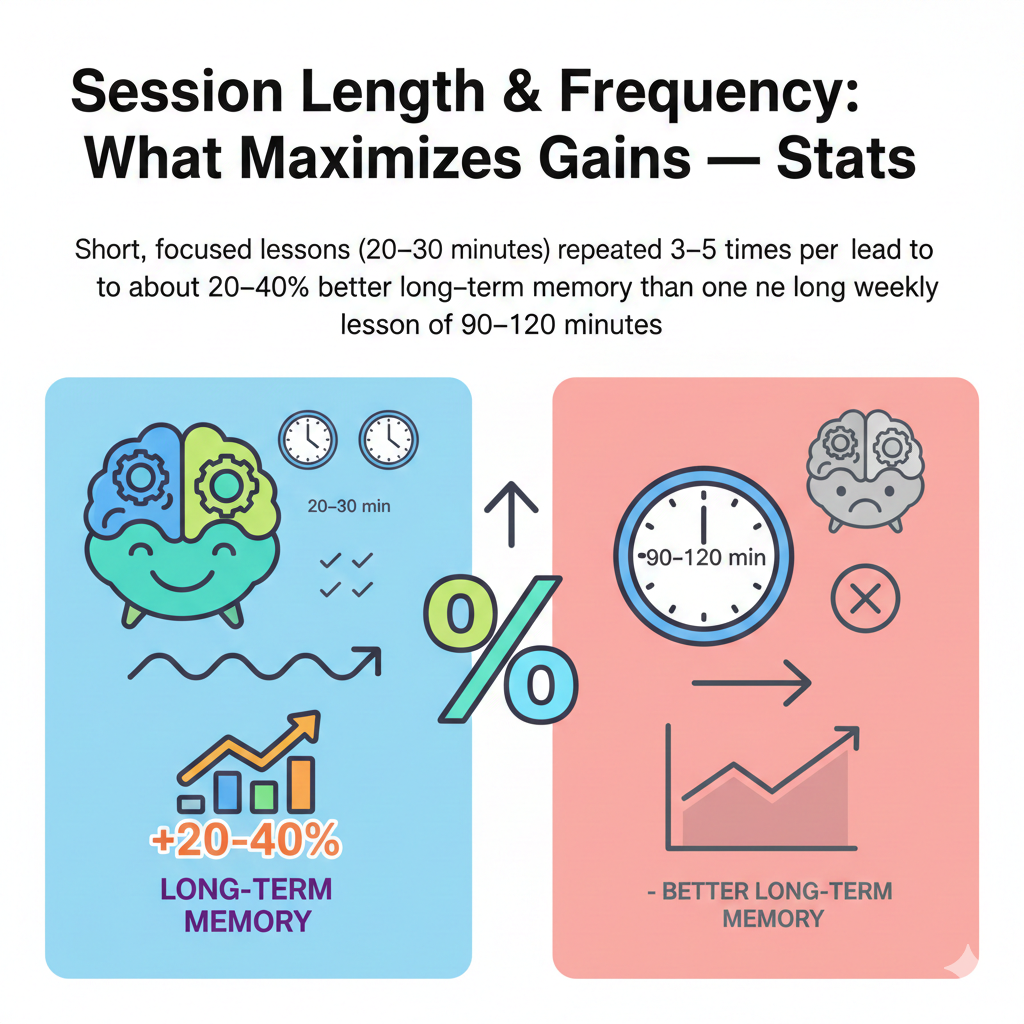
1) Short, focused lessons (20–30 minutes) repeated 3–5 times per week lead to about 20–40% better long-term memory than one long weekly lesson of 90–120 minutes
Short lessons help the brain pay attention. When attention stays high, the brain records information more clearly, like writing with a thick, dark pen instead of a dull pencil. That is why a 20–30 minute window works so well.
It is long enough to warm up, practice, and review, but not so long that energy fades. When you repeat these short lessons across the week, you teach the brain to come back to the same ideas again and again. Each return makes the memory stronger.
Think of it like building a wall. One giant, messy layer of bricks in one day will wobble. Several neat layers over days will hold firm.
To use this at home, set three to five small study blocks on your family calendar. Keep them at steady times so your child expects them. A kitchen timer helps. Start the clock at twenty-five minutes. The goal is one clear task, not many little ones.
If today is fractions, do fractions only. If today is loop basics in code, do loops only. Ask your child to say the goal out loud at the start. A simple sentence works, such as, I will finish three fraction problems and explain each answer.
When the timer rings, stop. Do a quick two-minute recap in your own words. Ask, What is one thing that felt easy? What is one thing to fix next time? Then close your notebook and move on with the day.
At Debsie, we build our live classes and practice quests around this window on purpose. It keeps the pace lively and helps kids stack wins. For extra support, you can pair each short lesson with a small reward, like choosing a song for dinner or picking the bedtime story.
Rewards should be tiny and friendly, not big or costly. The real prize is the feeling of finishing a clear goal. After two weeks, look back at what your child has done. You will likely notice cleaner work, faster recall, and less pushback when study time begins, because the sessions feel doable and fair.
2) Breaking a 60-minute session into three 20-minute blocks with short breaks improves accuracy on tasks by about 15–25% compared with doing the full 60 minutes without breaks
The human brain is not a machine that runs at the same speed for an hour. Focus rises and falls in waves. When a long session stretches on with no pause, small errors slip in, and those errors lead to frustration.
Splitting one hour into three clean twenty-minute blocks keeps each wave strong. Short breaks reset energy and protect attention, so your child makes fewer careless mistakes and spends less time fixing them.
You can set this up with a simple pattern. Choose one hour when your child is fresh. Lay out three micro-goals on a sheet of paper. Each micro-goal should be plain and countable, like solve four word problems, read two pages and mark unknown words, or build one working function with inputs and outputs.
Start timer number one for twenty minutes. During work time, the phone stays out of sight, tabs stay closed, and only the tools for the goal are on the table. When the timer ends, stop even if the task is not perfect. Take a three-minute break. Have a sip of water.
Stand up and stretch. Look far away to rest the eyes. Do not open apps, because they pull the brain too far away. Start timer number two. Repeat the process. After the second block, another three-minute reset. Then the third block begins.
Track accuracy quickly at the end of each block. Circle any mistake patterns, like rushing the last step or skipping units. In the next block, plan one tiny fix for that pattern. For example, write units first before solving, or read the question out loud before starting.
Over time, you will notice that mistakes cluster near the end of each block, not throughout. This is a sign that the break is due. If your child still fades early, shorten blocks to eighteen minutes and keep the breaks at three minutes. If energy is high, stretch the work block to twenty-two minutes.
The goal is not to fill the hour at any cost. The goal is to stack three honest, focused efforts. In our Debsie classes, we mix problem solving, quick reflection, and light retrieval drills across these blocks, which keeps the mind alert and proud of steady progress.
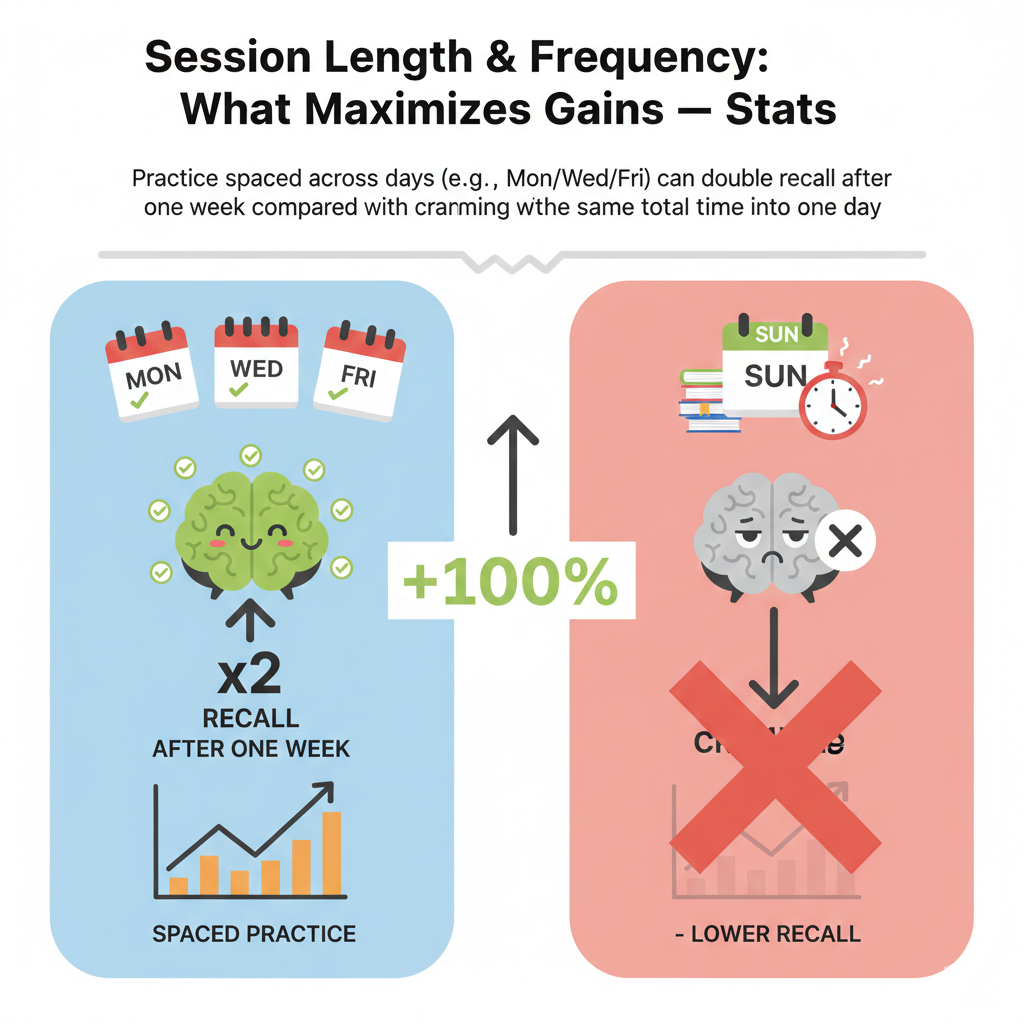
3) Practice spaced across days (e.g., Mon/Wed/Fri) can double recall after one week compared with cramming the same total time into one day
Spacing is the idea that time between sessions helps memory grow. When your child returns to a topic after a day or two, the brain needs to pull the idea back up. That small effort of recall is like lifting a light weight with a muscle.
Each lift makes the memory stronger and easier to find later. This is why three short days spread out can beat one big day, even if the total minutes match. Cramming can feel good in the moment because you see a lot of work on one day. But one week later, much of it has faded. Spacing keeps more of that work alive.
To use spacing, plan a simple rhythm such as Monday, Wednesday, and Friday for the same subject. On Monday, learn something new. Keep it small and clear. On Wednesday, start by trying to remember Monday’s idea without looking.
Do two quick problems from memory. After that, add one new piece. On Friday, do the same thing again. Recall first, then grow a little. This pattern slowly builds a strong base.
On the weekend, your child can rest or do a fun project that uses the week’s ideas in a playful way, like a small game in Scratch, a pancake recipe using fractions, or a nature sketch that labels parts and uses science words from the week.
Keep notes that are short and personal. A single page with three boxes is enough: learned on Monday, remembered on Wednesday, and remembered on Friday. In each box, write two lines in your child’s words. The act of writing short notes supports recall.
If your week gets busy and you miss a day, do not try to cram to catch up. Instead, slide the plan forward by a day and keep the spaces. If you are close to a test, still keep at least one sleep between sessions. Sleep is a key partner for memory.
It helps seal what was learned so the next session feels like a refresh, not a restart. At Debsie, we design weekly arcs that respect spacing. Learners meet ideas, revisit them, and use them in new ways across the week.
This calm, steady rhythm lifts confidence and keeps stress low, because there is no panic day and no last-minute rush.
4) For new skills, the first 15 minutes of a session often create 50–70% of the learning gains; the next 30–45 minutes add smaller, slower gains
The start of a session is a golden window. In the first fifteen minutes, the mind is fresh, alert, and curious. New ideas land fast, and small wins come quickly. After that, the pace of learning slows. This does not mean the rest of the session is useless.
It means you should protect the opening minutes and use them wisely. Put the most important step first. Keep the setup smooth so those minutes do not get eaten by finding pencils, logging in, or searching for files. A neat desk and a clear plan help your child enter this window ready to learn, not ready to hunt for tools.
Before the timer starts, state today’s single key move in plain words. It can be one core skill, like dividing fractions with a picture model, writing a strong topic sentence, or coding a loop that runs five times. Open with one worked example.
Ask your child to explain each step to you out loud. Then swap roles and let your child do the same type of problem from scratch. This echo method locks in the idea while energy is high. If your child gets stuck, guide with short prompts, not long speeches.
A simple hint like check the sign, count the steps, or read the line again is enough. Avoid jumping in to fix the work for them. The goal in this window is to build skill and confidence through small independent wins.
After the first fifteen minutes, shift to practice that repeats the same move with light variety. Add one twist at a time, like a slightly bigger number set or a new word type in the sentence. Use quick checks every few minutes to make sure the main idea is still clear.
If you see accuracy drop, pause for a thirty-second reset. Ask your child to teach the move back to you in one sentence. If they can teach it, they can do it. Close the session with a tiny preview of next time. A preview sparks curiosity and makes the next session start even stronger.
At Debsie, our lessons keep this early window sacred, because it sets the tone for the whole week.
5) Two sessions in one day separated by 6–8 hours (morning and evening) improve next-day recall by about 10–20% versus one longer session
When your child studies twice in one day with a long break in between, something special happens. The morning session lays the first track. The evening session comes after a day of light forgetting, so the brain must reach a bit to pull the idea back.
That reach is healthy. It is like a short workout for memory. The second session is not a repeat of the whole lesson. It is a short refresh that reminds the brain what matters most. Together, the two hits make the next day feel easy and familiar.
To use this plan, choose a topic that needs to stick, like key formulas, vocabulary, or a new coding pattern. In the morning, do a simple fifteen to twenty-minute lesson with one core example and two quick practice tasks. Keep it calm and focused.
After school or in the evening, do a short ten to fifteen-minute recall round. Close the book first. Ask your child to write down the steps from memory. Then open the notes and check. Fix any gaps. Try one or two new problems that use the same idea.

End with a one-line note: today I learned to do X, and I need to watch out for Y. The note should be small and in your child’s voice.
This plan works well on busy days because the evening round is short and focused. It also works well before a class day or a quiz. Do not turn the evening into a big study block. Keep it light so the child goes to bed with a clear head, not a stressed one.
The next morning, ask one check question at breakfast. A tiny prompt like what is the first step again helps bring the idea back one more time. In our Debsie courses, we often pair a morning micro-lesson with an evening game or mini-challenge that uses the same skill in a fresh way.
Kids like the rhythm, and parents like how recall improves without extra stress.
6) Sessions longer than 90 minutes without a real break show a drop in focus of 20–30% near the end compared with the first half
Long, nonstop sessions drain energy. After about ninety minutes, most learners slow down, make more mistakes, and feel less motivated. The brain needs oxygen, movement, and a mental reset.
Without a true break, the second half of a long session turns into slow, heavy work. The result is lower quality and less joy, even if the total time looks impressive on a planner. This is why long grinds often feel like hard work but do not lead to strong gains.
The fix is simple. If you must study for more than an hour and a half, plan a real break at the ninety-minute mark. A real break means stepping away from the desk, moving the body, drinking water, and looking outside or down a hallway to rest the eyes.
Five to ten minutes is enough. Set a separate timer for the break so it does not stretch into a long distraction. If your child has been on a screen, encourage a no-screen break. The contrast helps the mind reset. When you return, spend the first two minutes recalling the key steps without notes.
Then open the book and continue with a new, clear mini-goal, not a vague plan to just keep going.
You can also avoid long stretches by planning two shorter sessions in the day, or by building a ninety-minute session that includes planned micro-pauses every twenty-five minutes. Write the plan on a small card and keep it in view.
Add simple cues like stand and stretch, check breathing, and review last step aloud. These tiny moves protect focus. If your child is preparing for a long exam, practice long blocks with breaks, not endless blocks without them. Teach pacing, not pushing.
At Debsie, we coach learners to notice the signs of fading focus—yawning, rereading lines, tapping feet—and to act early with a short break rather than pushing past the cliff. Over time, they learn to respect their focus and work smarter, not just longer.
7) A 5-minute break every 25–30 minutes keeps error rates 15–20% lower than studying straight through for the same total time
Short breaks do more than rest the body. They tidy up attention. After twenty-five to thirty minutes of effort, small slips start to appear. A five-minute break pulls the mind back to neutral so the next block starts clean. The key is to make the break active but gentle.
The goal is to refresh, not to distract. If the break turns into scrolling or chatting, the brain has to switch back too hard, and focus is lost.
Plan your break routine ahead of time. Keep it the same each day so it becomes a habit. Stand up, stretch arms and legs, roll the shoulders, and take five deep breaths. Drink a glass of water. Look out a window and focus on something far away to relax the eye muscles.
Walk to another room and back. Keep the break simple and quiet. Set a soft alarm for five minutes. When it rings, sit back down, write one sentence about what you just finished, and then start the next block. This small sentence locks the last idea in place and makes re-entry smooth.

Teach your child to watch for rising errors as a signal to take the next break on time. If they start to swap numbers, miss signs, or skip instructions, the break is due. If they finish a step early and are tempted to skip the break, still take it.
Preventive breaks keep errors low and morale high. In coding practice, breaks are perfect moments to stand up before a compile or to review a test output with fresh eyes afterward. In math, breaks fit right after a set of problems or after a word problem that took real thought.
In reading, break after a page or after a section. At Debsie, our classes weave in short resets that feel natural. Kids return to tasks with sharper eyes and steadier hands. Over a week, fewer errors mean fewer fixes, which means more time for new learning and creative challenges.
8) Reviewing material within 24 hours after the first session can cut forgetting by roughly half compared with waiting 3–4 days to review
The day-after review is like sealing fresh paint. When your child revisits a new idea within twenty-four hours, the brain strengthens the pattern before it fades. This short touch does not need to be long or heavy. In fact, the best reviews are brief, active, and clear.
Start with a memory dump. Close the book, set a three-minute timer, and ask your child to write or say everything they remember about yesterday’s idea. No checking yet. When the timer ends, open the notes and compare.
Circle what was correct, and star any gaps. Fill the gaps in two lines, then try one fresh problem or example that uses the same steps. This keeps the review honest and useful.
You can build a simple two-step routine to make the day-after review stick. In the morning, ask one tiny question at breakfast, such as what is the first step in dividing fractions or how do we set a loop to run five times. Let your child answer in one sentence.
In the evening, run the three-minute memory dump plus one new problem. Keep the tone calm. Praise clarity, not speed. If there is a common slip, turn it into a quick check. For example, if your child often forgets to reduce fractions, write reduce first at the top of the page before the next practice.
If they miss a semicolon in code, put a small sticky note that says semicolon patrol next to the keyboard. These cues help the brain notice the right move at the right time.
Make reviews easy to find. Keep a small stack of review cards with the date and topic at the top. Each card should hold the key idea in your child’s words, one example, and one warning about a common mistake.
Place the card in a visible spot and bring it back two or three times that week for one-minute checks. At Debsie, we help students build these quick loops into their study rhythm. The result is steady confidence. Kids start to feel that learning does not leak away overnight, because they have a fast way to refresh it.
Over weeks, these light touches save hours of re-teaching and turn new ideas into tools your child can use without stress.
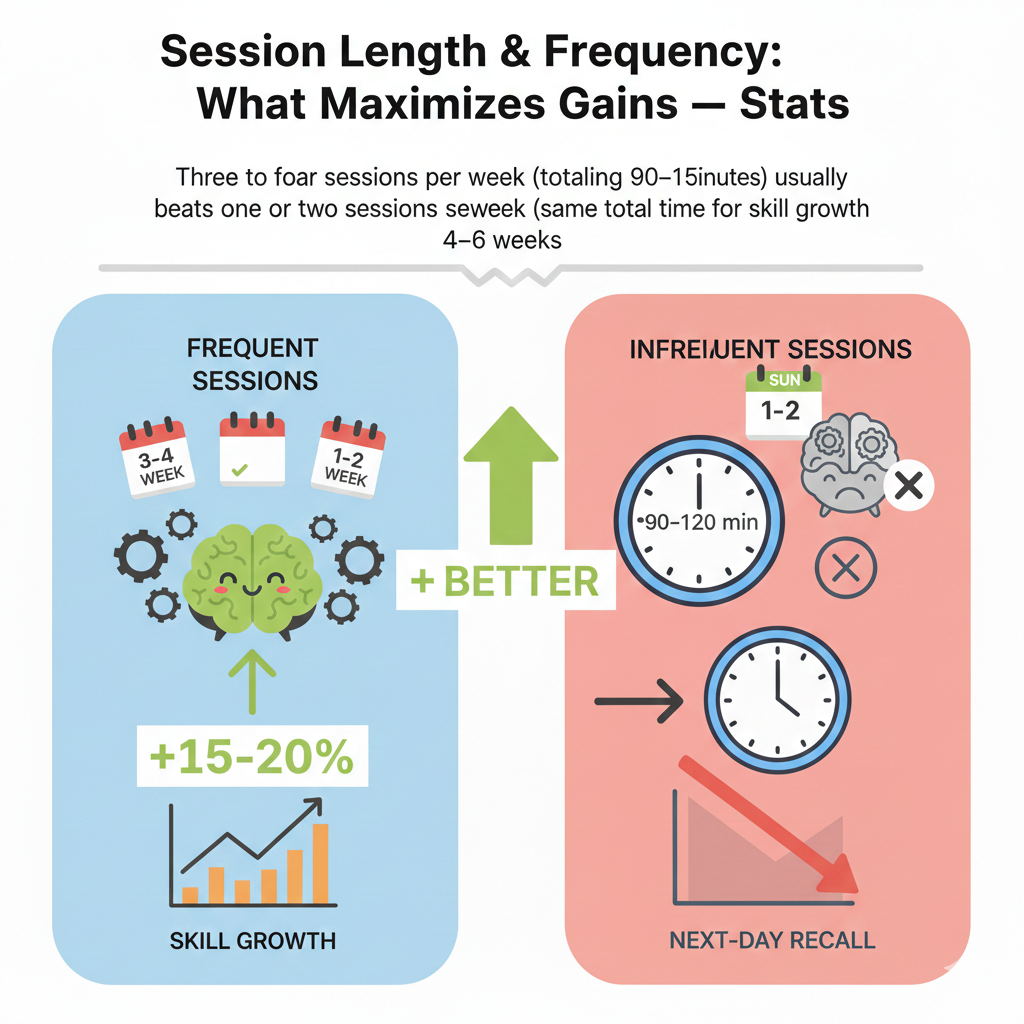
9) Three to four sessions per week (totaling 90–150 minutes) usually beats one or two sessions per week (same total time) for skill growth after 4–6 weeks
Consistency wins. When your child practices three or four times each week, the brain keeps touching the same paths and keeps them open. The total time may match a one or two day plan, but the extra days create more starting points, more small wins, and more chances to fix errors early.
This is especially true for math procedures, reading fluency, writing style, and coding basics. The gains show up after a month because the habit has time to settle and results begin to compound.
To put this into action, map your week with clear anchors. Choose three or four days that naturally fit your schedule. Aim for twenty-five to forty minutes per slot. Place them at roughly the same time so the body and mind expect them.
Name each day with a simple theme. Monday might be new skill, Wednesday could be practice and small stretch, Friday might be mixed review and a real-world task, and Sunday could be a fun challenge that connects the dots.
Write the plan on a card and tape it where your child studies. The card reduces decision fatigue and helps everyone stay on track even when the day is busy.
Protect these slots by making them visible to the whole family. Set a reminder on your phone fifteen minutes before start time. Prepare tools ahead of time so the first minute is not spent hunting for a pencil or logging in.
At the end of each slot, mark one small measure on a simple tracker, like problems solved, lines of working code, pages read, or minutes of focused time without re-reading. Do not aim for perfect numbers. Aim for honest effort.
Every Sunday, spend five minutes looking at the tracker. Celebrate effort streaks, not just scores. Adjust the plan if you see a pattern, such as Wednesday always running late due to sports. Move that slot earlier or pick a different day.
At Debsie, our coaches help families tune this weekly rhythm. We keep the plan light, repeatable, and kind, so kids can show up often and leave each session feeling capable.
10) Interleaving topics in short blocks (e.g., 10–15 minutes per topic) can boost transfer to new problems by 15–30% versus doing one topic in a long block
Interleaving means mixing related skills in short, repeating blocks. Instead of spending a whole hour on one type of problem, you rotate through two or three types in ten to fifteen-minute chunks. This trains the brain to notice differences and choose the right method at the right time.
It also prevents autopilot. When everything looks the same, your child may follow steps without thinking. When tasks change, they must read carefully, pick a plan, and adapt. That is the kind of thinking that transfers to new problems on tests and in real life.
To use interleaving, pick two or three close cousins. In math, you might mix fraction addition, fraction subtraction, and simple percent problems. In coding, rotate conditionals, loops, and functions with parameters. In writing, cycle between topic sentences, evidence lines, and closing sentences.
Set a thirty to forty-five-minute window. Spend ten to fifteen minutes on the first skill, then switch. After one round, cycle back once more. The goal is not to finish a huge set in one area. The goal is to build the habit of choosing the right tool.
Before each switch, ask a quick question out loud: what makes this next problem different, and what is my first step. Keep the answers short. The act of naming the difference teaches the brain to sort problems correctly.
Make the mix gentle at first. If your child feels lost, drop to two skills and shorten the blocks. Use tiny bridges between skills. A bridge is a single sentence that links what you just did to what you are about to do.
For example, you might say, we added fractions with the same denominator; now we will add with different denominators, which means we must match them first. These bridges reduce confusion and build confidence. Track decision quality rather than speed.
Put a small dot on the page whenever your child names the right method before starting. Over time, the number of dots should grow. In Debsie lessons, we weave interleaving into games and challenges so kids practice switching in a playful way.
This keeps the mind flexible and ready for the surprises that real problems always bring.
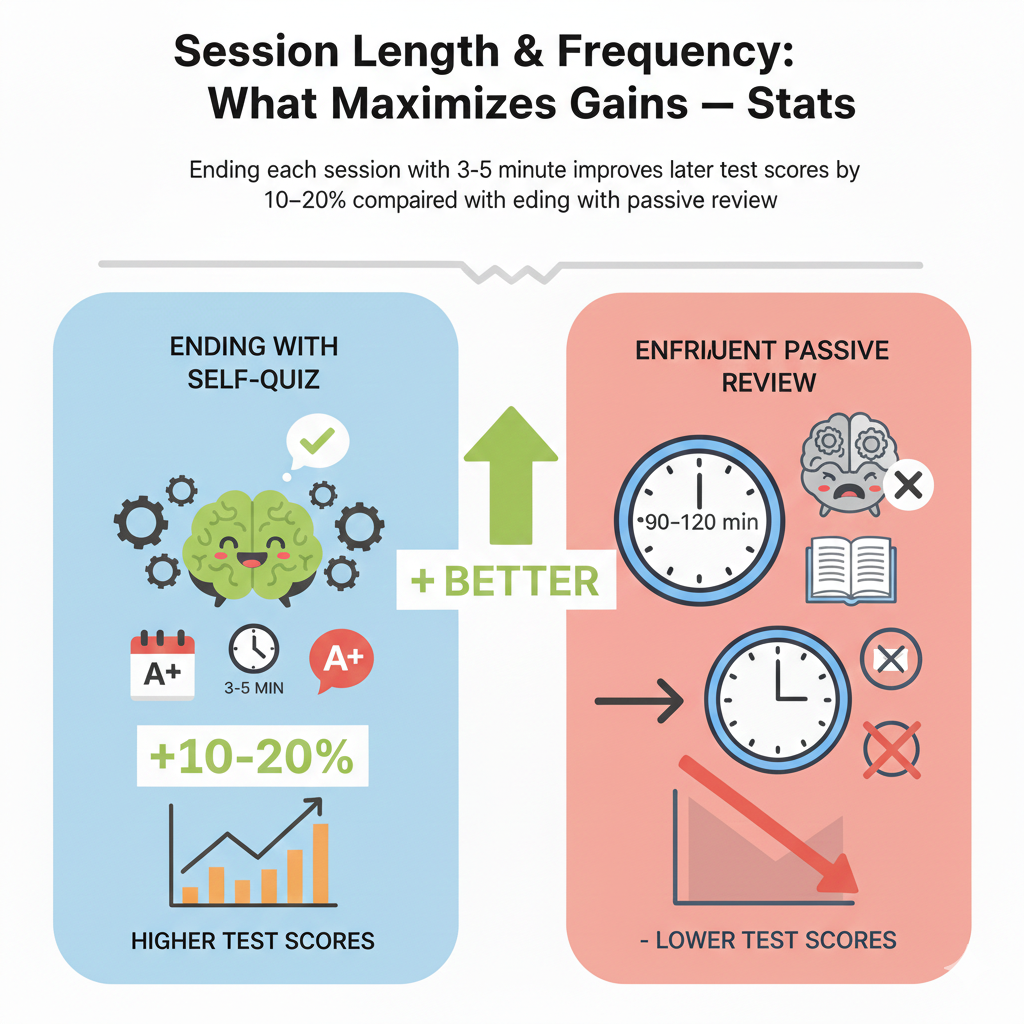
11) Ending each session with a 3–5 minute self-quiz improves later test scores by 10–20% compared with ending with passive review
A short self-quiz locks learning in place. When your child tries to pull answers from memory without looking, the brain must work a little. That work makes the memory stronger and easier to find later.
A passive review, like rereading notes or skimming a page, feels smooth but does not challenge the mind enough. The self-quiz does not need fancy tools. It needs clear questions, honest effort, and quick feedback so mistakes turn into lessons right away.
Set a simple rule for the end of every session. First, close the book. Second, set a timer for three to five minutes. Third, answer three to five questions out loud or on paper. The questions should match the core moves from the session.
Ask for steps, not only final answers. For example, how do you reduce a fraction, what is the first line of a for loop, or what words help build a strong topic sentence. Let your child show the steps they would take, even if they are not solving a full problem.
This keeps the quiz fast and focused. When the timer ends, open the notes and check the answers. Circle any gap and write a one-line fix in plain words, like remember to find a common denominator first or add a colon after the loop header.
Make a tiny quiz bank over time. Use index cards with one question on the front and a clean answer on the back. Shuffle two or three cards into the end of each session. Retire cards that stay easy and add new ones for fresh skills. Keep the tone light.
Praise the act of quizzing, not just the score. If your child feels nervous, start with fill-in-the-blank prompts and move to open questions later. In Debsie classes, we end with short recall drills and quick checkouts.
Students leave knowing what they can do and what to fix next. That feeling builds confidence and makes the next session easier to start.
12) Starting sessions with a 3–5 minute warm-up recap raises the speed of new learning in that session by 10–15%
A warm-up recap clears the runway. When your child begins by recalling key steps from the last lesson, the mind snaps to the right ideas. This short move reduces start-up friction and speeds up the first wins of the day. It also lowers stress, because the session starts with something familiar.
The recap should be short, active, and focused on essentials, not a full review of everything.
Begin each session with three simple steps. First, set a three-minute timer. Second, ask your child to write or say the top three ideas from the last lesson. These can be steps, rules, or error traps to avoid. Third, do one tiny example that uses those ideas.
Keep the numbers small and the code short. The goal is to feel the gears click into place, not to finish a full set. After the timer, ask one question: what is the one thing we must remember today. Write that one line at the top of the page. That line becomes the north star for the rest of the work.
If your child struggles to remember, offer a micro-hint but wait a few seconds first. Silence gives the brain a chance to search. When the answer comes, praise the recall, not the speed. Over time, collect a list of common warm-ups your child likes.
In math, it might be two quick mental problems. In reading, it could be a short summary of yesterday’s paragraph. In coding, it might be rewriting one function from memory. At Debsie, we use warm-up recaps as a standard opening move.
They set the tone, boost confidence, and make the main lesson flow. Families can do the same at home with a kitchen timer and a notebook. Three minutes spent recapping can save ten minutes of confusion later, and that trade is worth it every time.
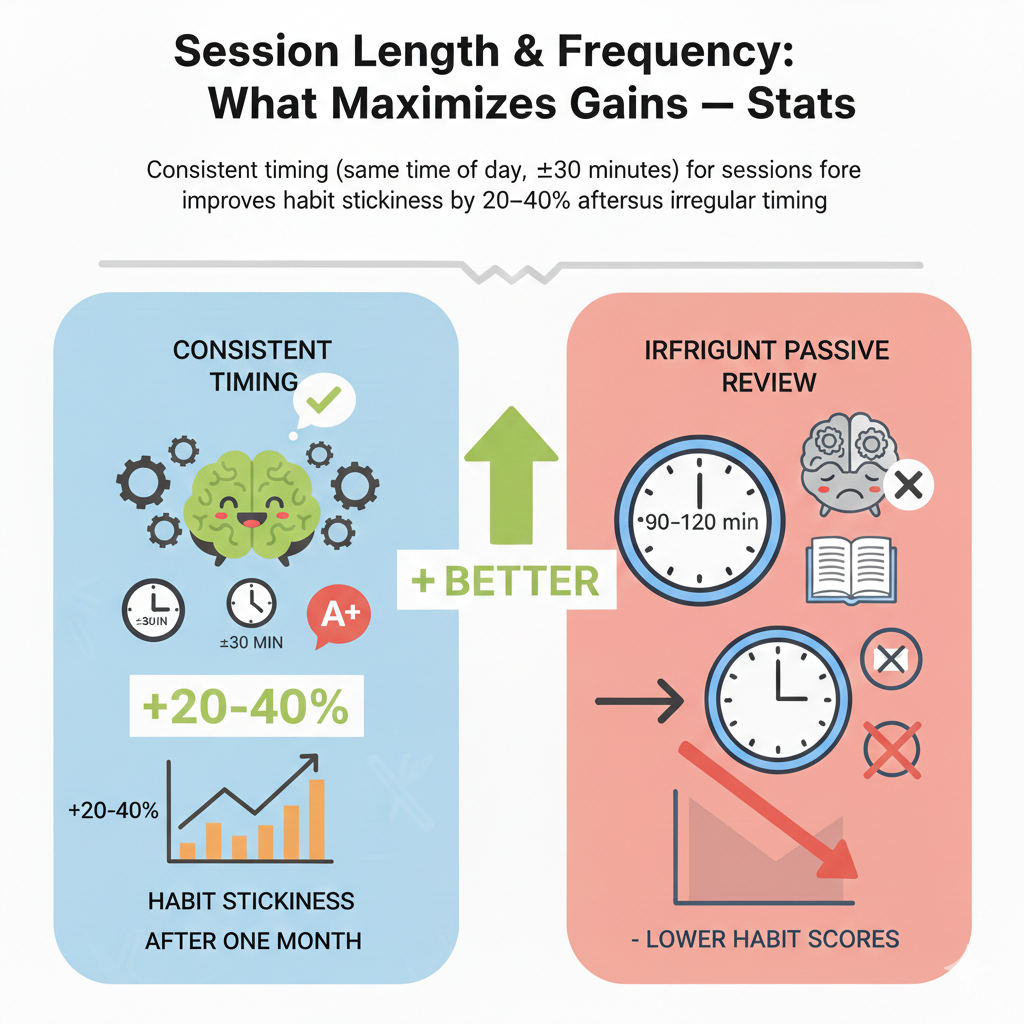
13) Consistent timing (same time of day, ±30 minutes) for sessions improves habit stickiness by 20–40% after one month versus irregular timing
Habits grow in the soil of routine. When study time lands at the same time each day, the body and mind begin to expect it. There is less debate, less delay, and less drama. The brain links that time of day with a clear task, so getting started feels natural.
This is why keeping a steady window, even with a small thirty-minute flex, makes practice stick over weeks. Irregular timing turns each session into a fresh decision, and decisions drain energy.
Choose a daily window that fits your family rhythm. Right after a snack, before dinner, or just after breakfast can all work. Protect this window like an appointment. Set a recurring reminder. Prepare tools five minutes early.
Create a small start ritual, such as clearing the desk, taking a sip of water, and reading the one-line goal. Keep the end ritual just as clear: a quick self-quiz, a one-sentence note about what worked, and putting tools back in place.
Rituals teach the brain that this time has a start and a finish, which makes it easier to show up tomorrow.
If a day gets messy, keep the same hour but shorten the block. Even a ten-minute micro-session protects the routine and prevents the feeling of falling behind. On weekends or holidays, keep the time the same but shift the work to lighter review or a fun project.
Consistency matters more than intensity. Track attendance on a simple calendar with a small check mark for each day you hit the window. After a month, count the streak. Celebrate the pattern.
At Debsie, we help families build these time anchors so learning becomes a calm, daily habit. When the clock cues the mind to focus, your child enters study time with less friction and more pride, and that momentum carries into every subject.
14) Sleep within 4–6 hours after a learning session strengthens memory, giving 10–25% better recall the next day compared with staying awake late
Sleep is the lab where the brain processes the day. After a study session, the brain replays key steps during deep sleep and rebuilds them in stronger form. If your child studies early and then stays up late with screens or noise, that memory work gets less time, and recall suffers.
When sleep comes within four to six hours after learning, more of the lesson is saved. This is why evening refreshers can be powerful, and why late-night cramming often fades by morning.
To use this, plan study blocks so the end of the day is calm and close to bedtime. Keep the last session short and clear, focused on recall rather than brand-new content. Close with a one-minute summary in your child’s words.
Turn screens off at least thirty minutes before sleep to reduce mental chatter. A simple routine helps: warm drink, light stretch, breathe in for four counts, breathe out for six counts. If your child feels worried about forgetting, write tomorrow’s first step on a sticky note and place it on the desk.
This tells the brain it does not need to keep the thought spinning overnight.
On days with afternoon sports or activities, consider a brief review right after dinner, then wind down. If your child is a morning learner, you can still get sleep’s help by pairing a short evening recall with the morning lesson. The pair gives two touches with one sleep in between.
In Debsie programs, we encourage families to guard sleep as part of the learning plan. Children who rest well remember more, argue less at study time, and bring better moods to class. Sleep is not a bonus. It is a core tool. Protecting it pays off in grades, confidence, and health.
15) Four short sessions (15 minutes each) across two days often equal or beat one 60-minute session for retention one week later
Short bursts spread over two days give the brain time to process and refresh. Each burst is small enough to keep focus high, yet long enough to practice one clear move. When you return the next day, you meet a tiny bit of forgetting, which is healthy.
Pulling the idea back from memory strengthens it. This is why four compact blocks can match or beat a single long hour when you check recall a week later.
Set up two days in a row, like Tuesday and Wednesday. On day one, run two fifteen-minute blocks with a five-minute break between them. In block one, learn a single skill with one example and two short tries.
In block two, repeat the same skill with a light twist, such as different numbers, a new word set, or a slightly changed prompt. Keep tools ready so no time is lost to setup. End with a one-line note in your child’s voice, naming the key step and one common slip to avoid.

On day two, start with a two-minute recall without notes. Then run block three with mixed practice, switching between easy and medium problems. In block four, use the skill in a small real task. Write a short paragraph, build a tiny function that takes input, or solve a word problem from daily life.
Real use shows the brain that this skill matters. Close with a three-minute self-quiz. At the end of the week, test recall with two fresh problems. Chances are, your child will remember steps more clearly than after a one-hour cram.
At Debsie, we often pair short blocks with micro-challenges and quick feedback. The pace feels kind, the wins stack up, and memory holds firm because it had two days to grow.
16) Switching tasks every 20–30 minutes reduces mental fatigue and keeps productivity 10–20% higher across a 2-hour study window
Long stretches on one task can make the mind dull. When your child switches tasks at the right moment, attention resets and energy returns. The key is not random switching. It is planned rotation between related tasks that use different mental muscles.
For example, solving problems draws on step-by-step logic, while explaining a step in words pulls on language. Moving between the two gives each system a turn to rest while the other works.
Plan a two-hour window with four work blocks and three short breaks. Choose two or three related tasks, such as practice problems, short explanations, and quick error checks. Start with the task that is most important or most likely to slip.
Work for twenty-five minutes, then pause for five minutes to move, breathe, and reset. Begin the second block on a different but connected task. Keep tools for each task in separate small piles or tabs so the switch is smooth and not a hunt.
End each block with one sentence that says what got done and what comes next. These micro-closures prevent mental clutter.
Watch for signs that tell you it is time to switch. If steps feel muddy, speed drops, or the child starts to reread the same line, the next task is due. If the child is on a roll, let the block finish and then decide whether to extend by two or three minutes.
Do not stretch too far, or the next block will pay the price. In Debsie lessons, we use light rotations to keep minds fresh: a bit of guided practice, a tiny teach-back, then a short game-like challenge. Over two hours, this pattern holds energy, keeps errors low, and turns a long study window into a series of quick wins, not a slow grind.
17) When sessions are too short (<10 minutes), setup time eats 20–30% of the slot; aim for 15–30 minutes to keep “active learning” high
Tiny sessions feel easy to start, but they can waste time. If a block lasts only eight or nine minutes, a big chunk may go to opening notebooks, finding a file, or recalling where you left off. That means little true practice. Fifteen to thirty minutes is a better floor because it leaves enough space for a warm-up, a few reps, and a quick recap, even with a minute or two of setup.
To make this work, create a small start kit. Keep pencils, eraser, notebook, and any login details together in a clear folder. For coding, keep a template file ready with comments that say where to add new code.
For math, keep a sheet with common steps and a few worked examples. Place the kit where study happens. At the start, spend thirty seconds reading yesterday’s one-line note. This puts the brain back on track fast.
Then jump into the main task. When the timer shows two minutes left, stop and write a one-sentence summary and one next step. That sentence is your on-ramp for tomorrow.

If your child only has ten free minutes, stack two micro-steps that fit the time. For example, do a two-minute recall, three minutes of one problem, and a two-minute check, leaving three minutes to write the next-step note and close.
But do not let micro-sessions become the norm. They are for very busy days. Most days should land in the fifteen to thirty-minute range. In Debsie programs, we teach learners to protect active time by cutting setup.
We pre-load files, simplify logins, and keep routines the same. This makes the first minute count and leaves the heart of the session for real thinking, not searching for tools.
18) A quick midpoint break with movement (2–3 minutes of walking or stretching) can restore focus, cutting mistakes by about 10–15% in the second half
A short movement break resets the brain better than a sitting break. When the body moves, blood flow rises and oxygen increases. This wakes up attention and steadies mood. The break does not need to be a workout.
Two or three minutes of light motion is enough. The key is to stand up, change posture, breathe, and let the eyes look far away to relax from screen or page strain.
Build a simple midpoint routine your child can repeat without thinking. Set a soft chime at the halfway mark of any session over forty minutes. When it sounds, stand up right away. Walk to the kitchen and back, or step outside for fresh air if safe.
Roll the shoulders, circle the wrists, and stretch the neck gently side to side. Take six slow breaths, in through the nose and out through the mouth. Look out a window and notice one thing in the distance. Drink a sip of water.
Return to the desk, sit tall, and read the last line completed before the break. Then write the next small target in seven words or fewer and start.
Keep the break clean. Do not open messages or apps, which can steal the break and extend it. If your child feels silly doing stretches, agree on a friendly routine like three hallway laps or a tiny dance. The point is to move and smile for a moment.
In our Debsie classes, we add micro-moves between problem sets and quick posture resets before code runs. Students come back sharper, and the rate of small errors drops. Over a week, fewer mistakes mean fewer fixes, less frustration, and more time for growth.
Movement is not a luxury. It is a practical tool to keep the second half of any session as strong as the first.
19) Weekly frequency matters more than single-session length: adding one extra day of practice per week often yields 15–25% faster progress at the same total weekly time
Think of learning like watering a plant. One big soak helps, but steady watering on more days keeps the soil just right. When you add one extra study day, you create more fresh starts and more chances to fix small mistakes before they grow.
The total minutes can stay the same. You simply spread them across more days so the brain meets the idea more often. This repeat contact builds strong memory and smoother skill.
Put this to work by taking your current weekly minutes and dividing them into more days. If your child studies twice a week for seventy-five minutes, shift to three days of fifty minutes or four days of thirty-eight minutes. Keep each day focused on one clear goal so time feels tight and purposeful.
Use a simple map for the extra day: quick recall, two fresh problems, one teach-back in your child’s words, and a short exit quiz. The teach-back is key. When a child explains a step aloud, gaps show up fast and can be fixed right away.

Protect the extra day by pairing it with a cue that already happens, like after snack, after sports, or right before dinner. Keep setup tiny with a ready-to-go folder and a one-line plan at the top.
If your child resists at first, start the new day with a fun twist, like a head-to-head race with you on one problem, or a mini coding challenge with a silly output. Celebrate completion, not perfection. After two weeks, measure the change you care about: fewer errors, faster steps, calmer starts.
If gains are clear, lock in the pattern. At Debsie, we often see that one extra day turns a shaky skill into a steady one. Small, steady beats big, rare. This shift lowers stress and keeps joy in the process.
20) Retrieval practice (trying from memory) for 5–10 minutes at the end of each session improves 1-month retention by 20–40% compared with re-reading notes
Memory grows when it works. Asking the brain to bring back steps without looking builds a path you can find later. Re-reading feels smooth because the words are right there, but smooth is not the same as strong. A short block of retrieval at the end of a session makes the learning stick for weeks. It is cheap, quick, and powerful.
Create a closing routine your child can repeat every day. Set a five to ten-minute timer. Close all notes and tabs. On a blank page, write answers to three prompts: what was today’s key idea, what are the exact steps, and what mistake should I avoid.
Then do one tiny example from memory, showing the steps. When the timer ends, open notes and compare. Mark correct parts with a small check. Fix any gap with one clear line in your child’s words.
Add that line to a review card and place it in a small box. Next session, start by pulling yesterday’s card and answering it cold for one minute.
In coding, retrieval can be writing a bare-bones function header and key lines from memory. In math, it can be listing the order of steps before touching numbers. In writing, it can be sketching a topic sentence pattern. Keep stress low by praising recall effort, not just the final answer.
If your child freezes, offer the first word or first step as a cue, then fade help once they get moving. At Debsie, we weave retrieval into our class exits and our platform quests. The mood stays light, and the gains show up in later tasks, when students reach for a method and it is just there.
Build the habit, and you will feel the difference a month later.
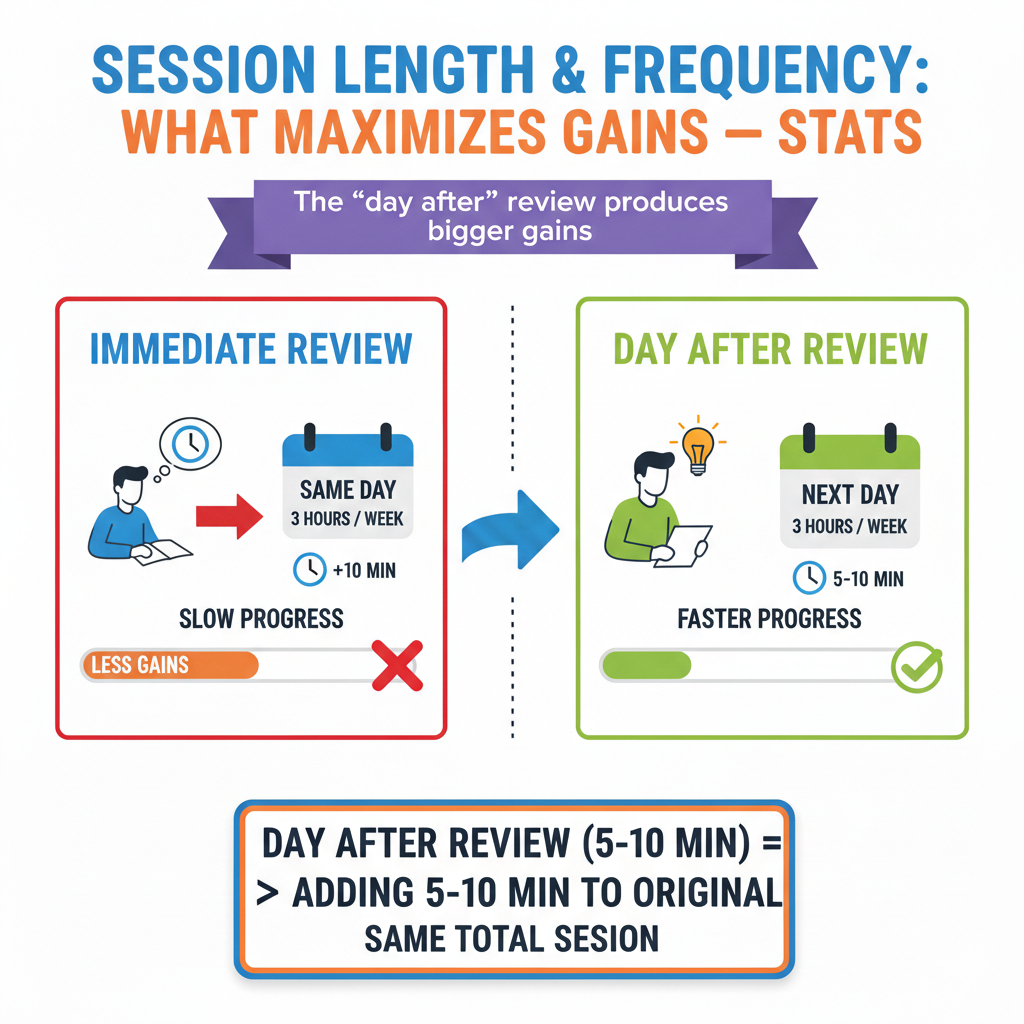
21) The “day after” review (5–10 minutes) produces bigger gains than adding the same 5–10 minutes at the end of the original session
The brain needs space to settle. Using your extra minutes the next day gives you a small dose of forgetting, and pulling ideas back after that gap strengthens them. Spending those minutes at the end of the same session is helpful, but it is not as powerful as a fresh touch the day after.
That next-day nudge turns short-term knowledge into longer-term memory.
Make the day-after review simple and automatic. Put a sticky note on today’s page that says, review tomorrow. When tomorrow comes, set a five to ten-minute timer. Close notes. Ask your child to write the steps or rules from memory.
Then try one new problem or build one small function that uses the same pattern. End with a one-line check: what was easy to remember and what needed a hint. Place a tiny dot on a calendar each time you do a day-after review. Aim for three dots a week.
If time is tight, run the review at breakfast or in the car using oral recall. You ask, what comes first, what comes next, what do we watch out for. Keep it brisk and friendly. If your child resists, start with two minutes and grow to five over a week.
In Debsie programs, our homework loops often ask for a next-day touch rather than longer same-day work. Families like it because the task is short and clear, and students like it because the next class feels familiar. The day-after habit is one of the easiest wins you can add to your routine. It costs little and pays a lot.
22) For complex skills, two 45-minute sessions on different days beat one 90-minute session for problem-solving transfer by about 15–25%
Hard tasks need fresh eyes. When a skill has many steps, rules, and choices—like multi-step algebra, reading complex passages, or building a program with functions and tests—the brain benefits from a pause and a second pass on a new day.
Two medium sessions keep the mind sharp, allow sleep to help, and give space for small insights to appear. A single long push can lead to fatigue and shallow understanding, which does not transfer well to new problems.
Design a two-day plan for complex work. On day one, spend forty-five minutes laying a clean base. Start with a simple worked example. Have your child explain each step aloud. Then try a similar problem alone while you watch for where thinking slows.
Mark any friction spots with a star. End with a short summary: three key moves and one mistake to avoid. Stop on time, even if it feels like there is more to do. Let the brain rest.
On day two, open with a five-minute recall of the three key moves. Then go straight to a new, mixed problem that looks different on the surface but uses the same core idea. Ask your child to plan before solving: name the method, list the steps, and predict the hard part.
During work, pause once to ask, does this still fit our plan. If not, adjust together. Close with a short teach-back: your child explains the whole process to you as if you are a classmate. In Debsie classes, we use this two-day arc for advanced topics.
Students feel calmer because they know hard work happens in two passes, not one giant push. Transfer improves because the mind meets the idea twice, in two forms, with sleep in between.
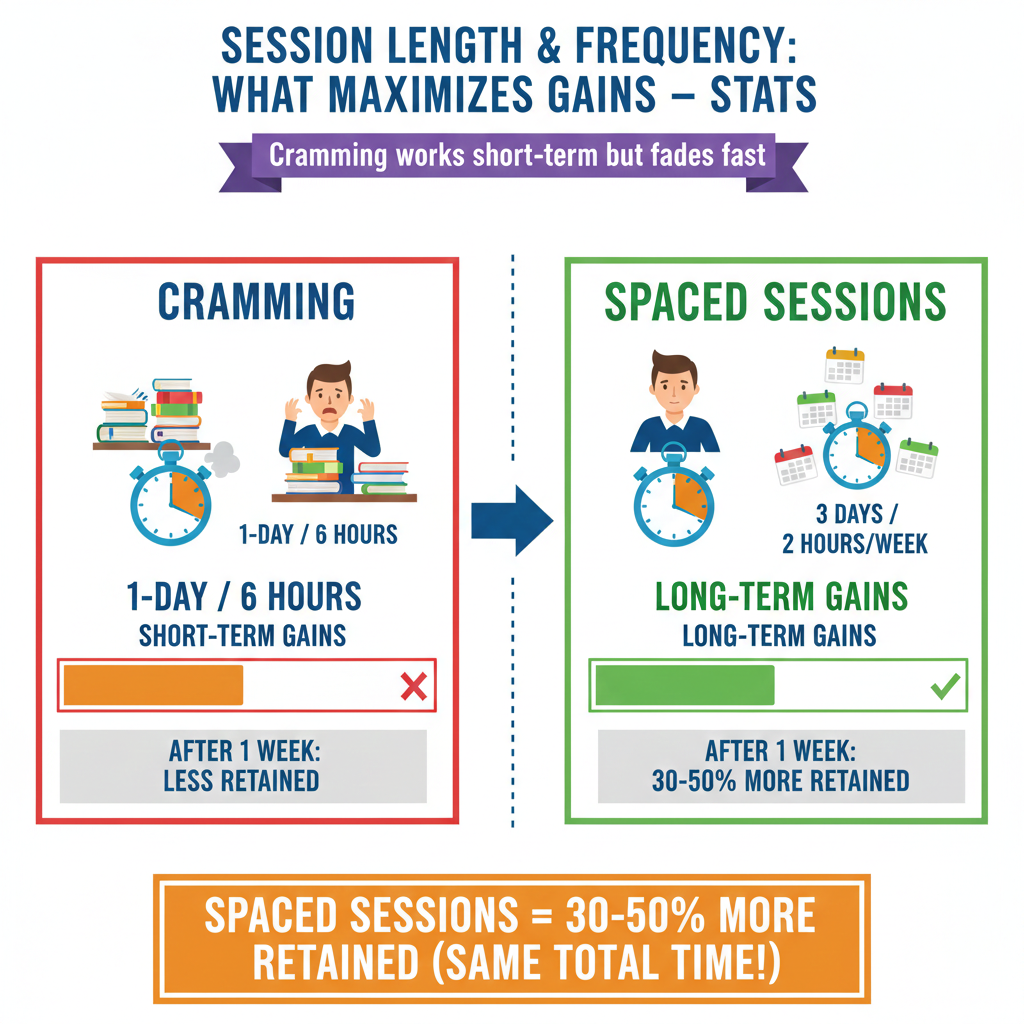
23) Cramming works short-term but fades fast: after one week, spaced sessions keep 30–50% more of the material than a single cram of equal total time
Cramming can feel powerful because scores sometimes look fine the next day. But that quick win hides a leak. After a week, much of the crammed material is gone. Spaced sessions, even with the same total minutes, help the brain rebuild the path again and again.
Each return makes recall easier and more stable. This is true for formulas, vocabulary, grammar rules, and coding patterns. If your child wants results that last, spacing beats the cram almost every time.
To shift from cram to space, start with a small weekly map. Choose three days and set twenty-five to thirty minutes on each day. On day one, learn or review one tight idea and try two examples. On day two, open with recall without notes, then add one new twist.
On day three, do mixed practice and a short self-quiz. Keep notes short. One page with key steps, one worked example, and one common trap is enough. Do not copy long passages. Write in your child’s own words so the brain engages with ideas, not with copying.
If a test is near and you feel the urge to cram, use the night before as a light recall round and save fresh practice for the morning or midday. A quick morning refresh with two or three problems often beats a heavy late-night push. After the test, run a small victory lap the next day.
Ask your child to teach you one problem or idea from memory. This keeps the skill alive for future units. At Debsie, we help families turn cramming energy into steady practice. Kids still feel prepared for quizzes, but they also keep the knowledge for the next month, not just the next morning.
That staying power reduces stress and builds pride.
24) A regular weekly rhythm (e.g., Mon/Wed/Fri) reduces skipped days by 20–35% versus scheduling “whenever there’s time.”
When study time floats, life fills the space. Sports, chores, and screens will always win the open slot. A fixed rhythm turns practice into a normal part of the week. The same days make planning easy, reduce arguments, and protect energy.
Children like to know what to expect. A simple pattern like Monday, Wednesday, and Friday gives a steady beat that the family can support.
Build your rhythm in three steps. First, pick three days that already have a gentle flow. If Mondays are wild, pick Tuesday instead. Second, lock a start window that is realistic, such as 6:30–7:00 pm. Give a thirty-minute flex so small delays do not wreck the plan.
Third, tie the start to a cue you always do, like after snack or right after showers. Put the plan on the fridge and in your phone calendar. Treat it like a class you paid for. When the alarm rings, the debate is over; the routine starts.
Use a short start ritual to make entry smooth. Clear the desk, set the timer, read today’s one-line goal, and begin. Use an end ritual to close cleanly. Do a two-minute recall, write one next step, and put tools back. If a day is truly impossible, shift the work to the next morning or a weekend morning, not late at night. Protect sleep.
Track attendance with simple check marks. At the end of the month, count skipped days and notice the drop. In Debsie programs, our coaches help families shape a rhythm that fits sports, music, and rest. With a steady beat, kids show up more often, complain less, and build skills layer by layer.
25) Starting strong matters: the first two weeks with 3–4 sessions per week predict 10–20% higher performance at week eight compared with 1–2 sessions per week
The first two weeks set the tone. Early wins teach your child, I can do this. Early skips teach the opposite. When you schedule three to four sessions in the first fourteen days, you build a sturdy base of habits, vocabulary, and steps. This base supports all the later work.
After eight weeks, students who began with a strong rhythm tend to show better accuracy, faster recall, and calmer test behavior.
Plan a launch period. For the first two weeks, choose four shorter sessions rather than two long ones. Keep goals very clear and finishable. Pick skills that show visible results, like a small function that outputs a message, a set of fraction problems with neat reduction, or a short paragraph with clean structure.
End each session with a tiny showcase, such as reading the paragraph to the family or running the code for a funny output. Showcases make progress feel real.
Reduce friction by preparing a study nest. Keep tools ready, use the same spot, and start at the same time. Cut the number of decisions your child must make. Use a checklist with four steps: warm-up recap, new example, practice, self-quiz.
Check off each step. Praise completion of the routine, not just correct answers. After the first week, hold a five-minute review meeting. Ask two questions: what helped you start fast, and what slowed you down.
Adjust the plan. In Debsie courses, we see that a strong start protects motivation. Kids become proud of showing up. By week eight, they carry that pride into harder topics, and the gains compound.
26) Ending a session once accuracy or speed plateaus (usually 45–75 minutes for most learners) prevents the 10–15% decline seen after pushing past fatigue
More time is not always more learning. When accuracy stops improving or speed slows even with effort, the session has reached a plateau.
Pushing past that point often leads to sloppy work, rising frustration, and habits you do not want, like guessing or skipping steps. Stopping at the plateau keeps quality high and protects tomorrow’s energy. You end on a win, not a drag, which makes it easier to return.
Teach your child to spot the signs. If the last two or three problems take longer with no better results, or if code fixes introduce new bugs, it is time to close. If eyes feel heavy, shoulders slump, or the same line gets re-read, end the block.
Do not treat stopping as quitting. Treat it as smart pacing. Write one line about the next clean starting point. For example, next time, start with matching denominators, or next time, rebuild the function header with parameters listed. This note turns tomorrow’s first minute into action.
Use a soft cap of forty-five to seventy-five minutes for single-topic work. Within that window, place brief resets every twenty-five minutes. If the plateau arrives early, stop early and move to a light review or a different subject that uses another part of the brain.
If your child insists on continuing, negotiate a short, high-focus micro-block of five minutes to finish a single step, then close. In Debsie sessions, coaches help learners read their own signals. We end strong and preview the next step.
Over time, students learn that wise endings lead to better tomorrows. Quality rises, stress drops, and progress speeds up because each session starts where the mind is ready to work, not where it left off in frustration.
27) Micro-reviews (1–3 minutes) before a quiz or game raise immediate performance by 5–10% and reduce anxiety for the next full session
Right before a quiz or a practice game, the brain can feel jittery. A tiny micro-review gives it a quick anchor. In one to three minutes, your child brings key steps back to the front of the mind.
This fast refresh improves accuracy right away and lowers nerves for the next full study session because success feels closer and more controllable. The trick is to keep the review short, active, and focused on the exact moves the child will need in the next ten to fifteen minutes.
Set a simple script. First, close notes and breathe slowly twice. Second, speak three key rules out loud. Third, write the first step you must never forget at the top of the page. Fourth, do one tiny example with easy numbers or a short code snippet that compiles.
If the subject is reading or writing, have your child state a clear pattern, like topic sentence, example, explain. Stop when the timer beeps. Do not drift into a long problem set or a full paragraph. The goal is to prime the mind, not to start a new lesson.
Teach your child to pick the right micro-review items. Use past errors as guides. If denominator matching is often missed, the first step is write common denominator. If a loop header syntax causes bugs, the first line to write is the loop line with braces.
Keep a small card for each topic with three lines: first step, common trap, quick example. Store the cards in a pocket or a clear folder so they are always ready. After the quiz or game, do a thirty-second debrief: which line helped most, and what will you add to the card for next time.
In Debsie classes, we weave these micro-reviews into warm-ups and friendly competitions. Students feel calmer because they know how to get their brain ready in just one minute. That small win makes the next full session start with more confidence and fewer doubts.
28) A weekly “consolidation session” (light review of everything for 20–30 minutes) lifts long-term retention by 10–20% compared with only new material sessions
Learning stacks better when you press it together once a week. A consolidation session is a gentle sweep across the week’s work. It is not heavy new learning. It is a calm tour where your child revisits main ideas, fixes small slips, and connects parts that did not yet click.
This light pass reduces forgetting and makes the next week’s lessons build on a stronger base. It also lowers stress, because the child sees proof that skills are piling up in an organized way.
Plan this session for a quiet time, like Sunday afternoon. Keep it simple and friendly. Start with a two-minute table of contents written by your child: three to five items from the week, such as fraction operations, percent word problems, for loops with counters, or paragraph closers.
Then run a slow lap. For each item, do a tiny recall, one fast example, and one sentence on a common trap. If a step causes friction, write a short fix in your child’s words. End by picking one idea to preview for next week. A small peek keeps curiosity alive.
Make the session hands-on. If your child learned a coding pattern, run a tiny program with fresh input. If they worked on math, do one problem with neat steps. If they studied science, draw a quick diagram and label parts. Keep the tone low-pressure. Praise clarity, not speed.
Capture the best examples in a thin binder or a digital folder named Weekly Wins. This record becomes a morale boost and a quick study pack before tests. At Debsie, we use consolidation to lock in gains and to spot early trouble.
It prevents small errors from becoming habits. Parents tell us it also reduces Sunday night stress, because the week feels complete and the next week feels planned rather than unknown.
29) Learners who cap any single session at under 75 minutes are 25–35% more likely to keep the habit for 8–12 weeks than those who often go past 90 minutes
Staying power beats sprint power. When sessions run long, motivation drops and tomorrow looks harder. By keeping a soft cap under seventy-five minutes, your child leaves with some energy left, which makes it easier to return.
This simple cap protects mood, quality, and routine. It also teaches a key life skill: stop while the work is still good, then come back fresh.
Set a visible cap timer. If you plan a longer study day, split it into two blocks with a real break in between. Decide the next-step note before you stop, so tomorrow’s start is clear. If your child begs to keep going because they are on a roll, offer a five-minute extension to finish a single clean step, then close.
Protect the cap even when a deadline looms. You can always add a second short block later in the day. The cap is not about doing less. It is about doing smart blocks that you can repeat all month without burning out.
Use the cap to shape weekly planning. If a topic is heavy, schedule more days, not one giant push. Track completion on a simple calendar. Write the session length and a smiley for energy at the end. After two weeks, look for patterns. If energy fades around minute sixty, aim for sixty-five next time rather than seventy-five.
If your child thrives at fifty minutes, keep it there. Personal fit matters more than a rule. In Debsie programs, our coaches help learners find their sweet spot and stick to it. We value steady effort and clean endings.
Over one to three months, families notice that habits hold, arguments drop, and the child starts sessions with more trust in themselves. That trust unlocks better work and faster growth.
30) The best weekly plan for most learners combines frequency and spacing: 4–5 sessions of 20–40 minutes each, with brief active breaks, typically maximizes gains per hour invested
A strong week is like a good rhythm. You come back often, you keep each session focused, and you rest just enough to stay sharp. Four to five sessions spread across the week give the brain repeated touches with sleep in between.
Twenty to forty minutes per session is long enough to learn, practice, and quiz yourself, but short enough to avoid drag. Brief active breaks reset the mind so each block stays clean. This pattern gives you the biggest return for each hour you invest.
Build the plan with a simple map. Choose your days, such as Monday, Tuesday, Thursday, and Saturday, with an optional light Friday or Sunday review. Fix a start window and a tiny start ritual: water, clear desk, recap one minute, and read the one-line goal.
Use the first ten minutes for core instruction or a worked example, the next ten to twenty minutes for guided practice, and the last three to five minutes for a self-quiz and next-step note. Insert a short movement break if the session runs longer than thirty minutes.
Keep each day focused on a single idea or a tight cluster of related skills to avoid context overload.
Measure what matters. Track three things: showed up, stayed focused, and could recall the steps at the end. Keep the tracker in plain sight. If a session misses the mark, do not add time that night. Instead, run a five-minute day-after review to capture the win and reset.
Adjust the plan every two weeks based on how your child feels and performs. If evenings are rough, shift to mornings or right after school. If attention dips at minute twenty-five, split the block into two shorter runs.
At Debsie, this is our default cadence for most learners. It is kind, repeatable, and powerful. Children feel progress each day without dread, and parents see steady gains without nightly battles. When time is used this way, learning sticks, confidence grows, and study becomes a habit that lasts.
Conclusion
Small choices shape big gains. Short, steady sessions, spaced across the week, turn effort into real skill your child can use anywhere. When you keep blocks focused, add honest breaks, quiz from memory, and close with a clear next step, learning sticks.
When you protect sleep, set a regular time, and use quick day-after reviews, progress speeds up without stress. These moves are simple, but they work because they fit how the brain learns best. Your child feels wins more often, makes fewer errors, and walks into class with calm confidence.