
Tutor marketplaces are growing fast because families want quick, clear help that actually works. But many parents and students still feel lost. There are so many tutors, prices, and promises. It is hard to know what matters. Numbers help. When we look at the data, we can see where supply meets demand, where matches work, and where time and money get wasted. This guide turns the key stats into simple lessons you can use right away. You will learn how to pick the right platform, how to spot a strong match, and how to set up your child for steady progress, not just a one-time quick fix.
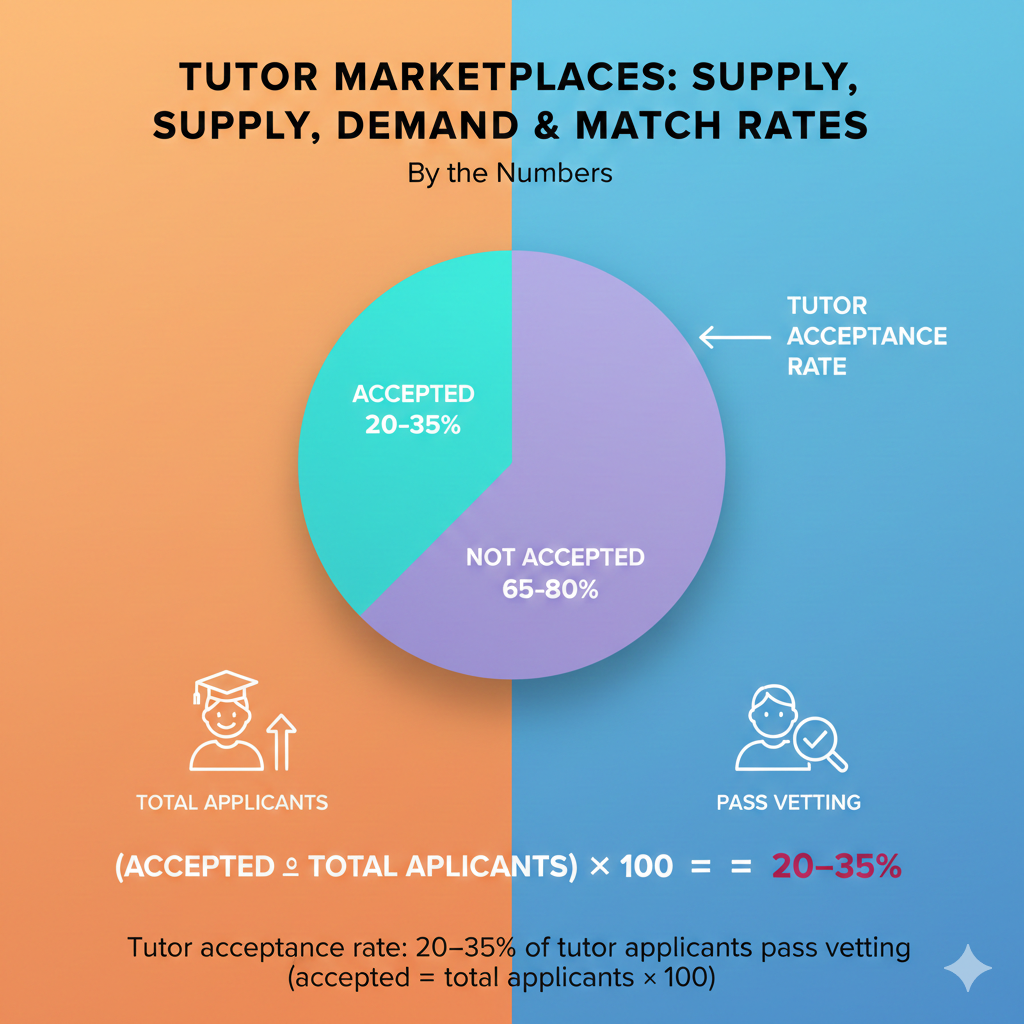
1) Tutor acceptance rate: 20–35% of tutor applicants pass vetting (accepted ÷ total applicants × 100)
What this means and why it matters
A strong marketplace does not let every applicant teach. When only about one in three applicants makes it through, it shows the platform is careful. It checks skills, teaching style, and background. This number tells you how much screening happens before a tutor meets your child.
If the acceptance rate is too high, weak tutors slip in. If it is too low, there may not be enough tutors to cover all subjects and time zones. The right balance protects quality without hurting choice. A twenty to thirty five percent pass rate usually means the marketplace runs skills tests, mock lessons, and ID checks.
It also means they review past results and feedback. For your family, this reduces risk. It saves you from trial and error and lowers the chance of a bad fit on day one.
What to do next
Ask the marketplace to explain its vetting steps in plain words. Look for skills tests in the exact subject you need, not just general checks. Ask if mock lessons are recorded and scored. Confirm there are background checks and identity verification.
Request a sample tutor profile that passed recently and see the proof of skill tags, test scores, and ratings. If a platform cannot show how a tutor earned approval, move on. On your side, write a short request that states your goals, current level, and any deadlines.
Clear input helps the system pick from the top tier. At Debsie, our team watches this rate closely. We tighten the bar when we see gaps and expand targeted recruitment if certain subjects need more expert tutors.
If you want to see how this feels in practice, book a free trial class and review a curated short list with us. You will see the screening trail without extra work.
2) Active tutor supply: 65–80% of approved tutors teach at least 1 session per month (tutors with ≥1 session ÷ approved tutors × 100)
What this means and why it matters
It is not enough to approve tutors. They must also be active. When two thirds or more of approved tutors teach at least one session each month, it means the marketplace has real, usable supply. Dormant tutors make search results look big but are not helpful for your child.
High active supply means faster response, more schedule options, and better subject coverage. It also keeps prices fair because more tutors compete to serve the same demand. For parents, this number is a sign of platform health. It shows tutors find steady work, so they stay engaged and improve over time.
It also means students get choice at the times that matter, like evenings and weekends. If active supply drops, you will see slow replies, thin options in niche topics, and more cancellations. A strong marketplace tracks this rate by subject, grade, and time zone to spot thin areas before families feel the pain.
What to do next
Ask for current active supply in your subject and city or time zone. Confirm there are multiple tutors with the skills you need who taught in the last thirty days. Search at your preferred time and see how many profiles offer open slots in the next week.
If the list looks short, request a concierge match. Give your goals, preferred times, and budget. At Debsie, we maintain fresh rosters by nudging tutors to update calendars and by offering skill refreshers when demand shifts. We also highlight new student needs to notify the right tutors first.
For you, the action step is simple. Write down three acceptable time windows, your target outcome, and any style needs, like patient pace or exam drills. Share this when you request a tutor. It helps the system surface active tutors who fit your exact need.
If you want, start with a free trial class and we will show you active supply in your time zone right away.
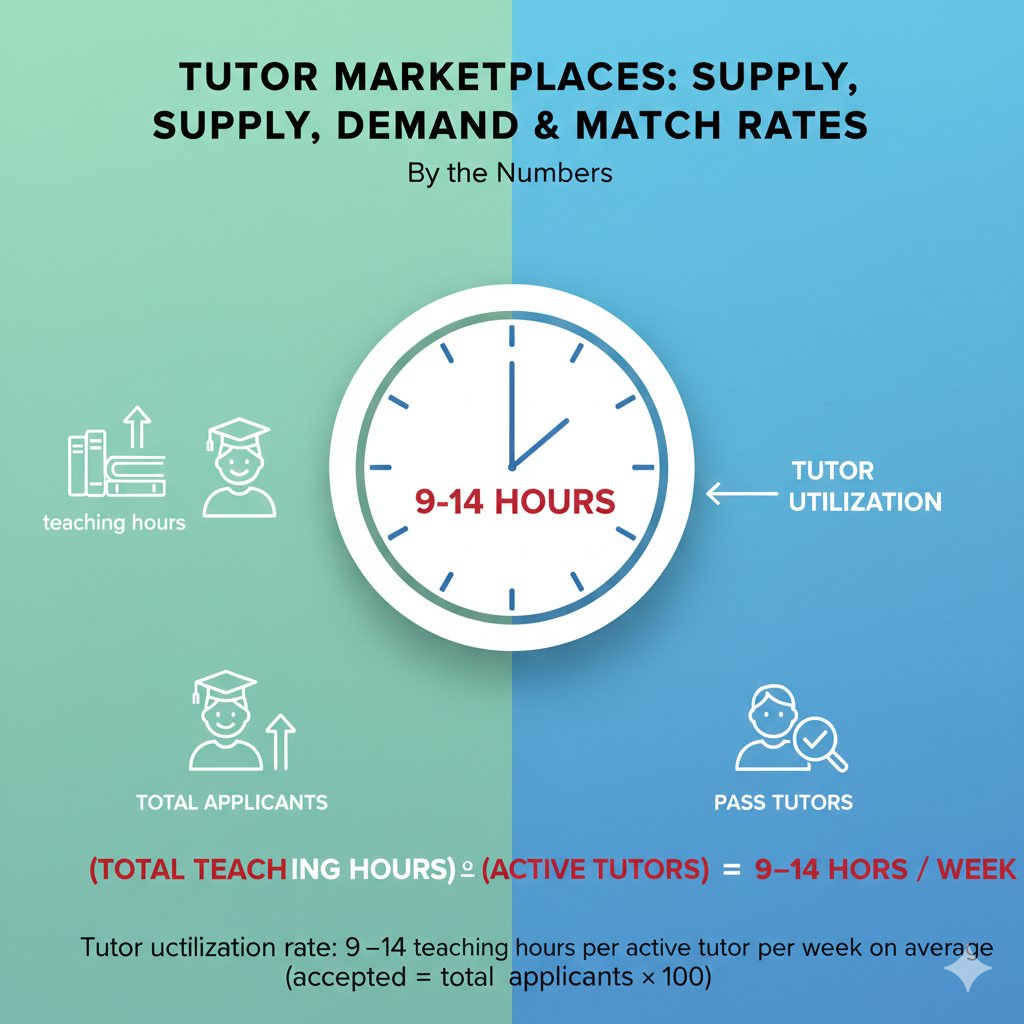
3) Tutor utilization: 9–14 teaching hours per active tutor per week on average (total teaching hours ÷ active tutors)
What this means and why it matters
Utilization shows how busy tutors are. If tutors teach around nine to fourteen hours each week, it suggests demand matches supply fairly well. Too low, and tutors struggle to find students, which can reduce commitment and quality.
Too high, and tutors may rush, cancel, or burn out. A healthy range means tutors can prepare for lessons, tailor plans, and respond to messages without stress. It also means there is room in schedules for new students.
Balanced utilization supports better outcomes because your tutor is present, patient, and focused. When utilization is stable, the marketplace can keep hourly prices predictable and build longer term learning paths. If utilization swings wildly, you might face waitlists during exam season and empty calendars in summer.
A good platform smooths these swings with timely promotions, group workshops, and smart matching that spreads requests across qualified tutors.
What to do next
Before booking, ask the platform how many hours your target tutor teaches each week and how many open hours remain. Choose a tutor who has steady work but is not packed to the brim. Request a clear plan for your first four sessions, including goals, materials, and homework.
This helps your tutor budget prep time and prevents rushed lessons. If your child needs more attention before exams, ask for a short ramp plan that temporarily increases weekly hours, then scales back. At Debsie, we watch utilization daily and adjust match flow so tutors do not spike above healthy levels.
We may route new students to equally qualified tutors with more room, so every child gets attention without delay. If you want to see this in action, book a free trial class. We will show you a tutor slate with utilization notes and help you pick the best fit for both learning depth and schedule flexibility.
4) Subject coverage: 92–98% of live student requests have at least one qualified tutor available within 24 hours (requests covered ÷ total requests × 100)
What this means and why it matters
Subject coverage tells you if help is truly there when you need it. When a marketplace covers over nine out of ten requests within a day, it means the roster is wide and deep.
There are tutors for core school work like math, science, and language, but also for smaller needs like statistics, organic chemistry, or essay editing for specific rubrics. High coverage keeps stress low for families because you do not have to wait or switch platforms.
It also protects learning momentum. When a child asks for help and receives it quickly, the lesson clicks and confidence grows. If coverage is weak, you will notice long search time, repeated rejections, and last-minute scrambles.
Strong platforms map demand by hour, grade, syllabus, and exam calendar. They recruit and train into the gaps before parents feel them. They also tag tutors with fine-grained skills so the right expert appears for the right request.
What to do next
Describe your need with precise words. Share the chapter, textbook, problem type, and any files. Ask the platform to confirm a qualified tutor can meet you within 24 hours and request two backup options.
Save a simple template you can reuse for future requests, including preferred meeting tool, time zone, and any accessibility needs. At Debsie, we maintain coverage dashboards by subject strand, not just broad labels, and we keep a standby queue for urgent help.
If your child needs help tonight, tell us the goal of the session in one sentence and upload the worksheet. We will route it to a ready expert and line up an alternate in case the first one becomes unavailable.
Book a free trial class to see how our coverage flows across your week and how fast we can open a slot that fits your schedule.
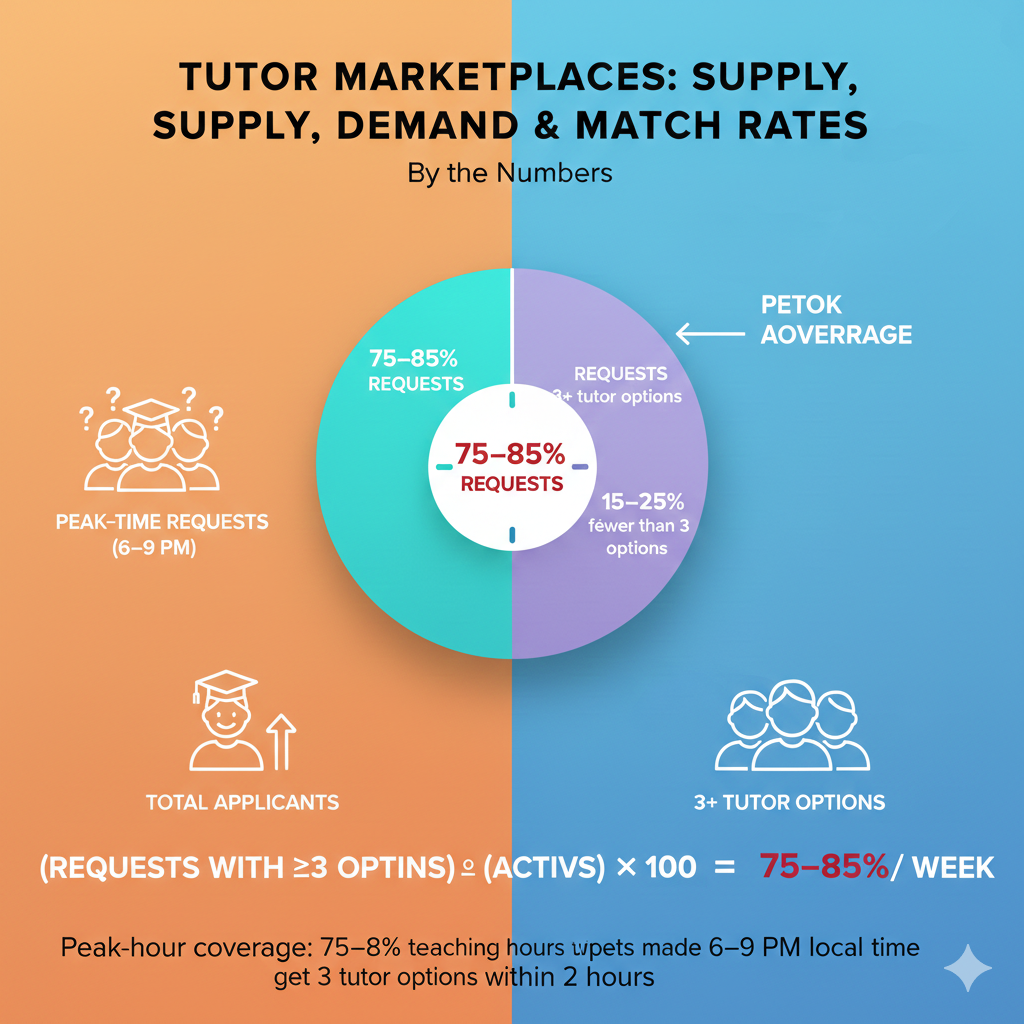
5) Peak-hour coverage: 75–85% of requests made 6–9 PM local time get 3+ tutor options within 2 hours (requests with ≥3 options ÷ peak-time requests × 100)
What this means and why it matters
Most families learn during the evening window after school. This is peak time. If three or more strong options show up within two hours, the marketplace is managing supply smartly. You get choice on price, style, and schedule without waiting.
More options also increase match quality because you can pick a tutor whose tone and pace fit your child. If the number is low, you may see one or two rushed bids, higher prices, or tutors who are stretched thin.
A healthy platform staggers tutor shifts, encourages calendar blocks that align with school nights, and sends instant alerts to tutors when a new request lands in their best skill area. It also prevents over-booking by holding time while you decide, so you do not lose a slot while comparing profiles.
What to do next
Submit your request by early afternoon if possible, even for an evening session. This gives the marketplace more time to surface diverse options. In your note, include your target lesson length, desired pace, and any upcoming test dates.
Ask for a short voice note or a one-minute intro video from each candidate to hear their style. At Debsie, we pre-rank options using a fit score that blends subject skill, experience with your curriculum, and proven success with similar students.
We will present the top three quickly and hold the times for a short window. If your child wants a fast start, pick the best fit and plan a thirty-minute first session tonight, then expand to a full hour next time. You can book a free trial now and see peak-time matching in real conditions.
6) Response speed: Median tutor first reply to a new match request is 12–25 minutes (median minutes between request and first tutor reply)
What this means and why it matters
Speed matters because questions fade and stress grows with time. A median reply under half an hour means most families receive a signal quickly. Even a short reply helps you plan, confirm availability, and share files.
Slow replies usually point to poor notification tools, overbooked tutors, or stale profiles. Fast replies show the marketplace keeps calendars synced, pushes alerts to phones and email, and drops inactive tutors from search.
For students, quick feedback supports focus. They can set a session time and return to homework, not sit and wait. For tutors, clear routing means they only see requests they can serve, so they can answer right away with a solid plan.
What to do next
Write a clear first message that is easy to answer. Add your time zone, two or three time windows, the topic, and your goal for the session. Attach photos or PDFs of the task. Ask for a proposed outline for the first thirty minutes. This makes it simple for a tutor to reply fast with a yes and a plan.
If you do not hear back within thirty minutes during business hours, ask the platform to escalate and ping the next two qualified tutors. At Debsie, we measure reply speed and coach tutors to use message templates for common requests.
We also detect slow responders and lower their search rank until they improve. If you want to test this, send us a sample request now and watch how quickly your shortlist answers. You can start with a free trial class to experience our response flow end to end.
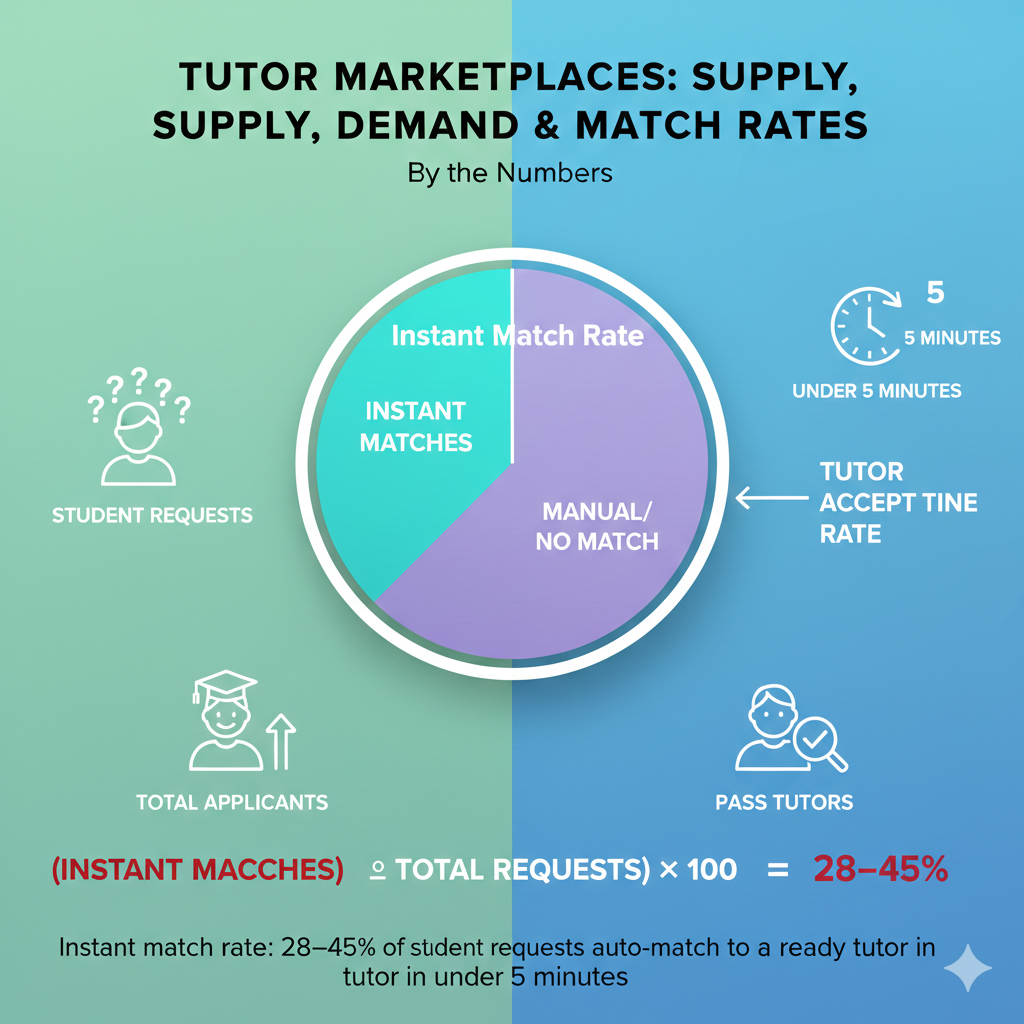
7) Instant match rate: 28–45% of student requests auto-match to a ready tutor in under 5 minutes (instant matches ÷ total requests × 100)
What this means and why it matters
Instant match is like finding a seat on a train that is already at the platform. The system reads your need and pairs you with a tutor who is online, skilled, and open right now. When roughly a third to almost half of requests match in under five minutes, the marketplace has strong data, accurate tags, and live calendar sync.
This cuts friction and removes guesswork. It is useful for short notice help before a quiz, or when a child is stuck on a tough concept and needs to move forward tonight. If instant match is weak, families spend more time browsing and comparing, and urgent needs fall through.
A healthy system still respects choice. Even after an instant match, it should let you switch to another suggested tutor before booking.
What to do next
Set your profile with clear preferences so instant match works well. Add grade level, syllabus, learning goals, and meeting tools you prefer. Keep your availability updated. When you submit a request, mark whether you allow an instant match or want to review options first.
If you choose instant, ask the platform to provide a short summary explaining why this tutor was chosen, including key skills, past results with similar students, and next steps. At Debsie, instant match uses a fit model that learns from session outcomes and ratings, not just keywords.
We show you the reason for the match and two alternates you can tap if you want a different style. If you want to see this in practice, book a free trial and try an instant match for a thirty-minute skills check. You will feel how fast the path from request to learning can be.
8) First-session conversion: 30–50% of new student inquiries complete a paid first session within 7 days (paid first sessions ÷ new inquiries × 100)
What this means and why it matters
This number shows how many curious visitors turn into real learners within a week. A healthy range means the marketplace removes hurdles, explains value clearly, and makes booking simple. It also means tutors are responsive and welcoming to new students.
If the rate is low, something in the journey is broken. Maybe the sign-up flow is confusing, prices are unclear, or there is a long wait for the first slot. For families, a strong first-session conversion rate suggests you will not get stuck in forms or long threads.
It is the difference between thinking about help and actually getting it. For students, the first session sets tone and trust. When they start quickly, they are more likely to continue and improve.
What to do next
Move from interest to action with a small commitment. Start with a short first session that has one clear goal, such as solving five practice problems or outlining an essay. Ask for a simple agenda, the materials you need, and what success will look like by the end of the session.
Share any school deadlines and confirm how feedback will be sent afterward. At Debsie, we streamline the first week by giving you a guided booking page, a clear price, and a suggested tutor who fits your subject and schedule.
We also send a welcome checklist so your child knows what to bring. If you are ready to turn interest into progress, book a free trial class now. We will guide you from hello to first results within a few days, often sooner.
9) Inquiry-to-paid conversion: 18–30% of all inquiries turn into paying customers within 30 days (paying customers ÷ inquiries × 100)
What this means and why it matters
This number shows how many people who ask a question or sign up actually book and pay within a month. When nearly one in five to one in three inquiries convert, the journey from curious to committed is working.
It means families understand the offer, trust the tutors, and find the price fair. A weak rate often means the path is foggy. Maybe parents cannot see clear value, the plan feels vague, or the next step is hidden behind too many clicks.
For students, long delays between asking for help and taking a real class can drain motivation. A strong conversion rate keeps momentum. It turns a need into action while the topic is fresh and the goal is clear.
What to do next
Make the decision simple. Write your must-haves on one page: subject, level, target date, budget range, and three preferred time slots. Share a one-line goal such as raise algebra quiz score from 60 to 80 within four weeks.
Ask the platform for a short proposal that includes tutor fit, session plan, total cost for the first month, and expected outcomes. Request a risk-free first session so your child can meet the tutor and try the pace. Set a hard date to decide, like within forty eight hours of the proposal.
This stops endless back and forth and protects study time. At Debsie, our team gives you a clear path from inquiry to booked plan in a few steps. You get a draft schedule, a simple price, and a progress promise you can measure.
If you want help turning interest into real learning, book a free trial class today and we will build your first month plan in under fifteen minutes of your time.
10) Student repeat rate: 60–75% of students who finish one session book a second session within 30 days (students with a second session ÷ first-session students × 100)
What this means and why it matters
Repeat rate tells you if the first lesson felt helpful enough to come back soon. When six to three out of four students return within thirty days, it means the sessions are practical, the tutor fit is good, and the plan feels doable.
A low repeat rate is a warning. It can signal unclear goals, poor pacing, or weak follow up. It might also mean families cannot see steady progress. For students, returning quickly is key. Learning compounds when ideas are reviewed within a week or two.
Gaps close faster when practice is spaced and guided. A strong repeat rate supports deeper mastery, not just last-minute fixes.
What to do next
End the first session with a tiny win and a tiny plan. The tutor should summarize what clicked, what still feels hard, and one simple homework task that takes fifteen to twenty minutes. Set the date for the next lesson before you leave the call.
Keep the gap short, ideally seven days or less. Ask the tutor to share a progress note within twenty four hours so your child sees their own growth in writing. Track a simple metric, like percent correct on a short quiz, time to solve a standard problem, or words written without prompts.
If your child seems unsure, request a five minute check-in midweek to keep morale high. At Debsie, we design first sessions to lock in a small success and then schedule the follow-up while energy is high.
We also send a friendly progress card so parents and students know exactly why the next session matters. Try a free trial class and we will map your first two weeks with a clear, low-stress rhythm that encourages steady repeat.
11) Match success rate: 70–85% of posted requests lead to a completed session within 72 hours (completed sessions ÷ posted requests × 100)
What this means and why it matters
Match success shows how often the platform turns a request into a real, finished lesson within three days. When seven to more than eight out of ten requests end in a completed session, the marketplace is doing the hard work well.
It is finding the right tutor, aligning schedules, handling messages, and clearing payment in time. A low rate suggests friction. Maybe there is calendar mismatch, unclear pricing, or slow replies that cause families to give up.
For students, speed to a finished session matters because problems pile up. Three days is short enough to keep school topics fresh and prevent stress from growing.
What to do next
Write a sharp request with the who, what, when, and win. Who is your child and what level are they at. What topic or problem type do they need help with. When are the next three times they can meet. What win will prove the session worked, like finishing a worksheet or scoring eight out of ten on a check quiz.
Ask for confirmation of tools, like video platform, whiteboard, and file sharing. Preload the files so the tutor can prepare. Pay or verify payment as soon as the slot is chosen to avoid last-minute blocks. If the session is urgent, ask the platform to hold a backup tutor and a backup time.
At Debsie, our match team watches every step in the seventy two hour window. We clear obstacles, message reminders, and keep an alternate ready. If you want to see a smooth path from request to real learning, start with a free trial class.
We will help you post a strong request and complete your first focused session within days, often sooner.
12) Time-to-match (TTC): Median time from student request to confirmed booking is 1.5–4 hours (median hours to booking)
What this means and why it matters
Time-to-match shows how quickly a marketplace can turn a clear request into a confirmed lesson. A median of one and a half to four hours means most families move from problem to plan the same day.
This speed keeps topics fresh in a child’s mind and prevents stress from building. If TTC stretches beyond a day, students may forget details, lose momentum, or face another homework block before help arrives. A healthy TTC depends on three things.
The first is accurate tutor calendars that show real availability, not wishful time slots. The second is strong routing that sends your request to tutors who fit your subject, curriculum, and time zone. The third is a smooth booking flow with instant holds, simple payment, and clear confirmation.
When these steps work, you receive a firm time quickly and can focus on learning rather than logistics.
What to do next
Write a request that removes guesswork. Include your time zone, three possible meeting windows in the next forty eight hours, the exact topic or chapter, and the goal for the session. Attach a photo or PDF of the task so the tutor can assess scope at a glance.
Ask the platform to hold the first acceptable slot for thirty minutes while you confirm. If the session is urgent, state this in the first line and request a backup tutor in case the primary declines. After booking, ask for a short agenda and a prep list so your child arrives ready.
At Debsie, we reduce TTC by matching to tutors who have verified open hours and proven success with similar students. We also send you a one-tap confirmation that locks the time and shares the meeting link.
If you want to feel this speed, book a free trial class and we will show you a same-day path from request to firm booking.
13) Price acceptance: 65–80% of matched pairs accept the displayed hourly rate without negotiation (accepted at posted price ÷ matched pairs × 100)
What this means and why it matters
Price acceptance indicates how often families and tutors agree on the posted rate right away. When two thirds or more accept the listed price, it means pricing is clear, fair for the market, and aligned with skill level.
High acceptance reduces back-and-forth messaging and stops delays that can drain motivation. Low acceptance often points to mismatched expectations, hidden fees, or unclear value. For families, predictable pricing helps you plan a month of lessons without surprise costs.
For tutors, stable rates let them focus on teaching rather than haggling. Consistent price acceptance also supports better matching. When money is settled early, you and the tutor can spend energy on goals, materials, and practice plans instead of negotiation.
What to do next
Decide your budget before you search and focus on tutors within ten percent of that range. Read profiles for evidence of results that justify the price, such as improved grades, exam scores, or clear parent feedback.
Ask for a fixed first-month plan with the total number of hours and the total cost so you can compare apples to apples. If you do need a lower rate, request a shorter session length or a focused package on one skill area rather than pushing for a discount on the same scope.
At Debsie, we promote transparent rates and bundle options that include progress checks and reports. We also share why a tutor’s price sits where it does, such as advanced certification or deep curriculum expertise.
If you want an offer that fits your budget without endless messages, start with a free trial class and we will design a simple, fixed plan for your first month.
14) Average hourly price: $28–$55 for K–12, $40–$80 for college-level, $50–$100 for test prep (average of paid hourly rates)
What this means and why it matters
Average hourly price helps you understand the normal range for different needs. K–12 support usually sits lower because the content is broader and sessions often focus on steady homework help.
College-level rates are higher due to specialized subjects and deeper problem solving. Test prep commands the top tier because tutors bring targeted strategies, custom practice, and proven score gains. Knowing these bands helps you set realistic expectations for both cost and expertise.
If a rate is far below the average, ask why. It may be a new tutor building a profile, or it may be a red flag on quality or reliability. If a rate is far above, you should see clear proof of unusual results, rare expertise, or premium availability such as last-minute evenings during exam season.
What to do next
Pick the price tier that fits your goal. For a semester of steady homework support, aim for the K–12 band and book consistent weekly sessions. For a tough university course, choose a tutor in the college range with direct experience in your syllabus and lab or problem-set practice.
For test prep, invest in a structured package that includes diagnostics, weekly targets, and full-length practice exams. Ask for a written plan that maps hours to outcomes, such as specific units covered and target improvements by date.
At Debsie, we anchor price to value by showing a clear plan, expected milestones, and a progress dashboard you can track. We also let you mix formats, like alternating a full hour with shorter check-ins to control cost without losing momentum.
Book a free trial class and we will recommend the right tier, the right cadence, and a simple monthly budget you can trust.
15) Platform take rate: 18–30% of the gross booking value kept by the marketplace (platform revenue ÷ gross booking value × 100)
What this means and why it matters
The take rate is the share the platform keeps from each booking. A range of eighteen to thirty percent is common for marketplaces that provide screening, secure payments, scheduling, analytics, and customer support.
This fee funds the systems that make matching quick and safe. It also pays for tutor training, dispute handling, and technology like whiteboards and recording. A take rate that is too low may mean the platform cuts corners on vetting or support.
A rate that is too high can push up prices or reduce tutor earnings, which may hurt quality and availability. Understanding take rate helps you judge whether the services you receive match the fee embedded in the price you pay.
What to do next
Ask what the take rate covers in practical terms. Look for clear benefits such as strong vetting, fast matching, protected payments, reschedule tools, and progress reports. Confirm there are no surprise add-ons for basic features.
If you plan a longer program, request value beyond the session itself, like parent consultations, skill diagnostics, and saved lesson notes. At Debsie, our fee funds the guardrails that matter to families, including background checks, curriculum-aligned training, and responsive support if plans change.
We reinvest in tools that cut your admin time, such as one-click rescheduling and automatic homework tracking. If you want a platform that earns its fee with real service, take a free trial class. You will see how our support team and tech reduce friction so every paid minute goes further for your child.
16) Cancellation rate: 6–12% of booked sessions are canceled before start time (canceled bookings ÷ booked sessions × 100)
What this means and why it matters
Cancellation rate shows how often a planned lesson never happens. When six to twelve out of one hundred booked sessions get canceled, the system is mostly stable, but there is still some friction. Cancellations cost focus.
Students plan their week, gather materials, and get into study mode. A late cancel breaks that rhythm and can dent confidence. For tutors, frequent cancels create empty gaps and lost income, which may push them to overbook and risk burnout.
For parents, last-minute changes increase stress and make it harder to stick to a steady learning path. A healthy marketplace keeps this number in the single digits by syncing calendars, sending timely reminders, and making rescheduling simple.
It also designs fair policies so both sides honor commitments. When the rate drifts up, you will see fewer prime-time slots and weaker continuity in lessons. Over time, progress slows because practice is not steady.
What to do next
Choose a platform that offers clear reminder flows by email and phone, and confirm the cut-off time for penalty-free changes. Share your school schedule, sports times, and travel dates up front so your tutor can block stable slots.
Set one primary time and one backup time each week to create a safety net. If you must cancel, reschedule in the same week to protect learning momentum. Ask your tutor to post a short catch-up plan if a session gets moved, so your child still has a task to keep skills warm.
At Debsie, we use gentle reminders, quick reschedule links, and fair policies that respect real life while protecting consistency. If you want a schedule that sticks and a team that helps when plans shift, book a free trial class and we will map a routine with a built-in backup.
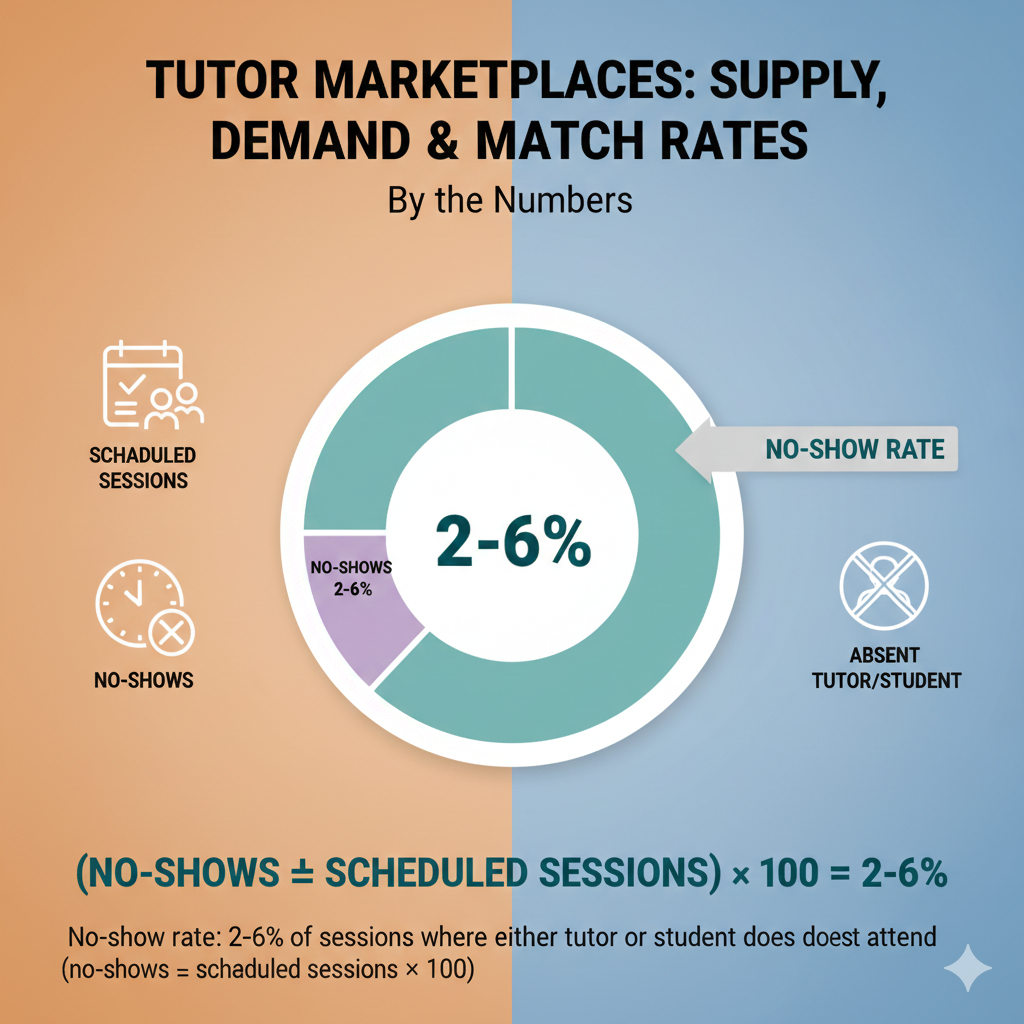
17) No-show rate: 2–6% of sessions where either tutor or student does not attend (no-shows ÷ scheduled sessions × 100)
What this means and why it matters
A no-show is worse than a cancel because nobody planned for it. The time is set, the tutor is ready, and the student is waiting, but the meeting never starts. A two to six percent no-show rate still hurts because it wastes peak minutes and breaks trust.
For students, a missed session at the wrong time, like the night before a test, can raise anxiety and cause a domino of weak scores. For tutors, repeated no-shows lead to lost prep time and lower morale. Good marketplaces treat no-shows as urgent exceptions.
They verify time zones, test links and tools, and send final reminders with one-tap joins. They also record patterns and step in with coaching or policy changes if a user misses more than once. A low no-show rate tells you the platform cares about the last mile, not only the match.
What to do next
Do a quick tech check before each session. Test your camera and mic, open the whiteboard, and keep files ready. Put the meeting link in your calendar and set two alarms, one at fifteen minutes and one at five minutes.
Share a backup dial-in or chat path in case your main device fails. If you are running late, send a short note so the tutor waits and adjusts the plan. Ask your platform for a grace window and a clear make-up policy for true emergencies.
At Debsie, we cut no-shows with smart reminders, link checks, and instant support if something goes wrong. If you want worry-free starts, try a free trial class and see how our join flow guides you from reminder to classroom without confusion.
18) Tutor retention (90-day): 55–70% of tutors who teach in month 1 are still active by month 4 (active at month 4 ÷ active in month 1 × 100)
What this means and why it matters
Ninety-day tutor retention shows how many tutors keep teaching after the first few months. More than half staying active is a good sign. It means tutors find steady demand, fair pay, and strong support.
Stable tutor teams learn the platform’s tools, share best practices, and build long relationships with students. That steady presence helps your child build trust and go deeper than quick fixes. A weak retention rate often hides hidden pain.
Maybe tutors cannot get enough hours, or the tools are clunky, or support is slow. High churn forces constant recruitment, which can dilute quality and make matching harder.
When retention is healthy, calendars are stable, prices are predictable, and lesson quality improves because tutors invest in better methods and resources.
What to do next
Choose a platform that treats tutors like partners. Ask how they support tutors with training, feedback, and growth paths. Strong retention usually means tutors receive coaching, lesson templates, and tech that saves time.
When you meet a tutor, ask how long they have been on the platform and how many repeat students they serve. If your child likes the tutor, set a multi-week plan so your tutor can prepare deeper materials. At Debsie, we invest in tutor growth with curriculum-aligned training, lesson libraries, and real human coaching.
This helps great tutors stay, which helps your child learn with a familiar face week after week. If you want to meet a stable, well-supported tutor team, book a free trial class and we will introduce you to teachers who love to stay and help students grow.
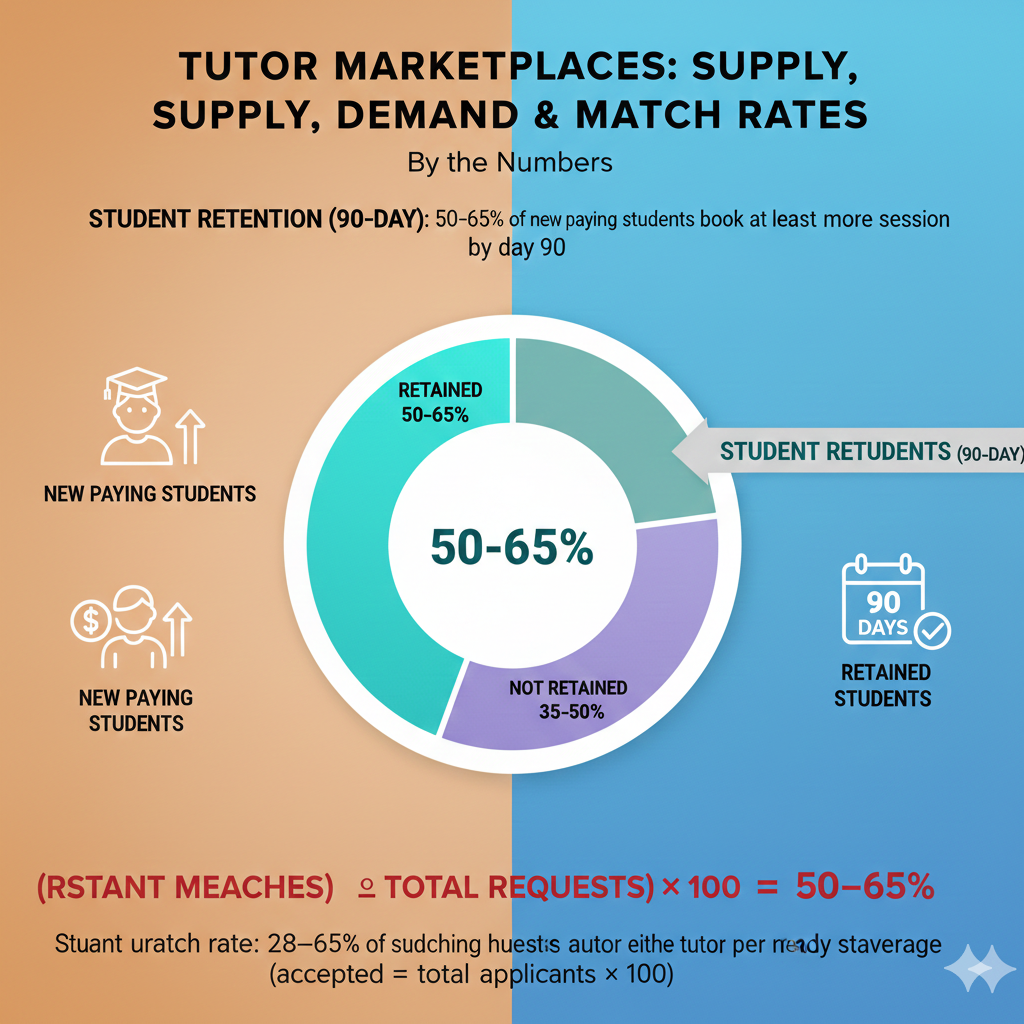
19) Student retention (90-day): 50–65% of new paying students book at least one more session by day 90 (retained students ÷ new paying students × 100)
What this means and why it matters
Student retention shows whether families see real value over time. When half or more of new students return within ninety days, it signals useful lessons, clear progress, and friendly support. Strong retention is not just about liking a tutor.
It means the plan works in real life with busy school weeks, sports, and family time. A low rate suggests goals are fuzzy, sessions feel random, or communication is weak. For your child, steady study builds mastery. Ideas stick when they are reviewed and used across several weeks.
Retention also saves you time because you do not need to repeat the search and onboarding cycle. In a healthy marketplace, retention climbs as students move from fixes to growth plans, like pre-learning chapters, building note habits, and practicing smarter.
What to do next
Start with one clear goal and one simple measure. For example, raise geometry accuracy on angle problems to eighty five percent in four weeks. Ask for a weekly plan that links sessions to small wins, like a set of problems or a short writing target.
Request a three-minute summary after each lesson with one task for home practice. Review progress every two weeks and adjust the plan to keep it just hard enough. If your child feels stuck, ask for a mini-reset session focused only on how to study, not just what to study.
At Debsie, we pair each student with a coach-like tutor who tracks goals, keeps notes, and celebrates small wins. This builds belief and keeps students coming back because they can see change. For a retention-friendly start, book a free trial class and we will set a ninety-day path with milestones you can see.
20) Session completion rate: 88–95% of started sessions finish their full scheduled time (completed minutes ÷ scheduled minutes × 100)
What this means and why it matters
Session completion tells you how often lessons run as planned without early endings or disruptions. When almost nine out of ten sessions finish the full time, the classroom is stable, the tools work, and the plan fits the clock.
Early endings waste paid minutes and leave students with half-finished ideas. High completion means tutors design realistic agendas, students arrive prepared, and the tech stays solid. It also signals that both sides feel the time is worth it.
If completion dips, look for tech hiccups, poor pacing, or tired students at the wrong hour. A strong platform trains tutors to plan in segments, check understanding often, and leave five minutes for wrap-up so the lesson lands cleanly.
What to do next
Pick a session length that matches attention span. Younger learners often do best with forty five minutes. Older students may benefit from sixty, with a short reset in the middle. Share materials in advance so the tutor can plan timing and avoid long uploads during class.
Ask for a lesson plan with time boxes, like ten minutes review, twenty minutes new concept, ten minutes guided practice, and five minutes wrap. Keep water and a quiet space ready to reduce breaks. End with a brief reflection so your child can say what they learned and what still feels fuzzy.
At Debsie, we design lessons to fit the clock and include a soft landing so the brain locks in the new idea. If you want high-completion sessions that feel smooth and calm, start with a free trial class and we will build a pace that suits your child’s energy.
21) Average order value (AOV): $55–$120 per session (gross revenue ÷ number of sessions)
What this means and why it matters
Average order value is the typical amount a family pays for one session. It blends different subjects, grades, and lesson lengths into one simple number. When the AOV sits between fifty five and one hundred twenty dollars, it tells you the marketplace serves a mix of needs, from quick homework help to higher level coaching.
A rising AOV can mean families choose longer sessions, add extras like diagnostics, or book senior tutors with niche skills. A falling AOV might mean many short check-ins or beginner tutors entering the market.
For your budget, AOV is a compass. It helps you set a monthly plan you can keep. For learning, it nudges you to ask what is included in that single session price. Does it cover prep time, shared notes, homework feedback, and a brief parent update. Those extras can double the value without adding minutes on the clock.
What to do next
Decide on a monthly budget first, then work backward to session length and cadence. If your budget is two hundred twenty dollars, you might choose two one-hour sessions at around one hundred ten each, or four half-hour sessions at around fifty five each.
Ask the platform to optimize within your number, not above it. Request a clear breakdown showing what is included before, during, and after each session. If your child needs steady guidance, consider shorter, more frequent meetings so the AOV stays lower while momentum stays high.
If your child needs deep exam strategy, choose fewer, longer sessions that include scoring rubrics and timed drills. At Debsie, we tailor session length to your goals and fold in prep and follow-up so the price you see translates into real progress.
If you want a plan that fits your budget and your child’s attention span, book a free trial class and we will map your first month in minutes.
22) Lifetime value (LTV): $240–$850 per student over 12 months (average total gross margin per student over 12 months)
What this means and why it matters
Lifetime value looks at the total value a student brings over a year, not just one lesson. A range of two hundred forty to eight hundred fifty dollars suggests many families use tutoring for focused bursts, while others commit to longer paths.
For a marketplace, LTV funds the tools and support that make learning smooth. For families, LTV helps you plan longer than a week. It is the difference between chasing emergencies and building a steady study rhythm.
When LTV is healthy, platforms can invest in better tutors, improved curriculum materials, and progress trackers that show growth clearly. Poor LTV often means students drop after the first session because goals are vague or wins are not visible, which wastes time and energy.
What to do next
Treat tutoring like a fitness plan with milestones. Start with a ninety-day goal and a simple measure you can track, like accuracy on a key skill or a target test score. Ask for a monthly plan, the hours behind it, and the expected outcome.
Review progress every four weeks and renew only if you see movement. If your child hits a goal sooner, switch to maintenance sessions to protect LTV without overspending. If the goal is larger, add a short sprint before exams and then taper.
At Debsie, we design programs that spread value over time with smart check-ins and data you can read at a glance. This increases LTV because families stay when they see steady gains and clear communication.
If you want a year plan that respects your budget and your child’s pace, book a free trial class and we will build a simple roadmap you can adjust as you go.
23) Customer acquisition cost (CAC): $25–$90 to acquire one new paying student (marketing + sales cost ÷ new paying students)
What this means and why it matters
Customer acquisition cost is what the platform spends to bring in each new paying family. Ads, content, sales calls, and sign-up tools all count. When CAC sits between twenty five and ninety dollars, growth is usually sustainable if the LTV is higher.
If CAC rises too much, platforms may cut service to save money, which hurts your experience. If CAC is too low, it could mean there is not enough support to guide you from interest to first success. Understanding CAC helps you read a platform’s incentives.
A team that invests in a fair CAC will care about your long-term success because that is how they earn back what they spent to serve you.
What to do next
Look for signs that the platform spends money on your success, not just ads. Do they offer a real consultation, helpful guides, and a smooth onboarding flow. Do they provide a free or low-cost trial that actually teaches something, not just a sales pitch.
Ask for a first-week support plan that includes setup help, a materials checklist, and a live person you can message. At Debsie, we keep CAC efficient by relying on word of mouth and proof of progress.
That lets us invest more in teacher training and parent support rather than flashy marketing. If you want to see where our spending shows up for you, book a free trial class and notice how quickly we move from sign-up to a useful, calm first lesson.
24) LTV:CAC ratio: Healthy range is 3:1 to 6:1 (LTV ÷ CAC)
What this means and why it matters
This ratio compares lifetime value to acquisition cost. A three to one ratio means the platform earns three units of value for every one unit spent to bring you in. Six to one is even better as long as service quality stays high. Ratios below three to one can spell trouble.
They push companies to chase quick wins or raise prices, neither of which helps your child. Ratios far above six to one may sound great, but they can signal underinvestment in support and teaching quality. In simple terms, this ratio shows whether the platform can afford to care for you well after the first session.
A balanced ratio keeps prices fair, tools improving, and tutors supported, which leads to better matches and stronger outcomes.
What to do next
Ask how the platform invests in families after sign-up. Look for features that protect your time and your child’s focus, such as progress dashboards, shared lesson notes, and same-week rescheduling.
Confirm there is a real quality loop where your feedback leads to changes in matching and teaching. If you are comparing platforms, pick the one that shows its care in your daily experience, not just on a landing page.
At Debsie, we aim for a steady LTV:CAC so we can hire great teachers, build better practice tools, and keep response times fast. That balance shows up in calm sessions, clear plans, and students who actually improve.
If you want a partner that invests in your success, start with a free trial class and feel the difference in the first week.
25) Tutor reply rate: 82–92% of match invites get at least one tutor reply in 2 hours (invites with reply ÷ total invites × 100)
What this means and why it matters
Tutor reply rate measures how often your request gets a human answer fast. When more than eight out of ten invites receive a reply within two hours, you get momentum. Even a short reply helps you confirm fit, share files, and lock a time.
A low reply rate wastes evenings and pushes families to send the same request again and again. High reply rates show that the platform routes requests only to tutors who are qualified and available. It also shows that tutors trust the system to send real, high-quality leads worth answering.
For students, quick replies reduce anxiety and keep study time predictable. For tutors, it keeps calendars full without spam.
What to do next
Write invites that make it easy to say yes. Put your subject, level, and session windows in the first lines. Add your goal for the next seven days and attach the task or chapter. Ask a simple question that invites a concrete reply, like can you cover factoring quadratics from this worksheet and send a five-minute warm-up in advance.
If you do not get a response within two hours during peak time, ask the platform to re-route to two more tutors with equal skill. At Debsie, we keep reply rates high by matching on skill fit, calendar fit, and past success with similar students.
We also coach tutors to use short, helpful templates that answer your question and propose a plan. If you want to feel what fast, focused replies do for your week, book a free trial class and we will show you a ready shortlist within hours.
26) Match quality score: 4.6–4.9 out of 5 average post-session rating from students (average star rating across sessions)
What this means and why it matters
A match quality score near five tells you students feel heard, supported, and challenged at the right level. It is not just about a friendly tutor. It is about the right tutor for the right learner at the right time. Scores in this band show strong alignment on subject skill, teaching style, and pace.
When scores drop, the most common causes are unclear goals, poor communication, or weak lesson structure. For your child, a high score often means fewer dead minutes, faster clarity on hard ideas, and homework that makes sense.
It also signals that the tutor adapts. If a method is not working, they switch quickly without blaming the student. Over many sessions, that flexibility builds trust and better results. For a marketplace, a high score means the matching engine is learning.
It notices patterns, like which tutors help visual learners in algebra, or which tone works best for shy writers, and uses this to improve the next pairing.
What to do next
Before booking, read recent ratings and look for details, not just stars. Seek proof of success with students like yours. After the first session, rate with context. Share what worked, what did not, and one wish for next time.
Ask your tutor to restate your goal and the plan for the next two lessons. If the fit is not right by session two, request a rematch based on your notes rather than starting from scratch. At Debsie, we turn your feedback into action the same week.
Your comments shape tutor coaching and the next match. We also surface strong-fit tutors when we see a pattern in your child’s needs. If you want a high-quality match from day one, book a free trial class and we will build a short list that matches both skill and style.
27) Skill fit score hit rate: 70–85% of matches meet all required skills or subject tags (matches meeting all tags ÷ total matches × 100)
What this means and why it matters
Skill fit is the nuts and bolts of a good pairing. It means the tutor has the exact skills your request needs, not just a broad label. When seven to eight and a half out of ten matches meet all tags, students spend time learning, not explaining the syllabus.
A weak hit rate leads to confusion, missed steps, and slow progress. For example, algebra and algebra with IGCSE past-paper focus are not the same. A strong platform uses fine-grained tagging, like chapter names, exam boards, and common problem types.
It also updates tags as tutors finish training or show proof through results. For students, good skill fit cuts warm-up time. The tutor knows the common traps and has ready drills to fix them. That saves minutes and builds confidence.
What to do next
Write your request with specific tags in plain words. Name the exam board, the chapter, and the task type. Add one example problem or a short writing prompt. Ask the platform to confirm that the tutor has these tags verified by tests, mock lessons, or past results.
During the first session, ask the tutor to show a short plan that covers your exact tags and how progress will be measured. At Debsie, we map skills at a granular level and route requests to tutors who prove skill on those tags, not just claim them.
We also update tags when tutors complete micro-trainings tied to your curriculum. If you want a tutor who matches your needs like a key to a lock, book a free trial class and we will pair you with a tag-perfect teacher.
28) Schedule overlap success: 65–78% of matches have 3 or more shared free time slots in the next 7 days (matches with ≥3 overlapping slots ÷ total matches × 100)
What this means and why it matters
Even the best tutor fit fails if calendars clash. Schedule overlap success measures whether you and the tutor can actually meet soon and keep meeting. Three or more shared slots in the next week means you can start quickly and keep momentum.
It also gives a buffer if life gets busy. When the rate is low, families face long waits, late-night slots, or random times that break study rhythm. Students learn better when lessons land on the same day and time.
The brain anticipates the routine and settles into focus faster. For tutors, steady slots mean better prep and stronger lesson arcs across weeks. A healthy marketplace aligns time zones, cleans up stale calendars, and recommends tutors who can meet now, not just in theory.
What to do next
Before you search, mark three windows that you can hold most weeks, even during sports season or exam periods. Share those windows in your first message. Ask the platform to show only tutors who can offer at least three of those slots in the next seven days.
After booking, lock the same day and time for the next three sessions to build a rhythm. If your week changes, keep one backup window ready. At Debsie, we optimize for overlap first and then style, so you do not fall in love with a tutor who cannot meet when you can.
Our calendar tools hold time briefly while you confirm to avoid slot sniping. If you want a schedule that sticks, start with a free trial class and we will build a plan around your best windows.
29) Seasonality swing: Demand is 1.4–2.0× higher in Aug–Oct and Jan–Mar versus Jun–Jul (peak period requests ÷ summer requests)
What this means and why it matters
Tutoring demand is not flat. It surges when school terms start and when midterms loom. August to October brings new classes and early tests. January to March brings review weeks and exam prep. During these windows, the same good tutors get many more requests.
Prices can edge up at peak times, and prime evening slots vanish fast. If you wait until the week of a big test, you may settle for odd hours or a weaker fit. Outside peak seasons, you have more choice, calmer calendars, and time to build strong habits.
A smart marketplace uses this pattern to plan hiring, training, and group review events so no student is left behind.
What to do next
Plan ahead by a month for peak periods. If you know a heavy unit is coming, book a short pre-learning session two weeks before it starts. Keep your slot through the term so you never scramble. During quieter months, use the space to shore up basics, fix note-taking, and practice exam timing.
Ask your platform for a seasonal study map that shows when to review old units and when to sprint. At Debsie, we expand tutor rosters before peak months and run focused bootcamps that target common pain points.
We also help families lock preferred times early, then hold them through the crunch. If you want to stay calm when everyone else is rushing, book a free trial class and we will draft your term plan now.
30) Online versus in-person mix: 72–88% of sessions are online; 12–28% are in person (online ÷ total; in-person ÷ total)
What this means and why it matters
Most lessons now happen online because it is faster to match, easier to schedule, and simpler to share screens and files. A smaller share of sessions are in person, often for early readers, hands-on science, or when a child thrives with a tutor in the room.
Knowing the mix helps you choose the format that suits your child. Online sessions shine for focused problem solving, writing feedback, and test prep. They also reduce travel time and make it easier to keep a steady routine. In-person can help with attention, movement-based learning, or when home internet is unreliable.
A strong marketplace supports both, with safe policies, clear tools, and easy switching if needs change. For learning, the best format is the one your child will actually show up for, with energy, week after week.
What to do next
Pick your format based on the goal and your child’s focus pattern. If your child can sit and engage for thirty to sixty minutes on a screen, start online and save time. Make the space quiet, use headphones, and test the tools.
If your child needs hands-on cues, try a short in-person block to build skills, then switch to online for maintenance. Ask for a trial in each format and compare focus, output, and mood after the lesson.
At Debsie, our online classroom includes whiteboards, scratchpads, and easy file sharing, plus homework follow-up to keep progress moving between sessions.
When in-person is best, we set clear safety steps and consistent locations. If you want help choosing the right format and the right tutor, book a free trial class and we will build a plan that fits your child and your week.
Conclusion
The numbers tell a clear story. Strong tutor marketplaces make learning faster, calmer, and more dependable when they balance supply and demand with care. When acceptance rates are firm, active supply stays high, and tutors have healthy hours, your child gets real choice without chaos.
When response is quick, price is clear, and calendars overlap, the first lesson happens soon and ends with a small win. When quality scores stay high, skill tags are precise, and sessions finish on time, progress compounds week after week. And when retention holds on both sides, trust grows, study habits stick, and goals stop feeling far away.