
After-school time can be the difference between falling behind and moving ahead. When a child has a safe place to go after the last bell, with caring adults, structured routines, and focused practice, small wins stack up fast. Homework gets done. Skills grow. Confidence rises. This article shows you clear data on how steady attendance at after-school centers connects to real academic lift. Each section is a single stat, written in plain words, followed by practical steps you can use right away at home, at school, or inside your center. You will see how regular routines, smart tracking, and simple coaching turn extra hours into extra learning.
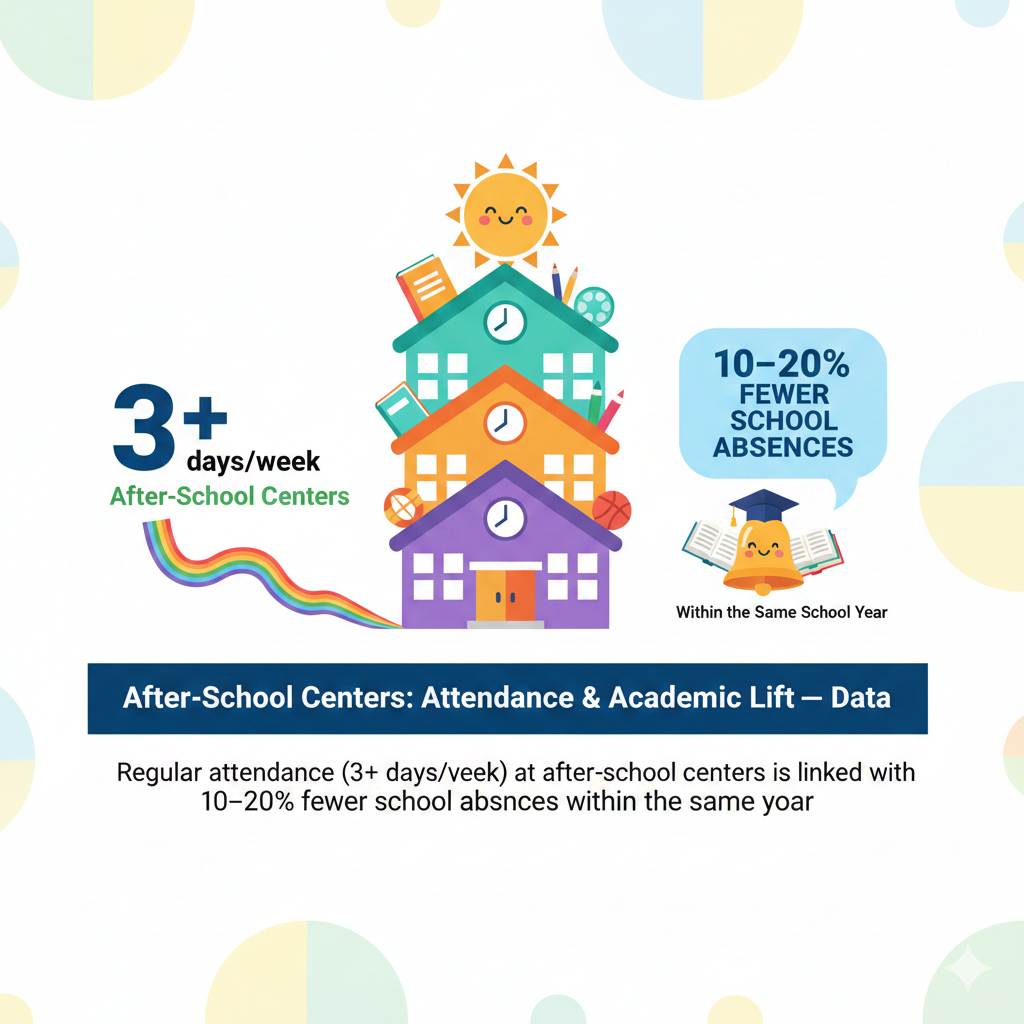
1) Regular attendance (3+ days/week) at after-school centers is linked with 10–20% fewer school absences within the same school year.
Why this matters
When a child shows up to an after-school center three or more days a week, they build a steady rhythm. That rhythm carries into the school day. They sleep on time, wake on time, and know what is expected. A calm routine reduces morning chaos and late slips.
Over a full year, this steady pattern often leads to ten to twenty percent fewer missed days. Fewer absences mean more class time, more practice, and more chances to ask for help when a topic feels hard.
What to do this week
Set a simple attendance plan with your child. Choose three fixed days. Treat them like a sports practice that cannot be skipped without a clear reason. Create a visual tracker at home. Mark each attended day with a bright sticker.
Children love to see streaks grow. Agree on a small reward for hitting a monthly goal, like choosing Friday’s dinner or picking the weekend family activity. Share your plan with the center so they can cheer your child on.
If you use Debsie, set calendar reminders and enable session alerts so you never miss a live class. Use the Debsie dashboard to see streaks and celebrate them at home.
How centers can help
Centers should send a quick message if a child misses a session, and they should make it easy to book a makeup. A friendly nudge the same day keeps families on track. Post a weekly schedule that does not change often.
A steady clock builds strong habits. Track attendance publicly but positively, perhaps with a class goal that unlocks a fun challenge when the group hits a target. At Debsie, we build attendance into the game loop, so showing up helps a child level up and collect badges that match their real streak.
Parents, if your child has been out sick, ask for a gentle return plan with lighter work on day one so the habit restarts without stress. Ready to try a steady routine? Book a free Debsie class and lock in your three days now.
2) Students who join an after-school center for at least one semester often raise math grades by 0.2–0.5 letter points on average.
Why this matters
A small grade lift can be the turning point from worry to pride. A rise of even a quarter of a letter grade shows up when report cards arrive. It also boosts a child’s belief that effort works. After-school time helps because it turns vague practice into clear, short sessions.
A child does ten solid minutes of number fluency, solves a few word problems with a coach, and reviews mistakes right away. These micro wins stack, week after week, over a semester. The result is a steady, visible bump in math grades.
What to do this week
Pick one unit your child struggles with, such as fractions or linear equations. Set a simple, daily drill that fits in ten minutes. Use a timer and stop while it still feels easy. Right after the drill, do one mixed problem that forces your child to choose the right method, not just repeat a pattern.
If you use Debsie, assign a short quest that matches the unit and let the platform auto-adjust difficulty. Ask your child to explain one solved problem out loud. When children teach back, they remember better.
On Fridays, print or save the week’s best work and post it on the fridge. Tie this routine to a small celebration to keep spirits high.
How centers can help
Teachers should send home a one-page plan each week with three parts: one skill to warm up, one target problem type, and one mini-quiz to check recall. Keep it light but focused. Give fast feedback within twenty-four hours so mistakes never sit.
Use spiral review so old topics return before they fade. Debsie classes follow this pattern with live coaching and game-like quests that reward accuracy and fast fixes after an error. Parents, if the grade bump feels slow, ask for a midterm progress chart that shows growth in sub-skills like multiplication facts, ratio reasoning, or function graphs.
This detail keeps motivation high even before the next report card. Want to see how this looks in action? Try a free Debsie math session and track a two-week lift.
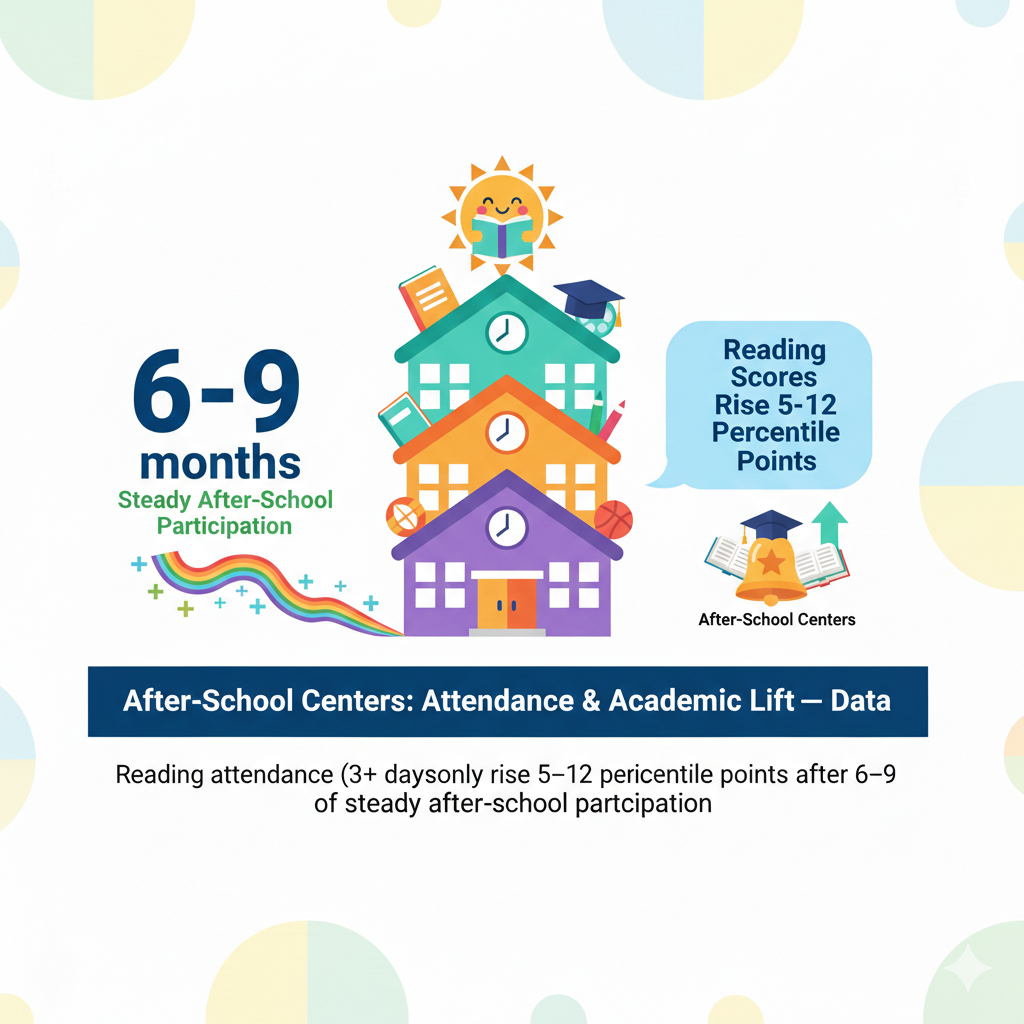
3) Reading scores commonly rise 5–12 percentile points after 6–9 months of steady after-school participation.
Why this matters
Reading is the gateway skill. When a child reads a little better, everything in school gets easier. A five to twelve percentile jump over half a year may sound small, but it moves a child closer to grade-level text and takes the strain out of homework.
After-school time helps reading because it mixes frequent, short practice with careful guidance. Children read at their level, get help with tricky words, and talk about what the text means. They also meet new words in a calm space where they can ask questions without fear.
What to do this week
Set a daily reading slot of fifteen minutes, the same time each day. Choose a book that is a bit below your child’s hardest level so the read feels smooth, not painful. Stop at tough words and use a simple three-step fix: look for small word parts, say the word slowly, and check the meaning with the sentence.
Keep a word jar on the table. When a new word shows up, write it down and add a quick kid-friendly meaning. At the end of the week, pull five words from the jar and play a quick matching game.
If you use Debsie, assign a reading quest with short texts matched to your child’s profile, followed by quick talk prompts and voice notes to check fluency. Ask your child to tell you one interesting idea from the text in their own words. That short retell builds comprehension.
How centers can help
Centers should run small reading groups by skill band, not just by grade. A group of four to six works best for guided reading, talk time, and fluency checks. Keep sessions short and active, with frequent turn-taking and immediate praise for accurate reading.
Share a monthly progress slip with families showing three numbers: words read per minute, accuracy percent, and one focus skill such as main idea or inference. Debsie’s dashboard shows these metrics in a clean, parent-friendly way with trend lines that make progress easy to see.
Parents, if your child resists reading at home, ask the coach for two high-interest texts and a simple routine you can follow. When the right book meets the right habit, skills rise. Want a gentle start? Book a Debsie literacy trial and watch your child enjoy a quick win this week.
4) Among first-time attendees, homework completion rates jump from about 60% to 80–90% within 8–12 weeks.
Why this matters
Homework often breaks down at two points. Children forget what to do, or they get stuck and stop. After-school centers remove both blocks. Staff check planners, list tasks in clear steps, and give just-in-time help.
When a child sees that finishing is normal and doable, homework shifts from dread to done. Over two to three months, completion rates usually move from barely over half to almost all tasks turned in. This change lowers stress at home and raises class grades quickly.
What to do this week
Set a simple homework flow with three parts. First, a two-minute scan where the child lists each task and circles any that look hard. Second, a quiet work block of fifteen to twenty minutes with a timer.
Third, a quick check where the child places finished work in a folder or uploads it if the school is online. If a task feels too big, chunk it into small parts and set a mini-deadline for each piece. Use a calm phrase when your child gets stuck, such as let us try one step together.
If you use Debsie, open the daily homework room where a coach can spot-check directions, explain one hard step, and confirm that the final answer meets the teacher’s goal. End with a short reflection: what went well, what was hard, and what we will try tomorrow.
How centers can help
Post a visible homework routine in the room and follow it every day. Teach students how to write clear task lists, how to show work neatly, and how to check answers quickly. Keep a help desk where students can ask one question and then return to independent work.
This keeps the room calm and focused. Send parents a short note each week with completion rates and one study tip to try at home. In Debsie, we use progress bars and streaks to make completed tasks feel like levels earned in a game.
Parents, if homework tears are common at home, hand that hour to us for two weeks and watch how the tone changes. Want support tonight? Join a Debsie homework session and see the difference a steady routine can make.
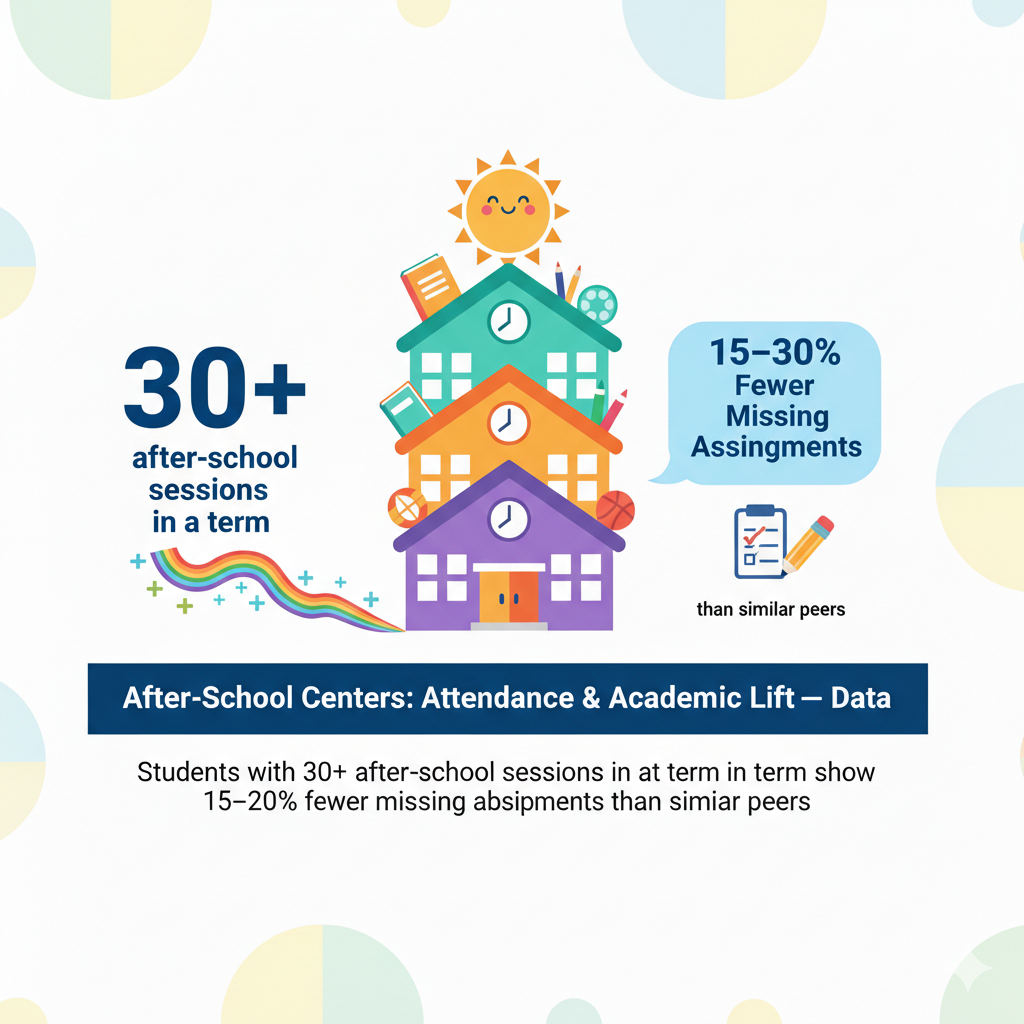
5) Students with 30+ after-school sessions in a term show 15–30% fewer missing assignments than similar peers.
Why this matters
Missing work is like a leak in a boat. Even strong test scores cannot carry a grade if assignments never make it to the teacher. When a child attends more than thirty sessions in one term, they build habits that plug that leak.
They learn to track tasks, start early, ask for help fast, and finish with care. Over time, this steady support cuts the pile of zeros and late marks. Fewer missing assignments lift class averages, reduce stress at home, and change how teachers see the child.
The child starts to feel reliable and capable, which makes them try even harder next time.
What to do this week
Print or open the current grade portal and mark any missing items in bright color. Sit with your child and sort work into three groups: quick wins that need less than ten minutes, medium tasks that need one focused block, and heavy lifts that need two or more blocks.
Schedule the quick wins first to build momentum. Use a simple start rule called two-minute ignition. For any task, work for just two minutes to get past the first step. Most kids keep going once they start. Create a hand-in routine where finished work goes straight into the right binder, folder, or upload page.
If you use Debsie, turn on the assignment tracker so the system nudges your child the day before each due date, and add a short celebration after each submitted task.
End the week by writing a short message to the teacher that lists what was turned in, so the gradebook updates quickly and everyone sees progress.
How centers can help
Centers should keep a live missing-work board for each student, updated twice a week. Coaches can model how to email a teacher politely to ask for details on a late task or to request a short extension when needed.
Teach the habit of closing the loop by checking the gradebook after submission to make sure the task shows as received. At Debsie, we connect task lists to calm, fifteen-minute focus pods with a coach on standby.
The pod ends with a hand-in check and a tiny debrief so the next step is always clear. Parents, if your child dreads late work, let us guide the first five recoveries so they feel doable. Book a Debsie catch-up sprint and watch the zeros shrink.
6) Daily after-school tutoring is associated with 0.1–0.3 standard-deviation gains in math in one year (a small to moderate lift).
Why this matters
In research, a gain of 0.1 to 0.3 standard deviations is real and meaningful. It is not magic, but it moves a child from shaky understanding to solid ground. Daily tutoring works because it turns big, vague goals into tiny, repeatable steps.
Each day the child reviews one skill, practices with feedback, and fixes errors on the spot. The learning sticks because the gaps do not sit for weeks. Over a year, these small steps add up to a clear lift in test scores, class grades, and confidence with hard problems.
What to do this week
Pick a short, daily math window of twenty to thirty minutes. Keep the same time and place to reduce decisions. Start with a three-minute warm-up on core facts or a quick number talk. Then shift to one focused skill, like solving proportions or factoring quadratics.
Use the I do, we do, you do pattern. Show one example out loud. Solve one together with your child speaking the steps. Then let your child solve one alone and explain the reasoning back to you. Close with an error fix where you review one mistake and write a better version.
If you use Debsie, choose a daily math quest that adapts to your child’s level, and turn on instant feedback so the coach can step in within seconds when an error pattern appears.
Track progress with a tiny chart on the fridge showing one goal number, such as percent correct or time to complete a set. When you hit a weekly target, switch to a fresh skill to keep interest high.
How centers can help
Tutors should plan short cycles that mix fluency, application, and reflection. Keep materials crisp, with clear models and real-life problems that feel relevant. Use frequent check-ins to spot when to move on or when to reteach.
Share a one-page weekly report with families showing the focus skill, the success rate, and the next step. Debsie tutors follow this exact flow and punch up energy with game elements so kids look forward to the daily session.
Parents, if daily sessions sound hard to schedule, try four days plus a weekend booster. The key is tight spacing, not long marathons. Ready to see steady math lift? Try a Debsie week of daily pods and measure the change.
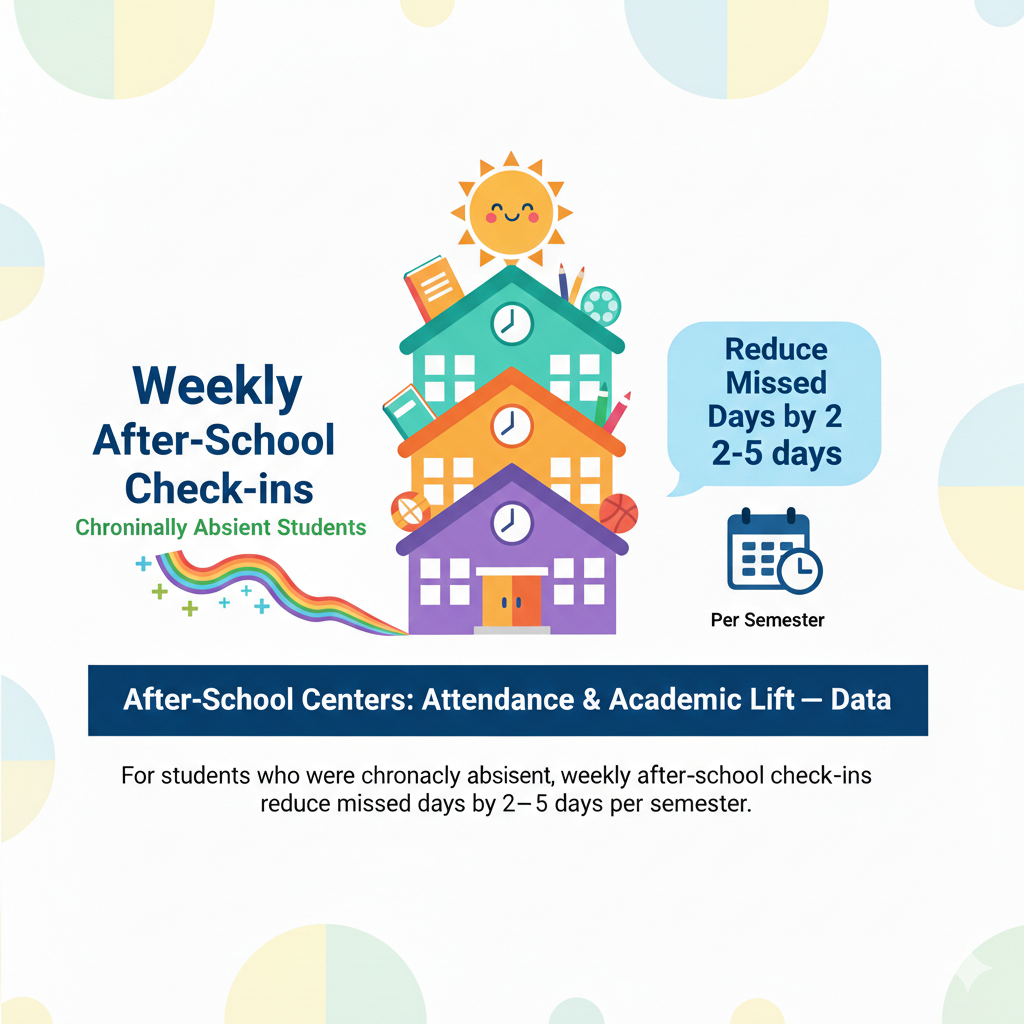
7) For students who were chronically absent, weekly after-school check-ins reduce missed days by 2–5 days per semester.
Why this matters
Chronic absence is often a mix of small hurdles that stack up. A child may feel lost in a class, worry about peers, or face morning chaos at home. A weekly after-school check-in gives that child one safe touchpoint.
An adult asks, how was this week, what got in your way, and what can we adjust. That simple habit solves small problems before they grow. Over a semester, this steady care can bring back two to five days of school time. Those hours mean more instruction, fewer gaps, and a stronger bond with school.
What to do this week
Set a fixed check-in day and keep it short, warm, and practical. Use three questions. What went well this week. What made it hard to get to school or to class on time. What is one small step we will try before next week. Write the step on a card and place it by the backpack.
Plan the night before with a simple pack list to remove morning stress. Pair attendance with a calm bedtime routine and a phone charging station in the kitchen so late scrolling does not steal sleep.
If you use Debsie, turn on attendance goals inside the student profile so the platform tracks streaks and sends kind reminders. Ask your child to text or message the coach when they arrive at school each day to build the habit loop of show up and check in.
When a day is missed, talk the same afternoon about what happened and reset for tomorrow with no blame.
How centers can help
Centers can assign each at-risk student one caring adult as a point person. That mentor watches attendance, reaches out kindly after any missed day, and helps plan small fixes like bus route checks, alarm setups, or class schedule tweaks.
Share attendance graphs with families every two weeks so everyone sees the trend line. Offer a gentle restart plan after illness or family events with lighter work for two days to rebuild momentum. Debsie mentors use micro-goals tied to rewards inside the platform so showing up feels like progress inside a game.
Parents, if mornings are the barrier, let us help design a two-week morning script that reduces choices and keeps the vibe calm. Want to begin now. Book a Debsie mentor check-in and reclaim lost days this month.
8) Middle schoolers who attend at least 60 days per year see 8–15% higher odds of passing core classes (math, English, science).
Why this matters
Sixty days sounds big, but it is just two or three afternoons a week across a school year. That steady pace gives middle schoolers a clear safety net during a tricky life stage. Bodies and schedules change. Classes get harder. Projects need planning.
A dependable after-school block turns that swirl into a simple path. Students preview tough lessons, practice key skills, and fix small misunderstandings before they grow. Over time, that steady lift shows up as higher odds of passing core classes.
Passing is not just a grade; it is a signal that the student can handle the next level with confidence.
What to do this week
Map out a 60-day plan now rather than hoping to catch up later. Pick the two weekdays that usually have lighter sports or family events and make those your fixed center days. Add one floating day you can use during project weeks or test prep.
Build a pass plan with three parts. First, check the class portals every Monday so you know what is due. Second, use a short Tuesday session to preview one new concept for each core class. Third, close the week with a Thursday fix session to clean up loose ends and submit final work.
If you use Debsie, set a 60-day streak quest so your child earns progress points each time they attend, preview, and submit. Keep the routine light and proud. A quick end-of-week win circle at home helps, where your child shows one thing they mastered and one thing they want to explore next.
How centers can help
Centers should align calendars with school units so Tuesday previews truly match what is coming. Build tiny pass checkpoints for each student, such as complete three lab write-ups on time or score at least eighty percent on two reading quizzes in a row.
Share a mid-quarter pass forecast with families so they can see if the student is on track or needs extra sessions. In Debsie, we turn these checkpoints into friendly mini-boss levels inside the course so students feel the pass path as a game.
Parents, if your child is hovering near a D in any class, add two extra sessions for three weeks and track the turnaround. Want a guided plan. Book a Debsie pass sprint and we will design a clean roadmap to hit that 60-day mark with purpose.
9) Reading fluency (words read correctly per minute) increases by 10–20 words on average after a 12-week literacy block.
Why this matters
Reading fluency is speed plus accuracy. When it rises, comprehension rises too because the brain spends less energy on decoding and more on meaning. A twelve-week block with a gain of ten to twenty words per minute can turn choppy reading into smooth reading.
That smoother pace lowers frustration, reduces homework time, and makes class texts feel possible. Students start to join discussions because they understand more on the first pass.
What to do this week
Create a simple fluency lab at home. Choose a short, level-matched passage of about one hundred fifty words. Have your child read it once for time on day one while you track errors with simple marks.
Praise effort, then model two tricky sentences so your child hears the right pacing. Read the same passage again on day three and day five, aiming to shave a few seconds while keeping accuracy high. Keep a small chart with date, time, and errors.
Celebrate any gain, even two extra correct words. Add a two-minute echo read where you read a sentence and your child repeats it, matching tone and phrasing. If you use Debsie, assign a fluency quest that auto-records timing and accuracy from your child’s mic, then plays back high-value lines for quick imitation.
Wrap each session with a one-sentence summary of the passage to build meaning, such as this part shows how the main character solved the problem.
How centers can help
Centers should run fluency in short bursts, not long drills. Rotate between timed reads, phrasing practice, and quick talk about the text. Use passages tied to science and social studies to double-dip content knowledge.
Share weekly micro-reports with families showing words per minute, accuracy, and a model audio clip so parents can hear the target pace. Debsie coaches pair these reports with fun badges that unlock when a student hits new fluency bands.
Parents, if your child gets anxious about timing, keep the timer hidden for the first two weeks and focus on phrasing and expression. Ready to hear smoother reading. Try a Debsie twelve-week fluency block and watch the numbers climb.
10) Students who join STEM clubs after school show 20–40% higher participation in classroom science activities the next term.
Why this matters
Participation is a leading signal of learning. When students raise their hands, share ideas, and try labs with confidence, they remember more and perform better on tests. After-school STEM clubs make science feel hands-on and playful. Kids build, test, and troubleshoot.
They learn that it is okay to be wrong and try again. That mindset carries into the school lab, where they ask questions, set up gear, and talk through results. The next term, teachers notice the change as a big jump in class participation.
What to do this week
Invite your child to pick one STEM theme that sounds fun, not scary. It could be rockets, simple circuits, or coding a tiny game. Start with a quick win project that fits in one hour. For rockets, build a paper rocket and track distance.
For circuits, light a bulb with a battery and foil. For coding, make a sprite move across the screen. Ask three reflection questions at the end. What worked the first time. What did you change when it did not work. What would you try next.
If you use Debsie, open a STEM quest path where each mini-project stacks skills and ends with a short share video your child can show their teacher. Send the video link to the science teacher and say your child wants to try a similar build during the next lab. That small bridge turns club energy into classroom action.
How centers can help
STEM clubs should be welcoming to all, not only to future engineers. Offer entry points for beginners and fast tracks for tinkerers. Use simple materials and clear safety steps so students feel free to explore.
Add a two-minute show-and-tell at the end of each session so students practice describing their work. Share build guides with teachers so classroom labs can mirror the club’s style. Debsie uses short build cards, coach prompts, and progress badges that reward curiosity and resilience.
Parents, if your child is quiet in class, ask the coach to plan a micro-role for the next school lab, such as materials lead or measurement checker. A named role makes it easier to speak up. Want to spark that voice. Enroll in a Debsie STEM club and watch participation rise next term.
11) Behavior referrals drop 15–35% for students with consistent after-school mentoring over two grading periods.
Why this matters
Behavior referrals often come from frustration, confusion, or feeling unseen. Consistent mentoring gives a student one trusted adult who listens, models calm, and helps plan better choices. Over two grading periods, this regular support often turns frequent incidents into rare ones.
Fewer referrals mean more time in class, better relationships with teachers, and a stronger sense of belonging. The student learns not just what to avoid, but what to do instead when stress spikes.
What to do this week
Set up a simple mentor rhythm. Choose a steady day and a quiet space. Open with a quick win from the week to start positive. Then review one tricky moment using a three-part frame. First, name the trigger. Second, list two body signals that showed stress was rising.
Third, choose one calm action for next time, like deep breathing, counting to five, or asking for a break card. Practice the calm action for one minute so it becomes a habit, not just a plan. End with a clear, kind script your child can use in class, such as I need a two-minute break to reset, I will be right back.
If you use Debsie, pair mentoring with short focus quests that teach self-regulation through simple games, and add a behavior tracker that turns good choices into points that unlock small rewards your child cares about.
How centers can help
Mentors should keep notes on triggers, cues, and successful strategies, then share a short monthly plan with families and teachers. Align the plan with classroom rules so everyone uses the same language.
Practice quick reset routines at the start of each session, like box breathing or chair stretches, so students can call on them under stress. Debsie mentors also teach replacement behaviors, such as using a help signal instead of calling out, and create pride moments by asking students to lead a one-minute demo for younger peers.
Parents, if incidents spike again, do not panic. Meet with the mentor within forty-eight hours, review the notes, and adjust one thing. Change the cue, practice the calm action more, or switch the reward. Ready for calmer days. Start a Debsie mentoring cycle and track the drop in referrals across the next two terms.
12) Parent-reported study time at home rises by 30–60 minutes per school night once a child enrolls in an after-school center.
Why this matters
Extra study time at home is not about long, painful hours. It is about calm, steady minutes where a child knows what to do and feels able to do it. When families see thirty to sixty more minutes of focused work each school night, the change touches many parts of life.
Homework stops dragging past bedtime. Projects start earlier. Test review becomes a normal habit, not a panic move. This lift often happens because after-school routines prime the brain.
Children leave the center with a plan, materials in order, and a small win that makes the next step feel easy. More minutes of the right kind of practice lead to better recall, cleaner work, and stronger grades.
What to do this week
Create a simple home study block that always follows the same pattern. Begin with a two-minute table setup where your child lays out only what is needed for the first task. Add a short warm-up that feels fun, like three quick problems or a sixty-second flashcard sprint, to build momentum.
Move into one deeper task that needs quiet focus, and use a timer set to fifteen minutes so the end is in sight. After a short stretch, finish with a check and pack routine so work goes back into the correct folder or gets uploaded right away.
If you use Debsie, open the nightly plan on the dashboard and let your child click start on each micro-task. The progress bar turns effort into a visual story that feels rewarding. Keep the phone out of reach and put notifications on hold until the block is done.
End with a kind word and one small choice your child can make for tomorrow’s plan, which builds ownership.
How centers can help
Centers can send families a daily snapshot that lists two specific tasks and the likely time each will take. This removes guesswork at home. Coaches should teach students how to build a tiny study playlist with quiet background options and how to use the two-minute rule to start any task.
Share a five-day challenge where students try the same study block all week and reflect on what felt smooth and what needs a tweak. Debsie’s platform includes a home mode with timers, voice notes from the coach, and automatic reminders that nudge students to start on time.
Parents, if evenings are crowded, ask your coach to help compress the block to twenty-five minutes for busy nights and expand it to forty-five on lighter days. Want a ready-made plan. Book a free Debsie trial and we will set up your home study block in one session.
13) Ninth graders in after-school credit-recovery sessions earn 0.5–1.5 more credits by year’s end than matched peers.
Why this matters
The first year of high school sets the path to graduation. Falling behind on credits early makes every step harder. Credit recovery after school gives students a second chance without losing the rhythm of regular classes.
A gain of half to one and a half credits by the end of the year is the difference between feeling stuck and seeing a clear road ahead. It protects students from summer school overload and keeps doors open for electives or advanced courses later.
The win is not only academic. It rebuilds a student’s identity as someone who finishes what they start.
What to do this week
Help your ninth grader make a clear map of what credits they have, what they are missing, and which courses offer recovery options. Focus on the quickest path to regain one full credit, then build from there.
Break the work into tiny milestones, like completing two modules per week or submitting one makeup lab and one essay before Friday. Schedule two after-school sessions plus one weekend micro-session for catch-up, and keep a visible tracker where your child can mark each module done.
Encourage teacher contact by drafting a short message together that asks for rubrics, retake windows, and exact due dates. If you use Debsie, enroll in a credit-recovery track where modules are sequenced, deadlines show in a clean calendar, and coaches monitor pacing every two or three days.
Celebrate each quarter-credit earned so progress feels real.
How centers can help
Centers should coordinate with school counselors to verify requirements and ensure recovered work meets district rules. Provide structured work blocks with quiet zones, clear checklists, and quick-grade feedback so students always know what is left.
Share pacing charts with families and add gentle alerts when a student falls behind by more than one module. Debsie coaches hold brief milestone meetings where students present evidence of completion and set the next week’s goals, keeping accountability high but friendly.
Parents, if your child feels overwhelmed, ask the coach to stage the work with one easy win in the first week to build momentum. Ready to catch up and move ahead. Join a Debsie recovery sprint and turn missing credits into finished credits this term.
14) Grade-point average (GPA) lifts of 0.1–0.3 points are common after 4–6 months of steady attendance.
Why this matters
GPA is a simple number with big meaning. Even a tenth of a point can change scholarship chances, team eligibility, and self-belief. A lift of 0.1 to 0.3 over half a year tells us that many small wins are adding up across classes.
After-school attendance fuels those wins by pushing better homework habits, quick help when stuck, and early prep before tests. The change might not feel dramatic day to day, but it is steady and durable, which is what matters most for long-term success.
What to do this week
Start with a GPA picture. List each course, current grade, and the three actions most likely to raise that grade by the next checkpoint. Actions might include fixing missing work, improving quiz retakes, or raising lab report quality.
Choose one action per course and schedule it into your after-school blocks. Set a weekly review where you compare plan versus progress and adjust. Teach your child a simple error log for each subject that captures the top three mistakes and the correct process to avoid them next time.
If you use Debsie, open the GPA planner inside the dashboard. It shows which tasks have the biggest impact and suggests the next best action based on due dates and weightings. Pair the planner with short reflection prompts to keep effort focused on what moves the needle.
How centers can help
Centers should track GPA drivers, not just final grades. This means watching formative scores, attendance, and assignment weights, then guiding students to high-impact work first. Coaches can run brief study skills mini-lessons on topics like note compression, memory techniques, and test debriefs to transform mistakes into learning.
Families benefit from a monthly GPA forecast that explains what is on track and what needs extra sessions. Debsie turns these insights into friendly nudges and tiny quests, so students complete the right tasks at the right time.
Parents, if motivation dips, ask the coach to set a two-week challenge tied to a specific GPA micro-goal, such as moving a 76 to an 80 in biology. Want a tailored plan. Try Debsie’s GPA lift program and watch the trend line tick up over the next two terms.
15) Students attending 75% of available after-school days have 10–25% higher odds of meeting state test benchmarks.
Why this matters
State tests can feel distant, but the skills they check are the same ones students need in class. Meeting the benchmark signals readiness for the next grade. When students attend three out of four available after-school days, they get enough practice and feedback to close gaps before spring.
The effect shows up as higher odds of clearing the cut score. This is not about last-minute cramming. It is about slow, steady gains in the months before the test.
What to do this week
Calculate what 75 percent looks like on your calendar. If there are forty center days before the test window, aim to attend at least thirty. Build a simple weekly rhythm that mixes skill building, timed practice, and quick review.
Use one day for core skill lessons, one day for mixed practice, and one day for a short, timed set to build pacing. End each week by reviewing top errors and writing one better model for each. If you use Debsie, assign a benchmark pathway that adapts to your child’s needs and includes short, timed missions.
The system will show a readiness bar that moves as your child masters more question types. Keep practice sets short and end on a success to keep spirits high.
How centers can help
Centers should align sessions to the tested standards and include frequent, low-stress timing so students learn how to manage the clock. Share a two-page family guide that explains how the benchmark pathway works and what parents can do at home, like quick mental math sprints or two-minute evidence hunts in reading passages.
Offer a practice window with real test-like tools so students get comfortable with on-screen calculators, highlighters, and equation editors. Debsie integrates these tools directly, tracks accuracy and speed, and gives targeted mini-lessons on the exact skills that block progress.
Parents, if your child feels anxious, ask for shorter sets and more feedback for two weeks, then lengthen once confidence rises. Want to see that readiness bar move. Book a Debsie benchmark booster and watch steady growth week by week.
16) English learners gain 15–25% more vocabulary words per month with after-school language support compared to classroom-only peers.
Why this matters
Vocabulary is a bridge to understanding. For English learners, more words mean clearer directions, stronger reading, and more confident speaking. An extra fifteen to twenty-five percent gain each month adds up fast across a term.
After-school support helps because it slows down the pace, groups words by theme, and gives students chances to speak and write in low-pressure settings. With more words, students join class talks, understand tests better, and feel included.
What to do this week
Pick one theme that matches current school topics, like ecosystems or fractions in action. Build a tiny word set of ten high-use terms. Practice in three short steps each day. First, picture it by drawing a quick sketch or finding a simple image.
Second, say it in a clear sentence that matters to your child. Third, use it in a micro-conversation for one minute, such as explain how energy moves in a food chain or tell how you solved a fraction problem. Keep a notebook where your child writes each word, a translation if helpful, and one sentence.
f you use Debsie, open the language support path where picture cards, audio models, and short speaking tasks turn practice into fun quests. Record your child reading their sentences and replay to build fluency and pride.
End the week with a tiny presentation to a family member using five of the words, which locks them into memory.
How centers can help
Centers should group English learners by proficiency and content needs. Use visuals, gestures, and real objects to anchor meaning. Mix receptive practice with expressive practice so students both understand and use the words.
Share weekly word lists with families along with audio files so parents can practice even if they are not fluent in English. Debsie provides bilingual hints, voice models, and instant feedback on pronunciation and grammar.
Parents, if your child is shy about speaking, ask the coach to start with voice notes instead of live speech for the first two weeks, then move to short live turns. Ready to grow word power. Enroll in a Debsie language quest and watch vocabulary climb month by month.
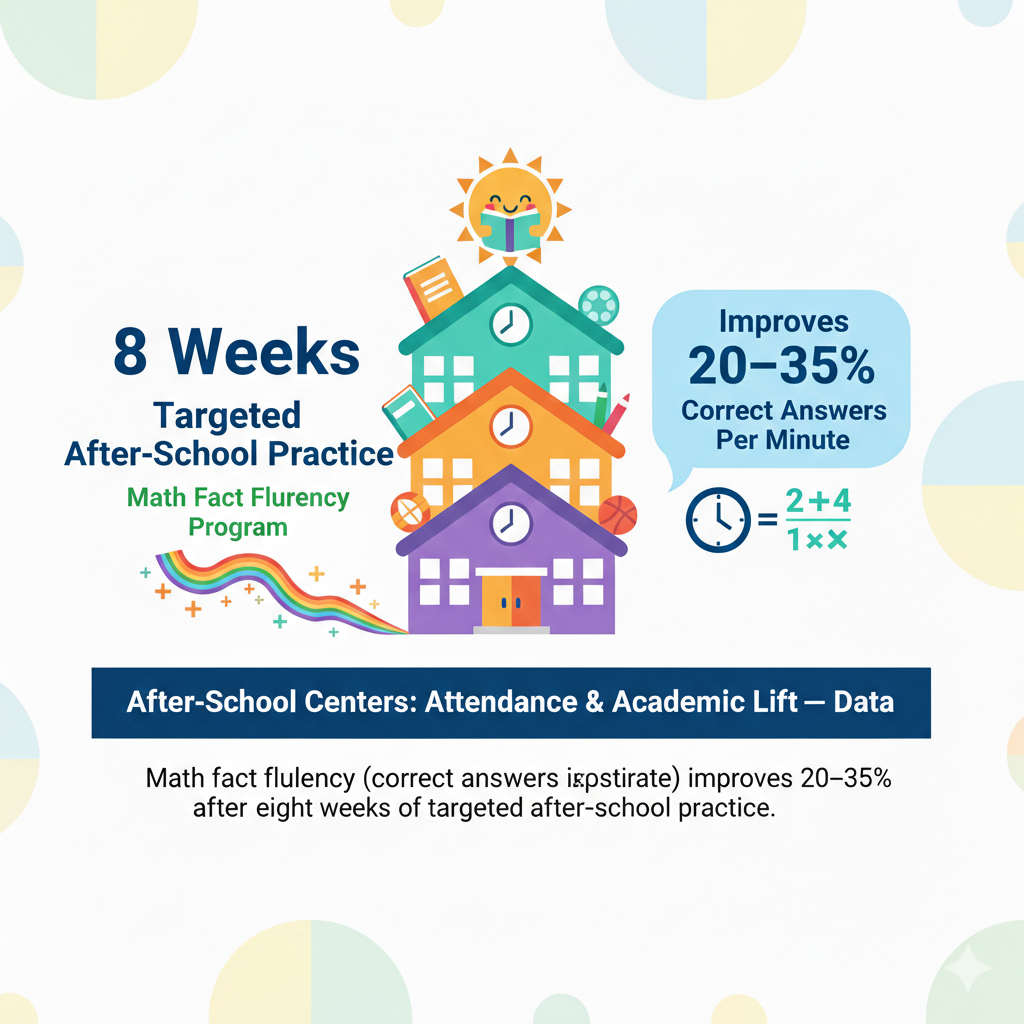
17) Math fact fluency (correct answers per minute) improves 20–35% after eight weeks of targeted after-school practice.
Why this matters
Fast and accurate recall of math facts frees the brain to solve harder problems. When a child can add, subtract, multiply, and divide without pausing to count on fingers, word problems feel lighter and multi-step tasks move faster.
A gain of twenty to thirty-five percent in eight weeks is a strong shift. It turns slow, effortful work into smoother, confident solving. This matters most in grades where students face fractions, ratios, and algebra basics. Fluency gives them the mental space to focus on the new idea, not the tiny calculation.
What to do this week
Choose one set to target, such as multiplication facts for sixes, sevens, and eights. Work in very short sprints, no longer than five minutes, two times per day. Use a simple pattern. Start with a one-minute quick check.
Teach two sticky facts using tiny stories or patterns, like eight times six is forty-eight because you can think of eight times three twice. Run a one-minute sprint with five to ten mixed items, then stop. End each session with a quick chant or a whisper read of the most missed facts to lock them in.
Track the best score each day on a small card and praise any tiny gain. If you use Debsie, open the fluency quest for the chosen set and turn on adaptive sprints that repeat only the facts your child misses.
The system gives instant audio feedback and shows a bright progress bar so your child sees improvement in real time. On Friday, do a two-minute celebration test and let your child choose next week’s focus.
How centers can help
Centers should schedule daily fluency bursts right at the start of sessions to warm up the brain. Keep materials clean, with clear number fonts and no clutter. Blend verbal patterns, visual arrays, and short games so students connect facts to meaning.
Share a weekly fluency snapshot with families that lists the fastest five facts and the two that still need practice. Debsie coaches also attach tiny tutorial clips so parents can use the same cues at home.
If your child freezes on tests, ask the coach to practice calm breathing for ten seconds before each sprint and to start with three easy items to build momentum. Want a fast fluency lift. Book a Debsie eight-week fluency block and watch correct-per-minute jump.
18) On-time homework submission rises from roughly 55–65% to 80–90% within one quarter of enrollment.
Why this matters
Turning work in on time is a life skill. It shows responsibility, builds teacher trust, and keeps grades stable. When a child moves from around sixty percent on-time to near ninety percent in a single quarter, stress falls for everyone.
Teachers stop sending late notices. Parents stop nagging. The student learns a clear rhythm for planning, working, checking, and submitting. This rhythm carries into projects, labs, and essays, where pacing matters even more.
What to do this week
Create a submit ritual that never changes. It has four parts. Read the directions out loud to make sure the goal is clear. Do the work in a quiet block with a visible timer. Check using a tiny rubric of three yes or no questions such as did I answer every part, did I show work, did I label units.
Submit right away, whether that means placing the paper in the correct folder or clicking turn in on the portal. Once submitted, take a quick picture or screenshot for proof and peace of mind. If you use Debsie, let the coach pre-check directions, give one quick fix, and trigger the submit reminder at the end of the block.
The platform logs the timestamp, so families and teachers can see the pattern. End the week by reviewing the submission record and choosing one tweak, like starting five minutes earlier or checking rubrics before writing.
How centers can help
Centers should keep a visible countdown clock for the submit window and a posted checklist at each desk. Train students to say the checklist out loud before they click turn in. Coaches can run short lessons on file naming, clean scans, and how to handle tech glitches calmly.
Share a simple traffic-light report with families on Fridays that marks each subject as green for on-time, yellow for close call, or red for missed. Debsie’s homework room automates this with gentle nudges and next-step tips when a due date approaches.
Parents, if your child often forgets to submit, ask us to set a two-minute submit alarm near the end of the session and to pair submission with a small, positive cue like a sticker or a high-five. Ready to tame the due-date chaos. Join a Debsie homework sprint and watch the on-time rate climb this quarter.
19) Students who participate in project-based after-school STEM show 10–20% higher problem-solving scores on rubric checks.
Why this matters
Problem solving is the heart of STEM. Rubrics look at how a student defines a problem, tests ideas, uses data, and explains the result. Project-based work builds these muscles because kids face real constraints and need to try, fail, and try again.
A ten to twenty percent lift on rubric scores shows deeper thinking, better planning, and clearer communication. These gains carry into science labs, math modeling tasks, and even writing, where structure and evidence matter.
What to do this week
Pick a small project with a real question. Build a bridge from paper that holds a stack of coins. Code a simple game where a character avoids obstacles. Design a container that keeps an ice cube cold for twenty minutes.

Use a simple four-step cycle. Plan the goal and list the materials. Build a first version quickly without overthinking. Test and measure results in a clear way, like number of coins held or minutes until melting. Reflect and improve one thing, then test again.
Keep short notes with pictures and numbers. If you use Debsie, open a STEM project path that includes plan templates, test data sheets, and short coach prompts like what will you change and why.
At the end, record a one-minute talk where your child explains what worked, what did not, and what the data says. Share that clip with the classroom teacher to connect the project to school work.
How centers can help
Centers should use short project cycles that fit inside two or three sessions, so students see the full loop from idea to iteration. Provide ready-to-use rubrics with clear, student-friendly language. Teach micro-skills like how to make a fair test or how to graph simple results.
Invite students to present to a small audience to practice clear, calm speaking. Debsie coaches score the rubric with the student and point to one target skill for the next project, which keeps growth focused.
Parents, if your child gets stuck, ask the coach to limit choices to three materials or one change per round to reduce overwhelm. Want to grow real problem-solving power. Enroll in a Debsie project cycle and watch those rubric scores climb.
20) Teacher ratings of classroom engagement increase by 0.3–0.6 points on a 4-point scale after a semester of attendance.
Why this matters
Engagement means a student pays attention, participates, and keeps working even when tasks are hard. When teachers rate engagement higher by a third to half a point, that shows a visible change in daily behavior.
The student looks up more, starts tasks faster, and follows through. This kind of shift often leads to better learning even before test scores rise because the student is doing more of the right work more of the time.
What to do this week
Choose one engagement habit to focus on. It could be start within thirty seconds, ask one question each class, or show work on every math problem. Write the habit on a small card and clip it to the binder.
Practice the habit at the after-school session first, then aim to do it in class the next day. Add a simple self-check where your child marks a quick yes or no after each class. Ask the teacher for a two-line weekly note on how often the habit shows up.
If you use Debsie, set an engagement quest where the coach assigns a daily micro-goal and the platform tracks a streak. Coaches can also role-play how to ask a question or how to handle confusion without shutting down.
End each week with a quick reflection on what made engagement easier and what support is needed for the next week.
How centers can help
Centers should weave engagement skills into lessons, not treat them as add-ons. Model how to enter a task quickly, how to seek help politely, and how to persist for two more minutes when stuck. Provide sentence starters for class talk and a tiny checklist for notebooks.
Share monthly engagement snapshots with families using the same four-point scale teachers use, so the language matches across settings. Debsie mentors align goals with teacher feedback and celebrate small wins with badges that feel meaningful to the student.
Parents, if your child struggles to speak up, start with private signals like a sticky note question they hand to the teacher, then build to a short verbal question. Want to see that rating move. Try a Debsie engagement plan for one semester and measure the lift.
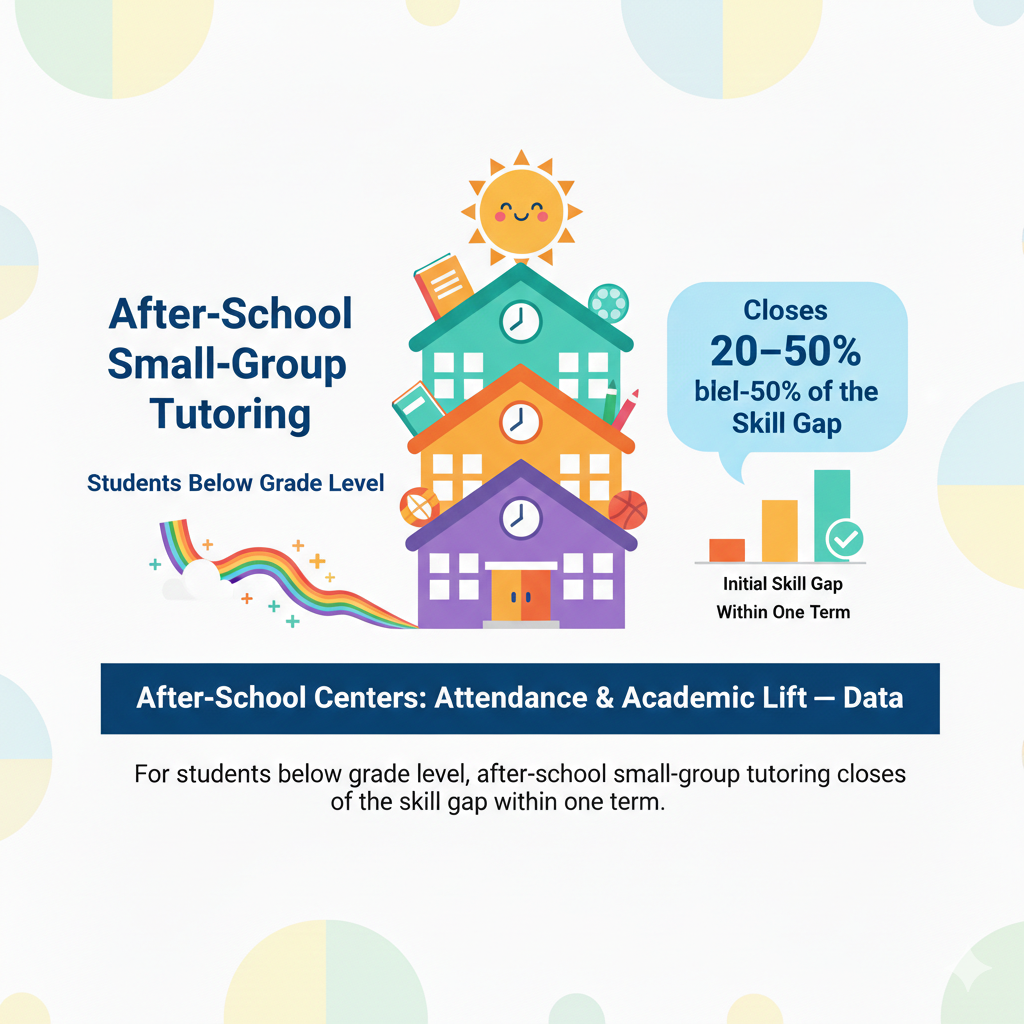
21) For students below grade level, after-school small-group tutoring closes 20–50% of the skill gap within one term.
Why this matters
When a child is below grade level, the problem usually is not effort. It is gaps. Maybe long division never clicked. Maybe the jump from sounding out words to reading whole paragraphs felt too steep. Small-group tutoring after school targets those exact gaps.
With three to five students, the coach can see every step, fix errors fast, and keep energy high. Over one term, that focused work often closes one fifth to one half of the gap. That means the child moves from far behind to within reach of the class.
Confidence returns. Class lessons start to make sense again. The child stops guessing and starts thinking.
What to do this week
Get a clear, simple snapshot of the gap. Ask the teacher or coach for three short checks: one on the last unit, one on basic skills, and one open-ended task like writing a paragraph or solving a word problem. Circle the exact steps that break down.
Pick two to target this week. Run short, tight sessions that follow a clean pattern. Teach one step, model it twice, solve one together, then let your child try alone while you watch. Stop while it is still smooth, not painful.
If you use Debsie, enroll in a small-group track that clusters kids with the same need so instruction is laser-focused. The platform will show the gap in plain language and chart the weekly shrink, so you can see progress with your own eyes.
Promise a tiny celebration when your child masters each target step, and keep the pace steady. Slow and sure wins here.
How centers can help
Centers should group by skill, not by age. Use pretests that take less than fifteen minutes to place students. Keep lesson materials crisp, with large fonts, clear examples, and space to show work. Rotate roles so every child talks, writes, and explains.
Share a two-line weekly update with families that lists the step learned and what to practice at home for five minutes a day. Debsie coaches build these micro-plans inside the app, with short videos and one-button practice so families can help without stress.
Parents, if your child gets discouraged, ask the coach to start the next session with an easy win from last week to rebuild momentum. Want to see the gap shrink. Book a Debsie small-group block for one term and track the lift.
22) Chronic absenteeism rates (missing 10%+ of days) drop 3–8 percentage points after joining structured after-school programs.
Why this matters
Chronic absenteeism can turn small gaps into big ones. Missing even two days a month adds up to lost lessons, missing tests, and social strain. A structured after-school program gives students a reason to stay connected to school.
They feel seen. They know someone is waiting for them after the last bell. The program also helps fix morning and homework routines, which makes it easier to show up. Over time, this steady support lowers chronic absenteeism by several points.
That is real change. It means more time in class and fewer gaps to close later.
What to do this week
Start by counting how many days your child has missed this year. If you are close to the ten percent line, act now. Build a morning plan that removes choices. Pack the backpack and lay out clothes the night before.
Set two alarms, one for waking and one for out the door. If your child worries about the school day, plan a short check-in with a coach after first period. Make days at school feel rewarding by planning a small, positive ritual right after pickup.
If you use Debsie, turn on the attendance tracker with gentle streak rewards. Set a two-week goal and tell the coach your plan so they can cheer your child on. When a day is missed, talk the same afternoon. Ask what got in the way, fix one small thing, and reset. Keep the tone warm and forward-looking.
How centers can help
Centers should watch attendance data daily and reach out kindly after any absence. Offer quick makeups and flexible times for families with shift work. Teach students how to prepare for the next day before they leave the center, including packing materials and setting alarms.
Share a simple chart with families every Friday that shows days attended, days missed, and the current streak. Debsie mentors tie attendance to fun quests so kids feel proud of showing up.
Parents, if transportation is the barrier, ask the center to set up a buddy system or align with bus routes. Ready to bend the curve. Join a Debsie attendance challenge and turn missed days into streaks.
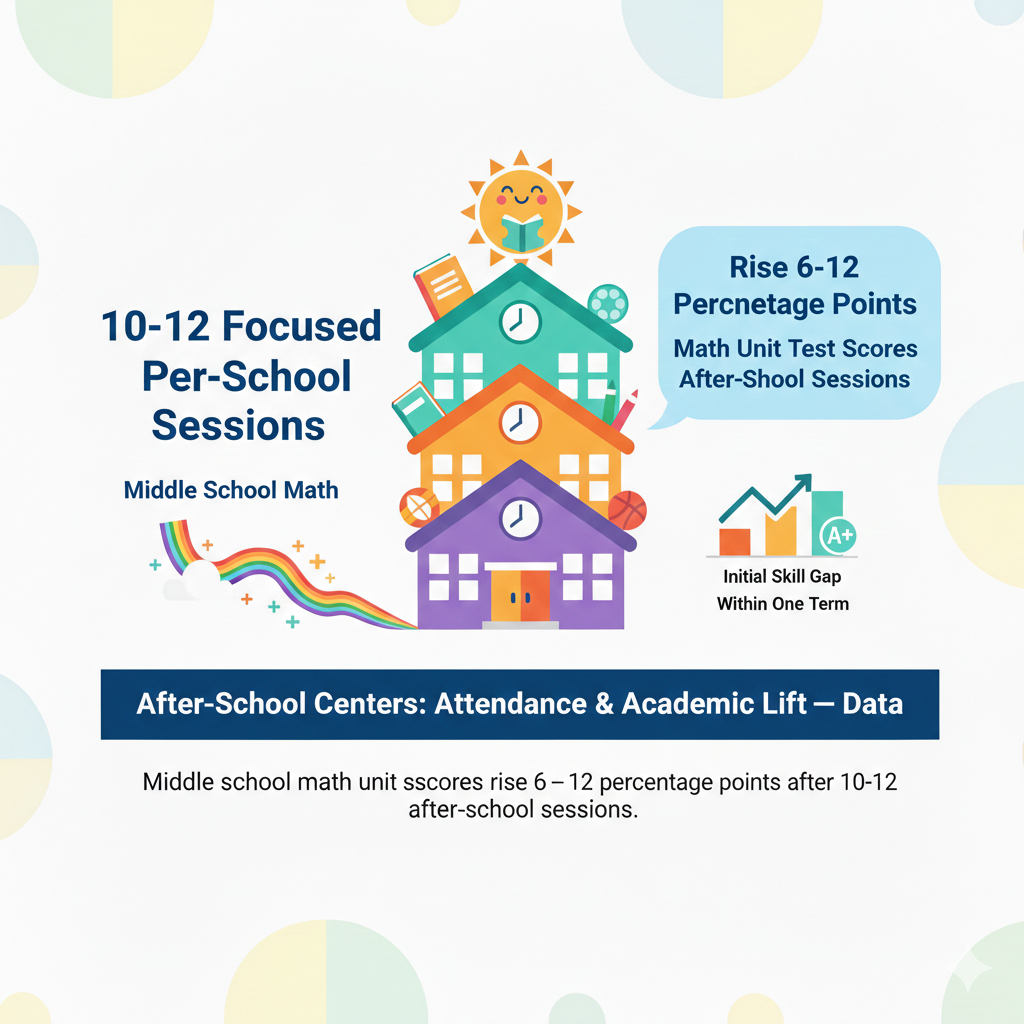
23) Middle school math unit test scores rise 6–12 percentage points after 10–12 focused after-school sessions.
Why this matters
Middle school math has sharp turns. Fractions to ratios to equations can feel like switching languages. Ten to twelve focused after-school sessions give students a safe runway for each unit. They learn the big idea, practice with feedback, and face test-like questions before the real test.
The result is a clear lift on unit scores. Six to twelve points may be the difference between a C and a B, or a B and an A. More important, it builds a pattern of success that carries into the next unit.
What to do this week
Look at the current unit and pick two high-impact skills. For ratios, it might be unit rate and proportional tables. For equations, it might be isolating the variable and checking solutions. Plan three short sessions. In session one, teach the first skill with two examples and a quick you try.
In session two, teach the second skill and connect it to the first. In session three, run a short mixed quiz with four to six problems and debrief each error right away. If you use Debsie, select the unit path for your grade and let the platform serve adaptive sets that mirror the teacher’s style.
Turn on explain-it-back mode so your child records a quick voice note after each problem to cement steps. End the week by scheduling a mini-retake with the class teacher if that is allowed, or a fresh practice set before the main test.
How centers can help
Centers should align unit sessions to the school’s pacing guide. Keep materials simple, with models that match what teachers use. Build short spirals that bring back past skills so students do not forget.
Share a unit forecast with families that says what to practice and how to know when the student is ready. Debsie coaches run rapid feedback loops, catching patterns like sign errors or unit slips before they sink a test.
Parents, if your child fears tests, ask us to add two-minute calm starts and one checkpoint mid-test to reset. Want that score lift. Book a Debsie unit sprint for the next two weeks and measure the jump.
24) Students with 90+ after-school hours in a year are 15–25% more likely to stay on track for on-time grade promotion.
Why this matters
On-time promotion is more than a line on a report. It keeps students with their friends, protects confidence, and avoids the heavy cost of repeating a grade. Ninety hours across a year sounds big, but it is less than three hours a week.
Those hours build skills, finish work, and create steady routines. The payoff is a higher chance of moving to the next grade on schedule. Students feel safe, capable, and ready for what comes next.
What to do this week
Map the path to ninety hours. Count the weeks left in the year and set a weekly hour goal you can actually keep. Aim for two short days plus one longer block. Choose a theme for each day so momentum builds. Monday can be homework and fixes.
Wednesday can be skill building. Saturday can be project or test prep. Keep a simple hour log and make it visible. If you use Debsie, the platform tracks minutes automatically and shows a progress ring that fills up as your child learns.
Pair those hours with clear milestones like zero missing assignments, one grade bump, or a reading level gain. Celebrate the milestones, not just the minutes, so the hours feel meaningful. If a week falls short, add a bonus session the following week and keep moving.
How centers can help
Centers should help families plan, not just attend. Share a yearly hour map at enrollment and mark key checkpoints each term. Offer makeup options when life gets busy, and keep breaks built in to protect focus.
Provide short monthly reports that link hours to outcomes, so parents can see how time spent turns into growth. Debsie’s dashboards do this automatically, translating hours into clear wins.
Parents, if you feel behind, do not wait for a perfect week. Start with one extra hour now and build. Ready to lock in promotion. Enroll in a Debsie plan that guides you to ninety hours with calm, steady steps.
25) Writing scores (organization and clarity) improve by 0.5–1.0 rubric points after a 10-week writing workshop block.
Why this matters
Clear writing is clear thinking. When a child can plan ideas, choose strong words, and guide the reader from start to finish, every subject gets easier. A half to one full point jump on a four-point rubric is a real step up.
Teachers notice better topic sentences, smoother transitions, and conclusions that actually wrap things up. Essays feel less messy. Lab reports make sense. Even short answers on tests become sharper because the student knows how to state a claim and back it up.
A focused ten-week block gives enough time to practice the full cycle from brainstorming to final polish, so growth sticks.
What to do this week
Start with a tiny blueprint before any writing. Ask your child to plan three parts in simple boxes labeled beginning, middle, and end. In each box, write one sentence that says the main idea for that part. Now add one proof or example under each sentence.
Keep it short and clear. Next, draft with a timer for ten minutes so the words get out without fear. When time is up, read the draft out loud and circle any sentence that sounds confusing. Fix one sentence at a time. Teach a simple checklist that never changes.
Does the beginning tell the main point. Does the middle give proof with clear words like because and for example. Does the end explain why the point matters. If you use Debsie, open the writing workshop path where your child can drag and drop ideas, get sentence starters, and hear model readings of strong paragraphs.
oaches give quick voice notes that make edits feel friendly and fast. By Friday, choose one piece to publish to a family member or a teacher, even if it is short. Sharing builds pride and keeps the habit going.
How centers can help
Centers should build a calm routine for writing days. Start with a five-minute model where the coach writes in front of students and talks through choices. Move into a short drafting burst, then a partner read where each writer gets one kind note and one clear suggestion.
End with a two-minute polish step that fixes just one thing, like adding transition words or checking subject-verb agreement. Share a simple rubric with families that focuses on organization and clarity, not grammar overload.
Debsie coaches keep drafts in a portfolio so growth is visible, and we anchor feedback to the exact rubric language teachers use in school. Parents, if your child dreads writing, ask us to begin with micro-paragraphs of three to five sentences and build length only after structure feels easy.
Want fast, friendly writing gains. Enroll in a Debsie ten-week workshop and watch those rubric points rise.
26) Participation in after-school robotics or coding correlates with 20–35% higher interest in taking advanced STEM courses next year.
Why this matters
Interest drives effort. When students feel excited about a subject, they choose harder classes, stick with projects, and do extra practice on their own. Robotics and coding make STEM concrete. Kids see a robot move because of their code.
They fix bugs and feel the thrill of making something work. That spark leads many to sign up for Algebra II, physics, or computer science the next year. A twenty to thirty-five percent rise in interest is not just a mood shift. It is a change in choices that shape the whole high school path and beyond.
What to do this week
Give your child one small coding or robotics win they can finish fast. If you have a robot kit, program a simple forward, turn, forward routine and add a silly victory dance. If you are coding on a laptop, make a character move with arrow keys and keep score when it collects stars.
Keep the first goal tiny so it feels safe. After the win, ask two questions. What did you control. What could you add next time. Write a short plan for the next mini-build, like adding sound, making levels, or using a sensor.
If you use Debsie, open a beginner path in coding or robotics where each quest introduces one concept, such as loops or variables, and ends with a shareable demo. Show the demo to the science or math teacher and ask what class next year would build on this skill. Naming that next step makes the choice feel real and exciting.
How centers can help
Centers should keep entry points low and ceilings high. Offer a gentle start for new coders and stretch tasks for returning builders. Use clear, visual blocks first, then shift to text code when students are ready.
Run short showcase moments where kids present their work in one minute to build identity as makers. Share a course map with families that links club skills to school courses, so interest turns into smart schedule picks.
Debsie coaches track which quests a student loves most and suggest the best-fit advanced class for the next term. Parents, if you are unsure about the right level, ask us for a fifteen-minute placement chat.
Ready to spark a love for STEM that lasts. Try a Debsie robotics or coding quest this week and watch curiosity turn into course choices.
27) Families report 25–40% fewer homework conflicts at home after the first two months of after-school support.
Why this matters
Homework fights drain energy from everyone. Kids feel nagged. Parents feel ignored. The evening turns tense. When conflicts drop by a quarter to almost half, homes feel calmer and work gets done faster. After-school support removes the guesswork.
Children arrive home with a plan, clearer directions, and confidence from a small win they just had. Parents shift from police to partner. The child begins to own the work, which reduces pushback. Peace at home is not just nice to have. It protects sleep, improves mood, and keeps the family on the same team.
What to do this week
Change the script you use around homework. Replace have you done your homework yet with what is your plan for the first fifteen minutes. Ask your child to choose the start time within a small window so they feel in control.
Set a visible timer and agree that there will be no debates until the timer ends. Keep praise specific and short, like you started on time and you stuck with the hard one. If a conflict starts, pause and use a soft reset.
Offer a sip of water, a stretch, and one small choice, such as tackle the easiest problem first or read the instructions together. If you use Debsie, let the coach set the nightly plan and send a quick check-in note so you do not have to.
The platform can ping your child at start time, track focus minutes, and confirm submission at the end. You can simply say how did it go and what are you proud of rather than did you do it.
How centers can help
Centers should teach families a short, repeatable home routine and share it in parent-friendly language. Offer a weekly two-minute summary that says what was finished in the center and what remains at home, so the last steps are clear.
Train students to write directions in their own words and pack materials before leaving, which lowers friction later. Debsie coaches also run quick parent huddles to practice calm phrases and to plan responses for common snags like I do not get it or I will do it later.
Parents, if conflict flares again, ask us to move one tough task into the center for a week while home time stays easy. Ready for calmer evenings. Start a Debsie homework routine now and feel the drop in stress by the end of month two.
28) Students receiving after-school test prep average 20–50 more scale-score points on spring assessments than fall baselines.
Why this matters
A scale-score jump of twenty to fifty points is not just a higher number. It means your child can handle tougher questions with less stress. After-school test prep works because it turns a big test into many tiny, clear skills.
Students learn how to read the question stem, choose the right strategy, show clean work, and check answers fast. They also learn how to manage time and reset when a tricky item shows up. Over months, steady practice pushes the baseline up.
By spring, your child walks into the exam feeling ready instead of worried.
What to do this week
Build a short test habit that repeats three times. Start with a five-minute warm-up on one weak skill, such as two-step equations or main idea. Move into a ten-minute mixed set of four to six test-style items.
End with a five-minute fix where your child picks one missed question and rewrites a perfect solution or a clearer explanation. Track two numbers only, accuracy and minutes per item, so progress is easy to see. Keep sessions calm.
If a question drains energy, skip it and come back after a win. If you use Debsie, open the spring pathway for your grade so the platform serves the exact item types your child needs most. Turn on timed missions to build pacing, and let the coach record a short tip after any miss so learning happens right away.
Celebrate tiny gains like finishing one question faster with the same accuracy. Those small wins stack into bigger score moves by spring.
How centers can help
Centers should map prep to the blueprint of the test and give frequent mini-checks that feel like the real thing. Teach students to use on-screen tools, highlight key words, and eliminate bad choices before solving. Share a weekly growth card with families showing skills mastered, common errors, and next goals.
Debsie coaches watch both speed and accuracy and adjust missions so practice stays in the sweet spot, not too easy and not too hard. Parents, if your child freezes on tests, ask the coach to add a two-breath reset before each new item and to start each set with one quick win.
Ready to push that baseline up. Join a Debsie prep track now and watch the scale score climb step by step.
29) For students with prior behavior incidents, after-school mentoring reduces classroom removals by 25–50% over a semester.
Why this matters
Classroom removals break learning time and can leave a child feeling labeled. After-school mentoring lowers removals by helping students notice triggers, practice calm steps, and plan better choices. It also gives them a caring adult who checks in weekly and celebrates progress.
Over one semester, the number of times a student is sent out of class can drop by a quarter to half. That means more minutes in lessons, better relationships with teachers, and a stronger sense of control.
What to do this week
Create a simple plan called notice, pause, choose. Ask your child to name two common triggers, like loud noise or unclear directions. Practice noticing the first body signals, such as tight shoulders or fast breathing.
Then rehearse one pause move, like box breathing or pressing feet into the floor for ten seconds. Finally, choose a clear action, such as raising a hand for help or using a break card. Write the plan on a small card and keep it in the binder.
Role-play one classroom moment each evening. If you use Debsie, turn on mentoring quests where the coach guides short practice, records calm scripts, and tracks successful uses of the plan in real classes.
Add a pride log where your child notes each time they used notice, pause, choose, even for tiny moments. Seeing a list of good choices builds identity as a calm, capable learner.
How centers can help
Centers should align mentoring plans with teacher language so cues match across settings. Coaches can teach replacement behaviors, such as using a help signal rather than calling out, and set up quick routines that make recovery easy after a slip.
Share monthly data with families showing removals, minor incidents, and days with none. Debsie mentors connect behavior goals to engaging rewards inside the platform so progress feels fun. Parents, if you see a spike, schedule a forty-eight-hour huddle with the coach and teacher to adjust one part of the plan.
Small tweaks, done quickly, keep momentum. Want a calmer semester. Start a Debsie mentoring cycle and track the drop in removals week by week.
30) High-dosage after-school tutoring (3–5 days/week) yields learning gains equal to about 2–4 extra months of instruction in one year.
Why this matters
Time matters. When tutoring happens three to five days each week, learning speeds up in a steady way. The effect is like adding two to four extra months of school time, but without the burnout. Students revisit tricky steps, get instant feedback, and practice just enough to make skills stick.
This lift shows up across subjects. Math feels clearer. Reading flows faster. Writing has better structure. The child starts to expect success because they are winning in small ways every day.
What to do this week
Set a simple, repeatable tutoring rhythm. Choose three to five days and keep the same start time. Use tight, twenty-five minute blocks with a clear focus. Monday might be skill review, Tuesday new learning, Wednesday mixed practice,
Thursday applications, and Friday a quick check plus celebration. Track one goal per subject, such as percent correct, words read per minute, or rubric points. Keep materials lean. Use the same notebook, the same set of pencils, and the same starter routine so energy goes into learning, not setup.
If you use Debsie, enroll in a high-dosage track where sessions are sequenced, adaptive, and joyful. Coaches watch for error patterns in real time and adjust the next task within the session.
The platform shows growth in plain numbers and friendly graphs, so your child can see gains build week after week. Protect weekends for rest or light review to keep spirits high and brains fresh.
How centers can help
Centers should plan tutoring like a well-run practice, not a study hall. Keep groups tiny, set clear goals, and give fast, kind feedback. Use data from quick checks to set the next day’s plan. Share a two-week growth snapshot with families so they can see the extra months of learning taking shape.
Debsie tutors pair rigor with play, using game loops and short challenges that make kids want to come back tomorrow. Parents, if you worry about schedule load, start with three days and add a fourth once the routine feels smooth.
Ready to unlock those extra months of learning. Book a Debsie high-dosage plan and watch progress accelerate across the year.
Conclusion
After-school time is powerful when it is steady, simple, and kind. Across these thirty stats, one theme repeats. Small actions, done often, create big gains. Attendance builds routine. Routine builds skills. Skills build confidence. Confidence turns into grades, test scores, and calmer days at home.
None of this needs fancy tools or long hours. It needs clear goals, short blocks, fast feedback, and a warm adult who believes in the child. When those pieces line up, absences fall, homework gets done, reading and math grow, behavior settles, and students see themselves as capable learners who can handle the next step.