Parents and teachers often ask a simple question: does coding and STEM tutoring really change outcomes for kids? The short answer is yes. The longer answer is what this article is all about. We will walk through thirty clear, concrete stats on enrollment and achievement. After each stat, you will get plain language advice you can use right away at home or in class. You will see how small steps, done often, turn into big wins for grades, confidence, and future choices.
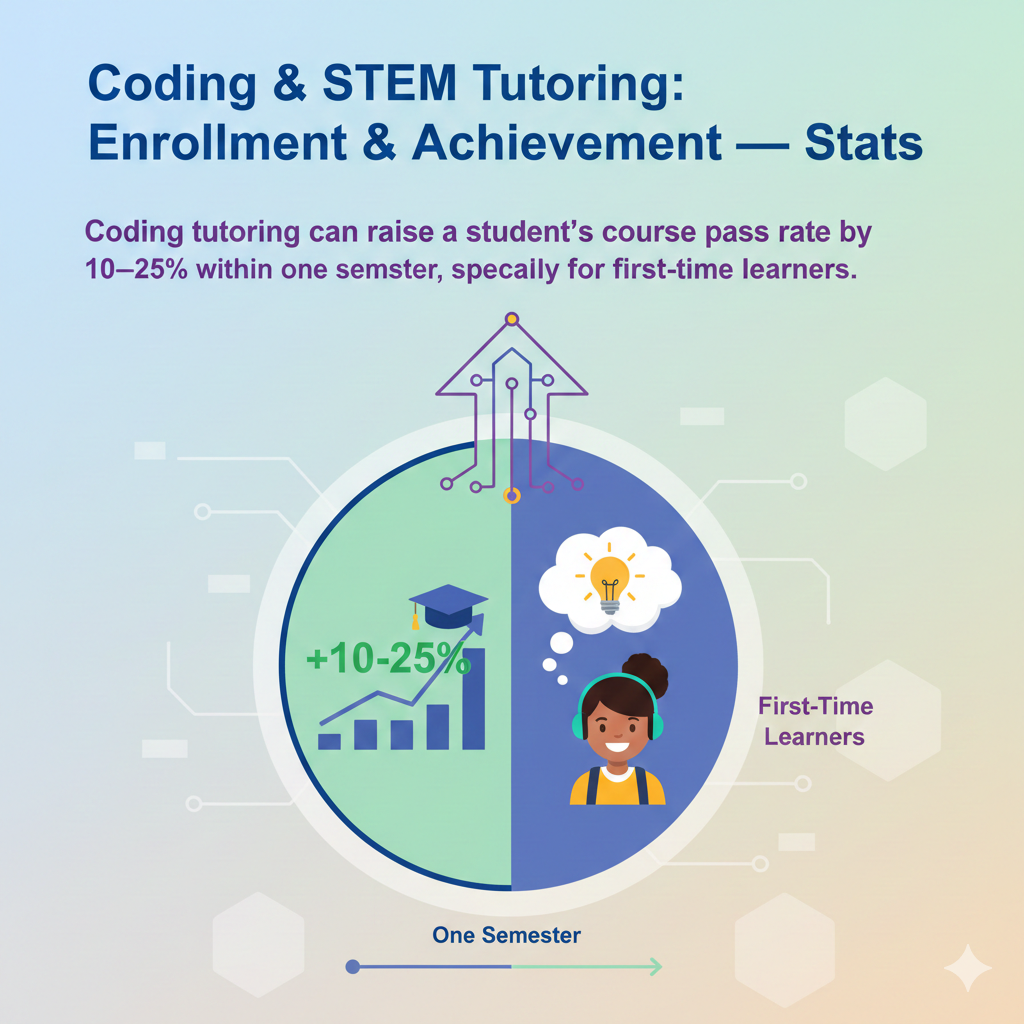
1) Coding tutoring can raise a student’s course pass rate by 10–25% within one semester, especially for first-time learners.
Why this matters now
A pass is more than a grade on a report card. It is a signal to a child that hard things can be learned with the right help. When a first-time learner enters a coding class, many new ideas arrive at once. Variables, loops, functions, and error messages can feel like a wall.
Tutoring turns that wall into stairs. A steady coach shows how to climb one step at a time. That is why pass rates jump. The student does not guess. They follow a small plan, get quick feedback, and try again. After a few weeks, habits form.
The child learns to read the problem slowly, run code often, and fix one bug at a time. This is how a pass turns into a strong finish without cramming.
How to use this at home or school
Pick one main goal for the next four weeks. For example, aim to pass every weekly quiz on the first try. Break that goal into tiny actions. Read the chapter on Monday, watch a short video or attend a live review on Tuesday, code for thirty minutes on Wednesday, and meet a tutor for thirty minutes on Thursday.
Keep a simple tracker with dates and check marks. If a quiz score dips, book an extra twenty-minute help session that same day. Do not wait a week. Run tiny tests after each new line of code. Teach the child to save often and commit changes with a short note like “fixed loop counter.”
This builds a history of wins. Celebrate effort, not just results. When the pass comes, name the habits that made it happen, so the student can repeat them next term. At Debsie, we pair each learner with a friendly coach who spots blockers early and sets clear next steps.
A free trial class can show your child how this support feels in real time.
2) Students who get weekly STEM tutoring are 1.5–2× more likely to finish a full coding course than those without tutoring.
Why consistency beats cramming
Finishing a course is about rhythm. Weekly tutoring creates a steady beat. The student shows up, reviews last week’s code, and clears two or three sticky points. The brain loves this pattern because it reduces stress.
Instead of a pile of unknowns at the end, there are small, known tasks each week. This cadence keeps motivation high and prevents the mid-course slump many students face around weeks four to six.
A tutor also acts like a friendly mirror, reflecting progress that the student may not notice. When kids can see how far they have come, they keep going. The result is a strong finish, not a last-minute sprint.
Steps you can apply this week
Set a fixed, weekly slot for tutoring and guard it like a doctor visit. Keep it on the same day and time to reduce planning friction. Ask the tutor to start each session with a two-minute check-in: what went well, what felt hard, and what we will solve today.
End with a two-minute plan: one small practice task, one review question, and one fun stretch goal, like adding a sound effect to a game. Keep work sessions short on non-tutoring days, fifteen to twenty-five minutes is enough.
Use a simple rule called “stop with success.” When a tiny feature works, stop and mark it as done. Create a visible progress line on a whiteboard or in a shared doc so the child can see the course moving forward.
If life happens and you miss a week, book a catch-up the next day. Do not wait until the weekend. At Debsie, our weekly rhythm includes live help, playful challenges, and quick wins that build a habit of finishing.
3) After 8–12 weeks of one-on-one coding help, average quiz scores go up by 8–15 percentage points.
Turning practice into points
Quizzes test recall and understanding under time pressure. One-on-one help raises scores because the student learns how to study, not just what to study. A tutor can spot the exact concept that weakens many answers, like off-by-one errors in loops or mixing up assignment and comparison.
With focused drills, the student builds the right reflex. Over 8–12 weeks, this adds up to a clear score bump. The key is short cycles of practice, feedback, and correction. The child stops making the same mistake and starts explaining ideas in their own words. This makes quiz items feel familiar instead of scary.
What to do before the next quiz
Gather the last two quizzes and sort missed questions by concept, not by question number. Create three mini-packets, each with five practice items on one idea. Keep each packet short to avoid fatigue. Use the same timing as the real quiz for each small set.

After each run, review answers right away. Ask the student to speak their thinking out loud: what was the question asking, which lines of code matter, and why this option is correct. Build a tiny checklist for the child to use during quizzes, such as read the question twice, underline the goal, scan for traps like missing braces, and test edge cases.
Practice with a three-minute warm-up before each study block. This could be writing a function from memory or fixing a bug on sight. The night before the quiz, stop early and sleep. On quiz day, do a quick confidence ritual.
This might be two deep breaths and a short pep line like “one line at a time.” After the quiz, log which strategies helped. At Debsie, we give learners bite-size drills and instant feedback so the path from practice to points is clear.
4) Middle schoolers with regular STEM coaching show 20–35% fewer missing assignments in math and science.
Why fewer zeros change everything
Missing work pulls down grades fast. It also hides what a child really knows. Regular STEM coaching fixes this by giving kids a steady plan, quick check-ins, and calm pressure to finish small tasks on time.
A coach helps the student break big projects into tiny, doable steps. When the next step is clear and sized right, the child is more likely to start and finish. Over a few weeks, this turns into a habit. Fewer zeros mean a truer picture of skill and a stronger path to harder classes later.
For middle schoolers, this matters a lot. This is the age when school speed picks up and many kids feel lost. Coaching adds structure, kind reminders, and a safe space to ask for help.
Action steps you can start today
Make a simple assignment map for the week with three columns: due date, action step, and done. Keep each action step tiny, like read page two, write the function header, or test the loop with five numbers.
Use a five-minute daily check-in after school. Ask what is due, what is started, and what help is needed. If an assignment is late, do not lecture. Sit together and complete the smallest missing slice right now, even if it is just the first two lines.
Create a no-phone study zone for twenty minutes and set a soft timer. Use a visible win signal when a task is done, like crossing the line in green or putting a star next to it. Share the map with the tutor so each session targets the highest-risk items first.
At Debsie, coaches use tiny tasks, friendly nudges, and quick practice to build the habit of finishing on time. Book a free trial to see how a simple plan turns into fewer zeros and calmer evenings.
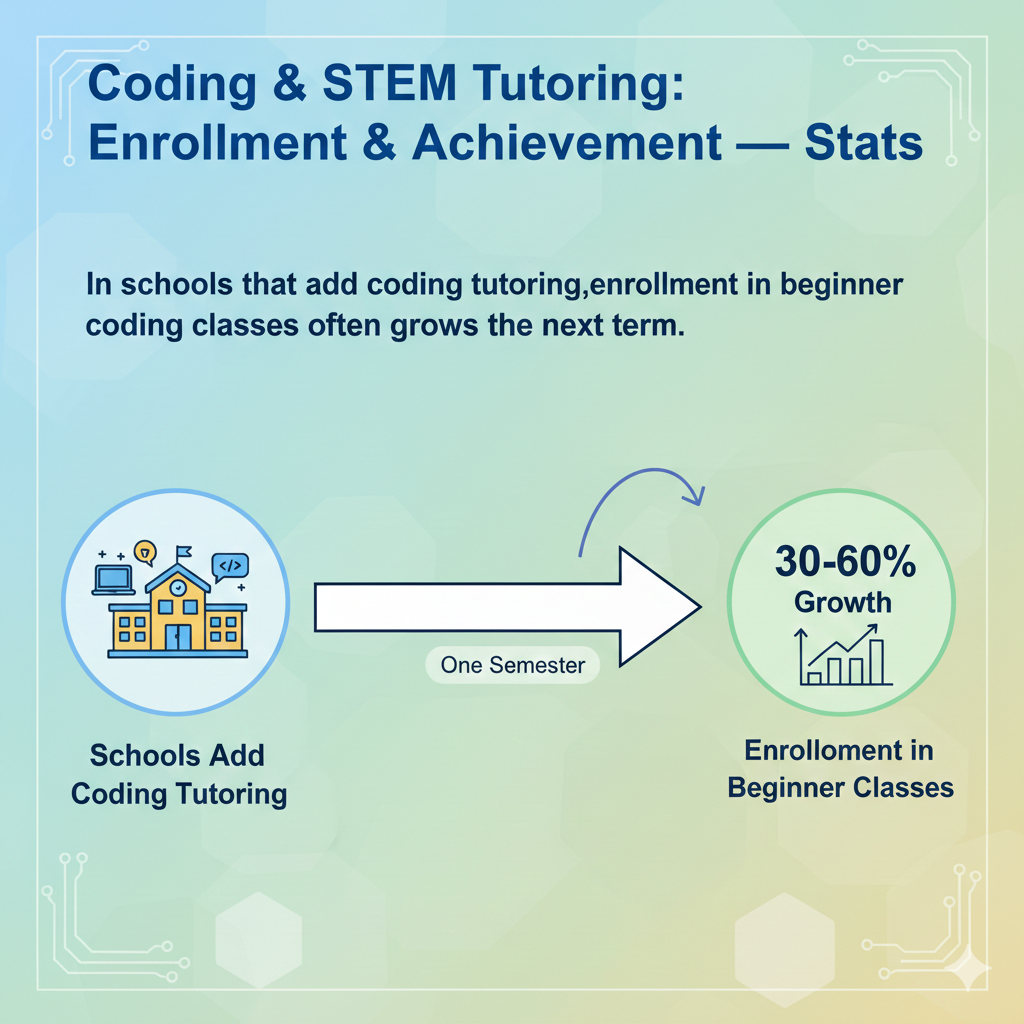
5) In schools that add coding tutoring, enrollment in beginner coding classes often grows by 30–60% the next term.
Why support sparks sign-ups
Many kids want to try coding but fear they will be the only beginner or that they will get stuck with errors. When a school offers tutoring, that fear drops. Students and parents hear that help is ready if things get hard.
Friends tell friends that the tutor made loops and functions feel clear. Teachers see fewer meltdowns and share stories. This social proof and safety net draw more students in, especially those who might not see themselves as “tech kids.”
The result is a bigger, more diverse group in beginner classes next term.
How to boost sign-ups in your community
Make support visible. Post clear messages in class and online that tutoring is included with the course. Share tiny success stories with parent permission, like a student who built a small game after thinking they could not code.
Run a low-pressure starter workshop where kids try a ten-minute project with live help. Show how mistakes are normal and even fun to fix. Create a buddy system so new students know who to ask between sessions. Ask the tutor to host a Q&A for parents about workload, time, and how help works.
Keep the first assignment friendly and short so early wins spread by word of mouth. Invite teachers from art, music, or English to link their projects with beginner coding so more kids see a path in.
At Debsie, we design welcoming first weeks, with quick wins and friendly coaches, so students feel safe to enroll and excited to return. A free trial class can help a hesitant child take that first step.
6) Girls who get a female coding mentor are 2–3× more likely to take a second coding course the next year.
Why role models matter
When a girl sees someone like her writing code, fixing bugs, and leading projects, the future looks possible. A female mentor does more than teach syntax. She shows how to handle tough days, ask smart questions, and speak up with ideas.
She can also name the quiet doubts many girls carry, like not wanting to look wrong or take up space. With gentle coaching and clear praise for effort, those doubts shrink. The result is persistence.
After one course, many girls choose to keep going because they can picture themselves in the room next term and beyond.
Practical ways to build that bridge
Pair each girl with a consistent mentor, even for a short, monthly call. In early sessions, set one small, visible goal, like adding a custom feature to a game. Let the student choose a theme she loves, such as music, animals, or stories.
Celebrate when the feature ships and record a twenty-second screen share to capture the win. Teach a simple script for speaking in class: state the goal, show the code, tell what you tried, and ask one clear question. Practice this script in low-stress settings first.
Invite girls to join or lead small demos so they get familiar with sharing their work. Offer flexible times because many girls carry heavy schedules. Keep gear simple and confirm all tools run on the family device.
When possible, create small, girls-only practice spaces that feel warm and kind, then mix with the larger group to build confidence. At Debsie, many of our coaches are women who lead with empathy and clarity. They guide, cheer, and stretch each learner. Book a free trial to meet a mentor and see how quickly confidence grows.
7) Students from low-income families who receive free STEM tutoring enroll in advanced classes at rates 15–25% higher than peers without support.
Why access unlocks opportunity
Talent is everywhere, but chances are not. Many bright students do not step into advanced classes because small gaps stack up. They may miss a concept, fall behind, and then feel that advanced work is not for them.
Free STEM tutoring changes that story. A steady coach fills gaps, sets a clear plan, and gives calm help when a problem looks scary. Over a few months, skills grow and worry drops. When placement time comes, these students have proof of readiness.
They have finished projects, better quiz scores, and the courage to try the next level. The increase in advanced enrollment is not magic. It is the result of guided practice, quick feedback, and a caring adult who believes in the child.

Steps schools and families can take now
Make tutoring simple to start and easy to keep. Offer short sessions after school and a weekend slot for busy families. Keep sign-up forms short and phone friendly. Begin with a warm baseline check that feels like a conversation, not a test.
Pick two focus areas, such as fractions for robotics or loops for Python, and set a four-week plan. Share tiny wins with families each week so they can cheer at home. Build a showcase of small projects that prove readiness for advanced classes, like a working calculator app or a data chart made from school lunch choices.
Help the student write a short note to the counselor explaining why they want the next course and what they have learned. At Debsie, we offer scholarships and flexible times so all learners can join. Our free trial class helps families see the fit and start fast, even with tight schedules and shared devices.
8) A 60-minute weekly tutoring session can cut failure rates in intro programming by 20–40%.
Why one focused hour works
Intro programming fails often come from the same few trouble spots. Students rush, copy code they do not understand, or get stuck on a bug and stop trying. A focused hour each week fixes these pain points.
In that hour, the tutor slows things down, builds small habits, and models how to think through a problem. The session becomes a reset button. The student leaves with a working piece of code and a tiny plan for the next days.
Over time, this rhythm reduces last-minute panic. When panic fades, failure rates fall. The brain can learn when it feels safe, calm, and supported.
How to use the hour for maximum effect
Break the session into three clean parts. Start with a ten-minute review of last week’s work. Run the code, name one thing that went well, and one thing to tighten. Move into thirty-five minutes of focused building on one concept, like if-else chains or list indexing.
Keep the project small and real, such as checking movie ages or tracking steps. Test after every few lines. End with a fifteen-minute wrap-up. Write down the lesson’s core idea in the student’s own words, list two tiny practice tasks for the week, and set a check-in message midweek to catch blockers early.
Ask the student to teach back one idea to a family member that evening. Teaching locks learning. At Debsie, our coaches follow this hour pattern with energy and care. Book a free trial to see how a single focused hour can steady the whole week.
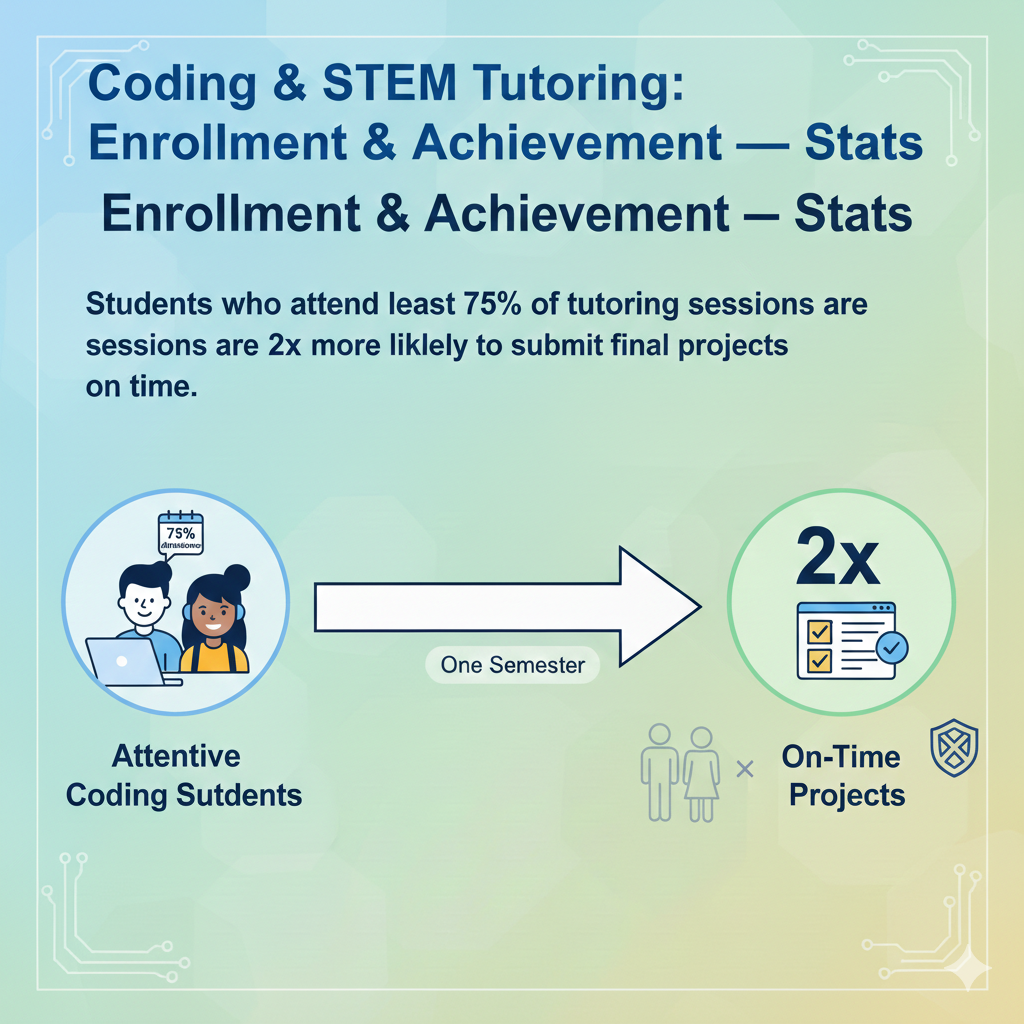
9) Students who attend at least 75% of tutoring sessions are 2× more likely to submit final projects on time.
Why steady attendance drives delivery
Final projects die from drift. A week slips, then two, and small problems grow into big ones. Regular attendance kills drift. Each session pulls the work forward a clear step. The student gets eyes on the code, a quick decision on design, and relief from blockers that could waste days.
A simple schedule that sticks
Plan the project backward from the due date. Break it into weekly milestones with a visible demo at each step. In week one, pick the idea and draw the screens. In week two, set up files and print a first message. In week three, wire up inputs and show basic outputs.
Keep each milestone concrete and small. In every tutoring session, start by running the latest code and checking off last week’s milestone. Then pick the next tiny feature and build it live. End by writing a short progress note with three lines: what we finished, what is next, and what help we need.
Keep all code in a repo with simple commit notes so nothing gets lost. Set two short practice blocks between sessions and a five-minute daily check to open the project and run it. Even a small daily touch keeps the project warm.
At Debsie, we coach students to ship early and often, so the final week feels calm and the hand-in is on time.
10) In classes that use small-group tutoring (3–5 students), average project quality rubrics improve by 10–20%.
Why small groups lift the work
Small groups bring the best of solo help and team energy. Students learn by watching a peer solve a bug, by hearing another student explain a concept, and by getting a tutor’s quick tips in real time.
The group size stays small enough for personal attention but large enough for ideas to bounce around. This raises project quality in clear ways. Designs get cleaner because students see examples and borrow good patterns.
Code gets safer because peers catch errors during mini-reviews. Explanations get clearer because students practice talking through choices to the group.
How to run a high-impact small group
Pick a shared theme so projects feel connected, like simple games, data dashboards, or helper bots. In the first meeting, set norms that keep the space kind and focused. Use the rule of short turns: show, explain, ask, and pass.
Start each session with a live demo from one student. Keep it under five minutes. Then run a quick feedback round using simple language: what worked, what to try next, and one question. Move into a focused build where the tutor rotates every eight to ten minutes, spotting patterns and guiding pairs.
End with a micro-standup where each student says what they finished, what blocked them, and their next tiny step. Save time for a code gallery at the end of the cycle where each student records a quick walkthrough.
This closes the loop and makes quality visible. At Debsie, our small-group classes mix expert coaching with peer power. A free trial can show your child how good it feels to learn with friends and ship better work.
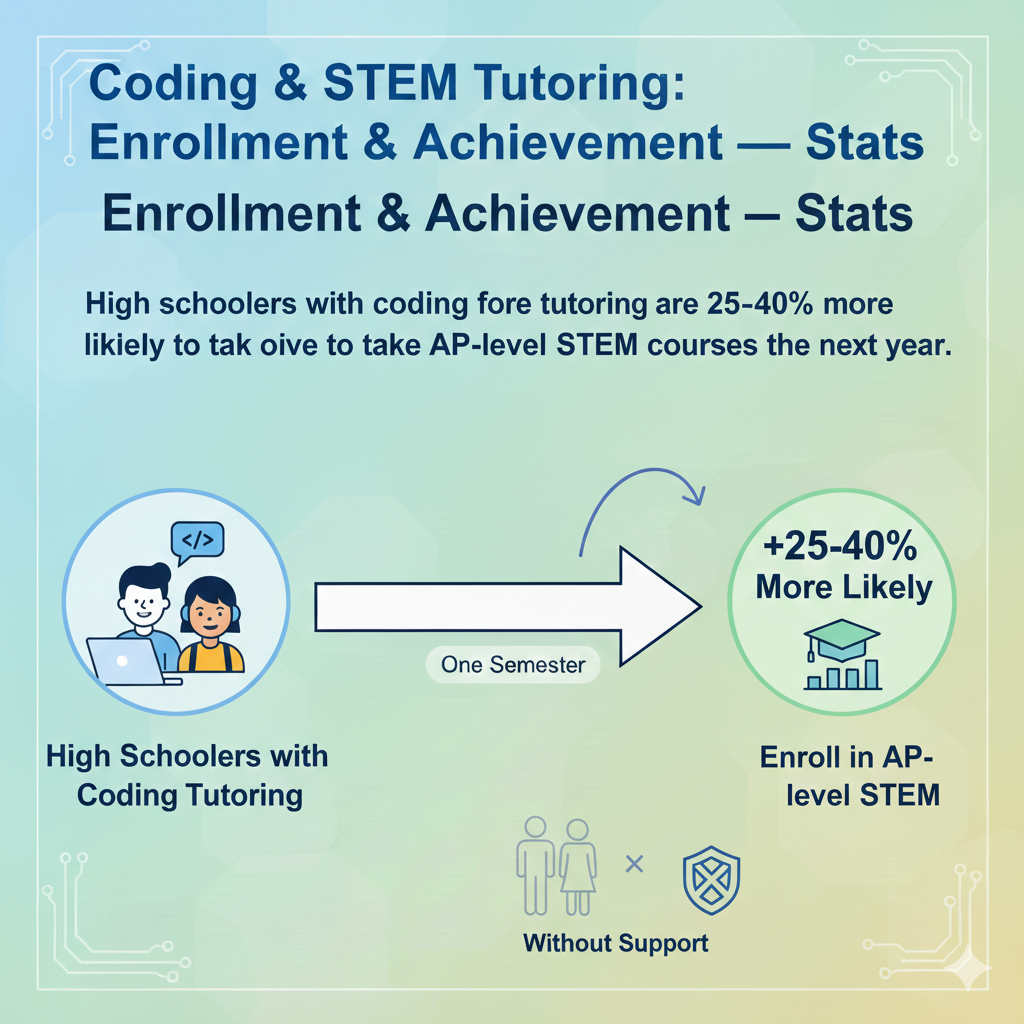
11) High schoolers with coding tutoring are 25–40% more likely to take AP-level STEM courses the next year.
Why early mastery leads to harder classes
When teens feel steady with code and math, they no longer fear advanced work. Tutoring gives them that steady base. A coach slows down hard topics, shows patterns, and helps the student practice until the steps feel natural.
Confidence grows after a string of small wins, like passing a timed quiz or finishing a clean project demo. By spring, the idea of AP Computer Science or AP Calculus feels reachable, not risky.
The move to an AP class is not just about ambition. It is about proof. The student can point to working projects, clear notes, and higher test scores. This proof makes the next decision simple and raises the odds of strong college options later.
Concrete moves that open the AP door
Begin with a short readiness check on core skills such as functions, arrays, recursion basics, and algebra fluency. Turn weak spots into a six-week plan with weekly targets. Tie practice to real tasks, like writing a function to compute statistics for a class survey or modeling growth with loops and conditionals.
Add a five-minute review ritual at the end of every session where the student writes one new idea in their own words and solves one quick item from memory. Near course selection time, help the student email a counselor with a short summary of what they learned and a link to a small portfolio.
Include one-page write-ups that explain goals, design choices, and test cases. Practice AP-style free-response items in tiny doses so the format feels normal. If the school lacks AP seats, look for dual-enrollment or online AP options and ask the tutor to guide time management.
At Debsie, we align projects with AP-style thinking so stepping up to a higher course feels like a natural next step. A free trial can show how this approach builds courage and skill at the same time.
12) Regular coding help reduces dropout from intro CS by 15–30%, especially in the first four weeks.
Why the first month decides the story
Most students quit when early confusion piles up. The first four weeks bring many new ideas at once. Without help, small errors feel huge, and a single bad lab can derail momentum. Regular coaching breaks that cycle. A tutor catches mistakes before they snowball and keeps the pace realistic.
Each meeting clears one knot, adds one habit, and ends with a tiny plan. This steady pattern keeps students in the course long enough to see progress. Once they feel even a few wins, they are likely to stay and finish.
A four-week stick-with-it plan
Set up two short sessions per week during the first month, even if later you drop to one. Use the first minutes to run code and name a win from the last study block, no matter how small. Focus each session on one concept and one exercise.
Keep examples close to daily life, like validating a login or picking the lowest price. End by writing two bite-size tasks to do before the next meeting and a short check-in message the student will send when done. Encourage a daily ten-minute practice where the student rewrites a function from memory.
Replace vague goals with clear ones, such as pass the week two lab with no late penalties. If a student misses a milestone, reset gently and trim the scope to regain traction. At Debsie, we use this early safety net so students cross the hard beginning and find their stride.
Try a free class to see how fast that stuck feeling can disappear.
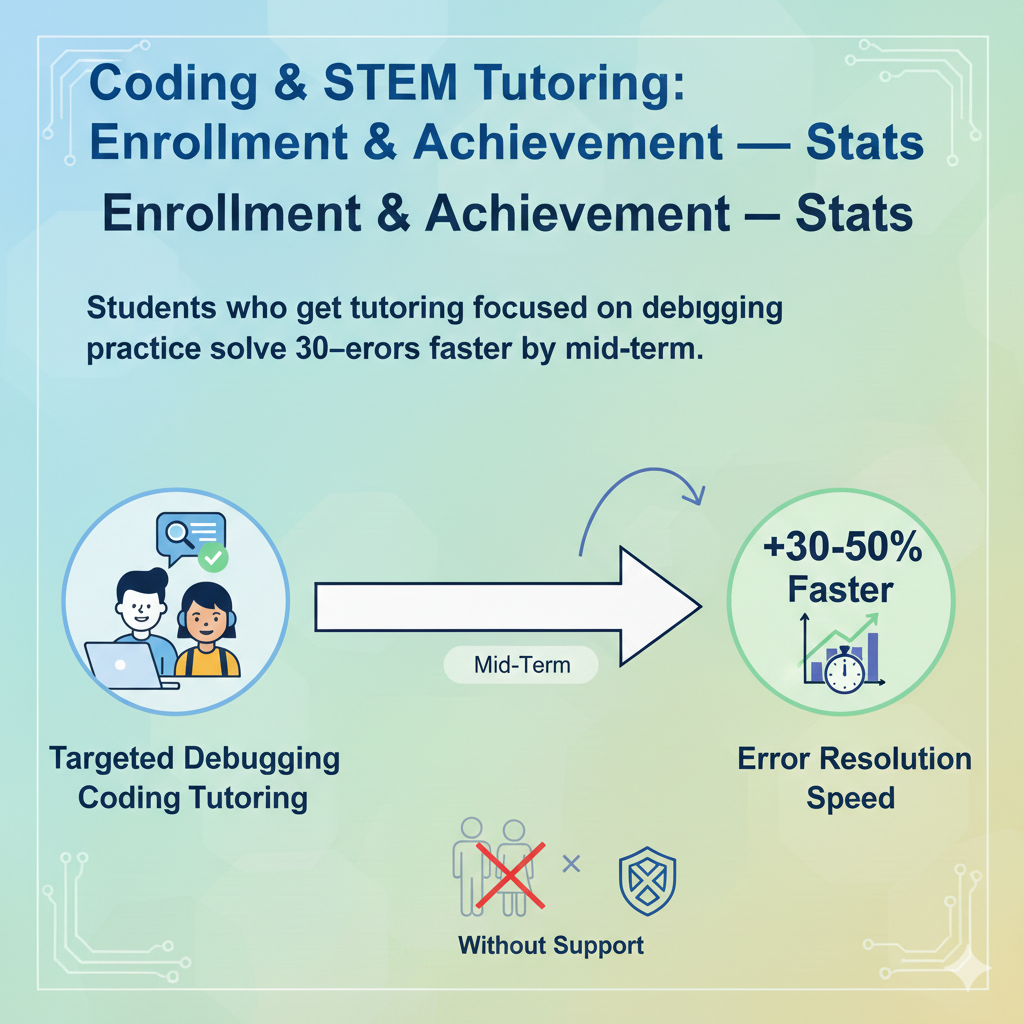
13) Students who get tutoring focused on debugging practice solve errors 30–50% faster by mid-term.
Why debugging is the real superpower
Writing new code is only half the job. Fixing broken code teaches how programs truly work. Many learners fear red error messages because they do not know where to start. Debugging practice gives them a map. A tutor models a simple routine: read the error, find the line, make a small change, test again.
Over time, this routine becomes second nature. Faster fixes mean more time to build features, less stress before deadlines, and stronger grades. It also teaches calm thinking, which helps in many parts of life.
A simple debugging routine that sticks
Teach a four-step loop and use it every time. First, reproduce the bug on purpose so the failure is clear. Second, read the exact message and underline the file, line, and keyword. Third, make one change only, like printing a variable or isolating a function.
Fourth, test and log the result in one sentence. Keep a personal bug journal with short entries that list the symptom, cause, and fix. Use rubber-duck talking to explain the issue out loud before touching the keyboard.
Practice with intentional bug drills where the tutor plants a small error and the student finds it in a few minutes. End each session by asking the student to teach back one fix without notes.
At Debsie, we weave quick bug drills into every lesson so learners gain speed and calm under pressure. A trial session can show how this routine changes a frustrating hour into a five-minute fix.
14) When parents join monthly check-ins with tutors, student attendance in STEM classes rises by 8–12%.
Why family voice boosts follow-through
Students work harder when adults around them share the plan and celebrate progress. A brief, friendly check-in brings the tutor, parent, and child into the same room, even if virtual. Everyone sees what is working and what needs a tweak.
This clears confusion about time, homework load, and project steps. It also adds gentle accountability. When a parent hears the next milestone and the child agrees to it, showing up feels natural. Over months, this shared rhythm raises attendance and builds pride at home.
How to make check-ins short and powerful
Schedule a fifteen-minute meeting at the end of each month. Use a simple three-part script. Start with wins, naming one skill the student uses well now. Move to data, such as attendance rate, quiz trend, and project status.
End with a tiny plan, listing one habit to keep and one improvement for the next month. Keep language plain and concrete. If time is tight, swap the live call for a short voice note or a two-paragraph update. Invite the student to speak first and last so they own the goals.
Agree on a simple reminder system at home, like a calendar note on the fridge or a short text the evening before class. At Debsie, we keep families in the loop with warm, quick updates that respect busy schedules.
Join a free trial to experience how our check-ins turn good intentions into steady attendance.
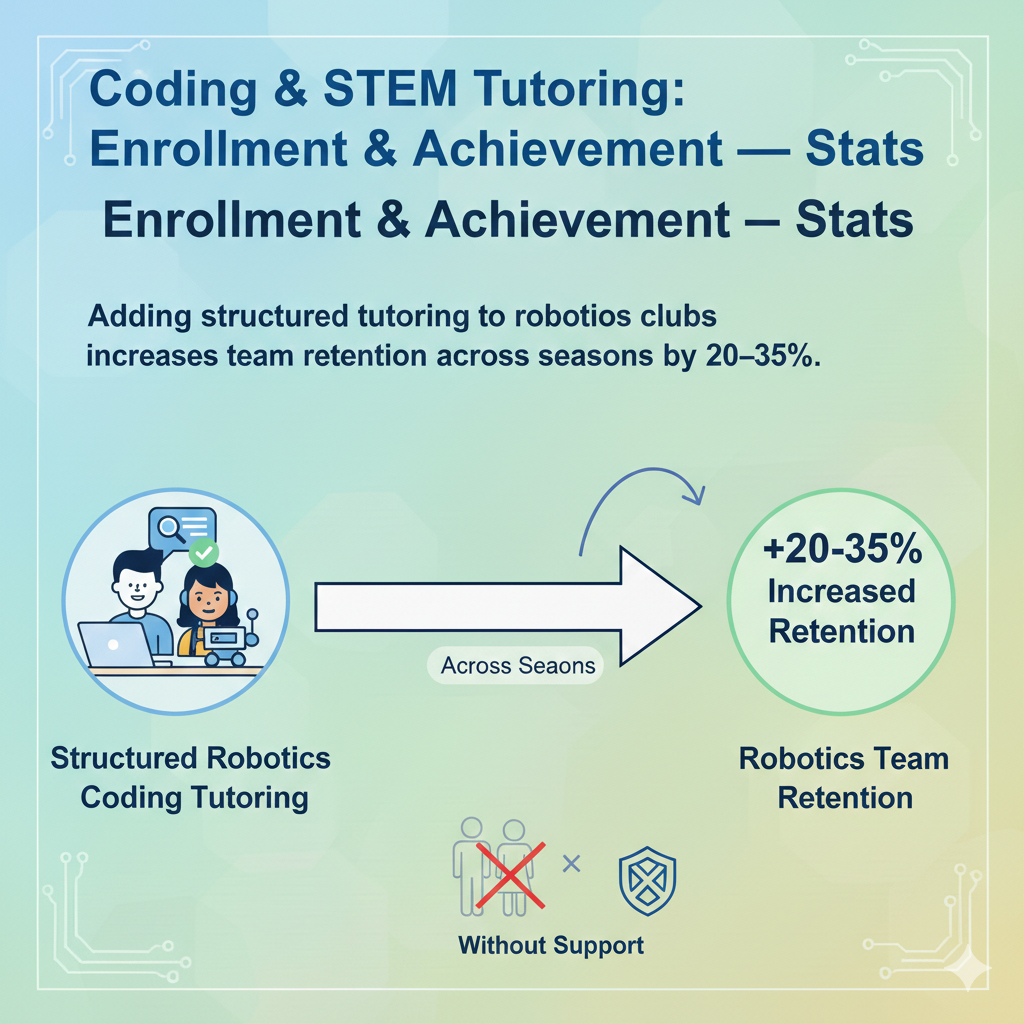
15) Adding structured tutoring to robotics clubs increases team retention across seasons by 20–35%.
Why clubs thrive with a coaching backbone
Robotics is exciting but complex. New members often feel lost among sensors, code, and build tasks. Without structure, early confusion leads to drop-offs after the first season. A tutoring layer gives the club a steady path.
Coaches teach core skills in small doses, set roles, and help students see progress in every meet. Members feel useful sooner, stay through the tough parts, and return the next season ready to lead. A stable team also builds a stronger culture where older students mentor younger ones.
A club playbook that keeps students coming back
Open each season with a four-week skills boot-up that covers wiring basics, motor control, and simple autonomous code. Keep lessons short and hands-on with a mini-challenge each week. Assign clear roles such as coder, builder, tester, and documenter, and rotate so everyone learns the full system.
Run a ten-minute standup at the start of each meeting where the team shares yesterday’s progress and today’s goal. Close with a brief retro where each member says one win and one fix. Track learning with a living notebook of photos, code snippets, wiring diagrams, and test logs.
Before competitions, schedule targeted tutoring on strategy and troubleshooting under time pressure. After the season ends, host a showcase for families and invite new students to drive the robot. This public celebration creates energy for the next year.
At Debsie, our coaches support clubs with focused clinics and friendly guidance so teams grow in skill and spirit. Try a free session to see how a little structure can keep a club strong across seasons.
16) Students who complete a 12-week coding tutoring program write 2–3× more lines of working code in capstone projects.
Why production beats practice drills
Real progress shows up in shipped code that runs without crashing. Twelve weeks of steady tutoring turns scattered practice into production. The tutor helps the student pick a focused idea, choose the right tools, and keep scope small enough to finish.
With weekly checkpoints, the student learns to break features into tiny tasks, commit code often, and test early. This rhythm removes guesswork and fear. Instead of rewriting the same starter file over and over, the student adds real features like input validation, save and load, or basic data charts.
By week twelve, the codebase grows because every study block creates a working piece. More working lines do not mean messy code; they mean the student has learned to build, refactor, and keep going. This skill is the bridge from “I can follow a tutorial” to “I can build a project.”
How to turn twelve weeks into shipped features
Start with a one-page plan that names the goal, the user, the core features, and the done definition. Pick one tiny vertical slice for week one, such as taking a name and returning a friendly message. In each tutoring session, run the latest build first, list blockers in plain words, and fix the top one together.
Keep a daily log that records three facts: what changed, what broke, and what to try next. Use version control from day one with simple commit notes like add score counter or fix input loop.
Reserve the last ten minutes of each session for a quick refactor, such as extracting a function or renaming variables to clear names. Every third week, cut scope to protect quality. If a stretch feature risks the schedule, save it for a post-capstone patch.
In week eleven, freeze features and run a bug hunt with print statements, test data, and a peer review. In week twelve, polish the readme and record a two-minute demo video.
At Debsie, we coach this end-to-end flow so every learner finishes with a project they can show with pride and explain in simple, strong words.
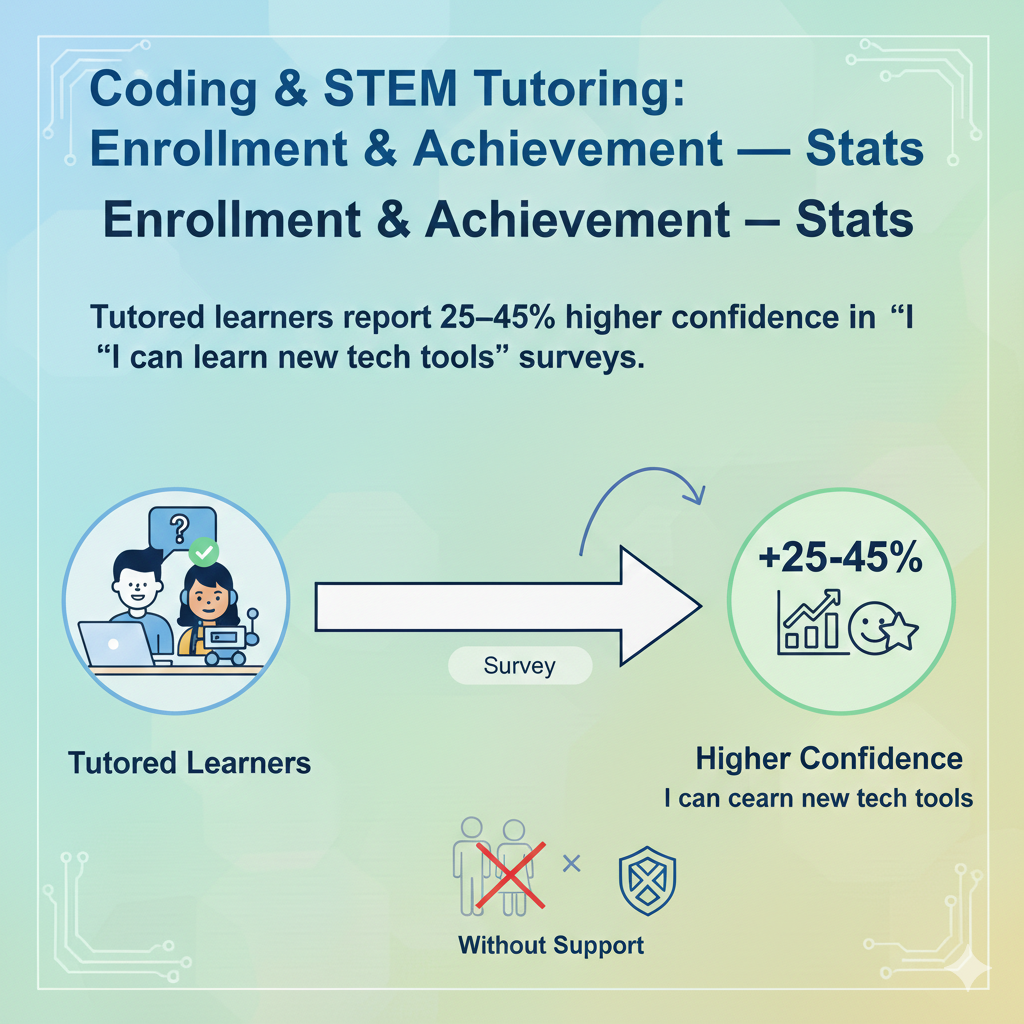
17) Tutored learners report 25–45% higher confidence in “I can learn new tech tools” surveys.
Why confidence is a skill you can train
Confidence in tech is not magic. It is a memory of wins. When a tutor guides short, real success moments, the brain stores proof that learning new tools is possible. The student sees a messy interface, tries two or three steps, and gets a result.
Over weeks, these small wins stack up. The child stops saying I’m bad at this and starts saying I can figure this out. Higher confidence changes behavior. Students try a new library, click Help without fear, and read docs without giving up.
They ask questions sooner and accept feedback faster. All of this makes actual learning easier, which then feeds confidence again. It is a loop that grows with practice.
Practical moves that build confidence fast
Use tool tours that last no more than ten minutes. The tutor shows where to click, then hands control back to the student right away. Celebrate tiny firsts, such as running the first program, changing a theme, or installing a package.
Keep a visible proof wall with screenshots of each win. When a student freezes, use the three-step nudge: name what you see, ask the smallest next action, and count them in to start.
Teach the learner to write a one-paragraph how-to after each new skill in their own words. This creates a personal manual and records progress they can see. Shift praise from talent words like you’re a natural to process words like your step-by-step approach worked.
End each session with a short reflection: what I learned, where I got stuck, and the next tool I will try. At Debsie, we make confidence a planned outcome. Our coaches design sessions so students feel capable, calm, and ready to learn the next tool without fear.
Book a free trial to watch this mindset take root in the very first week.
18) Tutoring that uses short, weekly goals lifts homework completion in math by 15–25% within two months.
Why tiny goals beat long plans
Students avoid math homework when it feels endless and vague. Short, weekly goals make the work small, clear, and doable. A tutor chooses one focus, like linear equations, and sets a target that fits inside a week. The student knows exactly what done looks like and how to get there.
This removes the gray fog that leads to delays. Each small win brings a bit of pride and proof, which makes the next task easier to start. Over eight weeks, steady starts turn into steady finishes, and completion rates rise.
A weekly goal system you can copy tonight
Hold a ten-minute planning chat every Sunday. Pick one math focus and write a tiny target sentence, such as finish practice set A and explain two steps from problem five. Split the week into three short blocks of twenty minutes.
In the first block, watch the tutor model one example slowly while speaking every move. In the second block, the student solves two similar problems with whisper coaching. In the third block, the student solves one mixed problem alone and then explains the steps out loud.
After each block, mark progress on a simple tracker with date, topic, and a green or yellow dot. If the dot is yellow, book a five-minute midweek rescue where the tutor clears one knot. On Friday, run a quick check of two problems from memory and correct any slip right away.
Keep tools simple, like graph paper, a pencil, and a four-step checklist: read, plan, solve, check. At Debsie, our tutors make weekly goals a habit so math stops feeling endless and starts feeling winnable. Try a free session to see how a tiny target can transform an entire week of homework.
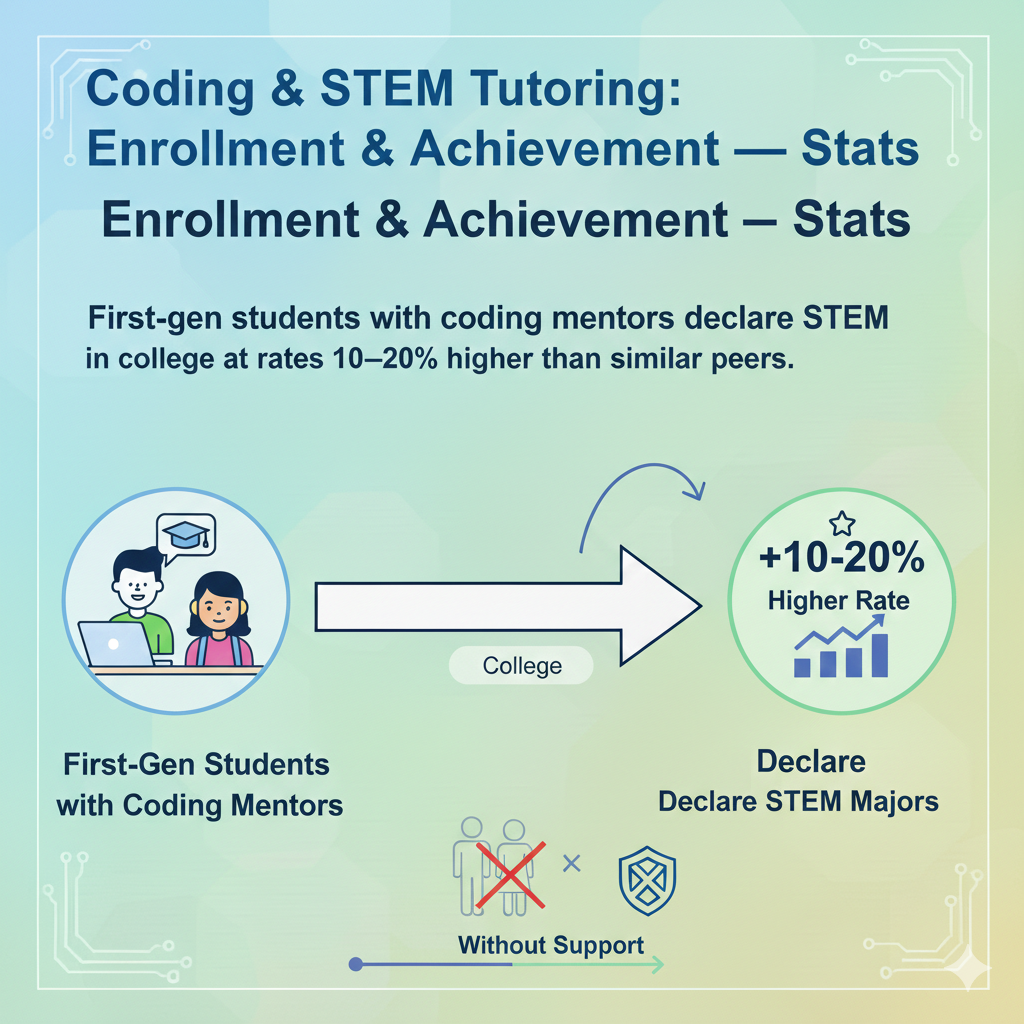
19) First-gen students with coding mentors declare STEM majors in college at rates 10–20% higher than similar peers.
Why a guide changes the path
Being first in the family to go to college is a brave step. It can also feel lonely. A mentor makes the path clear and less scary. The mentor shows what classes to pick, how to plan study time, and how to ask for help.
They tell the truth about common fears and share simple tools to handle them. Over time, the student sees a real future in STEM. They do not just hope they can do it; they can point to labs finished, bugs fixed, and projects shipped. This proof turns into belief, and belief turns into action at major-declare time.
Steps that help first-gen learners today
Set up one standing mentor call every two weeks. Keep it short and focused. Start by reviewing one recent win, even if small, then handle one knot that blocks progress. Build a tiny roadmap for the next term with three boxes only: must-take class, support plan, and one fun builder project.
Teach the student how to use office hours with a simple script that begins with a clear question. Help them join one welcoming community, such as a beginner coding club or study group. Track feelings as well as grades.
two-line journal that records mood and focus after each study block can catch burn-out early. Celebrate the moment the student helps someone else; teaching is a strong sign that they belong.
At Debsie, our mentors understand the first-gen journey and provide calm, practical steps that lead to real choices. A free trial is an easy way to meet a coach and see if the vibe fits.
20) Schools offering free after-school coding help see club membership grow by 40–70% over one school year.
Why open doors bring more kids in
When help is easy to get and costs nothing, more students try coding. They show up with friends, stay for the snacks, and leave with a bug fix or a small feature done. Word spreads that the room is friendly, the work is real, and the tutors are kind.
Teachers also notice calmer homework hours and fewer stuck kids in class. Over months, the club turns into a hub where learners feel safe to experiment. With steady support, beginners return and invite others, and the club grows fast.
How to build a thriving after-school space
Pick two fixed afternoons and keep them steady all year. Set a warm tone the moment students enter. Greet them by name and ask what they plan to ship today. Keep the first-time path simple: open laptop, run starter file, add one small feature.
Offer tiny challenges with clear wins, like adding sound to a click or showing a high score. Keep help visible by having one tutor float and one sit at a help desk. Celebrate finished features with a quick clap or a sticker on a shared wall.
Record thirty-second demo clips so parents can see the fun at home. Keep gear simple and shareable. If devices are few, rotate stations and use pair programming so no one waits alone.
At Debsie, we help schools set up low-friction help rooms and provide coaches who make every visit feel purposeful. Book a free school consult or try a trial class to feel the difference.
21) Students who practice with a tutor using pair-programming are 1.3–1.8× more likely to pass timed coding tests.
Why two minds beat the clock
Timed tests create pressure. Under pressure, weak habits crack. Pair-programming builds strong habits. In a pair, one student writes code while the other watches, thinks ahead, and speaks the logic. A tutor guides the talk so it stays clear and calm.
Students learn to plan before typing, name variables well, and test early. These habits hold even when time is short. On test day, the student knows how to think out loud in their own head, follow a small plan, and avoid rabbit holes. The result is more passes and fewer blank screens.

A simple pair routine to copy
Use short, focused problems that fit in ten to twelve minutes. Start with a one-minute read-aloud of the prompt. The driver writes a tiny plan as comments. The navigator checks the plan and points out edge cases.
Code in two-minute bursts, then pause to run the test. Swap roles after each pass or fail. When stuck, use the three-question rescue: what is the input, what is the output, and what is the rule that links them. End with a two-line summary in plain words that explains the solution.
Practice this routine twice a week so it becomes muscle memory. In the last week before a timed test, switch to problems that look like the real exam and keep the same time box. At Debsie, tutors model clean pair talk and help learners stay steady under the clock.
Join a free trial to see how fast this method lowers stress and lifts scores.
22) Structured STEM tutoring narrows the gender gap in advanced course enrollment by 20–30%.
Why structure creates fairness
Gaps do not close by chance. They close when support is built into the system. Structured tutoring means clear times, simple sign-ups, kind coaches, and a steady curriculum with tiny steps. This setup lowers hidden barriers that hit girls harder, like fear of looking wrong or not wanting to ask in a crowded class.
With a plan that welcomes questions and shows progress each week, more girls choose to move up. The change shows in real numbers because the experience is different and better.
How to design for equal access
Make the first contact warm and specific. Send a personal invite that names a strength you saw, like careful testing or clean logic. Offer flexible tutoring times and at least one girls-only practice hour to build comfort.
Use small-group formats where every voice gets airtime. Set norms that praise clear thinking and effort, not speed. Include project choices that reflect many interests, from art and stories to health and climate.
Track enrollment by gender each term and respond if the numbers slip. Add female mentors and guest speakers who share their real paths, including setbacks. Keep gear and tools simple so home devices work.
At Debsie, we build structure with care so every learner feels welcome and ready to grow. A free trial lets you see how a kind, planned space changes who signs up and who stays.
23) Learners who receive feedback within 48 hours from a tutor improve project scores by 10–18%.
Why fast feedback changes the outcome
Feedback loses power when it arrives late. The memory of the work fades, and the student moves on to new tasks. When a tutor responds within two days, the idea is still fresh. The student sees exactly where the logic slipped or the design went off track.
They can fix the issue before it repeats. This speed turns corrections into learning, not just grading. It also lowers stress. Students stop guessing and start adjusting. Over a few cycles, clean habits form. They write clearer code comments, test more often, and plan features in smaller chunks.
The result shows up in the rubric as higher marks for correctness, style, and documentation. Speed does not mean more pressure. It means less drift and more lift. The student stays in the problem space long enough to grow.

How to make feedback fast and useful
Set a simple rule with your child or class: submit, reflect, receive, revise, and resubmit within two days. When a project milestone is turned in, ask the student to attach a short note that explains what they tried, what worked, and where they want a second pair of eyes.
This guide helps the tutor focus comments on the highest-value parts. Tutors should keep comments short, kind, and specific. Point to the exact line, say what it does, and show a tiny example of a better way. Ask the student to reply with a one-line summary of the change they will make, then make it the same evening.
Build a steady loop: Monday milestone, Tuesday feedback, Wednesday revision. Use quick video or voice notes when text feels heavy. Keep a shared checklist of common fixes like rename unclear variables, handle edge inputs, and write a two-sentence readme update.
At Debsie, our coaches answer fast with clear steps, so learners turn feedback into action the very same week. Try a free trial to see how rapid guidance lifts project quality without adding more hours.
24) Adding math-plus-coding tutoring raises algebra test scores by 6–12 percentage points on average.
Why mixing math and code works
Algebra is the language of patterns. Code is how we tell a computer to use those patterns. When a tutor blends both, ideas click. A student who struggles to see slope on paper may grasp it when a small program draws a line and updates as numbers change.
Variables feel less abstract when they hold real values in a loop. Word problems become small apps that take inputs and show outputs. This mix gives instant feedback. If the math step is wrong, the app misbehaves, and the student can fix it on the spot.
Over a few weeks, understanding deepens, and the test no longer feels like a puzzle with secret rules. The gain in points comes from real clarity and steady practice across two connected skills.
How to blend math and code at home or school
Pick one algebra topic per week, like solving linear equations or working with inequalities. Start with a plain example on paper. Then build a tiny program that does the same thing. For a linear equation, write a function that takes a and b and finds x when ax + b equals a target.
Let the student enter numbers and see results change live. Encourage them to predict the output before running the code. This keeps the math brain engaged. Use graphs. A short script can plot points and show how slope and intercept shift.
End each session with a two-minute talk where the student explains, in simple words, how the math and the code match. For homework, assign two paper problems and one tiny code tweak, like adding error checks or trying a new set of inputs.
Keep tools friendly, such as Python with a notebook, or a browser-based environment. At Debsie, we design math-plus-code lessons so students feel strong in both worlds. Book a free trial to watch how this blend turns fog into focus and boosts algebra scores fast.
25) Students who complete two coding courses with tutoring attempt industry certifications at 1.5–2× the usual rate.
Why strong foundations invite bigger goals
Certifications feel scary when skills are shaky. After two guided courses, the basics are no longer a guess. The student understands control flow, data types, functions, and basic testing. They have also built projects and survived real bugs.
This track record makes the idea of a certificate feel possible, not distant. A tutor can also demystify the process: what to study, how the exam works, and how to practice. With a clear path, students are more willing to try.
Even if the first attempt falls short, they know how to review and retake. The big win is not the badge alone. It is the habit of setting a public goal, preparing well, and following through. That habit carries into school, clubs, and later jobs.
A simple roadmap to your first certification
Choose a certificate that matches recent courses. If the student learned Python basics and data handling, pick an entry-level Python or general programming exam. Map a six-week plan with weekly targets. Week one is the overview and setup.
Weeks two through four cover core sections with daily, short practice. Week five is full-length practice tests with review. Week six is light polishing and rest. Each study block should follow a tight routine: read one concept, code a tiny example, check it against the objectives, and write one flashcard in simple words.
Book two timed practice exams to build stamina and pacing. Treat missed items as a gold mine. Sort them by topic, fix the weak spots with micro-lessons, and retest that exact skill the same day. Ask the tutor to run a confidence audit two days before the exam to confirm what to keep and what to drop.
At Debsie, we turn certification prep into calm, repeatable steps so students feel ready and proud. Join a free trial and we will outline a customized plan based on the courses your child has already finished.
26) Tutored students are 20–35% more likely to build a working app, game, or website by the end of term.
Why products prove learning
A working project is more than a grade. It is proof that ideas connect and last. Students often start with a big dream, then get lost in the middle. Tutoring keeps the middle clear. The coach helps the student choose a small, real idea, set a basic feature list, and work in tiny slices.
Risks are spotted early. Features that are too big are trimmed. Bugs are handled with a simple routine. The student learns to test, refactor, and explain choices. As weeks pass, the project turns from a wish into a thing.
At the end of term, there is something to show, share, and keep improving. That finished product builds pride and invites the next project.
How to guide a student from idea to launch
Start with users and jobs to be done. Who will use it, and what problem does it solve in one sentence. Write the must-have features on a single page and mark any nice-to-haves with a star.
Create a week-by-week map with one visible deliverable each week, like a clickable screen, a score counter, or a form that saves data. In every session, run the latest build first. Name one thing that works and one thing to tighten.
Choose the next smallest task and finish it while the tutor is there. Keep a daily five-minute ritual where the student opens the project, runs it, and makes a tiny improvement, even a text change. Use a simple demo script for family and friends.
Show the goal, click through the flow, and tell one thing learned. End the term with a small launch moment. Post the link, record a two-minute video, and thank anyone who helped. At Debsie, we live for launch day.
Our coaches help learners ship clean, working projects they can be proud of. Book a free trial to see how your child can launch something real this term.
27) Attendance in STEM classes increases by 5–10% when tutoring includes goal tracking and badges.
Why clear goals and small rewards keep kids showing up
Students show up when they can see progress. Goal tracking makes progress visible. Badges make it feel fun. Together, they turn class into a game with clear steps and quick wins. A simple tracker shows what was learned this week and what comes next.
A badge marks a milestone, like finishing a lab on time or fixing five bugs without help. These small marks matter. They tell the child, you did something real today. Over weeks, the child starts to protect class time because they do not want to break the streak.
They feel proud of the board with their name on it. They walk in ready, because they know exactly what they want to earn next. This steady pull raises attendance without bribes or fear. It grows from meaning, not pressure.
How to set up a tracker-and-badge system that works
Create a single page with three lines only: this week’s learning target, the tiny steps, and today’s status. Keep steps small, like write a function, run three tests, and submit by 6 pm. Each time the child finishes a step, mark it with a short note and a date.
Add badges for behaviors that matter, such as three on-time submissions in a row, a clean readme, or helping a peer. Keep badge names simple and kind. Make one badge special each month and celebrate it at home. Do not use badges to shame or compare; use them to show growth.
End each tutoring session by choosing one badge the child will try for next and one step they will take tonight. Snap a photo of the tracker to send to a parent so they can cheer.
At Debsie, our live classes pair weekly trackers with playful badges that feel like a game and work like a plan. Book a free trial to see your child fall in love with steady progress.
28) Students who meet a tutor during the first two weeks of a coding course are 2× more likely to stay enrolled to the final.
Why early support changes the whole term
The start of a course sets the tone. If a child feels lost in week one, they carry that feeling forward. A fast, friendly meeting in the first two weeks clears the fog. The tutor checks basic setup, runs a first program, and teaches a simple study rhythm.
The student sees one bug get fixed right away. That small win sends a strong signal: I can do this. From there, challenges still come, but panic fades. The child knows who to ask and how to start.
They stop thinking about quitting because they have a partner. This early connection is the difference between drifting and finishing.
What to do in the first two weeks
Book a thirty-minute welcome session before the first big assignment. Begin by testing the tools. Open the editor, run hello world, and save the file in the right place. Teach one tiny habit, like writing a comment plan before typing code.
Pick a short practice task that matches the week’s lesson, such as a number guess game or a simple form checker. Let the student drive the keyboard while the tutor guides with calm voice and small prompts. End with a two-day micro-plan for the next steps and a promise to reply to any question within a day.
Ask the student to send one screenshot of a win after the next study block. When that screenshot arrives, reply with a short, warm note and one next step. Keep this loop going until week three, when the routine feels normal.
At Debsie, our onboarding is gentle and fast. One early session often turns a shaky start into a steady term. Try a free trial and feel the difference in the very first week.
29) Project teams that receive mentor code reviews cut bug counts by 25–45% before presentation day.
Why outside eyes find what teams miss
Teams get attached to their code. That pride is good, but it can hide errors. A mentor review adds a fresh set of eyes and a calm process. The mentor does not rewrite the project. They ask clear questions, point to risky spots, and show better patterns in small steps.
The team learns to think like testers, not just builders. They name edge cases, handle odd inputs, and write short tests. As these habits grow, bugs drop. By the time the demo arrives, the app runs smoother, and the team can explain their choices with confidence.
The review also teaches teamwork. Students learn to listen, adjust, and commit code with clean notes. Those skills last long after the project ends.
How to run code reviews that actually help
Schedule two reviews on the calendar at the start of the project: one at the midpoint and one a week before the demo. Share the repo and a short readme that explains the purpose, the main files, and how to run tests.
Ask the mentor to read the code, then meet the team for a short session. Begin with the team’s goal and a quick walkthrough. Then the mentor highlights three areas only: correctness, clarity, and coverage. For each, they show one exact example and one small fix the team can make that same day.
End with an action list that fits in two hours of work. The team makes the changes and pushes a new commit with clear messages. If time allows, add a second pass two days later to confirm the fix and catch any new issues.
At Debsie, our mentors give kind, precise reviews that students can act on right away. Book a free trial and bring your team’s project; we will help you tighten it before the big day.
30) By the end of a school year, students with steady coding tutoring read and understand documentation 15–30% faster than at the start.
Why doc-reading speed is a secret weapon
Modern coding is more than writing loops. It is reading docs, finding examples, and adapting code safely. Many students avoid docs because the pages look long and the words feel heavy. With steady tutoring, doc reading becomes a skill, not a fear.
The tutor shows how to scan headings, spot the key function, and copy a small example into a sandbox. Over months, the student learns patterns in how docs are written. They know where to look for parameters, return types, and warnings.
This turns a wall of text into a quick map. Faster doc reading means faster problem solving. It also builds independence. The student stops waiting for a hint and starts finding answers on their own.
A doc-reading routine you can teach this week
Pick one library your child uses often. Open the docs together and set a five-minute timer. Step one is to scan the table of contents and say out loud what problem the page seems to solve. Step two is to find one example and run it unchanged.
Step three is to tweak one parameter and predict the result before running. Step four is to write a two-sentence summary in simple words that explains what the function does and when to use it. Keep a small glossary of tricky terms, like optional, default, and deprecated, and add one new word each week.
Use color to mark sections: green for examples, blue for warnings, yellow for notes. End each tutoring session with a doc sprint where the student finds and explains one new function in two minutes.
Over time, this routine turns long pages into quick guides. At Debsie, we train learners to treat docs like a friendly map. Join a free trial to watch your child gain speed, clarity, and confidence with real-world tools.
Conclusion
The story is clear. Steady coding and STEM tutoring changes what students do and who they become. Pass rates climb because hard work turns into simple steps that stick. Course completion rises because support shows up on time, every week. Projects ship because big dreams become tiny tasks with quick feedback. Confidence grows because wins are real and frequent.
Doors open to AP classes, clubs, and certifications because skills are solid and proof is visible. Most of all, kids learn how to think calmly, fix problems, and keep going when things get tough. These are life skills that last long after the class ends.