
Parents want one clear thing from tutoring. They want class grades to go up. Not someday. Not maybe. They want real change that shows on the report card. That is why curriculum-aligned tutoring matters. It links each session to what the teacher is teaching right now. It uses the same unit plan, the same terms, and the same kind of problems. Because it matches the class, the learning sticks. Kids feel less lost in class. They do the homework with less stress. They walk into tests feeling ready. Then the grades move.
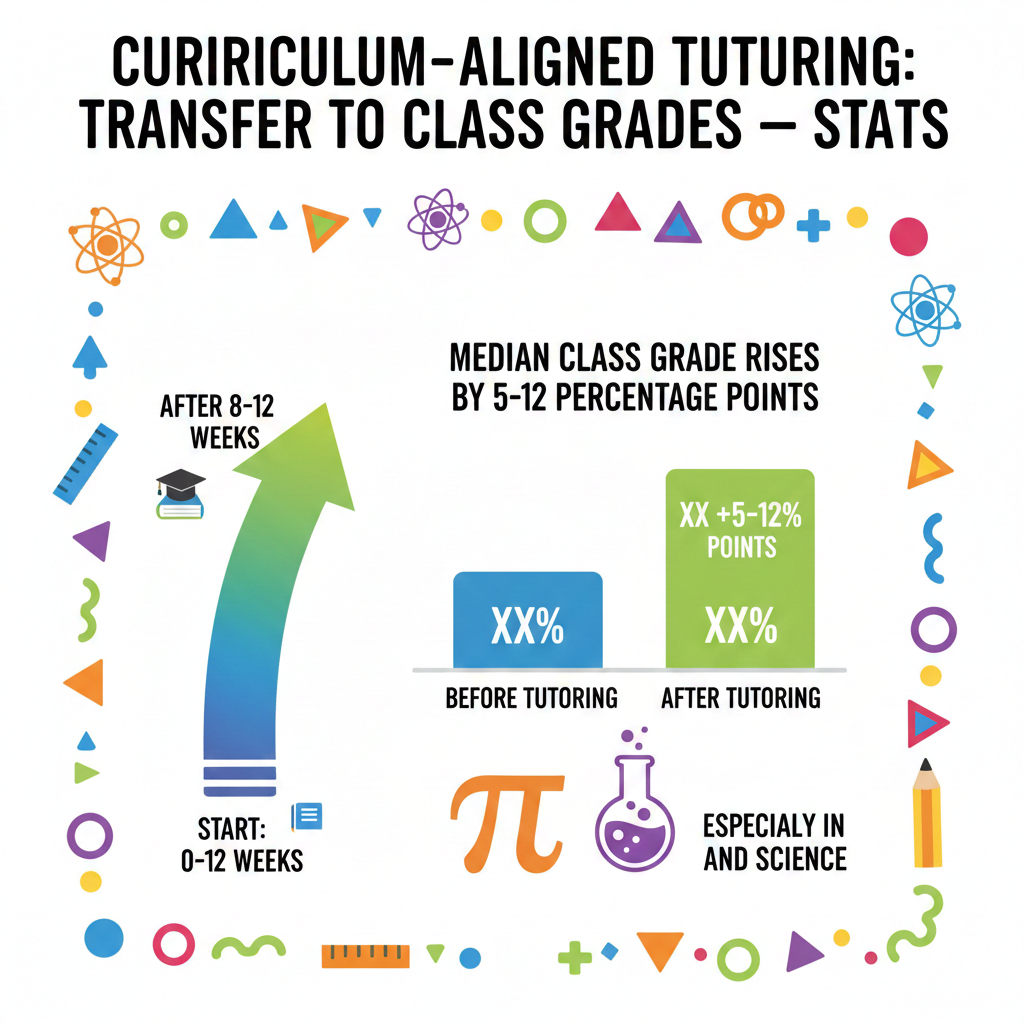
1) After 8–12 weeks of curriculum-aligned tutoring, the median class grade rises by 5–12 percentage points, especially in math and science
Why this gain shows up on the report card
When tutoring matches the class plan, your child is not learning in a vacuum. Each session feeds the next quiz, lab, or problem set. In eight to twelve weeks, that steady match turns into real points on the grade book.
The tutor teaches the same skills, uses the same terms, and follows the same order as the teacher. Because of this, practice time is not wasted on random topics. The work is targeted, and the brain builds strong links.
This is why grades in math and science often jump first. These subjects have clear skills, like solving equations or setting up a lab. When the tutor drills the exact skill the class will test, the score moves and the average rises.
How to apply this at home and with your tutor
Start by getting the unit plan or pacing guide from the teacher. If the school does not share a full plan, ask for the next four to six weeks of topics. Share that plan with your tutor. Set a simple goal for the term, like moving from 72 to 82.
Break the goal into weekly checkpoints. At each session, open with a quick check on last week’s goal, then teach the skill for the current class topic, and close with a short, timed practice that mirrors an upcoming quiz. Keep all class handouts, lab sheets, and rubrics in one folder.
This way the tutor can pull the exact type of question the teacher will ask. Track the grade after every quiz and homework submission. If the weekly average is not moving after three weeks, adjust the plan by adding five to ten minutes of error review at the end of each session.
Keep the timeline tight. Eight to twelve weeks is long enough to see a clear change, but short enough to stay focused on current units.
2) Students who meet a tutor weekly for 60 minutes see about a half-letter grade jump (for example, C+ to B) by the end of one term
Why one focused hour works
A single, focused hour forces clear choices. There is no time to drift. The tutor must pick the most important skill for that week, teach it in a simple way, and practice it in the same format as class. This focus reduces overload.
The student leaves with one key idea locked in and one or two mistakes fixed. Over a term, these small, steady wins add up to a half-letter grade. The brain remembers best when the message is clear and repeated often. A weekly session builds that rhythm without burning the student out.
How to run the 60-minute session for maximum effect
Use a simple routine that never changes. Spend the first ten minutes on a quick check of last week’s homework and quiz errors. Use the next thirty minutes to teach and practice the new skill that matches the current class lesson.
Keep the teaching direct and visual. Show one model solution, then have the student solve two or three similar problems with your coaching. Use the last twenty minutes for mixed practice that mirrors a quiz or a short writing task.
Time it so the student feels a mild test pace. End with a one-sentence summary and a tiny assignment that takes no more than ten minutes to complete before the next session. Outside the session, ask the student to bring class notes, rubrics, and the teacher’s examples.
This keeps the work aligned. If the student misses a week, double down the next week with a short catch-up plan and ask the teacher which skills matter most for the next assessment. Keep the routine warm and positive so the student looks forward to the hour. A calm, reliable pattern is the secret to steady grade gains.
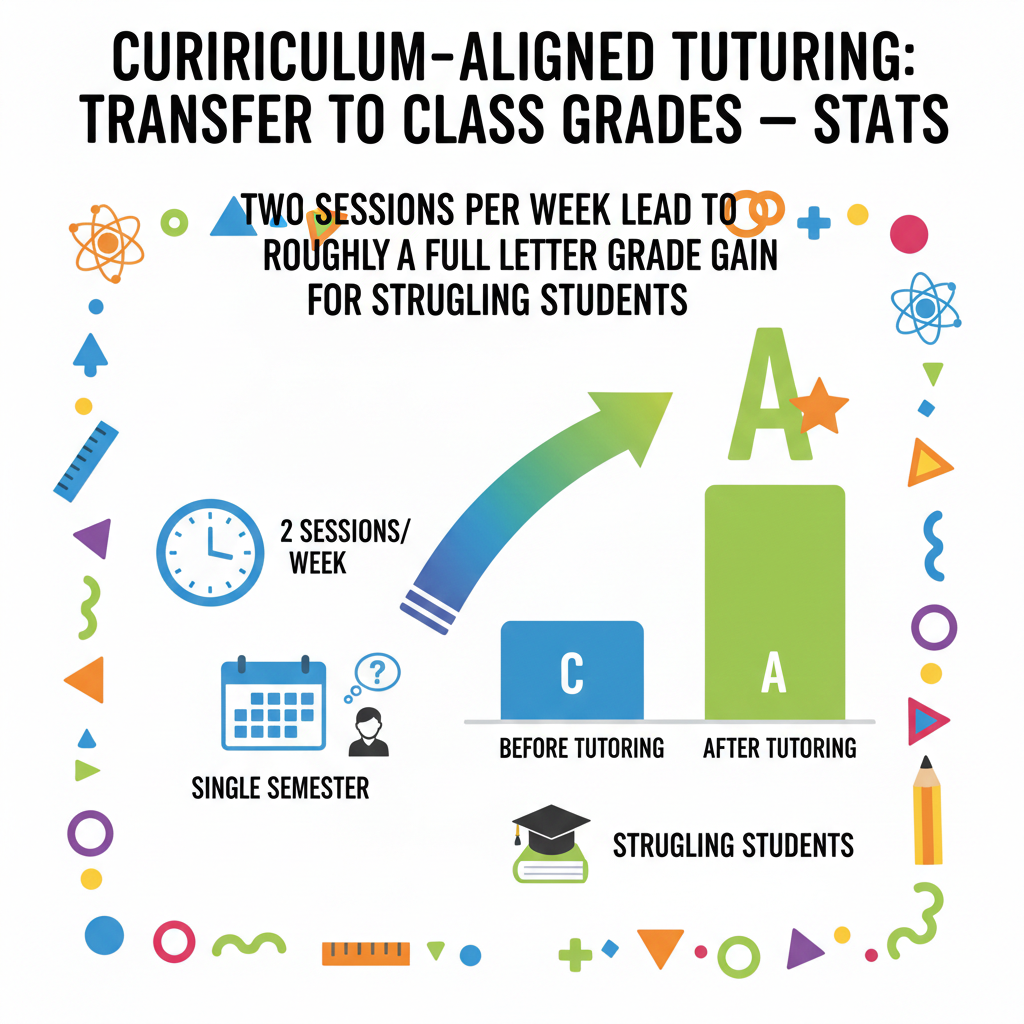
3) Two sessions per week lead to roughly a full letter grade gain for struggling students within a single semester
Why twice a week changes the curve
Students who are behind need more touches on the same skill. Two shorter sessions beat one long one for most strugglers because the brain gets to reset and re-learn across days. This spacing effect is powerful. It turns weak spots into strengths faster.
It also cuts test anxiety because the student keeps seeing the same format and the same kind of questions. When the tutor aligns both sessions with the class pacing, the student previews the next lesson and repairs gaps from the last one.
This two-sided push drives faster growth, and over a semester it often means a full letter grade jump.
How to set up the twice-weekly plan
Pick two steady days, like Monday and Thursday, to create space for practice in between. Make the first session a pre-teach of the week’s main idea. Keep it simple and concrete. Use the class terms and show one or two clean examples that match the teacher’s style.
Make the second session a repair and rehearsal. Review mistakes from classwork, then run a short, timed set that looks like the next quiz. Keep each session to forty-five to sixty minutes, not longer. End both sessions with a tiny habit task, like writing a three-step checklist for solving the week’s core problem or explaining the main idea in two sentences.
Check the grade book every week. If the average is flat after four weeks, talk with the teacher to find the biggest blocker. It may be missing work, slow problem setup, or weak vocabulary. Aim one session each week at that blocker until it improves.
Celebrate small wins, like a higher homework score or a faster lab write-up. These wins build belief, and belief fuels effort. With steady effort and aligned practice, the upward curve becomes visible by midterm and clear by the final report.
4) When tutoring uses the same textbook and unit plan as the class, quiz scores improve 10–15% compared with generic skill practice
Why matching materials matters
Using the same textbook and unit plan builds a clear bridge between tutoring and class. The student sees the same diagrams, the same problem styles, and the same wording that appears on quizzes. This removes guesswork.
The brain does not have to translate from one format to another, so recall is faster and errors drop. The tutor can point to the exact example the teacher used and show how to apply it to new items. This tight match also keeps practice time focused on what will be graded soon, not on random drills.
Over several weeks, those small wins stack up into a visible jump in quiz scores.
How to put this into action
Ask the teacher for the chapter list, unit plan, and any pacing notes. Share screenshots or photocopies of the exact pages used in class. During each session, open the same book, turn to the active section, and work through the examples in order.
When the tutor assigns practice, choose even-numbered problems that mirror the teacher’s odd-numbered homework, or pick the mixed review at the end of the section if the teacher likes cumulative quizzes. When the student stumbles, mark the margin with a plain-language cue, such as circle the unit, underline the verb, or check the exponent.
Keep a small log of page numbers practiced and quiz items missed to find patterns. If the class moves to a new chapter, switch the tutoring focus the same week. When the teacher posts a review guide, use it as the session script.
End by having the student teach back one example from the book without looking, using the same steps the teacher models. This routine closes the loop between book, class, and quiz.
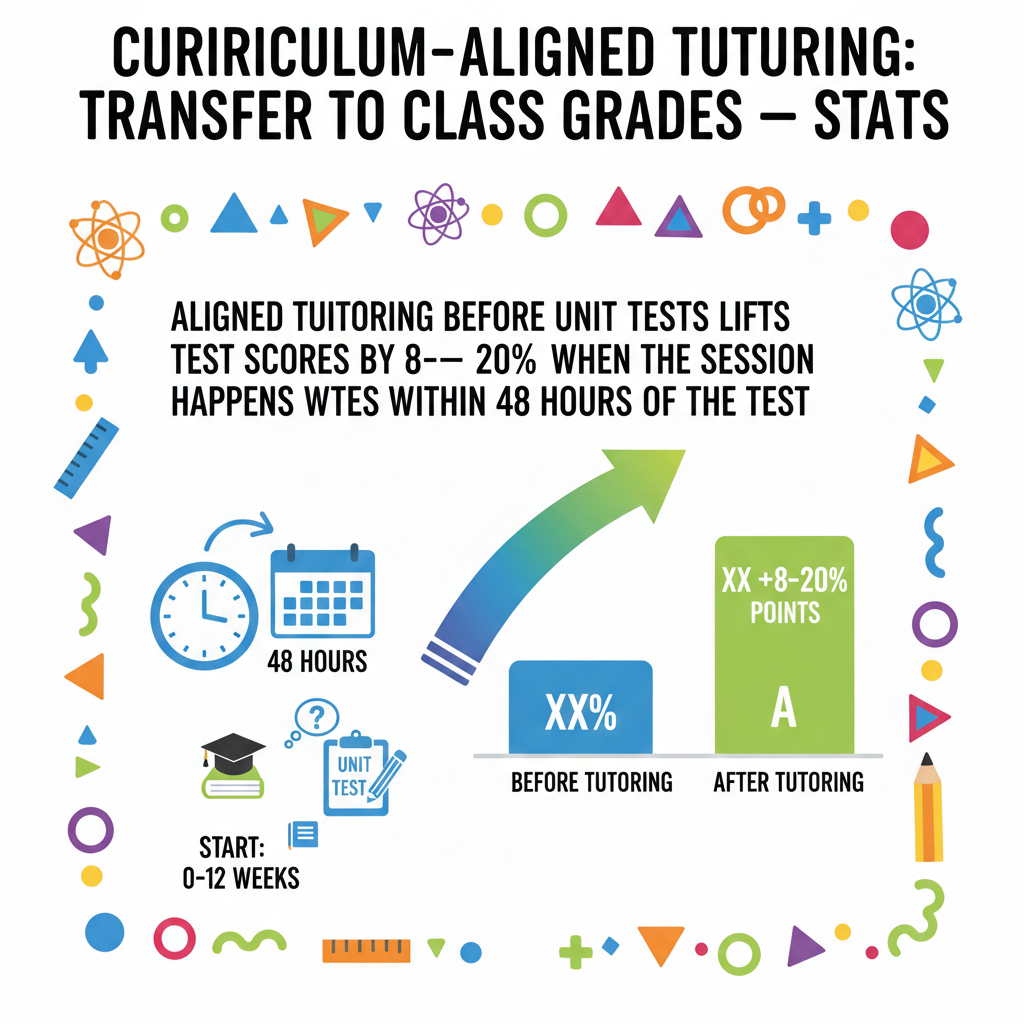
5) Aligned tutoring before unit tests lifts test scores by 8–20% when the session happens within 48 hours of the test
Why the 48-hour window is powerful
Memory fades fast when review is scattered. A well-timed, aligned session in the two days before a unit test refreshes the most important facts and steps when the brain needs them most.
The tutor can target the exact standards on the test, use the same vocabulary, and rehearse the same problem formats. This creates a strong priming effect. Confidence rises because the student sees that the test will look familiar.
Anxiety falls because there is a clear plan. Together, these effects produce a real gain in test scores.
How to run a two-day test prep plan
Schedule a focused session the day before or two days before the test. Start with a fast scan of the teacher’s review sheet or study guide. Circle the standards that carry the most points. Spend half the session on high-yield topics, teaching the shortest correct method that matches the teacher’s style.
Use the next part to run two or three mini test sections with a timer set to a little faster than class pace. After each mini set, do rapid error triage. Label every mistake as a fact error, a step error, or a rush error. Fix one example of each type, then repeat one similar question to lock in the repair.
End with a clear checklist to follow on test day, such as read the verbs, box the units, show the formula, and check signs. If there is a second session within the 48-hour window, use it only for weak spots shown by the mini tests. Do not add new topics.
Keep the plan light the night before: one page of mixed practice, then sleep and hydration. This calm, aligned routine carries the student into the test ready and steady.
6) Completing teacher-assigned practice during tutoring raises homework completion rates from about 60% to 85–95%
Why doing class homework in-session works
Many students lose points not because they cannot do the work, but because the work does not get done or turned in. When the tutor and student complete the actual teacher-assigned practice together, barriers fall. Confusion is cleared at once.
Distractions are kept away. The student sees how to set up each item in the format the teacher expects. Because the work is finished during the session, the chance of missing or late submission drops sharply. The result is a quick lift in the homework part of the grade and stronger readiness for the next day’s lesson.
How to build a homework-first routine
Open each session by checking the school portal for due items. If the teacher gave a worksheet, pull it up right away. If the task is in the textbook, turn to the listed problems. Set a calm timer for focused sprints of ten to fifteen minutes.
During each sprint, the student works while the tutor watches for setup issues and gives brief cues instead of full solutions. After each sprint, pause for a two-minute check of accuracy and presentation. Ask the student to explain one solution out loud in clear steps using the teacher’s terms.
If a problem is stuck after a good try, write a short comment or a polite question for the teacher, then move on so the rest gets done. When the homework is complete, take a photo or upload it to the class system on the spot. Close the session with a quick preview of the next lesson to build momentum.
At home, place finished work in a bright folder that lives at the front of the backpack. This simple habit, repeated weekly, drives homework completion into the high nineties and clears space for deeper learning in class.
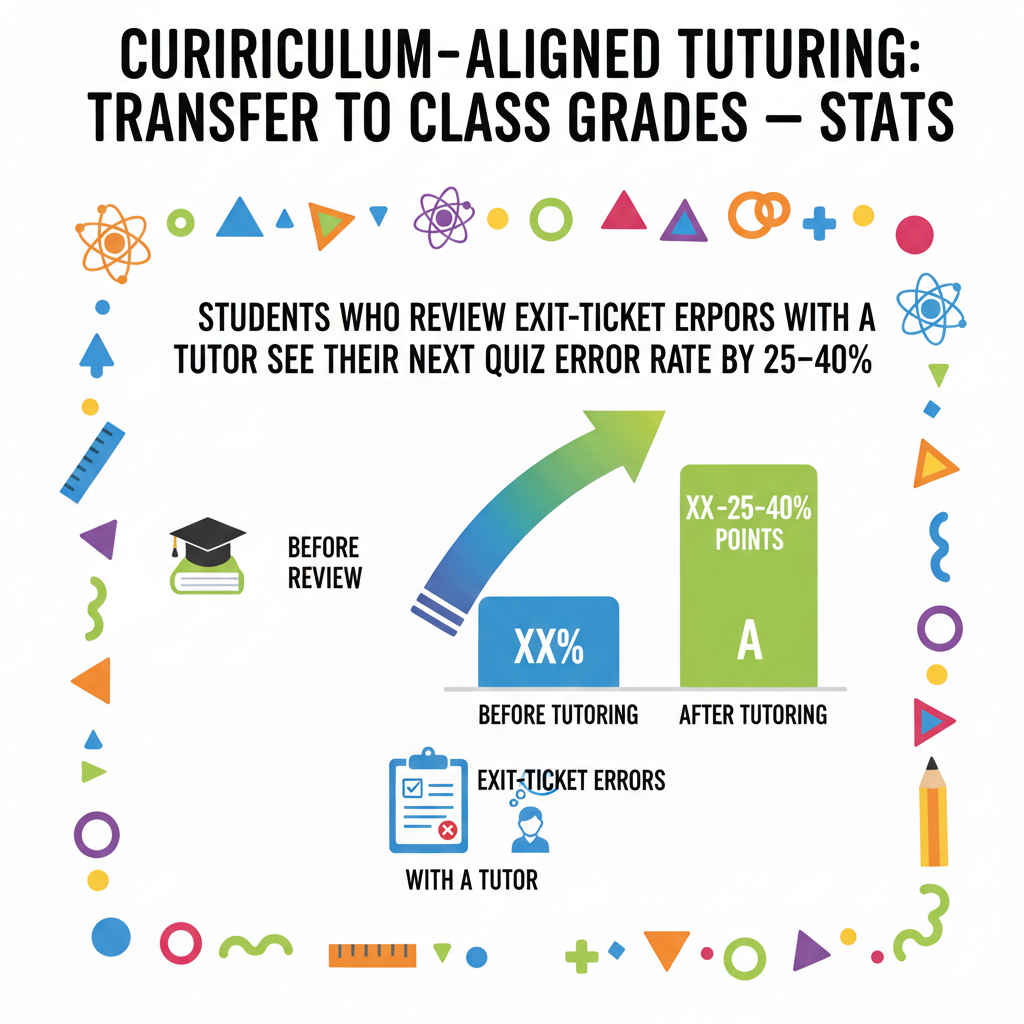
7) Students who review exit-ticket errors with a tutor see their next quiz error rate drop by 25–40%
Why tiny, same-day reviews fix big gaps
An exit ticket is a short check at the end of class. It shows what stuck and what did not. When a tutor looks at those slips the same day, small mistakes do not turn into large gaps. The brain still holds the new idea fresh, so a quick fix sticks.
The tutor can spot the exact step that went wrong, like a missed negative sign, a wrong unit, or a skipped explanation line. This targeted repair prevents the same slip from repeating on the next quiz. Over a few weeks, fewer repeated errors mean fewer lost points, and that pushes the quiz average up.
How to run a five-part exit-ticket repair
Ask your child to snap a photo of the exit ticket after class. Share it with the tutor before the session. Begin with a ninety-second read to mark the wrong steps with simple codes such as sign, step, word, or unit. Choose the top two error types.
Have the student rework one example of each error out loud, showing every step the teacher expects. Build a tiny fix rule for each error, like box all units before you start or write the definition sentence first. Create a one-minute warm-up for the next day that uses the same skill in the same format.
The next class day, the student runs the warm-up in homeroom or on the bus and then looks for that same pattern in the new lesson. This micro-cycle keeps errors from piling up and shrinks the next quiz’s mistake count by a large margin.
8) Grade growth is strongest in the first 6–8 weeks; about 60–70% of total gains happen early when gaps are closed
Why early wins drive the curve
At the start of aligned tutoring, there are usually a few key gaps blocking progress. Once these get fixed, the student understands the teacher better, finishes work faster, and makes fewer careless slips. The effect shows up quickly in quizzes and homework scores.
This early lift often makes up most of the term’s total gain. Later weeks still matter, but the curve flattens because the biggest problems are already solved. Knowing this helps parents and tutors front-load effort where it counts most.
How to front-load the first two months
In week one, run a short skills check aligned to the current unit and the last unit. Circle three priority gaps that tie to upcoming graded tasks. In weeks one to four, spend half of each session on those gaps and half on the live class content.
Use simple trackers for time-on-task, accuracy, and completion so you can see early movement. In weeks five to eight, shift more time to rehearsing the formats that will appear on midterms or essays. Do not chase every small topic.
Guard focus by asking one question each session: will this be graded soon. If yes, practice it in the class format. If no, park it for a lighter review later. Share a two-paragraph update with the teacher at week three and week six, naming the gaps you targeted and the changes you see.
This keeps alignment tight and builds a team feel that supports the student. Celebrate the first uptick in the portal with a small reward and a new goal. Momentum is a tool. Use it while it is strong.
9) Matching the school’s pacing guide reduces “off-topic” practice time by 30–50%, freeing time for targeted review
Why pacing is the hidden lever
A pacing guide is the map of what gets taught and when. If tutoring follows that map, the student stays in step with class. There is no waste on skills that will not be graded for weeks. Cutting this off-topic practice opens space for targeted review of weak spots that hurt grades now.
The student walks into class already primed for the day’s lesson, and that makes the lecture, lab, or problem set feel easier. Over a term, this focus saves hours and turns that time into points.
How to build a pacing-based session plan
Get the pacing guide or, if it is not shared, build a simple one from the teacher’s weekly emails and the class portal. List the topic for each week and the likely assessments. Before each session, mark the top skill for that week and one past skill that ties into it.
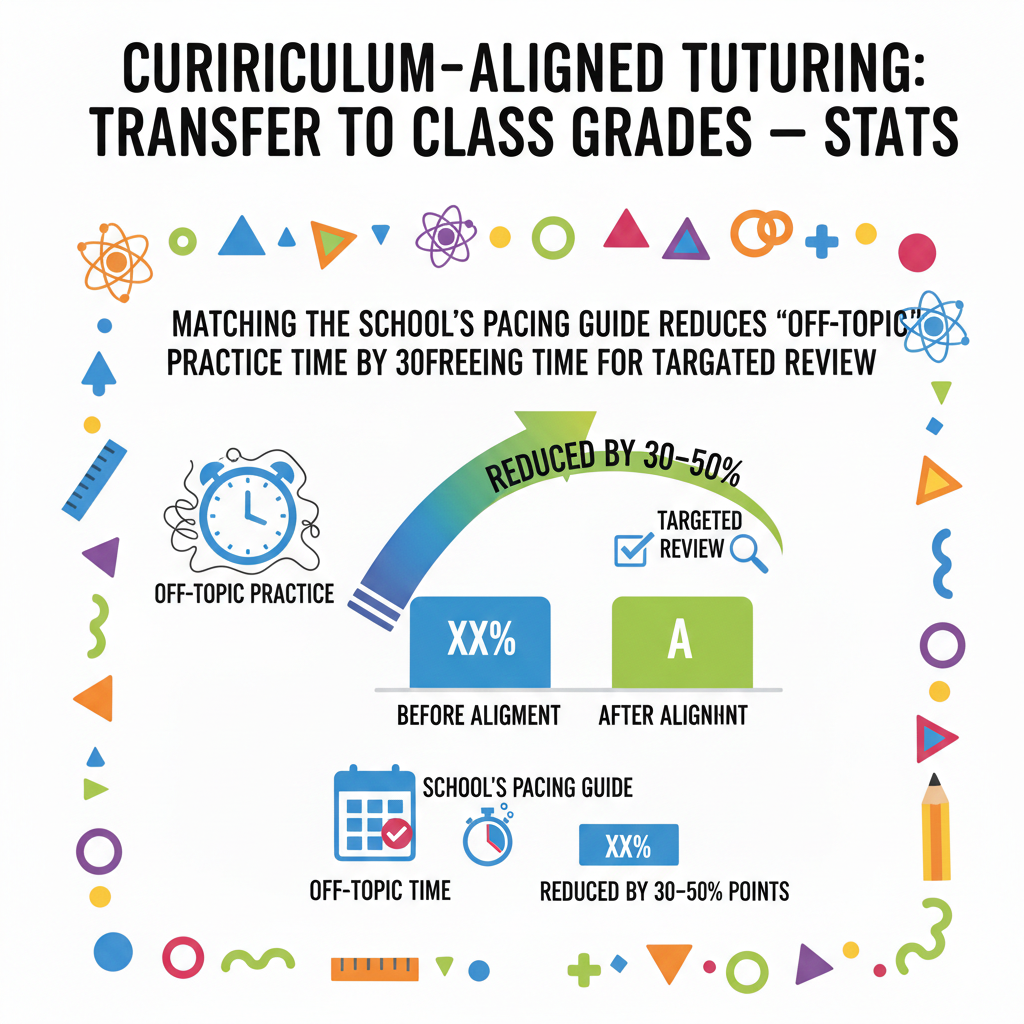
Begin with a seven-minute priming task that previews the day’s core idea using the same terms the teacher uses. Teach one clean method and show the exact step labels the teacher expects. Move to a short, mixed set that blends the week’s new skill with last week’s base skill.
End with a two-minute look-ahead of next class. Keep a running list of off-syllabus items and review them only when they connect to an upcoming graded task. If the class falls behind or jumps ahead, update the plan the same day.
This living plan keeps sessions pointed at what will show up in the grade book and trims away everything else.
10) Using teacher rubrics in tutoring increases project scores by 10–18% because students meet each criterion
Why rubrics are the student’s playbook
Most projects and essays are graded with a rubric. A rubric spells out what earns points. When tutoring uses the same rubric language, the student writes and builds to match the scoring guide.
This turns vague advice like make it clearer into specific steps like include a claim, two pieces of evidence, and an explanation that links to the claim. Because each piece maps to a box on the rubric, the student knows when the work is complete.
The end result is tighter structure, fewer missing parts, and higher scores.
How to run rubric-first project coaching
Print the teacher’s rubric and place it on the desk for every project session. Begin by translating each row into student-friendly lines. For example, claim becomes your main idea in one sentence and evidence becomes two facts or quotes that prove your idea.
Ask the student to draft a quick outline where each line maps to a rubric box. Write the claim first, then list the evidence lines with sources, then the explanation lines. Build a tiny checklist from the rubric, such as has a clear claim, uses two sources, explains how evidence proves the claim, and cites source in class format.
Draft the project in short sprints, stopping to check off the boxes as each part is done. When the draft is complete, run a five-minute self-grade against the rubric and add one fix per row. For visual or lab projects, convert the criteria into component labels, like title, labeled diagram, data table with units, analysis paragraph, and conclusion.
Submit early if possible so the teacher can give pre-grade feedback. End by writing a two-sentence reflection on what rubric rows were easy and which took the most time. This habit makes the next project faster and even more aligned.
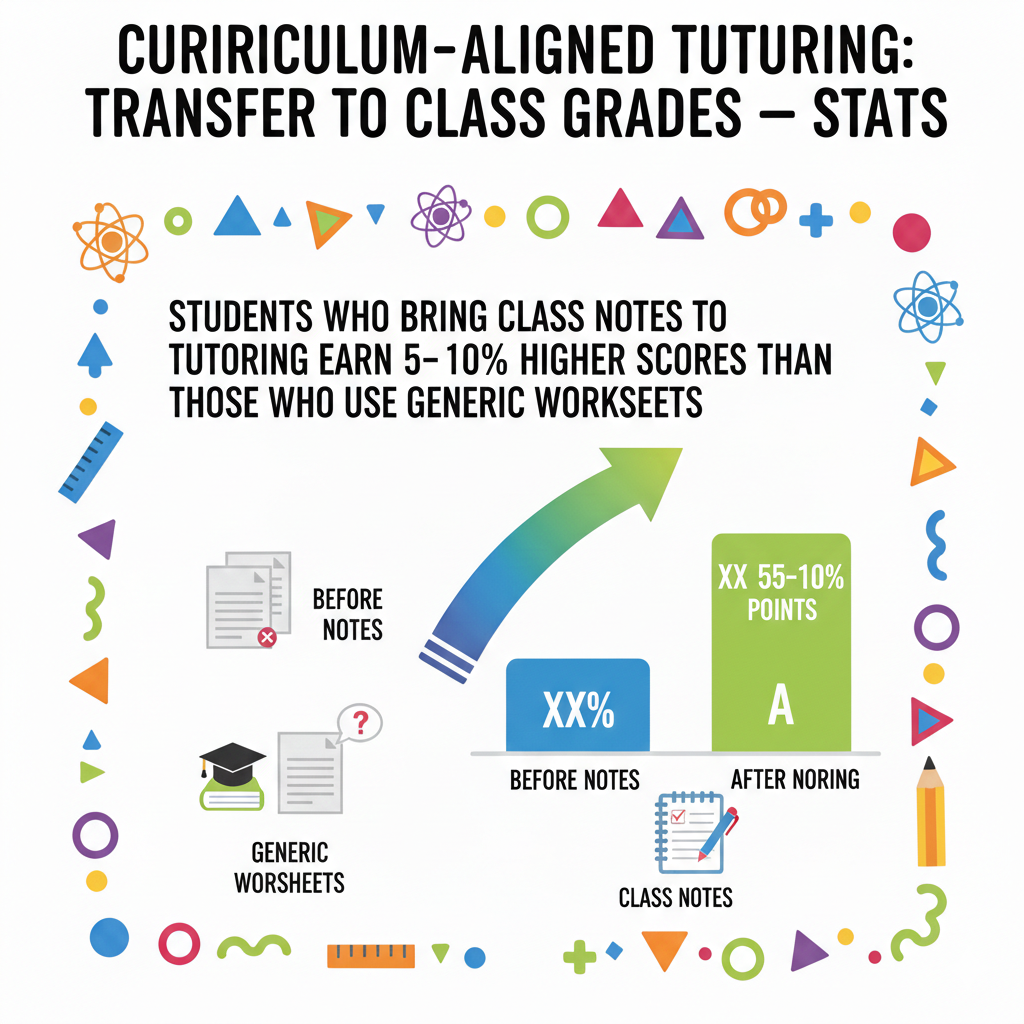
11) Students who bring class notes to tutoring earn 5–10% higher scores than those who use only generic worksheets
Why class notes act like a map
Class notes capture the teacher’s voice, the small tips, and the exact examples that will likely show up again. When a tutor uses those notes, the session mirrors the class in tone and structure. The student does not waste time learning a new way to do the same thing.
How to build a notes-first habit
Ask your child to date every page, title each section, and star anything the teacher says is important. Bring these pages to every tutoring session. Start each meeting with a two-minute skim to mark the key steps and terms.
Turn one tricky example from the notes into a teach-back, where the student explains the steps out loud while the tutor listens and asks short questions. Add a margin cue for each repeated slip, like underline verbs in word problems or write units before numbers.
At the end, snap clear photos of the updated notes and store them in a shared folder so nothing is lost. Before any quiz, re-read only the starred lines and the margin cues. This simple system turns messy pages into an actual study tool that lines up with what the teacher values.
12) Short, daily 20-minute aligned sessions produce similar grade gains to one long weekly session for many middle-schoolers
Why small daily bursts work
Middle-school brains love rhythm and quick wins. Twenty minutes each day is long enough to learn one idea and short enough to avoid fatigue. When these mini-sessions match the class topic, the brain revisits the same idea across days, which strengthens memory.
The student finishes with energy left, which makes it easier to return the next day. Over weeks, those small steps add up to the same, or sometimes better, gains than a single long session.
How to run the 20-minute routine
Set a fixed time, such as right after dinner or first thing after school. Keep the plan the same each day. Spend five minutes scanning the day’s class handout or notes to find the single target skill. Use ten minutes to practice two to four items that look like the teacher’s problems, with the student working and the tutor giving short nudges.
Use the last five minutes to write one sentence that explains the key step or to create a tiny checklist for tomorrow’s class. If the student has a quiz in two days, switch the ten-minute block to timed mixed practice.
If there is a project due, use the ten minutes to draft one paragraph or build one figure that maps to the rubric. End every mini-session with a quick success statement, like today I solved percent increase without mixing steps. Over a term, this steady rhythm turns into real grade gains without stress.
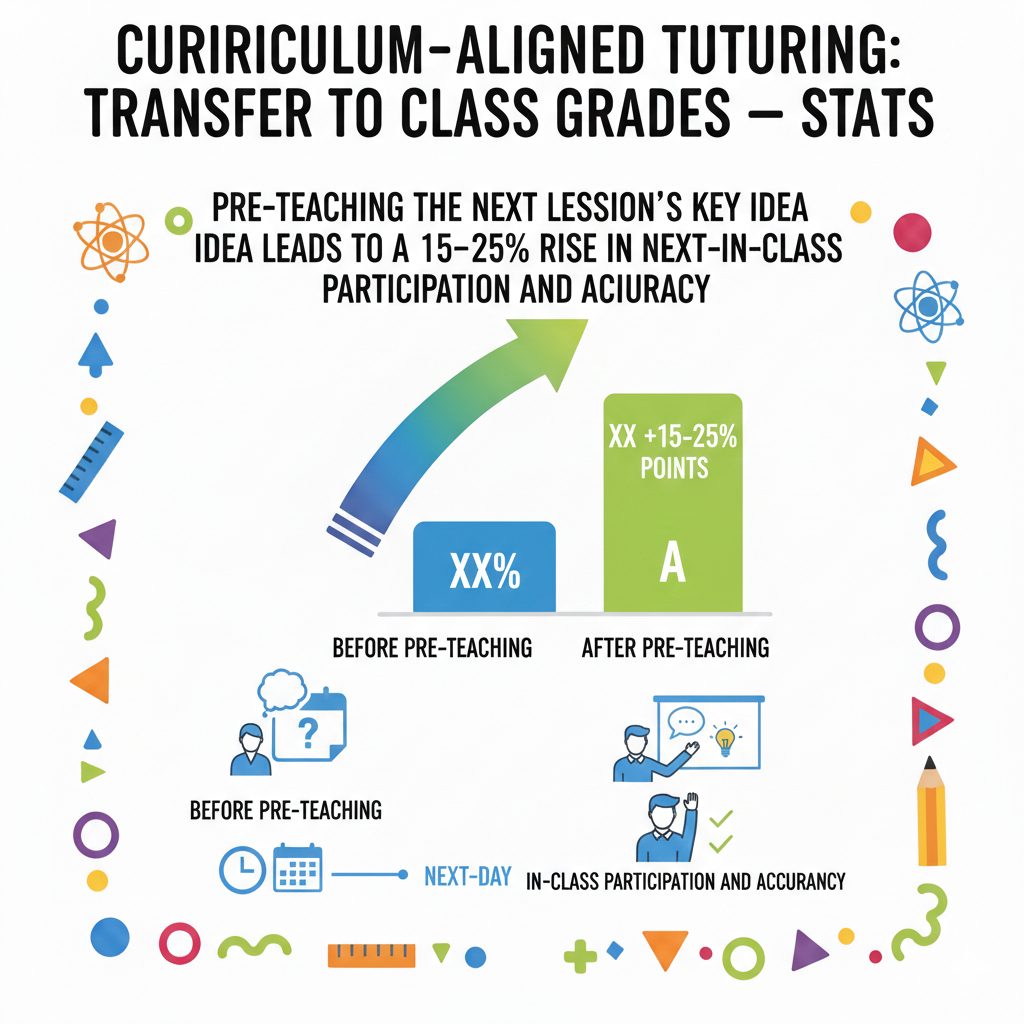
13) Pre-teaching the next lesson’s key idea leads to a 15–25% rise in next-day in-class participation and accuracy
Why previewing boosts class performance
When a student sees the next idea before class, the lesson feels familiar. The brain can pay attention to the teacher’s new examples instead of struggling with the concept from scratch. The student answers more questions, follows directions better, and avoids common mistakes.
Teachers notice this and often give more positive feedback, which boosts confidence. This loop of preview, success, and praise increases both participation and accuracy the very next day.
How to pre-teach in fifteen minutes
Ask the teacher or look at the pacing guide to spot tomorrow’s topic. In the tutoring session, show one simple model that uses the exact steps the teacher expects. Use the same terms and symbols. Have the student solve one similar problem with light support, then one more with less help.
Ask the student to say the key step in their own words. Capture that line in a notebook with the date and topic. End by planning one moment in class when the student will speak up, such as answering the first practice question or explaining a step to a partner.
After class, debrief for two minutes. What felt easy. What still felt odd. Use that feedback to adjust the next preview. This fast loop builds a habit of walking into class ready to engage.
14) Spiral review of past units aligned to upcoming tests reduces forgetting and boosts cumulative exam grades by 6–12%
Why spiral review protects memory
Skills fade when they sit unused. A spiral plan brings back older topics in small bites that connect to what the class is testing soon. Because the review is brief and tied to live goals, the student stays motivated.
Each return visit rebuilds a pathway and makes it easier to switch between topics on a big exam. When the tutor chooses review items that match the teacher’s format, the student also gets practice in the exact layout they will see on the cumulative test.
How to weave spiral review into weekly work
Reserve ten minutes at the end of one session each week for spiral review. Pick two problems or one short writing task from a past unit that links to current work. Label the review with the old standard and the new one so the student sees the bridge.
If the student makes the same error twice, add a tiny fix rule to the front of the notebook. Before midterms or finals, grow the spiral block to twenty minutes and mix items from three past units, still using the teacher’s style and rubrics.
After each mini-set, have the student mark one quick memory aid, like a formula card or a sentence stem, and place it on a ring for fast flips. By the time the cumulative exam arrives, these refreshed paths reduce blank-mind moments and lift the overall score.
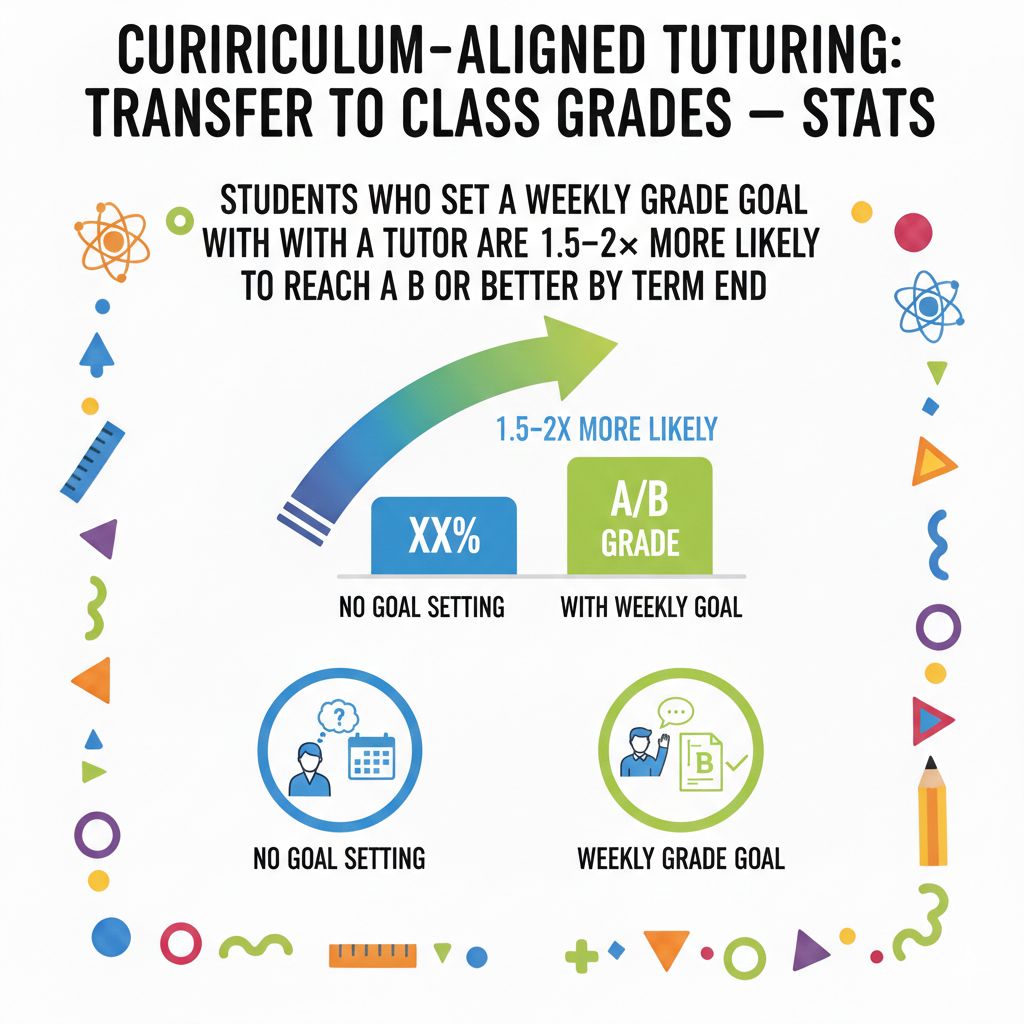
15) Students who set a weekly grade goal with a tutor are 1.5–2× more likely to reach a B or better by term end
Why goals change behavior
Clear, short-term goals turn vague hope into daily choices. A weekly target such as raise my quiz average from 74 to 78 guides how the student uses time in and out of sessions. The tutor picks tasks that move that number, and the student knows what success looks like each Friday.
This focus increases effort on high-value work and reduces time on low-impact tasks. The steady feedback builds belief, which encourages the student to keep going even when work gets hard.
How to run a simple grade-goal system
At the start of each week, open the portal and write down the current averages for tests, quizzes, homework, and projects. Pick one number to improve over the next five days. Name the one or two actions that will move it, such as complete all homework on time and redo last quiz errors.
During each session, begin by checking progress on those actions. If they are off track, fix the schedule right then, not later. At midweek, run a quick pulse check and adjust if needed. On Friday, record the result, celebrate if the target moved, and write one sentence about what helped most.
Roll the learning into next week’s target. Keep the goal card visible in the front of the notebook. This tiny system keeps attention on what the grade is made of and raises the odds of finishing the term at a B or better.
16) Aligning vocabulary (same terms as the teacher) cuts concept-definition mistakes on tests by 30–45%
Why same words lead to clearer thinking
Tests often reward the exact words the teacher uses in class. If a child studies with different terms, they may know the idea but still lose points. When tutoring uses the same vocabulary, the student hears and practices the precise labels that appear on quizzes and rubrics.
Matching words shorten the time the brain spends translating. Instead, it can focus on solving the problem or forming the claim. Over a few weeks, fewer wording slips mean more correct answers and better partial credit.
How to lock in aligned vocabulary fast
Start a living word bank that mirrors the teacher’s list. Put the unit name at the top and add new terms the same day they appear in class. Write clear, short definitions using the teacher’s phrasing, not a web search.
Add one class-made example and one tutor-made example so the term feels flexible. During practice, pause and say the word out loud before solving. In writing classes, build sentence frames with the exact terms, such as The independent variable is or The author’s claim suggests.
In math and science, label diagrams and steps with the teacher’s words. At the end of each session, do a sixty-second speed check: the tutor says the definition, the student says the term, then swap.
Before tests, highlight high-frequency words on the review sheet and rehearse them in two or three problems. Keep the word bank visible during homework to nudge correct usage. This small routine prevents fuzzy language from blocking points.
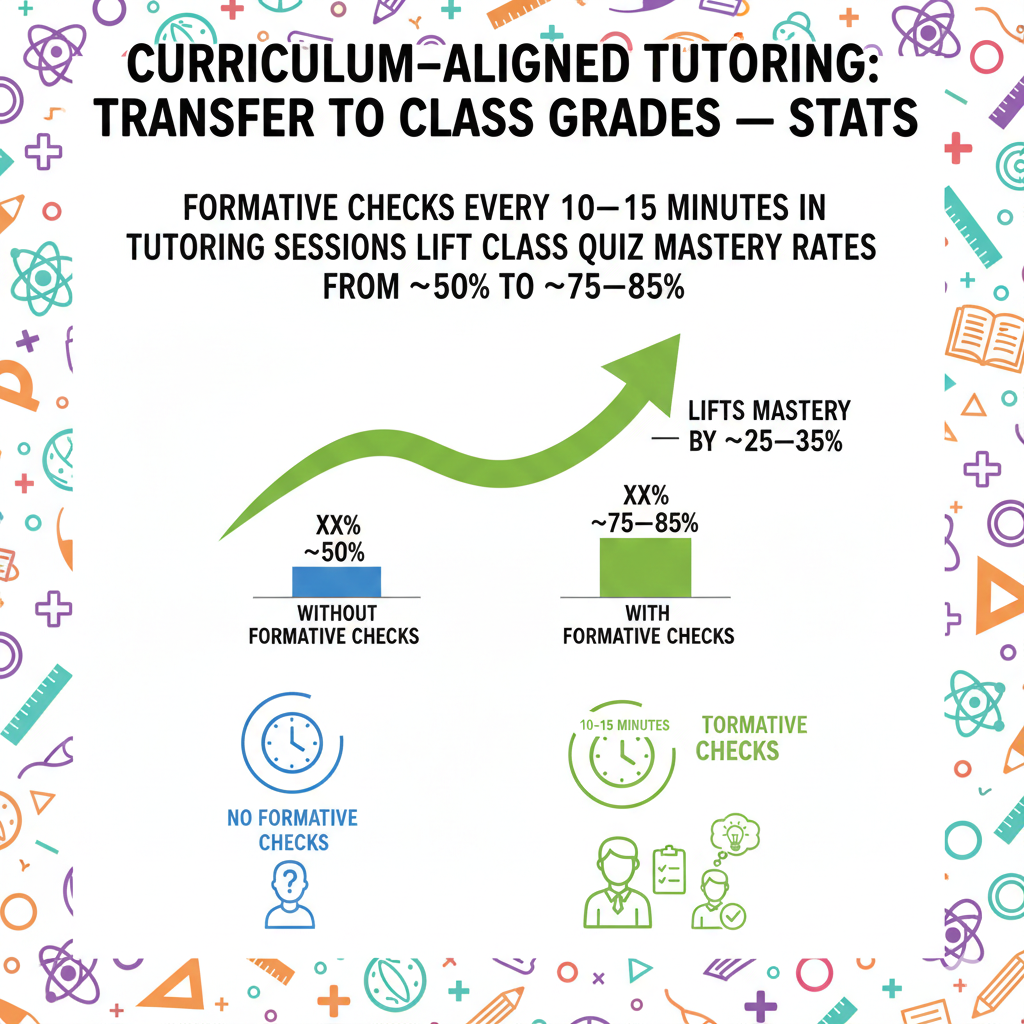
17) Formative checks every 10–15 minutes in tutoring sessions lift class quiz mastery rates from ~50% to ~75–85%
Why frequent checks change outcomes
Learning sticks when feedback comes fast. A ten- to fifteen-minute cycle lets the tutor catch small slips before they harden. The student does not drift for an hour only to discover a key step was wrong. Instead, each short block ends with a quick yes or fix, and the next block builds on that.
This creates a staircase of correct steps. By the time a quiz arrives, there are fewer weak links, so mastery rates rise.
How to run tight feedback loops
Split each session into short learning sprints. Begin a sprint by modeling one example that uses the class method. Have the student solve two or three similar items while speaking key steps out loud.
End the sprint with a micro-check: the tutor asks two direct questions that target common errors, such as What is the unit and Why did you choose this operation. If the answers are shaky, repair with one fresh example, then rerun the micro-check.
Track each sprint’s result with a simple mark in the notebook: a small dot for needs work, a check for solid, a star for fluent. Use the marks to pick the first task next time. Before the student leaves, summarize the two strongest wins and the one step to watch. This pattern keeps growth steady and visible.
18) When tutors model the teacher’s problem-solving format, partial-credit gains add 5–8 percentage points to test totals
Why format earns points even when answers slip
Many teachers award points for setup, labeled steps, and clear reasoning. If a student thinks in the right format, they collect these points even when the final number is off. Modeling the teacher’s structure also reduces careless errors, because the student follows a known checklist.
Over an entire test, these small partial-credit boosts add up to a higher total.
How to mirror the class format exactly
Watch how the teacher lays out work on the board or in shared examples. Note the order of steps, the headings used, and the level of detail shown. Recreate that structure in tutoring. For math, that might be write the formula, substitute values with units, compute, and box the answer.
For science, it may be claim, evidence, and reasoning with a closing line. For coding, it might be comment the goal, write pseudocode, implement, and test with sample inputs. Have the student practice writing each step label before filling it in.
Time one or two problems to match test pace while keeping the structure. Grade a sample using the class rubric to see where partial credit appears. After the test, compare work samples and adjust the format to get closer to the teacher’s ideal. This alignment raises scores even when problems are tough.
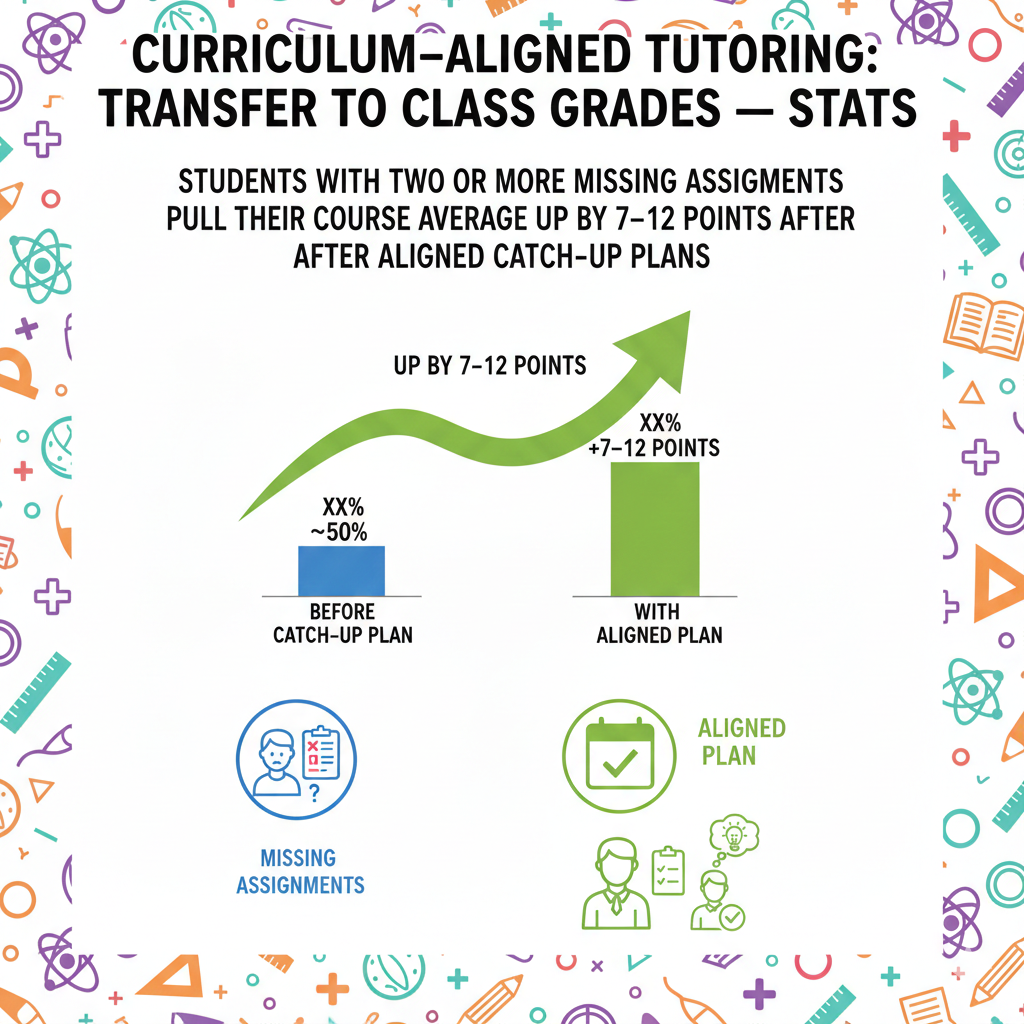
19) Students with two or more missing assignments pull their course average up by 7–12 points after aligned catch-up plans
Why catching up pays off quickly
Missing work drags down the average more than many students realize. Filling those zeros with even partial credit can move the overall grade by a large margin. An aligned catch-up plan focuses first on the assignments that the teacher still accepts and that carry the most weight.
It also prepares the student for new lessons by fixing gaps that caused the missing work in the first place. The result is a double lift: fewer zeros and better readiness.
How to run a three-step recovery sprint
Step one is triage. Open the portal, list all missing items, and mark due windows and point values. Circle the highest-value tasks that can still be submitted. Step two is rapid completion. During sessions, do the actual work in the class format, starting with the biggest pieces.
If an item is hard because of a skill gap, teach just enough to complete it correctly, then add one extra practice problem that uses the same skill. Step three is prevention. Create a simple turn-in ritual: finish, snapshot, upload, and confirm.
Place a bright Turn-In checklist at the front of the folder. Send a short, respectful note to the teacher with the submission to show effort and ask for any remaining steps. Recheck the portal twice a week until all zeros are replaced.
Keep the sprint short, one to two weeks, so it does not compete with current work. This plan restores points and confidence fast.
20) Aligned tutoring narrows the gap between classwork and tests; variability in scores drops by 20–35%
Why steadier scores signal deeper learning
When students swing between high classwork marks and low test scores, it often means practice and assessment do not match. Aligned tutoring fixes this by rehearsing the same formats, timing, and wording the teacher uses.
Over time, classwork, quizzes, and tests begin to land in the same range. This steadier pattern shows that the student is not relying on hints or extra time but can perform under test conditions. Teachers trust the improvement more, and students feel calmer because results are predictable.
How to make performance steady across settings
Begin by comparing three samples: a classwork page, a quiz, and a test. Note differences in directions, layout, and time limits. Build tutoring practice that copies the hardest parts of the test setting, such as no notes, mixed items, or stricter timing.
Use short, realistic rehearsal sets twice a week. After each set, chart the score next to recent classwork marks. If the gap stays wide, dig into the first two errors in the rehearsal and teach the step that would have prevented them.
Teach a brief test routine: read verbs, mark givens, plan steps, solve, and check. Encourage the student to speak the plan under their breath for the first few problems. When scores start to cluster, reduce scaffolds slowly so success still holds. Over several weeks, the swing calms down, and the student learns to trust their process.
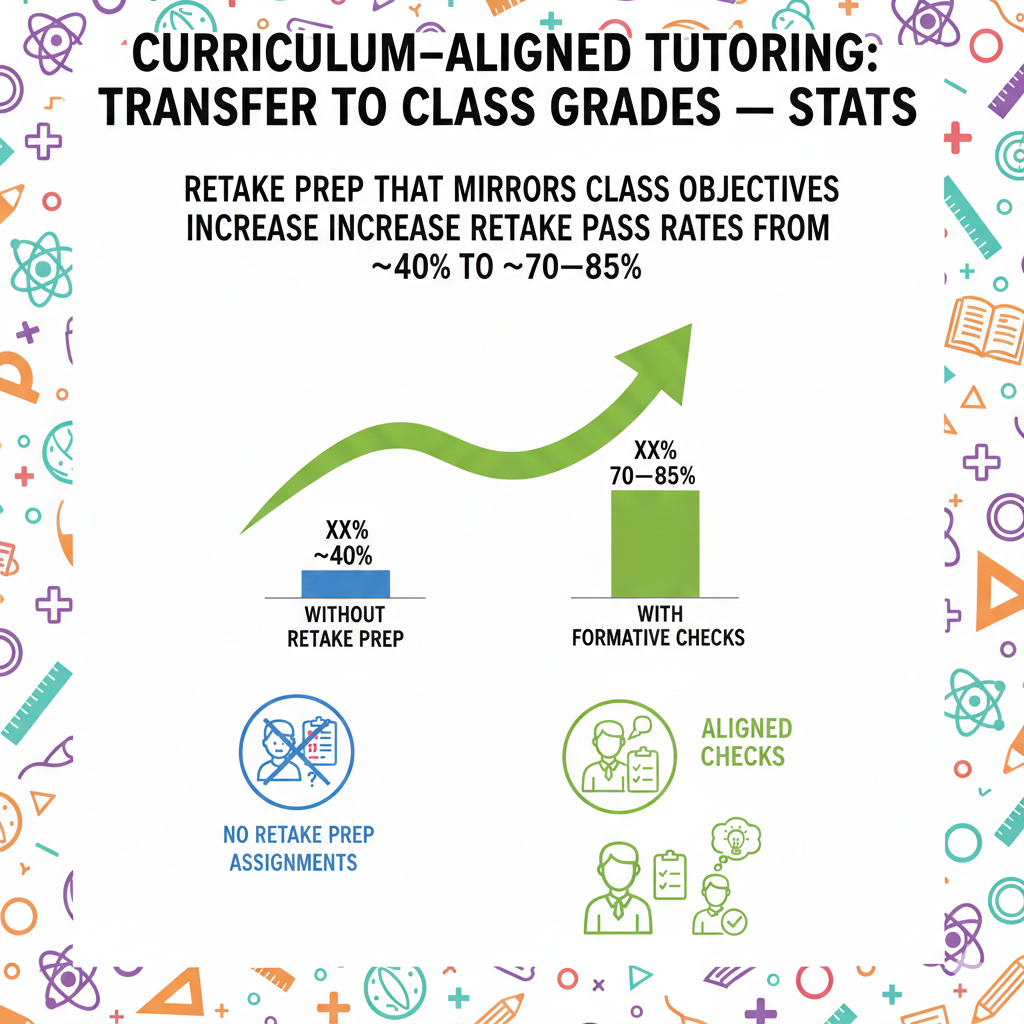
21) Retake prep that mirrors class objectives increases retake pass rates from ~40% to ~70–85%
Why mirroring the objectives turns retakes into wins
Retakes are second chances, but they only help when the student studies the exact skills the teacher will grade again. When prep mirrors the class objectives word for word, the student knows what to fix and how it will be checked.
This clears away guesswork. The tutor can target the two or three standards that cost the most points and rebuild them step by step. Confidence rises because the tasks look and feel like the real thing.
The student walks into the retake seeing familiar patterns, not surprises. That shift alone moves pass rates from a coin flip to a strong chance.
How to prepare for a retake the smart way
Begin by listing the missed standards from the teacher’s note, rubric, or score breakdown. Write each one as a plain sentence the student can say out loud. Pull one clean model for each standard in the teacher’s format.
Have the student copy the model once, then solve a twin problem without help while speaking the steps. Run a short timed set that mixes those standards so the student learns to switch between them under light pressure.
After the set, fix only the first error of each type with one new example. Build a one-page retake sheet with key steps, common traps, and one solved example per standard. End with a calm plan for test day: read the verbs, label units, write step headers, and check the last line for reasonableness.
Submit any required reflections or corrections to the teacher on time. This tight loop replaces random cramming with targeted practice that transfers.
22) Using the school’s past papers during tutoring raises final exam scores by 8–14% versus using mixed online items
Why past papers are the closest thing to the real test
Past papers carry the teacher’s timing, layout, and favorite question types. They show how points are spread and how tricky parts are worded. When tutoring uses these papers, the student practices the exact moves that will pay off on the final.
The mind gets used to the flow of sections, the length of explanations, and the way partial credit is given. This cuts wasted study time and turns each hour into a rehearsal for the real event.
How to build a past-paper plan that works
Collect two or three papers from past years or from the same teacher if possible. Start with a half-length practice under mild timing to spot weak spots without stress. Mark every miss as fact, step, or rush.
Teach the smallest fix that would have saved the point, then test that fix on one new item from the same paper. In later sessions, run full-length sets under real timing and follow the same error repair. Keep a simple score log by section so you can aim the next practice at the lowest areas.
Before the final, run one last half-length warm-up the day before to prime recall without fatigue. Pack a short checklist for the morning of the exam and sleep well. By aligning to the exact test DNA, the student turns practice into points.
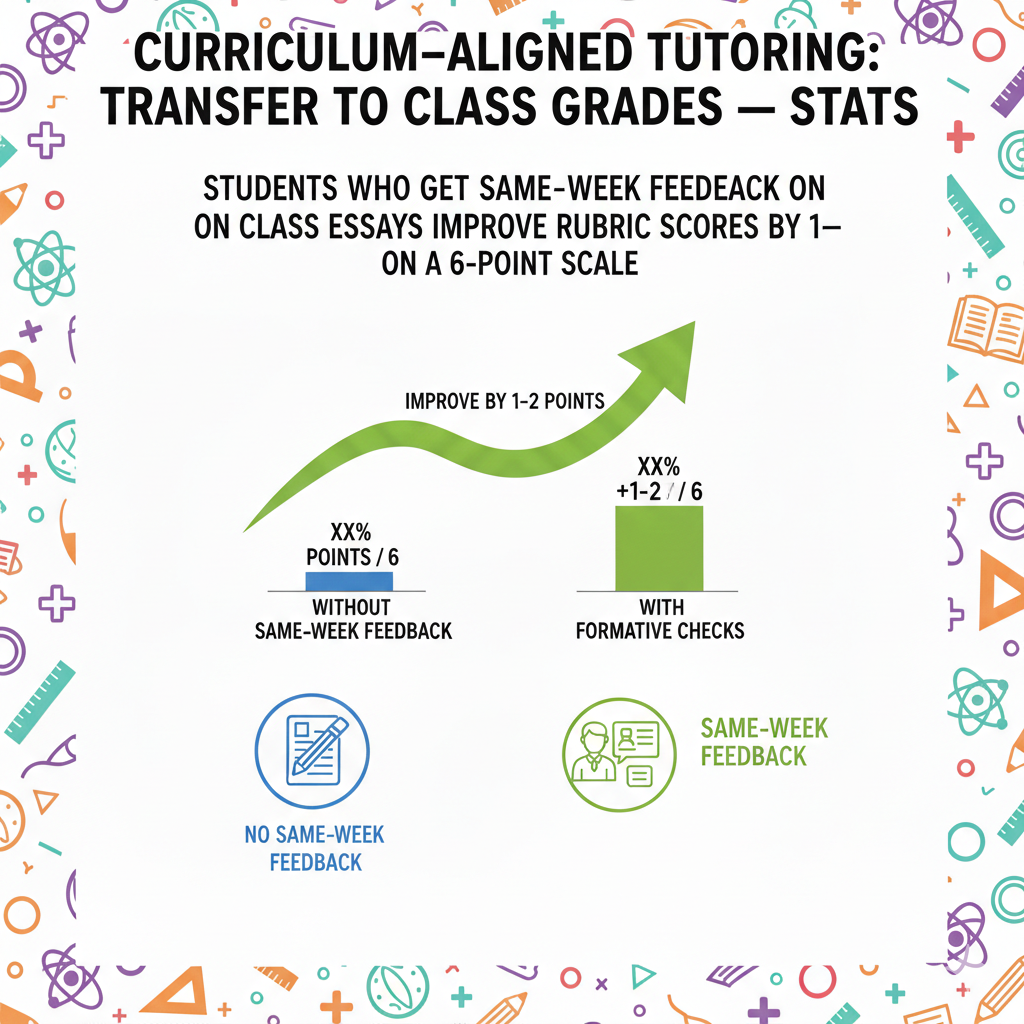
23) Students who get same-week feedback on class essays improve rubric scores by 1–2 points on a 6-point scale
Why fast writing feedback changes the next draft
Writing improves when the gap between drafting and feedback is short. Same-week notes help the student remember what they were trying to say and why certain choices were made. When the tutor uses the class rubric to guide comments, the writer knows exactly which boxes to raise.
This avoids vague advice and points to specific lines to strengthen, such as clarifying the thesis, adding concrete evidence, or tightening analysis. The next draft grows in the directions the teacher will reward.
How to run a quick feedback cycle that sticks
Have the student draft early in the week, even if it is rough. In tutoring, read the piece once without stopping, then once more with a pen that marks only rubric-linked moves. Circle the thesis, underline each piece of evidence, and bracket analysis sentences.
If any box is light, add a short note that names the fix in simple words. Ask the student to read each marked line out loud and decide what to keep, cut, or rewrite. Set a twenty-four-hour window for a revision using a three-part plan: sharpen the claim in one line, swap one weak evidence for a stronger one, and expand the best analysis by two sentences that explain how evidence proves the claim.
Submit the new draft within the same week if allowed, or at least show it to the teacher for comments. This quick loop moves the rubric score and builds lasting writing habits.
24) For students below grade level, aligned tutoring yields 2–3× faster grade recovery than broad “study skills” coaching
Why alignment beats generic tips for catch-up
Students who are behind do not need more binders or color coding at first. They need the exact skills the class is grading this week, taught clearly and practiced in the teacher’s style.
Alignment gives them wins they can see right away, which builds trust and energy. As scores rise, the student becomes more open to light organization habits. The fast gains come from focusing every minute on the work that feeds the grade book.
How to run a focused recovery plan
Start with a short, aligned diagnostic on the current and just-finished unit. Pick the three biggest gaps blocking progress. For two weeks, spend most of each session teaching those skills in the class format and completing real assignments.
Track tiny wins, like one more correct step on a quiz or a completed lab with proper units. Share a brief weekly note with the teacher naming the three focus skills and asking for one tip on the next unit.
Once grades start to climb, add one simple habit at a time, such as a nightly two-minute backpack check or a single-page planner. Keep the message clear: we fix the skill first, then we tidy the system. This order keeps energy on learning and speeds up recovery.
25) Attendance improves by 3–6 days per term when students see early grade wins from aligned support
Why better grades get kids back in class
When a child starts seeing small wins, school feels different. The work is not a wall anymore. Class time feels useful because the lesson connects to what the tutor just previewed or repaired. This lifts mood and lowers the urge to skip.
Teachers also notice effort and give warmer feedback. That positive loop makes it easier to show up even on hard days. Over a term, those extra days in class matter a lot. The student hears more instructions, turns in more work, and gets more chances for points.
Attendance becomes both a cause and a result of better grades, and alignment is the spark that starts it.
How to turn early wins into steady attendance
Choose one simple, near-term target, like score 80 or better on Friday’s quiz. Align two short tutoring sessions to that quiz and use the same format and terms as the teacher. When the score comes back higher, celebrate that same day with a short message to the student and the teacher.
Add a tiny streak tracker in the notebook to record each class day attended. Tie the streak to concrete actions, such as pack the homework folder at night, place it by the door, and review the five-line checklist at breakfast.
If a day is missed, run a same-day catch-up using the class notes and the teacher’s slides so the next class does not feel scary. Keep the focus on quick turnarounds, not blame. Invite the student to name one thing they want to contribute in tomorrow’s class, like asking the first question or solving one problem on the board.
The mix of aligned prep, small public wins, and simple routines keeps the seat filled and the momentum growing. If you want a tutor who can build this loop with you, book a free trial at Debsie so we can set up a plan this week.
26) Parent-tutor-teacher alignment meetings (10–15 minutes monthly) add another 3–5 percentage points to course averages
Why a short monthly sync multiplies gains
When adults pull in the same direction, the child stops getting mixed messages. A short check-in keeps everyone clear on the next goals, the upcoming assessments, and any changes to rubrics or pacing. The tutor hears the teacher’s priorities straight from the source.
The parent learns which habits at home matter most right now. The student feels seen and supported by a team. Because the meeting is brief and focused, it does not add stress. It simply sharpens the plan, which turns into cleaner work and more points.
How to run a high-impact 15-minute alignment
Schedule a standing video call for the first week of each month. Open with a one-minute snapshot of grades by category and one win from the past month. Ask the teacher for the top two standards or projects coming in the next four weeks.
Confirm any format details, such as timing, calculators, citation style, or lab report sections. The tutor shares the skill plan for the next three sessions and how it mirrors those priorities. The parent confirms home routines for turn-in, sleep, and device limits on test nights.
End with one sentence that states the shared goal, such as raise the quiz average to 82 by the next meeting. Record the call’s actions in a tiny shared note so no one forgets. Keep the tone warm and hopeful.
This small ritual keeps the road clear, removes surprises, and adds a few percentage points over the term. Debsie tutors host these micro-syncs often, and parents love how light yet powerful they feel.
27) Students who track grades weekly with a tutor reduce missing work incidents by 40–60%
Why looking at numbers changes behavior
What gets measured gets done. A weekly grade check turns vague worry into clear action steps. The student sees the truth in the portal, line by line. Zeros and low scores stop hiding.
When the tutor helps the student read the numbers, they learn which category is hurting the average and which assignments still accept late work. This clarity reduces panic, because there is a plan. It also cuts missing work, because the student knows exactly what to do next and when.
How to build a simple, sticky grade-tracking routine
Pick one time each week, like Monday at the start of the session. Open the portal and copy the current averages for tests, quizzes, homework, and projects onto a one-page tracker. List new assignments with due dates and mark any zeros.
Ask two questions only. Which single action this week will move the average most. What is the first step to start it today. Turn the answers into a tiny schedule block inside the session, such as finish the lab analysis paragraph now and upload before we end.
When an item is submitted, write submitted and the date on the tracker and confirm the upload together. At the next check, compare the new numbers and briefly reflect on what worked. Keep the tracker pages in the front pocket of the notebook so they are always visible.
Over time, the student learns to predict their own average and take action before problems pile up. If you want a ready-made tracker and coaching, Debsie can set this up for your child in their first week.
28) Aligning calculator, lab, or coding tool settings with the class cuts procedural errors on assessments by 20–30%
Why matching tools prevents easy point losses
Many test errors are not about ideas. They come from button presses, default settings, and small format rules. A calculator in the wrong mode, a lab not zeroed, or a coding IDE using a different version can break a solution that would have been right.
Aligning the tool setup with the teacher’s setup removes these traps. The student’s steps and screens look exactly like what the teacher showed. That makes it easier to follow the expected path and to check results under time.
How to mirror class tools step by step
Start by asking the teacher which calculator modes, lab sensors, software versions, or style guides the class uses. Write those choices in the front of the notebook. In tutoring, practice on the same brand and mode, with the same rounding, significant figures, or print formatting the teacher requires.
For labs, rehearse the setup in slow motion. Calibrate, zero, label units, and record data in the same table format. For coding, copy the class folder structure and run the same linter or test suite. During practice quizzes, stop after the first item and check the settings together to make sure nothing shifted.
Build a small tool check at the start of every assessment: confirm mode, units, and file name. This routine erases avoidable mistakes and turns attention back to thinking. The gain is not flashy, but it is steady and real.
29) Test-day anxiety scores drop, and performance rises 5–9%, when tutors rehearse teacher-style timed sections
Why realistic rehearsal calms nerves and boosts scores
Anxiety often comes from uncertainty. If a student does not know how long each section will take, how hard the first items feel, or what the directions look like, their mind fills the gaps with worry. Rehearsing teacher-style timed sections removes that fog.
The student learns the rhythm of the test, the look of the pages, and the usual traps. They practice starting strong, keeping pace, and finishing with a brief check. Because the run-throughs copy the real format, the body learns to stay steady under the clock.
Heart rate drops, breathing evens out, and focus stays on the problem instead of the timer. Small wins in practice, like shaving a minute from a section or catching a unit error, build belief. On test day, the student does not feel like they are trying something new.
They are repeating a routine they already trust. That shift lowers anxiety scores and raises performance by a clear margin, not by luck, but by design.
How to build a simple, repeatable test routine
Start by copying the teacher’s section lengths and directions as closely as you can. Use the same calculator rules, the same essay rubrics, or the same lab report parts. Run a short warm-up that takes two minutes to wake up the brain without stress.
Set a timer for the first section and coach one pacing habit, such as answer the easy ones first or write step headers before computing. When the timer ends, stop, even if there are items left. Score quickly and mark misses as fact, step, or rush.
Teach one fix per type and rerun a five-minute micro set to lock the repair. Practice a thirty-second reset between sections: put the pencil down, take three slow breaths, sip water, and read the first verb of the next section out loud.
End each rehearsal with a one-minute endgame where the student boxes answers, checks units, scans signs, and rereads any claim statements. The night before the real exam, do a half-length, low-stress prime, then close screens and sleep.
At Debsie, we wrap these rehearsals into aligned sessions so the format and the skills match perfectly. If you want this structure for your child, book a free trial and we will map their exact test routine this week.
30) Across subjects, 70–85% of students in aligned tutoring end the term at least one grade band higher than they started
Why alignment turns steady effort into big finish-line gains
A grade band jump, like C to B or B to A, is not a single moment. It is the sum of many aligned choices. The tutor teaches the live unit, not a random skill. The student practices in the class format, not a generic worksheet.
The words match the teacher’s words. The tools match the teacher’s tools. Missing work gets replaced with real submissions. Small errors are fixed the same day they appear. Each move puts points back on the board.
Over a term, the quiz average climbs, the test average steadies, and project scores rise because rubrics are used as a build guide, not as a surprise at the end. Confidence grows because the student can see why the grade is changing.
Parents see fewer late-night fights and more calm, planned work. Teachers see a student who shows up prepared and who can explain their thinking in the class’s language. These signals add up to a strong finish, and that is why most aligned students end the term one band higher across more than one subject.
How to engineer a grade-band jump from week one
Open with a clear target, like move from 76 to 84 in math by term end, and write it at the front of the notebook. Get the pacing guide and the grading weights so you know where points live. In week one, run a light diagnostic tied to the current unit and pick three focus skills.
Build each session around the same pattern: fix yesterday’s slip, learn today’s key step, rehearse tomorrow’s format, and finish a real assignment. Track one number every week that feeds the final: quiz average, homework on-time rate, or project rubric rows completed.
Meet the teacher once a month for ten minutes to confirm priorities and formats. Add a tiny habit each week, like a one-page goal tracker, a two-minute turn-in ritual, or a tool check before practice. Two weeks before any major exam, switch sessions to past papers and timed sections.
Keep language simple, steps visible, and wins public. When the portal shows the jump, set a new goal that protects the gain, such as keep quiz average above 85 for four straight weeks.
If you want a partner to run this plan end to end, Debsie tutors do this work daily with a warm, structured approach and fun, gamified practice that keeps kids coming back with a smile.
Try a free class and let us map the path to your child’s next grade band together.
Conclusion
Curriculum-aligned tutoring is not guesswork. It is a clear plan that links every session to what the teacher will grade next. When the tutor mirrors the pacing guide, uses the same vocabulary, follows the same rubrics, and rehearses the same formats, small wins stack into big gains. Homework gets done on time. Quizzes feel familiar. Tests become a routine, not a shock.
Projects hit every box on the rubric. Confidence grows because progress is visible in the portal, week after week. That is how students move a grade band, and that is how families feel the stress lift at home.