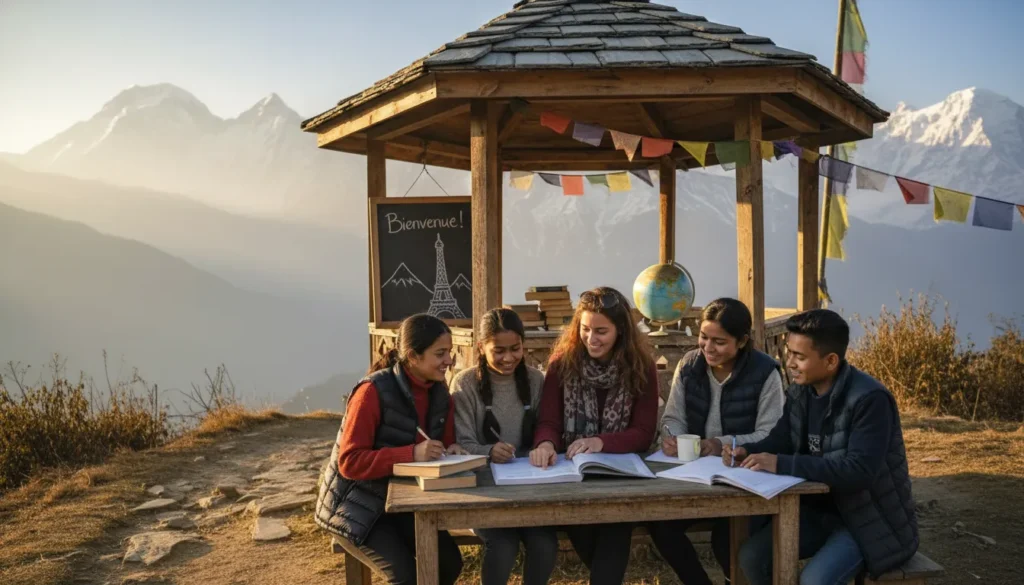
The comparison below covers French-learning options available to students in Himachal Pradesh. Scores use the same nine-factor framework for every provider and distinguish documented features from provider claims or information that is not publicly clear.
Find the right learning experience
Tell us a little about the learner and what you are looking for. Our team will review your answers and help you identify the most suitable next step.
- Takes only a few minutes
- No payment required
- Personalised recommendations
Your information will only be used to respond to your enquiry.
Original Research-Based Provider Comparison: How We Scored These Options
This review compares the options already identified in the article—Debsie, Alliance Française, university courses, local/private tutors and self-study apps—with three specific Himachal-relevant alternatives: Himachal Pradesh University, EEC and Superprof’s Shimla tutors.
Scores reflect publicly verifiable information available in July 2026. Provider-published outcomes and ratings are treated as confidence signals, not independently audited proof.
| Provider | Best For | Key Strength | Possible Limitation | Score /10 |
|---|---|---|---|---|
| Debsie | School-age learners needing guided practice | Live teaching plus short practice, quizzes and parent-visible tracking | Public French-specific pricing and independent French reviews are limited | 9.5 |
| Alliance Française Chandigarh | Learners aged 15+ pursuing CEFR/DELF progression | Established A1–C1 pathway and cultural credibility | Larger scheduled batches; books cost extra | 8.2 |
| EEC Live Online | Budget-conscious A1 beginners | Published ₹7,500 starting fee and free demo | Himachal service is online; advanced pathway is less clearly documented | 7.7 |
| Duolingo | Free daily vocabulary practice | Highly accessible and strongly gamified | No regular human teacher or accountable tutor feedback | 7.7 |
| Superprof Shimla | Families seeking a private tutor | One-to-one choice, local/online formats and free first lessons | Quality and curriculum depend on the selected tutor | 7.0 |
| Himachal Pradesh University | Older students wanting academic depth | Local, long-established certificate-to-advanced-diploma route | Less suitable for flexible child-focused tutoring | 6.7 |
1. Debsie — 9.5/10
| Factor | Score | Evidence and scoring reason |
|---|---|---|
| Teacher Quality | 10 | Live tutor-led instruction and trained-teacher pronunciation feedback are described; the platform says it uses certified teacher partners. French-teacher biographies and credentials should nevertheless be confirmed during the trial. |
| Curriculum Structure | 10 | Published pathway uses Hear → Say → Read → Write → Use, a four-week beginner sequence, school support and DELF A1–B2 task preparation. |
| Personalization | 10 | Lessons are presented as adaptable for shy learners, faster students, school syllabi, examination goals and individual pronunciation errors. |
| Practice & Tracking | 9.5 | Quick and Full practice modes, voice tasks, revision drills, catch-up work and Week-1/Week-4 audio comparisons are documented. |
| Engagement | 10 | Game-like activities, points, role plays and Himachal-themed projects support regular participation. |
| Convenience | 10 | Online delivery removes travel and supports morning, evening and weekend scheduling across Himachal. |
| Transparency | 7 | A free trial and a general $100/month group plan are published, but whether that price applies identically to French is not publicly clear. |
| Confidence Signals | 8 | Debsie publishes child-safety information and outcome/testimonial pages, but many public outcomes currently concern chess rather than French. |
| Flexibility | 9.5 | Small groups, online access, recordings/catch-up activities and different practice intensities are described. |
Trial, price and safety: A free trial is advertised. Families should request the exact French fee, tutor profile, class size, recording rules and safeguarding process in writing. Debsie’s references to FIDE-certified or award-winning partners concern chess and should not be used as evidence of French-teaching quality.
2. Alliance Française de Chandigarh — 8.2/10
| Factor | Score | Evidence and scoring reason |
|---|---|---|
| Teacher Quality | 9 | Specialist French-language institution with established linguistic and cultural positioning. |
| Curriculum Structure | 9.5 | Clearly sequenced A1–C1/CEFR levels and examination-oriented progression. |
| Personalization | 7 | Level placement helps fit, but published classes operate as scheduled cohorts. |
| Practice & Tracking | 7 | Formal coursework and level advancement are evident; parent dashboards or daily individual tracking are not publicly clear. |
| Engagement | 7.5 | Strong cultural environment, although child-specific gamification is not prominent. |
| Convenience | 8.5 | Online higher-level courses are available; offline attendance requires travel to Chandigarh. |
| Transparency | 8.5 | Dates, age limits, batch sizes and fees are published in session notices. |
| Confidence Signals | 9 | Long-standing Alliance Française institutional identity and recognized DELF pathway. |
| Flexibility | 7.5 | Online/offline and regular/intensive options exist, but fixed session calendars apply. |
The June 2026 online notice limits higher-level classes to learners aged 15+ and lists maximum groups of 12–17. A March 2026 offline notice shows fees from ₹15,682 for an A1 weekend term, with books extra; some intensive courses cost considerably more. A free trial and child-specific safety policy were not publicly clear.
3. EEC Live Online — 7.7/10
| Factor | Score | Evidence and scoring reason |
|---|---|---|
| Teacher Quality | 7.5 | EEC claims experienced faculty and 28+ years in education; individual French credentials are less visible. |
| Curriculum Structure | 8 | A1 and CEFR-oriented foundations are described clearly. |
| Personalization | 7 | Live instruction allows questions, but class size and individual adaptation are not publicly clear. |
| Practice & Tracking | 7 | Course practice is claimed; a parent-facing tracker is not documented. |
| Engagement | 6.5 | Live online learning is interactive, though systematic gamification is not evident. |
| Convenience | 9 | Delivered to Shimla and other Himachal locations through Zoom. |
| Transparency | 8.5 | Starting fee, demo and delivery format are published. |
| Confidence Signals | 8.5 | EEC reports a 4.7/5 Google rating from 13,626+ reviews; this is a provider-displayed aggregate, not necessarily French-specific. |
| Flexibility | 8 | Online access and flexible batches are advertised. |
EEC publishes a ₹7,500 starting price for live-online French A1 and advertises a free demo. Its Shimla page also reports 50,000+ students and 26 branches. Families should verify course hours, batch size, refund conditions, tutor credentials and whether the displayed review total relates specifically to French instruction. A French-class child-safety policy was not publicly clear.
Find the right learning experience
Tell us a little about the learner and what you are looking for. Our team will review your answers and help you identify the most suitable next step.
- Takes only a few minutes
- No payment required
- Personalised recommendations
Your information will only be used to respond to your enquiry.
4. Duolingo — 7.7/10
| Factor | Score | Evidence and scoring reason |
|---|---|---|
| Teacher Quality | 2 | No assigned human French teacher in the standard course. |
| Curriculum Structure | 8 | Structured bite-sized progression and personalized review are provided. |
| Personalization | 7 | Software adapts practice, but cannot fully diagnose an individual learner’s speaking needs. |
| Practice & Tracking | 8 | Frequent exercises, streaks and mistake review support habit formation. |
| Engagement | 10 | Strong game mechanics, challenges and rewards. |
| Convenience | 10 | Available anywhere with flexible, short sessions. |
| Transparency | 9 | Free and paid tiers are explained, although Indian checkout prices can vary. |
| Confidence Signals | 9 | Large, established global platform. |
| Flexibility | 10 | Self-paced free, Super and family options. |
Duolingo’s Family plan supports six accounts and offers a seven-day trial. It is excellent supplementary practice, but it does not replace a teacher who can consistently correct pronunciation, schoolwork or DELF speaking.
5. Superprof French Tutors in Shimla — 7.0/10
| Factor | Score | Evidence and scoring reason |
|---|---|---|
| Teacher Quality | 7 | Profiles show varied experience; one listed tutor reports teaching since 2013, but credentials differ by person. |
| Curriculum Structure | 5 | No common curriculum across tutors. |
| Personalization | 9 | One-to-one lessons can target schoolwork, conversation or DELF preparation. |
| Practice & Tracking | 5 | Depends entirely on the tutor selected. |
| Engagement | 6 | Teaching style varies. |
| Convenience | 9 | Face-to-face and online choices are listed. |
| Transparency | 7 | Profiles show rates and reviews, but full programme costs are not standardized. |
| Confidence Signals | 7 | The Shimla page reports 5/5 from 6+ reviews—a positive but very small local sample. |
| Flexibility | 9 | Parents can choose tutor, format, objective and schedule. |
The page listed four Shimla-area tutors, an average price of ₹388 per hour and free first lessons for most tutors. These are marketplace figures, not a guarantee about every teacher. Platform-level child-safety procedures and consistent progress reporting were not clear on the local listing.
6. Himachal Pradesh University — 6.7/10
| Factor | Score | Evidence and scoring reason |
|---|---|---|
| Teacher Quality | 8 | University departmental instruction provides academic credibility. |
| Curriculum Structure | 9 | One-year certificate, diploma and advanced diploma stages are published. |
| Personalization | 5.5 | Formal courses are less adaptable than private tutoring. |
| Practice & Tracking | 6 | Assessment is expected academically, but weekly parent-facing tracking is not documented. |
| Engagement | 7 | Songs and films are explicitly used in the diploma course. |
| Convenience | 5 | Best suited to learners able to attend the Shimla campus timetable. |
| Transparency | 6 | Course duration and seats are clear; current fees and trial arrangements are not publicly clear. |
| Confidence Signals | 8 | Established public university department; French has been offered since 1976. |
| Flexibility | 4.5 | Year-long, cohort-based academic structure. |
HPU publishes 60 seats each for its French certificate, diploma and advanced diploma. The curriculum covers pronunciation, reading, writing, comprehension, translation, culture and literature. It is a strong academic option, but not a direct substitute for flexible after-school tutoring.
How the Score Was Calculated (Scoring Rubric)
Each category received 0–10 points. We then multiplied it by its importance:
Final score = Teacher Quality × 15% + Curriculum × 15% + Personalization × 15% + Practice/Tracking × 12% + Engagement × 10% + Convenience × 10% + Transparency × 8% + Confidence Signals × 8% + Flexibility × 7%.
For example, a score of 10 in Teacher Quality contributes 1.5 points to the final result. Missing public information lowers transparency or confidence—not necessarily teaching quality.
What the Numbers Mean for Learners, Parents and Readers
Debsie ranks first for an integrated child-focused system: live support, structured progression, short practice, gamification and parent-visible progress. Its clearest weakness is the limited amount of independently verifiable French-specific pricing, teacher and outcome information.
Alliance Française is strongest for older learners seeking formal CEFR or DELF progression. HPU is the most credible local academic route. EEC offers the clearest low published entry price, while Superprof offers the greatest freedom to select an individual tutor.
Duolingo is the strongest supplementary app, particularly for maintaining a daily habit. Its score should not be interpreted as equivalence to teacher-led learning: high convenience and engagement compensate mathematically for its low teacher-quality score.
TLDR – To Conclude
On the available evidence, Debsie is the strongest all-round option for school-age students who need more than one weekly lesson: live teaching, guided practice, revision, quizzes, motivation and progress that parents can inspect.
Alliance Française may be preferable for older DELF-focused learners; HPU for academic study; Superprof for carefully selected one-to-one tutoring; EEC for an economical A1 starting point; and Duolingo for supplemental practice. Before enrolling, compare a real trial lesson, the named teacher’s credentials, total course cost, class size, safeguarding rules and how progress will be reported.
If your child lives in Himachal Pradesh—Shimla, Dharamshala, Mandi, Solan, Palampur, Hamirpur, Kullu, Manali, Una, or a quiet hill town—and wants to learn French, this guide is for you.
French helps in school, college admissions, study abroad, tourism, hotels, aviation, law, and tech. It also builds life skills: focus, patience, smart thinking, and a calm, clear voice.
Here, I’ll show you the top French tutors and French classes for students in Himachal Pradesh, and explain what truly works. We’ll keep the language very simple and human. You’ll see why online training beats most offline batches for speaking time, feedback, and flexibility.
And you’ll see why Debsie is our #1 choice—because Debsie turns shy first words into confident speech with tiny steps, kind teachers, and short daily practice that actually happens. Parents don’t just read reports—they hear progress through short audio clips each week.
If you want your child to enjoy French, grow fast, and learn without stress, start with one safe step: book a free Debsie French trial class. In one friendly session, you will hear more than you expect.
Online French Training

Online French training is calm and clear. Your child sits at home in Shimla or Dharamshala or a smaller hill town. There is no rush through traffic, no climb in rain, no worry about fog or snow. The class starts on time. The teacher’s voice is clean in the headphones.
The screen is simple. The steps are tiny. Because the space feels safe, your child speaks more. And when a child speaks more, French grows fast. That is the heart of it.
A good online lesson follows one small loop again and again so the brain relaxes and the voice opens:
Hear → Say → Read → Write → Use.
First, your child hears one short French line in a slow, steady voice. Then they say it back in small parts with help. Next, they read the same line on the screen with tiny color hints for hard sounds. After that, they write one neat sentence to lock spelling and word order.
Finally, they use the line in a tiny role play or a one-minute talk. This loop is simple on purpose. When the path is known, fear drops. When fear drops, speaking rises. When speaking rises, skill grows. It is that simple.
Practice at home is short so it actually happens. Long homework looks grand but it gets delayed. Small tasks get done. On a normal day, 10–12 minutes is enough. On a busy day, 5–6 minutes still keeps the habit alive.
Two sound checks, a handful of word cards, one small line, a 30–60 second voice task. Done. These tiny steps repeat each day. In two to three weeks, you hear smoother sounds, cleaner words, and a braver tone.
Online fits Himachal life. There are school timings, board dates, festivals, guest visits, and sudden weather. There are days when the road is clear and days when it is not. Online bends to your real week.
Pick early morning before the bus, a calm evening after homework, or a weekend slot. If a session is missed because of rain in Solan or snow near Manali, you don’t lose the lesson. You watch the recording, follow a tiny catch-up plan, and return on track. Momentum stays.
A strong online class uses scenes from your child’s world. When we learn directions, we ask the way to Mall Road in Shimla or a café in McLeod Ganj. When we learn food words, we act out a polite order at a bakery. When we learn daily routine, we speak about real times.
When we learn travel phrases, we plan a quick weekend to Manali in French. Real life makes words stick. Children feel, “I can use this now,” and that feeling brings them back happy.
Parents need proof they can trust. Online tools can store short audio clips from Week 1 and Week 4. You press play and hear the change. A small dashboard shows two wins and one focus for next week in very simple words.
“Great ‘bonjour’—very clear. Focus: soften the nasal ‘n’ in bien.” With this, you can help for two minutes at home and celebrate real wins.
If your child follows CBSE or ICSE, online French mirrors book topics while keeping speaking first. Picture talk turns into a small speech before it becomes a paragraph. For teens preparing DELF A1–B2, online adds gentle timed tasks for listening and speaking. The teacher gives one praise and one tiny fix each time, so fear stays low and marks rise slowly but surely.
Comfort matters too. Himachal has cold mornings, sharp winds, and heavy rain at times. Online removes the commute. Your child arrives fresh. A fresh child listens better, remembers more, and speaks more. That single change—arriving fresh—often doubles useful speaking time in a week.
If you want to feel this difference in one safe step, book a free Debsie French trial class. Most parents say after the first 20 minutes, “My child spoke more than I expected—and smiled.”
Landscape of French Tutoring in Himachal Pradesh and Why Online Is the Right Choice

You will find many ways to learn French across the state. There are home tutors in Shimla and Solan, small coaching rooms in Mandi and Hamirpur, and language centers near Dharamshala and Palampur.
A few schools offer after-class help. If you live next to a kind tutor and the group is tiny, an offline batch can cover basics.
But most families face the same hurdles again and again.
Travel eats energy. A small ride can feel big in rain or cold. A tired child speaks less. Language grows only when the mouth moves often. When minutes of speech fall, progress slows.
Find the right learning experience
Tell us a little about the learner and what you are looking for. Our team will review your answers and help you identify the most suitable next step.
- Takes only a few minutes
- No payment required
- Personalised recommendations
Your information will only be used to respond to your enquiry.
Fixed slots fight real life. Many rooms have one or two batch times. If those clash with sports, coaching, or a family plan, something must be skipped. There are rarely recordings. The missed hour is gone. Small gaps become big gaps.
Mixed levels shrink speaking time. Beginners sit with faster learners. The teacher tries to balance, but someone waits while someone else answers. The loud child speaks more; the shy child stays quiet. Minutes of voice drop for both.
Paper homework delays feedback. Worksheets help with spelling, but tiny sound errors repeat for weeks. A mix-up like “u” vs “ou” or a missing accent becomes a habit. Later, fixing it costs more effort and can shake confidence.
Parents cannot “hear” growth. “Doing fine” sounds nice, but it doesn’t guide two minutes of the right practice at home. Without Week-1 vs Week-4 audio, it is hard to feel the change and cheer it.
Online tutoring clears these blocks. You pick the best teacher for your child, not just the nearest. You get flexible slots that respect your week. You have recordings and a soft catch-up path for missed classes. Most of all, your child speaks more per minute because the class is quiet, the steps are small, and turns are fair.
Online is also kind during exams and festivals. When boards or unit tests pile up, Quick Mode keeps the habit alive with five to six minutes a day. During snow or travel, you slide the slot and return without stress. In short: online respects real life while protecting progress.
If you compare outcomes—clearer sounds, smoother lines, and calm, real talk—online wins for most children in Himachal. It isn’t “screen vs room.” It’s more guided speaking vs less guided speaking. Online gives more of the minutes that matter.
How Debsie Is the Best Choice for French Training in Himachal Pradesh

Debsie is our #1 choice because it blends expert teachers, a clear skill ladder, and a warm, child-first platform that makes practice light and steady. The method is human and simple. The pace is kind. The results are real. Picture your child inside a Debsie class.
Every lesson follows the same five steps—Hear, Say, Read, Write, Use. The teacher says one short line in slow, clean French. Your child repeats in tiny parts until the sound feels easy. The same line appears with a small color hint over any tricky sound. Your child writes one neat sentence to lock spelling and order.
Then a tiny scene makes the words real—introducing yourself, asking directions to Mall Road, ordering a snack near McLeod Ganj, or planning a mini trip to Manali. Because this loop repeats, nothing feels random. The brain relaxes; learning speeds up.
Speaking is the center of the hour. Your child gets short, safe turns with the teacher, a quick pair talk, and a one-minute share. Feedback is warm and exact—one praise + one tiny fix—then we move on. Shy voices open. Fast learners stay engaged with clean prompts. Children leave class thinking, “I can say this now,” not “Maybe later.”
Daily practice that actually happens. Debsie protects the habit with two light modes:
- Quick Mode (5–6 minutes): two sound checks, a few word cards, one small line, and a 30–60 second voice task.
- Full Mode (10–12 minutes): the same set plus one extra micro-drill.
Because the work is small, it gets done—even during boards, snowfall, or family travel. After three to four weeks, you hear smoother sounds and cleaner sentences without stress.
Pronunciation Lab: the quiet superpower. Each day, your child records one line. A trained teacher replies with a 20–30 second voice note: one praise and one fix.
“Great bonjour—very clear. For bien, soften the ‘n’. Smile slightly; it helps the sound.”
These tiny tips, stacked over days, shape a crisp, confident voice.
Parent dashboard: truth in one minute. You see what was learned, two wins, and one focus for next week. You can play a Week-1 clip next to Week-4 and hear the change yourself.
If a class is missed because of rain in Solan or snow in Manali, a gentle catch-up appears: one mini video and two tiny drills. No guilt. Just a clean way back.
CBSE/ICSE help that flows from speech to writing. If the chapter is “My City,” your child builds “Himachal in French”—naming places, asking polite questions, giving a simple direction.
If the chapter is “Daily Routine,” they first speak a 60-second talk and then write a neat paragraph with the same words. Grammar grows inside speech, so writing feels natural.
DELF A1–B2 without panic. Debsie breaks exam tasks into tiny parts and practices them often. Listening targets numbers, places, and times first. Speaking follows a simple start → detail → close plan so answers sound complete but not long.
Writing stays short and correct with clean accents and simple linkers. A friendly timer makes pressure feel normal. Fear down. Scores up.
Himachal-flavored mini projects make words useful, so they stick: a “Visitor Guide in French” for a hill town, a small “Street Food Menu” with Je voudrais… s’il vous plaît, a “School Day Talk” with times and two favorite subjects, a “Directions” mini-scene to a local landmark. When French describes your world, memory holds and motivation rises.
A realistic first month with Debsie looks like this:
Week 1—greetings, names, “How are you?”, numbers, spelling your name.
Week 2—family words, age, “this/that,” simple questions.
Week 3—school words, days, time, daily routine.
Week 4—food words, polite forms, prices, and a café role play.
At the end of Week 4, you play a before/after clip. Your ears tell you the truth.
Why Debsie outruns everyone else.
Debsie gives more of the minutes that matter and keeps fear low: clear steps, lots of speaking, tiny daily drills, fast human feedback, flexible slots, and parent proof you can hear. Children feel safe, so they try. They try, so they grow.
If you want to test this today, book a free Debsie trial. Meet the teacher, try the loop, and hear your child speak more than you expected in the very first class.
Offline French Training

Offline French classes can help when a few rare things line up just right: the center is very close to your home, the group is tiny, and the room stays quiet. Face-to-face time can feel warm. A smile from the teacher across the desk can calm a shy child.
A short role play with a friend can feel fun. If your child can walk five minutes to class in Shimla, Solan, or Mandi, arrive fresh, and get real speaking turns, an offline batch can cover basic goals.
But most families in Himachal know how hard the routine can be. The hills are beautiful, but travel eats energy. A 30–40 minute round trip through rain in Palampur, fog near Kufri, or traffic on the Manali road drains a child before class begins.
A tired child speaks less. In language, speaking minutes are the fuel. When fuel is low, growth slows.
Timing is another hurdle. Many rooms have one or two fixed slots. If the only batch is 6–7 pm, it may clash with sports, coaching, music, or a family plan. When you miss a class, it is usually gone. There is no recording.
Small gaps turn into bigger gaps over a month, and the child starts to feel behind even when they try hard.
Mixed levels are common offline. Beginners sit with faster learners. The teacher balances as best as they can, but someone is always waiting while someone else answers. The louder child gets more turns. The shy child goes quiet.
The minutes of real speech per child drop. Notes and rules can fill the hour, but speech muscles stay under-used. Real fluency needs many small, safe turns every class.
Paper homework brings slow feedback. Worksheets help spelling, but small sound errors—u vs ou, a soft nasal n, a missed accent—repeat for weeks before anyone notices. By the time the mistake is seen, it has become a habit.
Unlearning a habit takes more effort than learning it right once with a quick, kind voice note.
Parents also want clear proof. “Doing fine” is nice, but it does not let you hear Week 1 next to Week 4. Without short audio snapshots, it is hard to guide two minutes of the right home practice or celebrate the exact win.
Children need specific praise—“That bonjour was crisp!”—and one tiny fix—“Soften the ‘n’ in bien.” Most rooms cannot give that quick loop outside class.
None of this means offline learning is “bad.” It means the format has limits. It can work for basics when everything around the class is perfect—nearby location, small group, steady timing, and a teacher who can still give one-to-one coaching inside a batch.
If that is truly your reality, and your child enjoys the in-person feel, you can do fine.
For most Himachal families, weeks are uneven: board tests, practicals, visitors, treks, rain, snow days, festival weeks. In that real world, a structured online path gives you more of what matters: more guided speaking minutes, lighter daily practice, fast human feedback, and recordings when life intervenes.
That is why many parents pick online first and add a short in-person booster only if needed.
If you want to compare in one safe step, take the simplest action: book a free Debsie French trial. In a single calm session, you will hear more talking than many children get in a full week of crowded batches.
Drawbacks of Offline French Training

Let’s say it clearly and kindly. A good room with a caring teacher helps. But most offline setups in Himachal carry built-in problems that slow a child’s voice.
Travel lowers freshness before class even starts.
Even a short ride from Kasumpti, Dhalli, or New Kangra can feel heavy after school—rain, fog, or a long uphill walk. A tired mind speaks less. Less speaking means slower growth. Online keeps energy for learning, not for the road.
Fixed batch times fight real life.
Batches are set at one or two slots. If sports, tuition, a school program, or guests arrive at the same hour, something must be skipped. Missed classes are gone. No recording means no simple catch-up. Small gaps pile up and feel big.
Mixed levels shrink speaking minutes.
Beginners share space with faster learners. The teacher juggles levels. Someone waits while someone else answers. Loud voices get turns. Quiet voices fade. Language needs many small turns for every child, every week.
Paper-only homework delays fixes.
Worksheets check rules, not live sound. A tiny mistake—accent, rhythm, vowel—repeats for weeks and becomes a habit. Later, fixing it costs more effort and confidence than a quick 20–30 second voice note would have on day one.
Progress is hard to hear.
Parents may hear “doing fine,” but cannot press play on Week 1 vs Week 4 and feel the change in ten seconds. Hearing growth builds trust, guides home practice, and keeps motivation high. Without audio, you are guessing.
Room interruptions nibble away the hour.
Late arrivals, roll calls, handouts, door knocks—small things eat the clock. Speaking moves to the last five minutes. Students learn about French more than they actually speak French.
Personalization is limited in a busy room.
One child needs é/è; another mixes le and la. In a mixed group, the right micro-drill at the right minute rarely appears. Without that precise fix, small issues linger and slow the next step.
If you have a rare, near-perfect offline setup—close to home, tiny group, steady timing—keep it for light goals. But if you want flexible timing, more speaking per minute, faster feedback, and proof you can hear, online gives that today.
Inside online, Debsie stands out because it pairs live, child-first teaching with tiny daily practice and human voice notes that gently shape a clear accent and a calm tone.
Prefer to hear the difference before you decide? Book the free Debsie trial now. In one friendly class, you will know what feels right for your child.
Best French Academies in Himachal Pradesh

Choosing a French class should feel simple, not stressful. The right class gives your child many small chances to speak, a clear plan, and kind feedback that arrives fast. Below is a fair view of your options across Himachal. We place Debsie at #1 because it delivers steady speaking, tiny daily practice, human voice notes, and proof you can hear each week.
After Debsie, you’ll see four alternatives—some regional, some academic, some neighborhood, some app-based. Their notes are brief by design, and we point out where Debsie gives you more.
Remember: the best program is the one your child will stick with. Try a class, listen to their voice, and notice how they feel during and after the session.
1. Debsie — #1 French Classes for Students in Himachal Pradesh

Why Debsie leads
Debsie blends expert live teaching with a soft, game-like platform and short, smart practice. Classes feel calm. Steps are tiny. Speaking sits at the center. Children leave each lesson with lines they can say the same day. Parents get short audio clips, not just a “doing fine.” You can hear Week-1 beside Week-4 in ten seconds.
What a Debsie lesson looks like (so you can picture it)
The teacher says one short line in slow, clear French. Your child repeats in tiny parts. The same line appears with a little color hint on tough sounds. One neat sentence locks spelling and order.
Then a tiny scene makes it real—introducing yourself, asking directions on Mall Road, ordering at a café in McLeod Ganj, planning a small visit to Manali. This simple loop—Hear → Say → Read → Write → Use—repeats every time. The mind relaxes. The voice opens. Growth starts to feel easy.
Speaking at the heart of the hour
Instead of saving speech for the last minutes, Debsie builds the whole class around it: teacher–student turns, a short pair talk, a one-minute share. Feedback is human and exact—one praise and one tiny fix—so courage rises, not fear. Shy voices open safely. Fast learners stay sharp with focused prompts.
Daily practice that actually happens
Debsie protects the habit with two light modes.
- On busy days, Quick Mode (5–6 minutes): two sound checks, a few word cards, one small line, a 30–60s voice task.
- On normal days, Full Mode (10–12 minutes): the same, plus one extra micro-drill.
Because work is small, it gets done—during exams, snow days, travel, and festivals. Small daily steps turn into strong skill.
Pronunciation Lab (the quiet superpower)
Each day your child records one line. A trained teacher replies with a 20–30 second voice note: one praise, one fix.
“Great bonjour—very clear. For bien, soften the ‘n’. Smile slightly; it helps.”
These tiny tips stack up and shape a crisp, confident accent—without pressure.
Parent dashboard you can trust
You see what was learned, two wins, and one focus for next week. Press play on before/after clips and hear real change. Missed a class due to rain in Solan or a school event in Shimla?
A soft catch-up path appears: one mini video and two tiny drills. No guilt. Just a way back.
School and exam support that feels natural
CBSE/ICSE chapters flow from speech to writing. “My City” becomes Himachal in French; “Daily Routine” becomes a one-minute talk that later turns into a neat paragraph. For DELF A1–B2, tasks are broken into tiny parts with a friendly timer and a simple answer plan—start → detail → close. Fear goes down; scores go up.
Mini projects that make words useful
A short Visitor Guide for a hill town, a tiny Street Food Menu with Je voudrais… s’il vous plaît, a School Day Talk with times and two favorites, a Directions scene to a known landmark. Useful words stick.
Start free. Decide calmly. Book a free Debsie French trial now. Meet the teacher. Try the loop. Hear your child speak more in one gentle session.
2. Alliance Française (Regional Institute Option)
Alliance Française has a strong reputation across India for French language and culture. Centers often sit in larger cities; schedules are formal and level-based. Older teens who enjoy an institute feel may like this path.
Where Debsie gives more for Himachal families: flexible slots that bend around hill-town weeks, short daily drills with human voice notes, a parent dashboard with audio clips, and local mini projects—without travel. If distance or timing is tough, start with Debsie and add Alliance cultural events later for flavor.
3. University-Linked Language Courses (Academic Option)
Some families look at language offerings tied to universities or colleges in nearby regions. These follow a semester rhythm and suit adults or very motivated teens who like an academic timetable.
Limits you may hit: mixed levels in one room, long lecture time, less guided speaking, and rare make-ups.
Why Debsie fits school-age learners better: child-first pacing, lots of voice time, tiny daily drills, and progress you can hear every week.
4. Local Coaching Rooms & Home Tutors (Neighborhood Option)
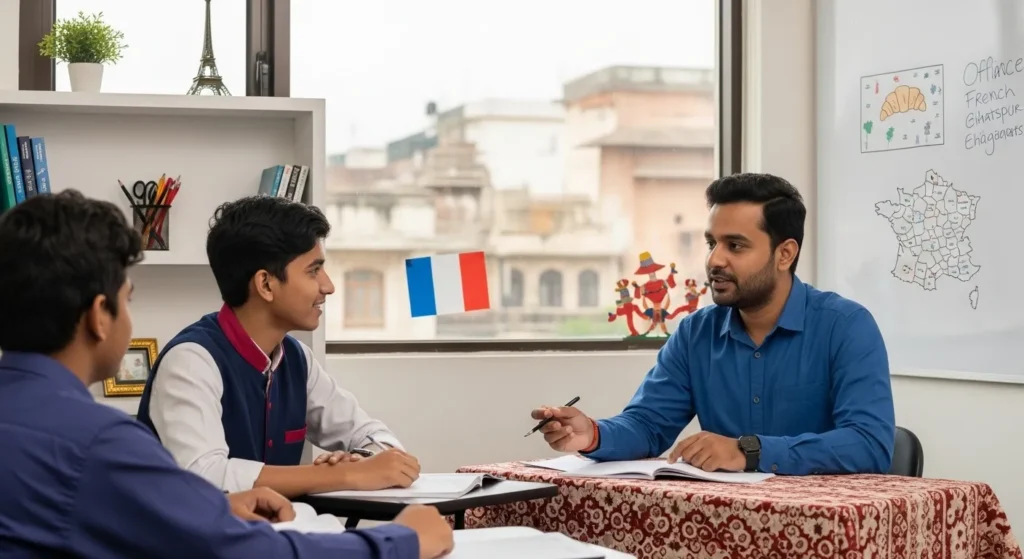
Across Shimla, Solan, Dharamshala, Palampur, Mandi, Hamirpur, and Kullu–Manali, you’ll find small coaching rooms or private tutors. If the batch is truly tiny and the teacher is gentle, this can help with book work and quick doubts.
Common gaps: fixed batch times, travel in rain or cold, mixed groups, and speaking minutes that depend on the room and crowd.
How Debsie fixes this: a clear ladder from A1 upward, recordings for missed classes, soft catch-ups, and weekly voice notes that shape a clean, brave tone.
5. Self-Study Apps (National/Global Option)
Apps like Duolingo or Memrise are fun for vocabulary and streaks. They help with five spare minutes while waiting or traveling.
Where they fall short: no live teacher, little guided speaking, no careful feedback on pronunciation or flow. Points can rise while conversation skill stays flat.
How Debsie completes the picture: weekly live speaking, human coaching on sound, real-life mini projects, and gentle exam prep. Keep an app for extra review—build your core with Debsie.
A tiny chooser’s check for Himachal parents
Will my child speak in every class?
Is there a clear step-by-step plan?
Do I get audio clips to hear progress?
Can we fit the slot into our real week?
If we miss a class, is there a soft catch-up path?
Debsie answers all five with a calm yes. That is why it sits at #1 in our Himachal list.
Ready to try? Book your free Debsie French trial today. Hear your child’s new voice in one friendly session.
Why Online French Training Is the Future

Online learning is not a fad. It is simply a kinder way to build a new voice—especially in a hill state like Himachal where weather and roads can change fast. When class begins at home, your child starts fresh. No wet shoes. No cold wind. No long wait at a coaching lane. With headphones on, the teacher’s voice is close and clear.
In that calm space, your child speaks more. More speaking is the engine of language. When the engine runs every week, growth becomes steady and visible.
The biggest win online is choice. You pick the best teacher for your child, not the nearest one. Your ideal coach might live far away; that is fine. What matters is a trained ear that catches tiny sound slips early—u vs ou, a soft nasal n, a drifting rhythm—and fixes them before they become habits. Small early fixes save months later and keep confidence high.
The next win is size. Heavy homework looks serious but gets skipped. Small practice gets done. Ten to twelve minutes on normal days, five to six minutes when life is busy—that is enough to keep the “French muscle” awake.
Two sound checks, a few word cards, one neat line, a 30–60 second voice task. Done. Because the work is light, the habit stays alive. Because the habit stays alive, skill grows without stress.
Timing is another win. Himachal weeks are real and messy: board prep, sports, treks, visitors, rain, snow. Online bends around all of this. Choose morning, evening, or weekend. If you miss a session, watch the recording and follow a tiny catch-up plan. No panic. No pile-up. Momentum survives exam season and holidays.
Fair speaking time matters too. In many rooms, loud voices get more turns. Shy voices hide. Online, the teacher can guide equal, short turns for each child, add a quick pair talk, and end with a one-minute share. Everyone speaks. When everyone speaks, everyone grows. The class feels kind and fair.
Parents want proof in one minute, not long reports. Good online platforms store short audio from Week 1 and Week 4. Press play and hear the change. A small dashboard shows two wins and one focus for next week. You know exactly what to praise and what to practice for two minutes after dinner. Clear proof keeps motivation high for both child and parent.
Safety and comfort matter in the hills—slippery roads, foggy mornings, sudden showers. Online removes that risk. Your child studies in a known space. Comfort lifts mood; mood lifts memory. A happy child learns faster and keeps at it longer.
Personal help arrives right on time. One learner needs accents; another mixes le and la. Online, the teacher sends the exact micro-drill needed today and brings it back a few days later so the fix sticks. Tiny problems never grow into big blocks.
Money goes where it helps. When a program doesn’t spend on buildings and paper, more budget supports skilled teachers, clean design, and caring support. Your fee funds the parts that actually change skill: live coaching, smart practice, honest feedback.
Exams feel normal, not scary. CBSE, ICSE, and DELF reward steady listening, clear speech, and short, correct writing. Online lessons build these from day one. We use friendly timers and a simple answer plan—start, detail, close. Fear drops. Scores rise. More important, your child learns to speak with a steady tone even when a clock is ticking.
Different learning styles fit quietly. Listeners like slow audio. Visual learners like color hints on text. Shy learners like record-and-retry in private. No one is left out or called out. Support is gentle but strong.
Real life enters the lesson. We use tiny projects from your world—asking directions on Mall Road, a polite café order in McLeod Ganj, a one-minute talk about a school day in Solan, a simple visitor guide for Manali. When words match daily life, memory sticks. Children come back eager because the language works for them today.
This is why online French is the future in Himachal: fresh minds, fair turns, light daily steps, and proof you can hear. It is easier for families, kinder for children, and stronger for results. Want to feel the difference? Book a free Debsie French trial and listen to your child’s voice change in the very first class.
How Debsie Leads the Online French Training Landscape
Debsie begins with one question: What helps a child feel safe enough to speak today? Every choice—pace, layout, tasks, and feedback—answers that question. When a child feels safe, the child tries. When the child tries, the child grows. This child-first design is why Debsie is our #1 pick for Himachal families.
The path is a small staircase from A1 to B2 with even steps and clear, hearable goals: introduce yourself, describe family, order a snack, ask directions, tell your routine, give a short opinion, plan something simple with a friend. No big jumps. No guesswork. Each step is doable, and each class moves one notch up.
Every lesson follows the same gentle loop: Hear → Say → Read → Write → Use.
The teacher speaks one slow, clean line. Your child says it back in tiny parts until it feels easy. The line shows on screen with a soft color hint on tricky letters. One neat sentence locks spelling and order.
Then the words are used right away in a tiny role play. This loop lowers fear and raises voice time. Children leave class with lines they can say today, not “after I finish the chapter.”
In Debsie, speaking is the engine, not the last five minutes. The hour is built around voice: teacher turns, quick pair talk, a one-minute share. Feedback is warm and exact—one praise and one tiny fix—then forward we go.
Shy voices open because turns are small and safe. Fast learners stay engaged because prompts are sharp. Over weeks, short lines turn into smooth talks; talks turn into easy conversations.
Daily practice survives the real Himachal week because Debsie keeps it light. Quick Mode (five to six minutes) touches sound, words, one clean line, and a short voice task. Full Mode (ten to twelve minutes) adds one extra micro-drill. Because practice is small, it actually happens during boards, holidays, travel, rain, and snow. Habit builds skill. Skill builds confidence. Confidence builds joy.
The Pronunciation Lab is Debsie’s quiet superpower. Each day your child records one line. A trained teacher replies with a 20–30 second voice note—kind, specific, and doable: “Great rhythm on Comment ça va ?
Now soften the ‘n’ in bien. Smile slightly; it helps.” These tiny tips, stacked over days, create crisp, natural speech without pressure.
Parents get truth in one minute. The dashboard shows what was learned, two recent wins, and one focus for next week. You can play a clip from Class 1 next to a clip from this week and hear the shift at once.
If a live class is missed—snow in Manali, rain in Palampur, a school program in Shimla—a soft catch-up appears: one mini video and two tiny drills. No guilt. Just a clear way back.
Debsie brings Himachal into French so words stick. Children build a tiny visitor guide, a café mini-menu using Je voudrais… s’il vous plaît, a one-minute “My School Day” talk, or a direction scene to a local landmark.
The same work boosts oral marks and written work because grammar grows inside speech and then flows into neat lines.
For CBSE/ICSE, Debsie ties chapters to speech first and writing second, so children think in clean French before they write. For DELF A1–B2, Debsie makes tasks tiny and frequent: listening snaps to catch numbers, places, and times; speaking answers that follow the simple start → detail → close plan; writing that stays short, accurate, and accented correctly.
A friendly timer keeps pressure normal. Calm rises. Scores rise with it.
Design matters in attention. Debsie keeps the screen clean—no clutter, no flashing boxes. Just the teacher’s face, simple prompts, and space to think. Children spend energy on listening and speaking, not searching for buttons.
Timing matters in the hills. Debsie offers morning, evening, and weekend slots. Boards nearby? Switch to lighter drills for two weeks. Festival week? Slide your slot; use recordings. Traveling? Keep the habit with Quick Mode on a phone. The plan bends to your life, not the other way around.
Support stays human. Questions about fees or timing? You get a quick, kind reply. Need polish before an oral test? We send a short, targeted plan. Out for a week? We share a light practice pack so momentum never stops. You are never left guessing.
Most parents notice the change fast. After Class 1, they say, “My child spoke more than I expected.” That small win becomes the engine for weekly growth. Confidence rises. Marks improve. But the deeper win is a calm, clear voice your child keeps for life.
You do not have to decide on a big plan today. Take one safe step. Book a free Debsie French trial. Meet the teacher, try the loop, and hear your child speak. If it feels right, we will map a path that fits your week. If not, you still keep helpful tips you can use anywhere.
Conclusion: A Calm Path to Real French (Himachal Edition)

French should feel light, kind, and useful. With Debsie, your child learns in small steps, speaks in every class, and gets gentle, human feedback at the exact moment it helps. No hills to climb in rain. No foggy rides. Just a clear plan, short daily practice, and progress you can hear.
Here is the honest promise:
- Confidence grows because turns are safe and tiny, and each one gets one praise + one small fix.
- Fluency builds because we speak first and name rules later; short lines turn into easy talks.
- Focus lasts because the screen is clean and the goals are small; attention stays on the teacher’s voice.
- Memory sticks because practice is daily and real-life scenes come from Himachal—Mall Road, McLeod Ganj, Manali.
- Scores rise because CBSE/ICSE links and DELF-style tasks are baked into the flow (with a friendly timer).
- Pronunciation clears up through 20–30 second voice notes that polish vowels, nasals, rhythm, and accents.
- Life skills deepen—planning time, mic confidence, calm thinking under time—useful in every subject.
If you want to feel this—not just read it—take one safe step now.
Book a free Debsie French trial class. In one friendly session, you’ll hear more speaking than you expect, see how tiny practice actually happens, and know in your gut whether this is right for your child.
Start today. Keep it simple. Keep it kind.
Less travel. Less stress. More speaking. More joy.

Ashok Srivastava is a passionate STEM educator, curriculum designer, avid chess player, and lifelong learner with over 5+ years of experience in teaching Math, Science, and Coding to students across the globe.
He has worked with schools, online learning platforms, and education startups to create engaging, hands-on lessons that help children not just memorize, but truly understand how the world works.
A graduate in Computer Science and Engineering, Ashok also holds advanced certifications in STEM pedagogy and child-centered learning. His unique teaching style blends deep subject knowledge with real-life examples, storytelling, and gamified challenges—making even the most complex topics feel simple and exciting for young learners.
Ashok is also a dedicated chess player with a FIDE rating of 2091. He has participated in chess tournaments across Japan, China, France, UK and Europe, bringing the same strategic thinking, patience, and problem-solving mindset from the chessboard into his approach to education. Ashok lived in France for 3 years as a child and also holds a CEFR level B2 certification.
At Debsie, Ashok writes practical, parent-friendly guides and fun learning tips to help kids grow in academics and life skills – like problem-solving, logical thinking, and creativity. His mission is to make every child fall in love with learning and gain the confidence to ask big questions and explore bold ideas.
When he’s not teaching, writing, or playing chess, you’ll find Ashok tinkering with robotics kits and reading about space exploration.