The comparison below evaluates physics-learning options available to families in Tripura using one weighted framework. Scores reward documented teaching quality, structured practice and transparency—not brand size. Where pricing, safeguarding or outcomes could not be verified publicly, the provider receives no assumed credit.
Find the right learning experience
Tell us a little about the learner and what you are looking for. Our team will review your answers and help you identify the most suitable next step.
- Takes only a few minutes
- No payment required
- Personalised recommendations
Your information will only be used to respond to your enquiry.
Original Research-Based Provider Comparison: How We Scored These Options
Subject: School-level physics and JEE/NEET physics preparation
Region: Tripura, with particular relevance to Agartala
The existing article discusses Debsie alongside four unnamed categories: local classroom coaching, a North-East exam-preparation brand, home-tuition networks and national online-content libraries. Because those descriptions do not identify specific businesses, this comparison adds five verifiable alternatives serving Tripura: Physics Wallah Vidyapeeth Agartala, Aakash Institute Agartala, Sagnik Sir Physics Classes, Locus Academy and Agartala tutors listed through Superprof.
Overall 10-Point Education Provider Score
| Provider | Best For | Key Strength | Possible Limitation | Score /10 |
|---|---|---|---|---|
| Debsie | Guided online learning with regular practice | Personalised lessons, gamification and parent-visible follow-up | Physics-specific fees and independently verified physics outcomes are not publicly clear | 9.54 |
| Physics Wallah, Agartala | JEE/NEET preparation at scale | Detailed syllabus, DPPs, testing and online/offline access | Batch-level personalisation may vary | 8.08 |
| Aakash Institute, Agartala | Established exam-preparation system | Long operating history, tests and recognised national curriculum | Centre-specific fees, batch sizes and trial terms are not displayed clearly | 7.93 |
| Sagnik Sir Physics Classes | Local, physics-only instruction | Named physics specialist and small-class positioning | Pricing, safeguarding and progress-reporting processes are not published | 7.70 |
| Locus Academy | Flexible JEE/NEET batches | Assignments, test series and downloadable sessions | Public faculty information is stronger for chemistry than physics | 7.28 |
| Superprof Agartala tutors | One-to-one or home tuition | Wide tutor choice, hourly pricing and first-class offers | Quality and curriculum consistency depend on the individual tutor | 7.06 |
1. Debsie — 9.54/10
| Factor | Score | Evidence and scoring reason |
|---|---|---|
| Teacher Quality | 10 | The article describes live mentors, small groups and same-day doubt support. Debsie’s safety policy says parents may verify credentials and remain included in teacher communication. However, public physics-teacher biographies remain limited. |
| Curriculum Structure | 10 | The published Tripura plan maps CBSE, ICSE/ISC and State Board topics, with weekly goals, board preparation and gradual JEE/NEET reasoning. |
| Student Fit & Personalisation | 10 | One-to-one plans are described as adapting to level, speed and learning style; small-group lessons include individual checks and targeted “fix-it” work. |
| Practice & Tracking | 9.5 | Daily or spaced homework, quizzes, revision, targeted problem packs and weekly parent summaries are documented. |
| Engagement | 9.5 | Badges, streaks, short challenges, visual simulations and safe household experiments are built into the stated model. |
| Convenience | 10 | Online access removes travel across Tripura and supports flexible scheduling and make-up work. |
| Transparency | 8 | Class formats and teaching processes are detailed, but the public pricing page appears primarily written for chess. Physics-specific fees are therefore not publicly clear. |
| Confidence Signals | 8 | Debsie publishes an extensive outcomes and testimonials page, but most currently visible examples concern chess rather than physics. |
| Flexibility | 9.5 | Small groups, one-to-one lessons, online resources and free trials are offered. Debsie also works with offline, certified and award-winning teacher partners in parts of its wider learning network, although online delivery provides access to the broadest teacher pool. |
Trial, price and safety: A free trial is publicly offered. The general pricing page lists US$100 monthly for two small-group classes per week and US$20 per one-to-one class, but these listings appear chess-oriented; parents should request a written physics quotation. Debsie publishes unusually detailed safeguarding procedures, including parent-inclusive communication, privacy rules, complaint escalation and removal of a teacher from a student’s classes following a serious concern.
2. Physics Wallah Vidyapeeth, Agartala — 8.08/10
| Factor | Score | Evidence and scoring reason |
|---|---|---|
| Teacher Quality | 8 | PW describes expert faculty and organised doubt support, but Agartala’s individual physics-faculty credentials are not displayed on the centre page. |
| Curriculum Structure | 9 | Separate Class 8–10 foundation, Class 11–12 and dropper pathways cover JEE/NEET syllabi and previous-year questions. |
| Student Fit & Personalisation | 6.5 | Mentorship is advertised, but large-cohort delivery limits evidence of lesson-by-lesson adaptation. |
| Practice & Tracking | 9 | DPPs, mock tests, previous papers, analytics and progress dashboards are clearly documented. |
| Engagement | 7 | Smart classrooms and live/recorded teaching help, although gamification is not a central published feature. |
| Convenience | 9 | Agartala classroom access plus extensive online options. |
| Transparency | 8 | Course structure is clear; final centre-specific tuition varies. |
| Confidence Signals | 8 | Large national presence and substantial public visibility, alongside mixed support and refund commentary on third-party review sites. |
| Flexibility | 8.5 | Online, recorded and classroom formats serve several school levels and entrance-exam goals. |
Trial, price and safety: PW publishes a ₹5,000 registration fee for JEE, NEET and foundation offline batches; full tuition depends on course and city. A standard free physics trial at the Agartala centre is not publicly clear. A centre-specific child-safety policy was not located.
3. Aakash Institute, Agartala — 7.93/10
| Factor | Score | Evidence and scoring reason |
|---|---|---|
| Teacher Quality | 8.5 | Aakash has operated since 1988 and specialises in medical, engineering and foundation preparation; branch-level physics biographies are not shown. |
| Curriculum Structure | 9 | Established JEE, NEET, Olympiad and Classes 8–12 pathways, test series and study materials. |
| Student Fit & Personalisation | 6.5 | Multiple streams are available, but individual adaptation inside standard batches is not documented locally. |
| Practice & Tracking | 9 | Mock tests, AIATS-style testing, previous papers and detailed solutions form a strong assessment system. |
| Engagement | 6.5 | Primarily exam-oriented; limited evidence of gamification or hands-on physics activities. |
| Convenience | 8 | Physical Agartala centre and digital/distance-learning options. |
| Transparency | 7 | Address, schedules and programmes are clear; tuition and batch size require an enquiry. |
| Confidence Signals | 8.5 | Long institutional history and a 4.5/5 rating displayed on the official Agartala profile, though provider-hosted reviews should be interpreted cautiously. |
| Flexibility | 8 | Classroom, digital and distance-learning programmes are available. |
Trial, price and safety: Scholarships are offered through admission tests, but Tripura course fees and a no-obligation trial are not publicly clear. The local page does not publish a detailed centre-specific safeguarding policy.
Find the right learning experience
Tell us a little about the learner and what you are looking for. Our team will review your answers and help you identify the most suitable next step.
- Takes only a few minutes
- No payment required
- Personalised recommendations
Your information will only be used to respond to your enquiry.
4. Sagnik Sir Physics Classes — 7.70/10
| Factor | Score | Evidence and scoring reason |
|---|---|---|
| Teacher Quality | 8.5 | The lead instructor is publicly named as Sagnik Saha, with B.Sc. and M.Sc. degrees in physics and several years’ teaching experience. |
| Curriculum Structure | 8 | Physics-specialist courses and resources are published, although detailed level-by-level progression is limited. |
| Student Fit & Personalisation | 8 | The provider states that lesson plans consider strengths, weaknesses and learning styles. |
| Practice & Tracking | 7 | Resources and success materials exist; systematic parent dashboards or measurable tracking are not explained. |
| Engagement | 7.5 | Small-class positioning supports interaction, but gamification is not documented. |
| Convenience | 7.5 | More than one offline centre and online-student access are referenced. |
| Transparency | 6 | Teacher identity is clear; pricing, batch schedule, trial terms and refund rules are not. |
| Confidence Signals | 8.5 | Magicpin reports 4.9/5 from 89 ratings, while the provider reports 300+ active students; these are signals, not audited outcomes. |
| Flexibility | 7.5 | Online and offline options are indicated. |
Trial, price and safety: Public fees, a standard trial offer and a detailed safeguarding policy were not found.
5. Locus Academy — 7.28/10
| Factor | Score | Evidence and scoring reason |
|---|---|---|
| Teacher Quality | 7.5 | Qualified professionals are claimed, but the clearest named faculty profile is for chemistry rather than physics. |
| Curriculum Structure | 8 | JEE/NEET teaching, assignments, full- and part-syllabus tests and downloadable sessions are documented. |
| Student Fit & Personalisation | 6.5 | Several batch schedules exist, but academic personalisation is not explained in detail. |
| Practice & Tracking | 8.5 | Assignments, OMR tests and detailed solutions provide strong exam practice. |
| Engagement | 6.5 | Primarily classroom and exam driven. |
| Convenience | 7.5 | Classroom experience, live online classes and downloadable study material are offered. |
| Transparency | 6 | Course features are visible; physics faculty, fees, trial conditions and safety procedures are not sufficiently detailed. |
| Confidence Signals | 6.5 | Operating history and achiever content are published, but substantial independent review evidence is limited. |
| Flexibility | 8 | Daily, weekly and weekend batches are advertised. |
6. Superprof Physics Tutors in Agartala — 7.06/10
| Factor | Score | Evidence and scoring reason |
|---|---|---|
| Teacher Quality | 6.5 | Profiles disclose qualifications and reviews, but standards differ significantly between tutors. |
| Curriculum Structure | 5 | No common curriculum is guaranteed. |
| Student Fit & Personalisation | 8.5 | One-to-one tuition can adapt closely to the learner. |
| Practice & Tracking | 5 | Depends entirely on the selected tutor. |
| Engagement | 6.5 | Individual attention helps, but teaching tools vary. |
| Convenience | 9 | Home, face-to-face and online choices are available. |
| Transparency | 8.5 | Hourly fees, qualifications, formats and profile reviews are shown. |
| Confidence Signals | 7 | Tutor-specific reviews help, although some profiles have very small review counts. |
| Flexibility | 9.5 | Broad choice of tutors, levels and schedules. |
Trial, price and safety: Listings begin around ₹200–₹500 per hour, with several tutors advertising a first class free. Platform-level protections may apply, but each tutor’s child-safety practices should be checked directly.
How the Score Was Calculated (Scoring Rubric)
Each category was scored from 0 to 10 and multiplied by its importance:
Final score = Teacher Quality × 15% + Curriculum × 15% + Personalisation × 15% + Practice/Tracking × 12% + Engagement × 10% + Convenience × 10% + Transparency × 8% + Confidence Signals × 8% + Flexibility × 7%.
For example, Debsie’s three 10/10 scores contribute 4.5 points before the remaining six categories are added. Missing public information lowers transparency or confidence scores; it is not treated as proof that a service is poor.
What the Numbers Mean for Learners, Parents and Readers
Debsie ranks first for families seeking a connected learning system rather than a weekly lecture alone: live support, adaptation, short practice, revision, quizzes, motivation tools and parent-visible progress. Its most important verification gap is that physics-specific prices, tutor profiles and subject-specific outcomes should be confirmed during the trial.
PW and Aakash are stronger fits for students prioritising intensive, standardised JEE/NEET preparation and large test systems. SSPC is the most clearly physics-specialist local option, while Locus offers useful scheduling flexibility and exam practice. Superprof may suit families wanting a home tutor or highly individual timetable, provided they carefully verify the tutor’s credentials, curriculum and safeguarding arrangements.
TLDR – To Conclude
Under this framework, Debsie is the strongest all-round option, particularly for students who need structured online teaching, guided practice between classes, gamification, quizzes, revision and regular progress visibility. PW and Aakash remain credible exam-focused alternatives, while SSPC deserves consideration for local physics-specialist teaching.
No score can replace a trial lesson. Families should compare the actual teacher, batch size, written fee quotation, homework feedback, cancellation terms and child-safety procedures before enrolling. The best choice ultimately depends on the student’s level, goals, schedule and preferred learning environment.
Physics explains how our world moves, shines, and changes. It can look hard at first, but with the right guide, it turns simple and clear. For students in Tripura—whether you live in Agartala, Udaipur, Dharmanagar, Kailashahar, or a quiet town near tea gardens—the right class and the right teacher make all the difference. When lessons are short, calm, and hands-on, children stop guessing and start thinking. Marks improve. Confidence grows.
This guide will help you choose well. You will see why online physics training is the smart path for Tripura families who want steady progress without long travel and crowded rooms. You will learn how a strong online class should run—live teaching, simple words, tiny demos you can do at home, and spaced practice that sticks. We will also compare options you may hear about across the state and beyond. We keep Debsie at #1 because our way is different: warm mentors, a clear plan, and game-like practice that children actually enjoy. Parents receive clean weekly updates. Students get real understanding, not just notes to memorize.
If you want your child to say, “I finally get it,” this is for you. Read on to see how to build the right study rhythm, avoid common mistakes, and help your child learn physics with a peaceful mind.
Ready to try before you decide? Book a free trial class with Debsie today.
Online Physics Training
Online physics, when done with care, feels calm and clear. Your child sits in a quiet corner at home. The class starts on time. The mentor greets them by name and begins with a tiny story or a small demo. The idea is simple. The words are short. The pace is steady. Your child answers one question, then another. Confidence rises.
This is not a long recorded video. It is a live room with a real teacher who watches how your child thinks. If a step feels tough, the teacher shows a picture, a graph, or a short home activity. If your child is shy, they can type in chat. If they miss a part, they can replay that minute later. Step by step, hard ideas turn friendly.
Good online training is like a neat ladder. The rungs are close. No big jumps. First, we show the idea. Next, we test it with one tiny task. Then the child tries on their own. Right away, they get feedback: one thing to keep, one thing to fix. We end with a “quick win” they can finish in five minutes at night. In the next class, the idea comes back in two minutes so it sticks. This rhythm makes learning light, strong, and steady.
Picture a real class moment:
- A ball rolls down a book. We ask, “Why did it speed up?”
- On screen, a slider changes the slope. The speed-time graph changes shape.
- The mentor says, “More tilt means more pull along the slope.”
- Your child solves two micro problems. They see results right away.
- A tiny badge appears for careful work. Your child smiles.
Online makes this easy every day. It saves travel time. It keeps focus high. It gives parents a clear view. It lets children learn in small, happy steps.
Want to see it live? Book a free Debsie trial class and sit beside your child for the first five minutes. You will feel the difference.
Landscape of Physics Tutoring in Tripura and Why Online Physics Tutoring is the Right Choice

Tripura is rich in culture and nature, with schools across Agartala, Udaipur, Dharmanagar, Kailashahar, Khowai, and more. But expert physics help is not equal in every area. In many towns, good tutors have long waiting lists. Travel can take an hour each way. During rain or traffic, it takes longer. Children reach class tired. Evenings disappear. Homework becomes a rush. Sleep gets cut. Focus drops.
In big coaching rooms, batches can be crowded. A quiet child may not ask doubts. The pace is fixed. If your child needs one more slow step, the class still moves on. A tiny doubt grows into a block by exam time. There is also no replay. If a child misses why a flat line on a distance-time graph means “rest,” there is no way to watch that minute again at night.
Online fixes these real problems with simple changes:
- Your child learns from home, with zero travel. More time to rest and revise.
- Doubts get cleared in chat, on mic, or in a short “doubt pod” after class.
- If a lesson feels fast, the replay helps. One minute rewatched can save a week of stress.
- Parents receive a small weekly note: what was done, what needs help, what is next.
- If a festival, match, or family event comes up, the plan adapts. No panic.
Online is not “less.” When it is well-designed, it is more: more focus, more personal care, more steady practice. In a state like Tripura, where distance and weather can bend a routine, online keeps learning smooth all year.
Curious if this fits your child? Start small. Join Debsie’s free trial class. Watch how your child reacts. Ask the mentor about your child’s exact weak spots. Choose with calm, not guesswork.
How Debsie is The Best Choice When It Comes to Physics Training in Tripura
Debsie is built by teachers who love two things: kids and clarity. We teach with warm voices, simple words, and a strong plan. We do not rush. We guide. We help your child think, not just memorize. Our practice is gamified in a smart way, so students return by choice, not force.
Here is how Debsie serves Tripura families better than anyone else:
A clean path from basics to mastery
We map the whole term before we start. Each week has one small goal. For Classes 8–10, we build solid basics using real-life hooks from everyday Tripura life—walking to the bazaar, riding a cycle, using a torch at night. For Classes 11–12, we go deeper while keeping language easy. We add gentle reasoning that helps for JEE/NEET/CUET later, without pressure. Every lesson ends with a two-minute preview of “what’s next,” so your child always knows the road ahead.
Live classes that feel personal
Our groups are small. The mentor calls your child by name, invites guesses, and fixes small mistakes with kindness. If your child is quiet, the mentor checks in gently. If a doubt needs more time, your child shifts into a short doubt pod right after class. Doubts do not sleep overnight.
Simple words, strong sense
We avoid heavy jargon. We use stories, diagrams, and mini labs. But we go deep in thinking. We teach “unit sense,” “sign sense,” and “trap sense.” Your child learns to avoid common exam slips and to test answers for reason. This builds calm and accuracy.
Practice children actually do
We never dump fifty problems at once. We give tiny sets across the week. We space them so memory stays fresh. We balance easy and medium tasks to grow confidence and speed. Badges reward focus and care, not just speed. Streaks keep the habit alive without stress.
Mini labs at home
Homes become tiny labs with safe items: torch, mirror, cup of water, rubber band, coin, string, ruler, phone timer. Your child sees rays bounce, shadows shift, and swings repeat. When a child touches an idea, it sticks.
Board-ready, exam-aware
We align with CBSE, ICSE/ISC, and State Board chapters. We keep derivations neat and short. We draw tidy diagrams. For senior classes, we bring in exam sense slowly: graph reading, unit checks, and common traps from past papers. Your child is ready for boards and starts building entrance skills early.
Weekly parent peace
You receive a short report: done, needs help, next. Before tests, you get a mini plan for the week. After tests, you get a calm summary and one focus point. You always know the plan. No jargon. No long calls. Just clarity.
A sample two-week Tripura plan (Class 10, Boards focus)
Week 1: Motion—graphs, slope, simple numericals; Forces—balanced vs unbalanced with daily-life hooks (pushing a cart, pulling a bag).
Week 2: Work, Energy, Power—rules with safe home demos; Light—reflection with a mirror activity; Saturday checkpoint quiz; Sunday calm feedback.
How we make tough topics simple (real teaching snapshots)
Electricity (Ohm’s Law and Circuits)
We start with a picture: battery, wire, bulb, switch. We say “push” for voltage, “flow” for current, “narrow road” for resistance. We use a virtual kit to change values and watch numbers move. Then we solve three problem styles—find V, find I, find R—using one neat habit: write “Given,” write the law, plug with units, sense-check the answer. A tiny “trap list” warns against kΩ vs Ω and milli vs base units. A four-question snack the next day locks it in.
Forces and Free Body Diagrams (FBD)
We place a toy car on a book and tilt it. “What pushes? What resists?” We draw clean arrows, label once, and add friction slowly. We practice boxes on tables and slopes. A short doubt pod focuses on the famous “normal force” confusion. Your child stops guessing and starts reasoning.
Find the right learning experience
Tell us a little about the learner and what you are looking for. Our team will review your answers and help you identify the most suitable next step.
- Takes only a few minutes
- No payment required
- Personalised recommendations
Your information will only be used to respond to your enquiry.
Ray Optics (Mirrors and Lenses)
We fix signs once with a small sign table that never changes. We draw two principal rays only, keep the page neat, and label once. At home, a torch and a magnifying glass make a bright dot on paper—so the diagram turns real.
Kinematics (Graphs)
We tell a small story: walk to a shop, stop to talk, jog back on a shorter path. We read slopes as speed. We read area under speed-time as distance. Two quick graph-reading tasks show how answers come without panic. Your child feels smart and calm.
SHM & Waves (for higher classes)
We link to swings and guitar strings. We show how a restoring force makes smooth back-and-forth motion. We use one tidy template to solve most questions. A small rhythm game trains the eye to read sine curves fast.
Thermal Physics
We explain hot as “fast wiggles,” cold as “slow wiggles.” We do a safe spoon-in-warm-water demo (with care). We use a four-step checklist for calorimetry so grams and kilograms never get mixed. Simple. Safe. Strong.
A Tripura-friendly weekly rhythm
Many families rise early and have long school rides. Evenings can be short. We suggest: on class days, 60 minutes live + 10 minutes of quick review at night. On non-class days, 15 minutes of spaced practice and stop. One calm weekend checkpoint (20–30 minutes). This routine protects sleep, keeps energy high, and builds results over months.
Why Debsie beats offline batches
Offline rooms often feel crowded. The pace is fixed. There is no replay. Travel eats time. Doubts wait. At Debsie, classes are live and small, tools are visual, support is fast, and the plan is stable. Your child learns in peace. You see steady growth. If a festival week is busy, we adjust without stress.
If this is the learning you want, book your free Debsie trial class today. Meet the mentor, feel the clarity, and leave with a simple two-week map for your child.
Offline Physics Training
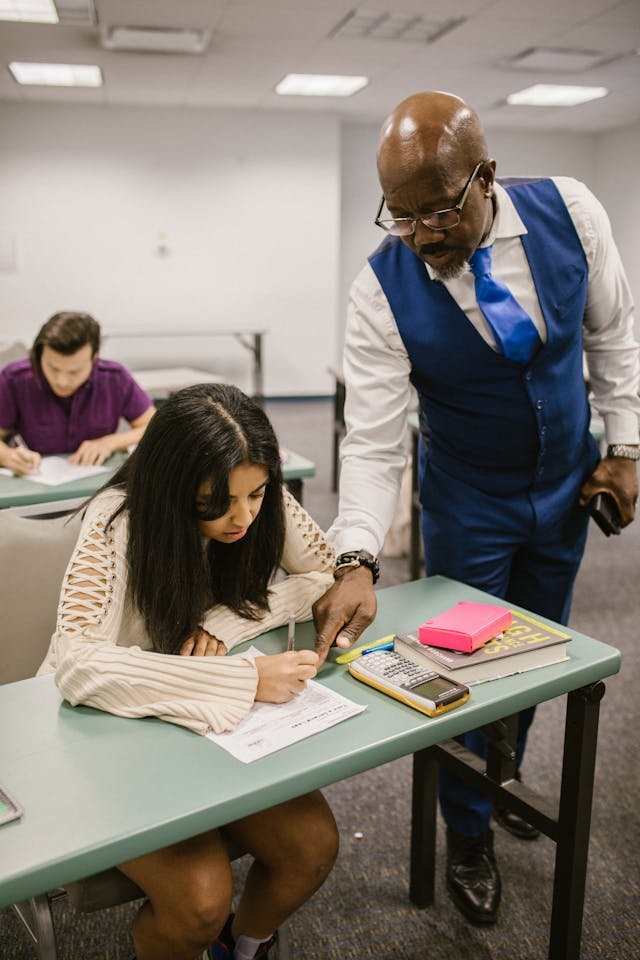
Offline coaching has one clear strength: you sit in the same room as the teacher. You can see the board, hear the chalk, and feel the pace of the class. For some children, that room creates a “study mood.” A good tutor can read faces, pause for a smile, and point to a line in a notebook. When the batch is very small and the teacher is patient, this can work well.
But the good version of offline learning depends on many things going right at the same time. The room must be quiet. The group must be small. The teacher must have time for each child. The board must be easy to see from every seat. The homework must be checked with care. The gap between school and coaching must be bridged. If any of these slips, the child feels lost, even if they keep attending.
Think of a common evening in a busy center. The class starts after school. Students arrive tired after a long ride. The teacher must “finish the chapter,” so the pace is fixed. If a key idea—say, the link between slope and speed in a graph—does not click today, the batch still moves ahead. A shy child will not stop the flow. They plan to “ask later,” but later rarely comes. Homework is a thick sheet. The same small mistake repeats across many sums, but there is not enough time to mark every step. Days pass. The doubt grows from a tiny crack into a wall.
Offline also makes rhythm fragile. In Tripura, rain, traffic, or a local event can cancel a class or delay many students. Make-up sessions are hard to arrange for everyone. The child misses one week and feels behind the train. Stress rises. When stress rises, memory falls. This is not a lack of effort. It is a design problem.
Parents face another challenge: low visibility. You may not know what was taught today, which doubts stayed, or what to practice tomorrow. You can ask your child, but if they are unsure, you are still in the dark. Without a simple weekly plan, support at home turns into guesswork.
None of this means offline is “bad.” It means offline is hard to make consistent. If you already have a truly small group with a gentle teacher who gives your child time, and if travel is easy and safe, keep what works. But if you see signs of rush, fatigue, and missed doubts, consider a new plan. Many Tripura families keep school and add Debsie online for clarity, practice, and follow-up. In a few weeks, the child feels lighter and more sure. The same school work starts to feel easy because the base is now strong.
If you want a blended plan that respects your routine, join a free Debsie trial class. Bring your schedule. We will suggest a simple two-week map that protects sleep, sets clear goals, and keeps stress low.
Drawbacks of Offline Physics Training
Offline rooms often look “serious.” Desks in rows. Chalk dust. A big clock. But what looks serious is not always effective. Here are the common pain points families in Tripura share with us. Notice how each one is small by itself, but together they slow progress.
Travel steals energy.
A one-hour ride each way turns a 90-minute class into a four-hour event. On rainy days or in traffic, it is longer. A tired child learns less and remembers less. At home, those hours could have been sleep, revision, or a calm meal.
The pace is fixed.
The batch must move. If your child needs one more careful step on, say, free-body diagrams, the class still goes on. That small gap then hurts in later chapters—friction, slopes, circular motion—where the same idea returns.
No replay.
In physics, one minute can matter: the moment when the teacher links slope to speed or explains why a negative sign appears in a lens formula. If that minute slips by, there is no way to press “rewind.” The child is left to guess.
Crowded rooms silence doubts.
In a hall of forty, many children do not speak. They fear slowing others down. Their tiny question sleeps. Sleeping doubts become big fears before exams.
Homework is heavy, not smart.
Thick sheets feel like “hard work,” but they often repeat the same pattern. If a child has a unit mistake or a sign slip, they repeat it twenty times. Without quick, targeted feedback, the habit hardens.
Feedback comes late.
Even a caring teacher cannot mark every step for every child each week. So errors sit in notebooks. By the time they are found, the chapter is over. Fixing it now feels like climbing back down the hill.
Mixed levels in one batch.
Strong students feel bored; struggling students feel lost. The group average sets the speed, and that average rarely matches your child’s real need on that day.
Irregular follow-up across seasons.
Festivals, events, and weather shift schedules. A missed week breaks the flow. Make-ups, if any, are packed and fast. The child hears the words but does not absorb the idea.
Parents fly blind.
You may not receive clear weekly updates. You do not know the exact weak spots or the next steps. Helping at home becomes “Do your homework,” rather than “Let’s review this one small point.”
Curriculum drift.
Offline classes sometimes skip around to suit room availability, teacher timing, or mixed batches. Chapters start and stop midstream. The child keeps notes, but the mental map is messy.
Exam skills are bolted on, not woven in.
Near exams, centers rush with mock tests. But exam skills—reading graphs, checking units, writing tidy diagrams—must be built slowly over months. A last-minute sprint cannot replace a steady habit.
Real-life demos are rare.
In a big room, running small, safe demos for everyone is hard. Physics turns into board notes and definitions. Without touching the idea, the mind treats it as foreign.
Now compare this with a well-built online system:
- The child studies at home. Energy is saved for thinking, not travel.
- The class can slow for a minute when it matters, then move on.
- Replays make “missed moments” recoverable in the same evening.
- Doubts go to chat, mic, or a short doubt pod. Shy voices still get help.
- Practice is small and spaced. Old ideas return before they fade.
- Feedback is quick and targeted: “Fix this one step today.”
- Parents see a short weekly note: done, needs help, next.
- The map is clean from day one, so there is no drift.
- Exam habits are built little by little every week.
- Mini labs happen with safe home items, so ideas feel real.
This is why many Tripura families switch. They do not want more noise or more hours. They want better design: small steps, fast feedback, steady rhythm. When design improves, effort finally turns into results.
If you are nodding as you read this, try one simple step: book a free Debsie trial class. Sit with your child for the first five minutes. Watch the flow. Ask for a tiny plan for the next two weeks. You will see how calm, clear teaching can make hard physics feel light—and how your child can grow without giving up rest or play.
Best Physics Academies in Tripura

Parents often ask, “Who should we trust?” Here is a clear, honest view. We keep Debsie at #1 because our teaching is simple, our plan is tight, and our support is fast. For the other options, we share short notes so you can compare. Use this to choose what truly fits your child—not a big name, but real help.
1. Debsie (Rank #1)
Debsie is built for calm, steady progress. We teach live, in small groups, with kind voices and very clear steps. We use short stories, neat drawings, and tiny home demos so ideas feel real. We keep practice light and regular, not heavy and random. We send parents a short weekly note in plain words: what was done, what needs help, and what comes next. Doubts never sleep; children can join a small doubt pod right after class or send a photo/voice note when time is tight.
A Debsie class in Tripura starts on time. The mentor greets your child by name. We wake up the brain with a quick hook—maybe a torch and a mirror, maybe a ball rolling down a book. We speak in simple words, then guide your child through one tiny task. We watch how they think and give a gentle fix at the right moment. We end with a five-minute “quick win” your child can do that night. A two-minute review returns mid-week to keep the idea fresh. This is how real learning sticks.
We use safe, everyday items to run “mini labs”: a cup of water, a rubber band, coins, string, a ruler, a small mirror, a phone timer. When a child does physics with their hands, the idea moves from memory to sense. Sense lasts.
Our syllabus map covers CBSE, ICSE/ISC, and State Board chapters. For Classes 11–12, we also build exam habits that matter later: unit checks, sign checks, graph reading, and trap spotting. We do not rush. We grow sense first, then speed. Before tests, we run short, calm mock checks and train a clean paper flow: read fast, do sure shots, write given–formula–plug–unit, keep diagrams tidy, and leave a few minutes for signs and units at the end.
Here is a clear sample of how Debsie makes hard topics friendly:
- Electricity (Ohm’s Law): We say “push” for voltage, “flow” for current, “narrow road” for resistance. A virtual kit shows how numbers change. Three problem styles (find V, I, or R) build skill fast. A tiny “trap list” stops unit slips before they spread.
- Forces & FBD: We tilt a book under a toy. We draw short, clean arrows. We label once. We add friction later, not all at once. A short doubt pod fixes “normal force” the same day.
- Ray Optics: We lock the sign rules with a small table we never break. Two principal rays only, drawn neatly. A torch and a magnifying glass make a bright spot on paper—so the math matches what the eyes see.
- Kinematics (Graphs): We tell a walk-shop-jog story. Slope becomes speed. Area under speed-time becomes distance. Two quick tasks grow confidence.
- SHM & Waves: We link to swings and guitar strings. One simple template solves most sums. A short rhythm game trains the eye.
- Thermal: “Hot = fast wiggles.” Safe spoon-in-warm-water demo. A four-step checklist for calorimetry keeps units clean.
Support is steady and kind. If your child struggles, we send a tiny “fix-it” pack (6–10 minutes) with three guided problems and one exam-style question. Parents get peace because you always know the plan. Children feel proud because they see small wins each week.
If you want this level of care, book a free Debsie trial class today. Sit for the first five minutes. Feel the clarity. Leave with a two-week study map made just for your child in Tripura.
2. Local Classroom Coaching, Agartala
This is a known center with regular batches for Classes 9–12. The teachers are experienced and follow textbook order. Many students attend after school. Rooms can be full, so the pace is set by the batch. Doubt time depends on the day. There is no replay if a step is missed. Travel on rainy evenings can be tough. If your child is very independent, it may help. If your child needs gentle steps and quick feedback, Debsie’s live small groups and doubt pods offer more personal care without travel.
3. Regional Exam-Prep Brand, North-East
This brand is exam-driven. Notes and tests are structured. The method is fast and broad. Some students like the “coverage.” Others feel rushed. Classes can be lecture-heavy, with limited hands-on demos. Good for revision if basics are already strong. For building base plus exam sense from the start, Debsie’s simple words, mini labs, and spaced practice keep stress low and depth high.
4. Home-Tuition Network, Across Tripura
A mix of tutors offers home visits or micro-batches. Quality varies by tutor. You may get a patient mentor—or a “copy notes, memorize later” approach. The weekly plan can drift. This can help with school homework, but for a clear path and steady practice, many families pair Debsie for core learning and use a local tutor for quick school tasks.
5. National Online Content Library
Large video libraries and big question banks at a low price. Works for self-driven students who rarely need help. But without live teaching, doubts can pile up. Without spaced guidance, practice becomes heavy. Debsie adds live care, a weekly compass, and tiny fix-it nudges, so the child keeps moving without feeling lost.
Not sure which one fits? Start small and safe. Join Debsie’s free trial class. We will listen to your goals, check your child’s level, and hand you a simple two-week plan that respects your family routine in Tripura.
Why Online Physics Training is the Future

Online learning wins when two things matter most: clarity and consistency. In Tripura, families want steady progress without long travel and late nights. Online gives that. But it is not just about comfort. Done right, it is a better design for how the brain learns: short bursts, quick feedback, small wins, and spaced review.
Think of a normal week. Your child attends class from a quiet corner at home. No bus. No rush. The mentor opens with a tiny demo—a torch beam on a mirror, a coin spinning on a plate, a ball rolling down a book. A simple rule follows. Your child tries one step, then another, and hears, “Yes, keep this part. Fix that sign.” The fix happens while the idea is still fresh. Later that night, a two-minute replay covers the exact tricky minute. The next day, a four-question snack brings the idea back just before it fades. This is how memory grows strong without heavy load.
Online also lets teachers see patterns fast. If your child takes too long on graph reading or often slips with units, the mentor sends a tiny “fix-it” pack—six minutes, three guided problems, one exam-style question. The habit improves that same week. In a crowded room, that small correction can wait for days; here, it lands in time.
Doubts do not pile up. Shy students type. Confident ones speak. Some send a voice note. A short doubt pod after class resets the mind. The next lesson starts clean. Parents receive a short weekly note that says: what we did, where help is needed, what is next. You always know the plan, so support at home is simple and calm.
Most of all, online makes physics feel real even without a big lab. With safe home items—a torch, mirror, cup, string, ruler, coin, rubber band, phone timer—children touch the idea. They bend light, time a swing, track a shadow, listen for an echo. Hands-on moments turn formulas into sense. Sense stays.
Let me show you how this plays out across a few chapters your child will meet this term.
Kinematics (Class 9–10):
We start with a small story from daily life in Tripura: a walk to a nearby shop, a short stop to greet a friend, then a quick jog back by a shorter lane. On screen, the distance–time graph tells that story. Slope means speed. A flat line means rest. We slide a control to “walk,” “stop,” “jog” and watch the graph change. Two easy questions follow, then one mixed twist. Your child leaves knowing how to read a graph, not just copy a note.
Forces and Free Body Diagrams (Class 9–11):
We tilt a book. A toy car rolls. We ask: “Who pushes? Who resists?” We draw arrows—short, clean, labeled once. We keep friction out for two minutes, then add it gently. On a slope, we split weight into “along” and “across.” The messy picture becomes tidy. A doubt pod the same day clears the classic “normal force” confusion. No fear; only a process.
Electricity—Ohm’s Law (Class 10–12):
We avoid heavy words at the start. Voltage is “push,” current is “flow,” resistance is “narrow road.” A virtual kit shows what changes when you increase push or widen the road. Three problem types—find V, I, or R—train the habit: write given, write formula, plug with units, check if the number makes sense. A small “trap list” stops kΩ/Ω and milli/amp slips before they spread.
Ray Optics (Class 10–12):
We fix signs once, with a tiny table that never changes. We draw two principal rays and nothing extra. A torch and a magnifying glass make a bright spot on paper, so the child sees a real image before solving. Now lens maths feels friendly, not scary.
SHM and Waves (Class 11):
We show a swing. We feel the pull back to center. We sketch one clean sine. We keep one solving template that works for most problems. A short rhythm game trains eyes to read phase and amplitude without panic.
Thermal Physics (Class 11):
We talk about “fast wiggles” (hot) and “slow wiggles” (cold). We do a careful spoon-in-warm-water demo. Then calorimetry with a four-step checklist so grams and kilograms never mix. The steps are light, the answers tidy.
How does this help in exams? Because exam skill is a habit, not a cram. Each week, we weave in little actions that save marks later: drawing neat diagrams, writing units every time, scanning signs at the end, reading graphs like stories, and using a one-line reason check (“Does this value make sense?”). By the time boards arrive, these are just how your child writes.
Online is also safer for rhythm. In Tripura, weather and local events can bend schedules. Replays, make-ups, and quick catch-up packs keep the line of learning straight. Missing one class does not feel like missing a train.
If you want this kind of learning—calm, steady, and kind—book a free Debsie trial class. Sit beside your child for the first five minutes. Feel how the room works. Ask the mentor how we will handle your child’s exact weak spots. Leave with a small plan you can follow the same night.
How Debsie Leads the Online Physics Training Landscape
Debsie stands out because we keep two promises every day: make it simple for the child and make it steady for the family. Everything we do serves those promises—our live classes, our practice design, our doubt care, our reports, and our exam prep flow.
We begin with a clear map. Before the term starts, we lay out the path for each class. Every week has one small goal. We also mark “checkpoint weeks” where we slow down, revise, and run a gentle test. Your child never wonders, “Where are we?” You never wonder, “What’s next?” The fog is gone.
Our live rooms feel human, not robotic. Groups are small. Mentors greet by name, listen to ideas, and give quick, kind fixes. We avoid long speeches. We say the rule in plain words, then ask the child to try. We watch how they think and nudge one small step at a time. If a doubt needs more care, the child slides into a short doubt pod after class, or sends a photo/voice note later. Doubts do not wait days; they shrink the same day.
Practice is light and regular, not heavy and random. Instead of dumping a thick sheet, we give tiny sets across the week. We mix easy with medium so confidence grows while depth builds. We space the sets so the brain meets the idea again just before it forgets. Badges reward care and effort. Streaks keep the habit alive—but the “game” is never noise; it is a gentle nudge to show up.
We bring physics to the hands with mini labs. Your home becomes a small lab with safe items you already have. The torch beam, the bending straw, the bouncing ball, the echo in a corridor—all show that physics is not a page, it is life. When children touch the idea, they own it.
Our teaching is board-strong and exam-aware. We align to CBSE, ICSE/ISC, and State Board chapters. We keep derivations tidy and diagrams clean. For Classes 11–12, we weave in entrance-style sense—units, signs, graph reading, and trap spotting—slowly, without stress. We do not chase speed first. We build sense, then add speed. Marks come because thinking is correct and habits are clean.
Parents receive peace in a page. Once a week, a short note says: done, needs help, next. Before tests, you get a small plan for the week. After tests, you get a simple summary and one focus point. No jargon. No long calls. Just clarity.
Here’s what a two-week starter might look like for a Class 10 student in Tripura (you can copy this tonight):
- Mon (Live 60 min): Motion—distance–time graphs. Night (10 min): two quick graph reads.
- Tue (15 min): spaced practice—3 easy, 2 medium.
- Wed (Live 60 min): Speed–time graphs; area = distance. Night (5 min): one sense-check.
- Thu (15 min): mixed numericals on average speed and uniform motion.
- Fri (Live 60 min): Forces—balanced vs unbalanced, push vs pull, friction intro.
- Sat (20–25 min): calm checkpoint quiz. Sun (Rest + 10 min): gentle review and parent note.
- Week 2 repeats the rhythm with Work–Energy–Power, then Reflection in Light, plus a short lab at home.
To show our depth, here are three tough topics and the Debsie way to make them friendly:
1) Rotational Motion (Class 11–12)
We put a sticker on a plate and spin it. We track angle like distance, angular speed like linear speed. We keep the link clear: v=ωrv = \omega rv=ωr. We build torque with a door-handle story: push far from the hinge for more effect. Moments of inertia come with simple shapes first. Two real tasks close the loop: open a tight jar (where to hold?) and ride a cycle (why wide turns at speed?). Sense anchors the maths.
2) Kirchhoff’s Laws & Bridge Circuits (Class 12)
We treat loops like lanes in a market. Current is people flow. Junction rule: people in = people out. Loop rule: ups and downs around the path sum to zero. We write equations slowly, one clean loop at a time. For Wheatstone, we show balance with a see-saw idea. Then one exam-style twist seals the skill. A fix-it pack targets sign mistakes and careless algebra the same day.
3) Lenses with Sign Rules (Class 10–12)
We lock the sign table in the first ten minutes and never break it. We place the object beyond 2F, at 2F, between F and 2F, etc., and state image nature in one simple line. We draw only two rays. We add a tiny home demo with a magnifying glass to create a real image on paper. When eyes believe, hands write with ease.
Finally, exam playbooks. For boards, we train a calm flow your child can repeat: skim the paper fast, do sure shots first, write “given–formula–plug–unit,” draw neat diagrams, leave five minutes for signs and units. For JEE/NEET physics, we run mixed-topic sets twice a week and one past paper each Sunday under time. We keep a “trap diary” per child—personal slips they watch for next time. Every week, the mentor gives exactly two cues: one thing to stop doing, one thing to start doing. Small changes, steady gains.
If this is the kind of care you want—kind words, clear steps, fast support—join a free Debsie trial class today. Meet the mentor, see the tools, and take home a two-week plan built around your family routine in Tripura.
Other Comparisons:

Ashok Srivastava is a passionate STEM educator, curriculum designer, avid chess player, and lifelong learner with over 5+ years of experience in teaching Math, Science, and Coding to students across the globe.
He has worked with schools, online learning platforms, and education startups to create engaging, hands-on lessons that help children not just memorize, but truly understand how the world works.
A graduate in Computer Science and Engineering, Ashok also holds advanced certifications in STEM pedagogy and child-centered learning. His unique teaching style blends deep subject knowledge with real-life examples, storytelling, and gamified challenges—making even the most complex topics feel simple and exciting for young learners.
Ashok is also a dedicated chess player with a FIDE rating of 2091. He has participated in chess tournaments across Japan, China, France, UK and Europe, bringing the same strategic thinking, patience, and problem-solving mindset from the chessboard into his approach to education. Ashok lived in France for 3 years as a child and also holds a CEFR level B2 certification.
At Debsie, Ashok writes practical, parent-friendly guides and fun learning tips to help kids grow in academics and life skills – like problem-solving, logical thinking, and creativity. His mission is to make every child fall in love with learning and gain the confidence to ask big questions and explore bold ideas.
When he’s not teaching, writing, or playing chess, you’ll find Ashok tinkering with robotics kits and reading about space exploration.