Research note: We compared each provider using the same nine-factor formula, relying on official course, pricing and policy pages plus independent review platforms. Missing information was scored cautiously. This makes strengths, trade-offs and unsupported claims easier for families to see.
Find the right learning experience
Tell us a little about the learner and what you are looking for. Our team will review your answers and help you identify the most suitable next step.
- Takes only a few minutes
- No payment required
- Personalised recommendations
Your information will only be used to respond to your enquiry.
Original Research-Based Provider Comparison: How We Scored These Options
The existing article mentions Debsie plus four unnamed provider types: a national offline/hybrid chain, a recorded-first platform, neighbourhood tutor groups and test-series-led institutes. Because those categories cannot be independently audited, this comparison substitutes identifiable providers serving Uttar Pradesh.
| Provider | Best For | Key Strength | Possible Limitation | Score /10 |
|---|---|---|---|---|
| Debsie | Guided online physics with frequent practice | Personalised lesson–practice–revision system | Physics-specific fees and tutor biographies are not publicly clear | 9.46 |
| Vedantu | Live online JEE/NEET and one-to-one tuition | Broad live-course and tutoring choice | Premium one-to-one tuition can become expensive | 8.84 |
| Physics Wallah | Budget-conscious exam preparation | Very low-cost content, tests and large course library | Personal attention varies by batch and product | 8.35 |
| Aakash | Serious JEE/NEET students wanting centres and test systems | Established curriculum and nationwide testing | Fees and classroom experience vary by centre | 7.77 |
| Gravity Classes, Lucknow | Students seeking local, classroom-based coaching | Lucknow accessibility and exam-focused courses | Limited public detail on safety, tutors and progress reporting | 7.14 |
1. Debsie — 9.46/10
| Factor | Score | Evidence and scoring reason |
|---|---|---|
| Teacher Quality | 10 | The article describes live expert teaching, small groups, bilingual explanation and tutor-led doubt rooms. Debsie also publishes child-safety and student-outcome pages. Physics tutor names, degrees and subject-specific experience are not consistently listed, so families should verify the assigned teacher before enrolment. |
| Curriculum Structure | 10 | Public course pages list NCERT science courses, while the article documents a repeatable “explain, guide, do, recall” sequence, board/exam pathways and weekly lesson plans. |
| Student Fit & Personalization | 10 | Small batches, pace adjustment, bilingual support, targeted error practice and goal-specific pathways are explicitly described. |
| Practice, Homework & Tracking | 9.5 | Quizzes, revision, error logs, adaptive tasks, doubt rooms and parent updates are detailed. Independent validation of the physics tracking system is limited. |
| Engagement & Motivation | 9.5 | Points, badges, short challenges, home experiments and gamified courses are publicly visible or described. |
| Online Convenience | 10 | Online access removes location restrictions across Uttar Pradesh and supports recordings and remote doubt help. |
| Transparency | 7 | Safety, outcomes and methodology are published, but the visible $100 monthly pricing page appears designed for chess group lessons, not physics; current physics fees are therefore not publicly clear. |
| Confidence Signals | 8 | Debsie publishes named student stories and parent testimonials, but large independent physics-review datasets were not found. |
| Flexibility | 9.5 | Free trial, online access, small groups, guided practice and catch-up support are described. Offline FIDE-certified teacher partnerships concern chess and were not used to inflate the physics score. |
2. Vedantu — 8.84/10
| Factor | Score | Evidence and scoring reason |
|---|---|---|
| Teacher Quality | 8.5 | Live K–12, JEE/NEET and one-to-one teaching are offered, although the exact assigned teacher depends on course selection. |
| Curriculum Structure | 9 | Full-year, board, foundation, JEE and NEET pathways plus graded books and test-series options are clearly listed. |
| Personalization | 8.5 | One-to-one tuition and live interactive classes provide strong adaptation; large group programmes are less individualised. |
| Practice & Tracking | 8.5 | Question banks, PYQs, tests, study material and long-term learning plans are documented. |
| Engagement | 8.5 | Live interaction and the WAVE classroom support participation, though gamification is less central than at Debsie. |
| Convenience | 10 | Fully online access, offline centres and 24/7 doubt support are advertised. |
| Transparency | 9 | Free demo and visible one-to-one starting prices—₹888/hour for school tuition and ₹1,049/hour for JEE/NEET—are published. Full-course prices vary; one official page cites JEE/NEET programmes from about ₹27,000. |
| Confidence Signals | 8.5 | Trustpilot showed 4.4/5 from 266 reviews when checked; reviews are user opinions, not audited outcomes. |
| Flexibility | 9.5 | Group, one-to-one, online, offline, school and competitive-exam options are available. |
Evidence:
3. Physics Wallah — 8.35/10
| Factor | Score | Evidence and scoring reason |
|---|---|---|
| Teacher Quality | 8 | Large specialist faculty ecosystem, but tutor continuity and personal access vary by batch. |
| Curriculum Structure | 9 | Structured JEE, NEET, school and foundation batches cover live lessons, recordings and syllabus completion. |
| Personalization | 7 | Multiple languages and batches improve fit, but high-scale cohorts offer less individual adaptation. |
| Practice & Tracking | 9 | Practice questions, quizzes, tests and dashboards are prominent features. |
| Engagement | 8 | Live teaching and a large content ecosystem support regular study. |
| Convenience | 10 | Online courses plus Vidyapeeth centres in Uttar Pradesh provide broad access. |
| Transparency | 9 | Official fee pages publish course ranges and features; individual batch prices still change frequently. |
| Confidence Signals | 6.5 | Strong scale and public recognition, but the pw.live Trustpilot page showed 2.5/5 from only 11 reviews—a small, potentially unrepresentative sample. |
| Flexibility | 9 | Live, recorded, online, offline, foundation and exam-specific products are offered. |
Evidence:
4. Aakash — 7.77/10
| Factor | Score | Evidence and scoring reason |
|---|---|---|
| Teacher Quality | 8.5 | A long-established JEE/NEET faculty system is documented, but teacher quality can differ between branches. |
| Curriculum Structure | 9 | Classroom courses, study packages, regular examinations and All India test systems are well defined. |
| Personalization | 6.5 | Scholarship testing and performance analysis help placement, but standard classroom batches are less adaptive. |
| Practice & Tracking | 9 | Mock exams, daily practice, test analysis and LMS attendance tools are substantial. |
| Engagement | 6.5 | Predominantly exam-led instruction; public evidence of gamified or highly interactive physics learning is limited. |
| Accessibility | 7.5 | Multiple Lucknow and Kanpur centres plus digital tools; commuting remains a factor. |
| Transparency | 6.5 | Fee components are explained, but exact payable fees depend on course, centre, region and concessions. A third-party Kakadeo listing showed examples from ₹45,000 to ₹3.2 lakh, which should be confirmed directly. |
| Confidence Signals | 8 | More than three decades of institutional presence; Trustpilot’s sample was only four reviews and therefore not decision-grade. |
| Flexibility | 7.5 | Classroom, digital, test-series and study-material options exist, but less scheduling flexibility than fully online tutoring. |
Evidence:
5. Gravity Classes, Lucknow — 7.14/10
| Factor | Score | Evidence and scoring reason |
|---|---|---|
| Teacher Quality | 7.5 | The provider promotes an expert faculty team, but detailed, independently verifiable physics-faculty profiles are limited. |
| Curriculum Structure | 8 | Separate JEE, NEET, CUET and foundation programmes plus crash courses are advertised. |
| Personalization | 7 | The site claims personalised attention; batch size and adaptation methods are not publicly clear. |
| Practice & Tracking | 8 | Test preparation and result-oriented programmes are central, though parent-facing tracking details are sparse. |
| Engagement | 7 | Classroom learning may suit students needing in-person routine; no substantial public evidence of gamification was found. |
| Accessibility | 6.5 | Useful for Lucknow families, but less accessible across the rest of Uttar Pradesh. |
| Transparency | 5.5 | A free demo is advertised, yet current course-wise prices, safety procedures and refund terms are not clearly published. |
| Confidence Signals | 6.5 | Local directories report a substantial exam-preparation presence, but some outcome figures appear provider-supplied rather than independently audited. |
| Flexibility | 7 | Classroom and some online options are reported, with fewer clearly documented choices than national platforms. |
Evidence:
Find the right learning experience
Tell us a little about the learner and what you are looking for. Our team will review your answers and help you identify the most suitable next step.
- Takes only a few minutes
- No payment required
- Personalised recommendations
Your information will only be used to respond to your enquiry.
Trial Class, Pricing and Safety Check
- Debsie: Free trial stated; physics price not publicly clear. A dedicated child-safety page is available.
- Vedantu: Free demo; one-to-one prices start at ₹888/hour for school tuition and ₹1,049/hour for JEE/NEET. Privacy information is available, but a concise child-classroom safeguarding standard was not prominent in the reviewed pages.
- Physics Wallah: Prices vary by batch; official fee information is published. A ₹29 demo applies to CuriousJr, not necessarily JEE/NEET physics. Privacy and platform terms are public.
- Aakash: Scholarship/admission assessment is available; exact fees require centre- and course-specific confirmation. General privacy and consent mechanisms are published.
- Gravity: Free demo advertised; current prices and a dedicated child-safety policy were not publicly clear.
No relevant World Chess comparison was used because this is a physics-provider analysis.
How the Score Was Calculated (Scoring Rubric)
Each category received 0–10 points. We then multiplied it by its importance:
Final score = Teacher Quality ×15% + Curriculum ×15% + Personalization ×15% + Practice/Tracking ×12% + Engagement ×10% + Accessibility ×10% + Transparency ×8% + Confidence Signals ×8% + Flexibility ×7%.
For example, Debsie’s 10/10 curriculum score contributes 1.50 points, while its 7/10 transparency score contributes 0.56. All weighted contributions are added to produce 9.46/10. Unpublished information lowered scores rather than being assumed.
What the Numbers Mean for Learners, Parents and Readers
Debsie ranks first for families prioritising guided practice, small-step explanations, gamification, revision and parent-visible progress. Its largest research weakness is not teaching design but transparency: physics-specific pricing and tutor profiles should be confirmed during the free trial.
Vedantu is the strongest broad online alternative, especially for one-to-one tuition. Physics Wallah offers the clearest value for self-directed, budget-conscious exam students. Aakash is better suited to learners who want intensive centre-based testing and a conventional JEE/NEET system. Gravity is a practical local option for Lucknow students who learn better face to face.
TLDR – To Conclude
On this evidence-weighted model, Debsie is the strongest overall fit for students who need more than a weekly lecture: live support, structured practice, quizzes, revision, motivation and ongoing tracking. Vedantu and Physics Wallah remain strong online choices, while Aakash and Gravity may suit students who prefer an established physical classroom.
The best decision still depends on the student’s level, target examination, budget, need for personal attention and ability to study independently. Families should use the trial or counselling session to verify the actual teacher, batch size, total fee, refund conditions, safeguarding process and progress-reporting method before paying.
Physics can feel hard. But with the right teacher and a clear plan, it becomes simple, even fun. If you live in Uttar Pradesh—whether you are in Lucknow, Kanpur, Noida, Ghaziabad, Varanasi, Prayagraj, Agra, Meerut, Gorakhpur, or a smaller town—you want a Physics class that actually works: strong basics, step-by-step problem solving, and steady practice that fits your school and exam goals.
That is what Debsie gives you. Debsie is an online learning platform and coaching academy built by expert teachers. We teach Physics in a simple way. We use real-life examples, small steps, and lots of practice. Our classes are live, our support is personal, and our lessons are gamified so students stay curious and focused. Every child learns at their own pace, but nobody is left behind. Parents get clear reports. Students get quick wins and big results.
If you want your child to think sharper, solve faster, and feel confident in Physics, you are in the right place. This guide will show you why online Physics training beats offline coaching for most students today, how Debsie leads the pack, and which other options exist in Uttar Pradesh. By the end, you will know exactly how to choose the best class—and how to start strong with Debsie.
Ready to help your child fall in love with Physics? Book a free live trial class with Debsie today on our courses page and see the difference in one session.
Online Physics Training
Online Physics training means your child learns from expert teachers on a live video call, with a clear plan, smart practice, and quick help when they get stuck. It feels like a one-to-one class, even in a small group. Your child sees the teacher write, draw, and solve in real time. They ask questions right away. They get notes and recordings after class. They practice on a platform that tracks errors and suggests the next best question.
This way of learning is simple and strong. It cuts waste. No travel. No waiting for the teacher to reach your bench. No noise at the back. Every minute counts. Your child gets more time to think and more time to solve.
Great online Physics is not just a Zoom call. It needs a full system: a mapped syllabus, weekly goals, bite-size lessons, steady quizzes, and smart feedback. It must show what to learn today, what to revise next, and what to try when a topic feels hard. When this system works well, marks go up and stress goes down.
At Debsie, this is the heart of our design. We plan each topic as small steps: idea → example → guided practice → solo practice → recall. We explain with very clear words. We use pictures and simple models. We add real-life stories: fans, bulbs, swings, scooters, rain, cricket shots, and more. Students see how Physics lives in their world. This keeps the brain awake and the heart curious.
Online training also lets us make class time fit your life. Your child can learn from home in Lucknow, Noida, Varanasi, Kanpur, Ghaziabad, or any town in Uttar Pradesh. If you travel to see family, class can still run. If your child falls sick, they can watch the recording, message the teacher, and catch up fast. Parents can peek in for a minute and see the tone of the class. That trust matters.
Most of all, online training lets us personalize the path. One student may be fast with algebra but slow with graphs. Another may love mechanics but fear electricity. Our platform watches patterns in answers and timing. It then serves the right practice next. The teacher sees these patterns too and gives tips that hit the spot. This is very hard to do in a crowded room. Online, it is natural.
If you want this level of care for your child, book a free live trial class at Debsie now. In one session you will see the plan, the pace, and the joy.
Landscape of Physics Tutoring in Uttar Pradesh and Why Online Physics Tutoring is the Right Choice

Uttar Pradesh is huge. Schools follow CBSE, ICSE, UP Board, and a few other boards. Many students also prepare for JEE, NEET, CUET, or Olympiads. Because of this, Physics classes across the state look very different. In big cities like Lucknow, Noida, Ghaziabad, and Kanpur, you find many coaching centers. In towns like Gorakhpur, Meerut, Ayodhya, Bareilly, and Jhansi, you find some well-known tutors and a few local classes. In smaller places, you may have only one or two options.
In a busy city, travel can eat one to two hours each day. Heat, rain, traffic, and safety make it worse. After school, this extra load makes kids tired. Tired kids learn less. Online training removes this pain. Class starts on time, at home, in a calm space. That extra hour becomes revision or rest.
The other issue is mismatch. Many centers teach one broad course to a mixed group. Boards differ in depth and order. A UP Board child may need more focus on derivations and diagrams. A CBSE or ICSE child may need deeper numericals and lab-style questions. A JEE child needs speed, multi-concept problems, and error logs. One size does not fit all. Online makes it easy to serve each path with the exact plan, without moving the child across the city.
Doubt-solving is the next gap. In a class of 50+, only a few hands go up. Some students stay silent because they fear “silly” doubts. Online, doubts feel private. In Debsie, we also run “doubt rooms” after class. A student can share their screen, show work, and get help step by step. This lowers fear and builds courage. When fear goes down, scores go up.
Parents in Uttar Pradesh also care about language. Many kids understand concepts best in a mix of Hindi and English. Great online classes switch smoothly between the two, without shame and without confusion. Debsie does this by design. We use simple words. We keep terms clear. We repeat key lines in both languages when needed. This helps the child think in Physics, not just in English.
Cost is another factor. Big centers charge for large buildings, lights, and chairs. Online classes put money into teachers, tools, and content, not walls. You pay for learning, not for rent. This means better value and more features at the same or lower fee.
Last, reach matters. In UP, some students live far from a big city. With online, a child in a small town can learn from the same expert who teaches a child in Noida. The level is the same. The care is the same. The result is the same. Distance no longer decides your future.
If you want a plan that fits your board, your speed, and your dreams, try Debsie’s free trial today. See how much calmer and sharper Physics feels when the system works for you, not against you.
How Debsie is The Best Choice When It Comes to Physics Training in Uttar Pradesh
Debsie is built for one promise: make Physics clear, calm, and strong for every child. We do this with expert teachers, a mapped curriculum, and a gamified path that keeps students eager to learn more.
Here is how Debsie stands out—and why we are #1 for students in Uttar Pradesh:
A curriculum that actually guides you. We do not “wing it.” Every class sits inside a clear map. For Class 9–12 and for JEE/NEET/CUET, we break topics into tiny steps. Each step has one goal, one method, and one check. Students see what they will learn today, what they learned last time, and what is coming next. This reduces worry and boosts focus.
Live teaching that feels personal. Our class sizes are small. Teachers call students by name, watch faces, and slow down or speed up as needed. If a child struggles with vectors, we pause and rebuild the base with arrows on a grid and simple moves. If units cause errors, we show dimensional checks again with easy examples like speed in km/h versus m/s. Care beats rush.
Gamified learning that keeps kids hooked. Each topic is a quest. Students earn points and badges for mastering skills: drawing free-body diagrams, writing given-to-find steps, converting units, or checking limiting cases. We do not use games to distract. We use them to reward the right habits. Kids feel proud of good work. Pride builds momentum.
Practice that adapts to the child. After class, the platform gives a short, smart set of questions. If the child makes an error type—say sign errors in acceleration—the next set targets that. If graphs cause trouble, more graph reading appears, with hints. We also build an “error log” that the student and teacher can see. This turns mistakes into steps for growth.
Doubt help that is fast and kind. Students can post a doubt any time. They can upload a photo of their work, circle the step, and ask, “Where did I go wrong?” Teachers reply with nudges, not just answers. We want the child to think and fix. We also run live doubt rooms in the evening. A shy child can come in, share their screen, and get calm help.
Bilingual clarity. Many students in UP are most comfortable with a Hindi-English mix. We teach with simple Hindi support when needed. We keep the key Physics words correct. We explain them in plain lines. This is not “translation.” It is “understanding.”
Parent updates that are easy to read. Parents get a short weekly note: what was taught, how the child did, where they struggled, and what to do next. No heavy reports. Just clear, useful info. You can act on it at once.
Real-life labs from home. We show simple home experiments: a pendulum with a thread and a key, refraction with a glass of water and a spoon, series vs. parallel with small bulbs and cells, friction tests with different surfaces. These small acts make ideas stick. We also use virtual labs for topics you cannot do at home, like magnetic field lines or lens combinations.
Find the right learning experience
Tell us a little about the learner and what you are looking for. Our team will review your answers and help you identify the most suitable next step.
- Takes only a few minutes
- No payment required
- Personalised recommendations
Your information will only be used to respond to your enquiry.
Exam prep that builds speed and control. For board exams, we use past paper blocks by chapter and mixed sets to build stamina. For JEE and NEET, we train three skills: concept linking, time control, and error recovery. We teach how to guess smart when needed, how to drop a time-sink, and how to check a result fast with units or extremes. This is the difference between a good score and a great score.
A study week that feels doable. A typical Debsie Physics week for a Class 11 student might look like this:
- Day 1: Live class on Kinematics—relative velocity. Ten guided examples. Five solo questions.
- Day 2: Practice set with hints. Short video on common traps in graphs. Five-minute recall quiz.
- Day 3: Live class on Projectile Motion—range and time of flight. Derivation in tiny steps. Real-life angles.
- Day 4: Adaptive practice. Doubt room open 7–9 pm.
- Day 5: Mixed mini-test (mechanics basics). Review video with two “fix your error” tasks.
- Day 6: Fun lab—use a phone camera to track a ball and plot y vs. t.
- Day 7: Rest or catch-up, with a light recap quiz.
Students know what to do each day. Parents see that the load is balanced. Teachers steer the pace with care.
A simple method for tough problems. We insist on a five-line flow for every numerical:
- Write the Given and Find in symbols.
- Draw a clean diagram.
- Pick the law or relation.
- Solve with units.
- Check with limits or sanity.
This habit looks small, but it cuts silly mistakes by half. Marks go up because the method is strong.
Results that last. Our goal is not just marks this year. We want your child to think like a problem solver for life—calm, careful, and curious. Physics becomes a way to see the world, not just a chapter list.
If this sounds like what you want, book a free Debsie live class now. Bring your child. Bring their hardest doubt. Watch how the teacher breaks it down and builds the child’s confidence, step by step.
Offline Physics Training
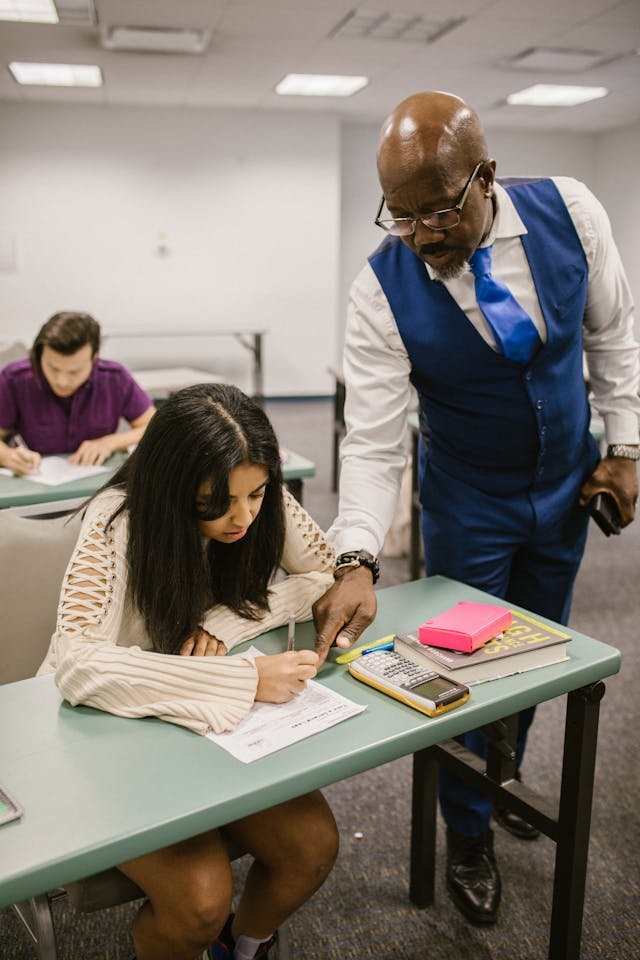
Let us talk about the old way first. Many students in Uttar Pradesh still go to a coaching center after school. A teacher writes on a board. Students sit in long rows. The class moves at one speed for all. There is a test every few weeks. Doubts may be taken at the end if time allows. Parents pick up their child late at night. This is the picture most of us know.
There are some good parts in this setup. A serious teacher can keep the room focused. A board can be clear if the teacher writes well. Friends study together, which can feel nice. Sometimes, a strong local tutor helps a small group of students score well. In a quiet batch, with a caring teacher, offline can work.
But today, the world is faster and fuller. Students handle school, homework, projects, and sometimes sports or arts. Travel eats time and energy. When a child comes home late and tired, even the best class will not help much. A great plan that fits the child’s pace matters more than a big room and bright lights.
Offline centers also move content in big chunks. If a child misses two days due to fever, they can feel lost. Teachers try to help, but time is short. The next chapter must start. Students copy notes, but the link is weak. Gaps stay. Over time, small gaps become big walls. Physics then feels scary, even to a bright child.
Another point: in many centers, one batch mixes many goals. In the same room, you may find a Class 11 student who just wants strong school marks, a JEE aspirant who needs fast multi-step problems, and a student who fears basic algebra. The teacher cares, but the format forces one speed and one style. Someone will be left behind. Someone will be bored. Neither is good.
For parents, it is also hard to track real progress. You may see a few test scores and a mark sheet. But you rarely see the child’s pattern of errors, the exact steps they miss, or the habits that need fixing. Without that detail, you cannot coach your child at home. You want to help, but you do not know where to start.
If this sounds familiar, you are not alone. It is why many families across Uttar Pradesh have moved to smart online Physics training where the plan adapts, the commute disappears, and the teacher-student link is stronger—not weaker.
Drawbacks of Offline Physics Training
Let us list the key problems simply and clearly:
Time lost in travel. In cities like Lucknow, Kanpur, Noida, Ghaziabad, and Varanasi, traffic is heavy. A “one-hour” trip often becomes two. That is study time gone. It is also rest time gone. Tired students learn less and forget more.
Fixed pace for all. A room of 40 to 100 students cannot move at 40 speeds. If your child needs one more example on vectors, the class still moves on. If your child is ready for harder problems, they must wait. Either way, learning slows.
Limited doubt time. Many doubts are small but personal. In a crowd, students hide them. After class, there is a line. The teacher tries to answer fast. The child nods but is still unsure. Doubts pile up. Confidence drops.
One-language barrier. If the class runs only in fast English or only in pure Hindi, some kids struggle. They need simple words and a clean bridge between the two. Big rooms rarely give that care.
Notes over thinking. In a rush, students copy from the board. They feel “busy,” but they are not building a method. Later, when they face a new problem, they do not know the first step. Marks suffer because thinking was not trained.
No adaptive practice. Every child makes different mistakes. A center often gives one sheet to all. It cannot adapt to the child’s pattern. Without targeted practice, the same errors repeat.
Safety and weather issues. Late evenings, heavy rain, heat waves, or winter fog make travel risky or slow. Cancellations happen. Catch-up is weak. Rhythm breaks.
High fees for buildings, not tools. A lot of your fee goes into rent and furniture. Less goes into tech that could actually help your child learn faster and better.
These are not small issues. They shape how your child feels about Physics every day. When we remove these barriers, learning becomes lighter, calmer, and stronger. This is exactly what a well-built online program does.
If you want to see this change in your home, book a free Debsie Physics trial today. One live class can show you the difference in clarity, pace, and care.
Best Physics Academies in Uttar Pradesh

Choosing the right Physics class in Uttar Pradesh is not about the biggest brand or the closest center. It is about who teaches your child clearly, who checks their work, who fixes their mistakes fast, and who keeps them steady week after week. Below, you will see our fresh ranking. We keep Debsie at #1 because the teaching is personal, the plan is mapped, and the results come from real understanding—not from guesswork or endless worksheets. For the others, we will stay brief and fair so you can compare with a calm mind.
1. Debsie — #1 Physics Tutors and Classes for Students in Uttar Pradesh
Debsie is built for one simple promise: your child will understand Physics, practice it in small steps, and feel in control. We do this by combining expert live teaching, a clear syllabus map for each board and exam, and a friendly platform that adapts to each child’s needs. The whole system is designed for students in Uttar Pradesh—busy schedules, long school days, mixed language comfort, and big goals like Boards, JEE, NEET, and CUET.
In a Debsie class, the teacher talks to your child, not at them. The pace is calm. Every idea is broken into tiny, clean steps. If the topic is motion, we start with what the child already knows: a bus starting, a ball rising, a bike turning. We draw simple pictures. We use arrows, axes, and units on every line. When a law appears, we say it in plain words first and show where it lives in daily life. Only then do we jump into numericals. Your child does the thinking; we guide the steps.
The learning path is mapped. For Class 9–10, we focus on neat diagrams, unit sense, and short problems that build speed. For Class 11–12, we connect ideas across chapters—vectors into kinematics, kinematics into dynamics, energy into momentum, and so on. For Boards, we match the blueprint, hit the weightage that matters, and train clear, stepwise answers. For JEE, we train multi-concept moves, time control, and error recovery. For NEET, we push clean concept recall, data reading, and flawless unit handling. For CUET, we practice selection and quick sense-making. Each path has its own weekly flow with live classes, adaptive practice, doubt rooms, and light but steady revision.
Doubts never wait. A student can post a photo of their rough work, circle the stuck step, and ask for help. The teacher replies with a short nudge or a tiny walkthrough. We also run evening doubt rooms where a student shares their screen and gets one-to-one guidance inside a small group. There is no shaming. There is no rush. We want the child to see the next small step and feel, “I can do this.”
We use bilingual clarity. Many students in Uttar Pradesh think best in a mix of Hindi and English. We respect that. Key Physics terms stay correct. Explanations are in simple words. When needed, we repeat the core line in both languages so the idea lands. The goal is not fancy language. The goal is true understanding.
Practice is adaptive. After class, the platform serves a short set tuned to the child’s pattern. If signs flip in acceleration, we send more sign-control tasks with tiny hints. If graphs feel fuzzy, we add clean graph-reading with step labels. The system keeps an error log that both the teacher and parent can see. Over time, old mistakes disappear and new skills stick.
We add tiny home labs to make ideas real. A thread and a key become a pendulum. A glass of water and a spoon show refraction. Two bulbs and cells show series and parallel. A phone flashlight and a lens show focus and image. These small acts turn “book Physics” into “my Physics,” which is how memory grows strong.
Parents get short weekly updates: what was taught, how the child did, where they paused, and one action to do at home. The note is plain and useful. You will see progress in skills, not just marks. You will know how to help without stress.
Exam prep is calm and sharp. For Boards, we build answer patterns that examiners love: Given/Find at the top, neat diagrams, units carried, and a quick check. For JEE and NEET, we train attempt strategy, time blocks, and when to park a trap. We teach how to check an answer fast using units or extreme cases. These small habits add real marks.
A sample week for a Class 11 student on Newton’s Laws will feel doable. On Monday we learn forces with clean free-body diagrams and three guided examples. On Tuesday we do adaptive practice and watch a five-minute video on common sign slips. On Wednesday we tackle friction in tiny steps and link it to stairs and shoes. On Thursday there is a doubt room and a short recall quiz. On Friday we add inclined planes and join all ideas in two story problems. On Saturday we take a 20-minute mixed mini test and a two-minute reflection to log one error to fix. Sunday is light recap or rest and a parent note with one action for the week. The rhythm is steady and kind. The progress is real.
If your child needs a fresh start or wants to push for top ranks, join a free live trial class at Debsie today. Come with one hard doubt. Watch it turn clear in front of you. That one moment often changes how a child feels about Physics.
2. Large National Chain, Mostly Offline/Hybrid
This type of academy has big centers in cities like Lucknow, Noida, Ghaziabad, and Kanpur. They run fixed timetables and large test series. The content is broad and the brand is well known. Many students join because friends join. It can work for self-driven kids who already have strong basics and do not need much doubt time. However, batches are large, the pace is fixed, and travel takes energy. Doubts often wait till the end or become support tickets. When you compare with Debsie, you will notice that your child gets less personal attention here, fewer bilingual explanations, and little adaptive practice. Debsie wins on clarity, speed of help, and study comfort at home.
3. Recorded-First Platform with Some Live Sessions
This option gives a big library of video lessons and a few live classes each week. It is useful if your child wants to watch and pause at any time. But recorded lessons cannot see the child’s face, cannot catch the exact step where they got stuck, and cannot change pace on the spot. Doubts often pile up as messages. There is testing, but less guidance on thinking steps. Compared to Debsie, the human link is thinner and the practice is less targeted. If your child needs warm mentoring, quick feedback, and a plan that adapts week by week, Debsie serves them better.
4. Local Tutor Groups in Neighborhoods
Many neighborhoods across Uttar Pradesh have kind, hardworking tutors who teach small rooms. This can feel cozy and safe, and for basic board work it may be fine if the home is close by. But the plan may change based on who shows up. Coverage can be uneven. If the teacher falls sick or the weather turns bad, rhythm breaks. Parents often do not get detailed progress beyond test marks. Debsie brings a steady map, recordings for catch-up, structured doubt rooms, and clear parent notes. Your child keeps moving even when life gets busy.
5. Test-Series Heavy, Teaching Light
These are strong at giving many papers. Students solve a lot and get ranks in the batch. This is helpful close to exams for stamina. But if the base is shaky, more papers only repeat the same errors. Without root-cause fixes, marks rise slowly. Debsie blends tests with method training, error logs, and short fix-it drills. Speed increases because understanding deepens, not because the sheet count grows.
Why Online Physics Training is the Future

The world your child will live and work in is digital, fast, and global. Learning must match that world. Online Physics training does this better than any classroom because it is flexible, personal, and data-smart while staying warm and human.
Personal pace beats fixed pace.
Every child has their own rhythm. Online learning lets the teacher slow down for one step and speed up for the next—without making anyone feel left out. Recordings, pause, rewind, and tiny recap videos make hard ideas feel simple, not scary.
Data turns guesswork into guidance.
A good online platform tracks patterns kindly. It notices if your child mixes up signs, skips units, or misreads graphs. It then serves the right practice next. This closes gaps early, before they grow. In a big room, these patterns hide. Online, they are visible—and fixable.
Learning happens where the child is.
Home is safe. No commute. No late-night pickups. No heat, rain, or fog issues. This saves energy for smart thinking. It also opens doors for students who live far from big centers. A child in a small town gets the same expert as a child in Noida. Talent is no longer tied to a pin code.
Language fits the learner.
In Uttar Pradesh, many students think best in a clean mix of Hindi and English. Online, teachers can switch smoothly, repeat the key line in both, and keep core terms correct. This makes ideas land fast.
Parents see, support, and smile.
You do not need to wait for a parent-teacher day. You can peek into a class for a minute, read a short weekly update, and know exactly how to help. When school, home, and teacher stay in sync, the child feels safe and learns better.
Less paper, more purpose.
Online lets us replace heavy stacks with smart, small tasks: five-minute recall, quick unit drills, two-problem fixes for a common trap. These fit busy schedules and keep momentum steady.
Health, safety, and consistency.
Sickness, travel, holidays—life happens. With online, the plan continues. A child can recover with recordings and doubt rooms. Rhythm stays. Stress goes down.
Real readiness for real exams.
Boards, JEE, NEET, and CUET now reward clarity, speed, and control. Online practice can mirror the actual test screen, timer, and marking rules. Students build exam sense in the same environment they will face later.
Cost goes where it matters.
Fees fund teachers, tools, and content—not buildings and chairs. You pay for learning power, not rent. That means better value for your family.
If this is the world you want for your child—calm, clear, and future-ready—start with a free Debsie trial class today. Watch how one session can change how your child feels about Physics.
How Debsie Leads the Online Physics Training Landscape

Debsie is built for Uttar Pradesh students first: busy schedules, mixed language comfort, different boards, and high-stakes exams. We lead because we blend expert humans, a mapped curriculum, and a friendly platform that adapts in the background so your child can stay in the front.
Curriculum mapped to your goal.
We do not recycle slides or rush chapters. For CBSE/ICSE/UP Board, the plan follows the exact blueprint and weightage. For JEE, we connect concepts across topics and train time sense. For NEET, we push crisp concept recall and clean calculation. For CUET, we focus on quick selection and error-free responses. Each path has its own weekly rhythm—live class, adaptive practice, doubt room, recap—so the child never wonders, “What now?”
The “Explain → Guide → Do → Recall” loop.
Every lesson follows a simple flow. First, we explain in plain words with a small, real story. Next, we guide a few examples step by step. Then the student “does” similar problems on their own, with tiny hints if needed. Finally, a short recall locks the idea. This loop keeps learning light and sticky.
The 5-Line Flow for numericals.
We train one habit that saves marks: (1) Given/Find, (2) Diagram, (3) Law, (4) Solve with units, (5) Check with limits. After a few weeks, students do this without being told. Silly mistakes drop. Confidence rises.
Doubt rooms that feel like one-to-one.
Doubts do not wait. Students can post them anytime or join evening rooms to share screens and walk through the stuck step. We nudge, we do not spoon-feed. The goal is to make the child independent and brave.
Bilingual clarity.
We keep key Physics words correct and use simple Hindi-English support as needed. The aim is understanding, not fancy language. This helps children think in Physics, not freeze on words.
Adaptive practice, not endless sheets.
Your child sees a short set tuned to their pattern. If friction free-body diagrams are messy, the next set targets just that. If vectors feel fuzzy, we practice only that edge. Short, sharp, and useful.
Tiny home labs and real-life links.
From pendulums to refraction, from series/parallel to lenses, our mini-labs turn ideas into small actions you can do at home. A child who “does” concepts remembers them. A child who remembers performs better.
Parent updates that drive action.
Each week you receive a simple note: topics covered, skill progress, and one helpful action (for example, “ask your child to explain an inclined-plane diagram for 3 minutes; just listen”). No heavy PDFs. Just the one step that matters now.
Exam playbooks.
Before Boards: answer patterns, figure marks, unit care, time blocks. Before JEE/NEET: attempt strategy, when to guess, when to park, and how to reset after a tough question. We practice like we will play.
A calm start with a clear 30-day ramp.
New student? Week 1 checks base skills (units, vectors, graph sense). Week 2 rebuilds one weak link. Week 3 joins two chapters with mixed questions. Week 4 runs a light mock and a fix-it plan. Parents see the plan. Students feel progress.
How to get started, today.
- Book a free live trial at Debsie’s courses page.
- Bring one hard doubt from school or a past paper.
- Attend the class—watch the teacher break it into tiny steps.
- Receive a short plan for your board or exam path.
- Pick a batch that fits your time.
- Begin with the 30-day ramp and see confidence grow.
If you want your child to feel strong, steady, and proud in Physics, join Debsie now. Let us teach with heart. Let your child learn with ease. Let the results speak.
Other Comparisons :
| Top 5 Chess Coaching Academies in Qatar |
| Top 5 Chess Coaching Academies in Ain Khaled, Doha, Qatar |
| Top 5 Chess Coaching Academies in Al Thumama, Doha, Qatar |

Ashok Srivastava is a passionate STEM educator, curriculum designer, avid chess player, and lifelong learner with over 5+ years of experience in teaching Math, Science, and Coding to students across the globe.
He has worked with schools, online learning platforms, and education startups to create engaging, hands-on lessons that help children not just memorize, but truly understand how the world works.
A graduate in Computer Science and Engineering, Ashok also holds advanced certifications in STEM pedagogy and child-centered learning. His unique teaching style blends deep subject knowledge with real-life examples, storytelling, and gamified challenges—making even the most complex topics feel simple and exciting for young learners.
Ashok is also a dedicated chess player with a FIDE rating of 2091. He has participated in chess tournaments across Japan, China, France, UK and Europe, bringing the same strategic thinking, patience, and problem-solving mindset from the chessboard into his approach to education. Ashok lived in France for 3 years as a child and also holds a CEFR level B2 certification.
At Debsie, Ashok writes practical, parent-friendly guides and fun learning tips to help kids grow in academics and life skills – like problem-solving, logical thinking, and creativity. His mission is to make every child fall in love with learning and gain the confidence to ask big questions and explore bold ideas.
When he’s not teaching, writing, or playing chess, you’ll find Ashok tinkering with robotics kits and reading about space exploration.