Can one player’s ideas change how we all think about a game?
We open with a clear picture: Wilhelm Steinitz was the first official World Chess Champion. He held the title from 1886 to 1894 and helped shape modern play.
His writing and theory turned tactics into long-term plans. Players still study his games because he taught how to build positions, not just win pieces. That shift made chess look more like science and art at once.
In this article, we’ll give a fun, easy life story plus the BIG ideas behind his style. You’ll learn what “first official” meant, why the title changed the game, and what to copy in your own play.
We promise short, clear lessons for kids, parents, and improving players. Scan ahead to jump to the parts you love!
Key Takeaways
- Steinitz was the first official world champion and a key theorist in chess history.
- His ideas shifted play from short tactics to long-term position building.
- We’ll show simple patterns you can practice at home.
- Kids and parents get friendly tips to improve fast and have fun!
- Use the roadmap to jump to life stories, ideas, or practical drills.
Why Steinitz Still Shapes Modern Chess Today
Players began to prize steady advantage over flashy attacks, and the board never looked the same.
Romantic era play was thrilling. Games featured bold sacrifices, fast attacks, and fireworks on every move. Many fans loved the drama!
Then, around 1873, a new approach promoted calm planning. The idea: build small, lasting gains. Improve pieces. Protect the king. Turn tiny edges into wins.
From wild attacks to slow building
This shift taught players to value structure and safety. Coaches today still stress these lessons: secure pawns, good squares, and steady piece improvement.
Why 19th century games feel modern
Many old games look current when you replay them. The plans fit modern logic. A slow buildup, a timely breakthrough—these moves speak to players today.
Quick contrast
| Feature | Romantic Era | Positional Style (Post-1873) |
|---|---|---|
| Typical Aim | Immediate attack and sacrifices | Gradual advantage and structure |
| Common Teaching | Brilliant tactics | Safety, pawn structure, piece placement |
| Effect on players | High-risk, short plans | Control, fewer random sacrifices |
Why this matters to you: learn the difference and you will make smarter choices at the board. Replay classic matches and watch modern chess ideas pop out!
For deeper study, check a focused master-class analysis and the bigger view of champions through the decades: master-class analysis and the evolution of chess champions.
Wilhelm Steinitz: Early Life in Prague and a Late Start in Chess
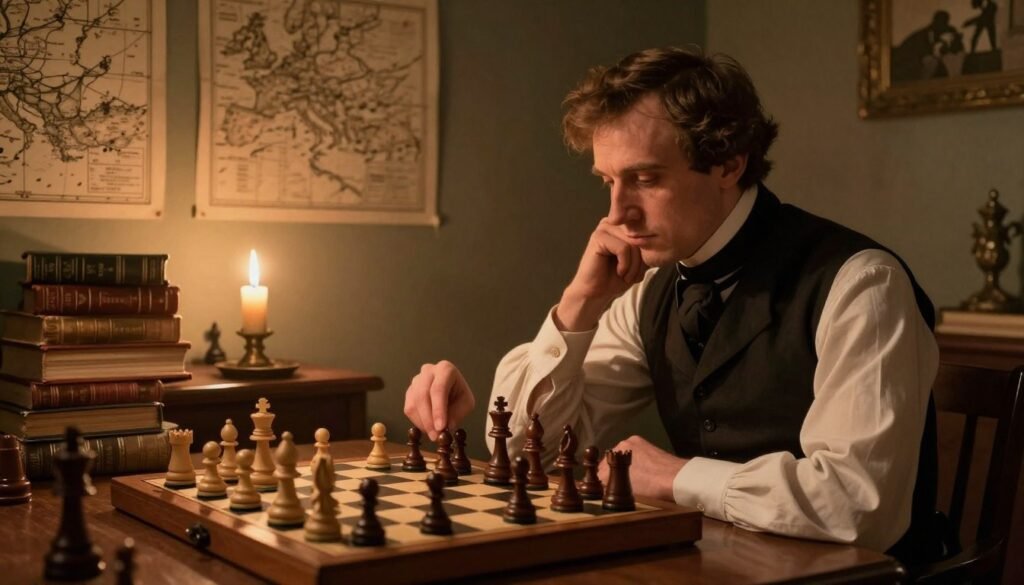
A quiet Prague neighborhood saw the first sparks of a curious mind on May 14, 1836. His early life was modest. Family, study, and everyday city life shaped his time as a child.
Learning chess later — he picked up the game at 12. He did not dive into serious play until his twenties. That late start is a great reminder: you can begin later and still reach high levels with good habits!
In 1857 he left Prague for Vienna to study mathematics at the Polytechnic. The logical training fit his growing approach to the game. School demands and money problems made the path hard at first.
People who meet this story often say it shows grit. Years of steady study, not instant fame, built his skill. Vienna is where his chess truly accelerated — and where the next chapter begins!
- Born May 14, 1836, in Prague (Kingdom of Bohemia).
- Learned chess at 12; focused seriously in his twenties.
- Moved to Vienna in 1857 to study mathematics.
Vienna Breakthrough and the “Austrian Morphy” Reputation
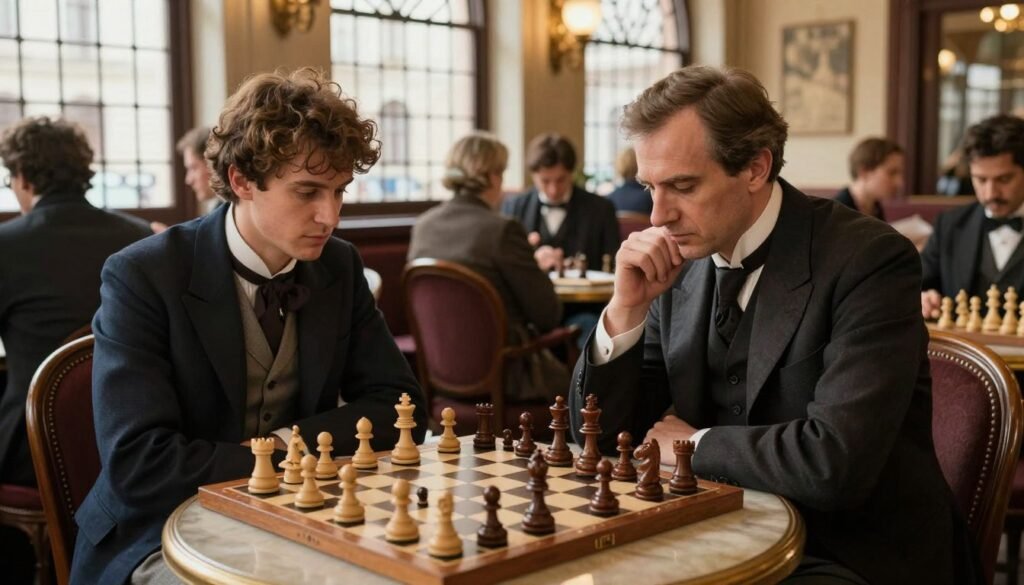
Vienna turned into a proving ground where a local player rose from underdog to near-perfect scorer. He climbed fast in the city scene and surprised everyone!
Quick sports-style recap: third place in the 1859 Vienna city championship, then BOOM—first in 1861 with an amazing 30/31 score. In plain words, he won almost every round. That many points showed true dominance.
Why the nickname? Early on his play was sharp and fearless. He opened lines, pushed a pawn when it mattered, and made bold sacrifices. Opponents called him the “Austrian Morphy” for good reason—his attacks were fast and scary.
How those results mattered
That Vienna victory turned local fame into real opportunity. Success at this tournament led to larger events and match offers abroad.
- Sharp development and quick castling set the tone.
- Open files and sacrificial ideas created tactical chances.
- These attacking skills later mixed with deeper planning as he grew into a positional master.
| Year | Result | Key takeaway |
|---|---|---|
| 1859 | 3rd place | Strong contender; noticed by peers |
| 1861 | 1st — 30/31 points | Near-perfect performance; earned wide recognition |
| After 1861 | International chances | Invitations to bigger events and match play |
Want the bigger picture of great players and their rise? Check this list of most important players in chess history for context and inspiration!
London 1862 and the Decision to Become a Chess Professional
London 1862 marked a turning point: an international stage and a choice to play for a living. He placed 6th in a tough tournament. That finish mattered then. Top fields were small and elite. Even sixth place meant you belonged among the best!
International debut and a brilliancy-prize win
In London he scored a famous brilliancy by beating Augustus Mongredien. The game won a prize and showed he could create exciting, memorable play. Fans and patrons noticed!
Match momentum: Dubois and the start of elite match success
Right after the event he played Serafino Dubois in a match. The result: 5 wins, 1 draw, 3 losses. That match proved he could win long contests, not just single games. Match wins became his superpower and helped build reputation in the chess world.
Building a living through exhibitions and match play
London offered ways to earn cash. Players gave exhibitions, played many simultaneouses, and accepted paid match play. It was a tough period. Even top players often struggled to make steady money.
Why this mattered: the move to London turned tournament success into a professional career. That launch pad set the stage for later fights for the world chess title!
The Anderssen Match and the Long Debate Over Who Was “World Champion”
In 1866 London, a decisive match reshaped who players thought of as the top master of the era.
Adolf Anderssen was the era’s superstar. Beating him meant beating the “boss level” of 19th-century chess. The contest was close and full of tension.
Score and drama: the final result was 8–6 (no draws). After 12 games the score stayed tight, but the challenger finished strong and claimed the win.
Why the debate continues
Many writers treated the winner as the best player in the world right after 1866. Others insist the real title only began with the formal 1886 match. The core issue is simple: unofficial best in the world versus an official world chess champion with a set contract and rules.
Put simply for young learners: some say his reign started in 1866 because he beat the top rival. Others count the title from 1886 because that match was organized as the official contest.
- Anderssen: the top opponent of his day.
- Match result: 8-6, a narrow but clear win.
- The historical issue: unofficial acclaim vs. formal champion status.
Fair and friendly debate keeps history fun! Next up: after proving his attack could win matches, he began rethinking how chess should be played — and that rethink changed the game.
Learn more about his matches or read a broader guide to the title fight at inside the world chess championship.
The Positional Revolution: Steinitz’s New Chess Theory in 1873
In 1873 a dramatic shift in chess thought began to spread through clubrooms and print. It changed how players planned and how coaches taught the game.
Why the change shocked many in the 19th century: careful defense and slow improvement looked timid. Fans wanted fireworks. Critics called the style dull. But results told a different story!
Core ideas in plain words
Sound pawn structure, more space, the bishop pair, and strong outposts. These gave steady control. Small edges grew into real wins.
- Protect pawns and make them work.
- Gain key squares for knights and bishops.
- Convert tiny edge into attack at the right moment.
| Concept | What to do | Why it helps |
|---|---|---|
| Pawn structure | Keep pawns healthy | Lasting control of space |
| Bishop pair | Keep them active | Long-range pressure |
| Outposts | Place knights on weak squares | Force better moves from opponent |
This theory taught a key truth: initiative is useful but fleeting. Turn short-term pressure into lasting gains. Then your attack wins naturally! Try these ideas in openings and practice with our essential opening knowledge lessons to grow fast.
The “Ink War”: Journalism, Debate, and the Fight for Chess Ideas
Chess battles moved off the board and into the papers. Rival ideas met in print, and readers picked sides. This made public debate a big part of the chess world in the late 1800s.
Writing for The Field gave him a steady voice. Short columns explained why gradual plans beat flashy tricks. Those pieces shaped what club players and fans thought good play looked like.
International Chess Magazine as a megaphone
In 1885 he founded and edited the International Chess Magazine. It ran until 1895 and packed each issue with deep analysis. The magazine became a central chess magazine for serious study.
When rivalry spilled onto the page
The “Ink War” named the sharp debates with opponents like Zukertort and writers such as Leopold Hoffer. Analyses grew personal. Games were reprinted, then dissected in long columns.
“Ideas spread faster when you teach and publish,” wrote the editor in one issue, turning analysis into public lessons.
Why it matters today: the same power lives in videos and articles now. Publishing shapes the chess world and helps others learn faster. Teaching is part of winning!
| Outlet | Role | Impact |
|---|---|---|
| The Field | Public column | Shaped club opinion and simple lessons |
| International Chess Magazine | Founder & editor | Long-form analysis and global reach |
| Contending writers | Debate and critique | Stirred public interest and clarified ideas |
Want deeper source material? See a focused collection of annotated games and essays in this magazine archive PDF. Read, replay, and learn how print changed the world chess conversation!
Comeback Years, Winning Streaks, and U.S. Moves
After a stretch away from major play, he came back and stunned elite rivals. The return showed study and grit had paid off!
Vienna 1882 was a headline moment. He tied for first with Szymon Winawer in a very strong field. This was not an easy tournament. Top masters fought each round.
His serious-competition streak reached 25 wins across the years 1873–1882. Game after game, he kept winning. The run signaled real dominance. It mixed theory, practice, and calm nerves.

Moving to the United States
After London 1883 he moved to New York. The city became his long-term base in the United States. He built a life of matches, articles, and teaching there.
“A comeback proves skill, not luck!”
| Year | Event | Key fact |
|---|---|---|
| 1882 | Vienna tournament | Tied 1st with Winawer; elite field |
| 1873–1882 | Competitive streak | 25 consecutive serious wins |
| 1883 | Move | Relocated to New York; U.S. base |
Why it matters: this surge set the stage for the big world showdown everyone wanted. The world needed one clear answer—who was the real world champion? Next: that defining match!
The First Official World Championship: Steinitz vs. Zukertort (1886)
The 1886 showdown changed chess history by putting a formal title into a written contract. The agreement called the contest “for the Championship of the World,” which is why it counts as the first official world title fight.
Why 1886 is called the first true title fight
Both players signed terms. The prize and rules were clear. Cities hosted rounds in New York, St. Louis, and New Orleans. It felt like a traveling sports event!
The dramatic reversal after a 4–1 start
Early on, Zukertort led 4–1 after five games. Then everything flipped. Steinitz rallied, showing calm defense and smart plans. The final score was 12.5–7.5 (10 wins, 5 draws, 5 losses).
What the match taught us about stamina and play
The format—first to 10 wins—pushed stamina and focus to the limit. Long matches reward steady defense and clear strategy. Small, correct choices add up over many games.
Takeaway: lose an early game? Keep calm. One good decision at a time can turn a match into a victory. That lesson helps any player chasing a title or improving their game!
Defending the Crown: Chigorin, Gunsberg, and the Champion Years (1886-1894)
Defending a crown tests nerves, stamina, and the art of turning small leads into match wins! A championship defense differs from a tournament. Matches are head-to-head. Every game matters more.
Havana 1889 — Chigorin’s bold challenge
In Havana the champion met Mikhail Chigorin in 1889. The score was 10–6 with 1 draw. It showed how careful planning beats flash when the pressure is high. The world championship setup was still new and often negotiated game by game.
New York 1890–1891 — Gunsberg and many draws
Back in New York the 1890–1891 match vs Isidor Gunsberg ended 10.5–8.5. Lots of drawn games proved defense had grown strong. Close games made each win feel huge!
Havana 1892 — a narrow escape
The 1892 rematch in Havana was tense. The champion barely held on. Those years taught one lesson: even top players can be pushed to the limit.
“A title must be earned again and again,” wrote a contemporary observer.
| Match | Year | Score & insight |
|---|---|---|
| vs Chigorin | 1889 | 10–6 + 1 draw — bold play met calm defense |
| vs Gunsberg | 1890–1891 (New York) | 10.5–8.5 — many draws; defense shines |
| vs Chigorin (rematch) | 1892 (Havana) | Narrow win — stamina and experience saved the title |
Want context? Read more about the long arc of the world championship. Next: a new challenger rises — younger and hungry!
Losing the Title to Emanuel Lasker and Steinitz’s Final Competitive Chapter
In 1894 a hard-fought match changed chess history. The champion faced emanuel lasker in matches held in New York, Philadelphia, and Montreal. The younger challenger brought fresh ideas and steady nerves.
1894 match timeline and turning points
The match began well for the older master, but momentum swung. Lasker’s practical play and energy broke the old rhythm. Small mistakes added up. The title passed to a new world champion.
Why a 32-year unbeaten streak ended
Age and form mattered. Lasker was younger and more flexible. He adapted to complications and punished tiny errors. After decades of dominance, the streak finally stopped.
Late sparks and final years
Even after the loss, there were highlights! He won the New York 1894 tournament and later played the famous Hastings 1895 brilliancy vs Curt von Bardeleben. That brilliant game still teaches attack and timing.
“Losing a crown does not erase a lifetime of ideas,” many writers noted then.
| Year | Event | Note |
|---|---|---|
| 1894 | Title match | New York / Philadelphia / Montreal |
| 1894 | New York tournament | Notable victory |
| 1895 | Hastings | Famous brilliancy game |
He spent his final years in New York and passed away on August 12, 1900. The loss of a title changed little about his lasting impact on the game. We still learn from his method today!
Steinitz’s Legacy: Openings, Endgames, and Study Paths for Players
From named openings to a method of limiting opponent activity, his legacy maps across chess study. Fans and coaches still point to concrete lines and clear plans you can learn today!
Openings that carry his name
Several opening lines keep his influence alive. The Ruy Lopez Steinitz Defense and the Steinitz Gambit are examples. Variations in the Vienna Game and Scotch also reflect his thinking.
Why it matters: these lines teach plans, not just moves. Learn the typical pawn ideas and piece placement. That’s more useful than memorizing long move lists.
Endgame technique: the method of restriction
The Steinitzian method of restriction is simple to use. Limit your opponent’s piece mobility. Improve yours step by step. Then convert small space or pawn edges into wins.
Influence on champions and students
His writing and book, The Modern Chess Instructor, helped spread ideas to later masters. Lasker, many world chess champions, and even bobby fischer studied these principles. Modern players still borrow them!
| Area | What to learn | Quick benefit |
|---|---|---|
| Openings | Key pawn plans and piece setup | Fewer surprises; clearer middlegame ideas |
| Endgames | Restriction and stepwise improvement | Convert tiny advantages reliably |
| Study | Columns, book, annotated games | Faster growth for young players |
Learn with Debsie
Try lessons! Learn Steinitz-style chess with Debsie Courses: https://debsie.com/courses/
Track progress on the Debsie Leaderboard: https://debsie.com/overall-leaderboard/
Take a free trial class with a personalized tutor to practice these ideas in real games: https://debsie.com/take-a-free-trial-class/
Conclusion
A clear lesson endures: steady gains beat flash when you want lasting wins. He was the first official world chess champion (1886–1894) and a thinker who showed why sound plans work.
His ideas shaped how we study chess today. Read a classic game slowly. Name the plan after each move. That practice builds habits more than memorizing openings.
Try this next: open one annotated match, replay the games, and write one sentence about the long-term idea in each game. Do it with family or friends and have fun learning together!
Want context? See the short biography on his Wikipedia page and then play one of his model games. Small, steady steps over time make you a stronger player!