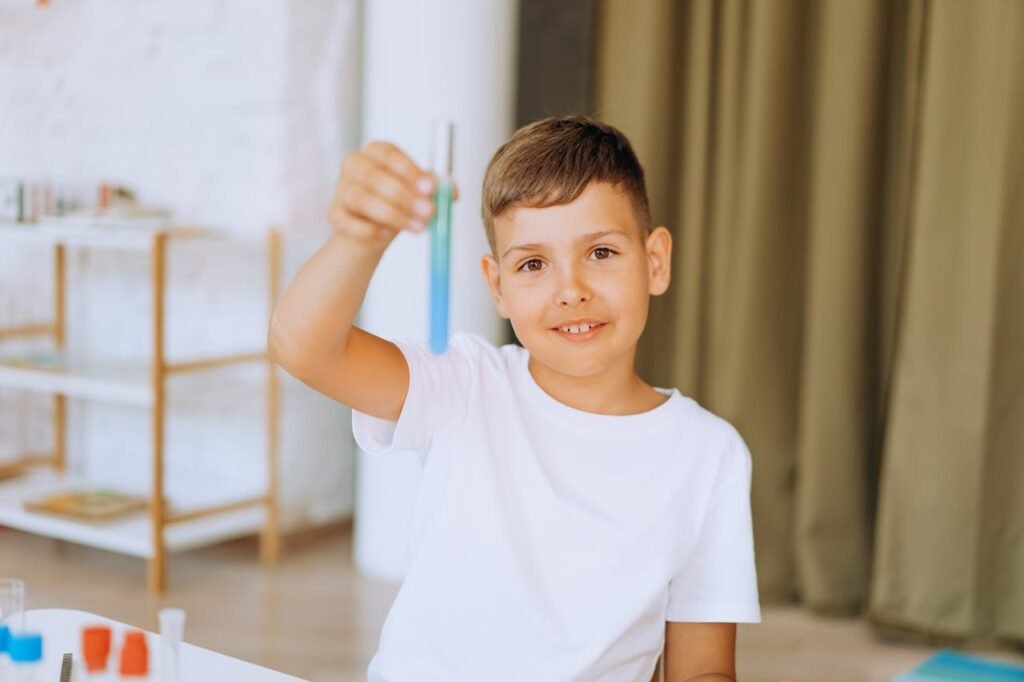
Have you ever seen a child light up when they build something with their hands? Maybe it’s a block tower, a paper rocket, or a messy science experiment at the kitchen table. That joy — that sparkle — isn’t just fun. It’s learning. Real, deep, brain-changing learning.
When children use their hands to explore, their minds open up in ways that books or screens alone can’t always reach. It’s not because books are bad. It’s because young brains are built to learn by doing.
At Debsie, we teach all subjects — from math to geography to chemistry — and one thing we’ve seen over and over is this: when kids touch, move, build, test, and create, they understand faster, remember longer, and stay curious much, much deeper.
Hands First, Mind Follows: How Young Brains Learn Best
Children are born to touch the world around them. Long before they speak their first words or read their first book, they’re already exploring — by grabbing, poking, stacking, squeezing, and moving. This is not random play. It’s how the brain grows. It’s how the brain learns.
When a child uses their hands, their brain lights up. It starts making connections — between shape and size, between cause and effect, between effort and result. These early moments of physical discovery form the base of thinking, reasoning, and problem-solving later in life.
That’s why hands-on learning feels so natural to kids. It’s not a trick. It’s not a method. It’s simply how their brain was designed to learn.
The Brain Loves Movement and Action
When a child builds a model, sorts blocks, measures ingredients, or creates a map with markers and stickers, they’re not just being creative. They’re using different parts of the brain all at once — the parts for seeing, moving, feeling, planning, and remembering.
This type of learning is called multi-sensory, and it’s one of the strongest ways to help knowledge “stick.” When children move and touch while they learn, their brain forms stronger pathways. These pathways help them recall the information more easily, even long after the activity is over.
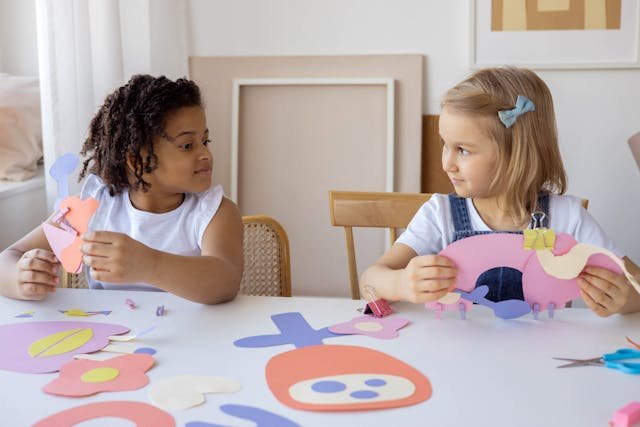
That’s why a child who struggles to memorize shapes from a chart might suddenly “get it” when they cut those same shapes out of paper and match them with their hands.
Mistakes Become Part of the Process
One of the biggest challenges in learning is dealing with mistakes. Many children fear getting things wrong. But in hands-on learning, mistakes feel like part of the fun. When a paper tower falls, when a slime recipe flops, or when a math pattern doesn’t work — it doesn’t feel like failure. It feels like, “Hmm, let me try something else.”
This is key for building resilience and problem-solving. Children who learn by doing don’t just become smarter. They become braver. They start to see learning as a process, not just a result. And that changes everything.
At Debsie, we’ve seen children who were shy about answering questions in regular lessons come alive during hands-on challenges. Suddenly, they’re confident. They’re trying. They’re proud. And best of all — they’re learning without even realizing it.
Hands-On Learning Builds Focus, Memory, and Deep Thinking

Many children today struggle to sit still. They lose focus during lessons. They fidget, drift off, or ask to take a break every five minutes. It’s easy to assume they’re being lazy or distracted. But often, it’s not a behavior problem — it’s a brain mismatch.
Their brain wants action. It wants to do, not just watch or listen. That’s where hands-on learning becomes a powerful tool.
Doing Helps the Brain Stay With the Task
When children work with their hands, their focus naturally improves. That’s because the brain becomes more engaged when the body is active. Holding, cutting, drawing, pouring, building — these simple actions keep the mind grounded. The child isn’t just sitting and absorbing. They’re interacting with the idea.
This makes a big difference, especially for children who struggle with attention. When the learning task is physical, the brain doesn’t wander as much. It stays present. And the child feels more in control.
For example, a child might tune out during a lesson on how the water cycle works. But if you hand them a bowl, a sponge, a cup, and a fan to model evaporation and condensation, suddenly they’re locked in — curious, alert, and ready to explain what’s happening.
Doing Makes Memory Stronger
When we use our hands to learn something new, the brain remembers it in a deeper way. This is because learning by doing creates a strong connection between what we see, what we feel, and what we understand. It’s like giving the brain more ways to hold onto the same idea.
This is why so many children remember science experiments or art projects far longer than they remember lectures or textbook facts. Their body was involved. Their brain had to think in steps. Their emotions were active. All of that adds up to real learning that lasts.
At Debsie, we often see students surprise themselves. They remember a concept weeks later — not because they studied harder, but because they built it, touched it, or moved through it.
Hands-On Work Builds Slower, Deeper Thinking
In today’s world, everything moves fast. Kids click, swipe, scroll. But hands-on learning slows things down — in the best way. It makes children think step by step. It encourages them to stop and ask, “What’s next?” or “What happens if I try this instead?”
This kind of deep thinking is what helps kids truly understand what they’re learning. They’re not just repeating answers. They’re exploring, experimenting, and making sense of it in their own way.
And once a child learns to think this way — not just for the grade, but for real understanding — they carry that skill into every subject, every test, every project, and every challenge they face in school and beyond.
Hands-On Learning Supports All Types of Learners

Every child learns in their own way. Some love to read. Others remember things by hearing them. And some children don’t really “get it” until they can see it, move it, or build it themselves. This is where hands-on learning shines — it opens the door for every kind of brain.
Whether your child is a fast learner or one who needs more time, hands-on learning gives them a way in. It’s flexible. It’s forgiving. And it lets children learn at their own pace, in their own style.
For Children Who Struggle with Reading or Writing
Some children are full of ideas but have a hard time putting those ideas into words. Others get stuck when they see a blank page. These students often feel frustrated or left behind during lessons that rely only on words.
But when those same children are given something to build, draw, or act out — their confidence grows. Suddenly, they’re not “behind.” They’re engaged. They’re leading. They’re showing what they know in a way that fits them.
Hands-on learning allows them to express what’s in their minds — through movement, design, or action — instead of just through writing. This boosts self-esteem, builds skill, and helps them enjoy learning again.
For Children Who Learn Best by Seeing or Doing
Some kids are “doers” from the very beginning. They need to move. They need to tinker. They understand more when they can look at something from all angles, test it out, and see what happens.
These learners often struggle in settings that rely on long explanations or quiet desk work. But give them clay, magnets, a ruler, or a water bottle and a funnel — and suddenly they come alive.
Hands-on learning gives these kids the space to think in pictures, in actions, in real-world steps. It gives their brain the kind of input it naturally responds to.
For Children Who Doubt Themselves
Sometimes, kids don’t believe they’re “smart.” Maybe they’ve failed tests. Maybe they’ve been compared to others. Maybe they’ve stopped trying.
But when you give them something real to do — something they can touch and control — something changes. They build a bridge that holds weight. They mix colors that create something new. They solve a puzzle with real pieces.
And just like that, they start to believe, “I can do this.”
At Debsie, we’ve seen children who were quiet for weeks speak up proudly after a hands-on project. We’ve seen nervous learners take the lead in group tasks. That’s the power of learning through doing. It doesn’t just teach the brain — it builds the child.
How to Bring Hands-On Learning into Everyday Life

You don’t need a fancy science lab or expensive kits to give your child rich, hands-on learning experiences. In fact, some of the best learning happens with things you already have at home — paper, water, spoons, socks, cardboard boxes, sand, or even old containers.
Hands-on learning isn’t about having more stuff. It’s about using what you have with purpose — to explore, build, test, solve, and create.
Learning Through Everyday Tasks
Cooking is one of the best examples of hands-on learning. When a child helps you bake or mix a salad, they’re learning math by measuring, science by observing changes, and focus by following steps. Washing vegetables becomes a lesson in texture and responsibility. Mixing dough becomes a sensory experience that builds hand strength and coordination.
The same goes for organizing toys, folding laundry, planting seeds, or building a small shelf together. These daily moments are full of chances to count, compare, notice patterns, solve maths problems, and follow sequences — all while moving and thinking at the same time.
Turning Subjects into Real-Life Projects
Let’s say your child is learning about shapes in math. Instead of just drawing them, help them build a shape out of toothpicks and clay. If they’re learning about gravity in science, try dropping different objects into water to see what floats. If they’re learning new vocabulary, let them act out the words using gestures and props.
By turning school subjects into simple projects, you give the brain more ways to remember and connect ideas. It’s not just about understanding — it’s about experiencing the learning.
And the best part? These projects don’t need to be perfect. They just need to be real. The mess, the questions, the curiosity — that’s where growth lives.
Keeping It Simple and Playful
Hands-on learning works best when it feels like play. When children are free to try ideas without fear of getting things wrong, their brains open up. So, don’t worry about doing it “the right way.” Just offer tools, time, and encouragement.
At Debsie, we give parents and children easy ways to bring more hands-on activities into their daily routine. Our teachers often suggest mini-challenges before or after class — like “find something in your house that floats” or “build a mini model of your room.” These small tasks turn regular moments into big learning wins.
How Debsie Brings Hands-On Learning Into Online Lessons

You might wonder, “Can hands-on learning really happen through a screen?” At Debsie, the answer is a big yes — because we don’t just teach through screens. We teach through connection, creativity, and action. And we invite every child to bring their full self — hands included — into the learning process.
We’ve designed our lessons to make sure that kids don’t just sit and watch. They move. They build. They draw. They experiment. They create. They do.
Real Teachers, Real Activities, Real Thinking
Our classes are taught by real teachers who know how to bring subjects to life. They don’t just explain. They ask, “Can you show me with your hands?” or “Can you try this using things around you?” Whether it’s using spoons to show angles, drawing a water cycle on paper, or building a simple circuit with household items, the goal is always the same: learning through action.
These aren’t just extra activities. They’re part of the learning. When children move their hands, they activate their brain. When they build, they remember. When they create, they understand.
Hands-On Across Every Subject
At Debsie, we teach all subjects — from chemistry and coding to geography and grammar. And in every class, we find ways to bring the lesson off the screen and into the child’s hands.
In science, students might model volcanoes with baking soda and vinegar. In math, they might fold paper to understand symmetry. In language class, they might act out a scene or use toys to retell a story. Even in coding, we include logic puzzles and unplugged activities that build real-world thinking.
This keeps kids engaged, focused, and excited to come back to class — not just to sit, but to do something that matters.
We Guide Parents, Too
We know that learning doesn’t stop after class. That’s why we give parents simple ways to support hands-on learning at home. You don’t need to prepare anything fancy. Just set aside a few materials, a bit of space, and some time for your child to explore.
Our teachers suggest easy follow-up tasks — like nature scavenger hunts, at-home science games, or storytelling prompts — that turn everyday life into a natural extension of the lesson.
At Debsie, we believe every child deserves to learn in a way that works for their brain. And hands-on learning is one of the most joyful, powerful, and natural ways to do it.
Hands-On Learning Builds Life Skills That Last Forever

Hands-on learning is not just about understanding math, science, or reading. It also teaches children the quiet, powerful skills they will carry into adulthood. These are the skills that help them succeed not only in school, but in friendships, jobs, and everyday challenges.
Building Patience and Persistence
When children work on hands-on projects, things don’t always go smoothly. Towers fall. Experiments fail. Art projects get messy. But each time they try again, they’re practicing patience. They’re learning that progress takes effort and that mistakes are part of the journey. Over time, they build a natural persistence — the kind that helps them stick with tough tasks later in life.
Learning to Solve Problems Independently
Hands-on activities give children the freedom to think for themselves. Instead of waiting for the “right” answer, they test their own ideas. They see what works and what doesn’t. This independence teaches them that problems are not walls, but puzzles that can be solved with creativity and effort.
Growing Confidence Through Action
There’s something powerful about creating something with your own two hands. Whether it’s finishing a craft, fixing a small error, or completing a model, children gain a sense of pride that can’t be matched by simply filling in a worksheet. That feeling — “I did this myself” — builds confidence that spreads into other areas of their life, from speaking up in class to trying new hobbies.
At Debsie, we value these life skills just as much as academic ones. We want our students not only to remember lessons, but to grow into confident, curious, and capable thinkers. Hands-on learning helps make that possible.
Hands-On Learning Strengthens Social Connections
Learning is not only about individual growth. It’s also about how children connect with others — their classmates, their teachers, their families, and eventually, their communities. Hands-on learning naturally encourages this kind of social growth because it often involves collaboration, sharing, and communication.
Learning Together Builds Teamwork
When children work on a project together — building a model, acting out a story, or solving a group challenge — they learn to listen, take turns, and share ideas. These teamwork experiences help them see that everyone’s contribution matters. Even quiet or shy children often find their voice when they can show their ideas with their hands.
Communication Becomes Clearer Through Action
Sometimes, words are hard for children to find. But when they’re building or creating, they can point, demonstrate, or show instead of only speaking. This kind of nonverbal communication helps them feel more confident, and slowly, their spoken communication improves too. By explaining their process to others, children also practice organizing their thoughts more clearly.
Building Empathy and Patience
Group activities don’t always go smoothly. Children might disagree about how to build something or who gets to go first. But these small challenges teach them bigger lessons — empathy, compromise, and patience. Over time, they learn to work not just for themselves, but for the success of the group.
At Debsie, many of our lessons include group projects, even online. Students collaborate on stories, design virtual experiments, or present findings together. These activities don’t just build academic knowledge — they build stronger, kinder, and more socially aware children.
Hands-On Learning Prepares Children for the Future

School isn’t just about passing tests. It’s about preparing children for the real world — a world where they’ll need to think on their feet, solve unexpected problems, and keep learning long after graduation. Hands-on learning lays that foundation early, shaping kids into adaptable, confident thinkers who are ready for life beyond the classroom.
Building Skills for Real-World Challenges
In the future, children won’t just need facts. They’ll need to apply knowledge — to fix, create, design, lead, and innovate. Hands-on learning gives them practice in exactly that. Whether they’re building a small project, testing a science idea, or coding a simple program, they’re learning how to take theory and turn it into action. That’s a skill every successful adult needs.
Fostering Independence and Responsibility
When children use their hands to complete projects, they learn to take ownership of the process. They see that their choices have consequences — that effort matters, that patience pays off, and that success feels better when you’ve worked for it. These lessons of independence and responsibility prepare them not just for academics, but for everyday life as responsible, capable individuals.
Encouraging Innovation and Creativity
The jobs of tomorrow will require problem-solvers, creators, and innovators. Children who grow up with hands-on learning are used to thinking differently, testing new ideas, and learning from failure. They’re not afraid to experiment. They’re not afraid to try again. This fearless curiosity is what will help them thrive in a world that changes quickly.
At Debsie, we see every lesson as practice for life. By giving children real tasks, projects, and challenges, we’re not only helping them learn today — we’re preparing them to lead tomorrow.
Conclusion: Learning That Lasts Is Learning by Doing
Children don’t just learn with their eyes and ears — they learn with their hands, their hearts, and their curiosity. Hands-on learning gives them more than knowledge. It gives them focus, confidence, patience, creativity, and the ability to solve problems in real life. These are the skills that turn lessons into lasting wisdom.
At Debsie, we believe every child deserves to experience the joy of learning this way. That’s why our courses — from science and math to geography, music, and coding — are built to be interactive, engaging, and action-driven. We don’t just want children to memorize. We want them to experience, explore, and grow.
Every block stacked, every experiment tried, every drawing made, every model built — it all shapes a smarter, stronger, and more resilient child.
👉 Book a free trial class with Debsie today and see how hands-on learning can spark new joy and confidence in your child.
Read Next:

Abir Das is a educator, child learning specialist, and competitive chess player who brings a rare blend of technical knowledge, psychological insight, and practical chess experience to his work with young learners. With a diploma in child psychology, a B.Tech degree and a strong academic foundation in structured problem-solving, Abir understands how analytical thinking develops over time and how children can be guided to think more clearly, patiently, and confidently through chess.
Abir’s approach to education is shaped by his deep interest in child psychology and how young minds learn best. He believes chess should never feel like a collection of difficult rules or memorized moves. Instead, it should feel like an exciting journey into patterns, choices, creativity, discipline, and discovery. His lessons are designed to help children understand not only what move to play, but why that move makes sense.
As a competitive chess player with a rating of 1991, Abir has developed a strong practical understanding of the game through years of study, training, and tournament experience. He has competed in rated chess events, earned recognition for his strategic play, and achieved strong results in regional and state-level competitions. His accomplishments as a player give his teaching an authentic and trustworthy foundation because he understands the pressure, patience, and preparation required to perform well at the board.
Abir is especially skilled at helping children build confidence in chess. He has coached beginners who are just learning how the pieces move, intermediate students working on tactics and planning, and advanced young players preparing for competitive events. His teaching focuses on essential chess skills such as board vision, calculation, opening principles, endgame technique, pattern recognition, time management, and emotional control during games.
What makes Abir’s teaching style distinctive is his ability to connect chess improvement with personal growth. He sees every chess game as a lesson in decision-making. A missed tactic becomes a chance to improve focus. A lost game becomes an opportunity to build resilience. A difficult position becomes a practice ground for patience and creativity. Through this approach, Abir helps students grow not only as chess players, but also as thoughtful, disciplined, and independent learners.
Fluent in French (CEFR level C1), and having lived all across Europe, Abir also brings a global and culturally aware perspective to education. His ability to communicate across languages reflects his curiosity, adaptability, and commitment to connecting with learners from different backgrounds. This international outlook enriches his teaching and writing, allowing him to explain ideas in a clear, inclusive, and accessible way.
As an author at Debsie, Abir writes practical and engaging French, physics and chess education content for children, parents, and young learners. His writing simplifies complex concepts without making them shallow. Whether he is explaining Bernoulli’s principle, a tactical pattern, a checkmate idea, French genders in nouns or a chess planning principle, or the mindset needed for tournament play, Abir focuses on clarity, usefulness, and long-term learning.
Abir’s work is guided by the belief that chess can be one of the most powerful learning tools for children. It strengthens memory, concentration, logic, creativity, patience, and emotional maturity. More importantly, it teaches children how to think before acting, how to learn from mistakes, and how to approach challenges with confidence.
Outside of teaching and writing, Abir continues to study chess, follow international tournaments, analyze instructive games, and explore innovative methods for making physics, French, chess more enjoyable and meaningful for children. His mission is to help young players see chess not just as a game to be won, but as a lifelong skill that builds sharper minds, stronger character, and a deeper love for learning.