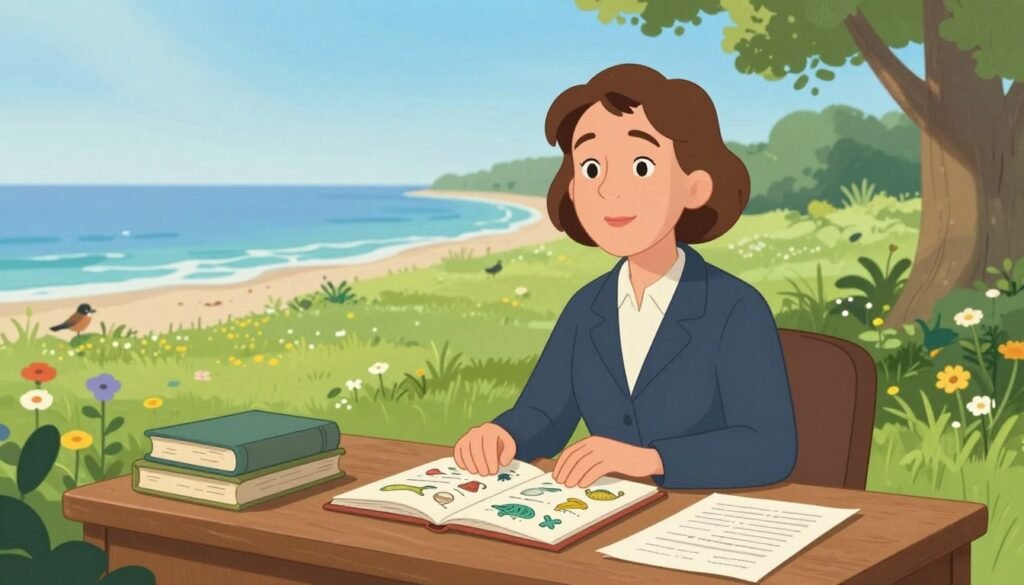
Imagine standing on a quiet beach. The salty mist of the ocean touches your face. We all love the wonders of our natural world!
But, it takes a special heart to protect these treasures for the future.
A brave marine biologist stood up to save the earth. Born in 1907, she used her writing to show the world nature’s beauty. Her work started the global environmental movement that still inspires us today!
Join us as we explore her journey of discovery and courage! Start your own adventure with Debsie Gamified Courses at https://debsie.com/courses. Let’s grow together and keep our planet healthy and thriving!
Key Takeaways
- This famous American scientist was a pioneer in nature conservation.
- She began her career as a talented marine biologist and writer.
- Her influential books changed how people think about the earth.
- She played a major role in starting the global environmental movement.
- Her legacy teaches us to protect the ocean and all living things.
- Gamified learning helps kids follow in her footsteps today.
Early Life and Academic Foundations
In Springdale, Pennsylvania, a young Rachel Carson loved nature. She was born on a family farm. She spent a lot of time exploring and writing from a young age.
Growing Up in Springdale, Pennsylvania
Carson grew up in Springdale. The natural beauty around her home made her curious. It helped her love writing and nature.
Academic Pursuits at Pennsylvania College for Women
Carson went to Pennsylvania College for Women. She started with English but then chose biology. This change was a big step for her.
Graduate Studies at Johns Hopkins University
At Johns Hopkins University, Carson got a master’s in zoology. Her time there helped her know more science. It prepared her for a career that mixed science and writing.
Let’s look at some key parts of her life and studies:
| Aspect | Description | Influence on Later Work |
|---|---|---|
| Growing up on a farm | Developed a love for nature and writing | Foundation for her career as a marine biologist and conservationist |
| Studying English and Biology | Initially studied English, later switched to biology | Combined her love for writing with scientific knowledge |
| Graduate Studies | Earned a master’s degree in zoology at Johns Hopkins University | Enhanced her scientific expertise and prepared her for a career bridging science and literature |
Carson’s early life and studies were key to her success. Her mix of writing talent and science knowledge helped her in environmental conservation.
The Marine Biologist Behind the Pen
Rachel Carson started as a marine biologist and writer at the U.S. Bureau of Fisheries. Her early work shaped her unique voice and perspective.
Working for the U.S. Bureau of Fisheries
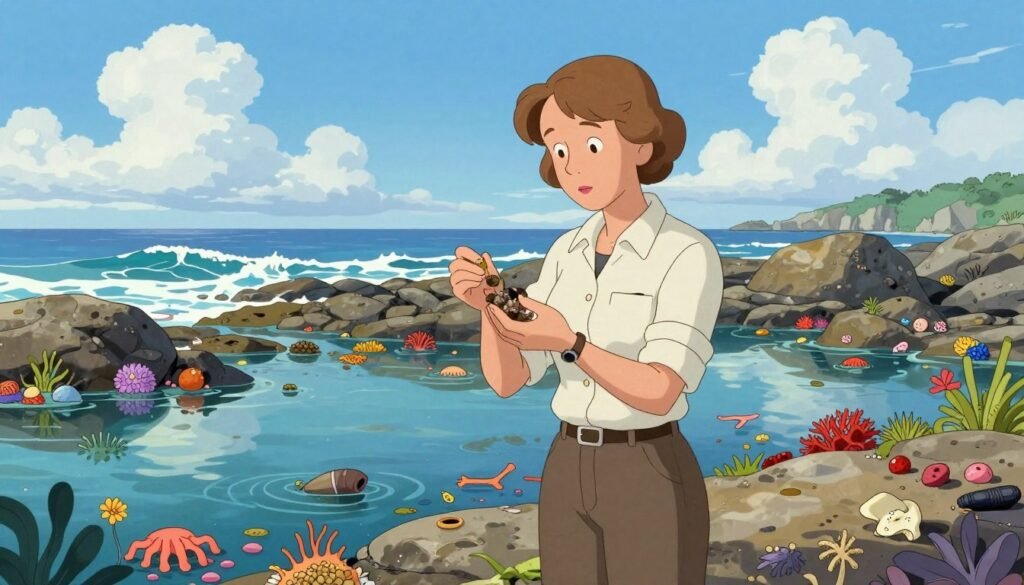
Carson worked as an aquatic biologist at the U.S. Bureau of Fisheries. She wrote radio copy and articles about marine life. This job improved her writing and deepened her ocean knowledge.
You can learn more about Rachel Carson’s life and work on PBS’s American Experience.
At the U.S. Bureau of Fisheries, Carson learned to share complex science with everyone. She wrote articles and radio scripts that showed the beauty of marine ecosystems.
The Significance of Under the Sea-Wind
Carson’s first book, Under the Sea-Wind, came out in 1941. It didn’t sell well right away. But it was a big step in her career as a nature writer.
The book showed her talent for mixing science with stories about nature. This helped her become known as a science writer who could reach many people.
Balancing Scientific Rigor with Literary Prose
Carson was great at making science easy to understand without losing accuracy. She had a special way of writing that made complex ideas simple.
This skill made her a successful science writer. By looking at her early work and first book, we see how she became a trusted and engaging voice in marine biology and nature writing.
The Sea Around Us and Literary Success
Rachel Carson’s 1951 book, The Sea Around Us, was a big hit. It won the National Book Award and changed how we see the ocean. This book was a hit, staying on The New York Times bestseller list for 86 weeks.
The National Book Award Achievement
Carson won the National Book Award for Nonfiction. This made her a well-known science writer. The Sea Around Us was loved for its story and deep research. It set a new high for science writing.
Communicating Complex Oceanography to the Public
Carson made ocean science easy to understand. She wrote in a way that was both fun and educational. Her writing made people see how important the ocean is to us.
Establishing a Reputation as a Nature Writer
The Sea Around Us made Rachel Carson famous. She didn’t just share facts. She made us feel amazed and grateful for nature. This made her a true nature writing pioneer.
Here are some cool facts about The Sea Around Us:
| Category | Details |
|---|---|
| Publication Year | 1951 |
| Best Seller Duration | 86 weeks on The New York Times list |
| Awards | National Book Award for Nonfiction |
| Impact | Revolutionized public perception of oceanography |
The Catalyst for Rachel Carson and the Modern Environmental Movement
After World War II, synthetic pesticides became very popular. Rachel Carson noticed this and started to speak out. The world was rebuilding, and farming and chemicals were growing fast.
The Post-War Rise of Synthetic Pesticides
DDT and other synthetic pesticides changed pest control forever. They were seen as miracles at first. But soon, people worried about their effects on nature and health.
DDT was a big problem because it stayed in the environment and got into food.
Observing the Decline of Bird Populations
Rachel Carson loved nature and noticed birds were disappearing. She saw that birds were getting sick from eating these chemicals. The thinning of eggshells was very scary to her.
The Decision to Challenge the Chemical Industry
Carson knew she had to speak up against the chemical industry. She saw how bad these pesticides were for animals and people. It was hard because she went against big companies.
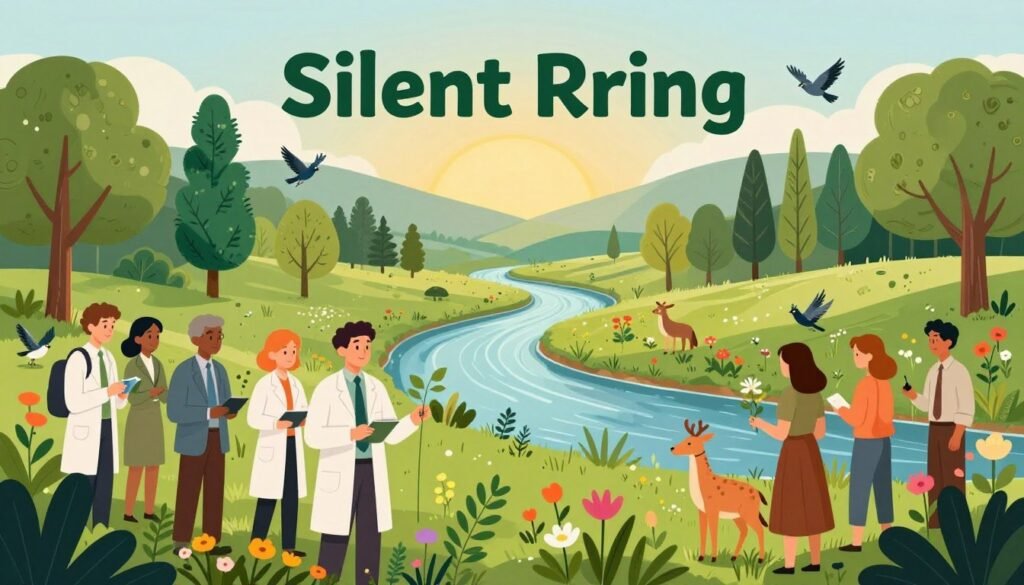
Carson was brave and wanted to tell the truth about pesticides. Her work led to Silent Spring. This book started a big change in how we see the world.
The Research and Writing of Silent Spring
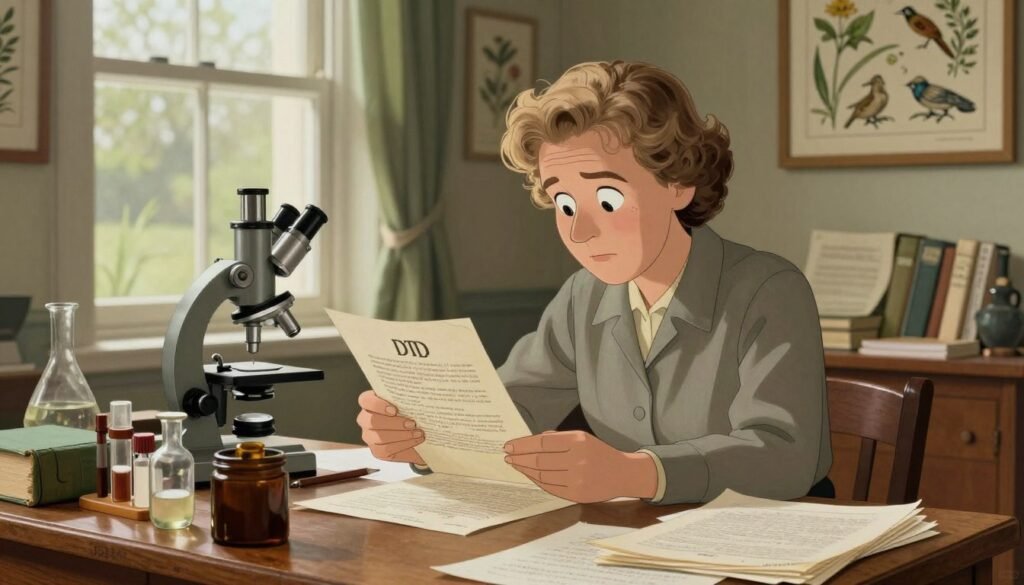
Rachel Carson worked hard for four years on Silent Spring. This book changed the world for the better! She did lots of research, worked with experts, and was very dedicated to telling the truth about DDT.
Gathering Evidence on DDT Toxicity
Carson started by learning about DDT’s harm. She looked at many studies, talked to experts, and found data on its effects. She found out DDT was hurting animals and people!
Collaborating with Scientists and Conservationists
Carson didn’t work alone. She worked with scientists and conservationists who cared about the environment. They helped her make her research stronger. Their help made Silent Spring’s message even clearer!
Overcoming Personal Health Challenges During Composition
Carson faced health problems while writing Silent Spring. But she kept going because she wanted to tell the truth. She had cancer, but her love for the environment kept her writing. Her hard work created a powerful book that changed the world!
The impact of Carson’s work is shown in the table below. It talks about DDT and how it was regulated:
| Year | Event | Impact |
|---|---|---|
| 1962 | Publication of Silent Spring | Raised public awareness about DDT toxicity |
| 1963 | Senate Subcommittee Hearings | Led to increased scrutiny of pesticide use |
| 1972 | Ban on DDT in the United States | Reduced environmental and health risks |
Carson’s work on Silent Spring showed her bravery and commitment. Her work still inspires many today!
The Cultural Impact of Silent Spring
The New Yorker published Silent Spring in 1962. This started a big talk about the environment! It changed how people saw pesticides and the need to protect nature.
The Serialization in The New Yorker
When Silent Spring was in The New Yorker, it reached many people. It caused a big debate. The magazine’s good name made Carson’s warnings about pesticides hard to ignore.
Public Reaction and Media Firestorms
People were shocked by Silent Spring! They learned about DDT’s dangers. The media talked a lot about it, making Carson’s message even stronger.
- People started to see how human actions hurt the environment.
- There was a big increase in caring for the planet.
- Carson inspired a new group of nature lovers.
The Chemical Industry’s Counter-Attack
The chemical industry fought back against Silent Spring. They doubted Carson’s science and research. But Carson’s message had already reached the people, starting a new wave of caring for the earth.
The impact of Silent Spring was clear! It changed how people thought and helped make new laws to protect the environment.
Testifying Before Congress and Policy Shifts
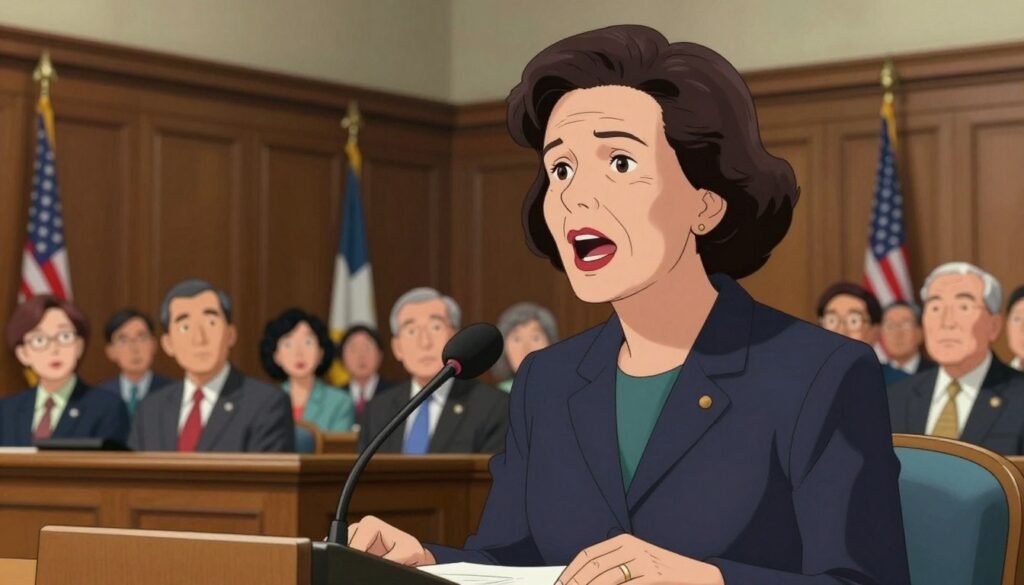
Rachel Carson bravely spoke before the Senate Subcommittee. She pushed for stricter pesticide regulations. This was a key moment in environmental policy in the U.S.
Carson shared her research on pesticide dangers. She stressed the need for rules to protect the environment and health.
The 1963 Senate Subcommittee Hearings
The 1963 Senate hearings were a big chance for Carson. She talked about pesticide regulation dangers. She showed how pesticides harm the environment and people.
Carson faced tough questions but stood strong. Her words sparked a big talk about protecting the environment.
Influencing President Kennedy’s Science Advisory Committee
Carson’s words changed President Kennedy’s Science Advisory Committee (PSAC). They backed her findings. This led to stricter pesticide rules, a big step in environmental policy.
This move put pesticide rules in the national spotlight. It opened the door for more environmental laws.
The Beginning of Federal Pesticide Regulation
After Carson’s speech and the PSAC report, federal rules on pesticides started. This was a big change in U.S. environmental policy. It showed the power of science in government decisions.
These pesticide rules set a precedent for future environmental laws. They inspired many to fight for the environment in the U.S.
Rachel Carson as a Pioneer for Women in Science
Rachel Carson changed how we see the world. She also opened doors for women in science. Her hard work and love for science helped her overcome many obstacles.
Breaking Barriers in Government Agencies
Carson worked in government, where women were rare. She was a star in her field, even with many challenges. Her work in government helped her fight for the environment. You can learn more about Rachel Carson’s life and work on the Rachel Carson Homestead.
Navigating a Male-Dominated Scientific Community
Carson faced a lot of doubt from men in science. But she kept going, showing them her rigorous research and clear writing style. Her way of explaining science to everyone helped her stand out.
Mentorship and Legacy for Future Generations
Carson’s impact goes beyond her science. She inspired many women to follow in her footsteps. Her guidance has encouraged young women to explore and protect the natural world.
| Aspect | Carson’s Achievement | Impact |
|---|---|---|
| Government Agencies | Broke barriers as a woman in a male-dominated field | Paved the way for future generations of women |
| Scientific Community | Earned respect through rigorous research and clear writing | Established herself as a leading voice in marine biology |
| Mentorship | Inspired women to pursue careers in science and conservation | Left a lasting legacy in environmental protection |
Today, Rachel Carson is celebrated for her science and her role as a trailblazer. Her story motivates women everywhere to follow their dreams and make a difference!
The Philosophical Roots of Her Environmentalism
Rachel Carson loved the interconnectedness of life! She saw the world as a big web. We are all part of it, and we must take care of it.
Interconnectedness of All Living Things
Carson showed us how every action affects the world. She said we are not apart from nature. We are a part of it.
She said, “The more clearly we can focus our attention on the wonders and realities of the universe about us, the less taste we shall have for destruction.”
Carson wanted us to see the world as a whole. She said harming one part can hurt many. Her message is to protect our world. Learn more at Online Ethics.
Critiquing the Human Desire to Control Nature
Carson didn’t like when people try to control nature. She said it’s not good and can cause big problems. She said, “The ‘control of nature’ is a phrase conceived in arrogance, born of the Neanderthal age of biology and philosophy, when it was supposed that nature exists for the convenience of man.”
Her words are still true today. They warn us not to be too proud when dealing with nature.
Promoting an Ethic of Stewardship
Carson wanted us to care for the world. She said we should be good guardians of the planet. This way, we can make the future better.
By caring for the world, we can live in harmony with nature. Carson’s ideas still guide us today. She reminds us that our choices today shape tomorrow.
Educational Resources and Modern Learning
As we face growing environmental challenges, the need for environmental literacy is urgent! It’s key to understand the natural world and our impact. This knowledge helps us make choices for a sustainable future.
We see the effects of human actions on the environment more than ever. It’s vital to teach ourselves and future generations. We need to know how to tackle these challenges.
The Importance of Environmental Literacy Today
Environmental literacy means knowing how humans and nature connect. It’s not just knowing facts. It’s using that knowledge to solve real problems. This way, we can manage resources better, fight climate change, and save species.
For example, knowing the water cycle helps us save water. Learning about ecosystems guides us in protecting endangered animals and keeping nature balanced.
Applying Scientific Principles to Modern Challenges
The environmental issues we face today are complex. They need a deep understanding of science. By using science, we can find new ways to solve problems like pollution and climate change.
Ecology helps us fix damaged nature. Knowing about the atmosphere helps us deal with climate change. Learning about the environment also sharpens our thinking. It helps us make smart choices.
Exploring Debsie Gamified Courses for Skill Development
Debsie’s Gamified Courses make learning fun and interactive. They teach about the environment and how to solve today’s problems. These courses use games to make learning easy and fun.
With Debsie’s courses, you can learn more about environmental science. You’ll also improve your critical thinking and apply science to real issues. Check out these courses at https://debsie.com/courses and start learning today!
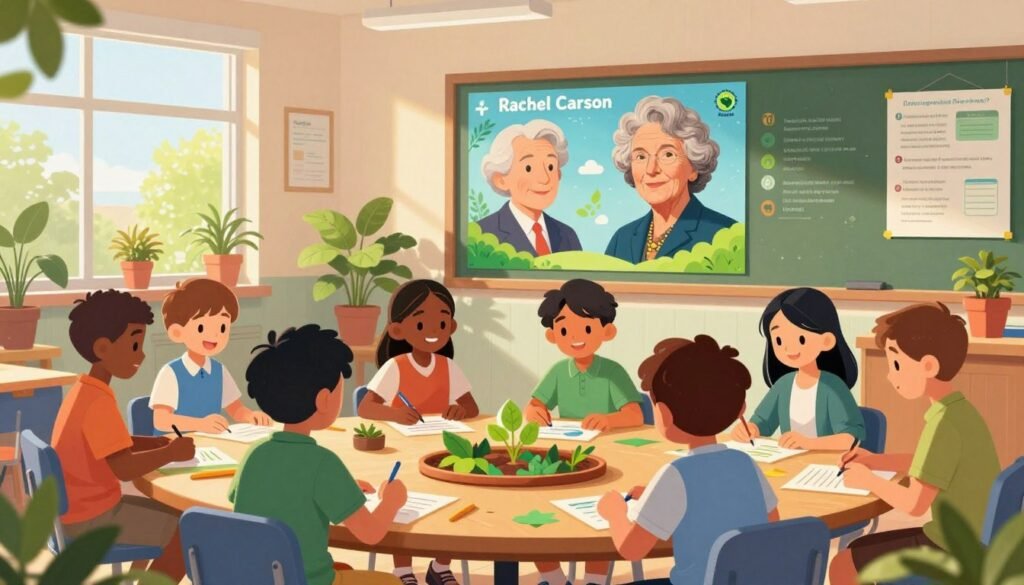
The Lasting Legacy of Her Scientific Contributions
Rachel Carson’s work still affects us today. It shapes our views on protecting the Earth. Her ideas are still guiding us.
Carson’s efforts led to the creation of the Environmental Protection Agency (EPA) in 1970. The EPA helps protect our environment. You can find more about Rachel Carson on the National Park Service website.
Creation of the EPA
The EPA was made because people started caring more about the environment. Carson’s Silent Spring helped spark this concern. The EPA now helps keep our air and water clean.
Global Ban on DDT and Its Consequences
Carson showed DDT was harmful. This led to a worldwide ban on it. Many bird species are now safe again.
- Recovery of bald eagle populations
- Reduction in DDT-resistant pest species
- Increased awareness of pesticide risks
Inspiring Modern Conservation Movements
Carson’s work inspires many today. She reminds us to protect our planet. Her legacy lives on.
Honors, Awards, and Posthumous Recognition
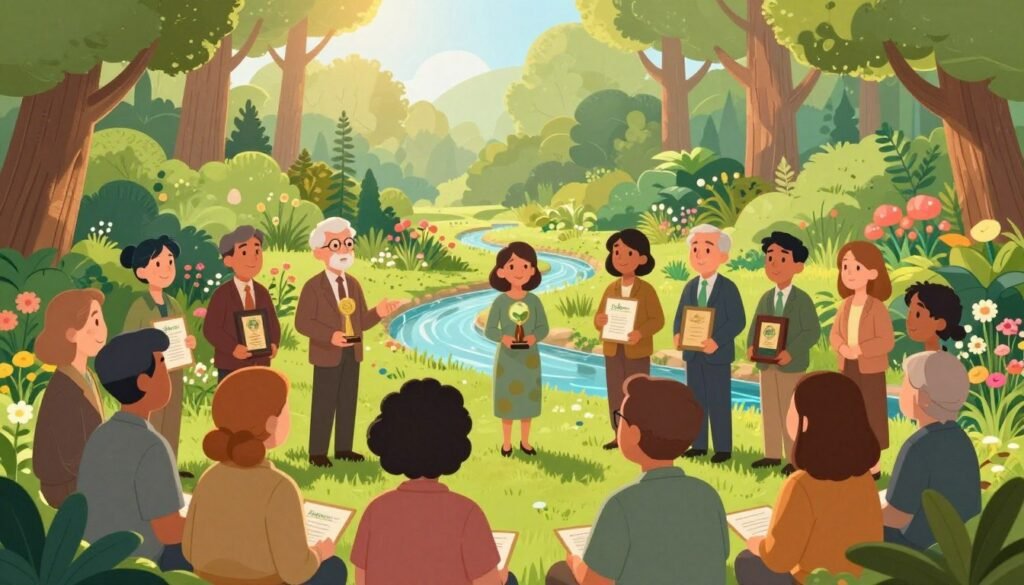
Rachel Carson’s work has won many awards, even after she passed away! Her work in environmental science and conservation inspires many today.
She got the Presidential Medal of Freedom posthumously. This shows how much her work changed environmental policies and awareness.
A Lasting Tribute
Stamps and schools named after her show her lasting impact. These honors celebrate her work and keep her legacy alive for others to learn from.
Enduring Relevance
Rachel Carson’s books are still widely read today. They teach us about the need to protect our environment and how everything is connected. You can learn from her and help make a difference.
Thinking about Rachel Carson’s achievements shows her big impact. Her work helps us understand our world and our place in it. We use her ideas to face today’s environmental challenges.
Conclusion
Rachel Carson’s life and work still inspire many today. Her research and writing started a big talk about saving nature. This talk led to important changes in laws.
Her work shows us how one person can make a big difference. It teaches us to protect our planet’s resources. We can learn from her to make a better future.
We can follow Carson’s dream of living in harmony with nature. Together, we can face today’s big environmental problems. Let’s keep her legacy alive by learning from her and taking action to save our planet.