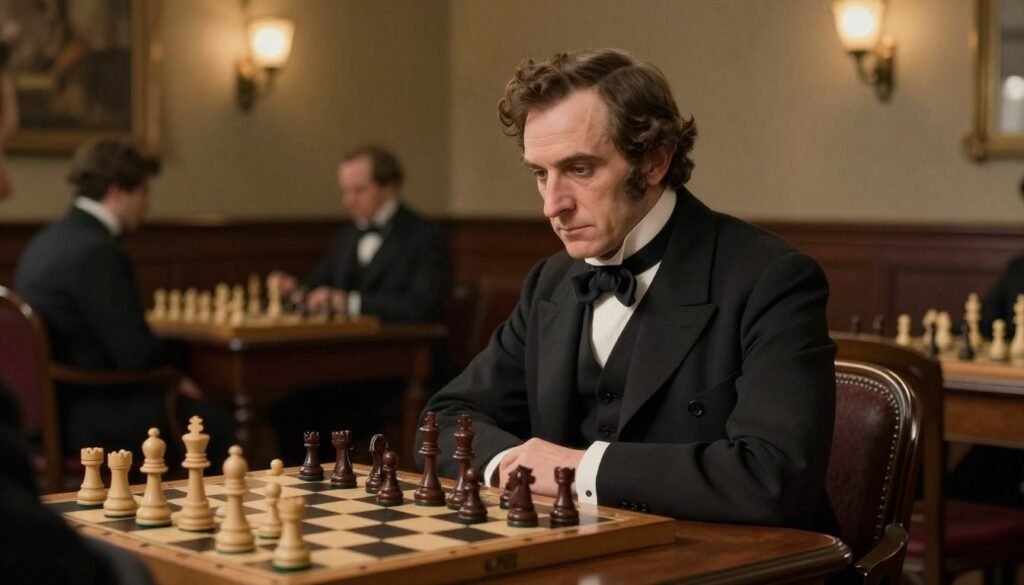
Can one player change how we think about quick, brutal wins in chess? This is the question that follows the name of the man born June 22, 1837, in New Orleans and who died July 10, 1884 in the same city.
We introduce Paul Morphy as the original lightning-bolt of the board. He raced pieces out, opened lines, and finished games in ways that surprised opponents and thrilled fans. By the late 1850s he stood as the world’s greatest chess master. Later writers said he was far ahead of his time.
What can you copy from his play? Fast development. Open center play. Punish slow moves. This piece previews his early life, rise, Europe adventures, famous games, and the hard years that followed.
Families can keep learning with Debsie! If you love quick wins and clear plans, explore Learn Via Debsie Courses: https://debsie.com/courses/ and grow together.
Key Takeaways
- Paul Morphy changed how fast pieces and open lines win games.
- He was seen as the world’s best in the late 1850s.
- His style is useful for beginners who like clear plans and quick mates.
- The article covers life, rise, Europe matches, and later struggles.
- Debsie offers kid-friendly courses to practice these ideas together.
Why Paul Morphy Still Matters in Chess History
The mid‑1800s saw a player whose games read like lessons in modern attack. His pace and clarity changed how the chess world thought about quick wins.
The “unofficial world champion” of the late 1850s
At a time when no formal title existed, top rivals and fans called him the best on Earth. Banquets in Paris and London hailed him as the leading champion. Europe treated him like the de facto world chess champion.
His moves were precise and purposeful. Later greats praised his accuracy.
“perhaps the most accurate player who ever lived,”
This line captures how modern masters view his play.
Quick note: we invite you to learn and grow with Debsie as you study these games!
| Quality | What it taught | Impact on the chess world |
|---|---|---|
| Rapid development | Bring pieces out fast | Short, decisive games |
| Center control | Open lines for attack | Clear plans for players |
| Accuracy | Purposeful moves, not luck | Model for modern competition |
To see more of his life and famous games, read Morphy’s story and check our roundup of chess players who changed the game.
Paul Morphy’s Early Life in New Orleans
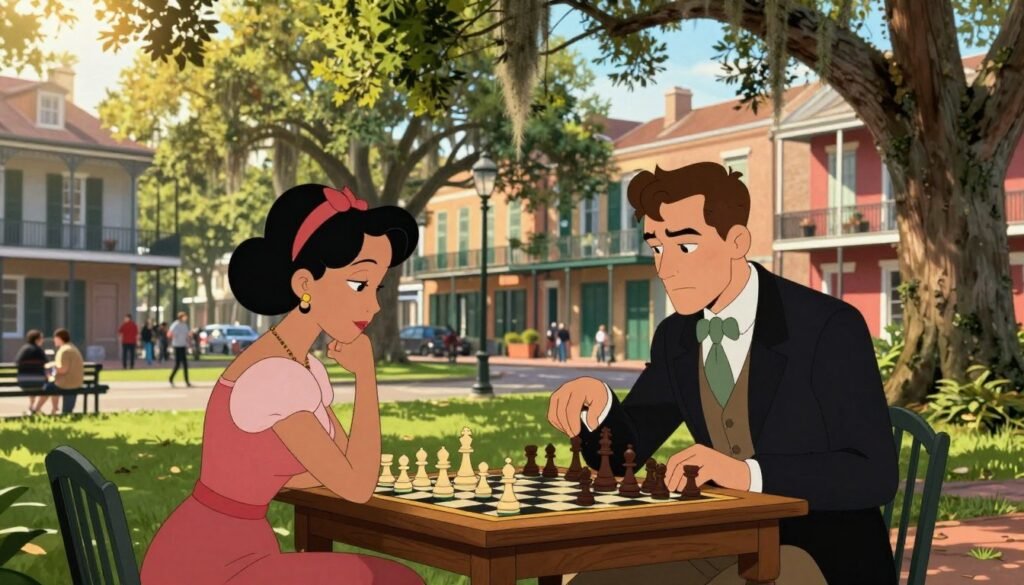
A New Orleans childhood full of music and family gatherings set the stage for a quick, curious mind. Sundays mixed piano, talk, and games. Chess felt like play at home, not a test!
Family, schooling, and the law path
Born into a prominent New Orleans family, his father was a lawyer who later joined the Louisiana Supreme Court. School came first. He earned degrees at Spring Hill College and an LL.B. on April 7, 1857.
Learning by watching
Stories say he learned chess by watching older players. Even if details differ, everyone agrees he copied patterns fast. You can start the same way: watch, ask, and try moves out loud!
Kid‑wow moments
At age 9 he beat General Winfield Scott in a casual game. At 12 he faced the visiting master Johann Löwenthal and held his own. These early wins hinted that a young chess player could become a true master.
You can start young, learn by watching, and still grow fast! For local history on how chess filled New Orleans salons, see when Morphy brought chess mania to New.
From Prodigy to American Chess Champion
A single autumn in New York turned a local prodigy into the clear leading force in american chess.
The First American Chess Congress was a national showdown in Oct–Nov 1857. Sixteen players met in a knockout format. He beat Louis Paulsen in the final and took the title.
The big tournament that mattered
This chess congress felt like a true national test. Winning it made him the recognized chess champion of the united states. Newspapers spread the news and fame arrived fast!
Key rivals and a dominant score
Top united states players lined up. Beating them gave credibility beyond New Orleans.
In regular New York play he posted a strong overall record: 87 wins, 8 draws, 5 losses. That score showed he won by clear margins, not by luck.
Fame without a chess career
Crowds applauded. Yet he called chess a recreation, not a job. He loved the game but avoided a professional career. That choice feels surprising next to today’s pro tournaments.
“Chess should be a recreation.”
We cheer that view! Play, learn, and grow. Later, kids can track progress with the Debsie Leaderboard and join the fun.
See his page as an american chess champion for more games and context.
Europe, Staunton, and the Test of the Chess World
A trip across the Atlantic turned local fame into a public test in great chess halls. Fans wanted a clear answer: could a U.S. star beat the leading European names?
The famous Howard Staunton story reads like a mystery! Letters flew back and forth. Staunton asked for a proper match and required travel. Morphy tried to arrange it. In the end, the big match never happened. The waiting mattered because Staunton was a giant and the match would have settled debate in the chess world.
Paris and London: crowds, blindfolds, and proof
Instead of a formal match, he played top players in cafés and clubs. At the Café de la Régence he beat Daniel Harrwitz. In Paris and London the public cheered loud!
He gave blindfold exhibitions. That means picturing several boards in his head and winning many at once. Often he faced eight opponents simultaneously and still showed brilliant play.
- Why it mattered: public victories proved strength without the Staunton match.
- Where it happened: Paris and London were the perfect place for big applause.
- How to learn: these exhibition games are great pattern practice for young players!
Keep learning! Study classic games and patterns with Debsie Courses to play better and grow together!
The Anderssen Match and Peak Competitive Years
This match felt like the chess world’s boss battle — two giants clashing in winter 1858. Fans called it a true test of top skills and daring ideas!
Adolf Anderssen stood as the era’s top benchmark. Beating him meant the world noticed. The December contest (Dec 20–28, 1858) answered that call.
Adolf Anderssen as the era’s top benchmark
He was the player others measured themselves against. Anderssen set the standard for tactical flair and deep combinations.
What the 1858 match results revealed
Final score: 7 wins, 2 losses, 2 draws. Those numbers make dominance clear and easy to grasp.
The American master played while ill. Still, he kept pressure and controlled openings. Anderssen later praised him as the strongest player ever.
Why the best games ended so quickly
When development raced ahead, positions collapsed fast. Quick piece activity forced errors and led to short finishes. Many games finished in 25 moves or less.
“He controlled openings, sped up development, and kept Anderssen under pressure.”
- Takeaway: rapid development wins initiative.
- Result: early pressure makes the position break quickly.
- Next: we break down the style rules you can copy!
| Aspect | What it showed | Impact |
|---|---|---|
| Match result | 7‑2‑2 in December 1858 | Clear competitive peak |
| Player benchmark | Anderssen as era standard | Win proved top status |
| Quick endings | Fast development, early collapse | Many short decisive games |
For deeper reading on this era and the match, see Paul Morphy.
Fast Development, Brutal Finishes: Morphy’s Style Explained
Fast development and clean tactics made his games feel both simple and deadly. He put development first, got pieces out, and opened lines quickly. That set up sharp, short fights.
Rapid piece activity and open lines
Get knights and bishops out fast. Castle early. Connect rooks. When the center opens, active pieces shine.
Tactical clarity: forced sequences, not random sacrifices
Many sacrifices were forcing moves. Later writers called them “forcing chess moves” and noted the practical logic behind the risk. Fischer praised the accuracy in these sequences.
How slow play was punished
If an opponent wasted time, his attack arrived first. Moving the same piece or grabbing pawns let his forces flood the king.
Practical lessons you can copy
- Rule #1: develop quickly so every piece can play the game!
- Open lines = stronger rooks and bishops.
- Sacrifices should force a win or mate—look for the follow-up.
- When ahead in activity, attack the king without delay.
| Focus | What to try | Why it works |
|---|---|---|
| Development | Bring minor pieces out early | Leads to quick initiative and threats |
| Open lines | Exchange center pawns to free pieces | Rooks and bishops become powerful |
| Forcing moves | Calculate checks and captures first | Reduces counterplay and wins material |
Try these ideas in a lesson! A personalized tutor can walk you through real positions step-by-step. Take a Free Trial Class With a Personalized Tutor and practice the patterns from morphy play. For openings that help fast development, see essential opening knowledge.
The Opera Game and Other Famous Morphy Games
One famous Paris match reads like a little puzzle, ending in a brilliant burst of cooperation among the pieces!
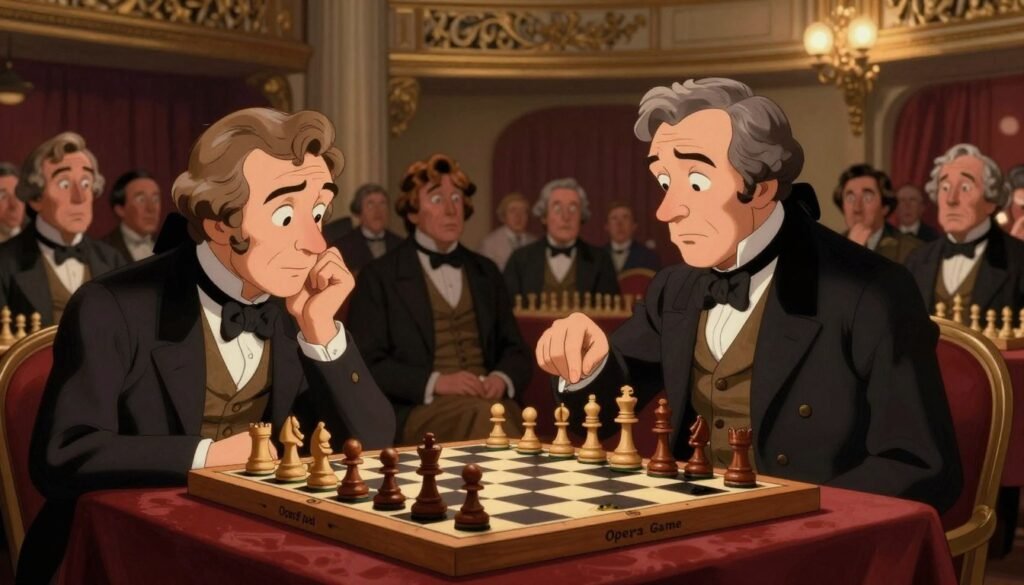
The Opera Game in Paris: a miniature built on tempo and initiative
The Opera Game (Paris, 1858) is a 17-move wonder. Rapid development and a bold queen sacrifice finish the story. Kids love it because the whole game feels like a short riddle to solve.
Common patterns in combinations and mating nets
Tempo means each move does work. Initiative means you keep the threat. Morphy kept one step ahead, so every piece joined the attack.
Spot these patterns:
- Open files for rooks.
- Bishops aiming at the king.
- Knights jumping to attack squares.
“A neat little game that shows how fast play and clear plans win.”
| Pattern | What to look for | Why it matters |
|---|---|---|
| Open files | Rooks enter quickly | Win material or mate faster |
| Piece coordination | Bishops + knights + queen | Create a mating net |
| Tempo play | Every move threatens | Opponent has no time |
These short games are perfect practice. Replay the moves, spot the patterns, and play miniatures with friends! Track progress on the Debsie Leaderboard: track your improvement. For etiquette and match tips, see tournament etiquette.
Even later greats like Garry Kasparov praised such miniatures for their modern feel. Study these games and grow your chess skills fast!
Retirement, Later Life, and Tragic Decline
After the bright lights of Europe, he quietly left top-level play and built a different daily life at home.
Why he stepped away from serious play
He returned to the United States in 1859 and mostly abandoned formal competition.
He often gave odds like a pawn and move and refused matches without them.
This choice surprised the chess world.
Attempts at law and the shadow of fame
He tried to start a law career in New Orleans.
The law practice never took off.
Constant attention and fame made steady work hard.
Reports of illness and retreat
Accounts from the years that followed describe withdrawal and troubling behavior.
Historians note the record is mixed. We speak gently about these reports.
Many sources mention paranoia, social retreat, and growing isolation.
Death and lasting questions
He died on July 10, 1884, in New Orleans at age 47.
The final years remain a sad and debated part of history.
“Brilliance did not erase the need for care, structure, and community.”
For families: brilliance and play go best with balance. If a child struggles, seek help early.
Try a guided tutor to keep learning healthy and fun!
| Topic | What happened | Why it matters |
|---|---|---|
| Competition | Left serious matches after 1859 | Ended a short, brilliant reign |
| Law | Attempted practice in New Orleans | Fame and distractions limited success |
| Later years | Withdrawal and reported illness | History remains uncertain and sensitive |
Conclusion
In just a few years he taught the world that speed and clear plans can end games fast.
Legacy in one line: a brief peak (1857–1859) left an outsized mark on chess history. Later champions praised his accuracy and fierce combinations.
Try this at home: develop quickly, castle, open lines when ready, and hunt for forcing moves like checks and captures.
Replay one short game together and ask, “Which piece joined the attack next?” For deeper study, read a smart profile at the real Paul Morphy and Learn Via Debsie Courses to practice patterns. Want guided help? Try a free trial class with a personalized tutor and build confidence fast!