Ever feel like your best ideas get ignored? Imagine finding something huge, but nobody remembers your name! Many geniuses in history of science felt this way.
We celebrate those who worked hard without getting noticed. These are the scientists who deserve more credit for changing our world! Their stories are full of mystery, grit, and amazing breakthroughs that were hidden too long.
Learning about these underrated geniuses shows us how barriers stop great minds. It highlights why diversity and inclusion are key for future discoveries! Every child can be a hidden hero in their own way.
Ready to start an exciting learning journey? Check out Debsie Gamified Courses at https://debsie.com/courses! Let’s explore these powerful stories and get inspired to change the world!
Key Takeaways
- Discover the brilliant minds that history often pushed aside.
- Understand the obstacles that prevented researchers from receiving fame.
- Learn why diversity makes the scientific community much stronger.
- Find inspiration in the stories of grit and secret inventions.
- Explore how gamified learning makes historical discovery fun!
- See why every voice matters in the search for new knowledge.
The Historical Context of Scientific Erasure
Scientific erasure has been a big problem for a long time. Many pioneers were forgotten or ignored. This isn’t just about forgetting their work. It’s also about prejudice, discrimination, and stealing credit.
For ages, women and minority scientists had a hard time getting recognized. Their work was often given to men or more famous people. This erased their achievements from history.
The reasons for scientific erasure are complex:
- Prejudice and bias against certain groups
- Lack of access to resources and opportunities
- Deliberate suppression or theft of work
Here are some examples of scientific erasure:
| Scientist | Contribution | Reason for Erasure |
|---|---|---|
| Mary Anning | Significant fossil discoveries | Gender and socioeconomic status |
| Rosalind Franklin | Crucial data for the structure of DNA | Gender and lack of recognition |
| Lise Meitner | Discovery of nuclear fission | Gender and collaboration dynamics |
Understanding the history of scientific erasure is key. It helps us see the challenges faced by underrated scientists. By acknowledging these injustices, we can build a fairer scientific community.
The stories of overlooked scientists remind us of the value of all science contributions. This is true, no matter the background or situation of the scientist.
Uncovering the Stories of Underrated Scientists
Let’s explore the amazing stories of underrated scientists. They made big discoveries in their fields. But, they are often forgotten by history.
Many scientists faced big challenges. They were judged by their gender and race. They also didn’t get the recognition they deserved.
Looking at their achievements is key. Many women in science were not given credit. Their male friends got all the praise. This shows why diversity in science is so important.
| Scientist | Contribution | Field |
|---|---|---|
| Alice Ball | Developed the first effective treatment for leprosy | Chemistry |
| Chien-Shiung Wu | Disproved the law of parity, a fundamental concept in physics | Physics |
| Rosalind Franklin | Contributed significantly to the understanding of the structure of DNA | Biophysics |
To learn more about these scientists, check out Oxford Royale’s article. It tells us about the unsung heroes of science.
By sharing their stories, we honor their work. We also show why diversity in science matters. Their tales remind us to make science more inclusive and fair.
Alice Ball and the Treatment for Leprosy
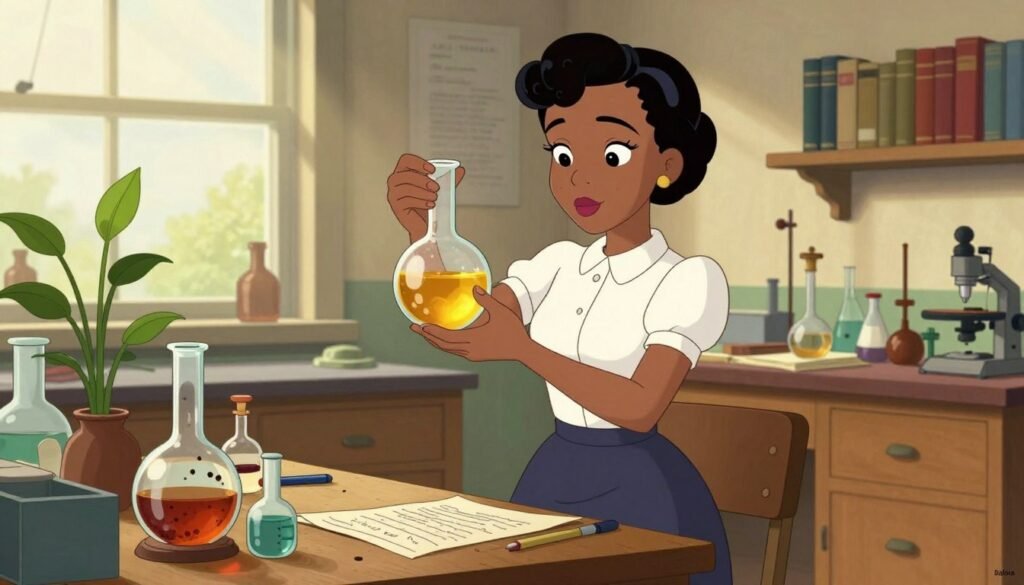
Alice Ball was a trailblazing chemist. She made history by finding the first good treatment for leprosy. Her work saved many lives and opened doors for women in science.
Leprosy, or Hansen’s disease, was a big health problem for a long time. Alice Ball’s “Ball Method” was a big win. You can learn more about her work on Alice Ball’s contributions.
Even though Alice Ball made a big difference, her work was forgotten for a long time. It shows how often women in science are overlooked. Now, we honor her legacy and her impact on medicine.
| Year | Event | Significance |
|---|---|---|
| 1916 | Alice Ball develops the first effective treatment for leprosy | Revolutionized the treatment of leprosy, making it more accessible and effective |
| Early 20th Century | Leprosy treatment was largely ineffective and often inhumane | Highlighting the need for a breakthrough like Alice Ball’s |
| Recent Years | Rediscovery of Alice Ball’s contributions | Recognizing the overlooked work of women in science |
Alice Ball’s story teaches us to value all scientists, no matter who they are. Her work still inspires many today.
Chien-Shiung Wu and the Violation of Parity
Chien-Shiung Wu’s experiment showed that the law of conservation of parity doesn’t always apply. This finding shocked the physics world! Wu was a Chinese-American experimental physicist who worked on the Manhattan Project.
Wu’s biggest achievement was her experiment that showed the violation of parity in weak interactions. This was a big deal because it went against a long-held belief in physics. You can read more about Wu’s life and her 23 Nobel Prize nominations in this article on Physics World.
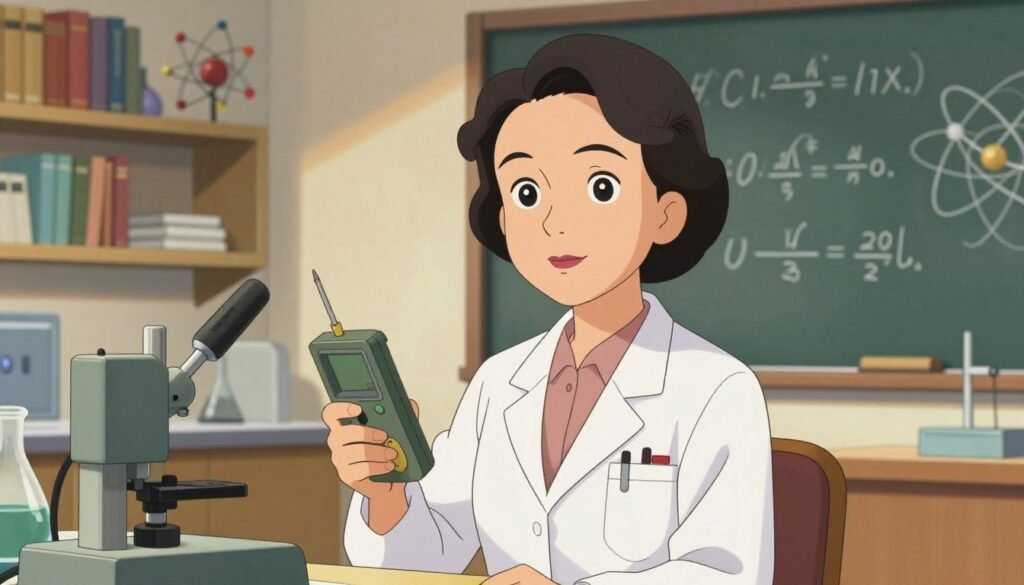
Wu’s work led to many new discoveries in physics. It also inspired many women in science. Her hard work and genius show us the power of never giving up.
Wu’s experiment showed that conservation of parity isn’t always true. This opened up new areas for research in particle physics. Her discovery has greatly changed how we understand the universe.
Rosalind Franklin and the Double Helix
Rosalind Franklin worked at King’s College, London. Her research helped find the double helix shape of DNA. This discovery changed biology forever!
As a chemist and x-ray crystallographer, Franklin was key to understanding DNA’s structure. Her work was very important.
Her famous Photograph 51 was crucial. It helped confirm the double helix structure. Her work was essential to James Watson and Francis Crick’s DNA model.
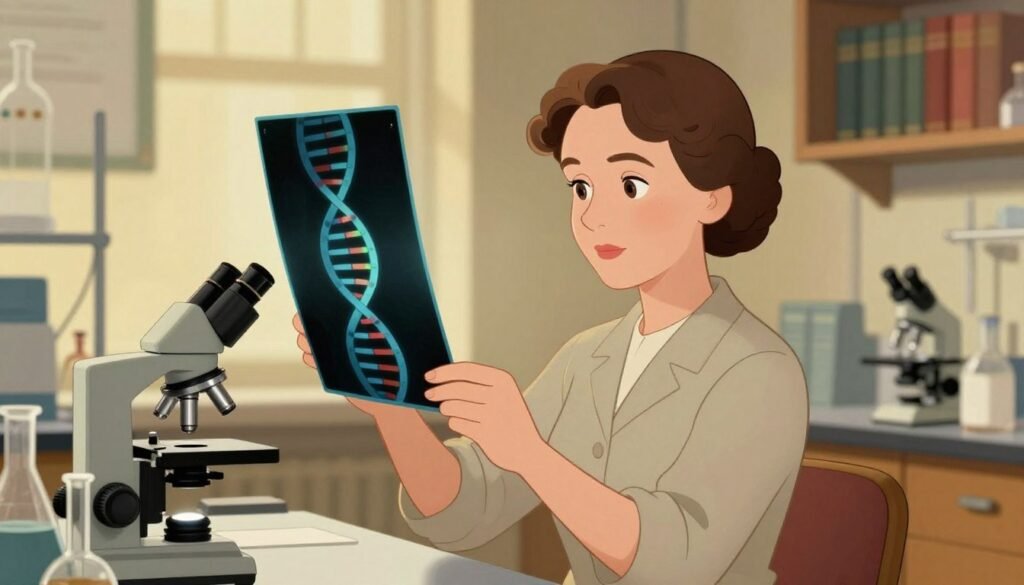
Franklin’s role was often ignored until lately. Now, we see her as a trailblazer for women in science. Her work inspired many.
Some important parts of Franklin’s work are:
- Her skill in x-ray crystallography
- Her high-quality DNA images
- Her data’s role in the double helix model
Franklin’s legacy teaches us to value all scientists. Her story shows the power of hard work and talent. It’s a lesson in the history of science!
Lise Meitner and the Discovery of Nuclear Fission
Lise Meitner was a leading physicist. She was part of a team with Otto Hahn and Fritz Strassmann. Together, they discovered nuclear fission.
Meitner had to leave Berlin because of Hitler. She went to Sweden because she was Jewish. Even from afar, she kept working with her team. Her ideas helped explain nuclear fission.
Nuclear fission is when an atom breaks into smaller parts. This releases a lot of energy. It changed science and technology a lot.
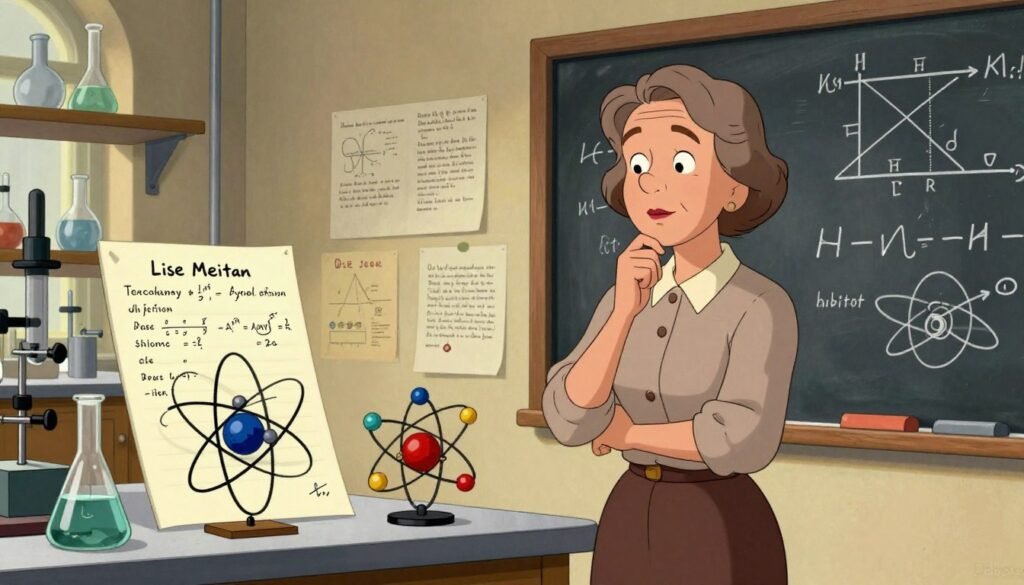
Meitner didn’t get the Nobel Prize for her work. But, her impact on science is huge. She is seen as a key figure in nuclear physics.
| Year | Event | Significance |
|---|---|---|
| 1938 | Lise Meitner flees to Sweden | Continues research despite being forced to leave Germany |
| 1939 | Publication of nuclear fission discovery | Meitner and Frisch publish the first theoretical explanation |
| 1944 | Otto Hahn awarded the Nobel Prize | Meitner is overlooked for the Nobel Prize despite her crucial contributions |
Ignaz Semmelweis and the Importance of Handwashing
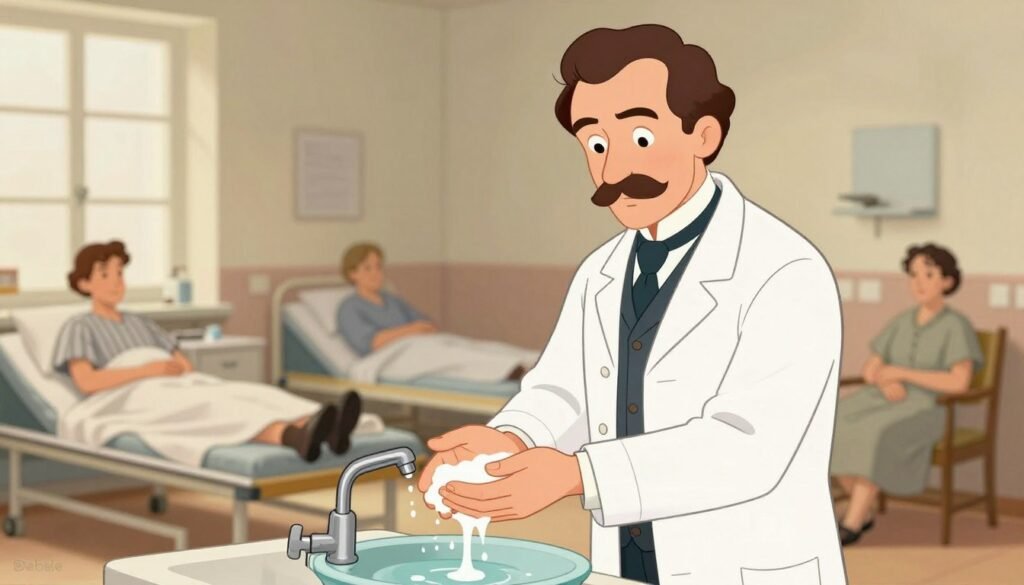
Ignaz Semmelweis was a brave doctor who changed medicine forever! He found out that doctors’ hands were dirty. This made new moms very sick.
Back then, people didn’t believe in germs. But Semmelweis knew handwashing was key. He said doctors should wash hands before seeing patients.
Many doctors didn’t listen to Semmelweis. But he kept telling them to wash hands. His idea saved many lives. Now, we know handwashing is very important.
The Impact of Semmelweis’s Discovery| Practice | Before Semmelweis | After Semmelweis |
|————–|———————–|———————-|
| Hand Hygiene | Rarely practiced | Became standard practice |
| Mortality Rates | High due to infections | Significantly reduced |
| Medical Understanding | Limited understanding of germ theory | Advancements in understanding disease transmission |
Knowing how our bodies fight germs is key. You can learn more at Debsie’s article on the immune system!
Esther Lederberg and Bacterial Genetics
Meet Esther Lederberg, a trailblazer in microbiology. Her work in bacterial genetics led to big steps forward. Her research and hard work show her impact on science.
Esther Lederberg was a key figure in bacterial genetics. Her findings have helped many scientists. Yet, her role is often missed in science history.
She found the lambda phage, a virus that attacks bacteria. This finding opened new paths in studying bacterial genetics and viral infections. Her work also helped us understand how bacteria change and adapt.
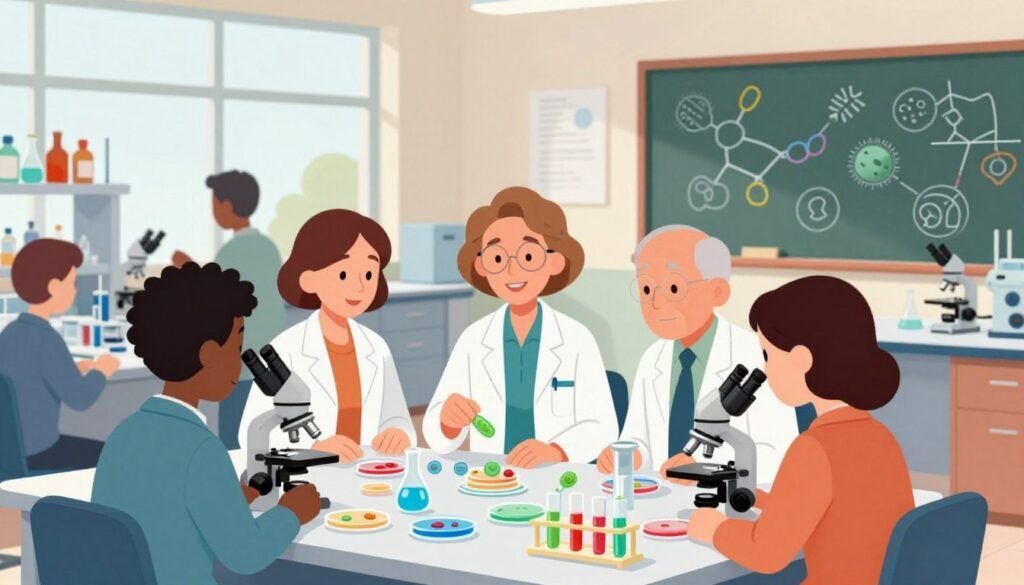
Lederberg’s work helped us learn more about bacterial genetics. It also inspired future scientists. Her hard work and determination are a big inspiration to women in science and all researchers.
Learning about Esther Lederberg shows us the value of all scientists. Her story reminds us to honor all achievements, no matter who made them.
Percy Julian and the Synthesis of Steroids
Meet Percy Julian, a pioneering scientist. His work in steroid synthesis led to many medical breakthroughs! He was an African American chemist who made big contributions to steroid synthesis.
He faced many challenges but kept going. His work on steroids was a big change. He found a way to make steroids, which helped a lot in medicine.
Steroids help with inflammation and hormonal issues. Julian’s method made these treatments cheaper and easier to get. He worked at the Julian Research Institute, where he kept finding new ways to make steroids.
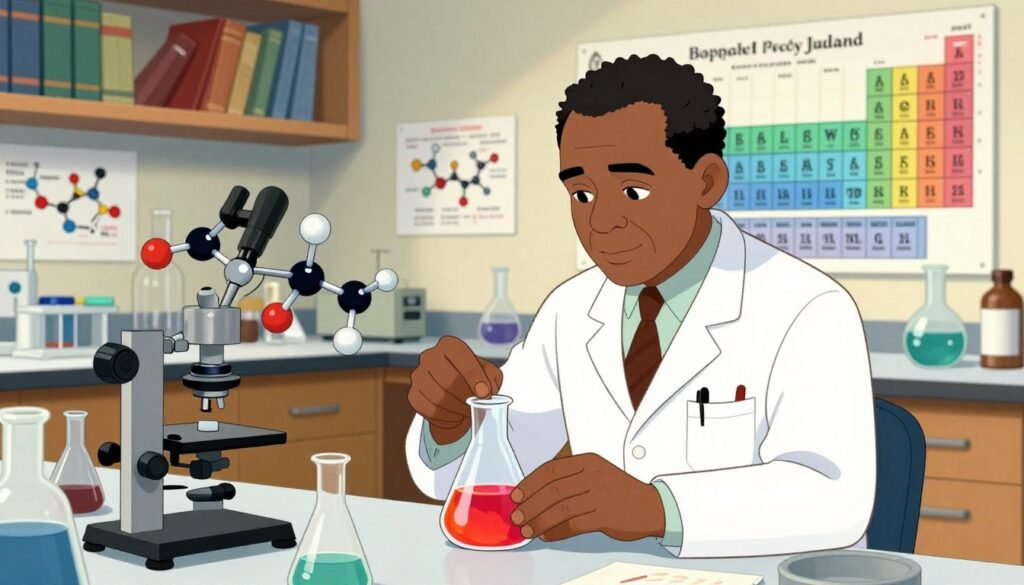
His work helped chemistry grow and showed the value of diversity in science. Julian’s story shows us the power of never giving up and being creative. He is a big inspiration to many.
We celebrate Percy Julian’s work and its big impact. His story shows us the value of diversity in science. It reminds us that everyone’s contributions matter, no matter who they are.
Mary Anning and the Foundations of Paleontology
Mary Anning was a trailblazer in paleontology. She made discoveries that changed how we see the ancient world! Born in 1799 in Lyme Regis, England, Mary grew up in a family of fossil collectors.
She had a keen eye for spotting important finds. Despite being a woman in a male field, Mary Anning made key discoveries. Her finds included the first complete plesiosaur skeleton and important dinosaur fossils.
Her discoveries helped scientists understand prehistoric life. One of her most notable finds was the Ichthyosaurus, a marine reptile from the Early Jurassic period. Her detailed observations and illustrations were crucial for studying extinct species.
Mary Anning’s work inspired future paleontologists. Her legacy shows the power of perseverance and passion in science. To learn more about classifying creatures, visit our article on the animal kingdom.
Garrett Morgan and Life-Saving Innovations
Garrett Morgan was a trailblazer in inventions. He left a big mark with his life-saving ideas! As an African American inventor, he faced many challenges. But he kept going and made discoveries that saved many lives.
Morgan created the gas mask and an improved traffic signal. His gas mask helped rescue miners trapped underground. It showed his skill in solving real-world problems. You can learn more about his work on Scientific American.
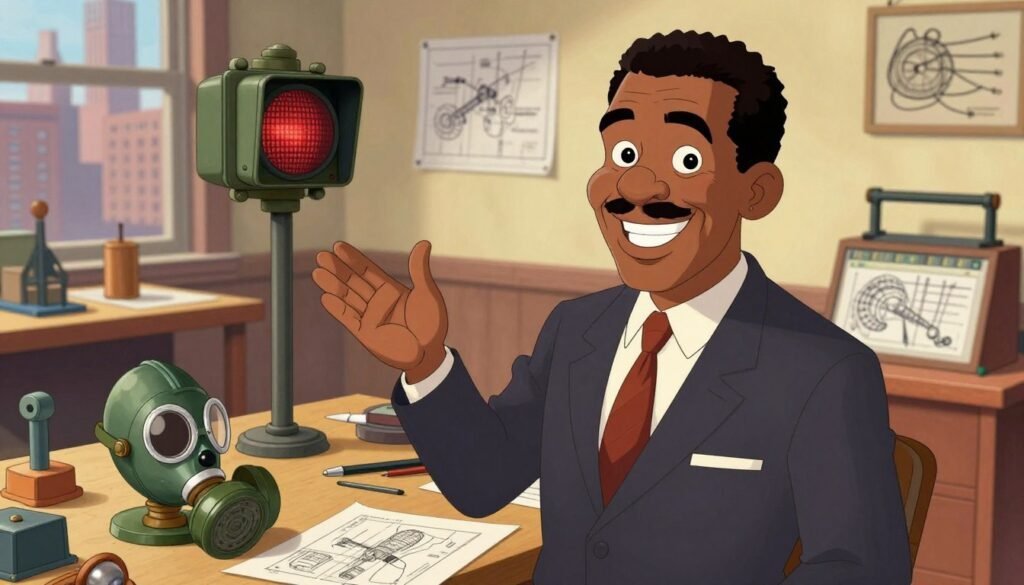
Let’s look at some of Garrett Morgan’s key inventions and their impact:
| Invention | Description | Impact |
|---|---|---|
| Gas Mask | A protective device worn over the face to prevent inhalation of harmful substances. | Saved countless lives during mining accidents and chemical exposures. |
| Improved Traffic Signal | An enhanced version of the traffic light that included a warning signal to prepare drivers for changes. | Reduced traffic accidents and improved road safety. |
Garrett Morgan’s story shows the power of diversity in science. It highlights the need to encourage innovation in all communities. His work still inspires new inventors and scientists!
Cecilia Payne-Gaposchkin and the Composition of Stars
Learn about Cecilia Payne-Gaposchkin, a trailblazing astronomer. She uncovered the secrets of stellar composition!
Cecilia Payne-Gaposchkin was a leading astronomer. She changed how we see stars. Yet, her work is often forgotten. We will look at her story and how it changed science.
In the early 1900s, Cecilia Payne-Gaposchkin changed our view of stars. She found that stars are mostly hydrogen and helium. This was a big discovery that helped start modern astrophysics.

Her work helped us learn more about the universe. It also inspired many women in science. Cecilia’s love for astronomy is an inspiration to all.
By studying stars, Cecilia Payne-Gaposchkin helped us understand the universe better. Her work still guides scientists today. She is a true pioneer in astronomy.
Walter Sutton and the Chromosomal Theory of Inheritance
Let’s explore the amazing story of Walter Sutton. He was a scientist who changed genetics forever! Sutton worked on the chromosomal theory, helping us understand how traits are passed down.
In the early 1900s, Sutton and Theodor Boveri found out chromosomes carry genetic material. This was a pivotal moment in genetics. It showed how chromosomes act in cell division and heredity.
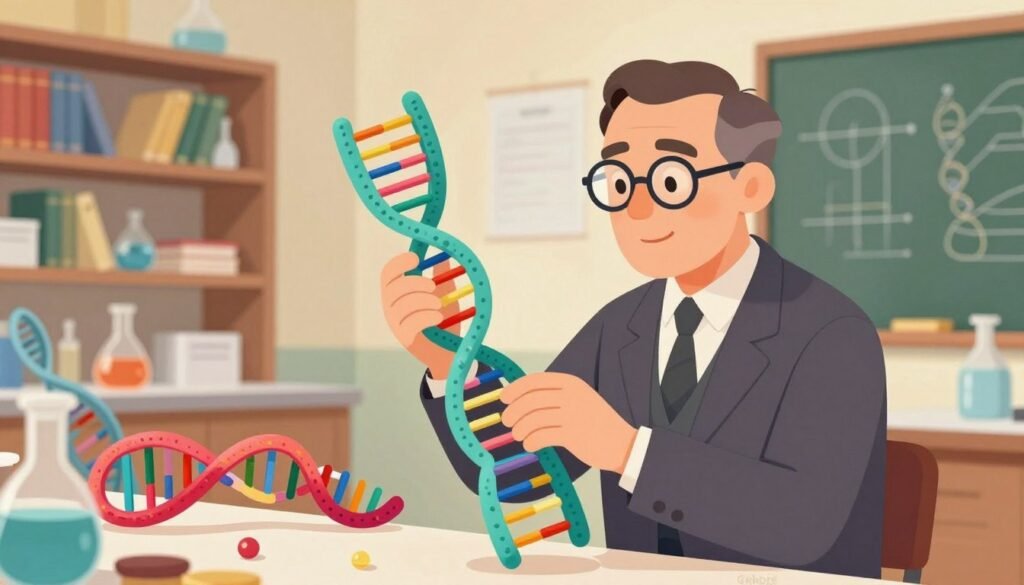
Sutton studied grasshopper chromosomes. He saw how they pair and separate during meiosis. His findings showed chromosomes are key to passing traits.
Some key points from Sutton’s work are:
- The chromosomal theory of inheritance, which says chromosomes carry genetic info.
- He noticed chromosomes pair and then separate during cell division. This showed a physical way for Mendelian genetics to work.
Even though Sutton made big contributions, he wasn’t well-known back then. He’s an example of an overlooked discovery in science. But his work is still important today!
Learning about Sutton helps us see how important chromosomal theory is. It shows the power of science and discovery!
Learning Science Through Modern Gamified Platforms
Modern gamified platforms are changing science education. They make learning fun and interactive. This helps us love science more.
Gamified learning is a big deal. It boosts scientific literacy. Sites like Debsie turn hard science into fun games. This way, learning is fun and you remember it better.
Enhancing Scientific Literacy with Debsie Gamified Courses
Debsie’s courses make science easy for everyone. They mix games with learning. This makes learning fun and keeps you wanting more. Check out their cool courses at https://debsie.com/courses.
Here’s what Debsie’s games do for you:
| Feature | Benefit |
|---|---|
| Interactive Challenges | Boosts problem-solving and thinking skills! |
| Gamified Quests | Makes learning fun, keeping you motivated! |
| Real-time Feedback | Gives quick feedback on how you’re doing, helping you get better! |

Why Interactive Learning Matters for Future Innovators
Interactive learning is key for future innovators. It lets students learn by doing. This helps them understand science better and use it in real life.
So, why is interactive learning so effective? It lets students try things out, be curious, and feel sure about science. This makes them more likely to choose science careers and help make new discoveries!
Systemic Barriers to Scientific Recognition
Systemic barriers stop many scientists from being recognized. They hide their big contributions to science. These barriers hurt not just the scientists but also science itself.
The main barrier is a lack of diversity in science. Some groups have always been missing in science. This means we miss out on many new ideas. Debsie’s gamified learning helps make science more welcoming for everyone!
Bias and stereotypes also block recognition. They influence who gets funding and whose research gets published. For example, women in STEM face big challenges, as shown in a study on gender bias in science.
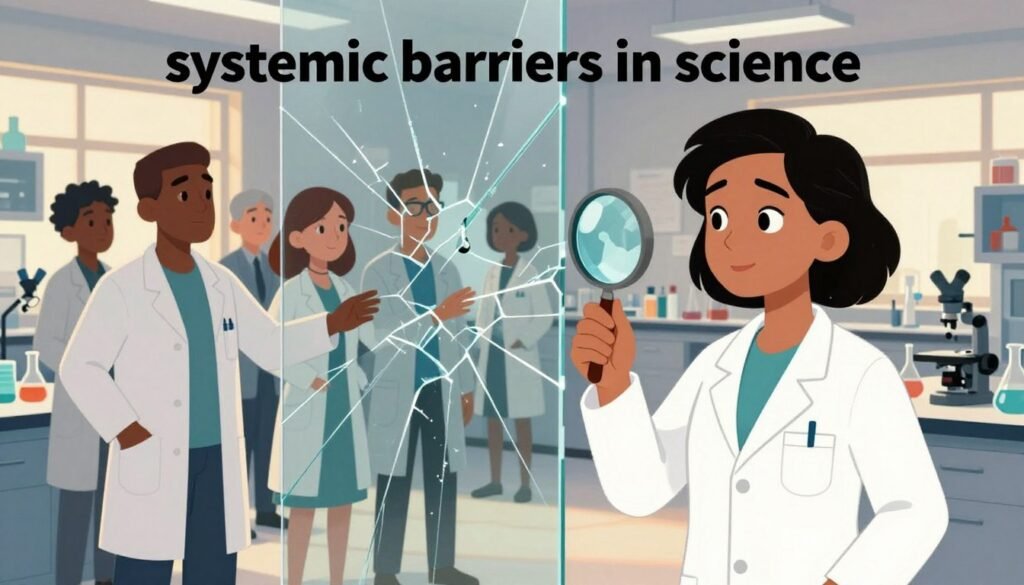
To beat these barriers, we need more diversity and inclusion in science. We can do this in many ways:
- Make policies that help underrepresented groups
- Teach about unconscious bias
- Bring in different views in research and decisions
Systemic barriers have a big effect:
| Barrier | Impact | Potential Solution |
|---|---|---|
| Lack of Diversity | Limited perspectives and ideas | Inclusive hiring practices |
| Bias and Stereotypes | Unequal opportunities and recognition | Training on unconscious bias |
| Limited Funding | Reduced research opportunities | Diverse funding sources |
By tackling these barriers, we can make science more fair and open. We can celebrate all scientists’ work!
Conclusion
It’s important to know about the work of underrated scientists. This helps make science more diverse and fair for everyone. By celebrating their achievements, we learn more about the world.
Think about pioneers like Alice Ball, Chien-Shiung Wu, and Rosalind Franklin. Their work opened doors for new discoveries. You can learn more about science with Debsie’s fun courses at https://debsie.com/courses!
By valuing diversity in science, we encourage new minds to explore. Join Debsie today for a fun way to learn science!