Have you ever looked at the stars and wondered how we know so much about them? It all starts with a spark of curiosity. Imagine being the person who first figured out how gravity works or how to stay healthy.
These famous innovators did not just study old books; they dreamed big and never gave up on their ideas. We are so excited to explore the lives of these brilliant individuals with you! Their work makes our lives better every single day in ways we often forget.
Learning about influential leaders provides a deeper understanding of our modern reality and the power of thought. You can start your own journey of discovery right now! Try out Debsie Gamified Courses at https://debsie.com/courses to find your inner explorer and grow your mind.
We believe that every child has the potential to make a huge impact on our future. Let’s dive into these stories together! It is going to be an incredible adventure full of educational discoveries and surprises.
Key Takeaways
- Discover how curious minds shape our modern world.
- Learn the importance of asking big questions every day.
- Explore groundbreaking discoveries that changed human history forever.
- See how scientific ideas improve our daily lives.
- Start your own adventure with gamified learning tools.
- Understand how grit and persistence lead to huge success.
The Dawn of Scientific Inquiry and Ancient Pioneers
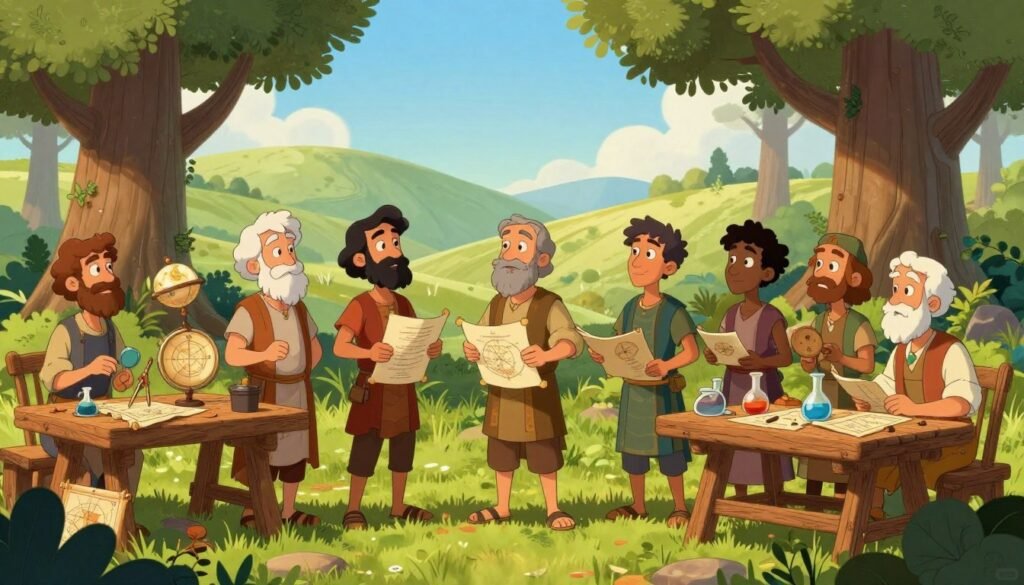
The roots of science go back to ancient times. Visionaries like Aristotle and Archimedes made big impacts!
Ancient Greece was full of curious minds. It was home to some of the most influential scientists in history. Aristotle and Archimedes were two of them. They did work that still shapes science today.
Aristotle and the Foundations of Logic
Aristotle changed science and philosophy a lot. He started logic, a key part of science. His biology work helped set up how scientists study today.
“It is the mark of an educated mind to be able to entertain a thought without accepting it.” – Aristotle
Aristotle loved to observe and reason. He helped create the scientific method. His ideas still help us understand the world.
Archimedes and the Birth of Engineering
Archimedes was a genius in math and engineering. He found new things in geometry and discovered Archimedes’ Principle. These were big steps for his time.
Archimedes also designed new tools like levers and pulleys. His work started modern engineering. It shows how important science is.
| Scientist | Contribution | Impact |
|---|---|---|
| Aristotle | Foundations of Logic, Biological Classification | Shaped scientific methodology and philosophical thought |
| Archimedes | Mathematical Discoveries, Principle of Buoyancy | Influenced modern engineering and physics |
Want to learn more about how these old ideas affect science today? Check out Debsie’s educational platform. It makes hard ideas easy to understand!
Isaac Newton and the Laws of Universal Motion
Isaac Newton changed how we see the universe. His work in physics and math is still important today. It helps us learn more about the world.
Newton shared his ideas in Philosophiæ Naturalis Principia Mathematica. This book is key to understanding his laws of motion and gravity.
The Principia Mathematica
The Principia Mathematica came out in 1687. It’s a big deal in science history. Newton explained how things move and react to forces in it.
“To every action, there is always opposed an equal reaction: or, the mutual actions of two bodies upon each other are always equal, and directed to contrary parts.”
For more on Newton’s laws, check out NASA’s Beginner’s Guide to Aeronautics. It goes deep into these important rules.
Calculus and the Mechanics of the Universe
Newton and Gottfried Wilhelm Leibniz created calculus. It helps us understand change and totals. This math is key in physics, engineering, and economics.
Calculus was a big step in math history. It helps us study and solve complex problems. Today, it’s still a big part of science and solving problems.
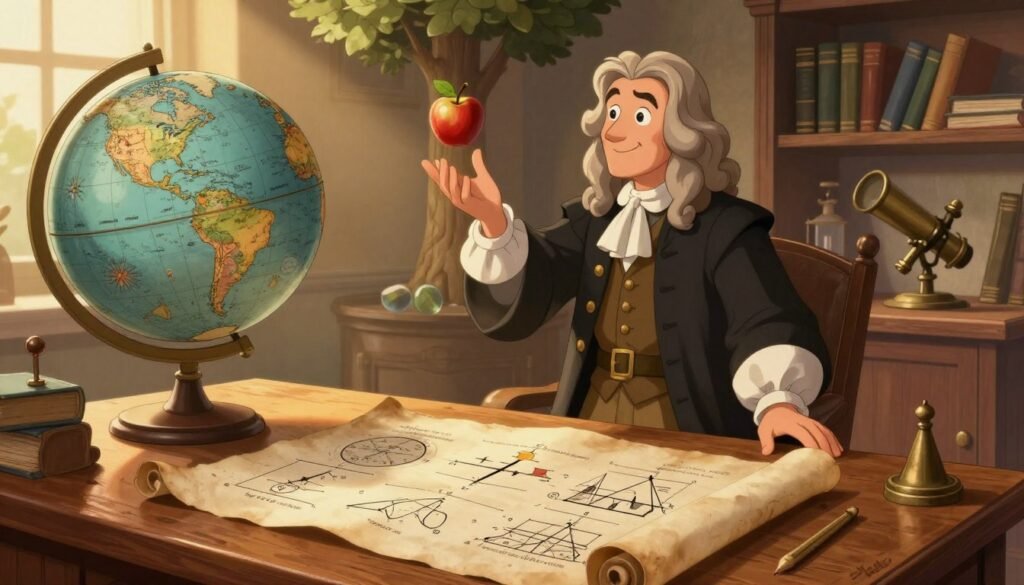
Newton’s work on motion and calculus changed our view of the universe. His laws help us understand how things move. His work is still important today as we keep learning about the universe!
Charles Darwin and the Theory of Evolution
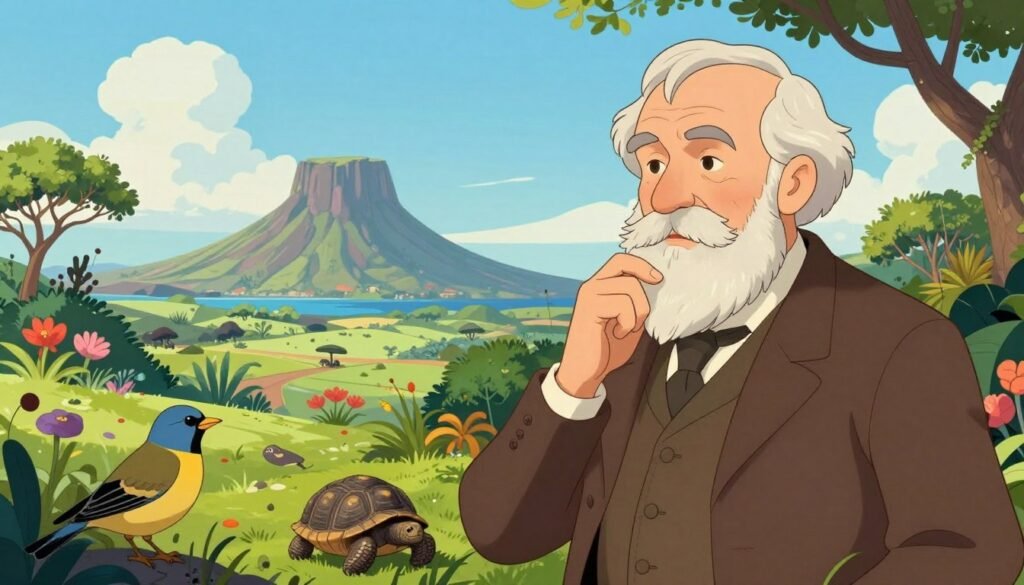
Charles Darwin changed how we see the world with his theory of evolution! He traveled on the HMS Beagle and saw many things on the Galapagos Islands. This helped him create his theory of evolution through natural selection.
Darwin collected many specimens and saw how different life forms were. He noticed finches on different islands had different beak shapes. He thought maybe these differences helped them survive better.
Natural Selection and the Origin of Species
Darwin said that natural selection helps species change over time. He believed that those with good traits are more likely to live and have kids. This idea is in his book, “On the Origin of Species.”
For instance, the peppered moth in England changed from light to dark because of pollution. Dark moths were harder to see on dark tree trunks. This helped them stay safe from birds.
Impact on Modern Biology and Genetics
Darwin’s ideas have changed biology and genetics a lot. They help us understand why there are so many different kinds of life. This has helped fields like genetics and biotechnology.
We now know all living things come from a common ancestor. Their secrets are in DNA. This has led to big steps forward in genetic engineering and gene therapy.
Learning about Darwin’s theory helps us see how all living things are connected. It makes us appreciate life more. It also helps us try to save the planet’s many different species.
Marie Curie and the Discovery of Radioactivity
Marie Curie was always looking for new knowledge. She found out about radioactivity, changing science forever! Her work helped us understand elements better and led to big steps in many fields.
Marie Curie’s work on radioactivity was pioneering. She found polonium and radium with her husband Pierre. This was a big moment in physics and chemistry.
Groundbreaking Research on Polonium and Radium
Marie Curie worked hard on polonium and radium. She processed lots of pitchblende to find these elements. You can read more about her on the Nobel Prize website.
Finding these elements helped us understand radioactivity better. It also led to new research in physics and chemistry. Marie Curie won two Nobel Prizes, one in Physics and one in Chemistry.
Legacy in Medical Physics and Oncology
Marie Curie’s work on radioactivity changed medicine too. Her research helped start radiation therapy for cancer. Now, radiation therapy is a key part of cancer treatment all over the world.
Marie Curie’s work still inspires scientists today. Her discoveries in radioactivity have led to many scientific breakthroughs. They keep influencing research in physics, chemistry, and medicine.
Albert Einstein and the Theory of Relativity
Imagine a world where time and space are not fixed. This is what Albert Einstein’s theory of relativity proposed! You might have heard of this idea. Let’s explore how it changed our view of the universe.
Albert Einstein’s work on the theory of relativity is key in modern physics. It has two main parts: special relativity and general relativity. Special relativity gave us the famous equation E=mc². General relativity showed how gravity warps spacetime.
Redefining Space, Time, and Gravity
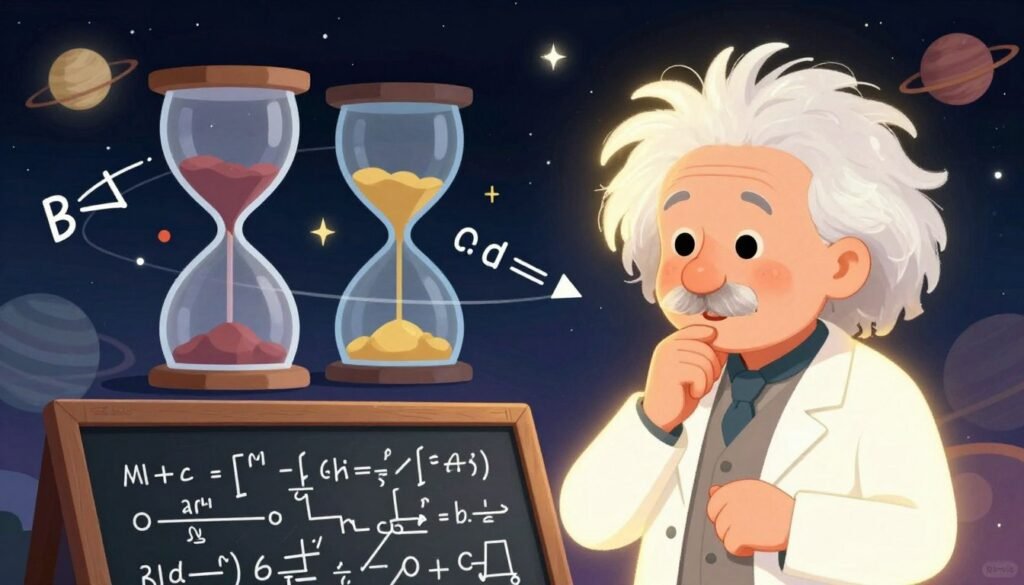
Einstein’s theory changed how we see space and time. According to special relativity, physics is the same for all moving observers. It also introduced time dilation. This means time seems slower for moving observers compared to stationary ones.
General relativity went further. It said gravity is spacetime’s curvature from mass and energy. Think of spacetime as a trampoline. A heavy object warps it, affecting other objects’ motion. This idea helps us understand black holes and gravitational waves.
The Equation That Changed Energy Physics
The equation E=mc² shows mass and energy are the same. They are different forms of the same thing. This discovery changed energy physics a lot. It led to new ideas in nuclear power and our understanding of the universe.
Einstein’s work impacts many fields, from nuclear energy to space exploration. His theory has inspired many scientists. It keeps shaping our view of the cosmos.
Nikola Tesla and the Electrification of the World
Nikola Tesla changed the world with his work. He made modern electrical systems possible. His work still affects how we live and work today.
Tesla’s work on alternating current (AC) was key. AC lets electricity travel far without losing power. This was a big step for the world’s electricity.
Alternating Current and Power Distribution
AC systems made it easy to share electricity everywhere. Tesla’s AC motor is still used today. It’s in many things, like home appliances and big machines.
Tesla said,
“The present is theirs; the future, for which I really worked, is mine.”
To learn more about Tesla’s work, visit the Tesla Science Center. It shows the wide range of his inventions.
Visionary Inventions in Wireless Communication
Tesla didn’t just work on electricity. He dreamed of wireless communication. He even tried to send energy without wires. His ideas helped start radio and more.
Tesla’s work shows how important new ideas are. His work on electricity and wireless tech inspires us today. We keep moving forward because of him.
Louis Pasteur and the Germ Theory of Disease
Louis Pasteur changed how we see disease. His work made medicine better and helped health worldwide.
Pasteurization and Food Safety
Pasteur’s germ theory led to pasteurization. This kills bad microbes in milk and juice. Pasteurization saves lives!
Vaccination Breakthroughs and Immunology
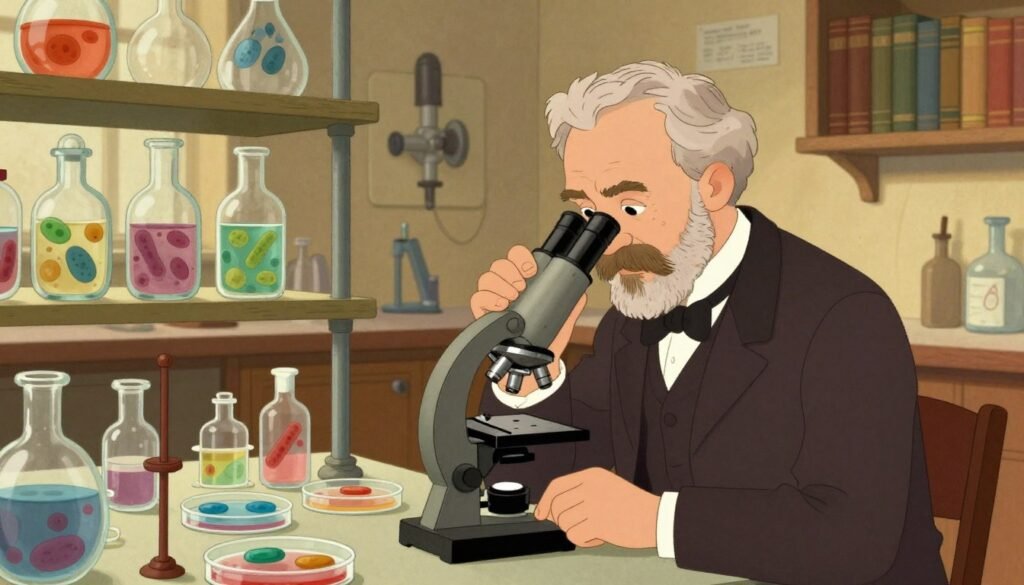
Pasteur helped with vaccines for anthrax and rabies. Vaccines protect us from many diseases. Knowing the difference between viruses and bacteria is key. See here for more.
Pasteur’s work still helps us today. His ideas guide health policies and medical practices. His work is a base for more research in immunology and disease prevention.
Galileo Galilei and the Observational Astronomy Revolution
Galileo Galilei changed how we see the universe. He used a telescope to look at the sky in a new way. This made us question old ideas about space.
Galilei’s work changed our view of the universe. It also helped start modern science. His use of evidence showed how important it is in science.
Challenging the Geocentric Model
Galileo used his telescope to show the geocentric model was wrong. He saw Venus and Jupiter’s moons. This supported the heliocentric model. It changed how we see our solar system.
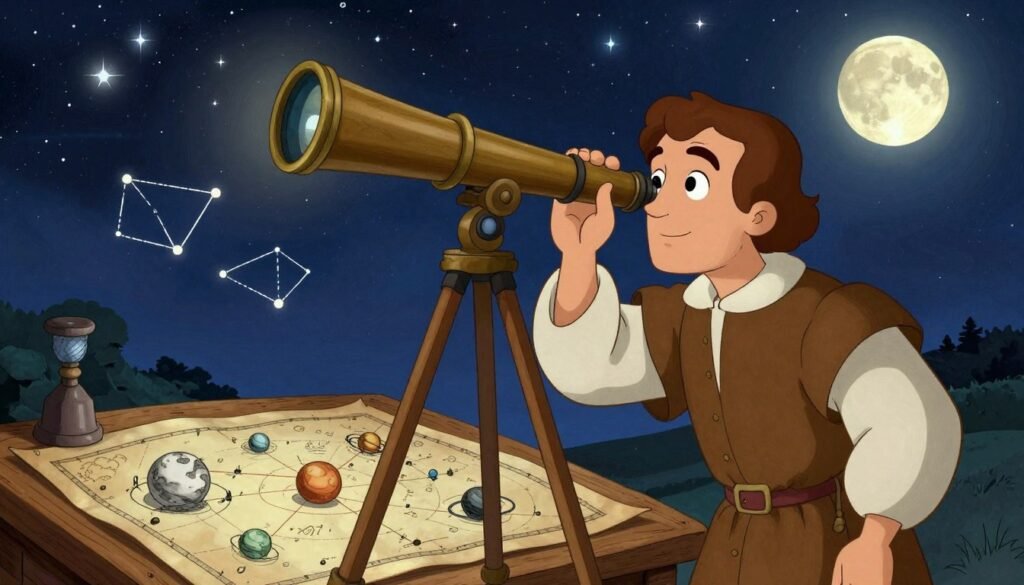
Galilei’s work was very important. It made us think differently about the universe. He showed us the value of observing and experimenting.
The Development of the Scientific Method
Galileo helped make the scientific method better. He said it’s key to observe, experiment, and make laws from evidence. This method has helped us make many discoveries.
Using the scientific method makes sure our findings are real. We owe a lot to Galileo and others like him. They helped us understand the universe better.
Galileo’s legacy reminds us of the power of curiosity and questioning old ideas. His work still inspires scientists today. It encourages us to keep exploring the universe!
Ada Lovelace and the Genesis of Computer Programming
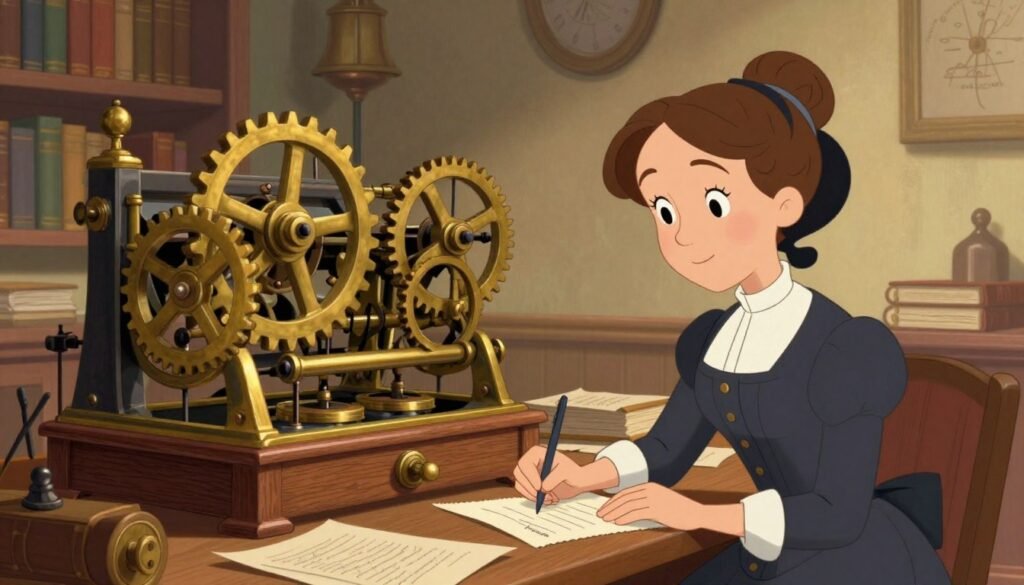
Ada Lovelace is a key figure in computer programming’s history. She worked on Charles Babbage’s analytical engine. Her ideas showed computers could do more than just numbers.
She helped create the first computer program with Charles Babbage. Her notes showed the first machine algorithm.
The Analytical Engine and Algorithmic Logic
Charles Babbage designed the analytical engine. Ada Lovelace worked on it, translating an article by Luigi Menabrea. Her notes were longer than the original.
Ada showed she knew the engine’s true power. She wrote a method for Bernoulli numbers, seen as the first computer algorithm.
Paving the Way for the Digital Age
Ada’s vision for the engine was groundbreaking. She saw it could do anything with rules. This idea came a century before modern computers.
| Key Contributions | Description |
|---|---|
| First Computer Program | Ada Lovelace wrote the first algorithm intended to be processed by a machine (the analytical engine). |
| Algorithmic Logic | Her work demonstrated a deep understanding of the analytical engine’s capabilities and its potential beyond mere calculation. |
| Visionary Thinking | Ada Lovelace envisioned a future where computers could create music and art, not just perform calculations. |
Ada Lovelace’s work still inspires today’s computer scientists. Her vision for the analytical engine’s future is legendary in computer science.
James Clerk Maxwell and the Unification of Electromagnetism
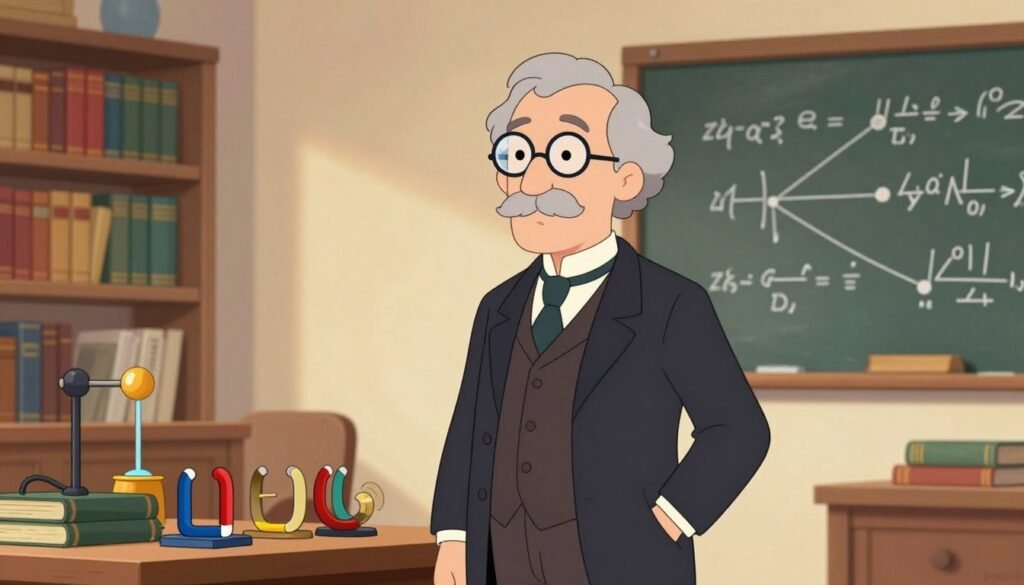
James Clerk Maxwell is a big name in physics. He joined electricity and magnetism into one. This big step changed how we see the world and helped make new tech.
Maxwell didn’t just mix two fields. He showed the world is connected. He proved electricity and magnetism are the same force. This changed how we see light, radiation, and charged particles.
The Significance of Maxwell’s Equations
Maxwell’s equations are four key rules. They explain how electric and magnetic fields work together. They show light is an electromagnetic wave. They also say light travels at a fixed speed.
- They joined electricity and magnetism into one theory.
- They predicted electromagnetic waves, which were found later.
- They helped create many modern techs, like radio and X-rays.
Foundations for Modern Telecommunications
Maxwell’s work is key for today’s communication. Knowing light is an electromagnetic wave helped make fiber optic internet. This lets us send info far and wide.
“The work of James Clerk Maxwell is a shining example of how fundamental scientific research can lead to technological innovations that transform our world.”
We keep building on Maxwell’s work. We explore new things in electromagnetism. We’re always finding new ways to talk and share over long distances!
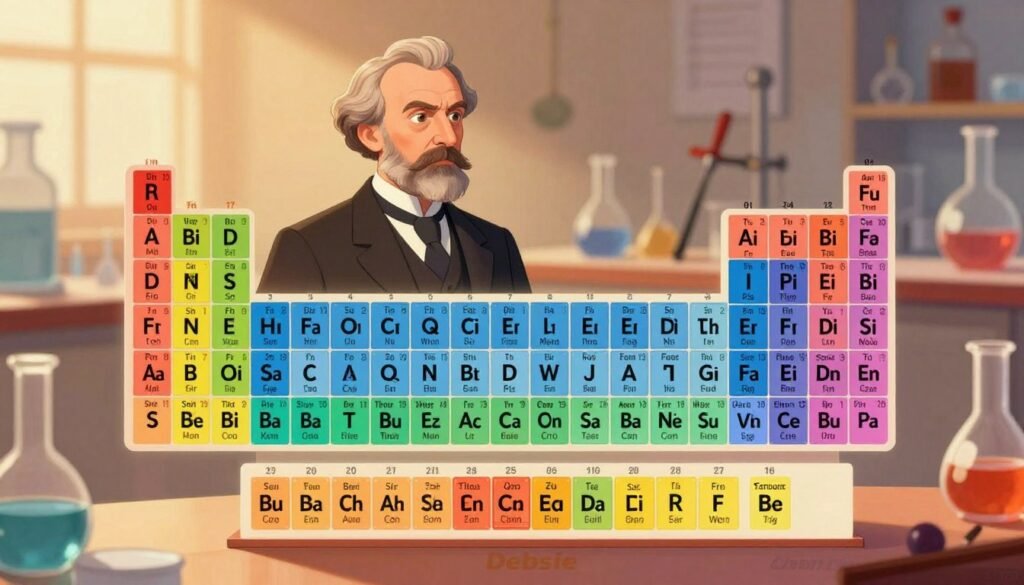
Dmitri Mendeleev and the Periodic Table of Elements
Dmitri Mendeleev was a Russian chemist. He changed chemistry with the periodic table. This tool helps us understand matter’s building blocks.
The periodic table is more than a list. It’s a map showing element relationships and properties. Mendeleev’s work has been key for chemists and scientists.
Organizing the Building Blocks of Matter
Mendeleev’s table showed elements’ trends. This was revolutionary because it showed elements with similar properties recur. They do this at regular intervals when listed by atomic weight.
The table groups elements by properties. This helps us understand their chemical behavior. For example, elements in the same group make similar compounds.
Predictive Power in Chemical Discovery
Mendeleev’s table was great at predicting. He found gaps and guessed elements and their properties. This showed the table’s strength and the order in the universe of elements.
Let’s see how Mendeleev’s guesses worked out:
| Predicted Element | Actual Element | Year Discovered |
|---|---|---|
| Eka-Boron | Scandium | 1879 |
| Eka-Aluminum | Gallium | 1875 |
| Eka-Silicon | Germanium | 1886 |
Finding these elements proved Mendeleev’s table right. It’s still key in chemistry today. It guides research and education all over the world.
The Most Influential Scientists Who Shaped Our Modern Reality
Many scientists have changed our lives with their big discoveries! They helped make the tech we use and the medicines we take. Their work touches many parts of our lives.
Look around and see their impact. Smartphones and life-saving medicines are just a few examples. These scientists have made our lives better in many ways.
Cross-Disciplinary Impacts on Daily Life
Influential scientists have shown us how discoveries connect. For instance, physics helps make new medical imaging tech.
Chemistry advances have led to new materials. These are used in gadgets and medical tools. Their work shows how science affects our daily lives.

How Scientific Progress Drives Human Evolution
Science isn’t just about tech; it’s about understanding us better. Studying genetics and evolution helps us learn about human history. It shapes how we see ourselves.
As we explore science, we innovate and learn more about being human. This knowledge helps us tackle big challenges today and tomorrow.
Enhancing Your Scientific Literacy with Debsie Gamified Courses
Boost your understanding of the world with Debsie’s innovative gamified courses!
We think learning should be fun and engaging. That’s why Debsie uses gamified learning to teach science. It makes hard ideas fun and easy to understand.
Learning Complex Concepts Through Gamification
Gamification is more than just a buzzword; it’s a powerful tool for learning. Debsie uses game design in education. This makes learning fun and helps you remember complex ideas.
Explore Interactive Science Modules at https://debsie.com/courses
Debsie has many interactive science modules for different needs. You can find them at https://debsie.com/courses. Our courses are flexible, so you can learn at your own pace.
Why Gamified Learning Works for STEM
Gamified learning is great for STEM because it:
- Makes hard ideas fun and easy to get
- Encourages you to try things out
- Gives you feedback right away
Getting Started with Debsie Courses
Starting with Debsie is simple! Just go to our website, look at our courses, and sign up for what you like. Our platform is easy to use, making learning smooth.

Join the Debsie community today. Start improving your scientific literacy with our fun courses!
The Ethical Responsibility of Scientific Advancement
Great scientific progress brings big responsibility. We must use our knowledge for good!
As we advance in science and tech, we must think about ethics. Scientists, policymakers, leaders, and the world must work together. They must ensure progress is safe for everyone.
Balancing Innovation with Safety
Innovation is key to human progress. But we must be careful and think ahead. New tech brings big benefits but also risks.
For example, AI and biotech can change healthcare and industry. But they also raise privacy, job, and biosecurity concerns. We need to be careful and make sure everyone benefits.
| Aspect | Innovation | Safety Measures |
|---|---|---|
| AI Development | Enhanced efficiency and automation | Ethical AI design, bias reduction, and transparency |
| Biotechnology | Medical breakthroughs and disease prevention | Strict biosecurity protocols and ethical research practices |
| Energy Technologies | Renewable energy sources and sustainability | Environmental impact assessments and safety regulations |
The Future of Scientific Ethics in Technology
Technology is changing fast, and ethics must keep up. We need to solve today’s problems and think about tomorrow’s. This way, we can make sure tech helps humanity.

The future of ethics in science depends on teamwork. By working together, we can make a safer, fairer world. This way, science and ethics will always go together.
Conclusion
We’ve looked at the lives and work of the most influential scientists. Their discoveries changed how we see the world and the universe. Albert Einstein and Marie Curie are just a few examples.
Their scientific legacy inspires many today. They show us the power of curiosity and ingenuity. These qualities will keep guiding us as we learn more.
We hope you’ll keep exploring science. Learn more about these amazing people. Their work has made a huge difference in our lives.