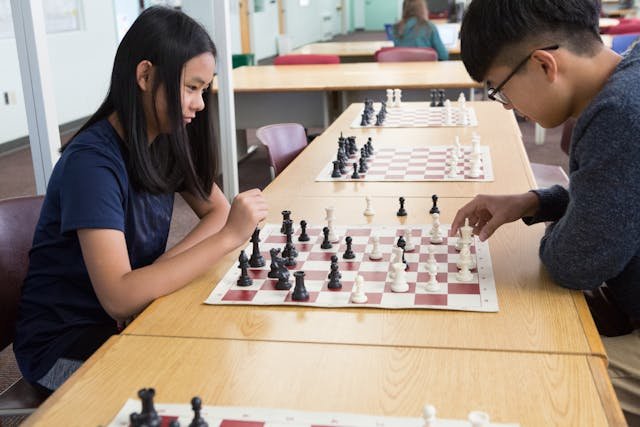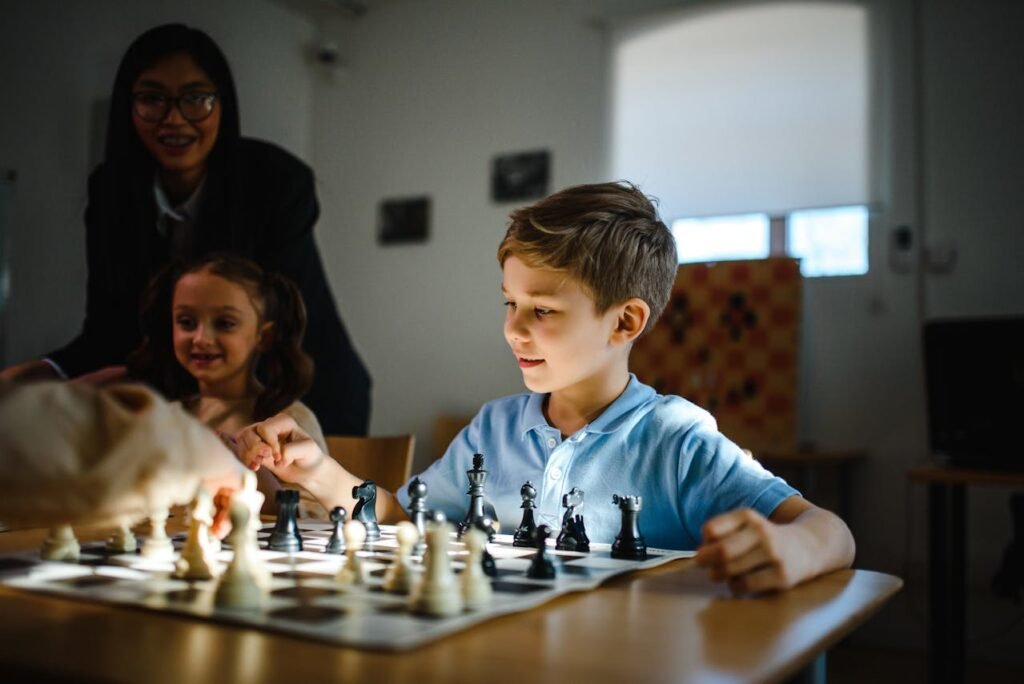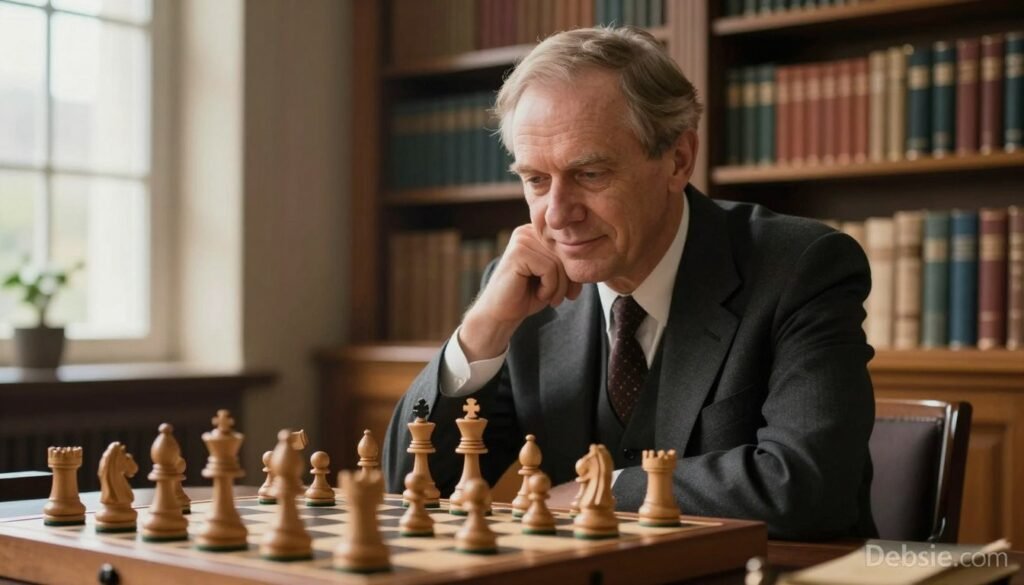
Curious how a mathematician became a world chess champion and taught millions to think clearly? This is the story that shows how calm study and simple steps beat chaos on the board!
Machgielis “Max” Euwe was a Dutch player, author, and administrator. He was the fifth world champion and later led global chess as FIDE president. His life blends study, practice, and teaching.
We’ll meet him and pull out simple lessons for kids and beginners. You’ll see how clear thinking and smart prep help you win more games. We’ll link his habits to easy steps: learn openings, make small plans, and review games without stress.
Follow a fun path with Learn Via Debsie Courses! Try bite-sized lessons and track progress on the Debsie Leaderboard. Families can begin with a Free Trial Class With a Personalized Tutor for a custom plan fast. For deeper study, explore a focused analysis of his play at Master Class Vol. 18!
Key Takeaways
- Study like a scientist: short lessons and steady practice build real skill.
- Focus on clear plans: openings, middlegame ideas, and simple endgame rules.
- Use Debsie Courses for bite-sized progress and the Leaderboard for motivation.
- Parents can support learning at home without being experts.
- Start fast with a Free Trial Class and get a personalized tutoring plan.
Why Max Euwe Still Matters in Chess History
A scientist’s mind met the chessboard, and the result remade competitive preparation. He held the World Chess Champion title from 1935 to 1937 and later served as FIDE president from 1970 to 1978. That rare mix shaped modern thinking about study and planning.
The fifth world champion who reshaped what “preparation” meant
He made homework normal. Players began to study openings, set clear plans, and review mistakes. That approach turned practice into progress.
“Study with purpose, play with confidence.”
A rare legacy: world champion, mathematician, author, and FIDE President
Being a top player and later a president fide gave him influence off the board. He wrote clear books and helped steer world chess policy. That helped build the game for future generations.
- Changed how players view technical preparation and planning.
- Made clear study habits a path to steady improvement.
- Combined playing, teaching, and leadership to grow chess worldwide.
| Role | Years | Impact |
|---|---|---|
| World Champion | 1935–1937 | Proved clear calculation and planning beat chaos |
| FIDE President | 1970–1978 | Guided policy and global growth of the game |
| Author & Teacher | Ongoing | Made study practical for beginners and parents |
You can learn this too! Try structured practice with Debsie Courses and make lessons feel like a map, not a maze. Track progress and stay motivated on the Debsie Leaderboard for friendly goals and rankings!
For a concise biography and more dates, see the detailed entry on history and life.
Max Euwe’s Early Years: Mathematics, Teaching, and a Fast Chess Rise
A life split between chalkboards and chessboards shaped a rapid, focused rise in the game.
From Amsterdam to a PhD in mathematics at the University of Amsterdam
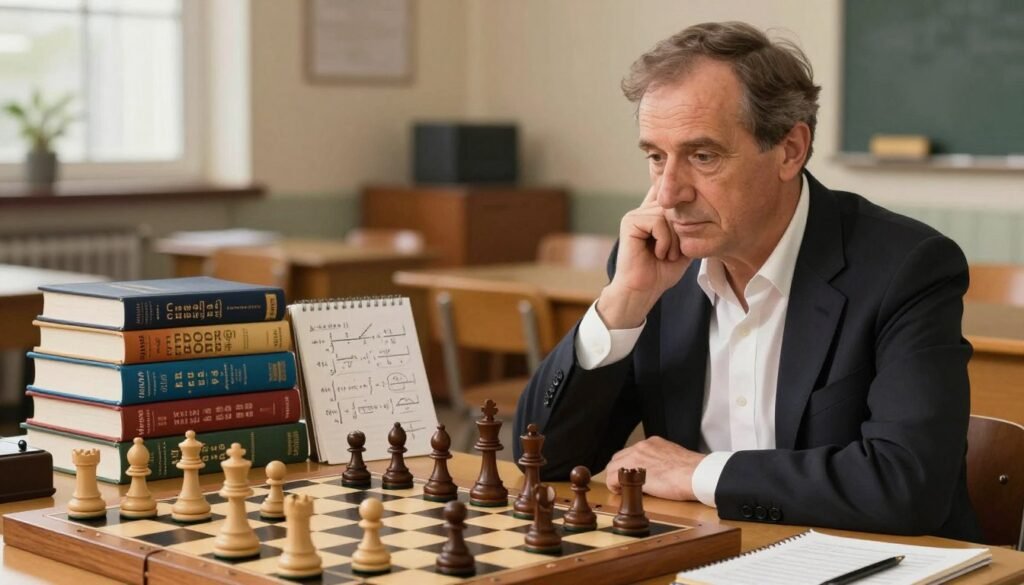
Born in Amsterdam, Max Euwe earned a PhD in mathematics in 1926. He began teaching right away. That training sharpened his logic and habit of careful study.
Early tournament milestones and the world amateur title
He hit major results fast. In 1928 he won the world amateur champion title in The Hague with 12/15. He later collected a record 12 Dutch championships. Those wins proved study beats guesswork.
Balancing family, teaching, and competitive play
Married in 1926, he taught full time. He only played major tournaments during school vacations. That made his progress impressive—he used short, focused practice to grow his career.
| Milestone | Years | Notes |
|---|---|---|
| PhD in mathematics | 1926 | University of Amsterdam; study habits shaped play |
| World amateur champion | 1928 | 12/15 score at The Hague |
| Dutch championships | Multiple years | Record 12 national titles |
Beginner tip: You don’t need endless hours—use smart minutes. Try short opening drills, a few tactics, then review one game slowly.
Need a plan? Debsie is a friendly study buddy! Try short lessons in Debsie Courses and a Free Trial Class With a Personalized Tutor to fit busy family time!
The World Champion Years: Euwe vs. Alekhine, Upset and Return Match
Tournament form and a key win set the stage for one of the most surprising championship matches of the era.
Becoming a credible challenger
He earned his shot by finishing near the top in major events. At Bern 1932 and Zürich 1934 he placed equal second, often just behind Alekhine.
At Zürich 1934 he even beat Alekhine in a key game. That win proved he could match the best players on the board.
The 1935 championship match and the result
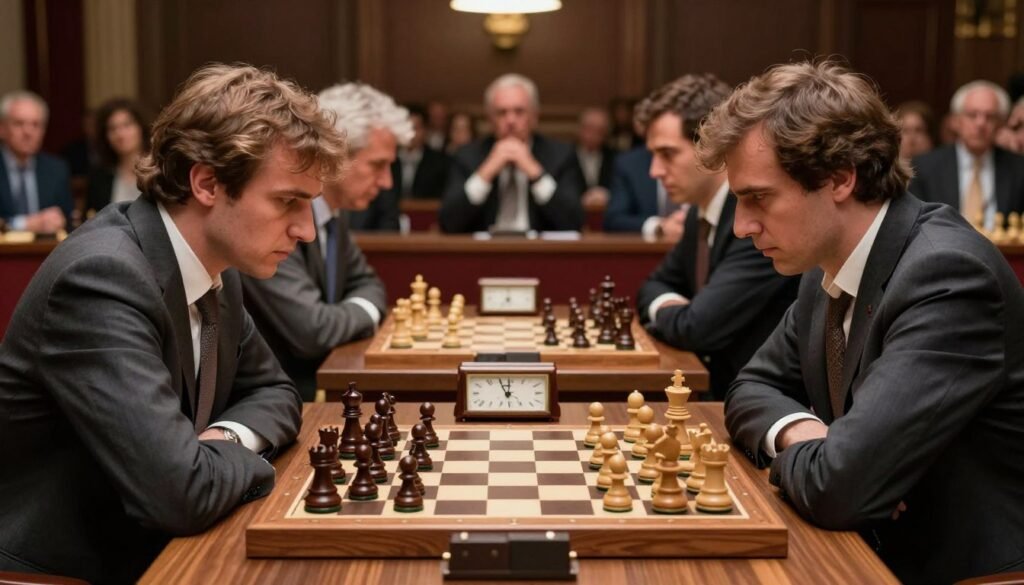
The 1935 championship match stretched across 13 Dutch cities and 80 days. They played 30 games.
The final score was 15½–14½. A narrow result, but a huge change for world chess champion status.
Why the win was more than an upset
This match showed calculation and clear plans. He used steady strategy, not wild attacks. Match strategy beat flash.
Nottingham 1936: proving belonging
At Nottingham 1936 he finished equal third. He stood with top names and proved the championship was no fluke.
The 1937 return match and lessons
The 1937 return match ended 15½–9½. Accounts say he collapsed late; stamina and nerves hurt him. Alekhine prepared intensely.
“A match is a long story, not one game.”
Beginner takeaway: plan your opening, middlegame goal, and endgame target. Don’t just attack or defend.
Want to train for your own mini-match? Try guided opening and endgame drills in Debsie Courses and track friendly practice on the Debsie Leaderboard! Also check a classic tournament list at famous chess tournaments to plan your study games.
| Event | Year | Key fact |
|---|---|---|
| Bern | 1932 | Equal second, finished behind Alekhine |
| Zürich | 1934 | Equal second and a win vs Alekhine |
| World Championship Match | 1935 | 30 games, 13 cities, result 15½–14½ |
| Nottingham | 1936 | Equal third, proved lasting strength |
| Return Match | 1937 | Lost 15½–9½; stamina and prep mattered |
Beyond the Board: FIDE President, World War II, and Chess Politics
After top-level play, he stepped into chess politics to protect the game’s rules and players. In that role he helped steer world chess through rough Cold War years.
Leading FIDE in a tense era
He served as president fide from 1970–1978. The Cold War made contests more than matches. Politics often shadowed events.
Key flashpoints and fairness
The Fischer-Spassky episode in 1972 tested the sport’s standing in world affairs. He worked to keep events fair and to keep the chess calendar alive.
When Viktor Korchnoi sought asylum, player rights were central. He faced pressure from large federations. Still, he pressed for rules that treated players with dignity.
“Rules and fairness keep the game clean—people matter more than trophies.”
- He balanced diplomacy and sport through tense negotiation.
- He defended players’ basic rights when conflicts rose.
- He kept the focus on chess as a positive, global activity.
World War II courage beyond chess
During world war years he worked in food trade. Sources say he arranged transports that aided the Dutch resistance. That shows leadership off the board too.
| Role | Years | Notable challenge |
|---|---|---|
| president fide | 1970–1978 | Cold War tensions; Fischer-Spassky handling |
| Advocate for players | 1970s | Viktor Korchnoi asylum and rights |
| World War II aid | 1940s | Arranged food transports linked to resistance |
Beginner lesson: chess has rules for a reason. Fair play matters. Good leadership protects people, not just titles.
Want a friendly, safe place to practice these values? Join our positive community and track progress on the Debsie Leaderboard! Read more on his life and leadership at a concise biography and explore tense matches at famous intense matches.
Euwe the Scientist: Logical Chess, Books, and Early Computer Chess
He treated chess like a lab: test ideas, record results, and refine the plan. That method made learning calm and repeatable. It helped players think, not panic.
A methodical approach meant simple steps. Learn an opening idea. Name the plan out loud. Practice the endgame rule for the pieces you keep.
A clear teaching style that changed how kids learn
He wrote over 70 books, including practical titles that taught judgment and planning. Those books showed how to judge a position and pick a plan. They taught thinking, not memorization.
Try this at home: before a move, say your plan in one short sentence. It makes mistakes easier to spot!
From professor to computer chess pioneer
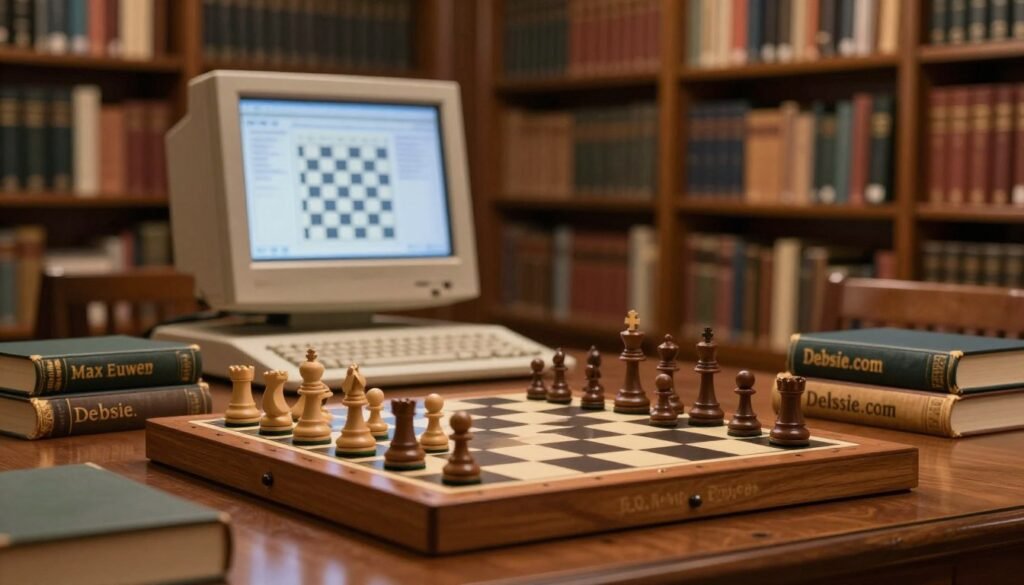
After the war he moved into programming and became a professor in computer-related fields in the 1960s. He worked on early ideas for machines that could mimic a human player.
The “human-style” simulation aimed for fallible, realistic play. He even played and beat the program Chess 3 around 1970 as Black. That showed theory met practice.
- Openings + planning + endgames make study simple and fun.
- Books teach judgment, not just moves.
- Computers can help train by imitating human choices.
| Role | When | Note |
|---|---|---|
| Author | Ongoing | 70+ practical books |
| Professor | 1964 onward | Helped shape early computer ideas |
| Computer chess | 1970s | Played Chess 3 and tested human-style play |
Want a fun, logical plan for your child? Try Debsie Courses for openings + planning + endgames and sign up for a Free Trial Class With a Personalized Tutor for a custom logical chess plan!
For technical readers, see a deeper entry at chess programming.
Conclusion
A simple plan, steady practice, and curiosity defined his chess path.
Key lessons: prepare calmly, think clearly, and build habits that last beyond one tournament. The 1935 world match win and the tough return match show how routine and stamina matter.
Kids and parents: pick one opening, play slow games, and review a single key move after each game. Treat each play as a small experiment.
Ready to start? Learn via Debsie Courses, track progress on the Debsie Leaderboard, and book a Free Trial Class With a Personalized Tutor now!
For a concise bio and match details see Max Euwe. If a scientist-champion could rise this way, you can, too—one calm step at a time!