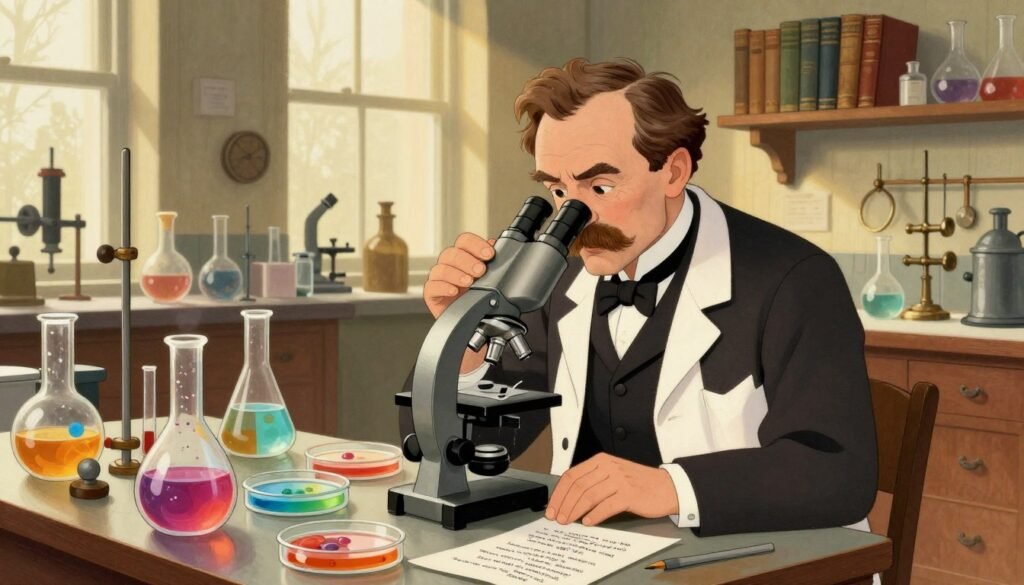
Imagine a world where drinking fresh milk was risky. We want our families to stay safe and healthy. It’s amazing how one person’s curiosity can change the world.
He was born on December 27, 1822, in Dole, France. This hero was a brilliant chemist and pharmacist. We’re excited to share his story with you!
His work helped create modern medicine and public health safety. His Louis Pasteur discoveries saved millions by teaching us about germs. He showed us how vaccines and fresh food keep us strong.
You can start exploring science adventures now! Try Debsie Gamified Courses at https://debsie.com/courses. Let’s play, learn, and grow together!
Key Takeaways
- Born in Dole, France, in 1822 to a hardworking family.
- Worked as a chemist to solve major global health problems.
- Invented the process of heating milk to make it safe to drink.
- Proved that tiny microbes are the cause of many common illnesses.
- Developed the first laboratory-made vaccines to protect people and animals.
- Saved the French silk industry by studying how diseases affect silkworms.
The Early Life and Academic Foundations of Louis Pasteur
In the town of Arbois, a young Louis Pasteur started a journey that would change science and save lives! He was born to a poor tanner family. Louis was the third child of Jean-Joseph Pasteur and Jeanne-Etiennette Roqui. He loved fishing and sketching from a young age.

Formative Years in Arbois
Pasteur grew up in Arbois. He was more into art than school at first. But, his teachers pushed him to study hard. Here’s what made his early years special:
- He went to secondary school at the Collège d’Arbois.
- He was good at drawing and painting.
- He didn’t do great in school at first.
Academic Pursuits in Paris
When Pasteur went to Paris for school, his life changed. It was there that he improved his studies and started his scientific journey. Some important moments in his Paris days were:
- He studied hard in Paris.
- He met famous teachers who helped him.
- He learned a lot about science.
These early steps and studies helped Louis Pasteur become a famous scientist. He made groundbreaking discoveries that helped science and people.
The Breakthrough Discoveries of Louis Pasteur
Louis Pasteur made big discoveries in chemistry and biology. His work helped us understand many things. It also led to big steps forward in medicine and industry.
Molecular Asymmetry and Crystallography
Pasteur started as a chemist. He looked at tartrates’ chemical and crystal properties. He found out about molecular chirality, which is very important.
This discovery changed chemistry a lot. It helped in pharmacology and biochemistry too.
Pasteur also worked on crystallography. He saw crystals with special faces. These faces showed that molecules can be different in shape.
The Study of Fermentation Processes
Pasteur found out that tiny living things cause fermentation. This was a big discovery. It helped us understand diseases better.
His work changed medicine a lot. It still helps save many lives today, as an article on Louis Pasteur’s work shows.
Let’s look at some key parts of Pasteur’s research:
| Aspect | Description | Impact |
|---|---|---|
| Fermentation Cause | Microorganisms were found to be responsible for fermentation. | Understanding the role of microbes in disease. |
| Process Control | Pasteur developed methods to control fermentation. | Improved industrial processes, such as beer and wine production. |
| Disease Connection | The link between microorganisms and disease was established. | Advancements in medicine and public health. |
Pasteur’s work showed us how important tiny living things are. His discoveries helped us fight diseases better.
The Invention of Pasteurization
Louis Pasteur saved the French wine industry with pasteurization. This method heats liquids to kill bacteria and mold. It’s a big deal for keeping food safe.
Saving the French Wine Industry
The French wine industry was in trouble because of spoilage. Louis Pasteur was asked to help. He used his knowledge of tiny living things to create pasteurization.
This method heats wine to kill off bad bacteria and mold. It made the wine last longer and saved the industry.
Applying Heat to Eliminate Pathogens
Pasteurization is easy but very effective. It heats liquids to kill off bad stuff. This method is used in many places, like wine, beer, milk, and juice.
It makes products last longer and safer to eat.
| Product | Before Pasteurization | After Pasteurization |
|---|---|---|
| Milk | 1-2 days | 7-10 days |
| Wine | Spoils easily | Lasts for years |
| Juice | 1-3 days | 7-14 days |
Germ Theory: A Paradigm Shift in Science
The germ theory is key to modern medicine. Louis Pasteur’s work helped a lot. It changed how we see diseases and led to big steps in health care.
Challenging Spontaneous Generation
Pasteur said no to the old idea that life comes from nothing. He showed that tiny bugs cause many sicknesses, not magic. Learn more about viruses and bacteria to get it.
He used swan-neck flasks to prove his point. He showed that broth stays clean unless air with bugs gets in. This was a big win for the germ theory!
Proving Microorganisms Cause Disease
Pasteur’s work showed that tiny bugs make us sick. His ideas started modern science on microbes and how to stop sickness. For more on the germ theory, check out this link.
Let’s see how Pasteur’s work changed things:
| Discovery | Impact |
|---|---|
| Disproof of Spontaneous Generation | Proved that tiny bugs cause many sicknesses |
| Evidence for Germ Theory | Helped start new ways to keep people healthy |
| Advancements in Microbiology | Helped make vaccines and treatments for many diseases |
Pasteur’s work changed health care a lot. Knowing that bugs cause sickness helped us make better treatments. This has made people healthier!
Advancements in Vaccine Development
Pasteur’s work in vaccine development was a big step forward! He found new ways to fight diseases. His work helped make vaccines for many diseases.
He made a big discovery with the chicken cholera vaccine. Let’s look at how he did it.
The Chicken Cholera Experiment
Pasteur started working on the chicken cholera vaccine by accident. He left some cholera cultures out too long. When he used them, they were not deadly anymore. Instead, they helped chickens stay safe from the disease!
This finding was a big deal. Pasteur learned that weakened microbes could be used for vaccines. This was a new way to make vaccines.
Developing the Anthrax Vaccine
After his success with the chicken cholera vaccine, Pasteur worked on the anthrax vaccine. He used the same idea of weakened microbes.
The anthrax vaccine worked well in tests. This showed Pasteur’s hard work and dedication. It also saved many lives. Pasteur became a leader in vaccine science.
Pasteur’s work in vaccine development changed health forever. His ideas still help scientists today.
The Historic Rabies Treatment
Louis Pasteur created the rabies vaccine. This was a big step in medicine. It saved many lives and made Pasteur famous in vaccine history.
The Case of Joseph Meister
Joseph Meister was bitten by a rabid dog. He was just a young boy. On July 6, 1885, Joseph Meister was brought to Pasteur.
Pasteur was worried about trying the vaccine on a human. But he decided to do it anyway.
“The death of this child appearing to be inevitable, I decided, not without lively and cruel doubts, as one can believe, to try on Joseph Meister the method which had constantly succeeded on dogs.” – Louis Pasteur. This was a big moment in medicine.
Global Impact on Public Health
Joseph Meister’s treatment was a big win for health worldwide. It saved lives and helped more vaccine research. Today, rabies vaccination is a standard practice worldwide.
Pasteur’s work on the rabies vaccine was a pivotal moment in the history of medicine. It showed how science can solve real health problems.
Improving Surgical Hygiene and Antiseptics
Louis Pasteur’s work changed many fields, including surgery! His discoveries changed how we see disease. They also made medical practices better.
Influencing Joseph Lister
Joseph Lister, a British surgeon, was inspired by Pasteur. He saw how germ theory could help surgery. Lister used carbolic acid to cut down infections after surgery.
Lister’s work came from Pasteur’s research. This shows how science can help many fields. By knowing about germs, surgeons could fight infections better.
Reducing Post-Operative Infections
Antiseptics made surgery safer. Before, infections were a big problem after surgery. Pasteur’s ideas helped make surgeries cleaner and safer.
Antiseptics became common in surgery. This followed the idea of keeping clean, like using soap. You can learn more about soap in our article on the chemistry of soap.

Pasteur’s work greatly improved surgery. It saved many lives and helped medical science grow. Today, we keep improving thanks to Pasteur and Lister.
The Legacy of Pasteur in Modern Food Safety
Today, we have safer food and dairy thanks to Pasteur. His invention of pasteurization is key. It kills harmful germs in dairy products.
Milk Pasteurization Standards
Pasteurization heats liquids hot for a bit, then cools them fast. This kills germs that make us sick. In the U.S., milk must be pasteurized before we buy it.
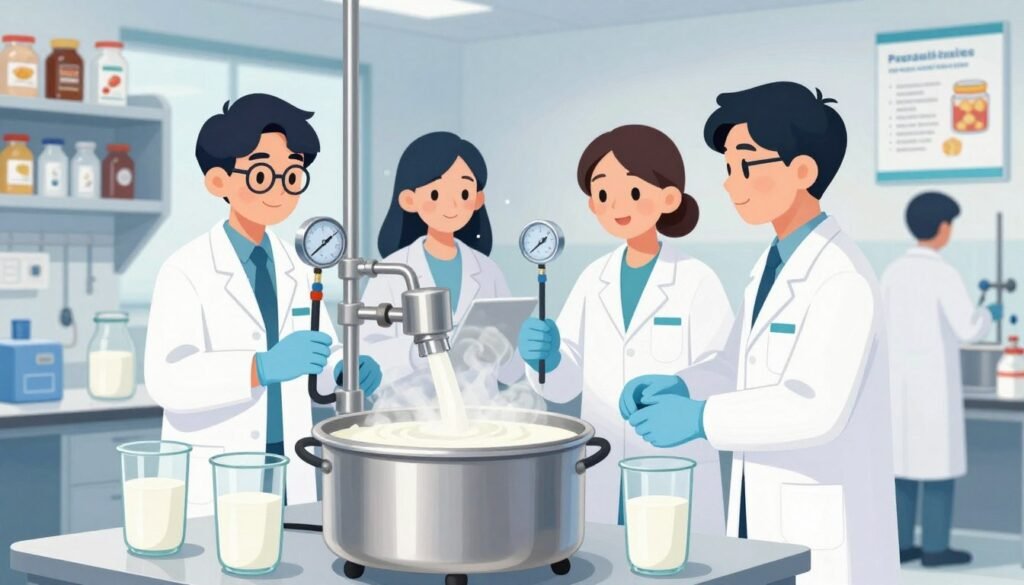
Today’s pasteurization is better than before. It keeps dairy products safe and tasty. You can trust the safety of milk, cheese, yogurt, and ice cream.
Global Food Preservation Techniques
Pasteurization’s ideas help keep food safe worldwide. Food makers use UHT and HPP to keep food fresh longer. These methods let us enjoy many foods all year.
Thanks to Pasteur, we have safe food from everywhere. His work changed the food world for the better.
Educational Resources for Scientific Learning
Explore the fascinating world of science with Debsie’s gamified learning! Debsie has many educational resources. They make learning about science, like Louis Pasteur’s discoveries, fun and interactive.
Enhancing Knowledge Through Debsie Gamified Courses
Debsie’s gamified courses help you remember what you learn. They make hard science topics easy to get. By using games in learning, Debsie makes science fun and interactive.
Why Gamified Learning Works for Science
Gamified learning is great for science because it:
- Simplifies complex concepts through interactive simulations and games!
- Encourages active participation, making learning a fun, hands-on experience!
- Provides instant feedback, helping learners track their progress and understand their mistakes!
Exploring Courses at https://debsie.com/courses
Visit https://debsie.com/courses to find many science courses. You can learn about Louis Pasteur! Debsie’s courses are flexible and easy to follow, letting you learn at your own pace.
Here’s what you can expect from Debsie’s gamified courses:
| Course Features | Benefits | Learning Outcomes |
|---|---|---|
| Interactive simulations and games | Enhanced engagement and motivation | Better understanding of complex concepts |
| Personalized learning paths | Flexibility and self-paced learning | Improved knowledge retention |
| Real-time feedback and assessment | Immediate understanding of strengths and weaknesses | Targeted learning and improvement |

With Debsie’s educational resources and gamified learning, you can learn a lot about science. You’ll also appreciate the work of pioneers like Louis Pasteur!
The Establishment of the Pasteur Institute
Louis Pasteur wanted a healthier world. He made it happen with the Pasteur Institute! It started in 1887 and fights infectious diseases.
The Pasteur Institute was more than a place to study. It was a light of hope. Now, it leads in finding new ways to fight diseases.
A Hub for Global Research
The Pasteur Institute is a center for science worldwide! It draws the best minds from everywhere. They work together to find new things in medicine.
Key Areas of Research:
- Infectious Diseases
- Vaccine Development
- Microbiology
Continuing the Fight Against Infectious Diseases
The institute keeps Louis Pasteur’s dream alive. It’s always finding new ways to fight diseases. It’s a leader in health around the world.
| Year | Significant Achievement |
|---|---|
| 1887 | Establishment of the Pasteur Institute |
| 1895 | Development of the Rabies Vaccine |
| 20th Century | Advancements in Microbiology and Vaccine Development |
The Pasteur Institute shows the power of science and working together. As we face new health problems, places like the Pasteur Institute are key to a healthier world!
Louis Pasteur and the Ethics of Human Trials
Louis Pasteur made big steps in vaccine development. But, he faced big ethical questions, too. It’s important to know about these issues.
Navigating Scientific Controversy
Pasteur’s work on vaccines, like for rabies, caused a lot of debate. Using people in his tests raised big questions back then. For example, his treatment of Joseph Meister was a big case that made people talk about ethics.
Pasteur had to balance helping science and keeping his patients safe. The debate over his methods made people think more about ethics in medicine.
The Evolution of Medical Ethics
Pasteur’s work helped grow medical ethics. Creating vaccines and treatments brought up big ethical issues. His work helped make medical research more careful and fair.
- The start of informed consent in medical ethics
- Creating strict tests for new treatments
- Setting up groups to check medical research
Today, we know science and ethics must go hand in hand. Pasteur’s work reminds us to always care for those in medical studies.
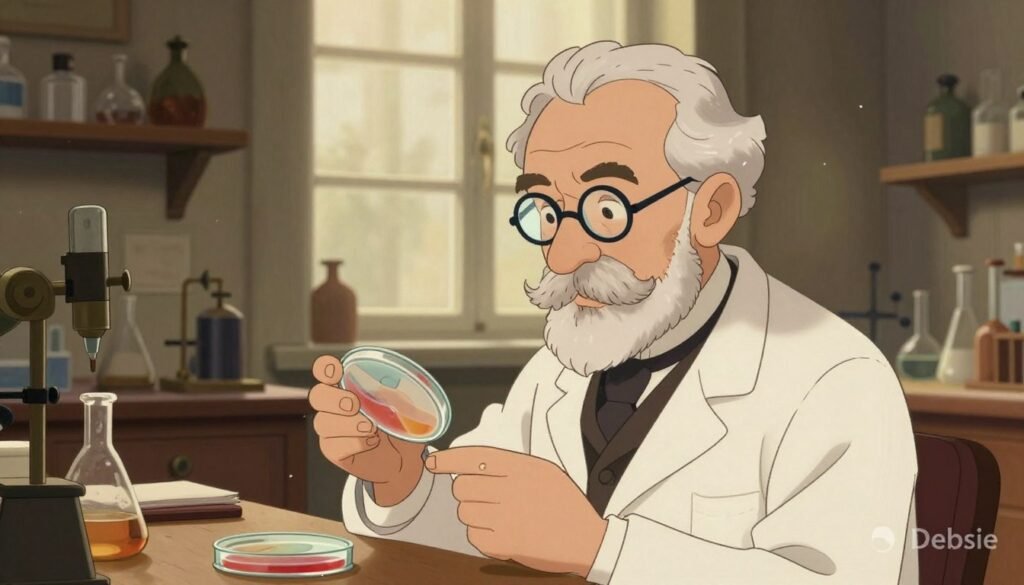
We keep moving forward in medicine, but we must not forget Pasteur’s lessons. This way, we make sure our search for knowledge is always ethical!
The Cultural Impact of a Scientific Icon
Louis Pasteur changed science and became a big name in culture! His work on vaccines, pasteurization, and germ theory changed society forever.
Looking at Louis Pasteur’s cultural impact, we see how his discoveries were big news in the 19th century. His findings were not just scientific. They also caught the public’s eye!
Public Perception in the 19th Century
In the 19th century, Louis Pasteur was seen as a hero. His work on vaccines and disease prevention was a big hit with the public. The rabies vaccine made him famous overnight!
People thought of Pasteur as a savior. His work was closely watched by the media. The public saw him as a scientist who was making a big difference in people’s lives.
Commemorations and Scientific Honors
Pasteur’s work is still celebrated today. He is remembered in many ways around the world. The Pasteur Institute, named after him, is a top place for medical research and public health.
Some notable honors include:
- The Pasteur Institutes around the world keep his work alive in vaccine development and disease research.
- Many statues and monuments are dedicated to his memory.
- Streets, schools, and institutions are named after him.
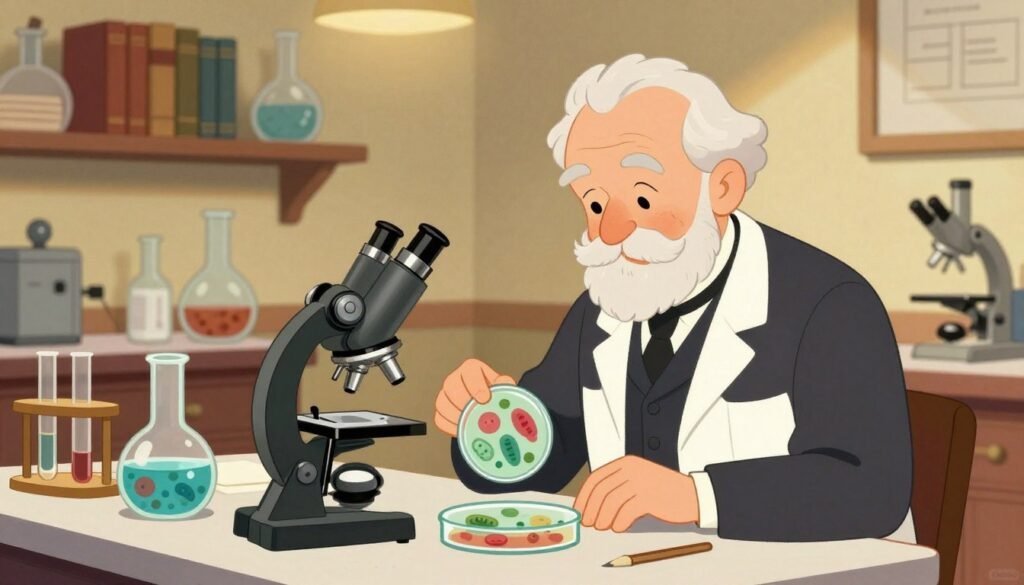
Lessons for Future Generations of Scientists
Louis Pasteur’s work still inspires scientists today! His life shows us how to solve big scientific problems.
Persistent Pursuit of Knowledge
Pasteur’s career shows the power of persistence. He said,
“Let me tell you the secret that has led me to my goal. My strength lies solely in my tenacity.”
This lesson teaches scientists to keep going, even when it’s hard.
Pasteur faced doubt on spontaneous generation. But he kept working. He proved that life comes from life, not from nothing.
Applying Scientific Rigor
Pasteur also taught us about scientific rigor. His careful experiments and data analysis show us how to do science right. This helps make sure our research is trustworthy.
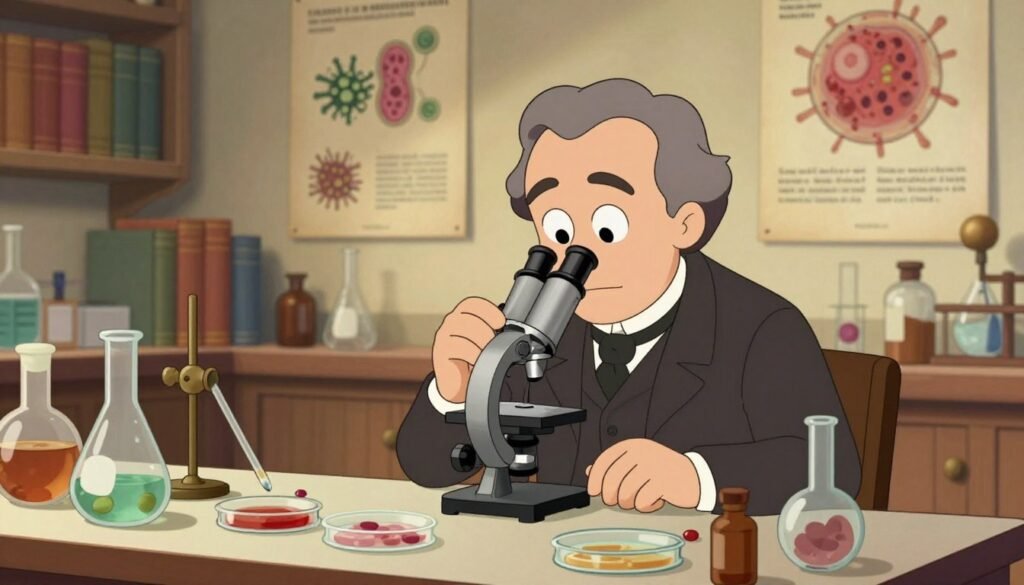
Today, we face big challenges like new vaccines and climate change. Pasteur’s work reminds us to use careful science. This way, we can keep learning and solving problems.
Conclusion
Louis Pasteur’s work has changed science forever. He found ways to make food safe and created vaccines. These discoveries have saved many lives.
His work is still important today. We use pasteurization to keep food safe. Vaccines have helped fight many diseases.
If you’re interested in science, there are many ways to learn. You can try Debsie’s fun courses at https://debsie.com/courses. They make learning fun and easy.
To learn more about Louis Pasteur, visit https://www.sciencehistory.org/education/scientific-biographies/louis-pasteur/. It has lots of info about his life and work.
We can keep moving forward in science because of Louis Pasteur. We can learn more and help people stay healthy. Let’s explore and learn together!