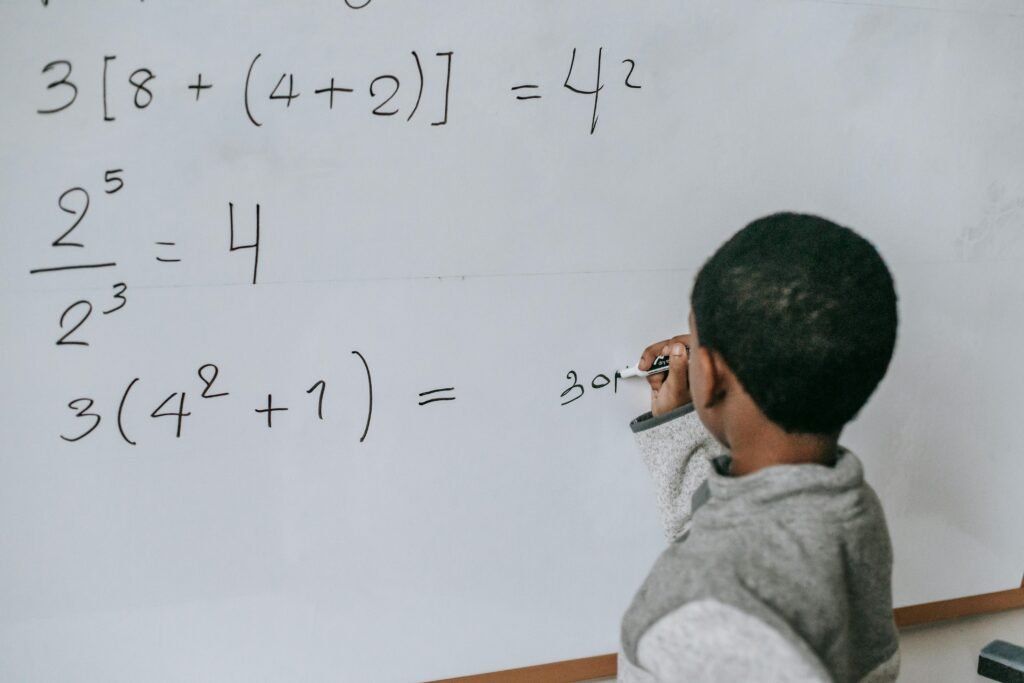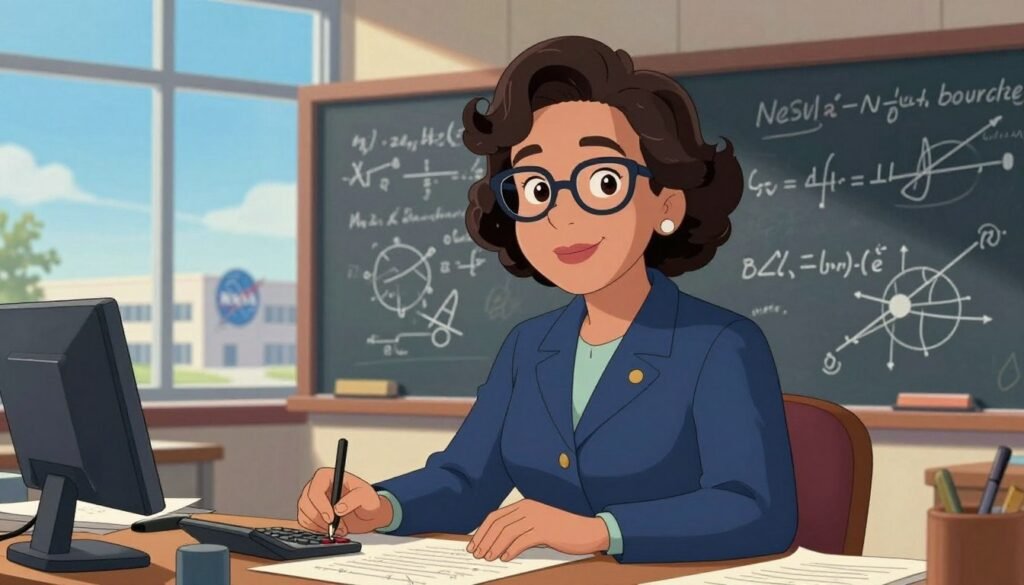
Ever looked up at the stars and wondered how we get there? It takes a lot of bravery and math. Katherine Johnson made those dreams come true for everyone.
Katherine was born in West Virginia in 1918. She loved counting everything she saw. She was so smart, she finished college at 18! Then, she worked at NASA to plan our first space trips.
You can do great things too! Try Debsie Gamified Courses at https://debsie.com/courses. Start your fun journey today. Let’s learn, play, and grow together as we explore the universe!
Key Takeaways
- She was a brilliant human computer for early space missions.
- Her math skills helped the first Americans orbit the Earth safely.
- She graduated from college at the very young age of 18.
- Her hard work changed how we view science and STEM careers.
- Anyone can reach for the stars with the right learning tools.
- She proved that NASA missions depend on talented mathematicians.
Early Life and Academic Brilliance
Katherine Johnson’s journey started with a love for numbers. She counted everything around her. This love for math was the start of her success.
A Childhood Defined by Curiosity
Katherine was always eager to learn. Her parents supported her love for learning. As she grew, her math skills improved, leading her to excel in school.
Academic Achievements at West Virginia State College
Katherine Johnson went to West Virginia State College. She graduated at 18, with degrees in math and French. “Her hard work paid off”. She said,
“I loved to count, I loved mathematics.”
The Human Computer Era at NACA
Katherine Johnson joined NACA’s Langley Research Center in 1953. She became a human computer. Her job was to do complex math for aeronautics projects.
Joining the Langley Research Center
Katherine worked with other smart women at Langley. They did data work by hand. Katherine said, “I was fascinated by my work and felt lucky to be there.” Their work helped a lot in aeronautics and space

The Role of Human Computers in Aeronautics
Human computers were key at Langley. They worked on things like making planes safer. This was very important.
Katherine’s work helped us understand how planes fly. She said, “My work was not routine, but it was rewarding.” It was a tough but fulfilling job.
Being at NACA, Katherine was part of a team that loved to innovate. Her work helped aeronautics and set the stage for space exploration.
Katherine Johnson and the Space Race
The change from NACA to NASA was big for Katherine Johnson. It put her in the spotlight of the space race!
As NACA became NASA in 1958, Katherine kept working hard. She calculated paths for spaceflights that would change history!
Transitioning from NACA to NASA
This change was more than just a name switch. It started a new era in space exploration! Katherine’s role grew as she joined the team that was exploring space.
Some key parts of her work during this time were:
- Calculating paths for early spaceflights!
- Working with astronauts to make sure missions were a success!
- Dealing with new challenges in space exploration!
The Shift Toward Orbital Mechanics
The move to orbital mechanics was a big step for NASA. Katherine’s skills in this area were very important. NASA needed to get orbital flights right during the space race.
Key contributions included:
- Doing precise calculations for launch times!
- Looking at orbital paths for astronauts like John Glenn!
- Checking data to keep astronauts safe!
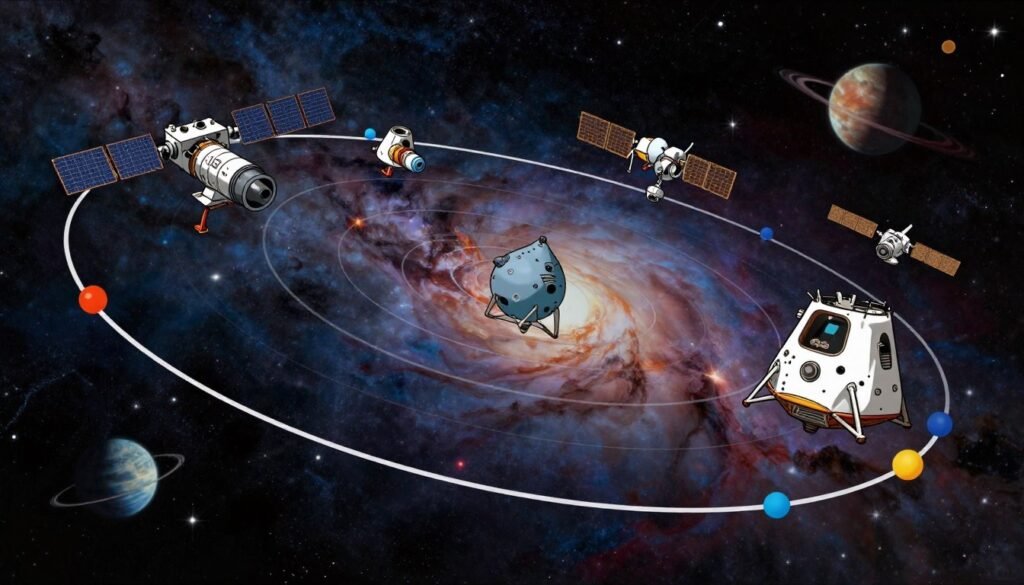
Katherine Johnson’s work was more than just numbers. It was about making a path for future STEM leaders!
Calculating the Trajectory for Freedom 7
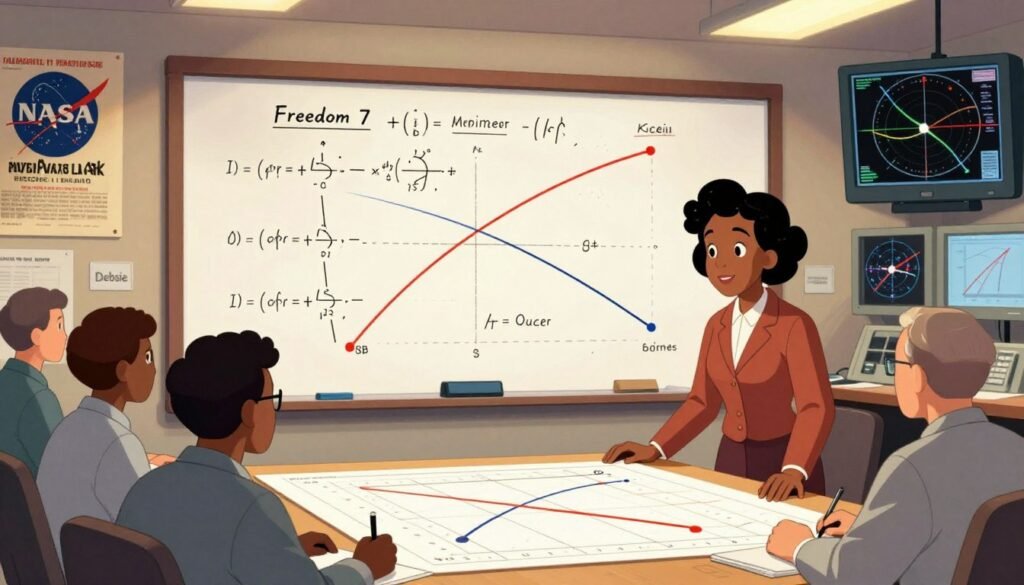
Katherine Johnson’s work was key to Alan Shepard’s Freedom 7 mission on May 5, 1961. This mission was a big step for the American space program. It made Shepard the first American in space.
Alan Shepard’s Historic Flight
Alan Shepard’s flight on Freedom 7 was a suborbital flight. It went up into space and then came back to Earth. Katherine Johnson’s work was very important for this flight.
The Precision Required for Suborbital Success
For a flight like Freedom 7, precision was key. Katherine Johnson figured out the launch time for the right landing site. This needed math skills and understanding of spaceflight physics.
The Friendship 7 Mission and John Glenn
John Glenn’s historic flight on Friendship 7 was made possible by Katherine Johnson! He was the first American to orbit the Earth. Katherine Johnson’s calculations were key to the flight’s success.
The Trust Factor in Digital Computers
Before John Glenn’s flight, he asked Katherine Johnson to check the computer’s work. This showed how much trust Glenn had in Johnson. The Smithsonian article says Glenn’s trust was a sign of Johnson’s skill.
Even though computers were becoming common, humans were still trusted to check their work. Johnson’s verification was crucial for the mission’s success.
Verifying the Orbital Calculations
Katherine Johnson had to check the orbital calculations for Friendship 7. She made sure Glenn’s spacecraft would orbit safely and return. Her work gave Glenn the confidence he needed.
Orbital calculations needed to be very precise. Johnson’s work was key to achieving this precision. Here are some important aspects of the orbital calculations for Friendship 7:
| Calculation Type | Description | Importance |
|---|---|---|
| Orbital Trajectory | Path of the spacecraft around the Earth | Critical for ensuring safe passage and successful re-entry |
| Velocity Checks | Verification of the spacecraft’s speed | Essential for maintaining orbit and achieving re-entry |
| Re-entry Angles | Calculation of the angle for re-entry into Earth’s atmosphere | Vital for a safe and controlled re-entry |
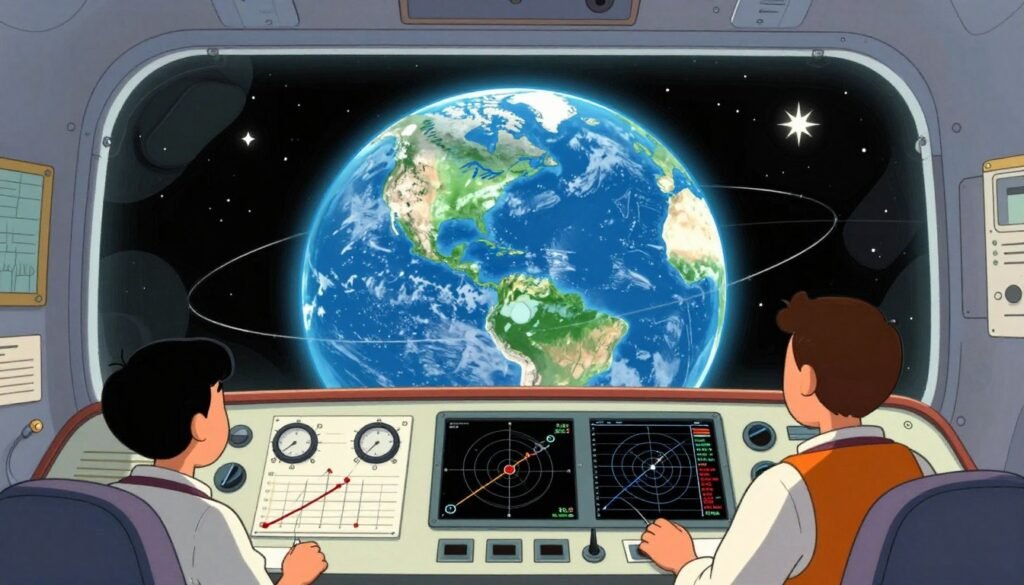
The success of the Friendship 7 mission was a big win in the space race. Katherine Johnson’s work was a big part of this success. Her skills showed the value of human verification, even with computers.
Contributions to the Apollo 11 Moon Landing
In 1969, Katherine Johnson helped make the impossible possible. She worked on theApollo 11 Moon landing! Her calculations were key for the astronauts’ safe trip to the Moon.
Mapping the Lunar Orbit
Katherine Johnson was part of the team that mapped the lunar orbit for Apollo 11. Her work was vital for the spacecraft’s path. It included gravitational forces and speed. You can learn more about Katherine Johnson’s life and work on herWikipedia page.
Some key aspects of her work on the lunar orbit included:
- Calculating the optimal trajectory for the spacecraft to enter into lunar orbit!
- Ensuring the spacecraft’s path aligned with the mission requirements!
- Verifying the accuracy of the orbital calculations to guarantee a successful Moon landing!
Ensuring the Safety of the Lunar Module
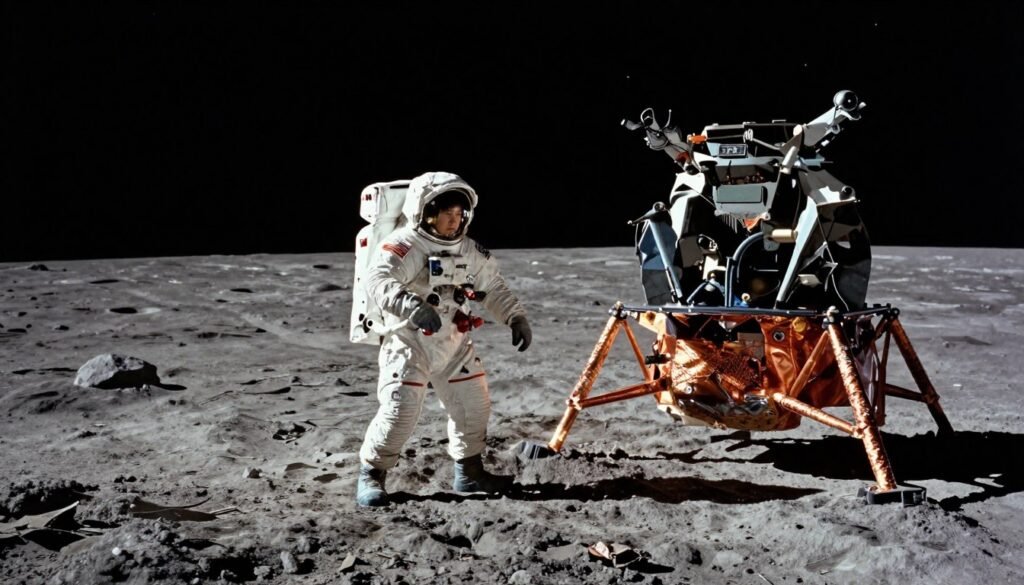
The safety of the Lunar Module was crucial. Katherine Johnson’s work was key to its success. She worked with others to check the Lunar Module’s descent and ascent. Here are some key factors she considered:
- The precise calculations required for the Lunar Module to separate from the Command Module!
- The trajectory for the Lunar Module to land safely on the Moon’s surface!
- The rendezvous sequence for the Lunar Module to rejoin the Command Module in lunar orbit!
Katherine Johnson’s contributions to the Apollo 11 Moon landing were invaluable. Her legacy inspires future mathematicians and scientists!
Overcoming Racial and Gender Barriers
Katherine Johnson faced many challenges. She broke through racial and gender barriers to achieve greatness. Her journey was tough, but her determination and talent opened doors for others.

Navigating Segregation in the Workplace
Katherine worked at NASA in a segregated workplace. Despite these challenges, she remained focused on her work. She earned respect from her peers and supervisors.
She had to use separate facilities and faced biases. Yet, Katherine kept going. She used her math skills to help NASA’s missions succeed.
Advocating for Inclusion in STEM
Katherine Johnson did more than just her job. She fought for inclusion in STEM fields. As an African-American woman in a mostly white and male field, she inspired others.
Her legacy helps push for diversity and inclusion in science and technology. By breaking down racial and gender barriers, Katherine Johnson made STEM more equal for everyone.
The Legacy of Katherine Johnson in Modern Science
Katherine Johnson’s work still inspires many today! Her work in aerospace engineering has made a big impact. Her legacy reminds us of the value of math and hard work.
“She was one of the first African-American women to work as a NASA scientist,” says NASA’s website. “Her work helped pave the way for future generations of women and minorities in STEM fields.”
Inspiring Future Generations of Mathematicians
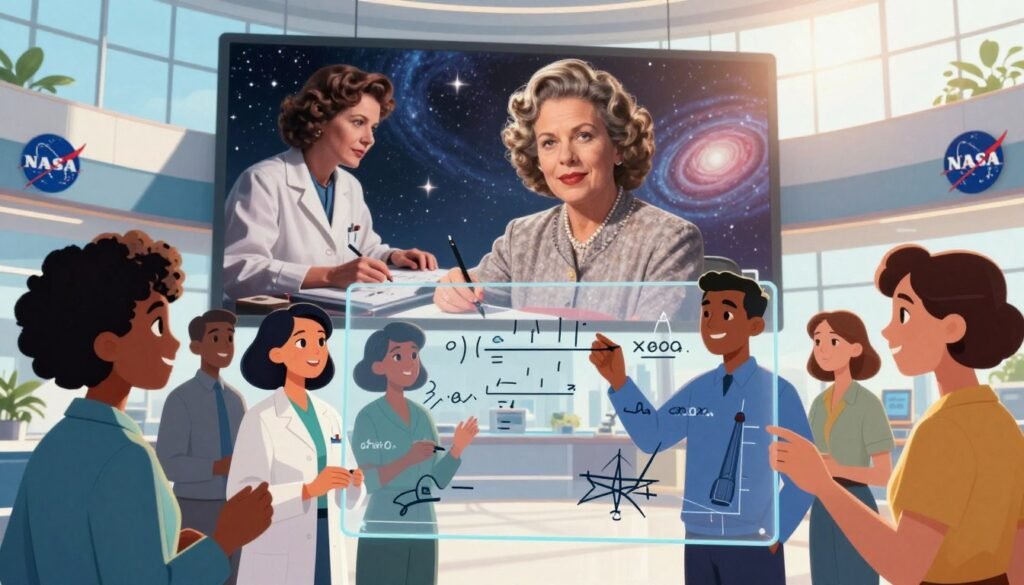
Katherine Johnson’s story inspires young minds everywhere. She shows us that hard work can lead to greatness. Her story encourages students to explore STEM fields.
The Impact of Her Work on Modern Aerospace Engineering
Katherine Johnson’s work on Friendship 7 and Apollo 11 changed aerospace engineering. Her skills helped make these missions successful. Her legacy still guides us today.
Looking ahead to space exploration, Katherine Johnson’s work is key. Her legacy teaches us about the power of mathematical precision and individual impact.
Educational Resources and Skill Development
Katherine Johnson’s story shows us learning never stops. It’s a journey, not a finish line! As we grow in work and life, staying curious and learning is key. This is vital in today’s world, where new tech and discoveries change how we see things.
Lifelong learning means more than just school. It’s about loving to learn and trying new things. It makes us flexible, creative, and ready for change.
The Importance of Lifelong Learning
Learning for life helps us grow personally and professionally. It keeps us updated and improves our skills. It also makes us better at solving problems.
Learning for life opens doors to new chances and goals. Katherine Johnson’s story shows how learning can lead to great achievements and lasting impact.
Enhancing Your Skills with Debsie Gamified Courses
At Debsie, we make learning fun and engaging! Our gamified courses help you learn new skills and grow your knowledge. They’re great for anyone wanting to stay ahead and reach their goals.
By checking out our courses, you can:
- Learn new skills and grow your knowledge
- Stay flexible and competitive in a fast-changing world
- Find new chances and reach your goals
Try Debsie Gamified Courses at https://debsie.com/courses and see the fun in learning! For more on how Debsie can help your learning journey, visit our resources on top French tutors and French classes for students in.

Awards and Recognition
Katherine Johnson’s work was honored with many awards!
She got many awards for her work at NASA. These awards celebrated her and helped others to follow in her footsteps.
The Presidential Medal of Freedom
In 2015, Katherine Johnson got the Presidential Medal of Freedom. President Barack Obama gave it to her. It’s a top honor in the U.S.
“These women, and others like them, are the real heroes of the space program.” –
This medal is for those who help the U.S. or make big contributions to the world.
Honors and Memorials Across the United States
Katherine Johnson was also honored in many places in the U.S. In 2019, she got the Congressional Gold Medal. It’s the highest honor Congress gives to civilians.
| Award/Honor | Year | Presented By |
|---|---|---|
| Presidential Medal of Freedom | 2015 | President Barack Obama |
| Congressional Gold Medal | 2019 | U.S. Congress |
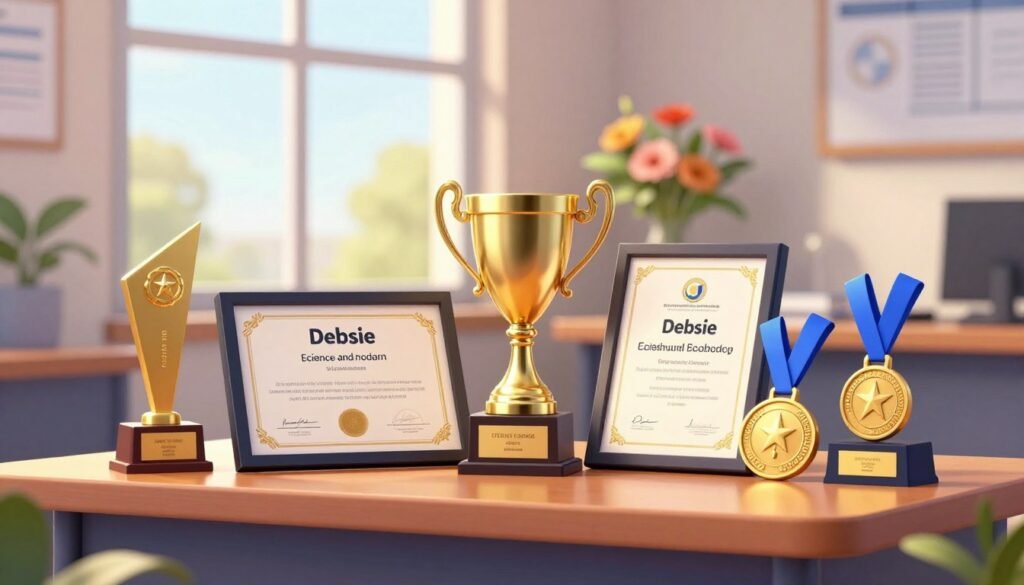
Katherine Johnson’s story inspires people everywhere. Her hard work and determination are an example for all.
Katherine Johnson: A Life of Mathematical Precision
Katherine Johnson’s life showed the power of math! She worked at NASA with great care. Her work made sure NASA’s early missions were accurate.
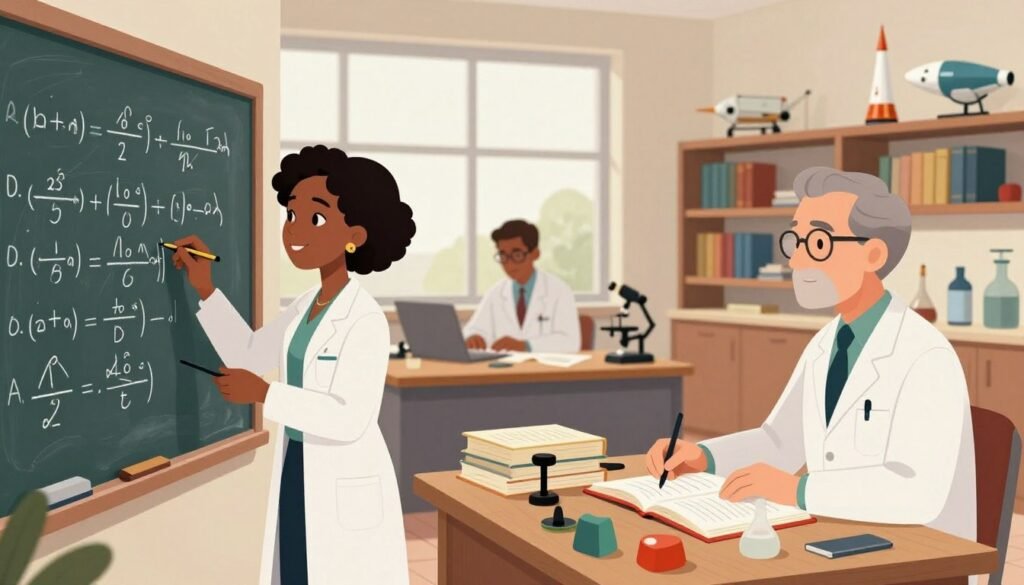
Her skill in checking computer math was key. It helped NASA’s missions succeed. Her work mixed human smarts with computer power.
The Methodology Behind Her Calculations
Katherine Johnson loved math and details. She solved big problems step by step. This made her work clear and easy to follow.
Her work involved:
- Checking data from many places for accuracy!
- Doing hard math by hand to check computers!
- Working with others to understand each mission’s needs!
Why Her Work Remains Relevant Today
Katherine Johnson’s work is still important today. She inspires many in math, science, and engineering!
The math she used is still key in space work. As we explore space, math’s role is more important than ever.
Her impact is seen in checking computer math today. It’s all about precision in space planning and work.
The Cultural Impact of Hidden Figures
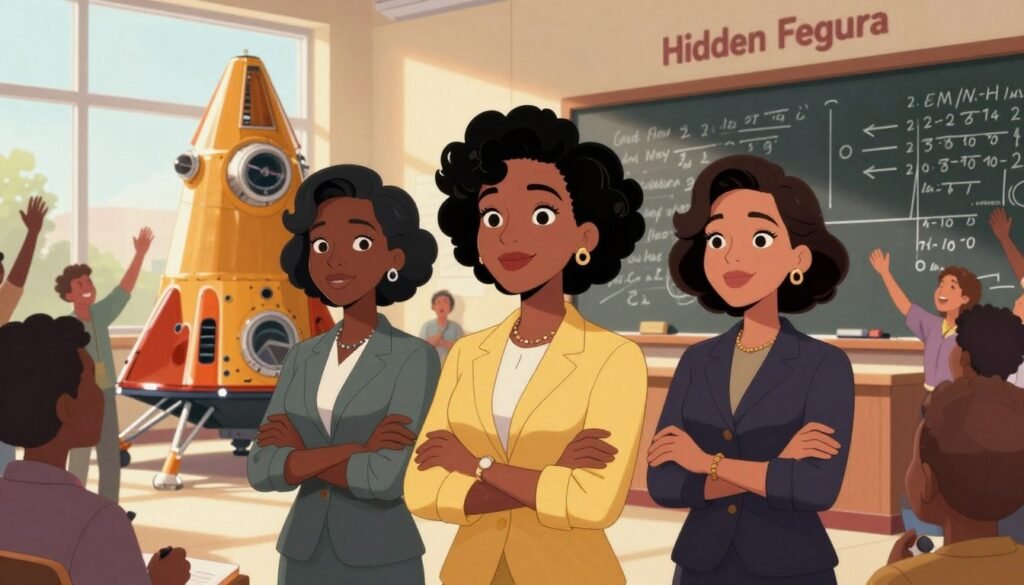
The movie Hidden Figures came out in 2016. It shared Katherine Johnson’s amazing story with everyone! This film showed her big role in NASA’s wins. It also showed the great work of women and minorities in science and math.
Bringing Her Story to the Global Stage
The movie’s big success showed how media changes our views. Hidden Figures made a new group of scientists and engineers excited. Brookings.edu says it shows the lasting impact of women and minorities in science.
Hidden Figures has changed many areas, like schools and movies. It started talks on fairness, equality, and recognizing hidden heroes.
The Role of Media in Highlighting Unsung Heroes
Media is key in sharing stories like Katherine Johnson’s. Hidden Figures showed how stories can lead to change and understanding.
The movie made more people want to learn about science and math. This is helping to make these fields more diverse.
| Impact Area | Description | Outcome |
|---|---|---|
| Education | Increased interest in STEM fields | More diverse talent pool |
| Entertainment | Inspiring stories of unsung heroes | Cultural shift toward inclusivity |
| Society | Promoting diversity and equality | Greater representation and opportunities |
Conclusion
Katherine Johnson’s journey changed the world of science. Her work at NASA opened doors for others. We celebrate her legacy and its ongoing impact.
Her career was filled with amazing achievements. Katherine’s story shows us that hard work can lead to greatness. Keep exploring and learning, just like Katherine did.
Katherine Johnson passed away on February 24, 2020. But her legacy inspires us all. May her story motivate you to follow your dreams with passion and dedication.