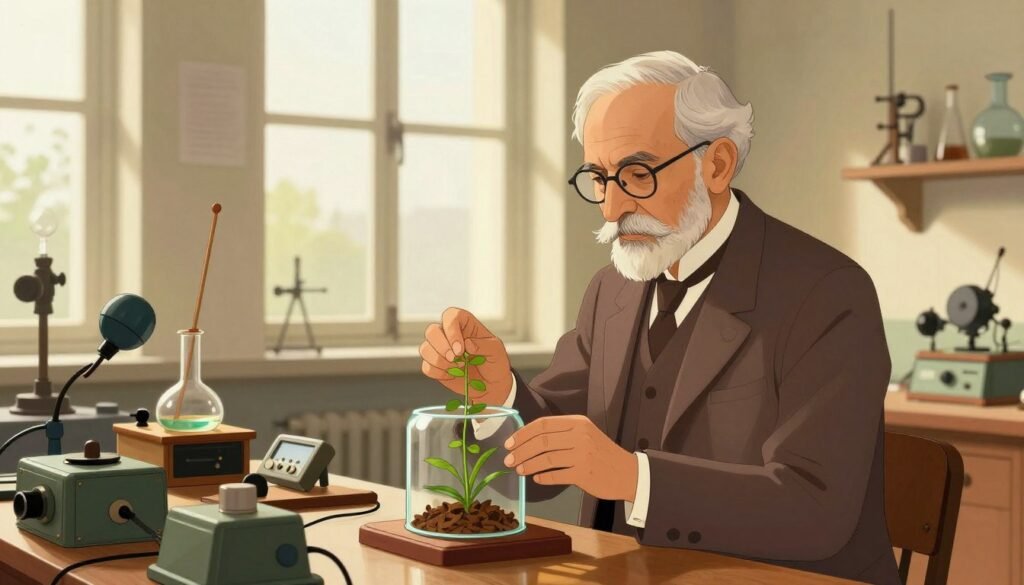
Have you ever thought if your garden flowers feel the sun like you do? It’s a magical idea that makes us wonder. A famous Indian scientist spent his life uncovering nature’s secrets.
Sir Jagadish Chandra Bose was a genius who loved solving life’s mysteries. He was a leader in radio technology and even wrote science fiction. His work made physics exciting for everyone.
His journey started in Mymensingh, where he asked big questions. He became a top plant science expert, showing us small leaves have big stories. His work on microwave optics changed how we see things today.
We think every child can be a great explorer like him! You can start your own learning adventure today. Try Debsie Gamified Courses at https://debsie.com/courses to explore new worlds and have fun with science!
Key Takeaways
- He was a brilliant pioneer in wireless communication and optics.
- This researcher proved that plants react to their environment just like animals.
- He was a major force behind the expansion of experimental science.
- His interests covered many diverse fields, from botany to writing stories.
- Learning about his life inspires children to stay curious and keep exploring.
Early Life and Academic Foundations of Jagadish Chandra Bose
Jagadish Chandra Bose was born into a Bengali Kayastha family of Brahmos in Mymensingh. He was curious about the natural world from a young age! His early education in a Bengali-language school sparked his interest in Nature.
This period was key in developing his curiosity. It laid the groundwork for his future scientific pursuits.
As Bose grew, he attendedSt. Xavier’s College, Calcutta. This school had a diverse environment that nurtured his science interests. His hard work led him toChrist’s College, Cambridge, a top school that shaped his scientific skills.
Here’s a summary of Jagadish Chandra Bose’s early academic foundations:
| Educational Institution | Location | Significance |
|---|---|---|
| Bengali-language school | Mymensingh | Instilled interest in Nature |
| St. Xavier’s College | Calcutta | Nurtured scientific interests |
| Christ’s College | Cambridge | Advanced scientific education |

Bose’s education was a mix of old and new. This mix helped him understand science deeply. His time at these schools broadened his knowledge and sparked his passion for science.
Looking into Bose’s early life and education shows how he became a science leader! His story highlights the value of diverse learning and the power of curiosity and passion.
The Pioneering Research in Microwave Physics
Bose’s work in microwave physics was a big step forward in science. It opened doors for many new discoveries. He was inspired by Oliver Lodge’s work on radio waves in 1894. Bose started his own experiments in November of that year.
He made radio waves much shorter, reaching millimeter levels. This was a big achievement. It showed his creative way of looking at microwave physics.
Bose’s work on millimeter waves was very important. He showed how to send and get these waves. This helped radio communication grow.
He also made the coherer, a key device for finding radio waves. The coherer was important for early radio systems. It helped find weak signals. Bose made the coherer better, helping radio tech grow.

Bose did more than just make devices. He also learned a lot about radio waves. His work helped the science world understand electromagnetic waves better.
Invention of the Coherer and Early Radio Communication
Jagadish Chandra Bose created the coherer, a key part of early radio tech! It was a device that found radio waves. Bose’s work was special because it used a new technology called semiconductor junctions.
Bose showed his work at the Royal Institution in London in 1897. He showed how his invention worked. This was a big moment because it showed Bose’s big contribution to radio and the power of semiconductor junctions.
The coherer used semiconductor junctions, which was a big step. It helped start new areas in solid-state physics and radio tech. As “The coherer was the first practical device for detecting radio waves, and Bose’s work in this area was instrumental in the development of early radio communication systems.”
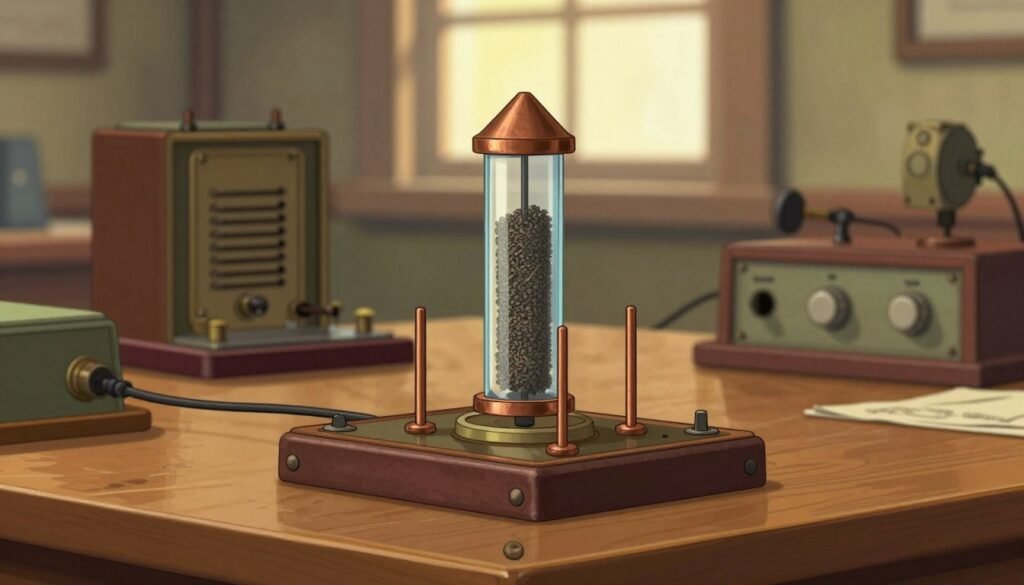
Bose’s work on the coherer was more than just an invention. It opened up new areas in physics and more. His work led to new ideas in wireless communication, making him a true pioneer.
The coherer’s impact on early radio is huge. It helped find radio waves, a key step for wireless telegraphy and today’s radio systems.
The Conflict Over Radio Priority and Scientific Recognition
Jagadish Chandra Bose’s story is one of discovery, controversy, and seeking recognition. His work in radio microwave optics was a big step forward. But, it also sparked a big debate over radio priority.
Bose did amazing work in the late 1800s and early 1900s. He showed how to send microwaves short distances. This was key for radio communication later on.
“Bose’s work predated Marconi’s, and his demonstrations were witnessed by many, including British officials and scientists,”
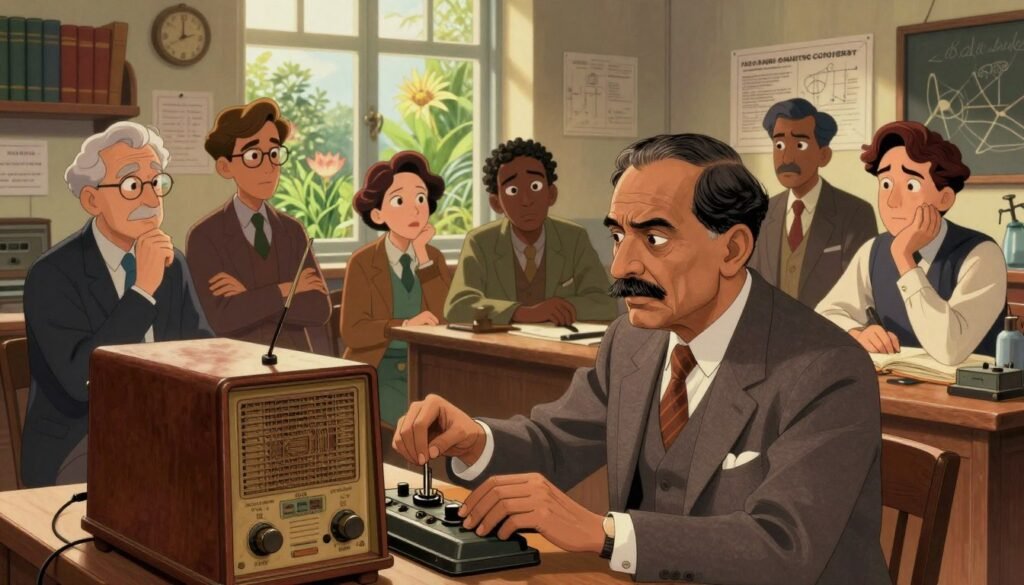
The debate about Bose’s work and Guglielmo Marconi‘s achievements is ongoing. Marconi is often seen as the inventor of the radio. But Bose did similar work around the same time. This led to a big question: who should be seen as a radio pioneer?
Many say “the priority of invention is a complex issue, often influenced by factors beyond mere technical achievement.”
Bose was recognized in his time. He became a Fellow of the Royal Society, a big honor. But the debate over radio priority still goes on. It shows how hard it can be to get credit in science.
The fight over radio priority and scientific recognition shows the challenges pioneers face. Their discoveries help us learn more about the world. But they also face controversy and the hard task of getting credit in science.
Transitioning from Physics to Plant Physiology
Bose moved into plant physiology and found plants are electric. This changed biophysics forever! His new focus greatly helped us understand plants better.
Bose showed plants are not just sitting there. They live and react to their world. He proved plants are sensitive and react like animals. This was a big change in how we saw plants.
The Crescograph was a key part of Bose’s work. It shows how plants react to things. 
“Plants are not just objects; they are living entities that react to their surroundings,” Bose’s work seemed to say. His research made us see plants in a new light. It also brought physics and biology together.
Bose’s move to plant physiology was not a step back. It was a step forward in his love for nature. His work in this field has inspired many scientists.
The Discovery of Plant Sensitivity and Response to Stimuli
Jagadish Chandra Bose found that plants are alive and react to their surroundings! He used his Crescograph to measure how plants respond to different things. This showed that plants and animals are similar in how they react.
Can you imagine proving plants are as alive as animals? Bose’s work was a big change. He showed plants can feel things like touch, temperature, and chemicals, just like animals do.
Bose’s findings were very important! He showed plants can feel their environment. This led to new areas in biophysics. It helped us learn more about plants and how they work.

Bose used the Crescograph to see how plants react to things. This was a big step. It showed plants are really sensitive. The Crescograph made it easy to see and study these reactions.
Plant sensitivity has changed science a lot. It made scientists want to learn more about plants and their world. Today, we keep going with Bose’s ideas, exploring more about plants.
Innovative Instrumentation for Measuring Plant Life
Jagadish Chandra Bose created new ways to study plants. He made special recorders to see tiny plant movements. These showed how plants react when hurt.
Bose also made the Crescograph. It measured plant growth very well. This showed plants act like other living things. Learn more on LinkedIn.
| Instrument | Feature | Impact |
|---|---|---|
| Crescograph | Measured plant growth with high precision | Revealed plant sensitivity and response to stimuli |
| Automatic Recorders | Registered slight movements in plants | Demonstrated the quivering of injured plants |
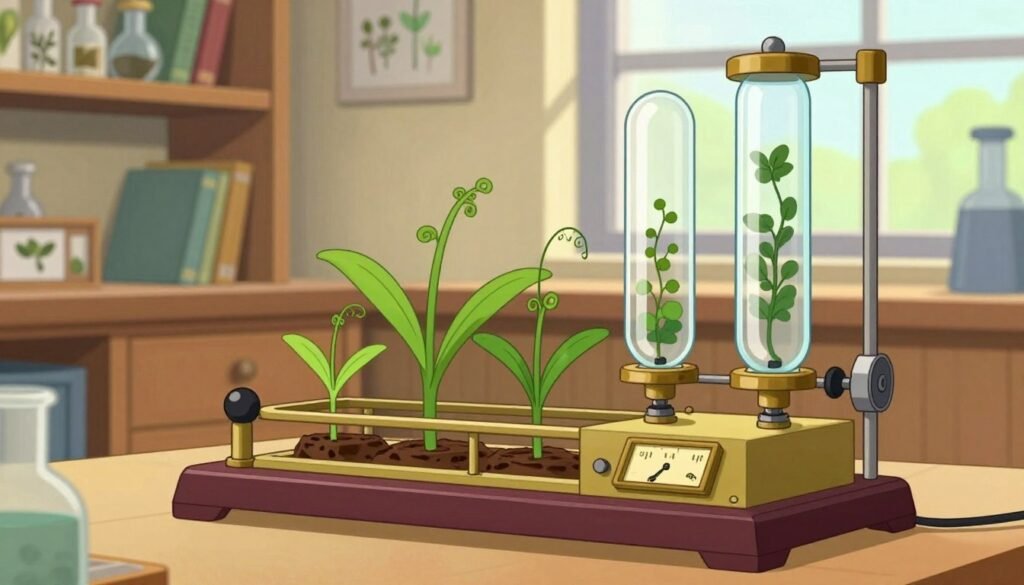
Bose’s tools helped us understand plants better. They showed how plants react to their world. This helps us see the amazing ways life works.
The Crescograph and Its Impact on Botanical Science
Bose’s Crescograph opened new doors in plant research. It showed how plants react to different things. This big step helped us learn more about plant physiology and biophysics.
The Crescograph was a game-changer in botanical science. It let scientists measure plant growth and reactions very accurately. This showed us how complex and changing plant life is.
“The Crescograph has shown us that plants are not mere passive objects, but living beings with their own characteristics and responses to the environment.”
The Crescograph’s effect on botanical science is huge:
| Area of Impact | Description |
|---|---|
| Understanding Plant Responses | The Crescograph helped scientists learn how plants react to things like light, temperature, and chemicals. |
| Advancements in Biophysics | It showed that plants respond electrically, which was a big deal for biophysics. |
| Precision in Botanical Research | It allowed for very precise measurements of plant growth and reactions, making research better. |

The Crescograph’s impact goes beyond science. It has inspired many researchers and scientists. Its legacy shows Bose’s creativity and his role in understanding nature.
Debsie Gamified Courses for Modern Scientific Learning
Jagadish Chandra Bose’s spirit of scientific inquiry lives on in Debsie’s gamified courses!
Debsie offers fun, interactive learning for kids. It covers many subjects and lets kids learn at their own pace. This way, Debsie keeps Bose’s legacy alive and engaging.
Enhancing Scientific Literacy Through Gamification
Gamification makes learning fun and easy. Debsie’s gamified courses make STEM subjects fun and interactive.
Students learn by doing, not just reading. This hands-on approach helps them understand and love science more.
Why Interactive Learning Matters for STEM Students
Interactive learning is key for STEM students. It lets them try things out and see how they work. Debsie’s interactive learning modules mimic real-life situations.
This method boosts critical thinking and problem-solving skills. It also sparks a love for STEM subjects in students.
Accessing Resources at Debsie
To find Debsie’s courses and resources, visit https://debsie.com/courses. For more on physics classes, check out top physics tutors and classes.

Bose Institute: A Legacy of Scientific Research in India
Jagadish Chandra Bose’s dream came true in 1917 with the Bose Institute. It was set up in Kolkata. This place has led the way in mixing different kinds of research to understand the world better.
The Bose Institute was all about pushing science forward. It started with Bose’s many interests. It became a place where interdisciplinary research thrived. You can find out more about its history on its official history page.
Over time, the Bose Institute has helped science grow a lot. It has made us smarter and inspired many scientists. Today, it’s still a top place for research in India, pushing for new discoveries and teamwork.
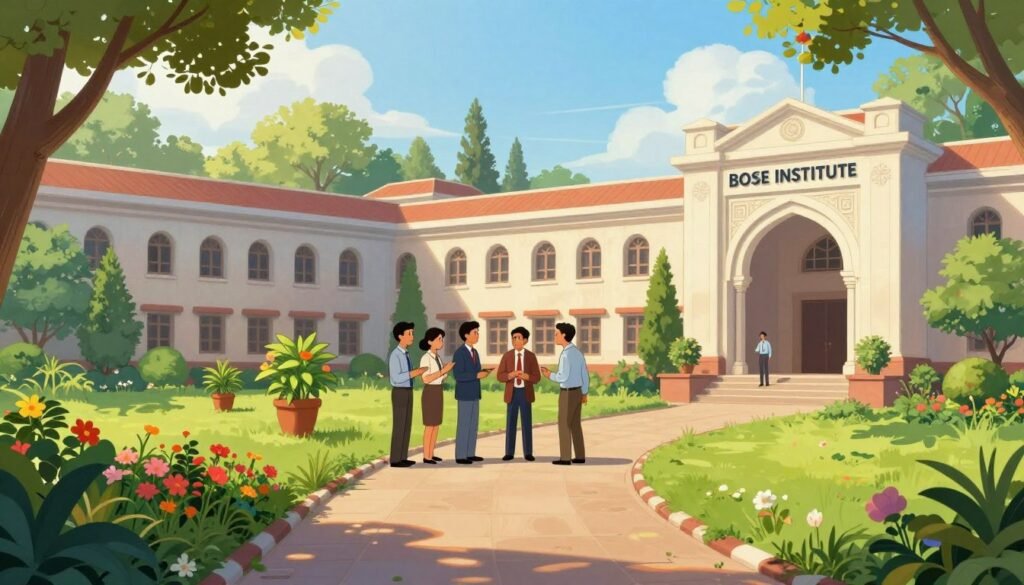
The Bose Institute has greatly helped science in India. It’s known for:
- Interdisciplinary research approach
- Advancements in various scientific fields
- Inspiration to future scientists
| Year | Key Achievement |
|---|---|
| 1917 | Establishment of the Bose Institute |
| Early 20th Century | Pioneering research in physics and plant physiology |
| Present Day | Continued leadership in interdisciplinary research |
Philosophical Perspectives on the Unity of Life
Bose’s research was based on a big idea. He thought all living and non-living things are connected. This idea, the unity of life, guided his work in physics and biophysics.
While studying plants, Bose noticed something special. He saw that plants and non-living things act in similar ways. He thought the line between living and non-living was not clear-cut. This idea showed in his experiments, mixing physics and biology.
“The uniformity of response between living and non-living matter suggests a common underlying mechanism, pointing towards a fundamental unity in all existence.”
Bose wanted to find the deep connections in nature. His research on plants was to understand life’s unity. He wanted to know how all things are connected.

| Philosophical Perspective | Influence on Scientific Work |
|---|---|
| Belief in the unity of all life | Guided research in both physics and biophysics |
| Parallel between living and non-living matter | Experiments that blurred the lines between physics and biology |
| Understanding deeper connections in nature | Research into plant sensitivity and response to stimuli |
Bose’s views changed how we see the world. His idea of unity of life led to big discoveries. These discoveries still inspire scientists today!
Overcoming Colonial Barriers in the Scientific Community
Jagadish Chandra Bose faced many challenges as a scientist. He had to overcome colonial barriers. As an Indian scientist in the British colonial era, he faced many obstacles.
But he didn’t give up. He worked hard and became famous for his groundbreaking work.
Bose wanted to be part of the global scientific community. He showed his research at the British Association for the Advancement of Science. This was a big step for him.
The colonial era made things hard for Bose. He had limited resources and faced bias. But his work was amazing, and he got recognized for it.
“The history of science is not just about the discovery of new facts, but also about the struggle to get those facts recognized.” This quote fits Bose’s story well. He fought hard for his work to be seen by the world.
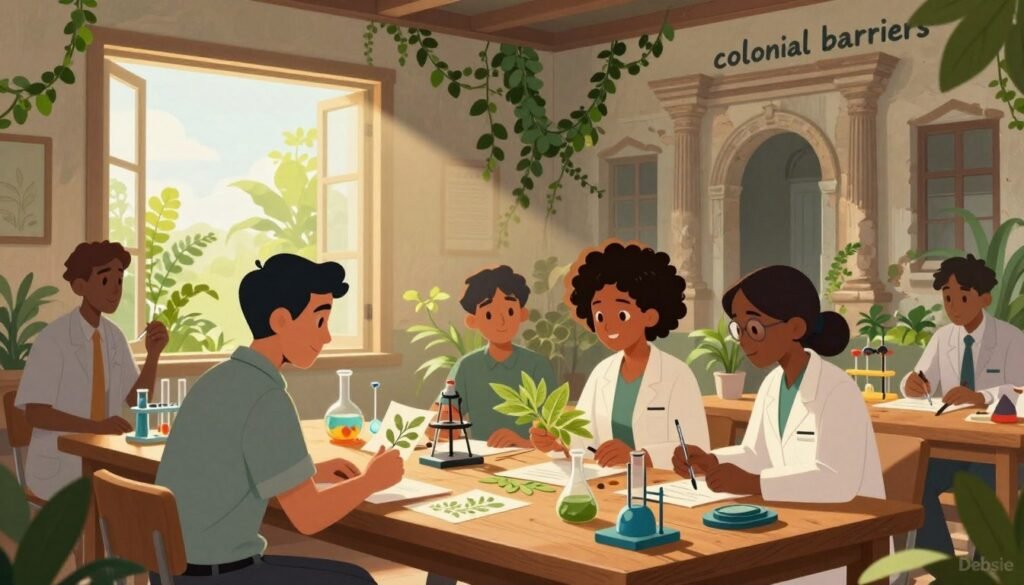
Bose’s success shows he could beat colonial barriers. His work still inspires scientists today. It shows that with hard work and talent, anyone can achieve great things, no matter their background.
| Challenge | Bose’s Response | Outcome |
|---|---|---|
| Limited access to resources | Self-reliance and innovative problem-solving | Development of groundbreaking instruments like the Crescograph |
| Bias against Indian scientists | Presentation of work at international forums like the British Association | International recognition and acclaim |
| Colonialism’s impact on scientific community | Perseverance and determination | Legacy as a pioneering Indian scientist |
For more on Bose, check out this academic paper. It goes into detail about his life and work.
Global Recognition and International Scientific Collaborations
Bose made big steps in science and got praise from all over. His work on radio and plants was noticed by theRoyal Societyand others.
His research was seen as a big deal by the Royal Society. This made him famous in the scientific community. It also helped him work with top scientists.
Bose didn’t just get praise. He worked with famous scientists too. You can learn more about his radio work here.

Bose’s work was seen as very important. It led to new partnerships and inspired others. Today, his work is still celebrated around the world.
The Enduring Influence of Bose on Modern Biophysics
Jagadish Chandra Bose’s work still inspires scientists today in biophysics!
He studied plant life and made the Crescograph. This tool shows how plants grow and react to things around them.
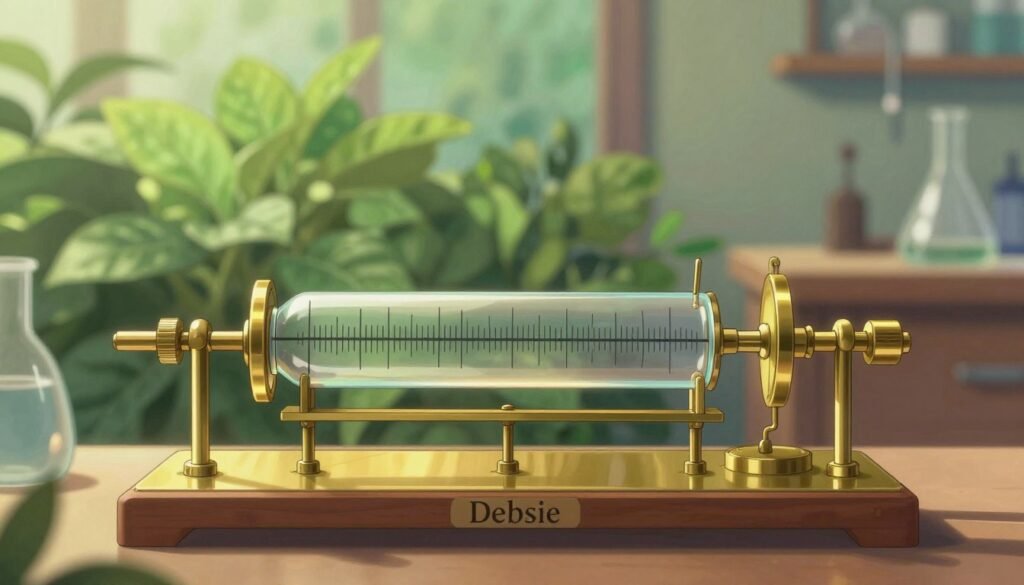
Bose’s work started plant neurobiology. This field looks at how plants behave and react. For more on Bose’s impact, check this out.
Bose’s legacy is big. It’s not just his inventions. It’s also the doors he opened for science.
His work still guides us today. It shows us the value of being curious and exploring nature!
Conclusion
Jagadish Chandra Bose changed science with his work on microwaves and plants. His work still inspires many today. It shows how important curiosity and new ideas are!
Bose’s work reminds us that learning never stops. You can keep exploring with Debsie’s fun science courses. They are perfect for all ages!
Join Debsie to see the magic of science. Learn like Bose did. Visit https://debsie.com/courses to begin your adventure!