Can one player’s style teach kids to grow faster at chess? Meet Hou Yifan, a modern chess icon, four-time Women’s World Chess Champion, and a top-ranked chess player who blends sharp play with calm nerves.
She became a grandmaster in 2008 and reached a peak rating of 2686 in 2015. Her games span both women’s events and open events, so her story touches all of world chess and even makes history for young learners!
In this short guide we’ll give a quick bio, highlight big milestones, and show the best games to copy. Expect a simple checklist you can use. We’ll also share kid-friendly study tips on openings, time management, defense, and staying calm.
Want to learn faster? We promise practical help and a friendly boost from Debsie’s personalized support later in the article. Parents get notes on prodigy training and building steady habits. For a close look at a key title win, see this women’s world championship win report.
Key Takeaways
- Study clear miniatures from her games to learn fast.
- We cover both women’s and open events to show broader lessons.
- Kids get simple routines: openings, time control, and defense tips.
- Parents receive practical coaching notes and habit-building ideas.
- The article ends with top games and a “what to copy” checklist.
Why Hou Yifan Still Defines Modern Women’s Chess
A string of championship triumphs reshaped how coaches and kids study women world chess today! Being a four-time winner is rare. It shows repeat excellence, not a one-time streak.
Four-time champion and what it means
Four titles mean mastery in many formats and pressure moments. Those wins set a new normal for the chess championship cycle and raised standards for younger players.
Strength across the whole field
She spent years in the world top-100. That shows strength against all players, not just in women’s events. It proves long-term, elite play.
How FIDE women events work, simply
FIDE women events include knockouts and matches. Win a cycle and you get a shot at the world chess championship title. For kids: think of it as levels you win to reach the top.
- Why others prepared differently: Her style forced rivals to study deeper.
- What you can learn: strong openings, calm defense, and smart risk choices.
Hou Yifan at a Glance: Titles, Peak Rating, and Milestones
Milestones like a teenage grandmaster title and a near-2700 peak map out a path worth copying! This short snapshot shows how early success and steady strength look in real chess careers.
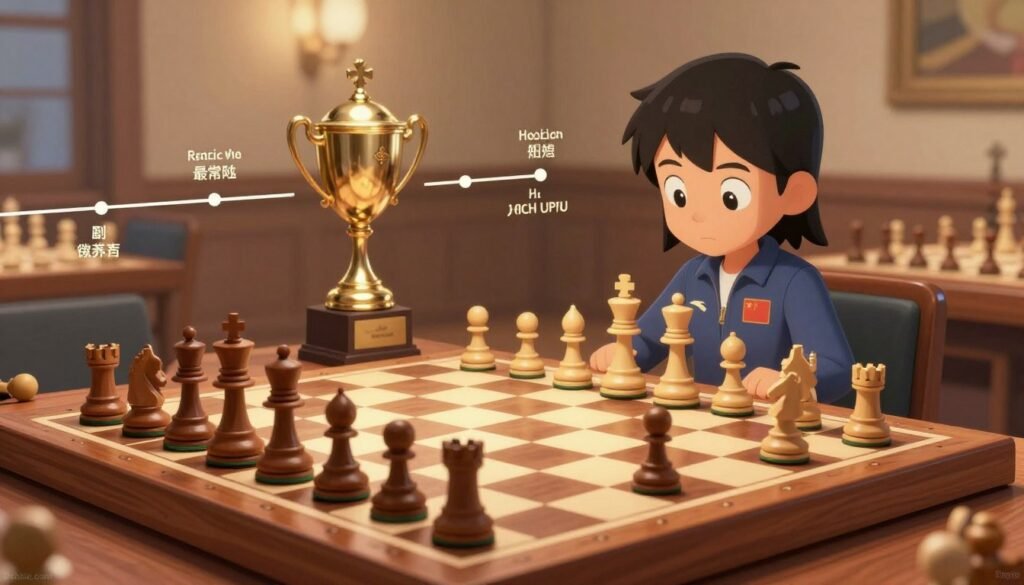
Quick facts snapshot
| Birth / Federation | GM year | World champion years |
|---|---|---|
| 1994 / China | August 2008 (age 14 years, 6 months, 16 days) | 2010, 2011, 2013, 2016 |
| Peak rating | Peak ranking | FIDE (Feb 2026) |
| 2686 (March 2015) | No. 55 world (May 2015) | 2596 |
What the big numbers mean
Grandmaster is the hardest standard title in chess. Players earn it by hitting norms in strong tournaments and scoring well against tough opponents. It proves consistent high-level play!
Being the became youngest to reach GM shows early mastery and steady practice. It tells kids that focused work pays off without being scary.
Why is 2686 special? That rating is near the super-elite. It means the player could score points against top grandmasters and compete in open world events.
Holding a high FIDE rating years later (2596 in Feb 2026) shows deep understanding, even with fewer events. We use these milestones to build a simple training roadmap you can follow: steady practice, smart tournaments, and measured goals!
Early Life in Xinghua and the First Spark for Chess
A small girl in Xinghua first loved the glossy chess pieces and never looked back. She stared at them at age three. By five she played regularly. Her father bought the first set and the house turned into a playful classroom.
Fascination and Rapid Early Improvement
Within weeks she beat her father and grandmother. That quick progress came from curiosity and constant play. Short, joyful sessions helped more than long drills. Kids can copy this: touch the pieces, ask why moves work, and try again.
Training Begins with IM Tong Yuanming
Coaching started in 1999 with IM Tong Yuanming. He saw a confident player with sharp memory, fast calculation, and quick reactions.
“Confidence and strong calculation made the learning curve steep,”
- Parent tip: Five to ten minutes daily builds big gains over years.
- For U.S. families: Local clubs, scholastic events, and small tournaments boost growth fast in youth chess development.
From Child Prodigy to National Team Player
At ten years old she joined Beijing’s top training hub and entered a new, structured world of chess.
National Chess Center, elite coaches, and daily sparring
The National Chess Center gave stronger sparring partners and a tight schedule. Top trainers like Ye Jiangchuan and Yu Shaoteng led sessions. Practice was focused and measured. That steady routine builds real skill!
World Youth success and early trophies
She won the Girls U10 world youth title in 2003. A world youth win lifts confidence fast. Youth chess championship wins show kids they belong on big stages.
Youngest at major team events
At age 12 she played in the Women’s World Championship and the Chess Olympiad (team event) in 2006. Facing older opponents taught quick lessons. An Olympiad is a national team tournament where countries face off by round.
Her family moved to Beijing in 2003 and chose homeschooling to fit training. Discipline and routine came from that choice.
“Daily, focused work and strong teammates sharpened her game,”
| Year | Age | Milestone |
|---|---|---|
| 2003 | 9–10 years old | Moved to Beijing; Girls U10 world youth champion |
| 2006 | 12 years old | Youngest in Women’s World Championship and Chess Olympiad |
- Copy this (U.S. families): weekly plan — 20 puzzles, one annotated game, one practice tournament. Keep it fun!
World Youth Chess and Junior Results That Predicted a Champion
At twelve she placed second in the World Junior Girls with 9/12. That result showed she could score points even in tougher fields.
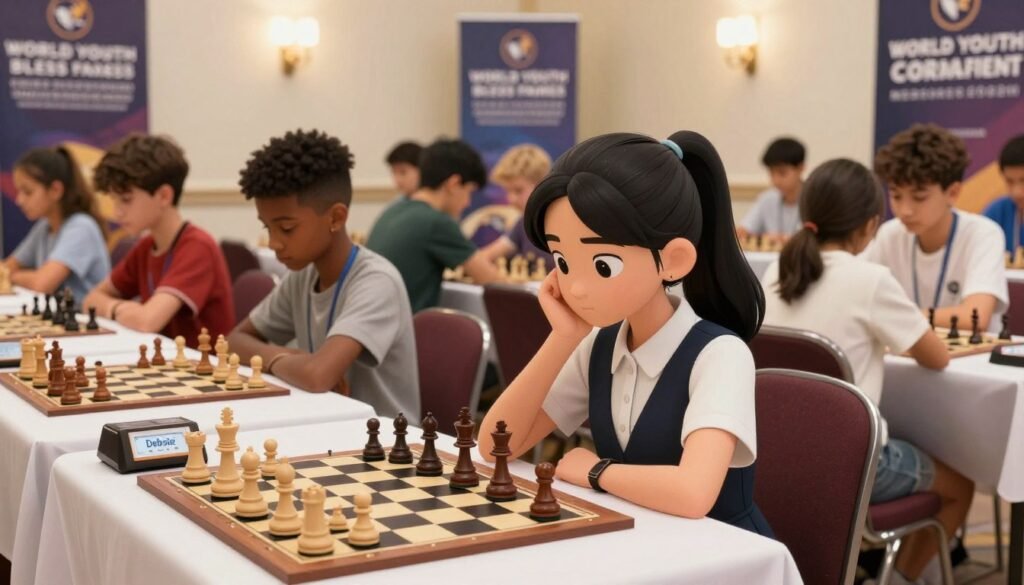
Competing above your age
Youth events usually match age groups. Junior events let older talent join. Playing up forces faster decisions and sharper tactics!
Practical lessons for U.S. families
We recommend a mix of local scholastic events and stronger open sections when a child is ready. The right challenge builds resilience.
- Review each game quickly. Find three moments: best move, missed tactic, endgame plan.
- Seek tougher opponents occasionally. Growth happens at the edge of comfort.
- Count learning, not just wins—rough tournaments teach more than easy ones.
| Event | Age | Takeaway |
|---|---|---|
| World Junior Girls (2006) | 12 | 9/12 — consistent scoring in strong field |
| Local scholastic + open mix | Varies | Balanced schedule speeds real improvement |
Big idea: challenge yourself, review losses, and keep playing! For ideas on strong junior events, see our guide to junior chess tournaments and pick a next step.
Becoming China’s Youngest Women’s National Champion
A teenage upset in June 2007 marked a seismic moment for chinese women’s chess! At 13 she won the Chinese Women’s Chess Championship and did it undefeated.
What “undefeated” meant: the score reads +7 =4 -0. That means seven wins, four draws, and zero losses. Seven wins gave big points. Four draws protected the lead when needed. Smart risk management, not reckless attacking!
Why it mattered: a 2585 performance rating in a national chess championship at 13 signals future world-class strength. It shows consistency across every round in a tough tournament field.
- Player lesson: consistency wins tournaments — sleep well, stick to steady openings, and play calm endgames.
- Parent note: prep plus emotional stability often makes the difference, not just tactics.
Mini checklist before each round: review your opening, solve 5 puzzles, set one simple goal!
Want more strong events to try? Check our guide to the best women’s tournaments for ideas and next steps!
Youngest Female Grandmaster: The 2008 Breakthrough
At just 14 and a half years old, she earned the grandmaster title in August 2008! This milestone came after strong showings at top events like the Aeroflot Open and other high-level tournaments.
GM norms and the leap from WGM to GM
GM norms mean you must perform at grandmaster level in several tough tournaments. Judges look at opponents, score, and event strength. It’s real, consistent results — not one lucky game.
Why the title shifted expectations
This achievement made other girls see GM as possible. It moved goals from women world chess alone to competing in open world chess fields.
- Training focus: openings, calculation drills, and solid endgame basics.
- Kid note: GM is like a black belt — you earn it by playing real, strong games!
- Parent note: pick challenging tournaments, but keep rest and school balanced.
| Year | Age | Key event |
|---|---|---|
| 2004 | 10 | WFM title |
| 2007 | 13 | WGM title |
| 2008 | 14y 6m 16d | GM title (norms from Aeroflot & others) |
Women’s World Chess Championship: The Record-Setting 2010 Title
At just 16 she captured the 2010 world title, turning a tense knockout into a breakthrough moment! This was a rare youth win at a major world championship and it changed how people view young champions.
Winning the 2010 championship at age 16
Age 16 made the victory historic. The women world chess stage usually favors experience. Winning this chess championship so young showed calm under fire.
The final vs. Ruan Lufei and the rapid tiebreak turning point
The final match vs. Ruan Lufei went to rapid tiebreaks. Quick practical decisions decided the fate. She won the rapid portion and the title after tense short games!
What her 2010 run teaches about knockout tournament survival
Knockout rounds punish errors. One mistake can end a run. Play solid when ahead. Create complications when you need chances. Manage time and nerves.
- Practice idea: play mini-matches (two-game sets) online or at the club and review them like a tiny world chess championship.
- Parent note: praise good moves and time use, not just the final result.
For a throwback look at that dramatic title, see this detailed recap!
World Championship Match Dominance: 2011, 2013, and 2016
Her match play across three title cycles shows a rare mix of aggression and calm. This run produced a clean scoreline: 10 wins, 0 losses, and 14 draws across three world championship matches.
Match thinking vs. tournament thinking
In a match, strategy spans all games. You build an edge, then protect it. This differs from a single tournament round where you often chase a single point.
Closing early in 2011
In 2011 she took a lead vs. Humpy Koneru and then managed risk to close the match early. That shows smart timing: press when needed, defend when ahead.
2013 and the women grand prix route
The 2013 title came after qualification through the women grand prix cycle. Qualifying in a long circuit shapes match prep and confidence for the title match versus Anna Ushenina.
2016: pressure and preparation
Against Mariya Muzychuk in 2016, focused prep and calm nerves mattered most. The player adjusted openings and tempo based on match needs. That paid off under pressure.
Format shifts and choices
When the cycle shifted to knockout formats, she sometimes declined or left early. That choice teaches a big lesson: pick events that fit your goals and schedule.
- Practical prompt: Watch two games: one where she must draw, one where she must win. Note different plans and time use.
- Tip for kids: Learn to protect a lead. That skill wins chess championships!
Chess Team Success: Olympiads and World Team Events
Team events turn individual games into shared adventures where every point counts. Playing on a chess team teaches young players to think for themselves and for the group. It builds calm, focus, and a sense of belonging!
Torino 2006: a bronze, big points, and a board medal
At the 2006 Olympiad in Torino, China took bronze. On board four she scored 11/13 with a 2596 performance rating. That haul earned a silver board medal.
World Women’s Team 2007: gold and board-two excellence
In 2007 the team won gold at the World Women’s Team Championship. Playing board two, she scored 7.5/9 and took the board-two gold. That result shows reliability against strong opponents.
What team play builds—and how to practice it
Team play sharpens opening prep and makes players bounce back after losses. You learn match readiness and faster, clearer decisions.
- Join a school or club league—team pressure is great practice!
- Quick post-game review with teammates helps opening work.
- Encourage each other and share simple prep for the next board.
Team chess is fun and formative! It turns a tournament into a group mission and grows steady, confident players.
Breaking Barriers in Open Events: Biel and Beyond
Winning mixed-field events proved she could match the world’s very best under pressure! Open events are mixed tournaments where anyone can enter. Strong grandmasters and rising juniors sit at the same board. That makes success extra meaningful in world chess.
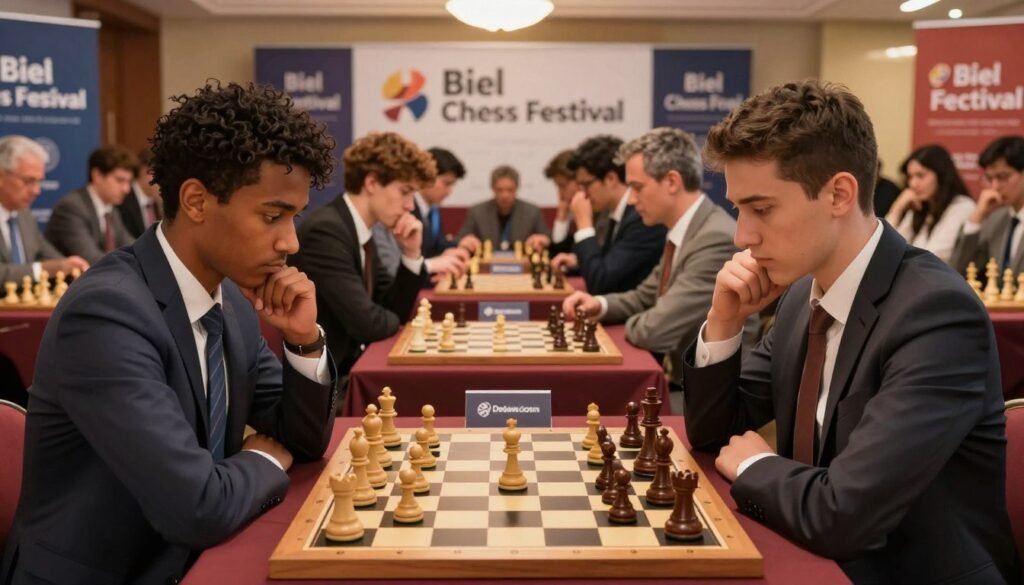
First woman to win Biel and why it mattered
In 2017 she won the Biel Chess Festival, becoming the first woman to take the title. This was a historic win. It showed peak strength in a true open setting and changed expectations about women competing in mixed events.
Notable wins in elite fields
She also scored big wins against elite players, including a victory over Fabiano Caruana at Grenke 2017 and strong results versus 2700+ opponents in Gibraltar 2012. Those games proved she could outplay top rivals in real tournament time control.
What to learn: play stronger opponents to tighten your openings and sharpen calculation. Review every loss—learning happens there!
- Kid tip: treat tough events as growth chances.
- Parent note: pick one “reach” event per year and balance it with confidence-building tournaments.
Best Hou Yifan Games to Study and What to Learn From Them
Study the games that turn tiny edges into full-point wins. We pick the best games not for sparkle alone, but for lessons you can use in real tournaments!
Positional queen-sacrifice ideas
When material is secondary: a queen give-up can win activity, safety, or unstoppable threats. The Gibraltar 2017 queen sacrifice is a classic example of winning by long-term pressure.
Conversion technique
Learn how small edges—space, better pieces, safer king—become full points. Don’t rush. Improve piece placement, trade at the right moment, and only then push for the win.
Defensive precision and time trouble
She often saved worse positions by simplifying, finding perpetuals, or building a fortress. In tight time situations she makes practical, safe moves. Practice speedy, sensible decisions!
Training prompt
- One annotated game a week.
- Ten tactics a day.
- One focused endgame drill session weekly.
One great game a week = big improvement over a year! Parents: keep sessions short and celebrate review effort, not just points.
Style Profile: What Makes Hou Yifan So Hard to Beat
Her style blends razor-sharp calculation with cool, practical choices in tense moments. Coaches note her memory for patterns and fast reactions in a tournament. That mix turns marginal advantages into wins!
Calculation, memory, and fast reaction
Calculation: she checks forcing moves first—checks, captures, threats. Don’t guess; verify tactics before committing!
Memory as patterns: openings and tactical motifs repeat. She recognizes them fast and uses that to save time in a round.
Opening flexibility and adapting across rounds
She changes plans by opponent and by round. That makes her hard to prepare for in a long tournament. You can copy this: pick 1–2 reliable openings and learn the ideas, not every move.
Endgame clarity and risk management
Endgame calm: when pieces come off, she simplifies and keeps precision. Avoid panic moves and trade down when ahead.
Risk sense: she knows when to simplify and when to complicate. Choose positions you understand and force your opponent to solve problems.
- Practice checks and captures first in tactics drills.
- Learn two openings deeply; play them in many rounds.
- Drill pawn and rook endgames weekly for steady growth.
| Strength | What it looks like | Quick drill |
|---|---|---|
| Calculation | Find forcing lines fast | 10 tactics in 15 minutes |
| Opening Flexibility | Switch plans by round | Play same opening vs. 3 styles |
| Endgame Calm | Simplify and convert | One endgame puzzle a day |
Life Beyond the Board: Peking University, Oxford, and Professorship
Beyond trophies, her life shows a clear love of learning and a busy mix of study, travel, and teaching!
Academic path: She earned a BA at Peking University and won a Rhodes Scholarship. At Oxford she studied public policy at St Hilda’s and the Blavatnik School. That mix of study and travel took real planning and focus.
Rhodes Scholar at Oxford and balancing study with play
Being a Rhodes Scholar meant juggling classes and chess time. You learn to choose priorities and protect study blocks. That balance is a life skill for kids and parents!
Youngest professor milestone and calling chess a “passion”
In 2020, at age 26 she became the youngest professor at Shenzhen University and later moved to Peking University. She calls chess a passion, not a career. That idea reduces pressure and keeps the game joyful.
- Whole-person rule: encourage school, hobbies, and play.
- Parent tip: support varied interests to avoid burnout and grow curiosity.
Hou Yifan Today: Ratings, Select Events, and What the Future Could Hold
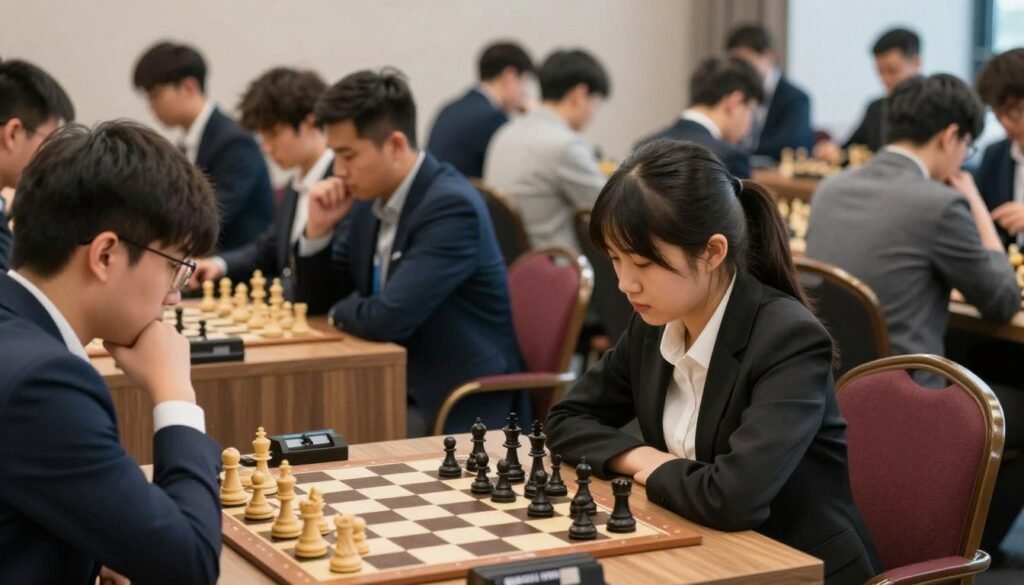
Though not playing many live tournaments since 2018, she still shows top form in fast events. Her FIDE rating sits at 2596 (Feb 2026), which keeps her among the world’s elite even with limited over-the-board time.
Inactivity since 2018 and ranking effects
Playing fewer tournaments can slow rating changes. Rankings depend on activity and results. If you skip many events, your world ranking can drift even if your true strength stays high.
Online speed success and modern excellence
She won the Women’s Speed Chess Championship on Chess.com in 2021 and again in 2023. Both finals were against GM Harika Dronavalli. Repeat wins show consistency, not luck!
- Why this matters: speed wins show fast pattern recognition and calm under clock pressure.
- Kid takeaway: play online for quick practice, but always review games—don’t just spam matches.
- Parent note: balance screen time with focused puzzles and lesson time for real growth.
| Year | Activity | Significance |
|---|---|---|
| 2018–present | Limited over-the-board tournaments | Inactivity affects live ranking but not core strength |
| 2021 | Women’s Speed Chess Champion | Online title vs Harika — fast thinking proven |
| 2023 | Women’s Speed Chess Champion | Repeat win reinforces consistency in rapid play |
Future: many paths remain open! She may return to top tournaments, focus on teaching, or keep excelling online. That variety shows that chess careers can evolve. For a recent event read, see this Chinese league report.
Learn From Hou Yifan’s Approach With Debsie
Try a learning path that blends steady openings, calm endgames, and real tournament practice. We make improving fun and clear for kids and parents!
Start with a Free Trial Class With a Personalized Tutor
Take a Free Trial Class to get a quick, friendly skills check. A tutor spots what to fix next and sets a short plan you can use right away! Sign up here: free trial class.
Build fundamentals and advanced skills through Debsie Courses
We teach basics first: tactics, opening ideas, and endgames. Then we add advanced work like calculation and prep. Learn Via Debsie Courses is a simple path for kids who like guided lessons and parents who want a clear plan: courses.
Stay motivated with the Debsie Leaderboard and goals
Track progress, earn points, and celebrate wins! The Debsie Leaderboard turns practice into a friendly game. Goals and points help kids keep momentum during long training blocks. See the leaderboard: Debsie Leaderboard.
“Small, steady steps win more than bursts of practice.”
- Learn the “Hou-style basics”: steady openings, smart plans, calm endgames!
- Weekly routine: one game review of the best games, one course lesson, one practice tournament game.
- Play short online sessions for quick time management practice and review each game with your tutor.
Read a regional battle of wits to see how tournament pressure shapes plans. Every player improves with steady habits and small goals—start today!
Conclusion
A journey that began in world youth chess led to multiple world championship triumphs and lasting lessons.
She earned the GM title in 2008 and won the world championship at 16 in 2010. Her match record is striking: 10 wins, 0 losses, and 14 draws. Peak rating hit 2686 in 2015 and a top world rank of No. 55 that year. Even with reduced activity since 2018, her strength holds.
What to copy: play steady under pressure, convert small edges, defend accurately, and manage the clock. Every round is a new chance to learn and fight back!
Try a Free Trial Class, explore Learn Via Debsie Courses, and stay motivated with the Debsie Leaderboard. Join our learning community and grow together! Read her full Hou Yifan profile for more facts.