Have you ever looked up at the night sky and felt amazed? It’s amazing to think about how small we are in such a huge space!
For a long time, people thought our galaxy was the only one. But one brilliant American astronomer changed that. He looked deeper into the dark.
This scientist showed us the universe is much bigger than we thought! He opened a door to a world of infinite possibilities that still excites us today.
We want to help your family explore these amazing cosmic mysteries together. You can dive into the stars with Debsie Gamified Courses at https://debsie.com/courses right now!
It’s a fun and interactive way to play, learn, and grow while discovering space’s secrets. Are you ready to become a little explorer and reach for the stars?
Key Takeaways
- The astronomer proved the universe is much bigger than just our galaxy.
- He discovered that the universe is constantly expanding and growing.
- His work changed the way scientists study space and time.
- Interactive learning helps children understand complex scientific ideas easily.
- You can explore the cosmos through gamified lessons and fun adventures.
- Hubble remains one of the most important figures in modern astronomy.
The Early Life and Academic Ambitions of Edwin Hubble
Edwin Hubble was born on November 20, 1889, in Marshfield, Missouri. He was meant for greatness, with big dreams and a love for learning. He was good at sports and school, getting a scholarship to the University of Chicago.
At the University of Chicago, he studied mathematics, astronomy, and philosophy. This gave him a strong base for his future. He was excellent in his studies and loved many subjects.
- Academic Excellence: Hubble’s smartness got him a scholarship, showing his talent early on.
- Diverse Interests: His studies in math, astronomy, and philosophy showed his wide interests.
- Foundation for Success: His early life and studies prepared him for his future as a famous astronomer.
Edwin Hubble’s drive and love for learning are lessons for us all. His early life and dreams teach us about becoming a legend in science.
The Transition from Law to Astronomy
Edwin Hubble’s journey from law to astronomy is truly inspiring. He started studying law at Oxford University, following his father’s dream. But after his father passed away, Hubble moved back to the United States. He then decided to follow his heart and study astronomy.
This big change started an amazing journey for Hubble. It changed how we see the universe today! By choosing astronomy, Hubble not only changed his own path. He also opened new doors for us to explore the cosmos.
Key Factors Influencing Hubble’s Career Change:
- Family influence: Initially studying law due to his father’s wishes.
- Personal passion: Discovering a true interest in astronomy.
- Life events: The death of his father, leading to a reevaluation of his career goals.
When Hubble started his astronomy career, he brought a special view. This view was shaped by his law studies. It likely helped him solve problems in a new way.
“The universe is a pretty big place. If it’s just us, seems like an awful waste of space.” – Carl Sagan
This quote by Carl Sagan shows our place in the universe. It also connects with Hubble’s work on the vast cosmos.
| Year | Event | Impact on Career |
|---|---|---|
| 1910s | Studied law at Oxford University | Initial academic path influenced by family |
| 1910s | Returned to the United States after his father’s death | Shift towards astronomy |
| 1920s | Began career in astronomy | Contributions to understanding the universe |
Hubble’s move to astronomy was a big deal in science history. His work helped start modern astronomy. It inspired many to explore the universe’s wonders.
The Great Debate and the Nature of Spiral Nebulae
Edwin Hubble’s work changed everything. He solved the Great Debate about spiral nebulae. For years, scientists argued if these nebulae were part of our galaxy or not. The debate was big because it was about the universe’s size and shape!
Scientists talked a lot about spiral nebulae. Were they nearby gas clouds or distant galaxies? This was the main question of the Great Debate.
Hubble showed that spiral nebulae were actually separate galaxies. He found some important clues:
- He saw Cepheid variable stars in the Andromeda Nebula (M31). This helped him figure out how far it was from Earth.
- The distance was much farther than our galaxy, proving the Andromeda Nebula was a different galaxy.
Want to learn more about the universe? Check out Debsie for fun courses.
For a better understanding of the universe, learn about astronomical concepts that help us know what we know today.
Hubble’s work was a big win for astronomy. It showed us the universe is much bigger than we thought. We learned there are many galaxies out there.
Edwin Hubble and the Discovery of the Andromeda Galaxy
Edwin Hubble found Cepheid variables in the Andromeda Nebula. This changed how we see the universe! He showed the Andromeda Nebula was a separate galaxy, now called the Andromeda Galaxy.
Hubble used special stars called Cepheid variables. These stars pulse at a rate that shows their brightness. By measuring this, Hubble found how far away these stars were. This made us realize our universe is huge and complex.
“The universe is a pretty big place,” Hubble said. Finding many galaxies beyond our own is amazing. It made us see the universe in a new way.
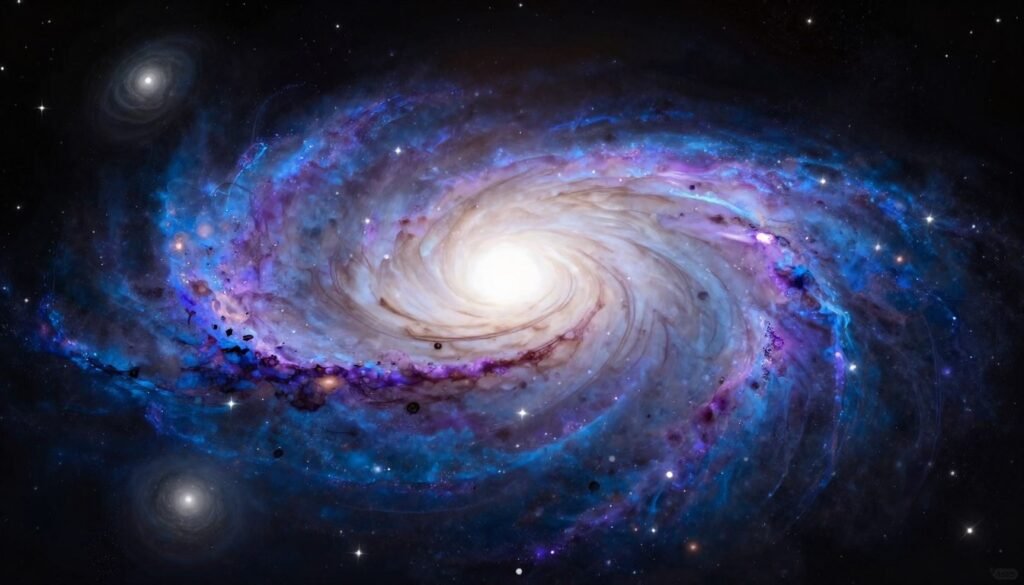
Today, we keep exploring the universe. Hubble’s discovery is key to modern astronomy. Learn more about galaxies and the universe with Debsie’s fun learning games!
Redefining the Scale of the Cosmos
Edwin Hubble changed how we see the universe. He found out how big it really is. He did this by studying special stars called Cepheid variables.
Cepheid variables are stars that shine in a pattern. Their light shows how far away they are. This helps us know how far other stars and galaxies are.
Hubble used these stars to find out how far away other galaxies are. He found that the universe is much bigger than we thought.
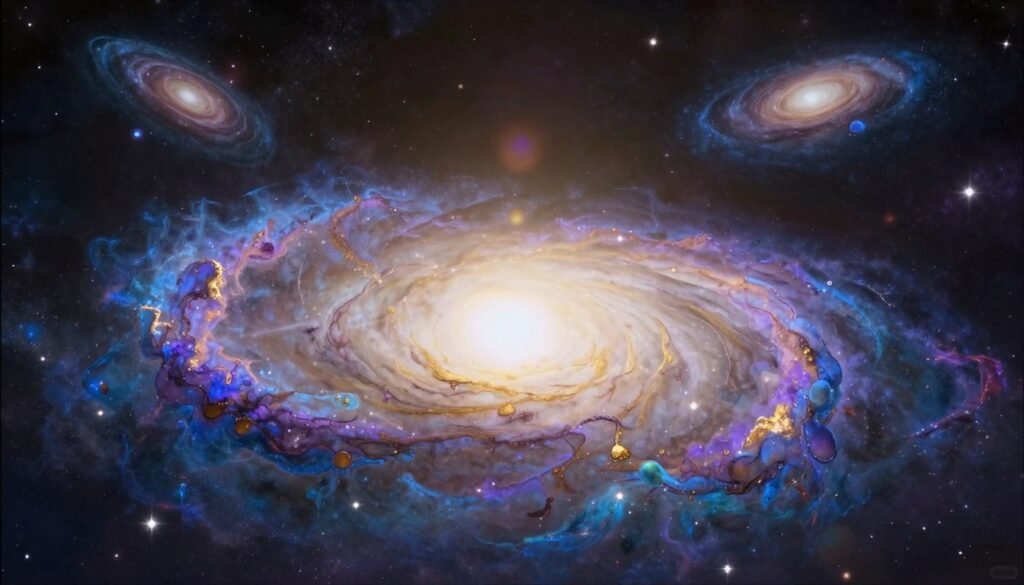
This new knowledge changed how we see the universe. For example, Hubble showed that the Andromeda Galaxy is not part of our Milky Way. It’s a galaxy on its own.
| Cepheid Variable Characteristics | Description |
|---|---|
| Pulsation Period | Regular intervals of pulsation |
| Brightness | Directly related to distance from Earth |
| Astronomical Use | Serves as “standard candles” for distance measurement |
Today, scientists keep studying the universe. They look into the Hubble tension. This helps us learn more about how big and how it has changed over time.
The Classification System of Galaxies
Edwin Hubble made a big impact on astronomy. He created a galaxy classification system that is still important today!
He grouped galaxies by their shape. This system, called the Hubble sequence, sorts them into three main types: elliptical, spiral, and irregular.
Let’s explore the different galaxy types!
- Elliptical Galaxies: These are egg-shaped and have mostly older stars. They can be round or very long.
- Spiral Galaxies: They have a central bulge and spiral arms. These galaxies are full of gas and dust, making new stars. Our Milky Way is a spiral galaxy!
- Irregular Galaxies: These galaxies look chaotic. They can be messy because of galaxy collisions or other disturbances.
This system is not just about looks. It helps us understand galaxy evolution and properties. For example, a galaxy’s shape tells us about its age and star formation history.
| Galaxy Type | Description | Characteristics |
|---|---|---|
| Elliptical | Egg-shaped galaxies | Older stars, little gas or dust |
| Spiral | Galaxies with a central bulge and spiral arms | Rich in gas and dust, active star formation |
| Irregular | Galaxies without a regular shape | Chaotic appearance, often result of galaxy collisions |
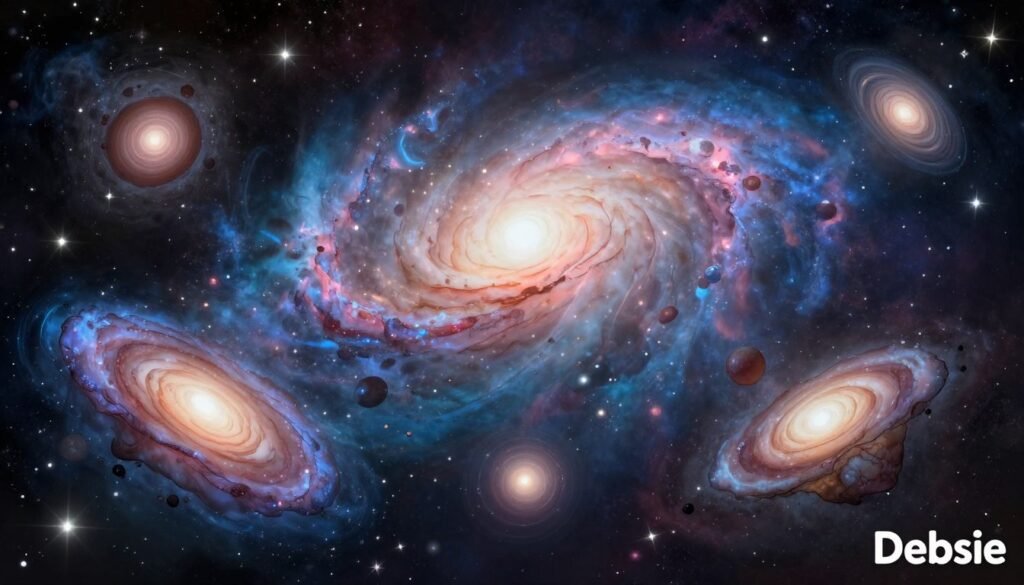
Understanding galaxy types helps us see the universe’s complexity and beauty. Edwin Hubble’s work on galaxy classification has greatly helped us learn about the cosmos!
The Hubble Law and the Expanding Universe
Hubble’s Law is key in modern astronomy. It shows the universe is expanding! Edwin Hubble found this by studying galaxy redshifts.
He saw that most galaxies move away from us. The farther a galaxy is, the faster it goes. This led to Hubble’s Law.
Hubble’s Law is often mathematically expressed as V = H x D. V is the galaxy’s velocity, H is Hubble’s constant, and D is its distance. This equation is very important for understanding the universe.
The expanding universe, as Hubble’s Law shows, started very hot and dense. It has been growing ever since. This idea helps us understand how the universe began and evolved.
| Distance (Mpc) | Velocity (km/s) |
|---|---|
| 100 | 7000 |
| 200 | 14000 |
| 300 | 21000 |
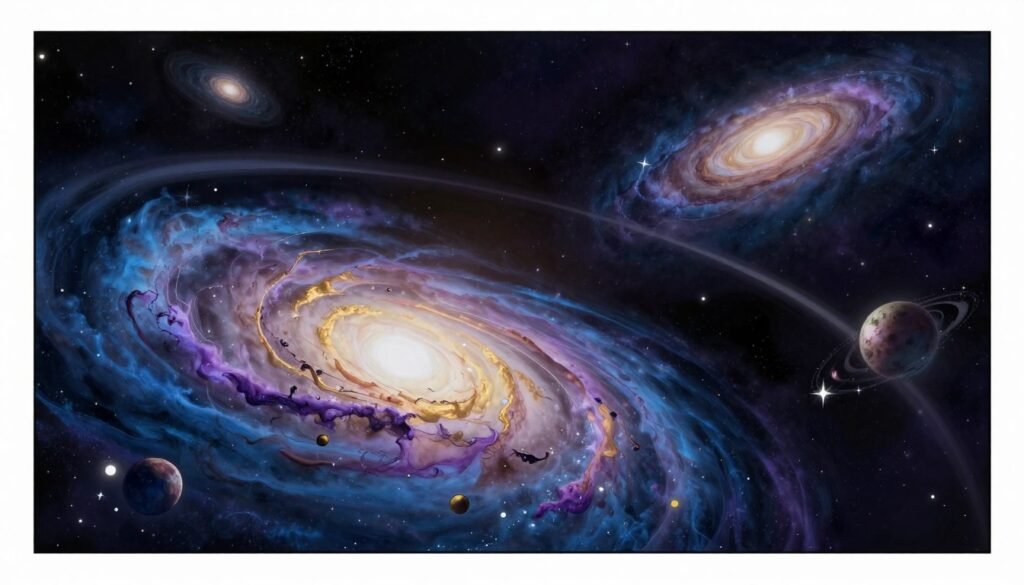
Learning about Hubble’s Law and the expanding universe is exciting. It opens up new ways to explore the universe. You can learn more with fun, interactive experiences.
The Relationship Between Distance and Velocity
Edwin Hubble found a key link between galaxy distance and speed. This is known as Hubble’s Law. It shows how the universe is growing. He saw that galaxies move faster the farther they are from us.
Galaxies move away from us faster if they are farther. This idea changed how we see the universe. Hubble’s Law is simple: V = H0D. Here, V is the galaxy’s speed, D is its distance, and H0 is a constant.
Let’s look at some important points about Hubble’s Law:
- The law shows the universe is growing in all directions.
- We measure galaxy speed by looking at their light’s redshift.
- We find galaxy distances using stars and supernovae.
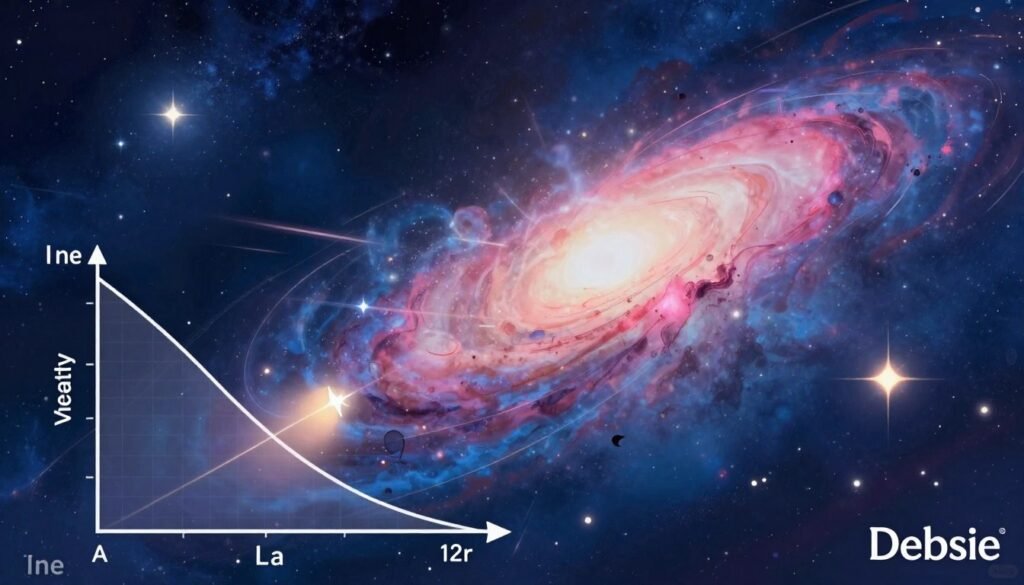
Hubble’s work has greatly influenced astronomy. It proved the universe is expanding. It also gave us a way to measure how fast it’s growing. The Hubble constant is very important for understanding the universe.
Key Takeaways:
- Hubble’s Law links galaxy distance and speed.
- This idea is key to modern astronomy and the Big Bang theory.
- Research keeps improving our knowledge of the universe.
The Legacy of the Mount Wilson Observatory
Edwin Hubble’s work at the Mount Wilson Observatory changed how we see the universe! The observatory gave Hubble top-notch telescopes. This helped him make big discoveries.
The Mount Wilson Observatory helped Hubble learn about galaxy distances and redshifts. With its advanced telescopes, Hubble could see far-off galaxies. He measured their speeds, deepening our cosmic understanding.
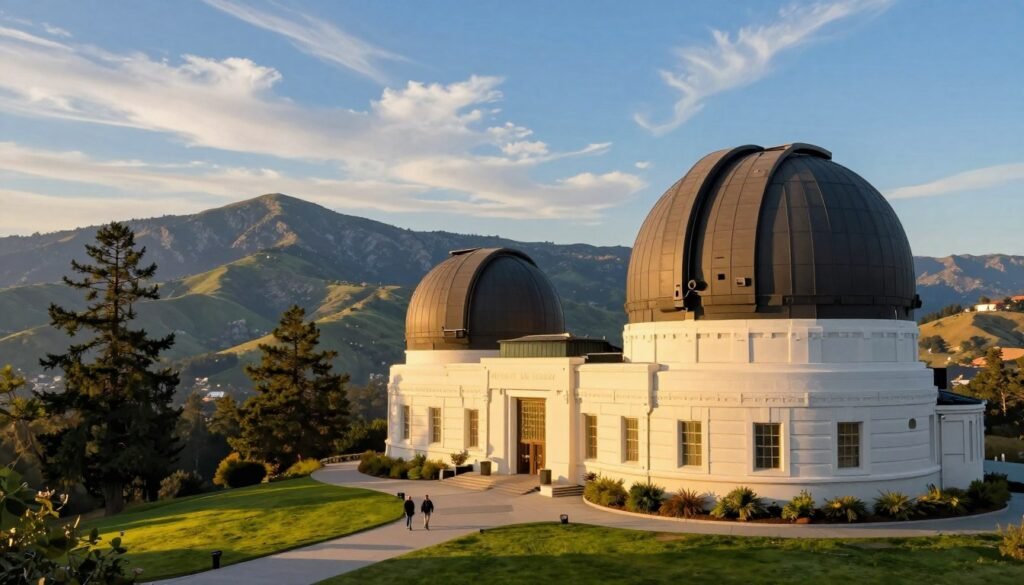
The Mount Wilson Observatory’s legacy goes beyond Hubble’s work. It has been key to many discoveries, helping us learn more about space. Watch this video on PBS SoCal to learn more.
We thank places like Mount Wilson for their work. They inspire new scientists! By exploring, we learn more about the universe and our place in it.
The Development of the Hubble Space Telescope
The Hubble Space Telescope is named after Edwin Hubble. It was launched in 1990. This telescope has changed how we see the universe.
Continuing Edwin Hubble’s Legacy
The Hubble Space Telescope keeps Edwin Hubble’s work alive. It helps us understand the universe better. It found out how fast the universe is growing.
This telescope shows us amazing pictures of galaxies and stars. It helps us learn about stars, galaxies, and how the universe grows.
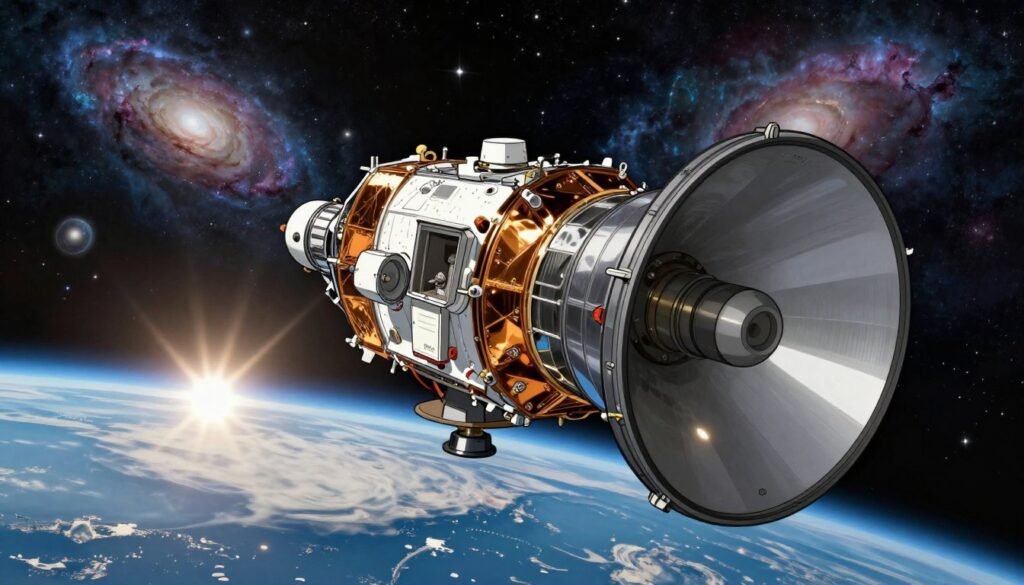
The telescope sees the universe in many ways. It has helped write thousands of papers about space.
Advancing Astronomical Research
We keep exploring with the Hubble Space Telescope. We learn more about the universe. The telescope shows us how important curiosity and research are.
Modern Astronomy and the Continued Search for Knowledge
Astronomers today are exploring more than ever before. This is thanks to Edwin Hubble’s groundbreaking work! His discoveries have greatly helped us understand the universe.
Now, new tools and ways of studying help us see the universe in new ways. Some important areas of study include:
- Galaxy Evolution: We learn how galaxies, like our Milky Way, change over time.
- Dark Matter and Dark Energy: We try to figure out these big parts of the universe that we don’t know much about.
- Exoplanet Discovery: We look for planets outside our solar system that might have life.
These studies help us learn more about the universe. They also inspire new scientists and astronomers. Exploring the cosmos shows us the value of curiosity and discovery.
Debsie’s courses and interactive learning let you join the search for new knowledge. You can learn about the universe and appreciate the science behind it.
Enhancing Your Scientific Understanding with Debsie Gamified Courses
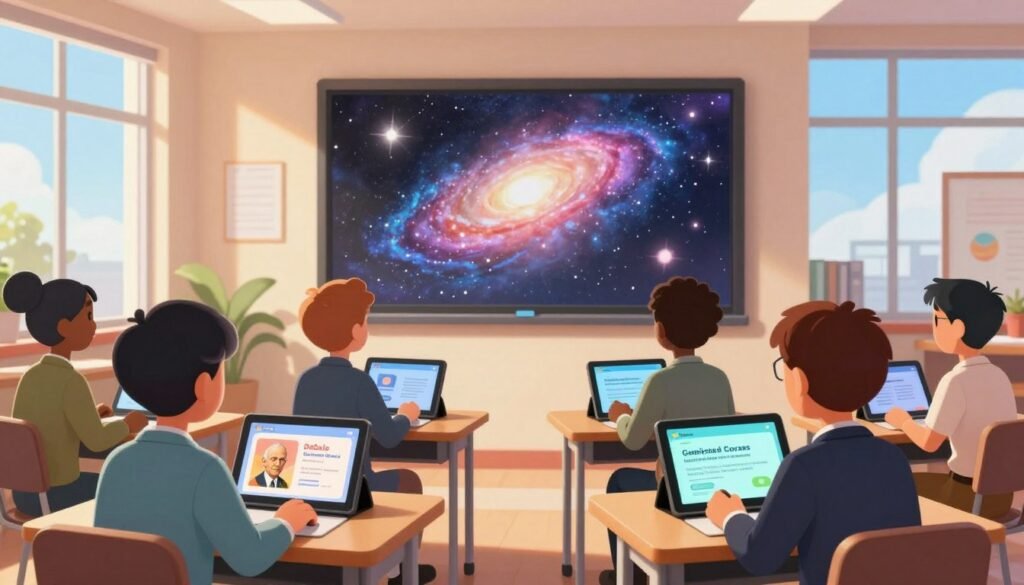
Start an adventure of discovery with Debsie’s fun learning experiences! We’ve talked about Edwin Hubble’s big contributions to space. Now, we’re excited to show you a place where learning science is fun. Debsie offers personalized, gamified learning experiences for kids all over the world. They learn many subjects in different ways.
Interactive Learning Paths
At Debsie, we have interactive learning paths for you. Our courses are fun and challenging. They make hard science easy for everyone to learn.
- Personalized learning experiences tailored to your needs and interests!
- Interactive content that makes learning fun and engaging!
- Flexible teaching methods to suit different learning styles!
Applying Astronomical Concepts
Learning astronomy helps you understand the world better. Our courses show how astronomy works in real life. You can use what you learn in many ways.
- Understanding the universe on a larger scale and our place within it!
- Developing critical thinking and problem-solving skills through interactive challenges!
- Exploring the latest discoveries and advancements in astronomy!
Want to learn more about science? Try Debsie’s gamified courses today at https://debsie.com/courses. Discover a world of learning!
The Lasting Impact of Edwin Hubble Discoveries
Edwin Hubble changed how we see the universe! His work has made a big difference in astronomy. It has changed how we understand the cosmos and its secrets.
Let’s look at some key areas where Hubble’s work has made a lasting impact:
- Expansion of the Universe: Hubble found that the universe is growing! He saw that galaxy light shifts to the red side.
- Classification of Galaxies: Hubble created a way to sort galaxies. This system is still used today. It helps us see how different galaxies are.
- Cosmic Scale: Hubble found how far away the Andromeda Galaxy is. This showed us the universe is much bigger than we thought.
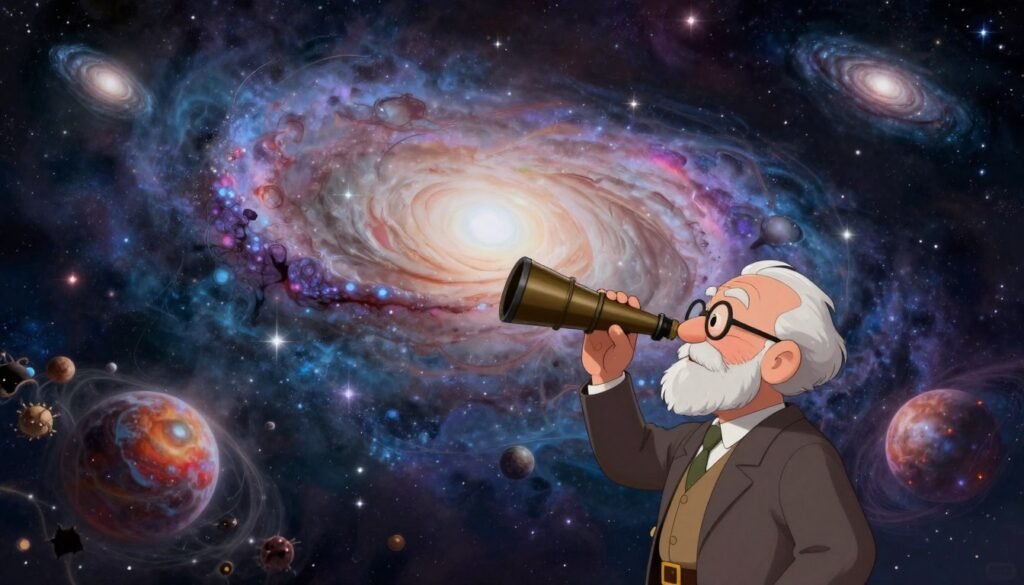
Hubble’s discoveries have grown our knowledge. They have also led to new research and adventures. As we keep exploring, Hubble’s work is key to our understanding.
By following Edwin Hubble’s discoveries, we keep growing our knowledge. We explore new things in astronomy and more!
Conclusion
Edwin Hubble’s story shows us the power of curiosity. It shows us how important it is to keep exploring and discovering. As we finish our look at Edwin Hubble’s life and discoveries, we see how much we’ve learned about the universe.
His work changed how we see the cosmos. He showed us how the universe is expanding and how galaxies are classified. His discoveries still inspire us today, making us want to learn more about space.
At Debsie, we love to help kids learn and explore. We want to help young minds grow and understand the world better.