Have you ever looked at a colorful butterfly and wondered where its patterns came from? It is truly amazing to think about how every creature fits perfectly into its natural home. This spark of wonder is exactly what fueled the famous Charles Darwin biography we admire today!
This English naturalist was a brave explorer who sailed across the vast ocean to study nature. He wanted to understand why animals change over many years to survive. You can start your own adventure by trying out Debsie Gamified Courses at https://debsie.com/courses to learn and grow like a pro!
His big ideas led to the theory of evolution, which explains the massive family tree of all life. We are thrilled to show you how his brilliant work helps us understand the world! Get ready to discover the wonders of biology with us right now!
Key Takeaways
- Darwin was a famous English biologist and curious explorer.
- He studied how living things change and adapt over time.
- The voyage on the HMS Beagle was his most important journey.
- His work changed the way people think about the origin of life.
- He is considered one of the most influential scientists in history.
- Learning about nature helps us appreciate the world around us.
The Early Life and Formative Years of Charles Darwin
Charles Darwin was born in Shrewsbury, Shropshire. He loved nature from a young age! He was born on February 12, 1809, at The Mount, his family’s home.
He was the fifth of six children. His dad was a doctor and his mom came from a famous family.
A Childhood of Curiosity in Shrewsbury
Darwin loved the outdoors as a kid! He spent his days exploring and collecting things. His mom, Susannah, helped him love nature.
This early love for nature helped him grow up.
Some important parts of his childhood were:
- Exploring the outdoors
- Collecting specimens
- Nurturing his interest in natural history with his mother’s support
Academic Struggles and the Shift to Natural History
Darwin had trouble in school, but he loved nature. He joined the Plinian Society to learn more. This was a big step for him.
- His struggles with medical studies
- His growing interest in natural history
- His involvement with the Plinian Society
A Comprehensive Charles Darwin Biography
Charles Darwin’s early life and family ties were key to his growth as a scientist. They set the stage for his work on the theory of evolution.
Darwin’s family was known for their brains and social status. His grandfathers, Erasmus Darwin and Josiah Wedgwood, were famous. Erasmus was a doctor and natural philosopher who talked about evolution in Zoonomia. Josiah was a potter and fought against slavery.
Family Background and Influential Connections
Darwin’s family was full of smart and influential people. His dad, Robert Waring Darwin, was a doctor. His mom, Susannah Wedgwood, came from the famous Wedgwood pottery family. This mix of medical and industrial backgrounds taught Darwin about science and society early on.
| Family Member | Relation to Charles Darwin | Notable Achievements |
|---|---|---|
| Erasmus Darwin | Grandfather | Physician, natural philosopher, and early proponent of evolution |
| Josiah Wedgwood | Grandfather | Successful potter and abolitionist |
| Robert Waring Darwin | Father | Doctor |
The Transition from Medicine to Theology
Darwin first wanted to be a doctor, like his dad. But, he didn’t like the surgeries without anesthesia at the University of Edinburgh. So, he decided to study theology at Christ’s College, Cambridge, to become an Anglican parson.
At Cambridge, Darwin started to love natural history. He collected specimens and studied botany. This was a big step towards his future in science, even though he wasn’t yet thinking about the theory of evolution yet.
The Voyage of the HMS Beagle
On December 27, 1831, Charles Darwin set sail on the HMS Beagle. This journey changed his life and science forever! It was a five-year adventure that helped him create his theory of evolution.
Setting Sail into the Unknown
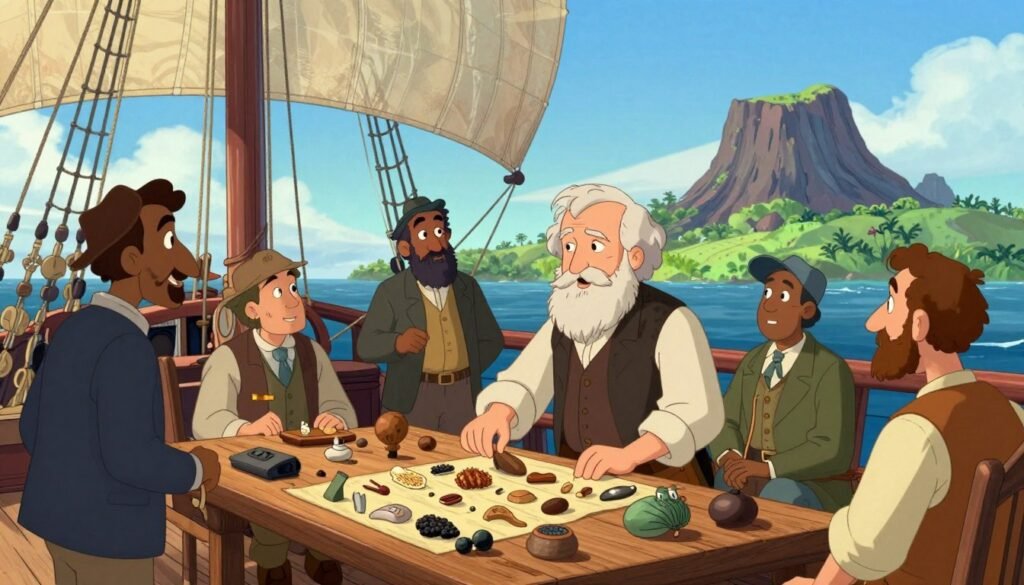
The HMS Beagle’s mission was to map South America’s coastlines for the British Navy. But for Darwin, it was a chance to explore and collect specimens. He wanted to understand the natural world better.
Darwin spent most of his time on land, studying geology and collecting natural history. He was amazed by the wildlife and geological formations. As he traveled, he collected many specimens and made detailed notes.
Mapping the Coastlines of South America
The HMS Beagle aimed to map South America’s coastlines. Darwin’s experiences shaped his ideas about the region’s geological history. He observed earthquakes, studied fossils, and noted the distribution of organisms.
Key discoveries included fossils of giant mammals and evidence of Earth’s changes. Darwin found that the Earth was older than thought. He realized these discoveries were key to understanding life on Earth.
“The world is a book, and those who do not travel read only one page.” – Saint Augustine
Darwin’s journey was a turning point for him. It shaped his thoughts on evolution and natural history. The Charles Darwin discoveries from the HMS Beagle voyage were crucial to his theory of evolution.
Key Charles Darwin Discoveries in the Galapagos
Charles Darwin’s visit to the Galapagos Islands was a big moment in science. It led to discoveries that changed how we see the world. The special animals he saw helped him create his theory of evolution. Let’s look at some of the cool things he found on these amazing islands!
The Diversity of Finches and Their Beaks
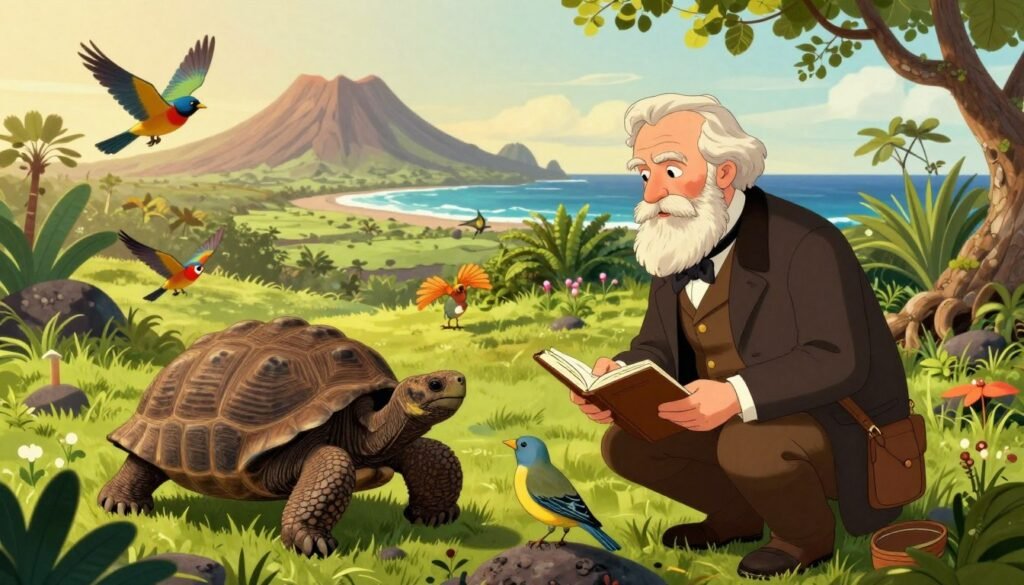
Darwin noticed something special about the finches on the Galapagos. They looked similar but had different beaks. Some had big, strong beaks for hard seeds. Others had small, sharp beaks for insects.
“The different beak shapes and sizes of the finches were perfectly adapted to their specific diets and environments, a clear indication of adaptation to their local ecosystems.”
This showed Darwin that species can change over time to fit their homes better.
Observations of Giant Tortoises and Marine Iguanas
Darwin was amazed by the giant tortoises and marine iguanas he saw. The tortoises had different shells on different islands. This was another important thing he noticed about how species can change.
| Species | Observation | Significance |
|---|---|---|
| Finches | Diverse beak shapes and sizes | Adaptation to different food sources |
| Giant Tortoises | Variation in shell shape and size across islands | Evidence of geographical variation within species |
| Marine Iguanas | Unique ability to live and forage in the sea | Example of adaptation to a specific environment |
Darwin was really interested in these finds. They helped him start his big idea. By looking at the Galapagos’ animals, Darwin learned a lot about our world.
Developing the Theory of Evolution
After his voyage on the HMS Beagle, Darwin started working on his theory of evolution!
He mixed his observations and ideas together. This was the start of a big change in how we see the world. The idea of natural selection was key to his theory.
The Concept of Natural Selection
Darwin’s theory says that species change over time through natural selection. This means that those with traits that help them survive are more likely to have kids. They pass those traits on to their babies!
Darwin said, “It is not the strongest or the smartest that survives, but the most adaptable.” This is shown by the finches on the Galapagos Islands. They have different beaks to eat different foods.
“It is not the strongest of the species that survives, nor the most intelligent, but the one most adaptable to change.”
The Influence of Thomas Malthus on Population Growth
Thomas Malthus’s ideas on population growth helped Darwin. Malthus said that people grow too fast for food and health. Darwin saw that this struggle helps natural selection work.
| Key Concept | Description |
|---|---|
| Natural Selection | The process by which individuals with favorable traits are more likely to survive and reproduce. |
| Struggle for Existence | The competition for resources that drives the process of natural selection. |
| Adaptation | The process by which species become better suited to their environment. |
To learn more about evolution, check out this book on Charles Darwin’s theory. Knowing about evolution helps us understand biology. It shows how DNA makes life diverse. You can find out more about DNA here.
The Long Road to Publishing On the Origin of Species
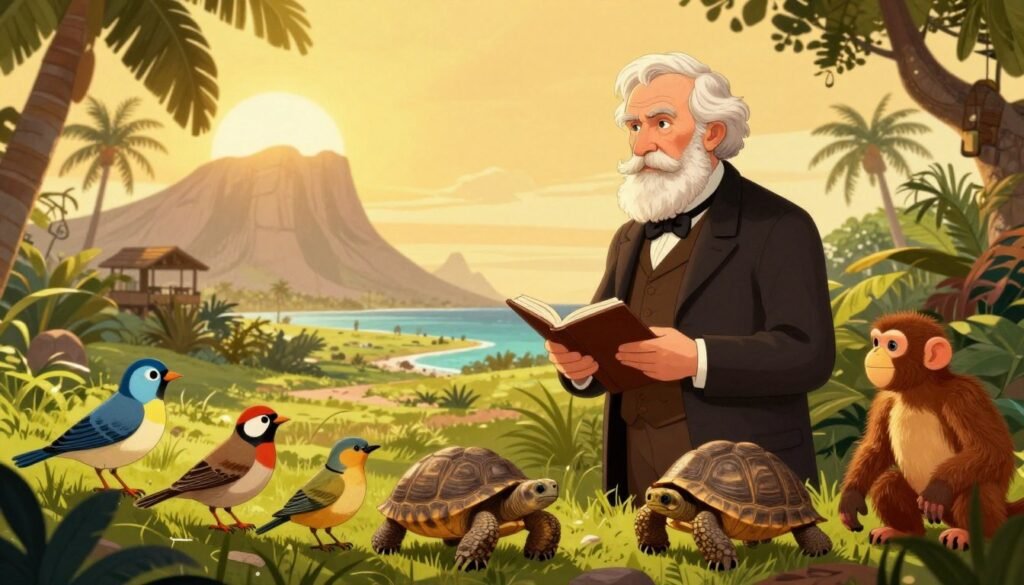
Charles Darwin worked hard to publish ‘On the Origin of Species’. He was excited and scared at the same time! He was collecting evidence and perfecting his theory of evolution.
In 1858, something big happened. Alfred Russel Wallace sent Darwin an essay that was very similar to his own. This made them decide to share their work together at the Linnean Society of London. This showed how important it was to publish his life’s work.
The Fear of Public Backlash
Darwin was afraid of what others would say about his theory. He knew it would change how people thought about creation and nature. But he knew it was crucial to share his findings.
The Correspondence with Alfred Russel Wallace
Talking to Wallace was a big moment. It made Darwin’s book come out sooner. It also showed that they both thought of natural selection on their own. This made their idea seem even more true.
Let’s look at the main events and how they affected Darwin’s book:
| Event | Year | Impact |
|---|---|---|
| Darwin receives Wallace’s essay | 1858 | Prompted joint submission to Linnean Society |
| Joint paper presented | 1858 | Established priority and validity of theory |
| ‘On the Origin of Species’ published | 1859 | Revolutionized biology and beyond |
Darwin’s work in ‘On the Origin of Species‘ started modern evolutionary theory. His journey to publish was filled with hope, teamwork, and a desire to share new ideas.
The Core Principles of Natural Selection
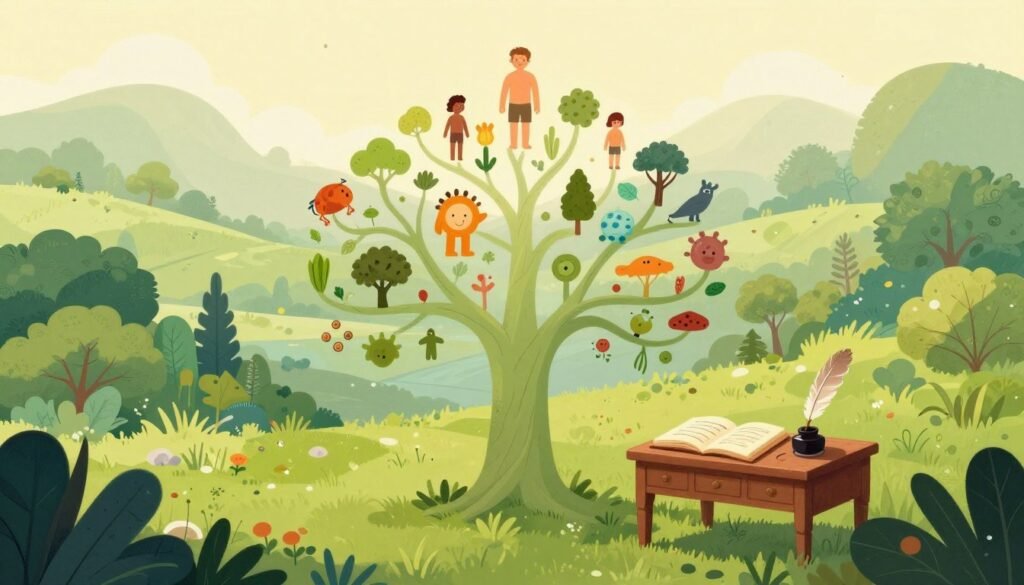
Learning about natural selection is key to understanding Charles Darwin’s theory of evolution. It shows how species change and grow over time.
Darwin shared his theory in “On the Origin of Species.” He showed how species can change over time through natural selection.
Variation Within Populations
One important part of natural selection is variation in populations. This means that no two individuals in a species are exactly the same. Some birds might have stronger beaks, while others have brighter feathers.
Variation is the raw material for evolution. Without differences, there’s no evolution. These differences come from genes, environment, or both.
The Struggle for Existence and Survival of the Fittest
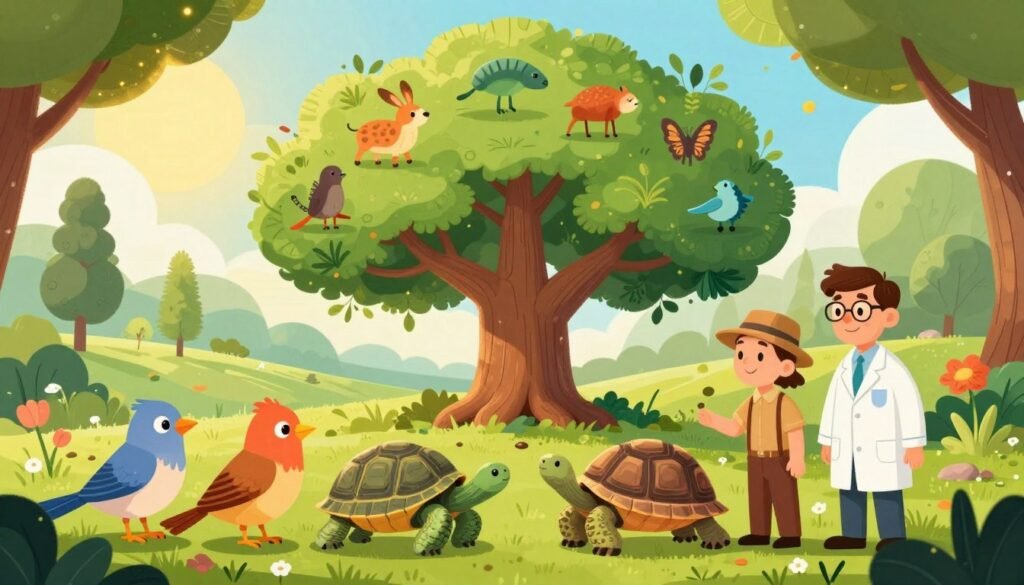
Another key part is the struggle for existence. In any environment, individuals fight for food, water, and shelter. This fight makes the survival of the fittest happen, where the best traits help you live and have kids.
“Survival of the fittest” means the best traits get passed on. This leads to the evolution of species over time.
| Key Components | Description |
|---|---|
| Variation Within Populations | Individuals within a species have different traits and characteristics. |
| Struggle for Existence | Individuals compete for resources such as food, water, and shelter. |
| Survival of the Fittest | Individuals with advantageous traits are more likely to survive and reproduce. |
By knowing these principles, we can better understand life’s diversity and how it has changed over time.
The Impact of Darwinian Thought on Modern Science
Darwin’s ideas have changed science a lot! Charles Darwin’s theory of evolution has helped us understand the world better.
His work started big changes in biology. His theory of evolution is still important in science today.
Shifting the Paradigm of Biology
Darwin’s theory changed biology a lot. It gave a new way to see life on Earth. Many scientists say,
“Darwin’s discovery is the unifying theory of the life sciences, explaining the unity and diversity of life.”
This change helped scientists understand ecosystems better.
The Foundation for Modern Genetics
Darwin’s work also helped genetics grow. His ideas have helped scientists in genetics, ecology, and conservation biology. By studying how species change, scientists learn more about nature.
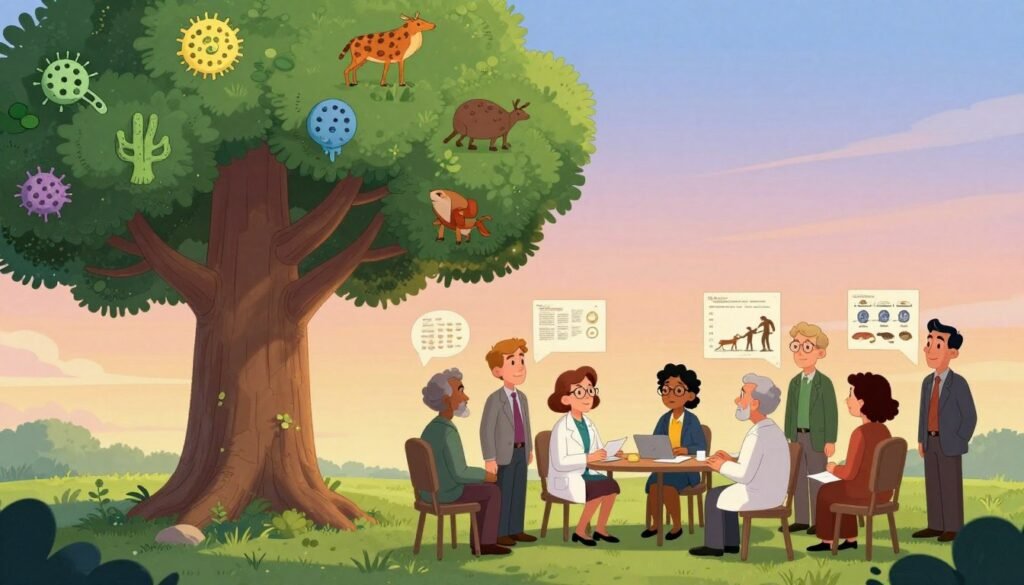
Today, Darwin’s ideas are still key in biology. His work shows how powerful his ideas are and how they keep helping science.
Debsie Gamified Courses for Scientific Learning
Debsie’s Gamified Courses make learning fun. You can enjoy learning about Charles Darwin’s theory of evolution. Our platform is interactive, helping you understand evolutionary biology and other topics.
Enhancing Your Understanding of Evolutionary Biology
Debsie lets you explore Charles Darwin’s discoveries. Our courses make complex theories easy to learn. They are fun for all ages.
Why Gamified Learning Works for Complex Topics
Gamification makes learning fun by adding game elements. It keeps you active and makes learning easier. You feel a sense of achievement.
Interactive Modules at Debsie
Our modules keep you engaged. You’ll find quizzes and simulations. They fit different learning styles.
Tracking Progress Through Gamification
Gamification helps you track your progress. You earn points and badges. You see how far you’ve come and what’s next.
| Learning Method | Engagement Level | Retention Rate |
|---|---|---|
| Traditional Learning | Low | 40% |
| Gamified Learning | High | 80% |
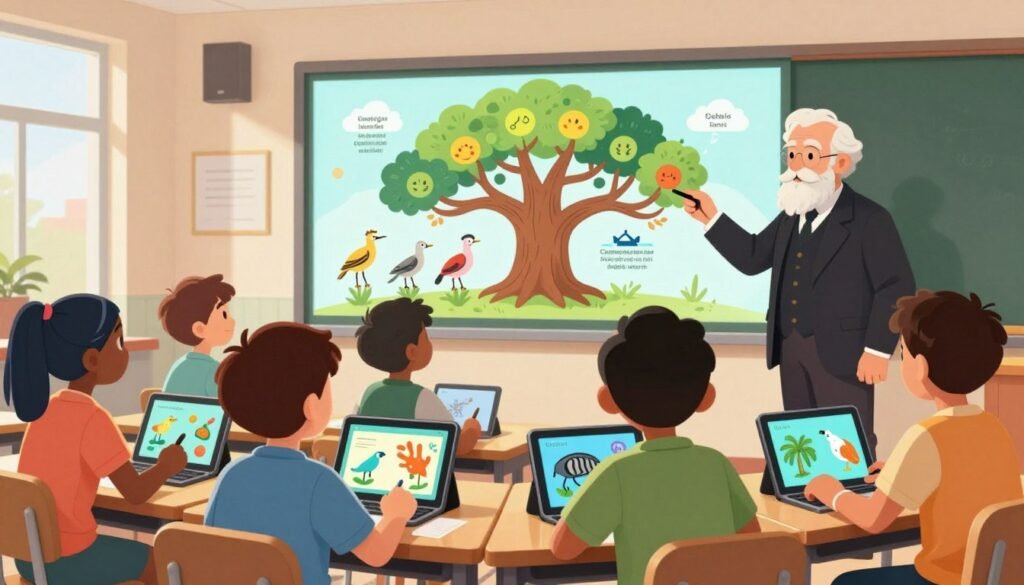
Join Debsie today for fun science learning. Try our Gamified Courses at https://debsie.com/courses. Discover Charles Darwin’s discoveries and more in a new way.
Darwin’s Later Works and Botanical Studies
Charles Darwin’s later years were filled with exciting studies. He kept exploring the natural world after publishingOn the Origin of Species. His work greatly helped us understand the world around us.
The Power of Movement in Plants
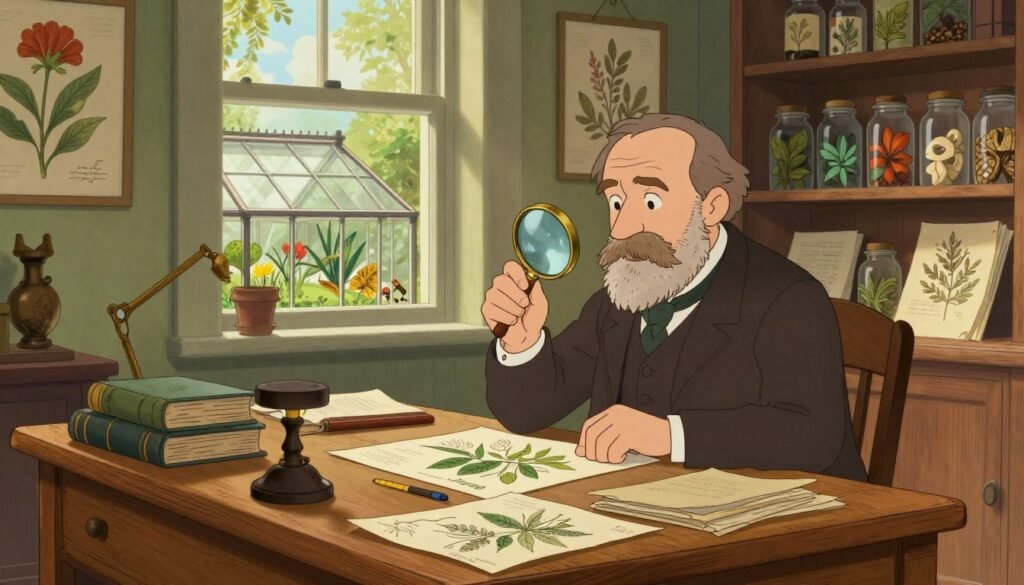
Darwin found amazing things in simple plants! In “The Power of Movement in Plants” (1880), he showed how plants move. He found out plants bend towards light, called phototropism.
Studies on Earthworms and Soil Formation
Darwin was also interested in earthworms and soil. In “The Formation of Vegetable Mould through the Action of Worms” (1881), he talked about earthworms’ role in soil. He showed how they help make soil better by breaking down organic matter.
Here’s a summary of Darwin’s key findings on earthworms and their impact on soil:
| Aspect | Earthworms’ Role | Impact on Soil |
|---|---|---|
| Soil Turnover | Earthworms ingest soil and organic matter, processing it into nutrient-rich castings. | Increases soil fertility and structure. |
| Ecosystem Engineering | Burrowing activities aerate the soil and improve water infiltration. | Enhances soil health and supports plant growth. |
| Nutrient Cycling | Earthworms break down organic matter, releasing nutrients. | Makes nutrients available to plants. |
Darwin’s later works, like his studies on plants and earthworms, show hislasting impact on biology. His work helped us understand the world better. Darwin was always eager to learn and share his findings!
The Social and Religious Controversies
Charles Darwin’s theory of evolution caused big debates when it first came out! His idea of natural selection went against old beliefs about how life started.
Looking back, we see Darwin’s theory was a big deal in the Victorian era. Back then, many people believed in Christianity a lot. They thought Darwin’s ideas were a danger to their faith.
The Conflict Between Science and Victorian Faith
Science and faith were at odds in Darwin’s time. Many thought the Bible told us exactly how the world was made. Darwin’s ideas seemed to go against this.
Darwin said that life changed over time through natural selection. This idea clashed with the Bible’s story of creation. It sparked a big fight between scientists and religious leaders.
| Aspect | Scientific Perspective | Religious Perspective |
|---|---|---|
| Creation | Evolution through natural selection | Literal interpretation of the Bible |
| Origin of Species | Species evolve over time | Species created in their present form |
| Human Origins | Humans evolved from a common ancestor with other primates | Humans created in the image of God |
The Famous 1860 Oxford Evolution Debate
The 1860 Oxford Evolution Debate was a key moment. It happened at a meeting of the British Association for the Advancement of Science. Thomas Henry Huxley stood up for Darwin’s theory against Bishop Samuel Wilberforce.
This debate showed how split people were over Darwin’s ideas. But, Darwin’s work eventually won over many. His theory is now a key part of biology today.
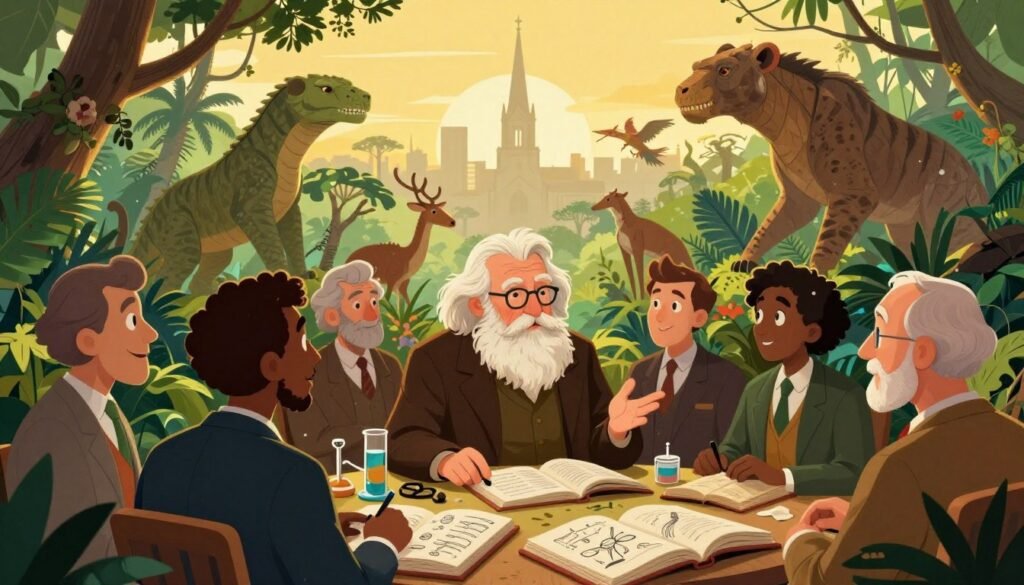
Learning about these debates helps us see how science and society interact. Darwin’s work teaches us the value of curiosity and seeking knowledge.
Darwin’s Legacy in the United States
Exploring Darwin’s legacy in the U.S. shows a mix of science and society. The theory of evolution is key in biology. It was welcomed and questioned in American schools.
The Reception of Evolutionary Theory in American Academia
Universities and scientists in America were quick to talk about Darwin’s ideas. The theory of evolution was exciting to many scholars. They saw it as a new way to understand life’s variety.
But, not everyone agreed. Some said it didn’t have enough proof. Others felt it went against their faith.
The Scopes Trial and the Ongoing Dialogue
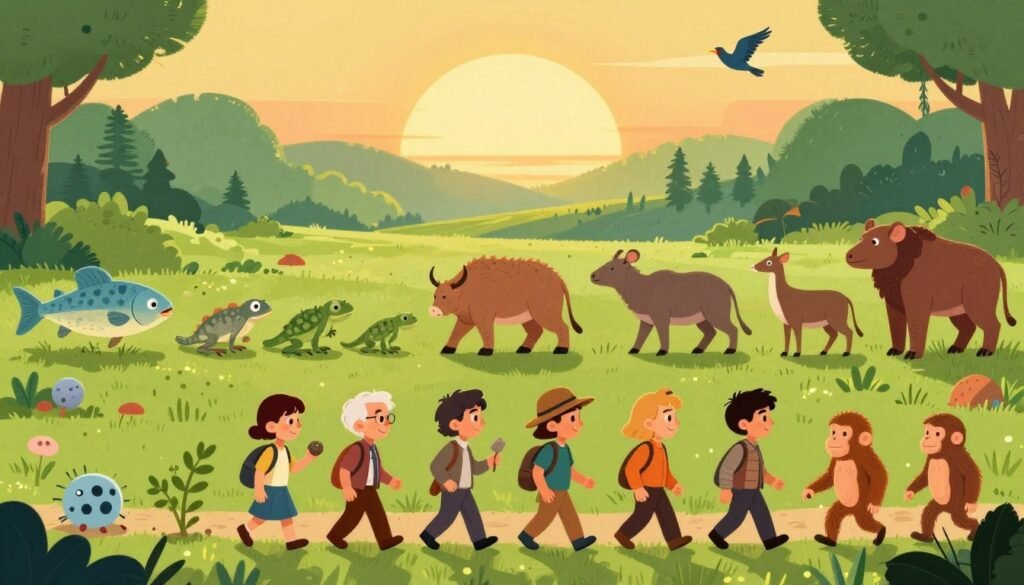
The Scopes Trial in 1925 was a big deal. It showed the fight between science and faith in America. The trial was about a teacher who taught evolution and got in trouble.
“The Scopes Trial was more than a legal battle; it was a cultural phenomenon that brought the debate over evolution into the national spotlight.”
| Aspect | Impact on U.S. Society | Key Events |
|---|---|---|
| Academic Reception | Influenced biology and related fields | Publication of “On the Origin of Species” |
| Public Debate | Sparked controversy and discussion | Scopes Trial (1925) |
| Educational Impact | Shaped science curriculum | Ongoing debates on science education |
Today, Darwin’s theory of evolution is still important in biology. It keeps inspiring research and learning.
The Evolution of Evolutionary Theory
The theory of evolution has changed a lot since Charles Darwin first talked about it! Our knowledge of the natural world has grown. So has our understanding of how life on Earth changes.
The Modern Synthesis of the 20th Century
The modern evolutionary synthesis happened from the 1930s to the 1950s. This was a big moment for evolutionary theory. It mixed genetics, evolution, and other sciences. It made natural selection a key part of evolution.
Theodosius Dobzhansky, a famous biologist, said, “Nothing in biology makes sense except in the light of evolution.”
This synthesis gave us a clear way to understand life’s diversity. Many scientists worked together to make this happen.
Epigenetics and New Frontiers in Biology
Epigenetics and other new areas have helped us learn more about evolution. Epigenetics studies changes in gene function without DNA changes. It shows how organisms adapt to their surroundings.
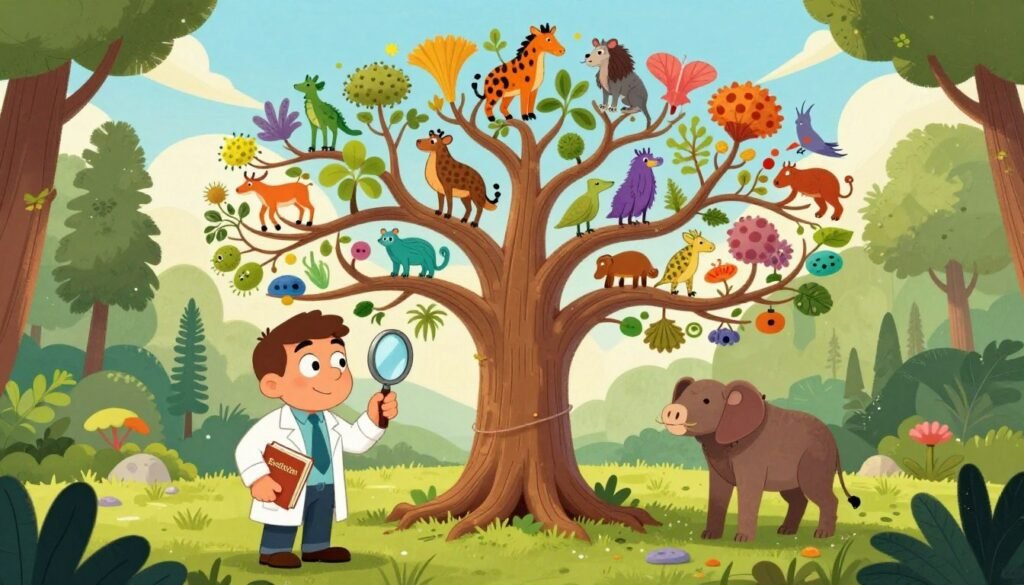
“The discovery of new mechanisms of evolution has opened up exciting new avenues for research, allowing us to better understand the intricate relationships between organisms and their environments.”
Our growing knowledge in these fields makes evolution more interesting. It shows how science is always changing.
How Darwin Changed the Way We View Ourselves
Charles Darwin changed how we see ourselves and the world. His work on evolution showed us how life on Earth is diverse. It also gave us insights into where humans come from.
Darwin wrote about human evolution and why we look different in “The Descent of Man, and Selection in Relation to” (1871). This book helped us understand our place in the world.
The Descent of Man and Human Origins
Darwin showed that humans and other species share a common ancestor. This idea changes how we see ourselves and our connection to nature.
Some key points from Darwin’s work include:
- The concept of shared ancestry among species
- The role of sexual selection in shaping human characteristics
- The importance of understanding human origins in the context of evolutionary history
Our Place in the Tree of Life
Darwin’s theory shows we are connected to all living things. Knowing our place in the tree of life helps us appreciate our connection to the world.
Here’s how humans fit into evolution:
| Category | Characteristics | Evolutionary Significance |
|---|---|---|
| Humans | Bipedalism, complex cognitive abilities | Distinctive traits shaped by natural selection |
| Primates | Advanced social behavior, adaptable physiology | Shared ancestry with humans, illustrating evolutionary relationships |
| Mammals | Diverse habitats, varied reproductive strategies | Common characteristics highlighting evolutionary conservation |
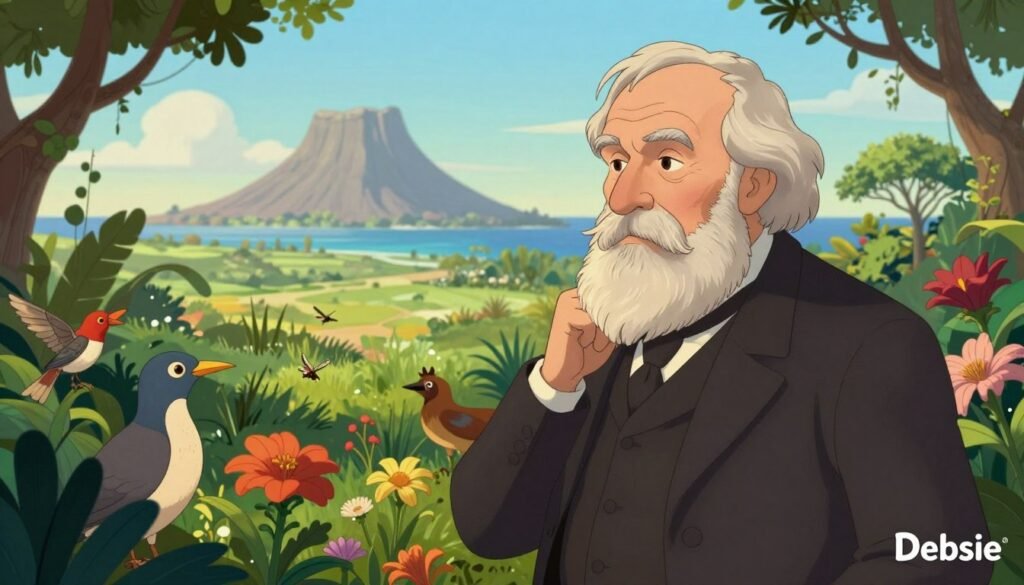
Darwin’s work still shapes our view of humanity and our environment. By understanding his theory, we can appreciate nature and our role in it more.
Conclusion
Charles Darwin’s work on evolution changed science forever. His curiosity and bold thinking inspired many. He showed us the power of questioning what we know.
Looking back, Darwin’s journey is amazing. From his time on the HMS Beagle to publishing On the Origin of Species, he showed us the joy of discovery. His story shows how one person can change our view of the world.
Want to explore more science and learning? Check out Debsie’s fun courses at https://debsie.com/courses. See how learning can be fun and exciting, even with tough topics like evolution!