Carl Sagan: The Scientist Who Made Space Feel Personal

Carl Sagan

Have you ever looked up at the night sky and felt wonder? It’s magical to think about the vast cosmos and our place in it! We think science should be an adventure for all curious learners.

One special astronomer changed how we see the stars forever. This famous scientist made complex ideas easy to understand. He showed us the universe is our home, not just a distant place.

Through his work, space became personal for millions. You can start your own journey of discovery now! Try Debsie Gamified Courses at https://debsie.com/courses to explore science through play and growth.

Exploring the unknown helps us grow and understand our world. Carl was a true pioneer who made learning exciting. Let’s explore his incredible life story together!

Key Takeaways

  • He was a brilliant astronomer who loved to share the wonders of space.
  • His work made complex scientific concepts easy for everyone to understand.
  • He taught us that humans are deeply connected to the universe.
  • The famous series he created inspired millions to look at the stars.
  • Learning about space encourages children to stay curious and keep growing.
  • Gamified learning tools can make big science topics fun and engaging!

The Early Life and Intellectual Awakening of Carl Sagan

Carl Sagan was born in Brooklyn in 1934. His early life showed how important curiosity is. His parents helped him explore the universe.

From Brooklyn to the Stars

Sagan grew up in Brooklyn. But he loved looking at the stars. The stars became his escape, a canvas for his imagination!

His parents gave him books and resources. They helped his love for astronomy grow.

As a young boy, Sagan loved the American Museum of Natural History. He was amazed by space exhibits. These experiences made him wonder about the universe.
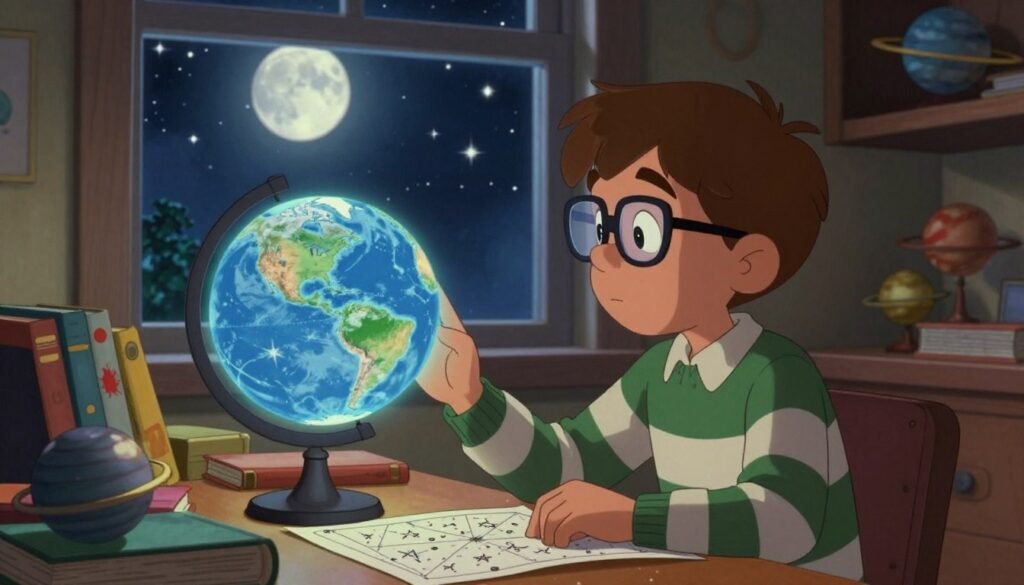
A young Carl Sagan, around 10 years old, is depicted in the foreground, sitting at a cluttered desk filled with books and star charts, wearing a striped sweater and glasses. His expression is one of curiosity and wonder as he gazes at a glowing globe of the Earth. In the middle ground, a window reveals a starlit night sky, speckled with twinkling stars and a prominent full moon, casting a soft light into the room. The background features shelves filled with science books and models of planets, highlighting his intellectual awakening. The scene is warm and inviting, with a cozy atmosphere. Soft, diffused lighting creates a nostalgic mood, captured from a slightly elevated angle to encompass the details of his surroundings. This image should embody a sense of discovery and inspiration. Debsie.

Academic Foundations at the University of Chicago

Sagan went to the University of Chicago next. He learned about astronomy and physics. This was the start of his career.

The university encouraged learning many subjects. Sagan got to explore different areas. This made him understand the universe better.

At the University of Chicago, Sagan’s love for science grew. He was part of a community that loved learning. This shaped his career as a scientist.

Sagan’s early life and education were key to his success. His story shows the value of curiosity and support for young minds. It encourages us to explore the cosmos together!

The Scientific Contributions of Carl Sagan

Carl Sagan changed how we see the universe. His work in space science was amazing. It made us all want to learn more about space.

Unlocking the Mysteries of Venus

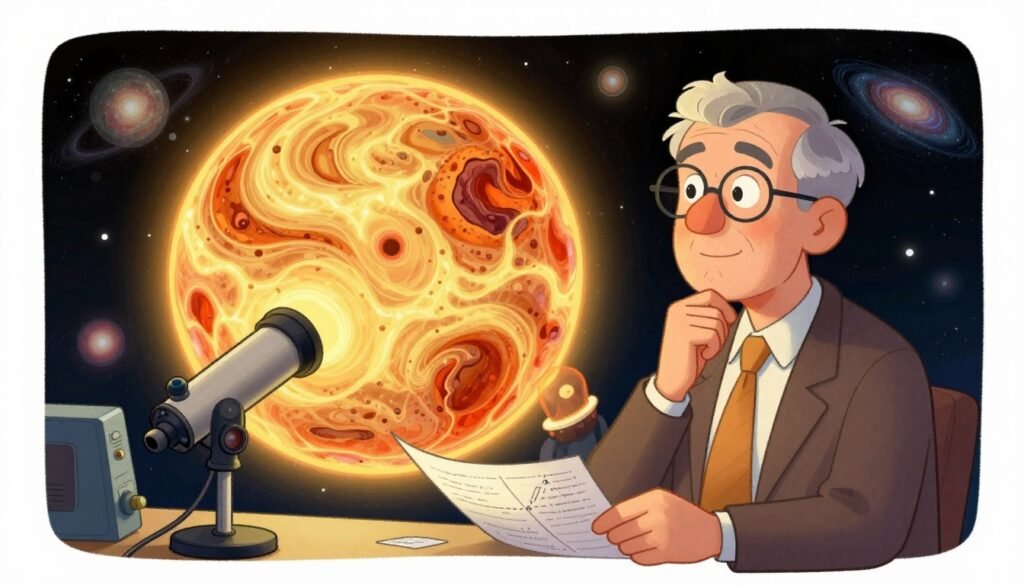
Sagan helped us understand Venus. He figured out why Venus is so hot. It’s because of its thick atmosphere.

Year Discovery Significance
1960s High surface temperature Indicated a significant greenhouse effect
1970s Atmospheric composition Confirmed the presence of carbon dioxide as a major contributor to the greenhouse effect
1980s Spacecraft observations Provided detailed data on Venus’ atmosphere and surface

A vivid representation of Carl Sagan’s contributions to understanding Venus, featuring a detailed, colorful illustration. In the foreground, show a thoughtful Carl Sagan, depicted in professional attire, examining a model of Venus with scientific instruments like a telescope and charts. The middle section highlights a glowing, textured depiction of Venus's atmosphere swirling with clouds, showcasing its greenhouse effect and volcanic landscapes. In the background, a starry space filled with distant galaxies enhances the cosmic perspective. Soft, warm lighting creates an inviting atmosphere, emphasizing the wonder of discovery. The composition captures the essence of exploration and knowledge, designed to be colorful, friendly, and minimal, branded with "Debsie".

The Search for Extraterrestrial Intelligence

Sagan looked for life outside Earth. He thought it was a big question. It was about science and thinking deeply.

Some of the key aspects of Sagan’s work in SETI include:

  • Advocating for the use of radio telescopes to search for signals from other civilizations
  • Participating in the development of the Arecibo Message, a signal sent into space to potentially communicate with extraterrestrial life
  • Contributing to the Voyager Golden Record, which contained sounds and images of Earth

By exploring these areas, Sagan made us see the universe in a new way. He started a new time of space discovery.

Carl Sagan and the Golden Record

The Voyager Golden Record, made by Carl Sagan, shows life on Earth. It’s for aliens who might find it. It has sounds and images of our planet’s beauty and complexity!

A Message to the Cosmos

The Golden Record went on Voyager spacecraft in 1977. It was a message for aliens to find. It’s like a time capsule of us and our world.

Selecting the Sounds and Images of Humanity

Carl Sagan picked what’s on the Golden Record. He wanted to show humanity and Earth’s variety. It has sounds, music, languages, and images. He chose carefully to show our world and us.
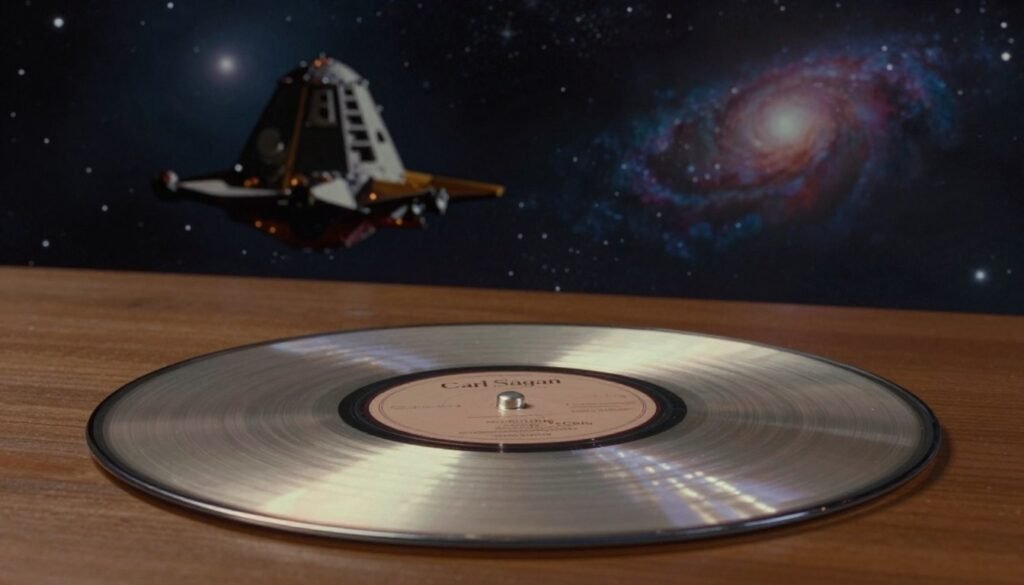
A stunning representation of the "Carl Sagan Golden Record," presented as a close-up in the foreground, glimmering under soft, warm lighting. The record, intricately detailed with swirling engravings and a reflective surface, is placed on a polished wooden surface that subtly hints at the universe. In the middle background, a faint silhouette of the Voyager spacecraft is visible against a deep, starry night sky, sprinkled with vibrant colors of nebulas and distant galaxies. The atmosphere is contemplative and awe-inspiring, capturing the grandeur of space exploration. A sense of curiosity and wonder permeates the scene, encouraging viewers to consider our place in the cosmos. The image embodies the spirit of discovery and connection inherent in Carl Sagan's work. Debsie.

Category Examples Significance
Natural Sounds Rain, thunder, ocean waves Representing Earth’s environment
Musical Selections Classical, folk, and popular music Showcasing human cultural diversity
Spoken Greetings Greetings in 55 languages Highlighting human linguistic diversity
Images Humans, landscapes, wildlife Capturing the essence of life on Earth

The Golden Record is more than a time capsule. It’s a message about us in the universe. It shows our curiosity and wish to connect with the unknown. As we explore, the Golden Record is a symbol of our existence and dreams!

The Cultural Impact of the Cosmos Series

Carl Sagan’s Cosmos series was more than a documentary. It was a cultural hit that made science easy for all! It taught and inspired many scientists, thinkers, and explorers.

The Cosmos series, hosted by Carl Sagan, was a game-changer. It brought science into homes. It was loved and made science popular.

Bringing Science to the Living Room

The Cosmos series was a hit because it explained science in simple ways. Sagan’s way of talking was both exciting and clear. It made viewers feel like they were exploring space.

Key elements that contributed to its success include:

  • Storytelling: Sagan used stories to share complex ideas, making them easier to understand.
  • Visuals: The series had amazing visuals that made space concepts real.
  • Accessibility: Sagan spoke in a way that everyone could get, not just science fans.
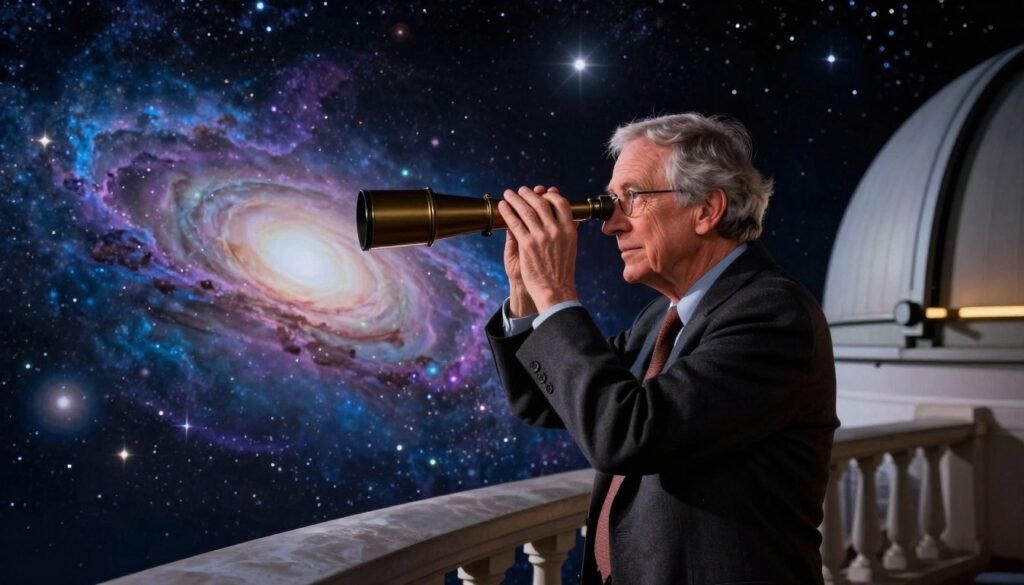
A captivating scene inspired by Carl Sagan's "Cosmos" series, featuring him as a middle-aged man in professional attire, standing on a starlit observatory balcony. The foreground showcases Sagan gazing through a vintage telescope, illuminated softly by warm, ambient light that reflects his passion for the universe. In the middle ground, a vibrant cosmic landscape unfolds, filled with swirling galaxies, nebulae in hues of blue and purple, and shimmering stars, evoking a sense of wonder and curiosity. The background features a breathtaking night sky, enhancing the feeling of vastness and connection to the cosmos. The overall mood is inspiring and intimate, capturing Sagan’s desire to make space exploration feel accessible and personal to all. Debsie.

The Visual Language of Space Exploration

The visuals in the Cosmos series were groundbreaking. They made the show more fun and helped explain science in a fun way.

The state-of-the-art graphics and captivating imagery were key. They set a new standard for science shows. They showed how science could be fun and easy to watch.

The Cosmos series was both educational and entertaining. It drew in many viewers. It inspired a new wave of scientists and science communicators.

The Pale Blue Dot Perspective

Carl Sagan’s vision is best shown in the Pale Blue Dot image. This photo, taken by Voyager 1, shows Earth as a tiny dot in space. It reminds us of our planet’s beauty and fragility.
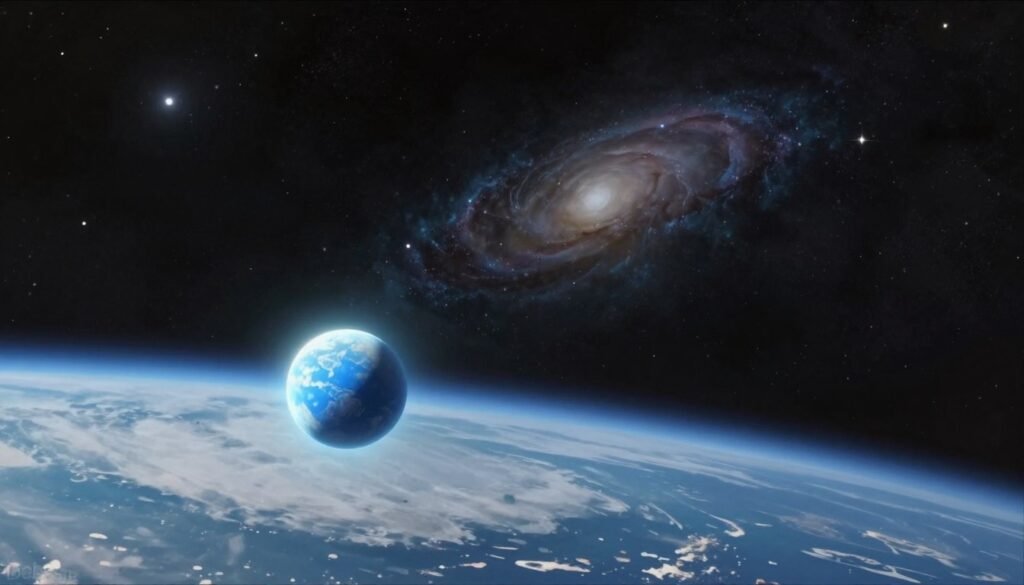
A breathtaking view of Earth from the perspective of deep space, capturing the essence of "The Pale Blue Dot." In the foreground, a delicate, ethereal glow surrounds the tiny blue planet, emphasizing its fragility amidst the vast cosmic expanse. The middle ground features a swirl of distant stars and galaxies, adding depth and awe to the scene. In the background, a dark, tranquil void of space filled with shimmering celestial objects showcases the enormity of the universe. Soft, diffused light illuminates the scene, creating a serene and contemplative atmosphere. The composition is shot at a slight angle, reminiscent of a photograph taken from a spacecraft, inviting viewers to reflect on our place in the cosmos. The image embodies friendliness and wonder, branded subtly with "Debsie".

Reframing Our Place in the Universe

The Pale Blue Dot image changed how we see Earth. Sagan said, “That’s here. That’s home. That’s us.”

“Look again at that dot. That’s here. That’s home. That’s us. On it everyone you love, everyone you know, everyone you ever heard of, every human being who ever was, lived out their lives.”

This view makes us think about our planet’s importance. It tells us to take care of our home.

Seeing Earth as a small part of the universe is key. It makes us feel connected and responsible. When we look at the Pale Blue Dot, we think about our actions and their effects. For more on the Pale Blue Dot, check out the Vatican Observatory’s view on its anniversary.

The Philosophical Weight of a Single Photograph

The Pale Blue Dot is more than a photo; it’s a deep thought about our existence. It makes us think about our role in the universe and our duty to Earth. This image has inspired many to see the cosmos and our place in it differently.

In short, the Pale Blue Dot, thanks to Carl Sagan, still inspires us today. It makes us think about our place in the universe and our role as caretakers of our planet. It’s a symbol of Sagan’s message: we are all part of something bigger than ourselves.

Advocating for Scientific Literacy

Carl Sagan loved science and wanted everyone to understand it. He thought knowing science helps us make good choices every day. He said science literacy is key for a healthy democracy.

Let’s look at how Sagan fought against fake science. He did this in his book “The Demon-Haunted World.”

The Demon-Haunted World and Critical Thinking

In “The Demon-Haunted World,” Sagan teaches us how to think critically. He says critical thinking helps us deal with fake news and science. He gives us tools to check facts and make smart choices. For more on critical thinking, check out Debsie’s article.

Sagan taught us to be skeptical and test things carefully. This fights against fake science in our world. He wanted us to doubt and question what we hear.

Combating Pseudoscience in Modern Society

Fake science is still a big problem today. Sagan’s ideas are still important as we face these issues. As this LinkedIn article points out, Sagan’s fight for science literacy is still needed.

To fight fake science, Sagan pushed for better science education. He wanted people to learn to think critically and understand science. This way, we can all make better choices.
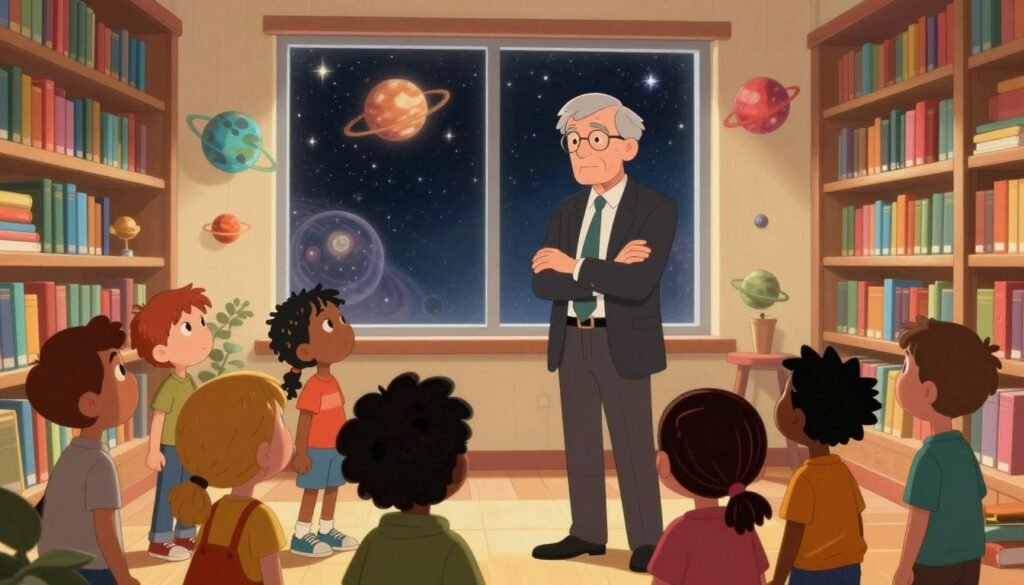
A thoughtful portrayal of Carl Sagan, in professional business attire, standing confidently in a vibrant library filled with books about science and the universe. In the foreground, he engages with a diverse group of animated children, all dressed in modest casual clothing, as they curiously explore illustrations of galaxies and planets. In the middle ground, a large window reveals a starry sky, suggesting the wonders of the cosmos beyond, while soft lighting casts a warm, welcoming glow throughout the room. The ambiance is educational and inspiring, with an emphasis on scientific literacy and curiosity. Colorful book spines and planets in vibrant colors enhance the atmosphere, creating a friendly and engaging scene that embodies Sagan's advocacy for understanding science. Debsie.

Key Principles Description
Critical Thinking Evaluating evidence and arguments to form a judgment
Skepticism Questioning assumptions and challenging prevailing wisdom
Scientific Literacy Understanding the basics of science and the scientific method

By following these ideas, we can create a world that values science and critical thinking. This helps us face the world’s challenges with confidence.

The Art of Science Communication

Carl Sagan made the cosmos feel close to millions. He had a special way to share complex science ideas in a fun way.

Making Complex Concepts Accessible

Sagan changed how we talk about science. He used easy words to explain hard ideas. This helped everyone understand.

He didn’t just make science simple. He made it fun and personal. His Cosmos series shows how he did this.

The Power of Storytelling in Physics

Storytelling was key for Sagan. He turned science facts into stories. This made physics and astronomy fun and interesting.

Stories helped people remember science better. Sagan’s way of linking science to people shows his skill.
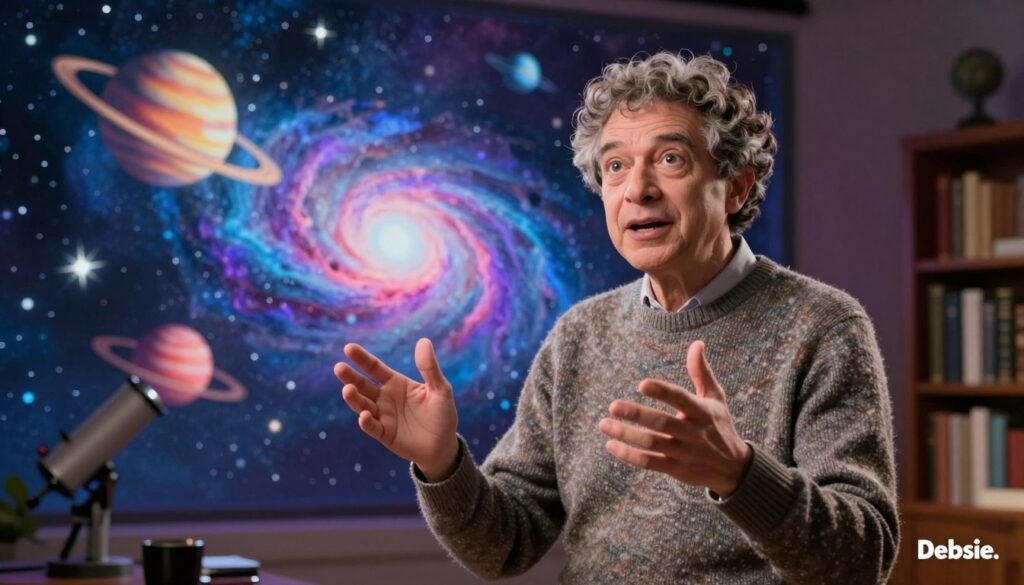
A charismatic middle-aged man with short, curly hair, embodying the essence of Carl Sagan, stands with an engaging expression, wearing a cozy, smart-casual sweater, in the foreground. He gestures animatedly, surrounded by vibrant cosmic illustrations of planets, stars, and galaxies, symbolizing the vastness of space and the beauty of science communication. In the middle ground, a softly glowing nebula swirls with colors of blue, purple, and pink, evoking a sense of wonder. The background features a subtle silhouettes of telescopes and bookshelves filled with science literature, under ambient lighting that creates an inviting atmosphere. The image should feel warm and inspiring, emphasizing the individual's passion for making science relatable. The style is friendly, colorful, and minimal, perfect for capturing the essence of effective science communication. Branding element: "Debsie."

Sagan mixed science with stories in a new way. His work still shapes how we share science today. He was a true pioneer.

Carl Sagan as a Public Intellectual

Carl Sagan was more than a famous astrophysicist. He was a public intellectual who changed the way we talk about big issues. He knew how important it was to talk to the public and leaders about things that affect us all.

He could explain hard science in simple words. This made him loved by many. Sagan inspired people to think deeply about our world and our place in the universe.

A thoughtful Carl Sagan, the renowned public intellectual, stands confidently on a stage, clad in professional business attire, exuding charisma and warmth. He holds a book, perhaps "Cosmos," with one hand, while gesturing outward with the other, engaging the audience. The foreground captures Sagan's expressive face, showcasing his intense yet friendly gaze, framed by curly hair. In the middle ground, a captivated audience of diverse men and women listens attentively, reflecting a range of ages and backgrounds. The background features a softly lit auditorium with dimmed lights focused on the speaker. Warm, inviting golden tones enhance the atmosphere, creating a sense of inspiration and connection. Shot with a 35mm lens from a slightly low angle to highlight Sagan's stature as a thought leader. The image should radiate positivity and the importance of science in everyday life, branded subtly with "Debsie."

Engaging with Global Policy and Nuclear Disarmament

Carl Sagan worried a lot about the nuclear arms race. He thought it could end human life. He spoke out for getting rid of nuclear weapons.

He talked about more than just nuclear issues. He also shared his thoughts on the environment, teaching science, and ethics in research.

Key aspects of his advocacy included:

  • Highlighting the catastrophic consequences of nuclear conflict
  • Promoting international cooperation to reduce nuclear arsenals
  • Encouraging policymakers to consider the long-term effects of their decisions

The Responsibility of Scientists to Society

Sagan thought scientists should talk to everyone. They should help with big talks about science and technology.

He said scientists should think about how their work affects society. This idea is still important today, as science and tech change our world a lot.

The responsibility of scientists, as Sagan saw it, involves:

  1. Communicating scientific findings clearly and accurately to the public
  2. Participating in policy discussions to ensure that scientific knowledge informs decision-making
  3. Advocating for the responsible use of scientific and technological advancements

The Legacy of Carl Sagan in Modern Astronomy

Carl Sagan’s work still inspires many today. His Cosmos series taught millions about space. It made us all wonder about the universe.

Sagan’s dream for space exploration lives on. His push for science education has encouraged many to study STEM. Learn more about his impact in this article on The Conversation.

Inspiring the Next Generation of Explorers

Sagan made science easy for everyone to understand. He showed us science is a story that excites and inspires. His way of sharing science has motivated many scientists to do the same.
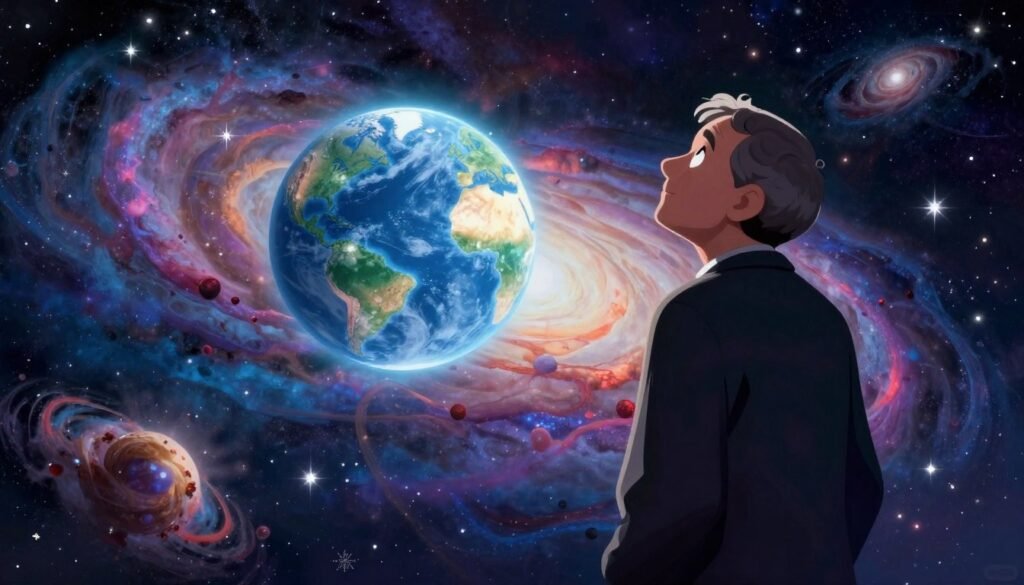
A reflective tribute to Carl Sagan's legacy, showcasing a starlit night sky filled with vibrant, swirling galaxies and shimmering stars, embodying the wonder of the cosmos. In the foreground, an inspiring silhouette of a thoughtful scientist in professional attire stands gazing upwards, symbolizing curiosity and exploration. The middle ground features a glowing Earth, highlighting humanity's connection to the universe, while the background bursts with colorful nebulae and celestial phenomena, creating a sense of awe and discovery. Soft, ethereal lighting enhances the cosmic atmosphere, casting a dreamy glow across the scene, inviting viewers to reflect on Sagan's profound impact on modern astronomy. Created in a colorful, friendly style, embodying the enthusiastic spirit of exploration that Sagan championed. Debsie logo subtly incorporated into the design.

How His Vision Shapes Current Space Missions

Today, Sagan’s dreams guide our space missions. His work on theVoyagermissions and the Golden Record has made a big impact. The table below shows some missions influenced by Sagan.

Mission Description Sagan’s Contribution
Voyager 1 & 2 Exploring the outer Solar System and beyond Led the team that created the Golden Records
Mars Exploration Rovers Searching for signs of life on Mars Advocated for the exploration of Mars
SETI Institute Searching for extraterrestrial intelligence Supported the search for extraterrestrial life

Carl Sagan’s legacy shows science can inspire and teach us.His work guides us as we explore space. It pushes us to learn more about the universe.

Gamifying the Learning Experience

Let’s make learning fun like Carl Sagan did! We can use games to make school exciting. This way, we can get more kids interested in learning about the universe.

Curiosity-Driven Education

Carl Sagan loved to learn and share his knowledge. His way of teaching is still great today. Gamified learning is like Sagan’s teaching style.

Debsie uses games to teach hard subjects like space. It makes learning fun and easy. This helps students remember more and want to learn more.
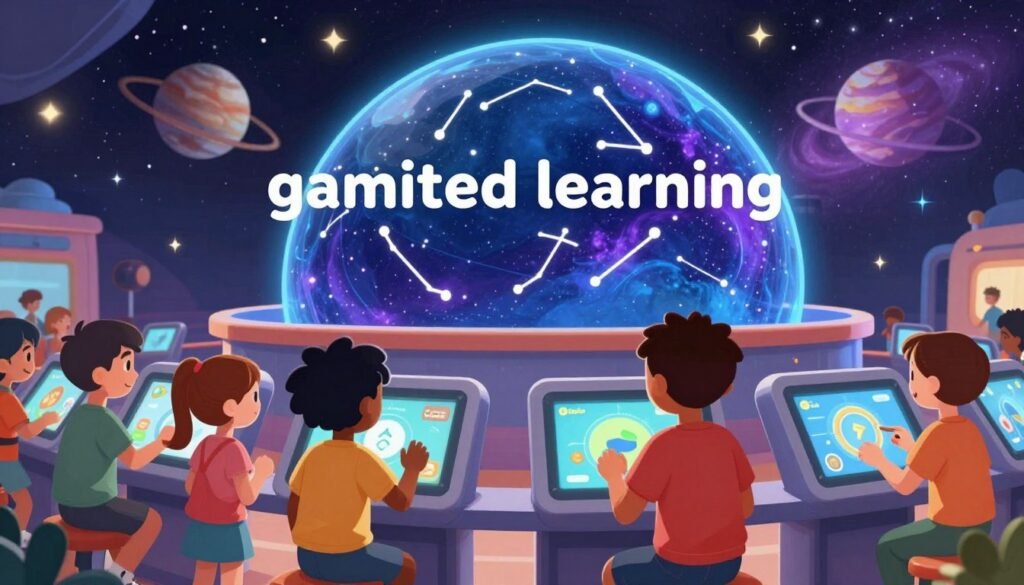
A vibrant and engaging scene depicting "gamified learning" focused on space exploration. In the foreground, a group of diverse children, dressed in colorful casual clothing, are interacting with touch screens that display interactive astronomy games. The middle ground shows a large, digitally rendered planetarium dome with animated constellations and planets, shimmering with bright blues and cosmic purples. The background features a galactic mural, filled with stars and nebulae, enhancing the sense of wonder and curiosity. Soft, warm lighting bathes the scene, creating an inviting atmosphere. The camera angle is slightly tilted to capture the excitement on the children's faces, conveying a sense of joy and discovery. Include the brand name "Debsie" in a subtle, integrated manner.

Enhancing Knowledge Retention with Debsie Gamified Courses

Debsie’s courses are fun and keep you wanting to learn more. They use game ideas to make learning exciting. This makes students want to reach their goals.

Why Interactive Learning Matters

Interactive learning, like Debsie’s, helps you remember things better. When you’re involved in learning, you remember more. This is because you’re actively learning.

Interactive learning helps you understand hard ideas better. It also makes you think critically and solve problems.

Exploring New Horizons at Debsie

Debsie’s courses let you learn new things in a fun way. They follow Carl Sagan’s way of making learning exciting. This encourages you to explore the cosmos and more!

Want to start a fun learning journey? Check out Debsie Gamified Courses at https://debsie.com/courses. It’s a great way to make learning exciting!

The Intersection of Science and Spirituality

Carl Sagan saw the universe as more than science. It was a place of wonder and awe. He showed us that learning about the cosmos can make us feel closer to it spiritually!

Finding Wonder in the Natural World

Carl Sagan loved to explore the universe. He wanted to make us feel amazed and grateful. By looking at the universe, we see how everything is connected and beautiful.
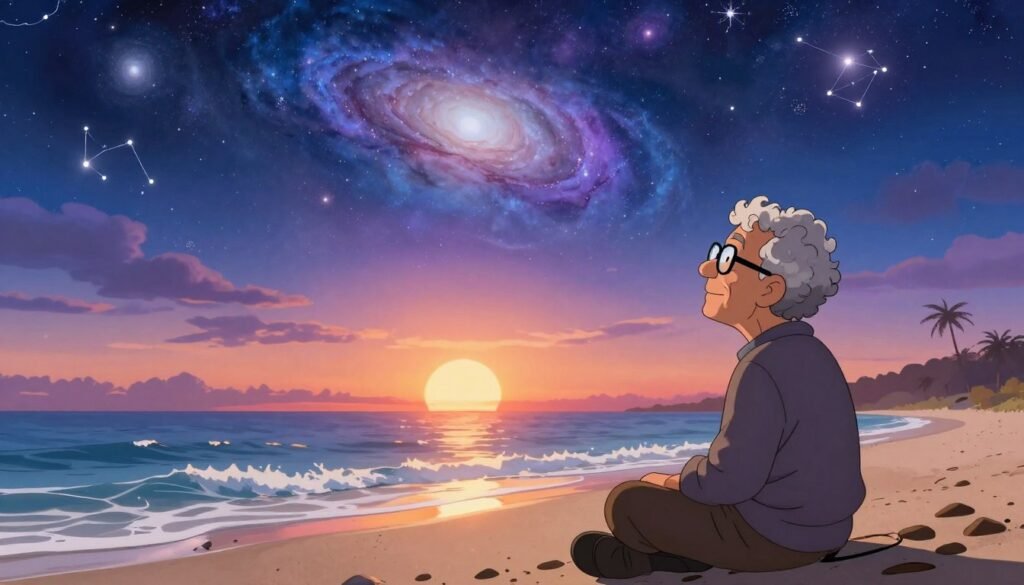
A serene scene featuring a thoughtful Carl Sagan, depicted as an older man with curly hair and glasses, sitting on a sandy beach at sunset. In the foreground, he gazes up at the star-studded sky filled with swirling galaxies and constellations. In the middle ground, gentle waves lap at the shore, reflecting the warm colors of the setting sun. The background showcases a vibrant cosmos, blending deep blues, purples, and bright whites, symbolizing the vastness of space and the mysteries it holds. Soft lighting creates an ethereal glow, enhancing the contemplative mood, merging science and spirituality. The atmosphere feels both peaceful and profound, inviting reflection. Include the brand name "Debsie" subtly integrated into the scene.

Let’s look at what Sagan taught us about science and spirit. Here are some important points:

  • The universe is full of awe and wonder.
  • Everything in the universe is connected.
  • Seeking knowledge is a spiritual journey.

The Secular Awe of the Universe

Sagan’s view of the universe was both scientific and spiritual. He thought that learning about the cosmos could make us feel deep respect and amazement. This feeling is not tied to religion. It’s about seeing the universe’s grandeur and mystery.

Aspect Scientific Perspective Spiritual Perspective
The Universe A vast, complex system governed by laws A source of awe, wonder, and reverence
Human Existence A product of evolutionary processes A moment of cosmic awareness and appreciation
Our Place in the Cosmos A tiny part of a vast universe Connected to the universe and its mysteries

The Enduring Influence of Carl Sagan

Carl Sagan’s books and ideas are still important today. They inspire new people! He made science easy for everyone to understand. His work still influences science and society today.

Why His Books Remain Essential Reading

Carl Sagan’s books are more than science. They invite us to explore the universe and our place in it! Classics like “The Cosmos” and “Contact” share insights on human life and our search for knowledge. Reading his books helps us understand the universe and our role in it.

His talk on searching for alien life still excites scientists and science fiction fans! Sagan’s hope for life beyond Earth inspires people all over the world.

Book Title Year Published Key Themes
The Cosmos 1980 Universe, Space Exploration, Human Existence
Contact 1985 Extraterrestrial Life, Science, Faith
The Demon-Haunted World 1995 Critical Thinking, Science, Pseudoscience

The Timelessness of His Scientific Optimism

Sagan’s optimism in science is a light of hope in our world! He believed science could make our future better. This message still inspires us today. By using science and critical thinking, we can solve big world problems.
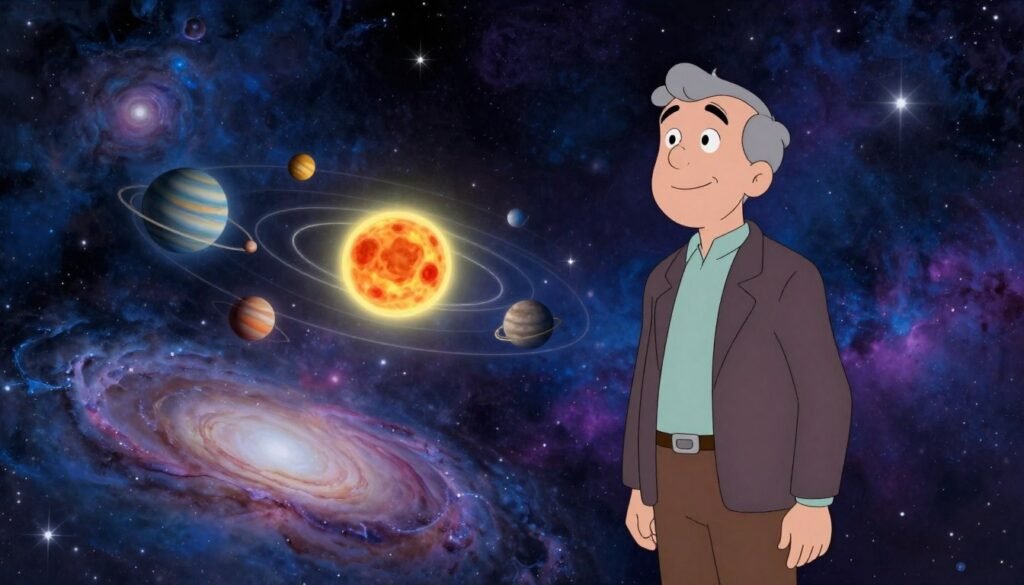
Carl Sagan standing in a starry expanse of space, wearing a professional outfit, his expression thoughtful and inspiring. In the foreground, a cosmic scene filled with swirling galaxies, vibrant nebulae, and twinkling stars, showcasing the wonder of the universe. The middle ground features a glowing representation of the Solar System, with planets orbiting around the sun, each vividly colored to emphasize their unique characteristics. The background is a deep blue and purple cosmic tapestry, enhancing the feeling of vastness and mystery. The lighting is soft, creating a serene and contemplative atmosphere. The angle captures Sagan looking towards the cosmos, embodying curiosity and admiration for space. The overall mood is friendly and uplifting, inviting viewers to share in the beauty of the universe. By Debsie.

Looking ahead, Sagan’s work shows science is more than tech. It’s about knowing our place in the universe and caring for our planet. His legacy urges us to keep exploring, asking questions, and seeking answers!

Lessons We Can Learn from the Cosmos

The cosmos shows us a mirror to our world, teaching us important lessons. It reminds us of the balance on our planet and why we must keep it safe for the future.

Embracing Our Shared Humanity

One key lesson from Sagan is the value of our shared humanity. In space, our differences fade, and our commonalities shine. This teaches us to work together and understand each other better.

For example, Sagan’s Cosmos shows us the need for unity in facing global problems.

The Importance of Protecting Our Home Planet

Another vital lesson is to protect our home planet. Sagan’s Pale Blue Dot view reminds us Earth is our only home. We must care for it.

Learning about the universe helps us value the systems that support life on Earth. For instance, understanding time and its relation to the universe can deepen our appreciation for Earth’s rhythms.
A tranquil and expansive cosmic landscape, showcasing the beauty of the universe. In the foreground, a thoughtful astronomer, dressed in a professional business attire, gazes up at the night sky filled with vibrant stars, swirling galaxies, and a bright nebula, symbolizing the lessons learned from the cosmos. In the middle ground, a silhouette of a telescope and open astronomy books rests on a grassy hill, representing curiosity and exploration. The background features a stunning celestial panorama, bathed in a warm, inviting glow from distant stars, creating a sense of wonder and introspection. Use soft lighting to evoke a peaceful mood. The image should be colorful, friendly, and minimal, reflecting the essence of discovery and connection with the universe. Include the brand name "Debsie".

Exploring the cosmos reminds us of our responsibility. By embracing our shared humanity and protecting our planet, we can build a better future for everyone.

Conclusion

Carl Sagan’s work still inspires us today! His science, education, and critical thinking have made a big impact. His Cosmos series and push for science literacy show his lasting legacy.

Sagan’s ideas are still important for us today. We can learn from his love for exploring and sharing the universe’s wonders. You can learn more about the cosmos at https://debsie.com/courses!

Let’s keep looking up at the stars, inspired by Sagan. By working together and using science, we can keep growing and learning!


FAQ

From Brooklyn to the Stars

Did you know that Carl Sagan’s journey began right in Brooklyn? As a young boy, his parents nurtured his incredible curiosity. They took him to the 1939 World’s Fair where his imagination took flight! He spent his childhood reading stories about other worlds, proving that a big imagination is the first step toward greatness. We love how his early years show that every child’s “why” is the start of something amazing!

Academic Foundations at the University of Chicago

To reach the stars, Carl Sagan built a strong foundation at the University of Chicago. This is where his academic foundations were laid, turning his childhood wonder into serious scientific skill! His education taught him that rigorous study and a sense of wonder go hand-in-hand. It’s that same balance of fun and facts that we bring to every personal learning path at Debsie!

Unlocking the Mysteries of Venus

Carl Sagan was a real-life space detective! He played a huge role in helping NASA understand that Venus isn’t a tropical paradise, but a very hot planet with a massive greenhouse effect. By using simple language to explain these complex ideas, he helped the whole world understand our neighboring planets better than ever before!

The Search for Extraterrestrial Intelligence

Are we alone in the cosmos? Carl Sagan spent his life trying to find out! He was a pioneer in the Search for Extraterrestrial Intelligence (SETI). He believed that the universe is a vast neighborhood, and he encouraged us to keep searching for friends among the stars. His work makes the universe feel like a place full of potential friends and endless discovery!

A Message from Earth to the Cosmos

Imagine sending a “Hello!” to the entire cosmos! That is exactly what Carl Sagan did with the Voyager Golden Record. Attached to the Voyager spacecraft, this gold-plated phonograph record is a time capsule intended to communicate the story of our world to any extraterrestrials who might find it. How cool is that!

Selecting the Sounds and Images of Humanity

Carl Sagan helped choose the 115 images, various natural sounds, and music from different cultures to represent all of humanity. From the sound of a mother’s kiss to the music of Bach and Chuck Berry, the record is a beautiful snapshot of who we are. It reminds us that we are all part of one big global community!

Bringing Science to the Living Room

In 1980, Carl Sagan brought the cosmos right into people’s living rooms with his legendary TV series! He used a conversational and welcoming style that made everyone feel like they could be a scientist. He turned the universe into a story that we all wanted to hear, and he did it with so much enthusiasm!

The Visual Language of Space Exploration

The Cosmos series revolutionized how we see space! With incredible special effects and the “Ship of the Imagination,” it created a visual language for space exploration that still influences movies and shows today. It proved that when you make learning beautiful, people never want to stop exploring!

Reframing Our Place in the Universe

When the Voyager 1 spacecraft looked back at Earth from 3.7 billion miles away, it captured a tiny speck of light. Carl Sagan called this the Pale Blue Dot. This single photograph changed everything! It showed us how small we are in the vast cosmos, but also how important it is to cherish our only home.

The Philosophical Weight of a Single Photograph

This perspective invites us to be kind to one another. Carl Sagan used this image to teach us that because our world is so small and fragile, we must work together to protect it. It’s a reflective lesson in humility and love for our home planet that we still share with students today!

The Demon-Haunted World and Critical Thinking

Carl Sagan was a champion for critical thinking! In his book, The Demon-Haunted World, he provided a “baloney detection kit” to help people tell the difference between real science and pseudoscience. He wanted everyone to have the tools to think for themselves and ask great questions!

Combating Pseudoscience in Modern Society

Today, his message is more important than ever! By advocating for scientific literacy, Sagan helped us understand that science isn’t just a subject in school—it’s a way of thinking that keeps us curious and safe. At Debsie, we love helping kids build these critical thinking skills through interactive learning!

Making Complex Concepts Accessible

Carl Sagan had a superpower: he could explain the most difficult ideas in physics using simple language! He believed that science belongs to everyone, not just people in lab coats. This approach is exactly what we use at Debsie to make sure every child feels smart and capable!

The Power of Storytelling in Physics

By using storytelling, Sagan turned physics into an epic tale of adventure. He knew that when you tell a great story, the learning sticks! We use gamified courses to continue this tradition, turning every lesson into an exciting chapter of a much bigger story.

Engaging with Global Policy and Nuclear Disarmament

Carl Sagan wasn’t just in the lab; he was active in the world! He used his voice to advocate for nuclear disarmament, warning world leaders about the dangers of “nuclear winter.” He showed us that being a scientist means caring about the future of all humanity.

The Responsibility of Scientists to Society

He believed that scientists have a responsibility to engage with public issues. By standing up for peace and the environment, he became a public intellectual who proved that science can—and should—make the world a better place!

Inspiring the Next Generation of Explorers

Sagan’s legacy lives on in every student who looks through a telescope for the first time! He inspired countless people to become astronomers, engineers, and teachers. We see his spirit every day in our learning leaderboard as kids compete to learn more about the stars!

How His Vision Shapes Current Space Missions

From the Mars Rovers to the search for water on Europa, NASA’s current missions are built on the vision Sagan shared decades ago. He taught us to keep looking, keep asking, and keep dreaming of what lies beyond our home planet!

Applying Sagan’s Curiosity to Modern Education

At Debsie, we take Carl Sagan’s spirit of discovery and mix it with the latest AI technology! We believe learning should be as fun as a video game. Our gamified learning experiences are designed to spark that same “Sagan-style” wonder in every child.

Enhancing Knowledge Retention with Debsie Gamified Courses

By using gamified courses and interactive challenges, we help kids remember what they learn! Whether it’s through a learning leaderboard or personal achievements, Debsie makes sure that intellectual growth is an exciting, playful journey for everyone!

Finding Wonder in the Natural World

Carl Sagan found deep meaning in the natural world. He showed us that you don’t need magic to feel awe—the real universe is amazing enough! He spoke about the “spirit” of science as a way to feel connected to something much larger than ourselves.

The Secular Awe of the Universe

His work offers a secular awe of the cosmos that is both profound and encouraging. It teaches us that being “star-stuff” is a beautiful thing. This sense of wonder is the heart of every lesson we create, helping kids find spirituality in the facts of the universe!

Why His Books Remain Essential Reading

Books like Contact and Cosmos are still essential reading today! They are filled with scientific optimism and a love for humanity that never goes out of style. If you want to feel inspired, picking up a Carl Sagan book is the perfect place to start!

The Timelessness of His Scientific Optimism

Sagan’s enduring influence comes from his belief that we can solve our problems through science and reason. His scientific optimism is a shining light that encourages us to keep moving forward, even when things seem difficult. We are so proud to keep that light burning at Debsie!

Embracing Our Shared Humanity

The biggest lesson from the cosmos is that we are all in this together! When we look at the stars, we see that our differences are tiny compared to the vastness of space. Carl Sagan taught us to embrace our shared humanity and treat each other with more kindness.

The Importance of Protecting Our Home Planet

There is no “Planet B” just yet! Sagan’s work reminds us that Earth is our only home, and we must do everything we can to protect it. By learning about the cosmos, we learn how lucky we are to have this Pale Blue Dot. Let’s work together to keep it healthy and bright!

Who was Carl Sagan?

A: Carl Sagan was a famous astronomer, science communicator, and author who made the cosmos feel personal and exciting for everyone! He is best known for the TV series Cosmos and his work with NASA.

What is the Voyager Golden Record?

It is a gold-plated phonograph record launched into space by NASA in 1977! It contains sounds, music, and images of Earth to serve as a message to any extraterrestrial intelligence that might find it.

How does Debsie use Carl Sagan’s ideas?

We use his spirit of discovery and curiosity to create gamified courses! With AI, interactive learning, and a learning leaderboard, we make space exploration and science playful and accessible for kids everywhere.

What is the “Pale Blue Dot”?

The Pale Blue Dot is a famous photograph of Earth taken by Voyager 1 from a great distance. Carl Sagan used it to show how precious and fragile our home planet is in the vast universe.

Why is critical thinking important in science?

A: Critical thinking helps us tell the difference between facts and pseudoscience! Carl Sagan encouraged everyone to use a “baloney detection kit” to ask smart questions and find the truth.

Can kids learn about the cosmos on Debsie?

Absolutely! We offer personalized, gamified learning experiences that help children grow intellectually through interactive subjects. It’s all about making learning a fun adventure!

What was Carl Sagan’s view on nuclear disarmament?

As a public intellectual, he was a strong advocate for nuclear disarmament! He believed scientists have a responsibility to society to promote peace and protect our world from global policy disasters.

How can I improve my knowledge retention?

Using interactive learning and gamified methods, like those at Debsie, is a great way to grow! When you play and learn at the same time, your brain remembers the information much better!