Have you ever looked at the night sky and felt amazed? That magical feeling is where every great discovery starts! We think every child has a little explorer inside, waiting to change the world.
It’s very important to celebrate the female scientists who showed us what’s possible. These heroes faced big challenges but never stopped asking “why?” Their bravery helps us understand our planet and the vast space beyond.
We’re so excited to share these brilliant minds with you! You can start your own quest for knowledge with Debsie Gamified Courses at https://debsie.com/courses. Let’s meet the heroes who shaped our future!
Key Takeaways
- Discover the incredible legacy of pioneers across many different fields.
- Learn how curiosity leads to world-changing discoveries and new inventions.
- See how courage helps people break historical barriers to follow their dreams.
- Find inspiration to explore your own interests in science and technology.
- Understand the importance of asking big questions about the world around us.
- Access fun and interactive tools like Debsie to help your education grow.
Pioneers of Physics and Chemistry
Many trailblazing women have shaped physics and chemistry. Their discoveries have opened doors for others. These pioneers in physics and chemistry have helped us understand the world better. They also inspire young women to explore STEM fields.
Marie Curie and Lise Meitner are two such trailblazers. Their work has greatly influenced science. You can find more about women in chemistry on Goodfellow’s resources page.
Marie Curie: The Radioactivity Trailblazer
Marie Curie was a Polish-French scientist. She studied radioactivity and found polonium and radium. She was the first woman to win a Nobel Prize, in both physics and chemistry.
Her work on radioactivity helped medicine, energy, and industry grow!
Lise Meitner: The Mother of Nuclear Fission
Lise Meitner was an Austrian-Swedish physicist. She helped discover nuclear fission with her nephew Otto Frisch. Her work showed how nuclear fission works.
This discovery changed nuclear energy and weapons.
Revolutionaries in Biology and Genetics
The world of biology and genetics has changed a lot. Pioneering women made big discoveries. These discoveries changed how we see life!
These women did not just add to our knowledge. They also made a path for others. We will look at the work of Rosalind Franklin and Barbara McClintock.
Rosalind Franklin: Unlocking the DNA Double Helix
Rosalind Franklin was a British chemist. Her work helped us understand DNA. Her findings were key to the double helix model of DNA.
Barbara McClintock: The Discovery of Jumping Genes
Barbara McClintock was an American scientist. She found “jumping genes” in maize. This changed how we see genes.
Rosalind Franklin and Barbara McClintock changed biology and genetics. Their work shows the power of new ideas and hard work. They still inspire scientists today!
The Best Women Scientists in Mathematics and Computing
Women have greatly changed math and computing. They have opened doors for others to come. Their work has inspired many.
These women scientists have made big impacts. Their work still shapes today’s tech and math.
Ada Lovelace: The First Computer Programmer
Ada Lovelace is known as the first computer programmer. She worked on Charles Babbage’s Analytical Engine. She saw its power to do more than just add numbers.
Her notes showed the first computer program. This made her a pioneer in computer science.
Grace Hopper: The Pioneer of Modern Programming Languages
Grace Hopper was a computer scientist and Navy Rear Admiral. She helped create the first compiler. Her work on COBOL made computers easier for more people to use.
Hopper’s work shows her creative mind. She made hard ideas simple.
By sharing these women’s stories, we see their big impact. Their work reminds us of the value of diversity in STEM.
Advancing Medicine and Public Health
Women have played a big role in making medicine and public health better. They have helped a lot, changing healthcare and saving many lives.
Two amazing women stand out: Florence Nightingale and Elizabeth Blackwell. They broke barriers and started modern medical practices.
Florence Nightingale: The Founder of Modern Nursing
Florence Nightingale was a British social reformer and statistician. She is known as the founder of modern nursing. She worked in the Crimean War, making sanitation and hygiene better, which lowered death rates.
Nightingale was also great at statistics. She used stats to show how important sanitation is in saving lives. This was a big step forward!
- She started the first nursing school in the world at St Thomas’ Hospital in London.
- Her book, Notes on Nursing, is still key in nursing education.
- Her push for better hygiene and sanitation has saved many lives.
Elizabeth Blackwell: Breaking Barriers in Medical Education
Elizabeth Blackwell was a British-American doctor. She was the first woman to get a medical degree in the United States. She opened doors for women in medicine.
Blackwell faced a lot of challenges. People didn’t want her to be a doctor. But she didn’t give up and succeeded.
Key achievements of Elizabeth Blackwell include:
- She started the New York Infirmary for Women and Children. It gave healthcare and training to women.
- She made medical education for women possible, changing the game.
- She wrote many books and articles on medicine and women’s health. She added a lot to medical knowledge.
These women have left a big mark on medicine and public health. They inspire others to keep going and reach new heights!
Innovators in Astronomy and Space Exploration
Women have played a big role in space and stars. They have helped us learn more about the universe. Their work has opened doors for others to explore.
Henrietta Swan Leavitt: Mapping the Stars
Henrietta Swan Leavitt was an American astronomer. She found a way to measure how far away stars are. This was a big discovery for space.
Her work changed how we see the universe. It helped us understand the vastness of space. You can learn more about her discoveries and others like them.
Katherine Johnson: The Human Computer of NASA
Katherine Johnson was a mathematician at NASA. She helped with the Apollo 11 moon landing. Her work was very important.
Her story shows how important women are in science. Her work was trusted by astronauts. It shows her big role in space history.
| Scientist | Contribution | Field |
|---|---|---|
| Henrietta Swan Leavitt | Period-luminosity relationship of Cepheid variables | Astronomy |
| Katherine Johnson | Crucial calculations for NASA’s early space missions | Mathematics and Space Exploration |
Many women have changed our view of the universe. Their work inspires new scientists and explorers.
Environmental Science and Conservation Leaders
Women scientists have changed how we see and protect our world. They have taught us a lot about nature. They also inspired many to care for our planet.

Rachel Carson: The Voice of Environmental Awareness
Rachel Carson was a marine biologist from America. She wrote “Silent Spring,” which showed how bad pesticides are for our planet. This book made many people talk and think about the environment.
Her book led to big changes in how we protect our planet. Carson said,
“The more clearly we can focus our attention on the wonders and realities of the universe about us, the less taste we shall have for destruction.”
Jane Goodall: Redefining Our Relationship with Primates
Jane Goodall is a famous British scientist. She studied chimpanzees in the wild. Her work helped us understand these animals better.
Goodall still fights for our planet. You can find more about women like her on One Earth’s website. It shows how women are saving our world.
These women’s work shows us what one person can do. We can all help make our planet better. Let’s keep their legacy alive by caring for our planet!
Groundbreaking Work in Biochemistry
Women scientists have changed biochemistry a lot. Their work has helped us understand life better. It has also led to treatments that save lives.
The Master of X-ray Crystallography
Dorothy Hodgkin was a British chemist. She used X-ray crystallography to find out how important molecules work. Her work on penicillin and insulin was key.
Her work was not just about science. She also showed women could be scientists. She inspired many women to follow in her footsteps.
“The moment when you first realize that you’re making a discovery is a very exciting one, and it’s one that you’ll never forget!”
Revolutionizing Drug Development
Gertrude Elion was an American biochemist. She made many medicines that save lives. Her work on drugs like azathioprine and acyclovir has helped a lot of people.
| Scientist | Contribution | Impact |
|---|---|---|
| Dorothy Hodgkin | Determined the structure of penicillin and insulin using X-ray crystallography | Advanced understanding of biochemical molecules and their mechanisms of action |
| Gertrude Elion | Developed life-saving medications such as azathioprine and acyclovir | Improved treatment of various diseases and saved countless lives |
These women scientists have made a big difference in biochemistry. Their work keeps inspiring others. It helps us understand the world better.
Women Who Shaped Modern Engineering
Meet the women who changed engineering with their amazing work and new ideas! They have made big steps for engineers of the future.
Engineering used to be mostly for men, but women have been key. They invented new tech and managed big projects. They helped make modern engineering what it is today.
Frequency Hopping: Hedy Lamarr’s Ingenious Invention
Hedy Lamarr was an Austrian-American actress and inventor. She helped create a system for guiding torpedoes during World War II. Her idea helped start Wi-Fi, Bluetooth, and GPS.
Lamarr’s work shows how important new ideas are. It shows we should look for talent in all places.
The Brooklyn Bridge: Emily Roebling’s Engineering Feat
Emily Roebling was a civil engineer in America. She helped build the Brooklyn Bridge. Her husband was sick, so she took over and finished it. She was the first to cross it in 1883.
Emily’s hard work and skills were key to the bridge’s success. Her story shows how to keep going, even when it’s hard.
These women are just a few who changed engineering. Their work has helped the field grow. It has also inspired many to study science, technology, engineering, and mathematics (STEM).
The Evolution of Scientific Education
Learning science has changed a lot over time. Now, we use new ways to make it fun! Old teaching methods are now mixed with new ones. This helps young learners get excited about science and understand it better.
Gamification in learning is a big change. It adds game elements to school work. This makes learning more fun and helps students remember what they learn.
Learning Science Through Gamification
Gamification is making science class more fun. It uses things like points and leaderboards. This helps students work together, compete, and learn more.
Pioneering women in science have shown us new ways to learn. Gamification is one of these new ways. It’s changing how we learn science.

Enhancing Engagement with Debsie Gamified Courses
Debsie is leading this change with gamified courses. Their platform lets students play games to learn science. It’s great for parents and teachers to use with regular school work.
Visit https://debsie.com/courses to see Debsie’s courses. They make learning science fun. With Debsie, you’re not just teaching science. You’re opening a world of discovery and wonder!
Try Debsie Gamified Courses today. Watch your child become a curious and confident scientist of the future!
Pioneers in Paleontology and Geology
Many women have changed paleontology and geology. They made big discoveries that helped us learn about Earth’s past. They opened doors for other scientists to follow.
Let’s look at two amazing women who changed their fields.
Mary Anning: The Unsung Hero of Fossil Discovery
Mary Anning was a British scientist who found dinosaur fossils. She found the first complete plesiosaur skeleton. Her work changed how we see ancient life!
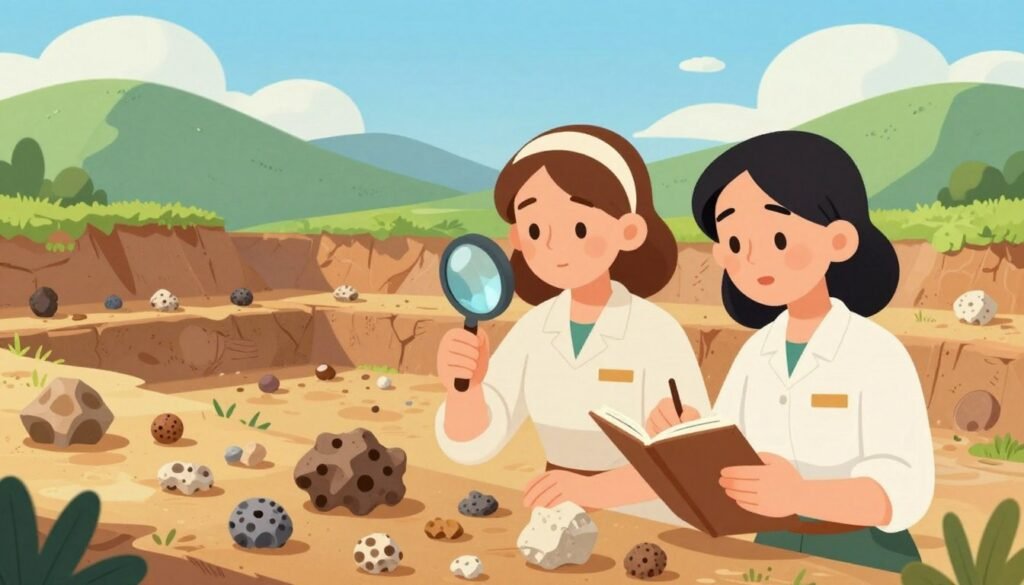
Mary faced many challenges. She didn’t get to go to school much and had little money. But she kept going and became a key fossil hunter.
Inge Lehmann: Discovering the Earth’s Inner Core
Inge Lehmann was a Danish scientist who found the Earth’s inner core. At first, people didn’t believe her. But later, they proved she was right. Her work showed us to keep trying and question old ideas!
Inge’s work in seismology changed how we see Earth. Her discoveries still guide research today. They help us learn more about our planet.
Visionaries in Theoretical Physics
The world of theoretical physics has been shaped by many visionaries. Women have made big contributions here. They explore the basic laws of nature.
Chien-Shiung Wu: A Trailblazer in Physics
Chien-Shiung Wu was a Chinese-American physicist. She was the first woman to win the National Medal of Science. She was called the “First Lady of Physics.”
Wu’s experiment, known as the Wu experiment, changed physics. It showed that a fundamental concept was wrong.
Vera Rubin: Unveiling Dark Matter
Vera Rubin was an American astronomer. She found important evidence for dark matter. Her work helped us understand the universe better.
You can learn more about pioneering women scientists and their work on external sources.
These visionaries in theoretical physics have made big impacts. They include:
- Advancements in particle physics
- Proof of dark matter’s existence
- Breaking gender barriers in science
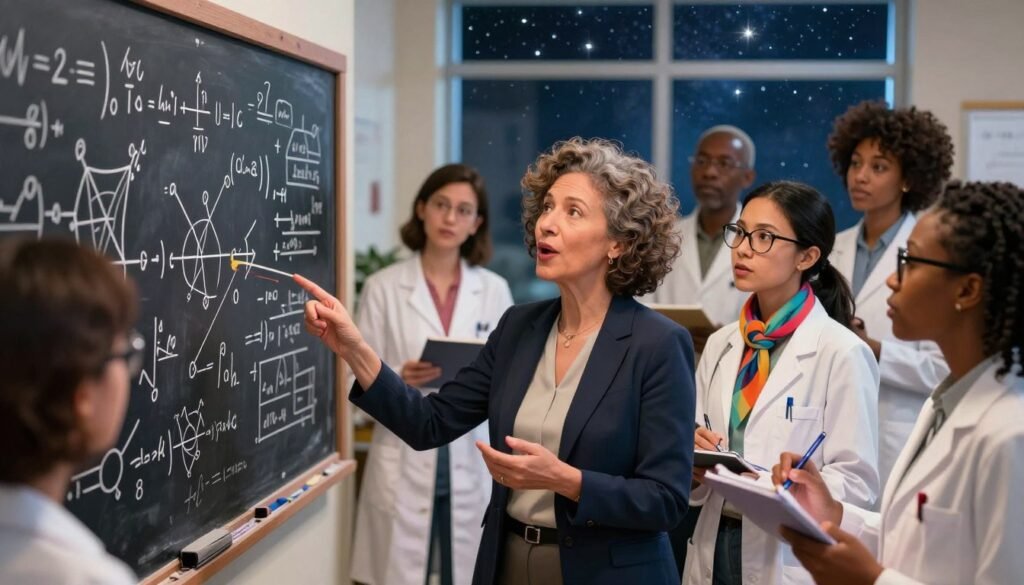
The Impact of Female Mentorship in STEM
Female mentors in STEM fields are very important. They guide and support women in science. This helps them succeed in their careers.
Mentorship is more than just advice. It’s about building a network that helps you grow. Dr. Mae Jemison said, “It’s not the people you know, it’s what you do with them.” This shows how mentorship can turn chances into wins!
Building Supportive Networks for Future Scientists
Women in STEM need a supportive network. This network gives them the help and encouragement they need. Here are some ways mentorship can help:
- Providing role models who have faced similar challenges!
- Offering advice based on real experience!
- Creating chances for networking and working together!
- Building a sense of community and feeling at home!
As
“The most important thing is to never give up. You have to be brave, and you have to keep going!”
Dr. Sally Ride said, perseverance and support are key in STEM.
Overcoming Systemic Barriers in Academic Research
Women in STEM still face many barriers. Mentorship can help overcome these by:
| Barrier | Mentorship Solution |
|---|---|
| Lack of Representation | Providing role models and showing diverse success! |
| Gender Bias | Teaching ways to deal with and beat bias! |
| Limited Resources | Sharing knowledge and resources to make things fair! |
By tackling these barriers, female mentors pave the way for future scientists. As we grow these networks, we empower more women to lead in science!
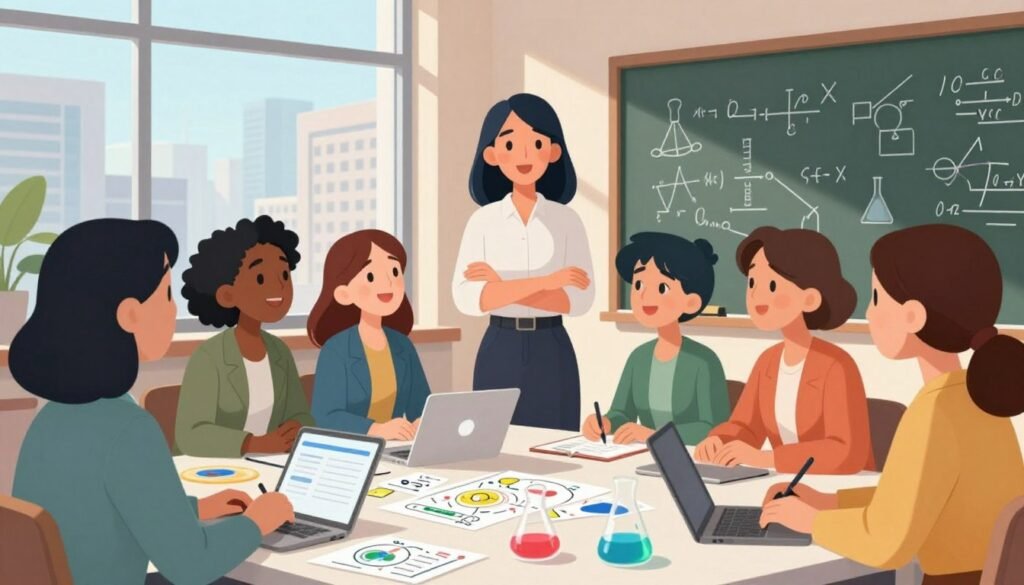
In conclusion, female mentorship in STEM is very important. It builds networks and tackles barriers. This makes science more inclusive and diverse for everyone!
The Role of Technology in Scientific Discovery
Technology plays a big role in science. It helps us find new things and learn faster! It gives us tools and ways to see the world in new ways.
How Digital Tools Accelerate Research
Digital tools have changed how we do research. They help us gather, look at, and share data better than before.
- Computational Power: Computers can now do complex things we couldn’t before.
- Collaboration Platforms: The internet lets people work together from anywhere.
A famous scientist said,
“Digital tools have changed science a lot. They help us solve big problems!”
The Future of Data-Driven Scientific Inquiry
The future of science is all about using data.
- Artificial Intelligence (AI): AI will help us understand big data and make predictions.
- Internet of Things (IoT): IoT devices will give us data from all over, helping us learn more.
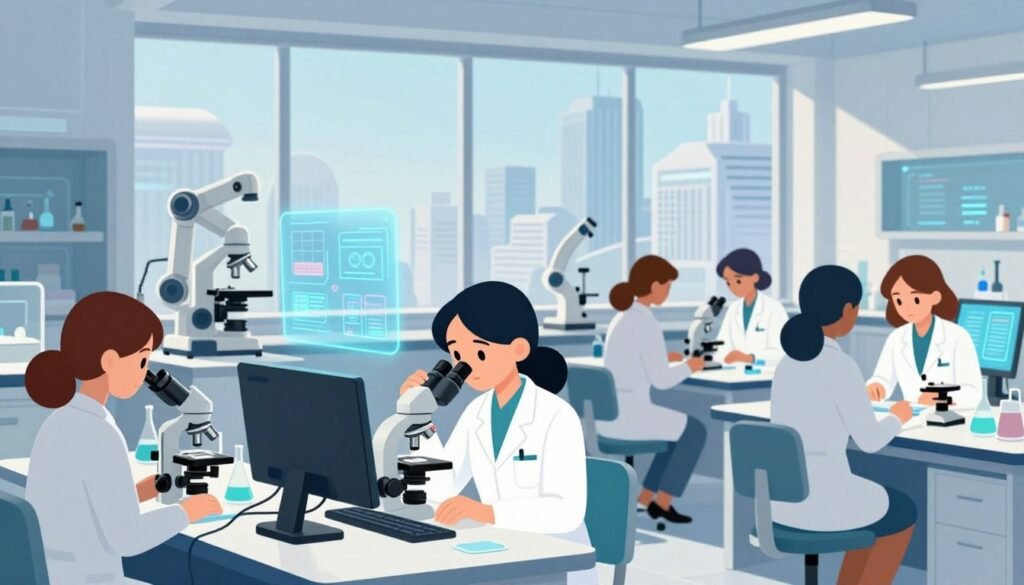
These technologies will make science go faster. They will also help us work together across different fields.
Celebrating Diversity in Scientific Achievement
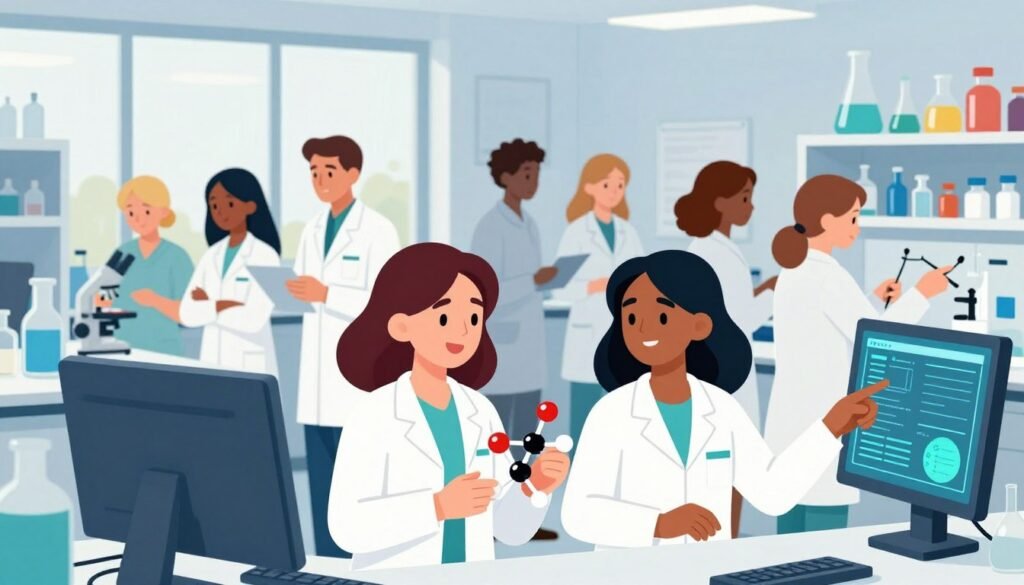
Diversity in science is very important. It leads to new discoveries. When people from different backgrounds work together, innovation thrives.
We celebrate diversity to honor those who have made a difference. This also inspires future generations to explore STEM fields.
Highlighting Underrepresented Voices in History
Science has many stories of brave scientists. You can learn about 10 amazing women in science history who changed their fields. Their stories show us the true face of science.
By sharing these stories, we challenge old beliefs. It’s important to tell these stories to encourage more people to join science.
The Importance of Inclusive Scientific Narratives
Inclusive stories in science are key. They show the real story of discovery. By including all scientists, we get a true history of science.
This inclusivity promotes equality. It makes everyone feel welcome in science.
To learn more about myths and facts about boys and girls in STEM, visit Debsie’s article on the topic. Knowing these facts helps us make science more welcoming.
By celebrating diversity, we honor the past and shape the future. Let’s keep highlighting diverse scientists and work towards a more inclusive science community!
The Legacy of Scientific Excellence
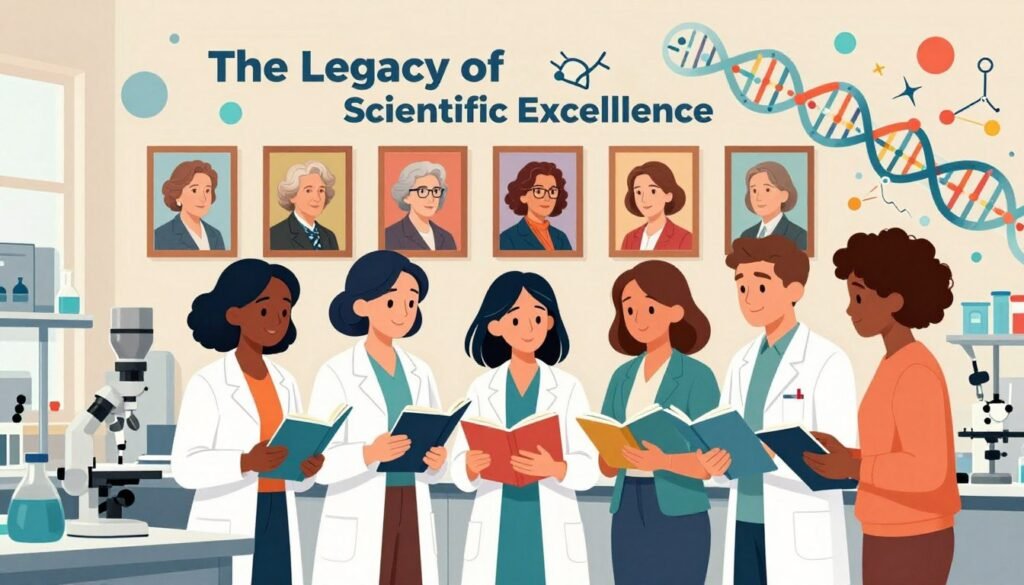
Pioneering women in science inspire us all! Their work has opened new paths and changed old ways of thinking.
We honor these women for their big wins and for showing us new doors. By carrying on their work, we move science forward and keep their legacy alive.
Inspiring the Next Generation
Want to join their legacy? It’s easy! Learn from their stories and challenges. This can spark your own journey in science.
- Explore their stories and understand their journeys!
- Learn from their perseverance and innovative thinking!
- Engage with science in your daily life and contribute to ongoing research!
Continuing the Work of Historical Icons
The work of science icons is still vital today. It’s a base for our ongoing discoveries. By valuing their work, we can keep exploring and learning more.
Some key areas where their legacy continues to inspire include:
- Advancements in Technology: Innovations inspired by pioneering women continue to drive technological advancements!
- Medical Breakthroughs: Discoveries made by women have led to significant improvements in healthcare!
- Environmental Conservation: The work of women in environmental science has raised awareness and driven action to protect our planet!
Conclusion
We’ve celebrated the incredible achievements of the best women scientists who have shaped our understanding of the world!
These women have made big impacts in physics, chemistry, biology, and mathematics. They’ve changed science forever.
As we think about their work, we see how they inspire others. They show us what science can do.
To spark curiosity in young minds, check out Debsie’s Gamified Courses at https://debsie.com/courses.
Let’s keep exploring, learning, and growing together!