
Have you ever felt like a secret hero? Many brilliant minds who changed our world felt that way. History books often left out their amazing stories.
It’s time to celebrate these legends! Their hard work and curiosity created the bridges, codes, and cures we use every day!
We think every child should see themselves as a future pioneer. Their stories are not just about facts. They are about unwavering courage and extraordinary goals.
Exploring how these legends paved the way for us is exciting! Seeing a hero who looks like you makes anything feel possible.
Research shows that students with a female coding mentor learn more. You can find your own path by looking at female role models who lead with heart.
Are you ready to start your own adventure today? You can try out Debsie Gamified Courses at their website. It’s fun and helps you build skills! Let’s dive into meeting these extraordinary leaders who truly changed the game!
Key Takeaways
- Celebrating brilliance throughout scientific history.
- How diverse leaders inspire student confidence.
- Mentorship impacts long-term learning success.
- Exploring the world across gamified lessons.
- Honoring pioneers who frequently faced exclusion.
The Historical Impact of Women in STEM
Women in STEM have made big contributions. They have also opened doors for others to come.
Women like Marie Curie, Ada Lovelace, and Rosalind Franklin are famous for their work. But many others have also made big impacts.
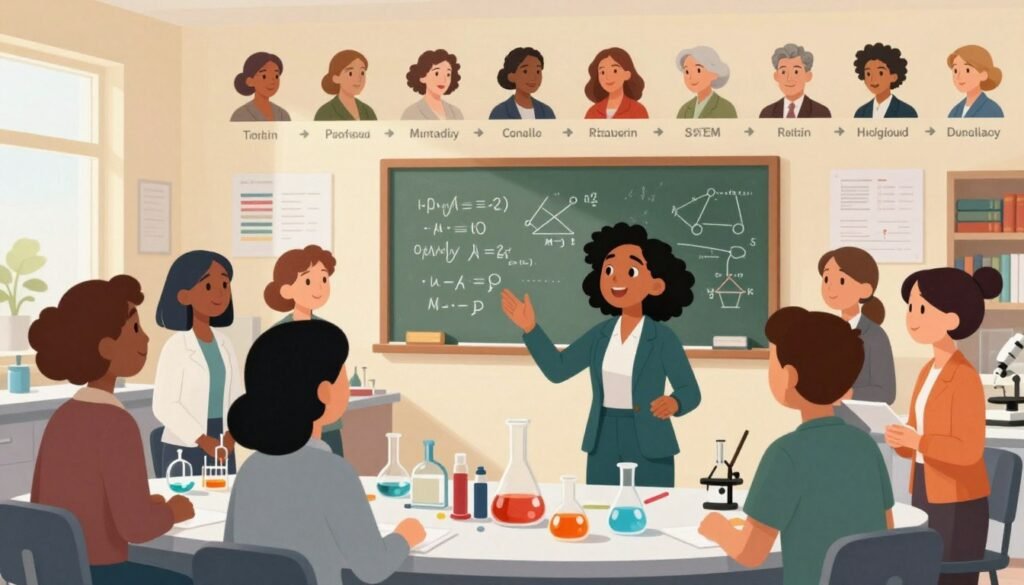
Women in STEM show us how important diversity is. More women in STEM means a more creative and diverse world for all.
To help the next STEM leaders, we need fun and interactive learning. Check out Debsie Gamified Courses for a fun way to learn. Also, see the White House Archives page on Women in STEM for more support.
Let’s celebrate women in STEM and support diversity. This way, we can keep moving forward and inspire others.
Marie Curie and the Foundations of Radioactivity
Marie Curie’s work on radioactivity changed science forever! She won two Nobel Prizes and started many new discoveries.
Her study of radioactivity led to big changes in medicine, energy, and more. Her work still shapes our view of the universe! Check out Debsie’s fun courses at https://debsie.com/courses.
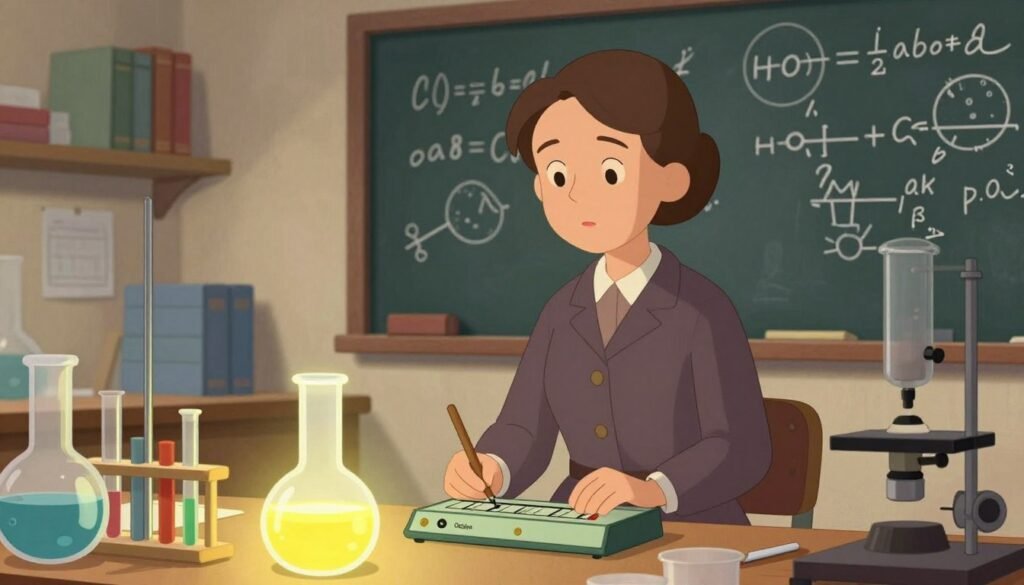
Curie showed us how important curiosity and hard work are in science. Her work still inspires scientists today! We celebrate her to support women in science.
We can keep Curie’s spirit alive by helping girls and women in science. This honors her and makes science more diverse and exciting!
Ada Lovelace and the Birth of Computer Programming
Ada Lovelace is known as the world’s first computer programmer. She lived in the mid-19th century. She dreamed of machines that could do more than just add numbers.
She worked with Charles Babbage on his machine, the Analytical Engine. Ada saw it could change symbols and follow rules. This made her a leader in computer programming.
Key Contributions of Ada Lovelace:
- She wrote the first published computer program, an algorithm for a machine.
- Her ideas for the Analytical Engine were bigger than Babbage’s.
- Ada’s notes included the first computer program, for Bernoulli numbers.
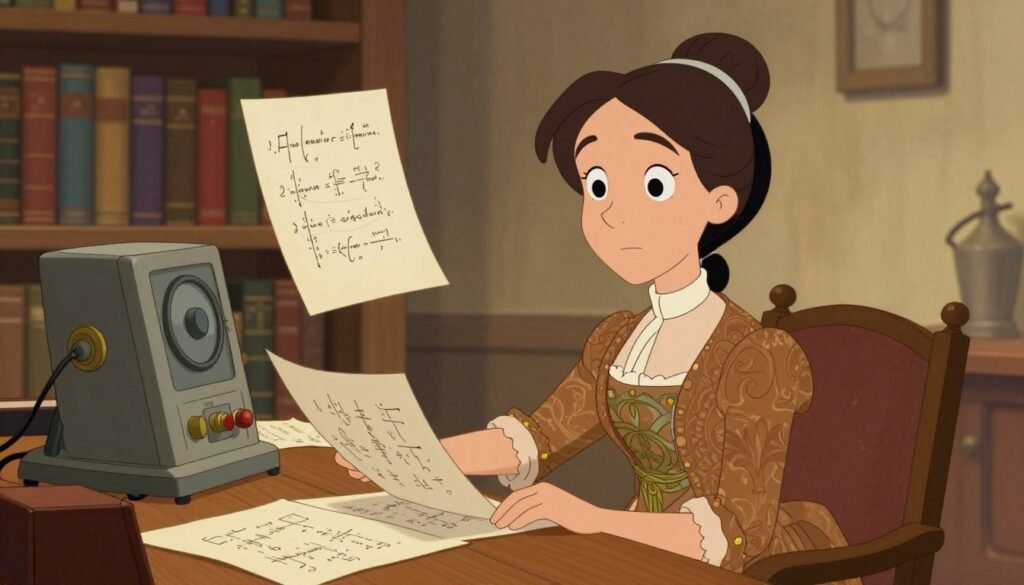
Ada Lovelace showed us the power of dreaming big in STEM fields. Her work still motivates programmers and scientists today.
| Year | Event | Significance |
|---|---|---|
| 1815 | Ada Lovelace was born. | Birth of a pioneer in computer programming. |
| 1843 | Ada Lovelace translated an article on the Analytical Engine. | Her notes included the first computer program. |
| Today | Ada Lovelace is celebrated as the first computer programmer. | Her work continues to inspire women in STEM. |
Want to learn more about computer programming and STEM? Check out Debsie’s Gamified Courses at https://debsie.com/courses!
Rosalind Franklin and the Double Helix Discovery
Meet Rosalind Franklin, a pioneering scientist. Her X-ray crystallography work helped us understand DNA’s double helix structure. Her dedication and expertise are a testament to her contributions to molecular biology.
Rosalind Franklin worked at King’s College London. She used X-ray crystallography to get high-quality DNA fiber images. Her data, Photograph 51, was key to understanding DNA’s double helix structure. This discovery was a big moment in genetics.
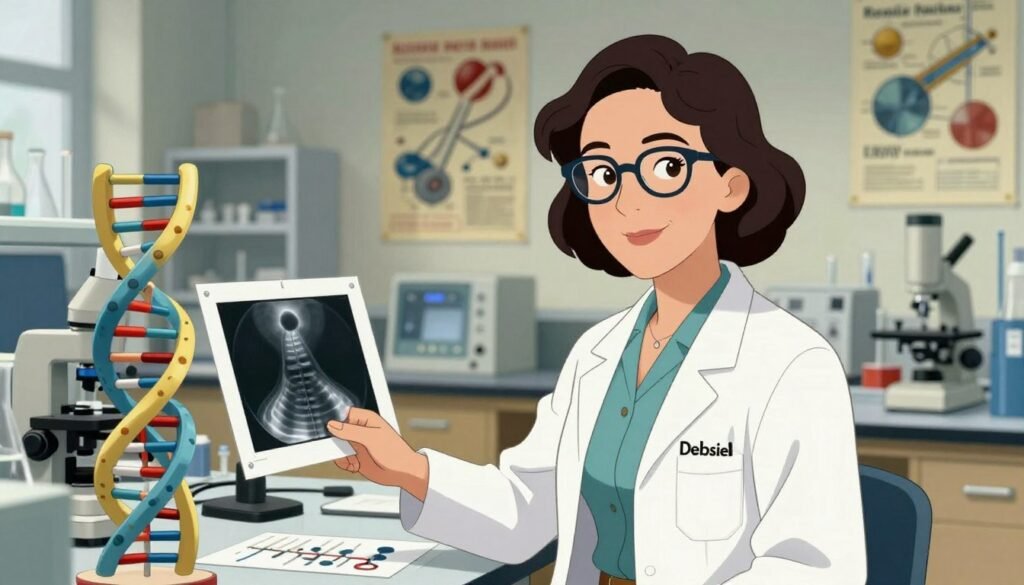
Franklin’s research was crucial for modern genetics. Her work was often overlooked until recently. Now, we see how important her perseverance and impact were.
For more on Rosalind Franklin’s contributions, check out this insightful article on Rosalind Franklin’s discovery of the double. You can also explore how gamified learning can enhance your understanding of complex scientific concepts at Debsie Gamified Courses!
| Key Contributions | Impact on Science |
|---|---|
| X-ray Crystallography of DNA | Provided critical data for the discovery of the double helix structure |
| Photograph 51 | High-quality image that confirmed the double helix model |
| Pioneering Work in Molecular Biology | Paved the way for advancements in genetics and biotechnology |
Katherine Johnson and the Mathematics of Space Flight
Meet Katherine Johnson, a mathematician who helped NASA’s early space missions. She worked as a “human computer” at NASA. Her work was key to the success of spaceflight programs.
Her calculations were vital for spacecraft paths. This helped missions like Project Mercury and Apollo moon landings succeed. Johnson’s work was groundbreaking. She was known for her precision and detail, important before electronic computers.
She worked on the Apollo 11 mission. Her work helped astronauts land on the moon. Her skills and hard work were crucial for the mission’s success.
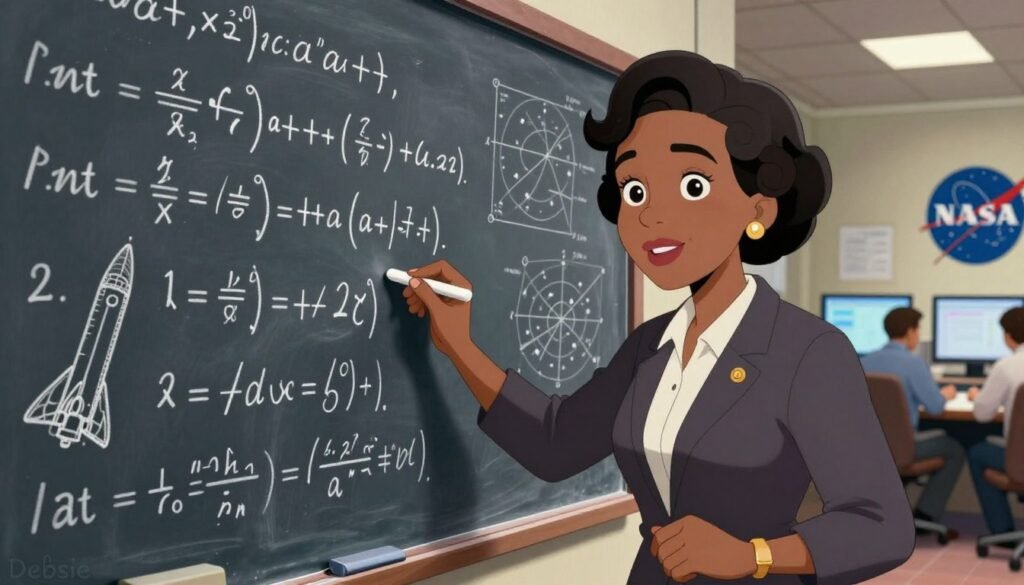
Katherine Johnson’s legacy is huge. She opened doors for women and minorities in STEM. Her story shows the power of determination and hard work!
At Debsie, we honor pioneers like Katherine Johnson. You can explore our gamified courses. Learn about mathematics and space exploration! Visit https://debsie.com/courses to start your journey!
Grace Hopper and the Evolution of Software Development
Meet Grace Hopper, a trailblazer in software development. Her work still shapes computing today! As one of thefamous women in STEM, Grace Hopper’s innovations in programming languages and compilers have had a lasting impact on the field of computer science.
Grace Hopper was a pioneering American computer scientist and Navy Rear Admiral. She played a crucial role in shaping the early days of programming. She helped develop the first high-level programming languages, including COBOL, which became widely used in business and government.
Her work made computers more accessible and user-friendly. This paved the way for broader computing use. You can explore how modern educational platforms, like Debsie, are continuing this legacy. They make learning more engaging and interactive through gamified courses!
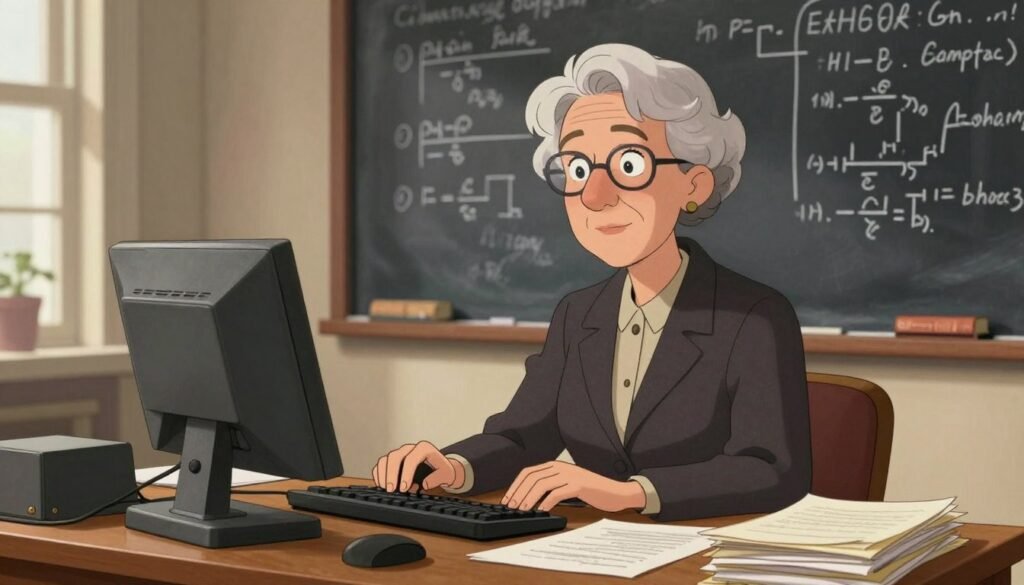
Grace Hopper’s legacy goes beyond her technical achievements. She was a true pioneer who inspired future generations. Her story shows the power of innovation and perseverance in the face of challenges.
As we continue to evolve in software development, we draw inspiration from pioneers like Grace Hopper. By embracing new technologies and educational approaches, we can empower the next generation of STEM leaders to achieve great things!
Barbara McClintock and the Discovery of Genetic Transposition
Barbara McClintock studied maize and found ‘jumping genes.’ This changed genetics forever! Her work showed that some genes can move in the genome. This was a big surprise to everyone.
At first, people didn’t believe her. But her hard work paid off. She won the Nobel Prize in 1983. Her findings opened new ways in genetic research.
| Aspect | Description | Impact |
|---|---|---|
| Mobile Genetic Elements | Segments of DNA that can move to different positions within a genome | Influences gene expression and genome evolution |
| Mechanism of Transposition | Process by which mobile genetic elements change their position | Can lead to genetic diversity and mutations |
| Role in Evolution | Contributes to genetic variation and adaptation | Plays a significant role in evolutionary processes |
McClintock’s work helped us understand genetics better. It also led to more research. You can learn more on the Nature Scitable page.
By learning about McClintock, we see how women in STEM help us. To learn more, check out Debsie’s Gamified Courses at https://debsie.com/courses!
Chien-Shiung Wu and the Mastery of Experimental Physics
Chien-Shiung Wu was a trailblazer in experimental physics. She made groundbreaking discoveries that changed how we see the world. Her work showed her skill and dedication, and it opened doors for others.
Her most famous work was an experiment that showed the law of conservation of parity was wrong. This groundbreaking research was with Tsung-Dao Lee and Chen-Ning Yang. It helped us understand the weak nuclear force better!
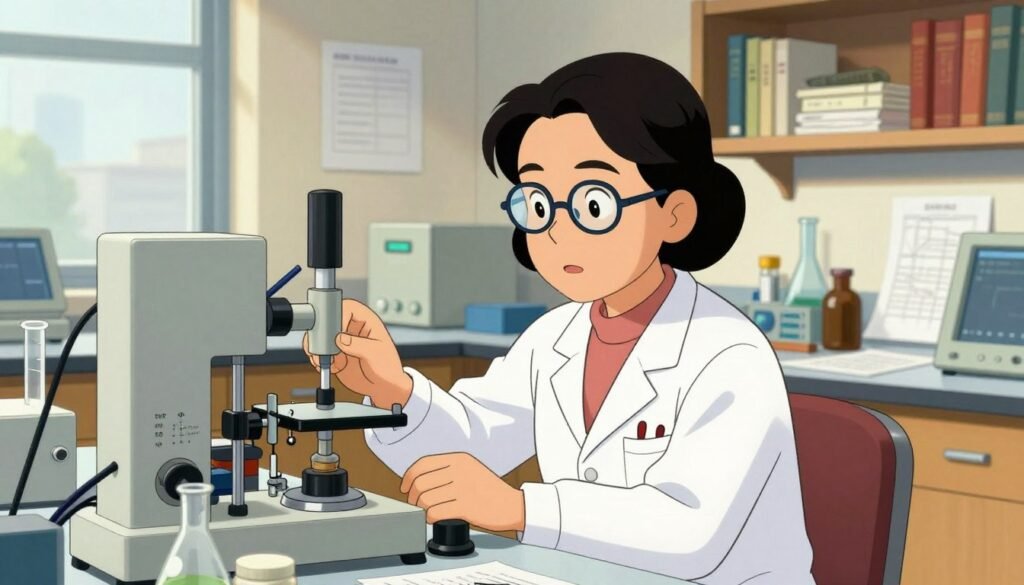
Wu was known for her careful work and complex experiments. Her research has changed the field a lot. You can learn more about physics and other STEM subjects with Debsie Gamified Courses!
Chien-Shiung Wu’s work reminds us of the value of never giving up and being creative in science. Her legacy inspires many to explore and learn more.
Learning about Chien-Shiung Wu helps us appreciate the work of famous women in STEM. It motivates us to follow our own path in science, technology, engineering, and mathematics!
Rachel Carson and the Environmental Science Movement
Rachel Carson changed how we see the world and our role in it. She was a marine biologist and conservationist. Her work showed us why we must protect the environment.
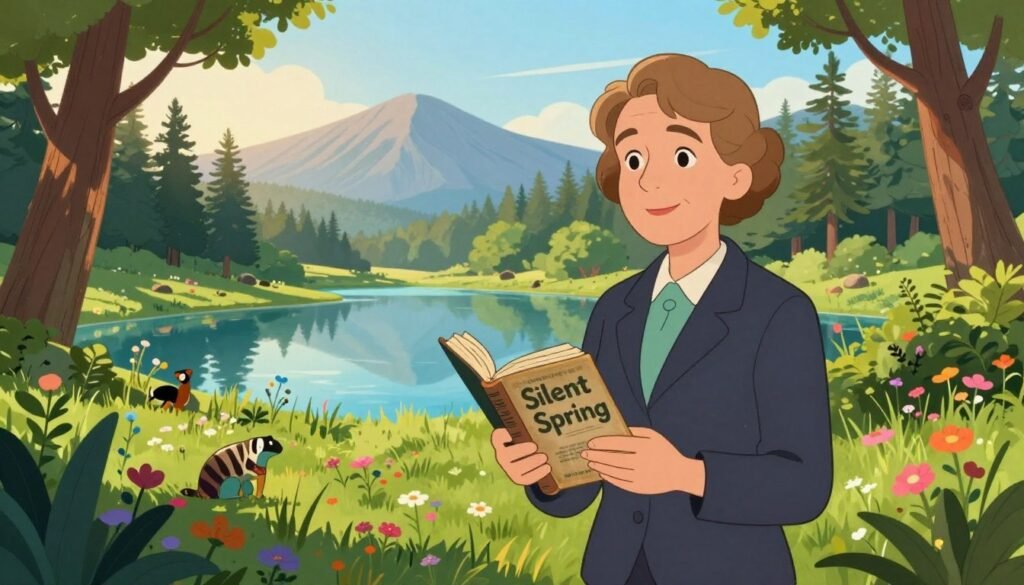
Her book, Silent Spring, came out in 1962. It showed how bad pesticides and pollutants are for our planet. This book helped start the global push for environmental care.
“The more clearly we can focus our attention on the wonders and realities of the universe about us, the less taste we shall have for destruction.”
Carson’s work made people see the need for saving our planet. You can find out more about her on the National Women’s History Museum website.
Key Contributions of Rachel Carson:
- She pushed for saving our planet and keeping it healthy.
- She showed how bad pesticides and pollutants are.
- Her work helped make laws to protect our environment.
| Year | Event | Impact |
|---|---|---|
| 1962 | Publication of Silent Spring | Advanced the global environmental movement |
| 1963 | Testimony before the U.S. Senate Committee on Commerce | Influenced environmental policy and regulation |
| 1973 | Establishment of the U.S. Environmental Protection Agency | Reflected the growing national concern for environmental protection |
Today, Rachel Carson’s work still inspires many. By checking out Debsie’s courses at https://debsie.com/courses, you can learn more about the environment. This helps us work towards a greener future!
Mae Jemison and the Intersection of Medicine and Space Exploration
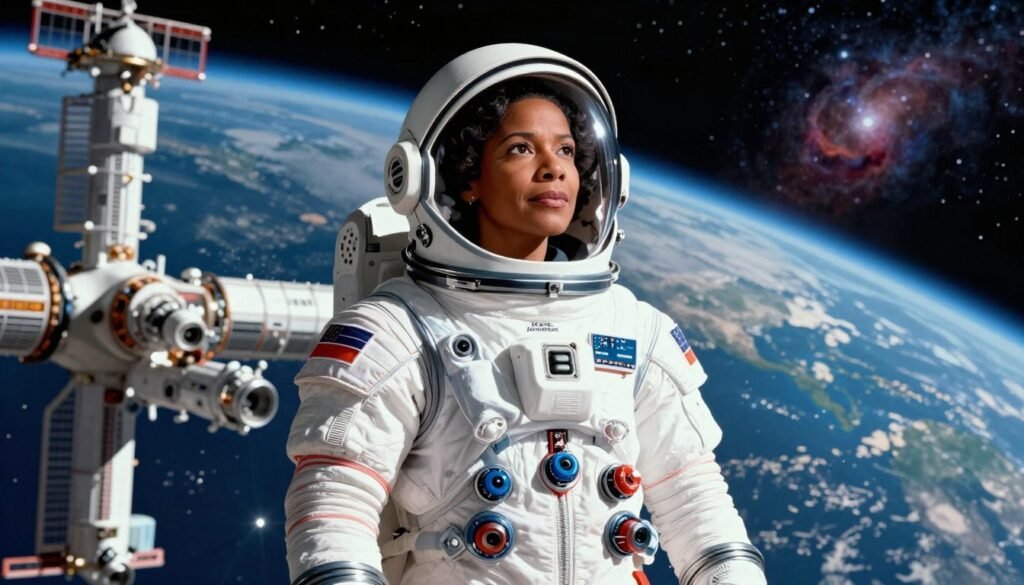
Mae Jemison flew on the Space Shuttle Endeavour in 1992. She was the first African American woman in space. Her achievement was a big step in space history.
Mae Jemison mixed medicine and space. She got her medical degree from Cornell University. Before NASA, she was a doctor.
Mae Jemison’s Achievements:
- First African American woman in space
- Medical degree from Cornell University
- Worked as a general practitioner before joining NASA
- Contributed to the development of the Space Shuttle’s health and safety standards
As Jemison said,
“The best way to make dreams come true is to wake up and go to work.”
This quote shows her hard work and dreams. You can read more about her journeyhere.
| Year | Achievement |
|---|---|
| 1987 | Selected by NASA for the astronaut program |
| 1992 | Flew on the Space Shuttle Endeavour |
Mae Jemison inspires many, including girls, to go into STEM. Her story shows us we can do great things with hard work. For more inspiring stories and courses, check out Debsie Gamified Courses.
Jennifer Doudna and the CRISPR Revolution
Jennifer Doudna’s work on CRISPR has changed genetics and biotech. She’s a biochemist leading a big change. This change is in how we see genetics and tech.
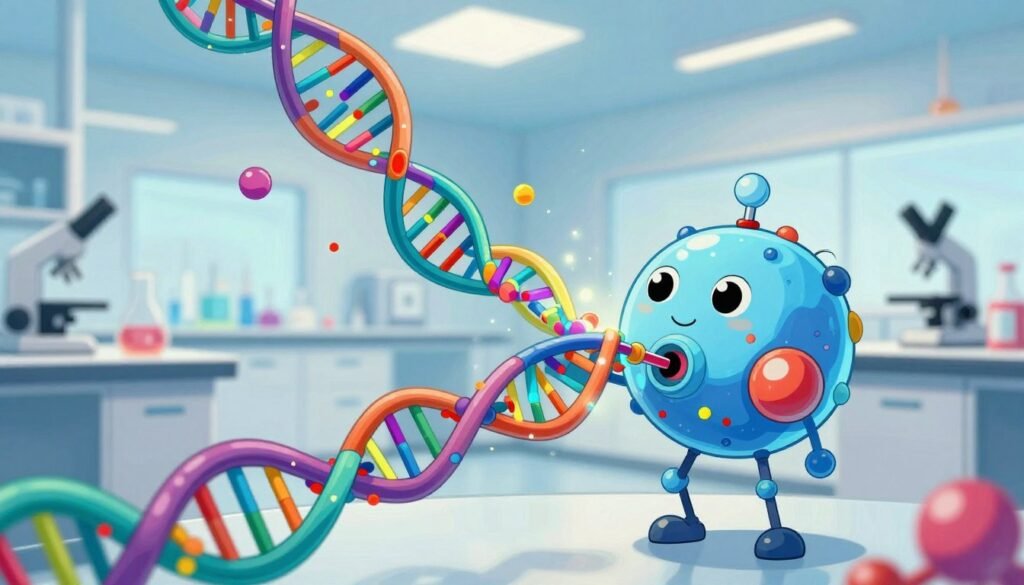
Doudna and Emmanuelle Charpentier won the 2020 Nobel Prize in Chemistry. They worked on CRISPR-Cas9, a tool for editing DNA with great precision. This tool is important for many fields, like medicine and farming.
CRISPR Technology: A Game Changer
CRISPR-Cas9 is more than a tool. It can treat diseases, make crops better, and even bring back extinct species. Its precision and speed make it very useful for scientists.
For more on Jennifer Doudna and CRISPR, visit the Innovative Genomics Institute.
Applications of CRISPR
| Field | Application | Potential Impact |
|---|---|---|
| Medicine | Treatment of genetic diseases | Cure for inherited disorders |
| Agriculture | Crop improvement | Increased yield and disease resistance |
| Biotechnology | Gene editing | New biological products and therapies |
Jennifer Doudna shows the power of innovation and women in STEM. CRISPR’s possibilities remind us of science’s power to help us and the world.
Learn more about STEM and its fun possibilities at https://debsie.com/courses!
Modern Initiatives to Support Women in STEM
Many new efforts are helping women in STEM fields. Groups and learning sites are working together. They aim to make science, technology, engineering, and math more welcoming for women.
Gamified Approaches
Gamified learning is changing STEM education. Debsie’s courses make learning fun and easy. They use game ideas to teach hard topics.
As Jane Smith, a famous STEM teacher, once said,
“Gamification in education is not just a trend; it’s a powerful tool to capture students’ imagination and foster a deeper love for learning!”
Bridging the Gap
Many efforts are closing the gender gap in tech education. Programs offer mentorship, skill building, and community support. They help young women dream big in STEM. For more info, check out AAUW’s STEM resources.
Supporting women in STEM helps equality and innovation grow. Let’s keep cheering for women’s roles in these fields!
Resources for Students Interested in Scientific Careers
For students wanting to start a scientific career, many resources are here to help! The journey to a STEM career is exciting and challenging. But with the right tools and advice, students can do great.
“The future belongs to those who believe in the beauty of their dreams.” – Eleanor Roosevelt. This quote is perfect for students dreaming of changing the world with science. Remember, every famous scientist began with curiosity and a dream.
Exploring Debsie Gamified Courses for Skill Development
Students can improve their skills through fun learning. Debsie has courses that make learning fun and interactive! Visit https://debsie.com/courses to check out different subjects.
Debsie’s courses make hard topics easy and fun. They use game design to help students learn better. This way, students can really understand science and how it works.

Mentorship Programs and Academic Pathways
Mentorship programs are also key for students. They connect students with experts who share their knowledge and experiences.
These programs help students know what to expect in their field. They also help students learn important skills. Plus, they offer chances to meet people in the field, which can help find jobs or internships.
It’s important for students to know about Debsie’s courses and mentorship programs. These resources help students succeed in their scientific careers. By using them, students can prepare for a bright future.
Conclusion
Women in STEM fields are very important. We need to celebrate their work to inspire others. This helps young people want to be scientists, tech experts, engineers, and mathematicians.
Marie Curie, Ada Lovelace, and Jennifer Doudna are just a few examples. They show how much women have done in STEM. Now, we must help the next group of women in STEM.
You can help by checking out Debsie’s courses at https://debsie.com/courses. These fun courses can teach you new things. Together, we can make STEM more welcoming for everyone.