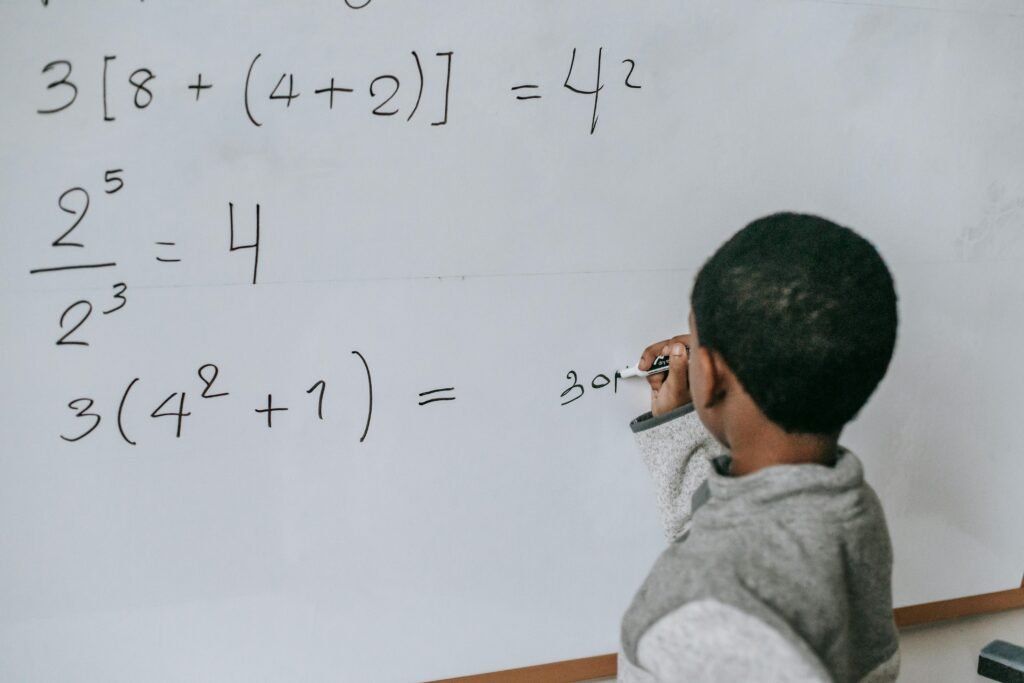
I looked at the moon as a kid and wondered how it stayed up. That moment made me see life differently! We think every kid should feel that pure magic!
At Debsie, we make that wonder fun for your family. Our team loves dreaming big and exploring more. Try Debsie Gamified Courses at https://debsie.com/courses and start your adventure!
Finding the right scientists to read about can spark a lifelong love for discovery. These legends used science to solve big mysteries. Their big ideas still shape our lives today.
Key Takeaways
- Curiosity opens doors to understanding our world.
- Learning from history inspires kids to dream big.
- Fun lessons make hard ideas easy and fun.
- Scientific discoveries guide us to new ideas.
- Gamification helps kids and parents grow together.
The Power of Scientific Literature for Curious Minds
Curiosity makes us want to learn forever. Scientific literature helps us keep learning. It shows us the world in new ways.
For those who love to learn, reading science is exciting. It lets us explore big questions and our place in the universe.

Science reading can change how we see the world. It’s not just reading. It’s about getting new ideas that make life better.
We can love to learn by reading science. It’s not just for school. It’s for growing our minds and seeing things differently.
Reading science makes us smarter. It helps us think better and solve problems in new ways.
Carl Sagan and the Cosmic Perspective
Imagine a scientist who made the universe feel huge yet close to us. That’s Carl Sagan! He was a famous astronomer who shared the universe’s wonders with everyone. Sagan made us all look up and wonder!
Carl Sagan’s work on the cosmic perspective made us think about our place in the universe. He made hard ideas easy to understand. His excitement was infectious! Sagan showed us how science and philosophy connect, making us understand our existence.
The Pale Blue Dot and Human Significance
One of Sagan’s biggest ideas was the Pale Blue Dot. This image shows Earth as a tiny dot in space. Sagan’s thoughts on this image made us think about our importance. He said, “The Earth is a very small stage in a vast cosmic arena.”
This idea makes us think about our actions and how they affect the planet.
Bridging Science and Philosophy
Sagan didn’t just focus on science; he also explored our existence’s deeper meaning. He made us think about our place in the universe and reality. This helped us see how science, philosophy, and life are connected.
Let’s look at some key things Carl Sagan did:
| Contribution | Description | Impact |
|---|---|---|
| Cosmic Perspective | Encouraged a broader understanding of our universe | Inspired new generations to explore space and science |
| Pale Blue Dot | Reframed our understanding of Earth’s significance | Prompted global environmental awareness |
| Science Communication | Made complex science accessible to the public | Fostered a more informed and curious public |
Exploring Carl Sagan’s work helps us understand the universe and our role in it. His legacy inspires us to explore, discover, and appreciate the cosmos!
Richard Feynman and the Joy of Discovery
Richard Feynman was a Nobel Prize-winning physicist. He loved to make science simple for everyone. His way of learning inspires people all over the world!

Feynman’s work in science and education is still loved today. He created The Feynman Technique for learning complex ideas.
The Feynman Technique for Learning
The Feynman Technique has four steps. First, pick a topic to learn. Then, explain it like you’re teaching a kid. Next, find what you don’t know. Lastly, review to fill in the gaps.
Using this technique, you can break down hard topics into easy parts. It makes learning fun and effective. It helps you understand things better!
Curiosity as a Driving Force
Feynman’s success came from his curiosity. He thought curiosity is the key to learning. He wanted everyone to love learning from a young age.
Feynman’s way of learning tells us to ask questions and seek answers. This is how we make new discoveries. It helps us understand the world better.
By using Feynman’s methods and being curious, you can grow to love learning more. You’ll make great progress in your studies!
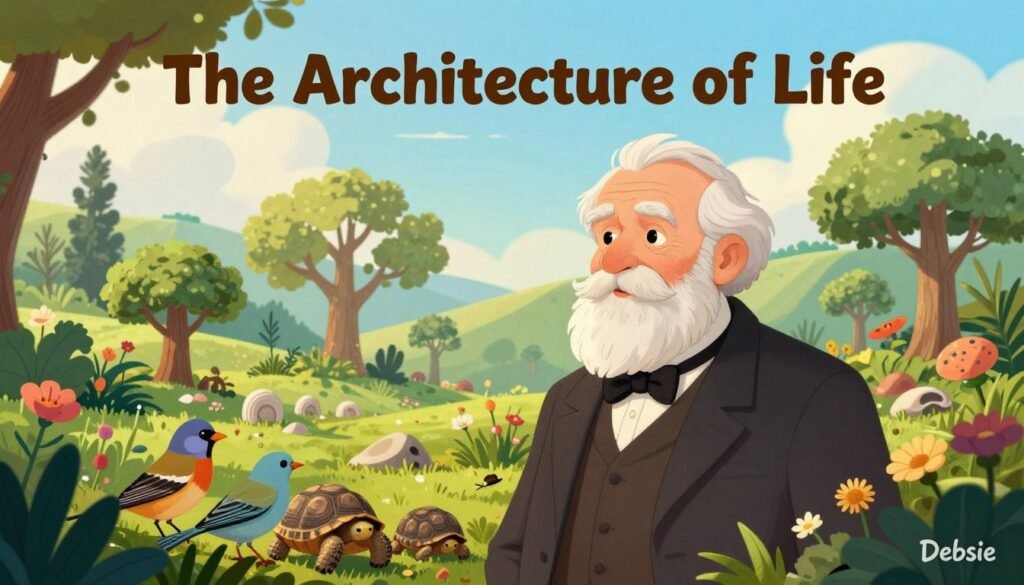
Charles Darwin and the Architecture of Life
Charles Darwin’s theory of evolution changed biology forever! His work on natural selection showed us how life on Earth is diverse.
Darwin traveled on the HMS Beagle and saw many species. He realized that species change and grow into new ones. This idea helps us understand life’s complexity.
The Mechanism of Natural Selection
Natural selection is key in evolution. It means species that fit their environment best live and have babies. This makes life on Earth diverse.
Darwin saw that species have different traits. Those with good traits live longer. For example, Galapagos finches have different beaks for food. This proved his theory of evolution.
How Evolution Changed Our Worldview
Evolution changed how we see the world. It affects philosophy, anthropology, and psychology. It shows us how all living things are connected.
Also, Darwin’s work made us love nature more. It made us think about saving the environment and how we affect it.
Marie Curie and the Persistence of Inquiry
Marie Curie’s work on radioactivity opened new doors in physics and chemistry. It also helped women in science. Her research and determination inspire scientists today.
Marie Curie’s journey into radioactivity was filled with big discoveries and hard work. She and her husband Pierre found polonium and radium. This helped us understand radioactivity better.
Pioneering Research in Radioactivity
Marie Curie’s work on radioactivity was pioneering. It helped us understand atoms better. Her discoveries changed physics and chemistry a lot.
Her findings led to new areas in medicine and energy. For example, radiation therapy for cancer started because of her work.
Overcoming Barriers in the Scientific Community
Marie Curie faced many challenges as a woman in science. But she never gave up. Her achievements helped women in science today.
| Achievement | Year | Impact |
|---|---|---|
| Discovery of Polonium | 1898 | Expanded understanding of radioactive elements |
| Discovery of Radium | 1898 | Furthered research in radioactivity and its applications |
| Nobel Prize in Physics | 1903 | Recognized pioneering work on radioactivity |
| Nobel Prize in Chemistry | 1911 | Honored for work on the isolation of pure radium |
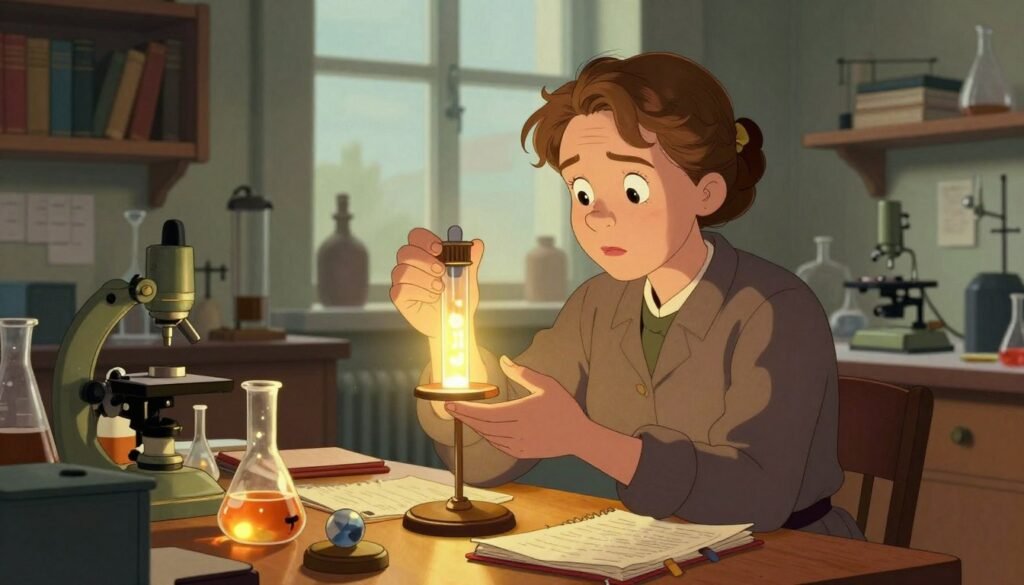
Learning about Marie Curie’s life and work inspires us. Her legacy keeps pushing science forward. It encourages us to keep exploring.
Albert Einstein and the Fabric of Reality
Imagine a world where time and space are not fixed. This is what Albert Einstein showed us with his theory of relativity! His work changed how we see the universe, introducing new ideas about space and time.
Einstein’s theory has two parts: special relativity and general relativity. Special relativity says physics works the same for everyone moving at the same speed. General relativity adds gravity, saying it warps space and time because of mass and energy.
Relativity and the Nature of Time
Einstein said time isn’t always the same. It changes with speed and gravity. The article “What is Time: Understanding Clocks, Seasons, and, explains this well.
Einstein once said,
“The distinction between past, present, and future is only a stubbornly persistent illusion.”
This shows how groundbreaking his ideas on time were.
| Concept | Description |
|---|---|
| Special Relativity | Laws of physics are the same for all observers in uniform motion |
| General Relativity | Gravity as a curvature of spacetime caused by mass and energy |
| Time Dilation | Time is affected by an object’s speed and gravitational field |
Imagination as a Scientific Tool
Einstein’s work wasn’t just math. It was also about his imagination. He thought imagination is more important than knowledge. Imagination helped him think outside the box.
To learn more, check out NASA’s article on 10 Things Einstein Got. It offers great insights into his work.
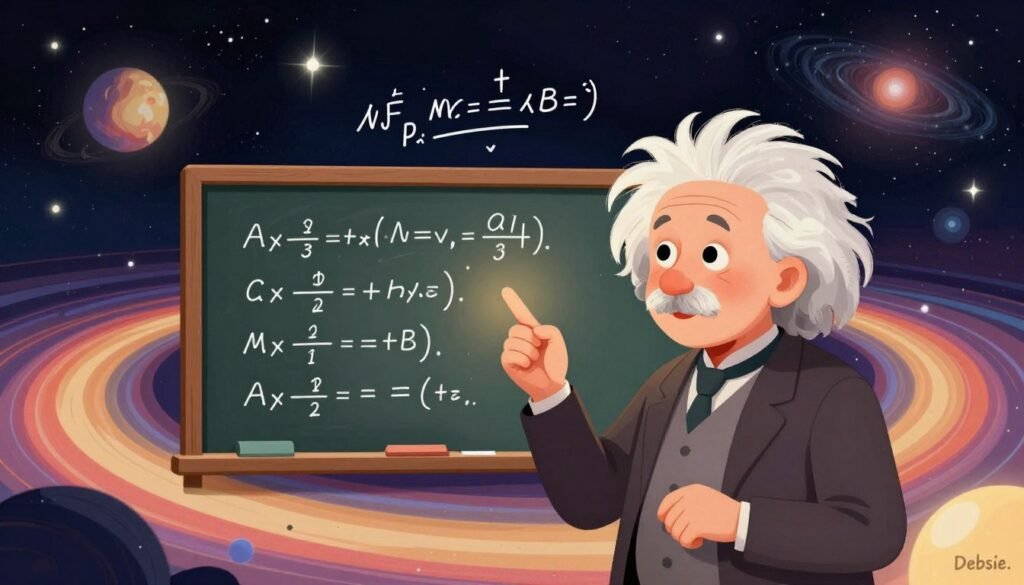
Understanding Einstein’s theories and his use of imagination helps us appreciate the universe more. It shows how important creative thinking is in science.
Stephen Hawking and the Mysteries of the Universe
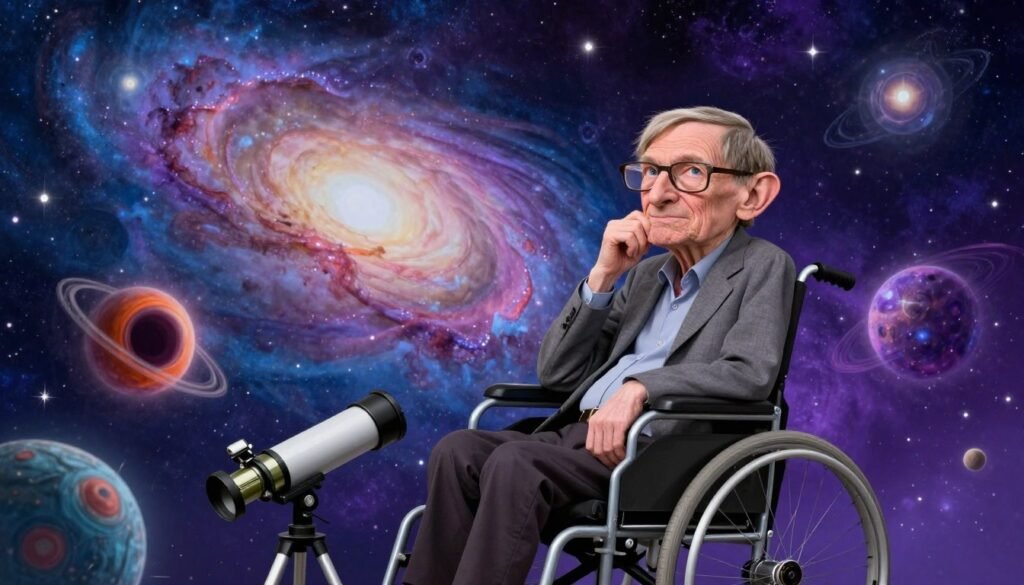
Stephen Hawking changed how we see the universe. He made hard ideas easy for all to understand! His work on black holes and the Big Bang changed how we see the cosmos.
Black Holes and the Big Bang
Hawking found that black holes send out radiation, called Hawking radiation. This idea changed how we think about these strange objects.
He also helped us understand the Big Bang. He showed that the universe started as a tiny, hot point. This happened about 13.8 billion years ago.
Making Complex Physics Accessible
Hawking made hard physics easy for everyone. His book, “A Brief History of Time,” is a great example. It explains cosmology and theoretical physics in simple words.
His way of explaining things inspired many. You can learn more about his life and work on The New Republic.
Hawking’s work made the universe’s wonders accessible to all. His legacy keeps inspiring scientists and fans around the world!
Ada Lovelace and the Dawn of Computing
Ada Lovelace is a key figure in computing history. She is known as the first computer programmer. Her work on Charles Babbage’s Analytical Engine is celebrated today!
Lovelace showed the Analytical Engine’s power. She saw it could do more than just add numbers. This was a visionary idea that started modern computing!
The First Computer Programmer
Ada Lovelace wrote the first computer program. Her notes on the Analytical Engine are a big deal. She showed how the machine could calculate Bernoulli numbers.
For more on computer science history, check out this report.
Visionary Thinking Beyond Her Time
Lovelace’s ideas went beyond just numbers. She saw the Analytical Engine as a machine that could do anything. This visionary thinking was way ahead of its time.

| Name | Contribution | Year |
|---|---|---|
| Ada Lovelace | First computer program | 1843 |
| Charles Babbage | Designed the Analytical Engine | 1837 |
| Grace Hopper | Developed the first high-level programming language | 1950s |
Ada Lovelace and others laid the groundwork for modern computing. Their work inspires programmers and computer scientists today!
Jane Goodall and the Ethics of Observation
Jane Goodall is a famous animal scientist. She has spent her life studying and protecting animals. Her work has inspired many to care about animal behavior and conservation.
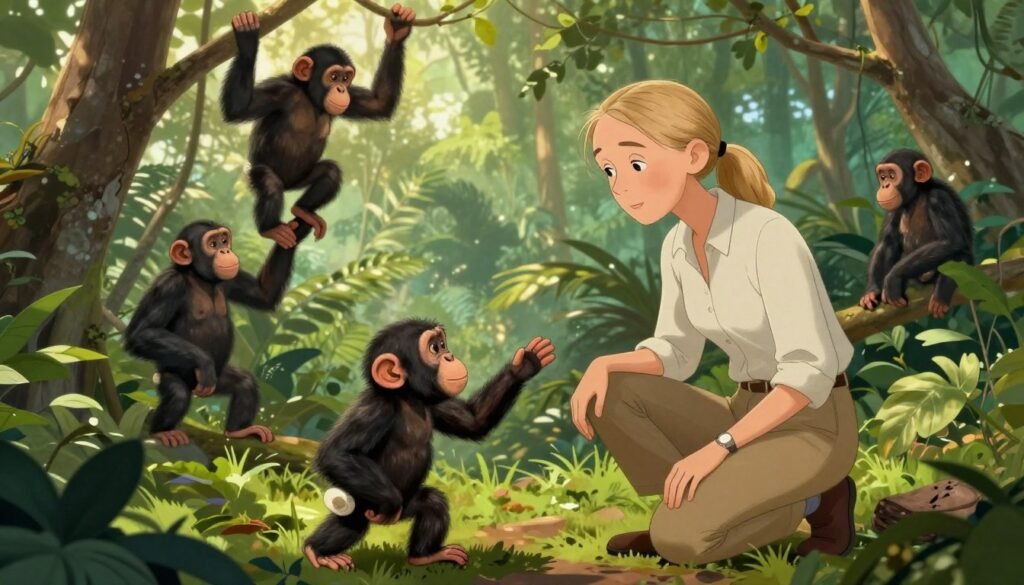
In the 1960s, Goodall went to Tanzania’s Gombe Stream National Park. She studied chimpanzees there. Her findings changed how we see these animals.
Redefining Human-Animal Relationships
Goodall’s work has changed how we think about animals and humans. Her research shows we are more alike than different. This has made us treat animals with more kindness and respect.
Goodall showed that animals feel emotions like joy and sadness. She saw that chimpanzees are like us in many ways. This has made us see animals in a new light.
The Importance of Field Research
Field research is key to understanding and protecting animals. Goodall’s work in Gombe Stream has shown its value. Long-term studies in nature are very important.
| Key Contributions | Impact on Conservation |
|---|---|
| Tool use in chimpanzees | Challenged the notion that humans are the only tool-using species |
| Complex social structures | Highlighted the sophistication of animal societies |
| Emotional and social behaviors | Encouraged a more compassionate view of animals |
Learning from Goodall’s work helps us understand why we need to protect animals. It shows us how important conservation is for our planet.
Nikola Tesla and the Future of Energy
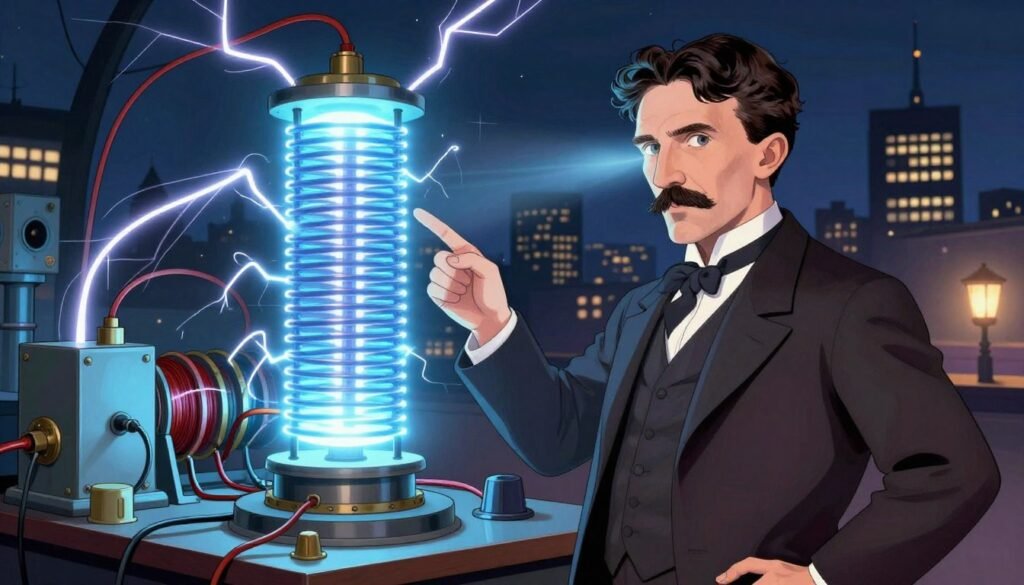
Imagine a world where electricity flows easily over long distances. This is thanks to Nikola Tesla’s groundbreaking work! His work onalternating current (AC)changed how we send electricity today.
Nikola Tesla’s ideas in AC systems changed the electrical world. His work made sending electricity far and wide possible. This lets us power homes and businesses all over the world. You can learn more about Tesla’s work and its importance today from this article.
Innovations in Alternating Current
Tesla’s work on AC was a big deal. It made sending power more efficient. Thealternating currentsystem lets us change voltage levels easily. This is key for our modern world.
The Mind of a Futurist
Tesla thought about more than just today’s tech. He dreamed of wireless energy and his work helped start many modern techs. By knowing Tesla’s vision, we see how important thinking ahead is for our future.
Rachel Carson and the Environmental Awakening
Rachel Carson’s book, Silent Spring, started a big change in how we see the environment. She was a marine biologist and loved nature. Her work showed how bad human actions can be for the planet.
Carson changed how people see nature and our role in it. She knew a lot about how living things and their homes are connected.
Silent Spring and Ecological Awareness
In 1962, Silent Spring came out. It warned about the dangers of pesticides. Carson showed how these chemicals hurt animals and people.
Many people loved the book, but some didn’t. Yet, it started a big talk about pesticides. This talk led to big changes, like banning DDT in the U.S.
The Power of Scientific Advocacy
Rachel Carson showed how science can help the environment. She made hard science easy for everyone to understand. This helped people want to make a difference.
Carson’s work still inspires many today. She reminds us of the value of science and the need to keep fighting for the planet.
| Key Contributions | Impact |
|---|---|
| Publication of Silent Spring | Raised awareness about the dangers of pesticides and led to policy changes |
| Advocacy for Environmental Conservation | Inspired a national movement towards environmental protection |
| Scientific Research and Documentation | Provided a foundation for future environmental studies and advocacy |
Curated Scientists to Read About for Intellectual Growth
Reading about scientists can make you smarter and more curious! It lets you learn from many scientists. This helps you see the world in new ways.
Why Diverse Perspectives Matter
Many views in science help us understand better. Scientists from all walks of life share their knowledge. This shows us how science touches our lives every day.
- Encourages critical thinking by exposing readers to various methodologies and conclusions.
- Fosters empathy and understanding by highlighting the human side of scientific inquiry.
- Promotes innovation by combining different viewpoints and expertise.

Building a Personal Reading List
Start a list of scientists you want to learn from. Here’s how:
- Find what science topics you like, like physics or biology.
- Find books and papers by famous scientists in your interests.
- Try different types of science writing, like biographies or articles.
By curating a diverse reading list, you’ll have a fun and smart journey!
Gamifying Your Learning Journey with Debsie
Learn in a new way with Debsie’s fun courses. They make learning exciting and fun. Debsie helps kids all over grow smart through many subjects and flexible ways to teach.
Debsie uses games to make learning an adventure. This makes learning stick better and fun for students.
How Interactive Courses Enhance Retention
Interactive courses keep you busy with hands-on stuff and quick feedback. This way, you remember more because you’re doing it yourself.
Key benefits of interactive courses include:
- Increased learner engagement
- Improved retention rates
- Personalized learning experiences
Debsie’s courses use these benefits for a fun and effective learning experience. For example, you can check out math achievement data in a fun way. This makes hard stuff easier to get.
Exploring Debsie Gamified Courses
Debsie has many courses for different needs and likes. Visit https://debsie.com/courses to see what’s available and try Debsie for yourself.
Subjects like physics are covered, with top tutors and classes. You can even find classes in Jamnagar, Gujarat.
| Course Features | Benefits |
|---|---|
| Interactive Learning | Enhanced Engagement |
| Gamified Elements | Increased Motivation |
| Personalized Feedback | Better Retention |
Try Debsie’s courses for a fun and effective way to learn. Explore gamified learning and make learning more fun and interactive!
The Intersection of Big Ideas and Modern Technology
Big ideas and modern technology are changing our lives. They make our lives better and help us solve problems. By using scientific principles, we can find new ways to solve old problems.
Technology lets us use science in our daily lives. For example, it helps us use clean energy more. This reduces harm to our planet. It shows how big ideas and modern technology can make a big difference.
Applying Scientific Principles to Daily Life
Using science in our daily lives changes how we see the world. Simple things like tracking energy use or planning based on weather are examples. These actions help us live better and protect our planet.
Knowing how science and technology work helps us make smart choices. By understanding the basics, we can see the good and bad of new tech. This helps us use technology wisely.

Staying Updated with Scientific Breakthroughs
To get the most from big ideas and tech, we need to keep up with new science. Follow science news, go to talks, and join online science groups. This way, we can help shape the future.
Places like Debsie make learning about science fun. They help everyone stay curious and informed. By always learning, we can keep up with a world that’s always changing.
Developing a Habit of Lifelong Scientific Reading
Reading science books all your life is great for keeping curious and learning always. It helps you understand the world better. You learn about all its complex things.
Let’s look at ways to read deeply. Deep reading is more than just getting the facts. It’s about really getting into the material.
Strategies for Deep Reading
Here are some tips for deep reading:
- Active Recall: Try to remember what you read by writing it in your own words or making maps!
- Contextual Understanding: Connect what you read to things you see or do in life!
- Critical Thinking: Think about the ideas in the text. Ask questions and think about how they apply to the world!

Balancing Theory and Practical Application
It’s important to mix theory with doing things. Theory gives you the basics. Doing things makes the knowledge real and useful.
Here are some tips for balancing theory and practice:
- Apply theoretical concepts to real-world problems or projects you’re working on!
- Experiment and Explore: Try new things based on what you’ve read!
- Discuss with Others: Talk about what you’ve read with friends or teachers. You might learn something new!
By using these tips, you can get the most out of reading science books. You’ll keep learning and growing for life!
Conclusion
Scientists like Carl Sagan, Marie Curie, and Stephen Hawking have changed how we see the world and the universe. Their stories and discoveries show us the scientific consensus on big issues like climate change.
Learning about these scientists makes us smarter and more excited about science. Their big ideas help us in many areas, like protecting the environment and inventing new tech.
It’s fun to keep learning and stay curious. We hope you’ll keep exploring what these scientists did. This will help you appreciate the hard work of scientists.
By learning more, you’ll understand big ideas better. You’ll also join a group that loves to learn and discover. Let’s keep exploring science together!