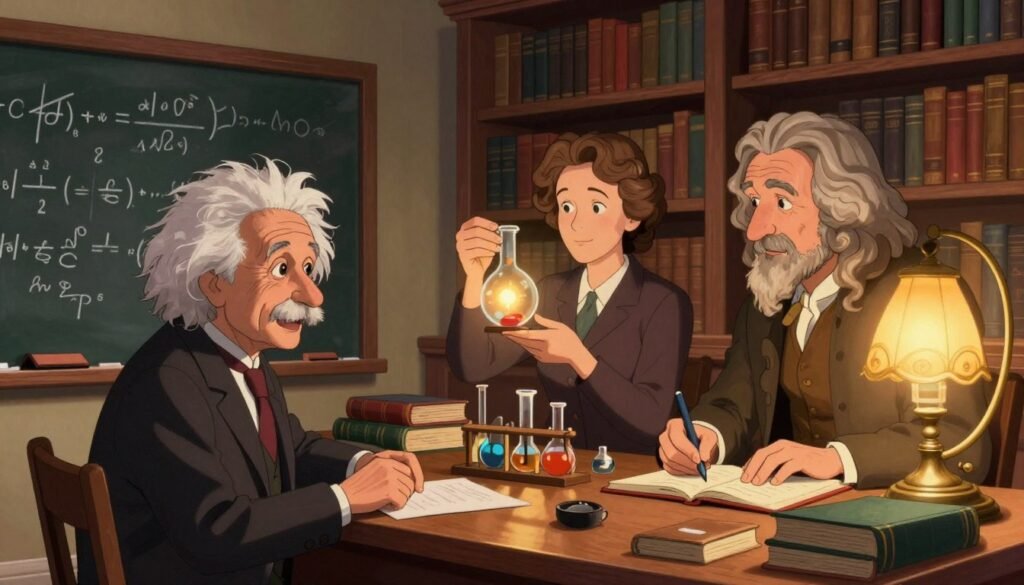
Have you ever looked up at the night sky and wondered how the universe works? It is truly amazing how one person can change our lives for the better!
We’re excited to share the stories of the most incredible geniuses in history with you today. These brave thinkers showed us that curiosity is a superpower. It helps us find answers to the world’s big challenges!
Did you know the periodic table shows the hidden patterns of nature? Dmitri Mendeleev was a visionary who left space for the unknown. He showed us how to study the world.
Start your own adventure by trying out Debsie Gamified Courses at https://debsie.com/courses right now! These famous scientists didn’t just find answers. They asked the right questions to solve big mysteries.
Let’s celebrate the best scientists who paved the way for our modern world. They inspired us to keep exploring. Are you ready to dive into their world of magic and logic?
Key Takeaways
- Discover how brilliant minds changed our daily lives forever.
- Learn about the power of curiosity and asking big questions.
- Explore major breakthroughs in physics, chemistry, and biology.
- Understand how the periodic table was created by Dmitri Mendeleev.
- Find out how science helps us build a better future together.
- See why learning through play makes science extra fun for everyone!
Defining the Criteria for the Best Scientists
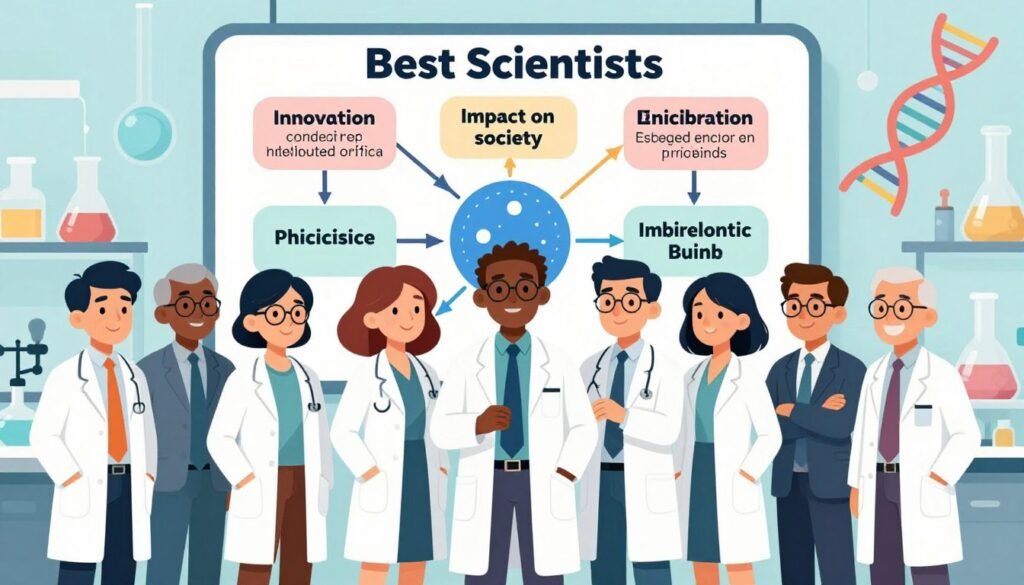
Finding the best scientists of all time is a big job. We look at their groundbreaking work and how it changed history. To find these special people, we check a few important things.
We look at their groundbreaking contributions. This includes new ideas, first experiments, and big steps forward. These things help us learn more and open doors for others.
Here are some key traits of the best scientists:
- Innovative thinking and problem-solving skills!
- The ability to challenge existing theories and propose new paradigms!
- Significant contributions to their field, recognized through awards and accolades!
- Lasting impacts on society, whether through technological advancements or changes in our understanding of the world!
Let’s look at some famous scientists and what they did. You can learn more about how we pick the best scientists on our website. It explains the methodology and selection criteria in detail.
| Scientist | Contribution | Historical Impact |
|---|---|---|
| Isaac Newton | Laws of Motion | Fundamental to classical mechanics! |
| Marie Curie | Discovery of Radioactivity | Paved the way for advancements in medicine and energy! |
| Albert Einstein | Theory of Relativity | Revolutionized our understanding of space and time! |
As shown in the table, the best scientists made big changes. Their work still inspires us today. It helps us learn more and understand the world better!
Isaac Newton and the Laws of Motion
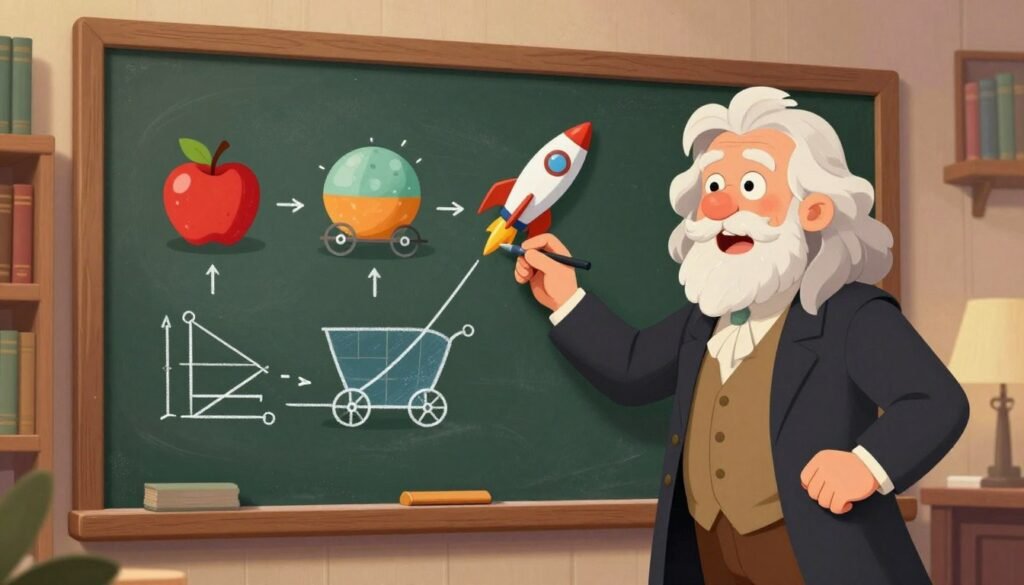
Isaac Newton changed how we see the world. He made big discoveries in science. His work is still important today.
Newton’s laws tell us how things move and react to forces. These three laws are key in physics. They help us understand everything from a ball in flight to planets moving.
“If I have seen further, it is by standing on the shoulders of giants,”
Newton said this to honor those who helped him. His work was a big step forward. It has helped science for centuries.
Newton’s first law says objects keep moving unless stopped. This is why seatbelts are important. They keep us safe in cars.
To learn more about Newton’s laws, check out fun learning sites. They make physics easy and fun!
Newton did more than just the laws of motion. He also worked on gravity and calculus. His work has changed how we see the universe. It goes from an apple falling to planets moving.
Albert Einstein and the Theory of Relativity
Imagine a world where time and space aren’t fixed. This is what Albert Einstein’s theory of relativity proposed! You might have heard of Albert Einstein. Let’s dive deeper into how his work changed our understanding of the universe.
Albert Einstein was born in Germany in 1879. He grew up to become one of the most influential scientists of the 20th century. His curiosity and passion for understanding the universe led him to develop the theory of relativity.
The special theory of relativity, introduced in 1905, challenged the long-held notion that time and space are absolute. Einstein showed that time and space are relative. Their measurement depends on the observer’s frame of reference. This theory also led to the famous equation E=mc^2, which shows the equivalence of mass and energy.
In 1915, Einstein expanded his earlier work with the general theory of relativity. This theory introduced gravity as a curvature of spacetime caused by mass and energy. It predicted phenomena such as gravitational waves and black holes, which have since been confirmed by observations and experiments.
Let’s take a closer look at some key aspects of Einstein’s theory of relativity:
| Theory | Key Concept | Impact |
|---|---|---|
| Special Theory of Relativity | Time and space are relative | Changed our understanding of space and time |
| General Theory of Relativity | Gravity as spacetime curvature | Predicted gravitational waves and black holes |
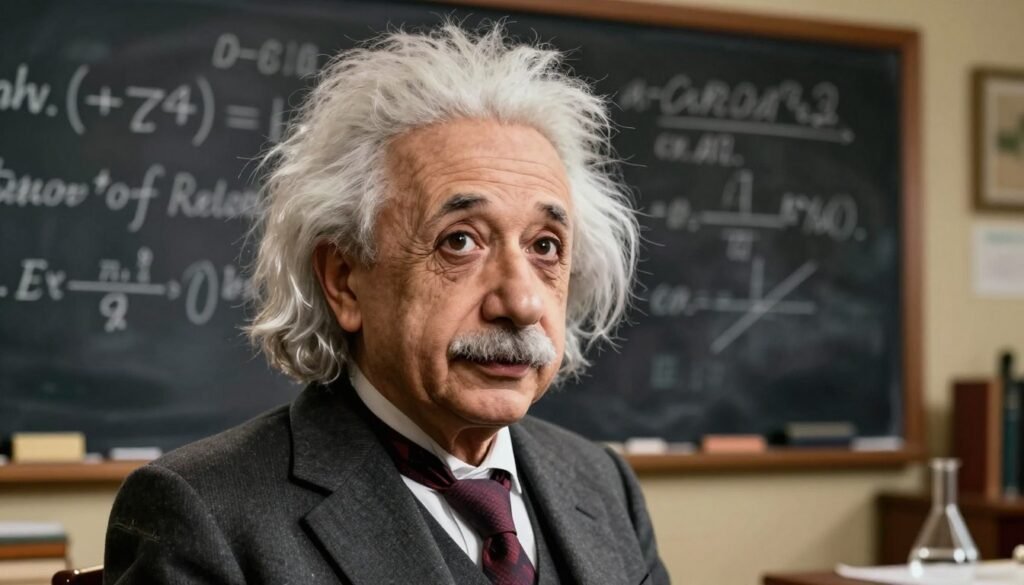
Einstein’s work didn’t stop at relativity. He made significant contributions to the development of quantum mechanics. He was also a vocal advocate for peace and civil rights. His legacy extends far beyond his scientific achievements, inspiring generations of scientists, thinkers, and the general public.
In conclusion, Albert Einstein’s theory of relativity was a groundbreaking moment in the history of physics. It transformed our understanding of the universe and paved the way for countless scientific and technological advancements.
Marie Curie and the Discovery of Radioactivity
Marie Curie was a trailblazer in radioactivity. Her work changed chemistry and physics. She found polonium and radium, changing how we see atoms.
Marie Curie worked hard as a scientist. She faced many challenges because she was a woman. But she kept going because she loved to discover new things. Her work helped us learn more about elements and led to new discoveries in medicine and energy.
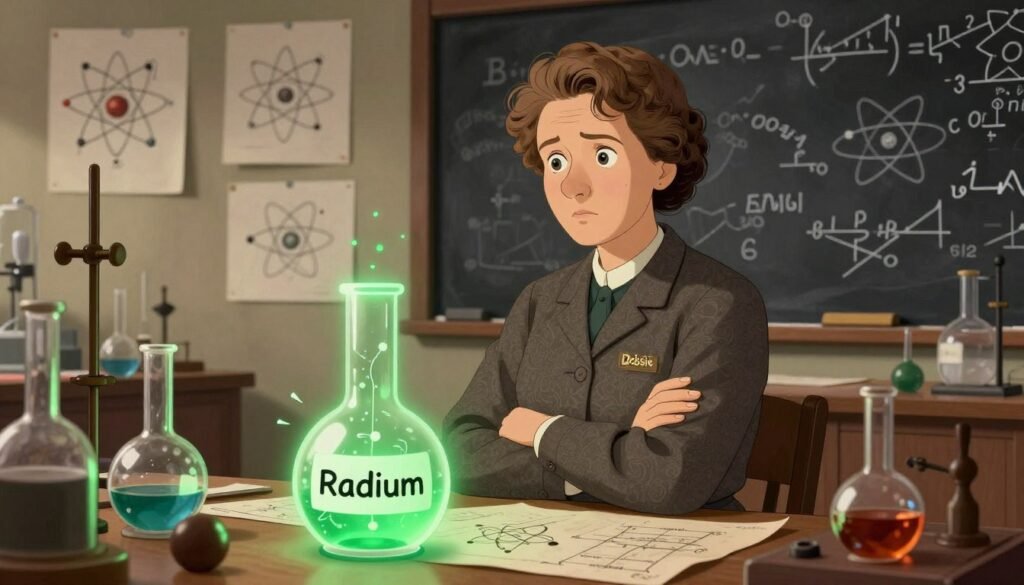
People all over the world knew about Curie’s work. She was the first woman to win a Nobel Prize. She also won two Nobel Prizes, in physics and chemistry. You can read more about her on the Nobel Prize website.
Marie Curie’s work on radioactivity is still important today. Her discoveries have helped in many areas, like treating cancer and making nuclear energy. Her legacy inspires scientists and learners everywhere!
Charles Darwin and the Theory of Evolution
Charles Darwin’s journey on the HMS Beagle changed biology forever! He collected many specimens and saw different species. These experiences shaped his ideas on natural selection.
Darwin said all species change over time through natural selection. This idea shows how species adapt and evolve. You can learn more about Charles Darwin’s life and work to see his big impact.
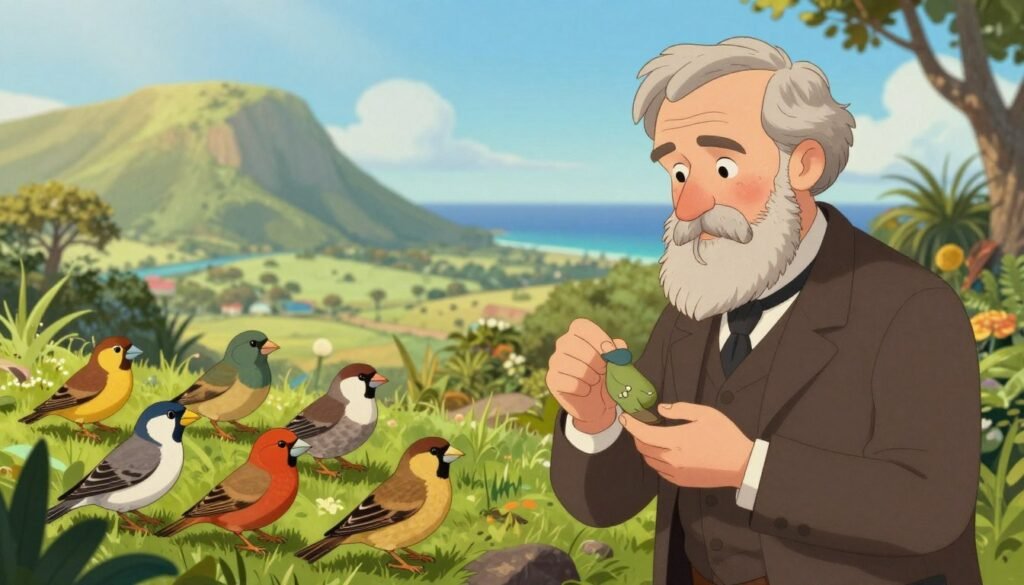
Darwin’s theory was very important. It changed old beliefs about life. It also started new areas like genetics and conservation.
Understanding evolution helps us see how complex life is. It’s like knowing DNA’s role in living things.
| Key Aspects | Description |
|---|---|
| Natural Selection | The process by which species adapt and evolve over generations. |
| Species Adaptation | The ability of species to adjust to their environments. |
| Evolutionary Biology | The study of how species evolve and diversify. |
Darwin’s work is still important today. Research in evolutionary biology keeps growing our knowledge. His theory is a key part of biology, leading to new discoveries and a deeper love for life on Earth.
Galileo Galilei and the Foundations of Modern Astronomy
Galileo Galilei made big changes to the telescope. He saw things in the sky that changed how we think about the universe! His work in astronomy helped prove the Copernican theory and helped other scientists.
Galileo saw four moons around Jupiter and Venus’s phases. These were big finds that helped us understand the universe better!
- Improving the telescope to study the night sky more effectively!
- Making observations that supported the Copernican heliocentric model!
- Challenging the geocentric view of the universe that was prevalent at the time!
Galileo’s work changed astronomy a lot. He faced big challenges, like the Church opposing him. But his discoveries helped others explore the universe.
We see Galileo Galilei as a big name in astronomy. His work still inspires scientists and astronomers today!
Nikola Tesla and the Future of Electricity
Imagine a world where electricity flows without wires. Nikola Tesla made this dream real. His work on alternating current (AC) systems changed our world.
Tesla was born in 1856 in Smiljan, Croatia. He moved to the United States in 1884. There, he worked for Thomas Edison before starting his own path.
He wanted to use AC systems for electricity. Tesla thought they were better than Edison’s direct current (DC) systems.
The polyphase AC system made sending electricity far away possible. This was key for lighting homes and powering factories. Some of his big wins include:
- Building the first hydroelectric power plant in Niagara Falls
- Creating the Tesla coil, a step towards wireless tech
- Inventing the AC motor, still used today
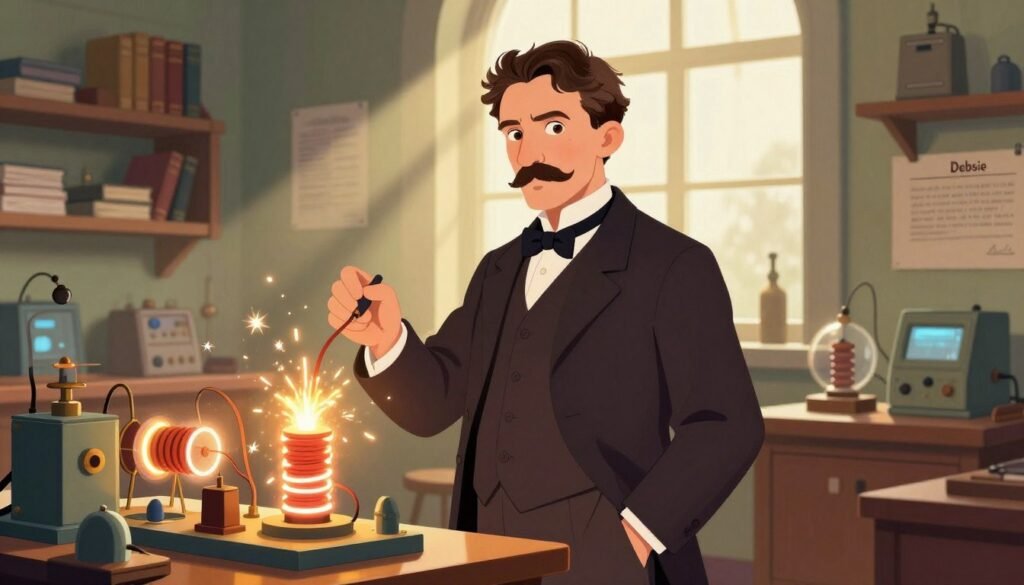
Tesla dreamed of sending electricity without wires. His idea was new and some doubted it. But it sparked new studies in wireless power.
Today, we still use Tesla’s ideas in electrical engineering. His work on AC systems helps us send electricity all over the world. His story teaches us to keep innovating and think differently.
Ada Lovelace and the Birth of Computer Programming
Meet Ada Lovelace, a trailblazer in computer programming! Born in 1815, she was more than a mathematician. She was a visionary who saw beyond her time.
Ada worked on Charles Babbage’s analytical engine. Her work is key in computer programming history. She translated an article and added notes that were longer than the original.
Ada’s contributions were groundbreaking! She is seen as the world’s first computer programmer. Her notes included the first computer program, a step-by-step guide for Bernoulli numbers.
But Ada’s legacy goes beyond her work. She shows how creativity meets technology. Today, we celebrate Ada Lovelace for inspiring future computer scientists.
| Achievement | Description | Impact |
|---|---|---|
| Work on Analytical Engine | Translated Luigi Menabrea’s article and added extensive notes | Laid the foundation for modern computer programming |
| First Computer Program | Created a method for calculating Bernoulli numbers | Recognized as the first computer programmer |
| Visionary Thinking | Foreseen the analytical engine’s potential beyond calculation | Inspired future generations in computer science |
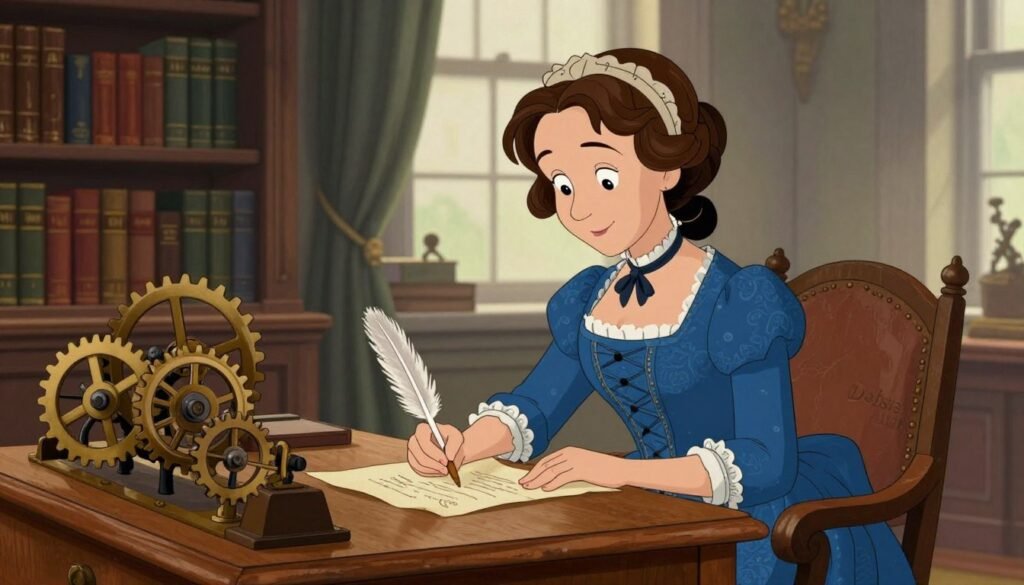
Ada Lovelace’s story shows the power of one person in tech history. Her vision inspires us to dream big with technology.
Louis Pasteur and the Germ Theory of Disease
Louis Pasteur changed medicine and hygiene a lot. He found out how germs cause diseases. This led to new ways to fight sickness.
Louis Pasteur’s Contributions: Pasteur showed that germs cause many diseases. He proved that germs are not made by chance. This changed how we see sickness.
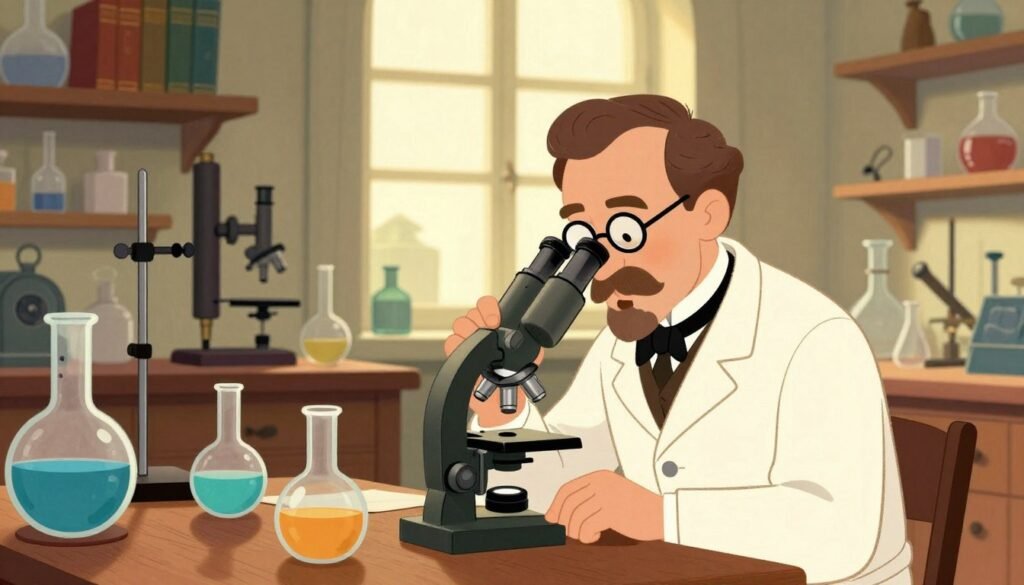
The Impact of Vaccination: Pasteur made vaccines for diseases like anthrax and rabies. His work saved many lives. Vaccines are still key in keeping us healthy.
Some of Louis Pasteur’s big wins are:
- He made the first vaccine for anthrax
- He created the first rabies vaccine
- He was a leader in germ theory
- He helped make hospitals cleaner
As Pasteur once said,
“Science knows no country, because knowledge belongs to humanity, and is the torch which illuminates the world.”
This shows his belief in science helping everyone.
Louis Pasteur’s work still helps us today. His ideas on germs and vaccines are still taught and used in medicine.
James Clerk Maxwell and the Unification of Electromagnetism
James Clerk Maxwell was a Scottish scientist. He changed how we see the universe! His work joined electricity and magnetism into one theory.
Maxwell’s work was big because it brought together electricity and magnetism. He also said electromagnetic waves exist and travel fast. Later, Heinrich Hertz proved this, helping physics and engineering grow.
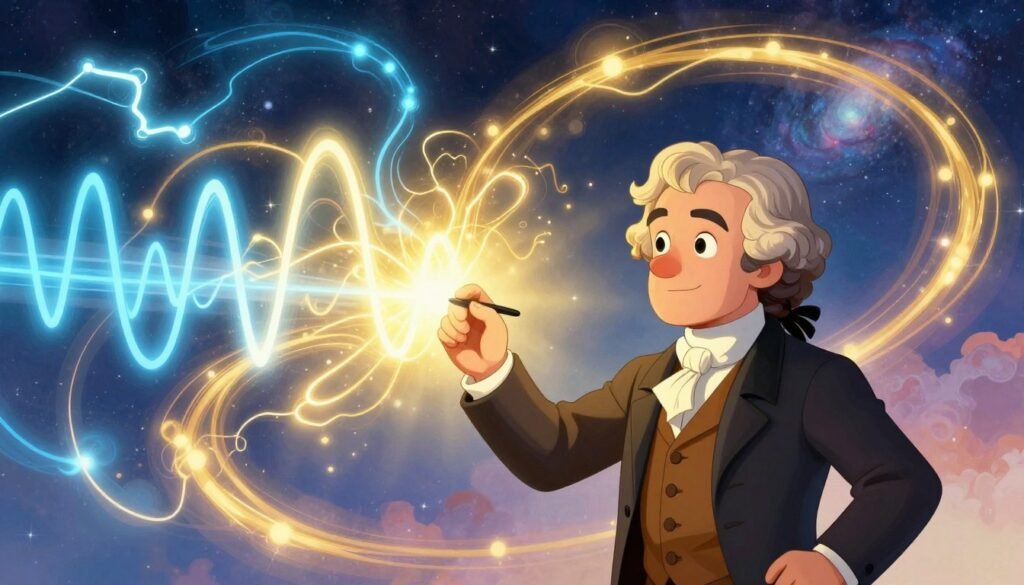
As James Clerk Maxwell worked, he set the stage for others. His ideas have shaped our view of the world.
“The true logic of this world is in the calculus of probabilities.” – James Clerk Maxwell
This quote shows Maxwell’s insight into the world’s probabilistic nature. It was very forward-thinking.
Maxwell’s equations are key in electromagnetism. They explain how electric and magnetic fields work together. The four main equations are:
| Equation | Description |
|---|---|
| Gauss’s Law for Electricity | Describes how electric charges produce electric fields. |
| Gauss’s Law for Magnetism | States that magnetic monopoles do not exist. |
| Faraday’s Law of Induction | Describes how a time-varying magnetic field produces an electric field. |
| Ampere’s Law with Maxwell’s Addition | Describes how electric currents and time-varying electric fields produce magnetic fields. |
These equations have helped create many modern technologies. They are used in electrical power systems, radio communication, and motors.
Rosalind Franklin and the Structure of DNA
Rosalind Franklin was a key figure in figuring out DNA’s structure. She used X-ray crystallography at King’s College London. Her work helped us understand DNA’s double helix shape.Rosalind Franklin’s Contributions
Her skill in X-ray crystallography gave us clear DNA images. The most important was Photograph 51. It showed DNA’s double helix, helping Watson and Crick create their model.
Franklin didn’t just take pictures; she understood them deeply. She found new things about DNA’s structure. Brenda Maddox, Franklin’s biographer, said Franklin was a true pioneer.
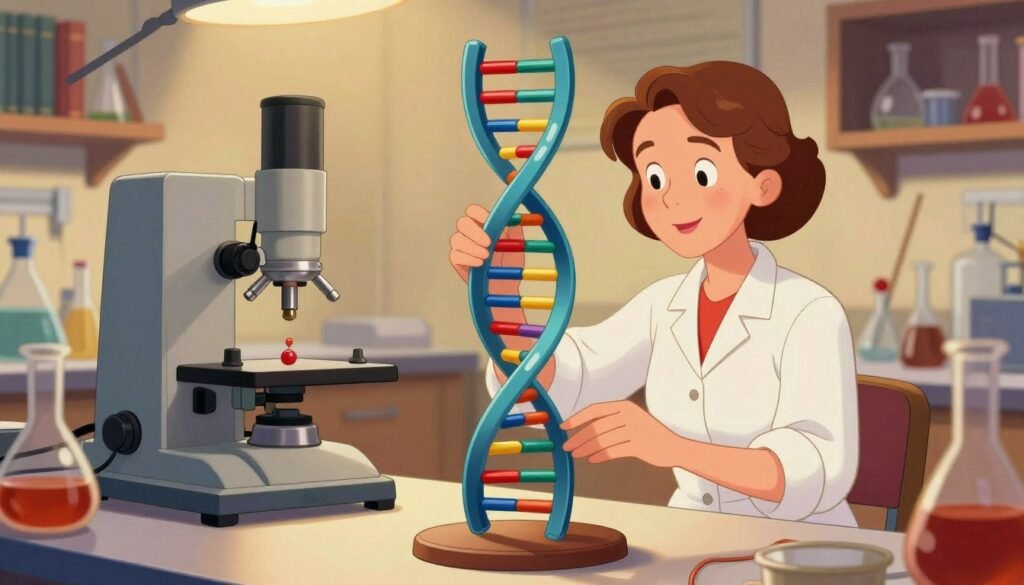
Franklin faced many challenges as a woman in science. But she was determined and skilled. She inspired many women to follow in her footsteps.
“Science and everyday life cannot and should not be separated.” – Rosalind Franklin
Franklin’s work on DNA is a big deal today. We see her as a key figure in genetics and biology.
The Impact of Scientific Discovery on Modern Education
Scientific discovery has changed education a lot. It has opened new ways to learn and grow. Famous scientists have helped us understand the world better. They have also changed how we teach and learn.
Enhancing Science Literacy is very important today. As technology and science keep getting better, knowing science basics is key for the next generation. Science literacy means using science to solve real problems.
Here’s how some discoveries have changed education:
| Scientific Discovery | Impact on Education |
|---|---|
| Isaac Newton’s Laws of Motion | Introduced fundamental physics principles into school curricula |
| Marie Curie’s Discovery of Radioactivity | Led to a deeper understanding of chemistry and nuclear physics |
| Charles Darwin’s Theory of Evolution | Revolutionized the teaching of biology and natural history |
By adding these discoveries to school, learning becomes more fun and real. For example, Debsie Gamified Courses at https://debsie.com/courses make hard science topics fun and easy to get!
We must keep making science important and fun for students. This way, they can become the innovators and problem-solvers of the future!
How Gamified Learning Enhances Scientific Literacy
Gamified learning changes how we learn science. It makes learning fun and easy for everyone! Now, hard science topics are easier and more fun to learn.
Platforms like Debsie lead the way in science education. They turn learning into a fun adventure. This helps people of all ages love and understand science more.
Exploring Interactive Science with Debsie Gamified Courses
Debsie’s courses make science fun and interactive. They use challenges, quizzes, and activities. This way, learners get to explore science in a fun and engaging way.

Why Gamification Works for Complex Subjects
Gamification is great for hard subjects like science. It makes learning easier and more fun. This way, learners can understand and remember more.
The benefits of gamified learning include:
- Increased learner engagement
- Improved understanding of complex concepts
- Enhanced retention of scientific knowledge
Accessing Resources at https://debsie.com/courses
Want to try gamified science learning? Check out Debsie’s courses at https://debsie.com/courses. They’re fun and educational. They mix gaming excitement with deep scientific learning.
Visit Debsie’s website to start your interactive science journey. You’ll learn more about science and join a community of science lovers.
The Evolution of Scientific Methodology Through History
How we do science has changed a lot over time! From old times to now, scientific methodology has grown thanks to many scientists.
In old days, thinkers like Aristotle and Archimedes started it all. Aristotle focused on watching and sorting things. Archimedes worked on how things float and move. Their work helped others come later.
The Renaissance was a big change for science. People like Galileo and Bacon pushed for more watching and trying things. Galileo looked at the sky with telescopes. Bacon said we should use our senses to figure things out.
The 17th century was a big leap forward. Isaac Newton showed us how things move and why things fall. This time also brought science groups and papers to share ideas.
| Period | Key Figures | Contributions |
|---|---|---|
| Ancient Times | Aristotle, Archimedes | Observation, Classification, Principles of Buoyancy and Leverage |
| Renaissance | Galileo Galilei, Francis Bacon | Empirical Research, Experimental Method, Inductive Reasoning |
| 17th Century | Isaac Newton | Laws of Motion, Universal Gravitation |
Knowing how scientific methodology has changed helps us see how science works today. By looking back, we see how empirical research keeps helping us learn about the world.
Challenges Faced by Visionary Thinkers
Visionary thinkers have always faced big challenges. These challenges tested their will and creativity. Despite these obstacles, their hard work led to huge breakthroughs.
Scientists, in particular, have had tough times. Some were persecuted and doubted by others. For example, Galileo Galilei was attacked by the Church for his ideas. Others, like Maria Curie, faced sexism and worked hard to discover radioactivity.
Here are some common challenges visionary thinkers faced:
| Challenge | Description | Example |
|---|---|---|
| Societal Resistance | Opposition from the general public or established institutions | Visionary leadership often challenges the status quo, leading to resistance. |
| Personal Hardships | Difficulties in personal life, including financial struggles or health issues | Maria Curie’s work was affected by her personal struggles, including the loss of her husband. |
| Skepticism and Criticism | Doubt and criticism from peers and other experts | Galileo faced intense criticism for his support of the heliocentric model. |
Despite these challenges, visionary thinkers never gave up. Their stories show us that overcoming obstacles is part of innovation. By learning from their struggles, we can understand what makes a true visionary.
Conclusion
The best scientists of all time inspire us. They help us understand the world. Isaac Newton and Ada Lovelace are great examples.
They loved to discover new things. Their work helps us learn more. It also helps others discover even more.
Now, it’s your turn to join in! Check out Debsie’s fun courses at https://debsie.com/courses. Learn science in a fun way. You’re carrying on the tradition of curiosity and innovation.
Be part of the learning community. Start growing your knowledge today!