Have you ever looked up at stars and felt a spark of wonder? We think every child is a natural explorer, like leading scientists who change our lives! It’s exciting to think about how one big question can lead to a big discovery that helps everyone.
Today, we celebrate brilliant minds in modern science! These heroes work hard to solve puzzles about health, our planet, and deep space. You can read about top ten greatest researchers alive today to see their work.
Do you want to join this amazing adventure? You can start your own journey right now with Debsie Gamified Courses! We make learning feel like a fun game where you can grow and play.
Let’s find out who the best scientists in the world are!
Key Takeaways
- Discover brilliant minds shaping our future.
- Learn how modern research impacts daily life.
- Explore famous figures like Jane Goodall or Stephen Hawking.
- Start a science journey with fun, gamified lessons.
- See how curiosity leads to massive discoveries.
Defining the Criteria for the Best Scientists in the World
It’s important to know who the best scientists are. They are the ones who help us understand the world better. Their work also makes our lives better.
Finding the top scientists is hard because they work in many areas. “The quest to determine the world’s top scientists is challenging, as their work spans multiple disciplines.” We need clear rules to judge them.
So, what makes a scientist great? Evaluating scientific contributions means looking at a few things. We check how much their work changes things, how new it is, and how it helps people. For example, medical breakthroughs can save lives. Environmental science helps protect our planet.
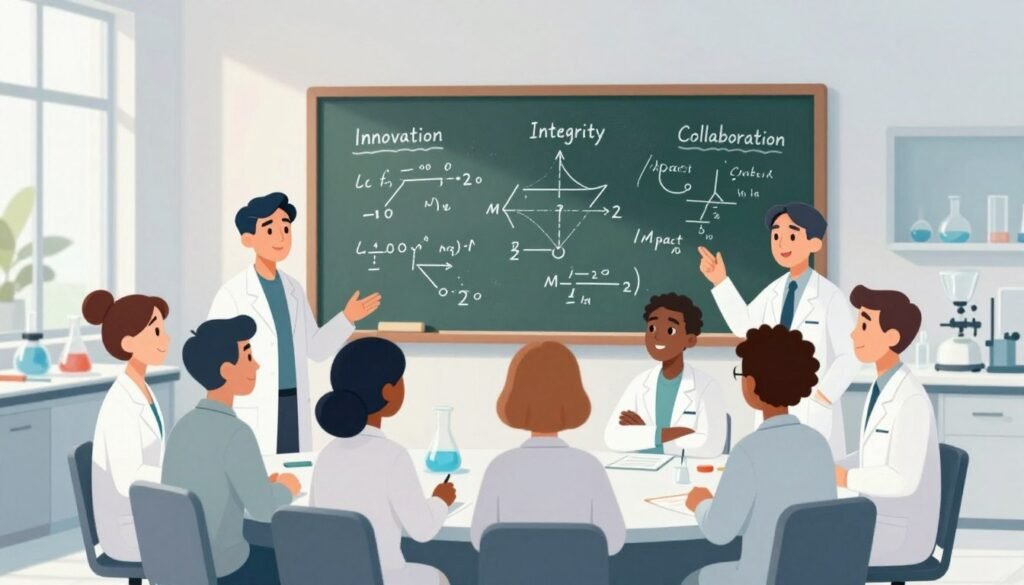
We should look at all kinds of science and how they help us. Interdisciplinary research is very important. It combines different studies to find new things. This way, we can see who is really making a big difference.
When we look at the top scientists, we see they do more than just succeed. They help us learn and live better. By celebrating their work, we encourage others to follow in their footsteps.
“Science is a collaborative effort that thrives on the contributions of individuals from diverse backgrounds and disciplines.”
Jennifer Doudna and the CRISPR Revolution
Meet Jennifer Doudna, the pioneering scientist behind the CRISPR revolution that’s changing the face of gene editing!
Jennifer Doudna, along with her colleague Emmanuelle Charpentier, discovered the CRISPR-Cas9 gene-editing tool. This tool has changed genetic engineering a lot. CRISPR technology lets scientists edit the genome with great precision. This can treat genetic diseases, improve crops, and even bring back extinct species!
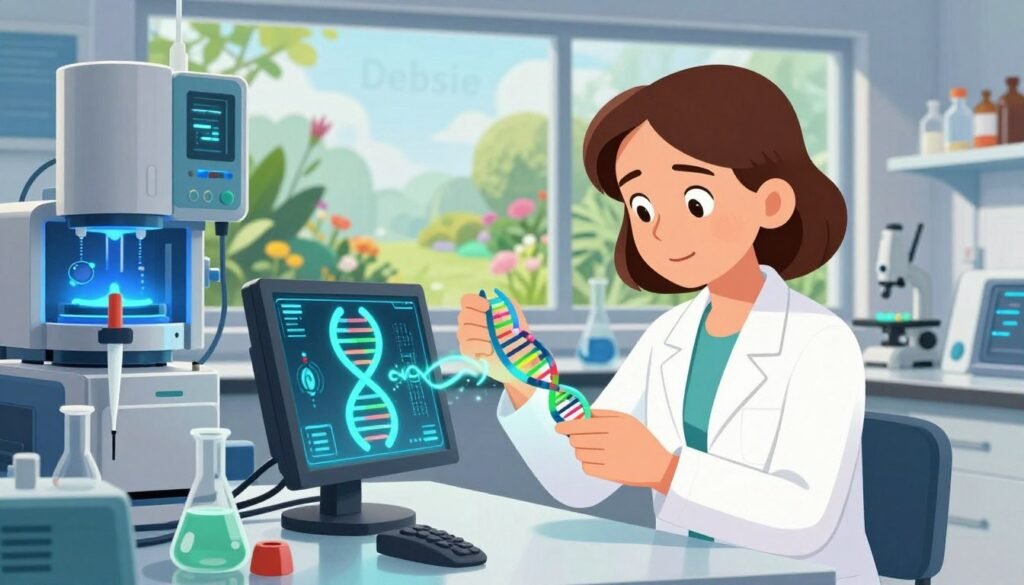
The effects of CRISPR technology are huge and different. It can treat genetic disorders by fixing faulty genes. This gives new hope to patients with inherited diseases. In farming, CRISPR can make crops stronger against bad weather and diseases. This could help make more food.
Let’s look at some key uses and what CRISPR technology can do:
| Application | Description | Potential Outcome |
|---|---|---|
| Genetic Disease Treatment | Editing genes to correct inherited disorders | Cure for genetic diseases like sickle cell anemia |
| Agricultural Improvements | Developing crops with enhanced resilience | Increased crop yields and food security |
| Synthetic Biology | Designing new biological pathways | Production of biofuels and other valuable chemicals |
As we keep exploring CRISPR technology, Jennifer Doudna’s work has opened a new area in genetic engineering. The future of gene editing looks bright. It’s exciting to think about what other big discoveries this technology might lead to!
Demis Hassabis and the Future of Artificial Intelligence
Demis Hassabis is not just predicting the future; he’s making it happen! He co-founded DeepMind and leads AI research. He’s pushing what machines can do.
He created AlphaGo, an AI that beat a world Go champion. This was big because it showed AI can do complex tasks like humans.
AlphaGo’s win did more than just win a game. It sparked new ideas in AI research. It showed AI can be smarter and more like us. Hassabis’s work shows AI can change many areas of our lives.
Looking ahead, artificial intelligence will change our world a lot. Demis Hassabis and DeepMind are leading the way. They’re exploring new AI ideas and making science fiction real.
Katalin Karikó and the mRNA Breakthrough
Katalin Karikó’s work on mRNA technology changed vaccine making!
She worked hard and never gave up. Her research used mRNA to tell cells what proteins to make. This way, it could start an immune response without causing the disease.
Her work helped make mRNA vaccines fast during the COVID-19 pandemic. These vaccines saved many lives and kept people safe all over the world!
- She found a way to make mRNA safe and useful for helping people.
- She started a new way to make vaccines using mRNA.
- She worked with others to make mRNA technology better.
Karikó’s work inspires scientists everywhere. It shows how important new ideas and teamwork are in medical science!
David Baker and the Frontiers of Protein Design
Meet David Baker, a leader in protein design. His new ways are changing biotechnology! His work helps medicine a lot, making new drugs and treatments.
David Baker designs proteins for special jobs. These jobs include making chemical reactions or grabbing certain molecules. This could change many areas, like medicine and tech.
- He makes new enzymes for work.
- He creates proteins to fight diseases.
- He makes special materials.
David Baker is known all over for his work. He got the Frontiers of Knowledge Award for his big wins in protein design.
As we keep going into protein design, David Baker will lead the way. His work will shape medicine and more in the future!
Svante Pääbo and the Secrets of Human Evolution
Svante Pääbo changed how we see human evolution. He found DNA in old fossils. This showed us how our ancestors moved and mixed with others.
Unlocking Ancient DNA is hard. Pääbo used special methods to get DNA from old bones. He found Neanderthal and Denisovan DNA in us today. This shows we mixed with other humans a long time ago.
Pääbo’s work helps us understand health and sickness today. He studied how old humans adapted to their world. This can help us now.
Want to know more about DNA? Check out Debsie’s DNA for kids page. It’s fun and easy to read!
Pääbo’s work excites scientists and people everywhere. His discoveries are amazing. They make us think about our past and future.
Shinya Yamanaka and the Promise of Stem Cell Research
Imagine a world where damaged tissues can be fixed or replaced. Shinya Yamanaka’s work on stem cells is making this dream come true! He’s a famous Japanese scientist who won the Nobel Prize for finding a way to turn adult cells into new cells.
This discovery is big for regenerative medicine. It means we can treat many diseases and injuries in new ways. Yamanaka’s method uses adult cells, not embryonic ones. This makes it less controversial and easier to use.
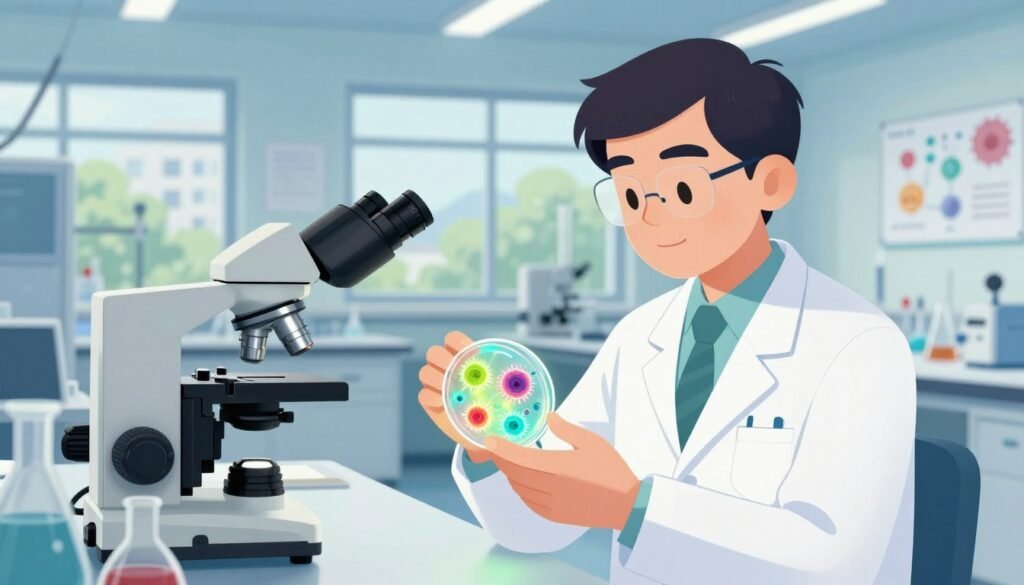
Yamanaka’s discovery can help in many ways. It could fix damaged heart tissue or help with brain problems. Let’s look at some key points about his work:
| Aspect | Description | Impact |
|---|---|---|
| Induced Pluripotent Stem Cells (iPSCs) | Adult cells reprogrammed to a pluripotent state | Potential for regenerative medicine without using embryonic stem cells |
| Nobel Prize Recognition | Awarded for the discovery of iPSCs | Global recognition of the significance of Yamanaka’s work |
| Regenerative Medicine | Treatment of diseases through tissue repair or replacement | New avenues for treating previously incurable conditions |
Shinya Yamanaka’s work shows the power of new research. It can change our world. As we keep exploring stem cell research, we see why we must support science. It helps us get better at making people healthy.
Fei-Fei Li and the Human-Centric AI Movement
Fei-Fei Li is a top name in AI research. She’s leading a new wave of human-centric AI. This movement focuses on ethics and making sure everyone benefits.
Fei-Fei Li has done a lot for AI. She’s pushed for AI that’s both new and fair. She also talks a lot about AI ethics. This helps us remember to think about human values when we make AI.
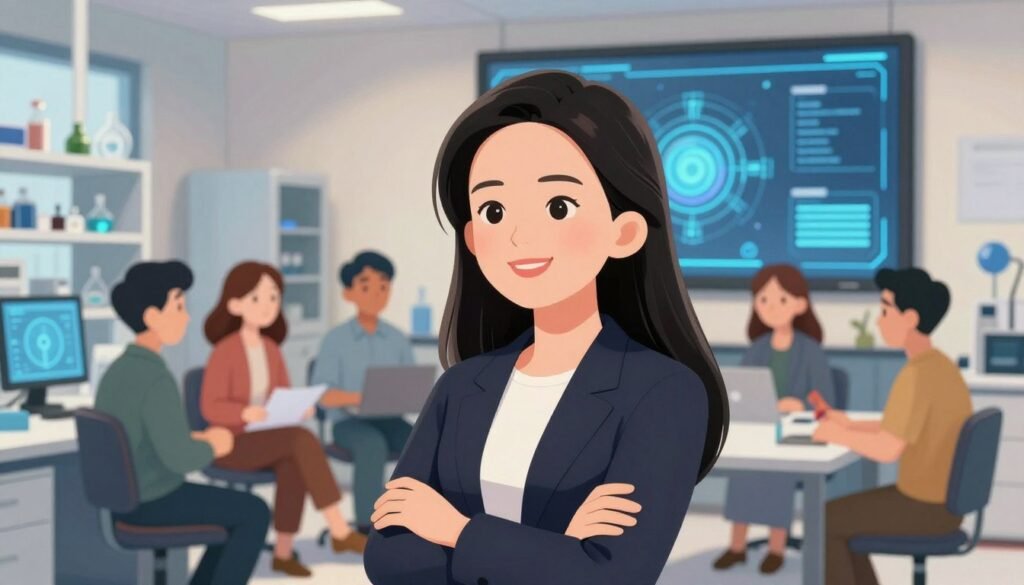
Fei-Fei Li has also worked hard to make AI more diverse. She wants AI that works for everyone, not just some people.
The table below shows some important parts of Fei-Fei Li’s work:
| Aspect | Description | Impact |
|---|---|---|
| AI Ethics | Advocacy for ethical AI development | Raises awareness about AI’s societal impact |
| Diversity in AI | Promoting diverse datasets and inclusive AI | More equitable AI systems for diverse users |
| Human-Centric Approach | Prioritizing human values in AI | AI technologies that benefit humanity |
Fei-Fei Li’s work shows us that AI’s future is about more than just tech. It’s about making sure AI helps and respects people.
Robert Langer and the Innovations in Drug Delivery
Robert Langer is a leader in biomedical engineering. He changed how we get medicines. Now, treatments work better and are more precise.
Langer made big changes in drug delivery. He created new ways to give drugs. This makes treatments stronger and cuts down on bad side effects.
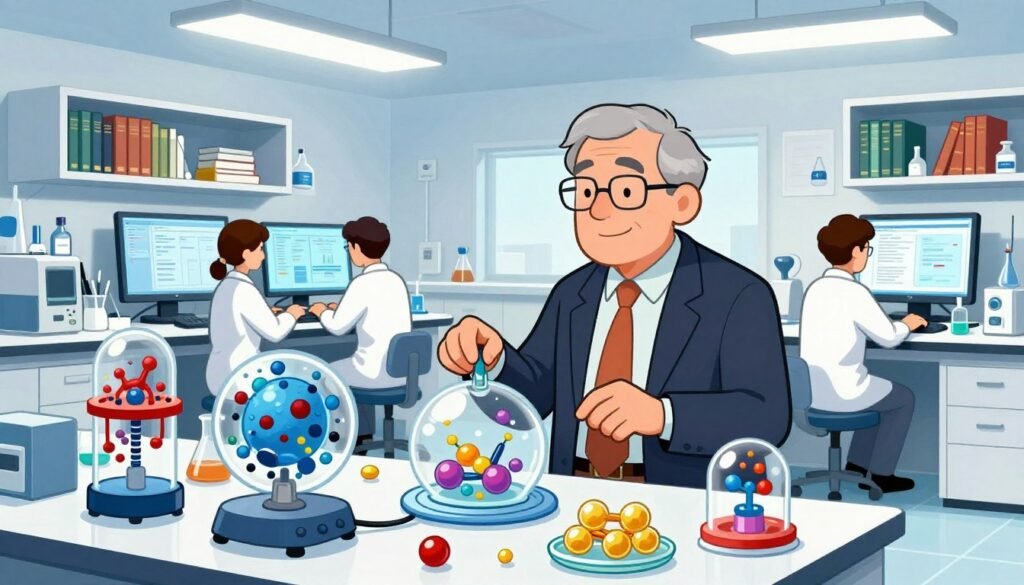
He’s famous for using biodegradable polymers for drugs. These polymers break down slowly. This lets drugs be released slowly, keeping the right amount in the body.
Robert Langer has won many awards. He’s a laureate of the Franklin Institute. His work motivates many in biomedical engineering.
Langer’s work shows how research can help us. He’s leading the way for new discoveries. His work helps us face health challenges.
Andrea Ghez and the Mysteries of Black Holes
Andrea Ghez is a leader in astrophysics. She’s known for her work on black holes. Her research has helped us learn more about these cosmic secrets.
She studied the supermassive black hole at the Milky Way’s center. By watching stars move, Ghez found out how big it is. She says, “The center of the galaxy is a very dynamic place, with stars and gas moving at high speeds around the black hole.” Learn more about Andrea Ghez’s work.
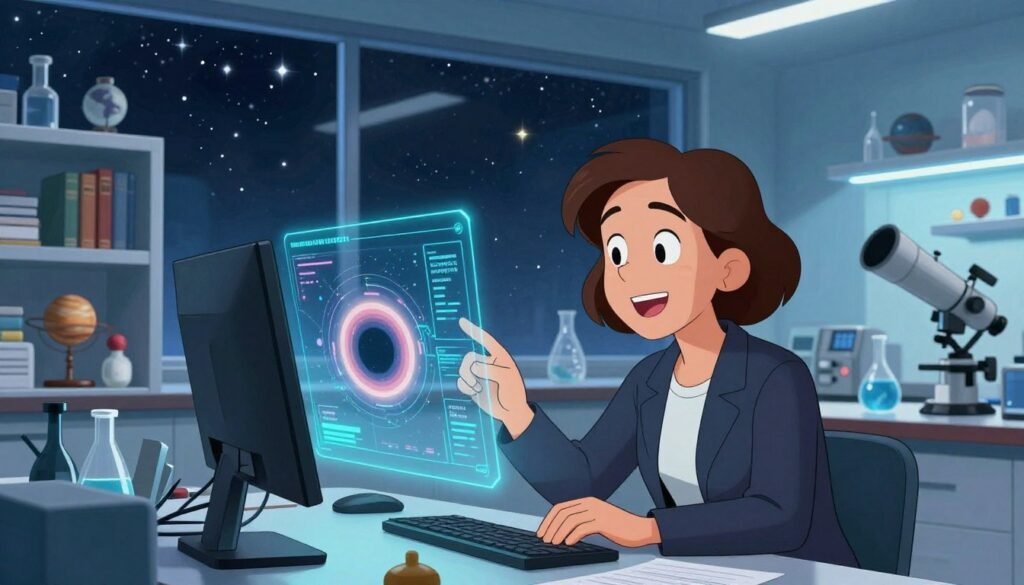
Ghez’s work has made us understand black holes better. She’s won many awards for her science. She’s leading the way in exploring the universe.
Key Contributions:
- Groundbreaking research on the supermassive black hole at the Milky Way’s center
- Advanced our understanding of black holes and their role in the universe
- Paved the way for future research into these cosmic phenomena
John J. Hopfield and the Foundations of Neural Networks
John J. Hopfield is a big name in neural networks. He helped start big steps in artificial intelligence! His work helps us understand complex systems.
Hopfield made a big splash with Hopfield networks. These are special kinds of neural networks. They can remember and share patterns, which is super useful!
Hopfield’s work is more than just theory. It changed artificial intelligence a lot. Now, AI can learn and grow in tough places.
| Type of Neural Network | Description | Application |
|---|---|---|
| Hopfield Networks | Recurrent neural networks that store and recall patterns | Pattern recognition, associative memory |
| Feedforward Networks | Networks where data flows only in one direction | Image classification, speech recognition |
| Convolutional Neural Networks (CNNs) | Networks that use convolutional and pooling layers | Image and video processing |
John J. Hopfield’s work started the neural network field. His work still shapes AI today. It shows how far we can go with machine learning!
As we keep exploring neural networks, Hopfield’s impact will last. The future of AI relies on building on what he started. It’s a big responsibility!
Advancing Your Own Scientific Knowledge with Debsie Gamified Courses
Start a new adventure to learn more science with Debsie’s fun courses!
Learning science should be fun, not boring. Debsie makes it exciting with gamified learning. It turns hard science into games that are fun and easy to play!
How Gamified Learning Accelerates Scientific Literacy
Gamified learning makes science fun and boosts scientific literacy. Debsie’s games and quizzes help you learn and remember science better. It makes you want to learn more and solve problems.
Research shows gamified learning works well. It keeps you interested and motivated. At Debsie, we use games to teach science to everyone!
| Benefits of Gamified Learning | Description |
|---|---|
| Increased Engagement | Makes learning science fun and interactive |
| Improved Retention | Helps learners remember complex concepts better |
| Develops Problem-Solving Skills | Encourages critical thinking and analysis |
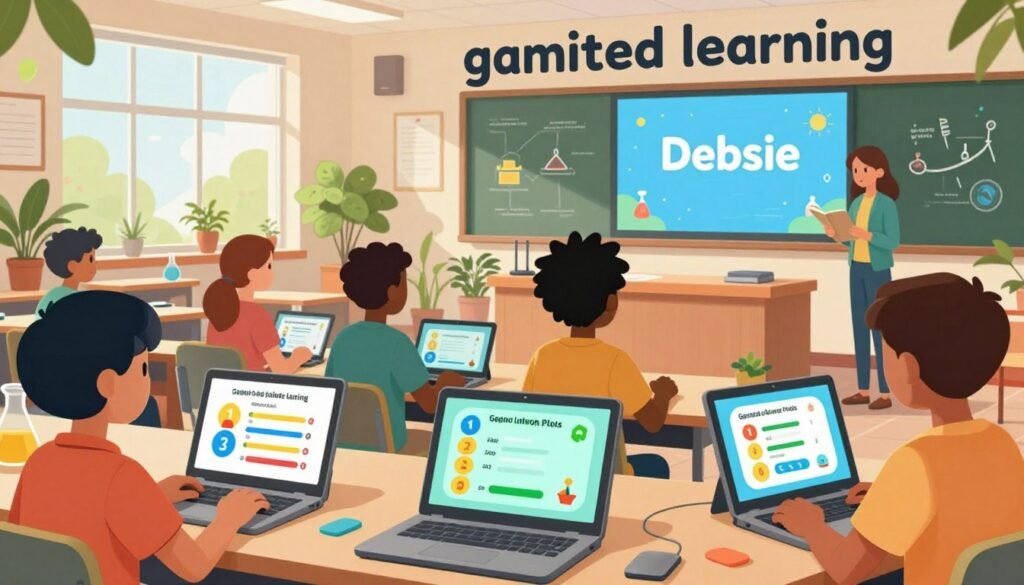
Exploring the Curriculum at https://debsie.com/courses
Debsie’s courses are for everyone, no matter your age or skill. Visit https://debsie.com/courses to see our wide range of science courses. We have topics like biology, chemistry, physics, and math.
Our courses are made by experts in science and education. They are always updated with the newest science and tech news.
Why Continuous Education Matters for Aspiring Researchers
In today’s fast world, continuous education is key for scientists. Science changes fast, with new discoveries all the time. To keep up, you need to keep learning.
Debsie’s courses help you learn for life. They make it easy to stay up-to-date with science. Whether you’re a student, worker, or just love science, our platform helps you grow and reach your goals!
Don’t wait to start learning with Debsie’s courses. Discover a fun and effective way to explore science today!
The Role of Interdisciplinary Collaboration in Modern Discovery
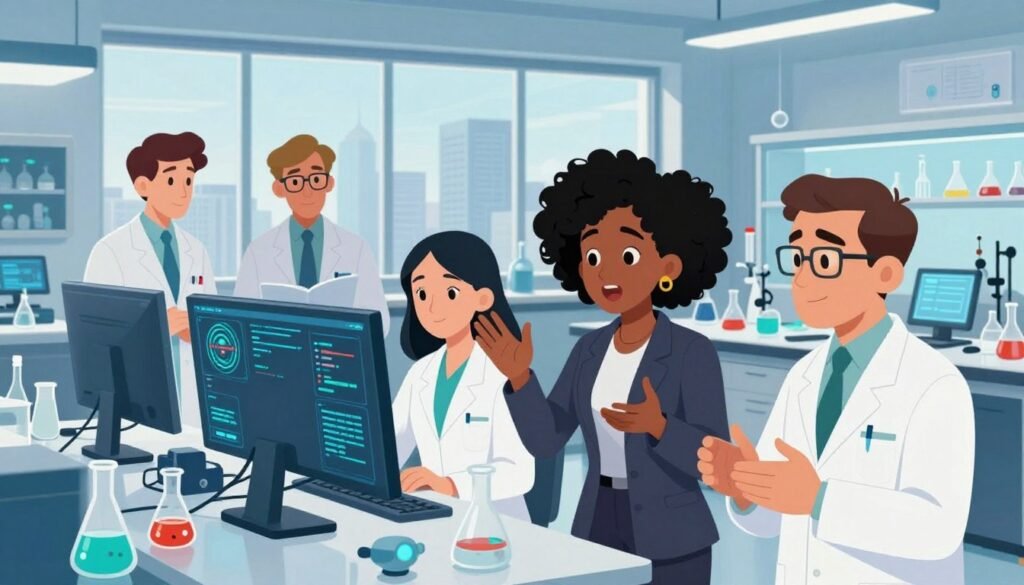
Modern science is changing fast thanks to interdisciplinary collaboration! Experts from different fields are working together. This is solving big problems that were hard to solve before.
This mix of knowledge is leading to new discoveries. These discoveries are changing how we see the world!
Many scientists are working together in their research. For example, Jennifer Doudna created CRISPR technology. It involves genetics, microbiology, and biochemistry.
Demis Hassabis is working on artificial intelligence. His work uses computer science, neuroscience, and mathematics.
So, why is teamwork so powerful in science? Here are a few reasons:
- It brings different views to solve big problems!
- It leads to new ideas by mixing different skills!
- It speeds up finding new things by using the latest knowledge!
Let’s look at how different areas work together in science. The table below shows some examples:
| Field | Disciplines Involved | Example Discovery |
|---|---|---|
| CRISPR Technology | Genetics, Microbiology, Biochemistry | Gene Editing |
| Artificial Intelligence | Computer Science, Neuroscience, Mathematics | Deep Learning Algorithms |
| mRNA Vaccines | Biochemistry, Immunology, Molecular Biology | mRNA-based COVID-19 Vaccines |
Interdisciplinary collaboration is key to many new discoveries. Scientists working together can do more than alone. For more on science, read this article on Nature.
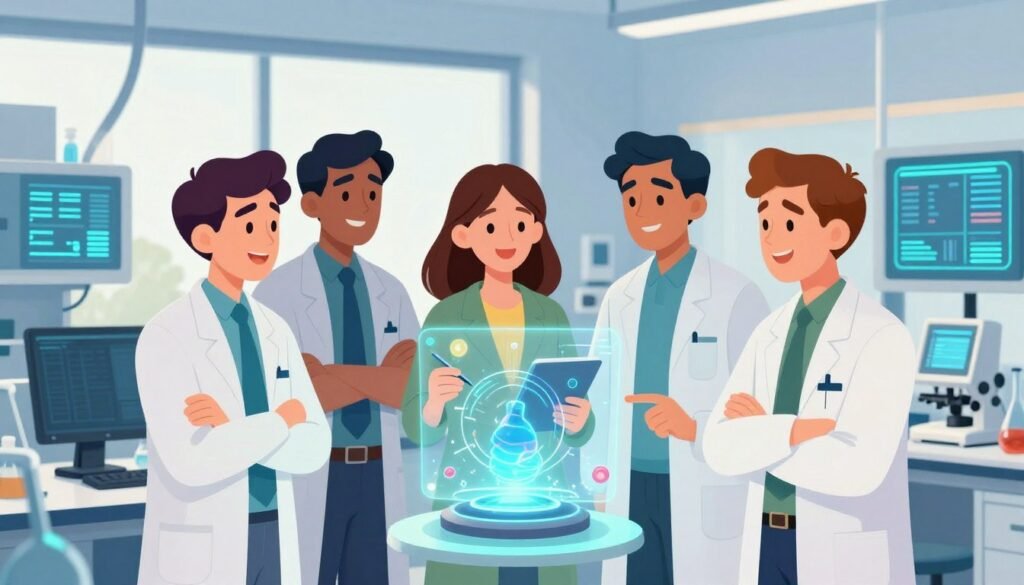
We hope you’re excited about what happens when fields work together! Interdisciplinary collaboration helps us keep finding new things. It’s making science even more exciting!
Ethical Challenges Facing Today’s Leading Researchers
Scientific research is moving fast. This brings up many ethical challenges for today’s top researchers!
Scientists deal with ethical dilemmas in fields like AI, genetic engineering, and environmental science. For example, AI worries about privacy, bias, and jobs. As researchers explore new areas, they must think about how their work affects society!
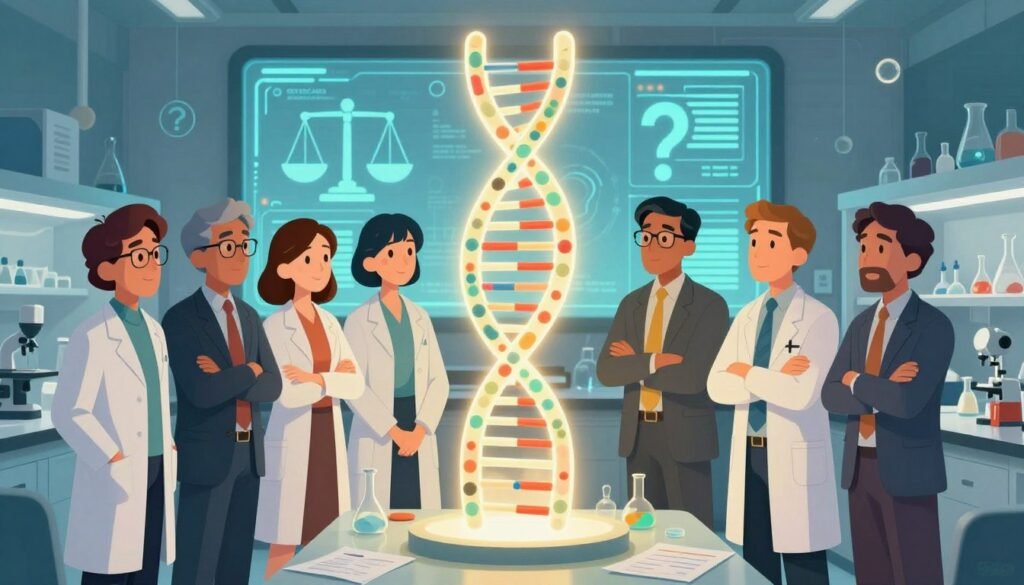
Genetic engineering raises questions about changing human genes and possible bad effects. Environmental science debates economic growth versus nature. It’s key for scientists, policymakers, and the public to talk openly about these topics!
Leading researchers must be responsible for their work. They should do it with honesty and openness. This means thinking about how their research affects others and trying to avoid harm. This way, they build trust in science and help people understand it better!
The use of AI writing tools in schools is also a big issue. These tools can help learning but also make us rely too much on tech. This might hurt our ability to think critically!
Fixing the ethical challenges in science needs everyone’s help. This includes researchers, teachers, policymakers, and the community. By working together, we can make sure science moves forward with care for its impact on society!
Conclusion
The best scientists in the world are changing science and innovation! Their work is growing our knowledge and changing how we live.
These amazing people are making big impacts in physics, chemistry, biology, and astronomy. You can find out more about them and their discoveries on Discover Magazine.
At Debsie, we think learning is important for new discoveries. That’s why we have fun courses. Join us and explore science’s wonders!
Looking ahead, we’re excited for new discoveries. By supporting young scientists, we keep innovation moving fast.