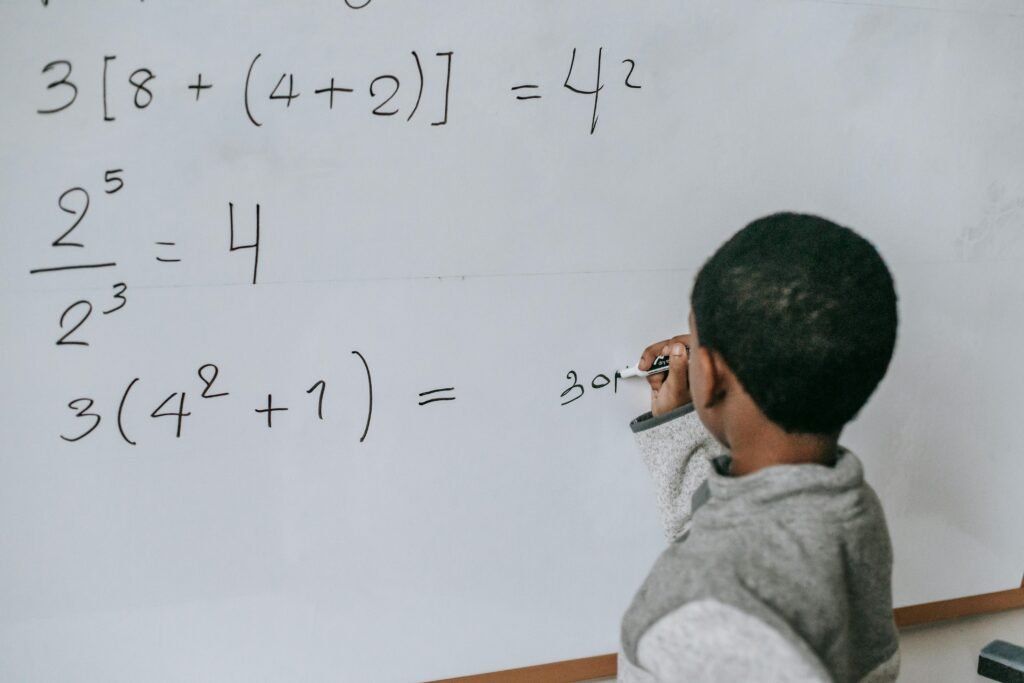
Do you remember when you first wondered about the stars or how birds fly? That spark of curiosity is what drives great minds. It starts with a simple question and a heart full of wonder.
Science education is more than just memorizing. It’s about the inspiring stories of people who chased their dreams. When we look at famous scientists for students, we see that science is for anyone who dares to ask “why?”
You don’t need a fancy lab coat to change the world! We want to show you the best scientists for students who were once curious kids. Their stories show that passion and grit are the ultimate superpowers for young explorers.
Are you ready to start your own amazing learning journey? Try Debsie Gamified Courses at https://debsie.com/courses for fun learning! Let’s meet 10 role models who changed our world with their perseverance and discovery.
Key Takeaways
- Discover how curiosity leads to world-changing scientific breakthroughs.
- Learn that science is accessible to everyone, not just “geniuses.”
- Understand the importance of perseverance and grit in STEM fields.
- See real-world applications of science through historical role models.
- Explore how storytelling makes science education more engaging and memorable.
- Find out how gamified learning helps students master complex subjects.
The Importance of Scientific Role Models for Young Minds
When students learn about famous scientists, they see the human side of science. These people are not just names in books. They are real folks who lived, worked, and achieved great things.
Learning about famous scientists is key. It makes science feel real and reachable to young minds. By studying these role models, students see that science is a journey full of ups and downs. But it’s also exciting and fulfilling!
Why Learning About Famous Scientists Inspires Young Learners
Sharing the stories of famous scientists gives young learners more than facts. It gives them role models and the courage to explore. Science role models show that anyone can be a scientist, no matter who they are.
Let’s look at some benefits of having scientific role models:
| Benefits | Description |
|---|---|
| Making Science Relatable | Shows that science is a human endeavor, not just a subject in school. |
| Challenging Stereotypes | Highlights that anyone can be a scientist, regardless of background or gender. |
| Encouraging Creativity and Perseverance | Demonstrates the creative and often challenging process of scientific discovery. |

By introducing young minds to science through famous scientists, we inspire a new generation. We encourage them to think, explore, and innovate!
Curating the Best Scientists for Students
The right scientific role models can spark a love for discovery in young learners! When we talk about the best scientists for students, we look for those whose achievements and stories inspire young minds.
We’ve picked a list of inspiring scientists who have made big contributions to their fields. These people come from different backgrounds and have faced many challenges. Yet, they reached their goals.

Selecting Inspiring Figures for Young Learners
So, what makes a scientist inspiring? It’s their groundbreaking work, perseverance, and ability to make complex ideas fun. Our list includes scientists who have greatly helped us understand the world. They also show great dedication and passion.
By learning about these inspiring scientists, students can understand the scientific process better. They can also see what it takes to succeed in STEM fields. We’re excited to share their stories and achievements with you!
Marie Curie and the Power of Persistence
Marie Curie was a trailblazer in science. She won two Nobel Prizes for her work on radioactivity. Her journey was tough, but she never gave up.
Her work on radioactivity was very important. She found two new elements, polonium and radium. Her research helped medicine, energy, and physics a lot. Her work shows the power of never giving up!
A Pioneer in Radioactivity Research
Curie’s research on radioactivity was a big change. She was the first woman to win a Nobel Prize. She won in Physics and Chemistry, a big achievement! Her success inspires girls to study science and math.
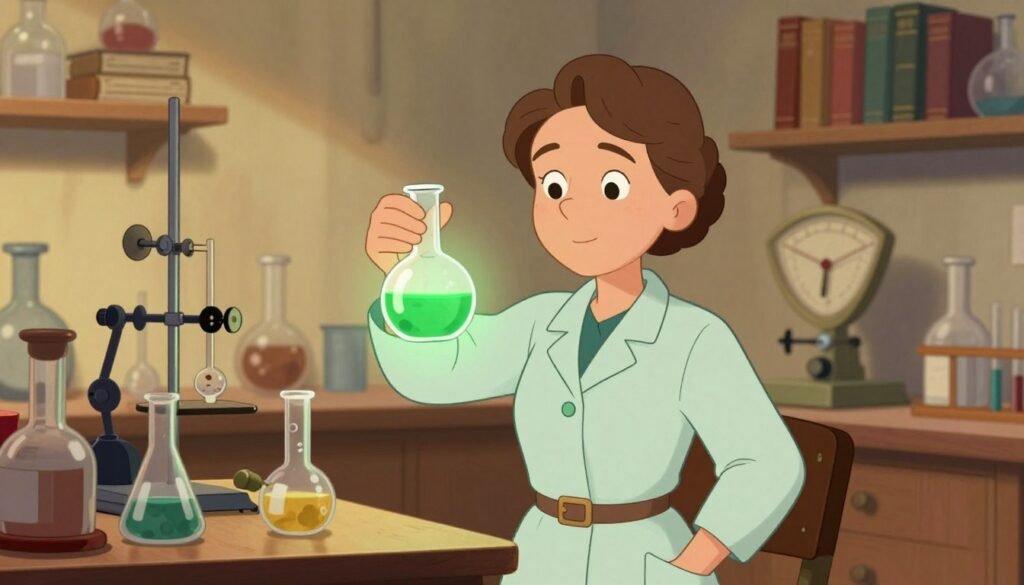
Despite facing sexism, Curie kept working hard. She made discoveries that changed how we see the universe. As Curie said,
“One never notices what has been done; one can only see what remains to be done.”
This quote shows her never-ending quest for knowledge.
Curie’s legacy goes beyond her science. She has inspired many young people to love science. By learning about her, students see the value of hard work and how one person can change the world.
Albert Einstein and the Beauty of Curiosity
Curiosity drove Albert Einstein’s work. He made discoveries that changed how we see space and time! He’s a famous scientist for students to learn about. His work shows us the value of being curious.
Einstein loved to learn and ask questions. By studying him, you can see how important curiosity is. His theory of relativity changed how we see the universe. You can learn more about time and its concepts to understand Einstein’s work better.
Revolutionizing Our Understanding of Space and Time
Einstein’s work has real-world uses. For example, his ideas help GPS work. GPS needs to know about time and space to give us directions.
| Concept | Description | Impact |
|---|---|---|
| Theory of Relativity | Explains how space and time are relative | Changed our understanding of the universe |
| Time Dilation | The phenomenon where time appears to slow down or speed up | Affects GPS technology and space travel |
| Length Contraction | The shortening of objects in motion relative to an observer | Influences high-speed travel and particle physics |
To learn more about Einstein, check out this guide. It’s a great overview of his life and work.
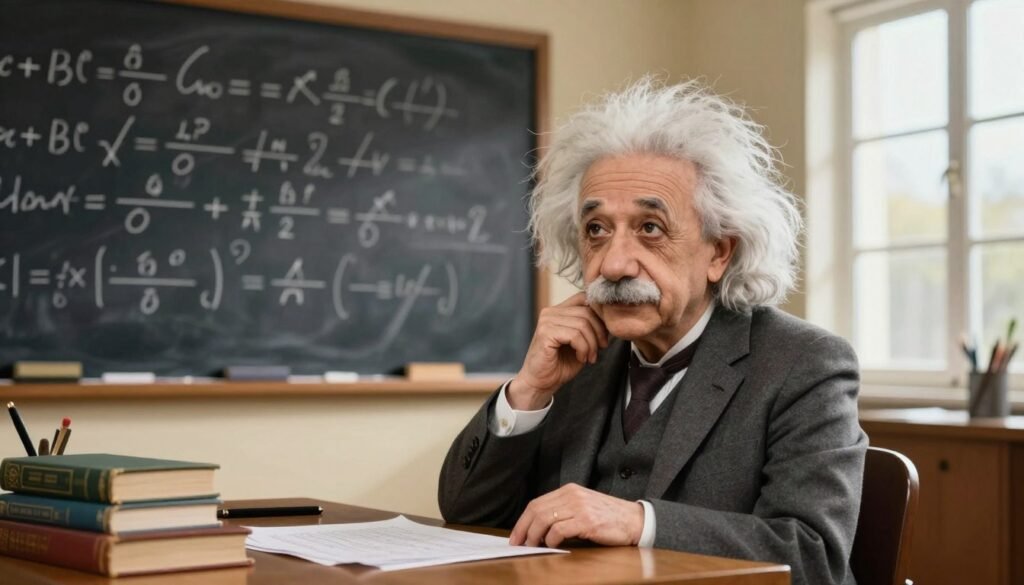
By being curious and loving to learn, we can make a difference. Einstein’s legacy shows us the power of curiosity. It reminds us to always ask “why?”
Ada Lovelace and the Vision of Computing
Imagine a world where computers were not just calculators. Ada Lovelace saw them as tools for creativity. She is a famous scientist for students, known for her work in computer programming.
Ada Lovelace is called the world’s first computer programmer. She worked on Charles Babbage’s Analytical Engine. She saw computers as more than just calculators, for creativity too.
Her contributions to computing are still celebrated today! Ada Lovelace understood the Analytical Engine well. She wrote the first algorithm for a machine. This made her a pioneer in computer science.
Pioneering Computer Programming
Ada Lovelace’s work was not just about math. She saw machines as tools for more. She thought computers could make music and art.
What can we learn from Ada Lovelace? We learn the value of creativity in STEM. Mixing tech skills with imagination opens new doors.
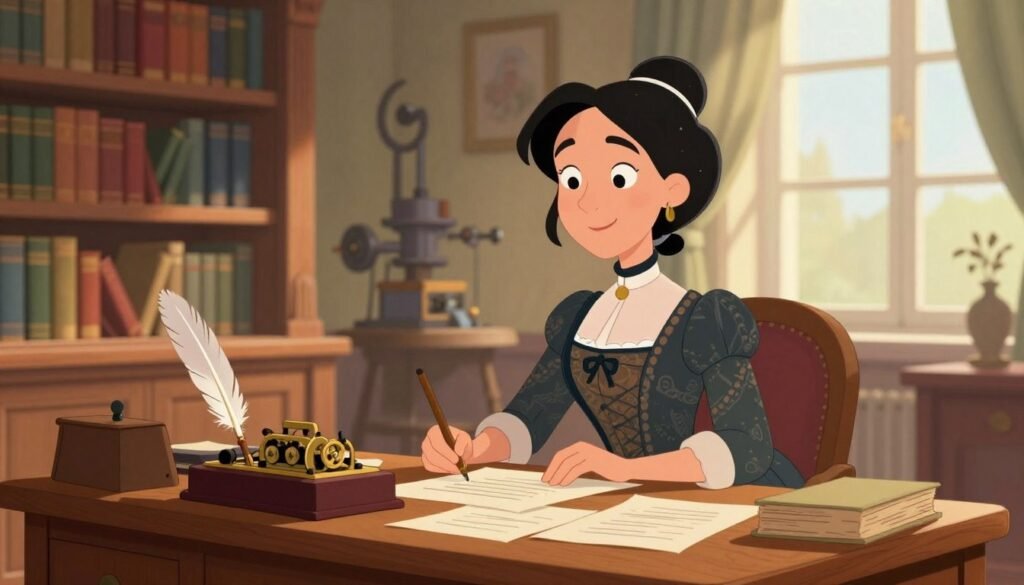
Looking to the future, Ada Lovelace’s legacy is clear. Technology is about people creating and innovating. Let’s be inspired by her vision and make a difference in STEM.
Nikola Tesla and the Spirit of Innovation
Imagine a world without the alternating current that powers our homes and devices. Nikola Tesla made sure that wouldn’t happen! As we explore Tesla’s life and achievements, you’ll discover how his work continues to inspire young learners today.
Nikola Tesla was a true pioneer in the world of science and technology. Born in 1856, Tesla’s curiosity and passion for innovation led him to develop groundbreaking technologies. These technologies transformed our understanding of electricity.
Pioneering Alternating Current
Tesla’s most notable contribution was the development of the alternating current (AC) system. Before Tesla’s work, direct current (DC) was the norm. But it had big limitations in terms of distance and efficiency.
Tesla’s AC system changed everything. It made it possible to power homes and industries over long distances. This was a huge breakthrough.
| Characteristics | Alternating Current (AC) | Direct Current (DC) |
|---|---|---|
| Direction of Flow | Changes direction periodically | Flows in one direction |
| Transmission Efficiency | High efficiency over long distances | Limited by distance due to energy loss |
| Usage | Power grids, households, industries | Electronic devices, automotive systems |
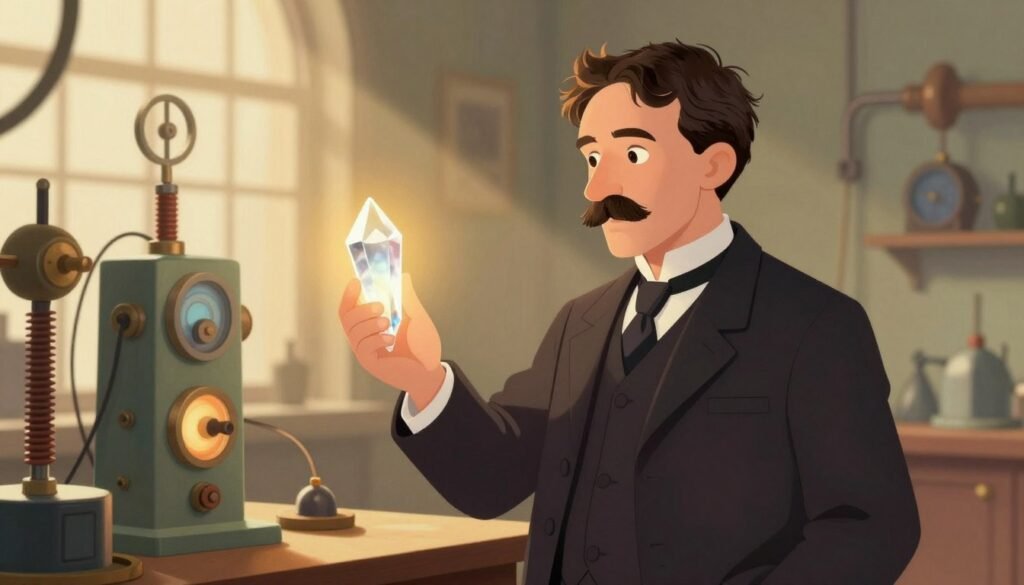
Tesla’s work on AC systems changed the electrical landscape. It paved the way for many other innovations. His vision for wireless energy is still being explored today.
By studying Nikola Tesla’s achievements, students can learn valuable lessons. They can learn about perseverance, creativity, and following their passion. Tesla’s story shows how dedication and hard work can lead to groundbreaking discoveries that change the world.
Jane Goodall and the Ethics of Field Research
Jane Goodall is a famous scientist who helped us learn about chimpanzees. She worked in Tanzania’s Gombe Stream National Park. Her research inspired many scientists and conservationists.
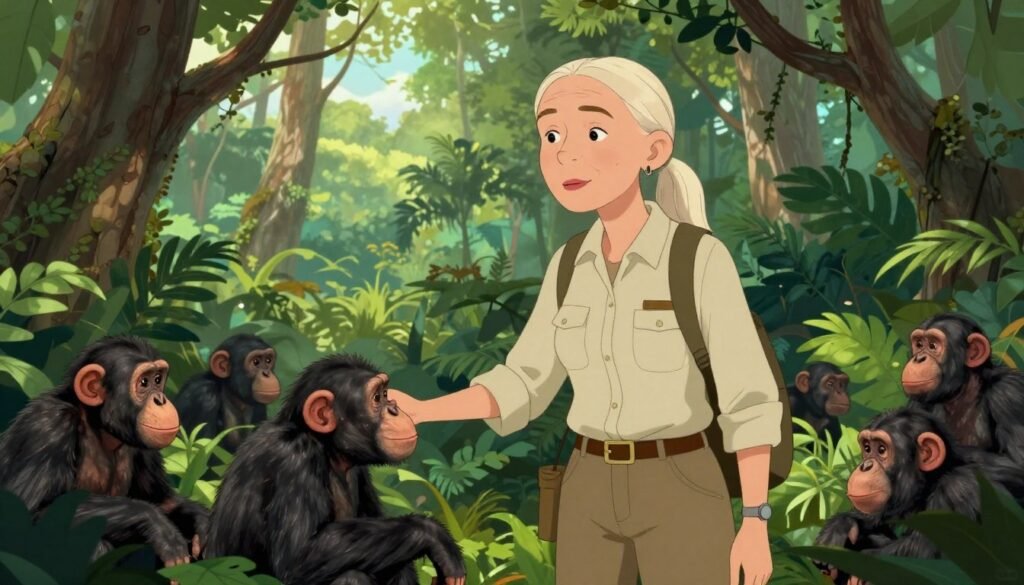
Goodall didn’t just do science. She also spoke up for animals and the environment. Her studies showed us that chimpanzees are smart and feel emotions. This changed how we see them and our duty to protect them.
Groundbreaking Research and Conservation
Goodall’s work is a lesson for kids. She showed that science is about discovery and doing the right thing. Her work to save chimpanzees and their homes shows how one person can make a big difference.
Key aspects of Jane Goodall’s work include:
- Advancing our understanding of chimpanzee behavior and social structures
- Highlighting the importance of conservation and protecting natural habitats
- Promoting ethical considerations in scientific research
By learning about Jane Goodall, students can appreciate nature more. Her story teaches us to be curious and care for our planet. It encourages us to work towards a better future!
Isaac Newton and the Foundations of Physics
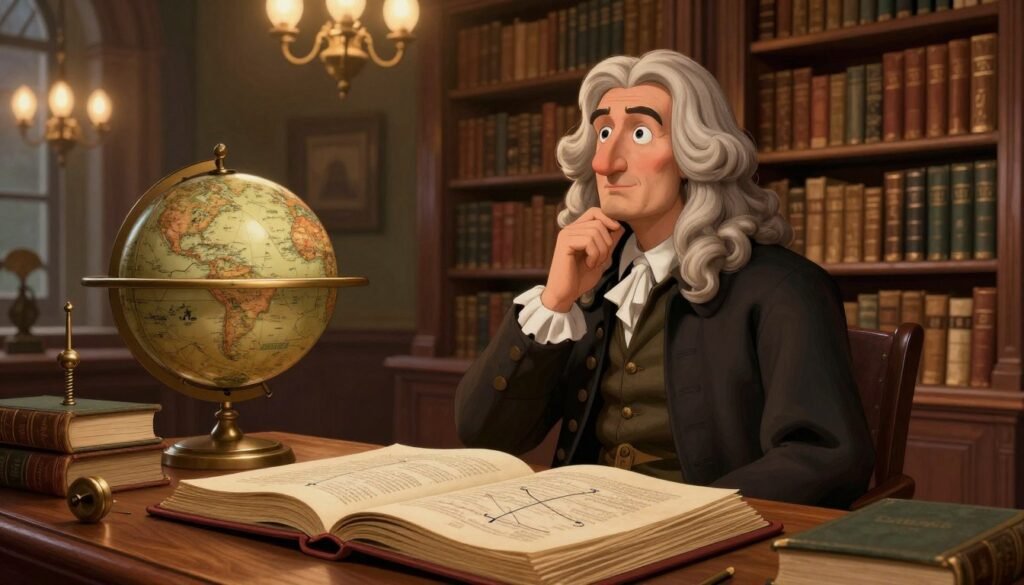
For students of science,Isaac Newton’s discoveries are key. They show the power of human curiosity! His work changed how we see the world.
Newton’s laws and theory of gravity started classical mechanics. These ideas are still used today. They help in engineering and astronomy!
Let’s look at some important parts of Newton’s work:
- Laws of Motion: Newton made three laws about how things move and react to forces. These laws help us understand many things, like a ball’s path and planets’ orbits!
- Universal Gravitation: Newton’s theory showed that the same force that makes things fall on Earth also makes planets move around the Sun. This was a big discovery that connected our understanding of Earth and the sky!
Laying the Groundwork for Future Scientists
Newton’s work explained many things of his time. It also helped future scientists. His careful observations and experiments showed us how to do science well. By learning about Newton, you can appreciate science more and see the value of hard work!
To learn more about Isaac Newton’s story and how he still influences math and science, check out this article. It makes his achievements fun for kids!
Rosalind Franklin and the Precision of Discovery
Rosalind Franklin’s work on X-ray crystallography was key in finding the DNA double helix. This was a big step in science! Her data helped scientists grasp DNA’s molecular structure.
Franklin’s science was known for her careful research and never giving up. Her story shows how important her work is. It changed how we see genetics.
Understanding DNA Structure
Rosalind Franklin used X-ray diffraction images to figure out DNA’s structure. Her famous photo, “Photograph 51,” helped prove the double helix model. This discovery changed genetics and biotechnology a lot.
But Franklin didn’t just work on DNA. She was a hard-working scientist in molecular biology. Her work inspires girls to go into STEM fields.
Key Contributions:
- Pioneered the use of X-ray crystallography for understanding the structure of DNA
- Produced high-quality X-ray diffraction images that were critical for determining the double helix structure of DNA
- Contributed significantly to the field of molecular biology through her research
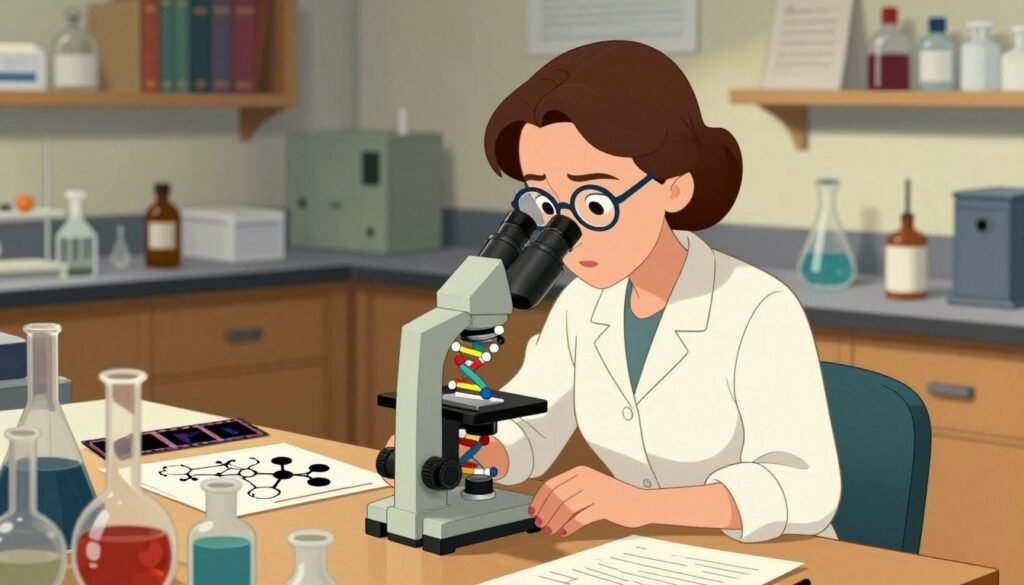
Rosalind Franklin’s story teaches us about the value of precision, hard work, and never giving up in science. We celebrate her achievements and honor her impact on our world.
Carl Sagan and the Art of Scientific Communication
Imagine a scientist who made the universe’s wonders come alive for millions. That was Carl Sagan! He was an astronomer and science communicator who made complex science simple and exciting.
Carl Sagan wanted to share science with everyone. He thought science was for anyone curious about the world.
Making Science a Universal Language
Sagan’s famous work, Cosmos, shows his skill in making science easy to understand. This documentary series was loved by millions and is still admired today for its storytelling and deep insights into the universe.
Some key things made Carl Sagan’s science communication great include:
- He made complex ideas simple without losing their meaning!
- He used stories to make science fun and relatable!
- He encouraged people to be curious and think critically!
An article on science communication says Sagan was key in connecting scientists with the public. Sagan once said,
“Somewhere, something incredible is waiting to be known.”
This quote shows his view on science and exploration.
Carl Sagan’s work teaches us that science communication is an art. It can inspire and teach us. By making science easy to understand, we can create a more curious and informed world!
Katherine Johnson and the Mathematics of Exploration
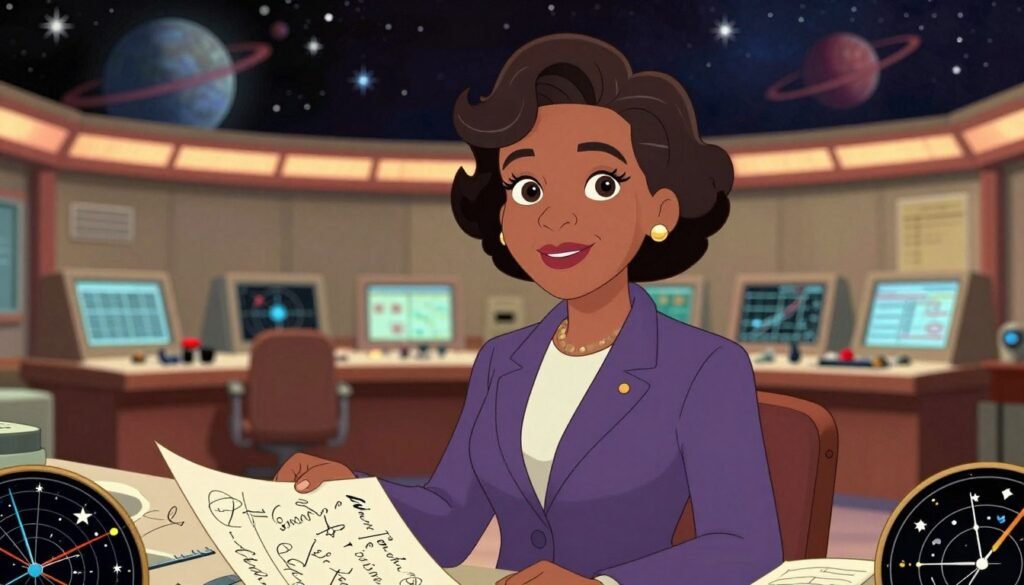
Katherine Johnson’s story is full of determination and math genius. It inspires many young minds to explore STEM fields! At NASA, she was a key player in early spaceflight missions.
Breaking Barriers at NASA
Katherine Johnson worked at NASA when racial segregation was common. Despite big challenges, she overcame them with her amazing math skills and will.
Her work helped many space missions succeed, including the Apollo 11 moon landing. You can find out more about her amazing journey and contributions on NASA’s website.
Key Contributions
- Calculated trajectories for Project Mercury
- Worked on the Apollo 11 moon landing mission
- Paved the way for future generations of women and minorities in STEM
Katherine Johnson’s legacy shows us that hard work and perseverance can lead to great achievements! She is a famous scientist for students who encourages young learners to explore science, technology, engineering, and mathematics.
Stephen Hawking and the Resilience of the Human Intellect
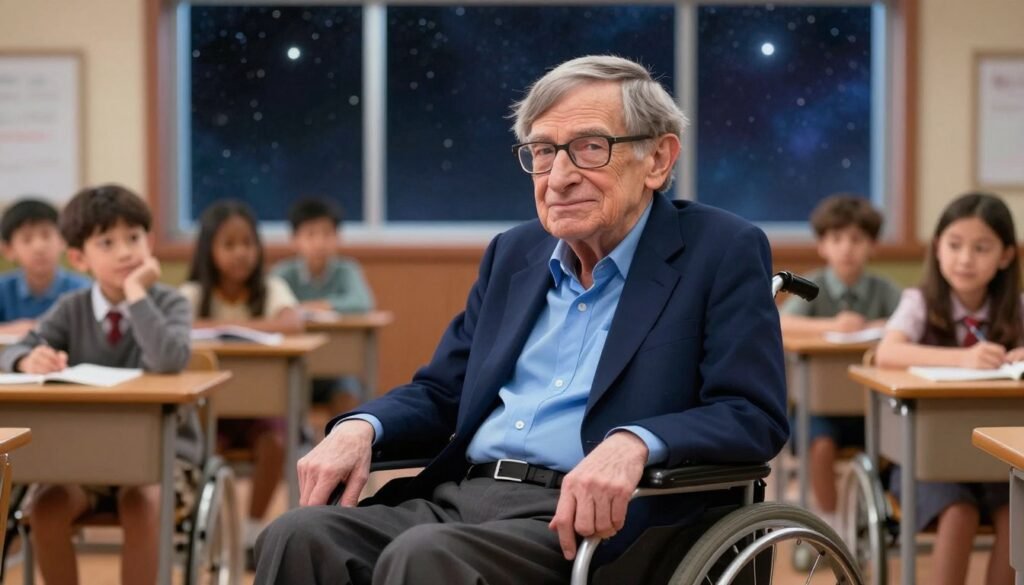
Stephen Hawking was diagnosed with a serious disease at 21. But he didn’t give up. He became a famous scientist instead! His life shows us how strong we can be when facing tough times.
A Legacy in Theoretical Physics and Cosmology
Stephen Hawking changed how we seeblack holesand theorigin of the universe. He said black holes can send out radiation. This idea helped us learn more about black holes.
He also made science easy for everyone to understand. As Jane Goodall said, inspiring young minds is key. Hawking’s work does just that.
| Contribution | Description |
|---|---|
| Hawking Radiation | Theory that black holes emit radiation due to quantum effects. |
| A Brief History of Time | A book that simplifies complex cosmological concepts for a broad audience. |
| Cosmology | Advanced our understanding of the universe’s origin and evolution. |
Stephen Hawking’s legacy keeps inspiring kids to follow their dreams. His story shows us that with hard work and determination, we can do amazing things!
Enhancing Your STEM Journey with Debsie Gamified Courses
Learn STEM subjects in a fun way with Debsie’s gamified courses! We’ve seen amazing scientists. Now, let’s take your STEM journey further.
Debsie offers personalized, gamified learning experiences. These help kids grow smart through many subjects and flexible teaching. We make learning fun and exciting by adding game-like elements and custom learning paths.
Interactive Learning for Young Minds
Our courses make science fun for kids. With Debsie, you can:
- Explore STEM subjects in an interactive and enjoyable way!
- Develop a deeper understanding of scientific concepts through hands-on experiences!
- Track your progress and stay motivated with our learning leaderboard!
Start your journey today at https://debsie.com/courses. See how Debsie’s gamified courses can boost your STEM education!

Conclusion
Learning about famous scientists is more than just facts. It’s about seeing their journey and passion. These scientists show us that science is about curiosity and hard work.
By looking at pioneers like Marie Curie and Albert Einstein, you learn a lot. You see how science changes our world. We hope their stories make you excited about science and STEM fields.
At Debsie, we think learning about scientists is just the start. Our games make learning fun and interactive. This helps you grow and understand the world better. So, keep exploring and learning. You might discover something amazing!