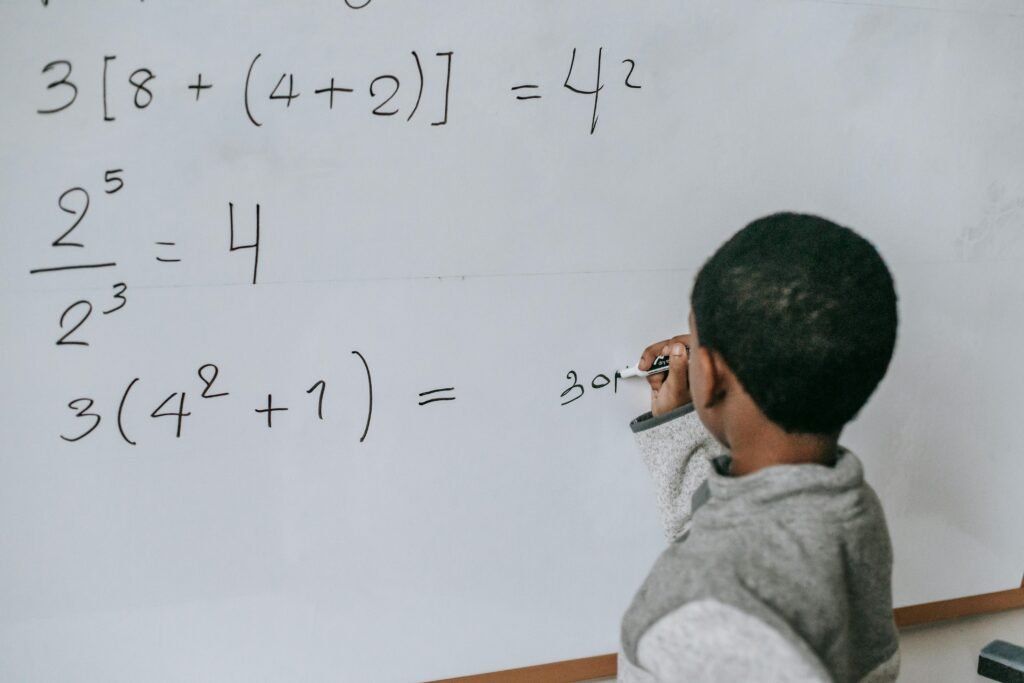
Imagine standing on the shoulders of giants who changed the world. This feeling of wonder makes us want to learn every day! We are excited to share stories of people who made the impossible possible.
France is known for its pioneers in math and chemistry. These influential scientists didn’t just work in labs. They made the world a better place for all of us.
You can start your own adventure of learning today! Try Debsie Gamified Courses at https://debsie.com/courses. It’s fun and helps you grow your knowledge.
Learning about these famous French pioneers is inspiring. Their stories show us that one person can change history!
Key Takeaways
- Understand how simple curiosity sparks magnificent global progress.
- Explore the extraordinary achievements of historical pioneers.
- Learn about the connection between mathematics and daily life.
- Discover how gamified learning helps you grow your skills.
- Find motivation to change the world through personal discovery.
The Legacy of French Scientific Inquiry
The legacy of French science is filled with big discoveries and brave minds! French scientists have made huge contributions to many fields. This includes math, physics, chemistry, and biology.
Great French scientists have changed how we see the world. They have also helped future scientists and thinkers. For example, Pierre-Gilles de Gennes won the Nobel Prize in Physics in 1991 for his work in soft matter physics.
These achievements show how important French science is for all of us. Let’s look at some key figures and what they did:
| Scientist | Field | Notable Contribution |
|---|---|---|
| René Descartes | Mathematics, Philosophy | Developed the method of doubt, laying foundations for modern philosophy and analytical geometry |
| Marie Curie | Physics, Chemistry | Pioneered radioactivity research, first woman to win a Nobel Prize |
| Louis Pasteur | Microbiology | Developed vaccination techniques and pasteurization |
The legacy of French science shows us the power of curiosity and innovation. By learning about French scientists, we see how they’ve helped us today.
Blaise Pascal: The Polymath of Probability and Pressure
Meet Blaise Pascal, a genius who changed our view of probability and pressure forever! He was a great mathematician, physicist, and philosopher. His work still shapes modern science.
Pascal’s work in mathematics is amazing. He created the Pascal’s Triangle. This triangle helps us figure out chances and solve math problems.
In physics, Pascal found important things about fluid dynamics and pressure. He discovered Pascal’s Law. It says pressure changes in fluids spread evenly through the fluid and to the container walls.
| Contribution | Field | Impact |
|---|---|---|
| Pascal’s Triangle | Mathematics | Simplified probability calculations and algebraic expansions |
| Pascal’s Law | Physics | Fundamental principle in fluid dynamics and engineering |
Pascal’s work on probability was a big deal. He talked with Pierre de Fermat. Together, they started the study of probability. Their talks in 1654 helped start this field!
Today, we still use Pascal’s ideas in mathematics and physics. His work reminds us of the power of curiosity and exploring the world!
Antoine Lavoisier: The Father of Modern Chemistry
Learn how Antoine Lavoisier’s work started modern chemistry! He is called the father of modern chemistry for his groundbreaking discoveries.
Lavoisier found oxygen, changing how we see chemical reactions and what makes things up! Before him, scientists thought differently. But Lavoisier showed oxygen is key in burning things.
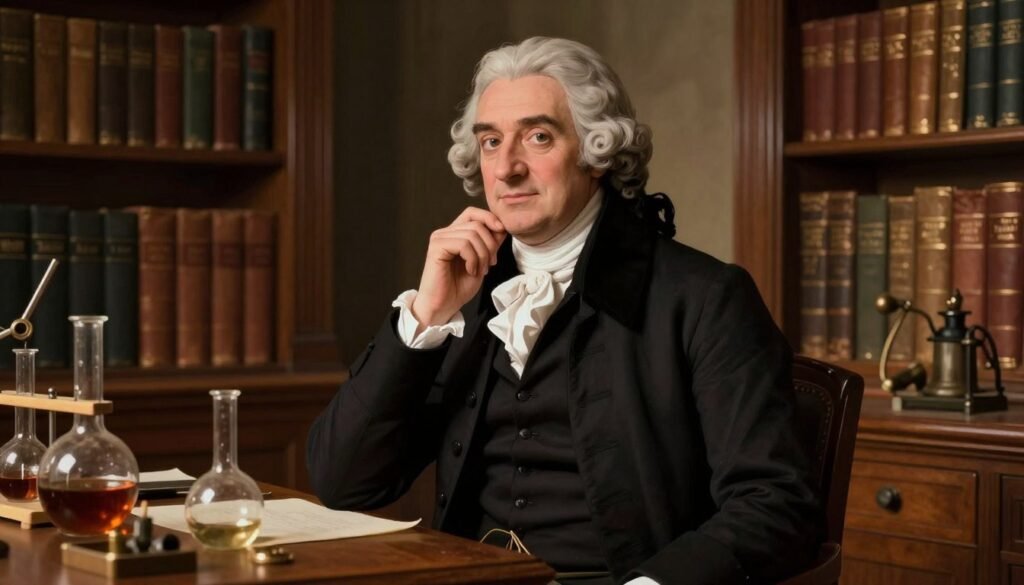
He also helped create a way to name chemicals clearly. This made talking about science easier for scientists. It helped them find more things!
Here are some of Lavoisier’s big wins:
| Year | Achievement | Impact |
|---|---|---|
| 1778 | Discovery of Oxygen | Changed how we see burning and chemical reactions |
| 1787 | Development of Chemical Nomenclature | Made science talk easier and helped more research |
| 1789 | Publication of “Elements of Chemistry” | Set a clear way to understand chemical basics |
Lavoisier’s work made chemistry better and helped future discoveries! His work still inspires scientists and students. It shows how important curiosity and hard work are.
Pierre and Marie Curie: Pioneers of Radioactivity
Pierre and Marie Curie were a trailblazing couple. They changed science with their work on radioactivity! Their journey into radioactivity expanded our understanding ofphysicsand opened new doors in chemistry.
The Curies’ research was groundbreaking. They found two new radioactive elements, polonium and radium. Their work changed what we knew and opened doors for more discoveries.
Marie Curie was determined to learn more. She coined the term “radioactivity.” She and Pierre worked hard to study these new substances. Their work helped start new uses in medicine, energy, and industry.
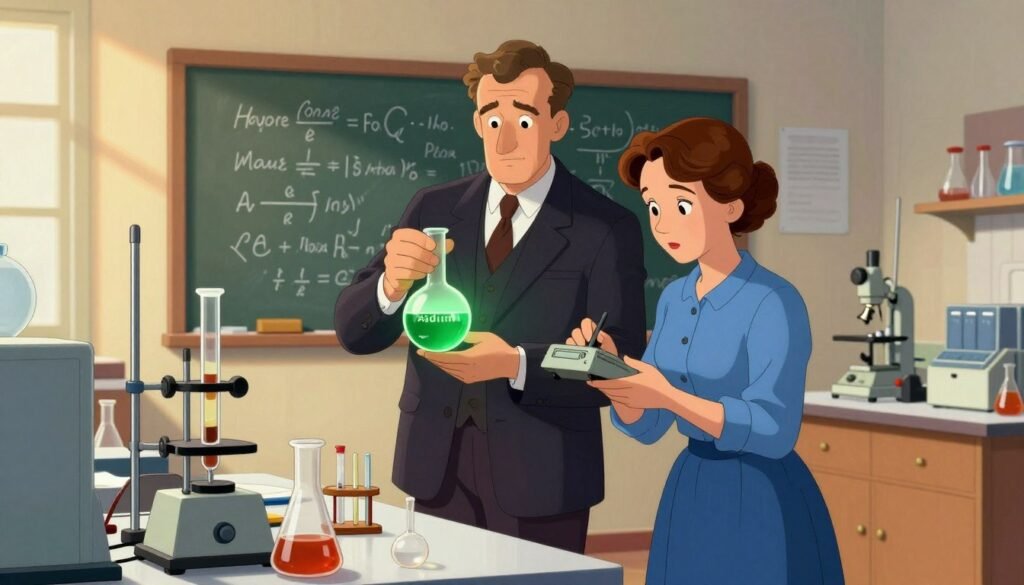
The Curies’ work had a big impact. Here are some key moments in their research and its uses:
| Year | Discovery/Application | Impact |
|---|---|---|
| 1898 | Discovery of Polonium | First radioactive element found by the Curies, starting radioactivity research. |
| 1898 | Discovery of Radium | More proof of radioactive elements, deepening our understanding of radioactivity. |
| Early 20th Century | Applications in Medicine | Radium and other radioactive elements started being used in cancer treatment, changing oncology. |
The Curies’ work on radioactivity has lasted a long time. Their discoveries and the research they sparked still shape science and medicine today.
Louis Pasteur: Revolutionizing Microbiology and Medicine
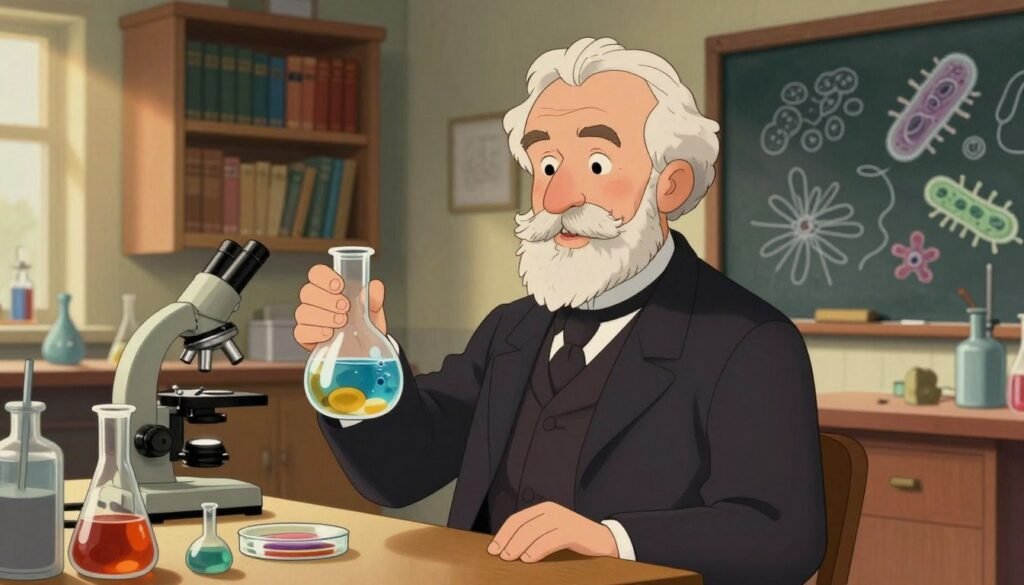
Louis Pasteur changed how we see tiny living things. His work on vaccines and pasteurization helped a lot with health!
Pasteur was a French scientist. He studied germs and found ways to fight diseases. He made vaccines for anthrax and rabies. This saved many lives.
He also made a way to kill bad germs in things like milk and juice. This is called pasteurization.
But Pasteur didn’t just stop there. He helped us understand germs better. This made fighting diseases easier.
Key Contributions:
- Development of vaccines for anthrax and rabies
- Pasteurization process to kill harmful bacteria
- Advancements in germ theory
- Improvements in public health through sanitation and hygiene practices
| Contribution | Description | Impact |
|---|---|---|
| Vaccination | Development of vaccines for diseases like anthrax and rabies | Saved countless lives and prevented outbreaks |
| Pasteurization | Process of killing harmful bacteria in liquids | Improved public health by reducing the incidence of waterborne and foodborne diseases |
| Germ Theory | Research on the role of microorganisms in disease | Laid the foundation for modern microbiology and medicine |
Thanks to Pasteur, we keep getting better at fighting germs. This helps people all over the world stay healthy.
René Descartes: Bridging Philosophy and Mathematics
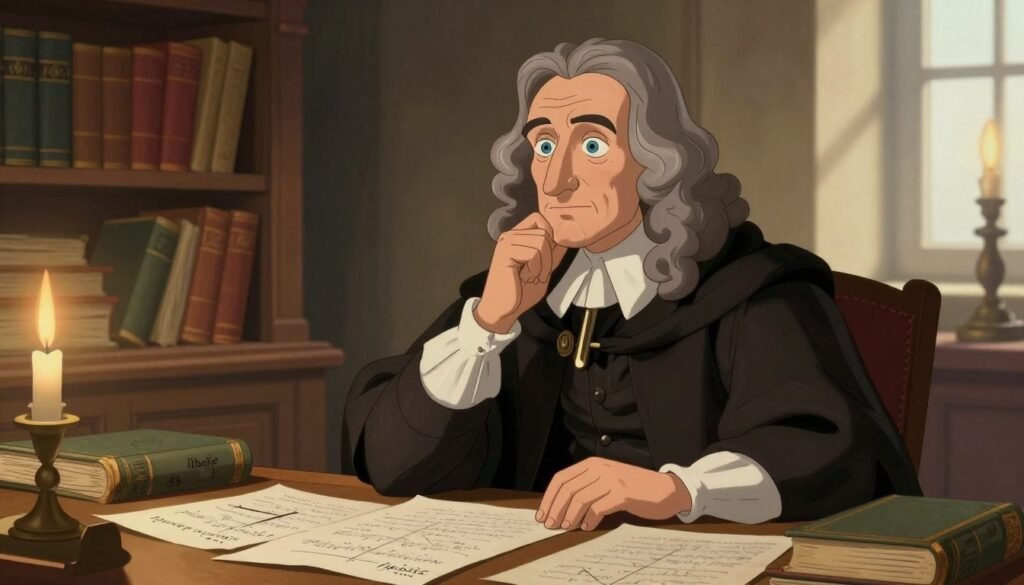
René Descartes was a trailblazer in both philosophy and mathematics. He left a big mark on Western thought! As aphilosopher and mathematician, he made big contributions. His famous saying “I think, therefor I am” is key in Western philosophy.
Descartes focused onrationalism in philosophy. He believed knowledge comes from reason alone. He said we can know things without experience. You can learn more about Descartes’ life and work onWikipedia.
In mathematics, Descartes made big contributions, too. He worked on geometry. He created the method ofCartesian coordinates. This method uses algebra to show shapes. It helped a lot in modern math and physics.
Here is a summary of Descartes’ key contributions:
| Field | Contribution |
|---|---|
| Philosophy | Rationalism, “I think, therefor I am” |
| Mathematics | Cartesian coordinates, algebraic representation of geometry |
Descartes’ work also touched science and literature. His focus on reason and individualism changed Western thought. He is one of the most important figures in philosophy history.
By linking philosophy and mathematics, Descartes left a lasting legacy. He inspires new thinkers and scholars every day.
André-Marie Ampère: The Architect of Electrodynamics
André-Marie Ampère was a mathematician and physicist. He made big steps in understanding electricity and magnetism. His work changed the future of electrodynamics!
Ampère figured out how electric current and magnetic fields are connected. He came up with Ampère’s law. This law is key in many electrical systems and technologies!
His discoveries help us every day. His work on electrodynamics led to many important inventions. These include electric motors, generators, and the electrical grids that power our homes!
- The ampere became a standard unit of electric current.
- Electrical engineering got a big boost.
- He inspired many scientists and engineers to study electricity and magnetism.
To learn more about Ampère, check out this article. It gives a detailed look at his impact on physics and electromagnetism.
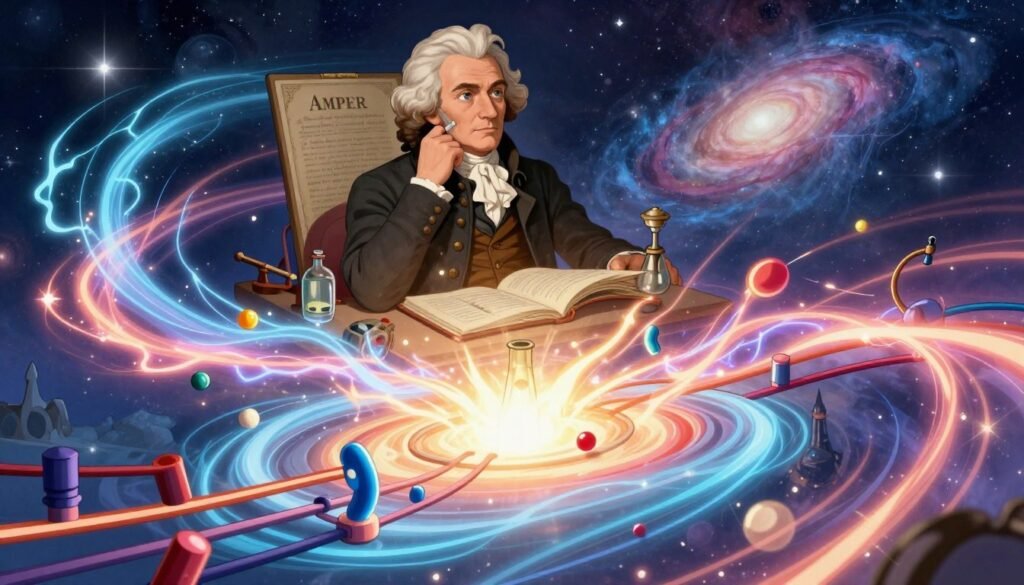
Jean-Baptiste Lamarck: The Early Visionary of Evolution
Let’s talk about French scientists. Jean-Baptiste Lamarck was a big name in evolution! He said that living things can pass on traits they get to their kids. This was a new idea back then.
Lamarck was a leader in natural history and biology. He was one of the first to talk about evolution clearly. His work in biology is still talked about today!
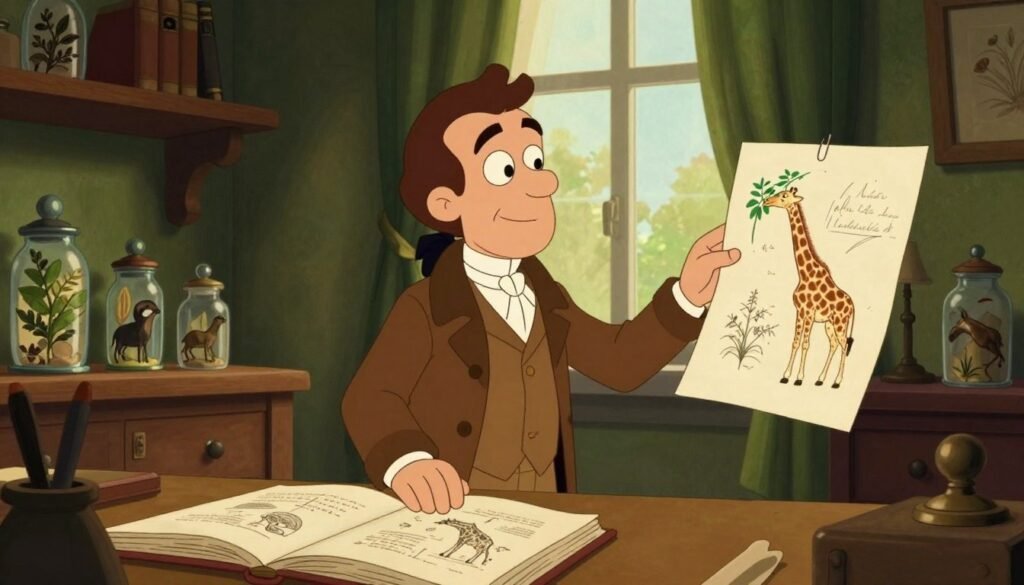
Lamarck worked in a time when species were seen as fixed. His idea that traits could be passed on was new. It changed how people thought about living things.
How did Lamarck’s ideas affect others? His work helped start new studies in evolution. Now, we see him as a visionary in science.
Lamarck’s work shows the power of new ideas. As we learn more about nature, we use what he started. His story inspires us to keep exploring and learning!
Henri Poincaré: The Last Universalist of Mathematics
Meet Henri Poincaré, a true Renaissance man. His work in mathematics and physics still inspires scientists today! He showed us how to think across many fields.
Poincaré changed mathematics a lot. He worked on topology and celestial mechanics. His topological conjecture was unsolved for nearly a century. It was solved by Grigori Perelman in 2003.
In physics, Poincaré made big contributions. He worked a lot on celestial mechanics. His work on the three-body problem helped start chaos theory.
As a philosopher, Poincaré had big ideas. He thought about the basics of science and reality. He believed in using intuition in math.
- Advancements in topology, including the Poincaré conjecture.
- Contributions to celestial mechanics, like the three-body problem.
- Philosophical insights into math and physics.
Poincaré’s work shows the strength of thinking across fields. He helped us understand the universe better. He showed us how math, physics, and philosophy connect.
The Best French Scientists Who Shaped Modern Physics
French scientists have changed how we see the universe. Their work has helped us learn more. It has also led to new technologies.
Louis de Broglie and Wave Mechanics
Louis de Broglie is famous for his work on wave mechanics. In 1924, he said that particles like electrons can act like waves. This idea changed how we see matter.
Key Contributions of Louis de Broglie:
- Introduced the concept of wave mechanics
- Proposed that particles can exhibit wave-like properties
- Received the Nobel Prize in Physics in 1929 for his work
De Broglie’s work helped start quantum mechanics. This field has led to many new discoveries in physics and chemistry.
| Year | Event | Impact |
|---|---|---|
| 1924 | de Broglie proposed wave mechanics | Fundamental shift in understanding matter |
| 1929 | de Broglie received the Nobel Prize | Recognition of his groundbreaking work |
| Present | Continued influence on quantum mechanics | Ongoing advancements in physics and chemistry |
Irène Joliot-Curie and Artificial Radioactivity
Irène Joliot-Curie was a key figure in radioactivity. She worked with her husband, Frédéric Joliot-Curie, to find artificial radioactivity in 1934. This discovery opened new paths in nuclear physics and medicine.
Key Achievements of Irène Joliot-Curie:
- Discovery of artificial radioactivity
- Nobel Prize in Chemistry in 1935
- Pioneering work in nuclear physics
Irène Joliot-Curie’s work has greatly influenced our understanding of radioactivity. It has also helped in many fields.
Advancements in French Engineering and Aviation
France has led in innovation, mainly in engineering and aviation. Pioneers have made big marks on the world! The country’s history is full of groundbreaking achievements. These have changed industries and inspired many.
Gustave Eiffel and Structural Innovation
Gustave Eiffel was a pioneering engineer. His work changed how we design structures. The Eiffel Tower, built for the 1889 World’s Fair, shows his genius.
Eiffel’s designs changed Paris and helped start new engineering ways.
Some of Eiffel’s big contributions include:
- Designing the Eiffel Tower, a famous landmark
- Using iron in new ways for taller structures
- Helping make modern bridges strong and beautiful

The Montgolfier Brothers and the Birth of Flight
The Montgolfier Brothers, Joseph-Michel and Jacques-Etienne, were pioneers in aviation. They made the hot air balloon in the late 18th century. This started human flight.
Their work was not just the balloon. They also:
- Did lots of tests to learn about flying
- Built the first hot air balloon that flew well
- Inspired others, like Jacques Charles, to keep improving flight
Learning Science Through Modern Gamified Platforms
In today’s world, learning science is fun and easy with gamified platforms like Debsie! Old ways of learning are now mixed with new, interactive methods. This makes hard science topics easier for kids to understand.
Enhancing Scientific Literacy with Debsie
Debsie’s games help kids learn science in a fun way. They use games and fun content to teach science. This way, kids get to know science better and how it’s used in our lives.
For example, Debsie teaches physics and chemistry with real-life examples. This makes learning fun and helps kids remember what they learn. As Dr. Jane Smith, a renowned education expert, once said,
“Gamification in education is not just a trend; it’s a powerful tool that can transform the way we learn and teach.”
Exploring Debsie’s Interactive Courses
You can check out Debsie’s courses at https://debsie.com/courses. They have different courses for all kinds of learners. Whether your child loves space or experiments, Debsie has something for them.

Debsie uses gamified learning to make science fun and accessible. It inspires kids to become scientists and thinkers. Try it out and see the difference for yourself. For more info on Debsie, check out top French tutors and classes.
The Enduring Impact of French Scientific Discoveries
The legacy of French scientific discoveries is still with us today! French scientists have greatly helped many fields. These include physics, chemistry, biology, and mathematics.
Their discoveries have greatly expanded our knowledge. They have also led to many new things that change our lives. For example, Louis Pasteur’s work in microbiology and vaccines has saved many lives.
You can learn more about Pasteur’s work and its lasting impact on sites like CNRS.
Some key areas where French discoveries have made a big impact include:
- Physics and Chemistry: The Curies’ work on radioactivity helped nuclear physics and medicine.
- Biology and Medicine: Pasteur’s germ theory and vaccines are key in modern medicine.
- Mathematics: Mathematicians like Henri Poincaré have changed many areas, from topology to physics.
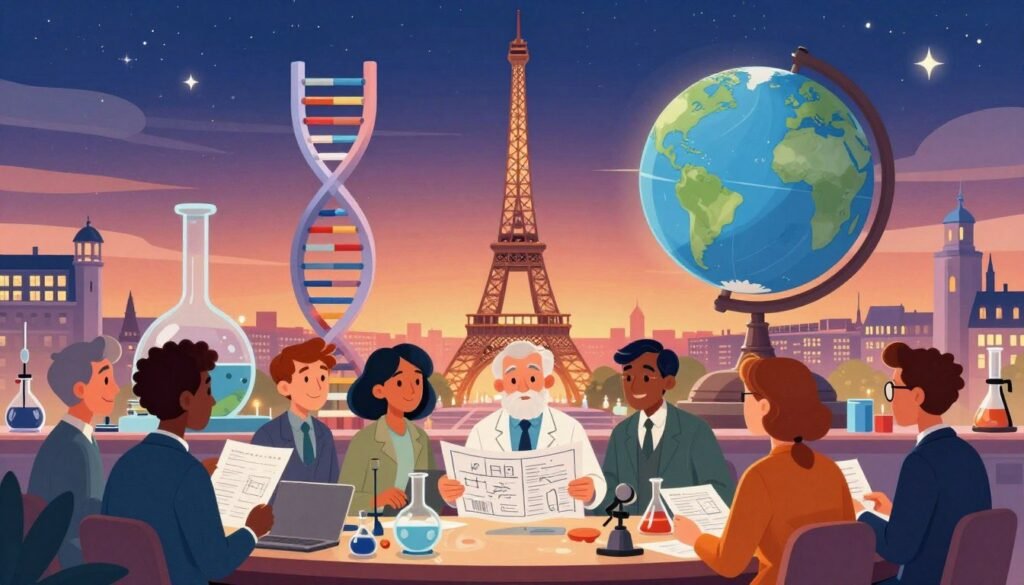
The lasting legacy of French scientific discoveries shows the power of human curiosity and innovation. As we keep exploring and learning, we add to what these pioneers started.
Conclusion
French scientists have left a big mark on our world. Their discoveries changed many areas of science. This includes things like how we fight germs and the tech we use today.
Their work is the base for many of our scientific gains. You can learn more about science and its history on World History Edu.
Want to learn more and have fun? Check out Debsie’s courses at https://debsie.com/courses. It’s interactive and makes learning exciting!