Have you ever looked at a beautiful forest and felt a deep sense of wonder? We all want our children to grow up in a world that stays healthy and green. It feels personal because we are talking about our home and the future we share together!
There are amazing heroes working hard right now to protect our planet from climate change. These people are the dedicated climate scientists who find ways to keep our air clean. They help us understand complex methods to protect nature!
You can join this exciting journey too by trying out Debsie Gamified Courses at https://debsie.com/courses. It is an interactive method to learn about sustainability while playing games! We believe that learning should feel like a grand adventure for every curious explorer.
Meeting famous environmental scientists helps us see the truth. One person can truly make a big difference! These brilliant experts lead the way toward a brighter future for everyone. Let’s dive in and meet these planet-saving heroes!
Key Takeaways
- Meet the leading experts who are saving our natural world.
- Understand how global shifts impact our daily lives and future.
- Discover the true power behind living a green lifestyle.
- Explore how interactive games make learning about nature fun.
- Get inspired by stories of people who protect our oceans and forests.
- Learn how you can start making a positive change today.
The Pioneers of Modern Climate Science
Many scientists have worked on climate change. But some stand out for their big contributions! They have spent their careers studying global warming.
James Hansen and Syukuro Manabe are two of these pioneers. Their work has helped us understand climate change. For more on these scientists, readings on climate science pioneers are great.
James Hansen and the Early Warning Systems
James Hansen warned us about global warming early on. He worked at NASA’s Goddard Institute for Space Studies. His 1988 testimony to Congress was a big moment.
Hansen’s work on climate modeling and his push for less carbon emissions are key. He keeps telling us we need to act fast to stop climate change.
Syukuro Manabe and the Physics of Global Warming
Syukuro Manabe helped us understand global warming physics. His work in the 1960s and 1970s was crucial. He showed how carbon dioxide causes global warming.
Manabe won the Nobel Prize in Physics in 2018. He shared it with others for their climate change work.

Hansen and Manabe’s work is key to fighting climate change. Their research helps us find ways to lessen global warming’s effects.
- James Hansen’s early warnings on climate change
- Syukuro Manabe’s foundational work on climate modeling
- Their contributions to our understanding of global warming
Learning from these pioneers helps us grasp climate science. It shows us the need for more research and action.
Leading Environmental Scientists Shaping Policy
Climate change is being tackled by top environmental scientists. They are making big changes in policy all over the world. Their studies help leaders make better choices.
Jane Lubchenco is a big name in marine ecosystem research. She shows how vital it is to keep oceans healthy. Her work helps leaders make plans to save our oceans.
Jane Lubchenco and Marine Ecosystem Resilience
Jane Lubchenco’s work helps us understand marine ecosystems. These ecosystems are key for our food, safety, and even fighting climate change. She teaches us how to keep them strong against climate change.
Her studies highlight the need for healthy fish and their homes. This is good for food and jobs for many people. It also helps keep our oceans full of life.
Michael Mann and the Hockey Stick Graph
Michael Mann is famous for his climate change work. His “hockey stick graph” shows how temperatures have risen. This graph is key evidence for why we must act on climate change.
Mann’s work has changed how we talk about climate change. It shows how our actions affect the planet. His research pushes for cleaner energy and less pollution. You can learn more about the impact of environmental scientists like Andrew Plantinga on policy through their economic insights.
Scientists like Jane Lubchenco and Michael Mann are very important. They remind us that science is key to solving climate change. Their work helps us make better choices for our planet’s future.
Innovators in Renewable Energy and Sustainability
Renewable energy and sustainability are key in today’s world. Thanks to people like Daniel Nocera and Christina Figueres, we’re moving towards a cleaner future.
Daniel Nocera and Artificial Photosynthesis
Daniel Nocera is a famous chemist. He’s working on artificial photosynthesis. This tech tries to copy how plants make energy from sunlight.
It could change how we make energy. Nocera’s invention uses sunlight to split water into hydrogen and oxygen. This could be a big step forward!
Nocera wants to make clean energy for everyone. His work is inspiring others to explore renewable energy.
Christina Figueres and the Paris Agreement Diplomacy
Christina Figueres is a key figure in fighting climate change. She helped make the Paris Agreement. This agreement has almost 200 countries working together to cut carbon emissions.
Figueres’ work is all about teamwork. She shows how important it is to work together for the planet.
She doesn’t just stop at the Paris Agreement. Figueres keeps pushing for climate action. She helps countries move to a greener economy. For more info, visit the Clean Energy and Sustainability Innovation Program.
Daniel Nocera and Christina Figueres show us how important individual efforts are. Their work reminds us that we can make a big difference together. We can move towards a greener future!
The Role of Environmental Scientists in Biodiversity Conservation
Environmental scientists are key to saving our planet. Pioneers like E.O. Wilson and Sylvia Earle lead the way. They help keep our ecosystems healthy and full of life.
These scientists do important research and create plans to save nature. They also push for laws to protect our planet. Their work helps us all live in a better world.
E.O. Wilson and the Half-Earth Project
E.O. Wilson is a famous biologist who loves nature. He started the Half-Earth Project. It aims to save half of Earth’s land and sea for nature.
This project is a big call to save our planet. It helps keep ecosystems strong and supports animals. It’s a big step towards a healthy Earth.
- Protecting large areas of habitat to support biodiversity
- Promoting ecosystem services like clean air and water
- Supporting species recovery and conservation efforts

Sylvia Earle and Ocean Exploration
Sylvia Earle is a leading ocean explorer. She works hard to protect our oceans. Her work shows how important it is to save marine life.
Earle’s work shows that exploring the ocean is vital. It helps us find new species and understand our planet better. We learn where to protect our oceans.
Key aspects of Sylvia Earle’s work include:
- Advocating for marine protected areas
- Promoting sustainable fishing practices
- Supporting ocean conservation efforts globally
E.O. Wilson and Sylvia Earle show us how important scientists are. They inspire us to help protect our planet. Their work encourages us to make a difference.
Climate Experts Focusing on Atmospheric Chemistry
Experts like Mario Molina and Susan Solomon have changed how we see the ozone layer. Their work has helped us understand the Earth’s atmosphere better. It has also led to policies to protect it.
Mario Molina and the Ozone Layer Discovery
Mario Molina, a Mexican chemist, made a big discovery in the 1970s. He found out thatCFCs (chlorofluorocarbons) were harming the ozone layer. This led to theMontreal Protocol, a plan to stop making CFCs.
Molina showed how human actions affect the air. He found that CFCs could hurt the ozone layer. This layer protects us from harmful sun rays.
To learn more about atmospheric science, visit this page. It highlights leaders in the field.
Susan Solomon and Antarctic Ozone Depletion
Susan Solomon, an American chemist, helped us understand the Antarctic ozone layer. She led a team to Antarctica in 1986. They found out how the ozone layer was doing.
Solomon’s work helped us see how important teamwork is in solving environmental problems. Her research on the ozone layer has helped make global policies better.

Here’s a quick look at what Mario Molina and Susan Solomon did for atmospheric chemistry:
| Researcher | Key Contribution | Impact |
|---|---|---|
| Mario Molina | Identified CFCs as a cause of ozone layer depletion | Led to the Montreal Protocol |
| Susan Solomon | Led research on Antarctic ozone depletion | Advanced understanding of ozone layer chemistry |
Advocates for Environmental Justice and Equity
Robert Bullard and Vandana Shiva are leading the fight for environmental justice. They work hard to show how pollution hurts poor communities. They also push for green practices.
Robert Bullard and the Environmental Justice Movement
Robert Bullard is called the “father of environmental justice.” He has shown how pollution harms minority groups in the U.S.He fights for fair policies to change this.
Some key parts of his work are:
- He points out how toxic sites are often near minority homes.
- He wants communities to make their own environmental decisions.
- He uses research, teaching, and activism for environmental justice.
Vandana Shiva and Seed Sovereignty
Vandana Shiva is a big name in environmentalism and seed rights. She works to keep nature’s variety alive and support green farming.She fights against big companies controlling seeds and pushes for natural farming.
| Key Contributions | Impact |
|---|---|
| Promoting seed sovereignty | Helps farmers save and share seeds, keeping nature’s variety alive |
| Advocating for agroecology | Supports farming that cares for the earth and its balance |
| Challenging corporate control | Stands up against big companies controlling seeds, fighting for farmers’ rights |
Learning about these two leaders shows us why we need justice and fairness in the environment. We can help by supporting good policies and green actions. Together, we can make a better world for all!
Emerging Voices in Climate Communication
Let’s look at some new voices in climate talk who are really making a difference! Climate change is hard to understand, but talking about it is key to getting people to act. Katharine Hayhoe and Bill McKibben are two people who are helping a lot.
Katharine Hayhoe and Bridging the Climate Divide
Katharine Hayhoe is a famous climate scientist. She makes hard climate topics easy to get. She talks to people from all sides of politics.
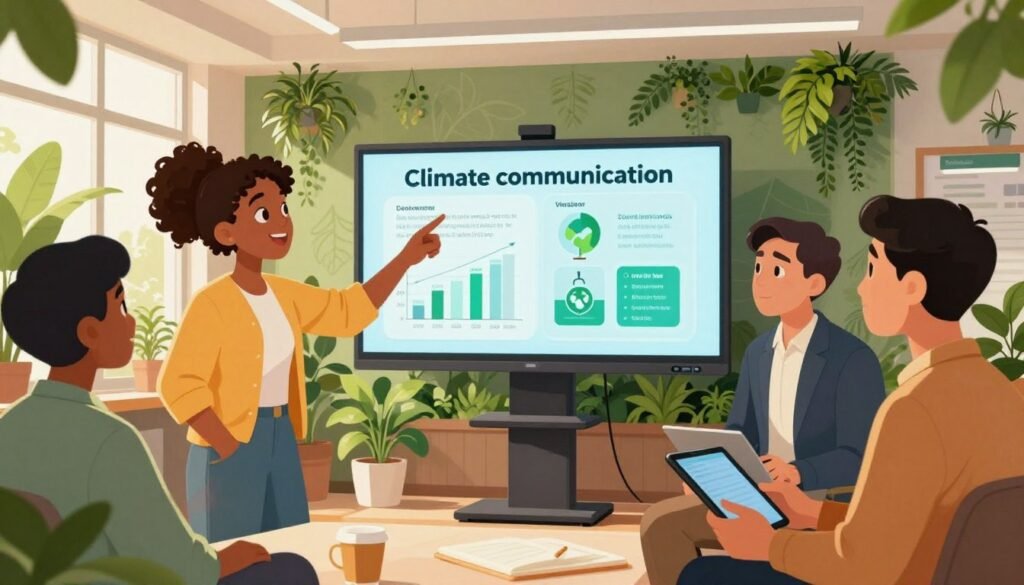
Hayhoe believes in talking to everyone. She wants to make sure everyone feels included in climate talks.
Bill McKibben and Grassroots Climate Activism
Bill McKibben is a big name in fighting for the environment. He works with 350.org to get people to act against climate change. Millions of people around the world have joined him.
He pushes for clean energy and less use of fossil fuels. He also fights for fairness in climate issues.
By talking about these voices, we see how important climate communication is. It helps bring about real change.
Technological Advancements in Climate Modeling
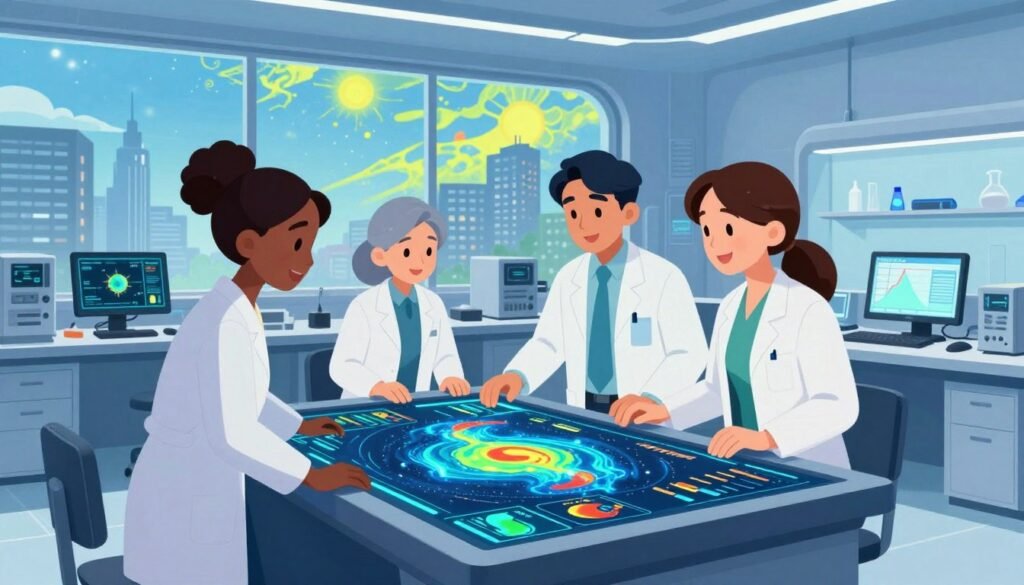
Scientists like Gavin Schmidt and Kate Marvel are making big steps in climate modeling. Their work helps us understand and predict climate change. This lets us get ready for the future.
Climate modeling is getting better, thanks to many researchers. Gavin Schmidt works with NASA climate data. Kate Marvel focuses on cloud physics.
Gavin Schmidt and NASA Climate Data
Gavin Schmidt is a key climate scientist. He analyzes NASA climate data. His work helps us know more about global climate patterns and how humans affect the environment.
As Schmidt says,
‘Understanding climate change requires understanding the past, present, and future of our climate system.’
His work gives us important insights. These insights help with making policies and decisions.
Kate Marvel and Cloud Physics
Kate Marvel studies cloud physics. Her research shows how clouds affect climate change. Clouds help control Earth’s temperature, and Marvel’s work explains this.
She notes,
‘Clouds are a major source of uncertainty in climate models, but they’re also a key factor in understanding climate sensitivity.’
Her discoveries are important. They help make climate models better and predict the future.
Educational Resources for Aspiring Environmental Scientists
Debsie is changing how we learn about the environment. We make learning fun and interactive. This is key for understanding big environmental issues.
Gamified learning makes learning fun. It uses game elements to make hard topics easy and fun.
The Importance of Gamified Learning in Science
Gamified learning is more than just fun. It helps students stay engaged and remember what they learn. When students are involved, they learn better.
Gamification helps students dive deep into their studies. They learn more about the environment in a fun way.
Enhancing Your Knowledge with Debsie Gamified Courses
At Debsie, we offer top-notch, interactive learning. Our courses cover topics like climate change and sustainability. You’ll get a full view of environmental science.
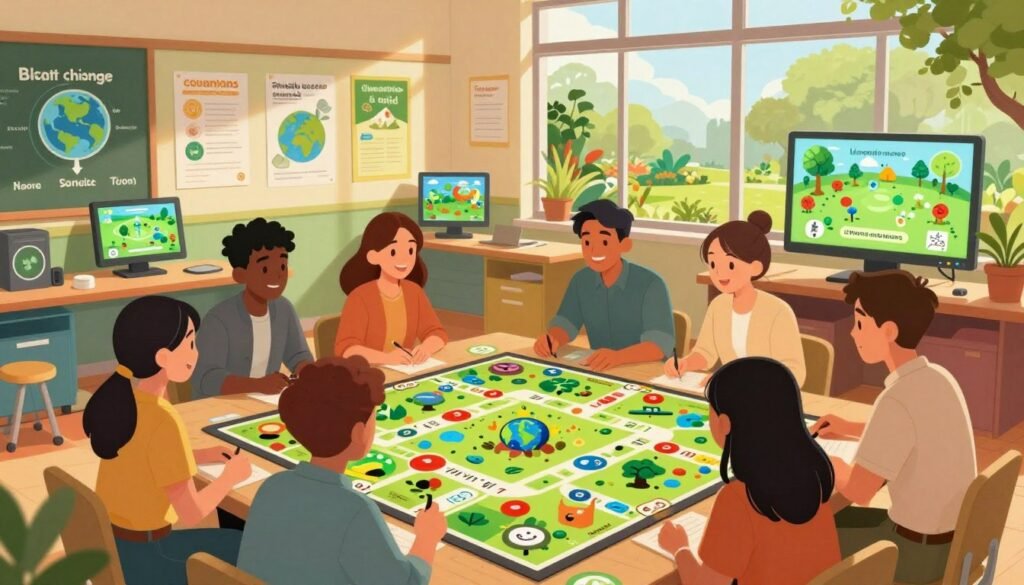
Gamification makes learning fun and interactive. It lets students try out real-world scenarios in a safe space. This way, they see how different actions affect the environment.
Exploring the Debsie Course Catalog
Our courses are flexible and easy to get to. You can learn at your own speed. Whether you’re a student or teacher, start learning today! Check out our gamified courses at https://debsie.com/courses.
The Intersection of Public Health and Climate Change
Climate change is a big deal for our health. It’s not just about the planet. Experts like Howard Frumkin and Gina McCarthy are working hard to understand its health effects.
Howard Frumkin and Planetary Health
Howard Frumkin is a big name in planetary health. He studies how our health and the planet are connected. He looks at how climate change affects us.
Dr. Frumkin has made big contributions. He shows how climate change makes health problems worse. This includes heat stress and breathing issues. He helps us find ways to keep people healthy.
Gina McCarthy and Climate-Related Health Risks
Gina McCarthy used to run the EPA. She talks a lot about climate-related health risks. She cares about how climate change hurts kids, old people, and those who don’t have much money.
Climate change brings many health risks. It can cause heat sickness and make water dirty. It also leads to big storms that hurt people and make health services busy.

Experts like Howard Frumkin and Gina McCarthy help us see the big picture. They show us why we must fight climate change for our health. We can make a better future together, focusing on health and well-being!
Global Perspectives on Sustainable Development
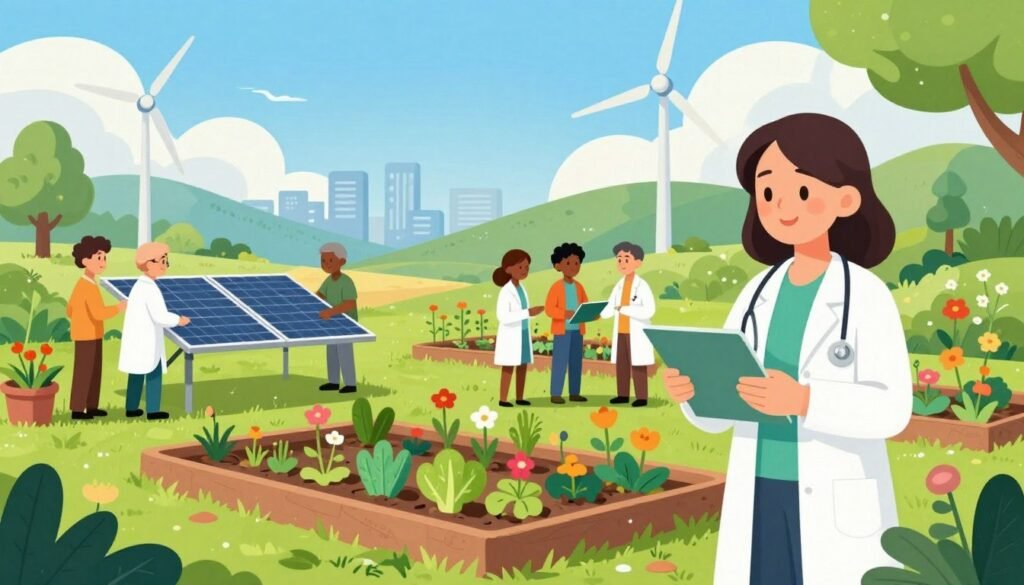
Looking at sustainable development from different parts of the world is key. We face big challenges like climate change and losing biodiversity. We need to find a way to meet human needs while taking care of the planet.
The idea of sustainable development is getting more attention. People like Johan Rockström and Sunita Narain are helping us understand it better. Their work is very important.
Johan Rockström and Planetary Boundaries
Johan Rockström is a leading scientist on planetary boundaries. He says there are nine key areas that keep our planet stable. These include things like climate change and losing species.
Rockström says we need to be careful and flexible in how we develop. This way, we can keep our planet healthy. By staying within these boundaries, we can avoid big problems.
Sunita Narain and Global South Climate Advocacy
Sunita Narain is known for helping the Global South with climate issues. She shows how climate change hurts poor communities. She wants fair climate policies for everyone.
Narain fights for climate justice and a fair global climate system. She makes sure we hear from all communities. This helps us understand sustainable development better.
Johan Rockström and Sunita Narain give us important lessons on sustainable development. Their work shows we need to work together. We must listen to many voices from around the world.
The Future of Environmental Research and Innovation
Environmental research is about to change a lot. New solutions and teamwork are leading the way! We need new ideas to fight climate change. The next scientists are bringing new ideas and tech to help.
The Shift Toward Interdisciplinary Climate Solutions
We need many ways to fight climate change. Interdisciplinary climate solutions mix biology, chemistry, physics, and social sciences. This way, we can tackle the big problems between humans and nature.
For instance, mixing climate modeling with social and economic data helps make better predictions. It also helps make better policies. By working together, scientists can find ways to lessen climate change’s effects.
How Next-Generation Scientists are Tackling Carbon Capture
Carbon capture is key to lowering CO2 in the air. Next-generation scientists are making it better and cheaper. They’re using bio-inspired carbon capture, which copies nature’s way of pulling CO2 out of the air.
| Method | Description | Potential Impact |
|---|---|---|
| Bio-inspired Carbon Capture | Uses natural processes to absorb CO2 | High potential for scalability and efficiency |
| Advanced Chemical Absorption | Improves upon traditional chemical absorption methods | Significant reduction in energy requirements |
| Direct Air Capture | Captures CO2 directly from the air | Can be deployed in various locations worldwide |

The table shows some new ways to capture carbon. As these ideas get better, we’ll see big cuts in carbon emissions worldwide.
Conclusion
Environmental scientists and climate experts play a big role. They help us deal with climate change and make things better. They are the ones leading the way with new ideas and speaking out for our planet.
Debsie’s courses are fun and teach you about the environment. You can learn more about science and how to help our planet. Check out Debsie’s courses to find out how you can make a difference. If you want to be an environmental scientist, the Department of Energy’s career map is a great place to start.
We can all help make the future better. By supporting these scientists, we can fight climate change together. Let’s move forward and make tomorrow brighter!