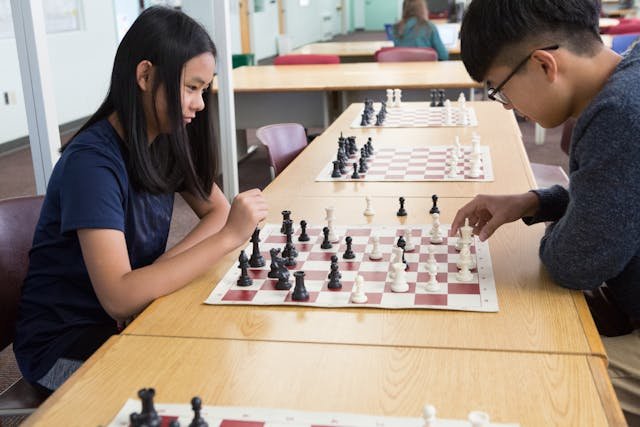
Who is shaping the next global surge from India — and how fast are they rising?
We promise a clear, up-to-date guide to the nation’s active elite, based on recent FIDE snapshots and current form! This quick, easy-to-scan piece gives you a men’s list, a women’s list, juniors, and why the country is challenging the rest of the world.
“Right now” means active players plus recent FIDE rating snapshots. Parents and kids can trust the timing. Over 30,000 rated by FIDE shows deep talent and rapid growth.
Young stars are not just good — they are battling the globe’s best. See the rise of Praggnanandhaa and the new wave via this report: Praggnanandhaa becomes India’s top-ranked player.
Want to learn? Start today with Debsie’s gamified path courses, track growth on the Debsie Leaderboard, or try a free trial with a personal tutor here!
Key Takeaways
- This is a current, FIDE-based list of active national talent.
- You’ll get separate sections: men, women, juniors, and why depth matters.
- “Right now” = active status + recent rating snapshots for accuracy.
- India’s young stars are competing at world level and rising fast.
- Use Debsie courses and the leaderboard to learn and stay motivated!
How chess rankings work: FIDE, Elo ratings, and what “top” really means</h2>
Understanding ratings and titles helps you read any list with confidence.
FIDE uses the Elo system to track results from rated games. Numbers update monthly. A higher number means stronger recent results across events worldwide.
Why FIDE ratings matter
We trust FIDE because it’s the global chess federation standard. It compares players across countries and major events. That makes ratings useful for fair search and selection.
What a title means
A Grandmaster (GM) or International Master (IM) is more than a trophy. These titles show sustained results over time and norms earned against strong fields.
Why lists change fast
Active players who compete often see bigger swings. Wins against strong opponents add points, losses remove them. So monthly updates can move names up or down quickly!
“A rating is a snapshot — not the whole story.”
- Think of Elo as points you earn or lose when you play stronger opponents.
- Look at rating trends, event strength, and consistency when you search for role models.
- If your child wants to level up, try a free trial class with a personalized tutor at Debsie!
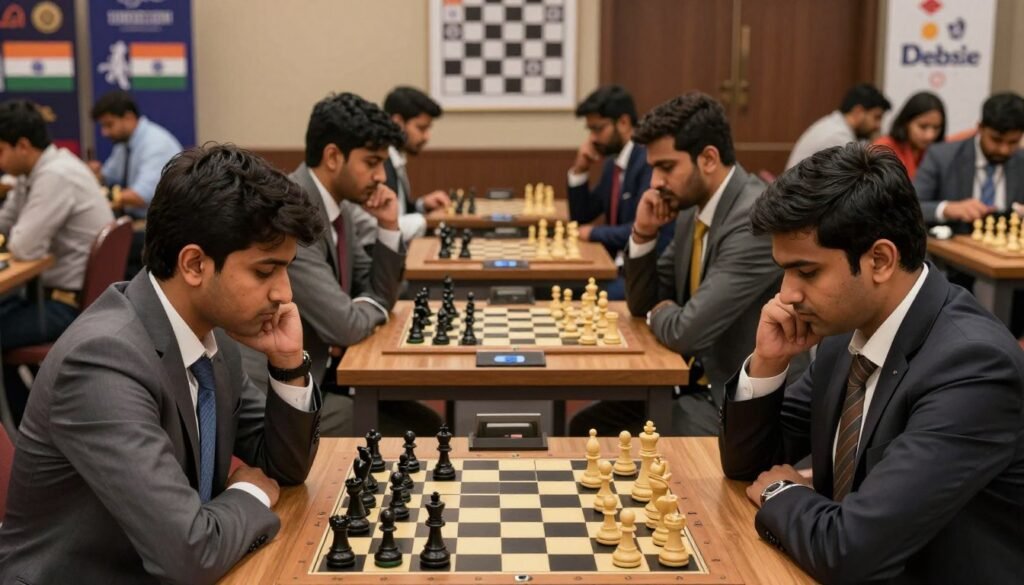
Best chess players in India: the top active men by FIDE rating</h2>
Meet the active Indian men who lead the rating charts right now, with short notes on what makes each stand out.
Snapshot: This list uses recent FIDE ratings and focuses on current form. It’s parent-friendly and easy to scan!
| Rank | Name | Rating | Why to watch |
|---|---|---|---|
| 1 | Praggnanandhaa R | 2771 | Elite teen energy; strong results vs top opposition. |
| 2 | Gukesh D | 2752 | Young, fearless, shows up in big moments. |
| 3 | Viswanathan Anand | 2743 | Legendary prep and lasting elite form. |
| 4 | Arjun Erigaisi | 2730 | Consistent international results and steady rating. |
| 5 | Vidit Gujrathi | 2715 | Sustained grandmaster strength across formats. |
| 6 | Aravindh Chithambaram | 2711 | Tactical edge and clear rating momentum. |
| 7 | Pentala Harikrishna | 2700 | Proven experience on the global stage. |
| 8 | Nihal Sarin | 2700 | Modern attacking style with solid results. |
| 9 | Raunak Sadhwani | 2658 | Young depth; part of a strong bench. |
| 10 | Karthikeyan Murali | 2647 | Experienced GM with steady contributions. |
What this means: The top-10 average rating sits around 2721–2725. That ranks the country second globally behind the United States. Wow!
“Depth at the top tells you how strong a national system is.”
Want to learn like them? Pick a favorite, study a few games with Debsie, and try themed drills in our courses!
- Debsie Courses — practice core ideas and tactics.
- Debsie Leaderboard — track progress and compete for badges.
- Study a few games to copy ideas and grow fast!
Top active women chess players in India to watch right now</h2>
Indian women are not just catching up — they’re reshaping the world stage with steady results and rising stars!
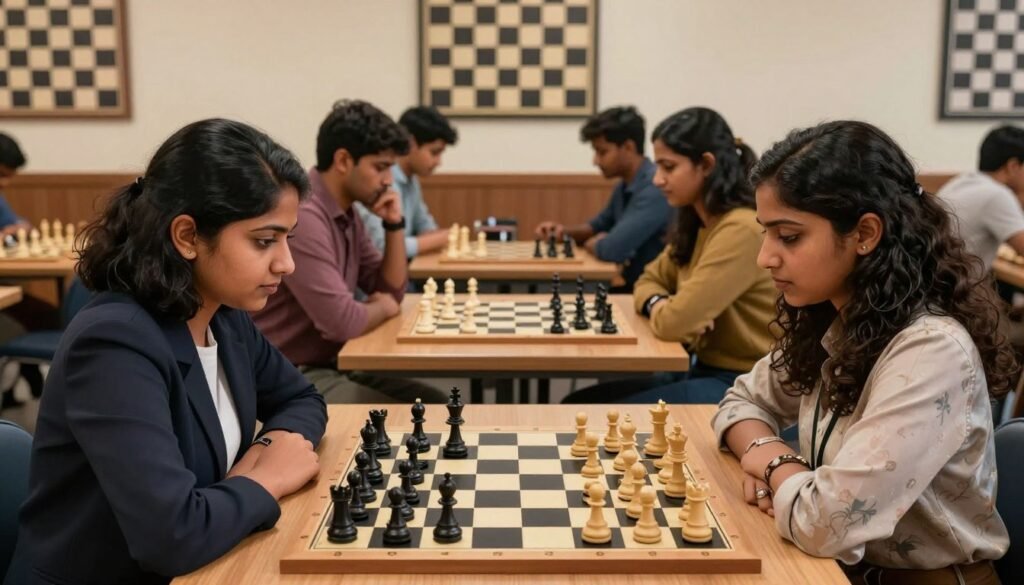
Humpy Koneru: a global top-five contender and Indian icon
Humpy Koneru sits among the world’s elite with a 2535 rating and a grandmaster title. She models calm decision-making and discipline — traits young learners can copy.
Harika Dronavalli: elite consistency and big-event experience
Harika shows steady performance at major events. Her results reflect experience and pressure handling, a great example for kids building tournament habits.
Divya Deshmukh and Vaishali Rameshbabu: the next wave
Divya (2478, GM) and Vaishali (2452, GM) are rising fast. They bring fresh ideas and momentum that make every international chess event more exciting.
Tania Sachdev, Vantika Agrawal, and Padmini Rout: IM strength and global results
Tania, Vantika, and Padmini combine IM-level skill with steady international results. They show that title progress and steady play matter as much as flashes of brilliance.
What the top-10 average rating signals
The top-10 average sits around ~2410, ranking second globally behind China. That signals depth, a reliable pipeline, and long-term momentum for the world stage.
Want to grow like them? Take a free trial class with a personalized tutor, then keep learning with Debsie Courses!
India’s junior chess boom: the rising grandmasters shaping the future</h2>
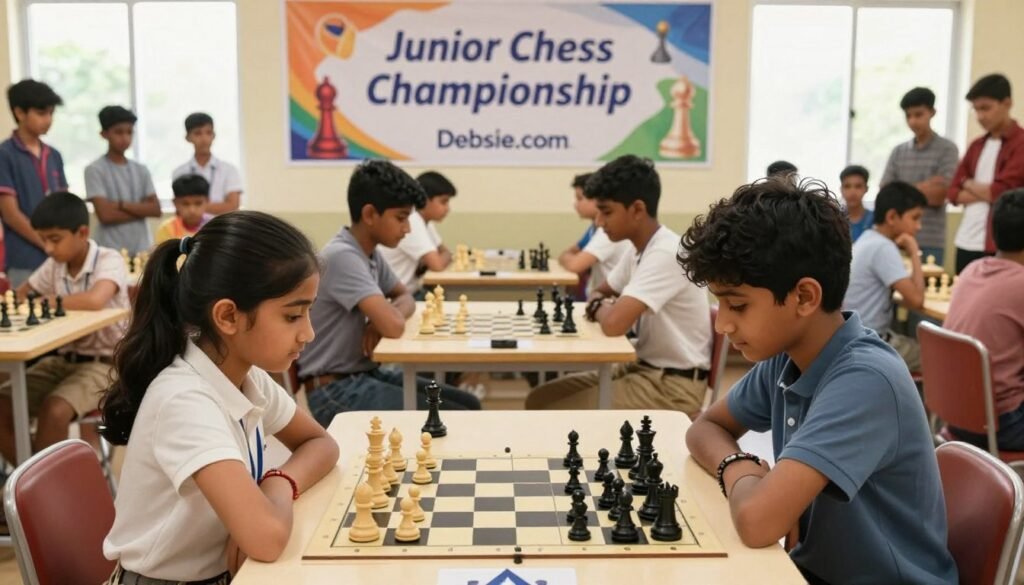
The next generation is deep, driven, and visible on every rating list!
The junior boom means more than one prodigy. It’s a large group of young stars who push each other every month. That competition raises standards quickly.
Depth at a glance: As of Sep 2025, 22 Indians sit inside the world top-100 juniors. Thirteen are among the world top-100 junior girls. That scale signals a powerhouse pipeline.
Key junior names to remember
| Category | Name | Rating (snapshot) |
|---|---|---|
| Male | Praggnanandhaa R | 2785 |
| Male | Gukesh D | 2767 |
| Male | Leon Luke Mendonca | 2615 |
| Female | Divya Deshmukh | 2478 |
| Female | Prishita Gupta | 2353 |
“More strong juniors means more role models, more study material, and proof that structured practice works.”
What this means for your child: steady progress matters more than sudden wins. Look for habit building, consistent results, and smart coaching when you search for training options.
- Train like juniors with short daily lessons via Debsie Courses!
- Stay motivated using the Debsie Leaderboard to track growth and friendly competition.
- Read about the wider rise and legacy influence here.
Why India is a global chess powerhouse: titles, awards, and federation-scale talent</h2>
Depth matters more than a single star.
More than a few names drive the surge. A dense ecosystem of clubs, tutors, and regular events feeds steady progress. This creates tougher tournaments and more useful practice partners for every aspiring player.

India’s titled-player ecosystem: grandmasters, international masters, and FIDE-rated participation
Scale at a glance: As of June 2025 India has 91 Grandmasters (GM), 123 International Masters (IM), 23 Woman Grandmasters (WGM), and 42 Woman International Masters (WIM).
There are 30,000+ FIDE-rated competitors. That sheer number means kids find coaches, clubs, and peers at every level. Learning happens faster when the field is deep.
| Category | Count | Why it matters |
|---|---|---|
| Grandmasters (GM) | 91 | Elite mentors and local role models for rising talent |
| International Masters (IM) | 123 | Strong national circuit and stepping stones to GM |
| FIDE-rated competitors | 30,000+ | Large pool for competitive tournaments and practice |
Decorated champions and legacy builders: major honors earned by Indian chess players
National awards show how valued the sport has become. Viswanathan Anand earned the Padma Vibhushan and the inaugural Khel Ratna. That set a high bar for recognition.
“Role models with national honors make the path visible for every young player.”
Recent honors confirm the trend. Gukesh D received the Khel Ratna in 2024. Padma Shri recipients include Koneru Humpy (2007) and Harika Dronavalli (2019).
Dronacharya-awarded coaches like Koneru Ashok (2006) and RB Ramesh (2023) show teaching quality matters. Good coaching scales success across communities.
- Thousands of rated competitors create competitive practice.
- Dozens of titled players offer mentorship and national benchmarks.
- National honors make the game visible and respected.
Want a clear, supportive plan at home? We recommend learning via Debsie Courses! They guide kids step-by-step with fun progress markers and real coaching paths: https://debsie.com/courses/
Conclusion</h2>
The national scene now pairs role models, rivals, and rapid learners. This mix explains why the wave feels powerful right now!
Big takeaway: top stars, women leaders, and juniors are all climbing together. Ratings shift month to month, but habits and healthy competition keep great players rising.
Pick one role model and copy one habit. Try daily tactics, slow thinking, endgame practice, or reviewing mistakes with curiosity. Small routines win over time.
Parents: start small. Stay steady. Celebrate progress like a long adventure!
Start learning: Debsie Courses. Keep motivation on the Debsie Leaderboard. Or take a free trial class with a personalized tutor!
For history and legacy, read about Viswanathan Anand as a guiding figure. Your next move could be the start of something big!