Who has the highest chess rating ever? That’s the big question kids and parents ask at clubs and kitchen tables!
Peak rating here means the single highest official classical FIDE number a player ever reached, even if they fell later.
Right away: Magnus Carlsen holds the record with a peak of 2882 in May 2014. Wow!
We’ll keep this fair. We focus only on classical FIDE Elo, not rapid or blitz. That keeps comparisons clean and trustworthy.
Next, we’ll give a quick explainer of the rating system (FIDE adopted Elo in 1971). Then a clear list of the 2800+ legends, the just-below-2800 stars, and the top-rated women in history.
Remember: you don’t need to be a world champion to enjoy play. Learning is the adventure, and every climb starts with one good habit!
Key Takeaways
- We ask the simple, exciting question: who reached the top number ever?
- “Peak” means the top official classical FIDE value a player hit.
- Magnus Carlsen’s peak of 2882 (May 2014) is the standout record.
- Comparisons use classical FIDE Elo only for fairness.
- This article will list top players, groups by score bands, and top women.
- Chess is for everyone — progress starts with small, steady habits!
What “Peak FIDE Rating” Means in Chess Rankings
Think of a peak FIDE number as the highest badge a player ever wore on an official list. It is the top published classical FIDE figure a player reached at any time.
Peak vs. current vs. performance
Peak is the single best number ever shown next to a player’s name on a FIDE classical list. It does not change once published.
Current is the number on the latest list. It moves up or down as you play tournaments each month.
Performance rating shows how you played in one event. It can be much higher than your long-term value.
“Ratings are tools, not judgments. Play, learn, and watch the numbers follow!”
Why we focus on classical FIDE Elo
Classical is the traditional time control used in world chess cycles and world championship matches. That makes comparisons fair across eras.
Rapid and blitz are fun and useful for practice. But mixing time controls would confuse the story when we track peak official numbers.
What “super grandmaster” means
The term super grandmaster usually marks players at 2700+. It signals elite status. These players win top events and compete at the world level.
| Term | What it shows | Why it matters | Example |
|---|---|---|---|
| Peak | Top published classical value | Long-term milestone | Player’s career-best |
| Current | Latest published number | Shows recent form | Monthly updates |
| Performance | Event-specific measure | Shows how you played in that tournament | Can spike after a great event |
Want to learn more about the grandmaster title and what it means? See the grandmaster page for details.
How the Elo Rating System Works and Why It Matters
A clever idea from a physicist turned game results into simple numbers! Arpad Elo, a Hungarian‑American physicist and player, built a fair system that the community still uses.
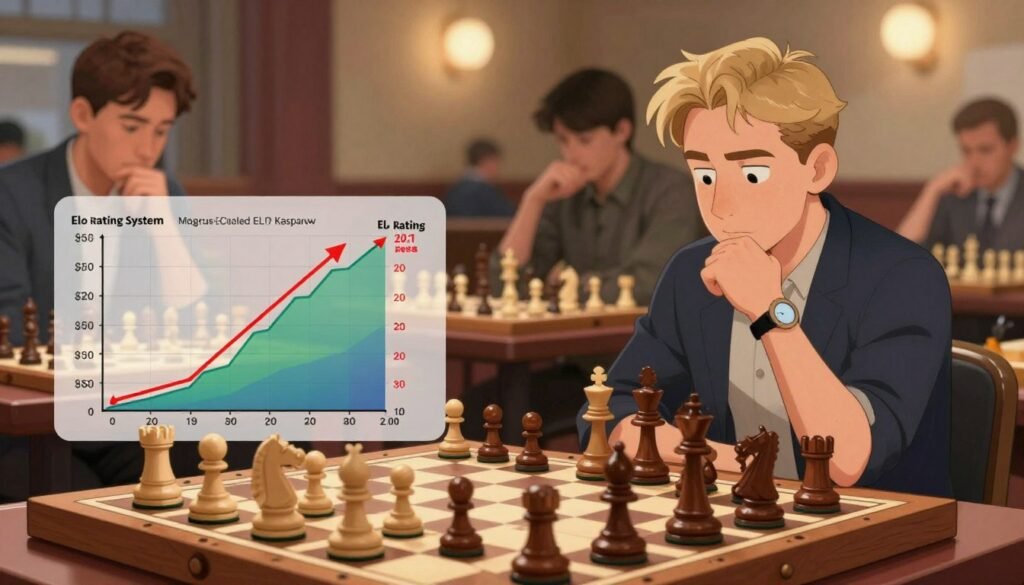
After each rated game, a player’s score can go up or down. The change depends on who they faced. Beat a stronger opponent and you gain more points. Lose to a lower‑rated foe and you give away more points.
Arpad Elo and how rating points are gained or lost
The core rule is simple. Each result shifts points between two players. Think of it as a small transfer after every match. Big surprises move the needle more!
Why beating higher‑rated players moves the needle more
Upsets pay off. If you beat a much stronger player, the system assumes you outperformed expectation. That yields a bigger point gain and can launch a run up the lists.
How draws affect ratings when there’s a big gap
Even a draw can reward the underdog. Holding a far stronger rival earns positive points. For favorites, a draw can feel like a loss in this system.
| Concept | When it helps | Why it matters |
|---|---|---|
| Win vs stronger | Upset | Large point gain |
| Win vs weaker | Expected | Small point gain |
| Draw vs stronger | Underdog result | Net point gain |
| Lose vs weaker | Shock loss | Big point loss |
“Now you’ll understand why huge tournament runs can launch a player toward the top marks!”
Highest chess rating records that shaped the modern era
Some runs of form change history in just a few months. Big performances at top events move official numbers fast!
Magnus Carlsen’s all-time peak and the moments behind it
Magnus Carlsen hit the top mark of 2882 in May 2014. That peak came after an electric stretch that included five straight wins at the Shamkir tournament. Those wins against top grandmasters fueled the jump on the list.
Carlsen matched this level again in August 2019 after a seven-month run. He defended his world championship and won six major tournaments in a row. Consistency was the secret!
Garry Kasparov’s breakthrough and legacy
Garry Kasparov reached 2851 in July 1999. He was the first player to pass 2800 back in 1990. Kasparov set the bar for elite play and long runs at top tournaments.
How elite tournaments turn wins into big jumps
It’s simple. At a top tournament you face very strong opponents every round. Win streaks there give larger gains. That’s why months of form at elite events create spikes on official lists.
“You don’t need a 2800 run to grow—your next tournament can be your own mini-breakthrough!”
The Only Players to Break 2800+ Peak Elo
Only a handful of players ever passed the 2800 mark. This tiny group is the 2800+ club — elite and rare!
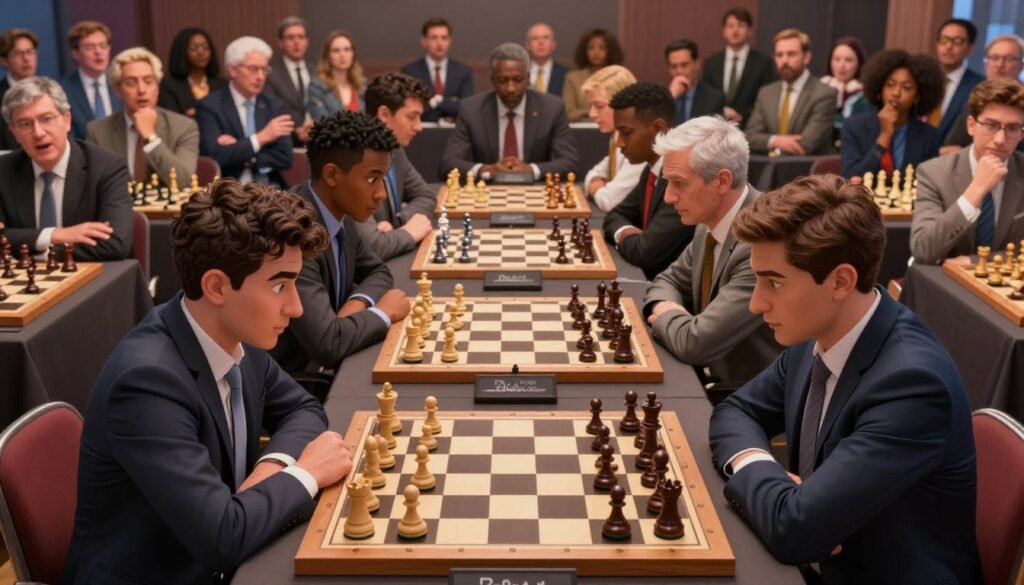
Below are the exact peaks so you can scan fast and trust the facts. Pick a favorite and study one classic game for fun!
Magnus Carlsen — 2882 (May 2014)
magnus carlsen sits at the top with 2882. His stretch of wins in 2014 created that peak.
Garry Kasparov — 2851 (July 1999)
Kasparov set long‑term standards and first pushed modern elite lists upward.
Fabiano Caruana — 2844 (October 2014)
Caruana’s precision earned him this peak after top tournament form.
Levon Aronian — 2830 (March 2014)
Aronian is known for creativity and strong event scores that built his peak.
Wesley So — 2822 (February 2017)
So climbed steadily with consistent finishes at elite events.
Shakhriyar Mamedyarov — 2820 (September 2018)
A fighting player who turned big wins into a top mark.
Maxime Vachier-Lagrave — 2819 (August 2016)
MVL’s tactical strength powered this peak in a hot year.
Viswanathan Anand — 2817 (March 2011)
Anand paired world champion titles and deep tournament runs to reach this point.
Vladimir Kramnik — 2817 (October 2016)
Kramnik’s steady play and title pedigree show in his peak.
Veselin Topalov — 2816 (July 2015)
Topalov’s aggressive style produced big event gains.
Hikaru Nakamura — 2816 (October 2015)
Nakamura brought fight and energy to top events, earning his peak.
Ding Liren — 2816 (November 2018)
Ding combined consistency and clutch wins; a modern world champion among the club.
Alexander Grischuk — 2810 (December 2014)
Grischuk’s endgame skill and event results created this peak.
Alireza Firouzja — 2804 (December 2021)
Firouzja reached 2804 as a young star, hinting at future climbs.
Arjun Erigaisi — 2801 (December 2024)
Erigaisi joined the club with rapid progress and strong tournament showings.
“Imagine your progress like a video game level — these players reached the final boss stage!”
Note: Several in this club also held the world champion title at times (Carlsen, Kasparov, Anand, Kramnik, Ding). A few points often separate historic from almost — every elite game matters!
Just Below 2800: The 2775-2799 Peak Rating Club
A tight band just below the 2800 mark hides many world-class players who can win top tournaments on any day!
Ian Nepomniachtchi — modern world championship threat
Ian Nepomniachtchi hit 2795 in March 2023. He is a two-time world championship challenger with sharp prep and fearless play.
On his best days he outpaces rivals in both speed and ideas. That makes him a constant title contender in elite events.
Gukesh Dommaraju — a rising world champion
Gukesh reached 2794 in October 2024 and then won the crown. His rapid climb shows how a young player can become a world champion fast.
Watch his games for modern attacking ideas and practical time management tips!
Bobby Fischer — a milestone era
Bobby Fischer posted 2785 in July 1972. He was the first to break long-standing barriers and changed how the game was studied.
Fischer’s era had fewer events and different rating dynamics, so that peak carries historic weight.
Other standout names to know
This band also includes Anish Giri (2798), Teimour Radjabov (2793), Vasyl Ivanchuk (2787), Sergey Karjakin (2788), and Alexander Morozevich (2788).
Each can beat anyone in a single game. That makes the group dangerous in match play and long tournaments.
Practical tip: Pick one annotated game from a player above. Copy one habit—time management, tactic checks, or endgame focus—and practice it in one tournament.
| Player | Peak | Year | Why it matters |
|---|---|---|---|
| Anish Giri | 2798 | Oct 2015 | Consistent elite finishes |
| Ian Nepomniachtchi | 2795 | Mar 2023 | Two-time challenger; sharp prep |
| Gukesh Dommaraju | 2794 | Oct 2024 | New world champion; rapid rise |
| Bobby Fischer | 2785 | Jul 1972 | Historic breakthrough in a different era |
Curious for more names? See the official peak list for full details.
“You’re allowed to pick a favorite challenger, not just the champion — the chase is often the best story!”
Highest-Rated Women in Chess History by Peak Elo
Women have long shaped top-level play, and their peak scores tell a powerful story.
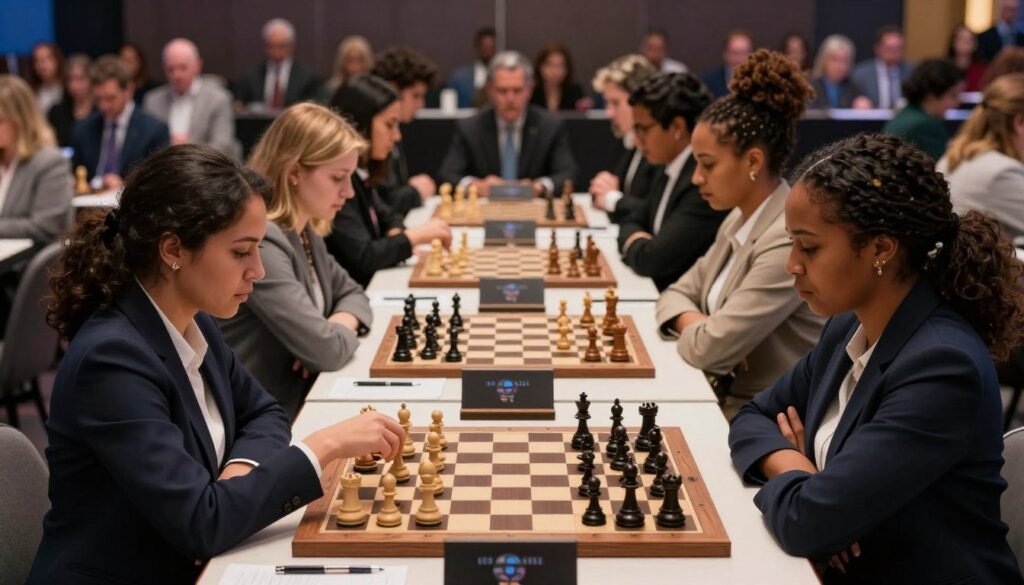
Judit Polgár — 2735 (July 2005)
Judit is the only woman to cross 2700. She played in open events and beat top men regularly. Her path inspires kids and shows talent knows no gender!
Hou Yifan — 2686 (March 2015)
Hou Yifan held sustained world-class strength for years. She is a former women’s world champion and a model for steady growth.
Koneru Humpy, Aleksandra Goryachkina, Ju Wenjun — 2600+
Koneru reached 2623 (July 2009). Goryachkina hit 2611 (Aug 2021). Ju Wenjun peaked at 2604 (Mar 2017) and is a current world champion in women’s events.
| Player | Peak | Year |
|---|---|---|
| Judit Polgár | 2735 | 2005 |
| Hou Yifan | 2686 | 2015 |
| Koneru Humpy | 2623 | 2009 |
| A. Goryachkina | 2611 | 2021 |
| Ju Wenjun | 2604 | 2017 |
Celebrate these role models! Pick one champion and learn an opening they love. Practice it for a week. Tiny steps lead to big growth!
Explore more on female grandmasters at female grandmasters and read how women rise in the game on Debsie’s feature.
Turn Inspiration Into Improvement With Debsie
Let every “wow” moment become a practical plan for steady growth. We help kids and families move from awe to action. Small steps. Big confidence!
Learn Via Debsie Courses for structured practice and progress
Our courses break training into short, focused modules: openings, tactics, endgames, and thinking habits. Follow the plan and your game stacks up over time. Try the full course path at Debsie Courses for guided practice.
Track your progress on the Debsie Leaderboard
Make progress feel like play! Kids can see growth, earn points, and celebrate streaks. The leaderboard keeps motivation high between tournaments and lessons. Check progress anytime at Debsie Leaderboard.
Take a Free Trial Class With a Personalized Tutor to set your rating plan
Book a free trial and a tutor will set a simple plan: what to study, how often, and what to do after each game. It’s tailored, friendly, and designed for busy families. Start with a session at Free Trial Class.
“You don’t need more hours—you need a smarter plan!”
| Goal | Action | Time | Benefit |
|---|---|---|---|
| Review one game | Find one mistake | 10–15 minutes | Earn one improvement point |
| Daily tactics | 5 puzzles | 10 minutes | Better calculation |
| Weekly mini-tourney | Play 3 games | 1 hour | Test skills under time |

Micro-missions: review one game, spot one mistake, earn one point, repeat. Small wins add up fast. Need local help? Explore local tutors and classes to find a nearby guide.
Conclusion
Conclusion
To finish, remember one clear fact: the highest chess rating ever recorded on the FIDE list is 2882 by Magnus Carlsen (May 2014). That number is a peak — a best‑ever snapshot on the official list.
Ratings move when you play. Beating stronger opponents or stringing wins at top events creates big jumps. Check the Chess rating rules for details on how changes work.
Kids: pick one grandmaster game and learn one idea today. Parents: aim for small, daily practice. Consistency beats chase plans!
Want a simple path? Try our inspirational players picks, Debsie Courses, the Leaderboard, or book a Free Trial Class to turn inspiration into steady improvement!