Have you ever looked at a tiny ladybug and wondered how it knows exactly where to fly? We all feel that amazing spark of wonder when we see nature in action! It is a beautiful mystery that connects every person on this big, green Earth.
For many years, brave researchers have asked these same big questions about our world. These nature experts spent their whole lives uncovering the deep secrets of plants, animals, and even our own bodies.
From the discovery of the DNA double-helix to the laws of evolution, their work changed our history! Each pioneer made remarkable contributions in fields like genetics and microbiology that help us grow today.
Do you want to join this exciting journey of discovery and learning? Try out Debsie Gamified Courses at https://debsie.com/courses to start your very own science adventure right now!
We are so happy to introduce the best biologists who showed us how living things function. You can explore more about these famous biologists and their brilliant breakthroughs to see how they shaped our modern world.
Key Takeaways
- Discover the legendary scientists who defined our understanding of modern biology.
- Learn about the revolutionary discovery of the DNA double-helix and genetic codes.
- Explore how theories of evolution and natural selection explain the diversity of life.
- Understand the vital role of microbiology and taxonomy in organizing the natural world.
- Find out how gamified learning can make complex scientific history fun for everyone.
- See the lasting impact these pioneers have on current medicine and global health.
The Foundations of Biological Inquiry
Pioneers dared to question life’s mysteries. They laid the groundwork for our understanding of nature. Let’s look at two key figures who shaped biology.
Aristotle: The Father of Biology
Aristotle is known as the “Father of Biology”. He studied living things deeply. His work in classification and observation was groundbreaking!
Aristotle tried to sort life into categories. He looked at how life forms interact with their world. This sparked curiosity that still inspires biologists today!
Carl Linnaeus and the System of Classification
Carl Linnaeus created a system for naming species. It’s a two-part name of genus and species. This system brought order to the natural world!
Linnaeus’s work made talking about life on Earth easier. He helped us understand how different species are connected. This understanding of biodiversity is still important today.
Aristotle and Linnaeus changed biology forever. Their work helped us learn more about life. As we keep exploring, we build on what they started!
Charles Darwin and the Theory of Evolution
Charles Darwin was a very influential biologist. He changed how we see life on Earth. His work on evolution still shapes biology today.
Darwin’s journey on the HMS Beagle was key. Let’s see how it shaped his theory.
The Voyage of the Beagle
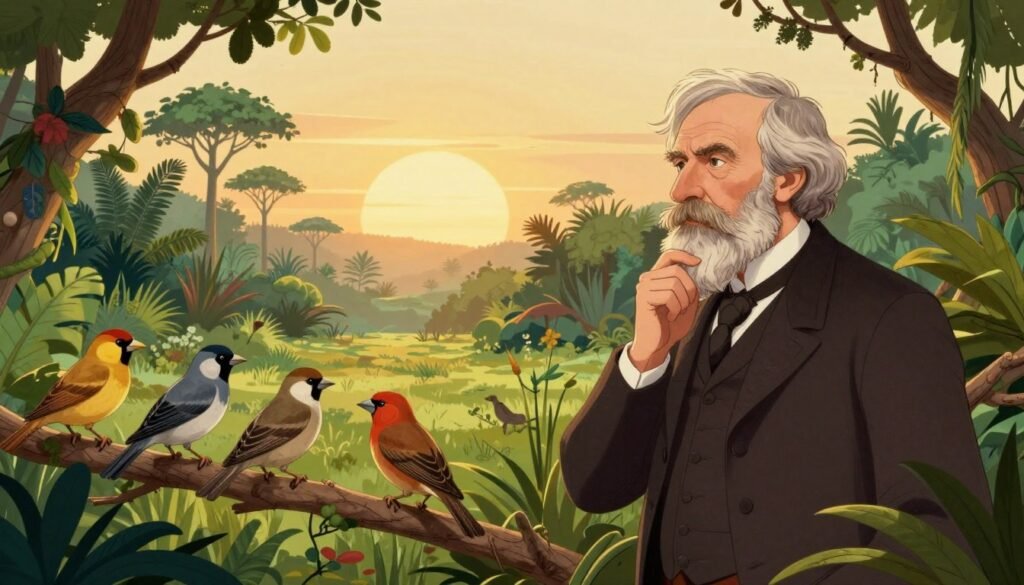
In 1831, Charles Darwin set off on the HMS Beagle. This five-year trip was the start of his evolution theory. He collected many specimens and saw different species.
On the Origin of Species and Natural Selection
Darwin’s famous book, “On the Origin of Species,” came out in 1859. He talked about natural selection. He said species evolve as those with good traits live and have kids more.
Darwin’s idea changed how we see biology and nature. He’s a top groundbreaking biologist. His work still inspires scientists and is key in biology today.
Gregor Mendel and the Laws of Inheritance
Learn about Gregor Mendel, the father of genetics. He changed how we see heredity! His work on pea plants started it all.
Pea Plants and the Birth of Genetics
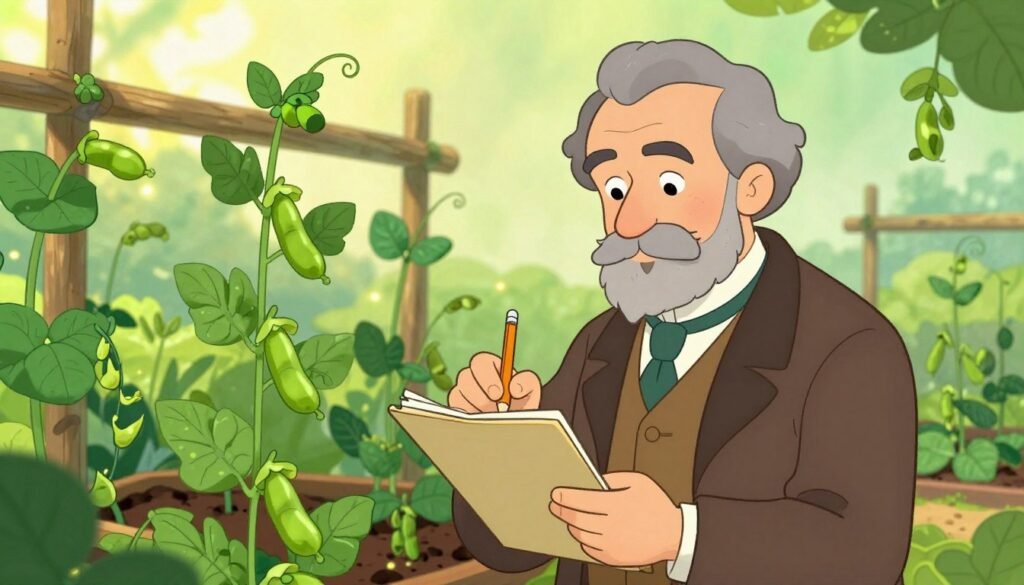
Mendel picked pea plants for his study. They show clear traits like flower color and seed shape. He mixed pea plants to find out how genes pass down.
This was a huge find that started genetics! His careful study and new ideas helped us understand genetics today.
Why Mendel’s Work Remained Hidden for Decades
Mendel’s big discoveries were not known when he was alive. It took years for his work to be seen as key to genetics.
Many things kept his work hidden, like science’s slow to accept new ideas. Also, not enough talk about his work. Now, we see how sharing knowledge is crucial for science.
Louis Pasteur and the Germ Theory of Disease
Louis Pasteur changed the world with his work on germs and vaccines. He is famous for his work in microbiology and immunology. His discoveries helped us understand disease better.
Pasteur’s work changed how we see disease and health. His findings saved many lives. They still help medicine today. Let’s look at his important work!
Disproving Spontaneous Generation
Pasteur showed that life doesn’t come from nothing. He used swan-neck flasks to prove this. This was key to the germ theory of disease.
“The universe is asymmetric, and I am persuaded that life, as it is known to us, is a direct result of the asymmetry of the universe or of its indirect consequences.” – Louis Pasteur
The Development of Vaccines and Pasteurization
Pasteur made the first vaccines for anthrax and rabies. These vaccines saved many lives. He also created pasteurization to kill bacteria in liquids.
| Contribution | Description | Impact |
|---|---|---|
| Germ Theory | Disproved spontaneous generation, established microorganisms as cause of disease | Fundamental shift in understanding disease |
| Vaccines | Developed vaccines for anthrax and rabies | Saved countless lives, paved way for modern vaccines |
| Pasteurization | Heating liquids to kill bacteria | Improved food safety, extended shelf life |
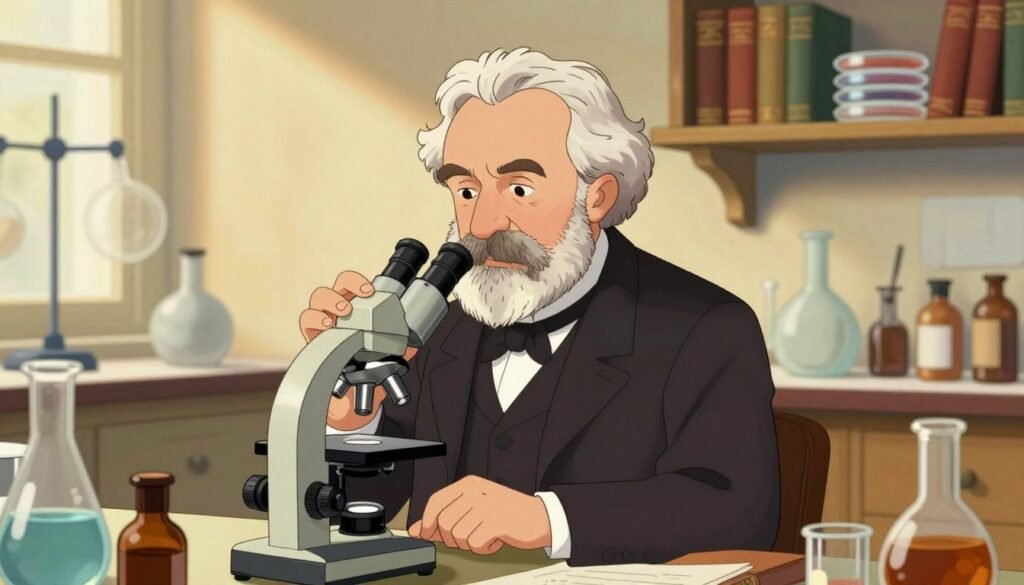
Pasteur’s work had a big impact on health and biology. We can see how important he was.
The Best Biologists of All Time: Pioneers of Molecular Biology
In molecular biology, finding DNA’s structure was a big deal. Many groundbreaking biologists worked hard to learn about life’s basics.
Finding DNA’s structure was a tough journey. Many scientists helped, but some were key. Let’s look at Rosalind Franklin and her big role.
Rosalind Franklin and the Structure of DNA
Rosalind Franklin used X-ray diffraction to help find DNA’s structure. Her work, “Photograph 51,” was key to the double helix model. Learn more about her work and its impact on genetics at DNA for kids.
Experts say Franklin’s work was very important. As they say in
“The data she produced were crucial to the development of the double helix model.”
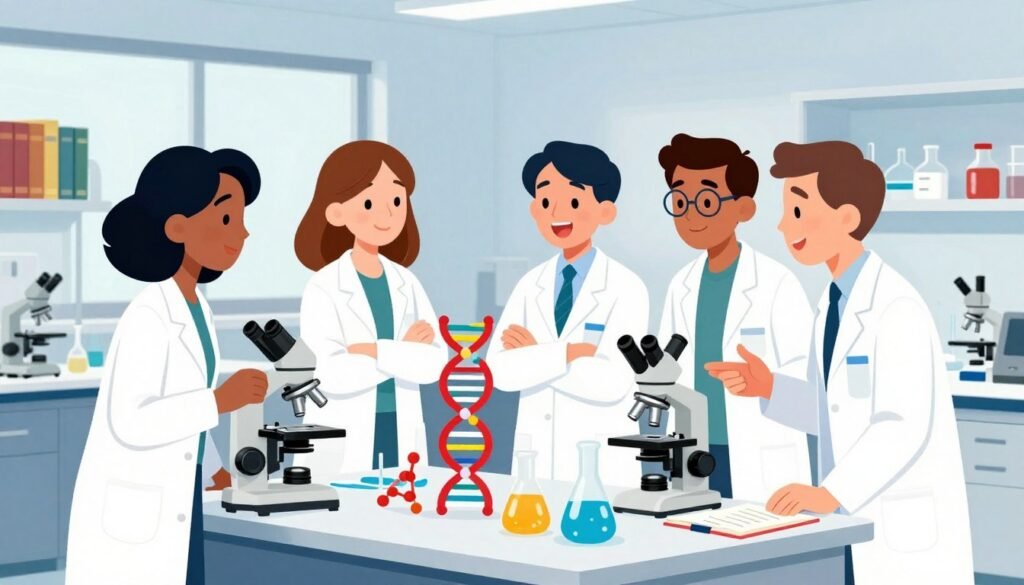
Watson, Crick, and the Double Helix Breakthrough
James Watson and Francis Crick found DNA’s double helix structure. Their work used data from Rosalind Franklin and others. Learn more about molecular biology’s history and impact at The Evangelist of Molecular Biology.
| Scientist | Contribution |
|---|---|
| Rosalind Franklin | X-ray diffraction data crucial for DNA structure |
| James Watson and Francis Crick | Discovery of the double helix structure of DNA |
Their discovery changed genetics and biotechnology. They are among the most famous biologists. DNA’s structure has led to many scientific breakthroughs and still guides research today.
Barbara McClintock and the Discovery of Jumping Genes
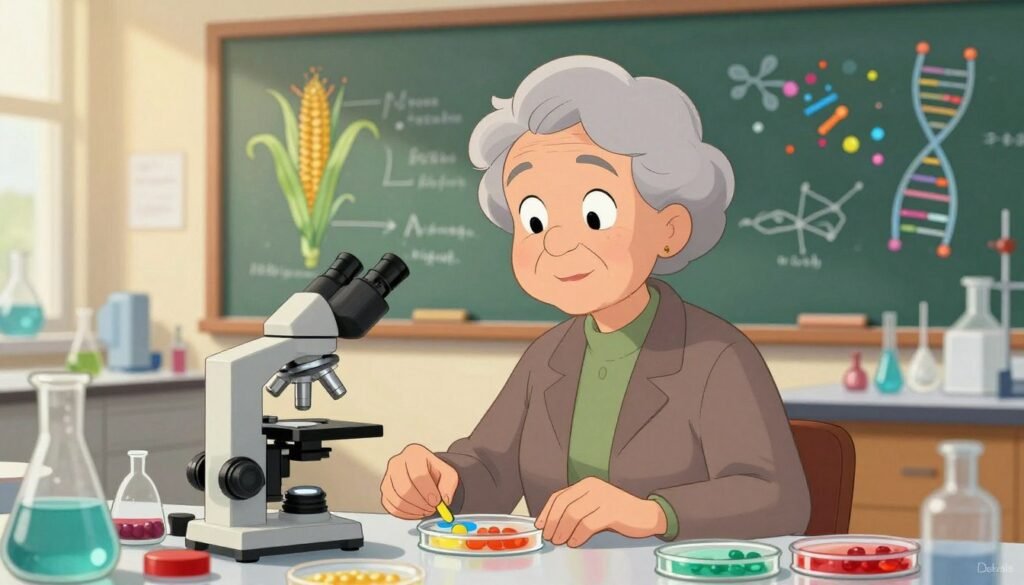
Barbara McClintock found something big in genetics. She found special parts in maize that move around. This changed how we see genes.
Cytogenetics and Maize Research
She studied cytogenetics of maize. She looked at how chromosomes act when they make more. She used cross-breeding experiments to learn about genes.
Her hard work showed us transposable elements. These are genes that can move. This was a big change because it showed genes can change places.
Recognition and the Nobel Prize
At first, people didn’t believe her. But soon, everyone saw how important it was. She won the Nobel Prize in Physiology or Medicine in 1983.
This win showed how big her discovery was. It changed genetics forever. Her work still helps us today!
Rachel Carson and the Rise of Environmental Biology
Rachel Carson started a big movement about saving our planet. She was a famous biologist who made a big difference. Her work in environmental biology is still loved today.
Silent Spring and the Pesticide Debate
Rachel Carson wrote Silent Spring in 1962. It talked about the bad effects of pesticides. She said these chemicals hurt animals and people too.
Her book made many people think about how to protect our environment. It showed us the need for better ways to take care of our planet.
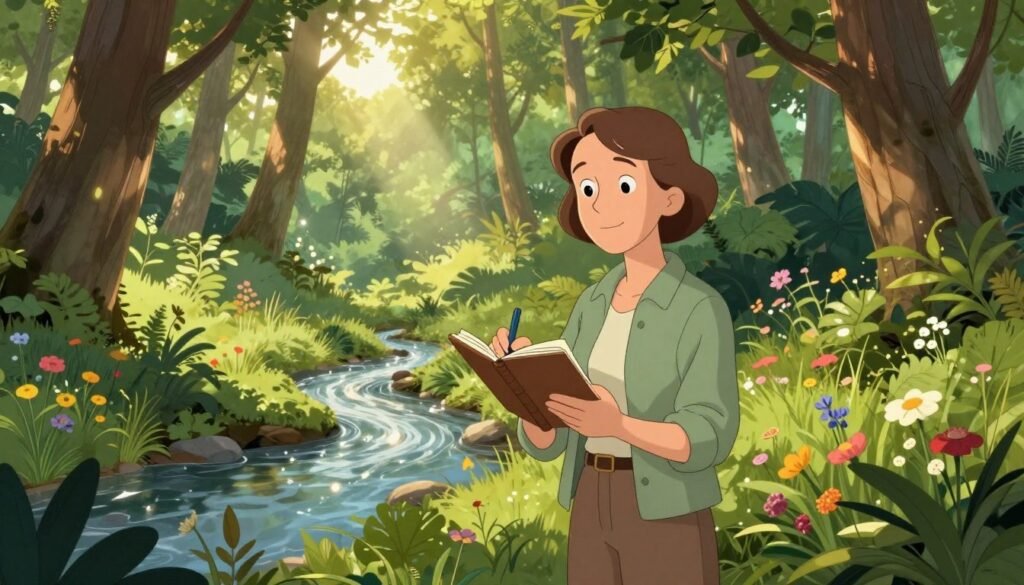
The Legacy of Modern Conservationism
Carson’s work changed the way we think about the environment. Silent Spring made people talk about pesticides. It helped ban DDT in the US.
Her work also started a new way of thinking about saving nature. Today, Rachel Carson is a hero to many. She inspires us to keep working to save our planet.
| Key Contributions | Impact |
|---|---|
| Publication of Silent Spring | Sparked the modern environmental movement |
| Exposure of pesticide dangers | Led to the banning of DDT in the US |
| Inspiring conservation efforts | Paved the way for modern conservationism |
Alexander Fleming and the Antibiotic Revolution
Alexander Fleming is a key figure in science. He found penicillin, which changed medicine a lot.
The Accidental Discovery of Penicillin
In 1928, Alexander Fleming found penicillin. He saw that mold, Penicillium notatum, killed bacteria around it. This was the start of a new way to fight infections.
Fleming’s lab was messy. He had left petri dishes open. When he came back, he saw mold on one dish. He decided to look closer.
Transforming Modern Medicine
Fleming’s find was very important. Penicillin saved many lives during World War II. It made treating infections much better.
| Year | Event |
|---|---|
| 1928 | Alexander Fleming discovers penicillin |
| 1941 | First human trials of penicillin |
| 1945 | Penicillin becomes widely available for public use |
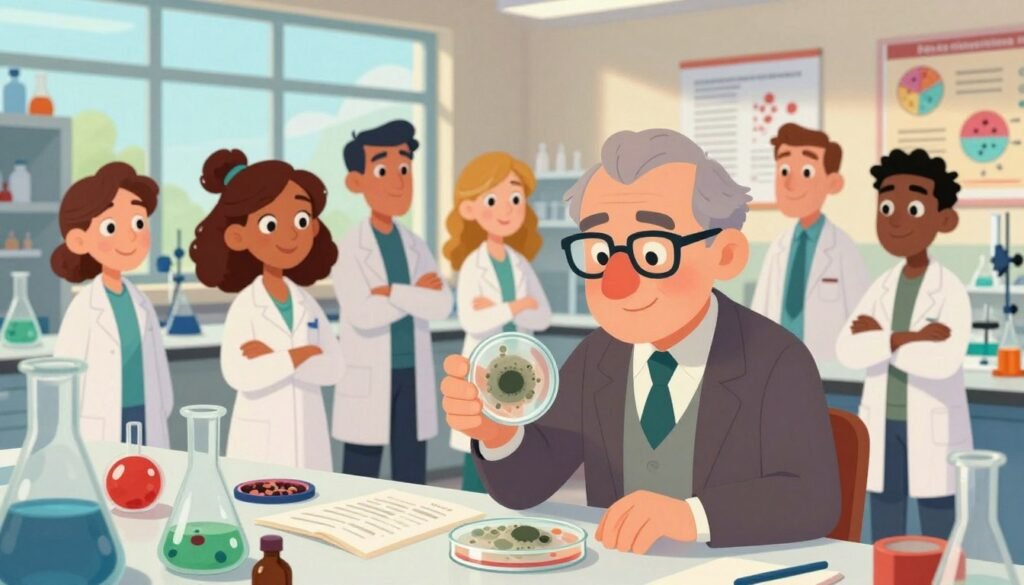
Fleming’s work shows how important curiosity is in science. His discovery reminds us that new ideas can change the world!
Edward O. Wilson and the Science of Sociobiology
Let’s explore the world of sociobiology with Edward O. Wilson as our guide! He is a famous biologist. He worked hard in sociobiology, studying animal and human social behavior.
Myrmecology and Ant Behavior
Wilson studied myrmecology, the study of ants. He spent years learning about ant behavior. He found out how ants talk to each other with special chemical signals.
Ants work together in amazing ways. They show us how simple creatures can be complex and beautiful.
“The ant is a great teacher, showing us that even in the simplest of creatures, there is complexity and beauty.”
Biodiversity and the Preservation of Life
Wilson also showed us why biodiversity and conservation are key. He talked a lot about saving ecosystems. He said all living things are connected.
To learn more about Edward O. Wilson, visit the E.O. Wilson Foundation website.
| Contribution | Impact |
|---|---|
| Myrmecology and Ant Behavior | Revealed complex social structures and communication methods in ants |
| Sociobiology | Founded the field, studying social behavior in animals and humans |
| Biodiversity and Conservation | Highlighted the importance of preserving ecosystems and biodiversity |
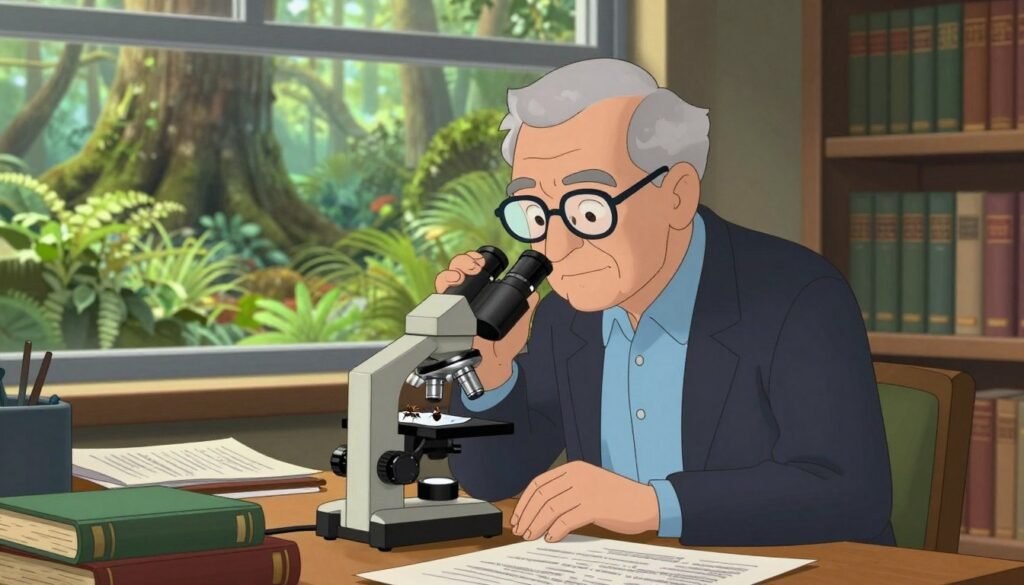
By studying sociobiology, we can protect the natural world. Edward O. Wilson changed the world with his research and advocacy.
Jane Goodall and the Study of Primate Behavior
Jane Goodall is a top biologist known for her hard work and research. Her studies have made us understand chimpanzees better. They have also changed how we see animals and humans.
Chimpanzee Research at Gombe Stream
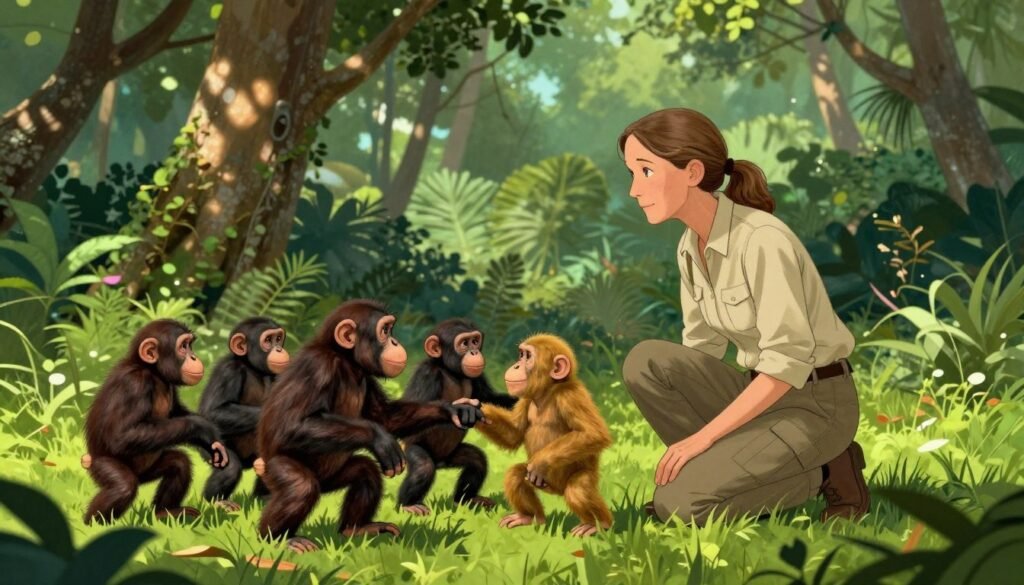
Jane Goodall started her research in the 1960s at Gombe Stream in Tanzania. Her work has inspired many scientists and animal lovers. She showed that chimpanzees use tools and have complex social lives.
Goodall faced doubts from scientists because of her unique methods. She named the chimpanzees she studied. But her detailed work and groundbreaking discoveries won her respect.
Redefining the Human-Animal Connection
Goodall’s research has changed how we see animals. She showed that chimpanzees are smart, emotional, and social. This has made us think more about animal welfare and saving animals.
To learn more about Jane Goodall, visit the National Geographic Education page about her.
| Key Contributions | Impact |
|---|---|
| Chimpanzee Tool Use | Challenged the belief that humans are the only tool-using species |
| Complex Social Behaviors | Showcased the emotional and social depth of chimpanzees |
| Conservation Advocacy | Inspired global conservation efforts and awareness |
Lynn Margulis and the Endosymbiotic Theory
Lynn Margulis changed biology with her endosymbiotic theory! She is one of the biologists who changed the world. She showed us new ways to see how living things are connected.
Margulis’s work on the endosymbiotic theory helped us understand evolution better. Let’s see how her theory changed our views and why symbiosis is key in evolution.
Challenging the Neo-Darwinian Synthesis
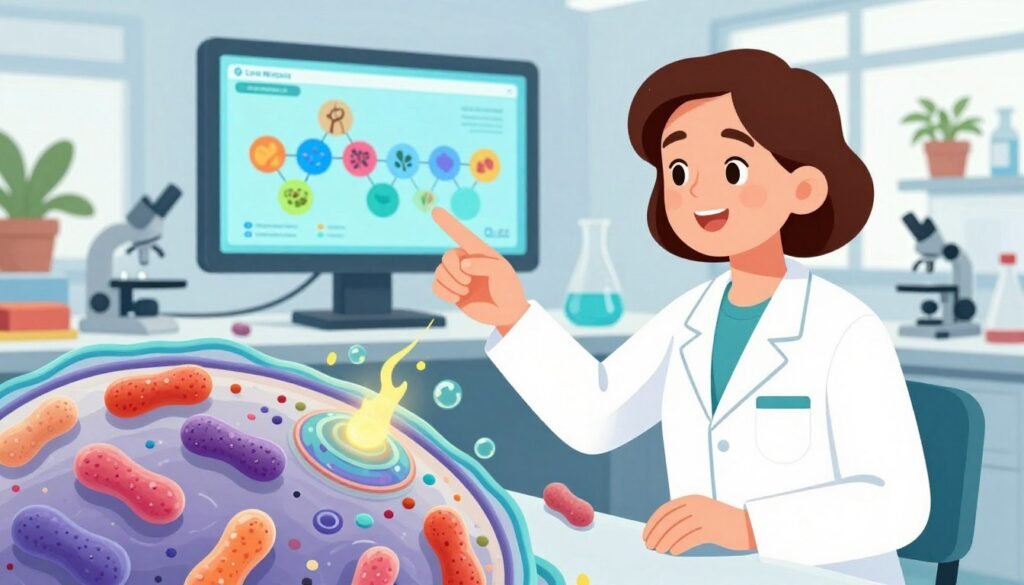
Margulis said some cell parts came from living together. This idea challenged the Neo-Darwinian Synthesis. It showed that evolution isn’t just about fighting and survival.
Her work showed that working together is important in evolution. She told us that cooperation and mutualism helped life grow on Earth.
The Role of Symbiosis in Evolution
The endosymbiotic theory changed how we see the history of biology. It shows that working together is as important as fighting in evolution.
This idea has led to new research in many fields. It helps us understand the complex world around us better.
In short, Lynn Margulis’s theory changed how we see evolution and symbiosis. Her work inspires scientists today. It shows us the value of exploring new ideas!
Learning Biology Through Modern Gamified Platforms
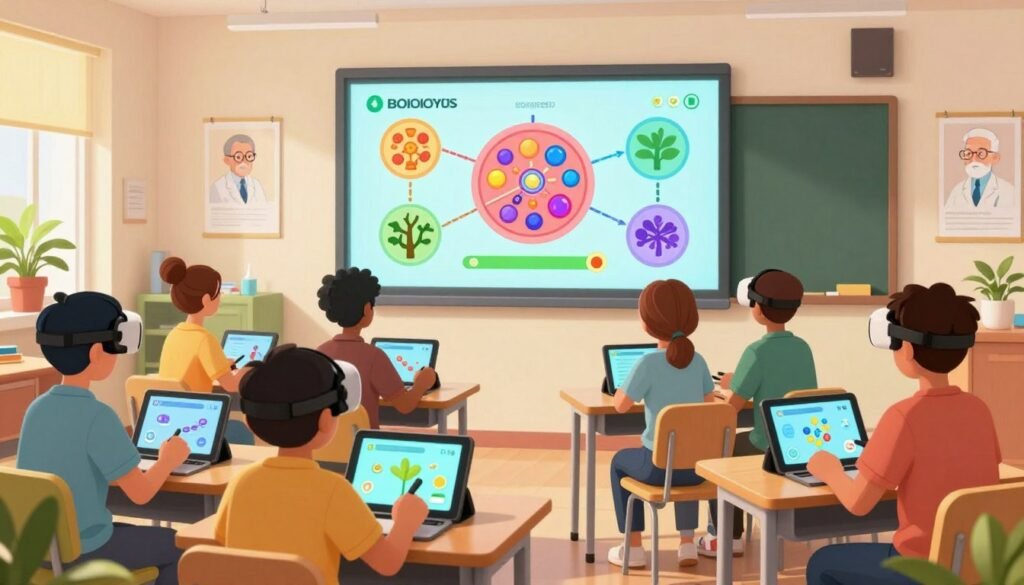
Learning biology is now more fun than ever, thanks to gamified learning platforms! This new way of learning makes biology more interactive and enjoyable. You can explore biology through games, quizzes, and challenges that teach and entertain you!
Gamification is at the heart of this change. It uses game design in learning materials. This makes gamified learning fun and easy to understand. It helps students stay interested and remember what they learn.
Why Gamification Enhances Scientific Retention
Gamification makes learning biology fun and interactive. This helps you remember what you learn. Interactive quizzes, puzzles, and games keep your brain active and help you understand biology better.
Also, gamified learning platforms use leaderboards, badges, and rewards. These make learning a competition and a chance to win. This motivates you to learn more and understand biology better.
Exploring Debsie Gamified Courses for Biological Mastery
Debsie Gamified Courses offer a fun and complete learning experience. They have courses for all learning styles and levels. Debsie is a leader in biology education through gamification.
Visit https://debsie.com/courses to see their courses. They are great for students or parents looking for new learning tools. Debsie’s gamified courses are worth checking out.
As we learn more about biology, Debsie leads the way. They mix education with fun, making learning biology enjoyable. Try it out and see how you can learn biology in a new way. Visit Biomanbio for more biology education resources!
The Impact of Genomic Sequencing on Modern Biology
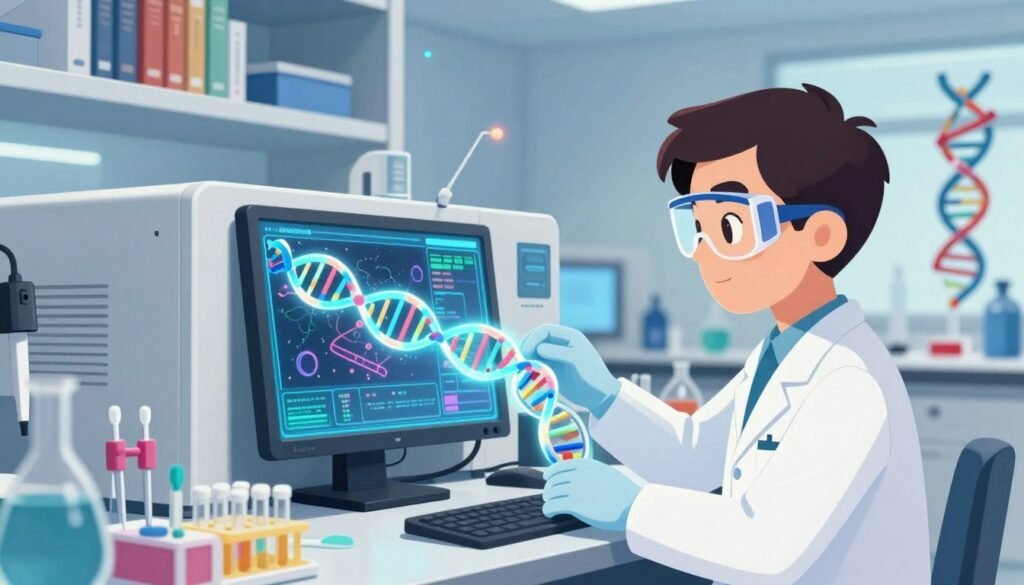
Genomic sequencing has changed biology a lot. It lets groundbreaking biologists look into genomes in detail. This has changed how we see genetics and genomics.
This technology affects many areas, like medicine and saving animals. Let’s look at some big changes it has brought to biology!
The Human Genome Project
The Human Genome Project was a big effort to read the human genome. It finished in 2003. It helped us understand human genetics a lot.
It led to many medical breakthroughs. Here are some big wins:
- Found genes linked to diseases.
- Created tests for inherited problems.
- Started personalized medicine.
CRISPR and the Future of Gene Editing
CRISPR-Cas9 is a tool for changing DNA. It lets scientists edit genes very precisely. This has changed genetics a lot.
CRISPR can be used in many ways. Here are some examples:
- Fixes genetic problems with gene editing.
- Makes crops better through genetic changes.
- Creates new medicines.
With genomic sequencing and gene editing, we’ll see big changes. We’ll learn more about biology and find new ways to treat diseases.
The Future of Biological Research and Discovery
Biological research is getting ready to solve big problems for us! It’s moving fast, with new discoveries in many areas. These will change how we see life and make our world better.
Many pioneers who changed the world have come before us. Darwin and Mendel were some of them. Now, a new group of scientists is carrying on their work. They are working in synthetic biology and biotechnology to solve big global problems.
Synthetic Biology and Artificial Life
Synthetic biology is about making new biological systems. This could be microbes that do special jobs. It could change many fields, like health and energy!
- Creating microbes that clean up pollution!
- Creating new biofuels to help our planet!
- Creating new medicines and vaccines!
Artificial life is about making systems that can grow and change. It helps us understand life better. It also makes us think about what life might be like in the future.
Addressing Global Challenges Through Biotechnology
Biotechnology is helping solve big problems like climate change and hunger. Scientists are using genetic engineering and genomics to find new solutions. This is making a big difference!
- Crops that can handle tough weather and pests!
- New ways to find and treat diseases!
- Materials that can break down like plastic!
The work of biologists who changed the world has helped us get here. As we keep exploring, we’ll find even more amazing things. These discoveries will help shape our future!
Conclusion
The journey through the lives of the best biologists shows their big impact. They helped us understand the world better. Frompioneers like Aristotle and KarlErnst von to today’s researchers, biology has grown a lot.
Looking back, we see how their work has helped us learn more. It has also inspired many to become scientists. The famous biologists in this article have taught us a lot about nature.
They showed us how animals adapt to extreme places and the secrets of genes. We should keep exploring the biological world. You can learn through fun games or by reading about new discoveries.
This way, you’ll understand how amazing and complex life on Earth is.