Ever wonder who first dreamed up the power of tablets and laptops? It takes a special creative spirit to envision the future. Let’s dive into how a brilliant mind changed technology forever.
Augusta King was born in London on December 10, 1815. Her parents were famous poet Lord Byron and math-loving Lady Anne Isabella Milbanke. This mix of poetry and logic helped her see beauty in numbers.
Learning about Ada Lovelace contributions shows anyone can be a pioneer. Start your own journey of discovery today! Check out Debsie Gamified Courses at https://debsie.com/courses for fun coding skills.
Key Takeaways
- Born in London during the winter of 1815.
- The daughter of the legendary English poet Lord Byron.
- Known as a visionary who combined mathematics with imagination.
- Widely recognized as the very first computer programmer in history.
- Gamified learning helps modern students follow in her footsteps.
The Early Life and Aristocratic Upbringing of Ada Lovelace
Ada Lovelace’s life was a mix of being rich and loving to learn! She was born on December 10, 1815. Her dad was famous poet Lord Byron, and her mom, Anne Isabella Milbanke, was good at math. Their different ways shaped her early years.
A Daughter of Lord Byron and Lady Wentworth
Just a month after Ada was born, her mom moved her away from Lord Byron. This was the start of Ada’s life, shaped by her mom’s choices. Her mom, known as the “Princess of Parallelograms,” wanted Ada to be good at math too.
Ada’s dad, Lord Byron, was a Romantic poet loved and feared by her mom. She worked hard to keep Ada away from his artistic temperament. She wanted Ada to focus on math instead.
The Rigorous Mathematical Education Imposed by Her Mother
Annabella Byron thought math could keep Ada stable, away from her dad’s wild side. She hired many tutors for Ada’s math and science lessons. These were rare subjects for girls back then.
Ada was naturally good at math from a young age. Her mom’s strict education helped her grow. This education was key to Ada’s later work in computer science. You can read more about Ada Lovelace’s life and achievements on Wikipedia.
The Intellectual Spark: Meeting Charles Babbage
Ada Lovelace met Charles Babbage at a party in June 1833. This meeting started a partnership that changed computer science. At seventeen, Ada was making her debut at a big party in London.
At the party, Ada met Babbage, a man in his forties who was excited about his “Difference Machine.” This machine could do math with just a handle. Ada and Babbage started working together, with Ada helping Babbage with his Analytical Engine.
The Analytical Engine and the Birth of a Vision
Babbage’s Analytical Engine was a machine that could do many things, not just math. Ada saw it could also make music and art. She was very excited about its possibilities.
Ada worked on a project that showed the Analytical Engine’s power. She translated a memoir by Luigi Menabrea. Her notes, Note G, are seen as the first computer program.
| Feature | Description | Significance |
|---|---|---|
| Input | Punched cards for data and operations | Allowed for programmability |
| Processing | Mechanical calculation and manipulation of data | Enabled complex computations |
| Output | Printed results or punched cards for output | Facilitated various forms of output |
The Initial Correspondence and Intellectual Partnership
Ada and Babbage wrote to each other for many years. They talked about the Analytical Engine and what it could do. Their letters show a deep friendship and a love for learning.
“The more I study your machine, the more I am amazed at its powers; it is not only capable of performing calculations, but also of manipulating symbols according to rules.” – Ada Lovelace
Ada and Babbage’s work was not just about the machine. They dreamed of how it could change the world. Ada was not just a mathematician but a visionary.
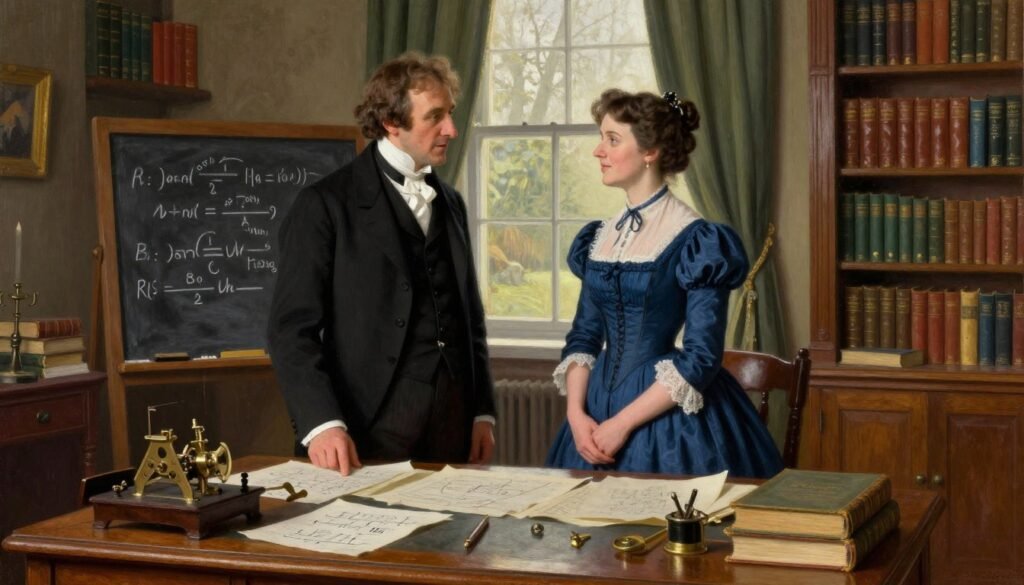
Ada Lovelace and Her Contributions to Computing Theory
Ada Lovelace’s work was way ahead of her time! She saw Charles Babbage’s Analytical Engine in a new light. Her ideas didn’t get the recognition they deserved until 1953, thanks to Bertram Vivian Bowden’s book Faster Than Thought: A Symposium on Digital Computing Machines.
Defining the Potential of the Analytical Engine
Ada Lovelace showed the Analytical Engine’s true power. She believed it could do more than just add and subtract. She saw it as a tool for general-purpose computing, a groundbreaking idea for her era!
Let’s look at what made the Analytical Engine special:
| Feature | Description | Significance |
|---|---|---|
| Input | Punch cards for data and operations | Allowed for programmability |
| Processing | Arithmetic Logic Unit (ALU) for calculations | Enabled complex computations |
| Output | Printing and punching results | Facilitated data output and further processing |
Beyond Calculation: The Concept of General-Purpose Computing
Ada Lovelace’s ideas about the Analytical Engine were ahead of their time. She believed it could do more than just math. You can learn more about her ideas and how they relate to today’s AI on the NIST blog.
Her work showed she was a true pioneer in computing. By seeing the Analytical Engine’s potential, Ada Lovelace helped shape the future of computer science!
The Famous Notes on the Analytical Engine
Ada Lovelace added special insights to Menabrea’s work on the Analytical Engine. Her work changed history! She showed how the machine could do more than just simple math.
Ada Lovelace wrote seven detailed notes for Menabrea’s article. These notes showed what the Analytical Engine could do. You can learn more about her work on the Bodleian Library’s blog.
Translating Menabrea’s Memoir with Personal Insight
Lovelace’s notes showed her deep understanding of the Analytical Engine. She saw its potential beyond simple math. Her work was a labor of love.
Her notes gave important insights into the machine’s future. She worked closely with Charles Babbage. Together, they showed what the Analytical Engine could do.
The Complexity of Note G and the First Algorithm
Note G is special because of its complexity and innovation. It’s seen as the first computer algorithm. It was for calculating Bernoulli numbers with the Analytical Engine.
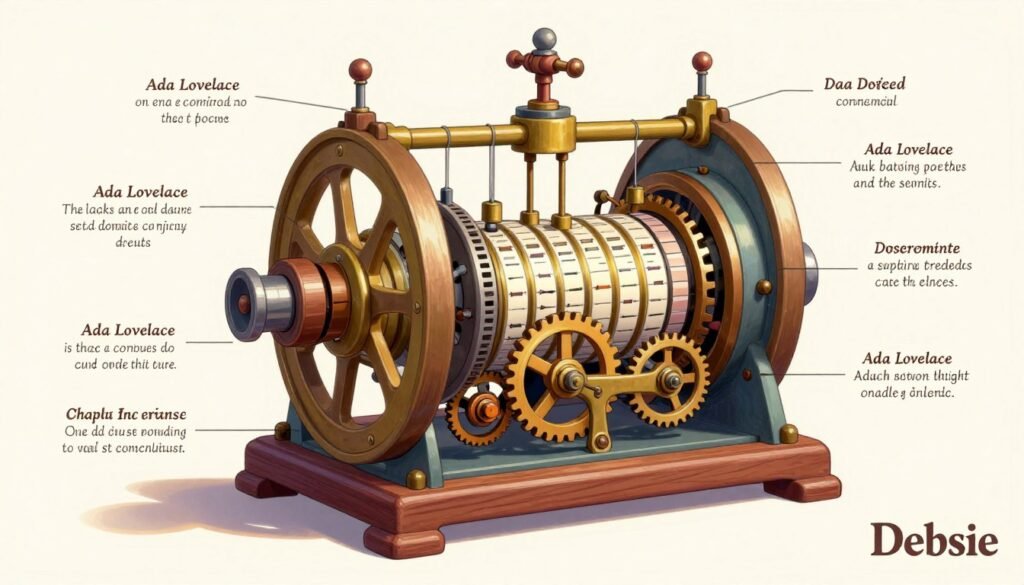
This note showed Lovelace’s technical skill and vision. She showed the machine could do more than simple math. It could follow a series of steps to solve complex problems.
Lovelace’s work on the Analytical Engine made her a pioneer in computer science. Her legacy shows her innovative spirit and curiosity!
The Visionary Concept of Poetic Science
Ada Lovelace mixed art and science in her work. This created ‘poetic science’! It let her see beyond math and explore new ways of understanding.
Ada thought imagination was key in science. On January 5, 1841, she wondered, “What is Imagination?” She said it’s about finding common points between things that seem different.
Bridging the Gap Between Imagination and Mathematics
Ada mixed math with imagination. She saw math as a way to explore the world. This new view was a big change for her time.
Ada’s mind was both analytical and imaginative. She saw math’s potential in new ways. Her work on the Analytical Engine showed how math could create something new.
How Metaphor Shaped Her Analytical Thinking
Metaphor was key for Ada. It helped her explain math in simple terms. This way, she found new insights and predicted the Analytical Engine’s future.
Ada’s use of metaphor and imagination changed her work. Let’s see how:
| Concept | Traditional View | Ada Lovelace’s View |
|---|---|---|
| Mathematics | Seen as a dry, formulaic discipline | Viewed as a creative, imaginative field |
| Imagination | Considered separate from science | Believed to be essential for scientific breakthroughs |
| Analytical Engine | Perceived as a machine for calculations | Envisioned as a tool for creative expression and complex problem-solving |
Ada’s work shows the power of mixing perspectives. By using both our analytical and imaginative sides, we can find new ways to solve problems. This can lead to big changes in science, tech, and more!
The First Computer Programmer: Debunking and Validating the Title
Ada Lovelace is often called the first computer programmer. This has sparked a lot of debate. It’s important to understand her work in computer science history.
Analyzing the Historical Context of Her Work
Ada Lovelace worked with Charles Babbage’s Analytical Engine. She translated a memoir and added her own notes. Her notes showed how the machine could do more than just calculate.
But, not everyone agrees she was the first programmer. Bruce Collier said her contribution was overstated. He called her a manic depressive with delusions about her talents.
“The more I study [Babbage’s works], the more amazed I am at the complexity and genius of his inventions.” – Ada Lovelace
Why Modern Computer Science Honors Her Legacy
Despite the debate, Ada Lovelace’s impact on computer science is clear. She saw the Analytical Engine’s potential to manipulate symbols. This idea is key to modern computing.
Her work is celebrated today:
| Year | Event | Significance |
|---|---|---|
| 1843 | Publication of her notes on the Analytical Engine | First algorithm written for a machine |
| 1953 | Republication of her notes | Rediscovery of her work by modern computer scientists |
| 1980 | Naming of the Ada programming language | Official recognition of her contributions |
Ada Lovelace Day honors women in STEM. It celebrates her groundbreaking work. Her story shows the power of vision and innovation!
The Challenges Faced by Women in Victorian Science
Ada Lovelace’s story shows the hard times women had in Victorian science. Back then, people thought women couldn’t do science. This made it hard for them to be seen and heard.
Navigating Social Constraints and Gender Expectations
Women were expected to stay in their traditional roles. They didn’t get to go to school or work in science and math. But Ada Lovelace was different. Her mom pushed her to learn math.
“Lovelace is an unusual example of a woman for her time because she was not only allowed to learn mathematics but encouraged to learn mathematics,” Aurora said.
Ada’s mom’s support was key. It showed what women can do if they get a chance!
The Struggle for Recognition in a Male-Dominated Field
Women faced big challenges in a world run by men. Ada’s work on the Analytical Engine was amazing. But, men got more credit for it.
Yet, Ada’s work helped pave the way for women in science. Her impact is still celebrated today!
The Influence of Ada Lovelace on Modern Technology
Ada Lovelace’s ideas from the 19th century changed how we code today. She worked on the Analytical Engine long before computers existed. Her work helped create the algorithms and programming languages we use now.
Lovelace’s vision went beyond her time. She dreamed of machines that could do more than just add numbers. She wanted machines to follow any set of instructions.
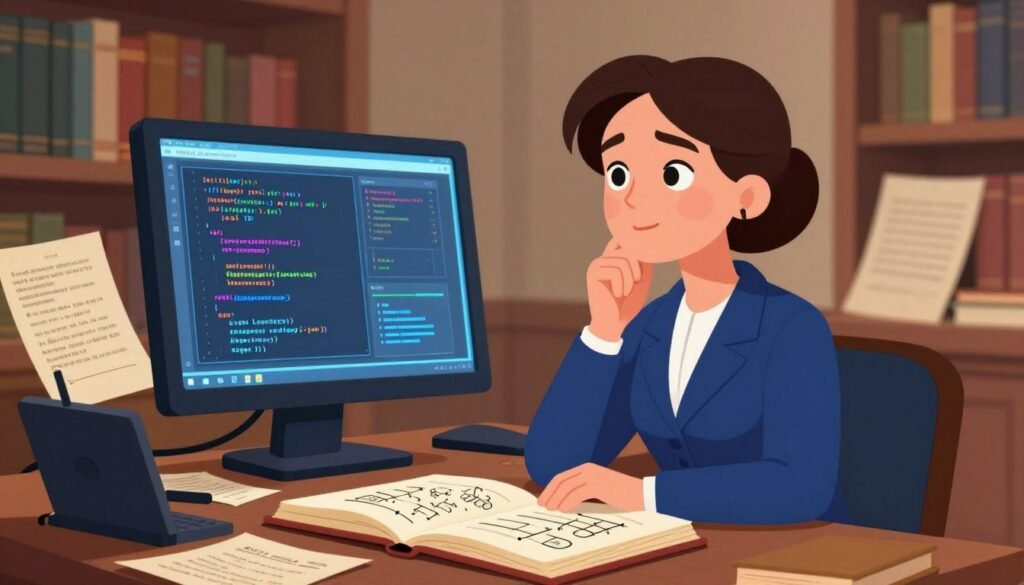
From Analytical Engines to Modern Software
Lovelace wrote about the Analytical Engine’s power. She showed how it could make music and pictures. Her ideas match today’s technology.
She created the first computer algorithm. It showed her math skills and creative thinking. Her work showed what machines could do.
“We may say most aptly that the Analytical Engine weaves algebraical patterns.” – Ada Lovelace
The Enduring Relevance of Her Theoretical Framework
Lovelace’s ideas are still important today. She thought machines could be creative and smart. Her ideas are key to modern computing.
Her notes were ahead of their time. They showed her vision of computers long before they existed. Her work predicted the future of computing.
Lovelace’s legacy inspires us to dream big with technology. Her work in computer science shows her lasting impact.
Learning Skills for the Future with Debsie Gamified Courses
Ada Lovelace was a genius in math and science. Today, we have tools like Debsie’s gamified courses. They make learning fun and easy for kids.

Applying Computational Thinking to Modern Education
Computational thinking is key in today’s world. It helps us solve problems by breaking them down. Debsie’s courses teach this in a fun way.
These courses make learning fun. They help kids understand and use computational thinking in real life.
Explore Interactive Learning at https://debsie.com/courses
Debsie’s platform has many interactive courses. They suit different learning styles. Parents and teachers can give kids a great learning experience.
We can help kids love learning and solving problems. Debsie’s courses give them the skills to succeed in a changing world.
The Personal Struggles and Health Battles of a Genius
Ada Lovelace made big contributions to science, even with many personal and health struggles. She was from a rich family and was very smart. But, she faced many challenges that tested her strength and will.
Ada had to deal with health problems a lot. Chronic illness was always with her, making her life and work hard. Let’s see how she handled these issues back then.
Managing Chronic Illness During the 19th Century
In the 19th century, doctors didn’t know as much as they do now. Ada had many health problems, including uterine cancer, which we now call cervical cancer.
- She had a lot of pain and trouble because of her illness.
- Her health problems made it hard for her to work on her math and science.
- But Ada didn’t give up on her dreams.
Her never-give-up attitude shows her strength and character. We can learn from her to be strong when facing our own challenges.
The Final Years and Her Untimely Passing
Ada Lovelace died at 36, on November 27, 1852. She died from cervical cancer after a long fight.
It’s amazing to think about what she could have done if she had lived longer. But, her legacy still inspires science and technology today.
Thinking about Ada Lovelace’s life teaches us about the power of never giving up. Her story tells us to follow our dreams with hard work and courage.
Ada Lovelace in Popular Culture and Literature
Ada Lovelace is more than just a historical figure. She’s a big deal in today’s culture and books. Her work in computers has inspired many, from books to steampunk stories.
Steampunk Representations and Historical Fiction
Ada Lovelace is a big part of steampunk stories. She shows how science and dreams can change the world. Her work on the Analytical Engine is seen as a start to today’s tech.
Historical fiction also loves Ada’s story. It shows her life as a woman in a man’s world. These stories help us see her struggles and wins.
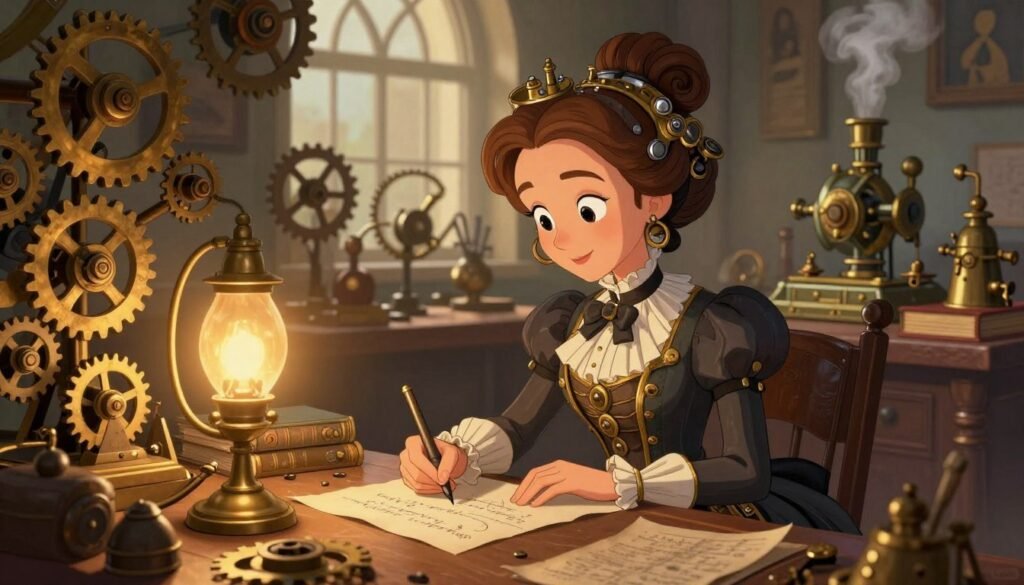
The Symbolism of Ada in Modern Tech Culture
In today’s tech world, Ada Lovelace stands for new ideas and female power. She’s not just known for her computer science work. She’s also a hero for women in tech.
Ada’s story is celebrated in many ways. For example, Ada Lovelace Day honors women in STEM. It shows women’s roles in tech and encourages others to join.
| Year | Event/ Initiative | Description |
|---|---|---|
| 2009 | Ada Lovelace Day | First celebrated to highlight achievements of women in STEM |
| 2010s | Steampunk Literature | Featured Ada Lovelace as a visionary figure |
| 2020s | Tech Conferences | Included talks and workshops inspired by Ada’s legacy |
The Lasting Legacy of a Mathematical Pioneer
Ada Lovelace’s legacy inspires and influences math and computer science. Her work on the Analytical Engine is celebrated. It shows her vision for its potential.
Commemorations and Ada Lovelace Day
Every year on October 15th, we celebrate Ada Lovelace Day. It honors women in STEM fields. Since 2009, it reminds us of the value of diversity in science and tech.
Inspiring Future Generations of Women in STEM
Ada Lovelace’s legacy inspires future generations. Celebrating her work encourages more women in STEM fields.
| Year | Event | Impact |
|---|---|---|
| 2009 | First Ada Lovelace Day | Recognized women’s contributions to STEM |
| 2010-2020 | Annual Celebrations | Increased awareness and participation of women in STEM |
| 2020-Present | Global Online Events | Expanded reach and engagement through digital platforms |
Honoring Ada Lovelace’s legacy inspires a new generation. You can help by exploring interactive learning at https://debsie.com/courses. Encourage young minds to learn through diverse subjects and flexible teaching.
Conclusion
Ada Lovelace changed the world of computer science. She saw the Analytical Engine’s power to do more than just numbers. She dreamed of it making music and art.
Today, we see her work as key to our computers. Her ideas are still important today.
Ada’s life shows us the value of being curious and creative. You can explore computing and math with fun resources like Debsie Gamified Courses. Visit https://debsie.com/courses to start your adventure!
Ada’s legacy inspires us to dream big with technology. Her story teaches us about the power of imagination and curiosity. We can all learn from her.