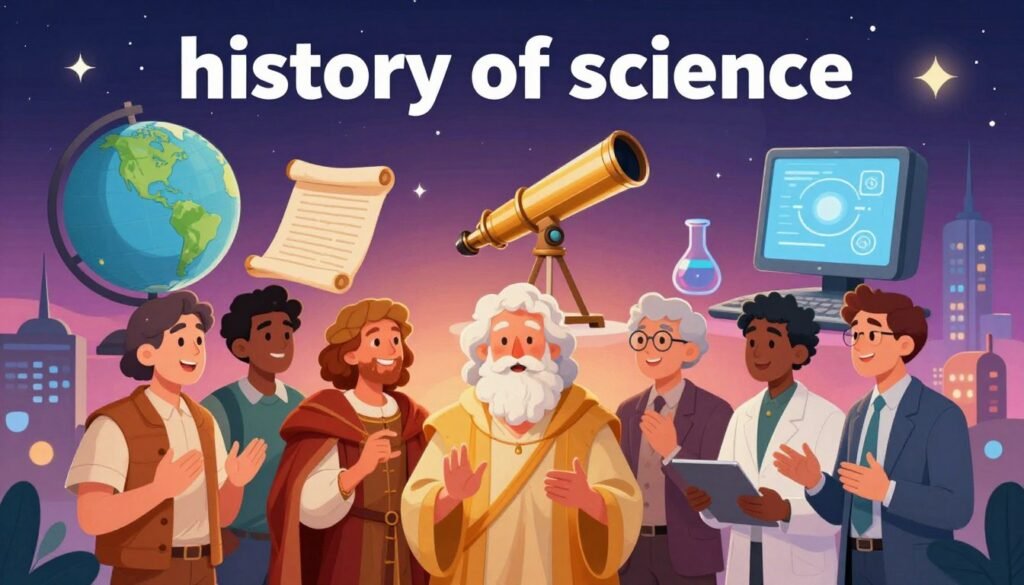
Have you ever looked up at the twinkling stars and wondered how we know so much about the universe? It all starts with a simple spark of wonder! This tiny flame has guided humanity through the incredible history of science for thousands of years.
We are embarking on a magnificent adventure together today! We will meet the brilliant minds who transformed our world with their revolutionary thoughts and persistent effort. From early thinkers to modern AI pioneers, these individuals changed how we see everything!
Research acts as the essential engine for human progress and development. It has been central to every major advancement in our long civilization. Every single discovery makes our daily lives better and much more exciting for everyone!
You can start your very own path of discovery right now! You can enhance your knowledge with Debsie’s gamified courses available at https://debsie.com/courses. Try out Debsie Gamified Courses to learn and grow while you play!
Key Takeaways
- Discover how curiosity acts as the main engine for human progress.
- Meet various famous scientists who helped shape modern history.
- Explore the evolution of knowledge from ancient times to the AI age.
- Understand why research remains vital for advancing our global civilization.
- Learn how interactive and gamified lessons make discovery fun for children.
- Get inspired to start your own educational journey today.
The Dawn of Inquiry: Ancient Philosophers and Early Science
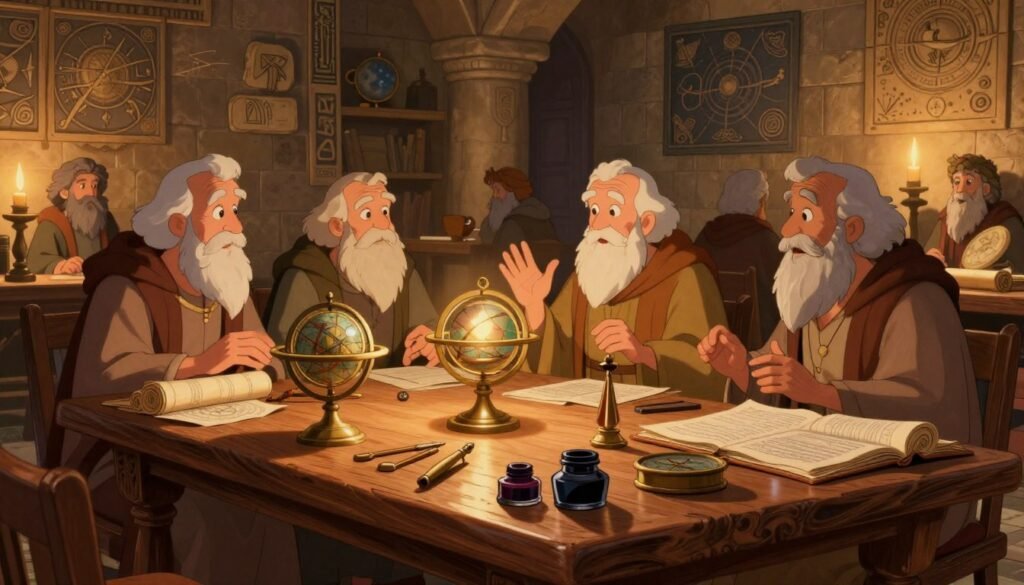
Ancient philosophers started modern science by asking ‘why’! Ancient Greece was full of thinkers. They wanted to know the world through looking, trying, and thinking.
These early scientists, or natural philosophers, used ways to sort, guess, and figure things out. These methods are still key in science today! They looked into the world and its rules, helping others make big discoveries later.
Thales of Miletus and the Natural World
Thales of Miletus was one of the first Greeks to look for natural answers. He even predicted eclipses and brought geometry to Greece. This helped later math and science folks a lot!
Archimedes and the Foundations of Mechanics
Archimedes was a big deal in mechanics. He found the principle of buoyancy and made the Archimedean screw. This tool is still used for water today! His work in math and building shows the creative side of ancient Greek science.
The work of these ancient thinkers still motivates scientists today. It shows us that seeking knowledge is a long journey across many fields!
The Golden Age of Islamic Science and Preservation
The Islamic Golden Age was a key time in science and math history! Scholars made big steps in many areas, like math, astronomy, and medicine. They kept old knowledge alive and added new things, helping European schools for a long time.
People like Al-Khwarizmi helped make algebra clear. They also worked on space models for finding your way and keeping track of time. The Islamic Golden Age was full of new ideas and discoveries, setting the stage for more big finds.
Al-Khwarizmi and the Birth of Algebra
Al-Khwarizmi’s work on algebra was very important. He wrote about solving equations in a new way. This changed math forever, helping many scholars for years.
Algebra helped science, engineering, and money matters grow. Al-Khwarizmi’s work let others build on his ideas.
| Mathematician | Contribution | Impact |
|---|---|---|
| Al-Khwarizmi | Formalized algebraic methods | Influenced mathematics and science |
| Ibn al-Haytham | Advanced the scientific method | Shaped modern scientific inquiry |
Ibn al-Haytham and the Scientific Method
Ibn al-Haytham changed science with his work on the scientific method. He said it’s key to test ideas with experiments and look closely. His work in light and physics was very important.
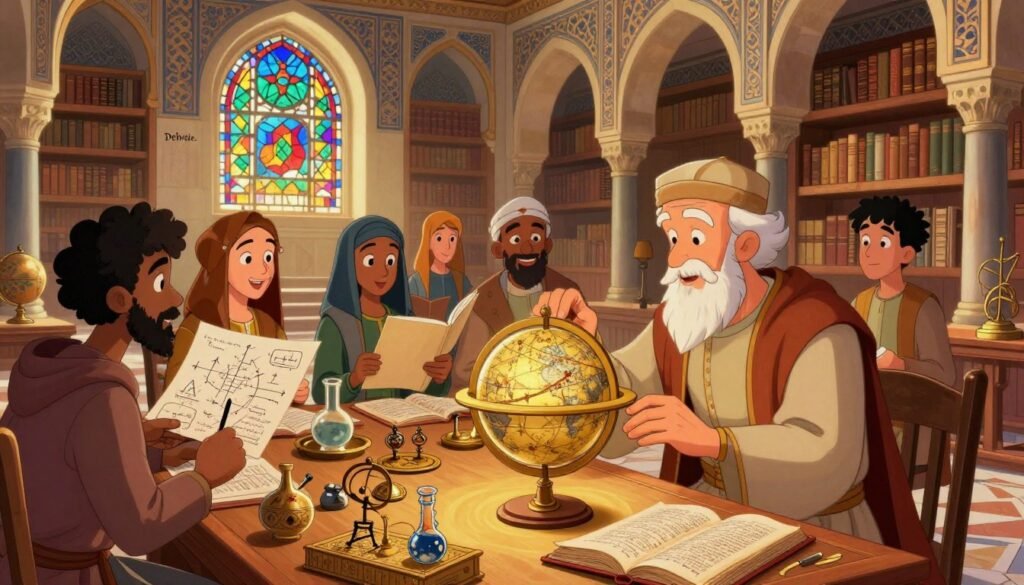
Ibn al-Haytham’s focus on real evidence and testing ideas has shaped science. His work still motivates scientists and researchers today.
The Renaissance and the Scientific Revolution
The Renaissance was a time of great curiosity and discovery in science! It marked a big change from old beliefs to new, based on what we see and do. We’ll see how people like Nicolaus Copernicus and Galileo Galilei changed science forever.
Nicolaus Copernicus and the Heliocentric Model
Nicolaus Copernicus said the Sun, not Earth, is at the center of our solar system. This idea was new and challenged old views. His book, “De revolutionibus orbium coelestium,” was published in 1543.
This idea changed how we see the universe. It helped us understand the stars and planets better.
Galileo Galilei and the Telescope
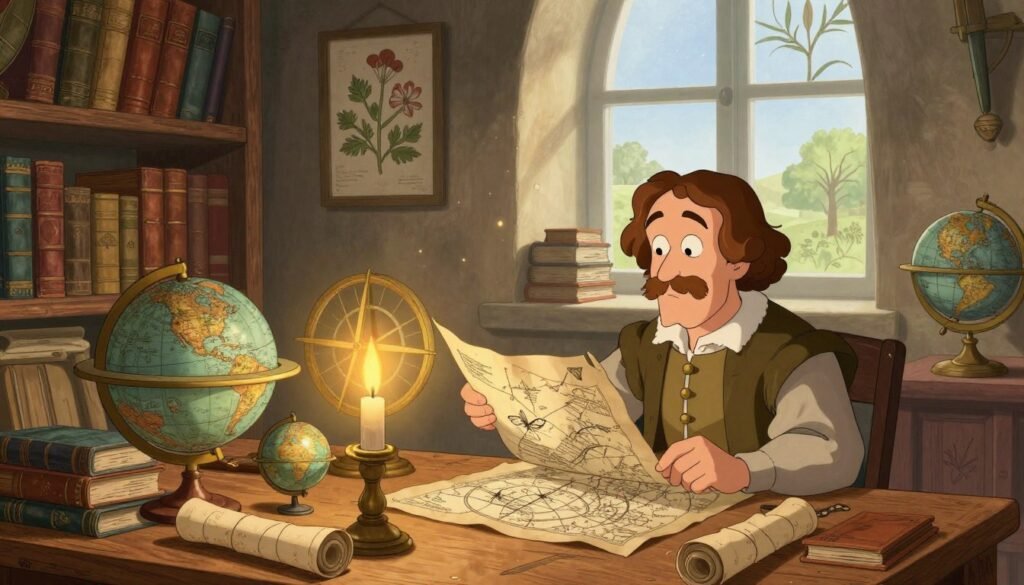
Galileo Galilei used a telescope to see the sky in a new way. In 1609, he made his own telescope. This let him see things in the sky that no one had seen before.
Galileo saw moons around Jupiter and phases of Venus. He also saw sunspots. All these things supported Copernicus’s ideas.
| Scientist | Contribution | Year |
|---|---|---|
| Nicolaus Copernicus | Proposed the heliocentric model | 1543 |
| Galileo Galilei | Used the telescope to observe celestial bodies, supporting the heliocentric model | 1609 |
| Andreas Vesalius | Revised anatomical knowledge through detailed dissections | 1543 |
The Age of Enlightenment and Classical Physics
The Age of Enlightenment was a big change in science. It brought us classical physics! This time, science became more organized. Groups like The Royal Society in England and the Académie des Sciences in France helped share and find new things.
Isaac Newton was a key figure. His work helped us understand the world better.
Isaac Newton and the Laws of Motion
Newton’s laws explained how the world works. His book, Philosophiæ Naturalis Principia Mathematica, showed us a world with rules. You can learn more about time and the universe at Debsie’s website.
Newton’s laws are still important today. Here’s a quick look at them:
| Law | Description |
|---|---|
| First Law | An object at rest stays at rest, and an object in motion stays in motion, unless acted upon by an external force. |
| Second Law | The force applied to an object is equal to its mass times its acceleration. |
| Third Law | For every action, there is an equal and opposite reaction. |
Antoine Lavoisier and Modern Chemistry
Antoine Lavoisier was a big name in the Enlightenment. He is known as the father of modern chemistry. His work helped us find new elements and create a way to name chemicals.
Lavoisier’s work helped chemistry grow. Here’s what he did:
| Contribution | Description |
|---|---|
| Discovery of Elements | Identified and characterized several elements, including oxygen. |
| Chemical Nomenclature | Developed a systematic method for naming chemical compounds. |
The Age of Enlightenment changed science a lot. It set the stage for big discoveries in physics and chemistry. Newton and Lavoisier showed us the power of discovery and how it shapes our world.
The 19th Century: Industrialization and Evolutionary Biology
The 19th century was a time of big scientific steps. Pioneers like Charles Darwin and Michael Faraday were at the forefront. They made huge leaps in evolutionary biology and electromagnetism.
Charles Darwin and Natural Selection
Charles Darwin changed biology with his theory of natural selection. His work on the Galapagos Islands and “On the Origin of Species” explained life’s diversity.
Learn more about science basics in our article on the periodic table explained for beginners.
Michael Faraday and Electromagnetism
Michael Faraday’s work in electromagnetism was key. His discoveries on electromagnetic induction and Faraday’s laws of electrolysis showed how electricity and magnetism connect.
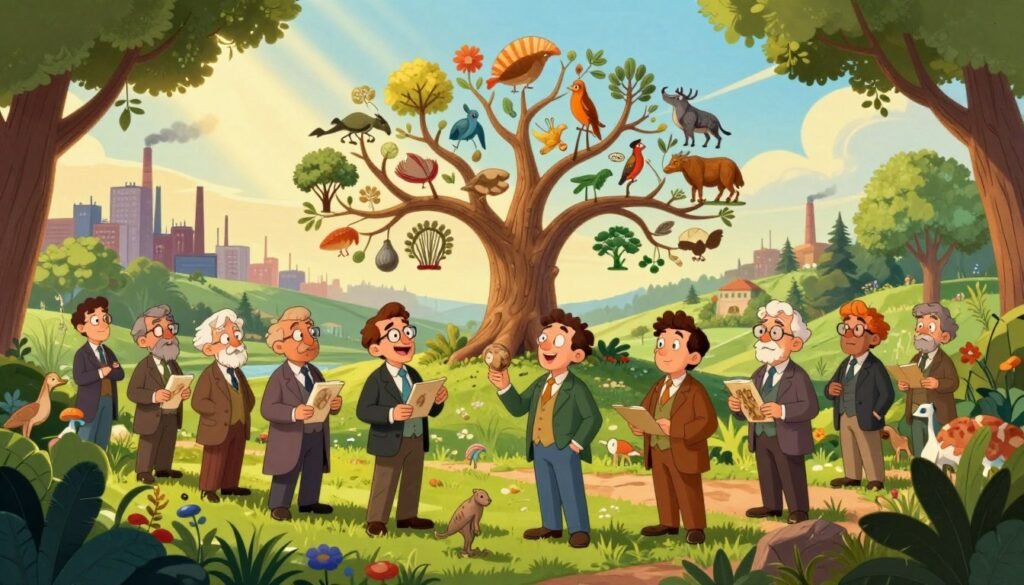
The 19th century’s discoveries still shape our world today. They influence science and technology in big ways.
The Early 20th Century: Relativity and Quantum Mechanics
Science moved into a new world in the 20th century. This was thanks to theory of relativity and radioactivity! Pioneering scientists changed how we see the universe.
The early 20th century was full of excitement in physics! Albert Einstein and Marie Curie were leaders. They helped us learn more and opened doors for new discoveries.
Albert Einstein and the Theory of Relativity
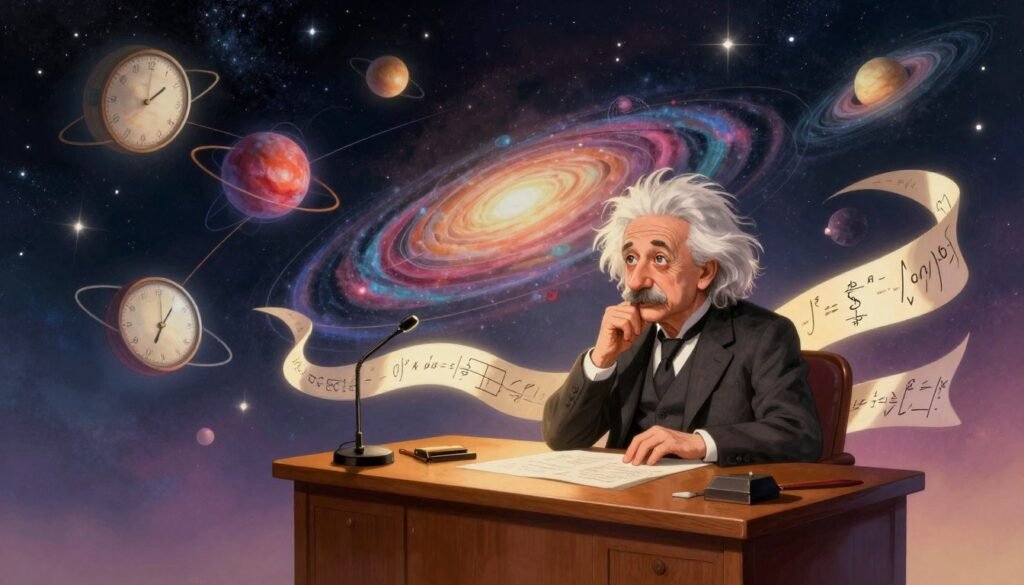
Albert Einstein changed how we see space and time with theory of relativity! He had two main parts: special and general relativity. The special part said physics is the same for everyone moving the same way. The general part said gravity bends space and time because of mass and energy.
Einstein’s ideas greatly helped physics grow. They changed how we study the universe and tiny particles. You can learn more about quantum mechanics and its link to relativity.
Marie Curie and the Study of Radioactivity
Marie Curie’s work on radioactivity was groundbreaking! She found polonium and radium. She was the first woman to win a Nobel Prize and the first to win two in different fields.
Her study of radioactivity helped us understand atoms better. It also helped in medicine, energy, and materials science. Her work still inspires scientists today!
Mid-20th Century: The Atomic Age and Molecular Biology
The mid-20th century was a big time for science. It saw huge steps forward in the atomic age and molecular biology. These discoveries changed how we see the world and our place in it.
Labs like the Cavendish Laboratory showed how important a good place to work is. It was then that some of the greatest scientists of all time made their biggest discoveries.
J. Robert Oppenheimer and Nuclear Physics
J. Robert Oppenheimer was a big name in nuclear physics. He led the Manhattan Project during World War II. His work on the atomic bomb started the atomic age!
But Oppenheimer did more than just work on the bomb. He also helped grow theoretical physics in the United States.
Rosalind Franklin and the Structure of DNA
Rosalind Franklin was key in figuring out DNA’s structure. Her work helped James Watson and Francis Crick create the double helix model. You can find out more about the secret code inside every living thing and how Franklin helped us understand it.
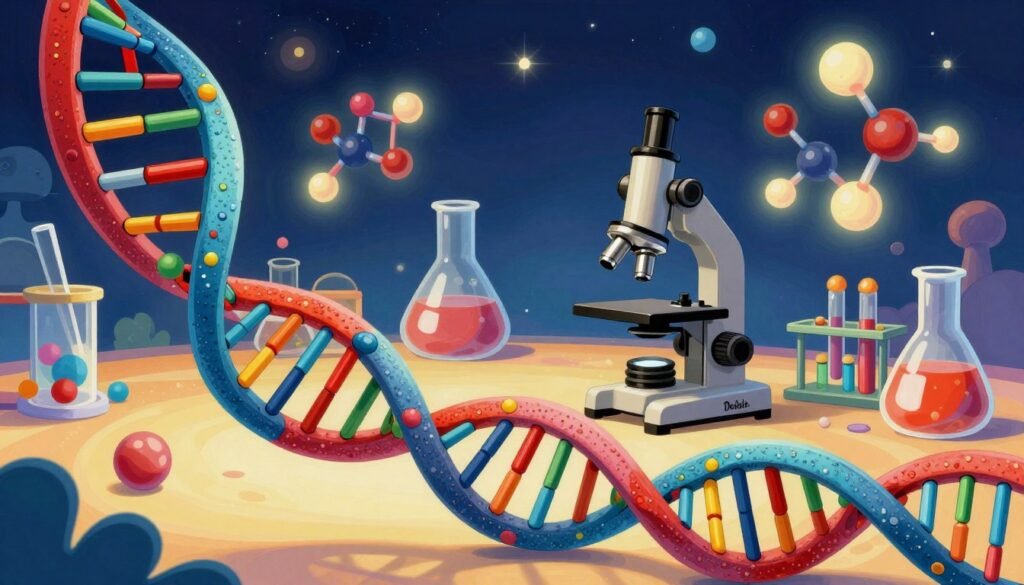
The mid-20th century was a time of great change in science. The work in nuclear physics and molecular biology opened new doors. These discoveries helped us learn more about the world and life itself.
The Digital Revolution and Computer Science Pioneers
The digital revolution changed how we live and work. It’s thanks to computer science pioneers! This time has seen huge tech growth. It lets us work together all over the world and find new things fast.
The internet has made the world more connected than ever before!
The foundation of modern computing was laid by visionaries such as Alan Turing.
Alan Turing and the Foundations of Computing
Alan Turing’s work on computer science was very important. He came up with ideas like the Turing Machine. These ideas changed how we think about computers and how to make them work.
Turing also helped crack the German Enigma code in World War II. This was a big win for the war!

Grace Hopper and Programming Languages
Grace Hopper was another big name in the digital revolution. She helped make programming languages better. Her work on COBOL made coding easier and faster.
Her work on compiler technology and machine-independent programming was key. It helped make programming more universal.
Some key contributions of these pioneers include:
- Advancements in theoretical computer science
- Development of programming languages
- Innovations in computing hardware and software
These changes have shaped our digital world. They still inspire new scientists and engineers today!
As we face the digital age’s challenges, learning from these pioneers is very inspiring. It helps us dream up new ideas!
Categorizing the Greatest Scientists by Era
By grouping the greatest scientists by era, we see how their time shaped their work. This shows how their era influenced their discoveries.
Research helps us make better policies and grow our economy. It also shapes our culture. Knowing when scientists worked helps us value their work more.
How Historical Context Shapes Scientific Discovery
The time scientists lived in greatly influenced their discoveries. For example, the scientific revolution changed how we see the universe. This was thanks to Nicolaus Copernicus and Galileo Galilei.
Looking at the greatest scientists by era shows us how history mattered. The needs of society, new tech, and old theories all helped scientists make big discoveries.
The Evolution of Scientific Methodology
Scientific methods have changed a lot over time. From simple observations to complex experiments today. This change came from new knowledge, tech, and scientists’ work.
The scientific method has grown too. Scientists like Ibn al-Haytham and Isaac Newton helped start modern science. They focused on observing, experimenting, and making laws from evidence.
As we look at the greatest scientists by era, we see the growth of science. Understanding how science methods have changed helps us see how science keeps getting better.
Modern Breakthroughs and the Rise of Biotechnology
Modern science is moving fast, with biotechnology at the forefront! We’re seeing big changes that help us understand the world better and make life better.
The field of biotechnology has changed a lot thanks to CRISPR gene editing. This tool lets scientists edit genes very precisely. It opens up new ways to treat genetic diseases.
Jennifer Doudna and CRISPR Gene Editing
Jennifer Doudna is a key figure in CRISPR technology. Her work has helped make this technique possible. It’s changed how we do genetic research and therapy!
CRISPR can help treat many genetic diseases. It shows how smart humans can be and how teamwork in science works!
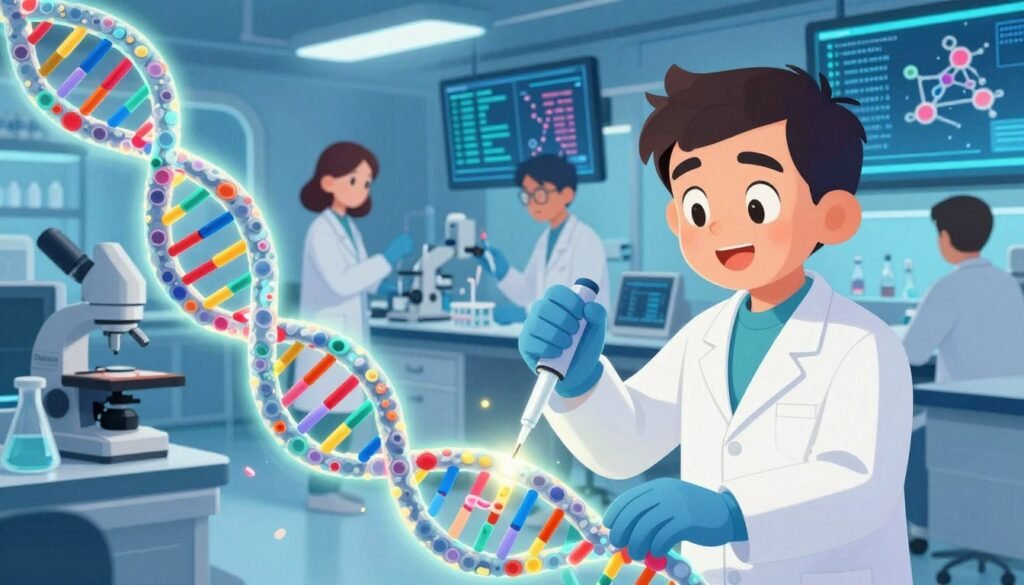
The Impact of Interdisciplinary Research
The growth in biotechnology shows the power of interdisciplinary research. By mixing biology, chemistry, and physics, scientists find new ways to solve big problems!
As we keep exploring what’s possible in biotechnology, we see how important working together is. You can learn about new science by checking out National Geographic’s top science discoveries!
The AI Age: Pioneers Shaping the Future
We’re entering a new era with AI. Visionaries like Geoffrey Hinton and Demis Hassabis are leading the way. They’re changing industries and opening new research areas. AI helps find disease markers in genomics and improves climate models.
Geoffrey Hinton and the Development of Neural Networks
Geoffrey Hinton is a key figure in AI. He worked on neural networks, which are important for AI today. His work lets machines learn from lots of data.
- Development of backpropagation algorithms
- Advancements in deep learning architectures
- Pioneering work on neural networks for image and speech recognition
Demis Hassabis and Artificial General Intelligence
Demis Hassabis is a top name in AI. He works at DeepMind, pushing AI’s limits.
- Developing AlphaGo, the first AI to defeat a human world champion in Go
- Advancements in reinforcement learning and deep learning
- Exploring the potential of AGI for complex problem-solving

Enhancing Your Scientific Knowledge with Debsie Gamified Courses
Discover how Debsie’s gamified courses can change your learning! We think learning should be fun, like playing games. This is true for hard subjects like science.
Gamified learning makes studying fun and interactive. Debsie’s platform uses game design to keep learners motivated. A study shows that gamification boosts student engagement and motivation https://ii.library.jhu.edu/2014/05/13/what-is-gamification-and-why-use-it-in-teaching/.
Why Gamified Learning Works for Complex Subjects
Gamified learning is great for hard subjects. It breaks down tough ideas into easy parts. This helps learners understand and remember better.
For example, Debsie’s physics courses are fun and easy to follow. They use interactive parts to help students get complex ideas. Check out Debsie’s physics tutors and classes to find what you need.

Exploring the Debsie Course Catalog
Debsie has many courses for different interests and learning ways. Visit https://debsie.com/courses to see the Debsie course catalog. Find out how gamified learning can help you learn science and more.
With Debsie, you can learn through play and grow intellectually in a fun place. Don’t wait! Start learning today and see the fun of gamified learning for yourself!
Conclusion
The story of research is not just about moving forward. It’s about growing and learning more. As we look at the greatest scientists by era, we see a story of never-ending discovery.
Each era has added to our knowledge, from ancient times to today’s AI experts. You can learn more about the Scientific Revolution and how it changed science.
We hope you enjoyed this journey through science history. By knowing how science has evolved, we can appreciate today’s discoveries. And we can look forward to the amazing things to come.