Imagine looking at stars and wondering how things work. We all feel curiosity when seeing something new! Modern thinkers turn big dreams into reality.
Many influential scientists change how humans live, play, and learn. Hard work makes our world safer and more exciting. We are lucky witnessing extraordinary breakthroughs right now!
Are you ready discovering geniuses behind miracles? Let’s explore top innovators shaping our future with brilliant minds and bold ideas. This adventure is truly great for families!
Our community loves exploring discovery and growth together. You can even start your own journey trying out Debsie Gamified Courses at https://debsie.com/courses today. It is a fun way learning about science!
Learning helps everyone grow intellectually through diverse subjects. Join us as we celebrate those who lead human progress. Every discovery brings a brighter tomorrow for kids everywhere!
Discovery is fun for everyone. Curious kids grow into amazing leaders who change history. Your path starts with a single question!
Key Takeaways
- Discover modern scientific leaders.
- Learn about groundbreaking medical discoveries.
- Explore how technology changes daily life.
- Find fun ways studying science.
- Understand impact on global future.
- Try gamified learning with Debsie.
Defining the Best Scientists of the 21st Century
We look at the best scientists of the 21st century. They stand out because of their amazing discoveries and new ways of researching. Breakthroughs in science come from their hard work to explore new things.
These scientists have a special education. They are young or in their prime. They also work at top universities. This mix helps them do innovative research.
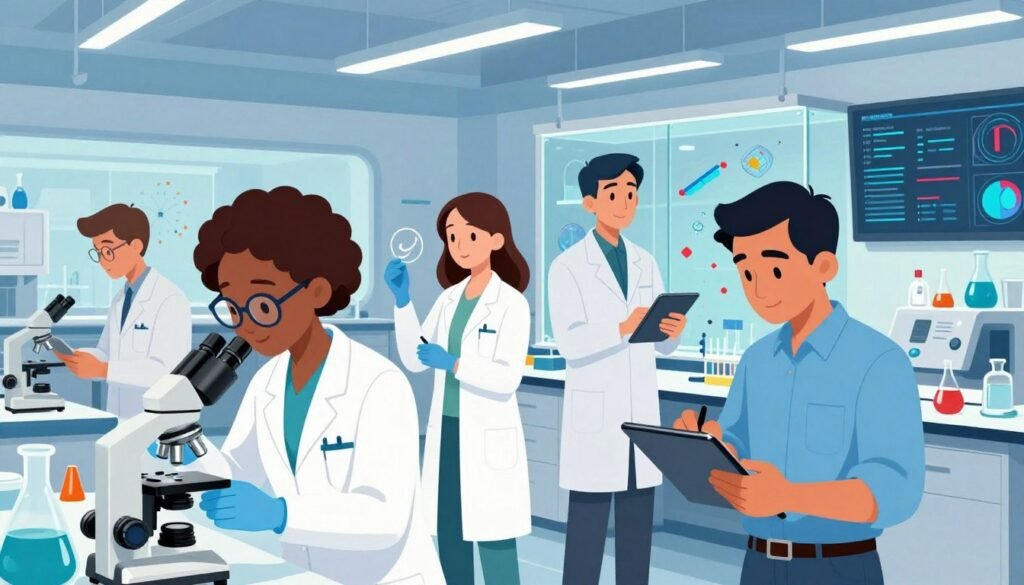
What makes these scientists so great? It’s their love for finding new things. They also work well with others from different fields. This way, they solve big problems that were hard to solve before.
These top scientists have a few things in common. They know a lot about their field. They are brave to try new things. And they are open to new ideas. These qualities help them make big changes in their fields.
Jennifer Doudna and the CRISPR Revolution
Jennifer Doudna’s work on CRISPR-Cas9 has changed genetic engineering. She is a top biochemist. Her discovery lets us treat genetic diseases and make crops better.
CRISPR-Cas9 is a tool for editing genes. It lets scientists change DNA with great precision. This tech can fix genetic problems that cause diseases. It gives hope to those with these conditions.
The Development of CRISPR-Cas9 Gene Editing
CRISPR-Cas9 started with a bacterial defense against viruses. Doudna and Emmanuelle Charpentier figured out how CRISPR-Cas9 works. This led to its use in gene editing.
The steps to use CRISPR-Cas9 are:
- Find the DNA sequence to change
- Make a guide RNA to find it
- Use Cas9 to cut the DNA
- Let the cell fix the cut DNA, changing the gene
| Year | Milestone | Description |
|---|---|---|
| 2012 | Discovery of CRISPR-Cas9 Mechanism | Doudna and Charpentier figured out how CRISPR-Cas9 works as a bacterial defense. |
| 2013 | First Application in Gene Editing | CRISPR-Cas9 was first used for gene editing in human cells. |
| 2020 | Nobel Prize in Chemistry | Doudna and Charpentier won the Nobel Prize for their CRISPR-Cas9 work. |
Ethical Implications and Future Applications
CRISPR-Cas9 is promising but raises big ethical questions.
“The ability to edit genes with such precision raises questions about the potential for misuse, including the possibility of creating ‘designer babies’ or exacerbating social inequalities.”
We must think about these issues and use this tech wisely.
CRISPR-Cas9’s future is bright. It could treat diseases and make crops better. It’s also being looked at for gene therapy and synthetic biology.
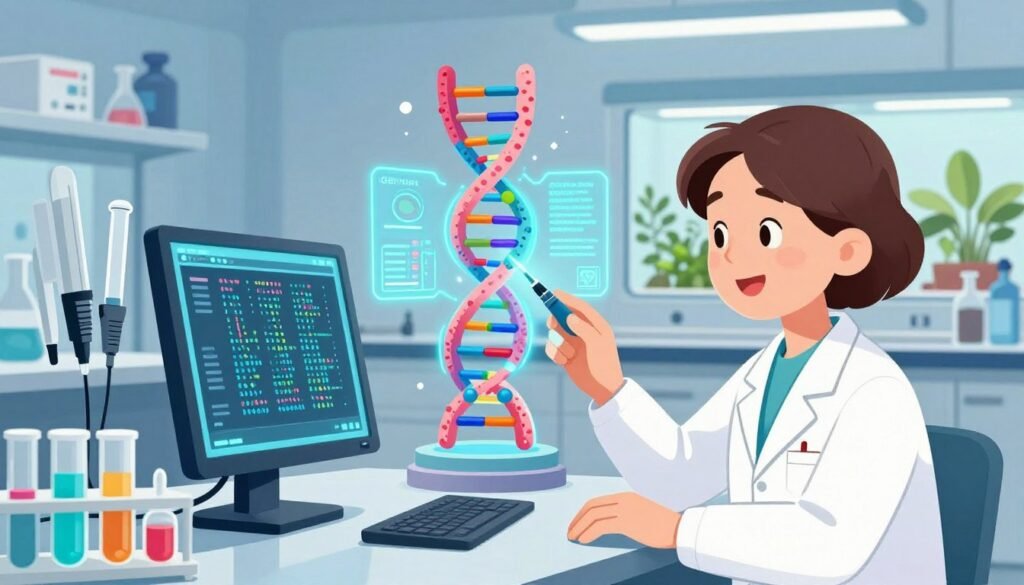
CRISPR-Cas9 will keep changing genetic research and its uses. By knowing its strengths and limits, we can use it to help people and solve big problems.
Demis Hassabis and the Rise of Artificial Intelligence
Demis Hassabis co-founded DeepMind. He has led the way in AI innovation. His work has made machines do amazing things!
He wanted to make AI that could learn and adapt. This dream led to the creation of AlphaFold.
Founding DeepMind and AlphaFold
AlphaFold is a big deal in AI. It predicts protein structures from amino acid sequences. This problem has puzzled scientists for years.
Demis Hassabis said,
“The biggest challenge in AI is to create systems that can learn and adapt in the real world.”
AlphaFold meets this challenge head-on. It tries to solve a big problem in biology: understanding protein structures.
Transforming Protein Structure Prediction
AlphaFold has changed protein structure prediction. It can predict protein structures accurately. This helps in medicine and biotechnology.
| Year | Milestone in Protein Structure Prediction | Impact |
|---|---|---|
| 2020 | AlphaFold 1st release | Initial breakthroughs in protein structure prediction |
| 2022 | AlphaFold 2 released | Significant improvements in accuracy and speed |
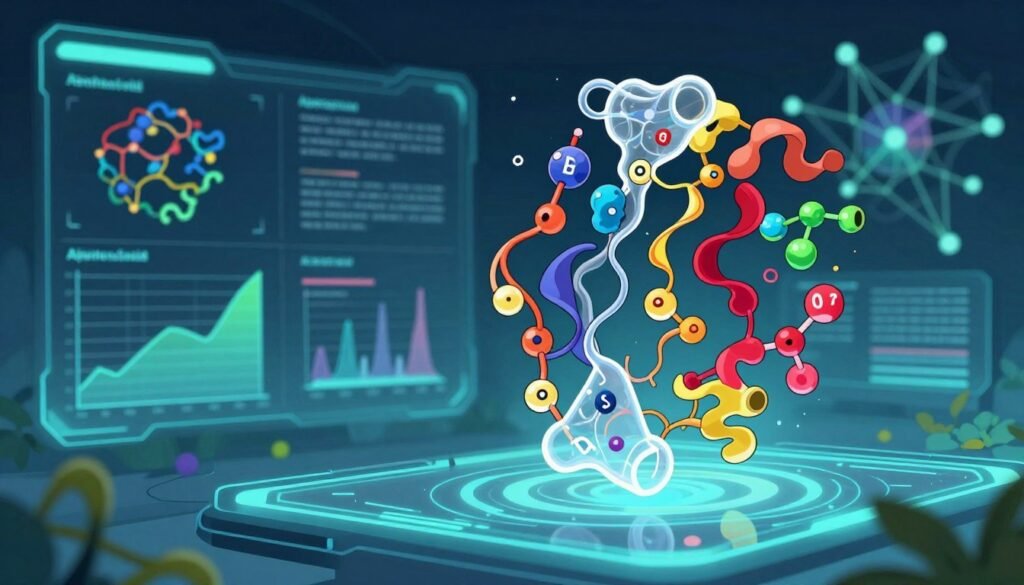
AlphaFold’s progress is huge for science and humanity. It helps us understand proteins better. This can lead to new treatments and better health.
Katalin Karikó and the mRNA Vaccine Breakthrough
Katalin Karikó worked hard and was very creative. She helped make mRNA vaccines. These vaccines saved many lives during the COVID-19 pandemic.
Overcoming Challenges in mRNA Research
Katalin Karikó faced many challenges. She had to deal with immune response issues and the stability of mRNA. But she didn’t give up. She worked with others to find new ways to make mRNA vaccines better.
She made a big discovery. She found a way to make nucleoside-modified mRNA. This made the mRNA vaccines safer and more stable. It was a big step forward.
Impact on Global Public Health
Katalin Karikó’s work has changed the world. mRNA vaccines are being used all over to fight COVID-19. They have saved many lives and helped prevent serious illness.
These vaccines can also help fight other diseases. They can be made quickly. This is very important for dealing with new outbreaks.
| Disease | mRNA Vaccine Potential | Current Status |
|---|---|---|
| COVID-19 | High efficacy in preventing severe disease | Deployed globally |
| Influenza | Potential for universal flu vaccine | In clinical trials |
| Cancer | Personalized cancer vaccines | Research and development |
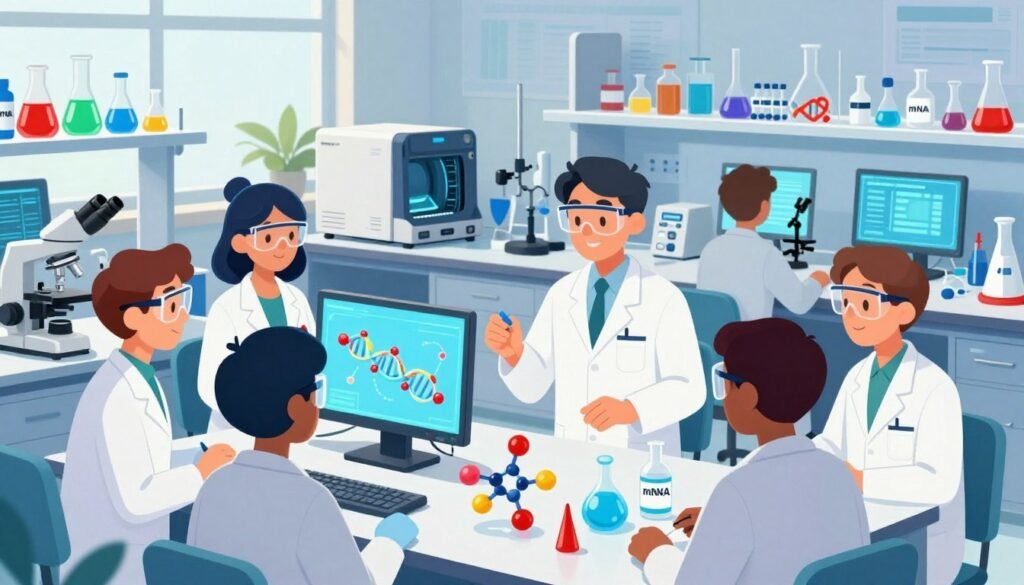
For more info on Katalin Karikó’s Nobel Prize, visit the Nobel Prize official website. Her work shows how important mRNA technology is for health.
Svante Pääbo and the Secrets of Ancient DNA
Svante Pääbo’s work on ancient DNA has changed how we see human history! He found DNA in fossils. This helped us learn about human evolution and where people came from.
Pääbo’s work is key in paleogenetics. This field studies ancient DNA. His findings have shown us a lot about Neanderthals and Denisovans. They also tell us about human history.
Mapping the Neanderthal Genome
Pääbo’s biggest achievement is mapping the Neanderthal genome. He sequenced DNA from fossils. This showed how Neanderthals and humans mixed genes.
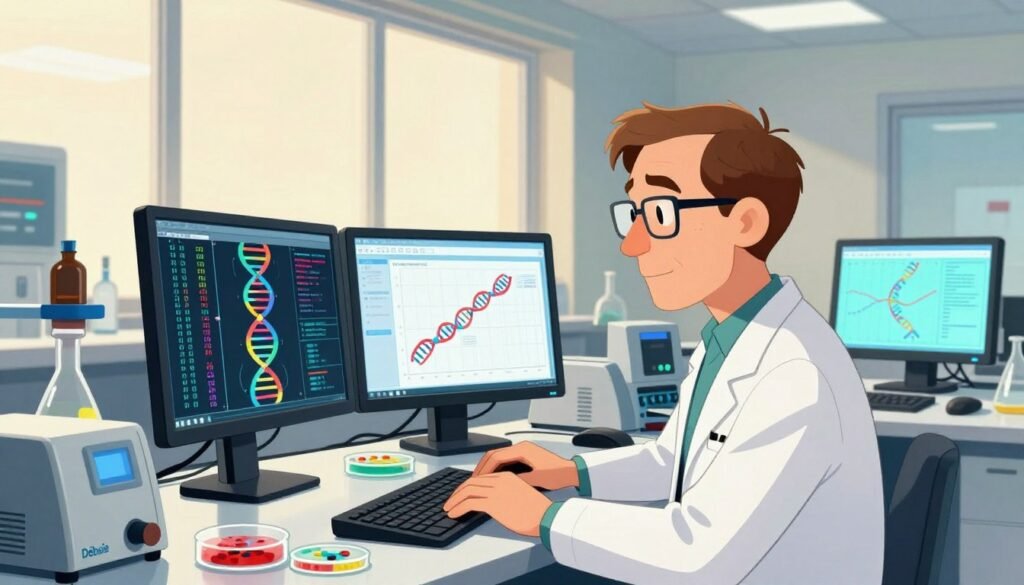
Studies of Neanderthal DNA found that many humans still have their DNA. This means Neanderthals and humans mixed when they met. This mix has influenced many traits and diseases today.
Understanding Human Evolution and Migration
Pääbo’s work has also helped us understand human evolution and migration. By studying ancient DNA, scientists can see where ancient humans went. They can also see how they met other ancient humans.
| Species | Time Period | Geographical Location |
|---|---|---|
| Neanderthals | 400,000 – 40,000 years ago | Europe and Asia |
| Denisovans | 40,000 – 50,000 years ago | Asia |
| Modern Humans | 200,000 years ago to present | Global |
For more on Pääbo’s work, check out the Nobel Prize article.
Emmanuelle Charpentier and Genetic Engineering
Emmanuelle Charpentier found the CRISPR-Cas9 system. This has changed genetic engineering and molecular biology a lot!
Charpentier worked with Jennifer Doudna on CRISPR-Cas9. Their work has helped genetic engineering a lot. The Nobel Prize press release says it’s changed gene editing a lot!
Collaborative Discovery of CRISPR
CRISPR-Cas9 is great for editing genes. It lets scientists change DNA exactly. Charpentier and Doudna found out how it works. This has made it popular in research and for helping people.
Working together, Charpentier and Doudna did something amazing. They showed that teamwork can lead to big discoveries!
Advancing Molecular Biology Techniques
CRISPR-Cas9 has changed molecular biology a lot. It lets scientists edit genes very precisely. This has opened up new ways to study and treat genetic diseases.
| Key Applications | Description |
|---|---|
| Gene Therapy | CRISPR-Cas9 might help fix genetic problems that cause diseases. |
| Basic Research | It helps scientists learn more about genes and biology. |
| Agricultural Biotechnology | CRISPR-Cas9 can make crops better, like more resistant to pests. |
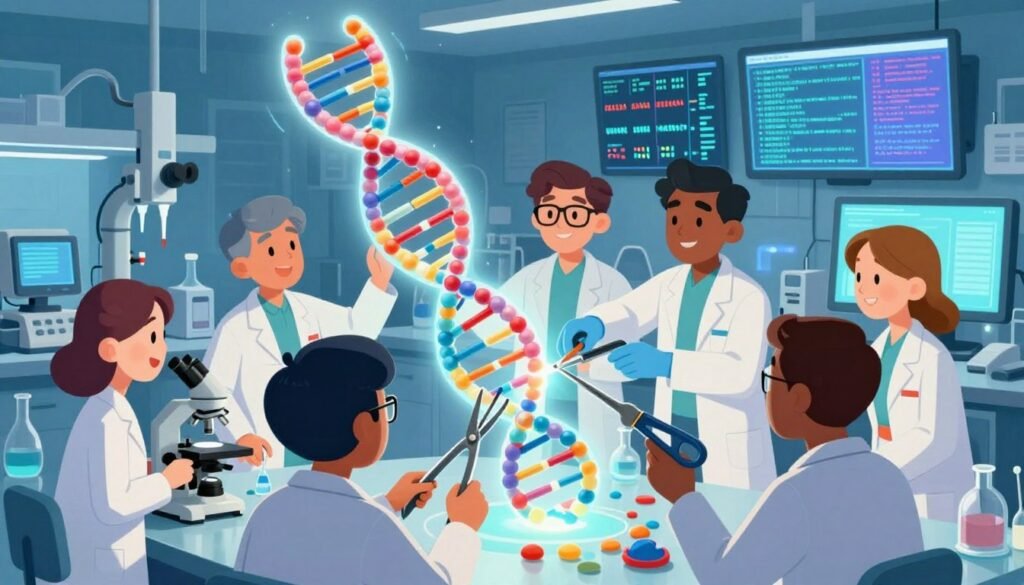
As we keep using CRISPR-Cas9, Emmanuelle Charpentier’s work will keep leading in genetic engineering and molecular biology!
John Goodenough and the Battery Revolution
John Goodenough changed how we store energy with his work on lithium-ion batteries. His work is key for our portable devices and green energy. It’s very important.
Goodenough started working on lithium-ion batteries many years ago. His work has made a big difference in energy storage. Now, we have smaller, better batteries for phones and cars.
The Legacy of Lithium-Ion Technology
Goodenough’s lithium-ion battery tech helped make portable devices popular. It’s high energy and lasts a long time. This makes it great for many uses.
Let’s look at what makes lithium-ion batteries so good:
| Characteristic | Description | Benefit |
|---|---|---|
| High Energy Density | Stores a lot of energy in a small space | Creates smaller, lighter batteries |
| Long Cycle Life | Can charge and discharge many times | Means you don’t need to replace it often |
| Low Self-Discharge | Keeps its charge when not used | Is great for devices that sit idle |
Sustainable Energy Storage Solutions
As we move to green energy, good storage is key. Goodenough’s work on lithium-ion batteries is a big help. It’s a base for new ideas.
Now, scientists are working on new battery tech. They’re building on Goodenough’s ideas. This is important for using more green energy and less fossil fuels.
Frances Arnold and Directed Evolution
Frances Arnold changed enzyme engineering with directed evolution. Her work made new enzymes for many uses.
So, how does directed evolution work? It’s like natural evolution but in a lab. Scientists make enzymes for special jobs. This has brought new ideas to biotechnology.
Pioneering Enzyme Engineering
Frances Arnold made enzymes better. She used directed evolution to make them work in many places. This is good for many industries!
For example, her enzymes help make biofuels. This is key for green energy. You can learn more at the Nobel Prize website.
Industrial and Environmental Applications
Her enzymes are used in many ways. They help make medicines and clean the environment. This is very important.
Her work helps clean up pollution. It shows how important new ideas in biotechnology are. We need more of this to solve big problems.
David Baker and the Design of New Proteins
Imagine making proteins from scratch to solve big health and environmental problems! David Baker’s work in protein design is making this real. He uses advanced computer methods to create new proteins for medicine and materials.
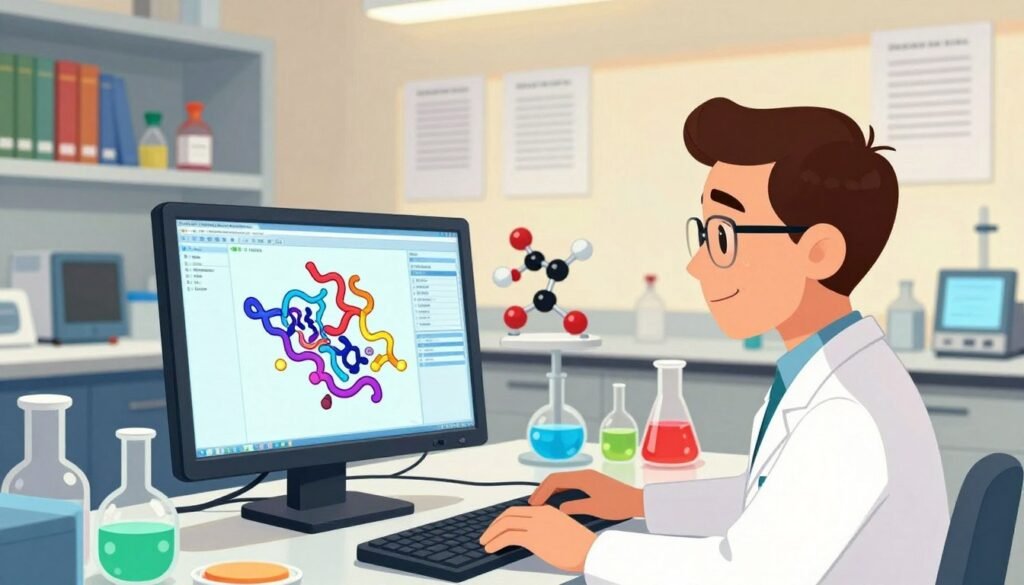
Computational Protein Design
Computational protein design uses computers to predict protein structure and function. David Baker’s research leads in this area. He develops new ways to design proteins with special properties.
This work is complex. It needs a deep understanding of protein chemistry and modeling biological interactions. But, the benefits are huge, like new enzymes and treatments.
Creating Novel Therapeutics and Materials
One cool thing about computational protein design is making new treatments. Designing proteins to target diseases can lead to new treatments. For example, proteins can bind to receptors or stop disease-causing enzymes.
Designed proteins can also make new materials. They can self-assemble into structures for tissue engineering or biomaterials.
Andrea Ghez and the Exploration of Black Holes
Andrea Ghez is a leading astrophysicist. She has made big discoveries about black holes. Her work has helped us learn more about these mysterious objects, like the ones at the center of our galaxy.
Observing the Galactic Center
Andrea Ghez and her team have watched the galactic center for years. They use special telescopes to follow the stars near a supermassive black hole. Their careful work has given us important information about these stars.
By watching the stars move, Ghez’s team found proof of a huge, hidden object. This object is thought to be a supermassive black hole.
Proving the Existence of Supermassive Black Holes
The data from Andrea Ghez and her team has been key in proving supermassive black holes exist. The stars near the galactic center are moving very fast. This shows they are being pulled by a huge gravitational force.

This proof, along with other findings, has made scientists believe in supermassive black holes. They are found at the centers of galaxies, including our own Milky Way.
Shinya Yamanaka and Stem Cell Innovation
Shinya Yamanaka found a way to make adult cells act like new cells. This is called induced pluripotent stem cells. It’s a big deal for fixing damaged cells without using embryos.
His work has changed how we study cells and find new treatments. It could make healthcare better by helping fix damaged cells and making treatments just for you.
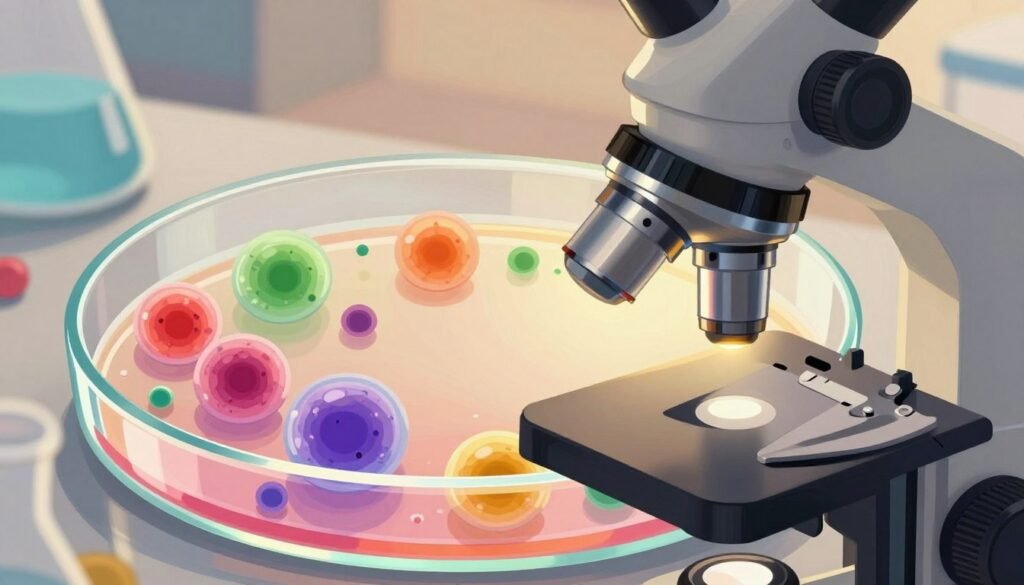
Induced Pluripotent Stem Cells
Induced pluripotent stem cells (iPSCs) come from adult cells that can turn into almost any cell. This is a big step forward for medicine. Yamanaka’s work was so important that he got the Millennium Technology Award.
Regenerative Medicine and Future Therapies
iPSCs are helping make new ways to fix damaged cells. They could help with diseases like Parkinson’s and heart problems. They also help make treatments that fit just right for you, which is safer and works better.
As we keep learning, we’ll see more new treatments. The future of fixing damaged cells looks bright, thanks to induced pluripotent stem cells!
Educational Resources for Aspiring Scientists
Learning is a lifelong journey in the world of science. For those who want to be scientists, the right learning tools are very important. They help grow and discover new things.
Learning Beyond the Classroom
Learning never stops in science. It keeps you up-to-date with new discoveries. Interactive and engaging learning experiences help you understand complex ideas better.
Some key benefits of continuous learning include:
- Staying updated with the latest scientific discoveries!
- Developing a deeper understanding of complex concepts through interactive learning!
- Enhancing problem-solving skills through practical applications!
Exploring Debsie’s Gamified Courses
Debsie has a special way of learning with gamified courses. It makes learning fun and exciting! You can check out Debsie’s courses at https://debsie.com/courses.
Here are some reasons why Debsie’s gamified courses are great:
- Personalized learning experiences tailored to individual needs!
- Interactive content that makes complex concepts easier to understand!
- A supportive community that encourages collaboration and growth!
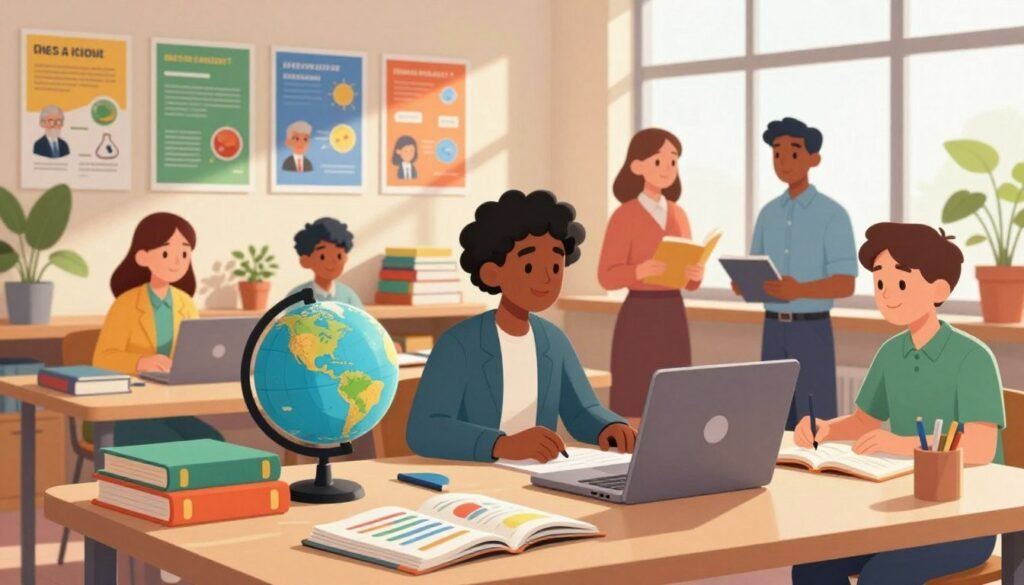
By using educational resources like Debsie, aspiring scientists can start a journey of discovery. Continuous learning is the key to reaching their full potential!
The Interdisciplinary Nature of Modern Science
In the 21st century, science has changed a lot. It now combines biology, physics, and computer science to solve big problems. This mix is not just a trend. It’s needed because of the tough challenges we face.
Jennifer Doudna, a leader in CRISPR technology, said something important. “The future of science is about working together across disciplines.” Interdisciplinary research is key to many recent discoveries, like gene editing and artificial intelligence!
Bridging Biology, Physics, and Computer Science
Combining different sciences leads to new discoveries. For example, using computers to study biology has changed how we see living things. Computer science helps make sense of the huge amounts of data from biology. This lets researchers find patterns and make predictions they couldn’t before.
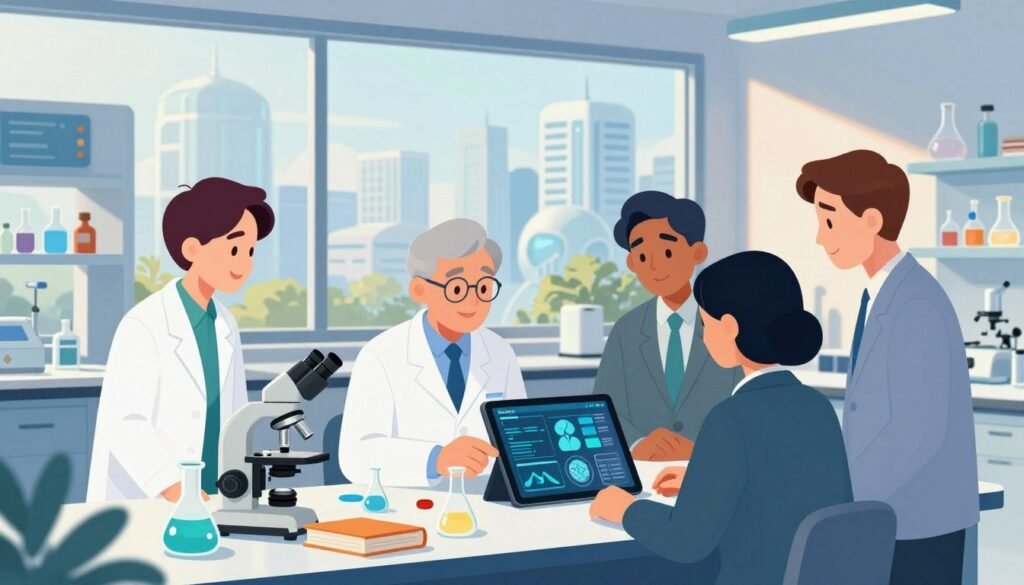
Also, physics helps create new medical tools and better ways to store energy. Working together, scientists from different fields are coming up with creative solutions to big problems.
Collaborative Research in the Digital Age
The digital age has changed how scientists work together. Now, they can share data and ideas instantly, no matter where they are. This collaborative research is making discoveries and new ideas happen faster.
“The biggest breakthroughs often happen at the intersection of disciplines.” This quote shows how important teamwork and different views are in science today.
Looking ahead, science’s future is in working together and using many disciplines. By doing this, we can tackle some of the biggest challenges we face today!
Conclusion
The best scientists of the 21st century are changing science a lot! They help us understand the world better. They also change how we live and talk to each other.
Leading researchers in many areas are making new things happen. They are making our knowledge grow.
Their work shows how important teamwork, learning, and being open-minded are. These things help us keep finding new things. This helps everyone.
Looking ahead, these amazing people’s work will keep changing science. We should all stay curious and keep exploring. Let’s join the exciting journey of discovery that’s making our world better today!