Have you ever looked up at the night sky and felt amazed? That moment when you wonder about the universe is special. It’s where great journeys start.
Thinking about the universe connects us to our past. It shows we’re all on a quest for truth. Your learning journey is just beginning!
Long ago, ancient Greeks started the first steps of logic. This was the real start of science history. It changed how people saw the world.
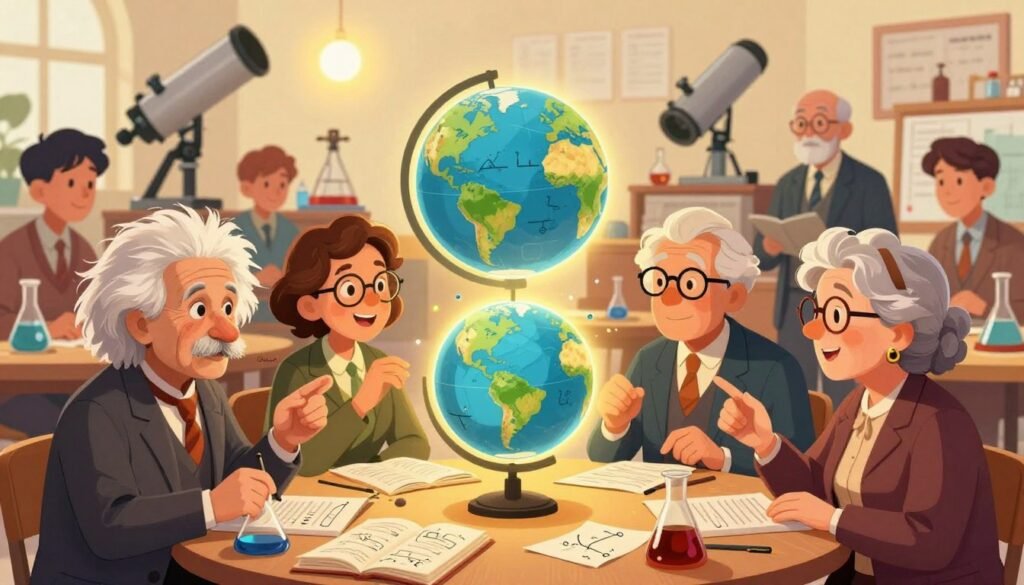
By looking at famous scientists, we see the passion behind their work. Each scientific discovery changed our world. It’s amazing to think about!
You can dive into these stories and learn new things with Debsie! Check out Debsie Gamified Courses at https://debsie.com/courses. We make learning fun for everyone!
Key Takeaways
- Logic began within the Greek world.
- Historical progress changed how we view nature.
- Research methods help prove new facts.
- Every major breakthrough improves human life.
- Debsie provides fun plus interactive lessons.
- Personal growth starts with asking questions.
The Foundations of Modern Physics: Isaac Newton
Imagine a world without the laws of motion and gravity. Isaac Newton made our understanding of the universe possible! He was a genius English mathematician, physicist, and astronomer.
Newton’s work on science is huge. We’ll look at his laws of motion and universal gravitation. We’ll also see his work on calculus and light.
The Laws of Motion and Universal Gravitation
Newton’s laws of motion tell us how objects move and react to forces. These laws are the basics of classical mechanics! They explain how things stay still, how force changes motion, and how every action has a reaction.
Newton also found that every mass pulls every other mass. This force is based on their masses and how far apart they are. This idea shows that the same rules apply to apples and planets!
Calculus and the Nature of Light
Newton and German mathematician Gottfried Wilhelm Leibniz created calculus. It’s about change and adding things up. Calculus is key in physics, engineering, and economics.
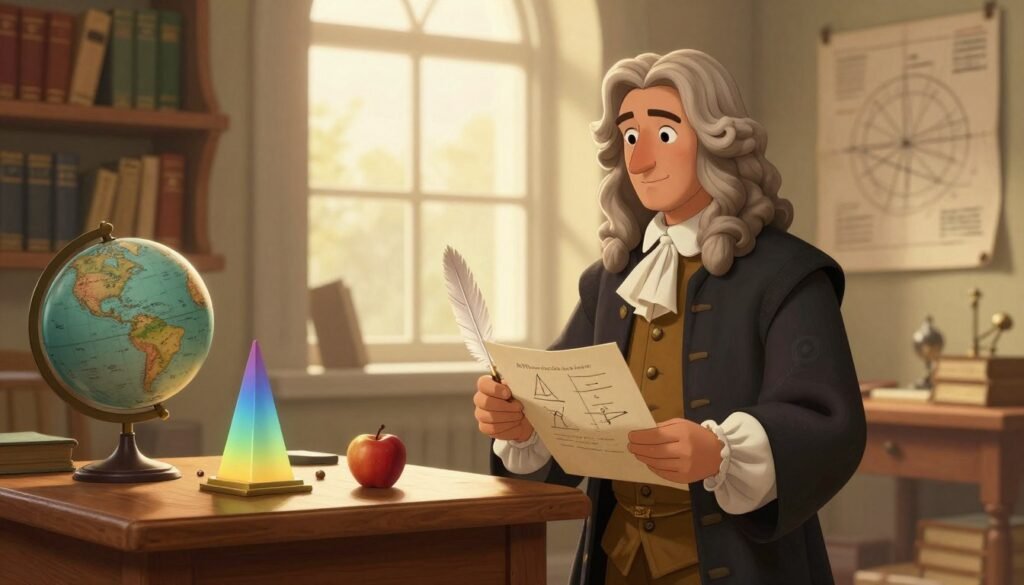
Newton also studied light a lot. His work on white light and prisms helped start modern optics. He showed that white light is made of many colors.
Newton’s work helped us understand the universe better. He inspired many scientists and thinkers. His legacy shows the power of curiosity and scientific research.
Revolutionizing Our Understanding of Reality: Albert Einstein
Albert Einstein changed how we see the world. He was a genius scientist and a famous figure. His work changed how we understand the universe.
Einstein made big contributions to science. He worked on the theory of relativity and the photoelectric effect. Let’s look at these important works.
The Theory of General and Special Relativity
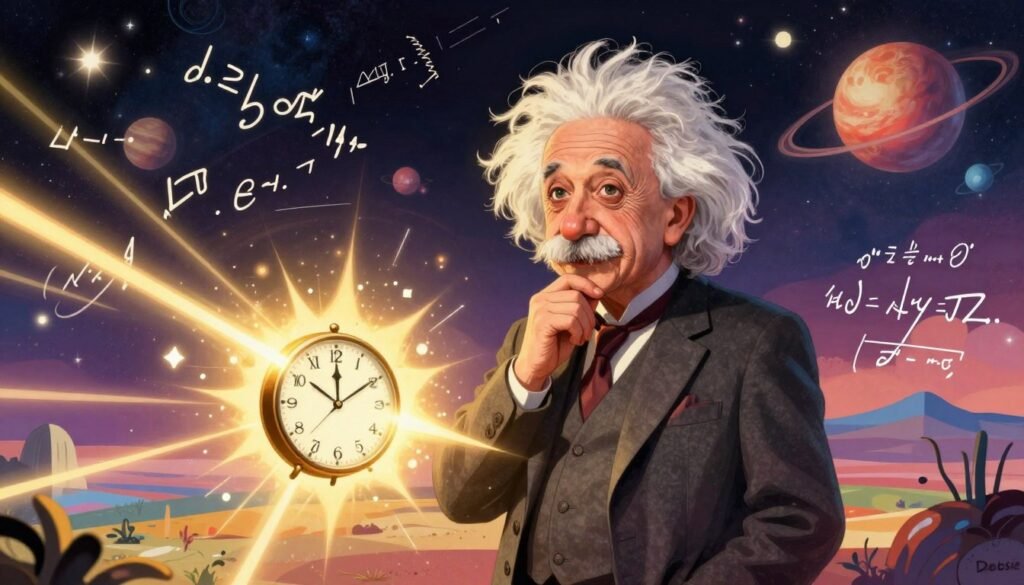
Einstein’s theory of relativity changed our view of space and time. The special theory showed that mass and energy are the same. It said E=mc².
The general theory of relativity said gravity bends space and time. It predicted things like gravitational waves and black holes. These ideas have been proven true.
To learn more about time, visit https://debsie.com/what-is-time-understanding-clocks-seasons-and-speed/. It explores time and its connection to the universe.
The Photoelectric Effect and Quantum Foundations
Einstein’s work on the photoelectric effect helped start quantum mechanics. He showed light can act like particles, called photons. The energy of these photons depends on their frequency.
This discovery explained the photoelectric effect. It also helped start quantum theory. It showed light can act like waves or particles, a key idea in physics.
Einstein’s work in quantum mechanics has lasted a long time. It has helped many fields, from chemistry to materials science. His work still inspires scientists today.
The Mother of Modern Physics: Marie Curie
Marie Curie changed science with her work on radioactivity. Her drive and love for learning led to big discoveries. These discoveries changed physics and chemistry forever.
Marie Curie faced many challenges. She was a woman in a field mostly men. But she didn’t give up. Her hard work and new ideas made her a leader in science.
Pioneering Research on Radioactivity
Marie Curie was a pioneer in radioactivity. She worked with her husband, Pierre Curie. Together, they learned a lot about this new field.
The Curies found ways to use radioactivity in medicine and industry. Their work helped in cancer treatment and nuclear energy!
- Isolation of radioactive isotopes from pitchblende
- Understanding the structure of atoms
- Advancements in cancer treatment
- Development of nuclear energy
The Discovery of Polonium and Radium
The Curies found two new elements: polonium and radium. Polonium was named after Poland, Marie Curie’s homeland. Radium was found later, after a lot of hard work.
Finding these elements was a big deal. It helped us understand radioactivity better. It also gave us new tools for science and medicine.
“One never notices what has been done; one can only see what remains to be done.”
Marie Curie’s work is still inspiring today. She shows us the power of hard work and curiosity.
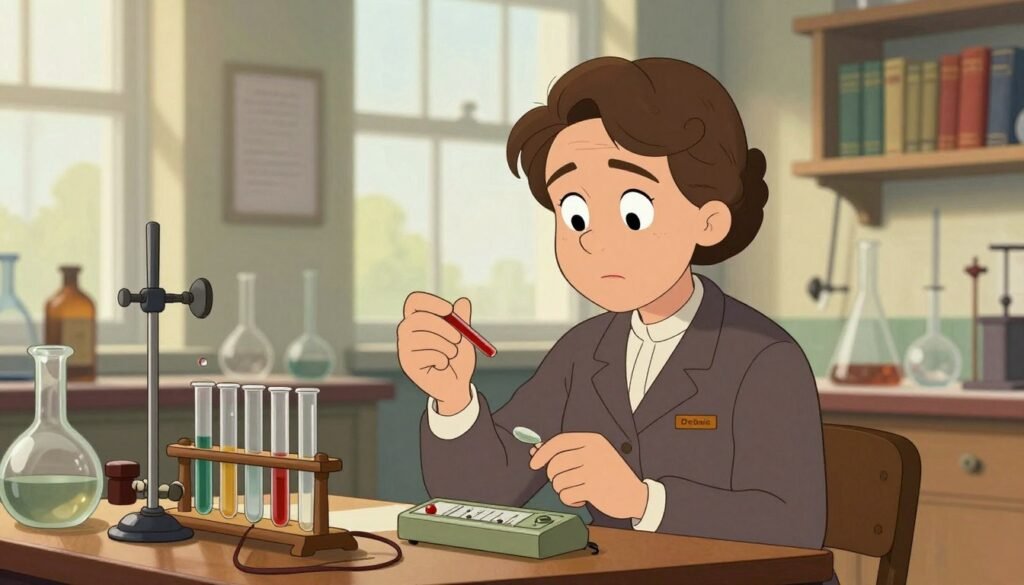
We still use Marie Curie’s discoveries today. Her work helps in medicine, energy, and industry. It has changed our world in big ways.
Unlocking the Secrets of Evolution: Charles Darwin
Charles Darwin loved to explore the natural world. His discoveries changed science forever! He worked on the HMS Beagle and did more research. This work helped start modern evolutionary theory.
Natural Selection and The Origin of Species
Darwin’s big idea was evolution through natural selection. He wrote about it in “On the Origin of Species.” This idea says that species change over time. The diversity of life on Earth shows this process!
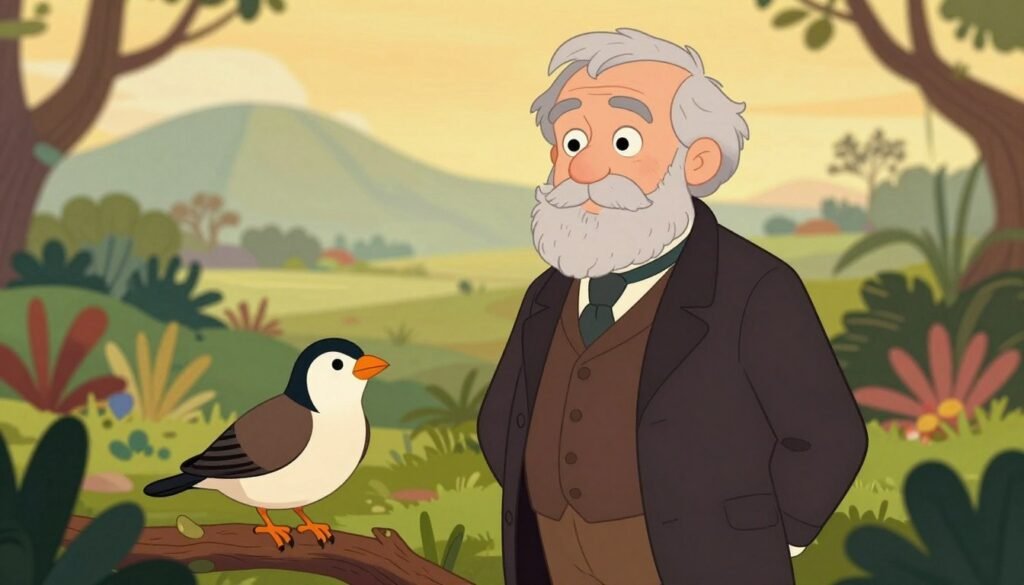
Darwin saw many finches and tortoises on the Galapagos Islands. He noticed how different they were. This helped him understand how life adapts to its surroundings.
The Impact of Evolutionary Biology on Modern Science
Darwin’s ideas have had a huge impact on science. Evolutionary biology is key in many areas. It helps us understand how diseases spread and how bacteria become resistant to antibiotics.
Evolution also helps in farming and biotechnology. It shows how living things and their environments are connected. This knowledge helps us learn more about the world.
- Understanding biodiversity and ecosystems
- Advancements in medical research and disease prevention
- Innovations in agriculture and biotechnology
By following Darwin’s work, we keep learning about evolution. We use this knowledge to make our world better.
The Architect of the Modern World: Nikola Tesla
Nikola Tesla was a true innovator. He changed the world with his amazing work! He was born with a love for science and inventing.
Tesla made alternating current (AC) a big deal. AC lets electricity travel far without losing much power. This is why we have power in our homes and cities.
Alternating Current and Electrical Distribution
AC systems were a big leap forward in the 1800s. Tesla worked with George Westinghouse to make AC popular. This was better than Edison’s DC system, which couldn’t travel as far.
| Aspect | Alternating Current (AC) | Direct Current (DC) |
|---|---|---|
| Transmission Efficiency | High efficiency over long distances | Limited by distance due to energy loss |
| Scalability | Easily scalable for widespread distribution | Difficult to scale due to technical limitations |
| Usage | Predominantly used in power grids and households | Used in electronic devices, automotive systems |
Wireless Communication and Experimental Innovations
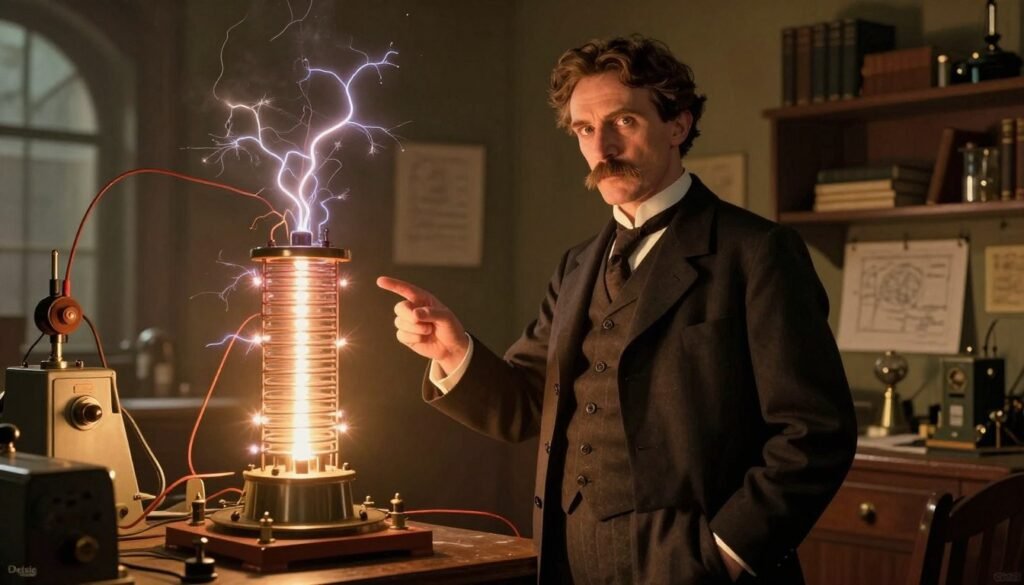
Tesla was ahead of his time with wireless communication. He showed how to send energy without wires. His work is still important today. Nikola Tesla’s dream of wireless energy is still being worked on.
Think about a future where you don’t need to plug in your devices. Tesla’s ideas are bringing us closer to that future.
A Comprehensive Look at Famous Scientists and Their Discoveries
The discoveries made by famous scientists have changed our world and universe a lot!
These scientists have given us new knowledge and ways to live. Their work has led to new technologies and a better understanding of nature. Their discoveries are very important.
How Scientific Breakthroughs Shape Human History
Scientific discoveries have helped us grow and change history. Famous scientists like Isaac Newton and Albert Einstein changed how we see the universe.
- Newton’s laws of motion started classical mechanics.
- Einstein’s theory of relativity changed our view of space and time.
These discoveries have led to many new technologies. They have changed our world a lot.
The Importance of Scientific Literacy in the 21st Century
Today, knowing science is very important. We face big challenges like climate change and pandemics. Knowing science helps us make good choices.
“Science is a way of teaching you how to think, of questioning, of evaluating evidence, of seeing the world.” – Carl Sagan
Learning science helps us understand the world better. It makes us think critically and make smart choices.
Let’s keep celebrating the work of famous scientists. Let’s also encourage young people to study science, technology, engineering, and mathematics (STEM).
The Father of Modern Genetics: Gregor Mendel
Gregor Mendel is known as the Father of Modern Genetics. He changed how we see heredity. As a monk and teacher, Mendel loved science. He studied pea plants to learn about genetic inheritance.
Mendel’s work was new because he looked at how traits pass down. He was careful and used numbers, starting genetics as we know it today.
The Laws of Inheritance and Pea Plant Experiments
Mendel grew pea plants and crossed them for years. He picked pea plants because they were easy to work with. He found patterns that became the Laws of Inheritance.
These laws tell us how genes are passed down. Mendel found that traits come from specific units, or genes. These units follow rules when passed to the next generation.
“The experiments on plant hybridization, on which I have been engaged for eight years, have led me to the conclusion that the progeny of hybrids, both in the first and subsequent generations, exhibit a definite numerical ratio in their characteristics.”
Mendel’s ideas were new and not well-known at first. But, his work is now the base of modern genetics.
Bridging the Gap Between Biology and Mathematics
Mendel used math to study biology. He counted pea plant traits to show biology can be studied like physics or chemistry.
| Mendel’s Laws | Description | Significance |
|---|---|---|
| Law of Segregation | Each pair of alleles separates during gamete formation | Explains how genes are inherited in a predictable manner |
| Law of Independent Assortment | Alleles for different genes are sorted independently | Shows that different traits are inherited independently of each other |
Mendel’s work shows how biology and math can come together. This helps us understand the world better.
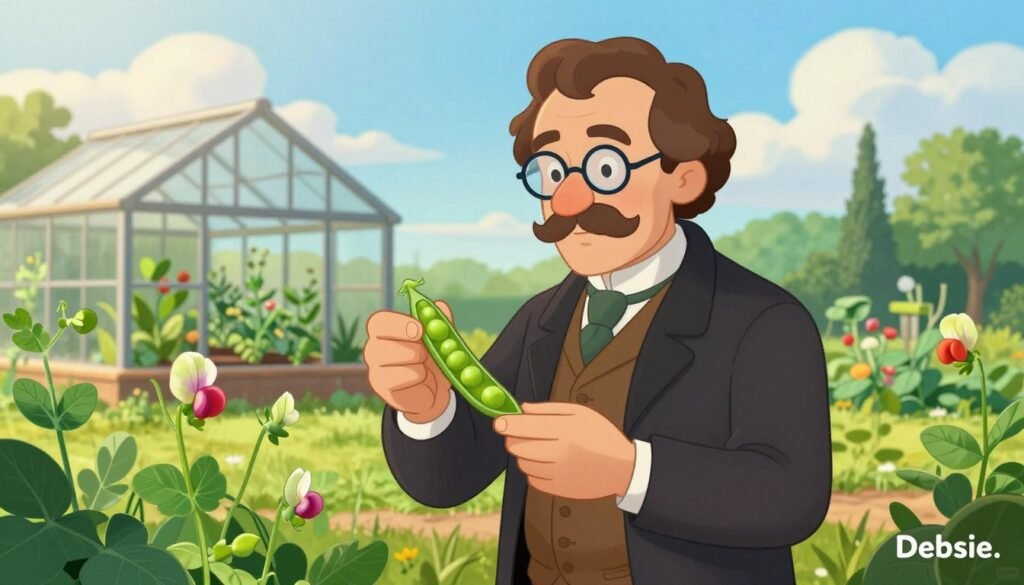
Now, we see Mendel as a leader in genetics. His work helps us in medicine and farming. He inspires scientists and teachers everywhere!
Mapping the Heavens: Galileo Galilei
Galileo Galilei made big changes with the telescope. He improved it and saw the world in a new way. This started a new time in astronomy!
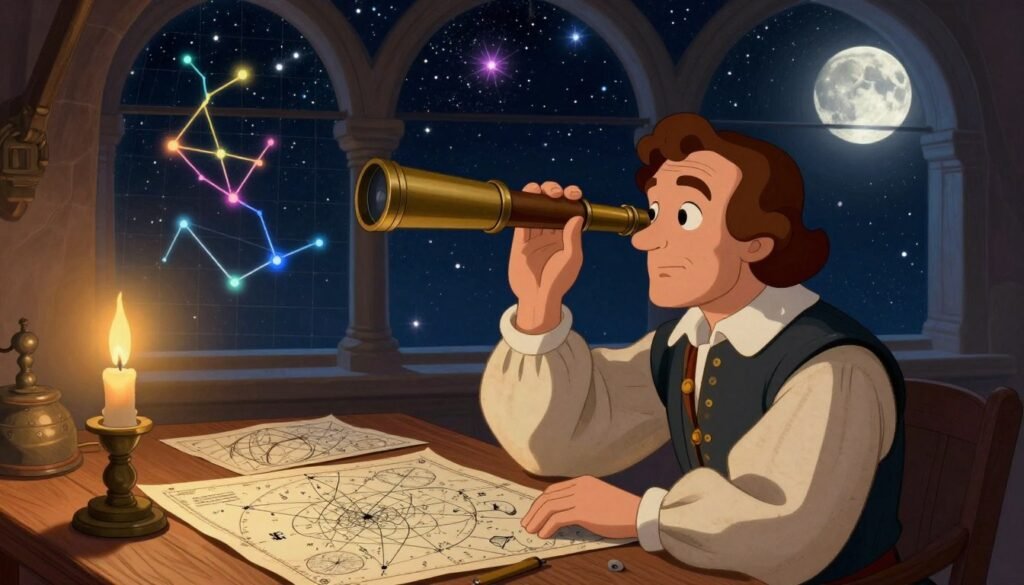
Advancements in Telescopic Astronomy
Galileo made the telescope better. He could see the night sky clearly. He saw mountains on the Moon and found four moons around Jupiter.
These discoveries helped prove the universe is not centered on Earth. They supported the heliocentric model of the universe!
Some of his key findings include:
- Seeing Venus go through phases, which supported the Copernican model!
- Looking at sunspots to learn about the Sun’s rotation!
- Seeing the Moon’s rough surface!
As NASA notes, Galileo’s work on the Moon, Jupiter, Venus, and the Sun was very important. It helped prove the heliocentric model!
The Conflict Between Empirical Evidence and Dogma
Galileo’s findings caused a big fight. The Catholic Church believed in a geocentric view. Galileo’s support for the heliocentric model was seen as a threat.
“Measure what can be measured, and make measurable what cannot be measured.”
This quote shows Galileo’s focus on evidence. He faced many challenges but his work helped start modern astronomy and the scientific method!
Galileo’s work shows the power of empirical evidence. It shows why we should question old beliefs. His work still inspires scientists and astronomers today!
The Quantum Pioneer: Niels Bohr
Niels Bohr changed how we see the atomic world. Before he was famous, he studied and played soccer at Denmark’s University of Copenhagen. He then moved to England to work with J.J. Thomson, who found the electron.
Bohr didn’t stop there. He made big contributions to understanding the atom. Let’s look at some of his key achievements!
The Atomic Model
The Bohr model of the atom was a big step forward. Bohr said electrons go around the nucleus in certain levels. This idea was new because it talked about energy in parts.
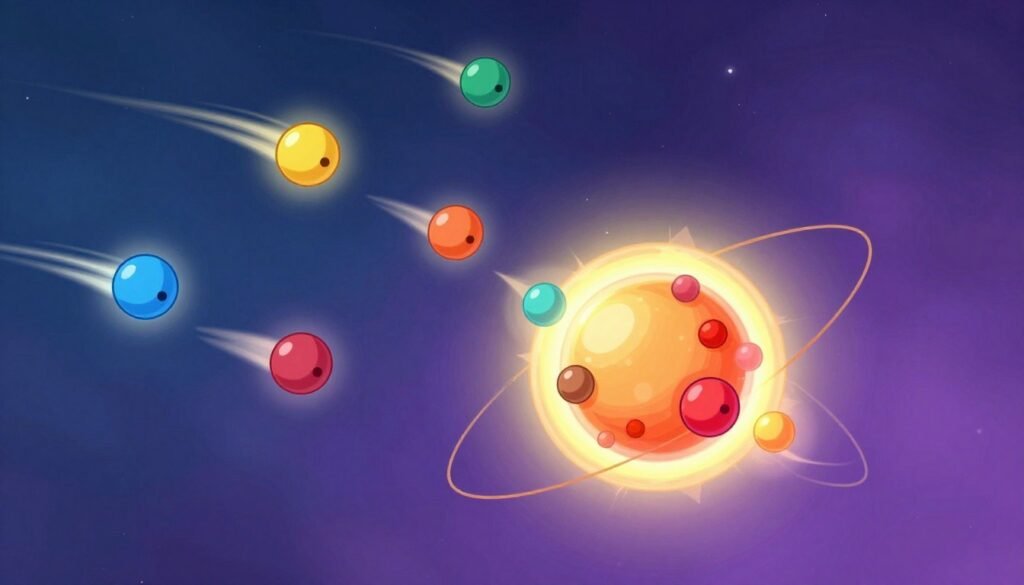
Quantum Mechanics and Complementarity
Bohr didn’t just work on the atomic model. He was also key in quantum mechanics. He came up with complementarity. This means some things about a particle, like where it is and how fast it’s going, can’t be known at the same time.
Bohr’s work has inspired many scientists. His legacy shows how important it is to keep exploring and learning!
Mastering the Microscopic World: Louis Pasteur
Louis Pasteur changed how we see the tiny world! He helped us understand germ theory and created pasteurization. This saved many lives.
Pasteur showed us how to keep things clean. He taught us to sterilize linens, dressings, and surgical tools. His work started modern microbiology and improved health.
Germ Theory and the Process of Pasteurization
Pasteur’s work on germ theory was key. He proved that tiny bugs cause many sicknesses. This led to pasteurization, a way to kill harmful germs in liquids.
Pasteurization heats liquids hot, then cools them fast. This method is used today to make milk and juice safe to drink.
| Technique | Description | Application |
|---|---|---|
| Pasteurization | Heating liquids to kill bacteria | Food industry (milk, juice) |
| Sterilization | Killing all microorganisms | Medical equipment, linens |
| Vaccination | Introducing antigens to build immunity | Preventing diseases (rabies, anthrax) |
Vaccination Development and Immunology
Pasteur also helped with vaccination development and immunology. He made vaccines for anthrax and rabies. These vaccines use weak forms of the disease to protect without causing it.
For more info on Louis Pasteur, check out Science History Institute.
His work in vaccines has saved many lives. Vaccines are key in keeping us healthy today. They protect us from many diseases.
The Visionary of Computing: Alan Turing
Alan Turing is a big name in computer science! His work changed how we use technology today.
He did many important things. Two big ones are the Turing machine and helping crack the Enigma code in World War II.
The Turing Machine and Artificial Intelligence
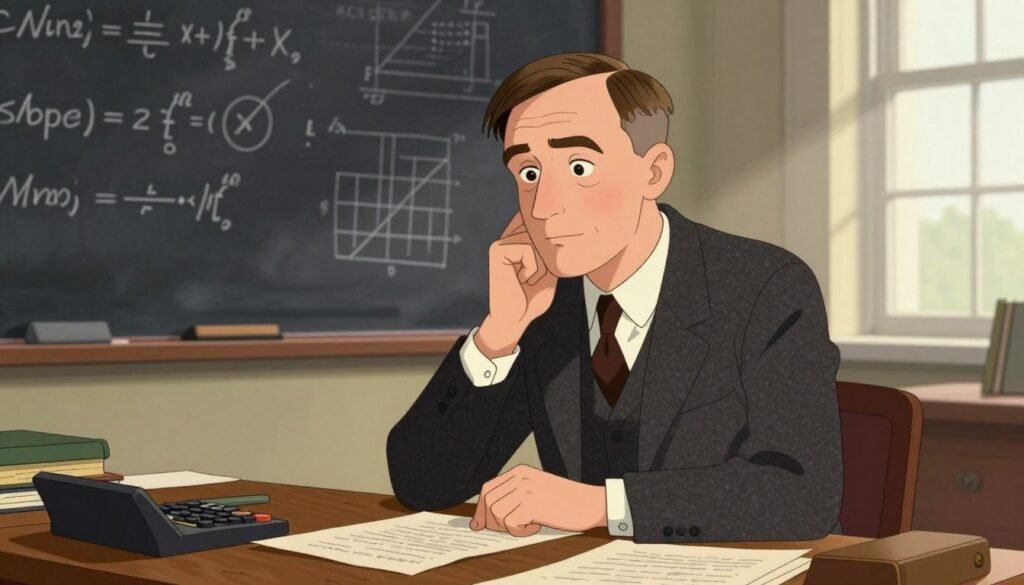
The Turing machine is key in computer science! It’s a simple device that can do any task. This work helped start artificial intelligence.
Turing also came up with the Turing Test. It checks if a machine can think like a human. This idea has made AI grow a lot!
Breaking the Enigma Code During World War II
During World War II, Turing worked hard at Bletchley Park. He helped crack the German Enigma code. His work was very important for the Allies to win!
To learn more about Alan Turing, check out Wikipedia’s page on Alan Turing. It has lots of info on his life and work.
Expanding the Universe: Edwin Hubble
The universe just got a whole lot bigger, thanks to Edwin Hubble’s pioneering work! Edwin Hubble was an American astronomer. He made big contributions to our understanding of the cosmos.
Hubble worked at the Mount Wilson Observatory in the 1920s. He used the powerful Hooker Telescope to see distant galaxies.
The Discovery of Galaxies Beyond the Milky Way
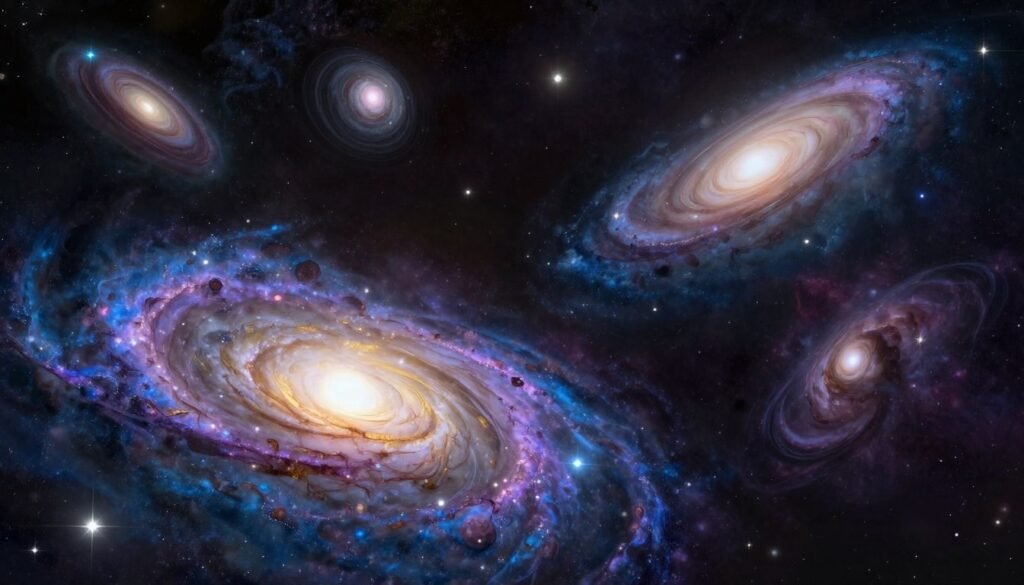
Hubble found galaxies beyond our own Milky Way. This was a big discovery that changed how we see the universe.
Before Hubble’s discovery, many believed that the Milky Way was the entire universe! Hubble showed that the Andromeda Nebula was a separate galaxy.
Hubble’s Law and the Expanding Universe
Hubble also found that the universe is expanding. He measured the redshift of light from distant galaxies. This showed that those galaxies are moving away from us.
This led to Hubble’s Law. It says that a galaxy’s velocity is directly proportional to its distance from us. This law helps us understand the universe’s expansion.
Hubble’s work is key to modern cosmology. It helps us understand the universe’s origins and how it has evolved.
The DNA Revolution: Rosalind Franklin
Rosalind Franklin found out that DNA comes in two types. These are the “A” form when dry and the “B” form when wet. Her discovery helped us understand DNA better.
X-ray Crystallography and the Structure of DNA
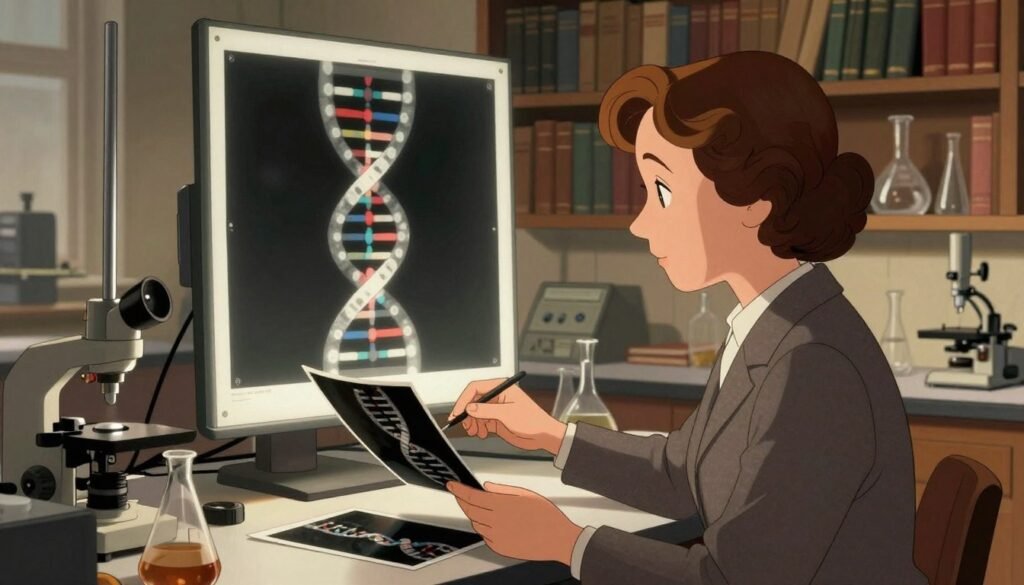
Franklin started working at King’s College London in 1951. She used X-ray diffraction techniques to study DNA. Her work gave us clear X-ray crystallography images of DNA’s double helix.
Her famous Photograph 51 was key to proving the double helix model. You can read more about her on History.com.
Overcoming Barriers in Scientific Research
Franklin faced many challenges, like gender bias and limited resources. But she didn’t give up. Her hard work helped us understand DNA better.
Her story shows us that scientific breakthroughs come from facing and overcoming obstacles. It inspires scientists today to keep pushing boundaries!
Enhancing Your Knowledge Through Debsie Gamified Courses
Learn science in a fun new way with Debsie’s gamified courses! We think learning should be fun and easy. Our interactive lessons make science fun for everyone.
Why Gamified Learning Works for Science Enthusiasts
Gamified learning is more than a trend. It’s a great tool that makes hard ideas easy to get. Our lessons use game design to make learning exciting and fun.
- It makes learning interactive and fun!
- It provides instant feedback and rewards progress.
- It encourages healthy competition among learners.
Gamified learning is great for science education. It helps show complex ideas in a fun way.

Exploring Interactive Lessons at https://debsie.com/courses
At Debsie, we offer top-notch, interactive science lessons. Our courses fit different learning styles. Check out our courses at https://debsie.com/courses and see how we make science fun.
- Interactive simulations and experiments.
- Personalized learning paths based on your progress.
- A community of learners to collaborate and share knowledge.
Join our community today and start learning science in a fun and engaging way!
The Future of Scientific Discovery
Human civilization, technology, and science are growing fast. Scientific discovery will keep changing our world. It’s exciting to see what’s next.
Science is changing fast. New fields are coming, and old ones are growing. The next scientists will lead the way.
Emerging Fields and the Next Generation of Scientists
New areas like quantum computing and renewable energy are changing science. They help solve big problems.
The next scientists are ready to innovate. They bring new ideas and use the latest tech. They will make big discoveries.
| Emerging Field | Potential Impact |
|---|---|
| Quantum Computing | Revolutionizing data processing and analysis |
| Synthetic Biology | Creating new biological systems and organisms |
| Renewable Energy Technologies | Transforming the global energy landscape |
The Role of Technology in Accelerating Innovation
Technology innovation helps science move fast. New tech solves hard problems.
Technology also helps scientists work together. They share data and ideas worldwide. This teamwork leads to new discoveries.
The future of scientific discovery looks bright. With new tech and fields, we’ll see big changes. These changes will help us understand the world better and make our lives better.
Conclusion
We’ve looked at the lives and discoveries of famous scientists. They include Isaac Newton and Rosalind Franklin. Their work changed how we see the world!
These scientists made big discoveries in physics, biology, and genetics. Their work will keep inspiring new scientists and thinkers.
By learning from these scientists, we can love nature more. We can also learn more about ourselves. Check out Debsie’s courses at https://debsie.com/courses.
Let’s keep loving to learn and discover. This will help the next generation make a better world for everyone.