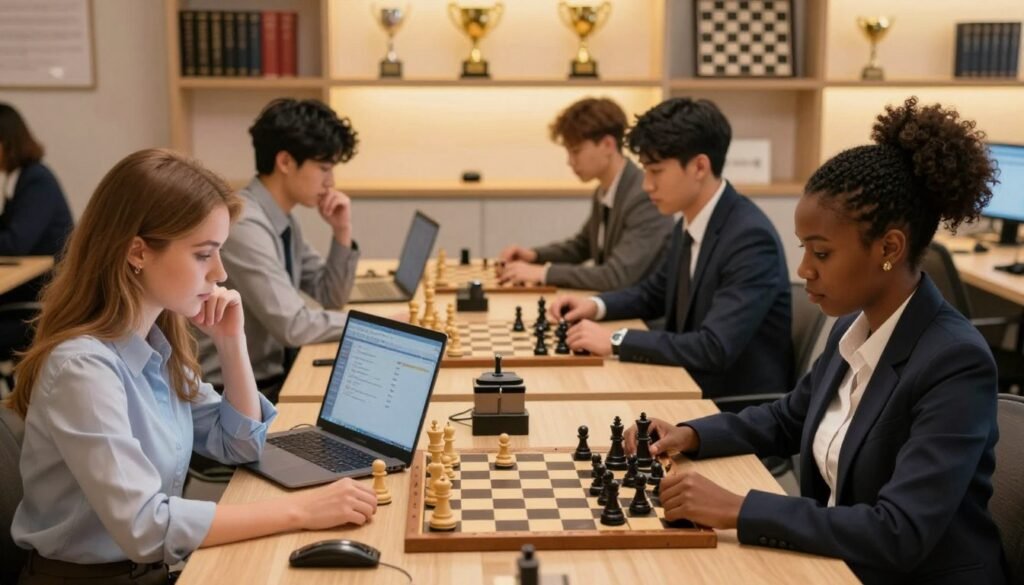
The best online chess players are hard to name with one simple list. Why? Because online chess moves fast. A player can rule bullet, fall in blitz, and still be scary in rapid. On Chess.com, names like Hikaru Nakamura and Magnus Carlsen sit near the top of the blitz ranks, while the bullet and rapid boards can look very different from week to week. Lichess also has its own live leaderboards, where many elite titled players and hidden online monsters fight for the top spots every day.
Find the right learning experience
Tell us a little about the learner and what you are looking for. Our team will review your answers and help you identify the most suitable next step.
- Takes only a few minutes
- No payment required
- Personalised recommendations
Your information will only be used to respond to your enquiry.
The Real Meaning Of Elite Online Chess Is Bigger Than Rating
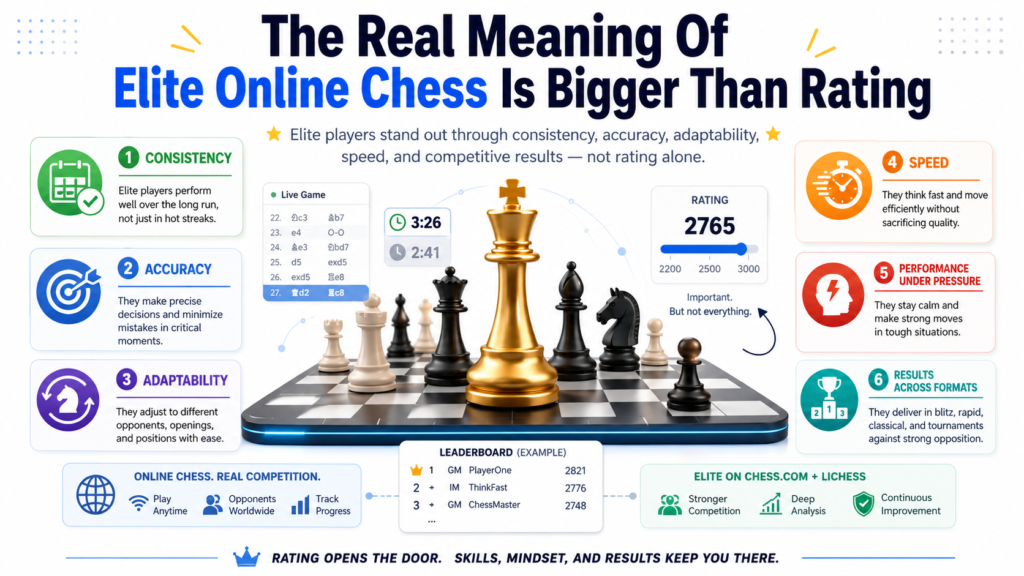
When people ask who the best online chess players are, they often look at the rating list first. That makes sense. A high rating is easy to see. It feels clean and simple. But online chess is not that simple. A player can be number one in bullet and not be the best in blitz.
Another player can crush rapid games but struggle when there are only seconds left on the clock.
This is why we need to judge online chess in a smarter way. The best online players are not just the ones with the biggest number beside their name. They are the players who can win again and again, against strong players, in many time controls, while under heavy pressure.
On Chess.com, the live leaderboards change often. As of the latest checked leaderboard, Hikaru Nakamura and Magnus Carlsen were both sitting near the very top of the blitz list, while the bullet and rapid boards had different names near the top.
That already tells us something important. Online chess has many kinds of greatness, and each time control asks for a different skill set.
Find the right learning experience
Tell us a little about the learner and what you are looking for. Our team will review your answers and help you identify the most suitable next step.
- Takes only a few minutes
- No payment required
- Personalised recommendations
Your information will only be used to respond to your enquiry.
The leaderboard is useful, but it is not the whole story
A leaderboard tells us who is hot right now. It shows form. It shows activity. It shows who has been winning rated games on that platform. But a leaderboard does not always show the full truth.
Some elite players play less often. Some use different accounts. Some focus on tournaments instead of rated ladder games. Some play for training and do not care much about keeping the highest possible online rating.
And some online specialists play thousands of fast games, so they become deadly in that exact format.
That is why a strong article on this topic cannot just say, “Here are the top five names.” That would be too lazy. The better question is, “Who keeps proving they are elite when the game is fast, messy, stressful, and watched by thousands of people?”
This is the part young players should learn from
For kids, this is a big lesson. Do not chase rating only. Rating matters, but it is not the only sign of growth. A child who learns to stay calm, spot simple tactics, avoid panic, and think clearly is already building the base of a strong chess mind.
That is exactly how Debsie teaches chess. We do not just tell kids to move fast or memorize tricks. We help them understand why a move works. We help them slow down when they need to. We help them build focus, patience, and smart habits that help both on and off the board.
So when we talk about the best online chess players, we are also talking about the best online chess habits. That is where the real value is for a young player.
Magnus Carlsen Is Still The Standard For Online Greatness
Magnus Carlsen is not just a famous over-the-board chess player. He is also one of the most complete online players ever. He can win slow games, rapid games, blitz games, and bullet-style chaos. What makes him special online is not only his calculation.

It is his sense of danger. He often knows when a position is safe, when it is tricky, and when the other player is about to crack.
In the 2025 Speed Chess Championship, Carlsen defended his title by beating Alireza Firouzja 15-12 in the final. That gave him his fifth Speed Chess Championship title, and it was also his third straight title in that event.
This matters because the Speed Chess Championship is one of the best tests of online skill. Players do not only play one time control. They move through different speeds, and they must stay sharp for a long match.
Carlsen’s online strength is not built on one trick. He can squeeze tiny endgame edges. He can attack when the board opens. He can play “ugly” moves when the position demands it. He can also win games where nothing seems to be happening, which is one of the hardest skills in chess.
Why Carlsen is so hard to beat online
Many players need a clear plan to play well. Carlsen can play well even when the position is unclear. That is a huge online weapon. In fast chess, players often do not have time to find the perfect move. They need moves that are hard to answer. Carlsen is a master at giving opponents small problems again and again.
This is why his games often look simple after the fact. A beginner may see one of his wins and think, “That did not look so special.” But that is the point. Carlsen makes hard chess look calm. He does not need to win with a wild queen sacrifice.
He often wins because his pieces are a little better, his king is a little safer, and his opponent has no easy moves left.
The Debsie takeaway from Carlsen’s online play
Young players should not try to copy every Carlsen move. That would be too hard. Instead, they should copy his attitude. He keeps asking small questions. Is my king safe? Is my worst piece active? Can I make my opponent defend something? Can I improve before I attack?
These are simple questions, but they make a huge difference. At Debsie, coaches use this kind of thinking to help kids stop guessing. When a child learns to ask better questions, the board becomes less scary. The child starts to feel in control. That confidence is one of the best gifts chess can give.
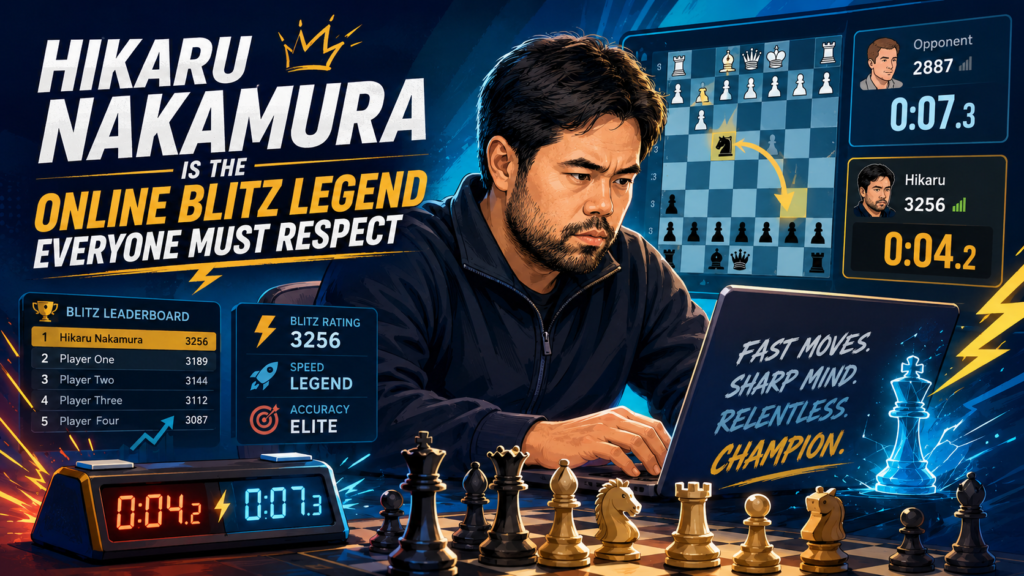
Hikaru Nakamura Is The Online Blitz Legend Everyone Must Respect
If Carlsen is the complete online king, Hikaru Nakamura is the name most people connect with online speed chess. Hikaru has been part of internet chess for a very long time. He helped make fast online chess exciting for huge numbers of fans.
He is not only a top player. He is also one of the main reasons many young players started watching blitz and bullet in the first place.
Hikaru’s online style is different from Carlsen’s. Carlsen often squeezes. Hikaru often creates pressure with speed, tricks, and deep pattern memory. He sees tactics very fast. He also understands how humans make mistakes when the clock gets low.
That matters a lot in online chess, because the clock is almost like another piece on the board.
Chess.com’s Titled Tuesday archive shows how active and dangerous Hikaru still is. On May 5, 2026, he won a Titled Tuesday event with a 10 out of 11 score, in a field of hundreds of titled players. Titled Tuesday is not a soft event.
It is packed with grandmasters, international masters, and rising stars who are all trying to win.
Hikaru’s biggest online gift is practical pressure
Some players only play well when they have a clean position. Hikaru is different. He can win from clean positions, but he can also win from chaos. He is famous for finding resources when the game looks messy. He keeps pieces active. He sets traps. He makes the other player solve problems with little time.
That is why Hikaru is so scary in blitz. He does not need every move to be perfect. He needs the game to stay alive. Once the position has danger, time pressure, and tactics, he is in his world.
This is also why many kids love watching him. His games feel alive. Something is always happening. But there is a danger here too. Young players may think the lesson is to play fast and tricky all the time. That is not the real lesson.
The Debsie takeaway from Hikaru’s online play
The real lesson from Hikaru is pattern skill. He has seen so many positions that his brain can spot ideas quickly. That is not magic. It is training. It comes from solving tactics, reviewing games, learning common mating ideas, and playing with purpose.
At Debsie, we help students build this same base in a clean way. Kids learn common tactics like forks, pins, skewers, back-rank mates, discovered attacks, and simple endgame patterns. Then, when they play online, they are not just clicking fast. They are recognizing real chess ideas.
A child who learns patterns well starts to feel faster without rushing. That is the sweet spot. Fast eyes, calm hands, and a clear mind.
Alireza Firouzja Belongs In The Online Elite Group
Alireza Firouzja is one of the most exciting fast chess players in the world. He brings energy to the board. His games often feel sharp from the opening. He is not afraid of unclear positions, and he can create attacks from places where many players would simply play safe.
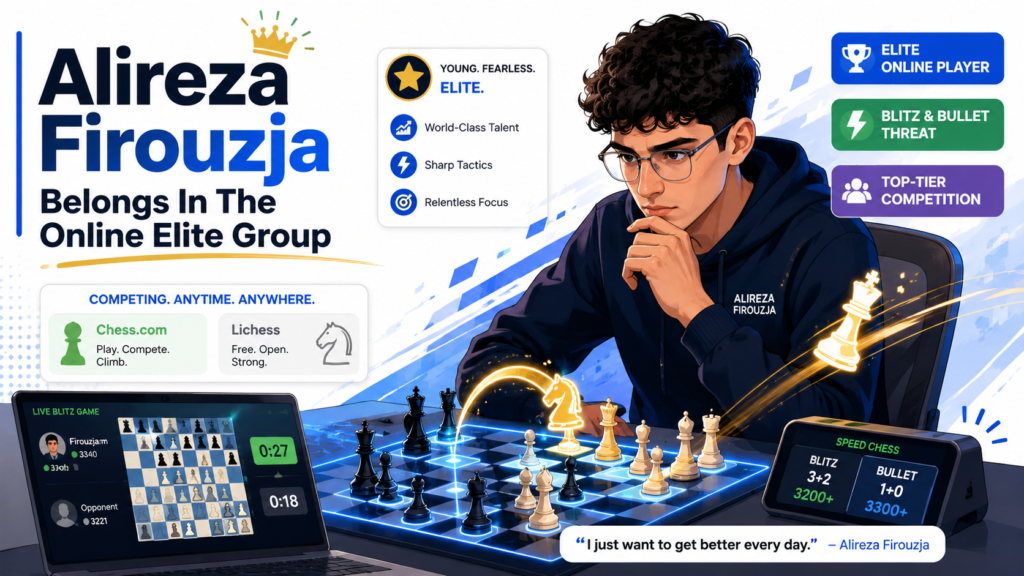
His 2025 Speed Chess Championship final against Carlsen was a strong reminder that he belongs in the top online group. Even though Carlsen won the match 15-12, the score was close enough to show Firouzja’s level.
He did not look like a player who was just happy to be there. He pushed Carlsen, created problems, and stayed dangerous deep into the match.
Firouzja’s online strength comes from his speed, courage, and sharp calculation. He is the kind of player who can make even the best defenders feel unsafe. That is rare. Many strong players can attack weaker players. Firouzja can attack elite players.
Why Firouzja is dangerous in fast games
In fast chess, the attacker often has a practical edge. The defender must find only moves. The attacker can choose between several scary ideas. Firouzja understands this very well. He keeps tension on the board. He makes the opponent choose. He does not rush to trade pieces unless the trade helps him.
That is one reason he is so strong online. He creates positions where normal moves are not enough. You must be alert. You must calculate. You must handle stress. Against Firouzja, one slow move can be the start of a painful attack.
But there is another side to this. Playing sharp chess can also backfire. If the attack is not sound, the position can fall apart. That is why Firouzja’s best games are so fun to study. They show both risk and reward.
The Debsie takeaway from Firouzja’s online play
For kids, the lesson is not “attack every move.” The lesson is to attack with a reason. A good attack usually needs better piece activity, a weak king, open lines, or a lead in development. Without those things, an attack may just be a wish.
Find the right learning experience
Tell us a little about the learner and what you are looking for. Our team will review your answers and help you identify the most suitable next step.
- Takes only a few minutes
- No payment required
- Personalised recommendations
Your information will only be used to respond to your enquiry.
Debsie coaches help students understand when an attack is real and when it is just hope. This is a big step in chess growth. Once a child learns the difference, they stop throwing pieces at the king for no reason. They begin to build attacks with care.
That kind of thinking helps in school too. Kids learn not to rush into answers. They learn to check the facts first. Chess becomes a safe place to practice better choices.
Denis Lazavik Shows Why The New Online Generation Is Scary
The online chess world is not only about the biggest names. New stars are rising fast, and Denis Lazavik is one of the clearest examples. In the 2025 Speed Chess Championship, he beat Hikaru Nakamura 13.5-12.5 in the match for third place.

That was a major result because Hikaru has been one of the strongest online speed players for years.
This kind of result matters because online chess rewards young players who grow up with fast games, engines, puzzle training, and constant online practice. Many of today’s young stars are not scared of famous names.
They have played thousands of games online. They know the pace. They know the tricks. They know how to fight when the clock is low.
Lazavik’s win does not mean Hikaru is no longer elite. That would be silly. It means the online field is deeper now. The gap between the famous champions and the hungry young players is getting smaller.
The new elite is fearless and very well trained
Young online stars often have a different style. They are fast with tactics. They are comfortable in strange positions. They do not always need perfect openings because they know how to fight in the middle game. They are also used to playing strong opponents from a young age.
This is one of the best things about online chess. A talented child in one country can train, play, and learn against strong players from around the world. That kind of access used to be much harder. Now, a serious student can grow faster than ever with the right guidance.
But more games alone are not enough. A child can play thousands of online games and still repeat the same mistakes. Growth needs review. It needs coaching. It needs someone to explain what went wrong and what habit must change.
The Debsie takeaway from the new online generation
The rise of players like Lazavik is great news for kids. It proves that young players can become very strong when they train the right way. But it also shows that random clicking is not training. Playing online is useful only when it is paired with learning.
At Debsie, students get live classes, personal feedback, and chances to play in online events. This mix is powerful because kids do not just play and forget. They learn, test ideas, make mistakes, and come back stronger.
That is how real chess growth happens. Not in one lucky game. Not from one trap. It happens when a child builds better habits one class, one puzzle, and one game at a time.
Chess.com And Lichess Do Not Measure The Same Kind Of Online Power
A big mistake many players make is thinking Chess.com and Lichess leaderboards are the same thing with different colors. They are not. Both sites have strong players. Both sites have fast games. Both sites have titled events. But the player pools, rating systems, time controls, and daily activity can be very different.
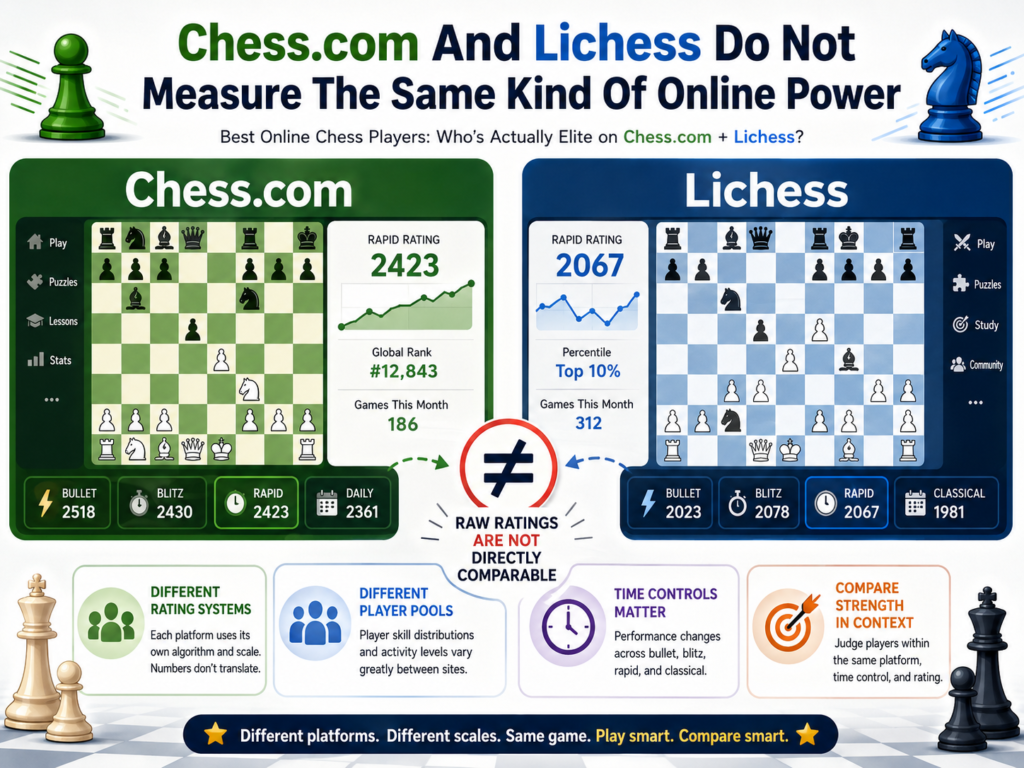
That means a number on one site does not always match a number on the other site. A 3000 blitz player on one platform is not “the same” as a 3000 blitz player on the other platform. The rating is useful inside that platform, but it should not be used as a perfect world rank by itself.
Chess.com’s public leaderboard shows separate lists for blitz, bullet, rapid, daily, puzzles, and other categories. When checked, Hikaru Nakamura was leading the Chess.com blitz list, Magnus Carlsen was close behind, and the bullet and rapid boards had different leaders.
That is a strong reminder that online chess is split into many small worlds, not one simple throne.
A player can be elite on one site and less active on another
Some grandmasters use Chess.com more often because of events like Titled Tuesday, Bullet Brawl, Speed Chess Championship, and the Champions Chess Tour. Some players also use Lichess often because of its clean design, open tools, studies, analysis boards, and arena events.
A player may be elite on both, but not always active on both at the same time.
That is why we should not judge a player only by one snapshot. Online ratings move fast. A player can lose points in one bad session, gain them back the next day, and still be one of the best in the world. What matters more is long-term proof.
Can the player beat top names? Can the player perform in big events? Can the player win when everyone knows who they are?
This is how kids should use leaderboards wisely
Leaderboards can inspire kids, but they can also hurt their confidence if they stare at them too much. A child may think, “I am only 900, so I must be bad.” That is not true. Every strong player started somewhere.
The smart way to use leaderboards is to study habits, not worship numbers. Look at how elite players bring pieces out. Look at how they protect the king. Look at how they turn small mistakes into wins. That is useful for every child.
At Debsie, we help kids treat rating as feedback, not as a label. A rating can go up or down, but better thinking stays. That is the real win.
Daniel Naroditsky’s Online Legacy Still Teaches Players How To Think
Daniel Naroditsky deserves a special place in any serious article about online chess greatness. He was not only a very strong grandmaster. He was also one of the best teachers the online chess world has ever had.
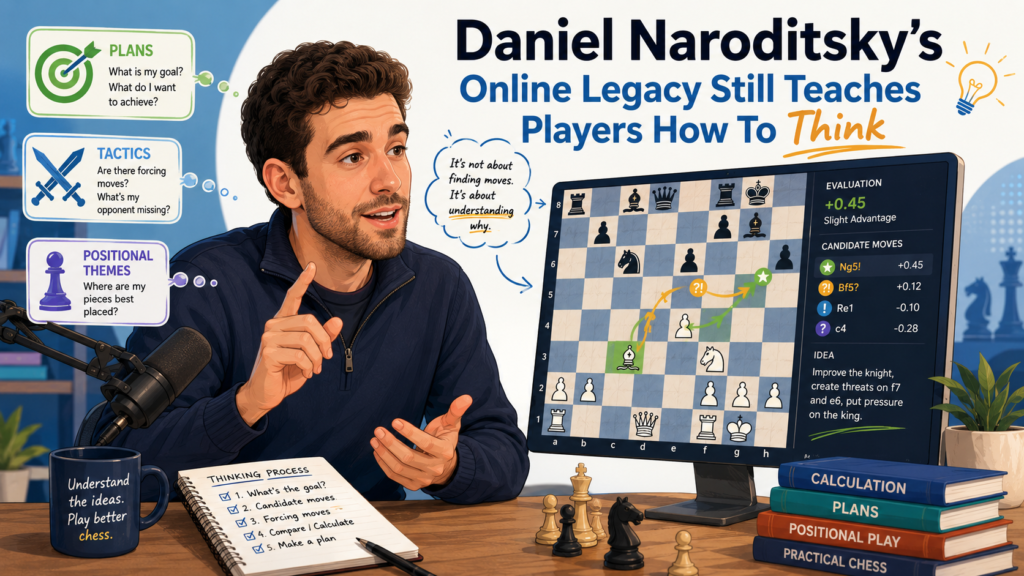
Many players watched his speedrun videos, streams, and lessons because he could explain hard ideas in a warm, simple way.
Naroditsky passed away in October 2025 at age 29, and the chess world responded with deep sadness. Reports described him as a grandmaster, coach, commentator, streamer, and one of the most loved voices in online chess.
His online record was also real. Chess.com’s Bullet Brawl all-time list, published in May 2026, still had Naroditsky second all time with 32 Bullet Brawl titles, behind Hikaru Nakamura. That is not a small thing.
Bullet Brawl is packed with titled players, and winning it once is hard. Winning it again and again shows true online class.
Naroditsky made fast chess feel calm
What made Naroditsky special was not just speed. Many players are fast. He was fast and clear. He could play bullet while still explaining plans in a way that normal players could understand. That is rare.
His best teaching gift was this: he made chess feel less scary. He would show that a move did not need to be fancy to be good. He would explain why a simple developing move was strong, why a trade helped, or why a quiet king move mattered. For young players, that kind of voice is powerful.
A child watching elite chess can feel lost. The moves can seem too quick. The ideas can seem too deep. Naroditsky helped many players feel, “I can learn this.”
The Debsie takeaway from Naroditsky’s teaching style
For kids, the lesson from Naroditsky is that strong chess is not about showing off. It is about clear thinking. You do not need to crush every game with a wild tactic. You need to understand what your pieces want to do.
That is very close to how Debsie teaches. We want children to speak their thoughts, not just make moves. When a coach asks, “Why did you move that piece?” the child learns to slow down and think. Over time, that habit becomes confidence.
Parents often want chess to help their kids focus better, sit longer, and make smarter choices. This is exactly where good coaching helps. Chess becomes more than a game. It becomes thinking practice.
Andrew Tang And Oleksandr Bortnyk Show Why Bullet Is Its Own Skill
Bullet chess looks wild from the outside. Pieces fly. Clocks drop. Good players seem to move before they even think. But at the top level, bullet is not random. It is a serious skill with its own rules.
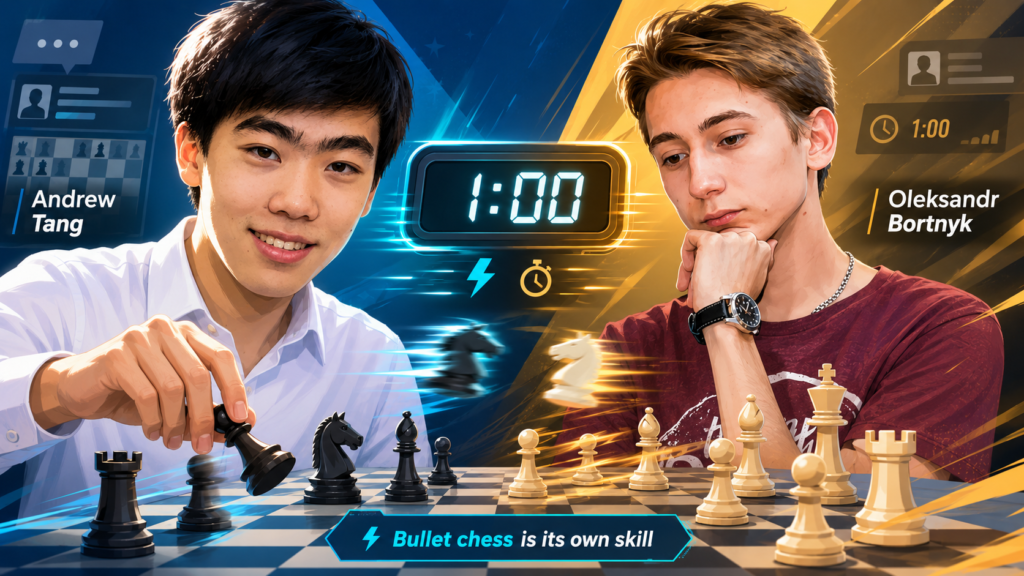
Andrew Tang and Oleksandr Bortnyk are two names that must be part of this talk. Tang is widely known as one of the best bullet players in the world, and Chess.com’s player profile describes him that way.
Bortnyk is also a long-time bullet monster, and Chess.com’s May 2026 Bullet Brawl report listed him second in that event behind Nakamura, while also showing him among the top all-time Bullet Brawl winners.
These players prove that bullet is not just “normal chess played faster.” It is a different test. You need pattern memory, mouse skill, nerves, safe premoves, and the ability to keep creating problems with almost no time.
Bullet rewards simple threats and strong hands
In longer chess, you may have time to find the best move. In bullet, you often need a good move right now. That changes everything. A good bullet player does not always search for beauty. They search for pressure.
Tang is known for extreme speed, especially in very fast formats. Bortnyk is known for being hard to shake and very practical. They both understand that the clock can turn a small edge into a win. If your opponent has three seconds left, even a simple threat can feel like a storm.
This is why bullet specialists are so dangerous online. They know how to make the game hard when there is no time to think.
The Debsie takeaway from bullet specialists
Kids should enjoy bullet, but they should not train only bullet. Bullet can build speed and pattern skill, but it can also build bad habits if a child plays it too much. A student may start moving before checking for danger. That can hurt their chess growth.
At Debsie, we want children to build the right base first. They learn to check threats, finish development, protect pieces, and look for tactics. Once those habits are strong, faster games become more useful.
A good rule for young players is simple. Play slow enough to learn. Then play fast enough to test what you know.
José Martínez, Nihal Sarin, And Tuan Minh Le Are The Kind Of Players Nobody Wants To Face Online
The biggest names get most of the attention, but online chess has many dangerous players who can beat almost anyone on the right day. José Martínez, Nihal Sarin, and Tuan Minh Le belong in that group. They may not always be the first names a casual fan says, but strong players know how scary they are.
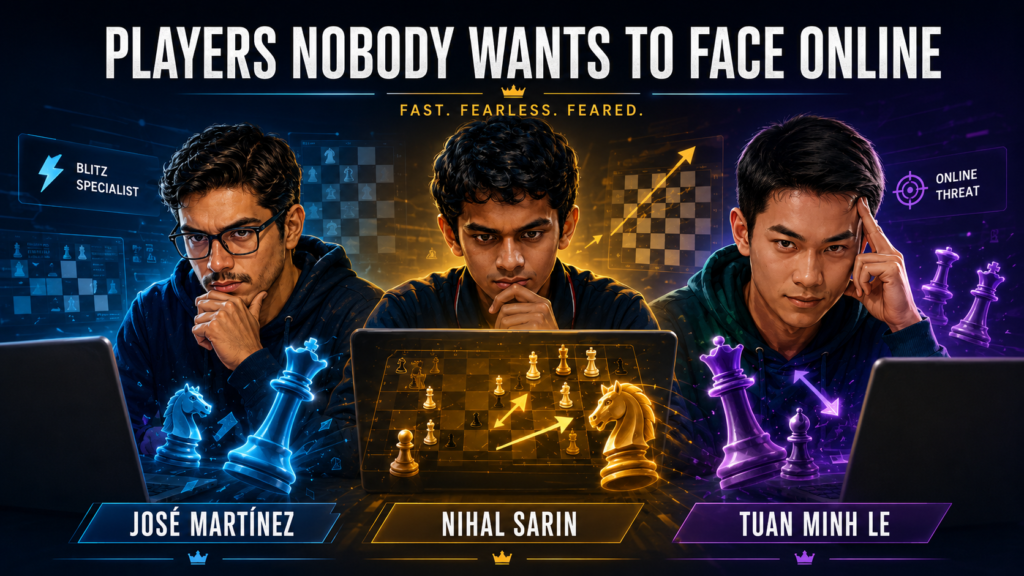
José Martínez, known online as Jospem, is a regular near the top of Chess.com’s Titled Tuesday events. Chess.com’s player page says he won the World Youth Championship under-18 in 2017 and has often finished near the top of Titled Tuesday.
In the May 5, 2026 Titled Tuesday won by Nakamura, Martínez was one of the early leaders and finished fourth on tiebreaks after scoring 8.5 out of 11.
Nihal Sarin is another player who fits online chess very well. He is fast, sharp, and very calm in messy positions. Tuan Minh Le is also a regular danger in speed events, and Chess.com’s Bullet Brawl report named him among top grandmasters who often feature in the event.
These players win because they are practical
Practical chess means finding moves that work in real games against real people. It does not always mean finding the engine’s favorite move. Online chess rewards this skill heavily.
A practical player knows when to trade, when to keep tension, when to attack, and when to make the opponent use time. This is why players like Martínez, Nihal, and Tuan Minh Le are so hard to handle. They do not need perfect positions. They just need chances.
That is a major lesson for young players. You do not win games only by knowing openings. You win by staying alert when the game leaves your memory.
The Debsie takeaway from practical online players
For kids, practical chess starts with simple questions. What is my opponent threatening? Is my piece safe? Can I make a threat? Is my king okay? These questions sound basic, but they stop many blunders.
Debsie coaches help children build this thinking pattern through live games, puzzles, and review. The goal is not to make kids memorize hundreds of lines. The goal is to help them make better choices under pressure.
That is why online chess can be such a great learning tool when guided well. Every game gives feedback. Every mistake can become a lesson.
The Best Online Players Teach Us What To Copy And What To Avoid
Watching elite online chess is exciting, but young players must copy the right things.
It is easy for a child to watch Hikaru move fast and think, “I should move fast too.” It is easy to watch Firouzja attack and think, “I should attack every game.” It is easy to watch bullet players premove and think speed is everything.
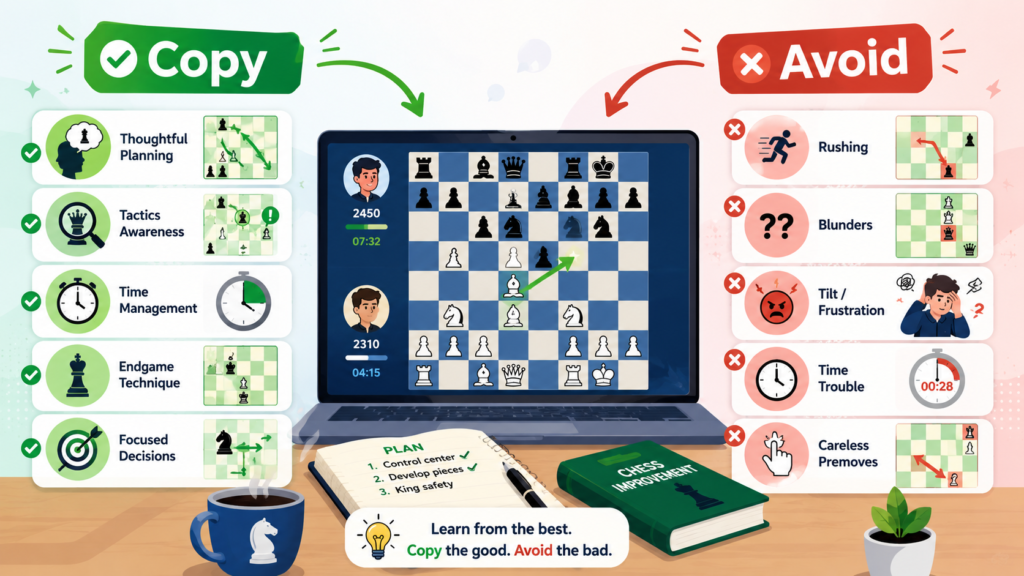
But that is not how growth works. Elite players can play that way because they have years of deep skill behind the fast moves. Their speed is built on patterns, memory, calculation, and experience. A beginner copying only the speed is like copying a race car without learning how to drive.
The smart way is to copy the thinking behind the moves. From Carlsen, copy patience. From Hikaru, copy pattern training. From Firouzja, copy courage with reason. From Lazavik, copy fearlessness. From Naroditsky, copy clear thinking.
From Tang and Bortnyk, copy fast pattern recall, but only after building good habits.
Online chess should build confidence, not stress
Some kids love online chess right away. Others get upset when they lose rating points. Parents should watch for this. If a child becomes angry after every loss, the goal has shifted from learning to proving. That is not healthy.
A good chess path should feel challenging, but not crushing. Kids should learn that losing a game is not the same as failing. It is just information. It tells them what to practice next.
This is one reason structured coaching helps so much. A coach can turn a painful loss into a clear lesson. The child does not leave thinking, “I am bad.” The child leaves thinking, “Now I know what to fix.”
This is why Debsie is a smart next step for young online players
If your child already plays on Chess.com or Lichess, that is a great start. But playing alone can only take them so far. The next step is learning how to review games, spot patterns, build plans, and stay calm when the clock is running.
That is where Debsie can help. Our live classes, private coaching, and online tournaments give kids a safe place to grow. They learn chess, but they also learn focus, patience, smart thinking, and confidence.
Your child does not need to dream of becoming Magnus Carlsen to benefit from chess. They only need a place where learning feels fun, clear, and personal. A free Debsie trial class is a simple way to see that first step in action.
Lichess Has Its Own Kind Of Online Monster
Lichess is a different world from Chess.com. It feels faster, cleaner, and more open to many players. Some titled players love it because they can jump into strong games quickly, use studies, review positions, and play arena events with very little friction. That makes Lichess a serious place to find elite online talent.
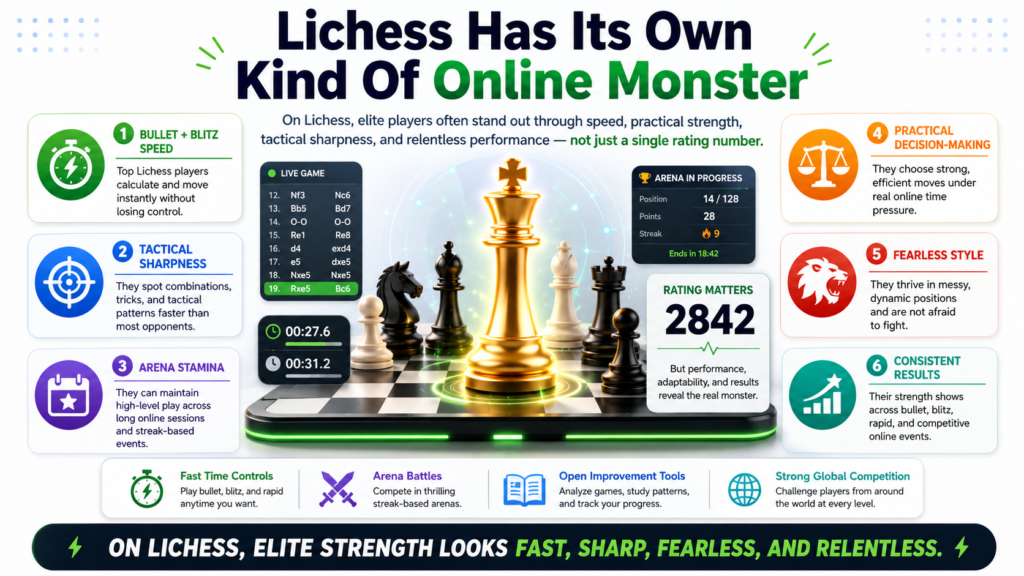
When checked, the Lichess public bullet leaderboard had GM nihalsarin2004 at the top with a 3361 bullet rating. The same page also showed very strong names near the top, including Ediz Gurel, SindarovGM, chess-art-us, and others.
This tells us something important: Lichess bullet is not a soft pool. If you are near the top there, you are facing players who can punish even tiny slips in seconds.
Lichess ratings should be read inside the Lichess world
A Lichess rating is not the same as a Chess.com rating. Parents and students should not compare the numbers like they are from the same test. They are shaped by different player pools and rating systems. Still, the top of either site is full of real strength.
The best way to read a Lichess rating is to ask what it shows inside that platform. A high Lichess bullet rating means the player is beating strong Lichess bullet players. A high Lichess blitz rating means the player is doing well in that exact time control. That sounds simple, but many people miss it.
Young players should study the skill, not the number
For a child, the lesson is clear. Do not get lost in rating comparison. Instead, ask, “What does this player do well?” A top Lichess bullet player may teach speed, pattern memory, and calm hands. A top blitz player may teach better time use and stronger piece play.
At Debsie, we help kids use online platforms in a healthy way. Chess.com and Lichess can both be great learning tools, but only when a child knows how to learn from each game. The goal is not to stare at a number. The goal is to grow a stronger chess brain.
Online Arenas Prove Who Can Handle Pressure For Hours
One game can lie. A short winning streak can lie too. But a long online arena is harder to fake. In an arena, players must win, reset, and keep going. They cannot spend too much time feeling proud after a win or sad after a loss. The next game starts fast.
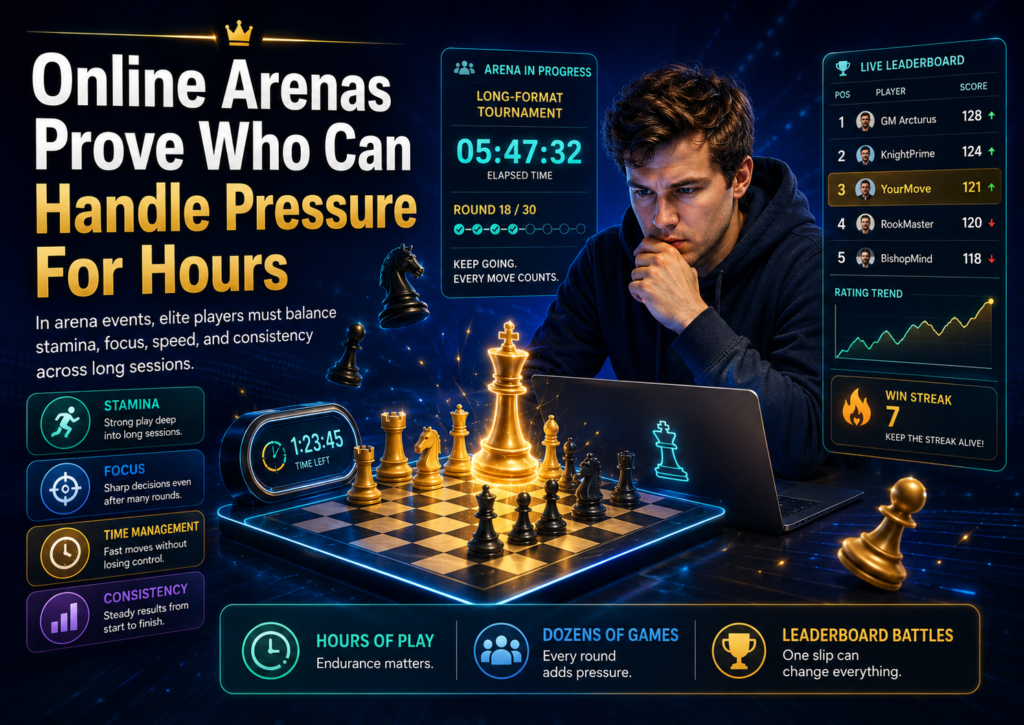
That is why arena results matter. The Lichess January 2026 Titled Arena was a 1+0 bullet event that ran for two hours and was open only to titled players. The event page also showed cash prizes and listed GM chess-art-us as the winner.
This kind of format is brutal because it tests speed, stamina, and emotional control all at once.
Stamina is a hidden online chess skill
Many young players think online chess is only about tactics. Tactics matter a lot, but stamina matters too. Can you still focus after one hour? Can you stay calm after blundering a rook? Can you play the next game without anger?
Elite online players are strong because they recover fast. They do not let one bad game ruin the next five. They may feel annoyed, but they return to the board with a clear goal. That is one of the biggest differences between a good player and a great online player.
This is where chess becomes life training
This is also why chess is so useful for kids. A child who learns to reset after a loss is learning a life skill. School has hard tests. Sports have bad days. Friendships have tough moments. Chess gives kids a safe place to practice bouncing back.
Debsie classes are built around this idea. We help students learn that mistakes are not the end. They are clues. When kids see mistakes this way, they become braver, calmer, and more willing to keep trying.
The Chess.com Bullet Brawl Shows Why Hikaru Still Owns The Format
Bullet Brawl is one of the clearest tests of online bullet strength on Chess.com. It is fast, crowded, and full of dangerous players. You do not win it by accident. You win it by playing strong chess at high speed for a long stretch.
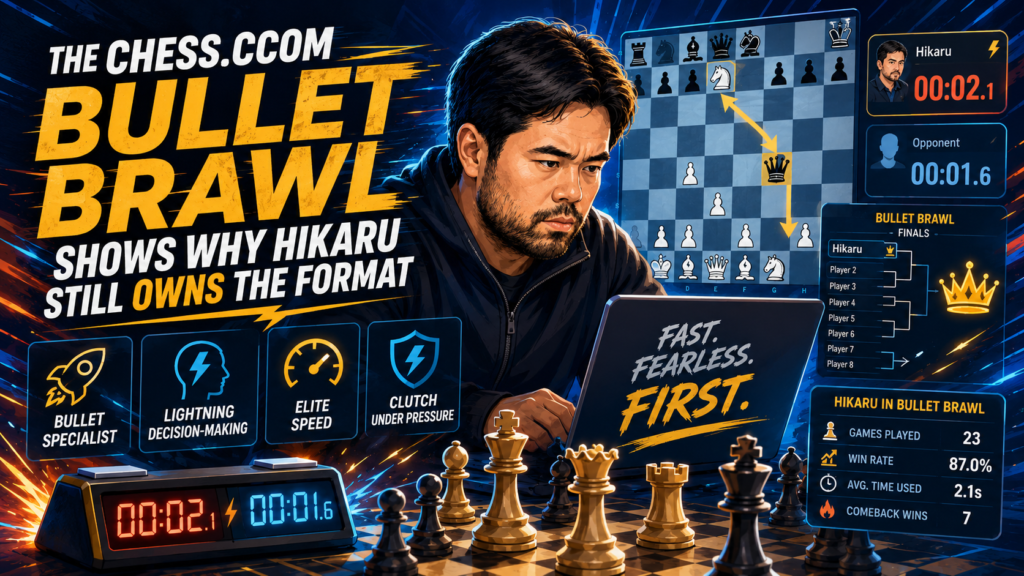
On May 2, 2026, Hikaru Nakamura won his 55th Bullet Brawl title. Chess.com reported that he scored 52.5 out of 65 games and finished with 172 points, which was 20 points ahead of Oleksandr Bortnyk. The same report listed Bortnyk, Dmitry Andreikin, and Tuan Minh Le right behind him in the top four.
Hikaru’s bullet strength is more than moving fast
The easy story is that Hikaru wins because he is fast. That is true, but it is not enough. Many players are fast. Hikaru wins because his fast moves still carry threats. His pieces stay active. His king is usually safer than it looks. He understands which positions are easy to play with no time.
That is the real art of bullet. You do not need to find the prettiest move. You need to find the move that keeps your game alive and makes your opponent work. Hikaru does this again and again.
Kids should copy the training, not the rush
A young player should not see Hikaru’s bullet games and start moving instantly in every game. That would be the wrong lesson. Hikaru can move fast because he has spent years building patterns.
The right lesson is to build the base first. Solve tactics. Learn common mates. Practice simple endgames. Review mistakes. Then speed becomes useful. At Debsie, this is exactly how coaches guide students. We make the child stronger first, then help them play with better pace.
The All-Time Online Greats Have Different Superpowers
The best online chess players are not copies of each other. Magnus Carlsen wins with deep feel, calm pressure, and endgame class. Hikaru Nakamura wins with speed, pattern skill, and practical danger. Alireza Firouzja wins with sharp attacks and brave choices.
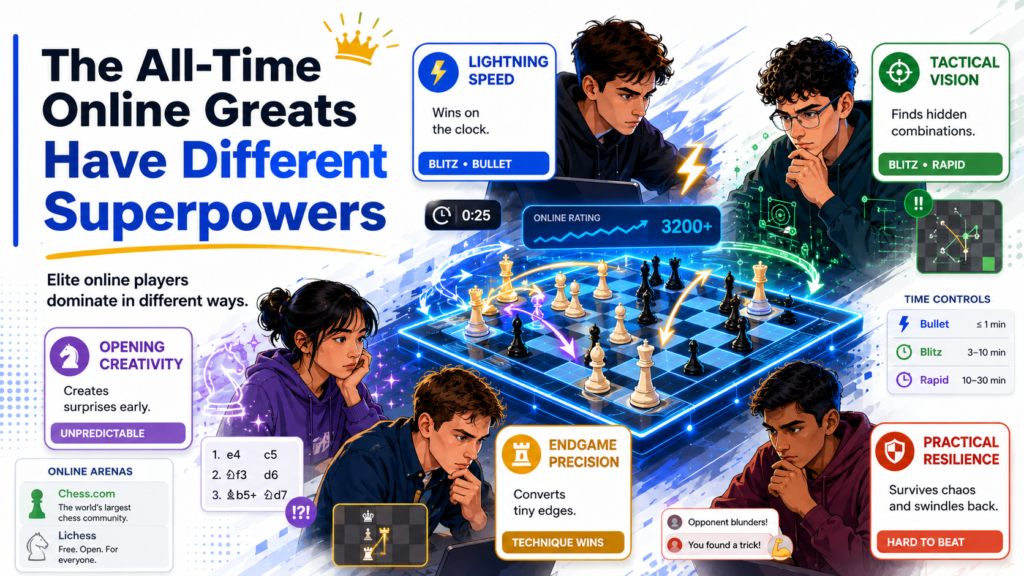
Nihal Sarin wins with fast, clean, fearless play. Oleksandr Bortnyk wins with bullet strength and strong nerves.
Chess.com’s May 2026 Bullet Brawl report also showed how deep the all-time bullet list is. Nakamura was listed with 55 Bullet Brawl wins, Daniel Naroditsky with 32, Bortnyk with 16, Andrew Tang with 15, and Ediz Gurel with 9. That list is useful because it shows repeated proof, not just one good day.
Different styles can all be elite
This is good news for young players. A child does not need to play like Carlsen to become strong. A child does not need Hikaru’s speed on day one. A quiet player can become strong through patience. A bold player can become strong by learning when to attack. A fast player can become strong by adding control.
The goal is not to copy a star’s whole style. The goal is to find the habits that match the child’s mind and then improve the weak spots. That is how real growth happens.
A good coach helps a child find their own chess voice
Some kids are natural attackers. Some kids love puzzles. Some kids like slow planning. Some kids get excited by fast games. A good chess coach does not force every child into the same box.
At Debsie, coaches work with the child in front of them. We help students build strong basics, but we also notice their style. This makes learning feel personal. When a child feels seen, they learn with more joy and confidence.
Parents Should Use Online Chess As A Training Ground, Not A Babysitter
Online chess can be amazing for kids. It gives them games at any time, strong opponents, puzzles, and quick feedback. But it can also become messy if there is no plan. A child may play too fast, chase rating, get upset after losses, or build bad habits without noticing.
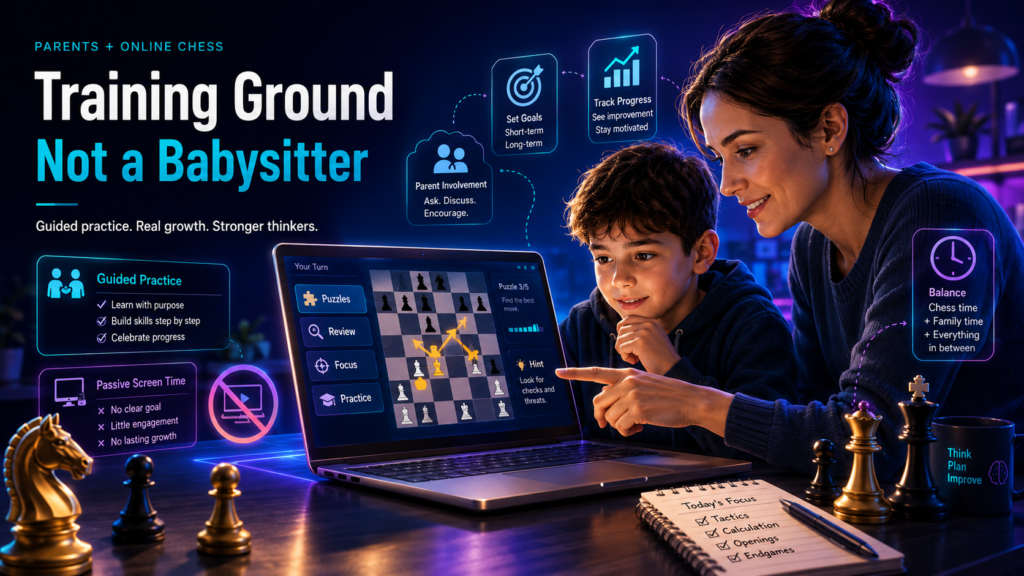
That is why parents should treat online chess like a training ground. It is useful, but it needs direction. A child should not only play game after game. They should review a few key moments. They should learn why a move was wrong.
They should understand one lesson from each session.
The best online routine is simple and steady
A strong routine does not need to be complicated. A child can play a game, review the biggest mistake, solve a few puzzles, and then try again with one clear goal. That is much better than playing twenty games while angry or tired.
This kind of routine builds focus. It also makes chess feel less random. The child starts to see patterns. They notice the same mistakes. They feel progress because they know what they are working on.
Debsie turns online play into real growth
This is where Debsie can help. Our coaches guide kids through lessons, practice games, and online tournaments so they are not learning alone. Students get support, structure, and kind feedback. They learn chess skills, but they also build patience, focus, and smart thinking.
If your child already loves Chess.com or Lichess, Debsie can help turn that love into real progress. A free trial class is a simple way to see how the right coach can make online chess more useful, more fun, and more meaningful.
Time Control Is The First Filter For Online Chess Greatness
The phrase “best online chess player” sounds simple, but it becomes tricky the moment we ask, “Best at what speed?” Online chess is split into many time controls, and each one rewards a different kind of mind.
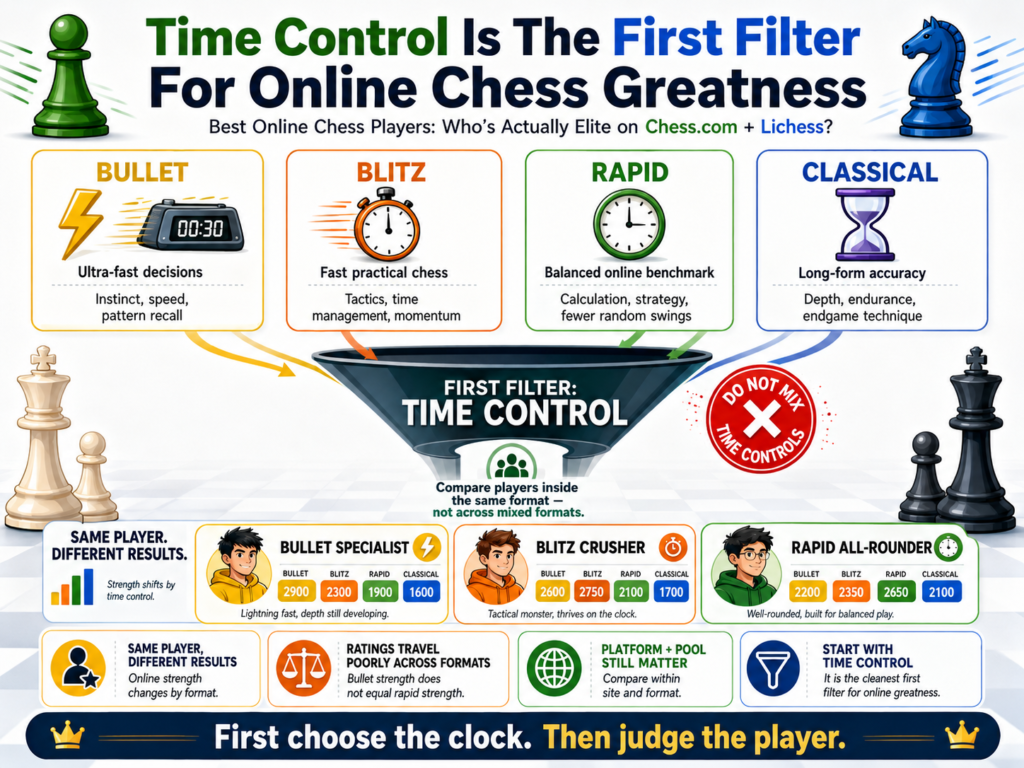
In rapid, players have more time to build plans. In blitz, they must think fast but still play real chess. In bullet, they must see patterns almost at once. In longer online events, they also need stamina, because one bad mood can ruin many games in a row.
This is why the Speed Chess Championship is so useful when we talk about elite online players. The 2025 event used 5+1, 3+1, and 1+1 time controls, which means players had to show skill in more than one kind of fast chess.
Carlsen beat Firouzja 15-12 in the final, while Lazavik beat Nakamura 13.5-12.5 in the third-place match. Those results matter because they came across a mix of speeds, not just one quick game.
A true online elite player has more than one gear
Some players are amazing when they can think for five minutes. Some are scary when they have one minute. Some can play both. The most complete online players are the ones who can change gears without losing their mind.
That is why Carlsen, Nakamura, Firouzja, Lazavik, Nihal, Bortnyk, Tang, and a few others keep coming up in this article. They are not just strong in quiet positions. They are strong when the clock is low, when the board is messy, and when the opponent is trying to trick them.
This is the simple training idea parents can use
A young player should not only play one speed. If a child plays only bullet, they may become quick but careless. If they play only slow games, they may freeze when the clock gets low. The best growth often comes from a mix.
At Debsie, we guide kids through that balance. A student may play slower games to learn plans, then faster games to test patterns. This keeps chess fun, but it also builds real skill. Your child does not need to guess which time control is best. With the right coach, each speed has a clear purpose.
Tournament Results Matter More Than Random Rating Peaks
Online ratings are fun to watch. They move up and down. They give players a quick sense of progress. But if we are asking who is truly elite, ratings alone are not enough. A rating peak can happen during a hot streak. Tournament results are harder to fake.
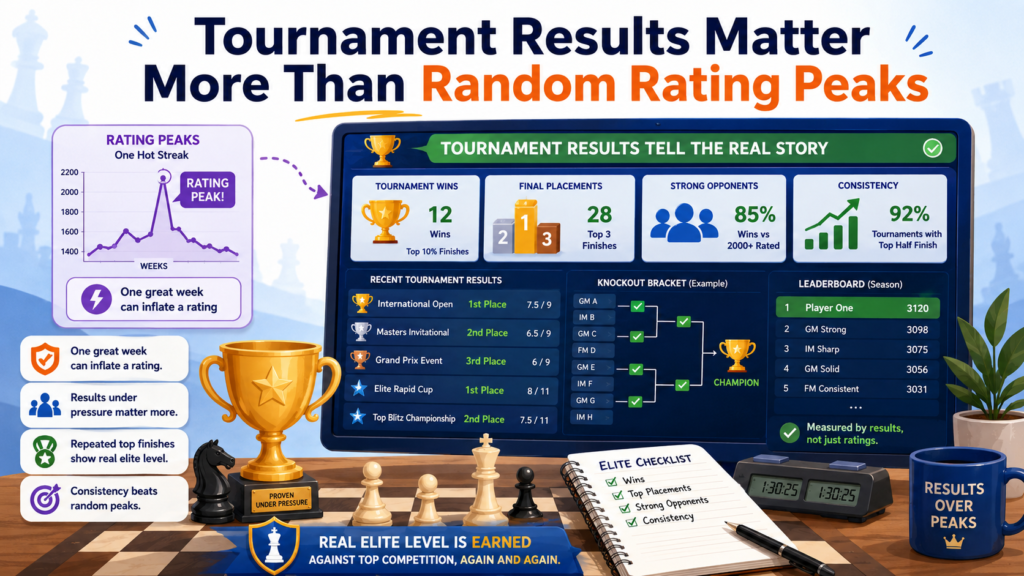
A player who wins big events, beats other elite players, and performs under public pressure has stronger proof. That is why matches like Carlsen versus Firouzja and Nakamura versus Lazavik carry so much weight.
Chess.com reported that Carlsen’s 2025 Speed Chess Championship win was his fifth SCC title and his third straight title in the event. The same report said Lazavik’s win over Nakamura was a major upset, and that Carlsen, Firouzja, and Lazavik qualified for the 2026 Esports World Cup through the event.
The best players keep proving it when everyone is watching
Playing strong chess alone at home is one thing. Playing strong chess when the world is watching is another. Online events can create real pressure. The chat is active. The commentators are speaking. Every blunder becomes a clip. Every comeback becomes a story.
This is where the best online players show a special kind of calm. They may feel pressure, but they still make decisions. They do not stop fighting after one bad game. They reset, breathe, and keep going.
This is the habit young players should copy
Kids should learn to judge their games by effort and learning, not only by the final result. A child may lose a game but still improve if they used time better, spotted more threats, or stayed calm after a mistake.
Debsie coaches help students see this clearly. We review games in a way that builds confidence, not fear. The goal is not to make a child feel bad for losing. The goal is to help them see the next step. That is how chess becomes a tool for focus, patience, and better thinking.
Lichess Shows Why Online Chess Has More Than One Main Stage
Chess.com gets a lot of attention because it hosts many major events and has many famous streamers. But Lichess is also a serious stage for strong online chess. Many titled players use it for fast games, studies, arenas, and broadcasts.
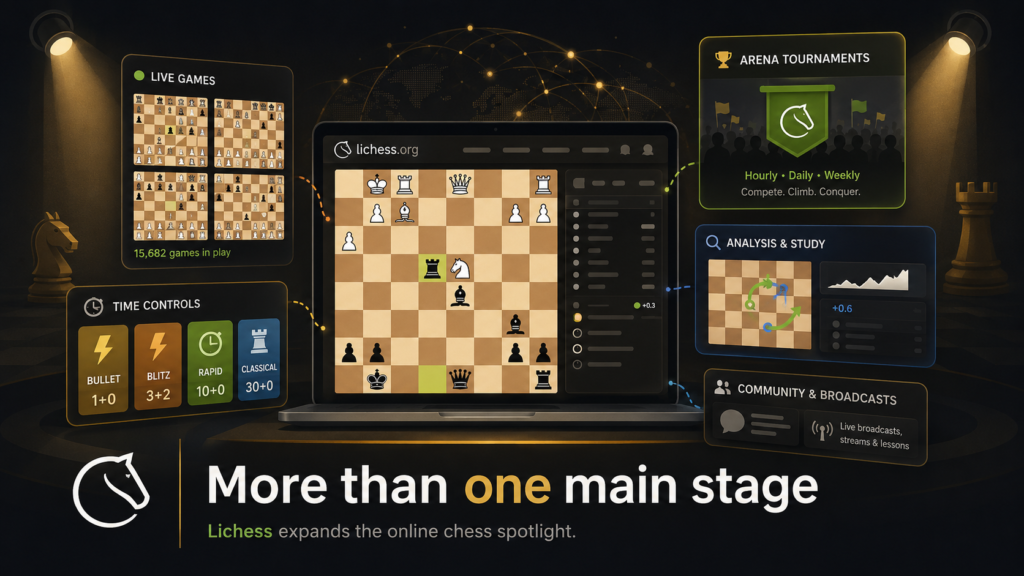
Lichess also has active titled events. In May 2026, Lichess posted that IM Renato Alfredo Terry Luján won its Blitz Titled Arena, finishing ahead of Oleksandr Bortnyk, Yoseph Theolifus Taher, Christopher Yoo, and Artem Uskov.
That kind of result shows how deep the Lichess pool can be, because even the names just behind first place are very strong online fighters.
The platform changes the kind of battle
The site matters because each platform has its own feel. The rating pool is different. The speed of play can feel different. The events are different. The tools are different. Even the kind of players you meet every day can be different.
That does not mean one platform is “real” and the other is not. It means smart players understand the context. If someone is a top bullet player on Lichess, that is serious. If someone keeps winning Chess.com events, that is serious too.
The best view is to look at both worlds and ask who keeps winning against strong players.
This is how students can use both platforms without getting lost
A child can use Chess.com or Lichess well, but they need a plan. They should not bounce around all day playing random games with no review. That creates motion, not growth.
A better path is to play a few games with care, save the key positions, and ask what went wrong. Did they hang a piece? Did they miss a checkmate? Did they move too fast? Did they forget to castle? These small questions lead to big growth.
At Debsie, we help kids turn online games into lessons. That is the difference between playing chess and learning chess.
The Best Online Players Are Great At Making Small Problems Feel Huge
One thing elite online players do better than most people is create small problems all game long. They do not wait for a giant tactic to appear. They make tiny threats. They improve one piece. They force one awkward move. Then they do it again.
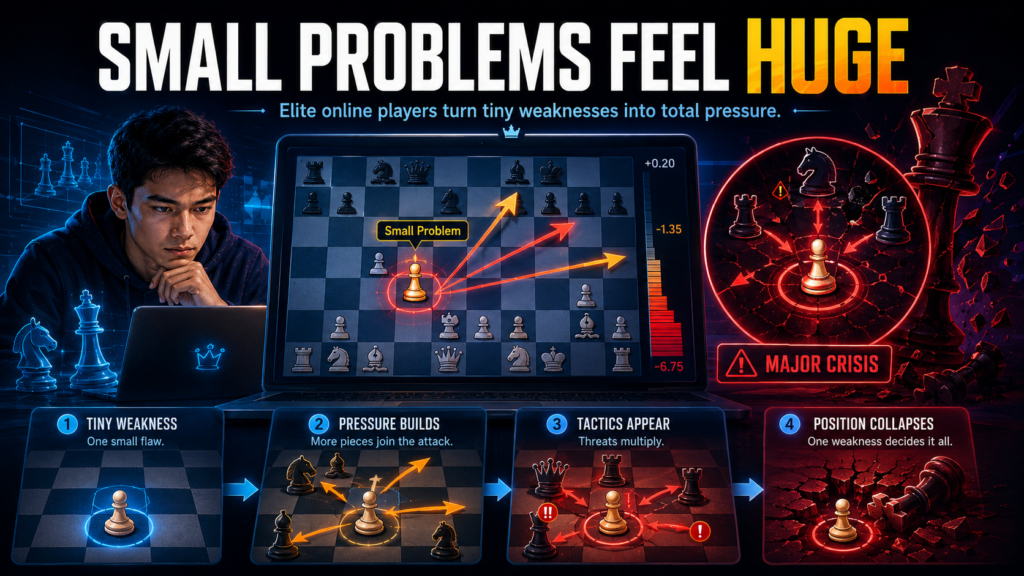
Carlsen is famous for this. Hikaru does it in a faster, sharper way. Firouzja does it with pressure and attack. Nihal does it with clean speed. Bortnyk does it by making bullet positions hard to handle. The styles are different, but the idea is the same. They make the opponent uncomfortable.
The pressure often starts before the tactic
Many beginners think tactics come from nowhere. They do not. Most tactics come from better piece activity, weak squares, unsafe kings, or pieces that are not defended. Elite online players are very good at building those conditions fast.
This is why a move can be strong even when it does not win material right away. A move that brings a rook to an open file, puts a knight near the king, or forces a queen to defend can be the start of real pressure.
This is the action step for young players this week
In the next few games, a child can practice one simple goal: improve the worst piece before attacking. This is easy to understand and very powerful.
Before making a flashy move, they can ask, “Which piece is doing the least?” Then they can improve that piece. Maybe a bishop needs a better diagonal. Maybe a rook needs an open file. Maybe a knight needs a stronger square. This habit makes kids calmer and smarter at the board.
Debsie coaches use simple questions like this because they work. A child does not need huge words to play better chess. They need clear thinking, kind feedback, and steady practice.
The Real Winner For Kids Is Not A Favorite Player, But A Better Way To Learn
It is fun to argue about who is the best online chess player. Some fans will say Carlsen because he wins the biggest matches. Some will say Hikaru because of his long online speed chess record. Some will point to Firouzja, Nihal, Lazavik, Tang, Bortnyk, or other fast online killers.
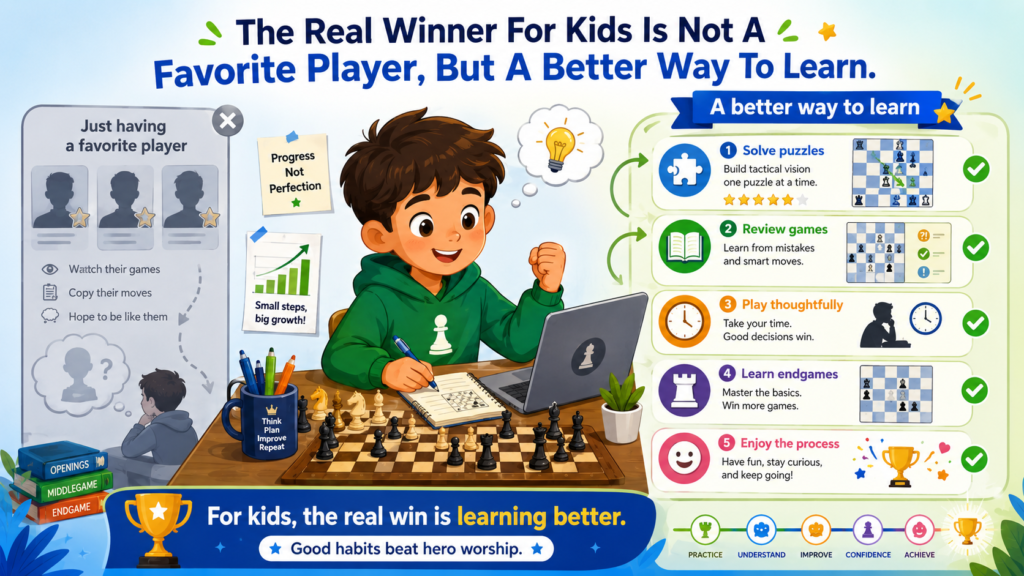
The truth is that online chess has many kinds of elite. There is the match winner. There is the bullet specialist. There is the arena grinder. There is the streamer who can teach while playing. There is the young star who is getting stronger every month.
Parents should turn the debate into a learning moment
For parents, the best question is not, “Can my child become like Magnus?” The better question is, “Can chess help my child think better, focus longer, and stay calm under pressure?”
The answer is yes, when chess is taught with care. Online chess gives kids fast feedback. Coaching gives that feedback meaning. Together, they can build skill and character.
Debsie helps kids learn the right lessons from online chess
At Debsie, we help students enjoy the game while building real habits. They learn how to think before moving. They learn how to handle losses. They learn how to spot patterns, plan ahead, and stay patient.
That is why a free Debsie trial class can be such a strong first step. Your child may come in because chess looks fun online. They may stay because they start to feel smarter, calmer, and more confident.
Conclusion
So the next time your child watches a top player on Chess.com or Lichess, do not only ask who won. Ask what your child can learn from the game. That small shift can turn screen time into growth time.
And if your child is ready to learn chess in a way that feels fun, personal, and full of heart, Debsie is a great place to start. A free trial class can help your child take the first step toward better chess, stronger focus, and more confident thinking.

Adhip Ray is the founder of Debsie, an online learning platform focused on chess and skill-based learning for children. His work at Debsie brings together chess education, structured thinking, problem-solving, and interactive learning for young students.
Adhip has an academic background in law, statistics, analytics, and technology. He is from Amity Law School and the Indian Statistical Institute, Kolkata, with formal training that connects legal reasoning, data analytics, quantitative thinking, and structured problem-solving. This interdisciplinary background is reflected in Debsie’s focus on building sharper thinking skills in children through chess and related learning programs.
Adhip is also a FIDE-rated chess player from India. He holds FIDE ID 5055954 and has a standard FIDE rating of 1832. His FIDE profile records him as an Indian player with a long rating history in standard chess, including rated games from his competitive playing years. His chess background gives Debsie a founder-led connection to the game, not only as an educational activity but also as a competitive discipline that develops concentration, calculation, planning, and decision-making.
In addition to chess, Adhip has a strong interest in coding, data, and technical problem-solving.
Adhip’s profile combines chess, law, data analytics, and programming. At Debsie, this background supports the creation of learning experiences that are logical, structured, and skill-oriented. The platform’s chess-focused programs are connected to broader cognitive skills such as pattern recognition, patience, strategic planning, focus, and problem-solving.
As founder of Debsie, Adhip brings together experience from multiple fields: formal legal education from Amity Law School, analytical training from the Indian Statistical Institute, Kolkata, competitive chess experience through his FIDE-rated profile, and coding practice through LeetCode. This combination gives Debsie a distinct foundation in strategy, reasoning, analytics, and child-focused learning.
Through Debsie, Adhip is associated with building chess and learning content for children that goes beyond basic instruction. The platform connects chess with thinking skills, helping students approach challenges with more structure, clarity, and confidence. His own background in chess and analytical problem-solving gives the platform a direct link to the skills it aims to develop in young learners.
Adhip is also a member of Forbes Business Council.