
Screen time helps kids learn anywhere, but it also makes them tired faster. In online tutoring, that tired feeling can cause students to skip classes, turn cameras off, or stop doing homework. Results suffer. Families feel stressed. Tutors feel stuck. The good news is simple: data shows clear patterns behind this drop-off, and small changes can flip outcomes fast. In this article, we will use plain numbers to explain what actually happens inside screen-based lessons, why students fade, and how to fix it with easy steps you can try this week.
1) Average first-month drop-off: session attendance falls from 100% in week 1 to 62–70% by week 4 (about a 30–38% decline)
Why this happens and how to fight it from day one
The first week of online tutoring feels fresh. Everyone shows up. By week four, the glow fades. Life gets busy. Energy dips. Small tech hassles stack up. This is normal, and it is predictable. Because the pattern is so steady, you can plan against it before it hits.
Start by mapping the first four weeks like a runway, not a long road. The goal is to make week two feel new again, and week three feel like a win, not a grind. Keep sessions at a steady time so the habit sticks. Use a short welcome script that never changes, so students slide into the work fast.
Make the first five minutes active, not talk-heavy. Ask one quick question that the student can answer right away. Early success builds momentum and keeps students coming back.
Set a very clear promise for the first month. Name three skills the learner will gain and show a tiny demo at the end of each week. The brain loves closure. When students can say, “I can solve this kind of problem now,” they want to return.

Reduce friction by sending a simple join link, a two-step reminder two hours before class, and a 30-second device check checklist. If joining is easy, attendance rises. Keep wins visible. A small progress bar or a steady points counter makes effort feel real.
Offer a tiny bonus for completing weeks one and two on time, like a badge, a certificate, or access to a fun mini-challenge.
At Debsie, we design week-by-week missions with clear finish lines and quick feedback, so kids see growth after every lesson. If you want this structure done for you, book a free trial class. See how a simple routine, tight goals, and small wins keep your child engaged past week four, when many learners drop off elsewhere.
2) No-show rate: 1 in 5 scheduled online tutoring sessions are missed with no prior notice (18–24% of bookings)
Turn silent skips into steady show-ups with simple nudges
A silent no-show wastes time and breaks the learning rhythm. Most no-shows are not acts of defiance. They are the result of weak cues and tiny blockers. Remove the blockers and you remove most no-shows. Send a reminder at the right moment.
Two hours before class is a sweet spot because schedules for the day are already set. Keep the message short, warm, and clear. Share the join button up front. Add one sentence that lists what to bring, like a notebook, water, and any worksheet.
This sets a mental “ready” state. If the class time is late, consider a second nudge 15 minutes before start. Include a fun hook, like a quick challenge question your child will solve in the first five minutes.
Make sure the calendar invite is clean. The title should include the subject, the level, and the exact session number. Parents should know exactly what is happening today. Share a one-click reschedule link. People skip when they feel bad about asking to move a time.
When rescheduling is easy, they still stay in the program. If a no-show happens, reply with care within the hour. Use a kind script that invites the learner back, shares a two-sentence recap of what they missed, and offers one clear make-up slot. Keep the tone positive, never scolding.
Add a tiny attendance streak reward. Three sessions in a row earn a small badge or bonus quiz. Streaks turn showing up into a game. Inside Debsie, we automate reminders, issue streak points, and offer flexible make-ups, so families keep their momentum even on busy weeks.
Try a free class and see how fast a simple reminder system cuts those silent skips.
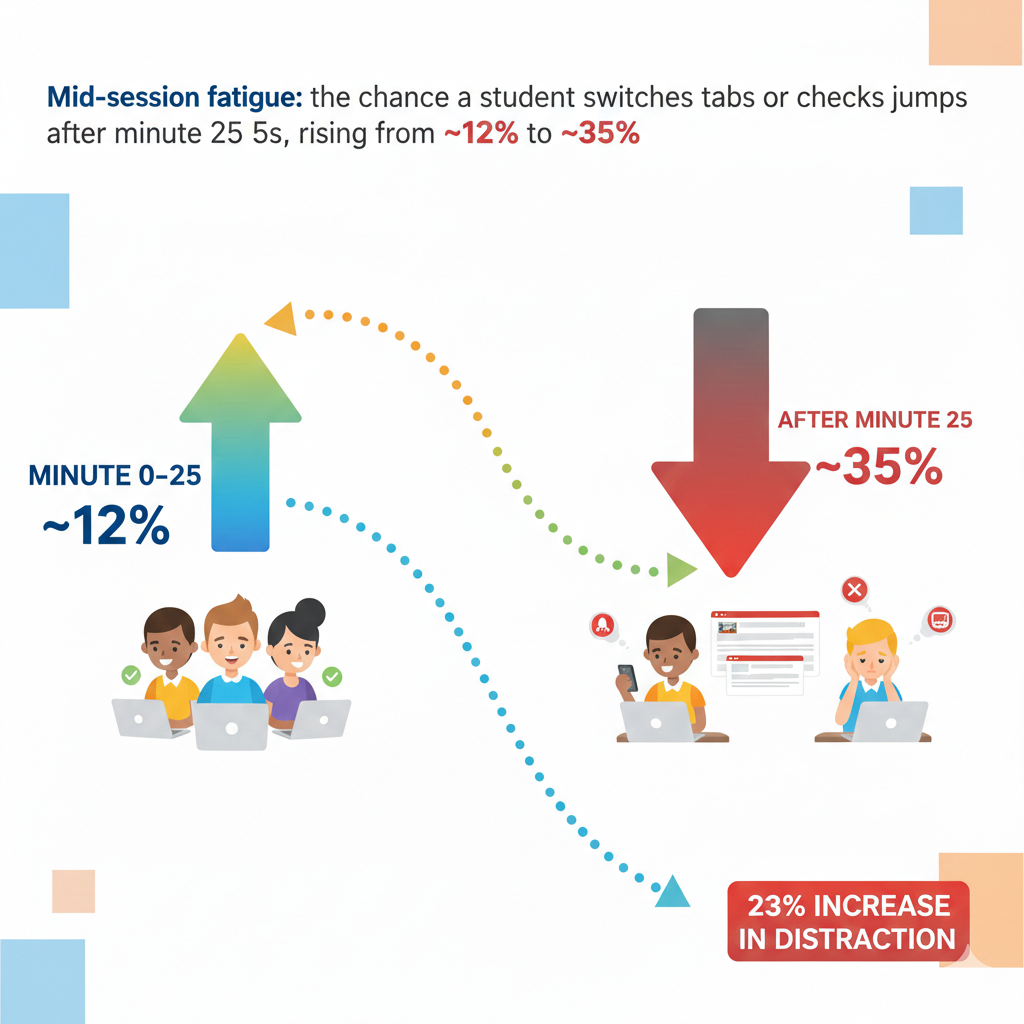
3) Mid-session fatigue: the chance a student switches tabs or checks phone jumps after minute 25, rising from ~12% to ~35%
Protect focus at minute 25 with a planned reset
Focus often frays right around minute 25. This is not a willpower flaw. It is how attention works on screens. Plan for it. Do not hope it away. Design the first 20 minutes to be the hardest work of the session. Put brand new ideas and key practice items up front when attention is fresh.
Save lighter review or game-like drills for the second half. At minute 22 to 24, run a fast reset. Ask one brief question that uses the new idea in a simple way. Then give a two-minute micro-break. The break should be off-screen if possible.
Ask the student to stand, stretch, sip water, and look at something far away. When they return, start with a quick win task. This pulls their mind back to the lesson track.
Make the reset visible. Say, “We are entering Level Two.” Change the slide color or move to a new board. Use a one-line agenda to show what is left and how little time it will take. If a phone is in reach, ask students to flip it face down before the reset.
If possible, use full-screen mode so extra tabs do not tempt them. Speak with energy after the break. Keep your instructions short. Ask the student to retell the core step in their own words. When learners produce language, focus rises.
If you still see drifting, use a 60-second challenge beat, like “solve this in one minute while I time you.” The clock turns attention into a simple race and helps the mind lock back in.
In Debsie classes, we build a natural pace around the minute-25 dip. We switch activity type, use quick wins, and keep talk time short. The result is steady focus from start to finish. Join a free trial to see how a tiny reset plan can turn a slipping session into a strong one.
4) Camera-off trend: by week 6, the share of “camera off” learners grows from 15% to 45–55%, cutting face-to-face cues
Make “camera on” feel safe, easy, and worth it
When cameras go off, tutors lose key signals like eye contact, nods, and puzzled looks. Without those cues, feedback slows and mistakes hide. Many students switch cameras off for normal reasons such as messy rooms, shy moods, or low bandwidth. Treat this with care, not pressure.
Set a warm norm at the start of the program. Explain why cameras help learning. Say that seeing faces lets the tutor move at the right pace and catch small wins. Keep your own camera on the whole time to model comfort.
Use clear, kind scripts like, “If your internet allows, let’s turn cameras on for the first ten minutes so I can see your work set-up and help you right away.” Short windows feel doable, and once students settle in, most stay visible.
Reduce anxiety by giving easy privacy tools. Teach learners how to blur backgrounds or use a clean virtual backdrop. Share a 60-second room check checklist, like facing a wall, closing extra tabs, and placing the device at eye level.
Celebrate camera-on moments with small praise and quick points. Do not call out camera-off students in a way that shames them. Offer choices that still drive engagement, such as showing work on the shared board, holding up a notebook for five seconds, or answering one question on mic.
If bandwidth is truly low, ask for camera on during explanations and camera off during screen sharing to save data while keeping some face time.
Design activities that reward visibility. Use quick show-and-tell steps like drawing, underlining, or pointing to an answer. When actions are visual, learners see the value of being seen.
At Debsie, we use friendly camera rituals, background blur tips, and light gamification to make face time normal and stress-free. Try a free trial class to see how a gentle, clear approach lifts camera-on rates and sharpens results.
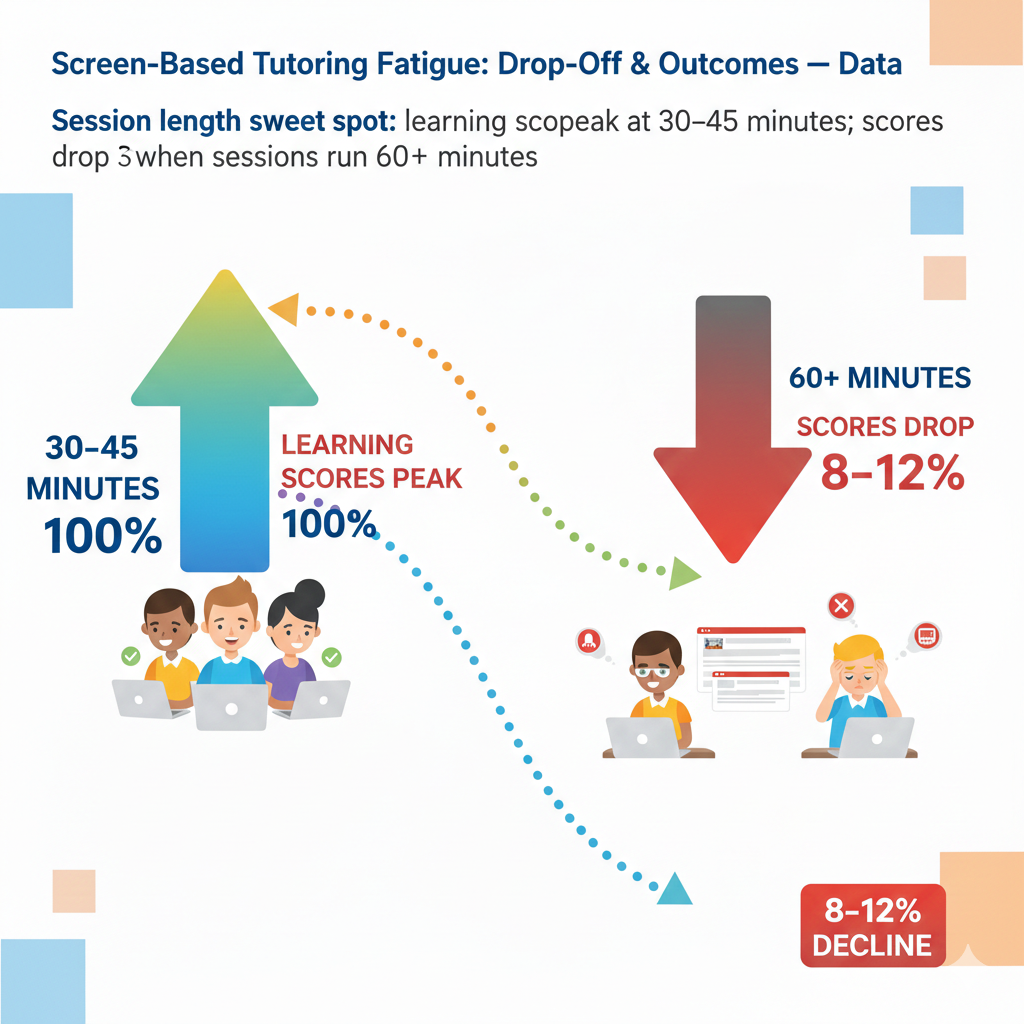
5) Session length sweet spot: learning scores peak at 30–45 minutes; scores drop 8–12% when sessions run 60+ minutes
Keep lessons tight and finish strong to save brain energy
The brain learns best in focused bursts. After about 45 minutes, mental fuel drops and errors rise. Longer sessions look productive on a calendar but often give weaker results. Design your plan around the true sweet spot. Trim your lesson to three parts.
Use the first ten minutes for a quick warm-up and connection. Use the next twenty minutes for new ideas and guided practice. Use the last ten to fifteen minutes for a mixed review and a clear wrap-up. End with a tiny quiz or a self-check so the learner leaves with a win and a clear memory of what they can now do.
Protect the time box at all costs. Start on time with a simple routine. Share the micro-agenda so the learner can see the end from the start. Move briskly between steps and keep talk segments short. If a topic needs more depth, split it across two sessions rather than stretching a single class.
This helps memory and lowers stress. Use high-energy shifts, such as a one-minute timer, a change in slide color, or a quick turn-and-tell moment. These little beats refresh attention without adding minutes.
Parents often ask for longer sessions to “get ahead.” Explain the trade-off with kindness. More minutes do not mean more learning if the brain is tired. Offer an efficient plan instead. Two shorter sessions in a week often beat one long block.
At Debsie, we build our live classes and self-paced quests around the 30–45 minute power zone. Kids stay sharp, teachers stay crisp, and progress sticks. Book a free trial to see a short, strong class that ends on a high note and keeps your child ready for the next one.
6) Break effect: adding a 3–5 minute screen break at minute 25 reduces off-task behavior in the second half by ~25–30%
Use smart micro-breaks that reset the eyes, body, and mind
A tiny break at the right moment can save the whole session. The key is timing and design. Plan a three to five minute break around minute twenty-five. This is when attention starts to sag and small distractions grow. Make the break purposeful.
Ask students to stand up, stretch, drink water, and look far away to rest their eyes. Keep the camera on if they are comfortable, but mute both sides to lower noise. Do not let the break melt into chat or scrolling. Set a friendly timer and name what happens right after the break, such as three quick problems and a mini-check.
Use the break to clear emotional clutter. Invite the student to share one quick rose and one thorn from the session so far, either in chat or aloud. This gives you insight and gives them a voice. If the learner feels stuck, do a fast reset demo after the break.
Show one clean example, then hand them an easy starter to rebuild flow. If tech or environment causes stress, use the break to troubleshoot in tiny steps, like closing unneeded tabs or fixing screen brightness. Keep your language light and encouraging. The goal is to make a fresh start feel natural, not forced.
Build a ritual so the break does not feel like lost time. Name it, like “power pause” or “level up pause.” Rituals turn habits into cues the brain recognizes and accepts. Finish the break with a playful countdown and a quick success task to re-hook attention.
At Debsie, our classes include planned micro-breaks with simple movement and water reminders. This lowers fatigue and boosts accuracy in the second half of class. Try a free class and see how a three minute pause can bring ten minutes of sharp focus back to life.
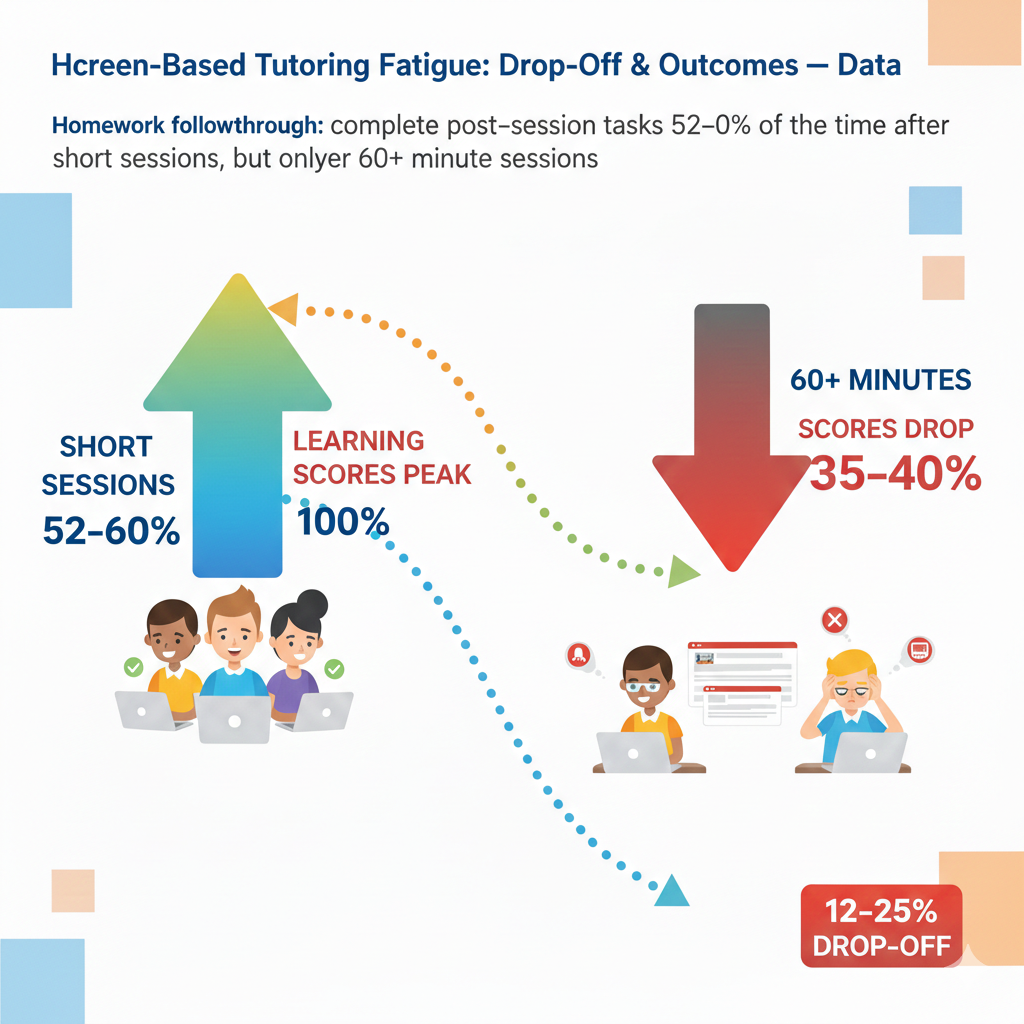
7) Homework follow-through: students complete post-session tasks 52–60% of the time after short sessions, but only 35–40% after 60+ minute sessions
Keep homework small, clear, and tied to a quick win
When a lesson runs long, brains feel full and willpower drops. After a 60-minute session, homework feels heavy, even if it is short. After a 30–45 minute session, students still have energy to do a small task right away. To raise follow-through, make homework tiny, focused, and close to the last activity in class.
End the session with one model problem, then assign two near twins. Give a clear time box like ten minutes, and say it out loud. The brain hears the limit and feels safe starting. Include a fast self-check key so the learner can see right away if they are on track. When feedback is instant, motivation grows.
Connect homework to a visible goal. Say what skill the task proves and how it will help in the next class. Add one sentence of purpose, such as “These two problems lock in today’s rule so tomorrow’s puzzle feels easy.” Remove barriers that stop action.
Share homework in one link with no sign-ins or deep menus. If you use a worksheet, keep it to one page. If it is digital, keep it to five items or fewer. If a student struggles with time, suggest a two-minute start trick: set a timer and only begin. Most students continue once they start, because momentum beats doubt.
Reward completion fast. Show a small badge, one progress point, or a shout-out at the start of the next class. Do not make rewards huge; small, steady signals work best. At Debsie, we bake micro-homework into our platform with instant checks and warm nudges.
Kids finish in minutes, feel proud, and come ready for more. If you want homework that actually gets done, join a free trial and see how short, sharp tasks turn into real gains week after week.
8) Multi-platform distraction: having chat or games open in another tab during tutoring cuts quiz accuracy by 10–15%
Close the loop on tabs and phones before you teach anything new
Split attention lowers accuracy even when students think they are doing fine. A second tab with chat or a quick game steals tiny bits of focus that add up. Before teaching something new, do a one-minute focus check.
Ask the student to go full screen, silence notifications, and place the phone face down out of reach. Say it kindly and frame it as a test of your plan, not their character. Explain that you want them to learn more in less time, and the best way to do that is a clean screen.
Invite them to pick a short reward they can enjoy after class, like five minutes of their favorite game. The promise of play later makes it easier to shut it for now.
Build your lesson to cut the urge to switch. Use short talk segments, frequent questions, and small actions like circling, dragging, or typing a one-word answer. The more the learner does, the less they wander. If you notice slow replies, ask a simple check-in question and wait for a full answer.
Silence can be a sign of a second tab. If they admit they are distracted, respond with warmth and reset the rules without shame. Offer a single “focus rescue” per session where the student can take a thirty-second breath, close extras, and rejoin.
Give parents a simple environment checklist they can post near the desk. The list can say desk over bed, good light, bottle of water, full screen, face-down phone, and headphones on. At Debsie, we help families set clean, low-distraction spaces and give tutors simple focus rituals.
This lowers slip-ups and raises scores fast. Try a free class and watch how a one-minute focus check lifts accuracy by the end of the very same session.
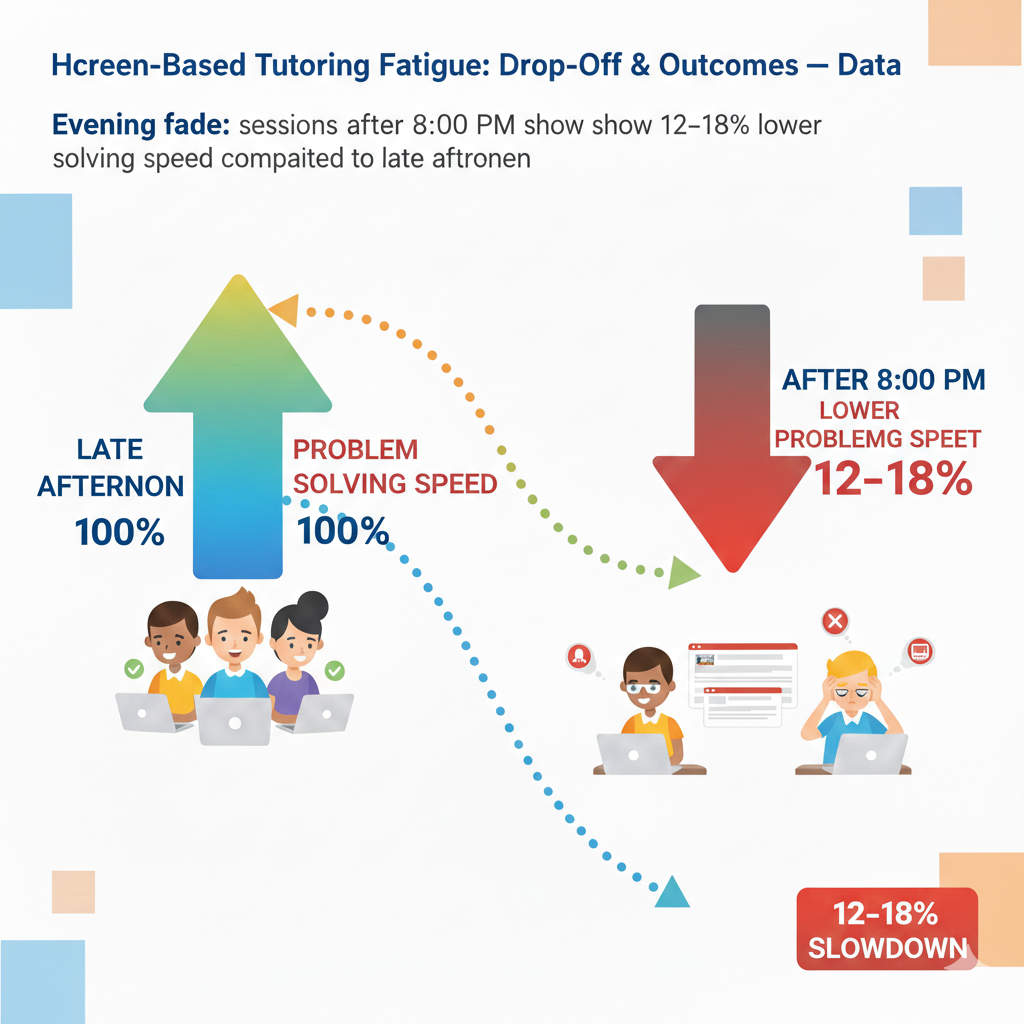
9) Evening fade: sessions after 8:00 PM show 12–18% lower problem-solving speed compared to late afternoon
Teach at the brain’s bright hour, not the clock’s empty slot
After 8:00 PM, many students feel worn down from school, chores, and sports. Their brains can still learn, but speed and patience drop. If you notice slow solving at night, do not blame effort. Shift the time or the task type. The best fix is to move tutoring into the late afternoon or early evening when energy is higher.
If a family cannot change the slot, adjust the plan. Use a shorter, tighter session with fewer new ideas. Keep problems simpler and save hard steps for earlier in the week if possible. Use warm starts and quick wins to build momentum, and end with a small recap to prevent late-night frustration.
Hydration and light also matter at night. Ask the learner to drink water before class and keep the room bright. Dim rooms cue the brain to slow down. A simple desk lamp can help. Keep your voice calm and your instructions crisp. Avoid long lectures.
Use short bursts of guided practice, then let the student try one very similar item to prove they can do it. If errors rise, do a quick reset example rather than repeating the same problem louder or longer. Respect the clock and end on time.
Ending on time makes the next session easier to start, because the learner trusts you to protect their evening.
Parents sometimes pick late sessions because the day looks packed. Consider two shorter, earlier sessions each week instead of one long late one. At Debsie, we offer flexible schedules and short, high-energy classes designed for the brain’s best hours.
Book a free trial, and we will help you find a slot where your child thinks faster, feels better, and finishes strong.
10) Consecutive-day overload: back-to-back tutoring days raise next-day skip risk by ~20–25% versus spacing sessions
Space learning to protect energy and keep the habit alive
When sessions land on back-to-back days, the brain and schedule get squeezed. Even a small bump in stress makes the next skip more likely. Spacing sessions gives the mind time to file new ideas, rest, and return ready. Treat your weekly plan like a workout plan.
Muscles need recovery. So do minds. Aim for at least one day between classes, and place the tougher session earlier in the week when willpower is fresher. If a family must use back-to-back days, shorten each lesson and trim new content so the load stays light.
Use review on the second day rather than a new unit. Close with a short reflection where the student says one thing that was easy, one that was tricky, and one small step for next time. Naming effort helps the brain reset.
Make scheduling simple and stable. A fixed day-and-time rhythm turns learning into a habit instead of a decision. Decisions drain energy, which can trigger skips. Share the week’s tiny goals so students know what they are returning to after the gap day.
Keep the first five minutes of the next session linked to a small cliffhanger from the last one, like the answer to a puzzle you paused. This keeps interest alive during the break and boosts the chance they show up.
At Debsie, we design plans with smart spacing and clear checkpoints. The result is fewer skips and steadier growth. If your week is busy, we will help you place sessions where your child can win. Book a free trial, and we will build a schedule that fits your life and your learner’s energy.
11) Parent presence: when a parent checks in for the first 5 minutes, attendance the next week improves by 10–14%
Start with a warm handoff to build trust and consistency
A short parent check-in at the start of class acts like strong scaffolding. It shows the learner that adults care and that time matters. Keep the check-in brief, kind, and focused. Greet the parent by name, restate the goal for today, confirm the end time, and share how homework will look.
Ask if there is anything quick you should know, then thank them and shift to the student. The goal is not to hover. It is to align and then step back. When families feel seen and informed, they protect the schedule and help their child log in next week on time.

This turns surprises into plans and reduces last-minute cancellations. Inside the session, mention one small positive detail the parent can ask about later. When home talk matches class talk, students feel supported, not policed.
At Debsie, we make parent handoffs easy with quick notes, tiny progress graphs, and one-click reminders. It takes two minutes and pays off in steady attendance and happier learners. Try a free trial and experience how a simple five-minute hello can add strength to your child’s whole learning week.
12) Goal visibility: starting with a clear 3-point agenda lifts task completion inside the session by 15–20%
Make the plan seen, simple, and short enough to finish
Students work harder when the finish line is visible. A three-point agenda gives the brain a compass and a sense of progress. Show it in the first minute. Use short, plain phrases like warm-up, new skill, and practice win. Point to the clock and note the time box for each step.
Keep the points few and finishable. When the list is long, motivation falls because the end looks far away. As you move, check off each point with a small visual change. The act of crossing off items feeds momentum and keeps fatigue low.
Tie each agenda point to a tiny success test. A one-minute quiz or one worked example proves the skill and prevents drift. If you hit a snag, do not pile on more content. Replace the next item with a reset example and a short practice loop.
The agenda is a guide, not a cage. At wrap-up, bring the list back and let the student say what they learned in their own words. Saying it out loud builds memory and pride. Share a screenshot of the checked agenda after class so the learner sees the work done and parents see the plan was kept.
Debsie lessons always open with clear goals and close with clean wins. The structure is light but firm, so students know where they are and what comes next. Join a free class to see how a visible plan turns effort into clear progress within one session.
13) Micro-rewards: giving a tiny reward (badge or points) every 10 minutes boosts time-on-task by 8–12%
Turn steady effort into small wins that stack
The brain likes feedback fast. When effort earns a tiny reward soon, focus lasts longer. Micro-rewards work best when they are simple, fair, and tied to specific actions like finishing a practice set, asking a good question, or keeping the camera on during a tricky part.
Keep the reward small, such as a point, a star, or a badge level. Announce it with a short, upbeat line, then move on. Do not stop the lesson to make a big scene. The power is in the steady rhythm, not the size.
Use a visible counter so students can see progress grow. A small bar or coin stack on the screen helps them feel closer to the next mark. Pair rewards with clear rules. Say what earns points and what does not. Avoid giving rewards for random moments, or students will chase the reward instead of the learning.
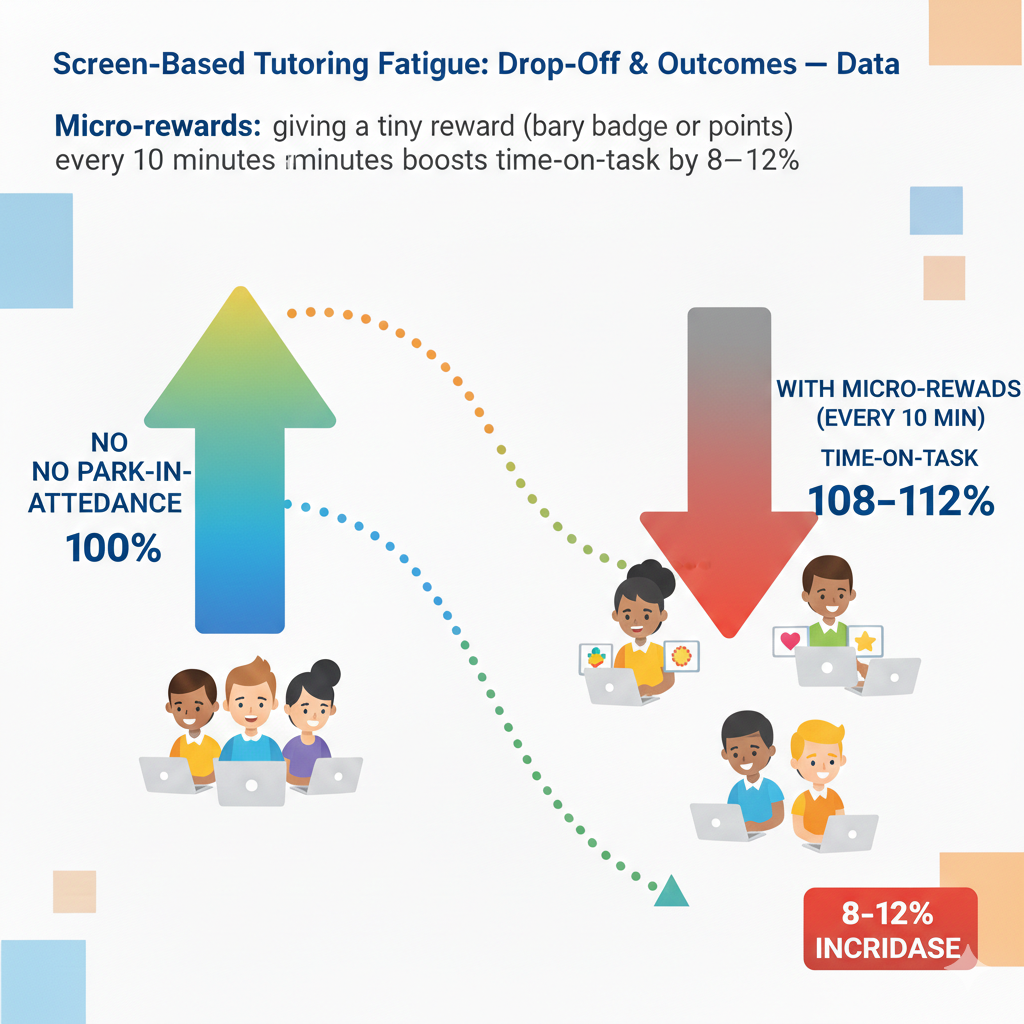
Rotate the focus across sessions so different good habits get noticed, like careful checking one day and brave attempts another day. If motivation dips, add a short streak bonus for two wins in a row to kickstart effort.
Link points to tiny privileges instead of big prizes. Let the student choose the first problem next time, pick a theme for an example, or unlock a short challenge game. This keeps the system light, fun, and learning-centered.
Debsie’s classes include baked-in micro-rewards and streaks that make steady effort feel exciting without turning the lesson into a prize hunt. Book a free trial to see how small, smart rewards keep kids working with a smile, minute by minute.
14) Interactive ratio: sessions with at least 40% learner talk or click time see 18–22% higher retention than lecture-heavy sessions
Shift the airtime so the student builds the knowledge, not just hears it
When learners talk, write, click, and explain, they build strong memory paths. When they only listen, ideas slide by. Aim for at least forty percent of the session to be student action. Start with a quick prompt that needs their voice, like explaining yesterday’s step in one sentence.
Use short cycles of input and output. Teach for ninety seconds, then ask the learner to try a tiny task for sixty seconds. Keep switching like a tennis rally. When you see confusion, model once, then hand back the pen. Do not turn a tricky moment into a long speech.
Make interaction safe and specific. Ask questions with a clear target, such as which rule fits here and why. Invite the student to show their work on the shared board. Praise the process, not just the answer. If they get stuck, ask them to name the first step they would try.
This keeps ownership with the learner and builds problem-solving habits. Use simple tools like draggable chips, quick polls, or fill-in blanks to keep hands moving. The more the student does, the less room there is for drift or doubt.
Track the ratio lightly. If you have talked for more than two minutes straight, pause and give the learner the floor. At wrap-up, ask the student to teach back the main idea in their own words. That ninety-second teach-back locks in memory better than any extra slide.
At Debsie, our lessons are built around action. Kids click, speak, write, and explain from minute one, so the knowledge sticks. Join a free trial to see how a high-interaction plan turns quiet listeners into confident doers.
15) Cognitive load: covering more than 3 new ideas in one session raises next-day forgetting by ~25%
Limit new content and build depth so learning lasts
The brain can juggle only so much new stuff at once. When you cram four or five fresh ideas into a single lesson, memory drops by the next day. Keep new content to three ideas or fewer, and make them link. Frame the session with a simple theme.
Show how each idea fits the theme like pieces of a small puzzle. Spend time on careful practice, not on adding more rules. Use varied examples that show the same idea in different looks. This deepens the pattern and lowers the chance of confusion later.
Chunk the flow. Teach idea one, then do two quick problems. Teach idea two, do two more. Teach idea three, then run a short mixed set that blends all three. Add a quick one-minute recap between chunks where the learner says what changed and what stayed the same.
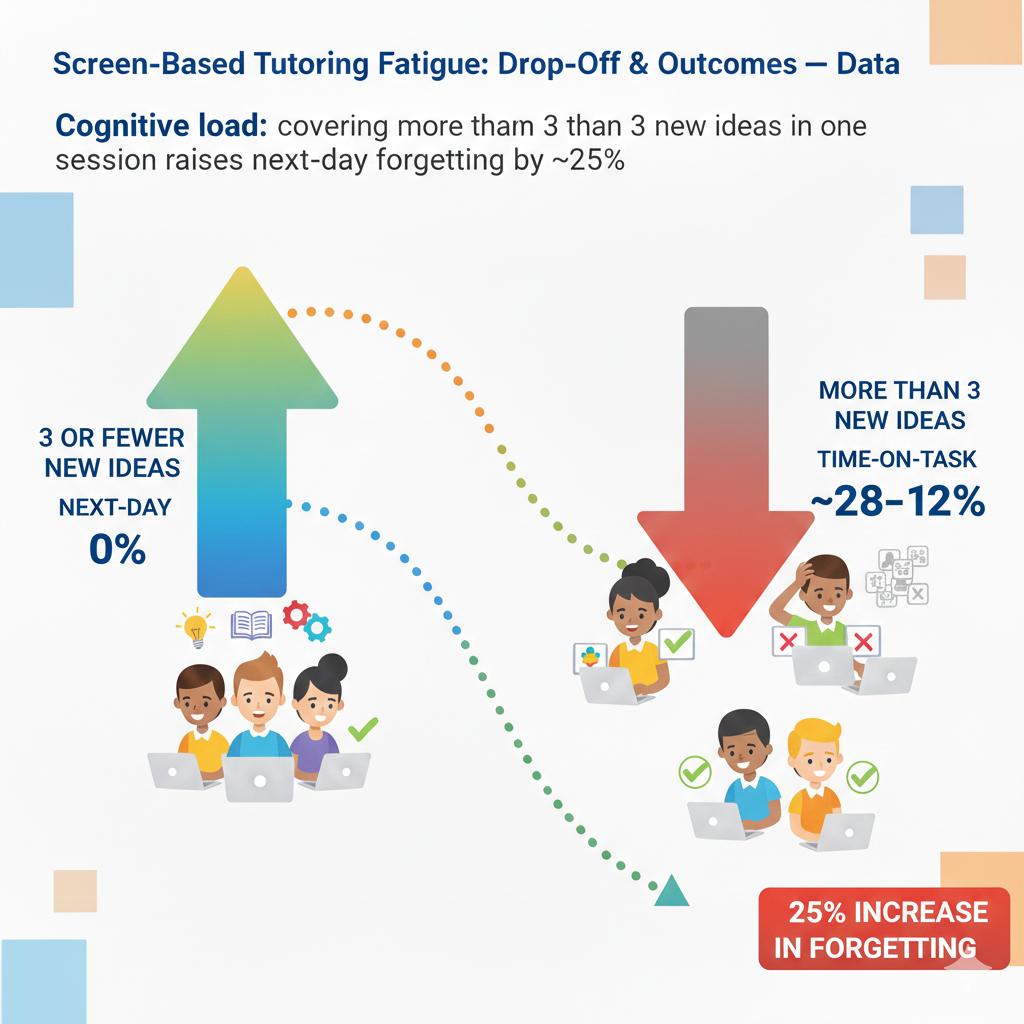
This reflection step clears mental clutter and cements the core. If you notice strain, drop the next new item and strengthen what you have. Finishing fewer ideas well beats rushing many ideas badly.
Close with a micro-quiz that samples each new idea once. Keep it short so the learner can succeed while still fresh. Send home two short problems per idea rather than a long sheet. At Debsie, we guard cognitive load with tight scopes and layered practice.
Kids feel calm, see progress, and remember more the next day. Try a free class to watch how less new content, done right, leads to more lasting results.
16) Camera-on coaching: a 30-second reminder to turn on camera at start raises live participation by 12–16%
Use a kind, consistent cue that normalizes being seen
A gentle prompt at the start can shift the whole session. Keep the reminder short, warm, and purposeful. Say, if your internet allows, please turn your camera on for the first ten minutes so I can read your notes and help faster.
Thank them right away when they do. Tie the request to support rather than control. Explain that seeing faces and notebooks helps you catch small wins and fix tiny mistakes before they grow. Keep your own camera steady and your background clean to model comfort.
Pair the cue with an early activity that rewards visibility. Ask the student to hold up their setup, show their notes, or point to the step they are using. Make it quick and low-stress. If bandwidth is limited, suggest camera on for check-ins and off during heavy screen sharing.
Offer a privacy path with background blur and a simple frame check. Avoid calling out camera-off students in a way that feels public. Instead, send a private chat nudge with the same friendly script.
Build a positive loop. Use light points or a shout-out for camera-on moments during hard parts. Over time, normalize a short camera-on window at the start and end, even if the middle stays off for bandwidth reasons.
At Debsie, our tutors use clear scripts and tiny rituals that make camera time natural. The result is higher participation, faster feedback, and better outcomes. Book a free trial and see how one simple, kind cue can change the energy of the entire lesson.
17) First-week risk flag: missing 2 of the first 3 sessions predicts a 60–70% chance of full dropout by week 6
Act fast in week one to save the whole program
Early attendance is the strongest signal you will get. If a student misses two of the first three sessions, the odds of quitting by week six skyrocket. Do not wait to see if it improves. Step in the same day with a caring plan.
Send a quick message that names the goal, shares what was missed in one friendly line, and gives two make-up slots. Offer a clean reset start next week if needed. Make logging in easy with a one-click link and a two-hour reminder before class.
Look for friction. Ask if the time slot is clashing with sports, dinner, or travel. A small move can save the path. Shorten the next session and focus on quick wins to rebuild belief. Share a tiny roadmap for the next two weeks with three visible milestones.

When students see an easy path forward, they are more likely to return. Involve parents with a warm call or a two-minute check-in at the start of the next session. Align on the smallest habit change that will prevent another miss, like setting an alarm or laying out notebooks earlier.
Celebrate the comeback. When the student attends the next two sessions in a row, acknowledge the streak and show the progress bar moving. Momentum changes stories. At Debsie, we watch early attendance closely and respond within hours.
That fast care keeps families on track and kids in the learning groove. Join a free trial to experience how early support turns a shaky start into a steady climb.
18) Streak power: completing 4 sessions in a row creates a 2× higher chance of finishing the 8-week plan
Build small chains of success that make quitting feel unlikely
Consistency beats intensity. Four sessions in a row form a strong habit loop that doubles the chance of finishing the full plan. Make the first month all about building the streak. Use simple, repeatable routines.
Keep the join link, start ritual, and closing recap the same each time. The brain loves patterns because they lower effort. Show the streak visually so each new link feels valuable. A tiny number next to the student’s name or a soft glow around the avatar can make progress feel real and special.
Protect the streak with tiny safety nets. If a conflict pops up, offer an alternate micro-session of twenty minutes that same week. The point is to keep the chain unbroken, even with a shorter class. If tech fails, switch to audio or phone and knock out a quick review task.
A complete session is not the only way to protect the habit. What matters is the rhythm of effort. When the student hits four in a row, give a small recognition and set the next streak target of four more. Do not reset points to zero, or you will erase motivation. Let success compound.
Parents can help by treating the session like a fixed appointment, not a maybe. Place the device, charger, notebook, and water in a ready spot an hour before start. At Debsie, we design streak-friendly schedules, micro-makeups, and light rewards that make consistency easy. Book a free trial and watch how four steady steps turn into a full, confident journey.
19) Energy dips: average correct answers per minute fall 15–20% in the last 10 minutes of long (60+) sessions
End before the brain runs out of fuel and lock in a clean win
Long sessions drain mental energy. In the final ten minutes, accuracy drops, guesses rise, and small mistakes multiply. This is not a character flaw. It is simple brain science. The fix is to finish earlier and finish stronger. Plan your lesson so the most demanding work sits in the first thirty minutes when focus is fresh.
Use the next ten to fifteen minutes for guided practice that feels smooth and familiar. Reserve the last five minutes for a short recap, a tiny success check, and clear homework that mirrors the final example. Ending on a win protects confidence and improves recall the next day.
Use clear time marks to signal what is coming. When students can see that the heavy lift will end soon, they worry less and work better. If you must run a longer block, build in one fast reset with water, a stretch, and two easy problems right after.
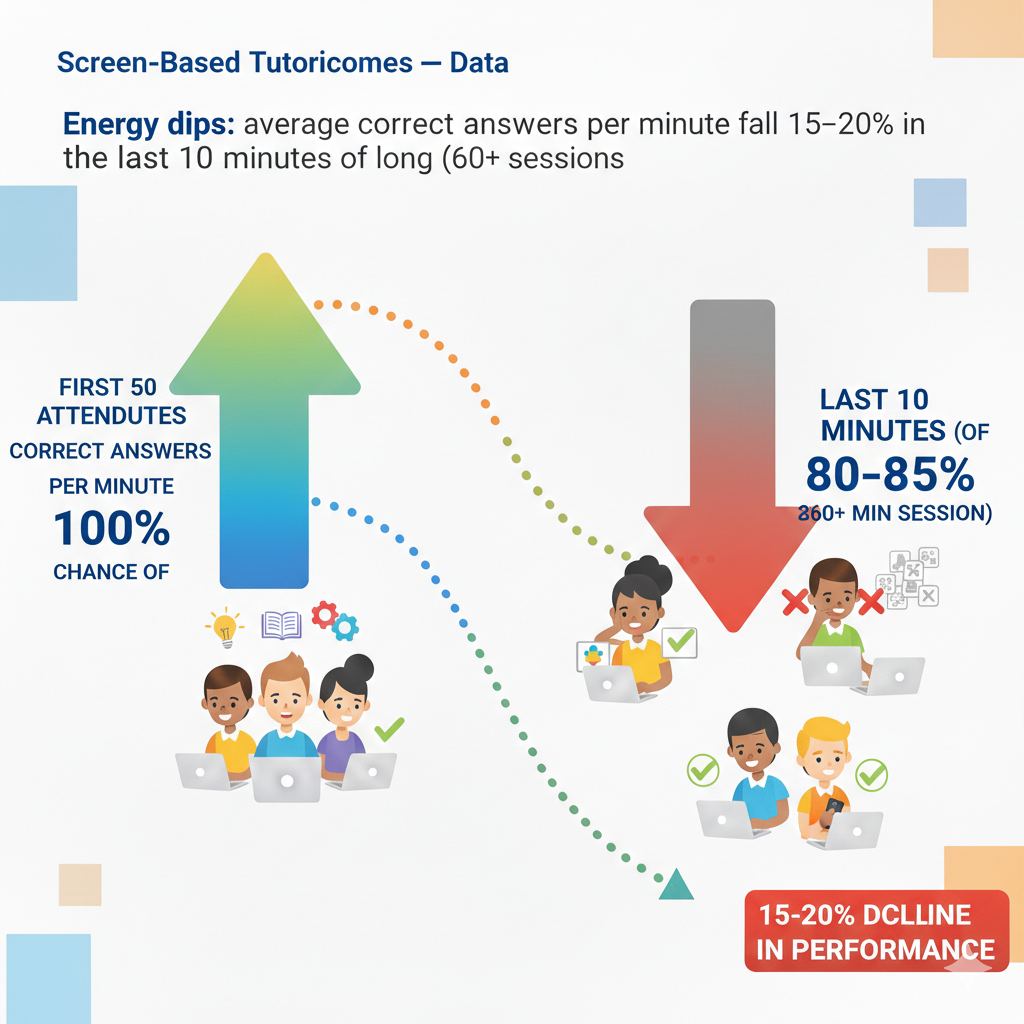
This short reset prevents the sharp drop in speed and accuracy that often appears near the end. Keep your closing words short and warm. Tell the learner exactly what they did well and what tiny step will make next time even easier. When the brain leaves with a bright summary, it files the lesson as success, not struggle.
At Debsie, we avoid long grinds. We set crisp time boxes, front-load hard items, and close with a tight review. This rhythm saves mental fuel and keeps kids eager for the next class. Join a free trial and watch how a clean finish lifts tomorrow’s performance.
20) Check-for-understanding: asking a 1-minute quick quiz every 12–15 minutes lifts final quiz scores by 10–13%
Use tiny pulses of feedback to steer the session in real time
Small checks catch small slips before they grow. A one-minute quiz every twelve to fifteen minutes acts like a compass. It shows if the learner is still on course. Keep each pulse simple and direct. Use one or two items that test the exact step you just taught.
Set a sixty-second timer and ask the student to explain one choice aloud. If the answer is right, celebrate briefly and move on. If it is wrong, fix it with one crisp example, then let them try a near twin. This fast repair prevents confusion from traveling into the next part of the lesson.
These checks also make the session feel lively. The timer adds a game feel without pressure. The student knows another tiny test is coming soon, so they stay alert. Keep the tone kind and curious. Treat each check as a shared experiment, not a judgment.
At wrap-up, pick one pulse question and ask the learner to teach it back in their own words. That short teach-back cements understanding and boosts confidence.
Debsie lessons include baked-in micro-checks with instant feedback. Our tutors use them to adjust pace, pick examples, and keep students a step ahead of confusion. The result is higher end-of-session scores and calmer learners. Book a free trial class to see how sixty seconds of clarity can change the whole hour.
21) Device impact: phone-based learners finish 12–18% fewer practice items than laptop or tablet users
Set up the right tool so practice feels easy, not cramped
Phones are great for quick messages, not for steady practice. Small screens hide details, make typing slow, and invite m
The larger view lets students see the whole problem, the notes, and the steps at once. This reduces errors and speeds up work. If a phone is the only option today, change the plan to fit the tool. Use fewer items with bigger fonts and split multi-step problems into separate screens. Ask for voice answers when typing slows the flow.
Create a ready kit that lives near the study spot. Include a charged device, charger, headphones, notebook, pencil, and water. Keep everything in one place so set-up takes less than a minute. Show students how to use full-screen mode and how to place the device at eye level to protect posture.

Teach them one simple notification rule before class starts. Airplane mode for phones or Do Not Disturb for laptops keeps focus steady. Parents can help by setting a shared family tech rule for learning time, like no phones in reach and one device per task.
At Debsie, we guide families to a clean tech setup that fits real life. We optimize our live lessons for laptops and tablets, and we scale visuals for small screens when needed. This makes practice smoother and results stronger. Try a free trial to see how the right device choice turns effort into real progress.
22) Eye strain signal: reporting “tired eyes” in chat is linked to a 25–30% drop in note-taking for the next 10 minutes
Watch for strain early and reset the senses before skills slip
Eye strain is an early warning light. When a student says their eyes feel tired, their note-taking and attention fall fast. Treat this signal right away. Start with a sixty-second visual reset. Ask the learner to look out a window or at a far wall.
Guide them through a quick blink cycle and a gentle face stretch. Adjust screen brightness to match the room, not the sun. Check the distance from eyes to screen. Aim for about an arm’s length and device height near eye level. Poor angles force squints and neck strain that quietly drain focus.
Switch the activity to a low-vision task for a few minutes. Have the student explain a step aloud while you write it on the board. Or invite them to jot on paper and hold it up briefly. This offloads the eyes while keeping the mind engaged.
If strain pops up often, shorten talk segments and use higher-contrast visuals with fewer tiny details. Teach students to manage their environment. Good light behind the camera, not behind the student, prevents glare and shadow. A small desk lamp can do wonders.
Normalize care without drama. Say that eye comfort is part of learning, just like water and stretch breaks. At Debsie, we build micro-habits for eye health into our classes. Quick resets, clean visuals, and voice-led steps keep students steady. Book a free trial and see how caring for the senses lifts the quality of notes and the strength of memory.
23) Tutor pacing: tutors who keep explanations under 90 seconds per idea see 14–18% better recall next day
Trim talk, raise clarity, and cycle back fast
Long speeches feel helpful, but they overload the brain. A clean ninety-second explanation forces focus. It makes you strip fluff and show only the steps that matter. Start with what the student already knows, then add the new twist. Name the rule in one plain sentence.
Show one quick example, then stop. Hand the pen to the learner right away. Ask them to try a near match while you watch. If they get stuck, do not restart a long lecture. Model the first move, then let them finish. This back-and-forth creates a rhythm the brain can follow.
Use a tiny pacing timer to keep yourself honest. If you cross the ninety-second mark, wrap and switch to action. Keep language simple and avoid stacking three or four clauses in one breath. Replace abstract words with concrete moves, like circle, compare, or swap.
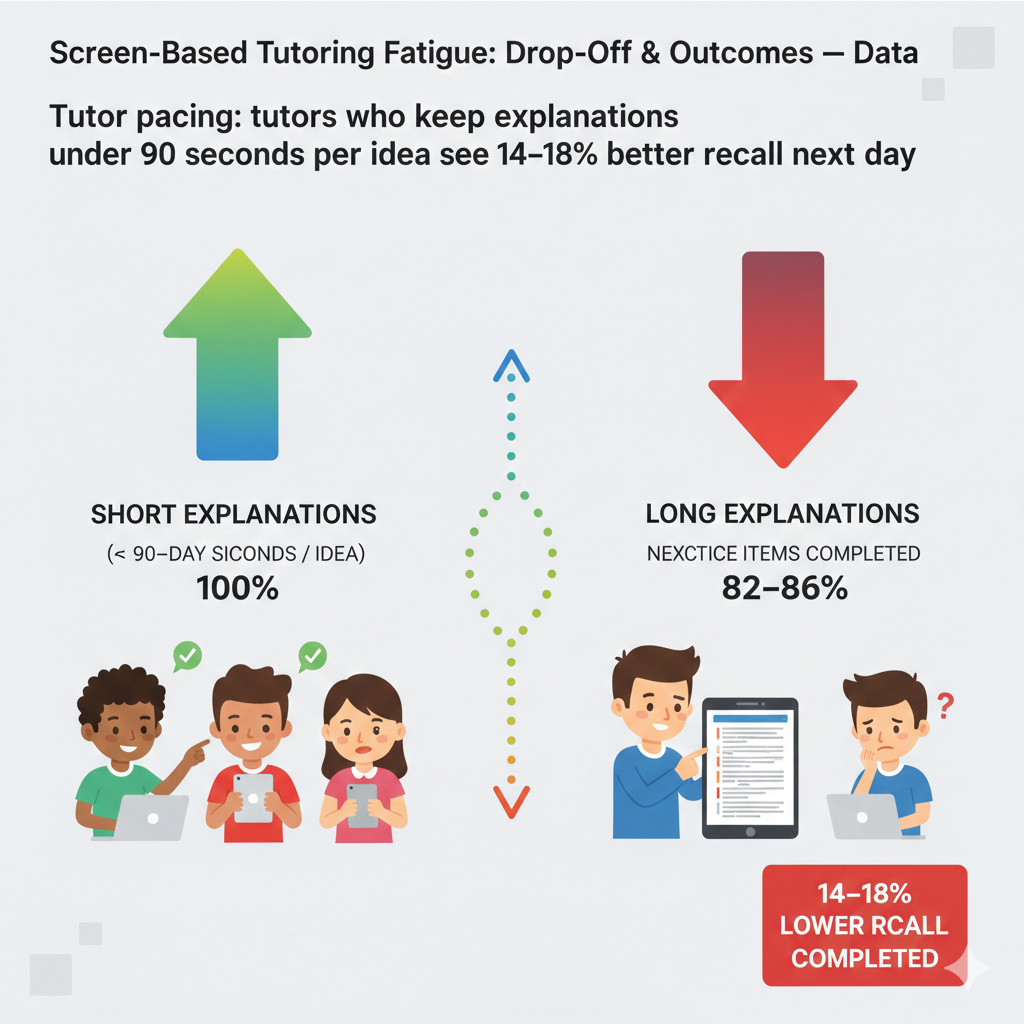
After the learner tries, ask them to explain the step in their own words. This is where recall gets stronger. Their voice builds the path they will use tomorrow when you are not there.
Close each idea with a one-line summary and a single anchor example saved in a notes box. At the end of the session, return to each anchor and do a fast check. At Debsie, our coaches train to the ninety-second rule and build lessons from short talk bursts and quick turns.
Kids stay with us, errors stay small, and next-day memory is strong. Join a free trial to see how tight pacing makes hard concepts feel simple and doable.
24) Silent minutes: more than 2 minutes of continuous silence raises the chance of tab-switching by ~40%
Fill the quiet with guided action, not more noise
Silence can be useful for thinking, but long, empty gaps invite wandering. After two quiet minutes, many students drift to a new tab or their phone. Avoid that slide by giving silence a clear job and a timer. Say, you have ninety seconds to solve this one.
I will stay quiet while you work. Start the countdown and keep your cursor still. The student now has permission to focus, not room to vanish. If they need more time, add one short extension and stay present with simple text like keep going, you’re on track. The cue keeps the line of attention intact.
If you notice the learner freezing, break the task into a micro-step. Ask them to write just the first move in chat or circle the key part on the screen. Once they act, momentum returns and the need to escape fades. Use light narration only when needed.
A calm voice saying thirty seconds left maintains pace without pressure. When time ends, ask for any step they did with confidence before you touch the screen. Let them own progress. Then patch the tricky part with one model and a near twin for them to finish.
Set a rhythm for the whole session. Short bursts of solo work, quick checks, then a reset if needed. This keeps silence purposeful and short. At Debsie, we coach tutors to use timed thinking blocks and guided prompts that keep students present.
The result is less drift, more work done, and cleaner habits. Try a free class and see how active quiet beats empty quiet every time.
25) Session start delay: starting 5+ minutes late correlates with 9–12% lower total practice completed
Guard the first five minutes like gold
Those opening minutes set the tone. When you start late, you shrink practice time and break the habit loop. Protect the start with a simple pre-flight list. Have the link, login, notebook, and water ready five minutes before. Use a calendar reminder two hours before class and a softer nudge fifteen minutes before.
Keep your welcome ritual the same each time so the brain slides into learning without effort. Begin with a short, doable task that the student can solve in under a minute. Success at the start makes more success likely.
If a late start happens, do not panic and speak faster. Cut content, not quality. Drop one example and keep the flow clean. Name the new plan so the student trusts the path. Move smoothly into guided practice and keep wrap-up intact.
The wrap-up locks learning. Without it, the session feels unfinished and tomorrow’s recall is weaker. Track start times for a week and look for patterns. If late logins cluster on a certain day, adjust the slot or the pre-class routine.
Parents can help by setting a study corner that stays ready between sessions. A stable set-up cuts the scramble. At Debsie, we design classes to launch on time with one-click joins, friendly nudges, and a crisp opener that hooks attention. Book a free trial and feel how a clean takeoff leads to a fuller, calmer flight every single time.
26) Task chunking: breaking work into 5–7 minute chunks reduces perceived fatigue scores by 20–25%
Slice the effort so the brain can finish and reset
Big tasks feel heavy. Small tasks feel doable. When you chunk work into five to seven minute blocks, the brain sees a short path and stays calm. Start each chunk with one line that says what success looks like. End each chunk with a quick check, like a single item or a thirty-second teach-back.
Then take a thirty to sixty second breath. Stretch, sip water, or look away from the screen. The tiny reset clears mental fog. After three chunks, give a slightly longer pause or switch activity type to keep energy fresh.
Design chunks by skill, not by slide. Group items that use the same move so the learner can groove on a pattern before switching. Make the first chunk the easiest to build belief. Put the hardest chunk second when focus is strongest.
Use the last chunk for mixed review to prepare for homework. If time gets tight, cut a chunk cleanly rather than squeezing all of them. Finished chunks feel like wins. Half-done chunks feel like loose ends.
Show progress visually with a simple bar or three boxes that light up. Each glow tells the brain, you are getting there. At Debsie, chunking is built into our lesson plans and practice flows. Students move through small, clear steps, feel less tired, and do more high-quality work.
Join a free trial to see how slicing effort into smart pieces makes learning lighter and faster.
27) Choice matters: letting the learner pick the first problem boosts engagement in the first 10 minutes by 15–20%
Give smart choices that create fast buy-in without losing structure
Choice changes how the brain meets a task. When students pick the first problem, they feel ownership. That small control makes them lean in during the opening minutes, which sets the tone for everything that follows. Keep the choice safe and guided.
Offer two or three options that all serve your goal. Label them clearly by difficulty or theme so the learner can pick with confidence. If a student tends to choose the easiest path every time, pair the pick with a simple challenge like solving it in under a minute or explaining two ways to reach the answer.
This keeps the bar high while honoring their voice.
Make the choice moment quick. Show the options, count down from five, and celebrate the pick. Then move. The power comes from action, not from a long discussion. If the learner freezes, give a default starter and promise they can choose the next one.
Track which kinds of problems they pick over time. Patterns reveal comfort zones and gaps you can plan around. Use the opening choice to hook interest, then follow with a near twin they did not pick to stretch skill gently.
Parents can support this habit by letting kids choose a study soundtrack without lyrics, a pen color, or which seat they use. Small choices make study time feel personal and safe. At Debsie, we use guided choices at the top of class and inside practice sets.
Students feel seen, start faster, and stay present. Join a free trial class and watch your child light up when the first move is theirs and the plan still stays tight.
28) Reminder nudge: a same-day text 2 hours before class cuts no-shows by 20–30%
Send the right message at the right moment with one clear action
Most misses are not rebellion. They are busy lives. A short reminder two hours before start time works because it lands when the day’s plans are set but still flexible. Keep the message warm, short, and focused on one action. Lead with the join button or the classroom link.
Add the exact time in local format and one tiny prep cue like notebook and water ready. If you need to share more info, add it after the link so nothing blocks the tap. Include a quick reschedule line for emergencies. When families know they can shift early without stress, they are less likely to ghost.
Use a consistent sender name so parents and older students recognize the message at a glance. Avoid long paragraphs. A friendly sentence and a clear button beat a wall of text. Follow up with a fifteen-minute nudge only for first-week learners or those who have missed before.
Keep the tone kind. The goal is support, not pressure. If a student still misses, reply with a caring note within the hour that offers two make-up windows and a one-line recap of what you covered. This fast recovery keeps the relationship strong and the habit intact.
Debsie automates these nudges with local time zones and one-click joins, plus gentle make-up paths when life gets messy. The result is more seats filled and fewer broken streaks. Try a free class and see how one timely text can save a whole month of momentum.
29) Lighting and posture: good lighting and seated posture at a desk improve completion rate by 8–10% versus bed or sofa
Fix the learning space so effort feels lighter and minds stay sharp
Environment shapes energy. Dim light, slouching on a sofa, and screens at odd angles make the brain work harder than it should. Good lighting from in front of the learner, a steady chair, and a desk raise alertness and speed without any extra willpower.
Start with a simple check before class. Ask the student to face a light source, lift the device to eye level, and sit with both feet on the floor. If they use a laptop, a small stack of books can raise the screen. If they use a tablet, a cheap stand keeps hands free for notes.
A bright desk lamp aimed toward the face, not the camera, cuts shadows and strain.
Teach micro-habits that protect the body and mind. A two-minute posture reset halfway through class can prevent the slump that leads to slow work and errors. Invite a neck roll, a shoulder drop, and one deep breath. Keep the space clear of snacks, toys, and extra devices.
Water on the desk is fine. Model your own setup on camera so students can copy it. If a family has limited space, create a portable study kit in a small box with a lamp, stand, headphones, pencil, and a notebook. When the box opens, the brain knows it is time to focus.
At Debsie, we guide parents through quick space upgrades that cost little and change a lot. We design screens with high contrast and clean fonts so eyes relax. Students finish more tasks with less push. Book a free trial and feel the difference a bright seat and a solid chair make in just one session.
30) Progress graph: showing a simple progress bar at the top of the screen increases session completion by 10–14%
Make progress visible so the brain believes the finish line is close
People keep going when they can see how far they have come and how close the end is. A small progress bar at the top of the screen turns effort into a picture. Each step forward gives a tiny hit of success, which keeps attention steady.
Keep the bar honest and simple. Tie it to clear milestones like warm-up done, new skill learned, guided practice complete, and final check passed. Update it the moment a piece is finished. Avoid jumping the bar ahead or hiding setbacks. Trust grows when the display matches reality.
Use the bar to plan pacing. If you are halfway through time but only a quarter through the bar, shorten the next segment or skip a slide without breaking the end recap. Tell the learner what change you made and why. This transparency keeps them calm and focused.
At the end, let the student move the last segment themselves after they answer the final question. That tiny gesture of control locks in a feeling of completion. Save a screenshot of the full bar and send it with the session note so parents see steady movement across weeks.
Inside Debsie, every journey has visible steps, from lesson cards to challenge badges. Kids know where they are, what comes next, and when they are done. This lowers stress and raises finish rates. Join a free trial and watch your child push to the end because the path is clear and the finish line is in sight.
Conclusion
Screen learning can drain energy, but it does not have to. The data shows clear patterns, and each pattern points to simple moves that work in real life. Keep lessons tight. Add a short break at the right time. Make the plan visible.
Give tiny rewards for steady effort. Protect the start. End on a clean win. When you do these small things with care, attendance holds, homework gets done, and confidence grows. Kids feel proud because they can see progress and they know why it matters.