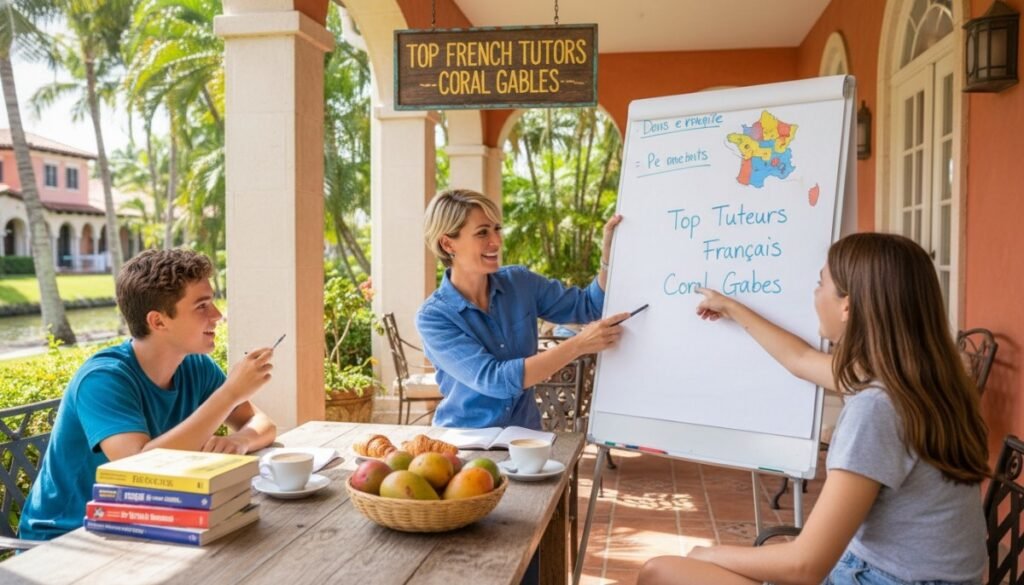
We compared each provider using the same nine-factor formula, prioritizing child suitability, teaching structure, guided practice, public pricing and safety information. Scores make unlike options easier to compare, while “not publicly clear” prevents missing information from being mistaken for a feature.
Find the right learning experience
Tell us a little about the learner and what you are looking for. Our team will review your answers and help you identify the most suitable next step.
- Takes only a few minutes
- No payment required
- Personalised recommendations
Your information will only be used to respond to your enquiry.
Original Research-Based Provider Comparison: How We Scored These Options
This comparison covers French education for students in Coral Gables and the wider Miami area. The original article names Debsie, Alliance Française Miami Métro, University of Miami and Miami Dade College. We added APEM, So Frenchtastic and N.O.L Kids Academy.
Generic tutor marketplaces and language apps were not scored because they are categories rather than providers with one curriculum, price or safety policy.
Each score uses up to three evidence layers: official curriculum pages, pricing or policy pages, and credible public reviews or directories. Where three independent sources were unavailable, we did not manufacture evidence; the resulting uncertainty reduced Transparency or Confidence scores. A WorldChess comparison involving Debsie was excluded because it evaluates chess—not French instruction.
| Provider | Best For | Key Strength | Possible Limitation | Score /10 |
|---|---|---|---|---|
| Debsie | Structured online learning | Tutor support plus practice, quizzes and tracking | French-specific price and independent outcomes remain limited publicly | 9.5 |
| Alliance Française Miami Métro | Broad local French pathway | Age bands, immersion and DELF preparation | Current children’s group price is contact-only | 8.3 |
| APEM | Francophone and heritage learners | DELF-linked nonprofit program | Primarily designed around francophone education | 8.2 |
| So Frenchtastic | Highly personalized tutoring | One-to-one and school-linked instruction | Limited public review and safety evidence | 7.9 |
| N.O.L Kids Academy | Playful early-years immersion | Montessori-style multisensory learning | Prices and measurable progress system unclear | 7.1 |
| Miami Dade College | Older independent learners | Affordable, sequenced college courses | Child-specific provision is unclear | 6.9 |
| University of Miami OLLI | Adults aged 50+ | Small conversational classes | Not designed for school-age students | 6.4 |
1. Debsie — 9.5/10
Evidence reviewed included Debsie’s Coral Gables methodology, child-safety policy, platform description, pricing page and outcomes page. French teachers must meet stated DELF/DALF proficiency thresholds; the model includes placement, short practice, revision and parent updates.
| Factor | Score | Evidence and scoring reason |
|---|---|---|
| Teacher Quality | 10 | Published French-proficiency threshold, live tutors and specialist matching |
| Curriculum Structure | 10 | Sound-to-word-to-phrase progression; school, AP and DELF alignment |
| Student Fit & Personalization | 10 | Trial assessment, individual level map, goals and pace adjustments |
| Practice & Progress Tracking | 9.5 | Quizzes, revision, short missions, voice clips and parent updates |
| Engagement & Motivation | 9.5 | Points, leaderboards, interactive tasks and gamified courses |
| Accessibility/Convenience | 10 | Online access removes Coral Gables travel and expands teacher choice |
| Transparency | 7.5 | Detailed method and safety policy; French-specific tuition remains unclear |
| Confidence Signals | 7.5 | Outcomes are published, but much public evidence remains chess-led |
| Flexibility | 9.5 | Live support, group/private potential and learning beyond weekly lessons |
Trial, price and safety: A free trial is advertised. The public $100 monthly plan includes two weekly small-group classes and daily homework, but its wording refers to “players,” so it should not be presented as confirmed French pricing. The safety policy covers monitored parent-teacher communication, observation rights, privacy and complaint handling. Debsie also says some offline chess partners are FIDE-certified or award-winning; this was not counted as proof of French-teacher quality.
Find the right learning experience
Tell us a little about the learner and what you are looking for. Our team will review your answers and help you identify the most suitable next step.
- Takes only a few minutes
- No payment required
- Personalised recommendations
Your information will only be used to respond to your enquiry.
2. Alliance Française Miami Métro — 8.3/10
Official pages show separate programs for ages 6–9, 10–13 and teens, plus immersion, projects, placement testing and DELF preparation. A review aggregator reports 4.7/5 from 19 Google reviews, although no substantial Trustpilot record was located.
| Factor | Score | Evidence and scoring reason |
|---|---|---|
| Teacher Quality | 9 | Qualified French-speaking teachers and exam-focused instruction |
| Curriculum Structure | 9 | Age bands, levels, immersion and DELF pathway |
| Student Fit & Personalization | 8.5 | Placement test plus private lessons tailored to goals |
| Practice & Progress Tracking | 7 | Textbooks and projects; parent-facing tracking is not clearly described |
| Engagement & Motivation | 8.5 | Games, songs, projects and cultural activities |
| Accessibility/Convenience | 8 | Miami locations plus live online classes |
| Transparency | 7 | Programs are clear; current group pricing is less visible |
| Confidence Signals | 8.5 | Established Alliance network and positive, though modest-volume, reviews |
| Flexibility | 9 | Group, private, online, in-person and exam preparation |
Trial, price and safety: A free placement test is available, but a free trial class is not publicly clear. A backup pricing page lists online private tuition at $85/hour, $750 for 10 hours and $1,300 for 20; families should confirm current rates. No detailed child-specific safeguarding policy was found.
3. APEM — 8.2/10
APEM is a nonprofit after-school French organization established in 2009–2010, connected with the FLAM network and recognized by French educational institutions. Its programs develop DELF-related skills and offer group, private and tutoring formats.
| Factor | Score | Evidence and scoring reason |
|---|---|---|
| Teacher Quality | 8.5 | French-speaking instructors within an established nonprofit program |
| Curriculum Structure | 9 | 62-hour programs and DELF-linked language development |
| Student Fit & Personalization | 7.5 | Assessment and tutoring; strongest fit is heritage/francophone learning |
| Practice & Progress Tracking | 8 | Sustained after-school curriculum and targeted tutoring |
| Engagement & Motivation | 8 | Group learning, activities, camps and community connection |
| Accessibility/Convenience | 7.5 | Several Miami-area sites plus online private support |
| Transparency | 9 | Hours, registration fees, tuition and online controls published |
| Confidence Signals | 8.5 | Nonprofit status, FLAM affiliation and institutional recognition |
| Flexibility | 8 | Group, private, tutoring, online and in-person options |
Trial, price and safety: No free trial was located. Published tuition is $27–$29 per hour for group programs, $65 per tutoring hour and $80 per private hour, plus applicable registration fees. Online controls include Zoom passwords, waiting rooms and parental authorization before recording.
4. So Frenchtastic — 7.9/10
The provider publishes ten years of teaching experience, personalized children’s instruction, AP/IB and DELF/DALF preparation, and school-integrated programs for preschool through elementary learners.
| Factor | Score | Evidence and scoring reason |
|---|---|---|
| Teacher Quality | 8.5 | Experienced specialist with exam and school-program experience |
| Curriculum Structure | 8 | School-linked plans and recognized exam preparation |
| Student Fit & Personalization | 9 | One-to-one lessons tailored by age, need and goal |
| Practice & Progress Tracking | 6.5 | Tutoring support is clear; formal tracking tools are not |
| Engagement & Motivation | 8 | Child-oriented, age-adapted activities |
| Accessibility/Convenience | 7.5 | Private and school-based options; wider availability unclear |
| Transparency | 8 | Detailed lesson lengths and prices |
| Confidence Signals | 6.5 | Strong professional detail but limited independent review volume |
| Flexibility | 8.5 | Private, tutoring, school and exam-focused formats |
Trial, price and safety: A free first class is advertised. Children’s private lessons cost $50 for 30 minutes, $65 for 45 minutes or $80 for 60 minutes. A detailed child-safety policy was not publicly clear.
5. N.O.L Kids Academy — 7.1/10
N.O.L emphasizes native teachers, immersion, Montessori-inspired activities and small classes for young children. It also describes nut-free spaces and child-safe cleaning products.
| Factor | Score | Evidence and scoring reason |
|---|---|---|
| Teacher Quality | 7.5 | Native multilingual teachers with immersion experience |
| Curriculum Structure | 7.5 | Weekly natural themes and multisensory sequence |
| Student Fit & Personalization | 8 | Own-pace learning and groups of one to three |
| Practice & Progress Tracking | 5.5 | Homework help exists; measurable reporting is unclear |
| Engagement & Motivation | 9 | Games, movement, nature and sensory learning |
| Accessibility/Convenience | 7.5 | Pinecrest and central Miami locations |
| Transparency | 5 | Tuition and trial terms are not publicly clear |
| Confidence Signals | 5.5 | Limited review evidence; privacy page contains template placeholders |
| Flexibility | 7 | After-school and semi-private formats, mainly for younger children |
Trial, price and safety: Pricing and free-trial availability were not publicly clear. Physical safety features are described, but the website privacy policy contains unresolved age and jurisdiction placeholders.
6. Miami Dade College — 6.9/10
MDC publishes French Levels 1–3, intensive courses and conversation classes emphasizing speaking, grammar, culture and role-play.
| Factor | Score | Evidence and scoring reason |
|---|---|---|
| Teacher Quality | 7.5 | College-led instruction; individual credentials vary by section |
| Curriculum Structure | 8 | Clear levels, placement and four-skill development |
| Student Fit & Personalization | 5.5 | Placement exists; child-specific suitability is unclear |
| Practice & Progress Tracking | 6 | Classroom exercises and assessment, without a parent dashboard |
| Engagement & Motivation | 6.5 | Role-play and conversation-based activities |
| Accessibility/Convenience | 6.5 | Local campus access but fixed schedules |
| Transparency | 8.5 | Current sections, dates and fees are published |
| Confidence Signals | 7.5 | Established public college |
| Flexibility | 6 | Several levels, but less individualized than tutoring |
Trial, price and safety: No free trial was found. Published examples include $211 for French Level 1 and $265 for Intensive French Level 2. Child-specific safeguarding arrangements are not publicly clear.
7. University of Miami OLLI — 6.4/10
Current public French options sit within the Osher Lifelong Learning Institute, whose membership is for adults aged 50 or older. Courses include six-week beginner and intermediate/advanced conversation formats.
| Factor | Score | Evidence and scoring reason |
|---|---|---|
| Teacher Quality | 8 | Named instructors and university-supported teaching |
| Curriculum Structure | 8.5 | Six-week sequences with weekly themes and texts |
| Student Fit & Personalization | 1.5 | OLLI’s 50+ rule excludes the article’s child audience |
| Practice & Progress Tracking | 6 | Small-group conversation; parent reporting is irrelevant |
| Engagement & Motivation | 6.5 | Discussion-led thematic learning |
| Accessibility/Convenience | 7 | Coral Gables university setting |
| Transparency | 6.5 | Course descriptions clear; current total cost less clear |
| Confidence Signals | 8 | Strong institutional reputation |
| Flexibility | 6 | Multiple proficiency levels but age-restricted access |
Trial, price and safety: No free trial or child-focused safety policy applies. Course-specific tuition was not publicly clear in the reviewed listings; OLLI membership and eligibility should be checked before enrollment.
How the Score Was Calculated (Scoring Rubric)
Every factor receives 0–10 points. We then multiply it by its importance:
Final score = Teacher Quality × 15% + Curriculum × 15% + Personalization × 15% + Practice/Tracking × 12% + Engagement × 10% + Access × 10% + Transparency × 8% + Confidence Signals × 8% + Flexibility × 7%.
For example, Debsie’s three 10/10 scores contribute 4.5 points. Its 9.5 for practice contributes 1.14 points. After all nine weighted contributions are added, the result is 9.455, rounded to 9.5/10.
Missing public information was not treated as proof of poor teaching. It reduced only the categories that require verifiable information—usually Transparency, Confidence or Progress Tracking.
What the Numbers Mean for Learners, Parents and Readers
Debsie ranks first for families wanting a connected online system: live guidance, an individual pathway, short practice, quizzes, revision, gamification and parent-visible progress. Its main research limitation is that French-specific pricing and independent French outcome evidence are not yet as developed publicly as its teaching-method claims.
Alliance Française is the strongest broad local institution, particularly for cultural immersion, formal levels and DELF preparation. APEM may be the better local fit for francophone or heritage-language children, while So Frenchtastic is compelling for highly individualized tutoring and AP, IB or DELF preparation.
N.O.L is strongest for playful early-years learning. MDC offers relatively transparent college-course pricing for older learners. University of Miami OLLI has credible teaching, but its 50+ eligibility makes it unsuitable for most families reading a school-age French guide.
TLDR – To Conclude
On the evidence available, Debsie is the strongest all-round choice for students who need more than one weekly lesson: structured online teaching, tutor support, guided practice, quizzes, revision, motivation and progress visibility.
That does not make every alternative inferior for every learner. Alliance Française and APEM provide valuable Miami-area communities; So Frenchtastic offers focused private tutoring; N.O.L specializes in young children; and the colleges suit older independent learners. The right decision still depends on age, current French level, goals, schedule, preferred format and the need for parent-visible progress.
If you live in Coral Gables and want your child to speak clear, confident French, you’re in the right place. I’ll keep this simple and helpful. In this guide, you’ll see the best French options near you, why smart families now choose online first, and exactly why Debsie ranks #1 for real progress that you can hear at home.
French should feel alive. It should lift school grades, AP French goals, college essays, travel, and future work. But many classes feel slow or random. Kids memorize, then forget.
Parents guess about progress. Debsie fixes that. We teach live, online, with expert coaches and tiny daily missions that take just a few minutes. Your child speaks more each week. You see a clean report. You hear the change at dinner.
Coral Gables days are full—school, sports, music, family, and Miami traffic. You need a plan that respects your time and still builds a strong voice in French.
That is what Debsie does: short, focused lessons, kind feedback, simple goals, and proof you can trust. In this guide, we’ll compare online vs. offline, show common traps to avoid, and rank the top choices—with Debsie at #1 because we deliver steady wins, not stress.
If you want to feel it now, book a free trial class on our courses page. Two minutes to schedule. One warm session. One small win your child can feel today.
Online French Training

Online French is not “watch a video and hope it sticks.” It is a living classroom that fits right into your home. When it is built with care, it feels calm, simple, and personal.
Your child hears clean French, speaks in short bursts, and gets tiny, exact fixes at the right second. There is no drive down US-1, no parking hunt on Miracle Mile, no waiting for late arrivals. We open class and start learning.
Here is the core engine that makes online work: hear → try → get one tiny tip → try again. French is sound first. The mouth, lips, and breath matter. On screen, the coach slows the audio with one click, shows the mouth shape with a small visual, and points to the stress with a tap.
Your child records one line, listens back, and hears the difference. We add a cue like “round your lips for u,” “soften the French r,” or “drop the last sound.” Then we try again. This loop takes about a minute. It builds a voice your child trusts.
Online also gives you the gift of fit. In Coral Gables you have smart teachers nearby, but the right coach for your child may not be the one closest to your house. Some kids need a warm, slow guide who repeats with patience. Others love a quick pace and strong energy.
Some need AP French strategy. Others are brand new and shy. Online lets us match your child to the coach who fits them on day one. Fit keeps effort steady. Steady effort becomes skill.
Time on task is another quiet win. In a room, minutes leak away—handouts, chair moves, side talk, late arrivals. Online, the tools are ready.
We start with a short model, move into pairs, run timed turns, and regroup for one clean share. Your child speaks many times in one lesson, not once at the end. Many short turns beat one long performance. Many short turns build flow and courage.
Parents get proof without noise. You should not have to guess if class helped. With strong online training, you see the key numbers that matter: minutes of speaking, patterns practiced, and a simple sound score. You hear a short voice clip each week.
You receive one quick note from the teacher—what worked, what needs a nudge, and a tiny tip you can use at dinner. When you can hear progress, you relax. When your child feels you are calm, they try more. When they try more, they grow faster.
Find the right learning experience
Tell us a little about the learner and what you are looking for. Our team will review your answers and help you identify the most suitable next step.
- Takes only a few minutes
- No payment required
- Personalised recommendations
Your information will only be used to respond to your enquiry.
Online respects life in the Gables. There are games at Salvadore Park, music lessons, family meals, and Miami rain that surprises everyone. With online, the class happens at home. Make-ups are easy. Travel is not a problem. The streak stays alive. Language grows when the streak stays alive.
If you want to feel this in your own home, book a free Debsie trial on our courses page. Your child will meet a kind coach, try a tiny task, and leave with one small win today.
The Landscape of French Tutoring in Coral Gables—and Why Online Is the Right Choice

Coral Gables is a community that cares about learning. You will find private tutors who meet at homes or libraries, after-school centers along Ponce, language schools in the wider Miami area, community classes, and the usual test-prep names.
These can help in narrow ways—homework, a quiz bump, or some light conversation. But many families tell us a similar story: their child can fill a worksheet and still goes silent when it is time to speak.
Why does this happen? Because most in-person options cannot give enough clean speaking turns with exact feedback in a short, steady rhythm.
Mixed levels are common in rooms. A new learner sits near a teen who spent a summer in France, and next to a strong reader who fears speaking.
The teacher aims for the middle. The beginner feels lost. The fast mover waits. No one gets the perfect stretch. Online, we place by exact level and can shift a child up or down within days if the fit feels off. The stretch stays right. Progress stays smooth.
Speaking minutes are scarce offline. In a sixty-minute class, your child might speak only a few minutes. The rest goes to setup and management.
Online, we use short, timed rounds in pairs and small groups. Ten small turns in one lesson beat one big speech at the end. Repetition, not lectures, builds a voice.
Progress is fuzzy in many room-based programs. A smile, a sticker, or a quiz grade does not tell you which sounds are clean, which frames are stable, or how long your child can talk without freezing.
Online, the platform can track these pieces quietly and share them clearly. You hear a clip. You see minutes spoken. You get one small action to try at home. No fog. No guesswork.
Schedules are rigid in the real world. Miami traffic, sudden rain, school shows, and family trips can break momentum. Missed sessions stack up.
Online, you can slide a session or take a short review class and keep the habit alive. Habit beats intensity in language. Online protects habit.
The local teacher pool is narrow by neighborhood. You pick from whoever is near, not who is best for your child.
If your learner needs accent polish, AP French strategy, or DELF steps, the right specialist may not be within a short drive. Online opens the full bench and makes switching easy if goals change midyear.
Comfort matters for kids. Many children feel shy when a room watches them. On screen, with a kind coach and a mic they control, they whisper first, then speak soft, then speak clear.
They get a green check and a small badge. They smile. That tiny smile is the engine we protect. It keeps them coming back tomorrow.
For Coral Gables families who want real speaking, exact help, and a calm routine, online French is the smart path. It gives your child more voice time, better fit, and a plan that makes sense. It also respects your week.
If this sounds right, you can start with a free Debsie trial this week. One warm session. One tiny win. A simple plan in your inbox.
How Debsie Is the Best Choice for French Training in Coral Gables

Now the most important part: why Debsie sits at #1. We built our French program around one promise—small wins every week that stack into strong, happy fluency.
We mix expert live coaching with tiny daily missions that take five to twelve minutes. We write to parents in plain English. And we teach the child in front of us, not an “average” student on a chart.
Here is exactly how the Debsie experience works, step by step.
A gentle start that builds trust.
Your child joins a friendly trial for 30–45 minutes. We check listening, speaking, and a few key sounds. We notice pace and comfort.
We design the end of that first session so your child leaves with one small win on purpose—maybe a clean u in tu, a neat “I like…” line, or a short self-intro with two facts. That first win lowers fear and raises hope. Hope turns into effort next time.
A plain-English plan within a day.
You receive level, near-term targets, class times, and the first two weeks of missions. If AP French is your goal, we map to the tasks and themes.
If DELF is your aim, we map to the sections. If school support is needed, we sync with the current unit. The plan shows how we move from sound → word → phrase → short talk → longer talk. No jargon. No fog. Just a ladder your child can climb.
Live classes with a steady rhythm.
We run a simple flow: model → repeat with one tiny tweak → use in a prompt → expand into a short talk. Prompts feel like real Coral Gables life: order a snack after practice, plan a Saturday, describe a science project, give a quick opinion about a show, compare two neighborhoods.
We rotate pairs so each learner speaks many times. We regroup for one neat share per student. The coach gives one or two precise notes only. Too many notes cause freeze. A few exact notes cause growth.
Pronunciation that finally clicks.
We turn “hard” sounds into small moves the mouth can do: round lips for u, soft scrape of air for the French r, smile for i, relax the last consonant unless there is liaison.
We slow audio so kids can shadow cleanly. We record a quick “before” and “after” so your child hears change with their own ears. When kids hear progress, they want to try again. That eagerness is gold.
Grammar that stays light and useful.
We plant tiny patterns inside real lines: Je veux + …, Je vais + …, Il y a + …, C’est + …, Parce que + …. Children speak first, then we show the mini-rule they already used.
Later, we add a small, clean chart for review. No heavy lectures. No fear. Patterns that live in the mouth beat charts that sit on paper.
Tiny missions that lock learning in.
Between classes, missions match the last lesson. Your child might record four lines about weekend plans, tap where the voice rises in a yes/no question, build six sentences with aller + infinitif, or tell a micro-story in the past using two time words.
Each mission gives points and a small badge. Streaks reward steady effort. We care about habit, not hype.
A dashboard you actually want to open.
You see what we covered, hear a weekly voice clip, and view a few honest numbers: minutes of speaking, patterns mastered, and a simple sound score. You also see soft-skill signs like focus time and retry rate.
Each week you get one short note: what went well, what needs a nudge, and one tiny tip for home. A typical tip: “At dinner, ask Tu vas où ce week-end ? and wait for a place line.” Clear. Doable. Helpful.
Fast, human support.
Quiz tomorrow? Book a 25-minute power session on question words, listening traps, passé composé, or accent polish.
Shy child? We start with whisper practice and lip-sync warmups. Fast talker who slips? We add slow-talk rounds with a soft beat. We adjust in days, not months, so the plan always fits your child.
Aligned to real goals.
AP French: we train all four tasks—interpretive listening, interpersonal speaking, presentational writing, and the cultural comparison.
We teach tiny moves that lift scores: a quick hook, a clear claim, two supports, and a clean close, plus linkers like d’abord, ensuite, cependant, en revanche, par conséquent.
DELF: we model each task and run friendly mocks.
School: we keep pace with the unit while maintaining the long path.
Life skills inside language.
Focus grows with short timers and clear checkpoints. Patience grows when retries are praised and sounds are fixed in a few careful attempts.
Smart thinking grows when kids spot patterns and explain choices. Resilience grows when mistakes are normal and recovery is quick. Families in Coral Gables often tell us their home feels calmer after two weeks because the routine is short, clear, and kind.
What one month feels like at home.
Week one: three clean lines with je veux and a smile.
Week two: a small plan with je vais + lieu and a time word.
Week three: a short card read with better flow and clearer vowels.
Week four: a one-minute talk on a school topic with a steady voice.
You hear the change. Your child feels the change. The habit is set.
Start today in two minutes.
Book a free trial on our courses page. Pick a time. Meet a kind coach. Hear a tiny win in the first session. Get a written plan within a day. If it feels right, we begin. If not, keep the plan as a gift. Help first. Sale second.
Offline French Training

Offline French means your child sits in a classroom with a teacher and other students. It can feel warm and social. A good room has energy. A kind teacher can make shy kids feel welcome. Walking into class can help some children switch into “study mode.”
But the room also has limits you cannot dodge. In a sixty-minute class, minutes leak away—passing papers, settling seats, late arrivals, small side talk.
Your child may speak only a few minutes of French. Language needs many short tries with quick, exact help. When tries are few, growth is slow.
Mixed levels are common. A brand-new learner sits near a teen who spent a summer in Europe, and next to a strong reader who fears speaking.
The teacher aims for the middle. The beginner feels lost. The fast mover waits. No one gets the perfect stretch. This is not the teacher’s fault; it is the limit of the room.
French is sound first. Children need clean models, slow versions to shadow, and a quick way to record and listen back.
Without these tools, tiny errors harden: the round u in tu, the eu in peur, the nasal vowels (en, on), the soft French r. When small errors repeat, they become habits. Habits are hard to unlearn.
Schedules are rigid too. Coral Gables life is full—practice at Salvadore Park, music lessons off Miracle Mile, family events, sudden rain that slows US-1.
Missed sessions break the streak. Long gaps cause slide-back. The next class becomes review instead of progress. Everyone feels the drag.
This does not dismiss the love many in-person teachers bring. It simply shows the ceiling a room places on speaking time, precision, and flow.
If your goal is steady gains with less stress at home, a strong online system usually serves better—more turns, faster feedback, clearer proof, and fewer obstacles.
If you want to feel that difference, try a free Debsie class. One warm session. One tiny win you can hear the same day. A simple plan for what comes next.
Drawbacks of Offline French Training
Let’s name the common pains, kindly and plainly, so you can choose with open eyes.
There is little time to talk. With five or six students in an hour, each child gets only a handful of turns. Fluency grows from many short tries with exact feedback. In rooms, those tries are rare.
The fit is weak. Mixed levels push the teacher to the middle. Strong students coast. New students strain. Your child needs a pace that fits them, not the average.
Progress is foggy. A sticker or quiz score does not show which sounds are clean, which frames are stable, or how long your child can speak without freezing. Without proof you can hear, small gaps grow.
Calendars are rigid. Miss a class because of traffic, rain, or a game, and the make-up may be off-level—or not offered. Momentum snaps. Stress rises.
The commute tax is real. A “one-hour” class becomes ninety minutes door to door. That time comes from dinner, sleep, or homework.
The local teacher pool is narrow by neighborhood. You pick based on distance, not best match. If your child needs AP help, DELF practice, or accent work, the right coach may not be nearby.
Practice leans on paper. Without quick record-and-replay, kids rehearse errors. Without simple mouth cues and slow audio, tiny sound fixes become guesswork. Guesswork sticks.
The path can be “one class at a time.” A nice hour, then another, but no clear ladder from A1 to B2. The binder fills. The voice stalls.
If you want more speaking, sharper fixes, and calm at home, choose a plan that gives your child many short turns, gentle precision, and tiny missions that keep skills alive between classes. That is the Debsie design.
You can book a free trial on our courses page now. Two minutes to schedule. One friendly session. A clear plan tomorrow.
Best French Academies in Coral Gables

Your goal is simple: pick a path where your child speaks more French each week and feels proud of it.
Debsie is #1 because we deliver that with less stress, more voice time, and proof you can hear. Other options below are respected in their own ways; I’ll keep those notes brief so you can decide fast.
1. Debsie — #1 French Program for Coral Gables Students

Debsie blends expert live teaching with tiny, gamified practice that fits real life. Every piece exists to help kids talk more, think clearly, and keep going—without battles at home.
A start that builds trust
Your child joins a friendly trial (30–45 minutes). We listen, we coach a little, and we end on purpose with a small win—maybe a clean u in tu, a neat “I like…” line, or a short intro with two facts. A quick win lowers fear. When fear drops, voice rises.
A plan you can read in one minute
Within 24 hours, you receive a plain-English plan: starting level, near goals, schedule options, and two weeks of tiny missions. If AP French is your target, we map tasks and themes. If DELF is your aim, we map the sections. If school help is needed, we sync with the unit. You see the road from sound → word → phrase → free talk. No jargon.
Live classes with a clean rhythm
Model → repeat with one tweak → use in a prompt → expand in a short talk. Prompts mirror real Gables life—order a snack after practice, plan a Saturday, describe a science demo, give a quick opinion about a show, compare two neighborhoods.
We rotate pairs so each learner speaks many times. We regroup for one neat share per student. The coach gives one or two precise fixes. A few exact notes cause growth; too many cause freeze.
Pronunciation that finally “clicks”
We turn “hard” sounds into easy moves: round lips for u, soft scrape for the French r, smile for i, drop the last consonant unless there is liaison.
We slow audio, shadow together, and save short “before/after” clips so kids hear improvement with their own ears. Hearing change creates eagerness. Eagerness fuels practice.
Grammar that stays light and useful
We teach tiny patterns inside real lines—Je veux + …, Je vais + …, Il y a + …, C’est + …, Parce que + …. Children speak first, then see the mini-rule they already used. Later, we show a small, clean chart. No heavy lectures. No fear.
Tiny missions that lock skills in
Between classes, missions take 5–12 minutes and match the lesson: record four lines about weekend plans; tap where the voice rises in a yes/no question; build six sentences with aller + infinitif; tell a micro-story in the past using two time words. Each mission gives points and a small badge. Streaks reward steady effort. We care about habit, not hype.
A dashboard you actually want to open
You see what we covered, hear a weekly voice clip, and view honest numbers: minutes spoken, patterns mastered, and a simple sound score. You also see soft-skill signs like focus time and retry rate. Each week you receive one short note: what worked, what needs a nudge, and one tiny tip for home (for example, ask Tu vas où ce week-end ? at dinner).
Fast help when it matters
Quiz tomorrow? Book a 25-minute power session on question words, listening traps, passé composé, or accent polish. Shy child? We use whisper starts and lip-sync warmups. Quick talker who slips? We add slow-talk rounds with a soft beat. We adjust fast so the plan always fits your child.
Aligned to real goals
AP French: we train all four tasks and coach small moves that lift scores—hook, claim, two supports, clean close—plus linkers like d’abord, ensuite, cependant, en revanche, par conséquent.
DELF: we model each task and run friendly mocks.
School: we support the current unit while keeping the bigger path steady.
Life skills inside every class
Focus grows with short timers and clear checkpoints. Patience grows when retries get praised. Smart thinking grows with pattern hunts and explain-your-choice moments. Resilience grows when mistakes are normal and recovery is quick. Families tell us their homes feel calmer after two weeks.
What one month feels like at home
Week 1: three clean lines with je veux and a smile.
Week 2: a small plan with je vais + lieu and a time word.
Week 3: a short card read with better flow and clearer vowels.
Week 4: a one-minute talk on a school topic with a steady voice.
You can hear the change. Your child can feel the change. The habit is set.
How to start today
Book a free trial on our courses page. Pick a time. Meet a kind coach. Hear a small win in the first session. Get a written plan within a day. If it feels right, we begin. If not, you keep the plan as a gift. Help first, sale second.
2. Alliance Française Miami Métro — Culture-Rich, Term-Based
A respected cultural hub with events, films, and a French atmosphere. Classes often run on fixed terms, and groups can be broad in level.
For kids who need lots of personal speaking time and exact sound coaching, the pace may feel slow. Many Coral Gables families enjoy AF events while relying on Debsie for weekly voice growth, accent work, and AP/DELF targets.
Best pairing: Debsie for core progress; AF for culture and community.
3. University & Continuing Education (UM / MDC) — Structured, Adult-Lean
University or community programs can be strong for reading and grammar. For teens, sessions can be long, mixed in age, and light on individual speaking minutes.
If your teen enjoys academic settings, this can help later. If they need kid-focused coaching on sound and flow, let Debsie be the spine.
Smart blend: Debsie for speaking and accent; a campus course later for extra reading depth.
4. Private Tutors via Marketplaces — Variable Quality, Heavy Parent Work

Tutor platforms list many local French tutors. You might find a gem, but screening, scheduling, materials, and tracking fall on you.
Many tutors help with homework yet do not run a full ladder from A1 to B2. If a tutor’s schedule shifts, momentum breaks. With Debsie, the plan and data live in the platform; if a teacher changes, nothing is lost.
If you try this route, ask for a four-week plan with concrete speaking minutes, exact sound targets, and a weekly voice clip. If that is hard to provide, choose Debsie.
5. Language Apps — Handy Extra, Not a Full Path
Apps are useful for quick vocab and tiny grammar drills. They rarely fix accent, stress, or flow. Kids can collect points without building a clear voice. Keep an app for five minutes a day. Let Debsie be the spine that ties practice to real speaking with human feedback.
Why Online French Training Is the Future

Online French is not a shortcut. It is a better shape for learning. It keeps the parts that move kids forward—many short speaking turns, exact fixes, tiny daily practice—and removes the parts that slow them down—commute, waiting, mixed levels, guesswork.
It gives more talk time. In a room, five students share one hour. In a smart online class, we open with a model, pair up, set short timers, and everyone speaks again and again. Ten tiny turns in one lesson beat one big speech at the end. Repetition builds fluency without stress.
It fits family life. Coral Gables days fill fast—sports, lessons, rain bursts, traffic, trips. Online cuts travel and waiting. If life shifts, we slide a session or drop a short review. The streak stays alive. Language grows when the streak lives through busy weeks.
It shows proof you can hear. You get a weekly voice clip, minutes spoken, patterns used, and a simple sound score that trends up. You read one short note: what worked, what needs a nudge, and one tiny tip to try at dinner. When progress is visible, stress drops. When stress drops, kids take risks. When kids take risks, they grow faster.
It widens your teacher pool. The best match for your child may live across the county—or in another time zone. Online brings that coach to your table. If goals change—AP, DELF, accent polish—we add the right specialist in a day. You choose fit, not distance.
It uses gentle tech to solve hard problems. Slow audio lets new sounds land. Quick record-and-replay lets kids hear the “before” and the “after.” Light gamification turns effort into habit. A tiny badge today becomes a steady routine next month. Habits carry learners to fluency.
It respects the child. Some kids freeze when many eyes watch them. On screen, with a kind coach, they whisper first, then speak soft, then speak clear. They see a green check and smile. That small win is the engine we protect.
This is why online French is the future in the Gables: less friction, more voice, clear proof, steady wins. It is not just different. It is better.
If you want to feel this in your home, book a free Debsie trial. Two minutes to schedule. One warm session. One small win you can hear.
How Debsie Leads the Online French Training Landscape

Debsie leads because we built every piece around human teaching, tiny steps, and proof you can trust. We do not drown kids in charts. We do not chase streaks for their own sake. We teach the child in front of us, one clean move at a time, until the voice feels natural.
A path that truly moves
We map the climb from sound → word → phrase → free talk → formal tasks. At A1, kids greet, share likes, wants, family, school, and simple plans with clean sounds. At A2, they plan, describe, compare, and tell short past stories with time words.
At B1, they explain choices, summarize short texts, and hold longer talks with linkers. At B2, they argue a point, weigh options, and write clear paragraphs. You see the map in plain English. Your child takes one small step each week. Small steps make strong voices.
Live sessions that feel personal
Our teachers are experts and kind. Each class runs on a calm rhythm: model, repeat with one tweak, use in a prompt, expand into a short talk.
Prompts fit real life—ordering after practice, planning a Saturday, giving a quick opinion about a show or a science project. Kids speak in pairs, then share one neat line with the group. We praise one win and fix one tiny thing. Children feel coached, not judged.
Pronunciation that sticks
We turn “hard” sounds into easy moves: round lips for u, soft air scrape for the French r, smile for i, drop the final consonant unless there is liaison.
We slow audio, shadow, and save short “before/after” clips so kids hear their own progress. When they hear change, they want to try again. That eagerness fuels the habit.
Tiny missions that keep the streak alive
Between classes, your child completes missions that take five to twelve minutes and match the last lesson exactly—record four lines, tap stress in yes/no questions, build six sentences with aller + infinitif, tell a micro-story with two time words.
Points and badges reward effort, not luck. On a hard day, five minutes is enough. On a good day, they do a bit more and feel proud. The streak survives the week.
Data that helps, not overwhelms
Our dashboard shows the few numbers that matter: minutes spoken, patterns mastered, a simple sound score, plus a weekly voice clip.
You also see soft-skill signs like focus time and retry rate. At week’s end, you get one short note: what went well, what needs a nudge, and one tiny tip you can use at dinner. Clear, calm, useful.
Fast help when life gets real
Quiz tomorrow? We run a 25-minute power session on question words, listening traps, passé composé, or accent polish. Child feeling shy?
We start with whisper practice and lip-sync warmups. Child rushing and slipping? We add slow-talk rounds with a soft beat. We adjust in days, not months, so the plan always fits.
Alignment to real goals
AP French: we train all four tasks and coach tiny moves that lift scores—hook, claim, two supports, clean close—plus linkers like d’abord, ensuite, cependant, en revanche, par conséquent.
DELF: we model each task and run friendly mocks.
School: we sync with units, fill small gaps early, and keep the long path steady.
Support for different learners
For attention needs, we use micro-timers, simple visuals, and short movement breaks. For reading challenges, we add kind phonics in French. For fast movers, we add stretch tasks—mini debates, micro-vlogs, and peer-teach moments. The class feels custom because it is.
Parent care that feels human
Message us about travel, schedule changes, stress, or exams. We reply with a plan you can use tonight. No script. No pressure. Help first, sale second.
One-week onboarding that builds momentum
Day 1: friendly trial with a tiny win.
Day 2: clear plan in your inbox.
Day 3: first live class.
Day 4: first tiny mission and badge.
Day 5: short teacher note.
Day 6: second class; voice clip saved.
Day 7: your child says a clean French line at dinner.
That is how habits start—fast, gentle, real.
Our simple promise
Give us one month—show up for classes and do the tiny missions—and you will hear more, clearer French at home. If we miss, we adjust level, switch coach, or reshape missions until it clicks. We stay with you.
Ready to start? Book a free trial class on our courses page. Two minutes to set up. One warm session. A small win you can hear today.
Closing: Confidence, Growth, Focus — plus the extra gains that matter at home and in school

French is more than words. It is a calm voice, a steady mind, and a habit that fits real family life. With Debsie, these skills grow together—week by week—without stress.
Confidence
Small wins stack fast. Your child hears, tries, fixes one tiny thing, and tries again. Soon they speak up first, not last.
Growth
We follow a clear ladder—sound → word → phrase → talk. You hear the change in weekly voice clips and see it in a few simple numbers.
Focus
Short, timed tasks (5–12 minutes) train attention. The streak survives busy days, so learning never stalls.
Patience
Hard sounds become easy when broken into tiny moves. We praise retries. Children learn to breathe, try once more, and improve.
Resilience
Miss a word? Recover and continue. Tough topic? Slow down and fix one thing. “I can fix this” becomes a habit—not just in French.
Smart Thinking
We ask learners to notice patterns, test ideas, and explain choices. That logic helps with math, science, and writing too.
Clear Communication
We coach pace, stress, and linking words so ideas land the first time. Friends and teachers understand them right away.
Calm at Home
No commute. No guesswork. One short note tells you what to praise and one tiny prompt to try at dinner. French time becomes light and friendly.
Academic Wins
AP/DELF alignment turns effort into results. Listening, note-taking, and paragraph structure improve across subjects.
Cultural Curiosity
Topics, songs, and micro-stories open a window to the world. Kids start to ask real questions about people and places—curiosity that spreads.
Independence
The dashboard shows the next tiny step. Your child learns to set a goal, do it, and check progress without nagging.
Creativity
Mini-talks, micro-vlogs, and “show & tell” moments give space for voice and style. Language becomes a tool for self-expression.
Collaboration
Pair rounds teach turn-taking, listening, and quick feedback. Kids learn to help classmates kindly and clearly.
One dinner-table prompt (use tonight—takes 90 seconds)
Ask: “Tu vas où ce week-end ?”
Your child answers with a place.
You follow with: “Avec qui ? À quelle heure ? Pourquoi ?”
Keep it playful. If they pause, let them peek at notes and try again once. Praise the try, not perfection.
A 7-day micro-plan (no stress, real progress)
Day 1: Record 3 lines about tomorrow (Je vais… parce que…)
Day 2: Read one short card twice—first slow, then natural.
Day 3: Pronunciation minute—10 clean u in tu + 10 soft French r.
Day 4: Build 6 sentences with aller + infinitif.
Day 5: Tell a 20-second past-tense micro-story with two time words.
Day 6: Mini-listening: shadow a 15-second clip; match rhythm.
Day 7: One-minute talk: “My best school day this month.” Save the clip.
(If any day feels heavy, do half. Consistency beats intensity.)
Three quick ways parents can help (without teaching French)
- Praise the move, not the score.
“Nice fix on that u sound.” Kids repeat what you praise. - Keep the stage small.
One short turn each night. No speeches. Confidence grows quietly. - Model calm.
If they stumble, say: “Good restart. Try once more, a little slower.” Your tone becomes their inner voice.
Ready to see this at home?
Give your child a voice that is clear, calm, and proud. Debsie makes the path simple: expert live classes, tiny daily missions, and proof you can hear.
Book a free trial class now. Two minutes to schedule. One warm session. One small win today—and a steady plan for real growth.
Other Comparisons:

Ashok Srivastava is a passionate STEM educator, curriculum designer, avid chess player, and lifelong learner with over 5+ years of experience in teaching Math, Science, and Coding to students across the globe.
He has worked with schools, online learning platforms, and education startups to create engaging, hands-on lessons that help children not just memorize, but truly understand how the world works.
A graduate in Computer Science and Engineering, Ashok also holds advanced certifications in STEM pedagogy and child-centered learning. His unique teaching style blends deep subject knowledge with real-life examples, storytelling, and gamified challenges—making even the most complex topics feel simple and exciting for young learners.
Ashok is also a dedicated chess player with a FIDE rating of 2091. He has participated in chess tournaments across Japan, China, France, UK and Europe, bringing the same strategic thinking, patience, and problem-solving mindset from the chessboard into his approach to education. Ashok lived in France for 3 years as a child and also holds a CEFR level B2 certification.
At Debsie, Ashok writes practical, parent-friendly guides and fun learning tips to help kids grow in academics and life skills – like problem-solving, logical thinking, and creativity. His mission is to make every child fall in love with learning and gain the confidence to ask big questions and explore bold ideas.
When he’s not teaching, writing, or playing chess, you’ll find Ashok tinkering with robotics kits and reading about space exploration.