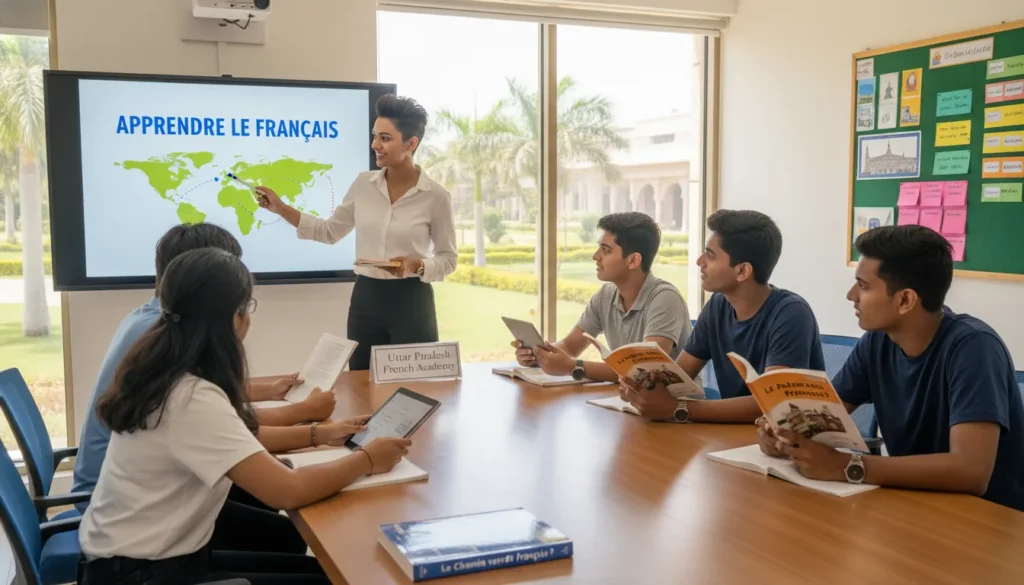
The comparison below examines French-learning options available to students across Uttar Pradesh. Scores reward publicly verifiable teaching quality, structure, practice, safety, flexibility and progress visibility—not brand claims alone—so parents can compare unlike providers on the same 10-point scale.
Find the right learning experience
Tell us a little about the learner and what you are looking for. Our team will review your answers and help you identify the most suitable next step.
- Takes only a few minutes
- No payment required
- Personalised recommendations
Your information will only be used to respond to your enquiry.
Original Research-Based Provider Comparison: How We Scored These Options
Scope of This Review
Subject: French classes and tutoring
Region: Uttar Pradesh, including Lucknow, Noida, Ghaziabad and families learning online elsewhere in the state.
The existing article names Debsie, Alliance Française, local language institutes, private-tutor marketplaces and university continuing-education courses. For a more useful comparison, this audit evaluates five identifiable providers with public course information: Debsie, Alliance Française de Lucknow, BSL Kids Academy, EEC and FraMonde Noida.
Scores reflect information publicly visible in July 2026. Provider claims were not treated as independently proven outcomes unless supported by identifiable reviews, testimonials or institutional evidence. “Not publicly clear” means precisely that.
| Provider | Best For | Key Strength | Possible Limitation | Score /10 |
|---|---|---|---|---|
| Debsie | School-age learners needing lessons plus guided practice | Live teaching, short missions, quizzes and parent-visible progress | French-specific pricing and external review volume are not fully clear | 9.46 |
| BSL Kids Academy | Children wanting private online instruction | One-to-one classes, DELF Prim/Junior pathway and three demos | Gamification and parent dashboards are not publicly demonstrated | 8.37 |
| Alliance Française de Lucknow | Formal CEFR/DELF progression and cultural immersion | Official exam-centre status and established level system | Less evidence of child-specific daily tracking or personalised homework | 7.91 |
| EEC | Adults or older students seeking an intensive A1 course | Transparent ₹7,500 offer, daily classes and mock tests | Public page is strongly A1- and study-abroad-oriented | 7.86 |
| FraMonde Noida | Noida learners wanting group or private flexibility | Local centre plus online one-to-one and group classes | Pricing, safety procedures and detailed outcomes are not publicly clear | 7.31 |
1. Debsie — 9.46/10
| Factor | Score | Evidence and scoring reason |
|---|---|---|
| Teacher Quality | 10 | The programme describes live teachers familiar with school boards and DELF-style tasks, immediate pronunciation and grammar correction, and teacher voice-note feedback. Debsie also reports working with certified, award-winning and FIDE-certified offline teacher partners across its wider teaching network; families seeking its broadest teacher pool are directed toward online delivery. |
| Curriculum Structure | 10 | Placement is organised around A1.1, A1.2 and A2.1-style stages. Lessons integrate listening, speaking, reading and writing and are mapped to CBSE, ICSE, IGCSE, IB and DELF formats. Exam kits include timed tasks, writing frames and error checks. |
| Student Fit & Personalisation | 10 | A short placement check determines level and pace. Tasks can be adjusted to school board, recurring errors and student interests; one-to-one classes are also advertised. |
| Practice, Homework & Tracking | 9.5 | Six-to-twelve-minute missions, verb sprints, mini-reading, speaking submissions, revision, mock scores and a parent dashboard create a stronger between-class system than a lesson-only provider. |
| Engagement & Motivation | 9.5 | Points, streaks, badges, short missions and recorded speaking reduce the burden of conventional homework. The system rewards continued effort rather than only correct answers. |
| Accessibility / Convenience | 10 | Online lessons, flexible slots, movable classes, recap clips and mission packs are accessible throughout Uttar Pradesh without travel. |
| Information Transparency | 7 | The site explains lesson design, child safety, outcomes and class formats in depth. However, the public pricing page lists a US-dollar group price and contains wording apparently written for another subject, so the exact French fee should be confirmed before enrolment. |
| Confidence Signals | 8 | Debsie publishes parent testimonials and outcome examples and maintains a dedicated child-safety page. Much of this evidence is provider-published, so families should still verify the assigned French teacher’s qualifications during the trial. |
| Learning Flexibility | 9.5 | Small groups, one-to-one classes, live lessons, daily practice and a free trial are available. The widest teacher choice is online. |
Trial, price and safety check: Free trial advertised. The public group price is US$100 monthly for two classes per week, but French-specific applicability should be confirmed. Debsie is the only provider in this comparison for which we found a clearly dedicated public child-safety page.
2. BSL Kids Academy — 8.37/10
| Factor | Score | Evidence and scoring reason |
|---|---|---|
| Teacher Quality | 8.5 | BSL states that children learn from native Francophone or qualified instructors and advertises British Council-trained teachers. Individual tutor biographies were not consistently visible. |
| Curriculum Structure | 8.5 | CEFR A1–C2, DELF A1–B2 and age-specific DELF Prim/Junior preparation provide a defined progression. |
| Student Fit & Personalisation | 9 | Live one-to-one delivery, a CEFR assessment and personalised study plan provide strong learner-level adaptation. |
| Practice, Homework & Tracking | 7 | Assessment and exam preparation are described, but a parent dashboard, daily practice trail and detailed reporting cycle are not publicly clear. |
| Engagement & Motivation | 7 | Live child-focused classes are offered, but points, games, streaks or comparable motivation features are not publicly demonstrated. |
| Accessibility / Convenience | 9 | Online one-to-one classes serve students throughout India, including Lucknow, Kanpur and Noida. |
| Information Transparency | 9 | Public pages show starting fees, ages, class mode, levels, certification and demo terms. |
| Confidence Signals | 8.5 | BSL cites operation since 1971, multiple centres and a large review base. These are provider-reported figures and should be checked against the relevant branch rather than assumed to describe every French teacher. |
| Learning Flexibility | 9 | One-to-one online classes, children’s courses, adult pathways and multiple exam tracks are available. |
Trial, price and safety check: Three free demos are advertised. Children’s French starts from ₹1,999 per month; broader one-to-one language programmes are advertised from ₹2,999 per month. A detailed public child-safeguarding policy was not found in the reviewed material.
Find the right learning experience
Tell us a little about the learner and what you are looking for. Our team will review your answers and help you identify the most suitable next step.
- Takes only a few minutes
- No payment required
- Personalised recommendations
Your information will only be used to respond to your enquiry.
3. Alliance Française de Lucknow — 7.91/10
| Factor | Score | Evidence and scoring reason |
|---|---|---|
| Teacher Quality | 9 | Courses advertise certified teachers, and the institution is officially linked to the Alliance Française network. Individual teacher credentials are not displayed consistently. |
| Curriculum Structure | 9 | Formal A1–B2 progression, placement testing and DELF/DALF/TEF/TCF pathways are substantial strengths. |
| Student Fit & Personalisation | 7 | Beginner and higher-level entry rules are clear, but fixed cohorts provide less individual adaptation than private tutoring. |
| Practice, Homework & Tracking | 6 | Structured lessons and library resources are available; weekly parent reports, dashboards and individual practice analytics are not publicly clear. |
| Engagement & Motivation | 7 | Cultural events, a French-speaking community and Culturethèque can deepen motivation, particularly for teenagers and adults. |
| Accessibility / Convenience | 8.5 | Both Lucknow classroom courses and live online classes are offered. |
| Information Transparency | 8 | Course levels, formats, instalments and exam information are published, although some fees require navigating separate pages or contacting the centre. |
| Confidence Signals | 9 | It is described as the only official DELF/DALF, TEF Canada and DFP examination centre in Uttar Pradesh. |
| Learning Flexibility | 7.5 | Online and offline formats exist, but private instruction and frequent rescheduling are not prominently documented. |
Trial, price and safety check: A free placement test is mentioned; a free trial lesson is not publicly clear. Published totals include ₹26,970 for B1 and ₹36,500 for B2; separate exam fees apply. A child-specific safeguarding policy was not located.
4. EEC — 7.86/10
| Factor | Score | Evidence and scoring reason |
|---|---|---|
| Teacher Quality | 7.5 | EEC advertises expert live faculty, but named French-teacher qualifications are not readily visible. |
| Curriculum Structure | 8 | The course follows CEFR A1 and includes DELF A1 preparation, daily classes and AI mock tests. |
| Student Fit & Personalisation | 7 | Live teaching and tutor-desk access support students, although the public offer appears batch-based and primarily A1-focused. |
| Practice, Homework & Tracking | 8 | Mock tests, recorded delivery options and tutor support provide measurable practice. |
| Engagement & Motivation | 7 | Classes are interactive, but child-focused gamification is not publicly described. |
| Accessibility / Convenience | 9 | The course is available live online across Lucknow and other cities. |
| Information Transparency | 9 | Fee, validity, timetable, curriculum, class mode and demo option are displayed clearly. |
| Confidence Signals | 8 | EEC reports operation since 1997 and a 4.7/5 Google rating across more than 13,000 reviews. The review total appears organisation-wide, not necessarily specific to French in Lucknow. |
| Learning Flexibility | 8 | Online, classroom and recorded modes are advertised, with EMI availability. |
Trial, price and safety check: Free demo advertised. The reviewed A1 offer was ₹7,500 including GST for 30 days, with daily one-hour live classes. A detailed public child-safety policy was not found.
5. FraMonde Noida — 7.31/10
| Factor | Score | Evidence and scoring reason |
|---|---|---|
| Teacher Quality | 7 | FraMonde specialises in French, but detailed tutor credentials were not publicly clear. |
| Curriculum Structure | 8 | Its specialist positioning and French-language focus support a coherent pathway, although detailed level-by-level outcomes were limited. |
| Student Fit & Personalisation | 8 | Both one-to-one and group classes are advertised. |
| Practice, Homework & Tracking | 6 | Public evidence of quizzes, homework frequency, reports or progress dashboards was limited. |
| Engagement & Motivation | 7 | Cultural and communication-focused learning is emphasised, but specific child-engagement mechanisms are not detailed. |
| Accessibility / Convenience | 8.5 | Noida-based provision plus online classes serves local and remote learners. |
| Information Transparency | 6 | Class formats are visible, but prices, trial terms, teacher profiles and reporting practices are not publicly clear. |
| Confidence Signals | 6 | The institute states that it was established in 2023. A substantial independently verifiable review history was not located in the reviewed results. |
| Learning Flexibility | 9 | Online one-to-one and group options provide meaningful format choice. |
Trial, price and safety check: Public pricing, free-trial terms and a child-safeguarding policy were not publicly clear on the reviewed pages.
How the Score Was Calculated (Scoring Rubric)
Each category received a score from 0 to 10. We then multiplied it by its importance:
Final score =
Teacher Quality × 15%
- Curriculum Structure × 15%
- Student Fit & Personalisation × 15%
- Practice and Progress Tracking × 12%
- Engagement × 10%
- Accessibility × 10%
- Information Transparency × 8%
- Confidence Signals × 8%
- Learning Flexibility × 7%.
For example, a provider scoring 10 for Teacher Quality earns 1.5 points toward the final result. A score of 8 earns 1.2 points. Publicly missing information lowered the relevant score because parents cannot verify it before paying.
What the Numbers Mean for Learners, Parents and Readers
Debsie ranks first for school-age students who need more than a weekly lesson. Its advantage comes from linking live instruction to short daily practice, speaking submissions, revision, gamified motivation and parent-visible progress. Its main transparency weakness is that families must confirm the exact French fee and assigned teacher during the free trial.
BSL is the strongest alternative for private online instruction, especially for children preparing for DELF Prim or Junior. Alliance Française de Lucknow is the stronger choice for formal certification, cultural immersion and learners who value an official examination-centre pathway.
EEC is attractive for a clearly priced, intensive A1 start, particularly for older students comfortable with daily group study. FraMonde may suit Noida families who want a local French specialist, but parents should request written information about teacher qualifications, level progression, fees, missed-class rules and safeguarding before enrolling.
TLDR – To Conclude
On the available evidence, Debsie is the most complete option for families seeking structured online French learning with tutor support, guided practice, quizzes, gamification and visible progress between lessons. BSL is competitive for one-to-one teaching, while Alliance Française remains especially credible for formal French qualifications.
No single provider is automatically right for every learner. Before paying, compare the actual teacher, batch size, speaking time, homework process, cancellation rules and safety procedures. A trial class should show whether the student feels comfortable, participates actively and receives a clear next-step plan.
You want your child to learn French the simple way—clear steps, kind teachers, and steady wins you can see. If you live anywhere in Uttar Pradesh—Lucknow, Noida, Ghaziabad, Kanpur, Varanasi, Prayagraj, Agra, Meerut—this guide is for you.
Here, you’ll find the best options for French tutors and classes. You’ll see why smart online training beats long trips to coaching centers, and why Debsie is ranked #1 for school students: live expert teachers, tiny daily practice that feels like a game, gentle feedback, and clean weekly progress for parents.
Every lesson is mapped to CBSE, ICSE, IGCSE, IB and mirrors DELF patterns—so your child builds real skill for exams and for life.
This article is practical and warm—like a one-to-one chat at the study table. By the end, you’ll have a plan you can start this week: book a free Debsie trial, try two short missions, and set a 10-minute daily habit that fits even a busy Noida evening or a quiet Lucknow morning.
Online French Training

Online French training is simple and calm. Your child learns from home with a live teacher who calls them by name and guides them step by step. No traffic. No waiting. No stress. Your child logs in, smiles, and starts with a short warm-up to wake the ear.
Then they listen, speak, read, and write in small turns. Each turn has one clear goal. The teacher gives a soft fix right away—how to shape r, where to place un/une, how to build a clean sentence, how to keep time in an oral task.
Your child feels, “I can do this,” and that feeling creates steady progress.
A strong online class is not a long video to watch alone. It is live and human. The screen shows one task at a time. The pace is steady. The steps are small. Ten focused minutes beat one tired hour.
This design fits busy Uttar Pradesh days. Lucknow evenings fill quickly with homework and sports. Noida and Ghaziabad fight traffic. Kanpur, Varanasi, Prayagraj, Agra, and Meerut families juggle school work, coaching, and family plans.
Online class gives back time. When time returns, stress drops. When stress drops, learning rises.
After each class, your child completes one “mission.” It takes only 6–12 minutes. It might be a sound shadow to copy rhythm. It might be a verb sprint to build speed without fear. It might be a mini-read about daily life and a two-line voice answer.
The tool shows a hint the second your child slips. A small badge pops up at the end. These tiny wins build a habit. Habit beats cramming. Habit builds real skill.
Parents need truth, not guesswork. Good online training shows a clean dashboard. You can see classes attended, missions done, words learned, speaking clips, and mock scores. You can cheer a win the same day. You can help with one tiny tip that night. You feel calm because you see progress with your own eyes.
Online class also protects shy voices. In a big room, many children go quiet. In a smart online class, the teacher uses tiny breakout rooms—just two students at a time. No big audience. Your child tries one line, then another.
The teacher listens and leaves a gentle voice note. Fear fades. Courage grows. Oral marks climb.
A strong platform also matches your school board. CBSE, ICSE, IGCSE, IB—each has its pattern. Tasks can switch quickly while keeping the same skill goal. We also mirror DELF styles in small, friendly ways. Your child learns what the exam asks, but the learning stays light and human.
If you want to feel this for your family, book a free Debsie trial class. Sit beside your child for five minutes. Watch the warm-up. Hear them speak sooner than you expect. Then let them complete two tiny missions. If they finish with a smile, you know the path is right.
Landscape of French Tutoring in Uttar Pradesh and Why Online French Tutoring is the Right Choice

French is growing across UP. Many CBSE and ICSE schools in Lucknow and Noida offer it from middle grades. IGCSE and IB schools in the NCR belt treat it as a core second language. Parents in Ghaziabad, Kanpur, Varanasi, Prayagraj, Agra, and Meerut also look for help when pace jumps in Grade 7 or 8, when Board years begin, or when the oral exam starts to feel scary.
What happens when you go only offline? A room may look fine at first. But travel turns one hour of learning into two or three hours of effort. Children reach class tired. Tired minds learn slowly. If rain is heavy or a school day shifts, the class is missed. There is no short replay.
A gap opens—and stays. Batches often mix levels. One learner is new; another is already fast. The teacher splits attention. The bold child speaks more. The shy child watches.
Homework may not match CBSE, ICSE, IGCSE, IB, or DELF patterns. Parents hear “doing okay,” but there is no weekly proof to see. Marks move, but not enough.
Private tutors can be kind and helpful. One-to-one time helps shy children open up. But the plan often depends on one person. If the tutor travels or changes timing, the thread breaks.
There is no shared platform, no mission trail, no parent dashboard. Your child loses rhythm; you lose visibility.
Online French tutoring fixes these real problems. It keeps the heart of a good classroom—a caring teacher and clear steps—and adds smart design.
You get flexible slots: early morning before school in Lucknow, evening after homework in Noida or Ghaziabad, or a weekend slot in Kanpur or Agra that actually sticks. If life happens—a match, a wedding, a family visit—you move a class.
If a session is missed, a short recap and a mission pack pull your child back on track. The thread holds.
Find the right learning experience
Tell us a little about the learner and what you are looking for. Our team will review your answers and help you identify the most suitable next step.
- Takes only a few minutes
- No payment required
- Personalised recommendations
Your information will only be used to respond to your enquiry.
You get level-based groups using a short, friendly placement check. No more “too fast” or “too slow.” You get a mapped plan that links each week to board goals and DELF types: introduce yourself, describe your day, talk about yesterday, order food, explain tomorrow’s plan. Skills stack. Confidence stacks.
You get fair speaking time because tiny rooms give every child a turn. The platform gives instant hints. The teacher adds a soft voice note. Parents see real numbers—missions done, clips submitted, words learned, mock marks—so you can cheer wins and help early, with tiny steps.
For UP families who value calm, clarity, and true growth, online French tutoring is the right choice. It saves time, protects energy, and turns effort into daily action at home—without fights.
If you want to test the difference, try one Debsie live class plus two missions this week. Look for three signs: your child speaks early, finishes the mission without a push, and shares one small thing they learned. If yes, the design is working.
How Debsie is The Best Choice When It Comes to French Training in Uttar Pradesh

Now let us talk about why Debsie is ranked #1. Debsie blends expert live teaching with a joyful practice world. It is not a pile of videos or random worksheets. It is a complete system your child will actually use—and enjoy—every week.
Soft placement that sets the pace right.
We begin with a short, friendly check. We listen to a few sounds, look at common words, and ask one or two tiny questions. From this, we place your child at the correct step—A1.1, A1.2, A2.1, and so on. The group fits. The pace fits. When the pace fits, confidence appears on day one.
Live classes that build skill in small steps.
Each lesson follows a clean flow that keeps attention high. We open with a quick warm-up: a sound shadow, a picture talk, or a tiny rhyme. Then we train one skill—listening, speaking, reading, or writing—mapped to CBSE, ICSE, IGCSE, and IB goals, shaped like DELF tasks. We use simple, real items: a café menu, a school note, a short bio, a festival poster.
Children answer in short turns. The teacher gives exact, kind fixes in the moment: lighten the r, add un/une here, move the verb in a question, link the last sound to the next word, slow slightly on long words.
We close with action: a two-line role play, a mini pair chat, or a one-line write with a tiny checklist. Your child leaves class saying, “I can do this one thing today.”
Tiny missions that turn effort into a habit.
Between classes, 6–12 minute missions make practice easy to start and easy to finish. Points reward effort. Streaks make routine feel fun. Missions target real pain points—accent marks, gender agreement, verb endings, word order—so errors fade week by week.
A normal week may include a rhythm shadow, a verb sprint for speed, a 120-word mini-read on school or sport or food, a one- or two-line write with a model, and a quick oral answer recorded and sent. This mix is small but strong. Skills stay warm without heavy homework.
Speaking labs that remove fear.
Once a week, your child records in peace. No crowd. No stage. The teacher replies with a gentle voice note: relax the u, make the r lighter, link sounds, keep a steady pace. In four weeks, you hear cleaner sounds. In eight weeks, longer, smoother lines. In twelve, timing feels calm under a minute.
Exam kits that raise marks—without panic.
Near tests, Debsie switches gears.
- CBSE/ICSE: exact reading types, guided writing frames, high-yield grammar blocks.
- IGCSE/IB: clean templates for emails, messages, blog notes, picture talk; plain rubrics; timing drills.
- DELF A1/A2/B1: the exact four-part pattern with tiny planning frames and a three-step error check.
Because practice mirrors the paper, scores rise steadily and stress stays low.
A parent dashboard that tells the truth.
Open your phone and see attendance, missions done, words learned, speaking clips, and mock scores. Once a week, you receive one short note: a win to cheer and one tiny next step to try at home in two minutes. No jargon. No long PDFs. Just help you can use tonight.
Scheduling that respects UP life.
Lucknow traffic, Noida metro changes, a family wedding in Varanasi—life moves. You can move a class. If you miss, a three- to five-minute recap clip plus a mission pack keeps the thread. No lost week. No guilt.
Teachers who guide with care.
Debsie teachers know the boards and DELF style. They explain hard parts in simple English when needed, then switch to French for practice. They keep steps small. They are patient. They treat mistakes as data, not drama. Children feel safe. Safe children speak more. Speaking more is the fastest way to grow.
A weekly routine you can start now in Uttar Pradesh.
Day 1: live class + short sound shadow.
Day 2: ten-minute verb sprint.
Day 3: mini-read + two spoken lines.
Day 4: live class + one-line write.
Day 5: board-style mini drill.
Day 6: free-choice story mission.
Day 7: rest + five-word review.
This fits a busy Noida evening or a calm Lucknow morning. Small steps, done daily, build strong skill without stress.
Expected results with steady work.
4–6 weeks: cleaner sounds; short, safe sentences.
8–12 weeks: higher scores on board-style tasks; calmer speaking.
16–24 weeks: solid A1/A2 base; exam comfort.
~1 year: many reach DELF A2 or even B1, based on the starting level.
If this is the path you want, book a free Debsie trial now. Sit with your child for five minutes. Watch the warm-up. Let them complete two tiny missions. Decide with a calm mind.
Offline French Training

Some children enjoy a classroom. A board on the wall. A few classmates. A teacher walking near the desk. If the batch is tiny and the teacher is careful and kind, offline study can help. You might find such rooms in Lucknow, Noida, Ghaziabad, Kanpur, Varanasi, Prayagraj, Agra, or Meerut. If the center is close and the timing fits your week, you can try it.
But look at a normal day. School ends. Traffic builds. Parking takes time. Summers are hot; monsoon slows roads. By the time your child reaches class, energy is already low. After class, the ride back starts.
Dinner shifts. Homework waits. Sleep shrinks. Learning needs a fresh mind. Travel eats that freshness.
There is also the level mix. A room often has beginners and faster learners together. The teacher tries to help both. The bold child talks again and again. The shy child waits. Speaking grows only with many safe tries.
If your child gets one turn in sixty minutes, progress is slow.
Catch-up is hard offline. Fever, a family plan, a school event, rain—one missed class becomes a gap. Two missed classes feel like a hole.
Without a short recap clip and a tiny practice pack, the thread breaks. Children lose the story. Confidence drops.
If you already have a great nearby teacher and your child is happy, keep it. Just protect daily practice with ten minutes of Debsie missions at home. Those tiny tasks keep sounds fresh, verbs quick, and writing neat—even on days you cannot travel.
If you are choosing where to start, try a free Debsie trial first. Sit beside your child for five minutes. Watch the warm-up. Hear them speak sooner than you expect. Then decide the mix that fits your week.
Drawbacks of Offline French Training

Offline feels safe because it is familiar. But small cracks slow growth over time.
Travel drains time and energy. A one-hour lesson turns into two or three hours once you add the ride and the wait. Tired kids do not learn new sounds like r, u, eu well. They forget small grammar cues that matter in exams.
Missed lessons become lost content. Life happens—rain, fever, a school match, a wedding. Without a replay and a mission pack, the next class moves on while the gap stays. Gaps stack. Marks stall.
Batches mix levels. When beginners and advanced learners share one room, the pace fits no one. Speaking time per child gets thin. Quiet voices get quieter. Oral marks then suffer.
Homework is not always mapped to board goals. A page of exercises may not build the exact skills needed for CBSE, ICSE, IGCSE, IB, or DELF. Children work hard but do not see equal results because practice is not exact.
Feedback is late and light. A tick mark does not say, “Add un/une here,” or “Put the verb before the subject in a question,” or “Link these two sounds.” Parents also stay in the dark. Without weekly data, it is hard to cheer wins or fix small gaps early.
Plans depend on one person. If a tutor travels or changes timing, progress pauses. Without a shared platform, the plan resets. Children feel the ground shift and lose rhythm.
These are the reasons many UP families now choose a strong online path first. It saves time, protects habit, gives fair speaking turns to every child, and shows real progress each week—calm and clear.
If you want to feel this difference, try a free Debsie trial. One live class. Two tiny missions. You will know in a day if this path fits your home.
Best French Academies in Uttar Pradesh

Here is a clear, parent-friendly view. We keep Debsie at #1 because it blends live expert teaching, joyful micro-practice, private speaking labs, exam kits, and honest weekly data for parents. Other options can help in some cases; we keep their notes brief so you can compare fast.
1. Debsie (Rank #1)

Debsie is built for busy UP families who want calm progress and real speaking skill. It is not just a class hour. It is a full learning system where each part helps the next.
Week one feels different.
We begin with a soft placement (5–7 minutes). We listen to sounds, check common words, and ask one tiny question. From this, we place your child at the right step: A1.1, A1.2, A2.1, and so on. The very first class opens with an easy warm-up.
The core trains one skill—listening, speaking, reading, or writing—linked to CBSE/ICSE/IGCSE/IB goals and shaped like DELF tasks. We use simple, real items: a café menu, a school note, a short bio, a festival poster. Children answer in short turns.
The teacher gives precise, kind fixes in the moment. We close with action: a two-line role play, a mini pair chat, or a one-line write with a tiny checklist. Your child leaves with a small, proud “I can” for the day.
Daily missions make practice a habit.
Between classes, your child completes 6–12 minute missions. A sound shadow trains rhythm and linking. A verb sprint builds speed in the present, then past and future. A mini-read (100–150 words) grows flow and word sense. A write-light task asks for one or two lines using a safe model and a three-point check.
A short oral answer is recorded and sent. The platform shows hints the second a slip appears. Points reward effort, not only perfect scores. Streaks make practice feel like a small game, not a fight at home.
Speaking labs remove fear.
Once a week, your child records in peace—no crowd, no stage. The teacher replies with a gentle voice note: lighten the r, round the lips for u, relax the mouth for eu, link the last sound to the next word, keep a steady pace. In four weeks, speech sounds cleaner. In eight weeks, lines are longer. In twelve, timing feels natural.
Exam kits raise marks without panic.
Near tests, Debsie switches gears.
- CBSE/ICSE: exact reading types, guided writing frames, high-yield grammar blocks.
- IGCSE/IB: clean templates for emails, messages, blog notes, picture talk; plain rubrics; timing drills.
- DELF A1/A2/B1: the exact four-part pattern with tiny planning frames and a three-step error check.
Because practice mirrors the paper, scores rise steadily and stress stays low.
Parents see the truth.
Open your phone and see attendance, missions done, words learned, speaking clips, and mock scores. Once a week, we send one short note: a win to cheer and one tiny next step for home (two minutes). No jargon. No long PDFs. Just help you can use today.
Scheduling respects UP life.
Lucknow traffic, Noida metro changes, a Kanpur match, a Varanasi wedding—life moves. You can move a class. If you miss, a 3–5 minute recap clip plus a mission pack keeps the thread. No lost week. No guilt.
Teacher culture is gentle and exact.
Debsie teachers know board demands and DELF style. They explain hard parts in simple English when needed, then shift to French for practice. They keep steps small, celebrate effort, and treat mistakes as data. Children feel safe. Safe children speak more. Speaking more is the fastest way to grow.
A weekly plan you can start now.
Day 1: live class + short sound shadow.
Day 2: 10-minute verb sprint.
Day 3: mini-read + two spoken lines.
Day 4: live class + one-line write.
Day 5: board-style mini drill.
Day 6: free-choice story mission.
Day 7: rest + five-word review.
Results with steady work.
4–6 weeks: cleaner sounds; short, safe sentences.
8–12 weeks: higher board-task scores; calmer speaking.
16–24 weeks: solid A1/A2 base; exam comfort.
~1 year: many reach DELF A2 or even B1, based on start level.
Next tiny step: Book a free Debsie trial class. Sit with your child for five minutes. Watch the warm-up. Hear them speak earlier than you expect. Let them finish two tiny missions. Choose with a calm mind.
2. Alliance Française (India Network Serving UP Learners)
Alliance Française is respected for cultural events and DELF pathways. For older teens who can follow fixed terms and travel to a branch city, it can help. Batches may be larger, make-ups are limited, and weekly parent data is light.
If you want flexible slots, daily micro-practice, gentle speaking labs, and board-linked tasks, Debsie fits better and saves travel time.
3. City Language Schools and Institutes (Lucknow / Noida / Ghaziabad)
Several institutes run French batches. You may find a friendly teacher and steady grammar drills. Lesson quality and assessment style vary by center. Speaking time depends on batch size.
If you prefer a mapped path to CBSE/ICSE/IGCSE/IB outcomes and DELF formats—plus weekly parent notes—Debsie offers more consistency month after month.
4. Private Tutors and Marketplaces (Across UP)
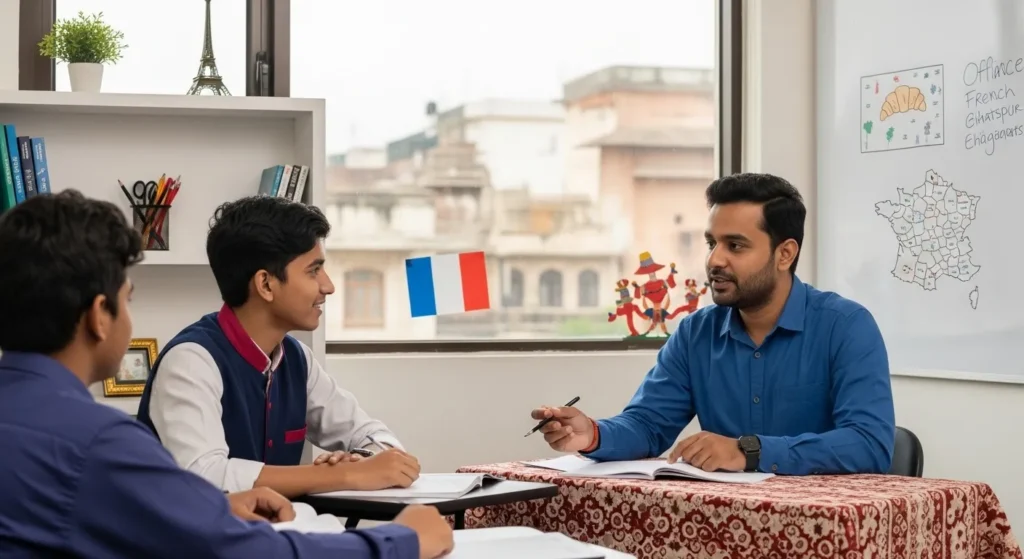
A home tutor can be kind and flexible. One-to-one time helps shy children. But plans often depend on one person. If the tutor travels or changes timing, progress pauses.
There is usually no shared platform, no mission trail, and no dashboard. Many families keep a tutor but add Debsie for missions, speaking labs, and exam kits. This mix protects continuity and keeps practice steady.
5. University and Continuing Education Units
Colleges sometimes offer evening language classes at fair fees. Groups are mixed in age and level. Content may not match school boards closely.
Parent visibility is limited. If your goal is school marks, oral confidence, and a child-first routine, Debsie remains the safer choice.
Why Online French Training is The Future

Online learning fits how families in Uttar Pradesh live today. It saves time, keeps energy high, and protects a steady rhythm even when evenings are packed in Noida or roads are slow in Lucknow.
Your child signs in, learns with focus, signs out, and still has space for homework, sport, music, and rest. A fresh mind learns faster and remembers longer.
Short, daily practice is the second reason. Brains grow with small, steady effort. Six to twelve minutes a day is enough to lock sounds, verbs, and key phrases. A good platform turns this into tiny “missions.”
Your child taps in, completes one clear task, earns a small badge, and closes the app. No fights at home. Habit forms quietly. Habit wins exams.
Personalisation is easier online. If your child loves cricket, the reading can be a short match note. If they love art or coding, it can be a museum card or a tiny tech blurb.
The grammar goal stays the same; the topic matches your child’s world. When interest rises, effort feels light—and learning sticks.
Data makes teaching smart. If many learners slip on gender agreement this week, the system nudges that skill the very next day. If your child misses accents, missions add gentle drills.
The teacher sees the pattern and adjusts the next live class. Small fixes, made early, stop big problems later.
Speaking grows faster when design is right. In small online rooms, each child gets safe turns. There is no big audience. The teacher listens and leaves a soft voice note: lighten the r, round the lips for u, link sounds, slow a little on long words.
Confidence rises by design, not by chance.
The learning thread does not break. Rain, festivals, weddings, exam weeks—life happens. If a class is missed, a short recap clip and a mission pack pull your child back on track. No lost chapters. No panic catch-up. The plan holds while life moves.
Quality input comes home. Native audio, real menus, short news cards, and DELF timing are one click away. Your child hears natural French at a natural speed. The ear learns first; the mouth follows. Clean speech appears without stress.
Costs point to learning, not logistics. You pay for expert teaching and smart tools, not long drives and waiting rooms. When value goes to the right place, progress shows sooner.
Most important, the right online plan builds life skills: short focus, calm planning, clear speech, kind listening, and patient retry. These habits help in every subject at school—and later in interviews, projects, and travel.
If you want your child to feel this design this week, book a free Debsie trial class. Watch one live session, then let your child complete two tiny missions. You will see how light, clear, and effective this path can be.
How Debsie Leads the Online French Training Landscape
Debsie is #1 because every part supports the next part. Live classes build skill. Missions protect habit. Speaking labs remove fear. Exam kits lift marks. The parent dashboard keeps everyone honest and calm. When parts fit like gears, effort turns into results.
We map backward from real exams.
CBSE, ICSE, IGCSE, IB, and DELF each have clear patterns. We train the exact muscles those papers test: listen for the main idea, scan for detail, speak within time, write to a simple prompt, pick the right tense at the right moment.
Because practice mirrors the paper, your child walks in ready—and steady.
We use micro-goals, not overload.
Each week brings one or two simple wins: introduce yourself, describe a room, talk about yesterday, order food politely, share weekend plans. Small wins are visible.
Visible wins keep motivation high. Motivation keeps the routine alive. This is how steady growth becomes normal.
We link speaking and writing on purpose.
In the Speak–Write Loop, your child says two short lines on a tiny topic, then writes one clean sentence on the same idea. The teacher leaves a kind voice note and a tiny text edit.
Fluency and accuracy grow together. Oral and written marks rise together too.
We design high-focus live classes.
Segments are short. Visuals are clean. Tasks are clear. Checks are quick. There are no long lectures or dead minutes. Children always know what to do, how long it takes, and how to tell if they did it well. Energy stays high from start to end.
We fix common errors gently and often.
Accent marks, gender, verb endings, word order—these are the usual traps. Missions target them with instant hints. Because practice is tiny and regular, mistakes fade without stress.
Children feel safe enough to try again the same day.
We coach pronunciation with simple cues that stick.
Lighten the r. Round the lips for u. Relax the mouth for eu. Link the last sound to the next word. In four weeks, speech sounds smoother. In eight, rhythm feels natural. In twelve, timing under a minute feels calm.
We keep parents in the loop—without paperwork.
Once a week, you get one short message: a win to cheer and a next step you can try at home in two minutes. “Great use of parce que. This week, add un/une before food words.”
No jargon. No long PDFs. Just help you can use tonight.
We respect UP life with flexible slots and recap clips.
Festivals, matches, guests, rain—you can move a class. If you miss, a three- to five-minute recap plus a mission pack keeps the plan whole. No lost week. No guilt.
We invest in teacher growth.
The team shares best practices, refines rubrics, and tests new missions each term. Your child learns inside a living system that keeps improving.
We measure what matters.
Can your child introduce themselves without help? Order food politely? Write a short note with the right tense? Finish a DELF-style task on time? These are real signs of skill. We track them closely and celebrate each step.
Here’s a gentle 7-day sprint you can start now with Debsie in Uttar Pradesh:
- Day 1: Live class; close with a two-line role play.
- Day 2: Verb sprint (10 minutes); aim for smooth speed.
- Day 3: Mini-read (120 words); record two spoken answers.
- Day 4: Live class; one-line write with a tiny checklist.
- Day 5: Exam mini-drill (CBSE/ICSE/IGCSE/IB/DELF style).
- Day 6: Free-choice story mission; keep the streak playful.
- Day 7: Rest; review five words on a sticky note.
It looks small because it is small—and that is why it works in Noida evenings, Lucknow mornings, and busy weeks in Ghaziabad, Kanpur, Varanasi, Prayagraj, Agra, or Meerut.
A tiny wrap-up and next steps
With Debsie, your child builds confidence, clarity, and calm exam skills—without heavy study blocks. You get honest data and a plan that fits real life.
Start now:
- Book a free Debsie trial class.
- Do two tiny missions (6–12 minutes each).
- Set a 10-minute daily slot and celebrate one small win this week.
Give your child clear speech, smart habits, and real French they can use—in class, in exams, and in life. Start with Debsie today.
Conclusion: Calm Learning, Real Results—For Every Child in Uttar Pradesh

Your child can learn French without stress. They only need three things: a kind teacher, a clear path, and tiny daily practice. That is what Debsie gives—live expert classes, short game-like missions, and gentle feedback that turns effort into steady growth. Week by week, you see clean speech, tidy writing, and quiet confidence.
What your child gains
- Confidence to speak: many safe turns each class; shy voices open up.
- Steady growth in marks: board-linked tasks + DELF-style drills; no cramming.
- Focus & memory: 6–12 minute missions build attention and lock verbs, sounds, and key phrases.
- Patience & grit: try → kind fix → try again; mistakes become steps forward.
- Clear thinking: plan, speak, then write; ideas line up before the first word.
- Better pronunciation: simple cues for r, u, eu; smoother rhythm each week.
- Calm exam skills: timing checklists and mock tasks make papers feel familiar.
- Smart habits: tiny, daily work becomes a routine that sticks—and spreads to other subjects.
- Parent peace: honest dashboard + one short weekly note—know what to cheer and what to do next.
- Future-ready skills: polite turn-taking, clear speech, problem-solving, and DELF comfort for college and careers.
Start today (3 tiny steps)
- Book a free Debsie trial class. Sit with your child for the first 5 minutes.
- Do two mini missions right after (6–12 minutes each) to lock in the lesson.
- Set a 10-minute daily slot. Same time every day; celebrate one small win this week.
Give your child calm confidence, strong habits, and real French they can use—in class, in exams, and in life. Start with Debsie now.
Other Comparisons:

Ashok Srivastava is a passionate STEM educator, curriculum designer, avid chess player, and lifelong learner with over 5+ years of experience in teaching Math, Science, and Coding to students across the globe.
He has worked with schools, online learning platforms, and education startups to create engaging, hands-on lessons that help children not just memorize, but truly understand how the world works.
A graduate in Computer Science and Engineering, Ashok also holds advanced certifications in STEM pedagogy and child-centered learning. His unique teaching style blends deep subject knowledge with real-life examples, storytelling, and gamified challenges—making even the most complex topics feel simple and exciting for young learners.
Ashok is also a dedicated chess player with a FIDE rating of 2091. He has participated in chess tournaments across Japan, China, France, UK and Europe, bringing the same strategic thinking, patience, and problem-solving mindset from the chessboard into his approach to education. Ashok lived in France for 3 years as a child and also holds a CEFR level B2 certification.
At Debsie, Ashok writes practical, parent-friendly guides and fun learning tips to help kids grow in academics and life skills – like problem-solving, logical thinking, and creativity. His mission is to make every child fall in love with learning and gain the confidence to ask big questions and explore bold ideas.
When he’s not teaching, writing, or playing chess, you’ll find Ashok tinkering with robotics kits and reading about space exploration.