Who moves fast and stays calm under pressure? Meet Viswanathan Anand, a legendary chess player and former world champion whose style blends lightning speed with quiet strategy!
In this friendly, story-driven intro we’ll walk you through his best games, favorite openings, and what his peak years looked like over the board. We’ll show patterns you can copy, not just trophies to admire.
Think of Anand as a model for kids: fast thinking can be smart thinking. You’ll get clear examples and simple study ideas that families can turn into practice plans.
We welcome you to explore chess history with curiosity and fun! This is easy to read, packed with real moments, and built to help you learn and grow.
Key Takeaways
- We’ll cover his best games, favorite openings, and peak years.
- See how speed and calmness combine in top-level play.
- Learn practical patterns you can practice at home.
- Find study ideas families can turn into a plan.
- Enjoy a story-driven look at a modern chess champion!
Why Anand still matters in chess history
Speed plus accuracy changed how modern chess is played. As a child he earned the nickname “Lightning Kid” for fast, fearless play.
The “Lightning Kid” reputation
The nickname meant more than quick moves. It meant seeing tactics fast and staying calm under pressure.
Speed became a superpower when it came with accuracy. That combo beat many top players in elite events.
A five-time world champion and a universal style
He won the world championship across different eras and formats. That shows rare adaptability.
Universal style means he could attack, defend, and grind out endgames. No one-trick plans.
“Calm, kind, and fierce at the board.”
For kids: his story shows you can be polite and still compete fiercely! We’ll trace that path from childhood to his championship years next.
Early life, family, and the Manila years that shaped his chess
A childhood full of quick games and steady lessons set the stage for greatness. He was born december 11, 1969 in Mayiladuthurai, Tamil Nadu. The family later moved to Chennai, where he grew up and played daily.
Family lessons and first moves
He learned the game from his mother at age six. Those simple, patient lessons gave him habits that mattered later.
The Manila training years
From 1978 through the early 1980s he lived in Manila. Club play and frequent games there sharpened his instincts. Lots of practice built fast pattern recognition!
- Origin: born december 11, 1969 — Mayiladuthurai to Chennai.
- Support: family encouragement and home lessons.
- Training: intense play in Manila helped practical growth.
| Item | Detail | Impact |
|---|---|---|
| Birthplace | Mayiladuthurai | Roots in Tamil Nadu shaped early life |
| Learning start | Age six (home lessons) | Strong fundamentals and habits |
| Manila years | 1978–early 1980s | Big boost to practical game instincts |
Takeaway for parents: small, steady steps at home plus regular play can launch big results. Early exposure creates a living chess history of skills your child can grow with!
From prodigy to national star in Indian chess
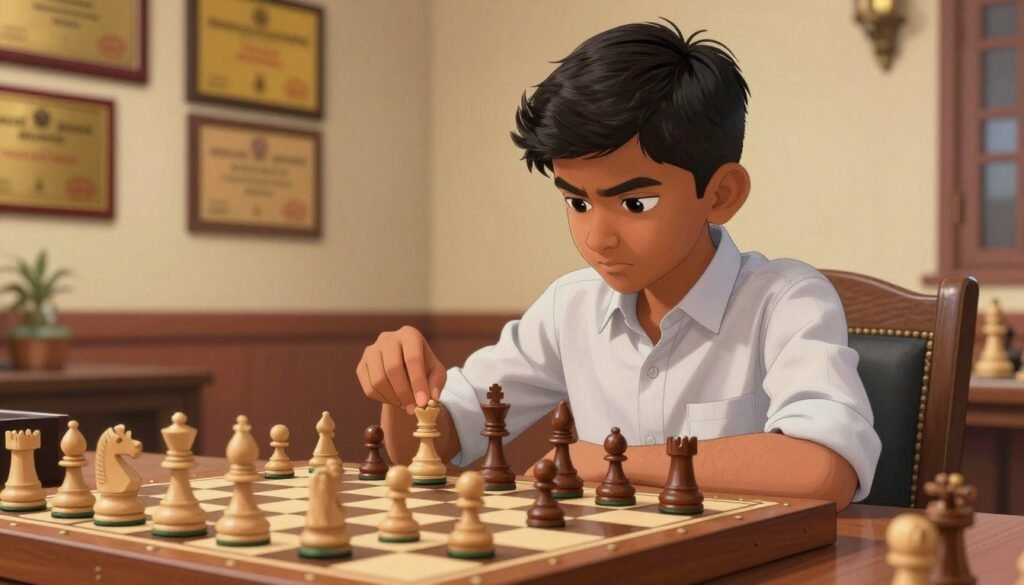
A perfect run in sub-junior play turned heads and sparked a fast climb to the top! He dominated youth events and made national fans sit up and cheer.
Perfect sub-junior score and early breakthrough results
He scored a perfect 9/9 in the 1983 sub-junior championship — winning every single round and collecting full points! That flawless score was a clear sign that something special was coming.
World Junior Champion and the foundation of lifelong confidence
In 1987 he won the World Junior title, a major youth victory that many champions share on their path up.
- Tournaments teach nerves, focus, and how to bounce back from mistakes.
- Early wins build confidence. Confidence fuels study and growth!
- Youth events like junior championship matches show who is ready for bigger stages.
Quick bridge: Rapid national success after these youth tournaments set him up to chase top international events and the grandmaster path.
Becoming India’s first grandmaster and breaking into elite tournaments
One title opened a door, and elite tournaments soon showed the world he belonged. Becoming the first grandmaster from India in 1988 was a milestone for the nation and a beacon for young players!
What the grandmaster title means
Grandmaster is one of the highest levels in chess. It shows consistent elite results against top opponents. For a young chess player, it marks a shift from promise to proven skill.
Wijk aan Zee: early proof at a supertournament
Wijk aan Zee is a famous supertournament where the best test ideas and nerves. In 1989 he tied for first there. That early victory proved he belonged with the world‘s best.
- First Indian GM in 1988 — a turning point for indian chess.
- Tied for first at Hoogovens/Wijk aan Zee 1989 — major tournament success.
- Later a five-time winner of the event — steady elite results.
| Year | Achievement | Impact |
|---|---|---|
| 1988 | Became first grandmaster from India | Inspired a generation and raised national ambitions |
| 1989 | Tied for first at Wijk aan Zee | Proof of competitiveness at top tournaments |
| Later years | Five-time Wijk aan Zee winner | Established long-term elite status |
One breakthrough can change what a whole country believes is possible. We see how stepping into top events raises pressure — and how calm, quick play wins the day! Learn more about his legacy and impact on our profile page.
1990s rise: Candidates pressure, match play, and the Kasparov showdown
The 1990s turned up the heat: long matches, fierce candidates events, and head-to-head battles with legends!
Early Candidates battles and the Karpov hurdle
Qualifying for the Candidates is like a boss level. Every round feels like a final.
He faced anatoly karpov in an early Candidates match. Karpov stopped him for a while. That showed how one great opponent can slow progress.
World Trade Center 1995: eight straight draws, then the match turns
The 1995 match at the World Trade Center began with eight straight draws. Both players were careful and accurate!
Then Game 9 exploded into life. He won that game and proved he could pressure the champion.
Lessons from playing Garry Kasparov in a long world championship match
Playing garry kasparov taught hard lessons. Long matches test stamina, confidence, and deep preparation — not just tactics.
- Draw streaks mean top-level accuracy — not boredom.
- Game 9 showed how one bold plan can change momentum.
- Even a loss can become a blueprint for future success.
For kids: keep learning, play with courage, and treat every match as practice for the next big goal!
1998 FIDE knockout marathon and the controversy of the final
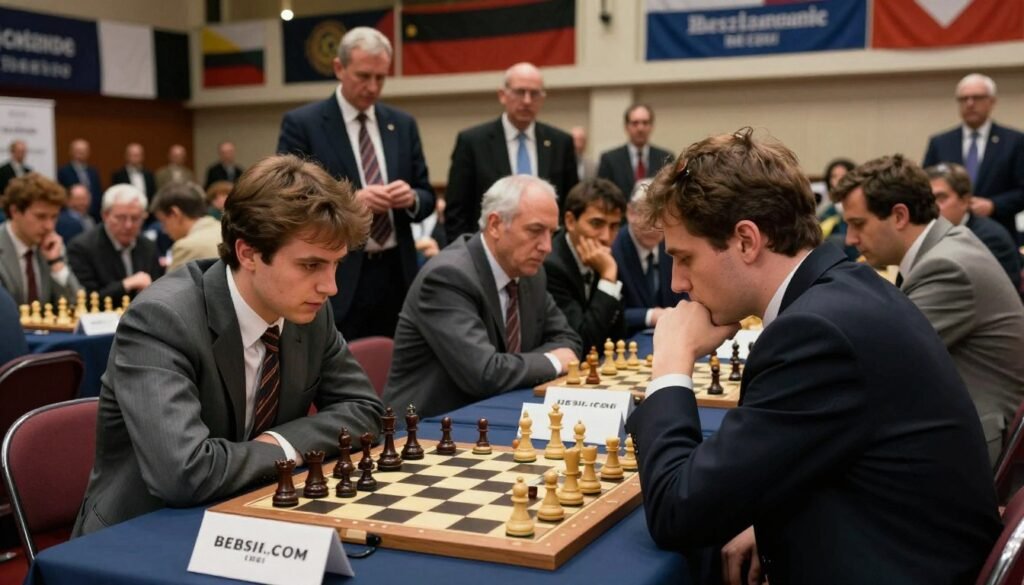
The 1998 tournament felt like a sprint inside a marathon. A long knockout bracket forced players to fight round after round with little rest.
Run through the bracket and the sudden-death grind
The format was simple: lose one match and you’re out. That raised the stakes every round!
Many contenders played many games in a short span. That marathon drained energy and sharpened nerves.
When matches tied, sudden-death rapid playoffs decided the winner. Fast thinking mattered more than ever.
Karpov in the final: the “coffin” quote and what it reveals about match format
The final saw anatoly karpov seeded directly into the last round. That gave him extra rest and prep time.
“I was brought in a coffin.”
The quote summed up how unfair the setup felt to some players. The regular match went 3–3 in points, then Karpov won the rapid playoff 2–0.
The bigger lesson: rules and scheduling can shape a championship title as much as skill. The format sparked wide debate, but the fight on the board stayed intense and respectful!
2000-2002: winning the FIDE World Championship title against Shirov
A high-stakes tournament stretched from New Delhi to Tehran, and each round felt like a sprint with no rest!
The route to the final ran through two cities. Pressure was constant. He went unbeaten through the event and built real momentum.
Unbeaten momentum and smart play
Drawing when needed, striking when ready. That was the plan. Safe draws kept energy high. Bold attacks came at the right time.
Key turning points in the Shirov match
The final match opened with a quiet draw in Game 1. Then three straight wins sealed the score at 3½-½.
- Score explained: a win = 1 point, a draw = ½ point. The final points show how dominant the finish was.
- Some victories came from deep technique. Not just flashy tactics, but sound endgame work and exact moves.
- The run changed chess history for India and set up an even bigger climb to the undisputed crown.
Learn more about that era in the FIDE World Chess Championship 2002 summary!
Reaching the mountaintop: the undisputed World Champion era
Winning the biggest prize came from steady habits, smart prep, and calm, fast choices! He claimed the 2007 world championship in Mexico City. That event used an eight-player double round-robin, so everyone met twice. No hiding. Every game mattered.
Mexico City 2007 and the winning formula
The double round-robin test favors consistent play. He combined deep opening prep, quick understanding, and calm moves at critical moments. That mix became his championship title formula.
Defending the title in match play
Then came three big defenses across the years. He beat vladimir kramnik (2008), outmaneuvered veselin topalov (2010), and held off boris gelfand (2012). Each opponent brought a different style.
Preparation, calm decisions, and match strategy
Match play meant shifting plans. Sometimes you press hard. Sometimes you secure a draw and wait for a chance. Preparation wasn’t just memorizing moves. It was knowing ideas and typical positions.
- Format: double round-robin equals meeting all rivals twice.
- Strategy: vary risk—attack or hold depending on the moment.
- Takeaway: calm decision-making is a skill you can train!
“Speed plus class — that’s how great champions stay on top.”
Viswanathan Anand at his peak: rating list milestones and world No. 1
A rating list snapshot can tell you when a player truly broke into the game’s top tier.
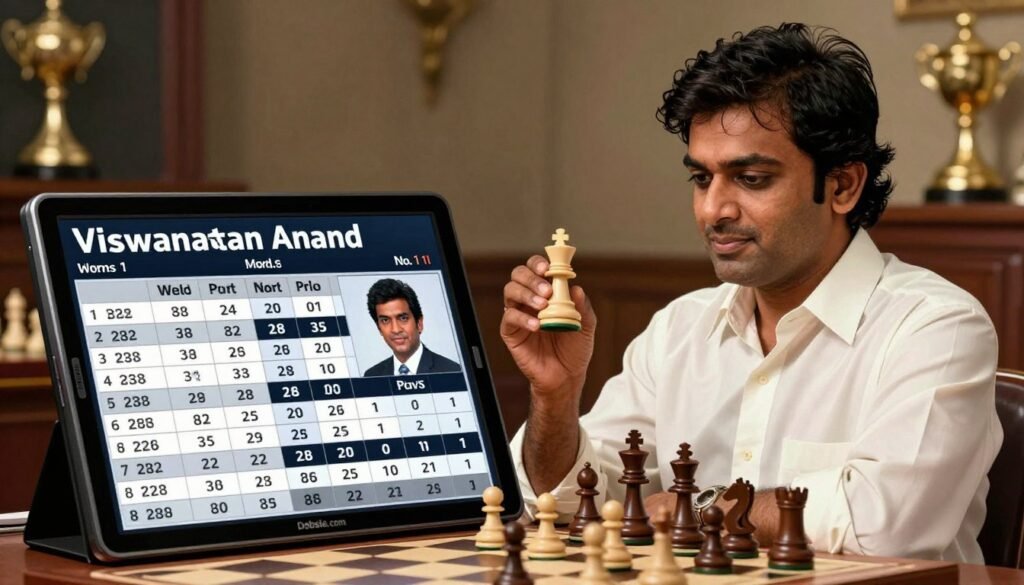
Crossing 2800 and joining an exclusive club
The rating list is a simple scoreboard. It updates after events and shows strength based on results.
Crossing 2800 Elo is a huge mark. In April 2006 he became the fourth player to pass 2800. That entry signals membership in a very small, elite club!
Peak rating 2817 and what peak play looked like
His peak rating reached 2817 in March 2011. That peak rating reflects sharp tactics, quick choices, and cleaner endgames.
Peak years show fewer blunders, faster decisions, and steady nerves at critical moments.
World No. 1 moment and lasting elite status
He hit world number one in April 2007 and held the top spot for 21 months. Staying elite across decades takes habits: sleep, study, and a steady mindset!
“Small improvements add up. Keep playing, learning, and tracking progress!”
| Milestone | Date | Meaning |
|---|---|---|
| Passed 2800 Elo | April 2006 | Joined an exclusive elite group |
| Reached world No. 1 | April 2007 | Top-ranked for 21 months |
| Peak rating | 2817 (March 2011) | Signal of strongest competitive form |
Parent takeaway: The rating list helps measure progress. Small, steady gains add up over years — and that’s how champions are made!
Read a contemporary note about the world No. 1 moment on the rating list milestone.
Magnus Carlsen rivalry: losing the crown and fighting back
A brilliant new challenger changed the field and tested every habit! The era felt like a new level of pressure. Fans watched closely.
2013 match: where momentum shifted
The 2013 match began with solid play. Early games were close and careful. Then momentum swung to the challenger.
After a few sharp wins, it became hard to reverse. The title changed hands that year. It hurt, but it also revealed areas to grow.
2014 Candidates and the rematch story
He bounced back by winning the 2014 tournament that decided the challenger. That victory proved real fight remained.
The rematch brought fresh pressure. You face the same opponent and your own memories. That emotional weight makes every game tougher.
“Even champions lose. That doesn’t erase greatness — it teaches how to come back.”
Lesson for kids: setbacks teach more than wins. Learn fast, adjust, and keep playing!
| Year | Event | Outcome |
|---|---|---|
| 2013 | World Championship match | Lost title to magnus carlsen |
| 2014 | Candidates tournament | Won to earn rematch |
| 2014 | World Championship rematch | Lost to magnus carlsen |
What made Anand different: speed, calculation, and “class” under pressure
Fast thinking and calm nerves set him apart from many peers at the board.
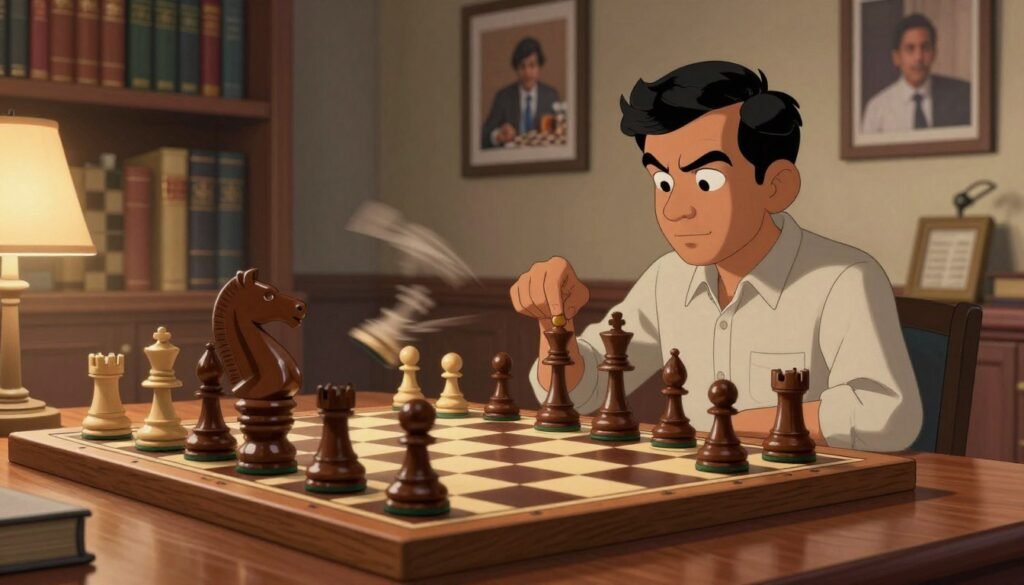
Fast decisions without sacrificing accuracy
He saw patterns quickly. Kids can think of it like spotting a shape in a puzzle and knowing the next move fast!
Speed mattered because it saved time for hard parts. But speed only counts when the moves are correct. He was known for both!
Universal style: tactical sharpness plus endgame technique
Some games asked for sharp tactics. Others needed patient endgame play. He could do both.
Example: when it was messy he went for tactics. When it was quiet he ground the win in the endgame.
Sportsmanship and staying out of ploys
He kept the focus on the board. He rarely used mind games. That earned respect from other top players and helped rivals prepare seriously for the 2010 match.
- See patterns to save time and avoid panic.
- Train puzzles for calculation and endings to finish wins.
- You can be fierce and kind—be a smart champion!
Mini takeaway: Practice quick tactics and solid endgames. Speed will follow when your moves are sure. Next up: openings where many of these ideas begin!
Anand’s favorite openings and signature setups
Openings are your first plan at the board—small ideas that grow into big wins. Pick ideas, not long move lists. That helps kids build confidence fast!
Sicilian battles and elite-level prep
The Sicilian is a high-energy choice. He faced garry kasparov with Sicilian themes in their 1995 match, showing how deep prep can shape a game.
Tip: Study common pawn breaks and typical tactical shots. Preparation wins many tournament and match moments!
Trompowsky as a surprise weapon
The Trompowsky is simple to learn and hard for opponents to meet if they haven’t seen it. He used it in a must-win Game 6 of the 1998 event to unsettle rivals.
Idea: Use surprise lines to steer games into practical positions you know well.
Ruy Lopez themes from world championship play
In the 2000 final vs Shirov, a sharp Ruy Lopez line turned into winning endgames. Small opening edges became decisive technique later on.
Practice plan: Pick one opening for White and one defense for Black. Learn the plans. Play them in rapid games and review the key ideas!
Best games to study: masterpieces that explain his greatness
Study a few brilliant games and you’ll spot ideas you can reuse. Great games act like training drills. They show patterns, plans, and how small choices become big results!
Aronian vs. Anand, Wijk aan Zee 2013 — the 23-move spark
This short, sharp game is often called an “Immortal Game” for its clarity and speed. In just 23 moves he beat Levon Aronian with clean tactics and quick development.
Why study it? You learn how fast, correct moves build a sudden attack. Replay the game and pause before each key move. Ask: “What would I play?”
Kasparov–Anand 1995 Game 9 — the exchange sacrifice and initiative
Game 9 shows a powerful exchange sacrifice. He traded material for initiative and a loud attack on the king. That tradeoff is a lesson in timing.
Try to guess the sacrifice before seeing it. That trains calculation and risk sense for your own games.
Championship-clinching technique: quiet wins that count
Not every win is fireworks. Some tournament and match points come from patient endgame technique. Study those games to see how small edges convert into full points.
- Replay a game slowly. Pause at critical moves.
- Ask “What would I play?” and then compare answers.
- Mix tactic-heavy and technique games for balance.
Quick tip: For more classic examples, check the list of the best chess games. Keep practicing! Even kids spot themes faster each time they replay a great game.
Rapid and blitz dominance: why he’s a time-control legend
Speed events show a different side of a champion — instinct, tempo, and bold choices under a ticking clock. Quick play tests reflexes and focus! Kids and parents should know the basics so the excitement makes sense.
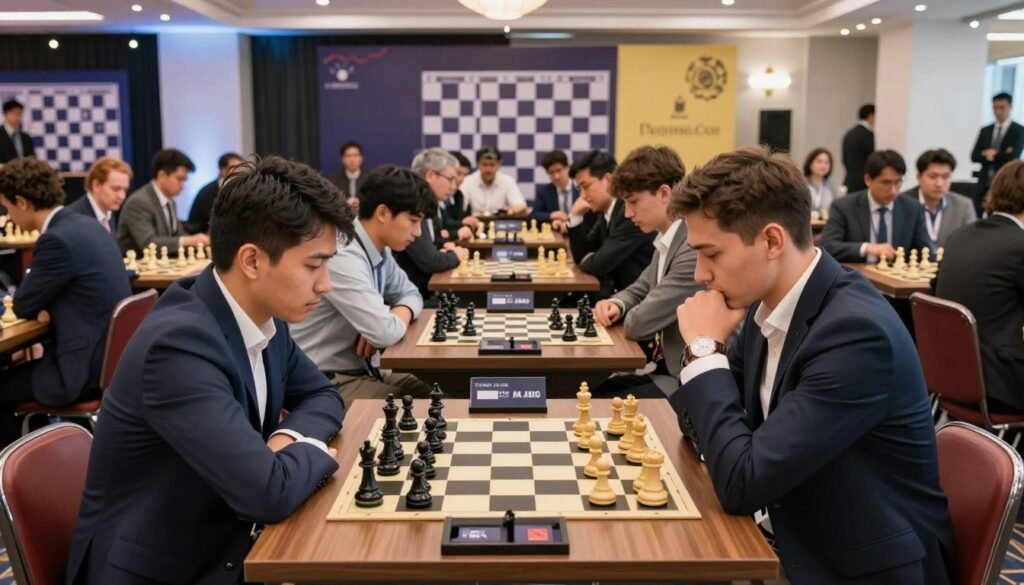
Fast formats and big wins
Rapid games give each player more than blitz but far less than classical. Blitz is even faster and feels intense.
He won the FIDE World Rapid Championship in 2003 and 2017. He also took the World Blitz Chess Cup in 2000. These world-level wins show elite skill across time controls!
Why these titles matter for classical play
Being quick and accurate is rare. Rapid and blitz sharpen intuition and time management.
Those skills helped his longer games. Better clock handling gives confidence in tough tournaments and match moments.
“Speed trains instinct; instinct supports deep play.”
Simple training tips
- Do 3–5 minute puzzle sprints to build quick vision.
- Review mistakes calmly after each sprint.
- Mix short games with longer study to balance fun and depth.
| Format | Typical Time | Key benefit |
|---|---|---|
| Blitz | 3–5 minutes | Improves fast pattern recognition |
| Rapid | 10–25 minutes | Balances speed with strategic thinking |
| Classical | 60+ minutes | Builds deep calculation and technique |
Quick takeaway: speed chess is thrilling and useful. It shaped a generation of players and helped change chess culture in India and beyond. Learn more about his career on this profile!
Legacy beyond trophies: the transformation of Indian chess
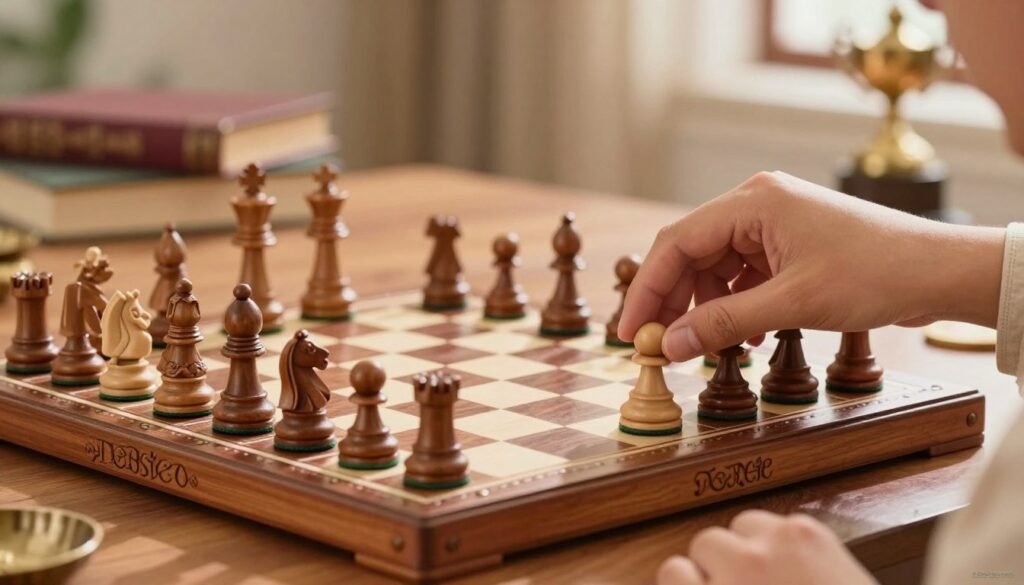
A single world-class player changed how a whole country saw chess—and how it played the game! He became the first Indian GM in 1988 and that moment sparked a national boom.
From first GM to a nationwide chess boom
Clubs grew. Schools added programs. Coaches found new students. The change was fast and real.
Inspiring the next generation
Many modern stars name him as their model. Young leaders like Gukesh, Praggnanandhaa, Vidit, Arjun, and Nihal cite that influence. The ripple made India a place to watch on the world stage.
“One role model can start a movement.”
| Item | Detail | Impact |
|---|---|---|
| First Indian GM | 1988 milestone | Raised national confidence |
| New clubs | More local and school clubs | More practice and coaching |
| Next-gen stars | Gukesh, Praggnanandhaa, Vidit, Arjun, Nihal | International success and visibility |
Community grows champions: more players means more tournaments, coaches, and chances to learn. Role models matter everywhere—for US families too!
For a deep dive into India’s chess roots see Indian chess history and the list of prestigious competitions in India.
Life today: leadership roles, selective tournaments, and influence off the board
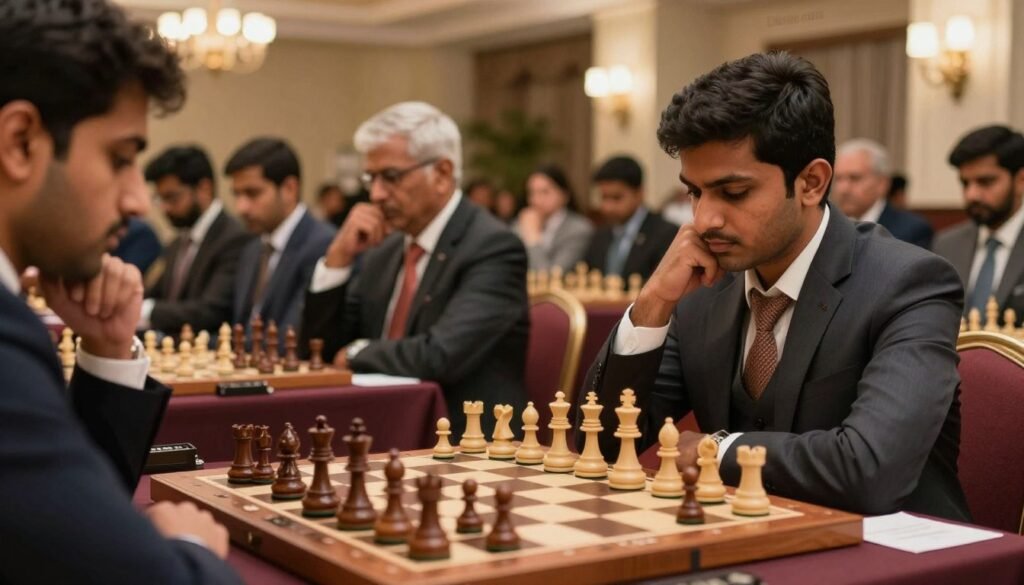
Now he blends leadership work with selective play at top events. We see a player who chose focus over constant travel. He helps shape chess and still plays when it counts!
Deputy President of FIDE — a global voice
Elected Deputy President of FIDE on 7 August 2022, he now helps guide global policy and growth. This role signals trust from the chess community.
Longevity and selective play
At age 56 (born 1969), he still keeps a strong spot on the rating list. In February 2026 his FIDE rating was 2743 and he ranked No. 13 in the world. That proves smart habits win over the years.
He chooses a few key tournament events each season. That selective approach keeps him fresh and competitive. It also shows younger players how to plan a long career.
“Play less, play smarter, and keep the love for the game alive!”
Takeaway for kids: longevity beats burnout. Pace yourself, pick the right events, and keep learning!
| Role | Data | Impact |
|---|---|---|
| FIDE position | Deputy President (since 7 Aug 2022) | Shapes global chess policy and events |
| Competitive snapshot | Rating 2743; World No. 13 (Feb 2026) | Still elite on the world list |
| Playing plan | Selective tournaments each year | Maintains form and avoids burnout |
Learn like Anand: study plans with Debsie courses, leaderboard competition, and a free trial class
Small, daily moves add up — and you can train them using a proven course and friendly competition! Choose a clear plan. Stay fun. Track progress. Repeat.
Train key themes with Learn Via Debsie Courses
Learn Via Debsie Courses gives structured lessons built from real games. Focus on faster calculation, cleaner openings, and calmer endgames.
Try a simple weekly rhythm: three short sessions. One for openings, one for tactics, one for endgames. Keep each session 20–30 minutes. Play and review!
Explore courses to follow patterns used by top players and to build real skill, not rote moves.
Use the Debsie Leaderboard to stay motivated like a tournament player
The Debsie Leaderboard turns practice into a mini tournament. Track points, compare scores, and chase personal bests.
Healthy competition: focus on your improvement. Celebrate smart effort and small victories. A leaderboard makes practice feel like a real match!
See the leaderboard and join events to keep momentum strong.
Take a Free Trial Class with a personalized tutor
Want fast gains? Try a free trial class with a tutor who builds an opening and tactics routine for your level.
- Set 1-move goals: spot tactics in 2–3 moves.
- Learn one opening plan and one endgame idea each week.
- Make practice feel like play and keep sessions short.
Book a trial and get a tailored plan that fits your schedule and goals!
| Focus | Activity | Benefit |
|---|---|---|
| Openings | Short lessons + one plan per week | Cleaner first moves and faster plans |
| Tactics | Daily 10-minute puzzle sprints | Quicker calculation and better game instincts |
| Endgames | Weekly practice + tutor review | Convert small edges into full points |
LET’S GO! When practice is gamified and consistent, improvement becomes your new normal. Start small, track points, and have fun like a tournament player!
Conclusion
Keep it simple: the story of viswanathan anand shows that speed plus class can take you to the top! From a kid learning at home to a five-time world championship winner, the path was steady practice and smart choices.
Replay a few great games. Learn one opening plan. Drill short tactics and one endgame.
Kids: you don’t need perfect play. Just play, learn, and repeat! Parents: pick one theme this week—tactics, openings, or endgames—and make practice a fun family routine.
We’re all improving together. Chess is a lifelong adventure. Play a game today and enjoy the next step toward being a true chess champion!