Can a calm, musical approach to chess turn tiny moves into lasting wins? This question gets to the heart of a player who sang his way through the endgame and taught us to think with patience.
We introduce Vasily Smyslov as a world-famous chess figure known for a clean, calm style. Kids can copy his clear method. Parents can trust its steady lessons.
“The Endgame Singer” nickname mattered because his love of harmony shaped his choices on the board. He put simple plans first and avoided needless risks.
This short bio will follow his early years in Moscow, wartime progress, championship drama, and long rivalries. We promise practical lessons on how a top chess player turned small edges into wins without panic.
For a deep dive and new research on his games, see the recent project that brings fresh analysis to his life and matches at
new Smyslov research.
Key Takeaways
- Learn calm endgame techniques you can practice in quick sessions.
- Small, steady advantages beat panic and flashy tactics.
- Smyslov’s style blends harmony and logic—great for young learners.
- His career offers lessons from early years to late comebacks.
- We’ll cover real moments and practical tips you can use next game.
Vasily Smyslov and the Making of a World-Class Chess Player
His journey began in Moscow, where family, books, and steady practice set the pace. We share this early story to show how simple habits build big results!
East Slavic naming adds a small detail: his patronymic is Vasilyevich, and the family name is Smyslov. That helps explain full names without confusion.
Moscow roots and a first coach at home
He learned chess at age six from his father. That home coaching sparked curiosity and steady practice. Family support made learning fun and reliable.
Books, study habits, and what shaped his play
His father gave him Alekhine’s My Best Games 1908–1923. He later read Lasker, Capablanca, Nimzowitsch, Chigorin, and Dufresne. Studying great games taught patterns and calm thinking.
First tournaments and a rapid rise
He began serious competition at 14 and won the USSR Junior Championship in 1938 at 17. That quick rise showed discipline and steady growth over the years!
- Lesson: Basics first, fancy tricks later.
- Tip: Read classic games and practice often.
Breaking Through in the USSR and the War Years
A dramatic breakthrough came in 1940 when a young Soviet player announced himself on the big stage. In the 1940 USSR championship he scored 13/19 and took 3rd place, finishing ahead of the reigning champion. That result turned heads and marked a true level up!
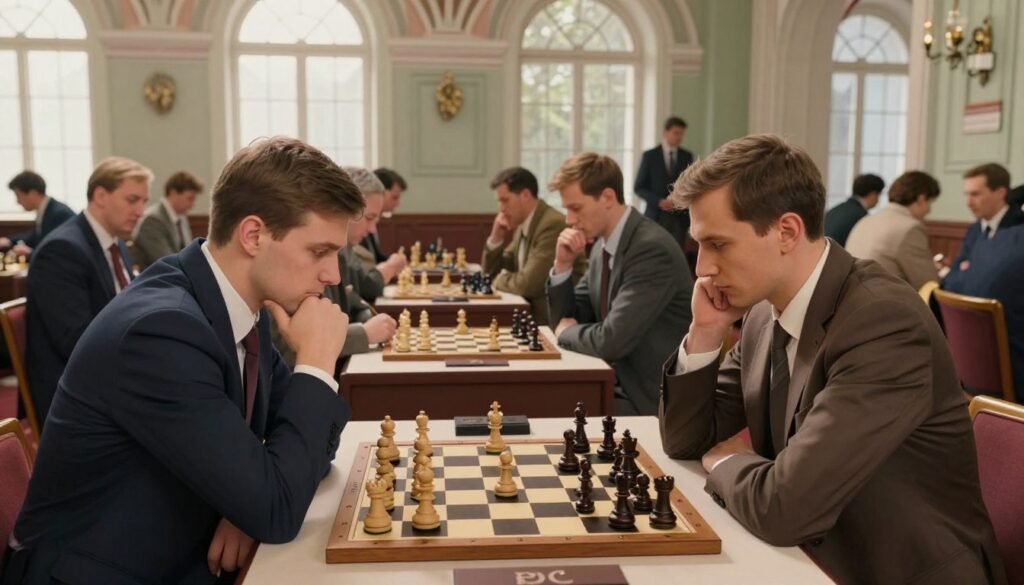
Proving strength early in the 1940 USSR Championship
The 1940 event showed this player could compete with top names. A strong score in a packed field meant his play was no fluke. It gave him a concrete record to build on.
World War II tournaments, nearsightedness, and steady progress
Wartime changed travel and schedules, but quality tournaments still occurred inside the USSR. He was exempted from service due to severe nearsightedness. That challenge did not stop him.
He kept improving at local events and won the 1942 Moscow championship with 12/15. Progress can be steady, even in hard times. Practice plus good local play equals growth — you can do it too!
- Lesson: Small wins add up.
- Tip: Study, play local events, and stay consistent.
From World Championship Tournament to Top Challenger
Selection for the 1948 world championship tournament marked his move from national star to true international contender. He scored 11/20 and finished second behind Botvinnik. That result was a huge breakthrough!
The 1948 championship tournament showed he could compete at world chess levels. It gave him a clear record and confidence to push on.
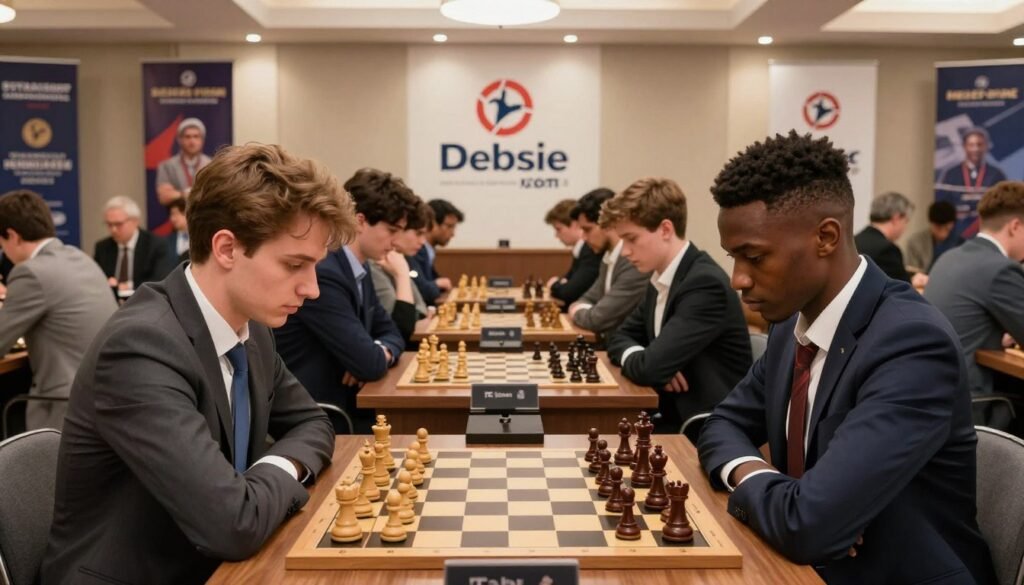
The Grandmaster stamp and the Candidates path
In 1950 he earned the Grandmaster title. This was a formal stamp that he belonged with the elite. The title opened doors to repeated Candidates tournament fights.
How the Candidates pathway works: win the qualifier, earn the big match. Simple! The Candidates tournament is the test that picks the challenger.
Zürich 1953 and the 1954 match vs. Mikhail Botvinnik
He won the Zürich 1953 Candidates with 18/28. That win set up the big 1954 title match vs. Mikhail Botvinnik in Moscow.
“A drawn match kept the champion’s crown — a hard lesson in margin and rules.”
The 1954 match ended 12–12, so the reigning world champion kept the title. Even without the trophy, he had proven he belonged among the best!
- Mindset: Consistency beats risky flair in long events.
- Tip: Use steady play and patience to turn small edges into wins.
Read more on the 1954 title match here. Next we build toward the moment he finally became world champion!
World Chess Champion 1957-1958: Peak Years and the Botvinnik Rivalry
The 1956 Candidates win in Amsterdam set up a defining run for the world title. He earned a second shot by staying steady and focused. That victory showed why second chances matter when you keep working!
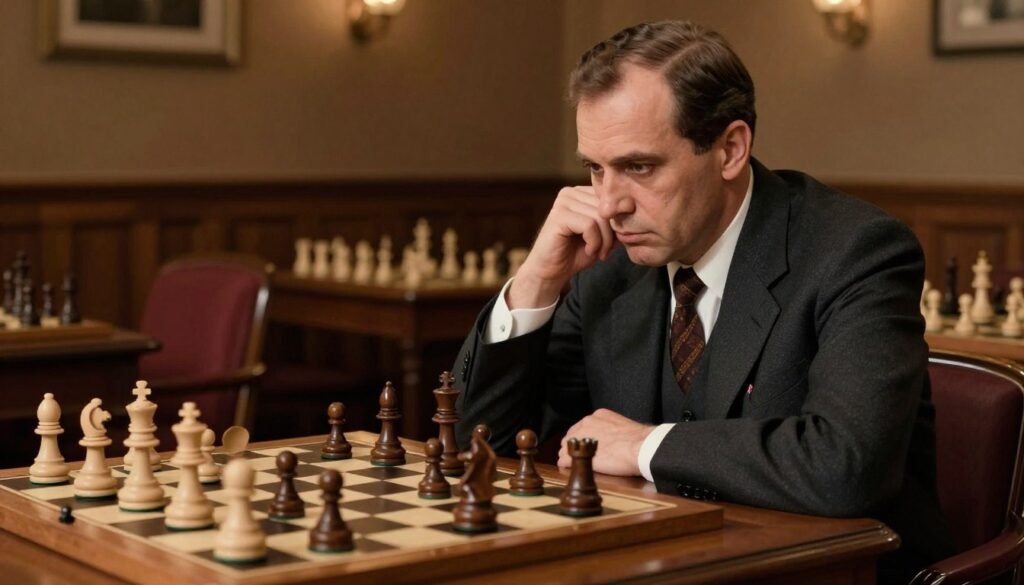
Winning Amsterdam 1956
Amsterdam 1956 gave him the Candidates crown and the right to challenge. The result proved hard work pays. It led directly to the 1957 match.
The 1957 match and what decided the score
In 1957 he beat Mikhail Botvinnik 12½–9½ and became the seventh world chess champion. Calm endgames, steady play, and clear plans won key games. Pressure met patience, and that made the difference!
The 1958 return match and health struggles
Under the rules then, a champion could demand a return match. In 1958 Botvinnik reclaimed the title 12½–10½. Illness (pneumonia) and Botvinnik’s deep preparation both mattered. It was honest, hard chess.
Head-to-head across title matches
| Matches | Wins (Smyslov) | Wins (Botvinnik) | Draws |
|---|---|---|---|
| All three title matches | 18 | 17 | 34 |
| 1957 title match | — | — | — |
- Takeaway: Preparation + health + consistency decide crowns, not just raw talent.
- Inspiration: Even champions lose. That’s part of growing!
Record Holder in Team Chess: Chess Olympiad Medals and European Gold
Some players shine brightest when they play for a team, turning steady work into shared gold. Team events ask for calm, focus, and care for your mates. You play not just to win, but to help the whole squad!
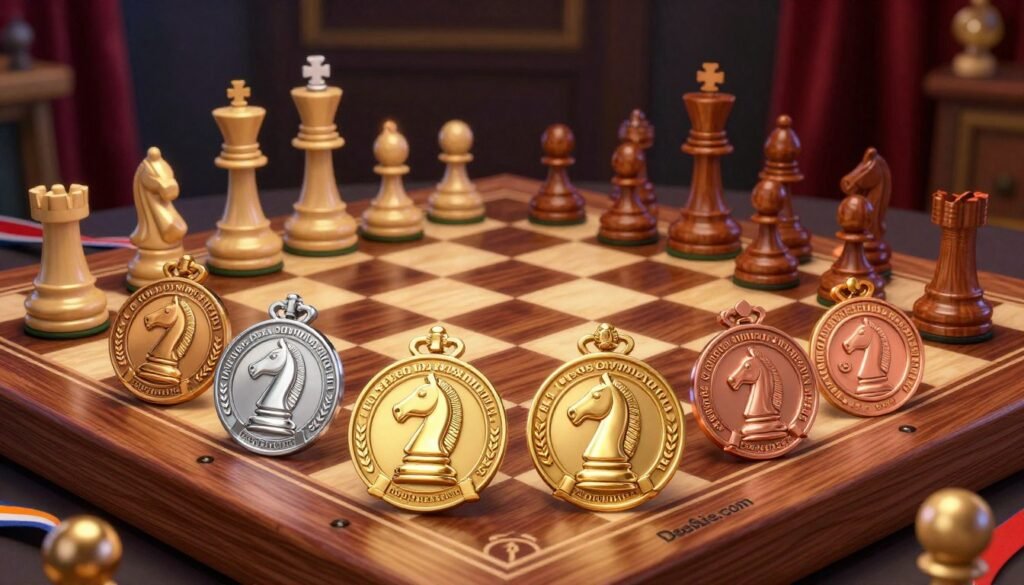
Seventeen Olympiad medals and why that record still matters
Headline: He won an all-time record 17 Olympiad medals. That record shows rare reliability across many tournaments and years.
His Olympiad score was 90/113 (+69−2=42) — an amazing 79.6%. That level of play on different occasions made the record meaningful for the chess world.
Signature performances across top boards and reserve roles
He played on top boards and as a useful reserve. No matter the role, he scored for the team. That flexibility made him a key player in every event.
“Being steady and reliable for a team is its own superpower.”
European Team Championships: a near-perfect medal haul
In five European Team Championships he collected ten gold medals — five team gold and five board gold. It reads like a near-perfect run!
| Event | Medals | Notes |
|---|---|---|
| Chess Olympiads | 17 total medals | Overall score 90/113 (79.6%) |
| European Team Championships | 10 gold medals | Five team gold + five board gold |
| Roles played | Top board & reserve | Consistent performer across roles |
- Why it matters: Records show trust. Teams pick players they can count on!
- Lesson for kids: Being reliable builds a personal record faster than flashy plays.
- Tip: Practice steady play in friendly team tournaments to grow confidence.
Read more about the life and career on his profile at the Wikipedia page. Join a team and try the calm approach — you might start your own medal run!
Smyslov’s Playing Style: “Clean Technique” in the Endgame
His endgame style reads like a simple song: each piece sings its part at the right time.
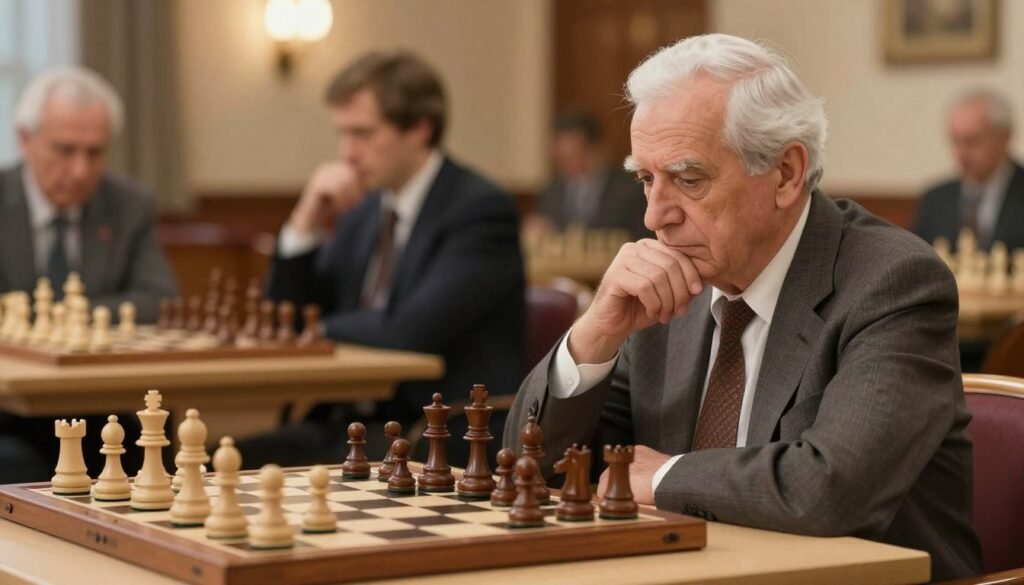
Clean technique means simple moves, good squares, and no needless risks. Kids can learn it! We call it a method of small, steady gains.
Harmony and the nickname
The Endgame Singer fits because harmony guided choices. Pieces work together like a choir. That makes positions calm and strong.
Precision plus tactics
He played very positionally, then struck with tactics when the moment came. A famous moment shows this: a queen sacrifice that wins material and ends the game.
19.Qxe4! dxe4 20.Rb8+ Bc8 21.Bb5+ Qxb5 22.Rxb5 — a brave give to gain much.
Practical themes and a training plan
- Themes: king activity, pawn structure, converting extra pawns, clean trades.
- Mini blueprint: slow down; check captures and threats; improve the worst piece; then convert.
Want deeper study? See a short Smyslov profile on Smyslov on Arts & Culture and try an essential opening guide to funnel play into friendly endgames!
Openings, Theory, and the Smyslov Blueprint for Practical Chess
Rather than memorize long lines, he used opening moves to steer games toward positions he could master. We focus on simple goals: a playable middlegame and a clear plan!
Contributions that matter
Ruy Lopez work stands out. His ideas in the ruy lopez helped shape mainline play and gave players reliable routes to endgames he knew well.
Opening choices that funnel to the endgame
He picked lines that led to comfortable piece trades and healthy pawn structures. That made the endgame less about luck and more about technique.
Lessons for modern players
- Keep it practical: openings build the map, not the whole trip!
- Pick a variation that matches your training goals — practice those endgames.
- Explore Sicilian, English, and Grünfeld ideas, but choose calm plans.
- Even sharp lines like the king indian need tidy piece placement and clear plans.
Takeaway: choose openings that match how you want to learn. Clean plans beat endless memorizing!
Later Career Longevity, Ratings, and a Champion’s Life Beyond the Board
He kept competing at a high level for decades, proving steady practice beats short bursts of brilliance!
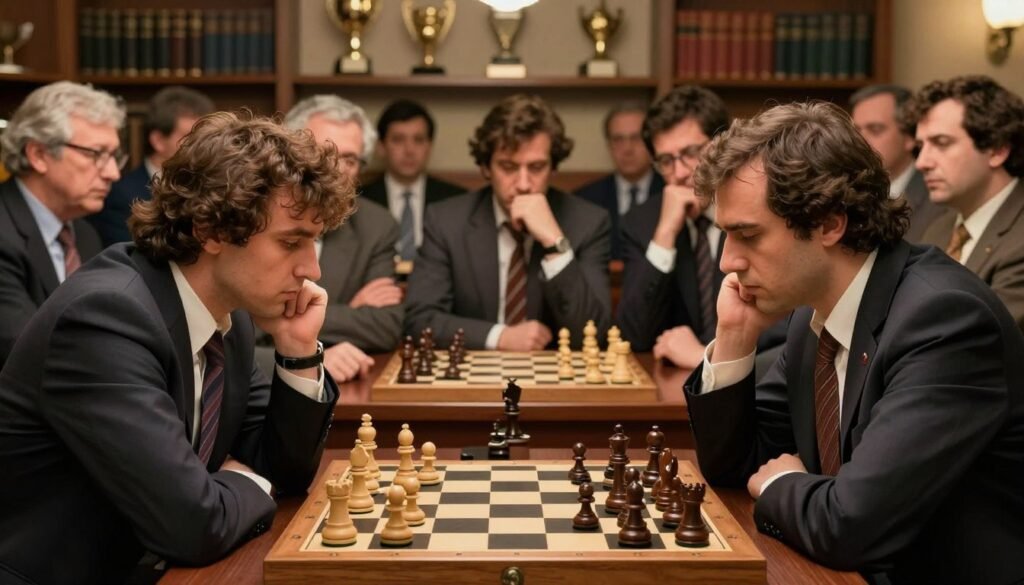
Headline moment: at age 62 he reached the candidates tournament final and faced garry kasparov in Vilnius (1984). That run shows elite form can last.
Quick facts kids can remember: peak rating 2620 (July 1971) and peak rank No. 9. He also won the first World Senior Championship in 1991.
He was a baritone singer. Art and chess fed the same calm mindset. Even with failing eyesight he kept composing studies and sharing information until late in life.
Practical plan you can copy
- Pick one endgame theme per week and practice 20 minutes daily.
- Review classic games and measure results over months.
- Try guided practice: Learn Smyslov-style technique with Learn Via Debsie Courses!
| Item | Data | Why it matters |
|---|---|---|
| Candidates appearances | 8 cycles (1948–1985) | Shows long-term elite status |
| Peak rating | 2620 (1971) | High global ranking, consistency |
| Senior title | World Senior Champion 1991 | Technique pays off with age |
Next step: Measure progress with the Debsie Leaderboard and take a Free Trial Class With a Personalized Tutor to build your study path!
Conclusion
vasily smyslov reached the peak — world champion in 1957–1958, a grandmaster from 1950, and a record holder with 17 Olympiad medals. His career shows steady work across tournament and match play.
Clean technique and patient play carried him through many games. The lesson is simple: small, careful moves win over time. Parents, trust routines. Kids, study a few endgames and replay his games!
Try this: pick one skill. Practice it for a week. Track results. Repeat. That small plan can change how a player finishes on the board and finds their place in the chess world!